
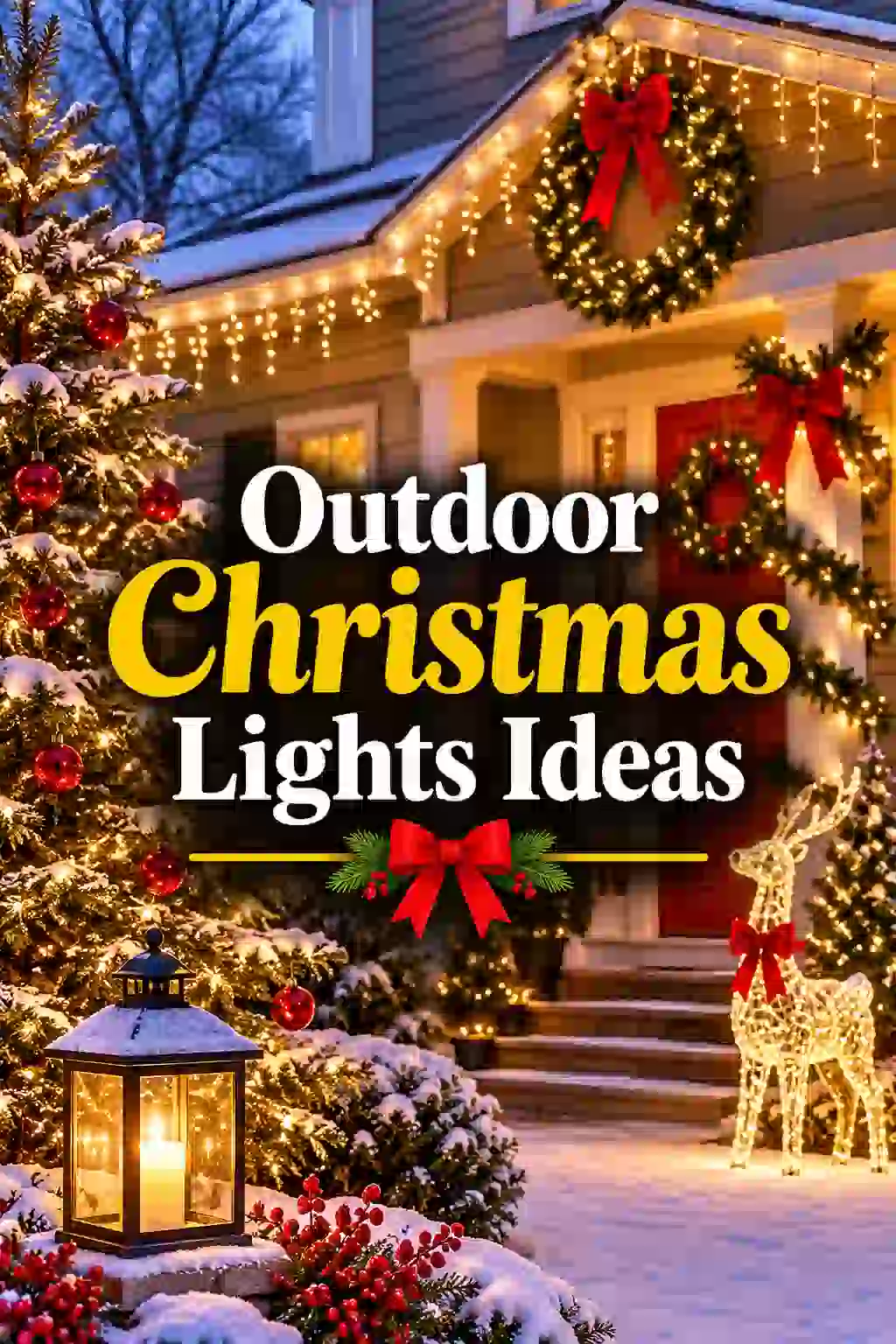
Outdoor Christmas lights are the first thing visitors see and the last thing neighbours remember. Done well, they make an ordinary house look warm, generous and considered. Done in a rush, they end up tangled, half-dark by New Year, and — worse — unsafe. The difference between the two is rarely money. It is planning, a few safety rules, and choosing one clear look instead of five competing ones.
This guide covers outdoor Christmas lights ideas for any home, from a small balcony to a full two-storey frontage, with installation advice that keeps the display beautiful and the electrics safe.
1. Start with a plan, not a shopping trip
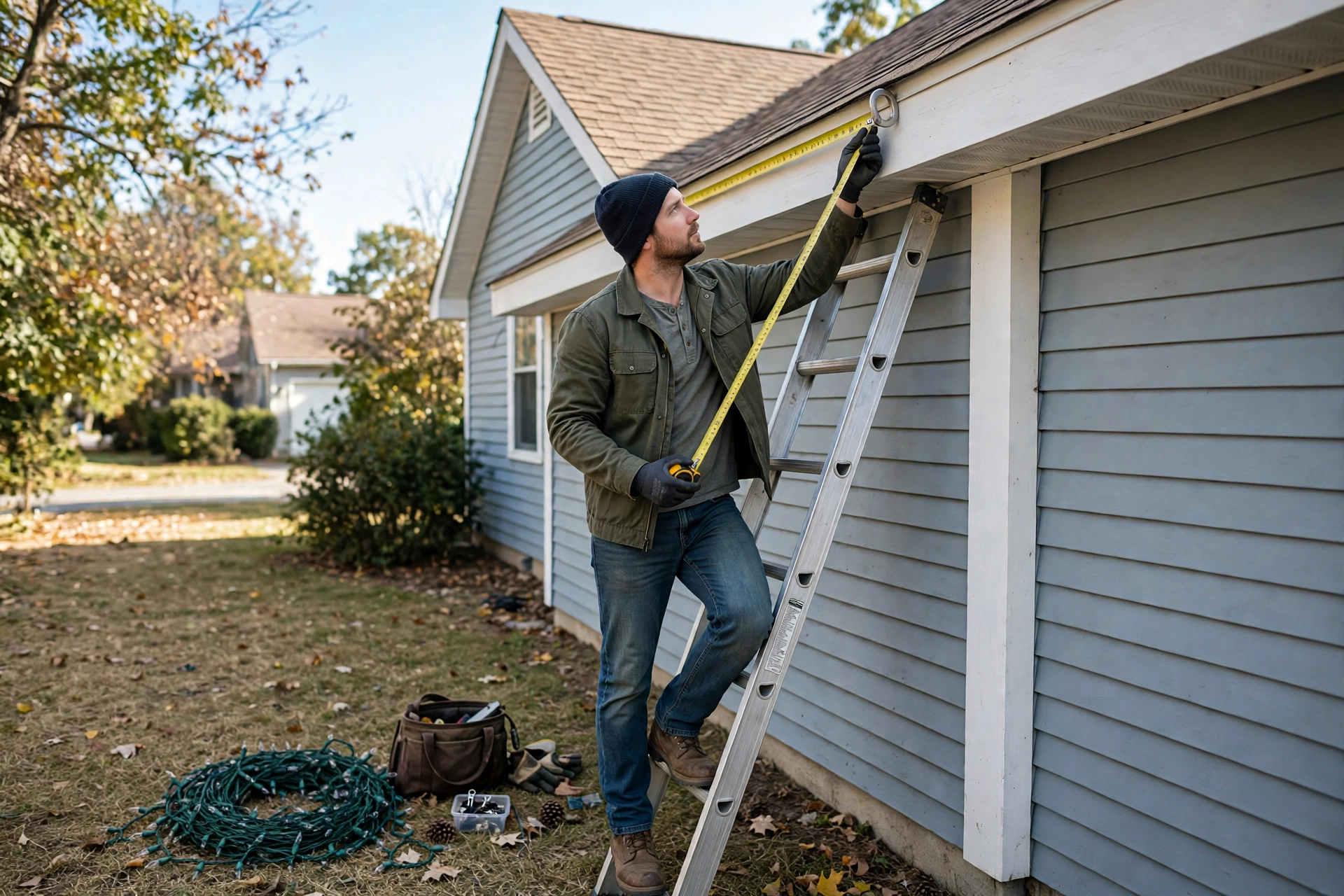
The single biggest mistake is buying lights before measuring anything. Walk your property in daylight with a tape measure and a phone. Measure every run you want to light: roofline, porch edge, path length, tree height and trunk circumference. Note where your outdoor outlets are, because the distance to power decides what is easy and what needs an outdoor-rated extension cord.
Then choose one style and stick to it. Warm white everywhere looks calm and expensive. Multicolour everywhere looks joyful and loud. Mixing warm white rooflines with multicolour trees and blue pathways looks accidental. Pick a palette of at most two colours and repeat it across the whole display.
Work out your power budget before you buy. Add up the wattage of every strand (printed on the tag or box), and keep the total comfortably below what the outlet and circuit can carry a good rule is to stay under 80 percent of the rated load. LED strands use far less power than old incandescent ones, which is one reason most displays today are LED: you can run longer lengths, they stay cool to the touch, and they cost much less to leave on through December.
Also Read : Christmas Living Room Decor Ideas: 30 Cozy, Stylish Ways to Make Your Space Feel Like Magic
2. Safety first: the non-negotiables
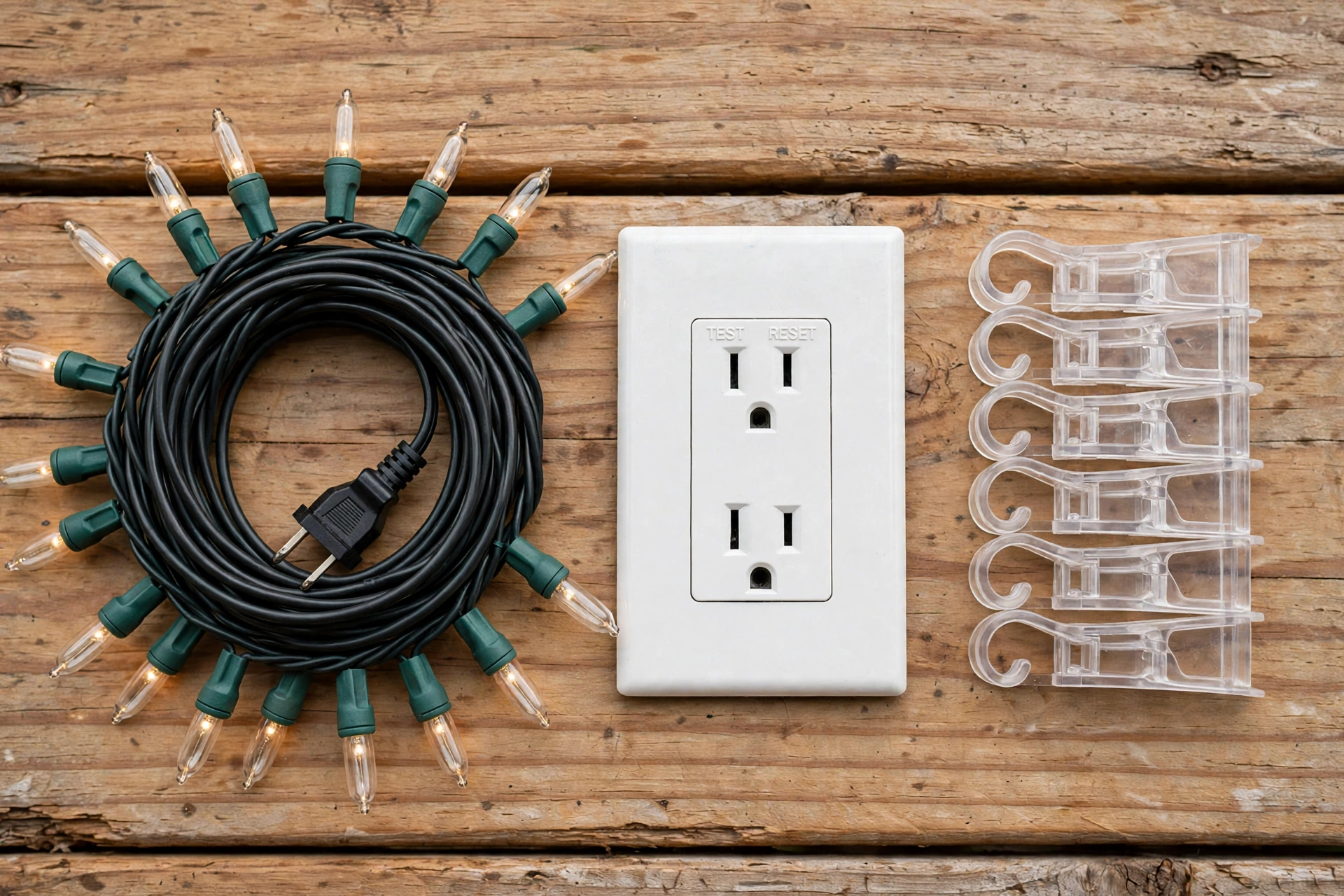
Safety is not the boring part of this project; it is what lets you enjoy the display without worry. Only use lights and extension cords rated for outdoor use — indoor sets are not built for rain, frost, or temperature swings. Plug into GFCI-protected outlets (the ones with test and reset buttons), which cut power fast if water gets where it should not be.
Hang lights with clips made for the job: gutter clips, shingle clips, or adhesive hooks. Never drive nails, screws, or staples through a wire — a pierced wire is a shock and fire risk, and it is also how strands fail mid-season. If you need a ladder, put it on firm, level ground, keep three points of contact, and never lean sideways to reach “just one more clip.” High or steep roofs are a job for a professional installer, not a brave afternoon.
Check every strand before it goes up. Throw away any set with cracked insulation, exposed copper, or a plug that feels loose or hot. Keep connections off the ground and out of puddles, and never run a cord across a walkway where someone can trip, or under a rug where heat builds up unseen.
3. Roofline lights: the classic frame
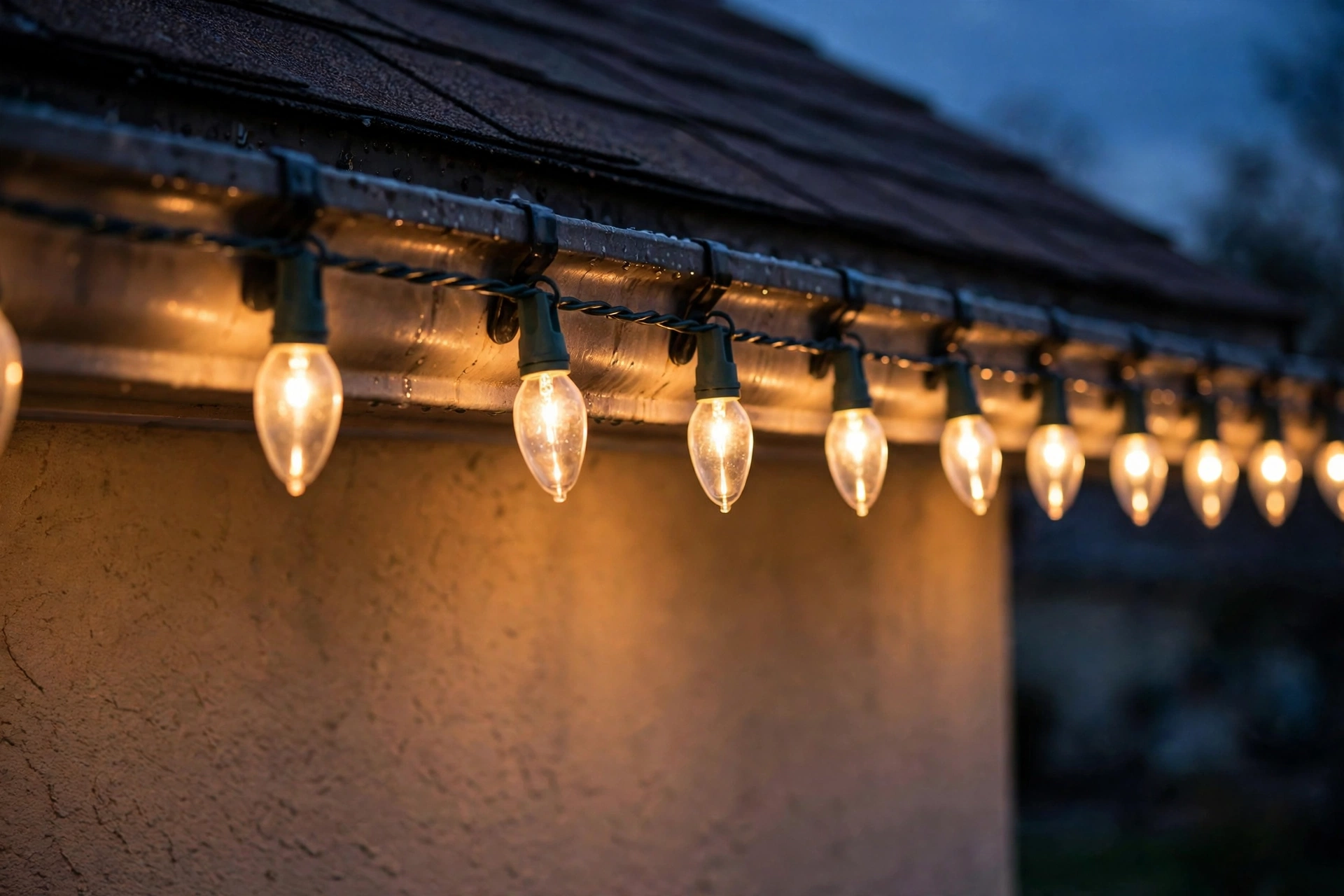
A lit roofline is the single most effective outdoor Christmas lights idea because it defines the whole house at a glance. C9 bulbs (the larger, strawberry-shaped ones) read beautifully from the street; C7 bulbs are a smaller, more traditional alternative. Space them evenly — most gutter clips hold them at regular intervals, which is what gives the finished line its clean look.
Work from one end to the other, clipping as you go, and keep the wire itself as invisible as possible. The bulbs should look like they are floating along the edge, not like a cable was draped there. If your roofline is long, split it across two circuits rather than chaining everything end to end, and test each section before you climb down. A dark patch discovered from the ground is a much easier fix than one discovered after the ladder is away.
4. Trees that glow from the inside out
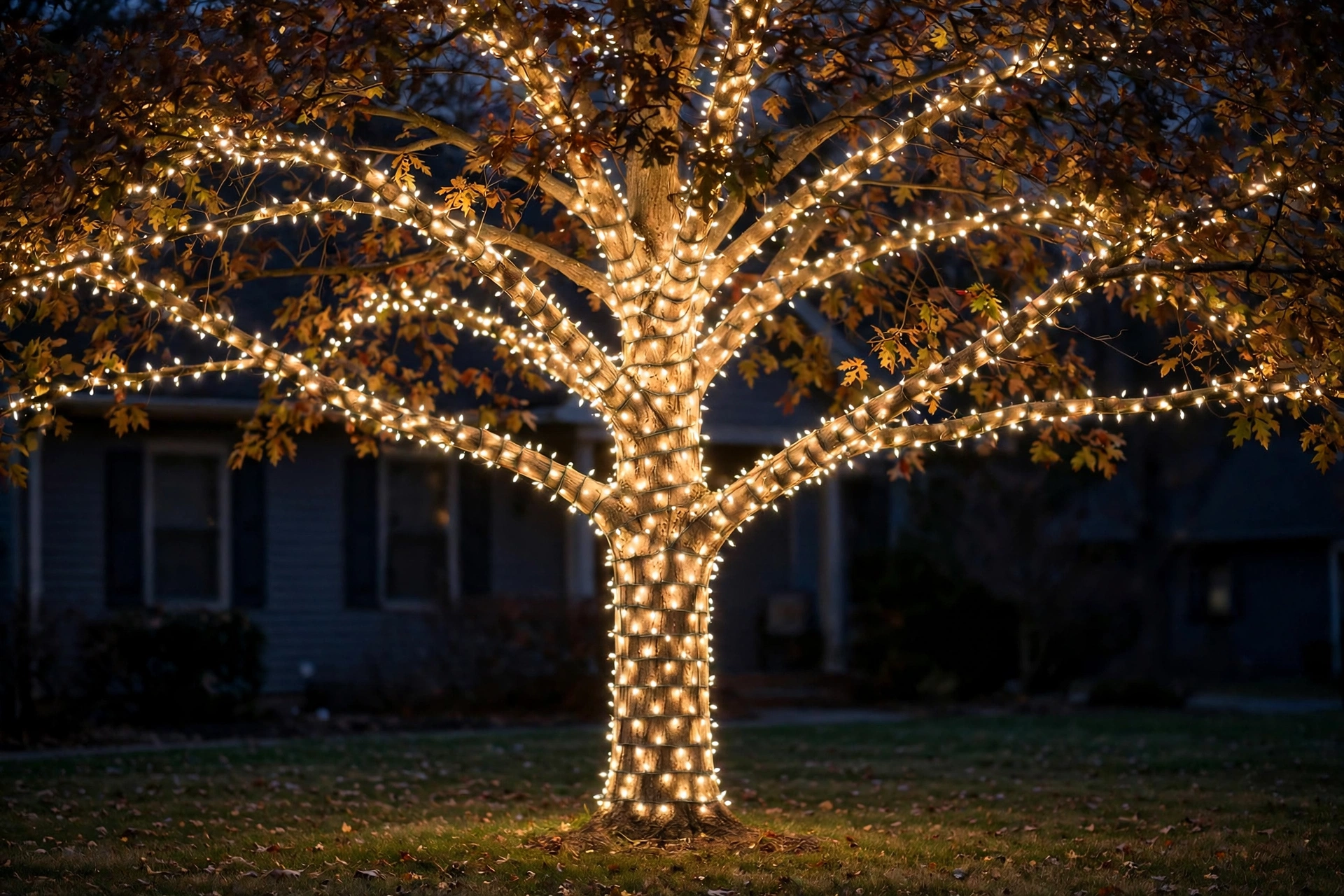
The secret to a tree that looks magical rather than messy is to start at the trunk and work outward. Wrap the trunk first, then the main branches from the inside out, so light comes from within the tree rather than sitting on its surface. Step back every few minutes — what looks even from two feet away can look patchy from the street.
For shrubs and hedges, net lights are the shortcut: drape a net over the bush and it reads as an even glow with a fraction of the effort of wrapping. For a small front-yard tree, one or two well-placed strands beat five tangled ones. And if you have a tree near the house, matching its colour to the roofline ties the whole frontage together.
5. Pathways and driveways people actually enjoy walking
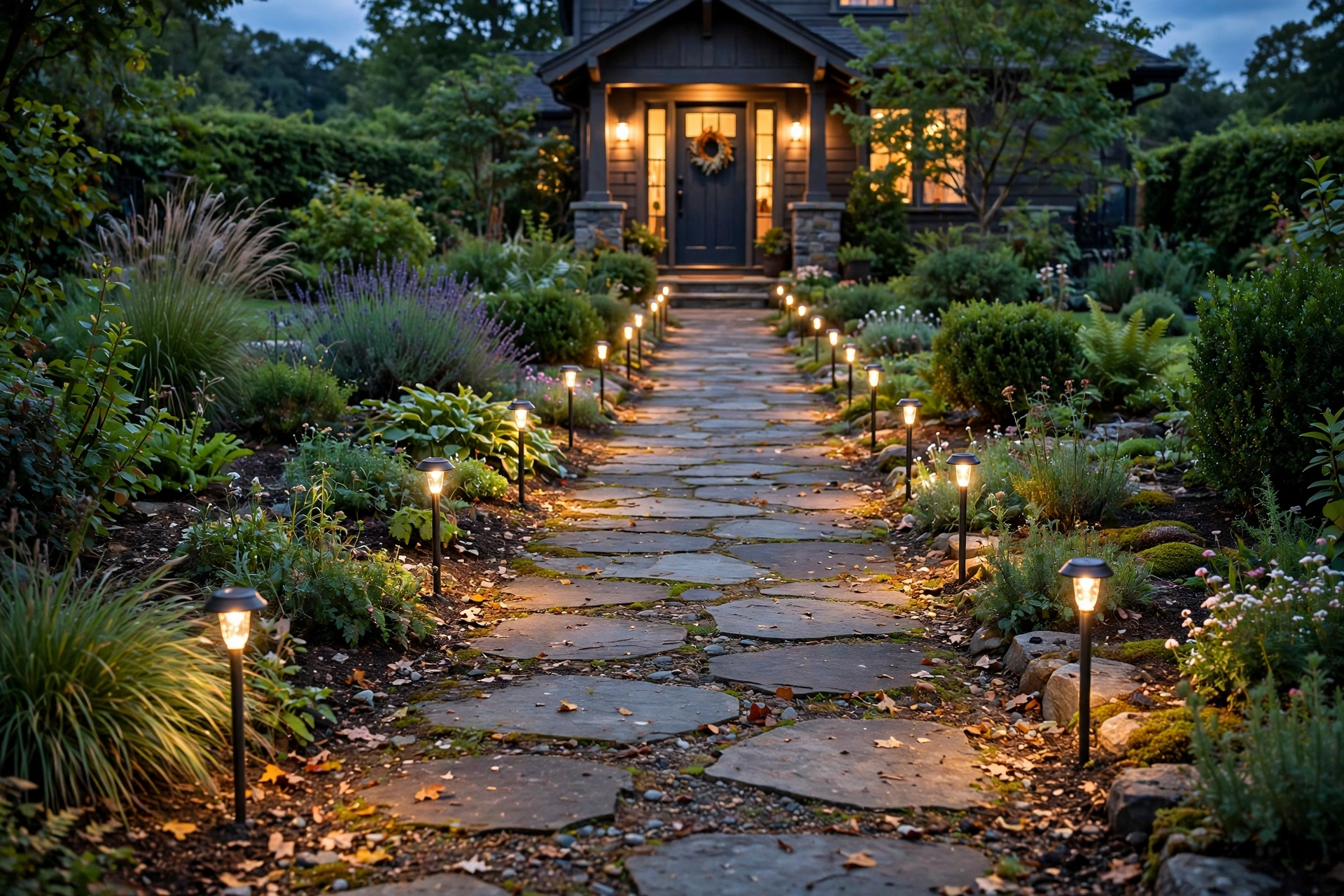
Pathway lights do two jobs: they look welcoming, and they stop guests stumbling in the dark. Stake lights pushed into the soil along the path edge give a gentle, even line — space them evenly and keep them the same colour temperature as the rest of the display, or the path will look like a different project from the house.
Solar stake lights work well where the path gets daytime sun, and they need no wiring at all. Where the path is shaded, low-voltage plug-in sets on a timer are more reliable. Either way, keep the fixtures low and the light aimed at the ground, not into visitors’ eyes. A path lit softly all the way to the door feels far more inviting than a single bright floodlight.
Must Read : Red Christmas Tree Ideas: 25+ Ways to Decorate a Bold, Beautiful Tree This Year
6. Windows, porches and columns: outdoor Christmas lights ideas
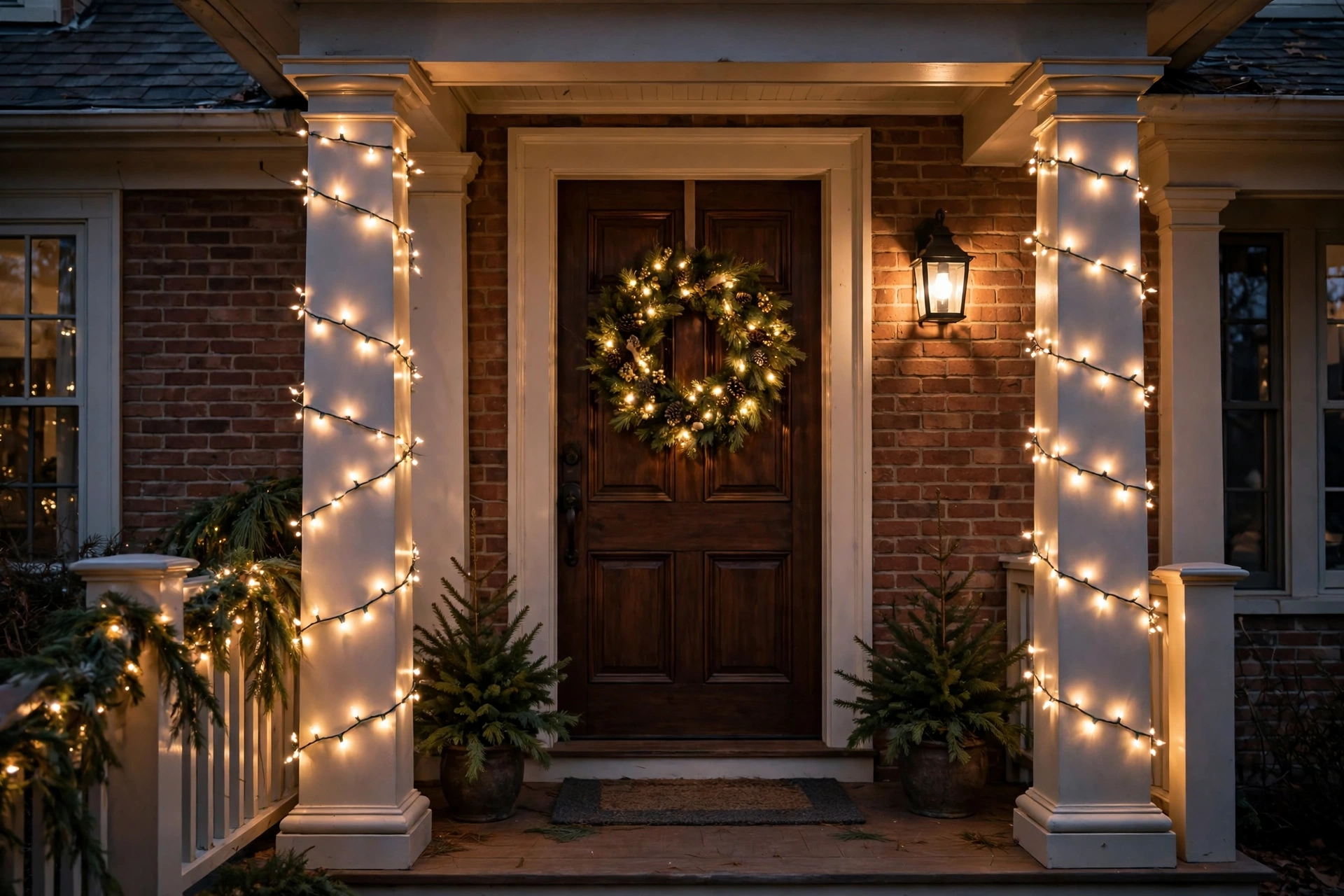
Framing a window with lights turns it into a picture frame at night, and it is one of the easiest ideas to get right: follow the frame with a single strand, clipped neatly at the corners, and match the colour to the roofline. A lit wreath on the door, with a battery or plug-in set woven through it, finishes the entrance without any extra wiring.
Columns and porch railings take wrapping well — spiral a strand evenly around a column from bottom to top, keeping the spacing consistent. The porch is also where a warmer, softer light earns its keep: this is the space people stand in, talk in, and arrive through, so it should feel warm rather than theatrical.
7. Small spaces and balconies
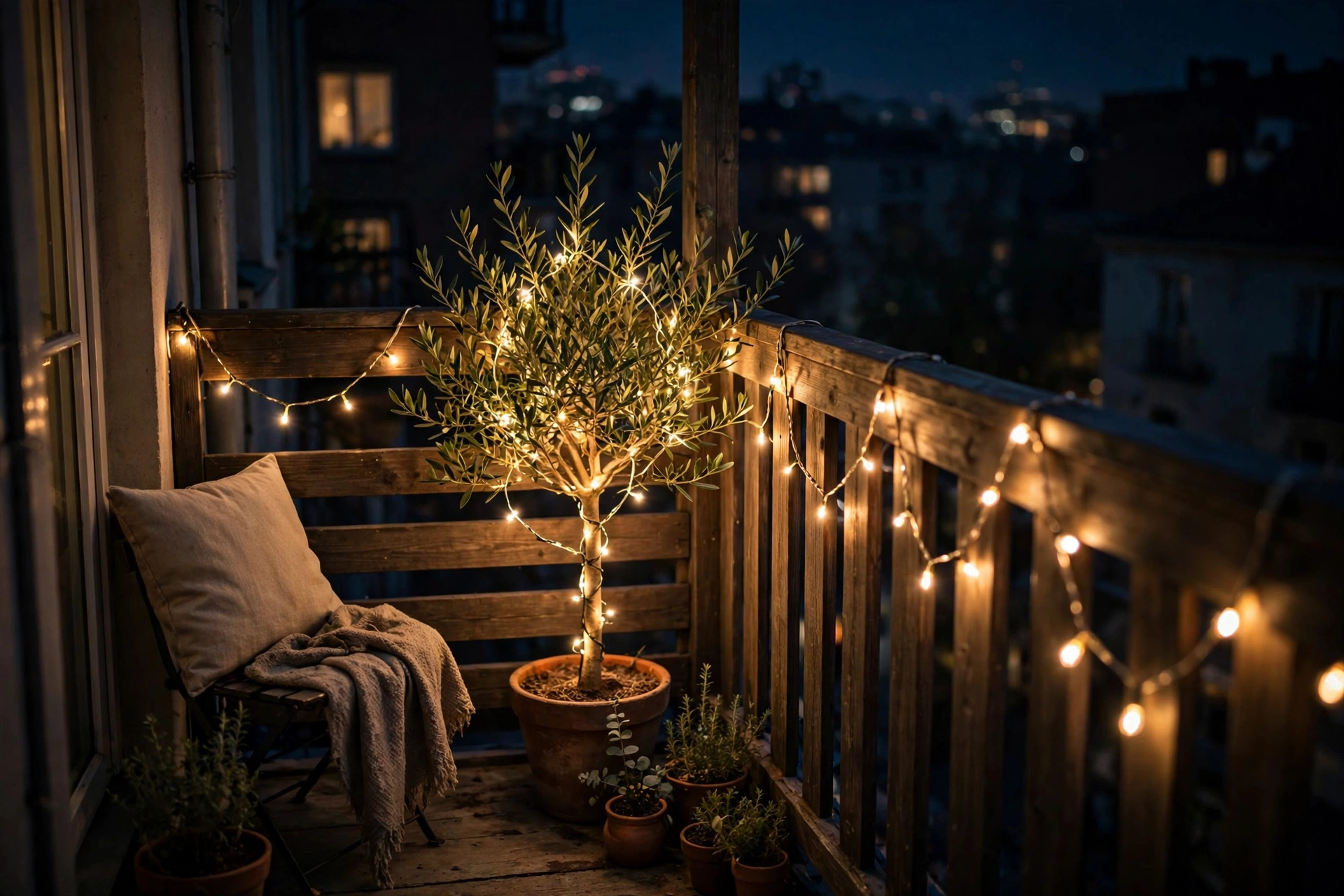
You do not need a big house for a beautiful display. On a balcony or small patio, string lights are the whole answer: drape them along the railing, zigzag them overhead if you have fixings, or hang curtain lights against the wall behind seating. Battery-operated and solar sets mean renters can do all of this without drilling a single hole — removable clips and adhesive hooks hold the lights, and everything comes down in January without a trace.
The rule for small spaces is restraint. One well-lit feature — the railing, or one small tree in a pot wrapped in warm white — looks intentional. Five competing features in ten square metres look cluttered. Pick the feature, light it well, and leave the rest dark.
8. Smart controls and timers
Timers are the cheapest upgrade in all of outdoor lighting. A simple plug-in timer, or a smart plug you control from your phone, means the display comes on at dusk and off at bedtime without anyone remembering. Dusk-to-dawn sensors do the same job automatically. Besides convenience, timers cut electricity use and extend the life of the strands — lights that run all night, every night, burn out faster and cost more.
Smart plugs also let you split the display into zones: roofline and tree on one schedule, pathway on another. And if a storm rolls in, you can switch everything off from indoors rather than going out to unplug in the rain.
9. Three budget brackets that all look good
A beautiful display is not about spending more; it is about spending in one place. A modest bracket — one focal area, such as a lit tree or a framed porch — can look better than a large, scattered one. A middle bracket covers the roofline plus one tree and the path, which is the classic full-frontage look. A larger bracket adds layers: roofline, trees, windows, and smart controls, all in the same colour palette.
Whatever the bracket, spend first on the things that make the display last: outdoor-rated sets, proper clips, and a timer. Those three purchases do more for the finished look than any extra strand.
Also Read : Balcony Christmas Decor Ideas: 25 Cozy, Safe and Stunning Ways to Dress Up Any Balcony
10. Taking them down and storing them right
The display you enjoy next year depends on the hour you spend in January. Take lights down on a dry day, before the coldest weather makes wires brittle. Label each strand with where it hung (a strip of masking tape on the plug end is enough), wrap it around a piece of cardboard or a purpose-made spool rather than stuffing it in a bag, and store it somewhere dry. Check each set briefly before it goes into the box — a strand that failed in December is much easier to replace in the January sales than next November.
Final Thoughts
Outdoor Christmas lights can completely transform your home into a warm, welcoming holiday display. Whether you prefer simple string lights along the roofline, glowing pathway lanterns, decorated trees, or a full festive setup with wreaths and illuminated figures, there are plenty of ways to create a look that feels uniquely yours.
The key is to choose a style that complements your home while keeping the display balanced and inviting. Start with the main areas you want to highlight, then layer in smaller lighting details for extra sparkle. With a little creativity, even a simple outdoor space can become a beautiful Christmas wonderland that makes every evening feel more magical.
Frequently Asked Questions
How many lights do I need for my roofline?
Measure the length you want to light, then divide by the bulb spacing of the set you are buying. C9 sets are commonly spaced around a foot apart, so a 30-foot roofline needs roughly 30 bulbs — buy one spare strand, because a shortfall discovered mid-install is the most common frustration.
Can I leave outdoor lights on all night?
You can, but a timer is better. Lights on a dusk-to-bedtime schedule use less electricity, last longer, and are kinder to neighbours. LEDs on a timer are the safest and cheapest way to run a display.
Are LED outdoor lights better than incandescent?
For outdoor use, yes in almost every way: they use far less power, stay cool, and last many seasons. The only reason to keep old incandescent sets is if you specifically love their warmer glow — and even then, check them carefully for damage before use.
How do I stop the lights tripping the breaker?
Add up the wattage of everything on that circuit and keep it well under the circuit’s rating. Split long displays across two circuits, use LEDs to keep the load low, and make sure the outlet is GFCI-protected. Repeated tripping means the circuit is overloaded — remove strands, do not just reset and hope.
Can I hang lights without damaging my house?
Yes. Gutter clips, shingle clips, and adhesive hooks hold lights without holes. Never use nails or staples through wires, and avoid hanging heavy displays from gutters that are already loose or damaged.
What happens if it rains or snows on my display?
Outdoor-rated lights are built for it, and a GFCI outlet protects you if water gets into a connection. Do not handle plugs or connections with wet hands, keep connections off the ground, and switch the display off from indoors during severe weather.
How do I hide extension cords safely?
Use outdoor-rated cords, run them where nobody walks, and keep them out of puddles. Never run a cord under a rug or through a doorway that closes on it, and never join several indoor cords together to reach further — buy one outdoor cord of the right length.
When should I put lights up and take them down?
Install in daylight before the coldest weather arrives — handling clips and wires is miserable and risky with numb hands. Take them down in January on a dry day, label each strand, and store them dry so they are ready next year.
Do I need a professional installer?
For a single-storey home with easy roof access, most people manage fine with clips and a stable ladder. For steep, high, or complex roofs, or any display involving new outdoor wiring, hire a professional — the cost is small compared with a fall or an electrical fault.
Can renters put up outdoor Christmas lights?
Yes. Battery and solar sets, removable clips, and adhesive hooks need no drilling and no wiring changes. Light a railing, a potted tree, or a balcony edge, and everything comes down in January without a mark.