
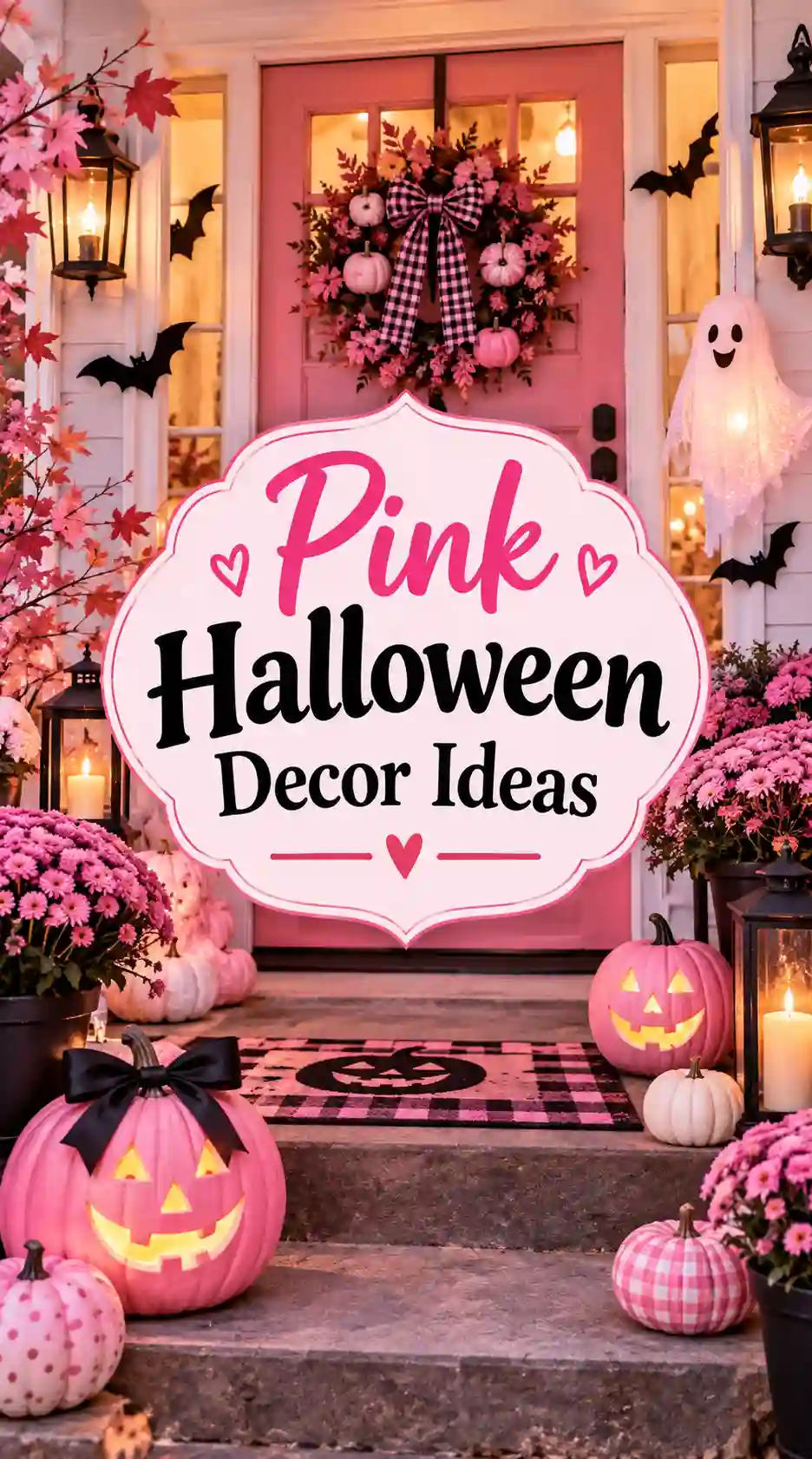
A living room dressed in pink for Halloween costs £60 to £200, with most of that going on paint, candles and one good tablecloth rather than on props. The whole job takes one weekend, and the pumpkins should be painted two or three days before the party so the paint has time to dry and harden. The one rule to settle before buying anything is the black: keep black in the scheme — in the candles, the plates or the wreath — or the pink reads as Easter, not Halloween.
Start with one shade and one metal. Blush pink with gold suits a room with warm wood and cream walls; dusty rose with black suits a room with grey walls and dark furniture. Write the shade down, then buy to it. Two pinks in one room is the maximum; three pinks looks like a shop sale.
This guide works through the look in the order to build it: why it works, the shade, the pumpkins, the front door, the table, the glamorous version, the budget and the mistakes. Each section gives a size, a price or a specific decision, so the result looks styled rather than scattered.
Why does pink work for Halloween at all?
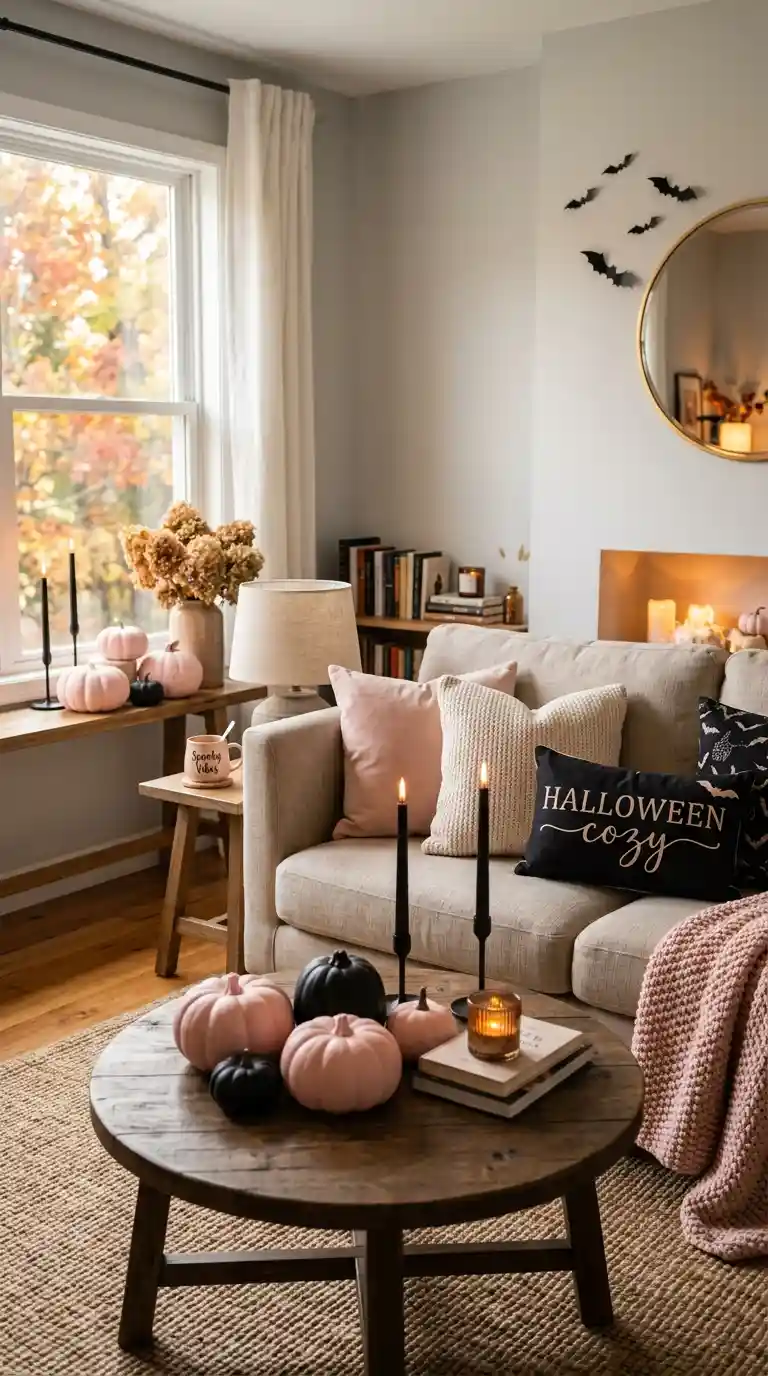
Pink works because Halloween is built on contrast, and soft pink against black is the sharpest contrast in the room. A blush pumpkin next to a black candlestick, a pink ghost against a dark wall, a rose-gold skull on a black shelf — each pair makes the other look stronger. The room in the photo below shows the balance: pink is the accent, black is the frame, and the Halloween shapes do the talking.
It also works because it is a deliberate choice. A room that is pink by accident looks confused; a room that is pink on purpose, with black, gold and one traditional element, looks confident. The trick is to keep the spooky shapes — bats, skeletons, spiders — so the pink has something to contrast with. Without them, the room is just pink.
Which shade of pink should you choose?

Blush and dusty rose are the safest shades: they work with black, gold and cream, they suit candlelight, and they do not overwhelm a room. Hot pink and magenta are for parties and for one statement piece at a time — a tablecloth, a balloon arch, a single large pumpkin — not for every surface. The shades in the photo below show the range: blush at the soft end, dusty rose in the middle, and hot pink used as an accent rather than a base.
Match the shade to the light in the room. A north-facing room with cool light makes blush look grey, so choose a warmer, deeper rose there; a south-facing room with warm light can take a cooler, paler blush. Buy the paint or the fabric first, then hold it against the wall in the evening light you will actually use — daylight in a shop tells you very little.
How do you paint a pumpkin pink — and make it last?
Start with a clean, dry pumpkin — real or foam. Wash a real pumpkin with a damp cloth, let it dry for an hour, then apply two thin coats of matte acrylic craft paint with a foam brush, leaving 30 minutes between coats. One coat looks streaky; two coats look painted. A foam pumpkin takes paint better and will last for years, while a real pumpkin painted this way holds up for one to two weeks indoors.
Seal the paint with a clear matte spray, one light coat, and keep the pumpkin out of direct sun and away from radiators, which crack the paint. Metallic pink needs a different approach: a rose-gold spray paint over a white primer gives an even finish, but it needs a well-ventilated space and a drop cloth. Glitter is best avoided — it sheds everywhere and photographs badly in candlelight.
What goes by the front door?

The front door is where the theme is announced, so keep it to three elements: a wreath, a pumpkin group and light. A wreath of pink dried flowers with a few black bat shapes, pumpkins in blush and black at three heights on the steps, and a pair of lanterns with warm-white flameless candles either side of the door. The front door in the photo below shows the arrangement: pink and black in equal measure, nothing blocking the step, and the door itself still visible.
Keep the path clear and the pumpkins off the walking surface — a pumpkin on a step is a trip hazard in the dark. If the porch is small, one strong idea is enough: a row of blush pumpkins and a black wreath, or a single pink ghost garland across the door. For the rest of the front yard, the outdoor Halloween display carries the same pink-and-black palette outside, and the indoor Halloween decor picks it up again inside.
How do you set a pink Halloween table?

A pink Halloween table needs a low centrepiece and a clear line of sight, just like any other dinner table. A blush tablecloth, a black runner, and a centrepiece no higher than 30 cm — clustered flameless candles at different heights, a row of mini pink pumpkins, or pink roses with dark foliage — so guests can see each other across it. The table in the photo below shows the height rule: everything sits low, and the candles do the drama.
Place settings carry the theme without new crockery: black charger plates, a blush napkin tied with black ribbon, and a small place card — a paper bat or a name written on a mini pumpkin. For children, friendly pink ghosts and smiling bats keep the table fun rather than frightening. For a full guide to the table itself, these Halloween table decor ideas cover centrepieces, kids’ tables and dessert tables in detail.
What makes it glamorous instead of girlish?
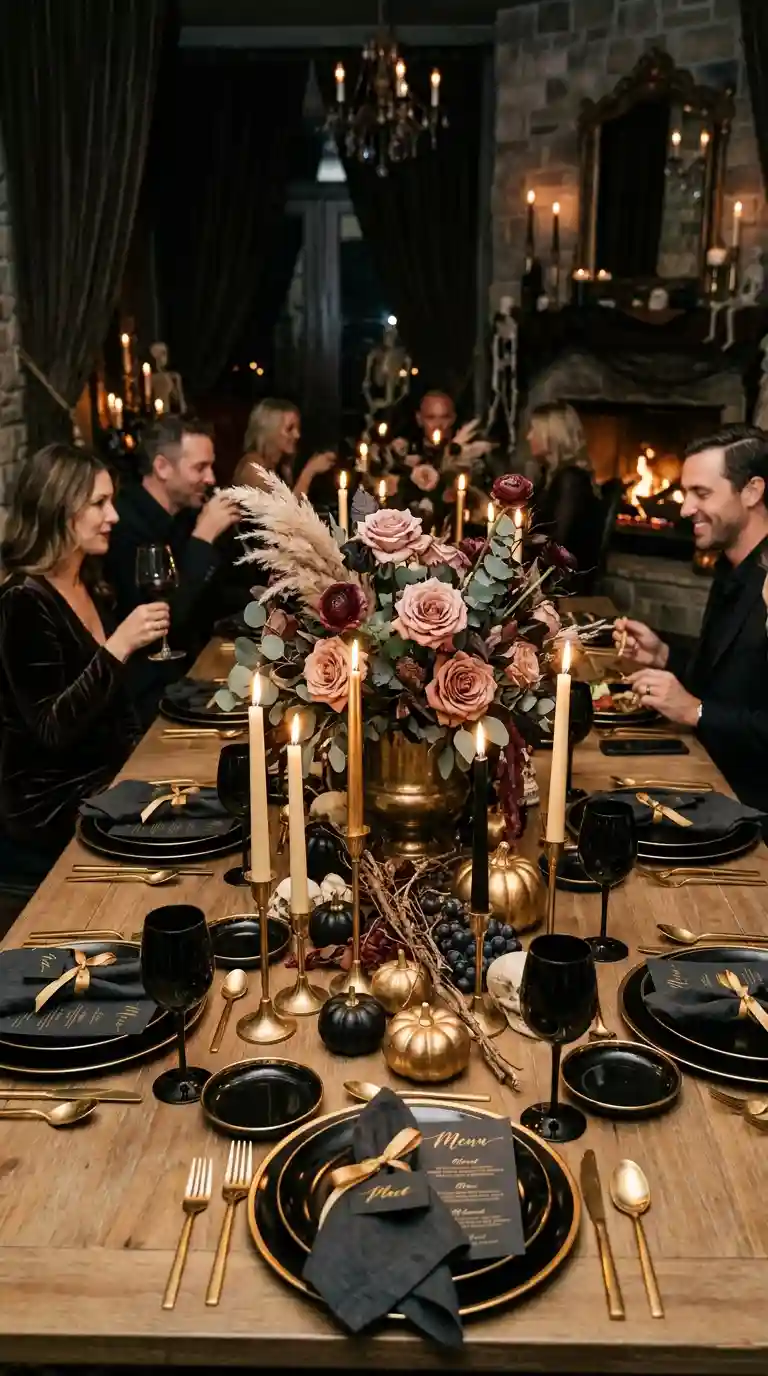
The difference is restraint and material. Dusty rose and mauve with rose gold, champagne and black read as glamorous; bubblegum pink with silver glitter reads as a children’s party. Use real materials — glass, metal, linen, dried flowers — and keep the pink to two surfaces at most in any one view. The glamorous room in the photo below shows the formula: dusty rose, rose gold, black, and candlelight doing the work.
A single dramatic arrangement does more than a dozen small pieces: pink blooms with deep burgundy foliage in a tall vase, or a candelabra with black tapers on a dark table. Disco balls, metallic fringe and hot pink belong at a party, not in a room that is meant to feel elegant — save them for the dance floor, and keep the living room calm.
How do you do it on a small budget?
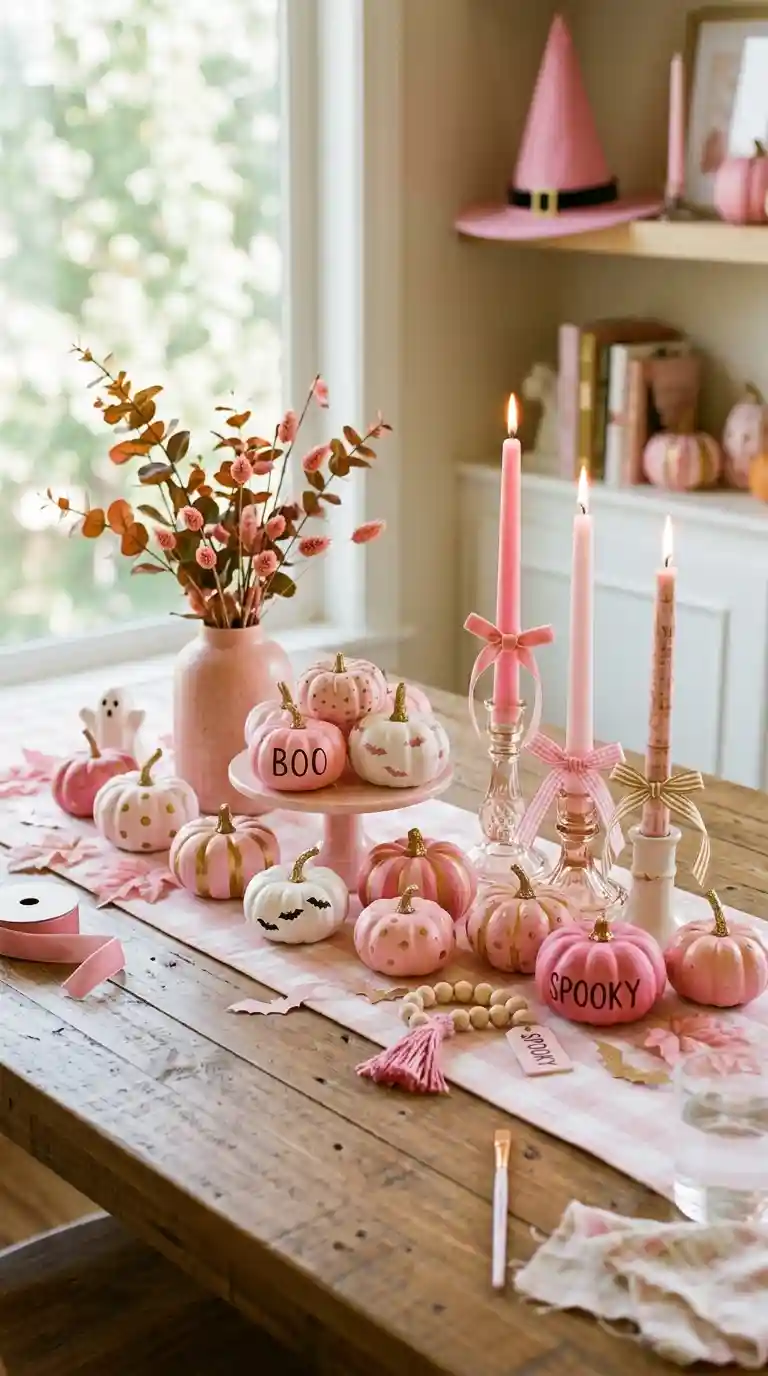
A pink Halloween display can be built for £60 to £100. Paint is the cheapest transformation: a £5 tin of pink acrylic paint turns last year’s orange pumpkins, a plastic skeleton or an old picture frame into the new theme. Pink candles cost £2 to £5 each, a black tablecloth £10 to £15, and a string of warm fairy lights £5 to £10. The budget display in the photo below shows what that money buys: painted pumpkins, candles and a throw, all reusable next year.
Thrift shops and charity shops are the best source for pink glassware, vases and frames, usually for £2 to £5 each. Make the two things that are hard to buy cheaply: a garland from paper bats and a wreath from dried flowers with a few black accents. If the budget only stretches to one thing, buy the paint — it changes more for £5 than any single prop will.
What mistakes make it look like a baby shower?
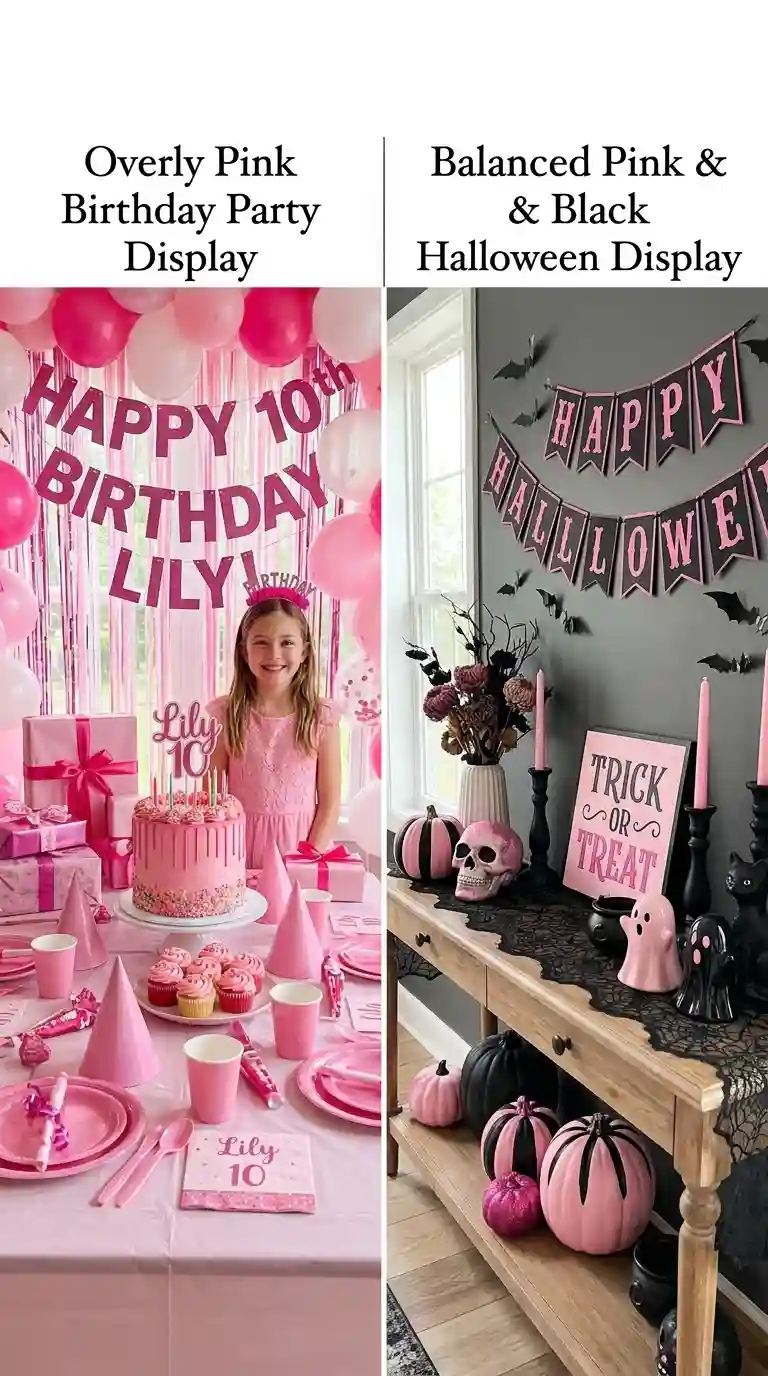
The most common mistake is going entirely pink, with no black, no orange and no spooky shapes. A room of blush pink, white and gold reads as a baby shower because there is nothing in it that says Halloween. Keep at least one traditional element in every view — a black candlestick, a bat silhouette, a skeleton, a carved pumpkin — and the pink becomes a choice rather than a theme.

The second mistake is mixing too many shades of pink at once. Blush, hot pink and magenta in the same room look chaotic; one shade, repeated, looks deliberate. The third is ignoring texture: flat pink decorations on flat pink fabric look cheap, while velvet, glass and candlelight make the same pink look expensive. Different homes adapt the same rules — a witchcore corner with lilac, a minimalist shelf with one pink accent, or a family party with friendly ghosts all use one shade of pink and one black anchor, as the rooms in the photo above show.
Questions about pink Halloween decor
What is pink Halloween decor?
Pink Halloween decor — sometimes called Pinkoween — blends soft or bold pink tones with traditional Halloween elements such as black, pumpkins, bats and skeletons. It keeps the spooky shapes and swaps the usual orange and black palette for pink and black, with gold or rose gold as the accent.
How much pink should I use in my Halloween decor?
Use pink as an accent, not a replacement: about a third of the display in pink, a third in black, and the rest in neutrals and metallics. One shade of pink, repeated, looks deliberate; three shades in one room look chaotic. Test the balance on one surface before committing the whole room.
What colours pair well with pink Halloween decor?
Black is essential — it is what makes the pink read as Halloween. Gold and rose gold add warmth, deep purple and burgundy add depth, and a little traditional orange keeps the display tied to the season. Keep to pink, black and one metal, and the scheme will hold together.
Can pink Halloween decor still look spooky?
Yes, if the spooky shapes stay. Painted skeletons, bats, spiders and dark foliage keep the Halloween feeling, and the pink makes the contrast sharper rather than softer. The trick is to keep at least one traditional, spooky element in every view — without it, the room is just pink.
How do I paint pumpkins pink for Halloween?
Wash the pumpkin, let it dry for an hour, then apply two thin coats of matte acrylic craft paint with a foam brush, leaving 30 minutes between coats. Seal it with one light coat of clear matte spray. A foam pumpkin takes paint better and lasts for years; a real one holds up for one to two weeks indoors.
Pink Halloween works when it is a decision, not a default: one shade of pink, one black anchor, and the spooky shapes kept in view. Start with a single painted pumpkin and a pair of candles, live with it for an evening, and then decide how far to take it. The room will tell you.





2 Comments on “Sweet, Spooky, and Still Halloween”