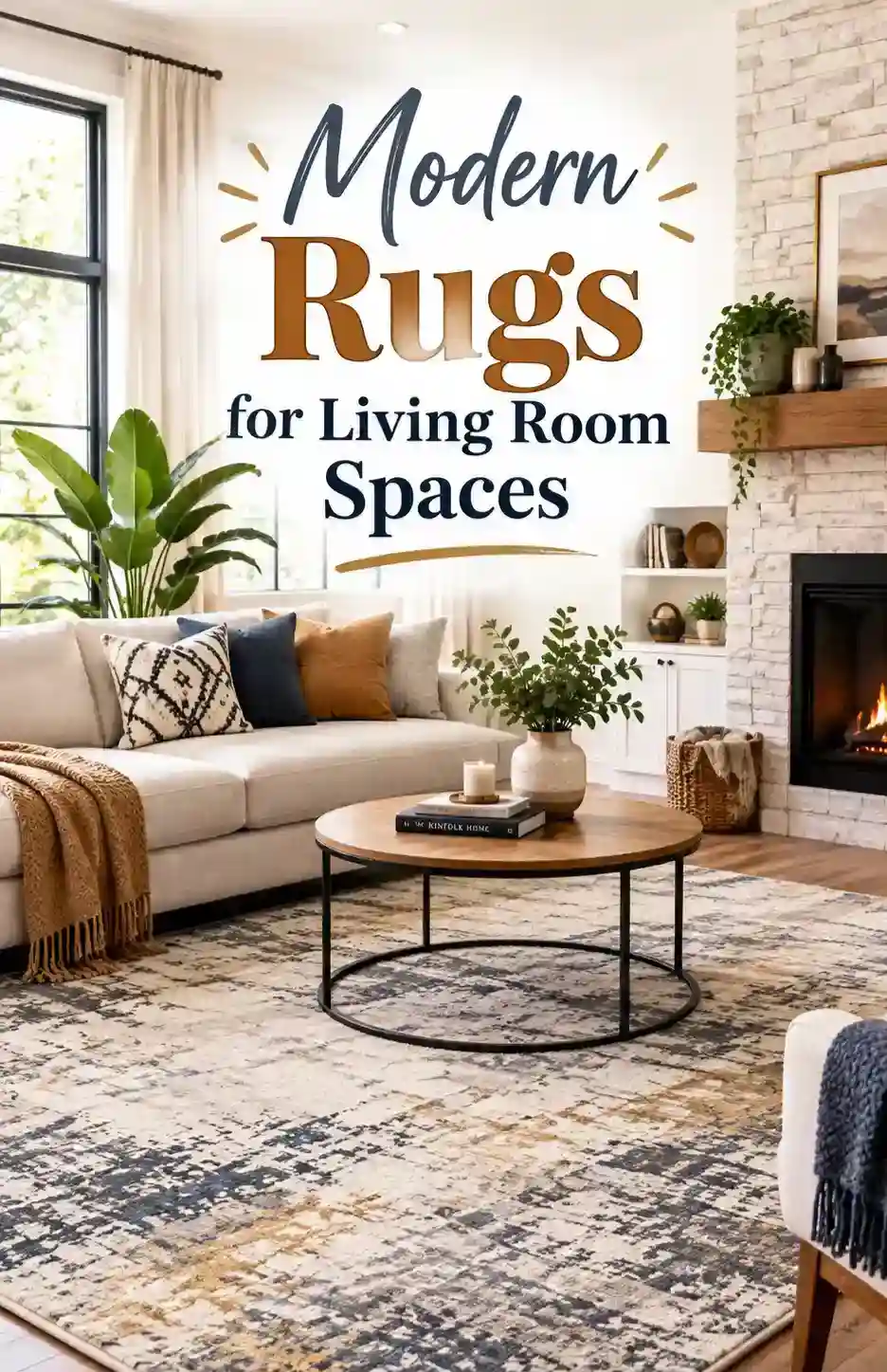
There is a moment that happens almost every single time I walk a client through their finished living room after the new rug goes down. They stand in the doorway, look at the space for a second longer than they normally would, and say something like, wait, this is the same room. It never actually is the same room, not really. A rug changes more about how a space feels than almost any other single purchase, and I have watched that happen enough times now that I genuinely believe modern rugs for living room spaces deserve far more thought than most people give them.
For a long time, rugs got treated as an afterthought in the design process, something you grab once the sofa and the paint color are already settled. I understand why that happens, since a rug is not the first thing anyone imagines when they picture redecorating a room. But the truth is, modern rugs for living room floors do more heavy lifting than almost any other single piece of furniture or decor, tying together color, texture, and scale in a way that nothing else in the room quite manages.
This guide brings together everything I have learned from selecting and styling rugs for real living rooms over the years, from tiny apartment corners to sprawling open concept homes. We will walk through materials, sizing, color, pattern, layout, and the small details that separate a rug that genuinely elevates a room from one that just sits there looking slightly out of place.
Let us get into it.
Also Read : 50 Inspiring Sofa Ideas For Living Room Spaces That Instantly Feel More Like Home
Why Modern Rugs for Living Room Spaces Matter So Much
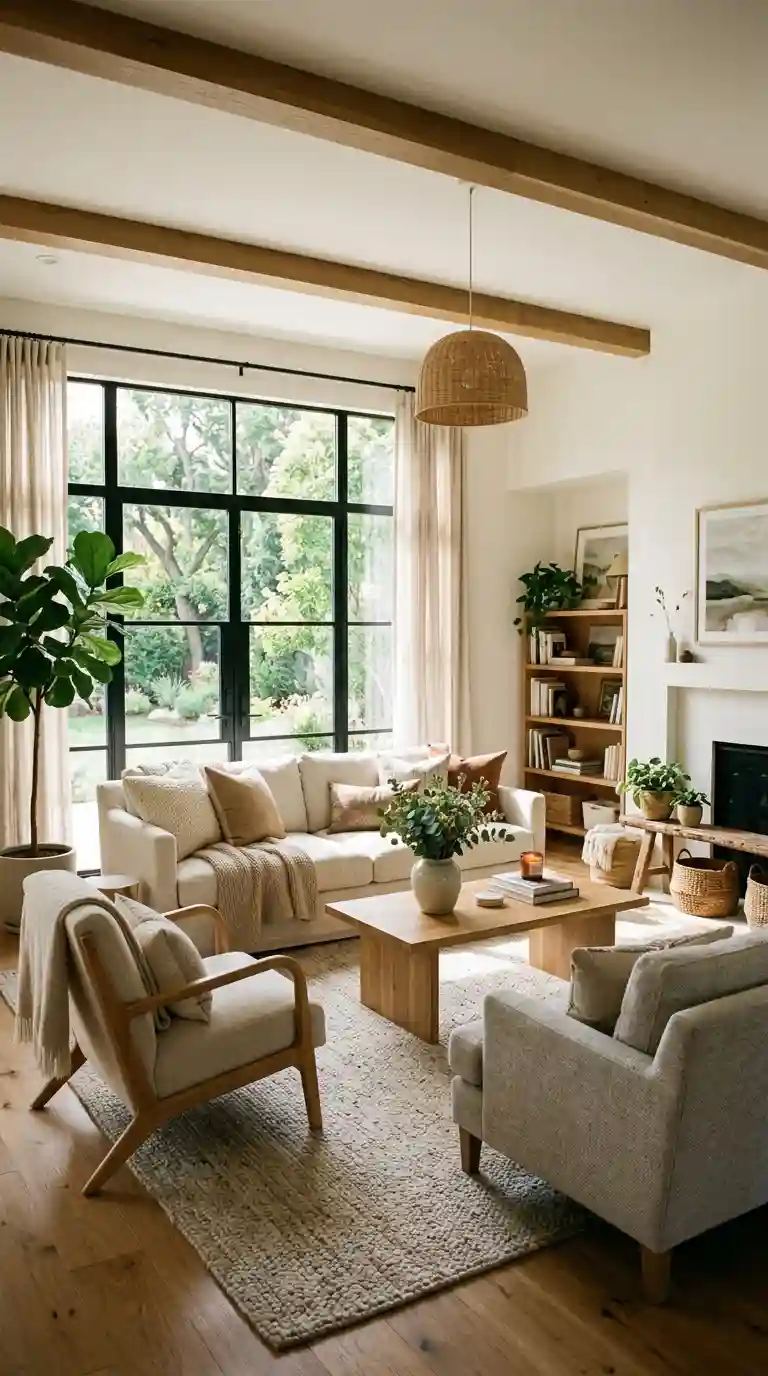
A rug is almost never the first thing someone notices consciously when they walk into a living room, and yet it is doing more work than nearly anything else in the space. Modern rugs for living room floors establish scale, define seating areas, add warmth underfoot, and visually pull together every other element in the room, from your sofa to your wall color to your lighting fixtures.
I have seen genuinely beautiful furniture look strangely disconnected simply because the rug beneath it was the wrong size or color, and I have seen fairly modest, budget conscious furniture look significantly more elevated purely because the rug tying it all together was chosen with real intention. That gap in outcome, based almost entirely on one decision, is exactly why modern rugs for living room spaces deserve genuine consideration rather than a last minute purchase.
There is also a practical dimension that matters just as much as the visual one. A rug absorbs sound, softens hard flooring, and adds a layer of comfort that makes a living room genuinely more inviting to actually sit and relax in. Without one, even a beautifully furnished hardwood or tile floored room can feel a little cold and echoey in a way that undermines the overall atmosphere you are trying to create.
Right now, the broader design conversation around this topic has genuinely shifted. Rather than chasing a single statement trend, designers are increasingly treating the rug as the element that helps a room feel grounded, layered, and believable, almost like the bridge connecting architecture, furniture, and mood together into one cohesive whole. That shift in thinking is exactly why getting this particular decision right matters more now than it ever has before.
Understanding Your Living Room Before Choosing a Rug
Before falling into an endless scroll of rug inspiration photos, it genuinely helps to slow down and think honestly about your specific living room and how you actually use it day to day. The best modern rugs for living room spaces always start from real life, not simply from whatever looks best in a showroom photo.
Consider your actual foot traffic and daily use. A living room that sees constant activity from kids, pets, or frequent guests calls for a genuinely different rug than a quieter, more formal space used mainly for occasional entertaining.
Think about your existing furniture and color palette honestly. Even the most beautiful modern rugs for living room floors can clash badly with a room that already has a strong, established color story, unless you are planning a broader refresh alongside the new rug itself.
Measure your actual room dimensions before shopping, since rug sizing genuinely matters more than most first time buyers expect. A rug that is too small will make furniture look like it is floating awkwardly in the middle of the room, while one that is properly scaled ties everything together in a way that instantly reads as intentional.
Take note of your flooring type too. Modern rugs for living room spaces interact differently depending on whether you are working with hardwood, tile, or existing carpet, and certain materials and pad choices will serve you better depending on what surface you are actually placing the rug over.
Must Read : Ivory Living Room Ideas: The Ultimate Guide to a Warm, Elegant, Timeless Space
Choosing the Right Size for Modern Rugs in Living Room Layouts
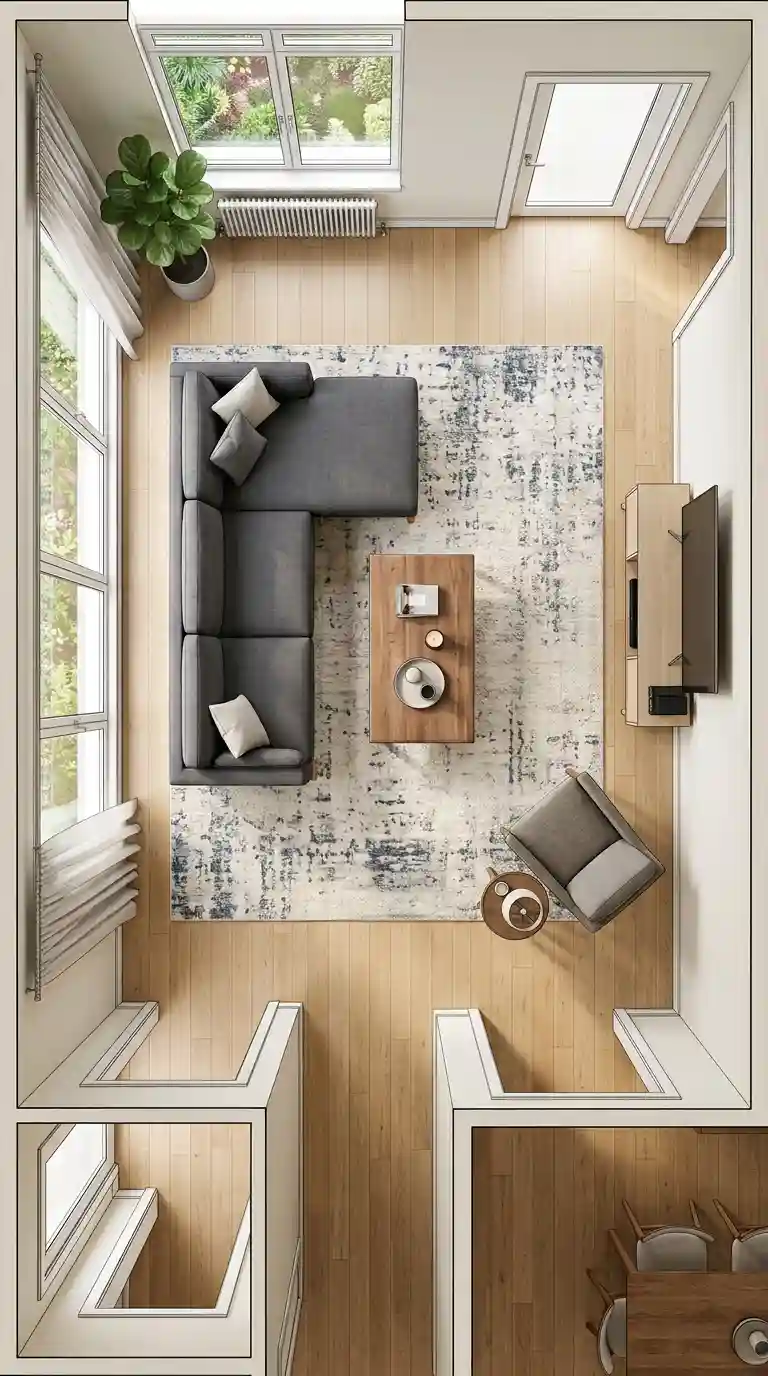
Size might be the single most important, and most commonly gotten wrong, decision within any collection of modern rugs for living room spaces. Getting this wrong undermines even the most beautifully designed rug, while getting it right instantly elevates even a fairly simple, budget friendly choice.
The current, strongly recommended approach leans toward larger area rugs that sit fully underneath your furniture, rather than smaller rugs floating awkwardly in the middle of a seating area. This creates a grounded, cohesive look rather than a disconnected, floating feeling that undermines the overall room.
A helpful general rule involves making sure at least the front legs of your major furniture pieces, including your sofa and armchairs, sit directly on the rug. This single guideline instantly prevents that common mistake of a rug feeling too small and disconnected from the furniture arranged around it.
For most standard living rooms, a rug in the range of eight feet by ten feet or nine feet by twelve feet tends to work particularly well, though your exact room dimensions should ultimately guide the final decision rather than defaulting to a single standard size without considering your own space.
Oversized rugs, sized generously enough that all your furniture sits comfortably within the rug’s boundaries, have become a genuinely popular strategy among designers specifically because a larger rug makes a room feel more put together without ever reading as stuffy or overly formal.
In an open concept layout, modern rugs for living room seating areas can also serve a genuinely practical function beyond aesthetics, helping visually separate your living space from an adjacent dining or kitchen area without requiring an actual physical wall to create that distinction.
Material Choices Within Modern Rugs for Living Room Durability
Material selection genuinely shapes both the comfort and the long term durability of modern rugs for living room spaces, and understanding the tradeoffs between different options helps you choose something that will actually hold up to your specific household’s daily life.
Wool remains one of the most consistently recommended materials for modern rugs for living room use, offering genuine durability, natural stain resistance, and a soft, comfortable feel underfoot that synthetic alternatives often struggle to fully replicate.
Performance rugs, engineered specifically to resist spills, sun fading, and general wear, have genuinely come a long way in recent years, and advances in this particular category have made them a true alternative to traditional wool for households with pets, kids, or heavy foot traffic. These hardworking pieces stand up to real daily use while still looking refined enough for a genuinely stylish living room.
Natural fiber options, including jute, sisal, and bamboo silk, have grown significantly in popularity as more homeowners lean into sustainable, eco conscious choices for their homes. These materials bring genuine texture and an organic, grounded quality, though they generally require slightly more careful cleaning compared to wool or synthetic alternatives.
High pile and plush rugs have become an increasingly popular choice for living rooms specifically, since comfort underfoot has become something of a defining priority within current interior design conversations. A softer, deeper pile in a tonal pattern can make a seating area feel like a genuine retreat rather than simply a functional floor covering.
Layering a smaller, more affordable natural fiber rug like seagrass or sisal underneath a smaller vintage or investment piece has become a genuinely clever technique, allowing a smaller, more expensive rug to make a bigger visual impact while the natural fiber base still covers the full intended floor area.
Color and Pattern Trends Shaping Modern Rugs for Living Room Spaces
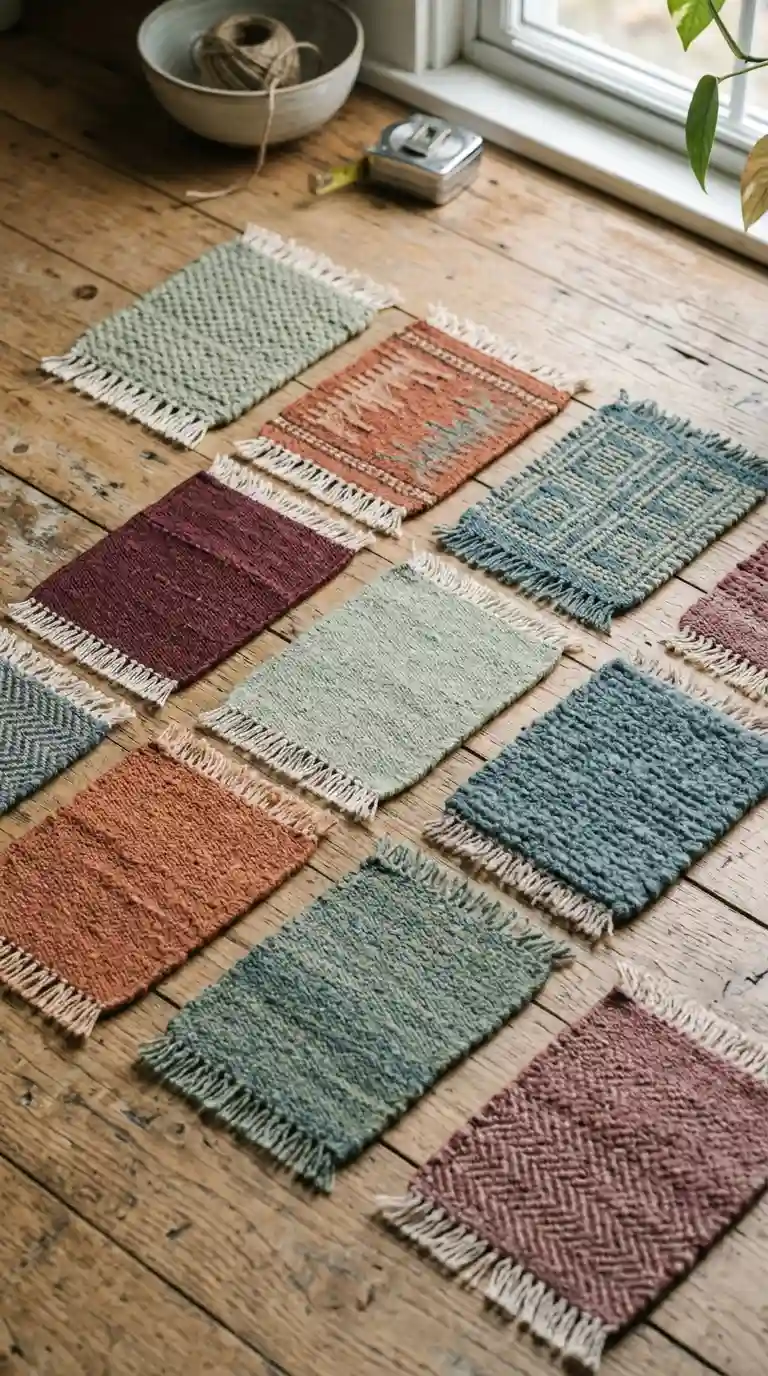
Color and pattern choices within modern rugs for living room spaces have shifted noticeably away from the sharp, high contrast geometric designs that dominated for so long, moving instead toward something softer, more tonal, and genuinely more personal.
Solid rugs are evolving into rich, monochromatic palettes featuring subtle variations of tone woven throughout the same piece, rather than a completely flat, uniform color. Think layered blues, mossy greens, bright terracotta, and softened burgundies that add genuine depth without overpowering the rest of the room.
A particularly effective styling technique within modern rugs for living room design involves choosing a rug that echoes the tone of your sofa or your primary upholstered piece. When the rug and your seating exist within the same tonal family, the entire room genuinely feels more elevated and intentional compared to a rug chosen with no real relationship to the furniture around it.
Mineral, muted color palettes have become genuinely central to how modern rugs for living room spaces are being designed right now, moving away from high contrast combinations in favor of layered, calm color stories that feel more sophisticated and less trend driven.
Bold patterns and saturated color are still very much present within this broader conversation, particularly for homeowners who want their rug to genuinely take center stage as a statement piece within an otherwise more restrained room. The key difference from earlier trend cycles involves how these patterns are being used, often with softer, more organic silhouettes rather than rigid, sharply defined geometry.
Softened geometry represents one of the clearer overall shifts within modern rugs for living room design specifically. Rather than sharp lines and perfectly rigid shapes, current rug design increasingly embraces more fluid, architecturally inspired forms that echo the natural flow of a room rather than fighting against it.
Must Read : Terracotta And Green Living Room: The Warm Earthy Combo That Is Taking Over Home Design In 2026
Texture as the Defining Feature of Modern Rugs for Living Room Design
Texture has genuinely become one of the single most important considerations within modern rugs for living room spaces recently, moving well beyond color and pattern as the primary factor shaping how a rug actually feels within a room.
Designers are increasingly embracing rugs that feel as good as they look, and this focus on tactile surfaces adds genuine dimension, depth, and coziness to a room, which has become especially important as more people prioritize comfort driven interiors over purely visual statement pieces.
Three dimensional sculpted textures and irregular patterns have emerged as a genuinely popular direction within modern rugs for living room design, bringing a sense of movement and organic character that a flat, single dimensional surface simply cannot achieve.
Surface life, meaning pile variation, tonal movement, and softer transitions between colors, has become something designers are specifically asking for within modern rugs for living room spaces, adding a welcome sense of irregularity and emotional weight rather than a perfectly uniform, mass produced feeling.
Mixing textures throughout a room, pairing a textured rug against smooth leather furniture or a plush rug beneath a sleek modern coffee table, creates genuine visual and tactile contrast that elevates an entire space well beyond what color alone could ever achieve.
Hand knotted and artisan crafted rugs, prized specifically for the slight irregularities and natural character that come from genuine handmade construction, have become increasingly sought after within modern rugs for living room design, since these subtle imperfections bring a sense of authenticity that machine made alternatives cannot fully replicate.
Modern Rugs for Living Room Spaces in Different Design Styles
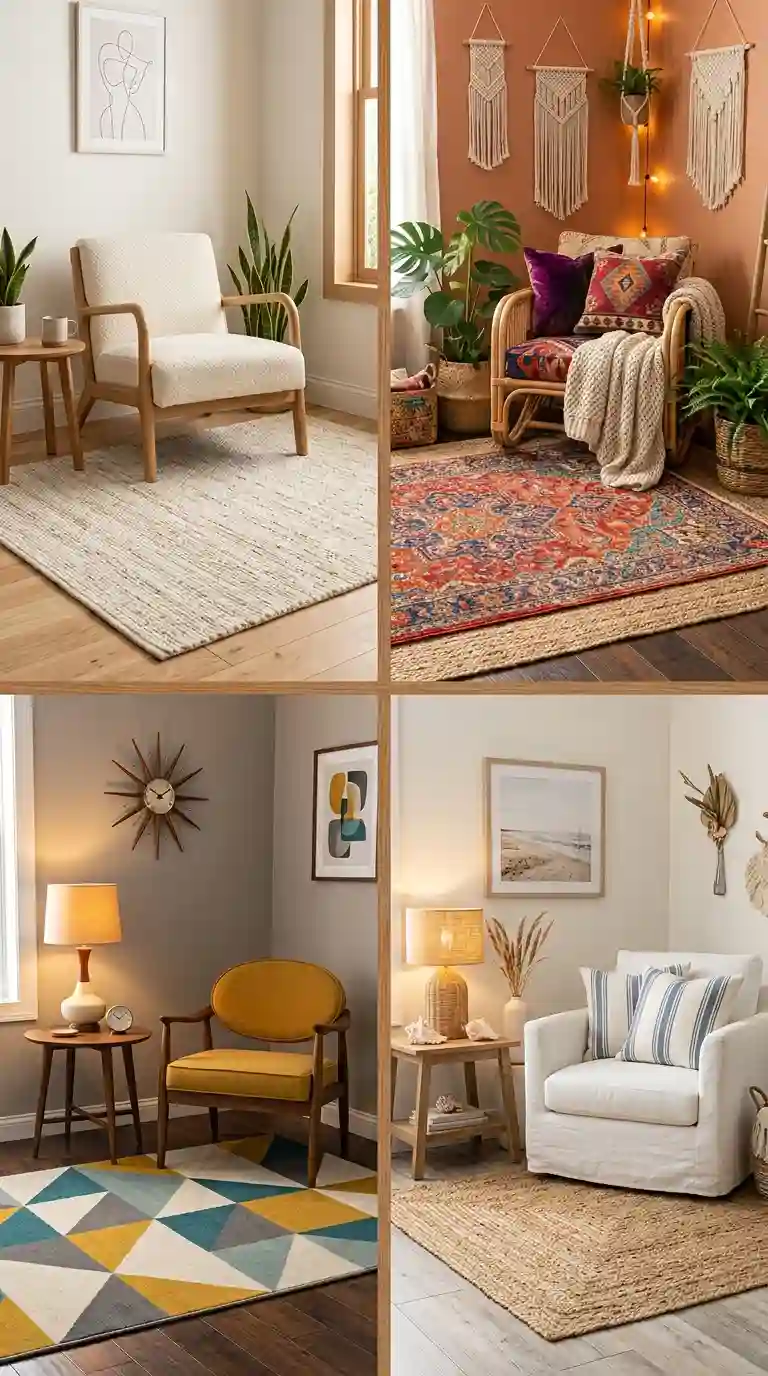
Different interior design styles call for genuinely different approaches to choosing modern rugs for living room floors, and matching your rug selection to your overall aesthetic makes a noticeable difference in how cohesive the finished room ultimately feels.
For a modern minimalist living room, a solid or subtly tonal rug in a muted neutral color, with restrained texture rather than a bold pattern, complements the overall clean, restrained aesthetic without introducing visual competition against an already streamlined space.
For a bohemian living room, layering multiple rugs together, mixing a natural fiber base with a smaller patterned or vintage inspired piece on top, supports the eclectic, collected feeling central to this particular aesthetic far better than a single, uniform rug ever could.
For a mid century modern living room, geometric patterns in a slightly softened, less rigid execution pair beautifully with the clean furniture lines typically found within this style, particularly when the rug’s color palette echoes the warm wood tones common throughout mid century furniture.
For a coastal or relaxed living room, natural fiber rugs like jute or sisal, in light, sandy, or soft blue tones, reinforce the breezy, organic feeling this style depends on, particularly when paired with linen upholstery and plenty of natural light.
For a traditional or classic living room, an intricate Persian or Oriental inspired design brings a sense of history and richness that suits the formality of this particular style, though even within traditional design, a softer, faded, quiet luxury version of these classic patterns has become genuinely popular recently, offering soft depth without excessive visual noise.
Get Modern Rugs for Living Room here
Layering Rugs Within Modern Living Room Design
Rug layering has genuinely emerged as one of the more interesting techniques within modern rugs for living room styling, offering a way to combine practicality, budget consciousness, and genuine visual depth all within a single design decision.
Placing a smaller, more special rug, whether a vintage find or a genuine investment piece, on top of a larger, more affordable natural fiber base allows a smaller rug to make a much bigger visual impact than it could achieve entirely on its own within a full sized room.
This layering technique also offers genuine practical benefits. The larger base rug covers the full intended floor area beneath your furniture, satisfying the sizing guidelines covered earlier, while the smaller top layer adds personality, color, or pattern exactly where you want the eye to land most.
Mixing vintage or antique rugs with more contemporary furniture and modern rugs for living room bases has become an increasingly celebrated styling approach, since designers consistently note that combining vintage with modern gives a space a genuinely more curated, personal feeling compared to an entirely new, matched furniture and rug set.
Layering also allows for genuine seasonal or stylistic flexibility. A smaller, more affordable top layer rug can be swapped out relatively easily if your taste evolves, while the larger, more neutral base rug remains a stable, long term foundation underneath everything else in the room.
Modern Rugs for Living Room Spaces With Pets and Kids
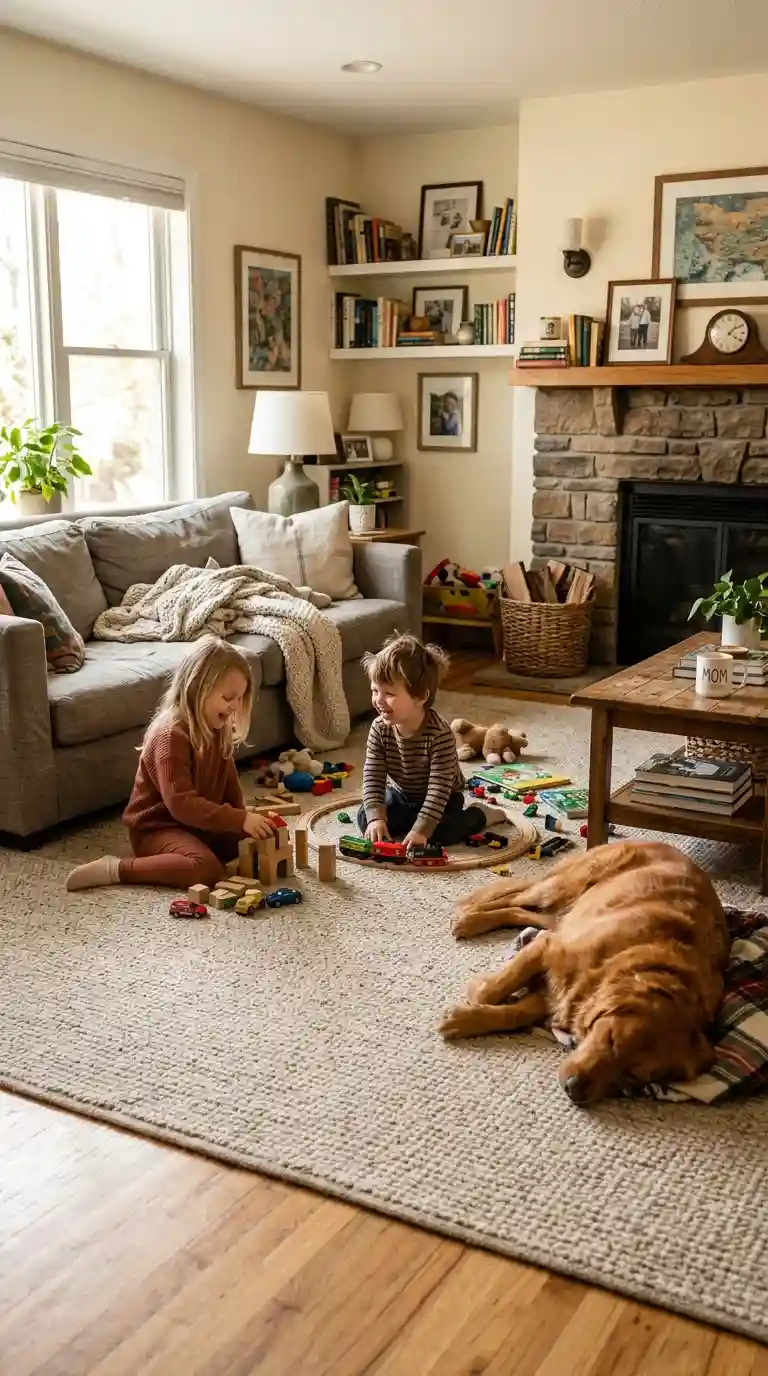
Households with children or pets face a genuinely specific set of considerations when choosing modern rugs for living room spaces, since durability and easy maintenance often need to take real priority alongside aesthetics.
Performance rugs, specifically engineered to resist stains, spills, and general everyday wear, have become an increasingly popular choice for exactly these households, offering genuine peace of mind without requiring a sacrifice in overall style or visual sophistication.
Darker colors or patterns with more visual movement tend to hide everyday marks, crumbs, and pet hair significantly better than a plain, pale colored rug, reducing the visible wear that naturally builds up between deep cleaning sessions in an active household.
Lower pile rugs are generally easier to clean thoroughly and tend to trap less pet hair and debris compared to a very high pile, plush option, making them a genuinely practical choice for households with shedding pets specifically.
Wool rugs offer a particularly good middle ground for households with kids or pets, since wool’s natural fibers resist staining reasonably well while still providing that soft, comfortable feel underfoot that makes a living room genuinely enjoyable to actually sit and play on.
Testing a rug sample against your specific household’s real behavior, whether that means a particularly messy toddler or a dog prone to shedding heavily, remains genuinely valuable before committing to a full sized purchase, since durability can vary more than expected between similar looking options.
Also Read : 45 Breathtaking Dark Blue Living Room Ideas That Turn Any Space Into A Cozy Retreat
Budget Friendly Modern Rugs for Living Room Spaces
You genuinely do not need an unlimited budget to find modern rugs for living room floors that look thoughtfully chosen and elevate the entire space. Some of the most compelling rooms I have styled relied on smart, budget conscious choices rather than the single most expensive option available.
Natural fiber rugs, like jute or sisal, remain among the most affordable options within modern rugs for living room shopping, and their neutral, textural quality makes them a genuinely versatile base that works across a wide range of design styles.
Machine made rugs have improved enormously in both quality and design sophistication over recent years, offering a meaningfully lower price point compared to genuinely handmade pieces while still delivering strong visual impact within a well styled living room.
Secondhand and vintage marketplaces frequently offer genuinely beautiful rugs at a fraction of retail price, and the slight wear or patina often found on an older piece can actually enhance rather than detract from the overall character it brings into a room.
The layering technique covered earlier offers a genuinely clever budget strategy as well, allowing you to invest more heavily in a smaller, more special rug while covering the majority of your floor space with a considerably more affordable natural fiber base underneath.
Prioritizing your budget toward the rug itself, rather than spreading a limited amount evenly across every single furniture piece in the room, often produces a more satisfying overall result, since the rug genuinely carries so much visual and functional weight within a living room’s overall design.
How Modern Rugs for Living Room Spaces Interact With Lighting
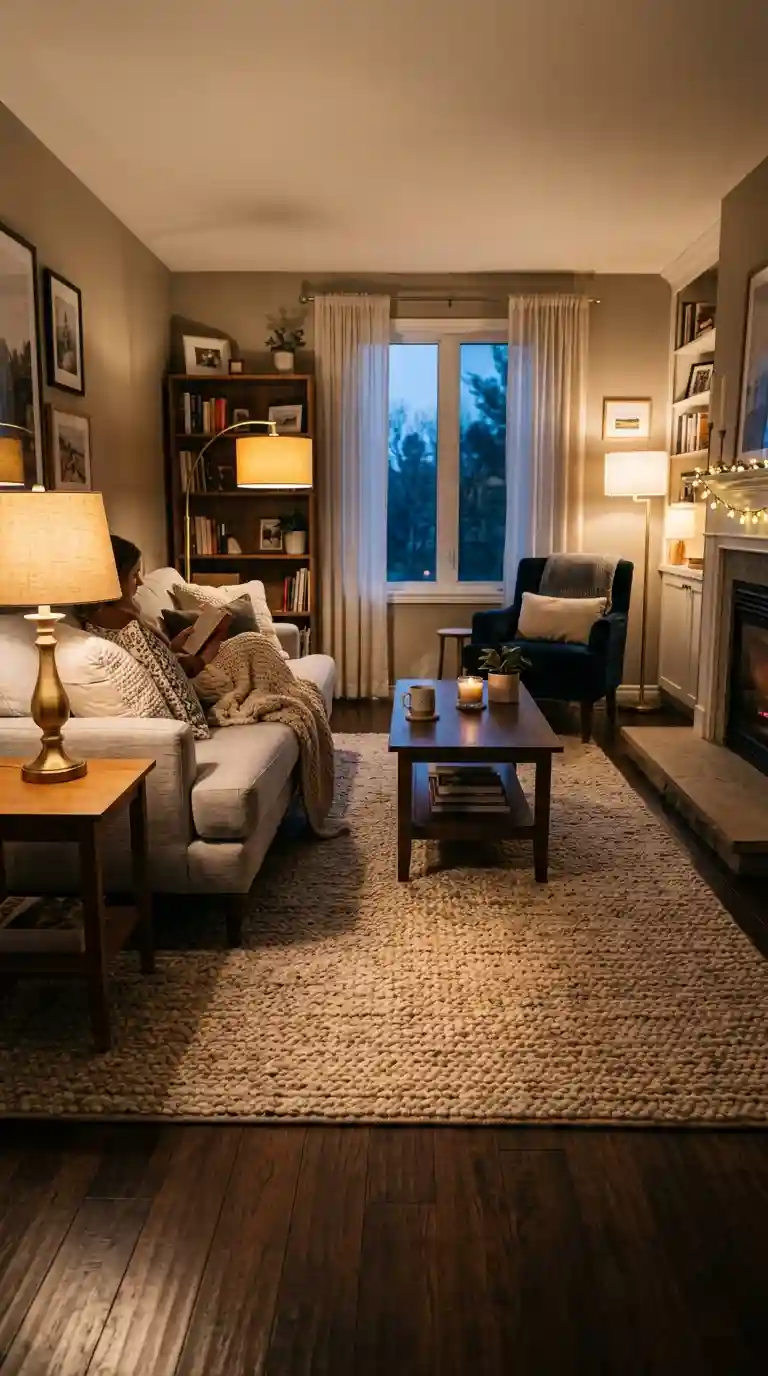
Lighting genuinely changes how a rug reads within a living room, and thinking through this relationship carefully helps avoid the disappointment of a color or texture that looked perfect in a showroom but feels different once it is actually on your own floor.
Natural daylight tends to bring out the truest version of a rug’s actual color, which is exactly why testing a sample directly in your own living room, at different times of day, matters so much before committing to a larger purchase for modern rugs for living room spaces.
Warmer, layered lighting throughout a living room, combining ambient overhead light with table lamps and accent fixtures, tends to enhance the coziness of most rug materials and colors, particularly textured or high pile options that benefit from a bit of shadow and depth to fully show off their dimensional quality.
Darker rugs can sometimes make a room feel smaller or more enclosed under limited natural light, while lighter toned rugs generally help a space feel more open and airy, which is worth genuinely considering if your particular living room does not receive an abundance of natural daylight throughout the day.
Reflective or glossy finished flooring surrounding your rug, like polished hardwood or certain tile, can bounce additional light back into a room, which sometimes allows for a slightly bolder or darker rug choice than you might otherwise consider in a room with more matte, light absorbing flooring.
Modern Rugs for Living Room Spaces That Support Open Concept Layouts
Open concept living has become genuinely common in modern homes, and this particular layout presents a distinct set of considerations for choosing modern rugs for living room seating areas specifically.
Using a rug to visually define your living room space within a larger open floor plan has become one of the most effective, widely recommended techniques for this kind of layout, helping separate a seating area from an adjacent dining or kitchen zone without requiring any actual physical wall or barrier.
Sizing becomes even more important within an open concept space, since a rug that is too small risks looking like an isolated island floating within a much larger undefined area, rather than genuinely anchoring and defining your intended living room zone.
Color and material continuity between your chosen rug and the rest of your open concept space matters more here than in a fully enclosed, separate living room, since everything within an open layout is visible together at once, and a jarring, disconnected rug choice will read more obviously within this kind of continuous sightline.
Multiple rugs, one defining your living room seating area and a separate piece defining an adjacent dining space, can work together beautifully within a larger open concept home, provided they share a cohesive color story or material language that ties the overall space together rather than feeling like two entirely unrelated design decisions.
How I Approach Selecting a Real Rug for a Living Room Project
Every consultation I do around modern rugs for living room spaces starts with a genuine conversation about how the family actually lives in that specific room, rather than jumping straight into color swatches or pattern books.
I remember working with a client who had a beautiful, fairly neutral sofa and was drawn toward a bold, high contrast geometric rug she had seen online. We talked honestly about her household, which included two young kids and a fairly active golden retriever, and ultimately landed on a similarly patterned but more tonal, forgiving rug in a performance friendly material instead. It still achieved the visual interest she originally wanted, but it was genuinely built to handle her actual daily life rather than an idealized, showroom version of it.
I have also worked with clients on the opposite end of the spectrum, an empty nester couple furnishing a formal living room they specifically wanted to feel a bit more elevated and considered now that the daily wear and tear of raising kids was behind them. In that project, we leaned into a genuinely investment piece, a smaller, more special wool rug layered over a natural fiber base, choices that would not have made practical sense for a busier household but were exactly right for their current stage of life.
What I have learned across these very different conversations is that the best modern rugs for living room spaces are never really about chasing whatever pattern or color happens to be trending in a given month. They come from an honest look at how a specific household actually lives, then choosing a size, material, and design that genuinely supports that life rather than fighting against it.
Also Read : 50 Brilliant Living Room Layout Ideas That Will Instantly Transform The Way You Live
Common Mistakes That Undermine Good Modern Rugs for Living Room Choices
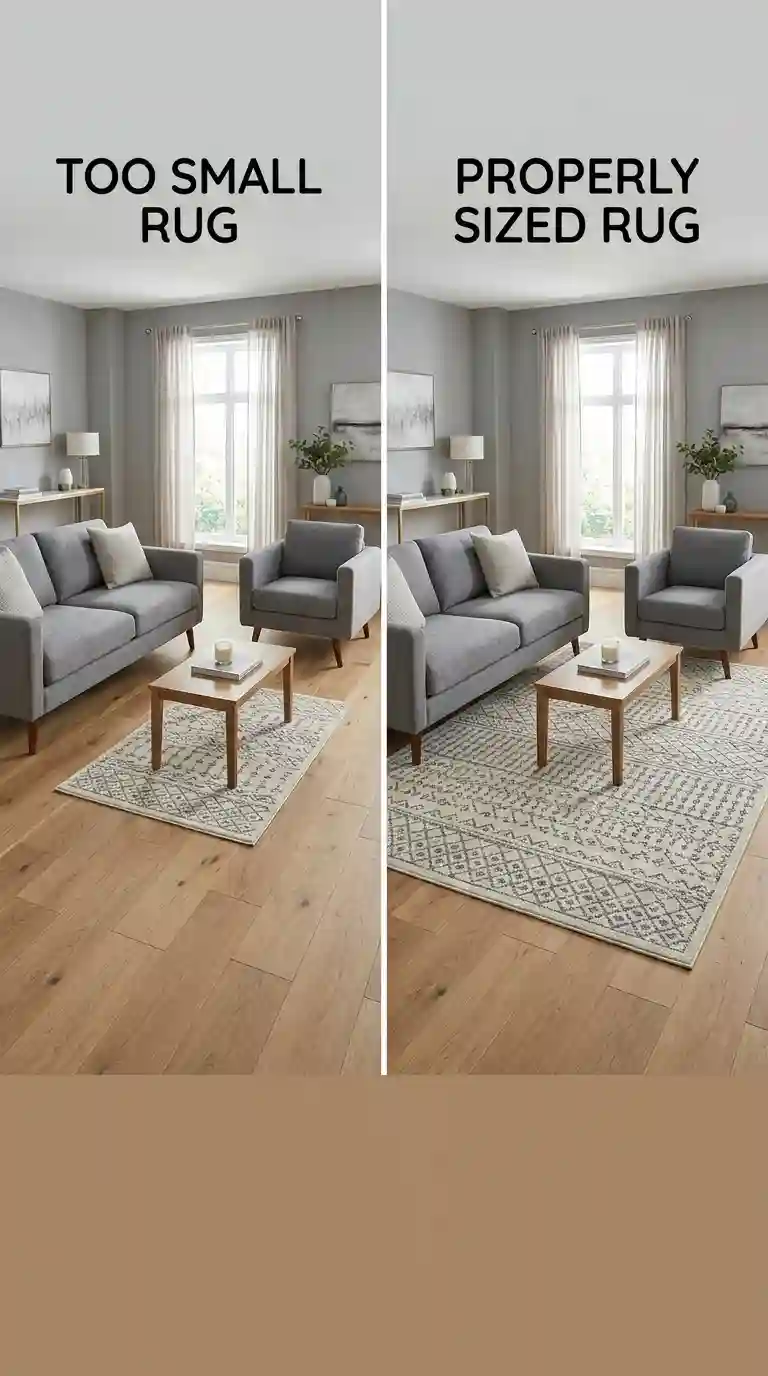
After helping so many people navigate this exact decision, certain mistakes come up repeatedly, quietly undermining otherwise thoughtful choices around modern rugs for living room spaces.
Choosing a rug that is too small is probably the single most common mistake I encounter. A rug that leaves your furniture floating disconnected in the middle of the room, rather than grounding it properly, undermines much of the visual benefit a rug is genuinely meant to provide.
Ignoring your household’s actual daily habits when selecting material leads to real frustration down the line, particularly for households with kids or pets who choose a delicate, high maintenance rug material without honestly considering how that piece will actually hold up to daily use.
Matching a rug too literally to your existing furniture and wall colors, rather than allowing for a bit of intentional tonal variation or contrast, can sometimes result in a flat, overly coordinated room that lacks the genuine depth and personality a slightly more varied approach would provide.
Overlooking texture entirely in favor of color and pattern alone misses one of the most significant opportunities within modern rugs for living room design right now, since a flat, single dimensional rug rarely achieves the same richness and warmth as one with genuine tactile variation.
Forgetting to actually test a rug sample in your own specific lighting conditions before committing to a full sized purchase remains a surprisingly common oversight, and it can lead to real disappointment once a color that looked perfect online reads completely differently under your own living room’s particular light.
Maintaining Modern Rugs for Living Room Spaces Over Time
Once you have chosen the right modern rugs for living room spaces, a bit of ongoing care keeps them looking their best for years, particularly given the genuine investment often involved in a quality piece.
Vacuum regularly, though the exact frequency and settings should be adjusted based on your specific rug material, since certain natural fibers and high pile constructions require gentler handling than more durable synthetic or performance materials.
Rotate your rug periodically, particularly in a spot that receives consistent direct sunlight, since this simple habit helps prevent uneven fading and ensures the entire rug wears evenly over time rather than developing an obviously lighter or more worn section.
Address spills and stains immediately rather than letting them set, since most materials, even performance rated ones, clean up far more effectively when tackled within the first few minutes rather than after the spill has had time to dry and fully absorb into the fibers.
Use a proper rug pad underneath your living room rug, both to prevent slipping and to extend the overall lifespan of the rug itself by reducing friction and wear against the floor beneath it, particularly important on hardwood or tile surfaces.
Have wool or genuinely delicate rugs professionally cleaned every year or two, depending on your household’s specific level of use, since this periodic deeper cleaning genuinely extends the lifespan and appearance of a higher quality investment piece far beyond what regular home vacuuming alone can achieve.
FAQ About Modern Rugs for Living Room Spaces
What size rug is best for a living room?
Most living rooms work well with a rug sized so that at least the front legs of major furniture pieces sit on top of it, with many homeowners now choosing larger rugs in the range of eight by ten or nine by twelve feet for a more grounded, cohesive look.
What is the best material for a living room rug?
Wool remains one of the most popular and durable choices, while performance rugs offer strong stain and wear resistance for households with kids or pets, and natural fibers like jute or sisal provide a more sustainable, textural option.
Should a rug go under the coffee table in a living room?
Yes, in most layouts the coffee table sits fully on the rug along with the front legs of the sofa and chairs, helping create a cohesive, grounded seating area rather than a disconnected arrangement.
What are the current trends for modern rugs for living room spaces?
Current trends favor softened geometry over sharp lines, tonal and mineral color palettes, tactile and three dimensional textures, oversized sizing, and a genuine mix of vintage and contemporary pieces layered together.
Can I layer two rugs in my living room?
Yes, layering a smaller special rug over a larger, more affordable natural fiber base has become a popular technique, allowing a smaller rug to make a bigger visual impact while still covering the full intended floor area.
How do I choose a rug color for my living room?
Choosing a rug that echoes the tone of your sofa or primary upholstered piece tends to create a cohesive, elevated look, though intentional contrast can also work well depending on your overall design goals.
Are performance rugs good for living rooms?
Yes, performance rugs have improved significantly in recent years, offering genuine stain and wear resistance while still looking refined enough for a stylish, everyday living room.
What rug works best for an open concept living room?
A properly sized rug that clearly defines your seating area, without floating too small within the larger space, helps visually separate a living room from an adjacent dining or kitchen zone in an open floor plan.
How often should I replace my living room rug?
A well made rug can last many years with proper care, though visible wear, flattened pile, or significant fading are good signs it may be time for a refresh or replacement.
What rug texture is trending for living rooms right now?
Three dimensional sculpted textures, high pile plush options, and rugs with visible surface movement or pile variation are all currently popular within modern rugs for living room design.
Final Thoughts on Modern Rugs for Living Room Spaces
Choosing a rug is genuinely one of the more significant decisions you will make for your living room, carrying far more visual and functional weight than its relatively modest price tag might initially suggest. The best modern rugs for living room spaces come from an honest understanding of how you actually use your home, not from chasing whatever pattern or color happens to be trending at any given moment.
Take the time to measure your space properly, consider your household’s real daily habits, and actually test a sample in your own lighting before committing to a larger purchase. Whether you land on a bold, tonal statement piece or a softer, more natural layered approach, the underlying goal behind every good rug choice stays the same.
Find a piece that genuinely grounds your room, feels good underfoot, and holds up to the actual life happening in that space, day after day, for years to come. That is really what separates a rug that simply covers the floor from one that transforms the entire feeling of a home.