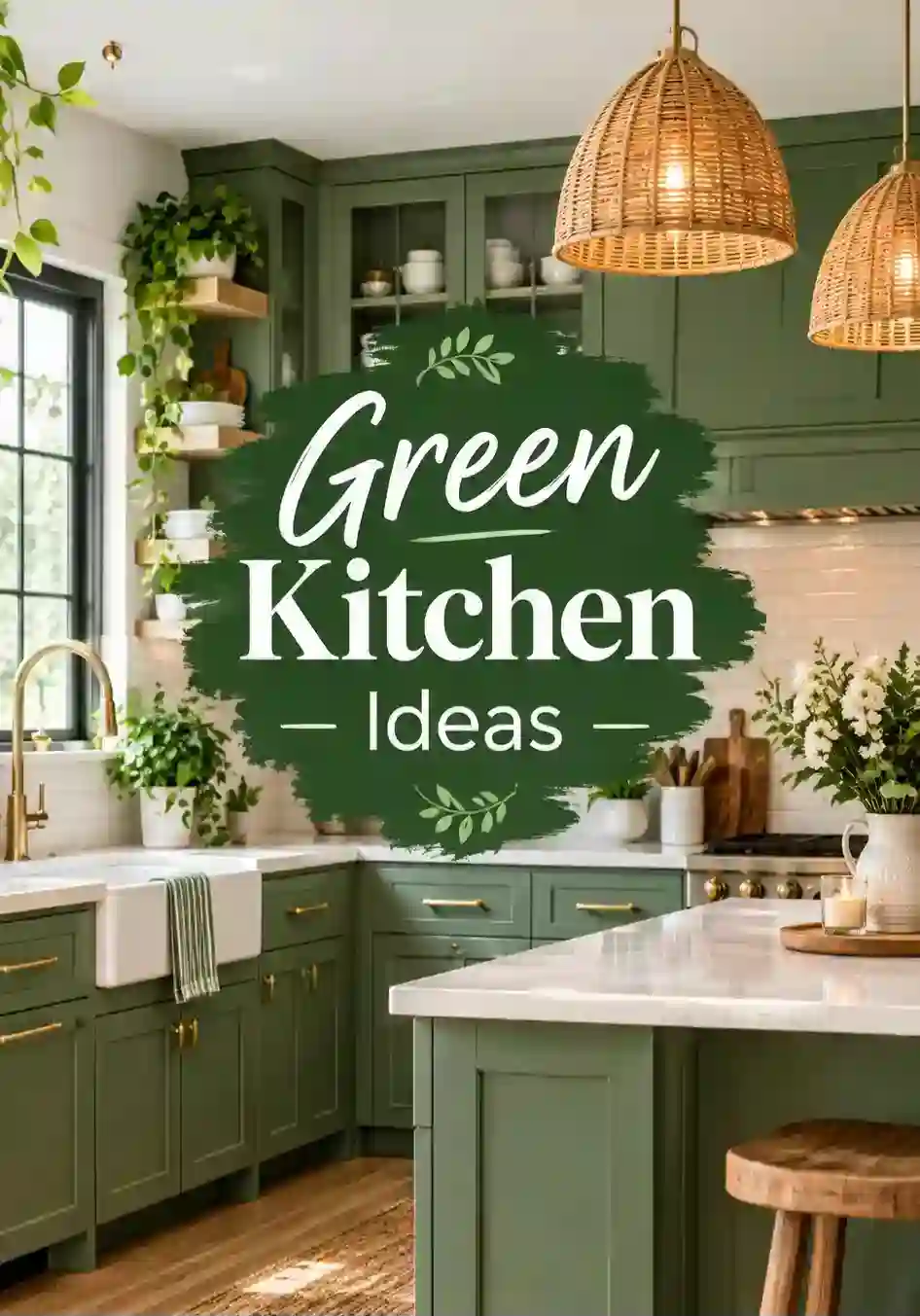
There is a specific moment in almost every green kitchen project I have worked on where a client who arrived nervous about committing to color suddenly stops worrying entirely. It usually happens the day the first cabinet door goes up. They stand there for a second, and something shifts in their face, like they finally understand why so many people have been choosing green kitchens over the classic white or gray they originally assumed they wanted.
Green kitchen design has quietly become one of the most requested directions I get asked about, and honestly, it makes complete sense once you understand why this particular color works so well in this particular room. A green kitchen taps into something genuinely primal, our natural association with growth, freshness, and the outdoors, brought directly into the one room in the house most closely tied to nourishment and gathering.
This guide pulls together everything I have learned from designing and consulting on real green kitchen projects, from full cabinet renovations to simple, budget friendly updates for people who love this direction but are not ready for a complete overhaul. We will walk through shades, materials, layout, lighting, and the small details that separate a green kitchen that feels genuinely sophisticated from one that reads as dated or overly trendy.
Let us get into it.
Also Read: 55 Inspiring Farmhouse Kitchen Design Ideas That Will Instantly Warm Up Your Home
Why a Green Kitchen Has Become Such a Compelling Choice
I get asked constantly whether a green kitchen is too bold a commitment for a room you are not planning to redo again for at least a decade. It is a completely fair question, and I understand the hesitation, since a kitchen renovation is genuinely one of the biggest investments most people make in their entire home.
The truth is, green earns its growing popularity honestly. There is real color psychology behind why a green kitchen works so well specifically in this room. Green is consistently associated with balance, renewal, and calm, qualities that matter enormously in a space where people cook, gather, and unwind together every single day. It carries a genuine connection to nature and organic living, which aligns beautifully with a much broader cultural shift toward bringing natural, biophilic elements into the home.
A green kitchen is also remarkably flexible in a way that a lot of trend driven colors simply are not. Unlike a shade that looks stunning in a single magazine spread but starts to feel tiring in real daily life, green tends to age gracefully, genuinely shifting in character as the light in your kitchen changes throughout the day, fresh and energizing under morning sun, moody and genuinely sophisticated by candlelight in the evening.
I have watched clients go from nervous about committing to a green kitchen to genuinely obsessed with their finished space within a single walkthrough after installation. The shift almost always comes down to shade selection and how thoughtfully that green is paired with the surrounding materials, which is exactly what we are going to cover throughout the rest of this guide.
Choosing the Right Shade of Green for Your Kitchen
Not every shade of green works the same way within a kitchen, and getting this specific decision right is genuinely the single most important factor in whether your finished green kitchen feels timeless or ends up looking dated within just a couple of years.
Sage green remains one of the most consistently popular choices for a green kitchen, offering a soft, slightly gray leaning tone that reads as calm and versatile rather than overly bold. This particular shade suits a huge range of kitchen styles, from cottage inspired spaces to more streamlined, modern layouts.
Olive green has genuinely surged in popularity recently, carrying a distinctly yellow brown undertone that gives it a warmer, more earthy, almost Mediterranean quality compared to cooler greens. An olive green kitchen pairs exceptionally well with warm materials like brass hardware, butcher block counters, and natural wood accents, and it works particularly beautifully within country, cottage, or bohemian styled spaces.
Forest and hunter green bring a genuinely dramatic, moody richness into a green kitchen, often described as the direction to choose if you want your kitchen to feel like the luxury tier of this particular color story. A deep forest green kitchen paired with white subway tile and brass fixtures creates real visual drama and depth that a lighter shade simply cannot achieve.
Emerald and true green tones offer a bolder, more saturated option for anyone wanting their green kitchen to feel genuinely vibrant and alive, though this particular direction tends to suit a more confident, maximalist overall design approach rather than a quieter, more restrained kitchen aesthetic.
Mint and lighter minty greens have become a popular choice specifically for kitchen islands, offering a fresh, slightly playful pop of color against creamy or white surrounding cabinetry, giving an otherwise neutral green kitchen a gentle, modern contrast without committing to a fully saturated color throughout the entire room.
Green Kitchen Cabinet Ideas Worth Considering
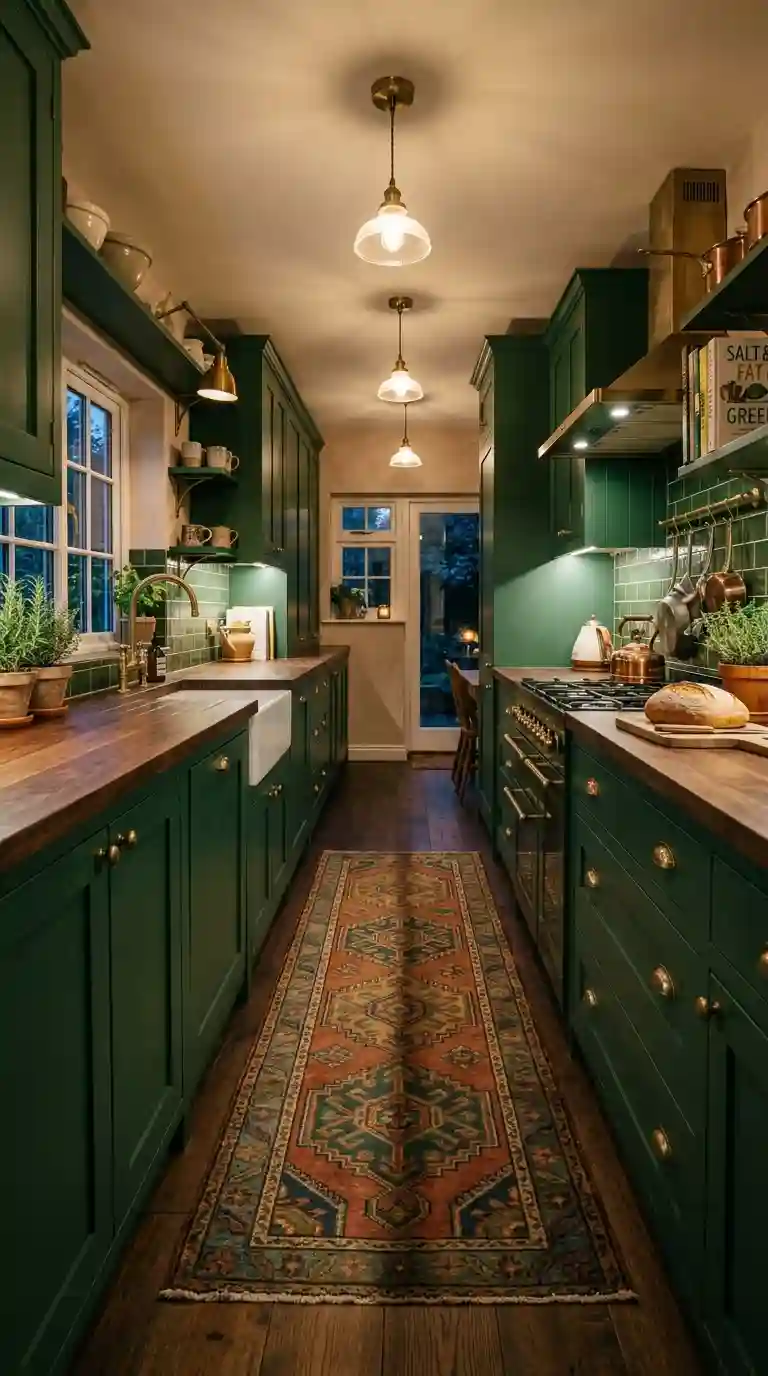
Cabinets are usually the single biggest visual commitment within a green kitchen project, and there are several genuinely effective approaches worth considering depending on your budget and how bold you want the final result to feel.
Full green cabinetry throughout the kitchen, both upper and lower cabinets, creates a fully immersive, cohesive green kitchen that wraps the entire room in one rich, unified tone. This approach tends to feel particularly dramatic and intentional, especially in a smaller galley style kitchen where the color can wrap around you almost like a cozy little nook.
Two tone cabinetry remains one of the most popular strategies for a green kitchen right now, pairing green lower cabinets with white or cream upper cabinets. This keeps the overall space feeling light and airy while still giving green a meaningful, grounded presence throughout the room.
A green kitchen island paired with lighter surrounding cabinetry offers a genuinely popular middle ground, letting the island function as the clear focal point of the entire kitchen while the rest of the room stays in a softer, more neutral palette. This approach works particularly well for anyone nervous about committing to green throughout an entire space all at once.
Green floating cabinets have become an increasingly popular choice for smaller or open plan green kitchen layouts, creating a modern, airy look that adds a splash of color without visually weighing down the room the way a full wall of traditional upper cabinets sometimes can.
Shaker style cabinet fronts remain the most versatile choice across nearly every version of a green kitchen, since the classic, slightly traditional silhouette keeps the overall look from feeling too trend driven, allowing the color itself to carry most of the visual personality within the room.
Read Also : 45 Bold Black And Copper Kitchen Ideas That Turn Heads And Feel Like Home
Countertop and Backsplash Pairings for a Green Kitchen
Countertop and backsplash choices need to work genuinely hard within a green kitchen, since these surfaces cover a large visual area and need to complement your chosen shade of green without competing against it.
Marble countertops, particularly in a warm white or cream tone, pair beautifully against nearly every shade of green kitchen cabinetry, providing a clean, elegant surface that lets the cabinetry color remain the clear star of the room.
Green marble itself has become a genuinely striking backsplash choice within elevated green kitchen design, with the natural veining of the stone reading almost like a piece of art mounted directly on the wall, particularly stunning when paired with rich walnut cabinetry and aged brass hardware for contrast.
Butcher block countertops paired with green cabinets have become one of the most searched and requested combinations within green kitchen design recently, and it is easy to understand why. This particular pairing adds genuine warmth and a timeless, slightly rustic charm that softens what might otherwise feel like an overly polished, purely modern space.
White subway tile remains one of the most classic and consistently reliable backsplash choices for a green kitchen, offering a clean, simple contrast that lets deeper shades like forest or hunter green truly stand out as the dominant visual element in the room.
Wood floors, particularly a wire brushed oak in a warm, natural tone, open up a green kitchen beautifully, bringing an organic material that echoes the natural inspiration behind the color itself while keeping the overall space feeling warm rather than cold or overly saturated.
Hardware and Fixture Choices for a Green Kitchen
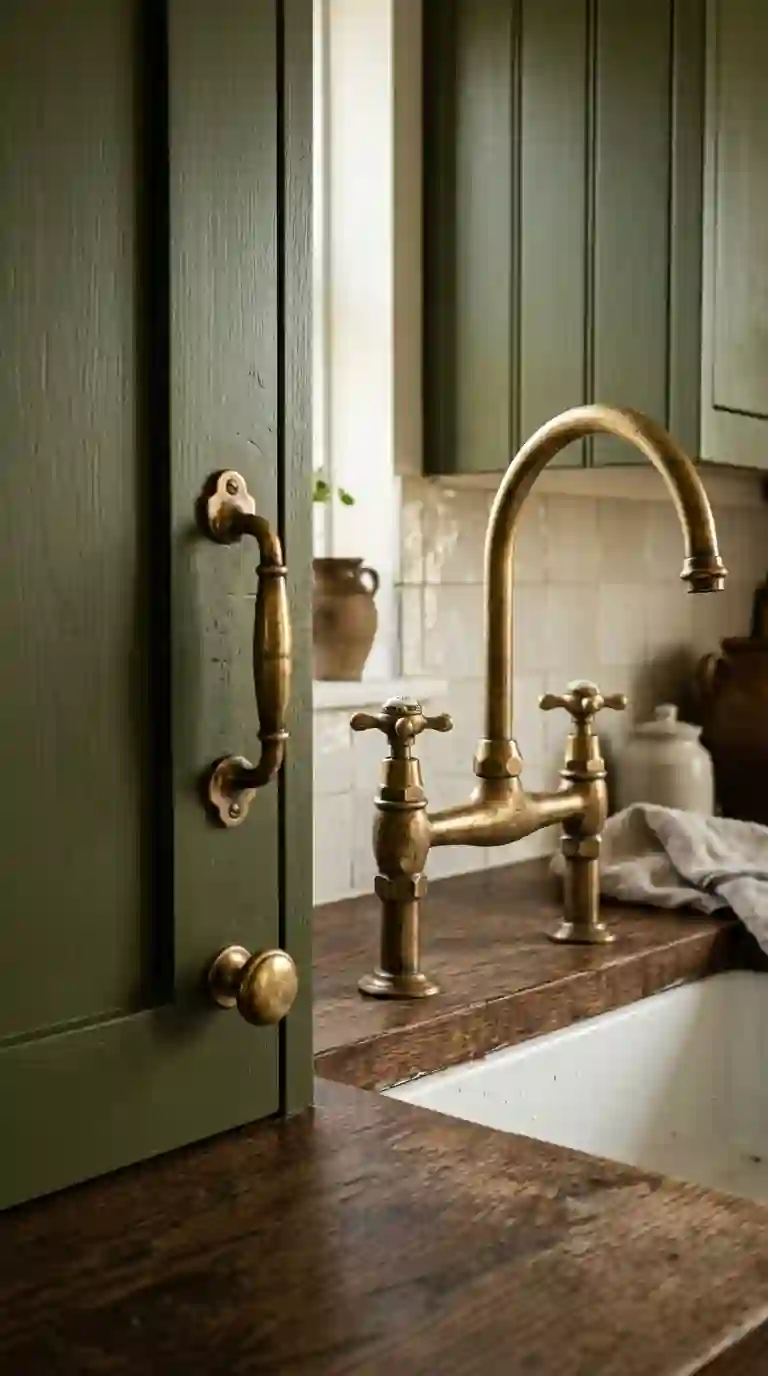
Hardware might seem like a small detail, but it genuinely shapes the overall feeling of a green kitchen, either reinforcing a warm, inviting mood or pushing the space toward something more modern and streamlined.
Brass hardware remains the single most consistently recommended choice across nearly every version of a green kitchen. The warm, slightly golden tone of brass complements green beautifully, adding a touch of subtle shine and history that keeps the overall look feeling polished and genuinely elevated rather than flat.
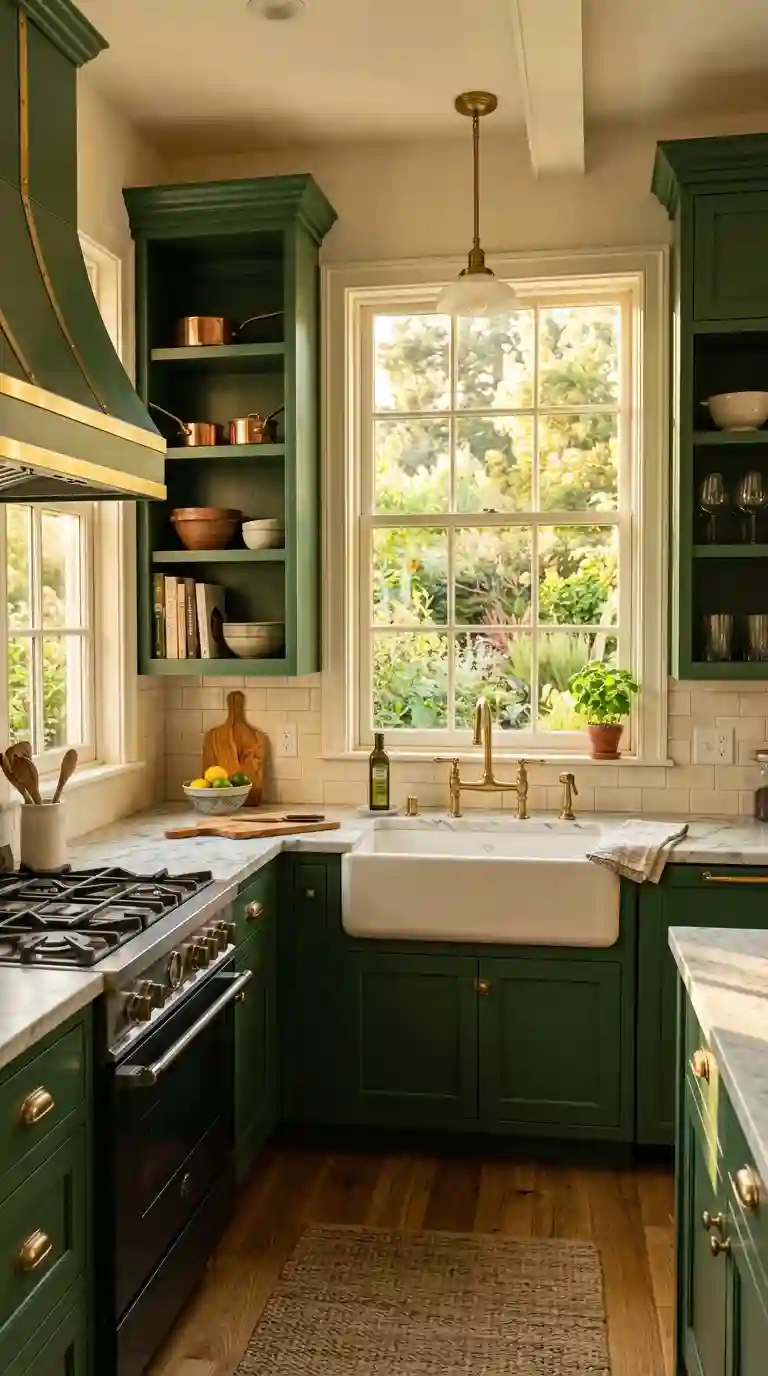
Vintage inspired brass faucets, particularly a bridge style design over a farmhouse sink, lean into the nostalgic, slightly old world charm that a lot of homeowners are specifically chasing when they choose a green kitchen in the first place, echoing the same warmth found throughout the rest of the room’s material choices.
Oil rubbed bronze offers a slightly darker, moodier alternative to brass, particularly well suited to a deeper forest or hunter green kitchen where a bit more contrast and drama feels appropriate against the richer cabinetry color.
Brushed nickel provides a cooler, more understated hardware option for anyone leaning toward a more modern, streamlined green kitchen aesthetic rather than the warmer, more traditional cottage inspired direction that brass tends to naturally support.
Pendant lighting deserves genuine consideration alongside your hardware choices, and a sleek, warm toned fixture hung above a green kitchen island has become a favorite finishing touch among designers, adding just enough glamour and polish to elevate the entire space.
Green Kitchen Ideas for Different Design Styles
A green kitchen genuinely translates across a wide range of interior styles, and adjusting the surrounding materials and details lets this particular color story feel completely different depending on your overall aesthetic goals.
For a cottage or country style green kitchen, pairing olive or sage green cabinetry with butcher block counters, potted herbs along the windowsill, and vintage inspired fixtures creates the kind of warm, lived in charm that makes this style so consistently beloved. It is the kind of kitchen where you can genuinely imagine fresh herbs on the windowsill and dinner simmering slowly on the stove.
For a modern, streamlined green kitchen, keeping the cabinetry in a clean, flat front olive or sage tone with minimal ornamentation, then pairing it with sleek stone countertops and simple brushed hardware, lets the color itself carry the personality without competing against a busier overall design.
For a farmhouse style green kitchen, combining a deep forest green with a classic farmhouse apron sink, white subway tile, and warm brass fixtures creates genuine luxury tier presence, particularly when the window above the sink brings in a bit of natural greenery from outside to echo the cabinetry color.
For a bohemian or eclectic green kitchen, olive tones work particularly well against mixed patterns and textures, since the earthy, slightly muted quality of this specific shade plays beautifully off a more layered, collected overall design approach.
For a Mediterranean or Tuscan inspired green kitchen, olive green’s connection to the natural landscape feels genuinely intentional rather than purely decorative, particularly when paired with terracotta accents, warm stone, and plenty of natural light throughout the space.
Must Read : 45 Brilliant DIY Kitchen Table Ideas That Will Save You Thousands And Transform Your Kitchen
Small Space Green Kitchen Ideas That Genuinely Work
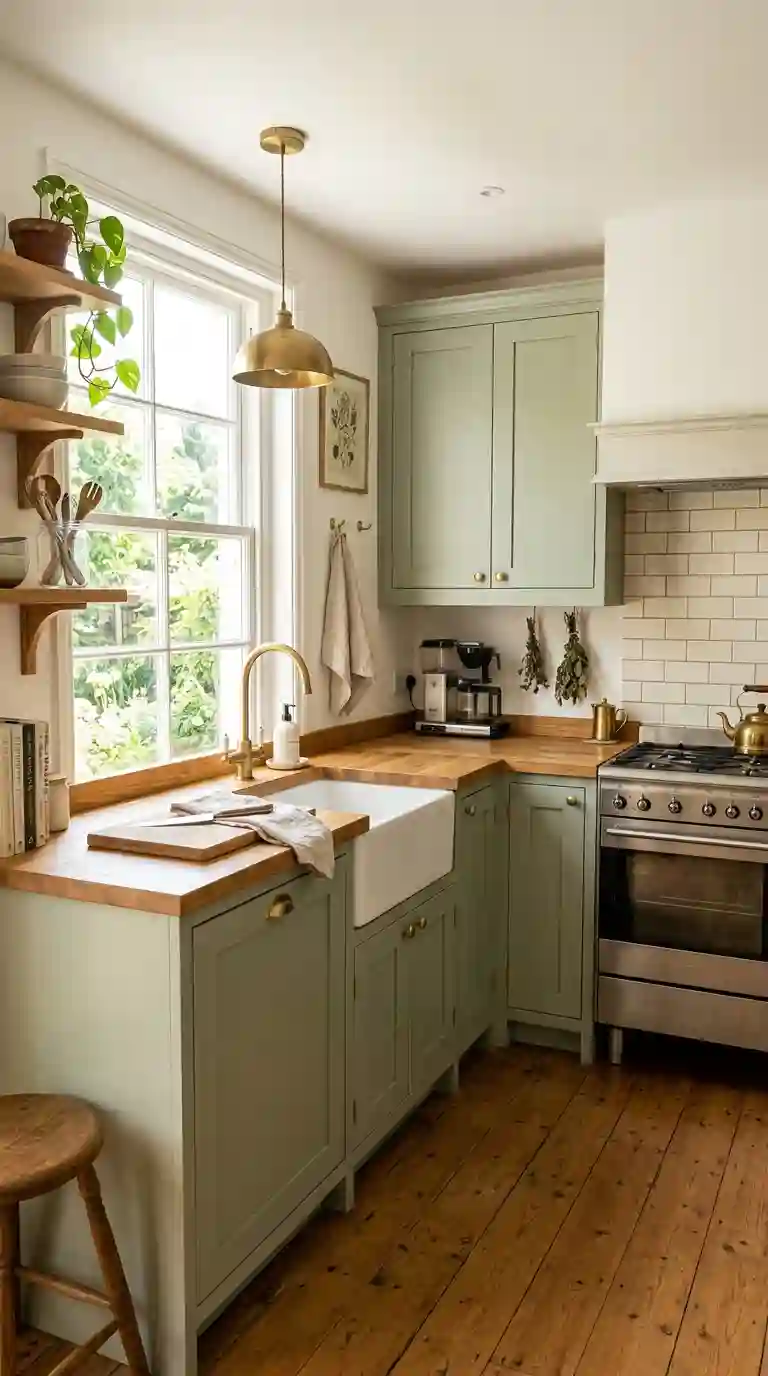
Not every green kitchen has the luxury of expansive square footage, and this particular color story genuinely proves that good design does not require a significant amount of space to make a real impression.
Soft sage cabinets paired with warm wood countertops create a palette that feels calm and timeless within a smaller green kitchen, and the simplicity of this particular combination is exactly what makes it work so well in a compact space. Clean lines, subtle brass hardware, and plenty of natural light all combine to make a small green kitchen feel considerably bigger than its actual square footage would suggest.
A galley style green kitchen, wrapped fully in a deep, rich tone, can feel genuinely cozy and intentional rather than cramped when styled thoughtfully, particularly with a soft runner rug added down the center of the floor to bring in a bit of additional personality and warmth.
Green floating cabinets, as mentioned earlier, work particularly well within a smaller green kitchen layout, since this open, airy approach avoids the visually heavy feeling that a full wall of traditional upper cabinetry can sometimes create in a limited space.
Light reflecting materials, including marble countertops and glossy tile, help amplify natural light within a smaller green kitchen, keeping even a more saturated cabinetry color from making the room feel darker or more enclosed than it actually is.
Maximizing natural light wherever possible, whether through an unobstructed window or strategic mirror placement, remains one of the single most effective techniques for making a small green kitchen feel genuinely open and welcoming rather than closed in.
Green Kitchen Islands as Statement Pieces
The kitchen island offers a genuinely wonderful opportunity within green kitchen design, often functioning as the true centerpiece and gathering spot of the entire room.
A muted green island anchoring an otherwise creamy, neutral colored kitchen gives the space real personality without overpowering the overall balance of the room. This particular approach has become one of the most popular ways to introduce a green kitchen concept for homeowners not quite ready to commit to green throughout every single cabinet.
A generous, welcoming island size matters enormously within a green kitchen, since this particular surface tends to become the genuine heart of daily life in the home, hosting everything from morning coffee to weekend baking projects to late night conversations with family and friends gathered around it.
Warm wooden stools paired with a green kitchen island add just enough natural texture to keep the overall space from feeling too polished or overly formal, striking that balance between bright, airy, and genuinely lived in that so many homeowners are chasing.
Contrasting your island color slightly from your surrounding cabinetry, whether through a deeper or lighter shade of green, or pairing a green island against white or cream perimeter cabinets, creates visual interest and a clear focal point within the broader green kitchen design.
Lighting Considerations for a Green Kitchen
Lighting genuinely changes how green reads within a kitchen, and thinking through this element carefully helps avoid the disappointment of a shade that looked perfect on a paint sample but feels entirely different once it is actually installed throughout your space.
Natural daylight tends to bring out the truest, most vibrant version of your chosen green, which is exactly why testing paint samples or cabinet finishes directly in your own kitchen at different times of day matters so much before committing to a full cabinet order or a large tile purchase.
Warm toned lighting throughout a green kitchen enhances the coziness of nearly every shade within this color family, particularly deeper tones like olive and forest green, which genuinely shift in character and mood as the light around them changes from morning to evening.
Under cabinet lighting, particularly valuable in a green kitchen with darker lower cabinetry, helps prevent the space from reading as overly dark or moody during evening hours once natural light is no longer available throughout the room.
Pendant lighting positioned above an island, in a warm brass or similarly toned metal finish, reinforces the same warmth found throughout your hardware choices, creating a cohesive, intentional feeling throughout the entire green kitchen rather than a space that feels decorated in disconnected phases.
Also Read : 45 Bold Two Tone Kitchen Cabinet Designs That Will Instantly Elevate Your Entire Kitchen
How Much Green to Use in Your Kitchen Design
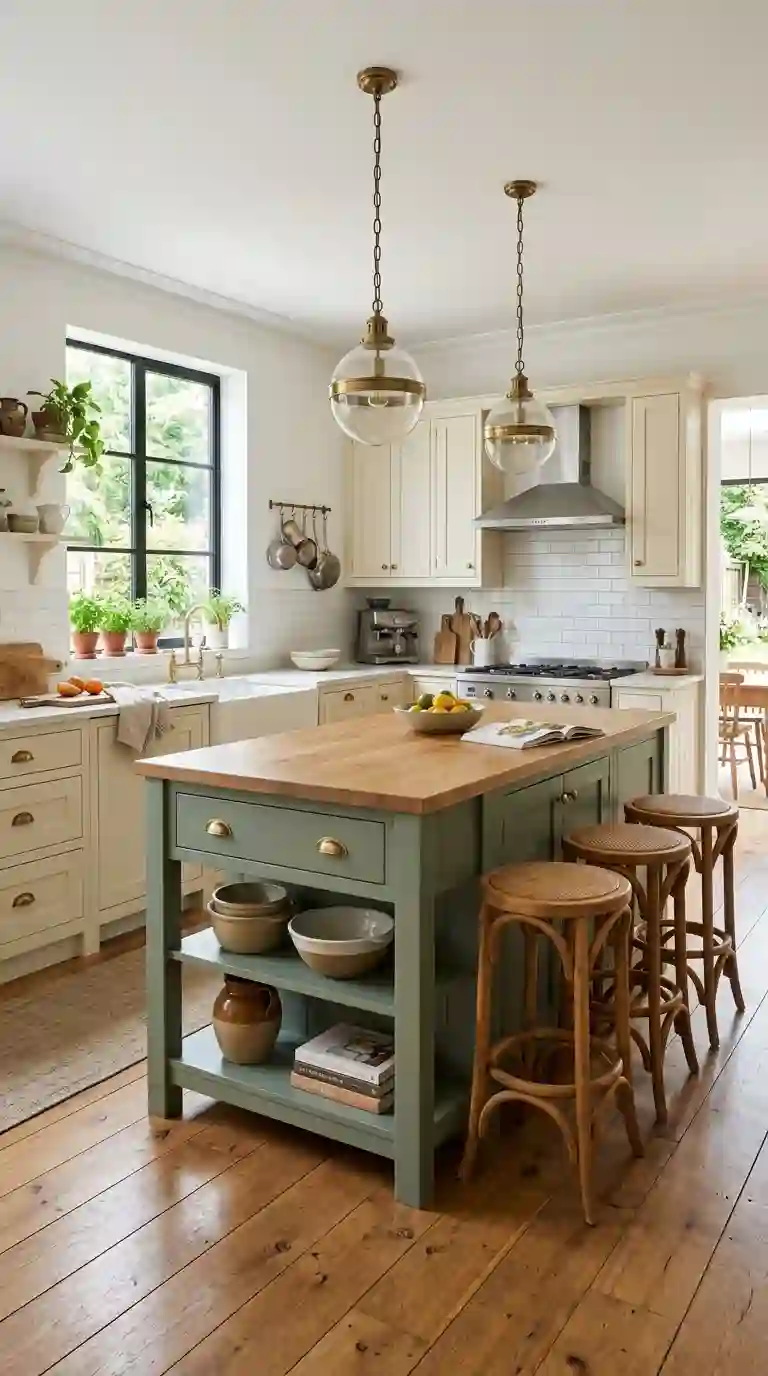
One of the most common questions I get asked about a green kitchen involves proportion, meaning exactly how much of the space should actually be green versus paired with other complementary colors and materials.
Treating green as your dominant color throughout the majority of your cabinetry tends to produce the most fully immersive, dramatic green kitchen, and this approach works particularly well for homeowners who are genuinely confident in their color choice and want the room to feel like a complete, cohesive statement.
For homeowners who want to test the waters with a more restrained commitment, using green exclusively on a single island while keeping the surrounding perimeter cabinets in a lighter neutral tone offers a genuinely effective middle ground, giving the kitchen real personality without the full commitment of an entirely green room.
Using green sparingly, perhaps through a tile backsplash, a single accent wall, or simply through plants and decor rather than any permanent cabinetry or countertop choice, offers the lowest commitment approach for anyone who loves the concept of a green kitchen but is not ready to introduce this color into permanent fixtures just yet.
Whatever ratio you ultimately choose, maintaining a consistent undertone throughout your green kitchen, meaning avoiding mixing a cool, blue leaning green with a warm, yellow leaning green within the same space, helps the overall palette feel intentional and cohesive rather than accidentally mismatched.
Budget Friendly Ways to Achieve a Green Kitchen
You genuinely do not need a full renovation budget to bring a meaningful green kitchen feeling into your home. Several lower cost approaches can achieve much of the same visual impact without the expense of a complete cabinetry replacement.
Painting your existing cabinets rather than replacing them entirely remains one of the most cost effective ways to introduce green into a kitchen, particularly if your current cabinet boxes and hardware are still in genuinely good structural condition.
Peel and stick or standard tile in a green tone offers a genuinely affordable way to update a backsplash without the cost or permanence of a full cabinet renovation, making this a smart entry point for anyone testing out this palette before committing further.
Swapping hardware alone, moving from a dated finish to warm brass or a similarly elevated metal tone, can meaningfully improve the overall feel of an existing green kitchen without requiring any structural changes at all.
Introducing green through plants, dish towels, small appliances, and other easily swappable accessories remains one of the lowest cost ways to bring this color into a kitchen, and it has the added benefit of being easy to update or expand upon later if your taste continues to evolve over time.
Shopping secondhand or discount outlets for small kitchen items and decor in the right shades can meaningfully reduce the overall cost of building out a fully realized green kitchen aesthetic without paying full retail price for every single element throughout the room.
How I Approach a Real Green Kitchen Project From Start to Finish
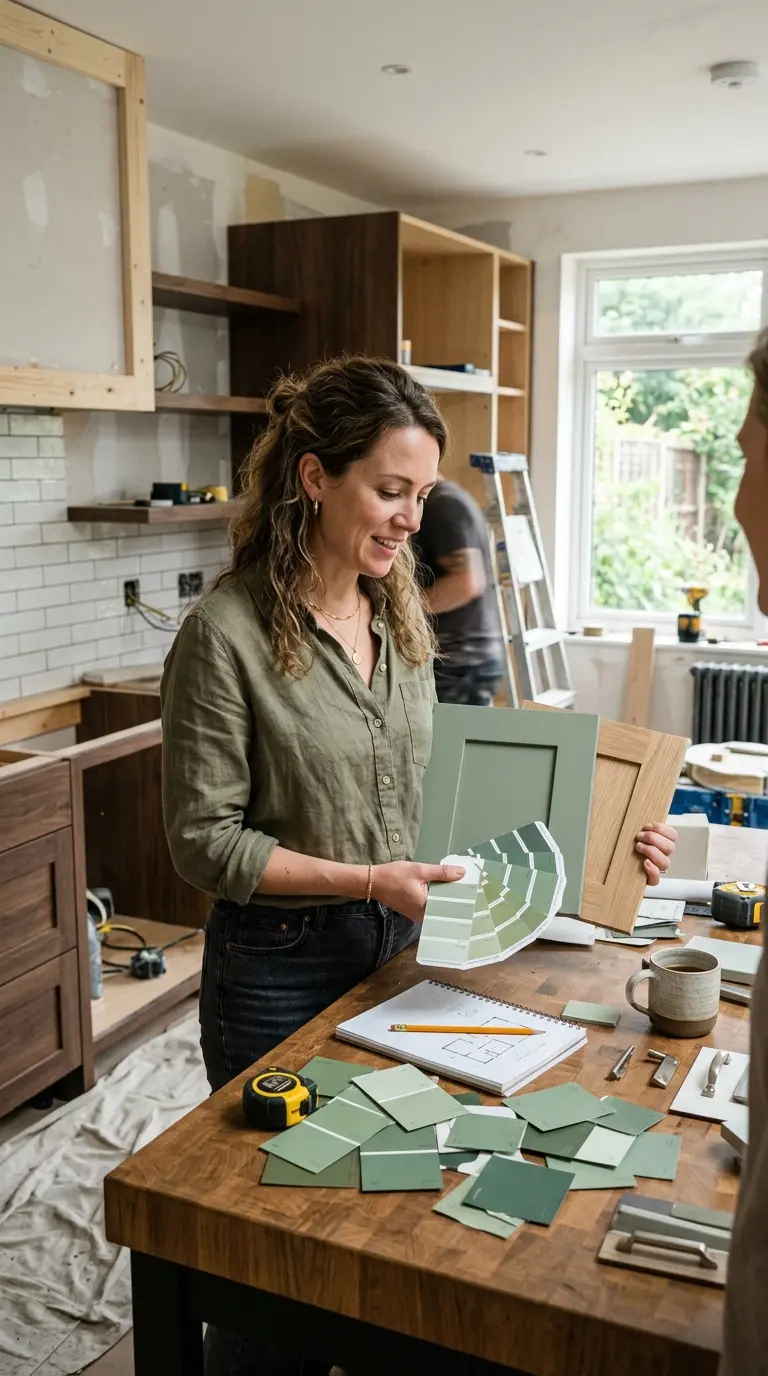
Every green kitchen project I take on starts with the same conversation, asking the homeowner what specifically drew them to this particular color in the first place. The answer usually reveals a lot about how bold or restrained the final result should ultimately become.
I remember working with a client who sent me a photo of a deep forest green kitchen she had seen online, paired with brass fixtures and a farmhouse sink. She loved the drama of it but was nervous the color might feel too dark or too trend driven for a kitchen she planned to live with for the next decade or more. We tested several shades directly on her existing cabinetry before choosing, ultimately settling on something slightly more muted and warm leaning than her original inspiration photo, paired with a butcher block countertop rather than the stark white marble she had initially considered. The finished green kitchen still captured exactly the dramatic feeling she originally wanted, but it read as genuinely timeless rather than tied to a single passing trend.
I have also worked with a client on the opposite end of the spectrum, someone who wanted to test the concept of a green kitchen without fully committing her entire renovation budget to the idea. We designed her space with cream perimeter cabinets and a single, bold olive green island as the true statement piece of the room. That kitchen strikes a genuinely lovely balance, bright and airy throughout most of the space, with just enough green personality concentrated in one confident, well chosen spot.
What I have learned across both types of projects is that the most successful green kitchen designs are rarely about copying an inspiration photo exactly as seen online. They come from understanding the specific shade that genuinely works for your own lighting and existing materials, then adjusting the proportion and depth of that green until the space feels like an authentic reflection of the people who will actually be cooking and gathering there every single day.
Related Post : Sage Green and Pink Kitchen Ideas: The Ultimate Guide to a Warm, Unforgettable Color Pairing
Common Mistakes to Avoid in a Green Kitchen
After working through a number of these projects, certain mistakes come up repeatedly, quietly undermining an otherwise promising green kitchen.
Choosing a shade based purely on a photo without testing it in your own kitchen’s actual lighting is probably the most common issue I encounter. A green that reads as sophisticated and warm in one lighting environment can look completely different, sometimes even a bit murky or flat, under your own kitchen’s specific natural and artificial light combination.
Pairing a cool, blue leaning green with warm toned wood or brass fixtures, without considering how these undertones interact, can create a subtle visual clash that is difficult to identify precisely but noticeable enough to make an otherwise beautiful green kitchen feel slightly off balance.
Overcommitting to an extremely bold, saturated green throughout an entire small kitchen without adequate natural light can occasionally make the space feel more enclosed and dark than intended, so balancing your chosen shade against your room’s actual light levels genuinely matters.
Ignoring the undertone of your existing flooring or countertop material when choosing your green kitchen palette can create an unexpected clash that is difficult to notice on a small paint chip but becomes obvious once installed across a full room.
Following a trend too literally without considering your own home’s existing architecture and materials can result in a green kitchen that feels disconnected from the rest of the house, rather than a cohesive, well integrated design choice that genuinely belongs within its surroundings.
Green Kitchen Ideas for Pairing With Plants and Greenery
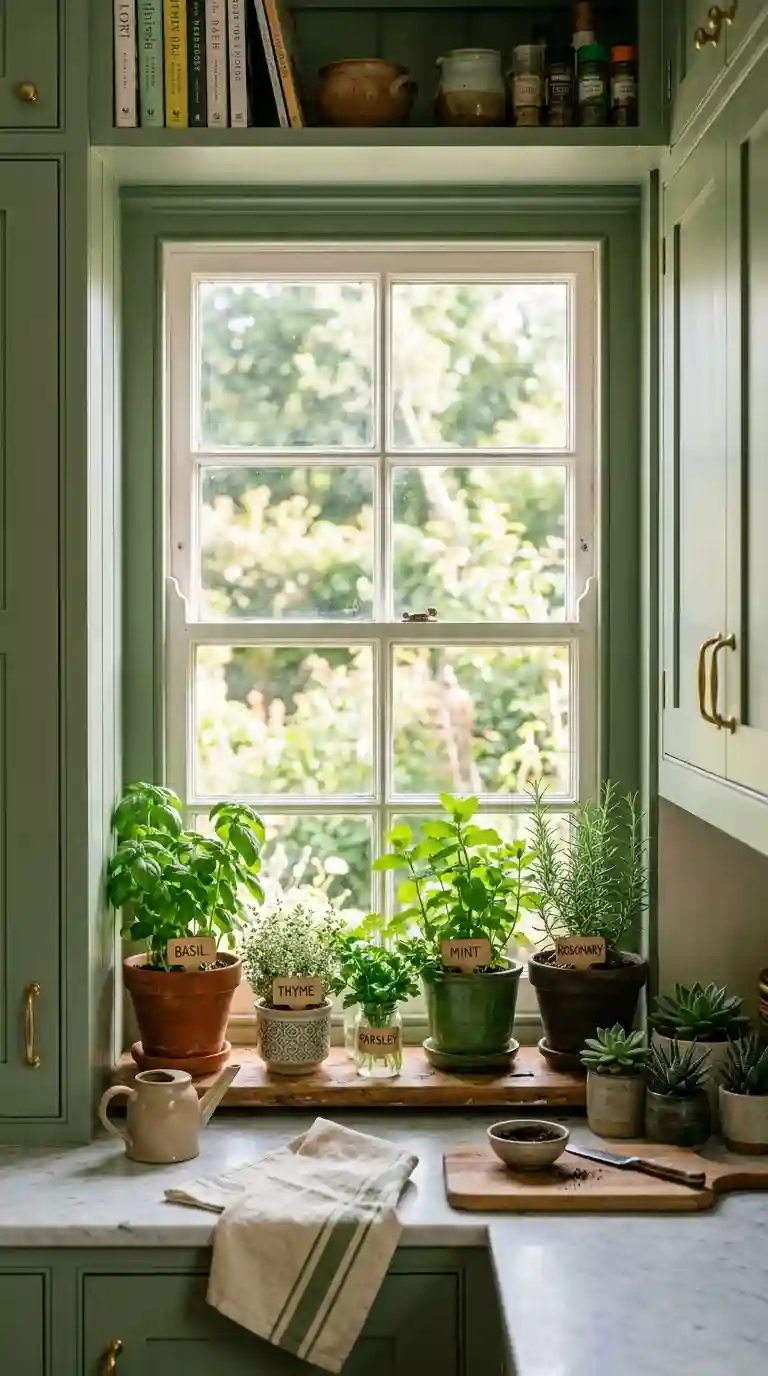
Given the natural inspiration behind this entire color story, incorporating actual plants and greenery into a green kitchen creates a genuinely lovely, cohesive extension of the overall design concept.
Potted herbs along a windowsill remain one of the most classic and functional pairings within green kitchen design, bringing fresh greenery directly into the room while also providing genuinely useful ingredients for everyday cooking.
Larger statement plants, positioned in a corner or on top of a cabinet with adequate clearance, add genuine life and a bit of organic movement to a green kitchen, reinforcing the biophilic, nature connected feeling that this entire color choice originally draws from.
A botanical inspired refrigerator wrap or a few well placed pieces of nature inspired art bring the garden inside in a more decorative sense, complementing green cabinetry without requiring the ongoing maintenance that live plants demand.
Fresh cut flowers or seasonal greenery kept in a simple vase on a kitchen island or countertop offer a genuinely easy, temporary way to reinforce the overall green kitchen theme without any permanent commitment, and this small addition can be refreshed easily throughout the year.
Also Read : Kitchen Drawer Organization Ideas: The Ultimate Guide to a Calmer, Clutter Free Kitchen
Maintaining a Green Kitchen Over Time
Once you have achieved your ideal green kitchen, a bit of ongoing care keeps the color looking fresh and vibrant for years rather than fading or dulling prematurely.
Clean painted cabinetry gently, avoiding harsh abrasive cleaners that can dull the finish over time, particularly on a softer, more matte green paint that tends to show wear more visibly than a higher gloss finish.
Touch up paint on high traffic cabinet areas, particularly around handles and edges, before wear becomes significant enough to require a full repaint of your green cabinetry throughout the entire kitchen.
Protect butcher block countertops paired with your green kitchen with regular oiling, since this particular material requires ongoing maintenance to stay looking its best and to prevent water damage over years of regular use.
Reassess your color balance every so often as your taste naturally evolves, since a green kitchen you loved five years ago might benefit from a slightly adjusted accent color or updated hardware finish without requiring a complete redesign from scratch.
FAQ About Green Kitchens
Is a green kitchen a good choice for resale value?
Green has become an increasingly mainstream, widely accepted kitchen color choice, and softer shades like sage in particular tend to appeal to a broad range of buyers, making a well executed green kitchen a genuinely reasonable choice even with resale in mind.
What is the most popular green for kitchen cabinets?
Sage green remains one of the most consistently popular choices, though olive and forest green have grown significantly in popularity recently for homeowners wanting a warmer, more dramatic take on this color story.
Does green go with white in a kitchen?
Yes, pairing green cabinetry with white subway tile, white countertops, or white upper cabinets remains one of the most classic and consistently effective combinations within green kitchen design.
What countertop color works best with a green kitchen?
Warm white or cream marble, butcher block wood, and natural stone all pair beautifully with green cabinetry, providing a neutral surface that lets the cabinetry color remain the clear focal point.
Is olive green or sage green better for a kitchen?
Olive green carries a warmer, more earthy undertone suited to cottage, bohemian, and Mediterranean inspired kitchens, while sage green offers a softer, more universally versatile option that works across a wider range of design styles.
What hardware works best with a green kitchen?
Brass hardware is the most commonly recommended choice, adding warmth and subtle shine that complements nearly every shade of green, though oil rubbed bronze and brushed nickel also work well depending on your overall style.
Can a small kitchen be painted green?
Yes, soft sage or lighter green tones paired with warm wood countertops and plenty of natural light can make a small green kitchen feel calm, timeless, and surprisingly spacious rather than cramped
What is trending in green kitchen design for 2026?
Current trends favor deeper, more saturated shades like olive and forest green over paler pastel sage tones, along with green marble backsplashes, butcher block pairings, and green kitchen islands as standalone statement pieces.
Should I paint my whole kitchen green or just the island?
This depends on your comfort level with the color. A fully green kitchen creates a dramatic, immersive statement, while a single green island paired with neutral perimeter cabinets offers a more restrained, testable approach.
What backsplash works best for a green kitchen?
White subway tile, green marble, and warm stone all work beautifully, depending on whether you want a contrasting, classic look or a more layered, tonal green on green effect throughout the room.
Final Thoughts on Green Kitchen Design
A green kitchen genuinely earns its growing popularity honestly, drawing on a color connection to nature that feels both fresh and remarkably timeless at once. Done thoughtfully, with the right shade, proportion, and supporting materials, this particular color story reads as warm, sophisticated, and genuinely livable rather than a fleeting trend you will grow tired of within a couple of years.
Take the time to test your specific shade directly in your own kitchen lighting before committing to a full renovation, and be honest with yourself about how bold or restrained you actually want the final result to feel. There is no single correct way to execute a green kitchen, only the version that genuinely feels like an authentic reflection of your own home and daily life.
Whether you commit fully with cabinetry wrapped floor to ceiling in a rich forest tone, or simply introduce green through a single island, a tile backsplash, or a handful of well chosen plants, this color has genuine staying power. Give it a real chance, and there is a good possibility your green kitchen becomes the room in your home you find yourself drawn back to again and again.