
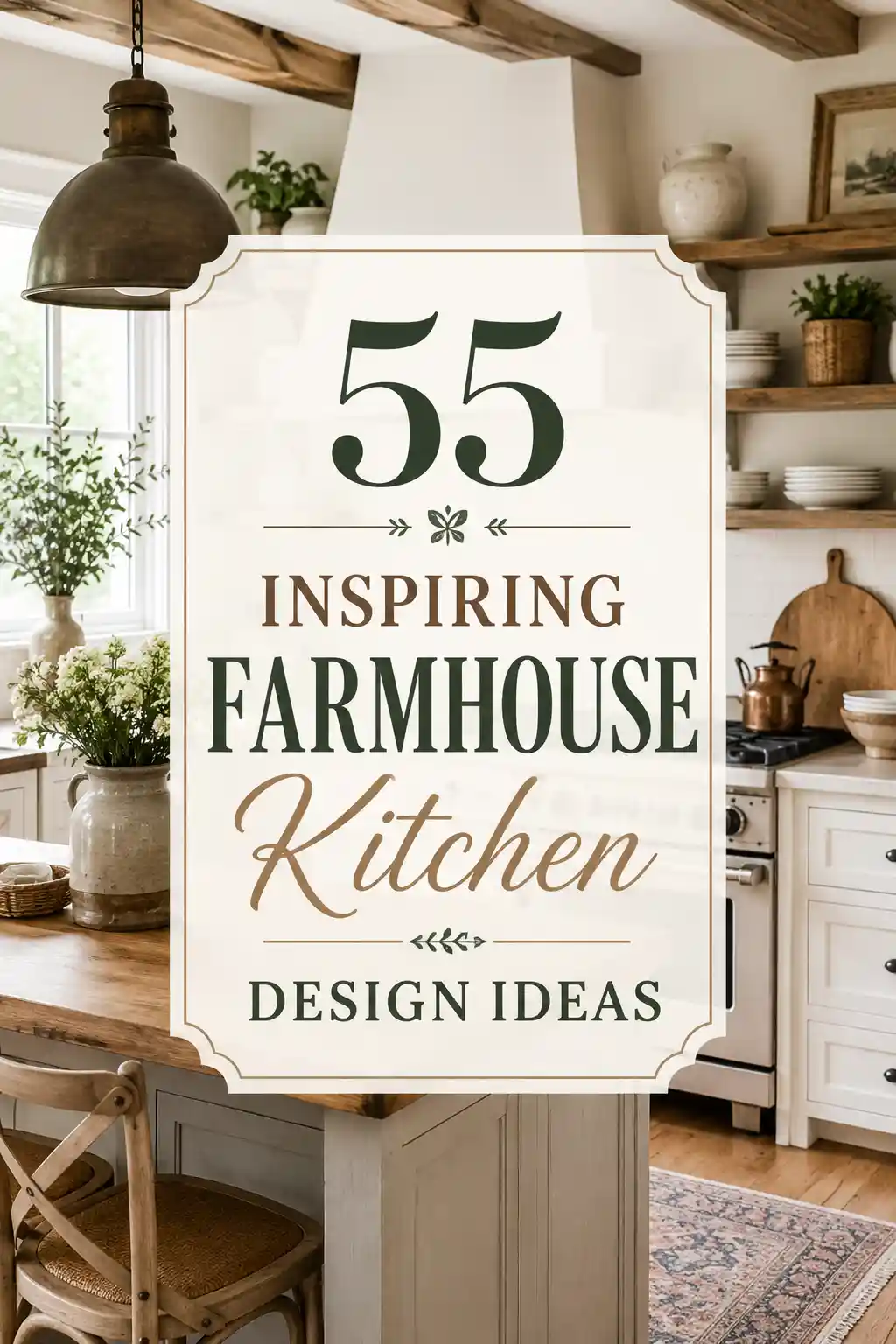
Farmhouse kitchens have a proportion problem. Done well, they feel collected, warm and quietly practical. Done badly, they look like a film set: a mass-produced “rustic” sign, a sliding barn door on a pantry that never needed one, and grey everything. The difference is rarely budget. A cosmetic farmhouse refresh of an average 3 × 3.6 metre kitchen costs between £800 and £2,500 — paint, hardware, lighting, a new tap — while a full rip-out starts around £12,000 and climbs past £25,000. The difference is decisions: which elements actually signal “farmhouse”, and where the money goes first.
One consideration before anything else: farmhouse style lives or dies on the ratio of old to new. All-new everything reads as a showroom; a few genuinely old or worn pieces against a calm background reads as a farmhouse. Plan for a four-to-six-week timeline from decision to finished paint, and order the big items — sink, tap, pendants — first, since lead times of two to three weeks are normal.
What actually makes a kitchen feel like a farmhouse?
Five markers do ninety per cent of the work: an apron-front sink, shaker-style cabinet fronts, visible natural wood, at least one unfitted piece (a freestanding dresser, a butcher’s block on castors), and warm metal hardware. The rule is simple: hit three of the five and the room reads farmhouse; hit all five and it can tip into theme park; hit one and it is just a kitchen with a nice tap.
The beamed kitchen in the lead photo shows the balance — open shelves, one big pendant, wood everywhere, but the bones of the room stay calm and pale. Nothing is shouting. That restraint is doing more work than any single “farmhouse” object in the frame.
Where should the money go first?
Sink, tap, lighting — in that order. These three deliver roughly sixty per cent of the perceived transformation for about thirty per cent of a refresh budget. A standard apron-front sink is 84cm wide and 25cm deep, and it needs a cabinet modified or built to take its weight — fireclay is heavy, around 40kg — so this decision has to come before worktops are templated, not after.
A gooseneck tap in brushed brass or matt black costs £120 to £250 and takes a plumber under an hour to fit. Pendants run £60 to £150 each. Everything else — paint, handles, open shelves — is cheap and reversible. Get the plumbing-dependent decisions right first, because they are the ones that are expensive to revisit.
What colour should the cabinets be?
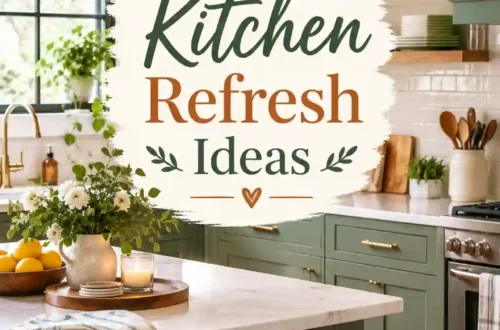
Warm white wins for most kitchens. It bounces light, forgives every wood tone, and never fights the brass. Sage green is the second choice and the more characterful one — sage green kitchens show how the colour behaves across a whole room rather than a swatch. The decision to make: a north-facing or compact kitchen gets warm white at LRV 80 or above; a kitchen with good daylight and 12m² or more can carry sage.
Two-tone — darker base, pale uppers, or a contrasting island — is the other classic move. Two-tone cabinet combinations that actually work follow one rule: the darker colour goes low, where the eye expects weight, and the paler colour goes high, where it keeps the room feeling open. Reverse it and the room feels top-heavy.
Does open shelving ever make sense?
Yes — one run, maximum. A single 1.2 to 1.8 metre stretch of open shelving, 20 to 25cm deep, beside the cooker or the sink, gives the farmhouse signal without the dusting burden of a whole wall of it. The reasoning is practical: shelves within arm’s reach of the dishwasher get used and wiped daily; shelves across the room become display that slowly gathers grease.
Put everyday white crockery on them — nothing precious, nothing that minds a wipe — and keep everything else behind doors. If an item cannot be reached and used daily, it does not earn a place on the shelf.
Which worktop won’t fight the look?
Butcher block, 40mm thick, oiled monthly for the first year and quarterly after that. It will scar, and the scars are the point — a worktop that records twenty years of cooking is the most farmhouse surface there is. The alternative is quartz with a soft, cloudy veining that reads as stone without the maintenance.
What to avoid: high-gloss black granite. Its mirror shine fights every other matte, aged surface in the room and drags the whole scheme towards a 2006 new-build. The decision rule is maintenance first — butcher block if you cook daily and don’t mind patina, quartz if you want wipe-and-forget — because the worktop is the hardest-working surface in the kitchen and the wrong choice nags every single day.
How do you light it without killing the mood?
2700K everywhere. Farmhouse warmth dies under cool white bulbs, which turn oak grey and make cream cabinets look clinical. Pendants over an island or table hang 75 to 90cm above the worktop — lower feels intimate, higher feels airy, and below 75cm tall people knock their heads. A 2.4m island takes three pendants spaced 60 to 75cm apart; two pendants over the same span leave a dark hole in the middle.
Add under-cabinet strips on a separate switch for task light, so the pendants can stay dim in the evening. The common error is one central ceiling light doing all the work — it flattens the wood, kills the shadows, and removes exactly the warmth the style depends on.
What about a small kitchen or a rental?
Small kitchens get two rules: keep the palette to two colours maximum, and run the worktop into the windowsill to gain an extra 15cm of usable depth. For storage, go vertical — small-kitchen storage built around a 20cm-deep shelf above the worktop holds daily jars and oils without eating a centimetre of floor space.
Rentals can do most of this. Peel-and-stick subway tile transforms a splashback in an afternoon and peels off cleanly. Swapping the cabinet handles is usually permitted — keep the originals in a labelled bag for move-out day — and a freestanding wooden island or trolley adds the unfitted piece that is the farmhouse look anyway. Nothing here touches the landlord’s cabinets.
What dates the look fastest?
Four things. Mass-produced word signs and “rustic” plaques have the fastest expiry date in interiors — they signal a trend purchase, not a style. Going too matchy: every item brand-new and distressed in the same factory reads as a set, not a collection. Mix in one genuinely old piece per run of new — a wooden stool, an enamel jug, a chipped ironstone platter — and the room gains the history the factory pieces are imitating.
Grey everything is the third: the grey-wash farmhouse of the mid-2010s already looks tired, while warm white and wood age gracefully. And fourth, the sliding barn door on a pantry that doesn’t need one — it is a door solution for a doorway problem, not a decoration. For the pantry itself, pantry organisation with visible, labelled jars does more for the farmhouse feeling than any door ever will.
Quick answers
Is farmhouse style still in fashion?
The quiet version — shaker fronts, real wood, warm white — is effectively timeless at this point. What cycles in and out is the sign-heavy, grey-wash version. Build the quiet one and the room won’t need redoing when the trend pieces move on.
Can I mix modern appliances with farmhouse style?
Yes — a stainless range cooker against shaker cabinets is one of the classic pairings. Hide the dishwasher behind a cabinet front, panel the fridge if the budget stretches, and let the small appliances be the modern contrast rather than fighting them.
What is the cheapest upgrade with the biggest impact?
Paint the cabinets (£40 to £60 of specialist cabinet paint) and swap the handles (£2 to £4 each). Under £150 all in, for a kitchen that reads as different the moment you walk in.
Butcher block or quartz?
Butcher block for character and lower cost, quartz for zero maintenance. Both suit the style. High-gloss granite suits neither — its shine fights the matte, aged surfaces around it.
How do I keep open shelves from looking messy?
One material — all white crockery works best — one row deep, nothing stacked behind anything else. If you can’t reach it and use it daily, it lives behind a door instead.




7 Comments on “The Farmhouse Kitchen, Minus the Theme-Park Version”