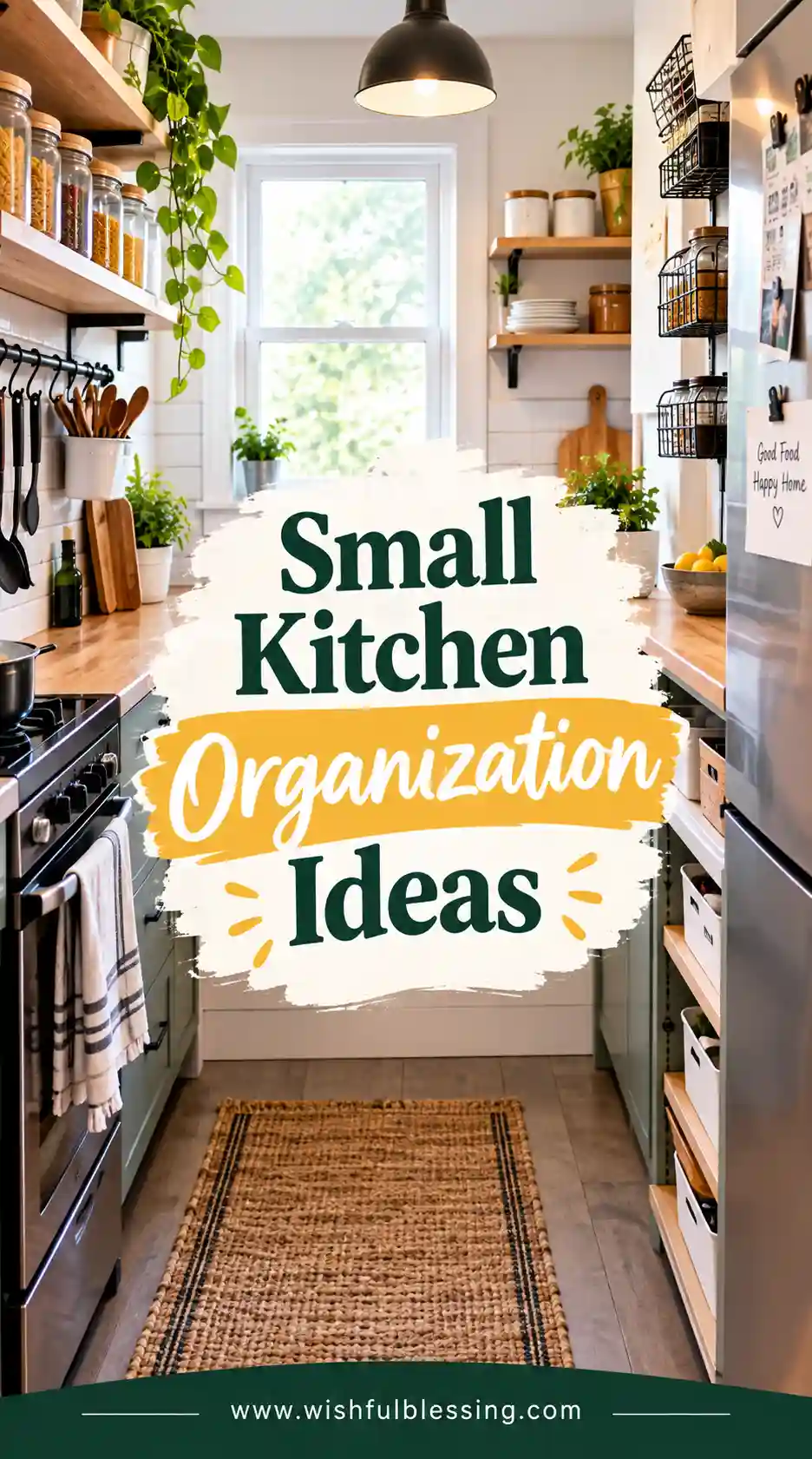
There is a particular kind of frustration that only people with small kitchens understand. You open a cabinet to grab a pot and three lids fall out. You reach for the flour and knock over the olive oil. You have exactly one drawer that opens all the way because the dishwasher door blocks the rest. If any of that sounds familiar, you are in the right place, because small kitchen organization is not about buying a bigger house. It is about using the space you already have in a way that actually makes sense for how you cook and live.
I have spent years working inside real homes, helping people turn cramped, chaotic kitchens into spaces that function beautifully, and I can tell you with total confidence that size is rarely the actual problem. The problem is almost always a lack of system. Once you build a proper system for small kitchen organization, even a galley kitchen the size of a closet can feel spacious and calm.
This guide is long because I wanted to cover everything, from cabinets to drawers to the dreaded space under the sink, and give you real, tested ideas rather than generic tips you have already read a hundred times. Grab a coffee, because we are going deep.
Also Read : 55 Inspiring Farmhouse Kitchen Design Ideas That Will Instantly Warm Up Your Home
Why Small Kitchen Organization Matters More Than You Think
Most people assume kitchen organization is just about looking tidy for guests. It is so much more than that. When your kitchen is disorganized, cooking becomes a chore instead of something enjoyable. You spend more time searching for tools than actually using them. You buy duplicate items because you cannot find what you already own, which is one of the sneakiest ways clutter grows out of control.
Good small kitchen organization also saves money. When you can see everything you have, food waste drops dramatically because nothing gets pushed to the back of a cabinet and forgotten until it expires. I have seen families cut their grocery bills simply because they finally organized their pantry shelves and stopped buying things they already owned.
There is also a mental side to this. A cluttered kitchen creates a low level of stress that many people do not even notice until it is gone. Once the counters are clear and every drawer has a purpose, cooking dinner after a long day feels less like a battle and more like something you can actually enjoy.
Small kitchen organization is not a one time project either. It is a mindset you build over weeks, and once the systems are in place, they tend to stick because they were designed around how you actually live, not around some picture perfect version of a kitchen you saw online.
Understanding Your Small Kitchen Before You Start Organizing
Before you buy a single container or drawer divider, you need to understand your kitchen the way it actually works today. This step gets skipped constantly, and it is the single biggest reason organization projects fail within a few weeks.
Take Stock of What You Actually Use
Pull everything out of one cabinet or drawer at a time. Yes, everything. Lay it all out on your counter or kitchen table and look at it honestly. Ask yourself when you last used each item. If the answer is longer than a year, it probably does not deserve prime real estate in a small kitchen.
This part feels tedious, I know, but small kitchen organization always starts with editing. You cannot organize your way out of owning too much stuff. I have walked into kitchens with four garlic presses and two waffle irons nobody remembered buying. Once you remove the excess, the organizing part becomes almost easy because there is simply less to manage.
Must Read : 45 Bold Black And Copper Kitchen Ideas That Turn Heads And Feel Like Home
Measure Every Inch of Space
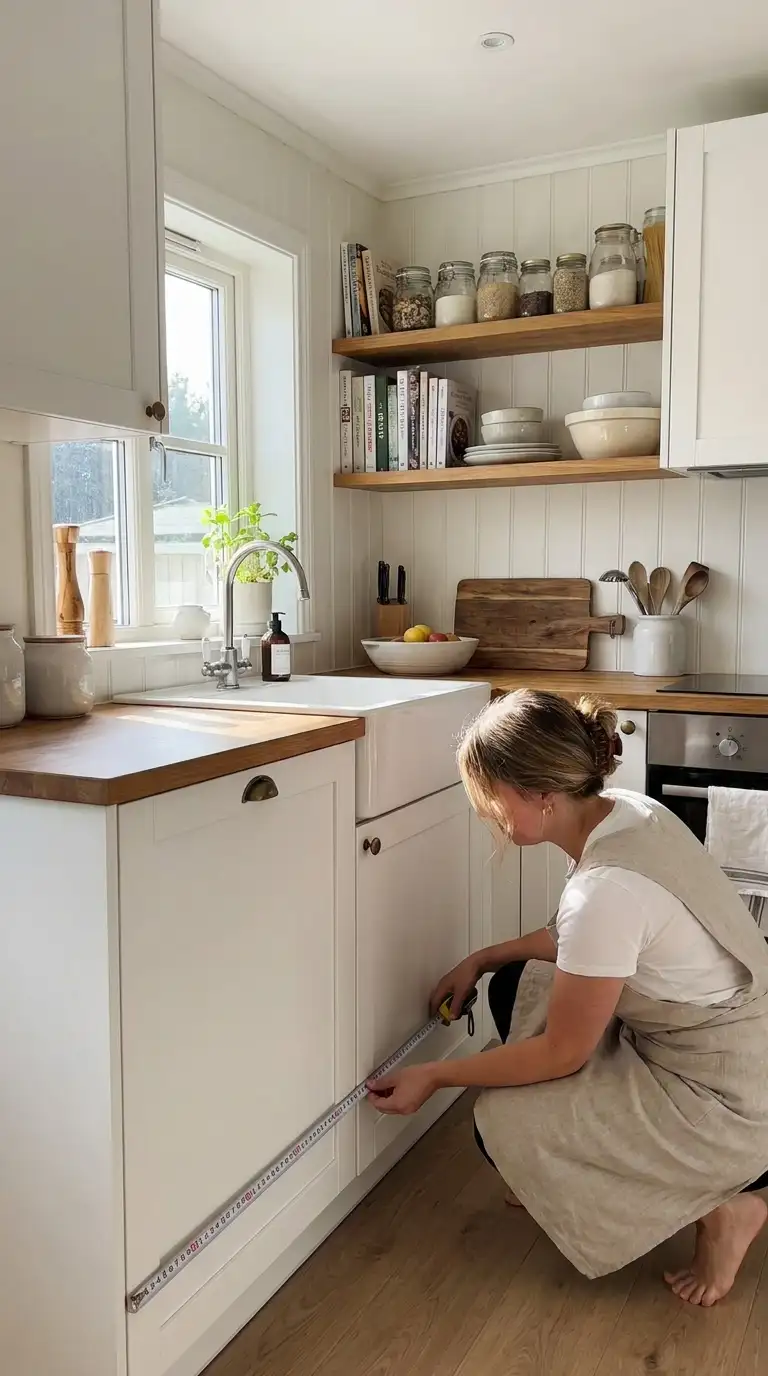
Grab a tape measure and write down the dimensions of your cabinets, drawers, and any awkward gaps you have, such as the space beside your fridge or above your cabinets. This sounds like overkill, but guessing measurements is how people end up with bins that do not fit or shelf risers that are too tall for the shelf above them.
I keep a small notebook with every measurement in my client kitchens because it makes shopping for organizers so much faster. When you know your top shelf is eleven inches tall and your drawer is only four inches deep, you stop wasting money on products that looked great online but simply do not work in your space.
Small Kitchen Organization Ideas for Cabinets
Cabinets are usually the biggest storage area in a small kitchen, yet they are often the most poorly used. Most cabinets are designed with one flat shelf, which wastes a huge amount of vertical space. Fixing this is one of the fastest ways to see results in your small kitchen organization journey.
Vertical Dividers Change Everything
If you store baking sheets, cutting boards, or trays by stacking them flat, you already know the pain of pulling one out and having the whole stack come with it. Vertical dividers solve this instantly. You simply stand each item up in its own slot, and suddenly you can grab exactly what you need without disturbing anything else.
I recommend these to almost every client because they are inexpensive, they require no installation, and they work in nearly any cabinet. This single change alone can transform a chaotic lower cabinet into something that actually looks intentional.
Lazy Susans for Corner Cabinets
Corner cabinets are the villain of small kitchen organization. That deep, dark corner space is almost always wasted because you cannot see or reach the back. A lazy susan solves this by letting you spin items into view instead of digging around blindly.
Two tier lazy susans are even better for small kitchens because they double your usable space without taking up any extra square footage. I have watched clients rediscover spices and sauces they forgot they owned simply by adding a lazy susan to a corner cabinet.
Stack Smart with Shelf Risers
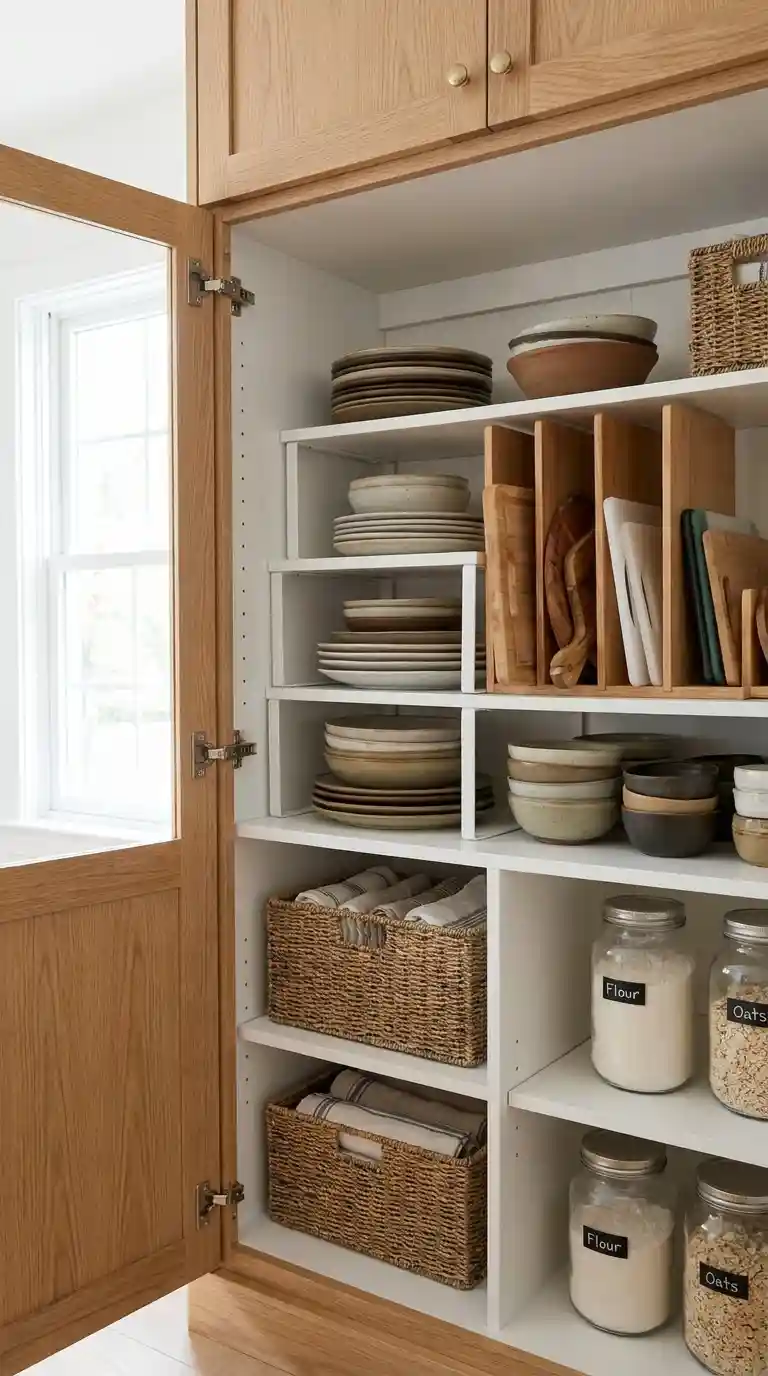
Adding a shelf riser inside a cabinet creates an entirely new level of storage. Instead of one tall empty space above your plates, you get a shelf for cups or bowls underneath and still have room for plates on top. This is one of the cheapest upgrades you can make, and it consistently gives the biggest visual improvement in before and after photos.
Also Read: 45 Brilliant DIY Kitchen Table Ideas That Will Save You Thousands And Transform Your Kitchen
Small Kitchen Organization Tips for Countertops
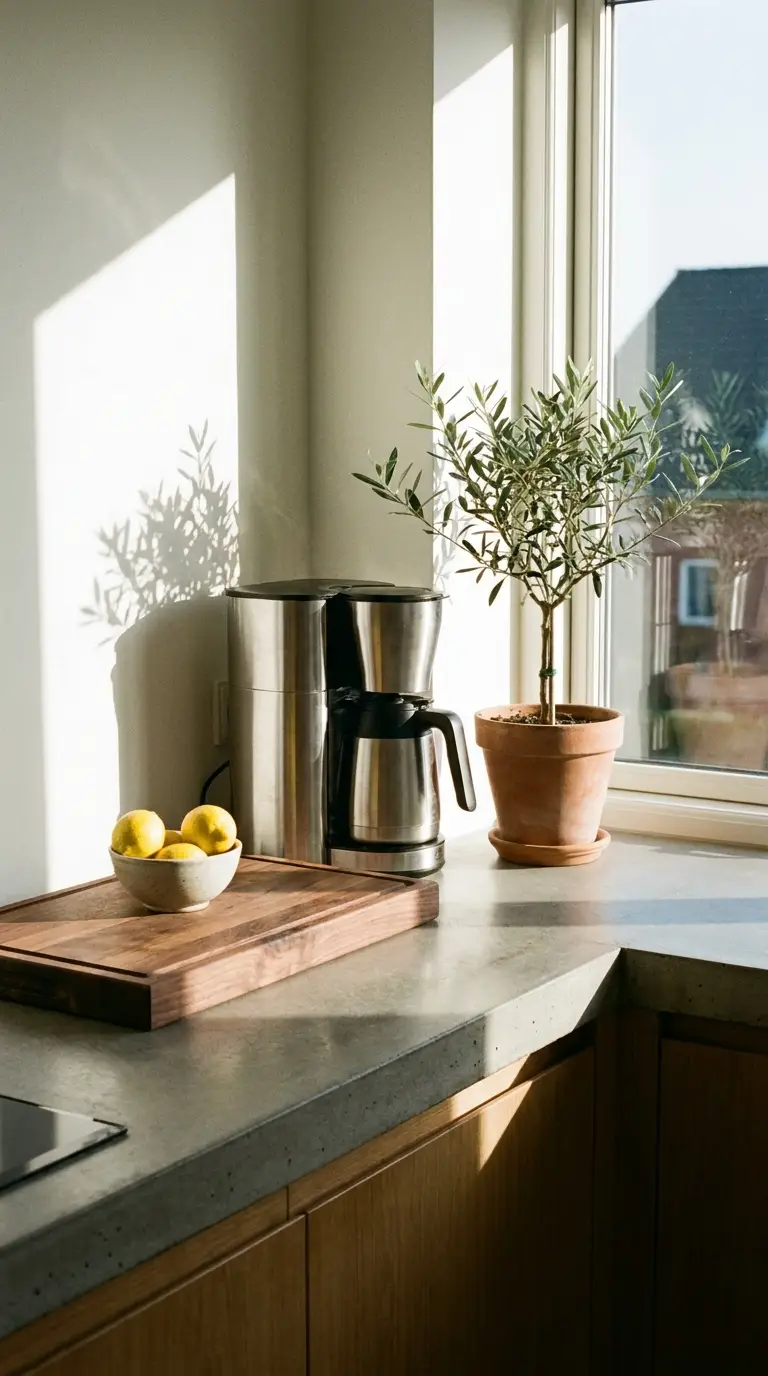
Countertop space in a small kitchen is sacred. Every appliance and gadget you leave sitting out is space you cannot use for actual food preparation. This does not mean your counters need to be completely bare, because that is not realistic for most people, but it does mean being intentional about what earns a permanent spot.
Keep only what you use daily on the counter. For most kitchens, that means a coffee maker, maybe a knife block, and perhaps a fruit bowl. Everything else, including that bread machine you used twice, belongs in a cabinet or should honestly be donated.
Use vertical space above your counters wisely too. A simple floating shelf can hold cookbooks, oils, or a small collection of mugs without eating into your workspace. I always tell clients that small kitchen organization is not about hiding everything away, it is about being selective with what gets visible real estate.
Another trick that works wonders is using the space under your upper cabinets. Slim under cabinet organizers can hold paper towels, mugs, or even a small spice rack, freeing up counter space that you did not realize you were losing to clutter.
Small Kitchen Organization for Pantry Items Without a Pantry
Not everyone has the luxury of a walk in pantry, and honestly, most small kitchens do not. This is often the part people struggle with most because dry goods, canned foods, and snacks tend to multiply fast. The good news is that small kitchen organization does not require a dedicated pantry room to work well.
Door Storage Solutions
The inside of your cabinet doors is essentially free real estate that most people never use. Over the door racks can hold spice jars, foil, plastic wrap, or even small snack items. This works especially well under the sink or inside a pantry style cabinet, and it costs very little to set up.
Stackable Containers
Transferring dry goods like rice, pasta, flour, and cereal into clear, stackable containers is one of the most satisfying changes you can make. Not only does it look neat, it actually saves space because uniform containers stack far more efficiently than bags and boxes of different sizes.
Label each container clearly. This might seem unnecessary since you can usually see through the container, but labels help everyone in the household put things back correctly, which keeps your small kitchen organization system intact even when you are not the one unloading groceries.
Use a Tiered Shelf for Cans
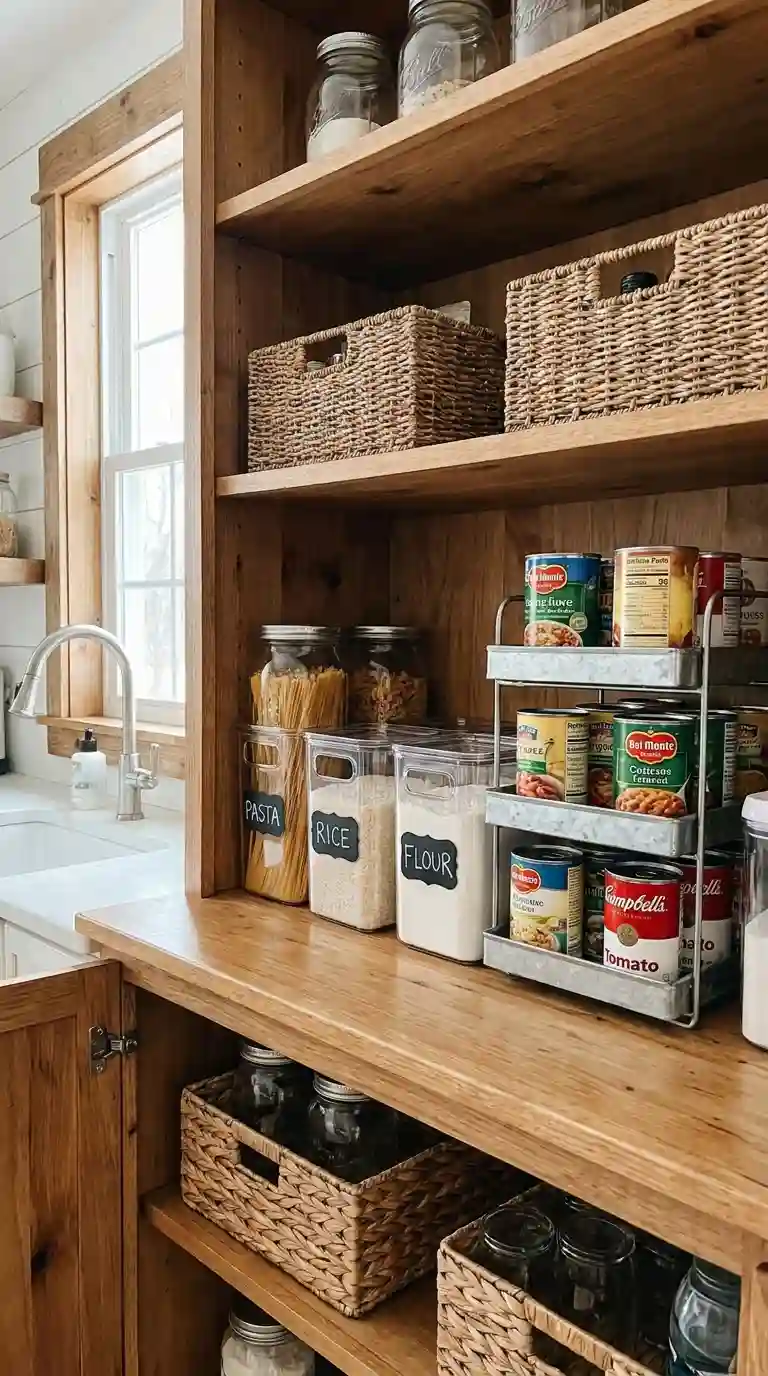
A simple tiered shelf insert lets you see every can in your collection at once instead of digging through a deep shelf where cans hide behind each other. This small addition prevents that awful moment of discovering three cans of the exact same soup because you could not see what you already had.
Drawer Organization Strategies for Small Kitchens
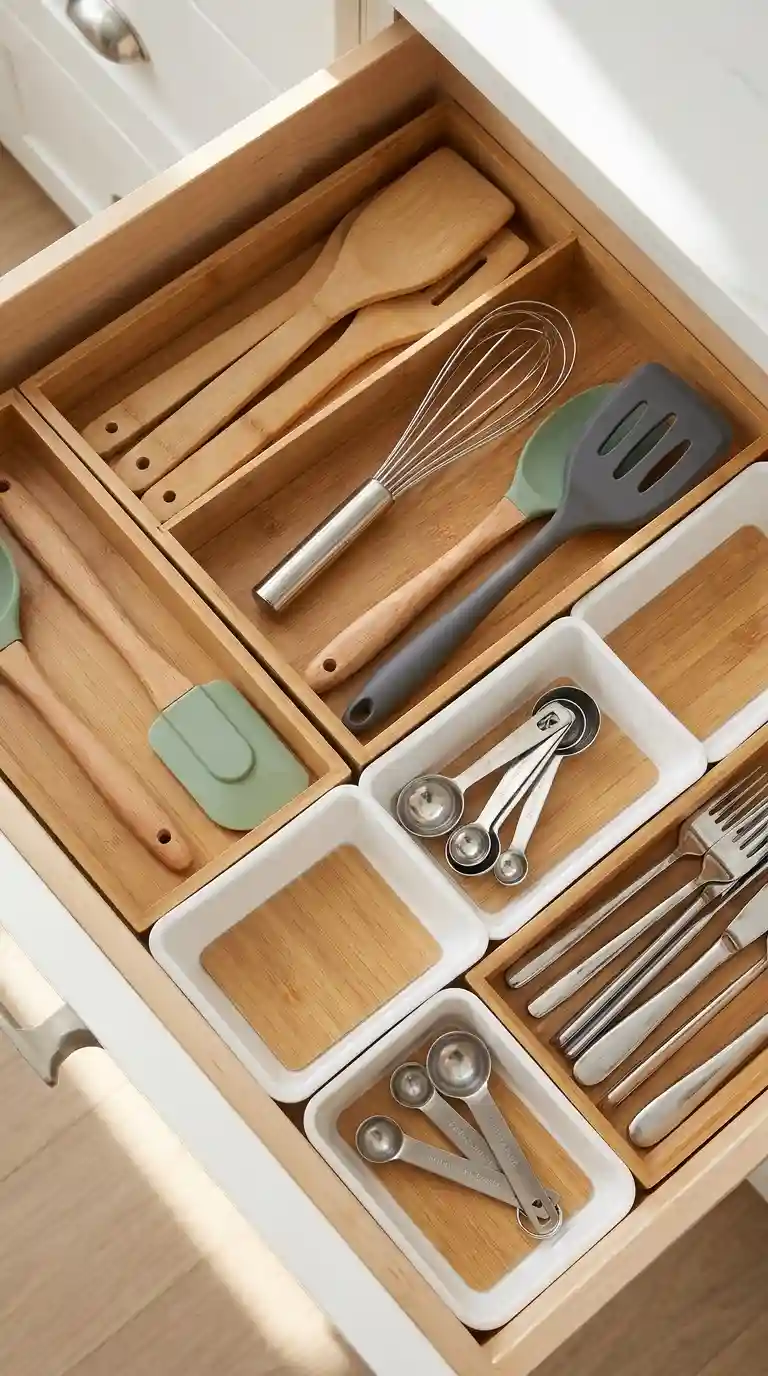
Drawers get messy fast, especially the notorious junk drawer that somehow exists in every single kitchen regardless of size. Fixing your drawers is one of the most rewarding parts of small kitchen organization because the transformation is immediate and dramatic.
Start with your utensil drawer. Use an adjustable drawer organizer rather than a fixed one, since fixed trays rarely fit your drawer perfectly and waste space around the edges. Adjustable trays let you customize the layout to match exactly what you own, whether that is three spatulas or twelve.
For deeper drawers, consider using them for pots and pans instead of a lower cabinet. Deep drawers actually work better for cookware than cabinets do, because you can see everything from above instead of stacking pots on top of each other and struggling to reach the bottom one.
Must Read : 45 Bold Two Tone Kitchen Cabinet Designs That Will Instantly Elevate Your Entire Kitchen
If you have a designated junk drawer, and honestly most people do, give it some structure too. Small bins or a simple divider tray can separate batteries, tape, and rubber bands from becoming one tangled mess. A junk drawer does not need to disappear entirely for your small kitchen organization to succeed, it just needs boundaries.
Small Kitchen Organization Under the Sink
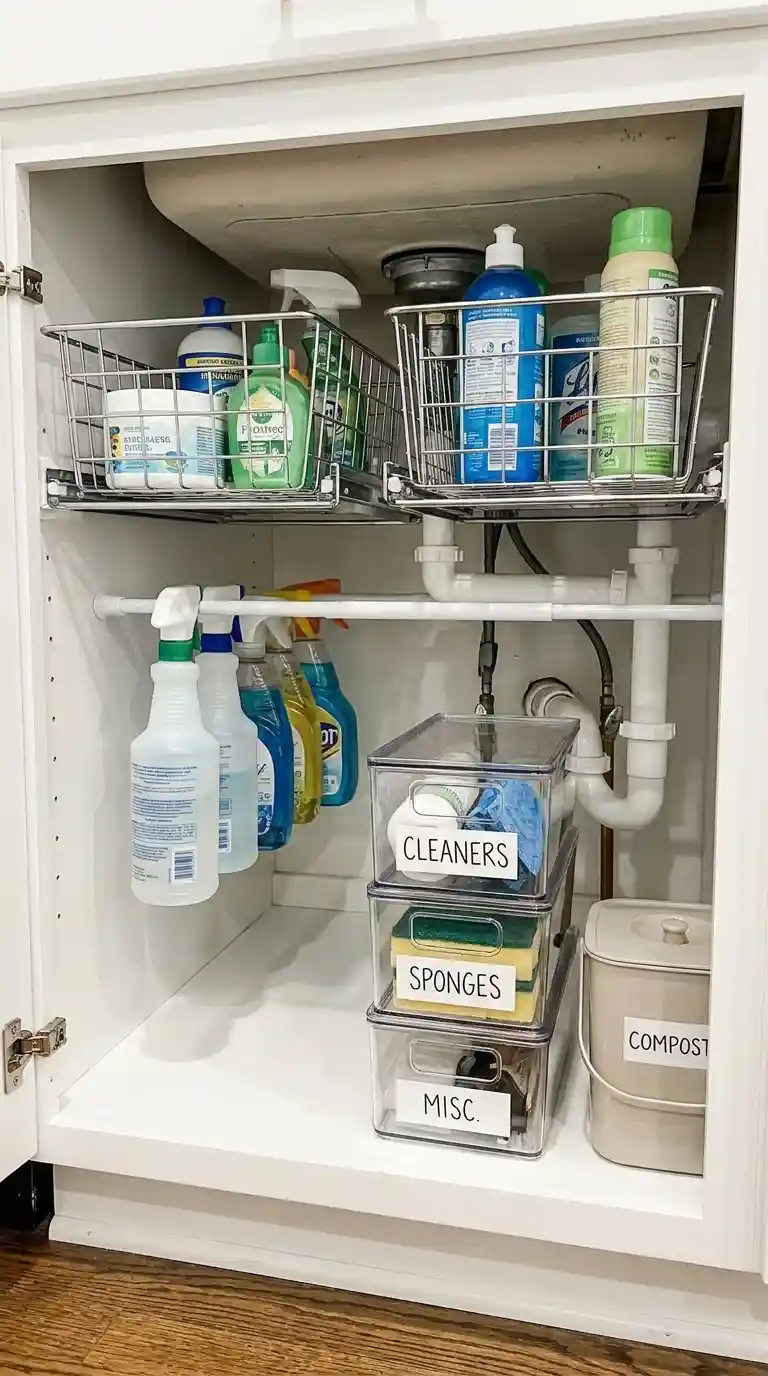
The area under the sink is one of the most awkward spaces in any kitchen because of the pipes running through the middle. This is exactly why it tends to become a dumping ground for cleaning supplies, trash bags, and random items nobody knows where else to put.
Sliding organizers designed specifically for under sink spaces work around the pipes and give you real, usable shelving instead of one deep, chaotic pile. Adding a small tension rod underneath lets you hang spray bottles by their handles, which frees up shelf space below for boxes and bags.
A lazy susan works well here too, particularly for smaller bottles like dish soap refills or scrub brushes. Being able to spin instead of dig makes this cramped space so much more functional.
Keep a small bin specifically for trash bags and another for cleaning cloths. Grouping like items together is one of the core principles behind every successful small kitchen organization system, and the under sink area is no exception, even though it is often the most neglected spot in the entire kitchen.
Wall Space: The Most Underused Tool in Small Kitchen Organization
If you take away only one idea from this entire article, let it be this one. Your walls are storage space, and most people completely ignore them. Small kitchen organization becomes so much easier once you start thinking vertically instead of only looking at counters, cabinets, and drawers.
Pegboards
A pegboard mounted on an empty wall can hold pots, pans, utensils, and even small planters, all while adding a genuinely stylish, almost artistic element to your kitchen. The beauty of a pegboard is flexibility, since you can rearrange the hooks anytime your needs change, which is perfect for a small kitchen where storage demands shift often.
Magnetic Strips
A magnetic knife strip frees up an entire drawer or a bulky knife block that eats counter space. Beyond knives, magnetic strips can hold metal spice tins, bottle openers, and other small metal tools. This is one of the cheapest additions in this entire guide, and the impact on your available space is enormous.
Hanging Rails
Installing a simple rail with S hooks underneath a shelf or cabinet gives you a place to hang mugs, measuring cups, or small pots. This trick is especially useful in tiny kitchens with limited cabinet space, since it turns unused vertical inches into genuinely functional storage.
Must Read : Kitchen Drawer Organization Ideas: The Ultimate Guide to a Calmer, Clutter Free Kitchen
Small Kitchen Organization for Pots, Pans, and Bakeware
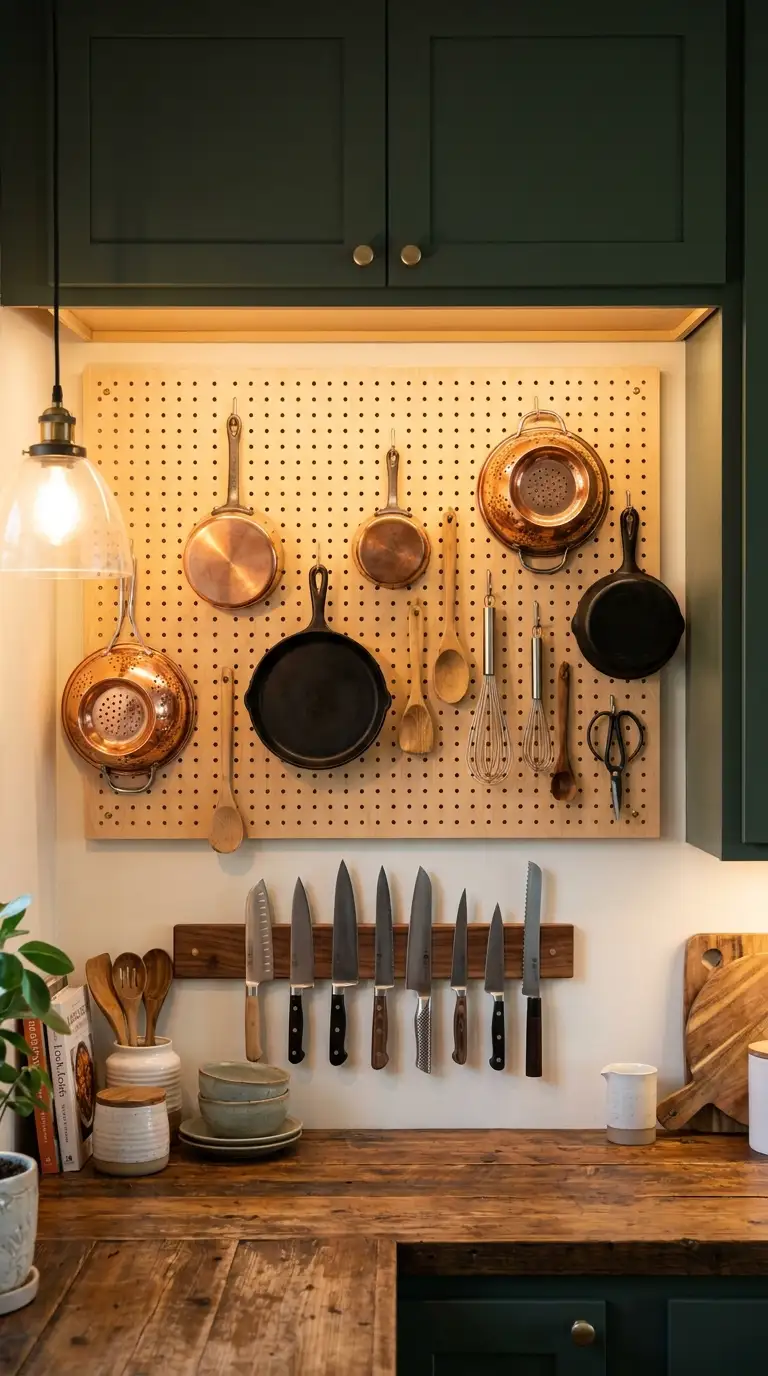
Cookware is bulky, heavy, and awkward, which makes it one of the hardest categories to manage in any small kitchen. The good news is there are several proven approaches, and you likely only need one or two to solve the problem completely.
Vertical pot lid organizers are a game changer. Instead of a pile of mismatched lids sliding around a cabinet shelf, each lid gets its own slot, standing upright and easy to grab. Pair this with stacking pots inside each other, largest on the bottom, and you will free up a surprising amount of cabinet space.
For bakeware like muffin tins, cookie sheets, and cooling racks, a vertical divider in a lower cabinet works best, similar to what we discussed earlier with cutting boards. Group all your baking items together in one zone rather than scattering them throughout different cabinets, since this makes small kitchen organization far easier to maintain over time.
If cabinet space is truly at a premium, consider hanging your most used pots from a small ceiling rack or wall mounted rail, particularly in kitchens with higher ceilings. This is not for everyone, but in the right kitchen it can free up an entire cabinet.
Fridge and Freezer Organization in a Small Kitchen
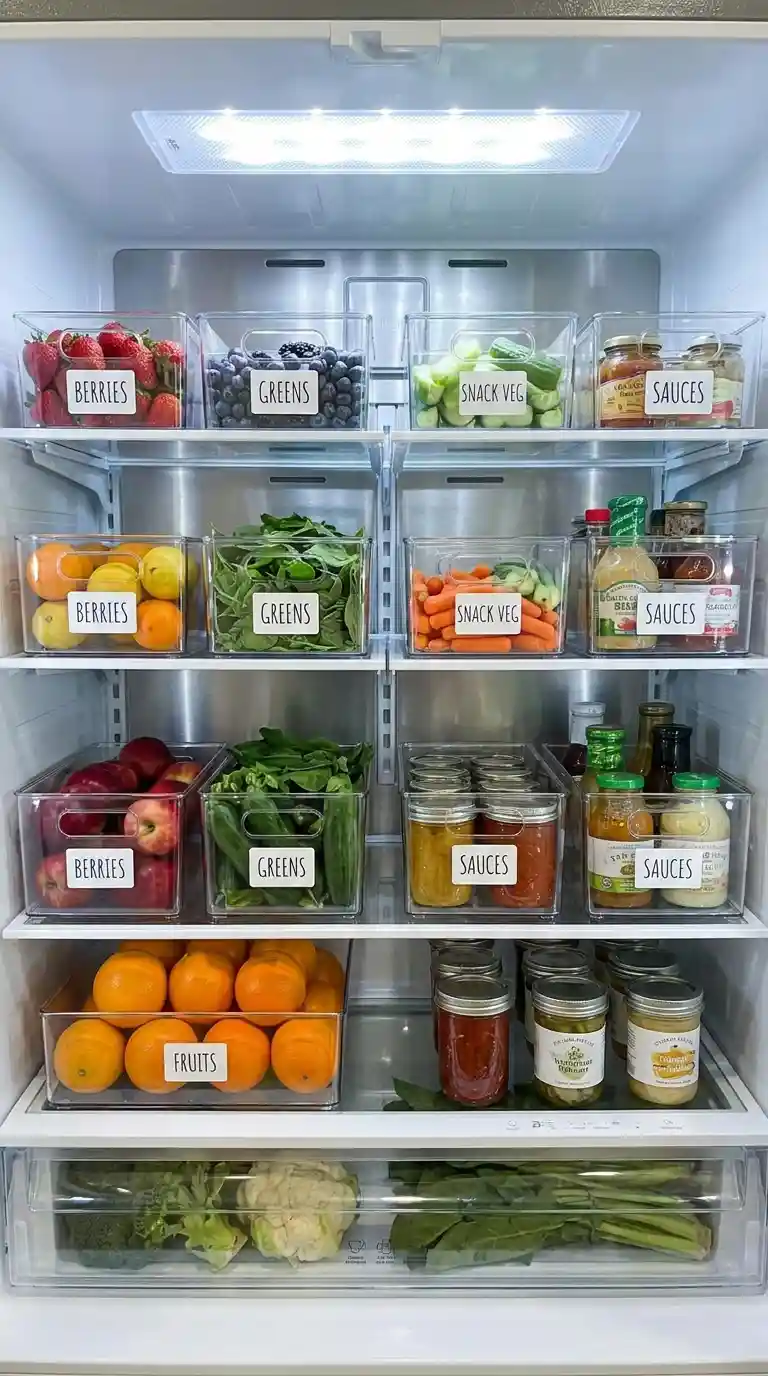
We tend to focus heavily on cabinets and drawers, but the refrigerator deserves just as much attention in any small kitchen organization plan, especially since small kitchens often come with smaller fridges too.
Clear bins are the single best investment you can make for your fridge. Group similar items together, such as all your condiments in one bin and all your cheese and deli items in another. When you need to grab something, you pull out one bin instead of rearranging half the fridge to find it, and cleaning becomes far easier since you can simply lift a bin out and wipe underneath it.
Use the door for items that do not need to stay as cold, like condiments and drinks, and save the colder main shelves for dairy, meat, and leftovers. Lazy susans work beautifully inside the fridge too, particularly for sauces and jars that tend to get lost behind other items.
For the freezer, stand items upright instead of stacking them flat whenever possible. This lets you see everything at a glance rather than digging through frozen layers to find that bag of vegetables at the very bottom. Small bins or dividers inside the freezer keep meats, vegetables, and prepared meals from turning into one frozen jumble.
Also Read : Sage Green and Pink Kitchen Ideas: The Ultimate Guide to a Warm, Unforgettable Color Pairing
Small Kitchen Organization on a Budget
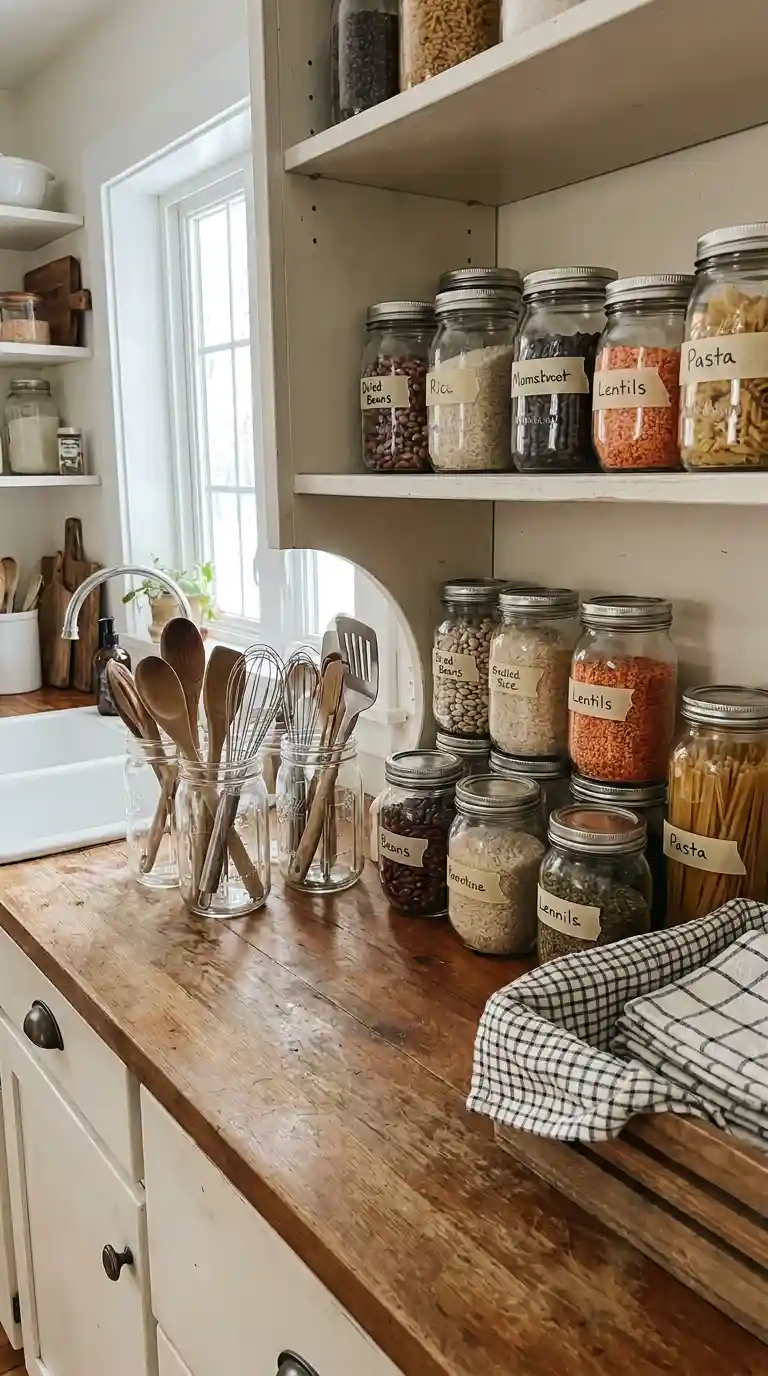
I want to be honest with you here, because a lot of organization content online pushes expensive products that are simply not necessary. You can absolutely achieve excellent small kitchen organization without spending a fortune.
Dollar stores and discount retailers often carry perfectly functional bins, trays, and containers that work just as well as the pricier versions from specialty stores. Mason jars you already have can become spice storage or hold small utensils. Shoe boxes, once covered in nice paper or fabric, make surprisingly good pantry organizers for snack packets or small bags.
Repurposing is your best friend on a budget. An old magazine holder turned sideways becomes a cutting board organizer. A cutlery tray from a broken drawer set can be repurposed inside a cabinet for spices. Before buying anything new, look around your home for items that could serve a new purpose in your kitchen.
If you do want to invest in a few key pieces, prioritize adjustable drawer organizers and clear stackable containers first, since these two categories offer the biggest return in terms of function and visual improvement for the money spent. Everything else can wait or be improvised.
Maintaining Your Small Kitchen Organization Long Term
Setting up a beautiful system is only half the work. The real challenge, and the part most people struggle with, is keeping it that way. I have seen gorgeous, freshly organized kitchens fall apart within a month simply because there was no plan for maintaining them.
The first rule is that everything needs a home. If an item does not have a specific place it belongs, it will end up wherever is convenient at the moment, and that is exactly how clutter creeps back in. When you bring something new into the kitchen, decide immediately where it lives.
Do a quick five minute reset every evening. Put things back where they belong, wipe down counters, and empty anything that accumulated on top of surfaces during the day. This tiny daily habit prevents small messes from snowballing into a complete breakdown of your small kitchen organization system.
Revisit your system every few months, especially your pantry and fridge, since food items rotate constantly and expired products can quietly build up if you never check. A quarterly refresh keeps everything working the way it did on day one.
Finally, get everyone in the household on board. A system only works if the people using the kitchen understand it and actually follow it. Spend a few minutes showing family members where things go, and your small kitchen organization will hold up far longer than if you are the only one maintaining it.
Common Mistakes People Make With Small Kitchen Organization
Even with the best intentions, certain mistakes come up again and again. Knowing them ahead of time can save you a lot of wasted effort and money.
One common mistake is buying organizers before decluttering. If you skip the editing step and jump straight to buying bins and dividers, you often end up with beautifully organized clutter, which still leaves your kitchen feeling cramped and chaotic. Always declutter first.
Another mistake is choosing products that do not fit your actual space because you skipped measuring. This leads to a pile of unused organizers sitting in a closet, which is both wasteful and frustrating.
People also tend to organize based on what looks good in photos rather than how they actually cook. If you bake often, your organization plan should reflect that with easy access to baking tools. If you rarely bake, do not dedicate prime cabinet space to a stand mixer you use twice a year.
Lastly, many people give up too quickly when the system does not feel perfect immediately. Small kitchen organization is a process of small adjustments over time. Give your new system a few weeks before deciding whether something needs to change.
Also Read : 45 Genius Pantry Organization Ideas That Will Finally End The Daily Kitchen Chaos
My Personal Approach to Small Kitchen Organization
After working in so many different kitchens over the years, I have developed a routine that I genuinely believe works for almost any small space. I start with a full declutter, category by category, never room by room, because tackling all your mugs at once, no matter where they are scattered, is far more effective than organizing one cabinet in isolation.
From there, I map out zones. Cooking tools near the stove, prep tools near the counter, dishes near the dishwasher or sink. This zone based thinking is at the heart of good small kitchen organization because it minimizes wasted movement while you are actually cooking.
I always save the pantry and fridge for last, since food organization tends to require the most frequent tweaking as grocery habits change. Getting the cabinets and drawers locked in first gives you a stable foundation to build the rest around.
The biggest lesson I can share is patience. A truly functional small kitchen organization system rarely happens in one weekend. It happens gradually, through small improvements, honest edits, and a willingness to adjust things that are not quite working. Trust the process, and your tiny kitchen will start to feel much bigger than its actual square footage.
Small Kitchen Organization for Renters
Renting comes with its own set of challenges when it comes to small kitchen organization, mainly because you cannot drill holes, repaint cabinets, or make any permanent changes without risking your deposit. The good news is that some of the most effective organization tools require zero installation at all.
Adhesive hooks have come a long way in recent years. The strong removable versions can hold surprisingly heavy items, including small pans or utility items, and they peel off cleanly without damaging paint or leaving marks behind. I have used these in dozens of rental kitchens with great success, and tenants are always relieved to learn they do not need a landlord’s permission to add a bit of vertical storage.
Tension rods are another renter favorite. You can wedge one underneath a sink to hang spray bottles, or use one inside a cabinet to create a divider for baking sheets and trays. Since nothing is drilled or glued, everything comes down in seconds when it is time to move out.
Freestanding furniture pieces also solve a lot of problems for renters dealing with small kitchen organization. A slim rolling cart can act as extra counter space, additional pantry storage, or even a small bar cart, and it moves with you to your next apartment. Look for one with wheels and multiple shelves so it can adapt to whatever your next kitchen layout looks like.
Command strips with hooks work beautifully for hanging small utensils, dish towels, or even a small calendar near your meal planning area. The key with any renter friendly solution is choosing products specifically labeled as removable, since regular adhesive can damage paint and cost you far more than the product itself was worth.
Small Kitchen Organization for Entertaining and Hosting Guests
Hosting in a small kitchen brings its own unique stress, especially when you are trying to prep multiple dishes while guests are wandering in and out. A little bit of planning ahead of time makes an enormous difference, and much of it ties directly back to how your kitchen is organized on a daily basis.
Keep your serving pieces, like platters and large bowls, stored together in one accessible spot rather than scattered throughout different cabinets. When you only pull these items out a few times a year, it is tempting to shove them wherever there is room, but that means hunting for them right when you are already under pressure to get food on the table.
Consider a designated bin or shelf just for entertaining essentials, including cloth napkins, a few extra serving spoons, and any specialty items you only use for gatherings. Having everything in one place means setup and cleanup both go faster, which matters enormously in a small kitchen where counter space is already limited during a party.
If you frequently host, think about a small rolling bar cart that lives outside the kitchen most of the time but rolls in when needed. This keeps drink related clutter, like extra glasses and mixers, from taking up permanent space in your small kitchen organization system while still being available exactly when you need it.
Prep as much as possible before guests arrive, and use your newly organized drawers and cabinets to your advantage. When everything has a home, prepping for a dinner party becomes far less chaotic because you are not stopping every few minutes to dig through a messy cabinet looking for the right dish.
Tools and Products That Genuinely Make a Difference
I get asked constantly which products are actually worth buying versus which ones are just clever marketing. After testing more organizers than I can count across different kitchens, a few categories consistently earn their spot in a well planned small kitchen organization system.
Adjustable drawer dividers top the list because they mold to your specific drawer size rather than forcing you to work around a fixed layout. Clear stackable bins come in a close second, since they let you see contents instantly and make the most of vertical space inside cabinets and the fridge alike.
A good lazy susan, particularly the two tier variety, consistently earns praise from clients because corner cabinets are notoriously difficult to use well without one. Vertical file style organizers, originally designed for paperwork, work wonderfully for cutting boards, baking sheets, and pot lids in a kitchen setting.
Under shelf baskets that clip onto the underside of an existing shelf create an entire new storage layer without any installation, which makes them perfect for small kitchen organization projects on a budget or in rental properties. Finally, a simple over the cabinet door organizer solves so many small storage problems that it deserves a spot in nearly every kitchen, regardless of size.
Avoid overspending on trendy, single purpose gadgets that only solve one narrow problem. The best products for small kitchen organization tend to be flexible and adaptable, since your needs will shift over time as your cooking habits and household change.
Seasonal Adjustments to Your Small Kitchen Organization System
Most people set up their kitchen once and assume it should stay exactly the same forever, but the truth is that a smart small kitchen organization system flexes with the seasons. What you need easy access to in the middle of summer is often completely different from what matters most during the holiday season.
In warmer months, prioritize easy access to lighter cookware, salad tools, and grilling accessories if you cook outdoors often. Heavier holiday bakeware, like large roasting pans or specialty cookie cutters, can move to a higher shelf or a less convenient spot since you will not need them daily.
As the holidays approach, rotate those seasonal baking tools and serving dishes back into prime real estate, and temporarily move summer specific items, like a large pitcher for iced tea, out of the way. This kind of seasonal rotation keeps your most used items always within easy reach, no matter the time of year.
Doing a seasonal check also gives you a natural, low pressure opportunity to reassess your entire small kitchen organization setup. You might notice a system that worked wonderfully in spring is not serving you well by fall, and that is completely normal. Small adjustments every few months keep the whole system feeling fresh and functional rather than rigid and outdated.
Small Kitchen Organization Ideas for Coffee and Tea Stations
A dedicated coffee or tea station has become incredibly popular, and for good reason, since it consolidates everything you need for your morning routine into one small, efficient zone. Even in a tiny kitchen, carving out a corner of counter or a single shelf for this purpose can make mornings noticeably smoother.
Use a small tray to corral your coffee maker, mugs, and sweeteners into one contained area rather than letting them spread across the counter. Trays create a visual boundary that keeps this zone from creeping into other areas of your limited counter space, which is a subtle but powerful trick in small kitchen organization.
Mount a small shelf above the station for mugs if cabinet space nearby is tight, or use hooks to hang mugs by their handles underneath an existing cabinet. This frees up shelf space for coffee beans, filters, or tea boxes while keeping mugs easily visible and accessible.
Keep only your most used coffee or tea accessories in this zone. Specialty equipment you use occasionally, like a French press you break out once a month, can be stored slightly further away, reserving the prime spot for what you reach for every single morning without exception.
Also Read : Green Kitchen Ideas: The Ultimate Guide to a Fresh, Unforgettable Heart of the Home
How Small Kitchen Organization Improves Daily Cooking Efficiency
There is a practical, almost scientific reason why proper organization makes cooking feel so much easier, and it comes down to something professional chefs call mise en place, which simply means having everything in its place before you start cooking.
When your small kitchen organization system is dialed in, this concept becomes automatic. Your knives are exactly where you expect them, your cutting board is within arm’s reach of your prep area, and your spices are grouped logically near the stove. You stop wasting minutes searching and start moving through recipes with a rhythm that actually feels enjoyable.
This efficiency compounds over time. A recipe that once took you an hour because you kept stopping to hunt for tools might only take forty minutes once your kitchen flows logically. Multiply that time savings across every meal you cook in a week, and the impact of good small kitchen organization becomes impossible to ignore.
There is also less physical strain involved. When items are stored at a sensible height and grouped by how you actually use them, you are not constantly bending, stretching, or shuffling things aside to reach what you need. Over months and years, this adds up to a kitchen that feels genuinely comfortable to work in, rather than one that fights you every step of the way.
Small Kitchen Organization for Meal Prep and Batch Cooking
Meal prepping has become a normal part of many households, and if you are trying to batch cook in a small kitchen, your organization system matters even more than usual. Without a clear setup, meal prep day can turn into a chaotic mess of containers, ingredients, and dirty dishes piling up faster than you can keep up with them.
Start by clearing a designated zone before you begin cooking. Even in a tiny kitchen, you can create temporary workspace by clearing the counter completely and having your containers, labels, and ingredients staged and ready. This kind of preparation is a direct extension of good small kitchen organization, since it relies on already knowing exactly where everything lives so you can gather it quickly.
Store your meal prep containers together in one area, ideally near where you portion out food once it is cooked. Stackable, uniform containers work best here, not only because they save space in your cabinets, but also because they stack neatly in the fridge afterward without wasting shelf space.
Keep a small set of labels or a marker nearby specifically for this purpose. Labeling prepped meals with the date helps you use things in the right order and prevents that unfortunate situation where a container gets pushed to the back of the fridge and forgotten for two weeks. This habit fits naturally into a broader small kitchen organization approach that values visibility above almost everything else.
If you batch cook proteins or grains regularly, dedicate a specific shelf in your freezer or fridge just for prepped ingredients, separate from your everyday groceries. This separation keeps your prepped food from getting buried under new grocery hauls and makes your weekly cooking routine noticeably smoother.
Small Kitchen Organization Mistakes to Avoid When Buying Products
I touched on a few common mistakes earlier, but shopping mistakes deserve their own closer look, because I have seen so many well meaning people spend real money on products that ended up making their small kitchen organization worse instead of better.
The biggest trap is buying based on inspiration photos rather than your actual kitchen. A gorgeous pantry wall of matching canisters looks incredible online, but if your pantry cabinet is only eight inches deep, those canisters simply will not fit. Always shop with your own measurements in hand, not someone else’s kitchen as a mental reference.
Another mistake is buying too much of one type of organizer before testing it. If you are trying a new drawer divider system, start with one drawer before ordering enough to outfit your entire kitchen. This lets you make sure the product actually works well in real use before committing further, both financially and in terms of time spent setting everything up.
People also frequently forget to account for growth or change. If you are in a season of life where your kitchen inventory is likely to shift, such as receiving new cookware as gifts or changing your diet, leave a little flexibility in your system rather than filling every single inch immediately. A small kitchen organization system that has zero breathing room becomes fragile the moment anything new enters the picture.
Finally, resist the urge to buy trendy items purely because they are popular on social media. Some viral kitchen products are genuinely useful, but many are novelty items that solve a problem you never actually had. Stick to solving your own specific frustrations rather than chasing whatever is trending that month.
The Psychological Benefits of a Well Organized Small Kitchen
It might seem like a stretch to connect kitchen cabinets to mental wellbeing, but anyone who has lived with a chronically messy kitchen and then experienced an organized one will tell you the difference is real and noticeable. Our environments genuinely affect how we feel, and the kitchen tends to be one of the most used rooms in any home.
A cluttered, disorganized kitchen creates a low grade, constant sense of things being unfinished or out of control. Even if you are not consciously thinking about it, walking into a messy kitchen every morning sets a slightly stressful tone for the rest of your day. Small kitchen organization removes that background noise, giving you one less thing quietly weighing on your mind.
There is also a real sense of accomplishment that comes from maintaining an organized space. Completing small daily habits, like putting dishes away immediately or wiping down counters before bed, builds a kind of momentum that tends to spill over into other areas of life. People who take pride in their organized kitchens often report feeling more capable and in control generally, which is a meaningful benefit beyond just having a tidy countertop.
Cooking itself becomes more enjoyable too. When you are not fighting your kitchen just to make a simple meal, you are far more likely to actually cook at home rather than ordering takeout out of frustration. Over time, this can support healthier eating habits simply because the friction of cooking has been removed, all thanks to a thoughtful small kitchen organization system working quietly in the background.
Small Kitchen Organization for Multi Person Households
Organizing a kitchen for one person is relatively straightforward, but once you add roommates, a partner, children, or extended family into the mix, your small kitchen organization plan needs to account for different habits, preferences, and levels of tidiness.
Clear labeling becomes even more important in a shared kitchen. When multiple people are putting things away, visual cues like labels and grouped categories help everyone return items to the correct spot, even if they were not the one who originally set up the system. This reduces the daily friction that often builds up in shared living spaces around kitchen mess.
Assign zones based on who uses what most. If one household member does most of the baking, keep those tools within their easiest reach. If children are old enough to help themselves to snacks or dishes, designate a lower cabinet specifically for kid friendly items, keeping fragile or dangerous items safely out of reach on higher shelves.
Communication matters just as much as the physical setup. Even the best small kitchen organization system will break down if household members do not understand or agree to follow it. A quick conversation about where things belong, ideally when the system is first set up, saves countless frustrations down the road and helps everyone feel like they have a stake in keeping the shared space functional.
Small Space Kitchen Layouts and How They Affect Organization
The physical layout of your kitchen plays a bigger role in your organization strategy than most people realize. A galley kitchen, an L shaped kitchen, and a one wall kitchen each present different challenges, and the best small kitchen organization approach often depends on which layout you are working with.
In a galley kitchen, where two rows of cabinets face each other in a narrow space, the main challenge is often traffic flow. Keeping counters as clear as possible becomes essential here, since even a small amount of clutter can make the walkway feel cramped and difficult to move through while cooking.
L shaped kitchens usually include at least one corner cabinet, making a lazy susan or corner pull out system almost essential rather than optional. These layouts often have slightly more counter space than a galley kitchen, but the corner storage still needs a deliberate solution to avoid becoming wasted space.
One wall kitchens, common in studio apartments, require the most creative thinking since there is no second wall of cabinets to rely on. Vertical storage becomes absolutely critical here, often stretching all the way up to the ceiling, along with rolling carts or slim furniture pieces that can supplement the limited built in storage.
Whatever your layout, take time to understand its specific limitations and strengths before applying generic small kitchen organization advice. What works beautifully in a galley kitchen might not translate well to a one wall setup, and adapting general principles to your specific space is always more effective than following a rigid, one size fits all plan.
A Room by Room Style Breakdown of My Small Kitchen Organization Checklist
Sometimes it helps to see the whole process laid out step by step rather than scattered across separate sections. Here is the checklist I personally walk through whenever I start a new small kitchen organization project, whether it is my own kitchen or a client’s.
First, I clear every single surface completely, including counters, the top of the fridge, and any open shelving. Seeing the empty space reset gives a clear sense of what you are actually working with, free from the visual noise of whatever was piled up before.
Second, I sort every item in the kitchen into simple categories such as cooking tools, baking tools, dishes, food storage, small appliances, and cleaning supplies. This category based sorting, rather than sorting by which cabinet something happened to live in, reveals duplicates and forgotten items far more clearly.
Third, I make firm decisions about what stays and what goes. Anything broken, expired, or unused for over a year gets donated, recycled, or thrown away without much hesitation. This step is uncomfortable for some people, but it is the foundation that determines whether the rest of the small kitchen organization plan will actually work.
Fourth, I measure every cabinet, drawer, and open space before buying a single organizing product. Skipping this step is the single most common reason organizing projects stall out, since mismatched products get returned or abandoned in a closet.
Fifth, I assign zones based on function, placing items near where they are actually used rather than where they happen to fit. Pots go near the stove, dishes go near the sink or dishwasher, and everyday spices live within arm’s reach of the cooking area.
Sixth, I install or add the organizing tools themselves, starting with the highest impact items like drawer dividers and shelf risers before moving on to smaller details like labels and bins. Working from biggest impact to smallest keeps the momentum going and prevents the project from feeling endless.
Seventh, and this step gets skipped constantly, I actually use the kitchen for a week or two before making final adjustments. Living with a new system reveals small friction points you could never predict on paper, and tweaking based on real use is what turns a decent small kitchen organization setup into a genuinely great one.
Small Kitchen Organization Ideas Inspired by Professional Kitchens
Restaurant kitchens operate under some of the tightest space constraints imaginable, and yet they manage extraordinary volume and speed every single service. There is a lot home cooks can borrow from professional kitchen organization principles, scaled down appropriately for a residential small kitchen organization plan.
Professional kitchens rely heavily on the concept of stations, where every task has a dedicated, fully equipped zone. Applying this at home means creating small stations of your own, such as a prep station near your cutting board with knives and bowls close by, or a baking station where flour, sugar, and mixing tools all live together in one spot.
Chefs also prioritize keeping their most frequently used tools within immediate reach, often literally at arm’s length, while less frequently used items get stored further away. This tiered approach to accessibility is one of the most valuable ideas you can borrow, since it naturally prioritizes convenience for the items that matter most in daily cooking.
Cleanliness as you go is another professional habit worth adopting. Rather than letting dishes and mess accumulate throughout a cooking session, wiping surfaces and washing tools as you move through a recipe keeps your small kitchen organization system from being disrupted by the natural chaos of actually cooking a meal.
Finally, professional kitchens label everything, from ingredient bins to storage containers, often with dates included. Bringing this habit into your home kitchen, even in a simplified form, adds a level of clarity that pays off every single time you open a cabinet or the fridge looking for something specific.
How Small Kitchen Organization Differs From Kitchen Decorating
It is worth drawing a clear line between organizing your kitchen and decorating it, because the two often get blended together in a way that actually undermines good small kitchen organization. A kitchen can look stunning in photos while still being genuinely difficult to cook in, and that gap matters more than most people realize.
Decorating focuses on visual appeal, things like matching canister sets, curated open shelving, and coordinated color palettes. Organization focuses on function, meaning whether items are stored in a way that supports how you actually cook and clean up afterward. The best kitchens manage to blend both, but if you have to choose, function should always win in a small space where every inch matters.
Open shelving is a perfect example of where these two goals can conflict. It looks beautiful in a magazine spread, but in a small, heavily used kitchen, open shelves often become cluttered and require constant tidying to look good, which can add stress rather than reduce it. If you love the look, consider limiting open shelving to just one small area rather than your entire storage plan.
Good small kitchen organization does not require sacrificing style completely. Choosing organizers in colors or materials you love, keeping labels neat and consistent, and allowing a few personal touches like a small plant or a favorite mug on display can make an organized kitchen feel warm and personal rather than sterile. The goal is simply to make sure decoration never comes at the expense of actual usability.
When to Consider Bigger Changes Beyond Small Kitchen Organization
Sometimes, despite your best efforts, a kitchen genuinely lacks enough storage for a household’s needs, and no amount of clever small kitchen organization can fully compensate for that. It is worth being honest with yourself about when you have hit that ceiling rather than continuing to buy organizer after organizer hoping the next one will finally solve everything.
If you have decluttered thoroughly, maximized vertical space, added wall storage, and your kitchen still feels impossibly tight, it might be time to consider small structural changes if your living situation allows for them. This could mean adding a slim rolling island, installing a small shelf in an underused hallway nearby, or even looking into minor cabinet upgrades if you own your home.
For renters or those unable to make structural changes, look beyond the kitchen itself. A nearby closet, a section of a pantry in another room, or even under bed storage for rarely used items like holiday dishes can relieve pressure on your kitchen without requiring any renovation at all. Small kitchen organization does not always have to stay confined to the four walls of the kitchen itself.
That said, in my experience, the vast majority of small kitchens have far more untapped potential than people initially believe. Before assuming you simply do not have enough space, make sure you have genuinely applied the strategies covered throughout this guide, since most storage problems turn out to be organization problems in disguise rather than a true lack of physical space.
Frequently Asked Questions About Small Kitchen Organization
How do I organize a small kitchen with limited cabinets?
Focus on maximizing vertical space with shelf risers, using drawer organizers efficiently, and adding wall storage like pegboards or magnetic strips to reduce dependence on cabinets altogether. Small kitchen organization in tight spaces relies heavily on going up rather than out.
What is the best way to organize kitchen cabinets in a small kitchen?
Group similar items together, use vertical dividers for flat items like trays and cutting boards, and add shelf risers to create extra layers of storage. Corner cabinets benefit greatly from a lazy susan.
How can I organize my small kitchen without a pantry?
Use cabinet doors for extra storage, transfer dry goods into stackable clear containers, and consider a small freestanding shelf or cart if floor space allows. Small kitchen organization without a pantry is entirely possible with the right containers and layout.
What should I get rid of first when organizing a small kitchen?
Start with duplicate items, expired food, broken gadgets, and anything you have not used in over a year. Editing your belongings is always the first step in effective small kitchen organization
How do I make my small kitchen look bigger and more organized?
Keep countertops mostly clear, use light colored containers, and avoid overcrowding open shelving. A visually clean kitchen automatically feels larger, even if the actual square footage has not changed.
What are the best storage solutions for a small kitchen?
Vertical dividers, stackable containers, lazy susans, adjustable drawer organizers, and wall mounted storage like pegboards or hanging rails are among the most effective tools for small kitchen organization.
How often should I reorganize my kitchen?
A light refresh every few months works well for most households, with a deeper declutter once or twice a year. Pantry and fridge sections may need more frequent attention due to food turnover.
How do I organize pots and pans in a small kitchen?
Use a vertical lid organizer, nest pots inside one another by size, or store cookware in a deep drawer instead of a cabinet since drawers offer better visibility from above.
What is the best way to organize a junk drawer in a small kitchen?
Add a divided tray or small bins to separate categories like batteries, tape, and odds and ends, so the drawer still has structure even if it holds miscellaneous items.
How can I organize my kitchen on a tight budget?
Use a vertical lid organizer, nest pots inside one another by size, or store cookware in a deep drawer instead of a cabinet since drawers offer better visibility from above.
Final Thoughts
Small kitchen organization is not about achieving some impossible, magazine perfect look. It is about creating a space that works with your daily life instead of against it. Every tip in this guide has been tested in real kitchens with real families, not staged for a photo and forgotten the next day.
Start small. Pick one drawer or one cabinet this week and apply what you learned here. Once you see how much easier cooking becomes with even one organized zone, you will naturally want to keep going. Your kitchen does not need to be big to feel functional, calm, and genuinely enjoyable to cook in. It just needs a system, and now you have everything you need to build one.