

Before you buy a single dark chair, settle three practical points: how many people eat here on an ordinary weeknight, how much daylight the room actually gets, and what you can spend in one go. A gothic dining room for six in a room of about 12 square metres needs a different plan from one for two in a large, bright room, and the difference is mostly about light and clear space, not about buying more decoration.
A workable first phase is £400 to £800 over about four weeks: one wall colour, one statement light and the table linen, with larger furniture left until the room has been lived in. That order matters, because paint and light change how dark wood reads, and it is far cheaper to adjust a paint colour than to replace a table.
What should you decide before buying anything dark?
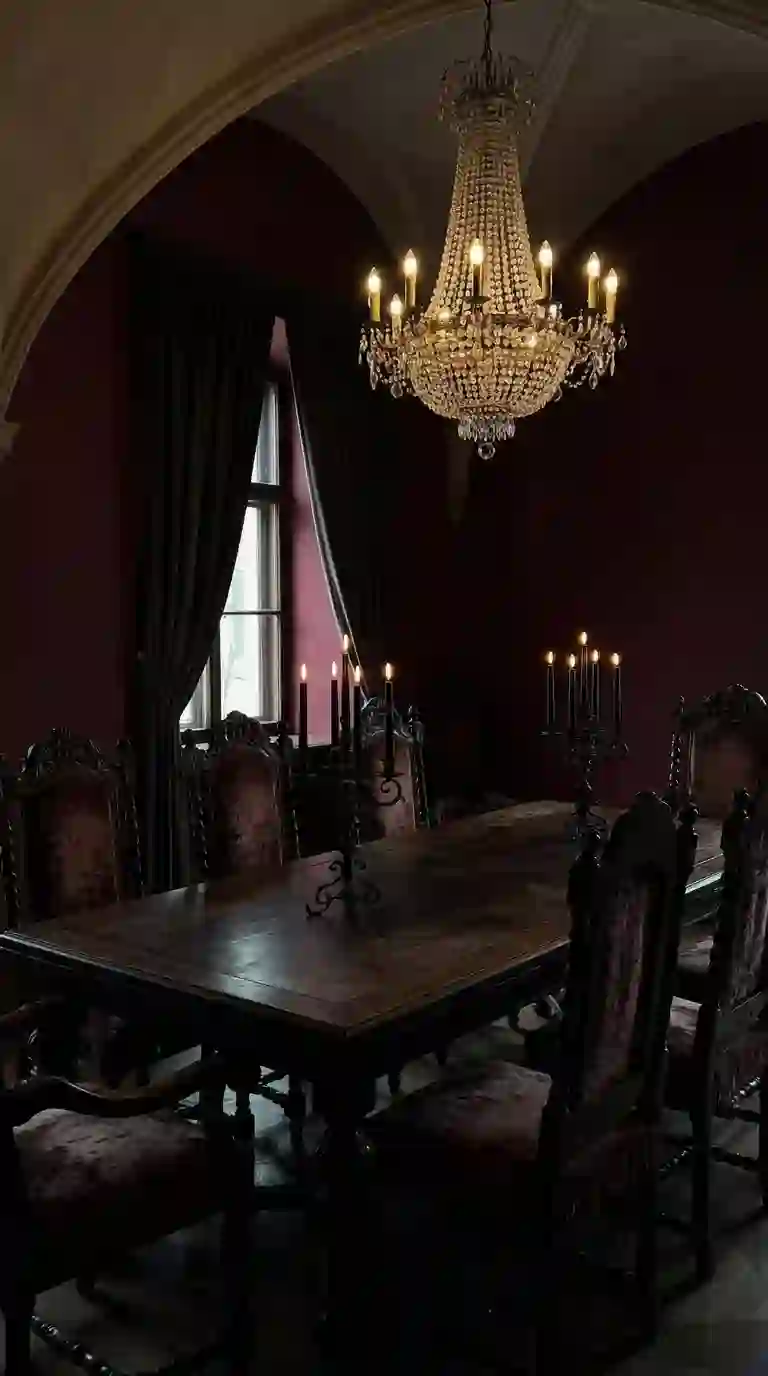
The photo above shows the balance to aim for: dark wood and a tall, arched ceiling, but also pale stone, candlelight and a clear view across the table. Gothic style comes from pointed arches, vertical lines and rich materials, drawn from medieval architecture and later Victorian revival furniture, not from making a room as black as possible.
Decide the room’s job first. If it is used for homework, laptop work and weekday suppers as well as evening meals, keep at least one pale surface, such as a cream ceiling or light linen, and choose dimmable light rather than candles alone. A room that only works after dark will quickly feel like a problem, however striking it looks in a photograph.
Which colours actually work in a dining room?
Start with one dominant colour and two supporting tones. Burgundy, oxblood, forest green, charcoal, plum and midnight blue all work, but only one should cover most of the walls. The second tone can appear in upholstery or curtains, and the third should be a lighter contrast, such as cream, warm ivory or aged brass, so plates, faces and glassware remain visible.
Test paint properly before committing. Paint a board at least 60 centimetres square, move it around the room, and look at it at breakfast, in daylight and again under evening light. Dark colours can shift by several shades between morning and night, and a colour that looks rich at 8 pm can look flat or muddy at noon. A green and gold bedroom scheme shows the same principle: deep green only works because gold and pale bedding stop it from closing in.
What furniture is worth spending on?
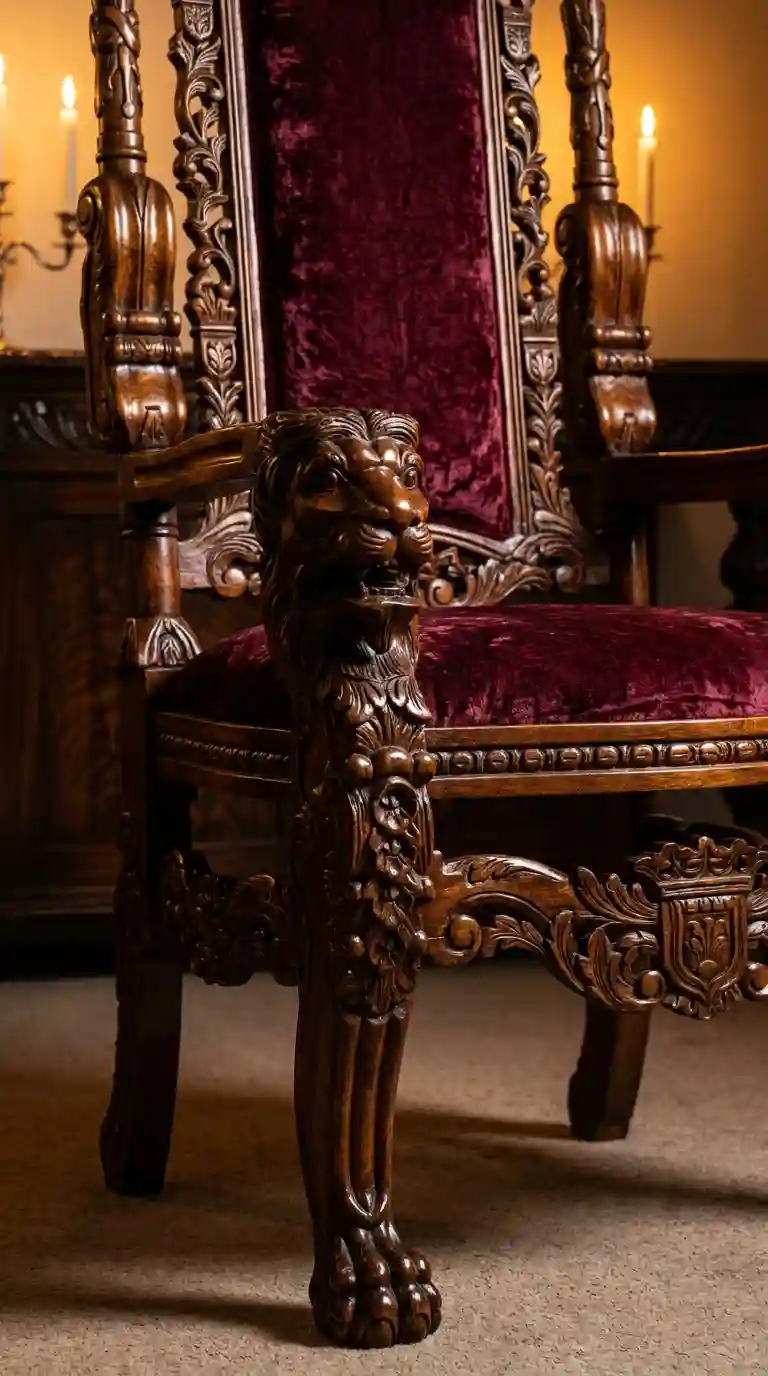
Spend first on the table and the chairs people sit on for an hour at a time. A solid wood table in walnut, mahogany or ebonised oak, about 75 centimetres high, anchors the room, as the carved chair in the photo above shows: weight, carving and deep velvet do more work than a matching set of themed accessories. Allow 60 centimetres of elbow room per person and 90 centimetres behind each chair for pulling out.
Secondhand dark wood is often the better buy. A well-made older table can cost £150 to £400, compared with £600 or more for a new equivalent, and scratches in a dark finish are easier to touch up than damage to a pale veneer. Check that the frame is square, that all legs touch the floor at once, and that the top does not rock before you pay. If you want a new table instead, building a kitchen table yourself gives the same control over size and finish for a first pine build of roughly £150 to £350.
How do you light a dark room without making it gloomy?
Use three layers, and put the main ones on dimmers. A chandelier or pendant over the table should hang 75 to 90 centimetres above the tabletop, so it lights faces without blocking the view across the table. Add wall sconces or a pair of table lamps on a sideboard for background light, and keep candles as a third, optional layer rather than the only source.
Choose warm light, around 2700 Kelvin, and test it with the wall colour in place. Cool white light makes burgundy look purple and charcoal look blue-grey, which is a common reason a room that looked good in a shop feels wrong at home. Real candles are fine for occasional evenings, but check the practical points first: stable holders, nothing flammable within 30 centimetres, and a clear route out of the room if a curtain is nearby.
Which fabrics and wall details soften the room?
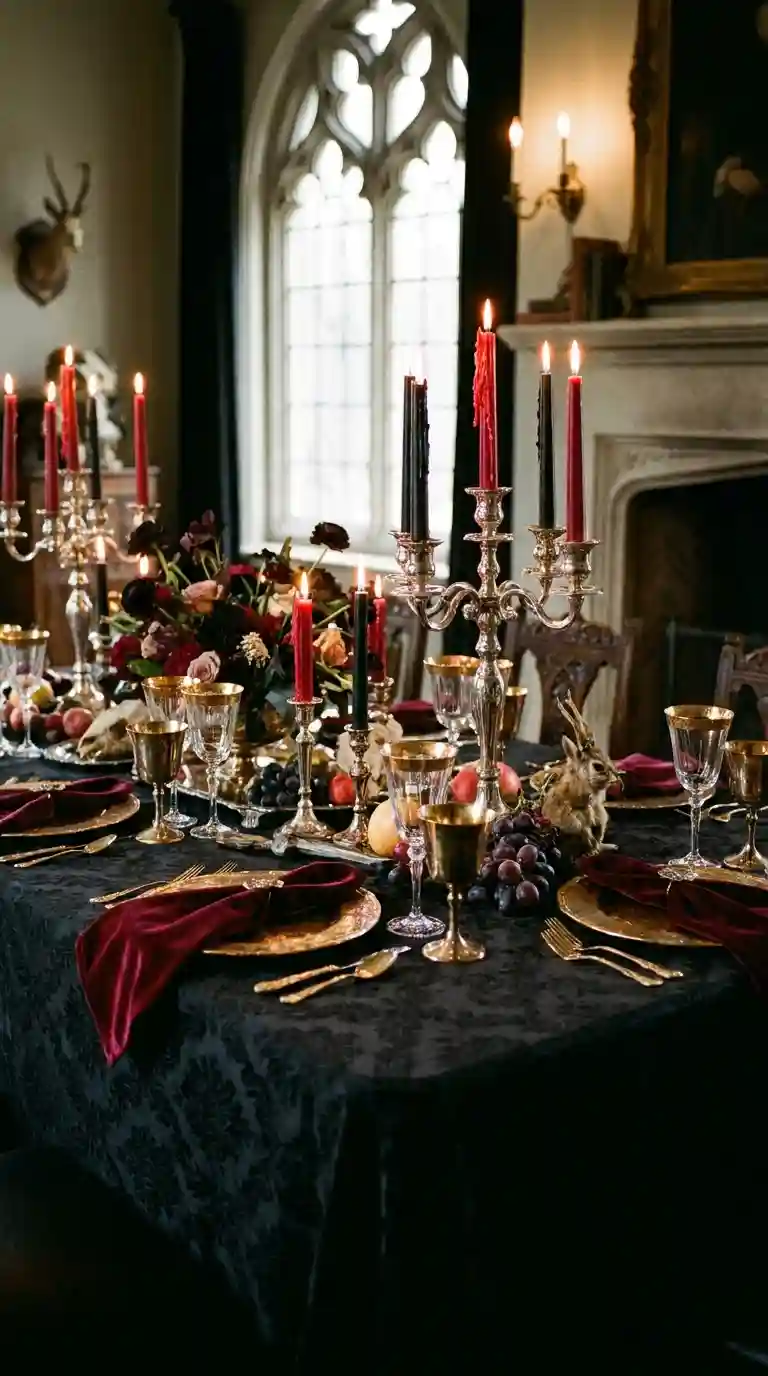
Velvet, brocade and damask do the softening work in a room full of wood and metal, as the table setting in the photo above shows: a dark damask cloth, tall candles and deep red accents, without any novelty decoration. Choose one heavy fabric for the table or curtains and repeat it once, in chair pads or napkins, rather than using four different patterns at once.
On the walls, an arched or gilded mirror is the most useful single piece, because it doubles candlelight and gives the room a focal point without another large purchase. A mirror at least 90 centimetres tall, hung so its centre is roughly at eye level when seated, works better than several small mirrors scattered around the room. For the finished table, placemat ideas for a dark table show how a pale or patterned layer can stop the setting from disappearing into a dark cloth.
How do you make it work in a small space?
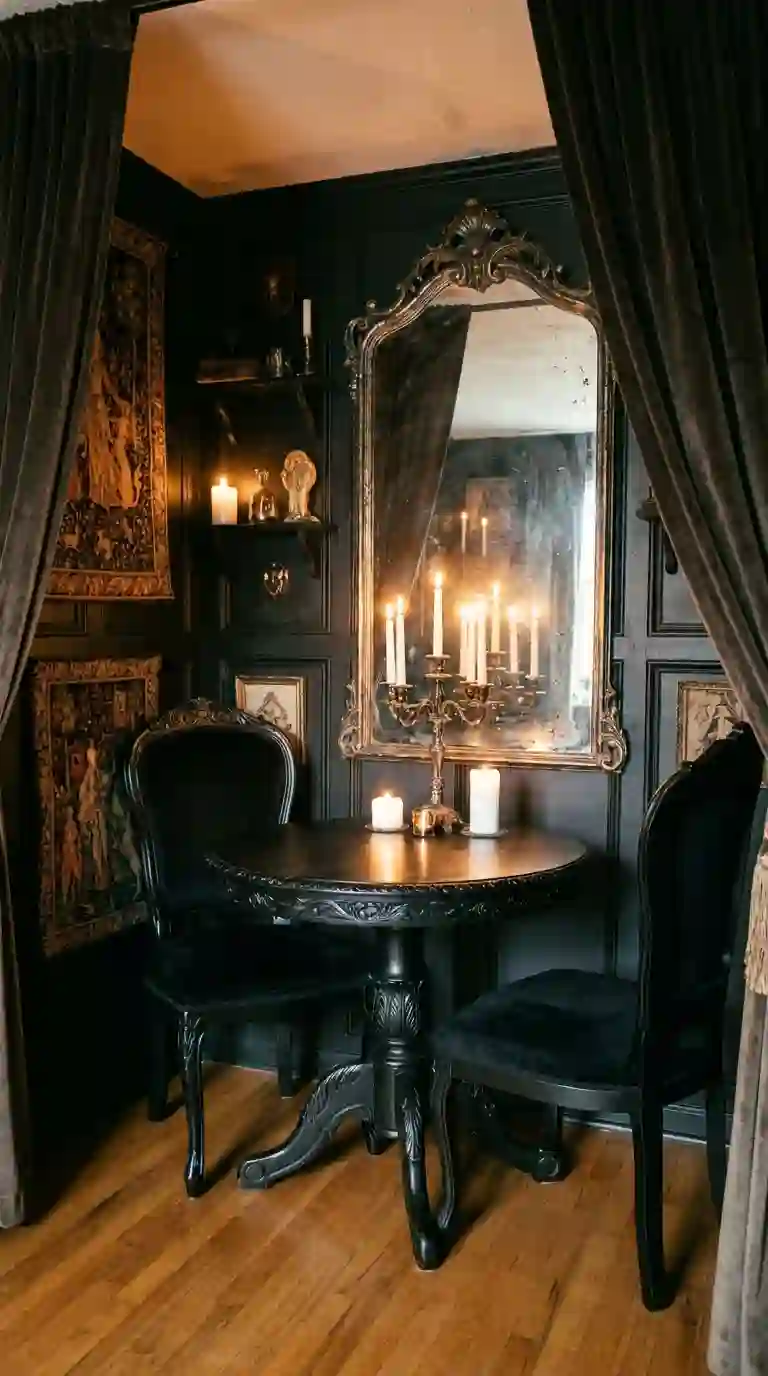
Pick one or two dramatic gestures and leave the rest calm. In the small nook in the photo above, a round black pedestal table, two velvet chairs and one large mirror carry the whole look, while the walls stay plain. A 90-centimetre round table seats four in a tight corner, where a rectangular table of the same capacity would block the walkway.
Renters can get most of the effect without permanent change: peel-and-stick wallpaper on one wall, a dark rug that extends at least 60 centimetres beyond the table on each side, and floor-length curtains hung as close to the ceiling as possible. Those three changes can be removed or taken away at the end of a tenancy, unlike painted panelling or fixed wall niches.
Which version suits you: modern, Victorian or rustic?
Modern gothic keeps the dark palette and the drama but simplifies the shapes: matte black metal, smoked glass, unlacquered brass and one strong light fitting, with plain walls and little carving. It suits open-plan rooms, because the cleaner lines do not fight with a kitchen or living area nearby.
Victorian gothic is the most formal version: carved wood, symmetrical sconces, gilded frames and full place settings. Rustic or medieval gothic is earthier: a heavy trestle table, wrought iron, exposed brick or stone, and heavier, plainer textiles. The decision is practical as well as visual: Victorian pieces need more dusting and care, rustic pieces tolerate daily use better, and modern pieces are easiest to match with existing furniture.
What mistakes turn it into a costume set?
Three mistakes do most of the damage. First, too little light: a room that is moody at 7 pm but unusable at lunchtime has gone too far, so keep the dimmers and at least one pale surface. Second, novelty decoration: skulls, cobwebs and plastic bats belong to Halloween, not to a year-round room, and one cheap themed item can undo the effect of a good table and light.
Third, uncomfortable chairs chosen for looks alone. A chair that nobody wants to sit in for more than ten minutes will empty the room, however dramatic it looks. Sit in a chair for a full meal’s length before buying a set, check that the seat height leaves about 30 centimetres between seat and tabletop, and leave at least one bare wall or clear surface so the room can breathe.
Questions worth asking before you start
What colours work best for a gothic dining room? One dominant deep tone, such as burgundy, forest green, charcoal or midnight blue, with a lighter contrast such as cream or aged brass, so the room stays readable in both daylight and candlelight.
How do you stop it looking like Halloween decoration? Use quality materials, real wood and fabric, and proper furniture, and avoid literal Halloween items. The style should read as historical and elegant, not as a seasonal display.
Is black paint too dark for a dining room? Not necessarily, especially in a room used mainly in the evening with warm, layered, dimmable light. Test a large sample board in daylight first, and keep the ceiling or linen pale if the room is small.
What furniture should you buy first? The table and chairs, because they decide comfort and layout. Lighting comes next, then textiles and mirrors, which are easier and cheaper to change later.
Can a small dining room still work in this style? Yes, if you limit yourself to one or two strong choices, such as a dark wall, a round pedestal table and one large mirror, and keep the remaining surfaces plain so the room does not feel crowded.





6 Comments on “Dark, Dramatic and Still Liveable: A Gothic Dining Room That Works”