
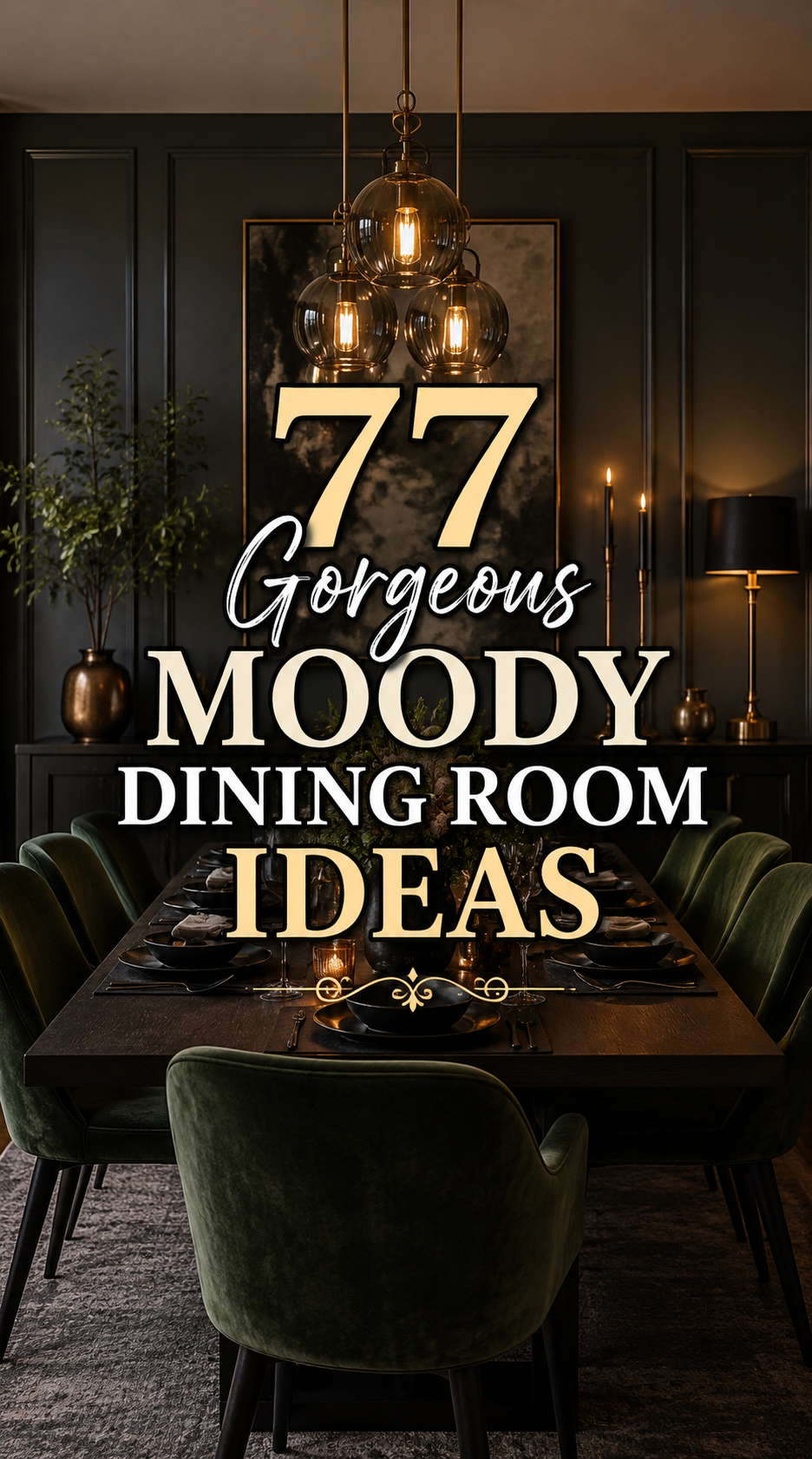
A moody dining room is not about darkness for its own sake. It is deep colour, warm light and texture that make people linger over dinner — the photo at the top shows the balance: dark walls, glowing candles, enough light to eat by.
The look works because contrast does the heavy lifting: a dark wall makes brass, candlelight and wood grain stand out, while pale linens and a mirror keep the room from feeling closed in.
This guide covers the decisions in order: colour, lighting, furniture, walls and floors, small rooms and budgets, then the steps to follow and the mistakes to avoid. Measure your room first — a table needs at least 90 cm of clear space behind each chair.
Also Read: 45 Bold Gothic Dining Room Ideas That Turn Every Meal Into An Occasion
What does ‘moody’ actually mean?
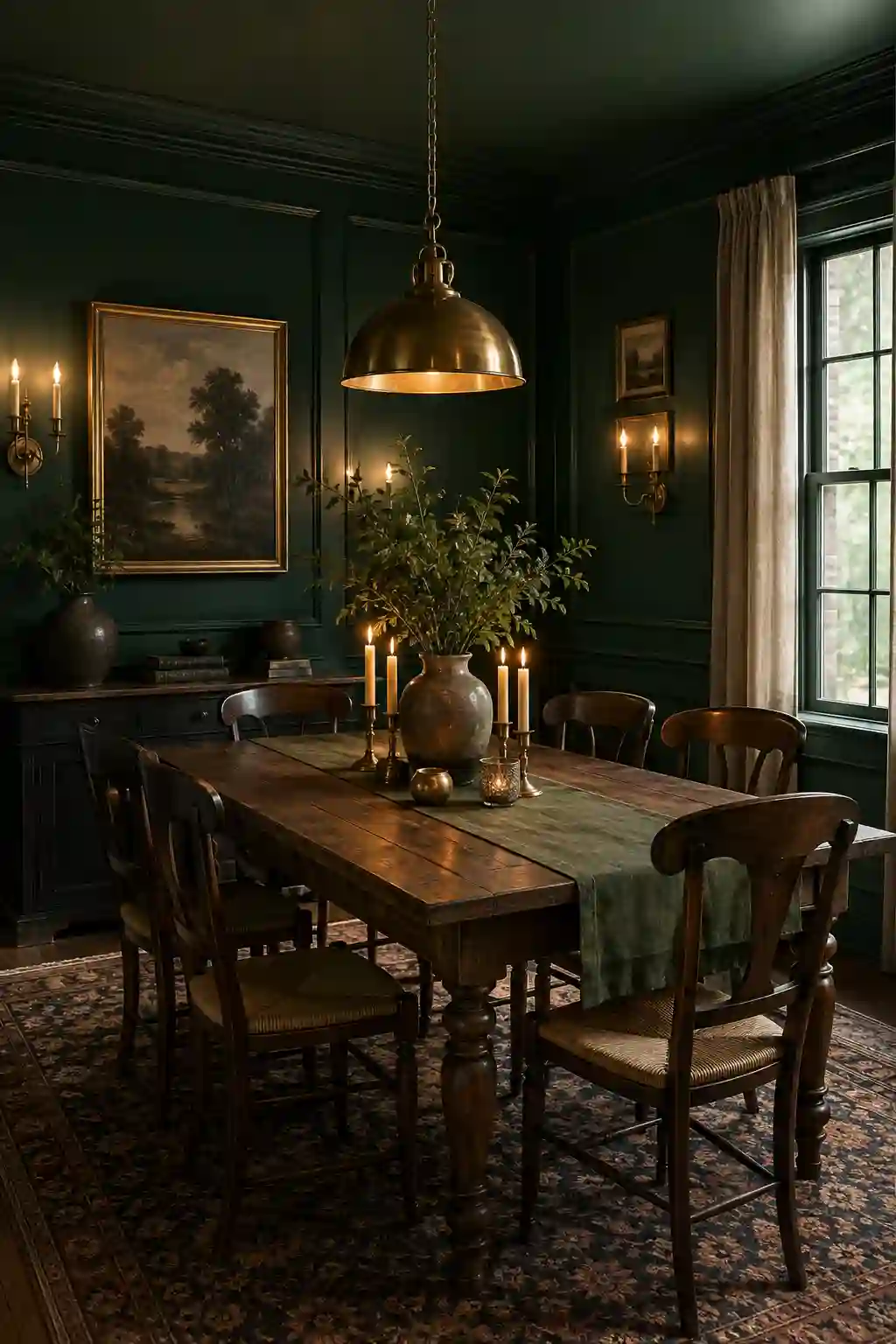
‘Moody’ means depth, not gloom: one dominant dark colour, warm lighting and layered texture. A room painted dark but lit only from above feels flat; the same room with lamps, candles and fabric feels intimate.
The atmosphere comes from contrast. Dark walls make candlelight, brass and pale table linen stand out, so the eye has somewhere to rest instead of one unbroken block of colour.
Darker rooms also change how long people stay. Lower, warmer light signals the body to relax, which is why candlelit dinners feel longer and more sociable than meals under bright ceiling lights.
The same principle applies in daylight: a dark room with a large window and a mirror opposite it feels calm rather than gloomy, because light still moves around the space.
Must Read : 45 Brilliant DIY Kitchen Table Ideas That Will Save You Thousands And Transform Your Kitchen
Which dark colours work best — and how do you choose?
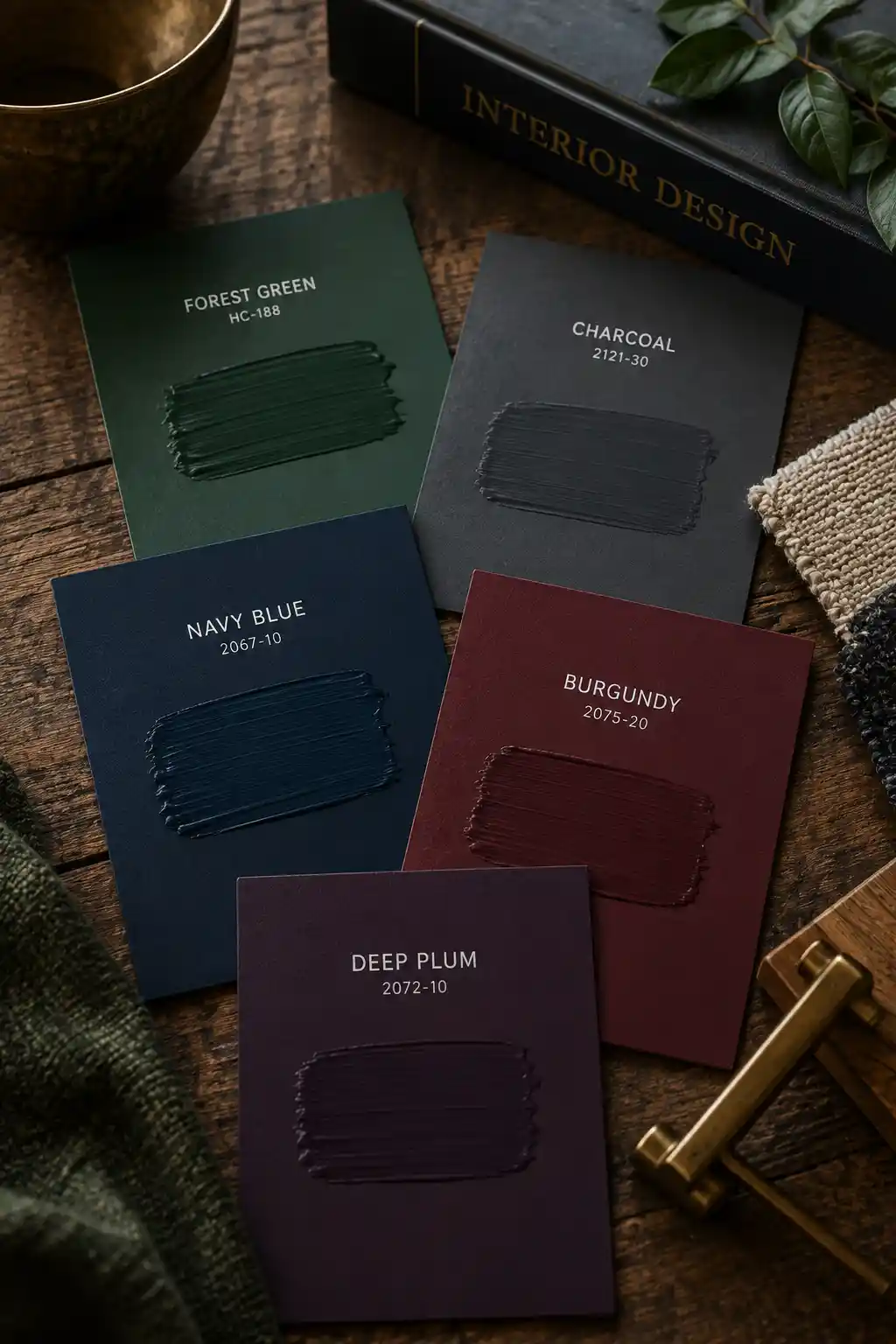
Colour is the heart of the look, and getting it right makes everything else easier. The colours photo shows the range: forest green, charcoal, navy, burgundy and chocolate brown all work, but each suits a different room.
Forest green feels earthy and warm once the lights come on, especially with wooden furniture and brass. It suits rooms with natural light, since green can turn cold in a windowless space.
Charcoal or black brings the most drama, and many restaurants use black walls for exactly that reason. Balance it with texture — wood grain, velvet, woven placemats — or it can feel flat.
Navy is the safest entry point if you are hesitant about going dark. It still reads as deep and dramatic, but feels friendlier than black, and pairs well with gold and cream linens.
Burgundy or deep wine red feels romantic and vintage, and suits dining rooms because it echoes a glass of red wine on the table. Pair it with velvet chairs and warm metallics.
Chocolate brown feels warm and grounded, and surprisingly modern with the right furniture. It suits rooms with cream or brass accents, and hides scuffs better than black in a family home.
How does lighting make or break a dark dining room?
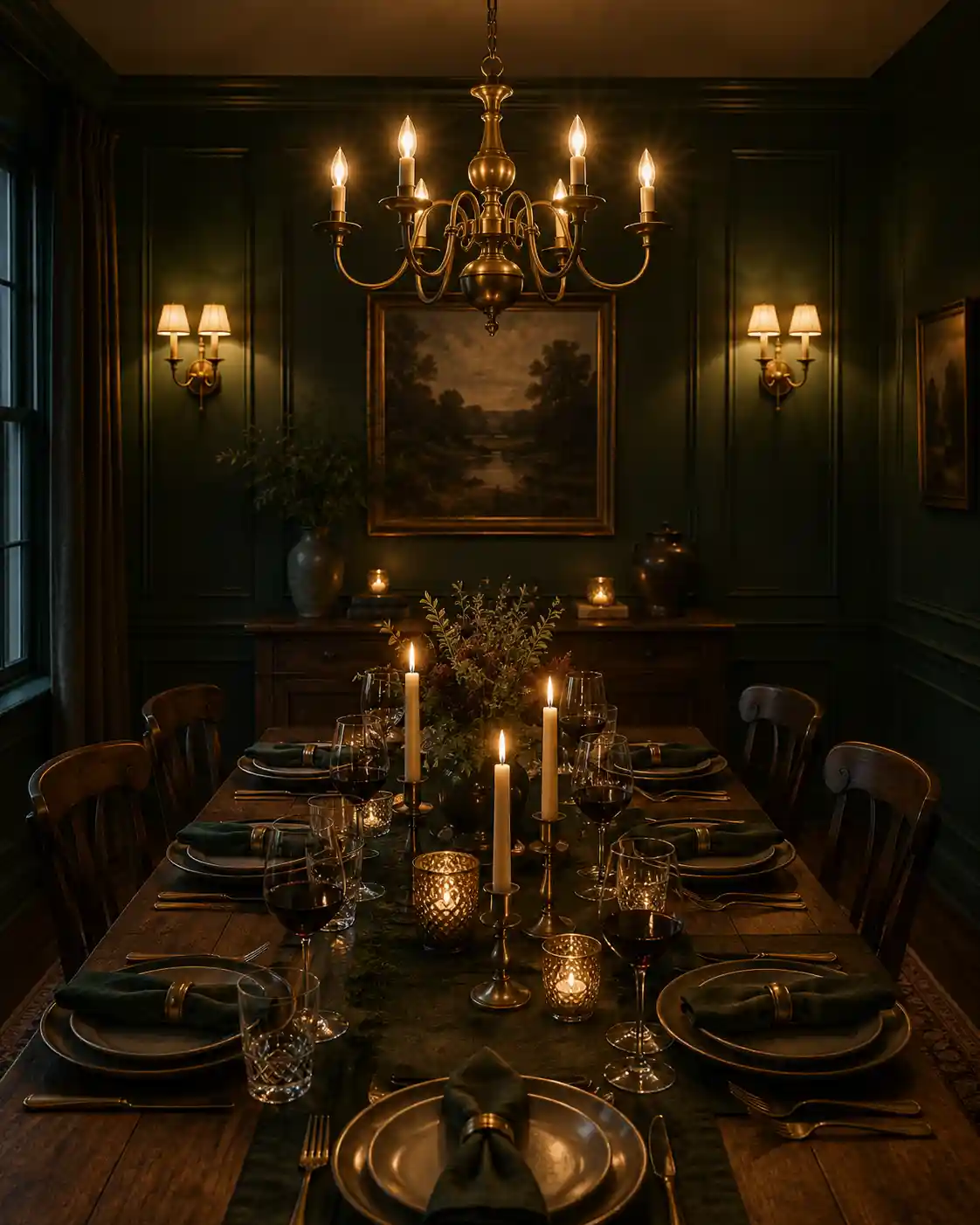
Colour gets the attention, but lighting matters more: one harsh overhead light ruins even perfect paint. Aim for three warm sources — a pendant or chandelier, sconces or lamps, and candles — rather than a single bright fitting.
A chandelier anchors the table; choose one in brass, bronze or black, sized about half to two-thirds the table width, and hang it 75–90 cm above the tabletop so it lights faces, not just plates.
Candles appear in almost every moody dining room photo because candlelight is flattering and warm. A few pillar candles or a row of tapers down the table centre costs little and changes the whole evening.
Wall sconces add light at eye level, which feels more intimate than overhead light alone, and they free table space. Place them in pairs either side of artwork or a mirror for symmetry.
A dimmer switch is the smallest change with the biggest effect: it lets one room serve a bright family dinner and a low, romantic evening. Choose warm bulbs around 2700K throughout.
Read Also: 45 Bold Two Tone Kitchen Cabinet Designs That Will Instantly Elevate Your Entire Kitchen
Which furniture completes the look?
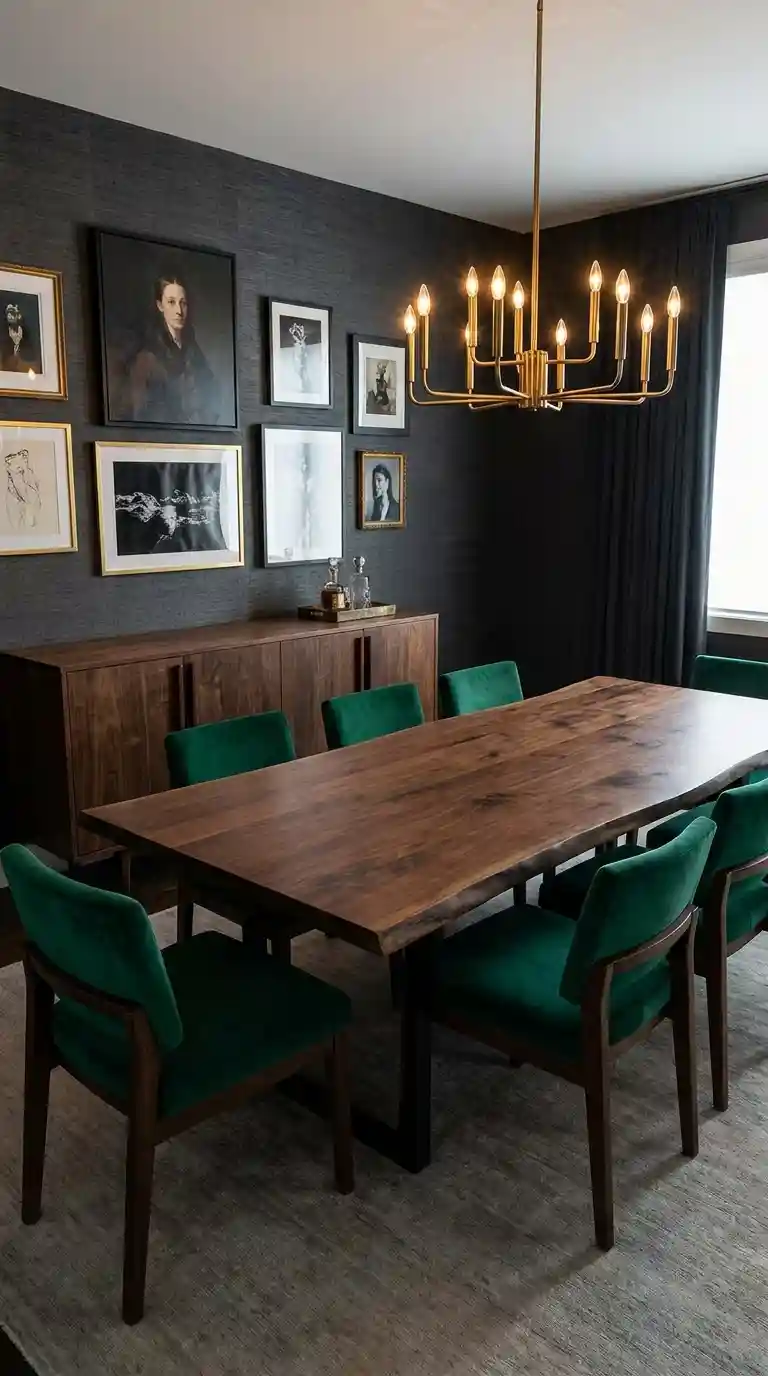
Once colour and lighting are sorted, furniture is the next decision. The right pieces ground the dark walls; the wrong ones — too light, too glossy, too many — fight them.
Solid wood tables in darker stains such as walnut or espresso work best. A 180 cm table seats six comfortably; allow 60 cm of table width per person so settings do not feel cramped.
Velvet chairs are almost a signature of the look: the fabric catches light and adds softness against dark walls. Deep green, navy or burgundy velvet pairs with a dark wood table.
A dark wood sideboard adds storage and reinforces the palette, and gives candles and artwork a home. Keep its top to three or four objects so it reads as styled, not crowded.
What about walls, floors and textiles?
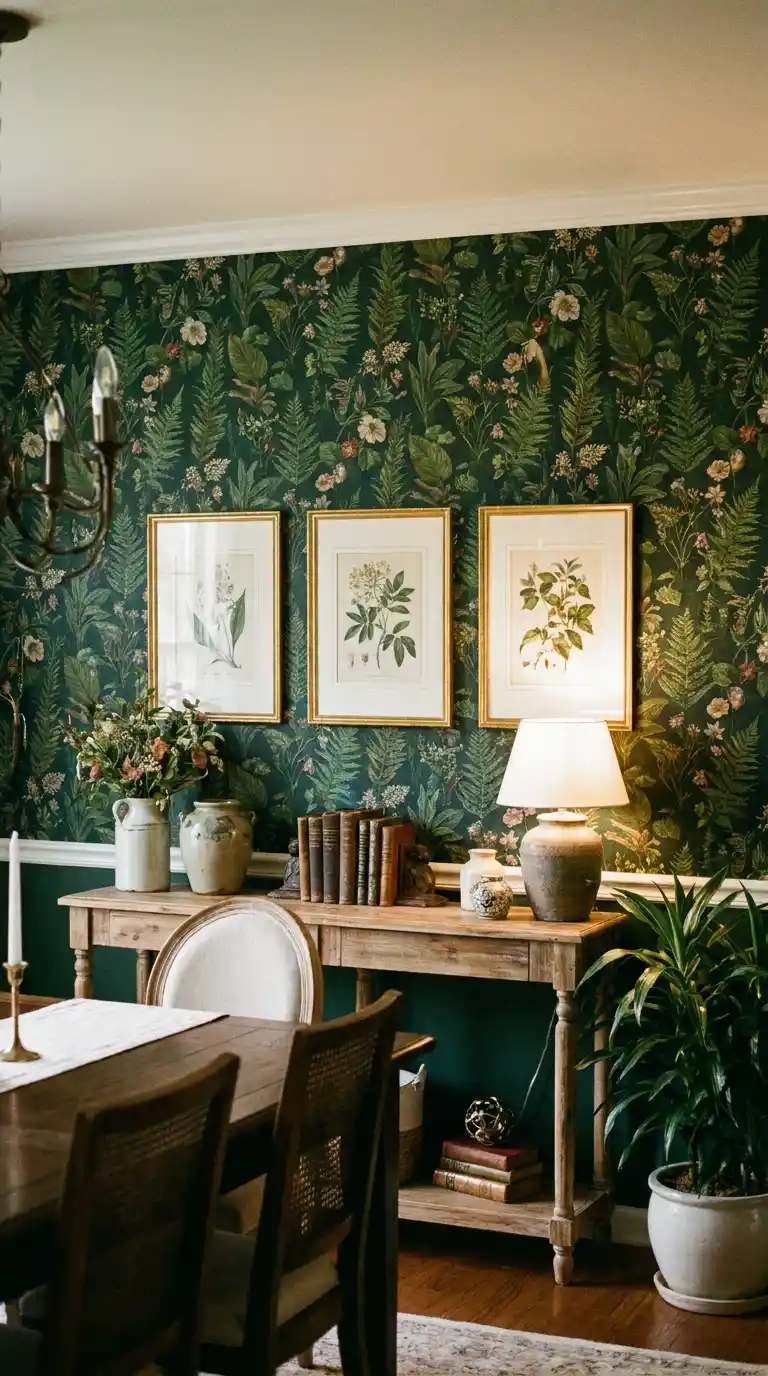
If solid paint feels too simple, wallpaper adds depth: botanical prints in dark green, damask in deep red, or textured grasscloth all suit the look. Paper one wall first if you are unsure.
Wainscoting or wood panelling painted dark adds architectural interest and texture, making even a plain room feel custom. Paint it the same colour as the walls for a seamless effect.
Flooring grounds the room: dark hardwood is the classic choice and complements deep wall colours. If replacing floors is out of budget, a large rug in a rich pattern does similar work.
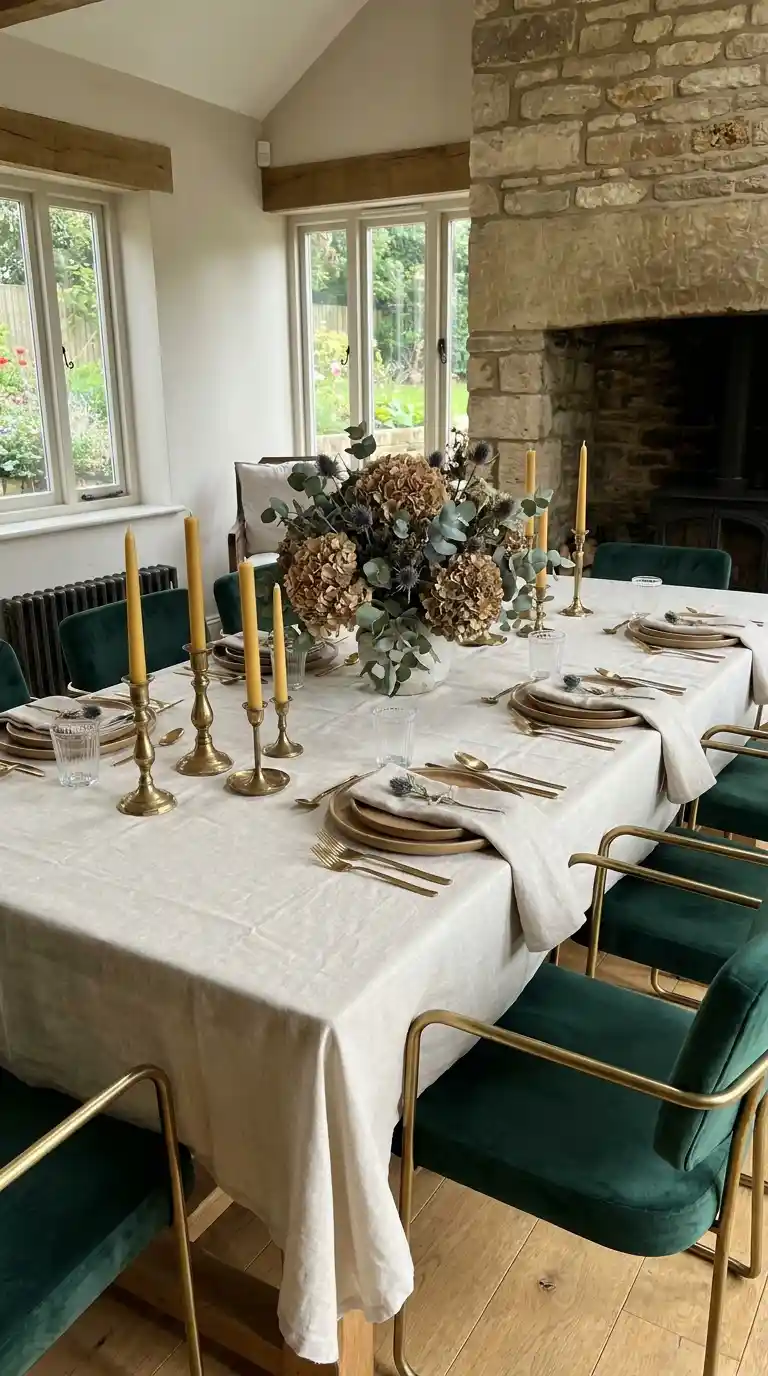
Textiles soften the bold scheme: heavy curtains, a cream linen tablecloth and cloth napkins stop dark walls feeling hard. The textiles photo shows how much warmth fabric adds — keep linens pale for contrast.
Also Read : Mid Century Decor: The Ultimate Guide to a Style That Refuses to Go Out of Fashion
Can a small room — or a tight budget — still go moody?
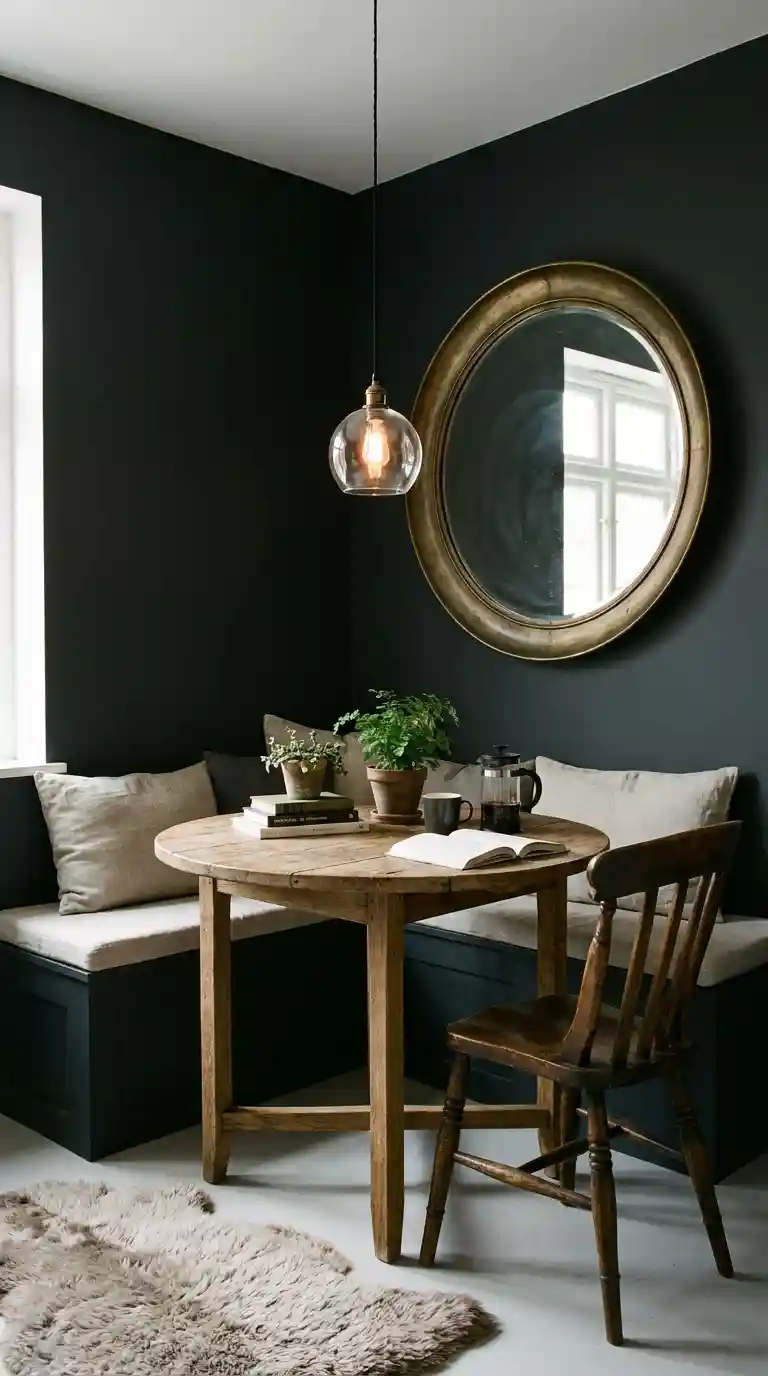
Dark colours suit small rooms too, despite the assumption otherwise. The small-room photo shows the trick: one dark wall, a mirror and simple furniture, rather than dark everything.
Mirrors reflect whatever light exists, natural or candlelight, and make a small room feel larger without sacrificing the deep palette. Hang one opposite a window or a light source.
Keep furniture simple in a small space: a table, chairs and perhaps one small sideboard. Overcrowding makes a dark room feel chaotic, while simplicity keeps it intentional.
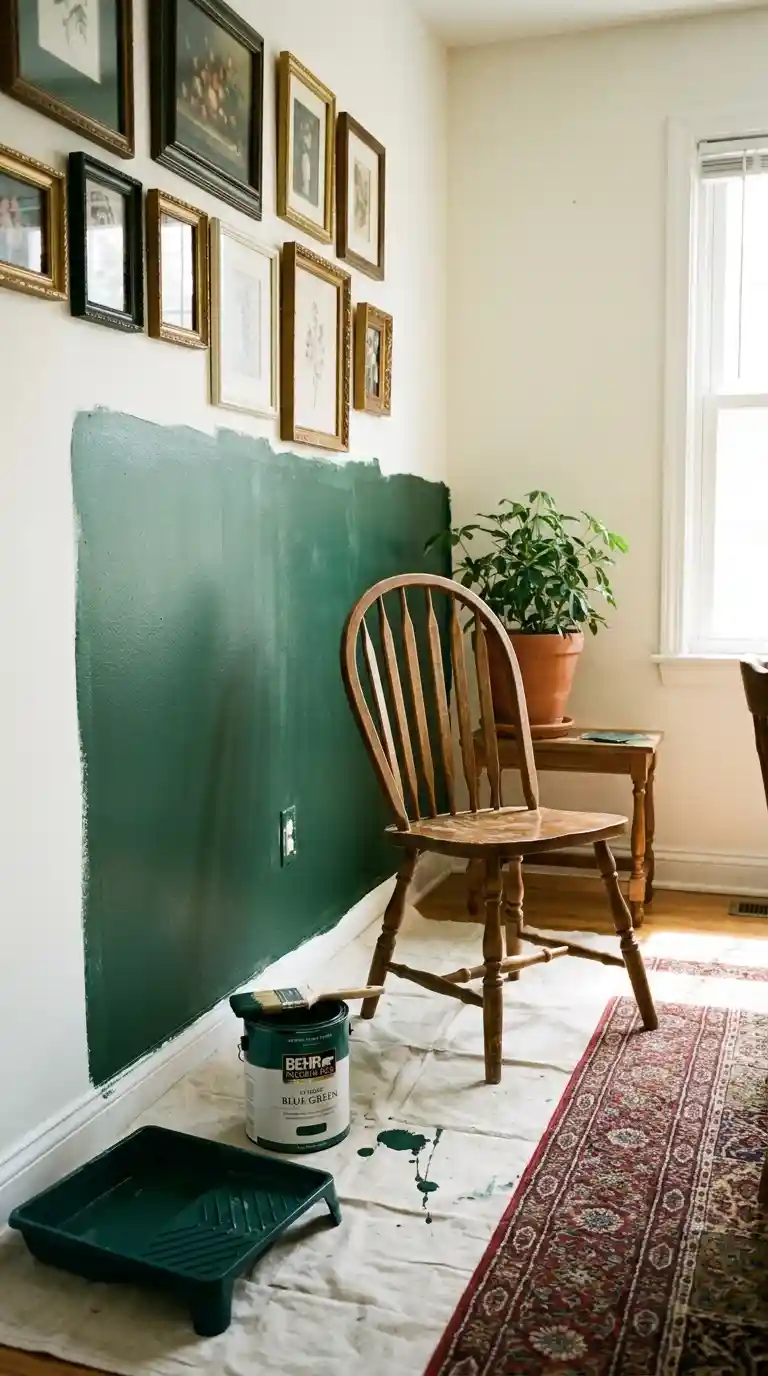
You do not need thousands to get the look. The budget photo shows the same principles at low cost: paint first, secondhand furniture second, accessories last.
A tin of dark paint costs far less than new furniture or wallpaper yet delivers the biggest visual change. Sample two or three shades on the wall before committing.
Secondhand shops are a good source for solid wood tables, brass fixtures and upholstered chairs that need only cleaning or reupholstering. Check joints and frames before buying.
As a guide, paint, secondhand furniture and a thrifted light fitting can transform a dining room for a few hundred pounds. Spend on lighting first if the budget is tight.
How does the look adapt to different styles?
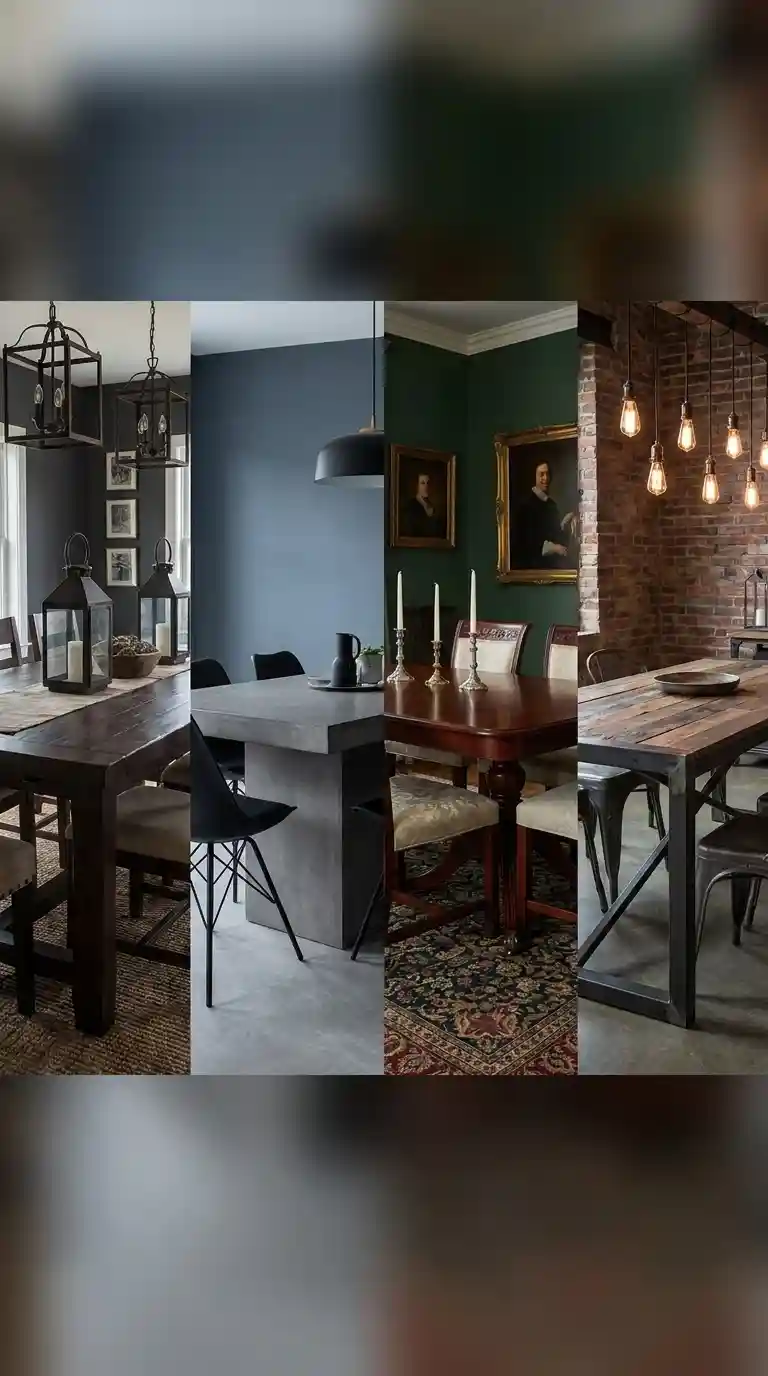
The look adapts across styles, which is why it stays popular. The style photo shows the range — farmhouse, modern, traditional and boho all use dark walls, but each balances them differently.
Farmhouse moody pairs a distressed wood table with dark green or navy walls, plus woven baskets and dried stems for a rustic touch alongside the drama.
Modern moody favours cleaner lines, matte black finishes and minimal decor: a sleek black table, geometric lights and very few accessories, letting colour and light talk.
Traditional moody uses ornate frames, classic damask wallpaper, crystal chandeliers and rich burgundy or forest green — formal, and suited to rooms with period details.
Boho moody layers textures, patterned rugs, rattan chairs and greenery, with dark walls as the backdrop for colourful textiles collected over time.
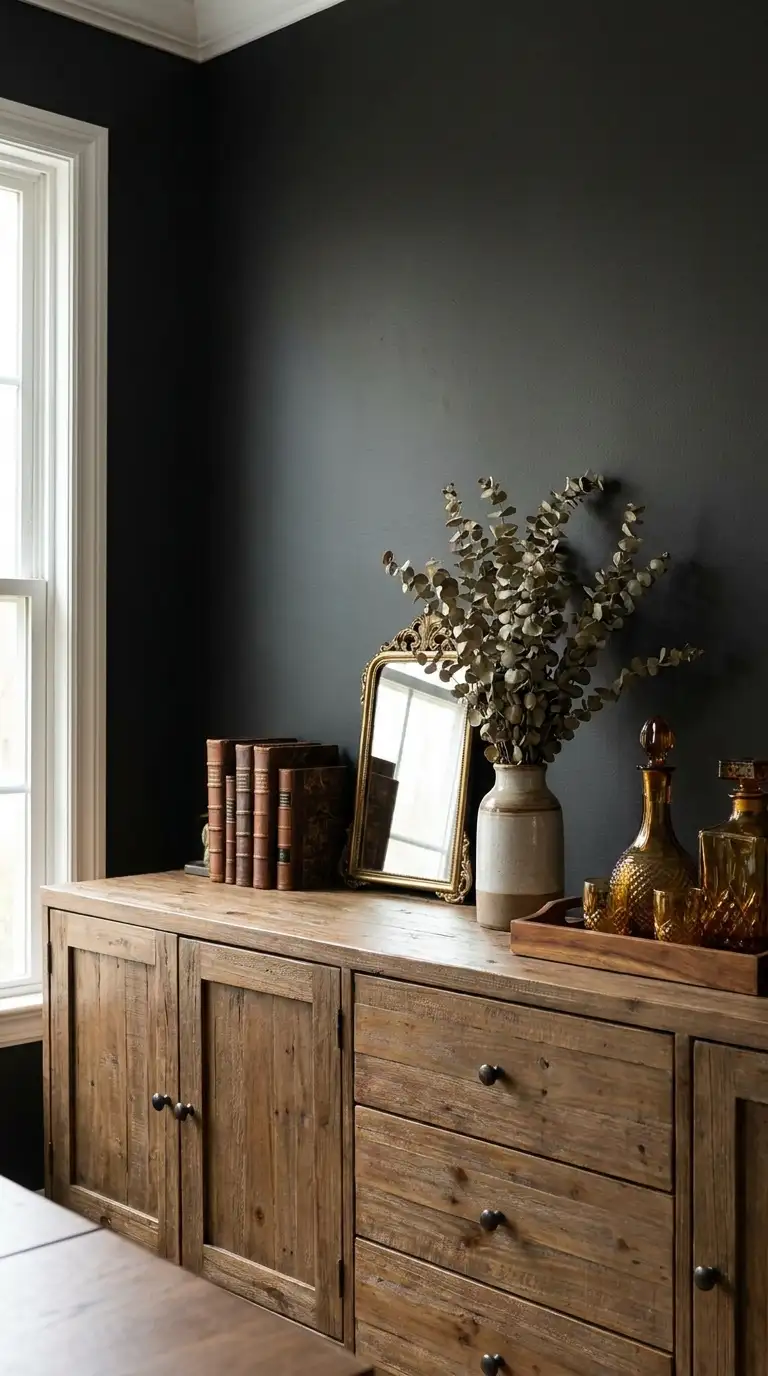
Artwork should use rich, deep tones that complement the wall colour; oil-painting style pieces and botanical prints work better than pale, minimal prints here.
Gold or brass framed mirrors add light reflection and reinforce the warm metallic accents. Hang one where it catches candlelight or a window, not facing a blank wall.
What is the simplest order of work — and which mistakes should you avoid?
Work in this order: choose one base colour, plan lighting, check furniture, then add texture through rugs, curtains and linens. Test the colour on the wall before painting the whole room.
Choose one dominant deep colour and pair it with warm neutrals — cream, brass, wood — rather than two competing dark shades, which can make a room feel muddy.
Plan lighting before decorating: a statement fitting over the table, sconces or lamps for eye-level warmth, and candles for the table itself. Put the main lights on dimmers.
Check existing furniture against the darker palette before buying new pieces. A table that looked fine against pale walls may need a darker stain or new chairs to sit comfortably.
Common mistakes are forgiving but avoidable: skipping samples, forgetting texture, and using cool white bulbs. Each one is cheap to fix before painting, expensive after.
Never commit to a dark colour without testing it: light varies between homes, and a shade that looks perfect in a shop can look different on your walls at night.
Dark colours without texture feel flat and cold, so always add fabric, wood grain or textured wallpaper to give the eye depth beyond the paint.
Cool white bulbs ruin the warm atmosphere the look depends on. Stick to warm bulbs around 2700K in every fitting, including any lights inside a sideboard or cabinet.
Frequently Asked Questions
What colors work best for moody dining room ideas?
Forest green, charcoal, navy, burgundy and chocolate brown are the most reliable choices. Each creates depth and warmth, especially with warm lighting and brass or wood accents.
Do moody dining room ideas make a small room feel smaller?
Not necessarily. With warm lighting, a mirror and simple furniture, dark colours can make a small dining room feel cosy and intentional rather than cramped.
What type of lighting works best for moody dining room ideas?
Warm lighting works best: chandeliers, wall sconces and candles together. Avoid cool white or overly bright bulbs, and put the main lights on dimmers.
Are moody dining room ideas expensive to achieve?
Not necessarily. Paint is the most affordable tool, and secondhand furniture plus a few thrifted accessories can achieve the look on a modest budget.
What furniture pairs well with moody dining room ideas?
Solid wood tables, velvet chairs and dark wood sideboards pair best. Mixing textures — wood, velvet, brass — adds depth to the space.
How do I keep a moody dining room from feeling too dark or gloomy?
Balance dark walls with warm lighting, textured fabrics and metallic accents like brass or gold. Keep linens pale and add a mirror to keep the room feeling cosy, not gloomy.





3 Comments on “Dark Dining Rooms That Still Feel Warm and Welcoming”