

There is a specific moment in almost every dining room project I work on when a client realizes the room never actually felt wrong because of the table or the chairs. It was the lighting the entire time. I have watched people spend real money on a beautiful table, gorgeous upholstered chairs, a statement rug underneath everything, and still feel like something about dinner never quite looked or felt right. Nine times out of ten, the missing piece is genuinely the lighting overhead.
Dining room lighting ideas get treated like an afterthought far too often, something people pick up at the very end of a renovation almost as a formality rather than a genuine design decision. That approach quietly undercuts an otherwise beautifully furnished room, because lighting does something no other single element in a dining room can do. It sets the actual mood of every meal that happens underneath it, shapes how food and faces look across the table, and genuinely determines whether a room feels like a place people want to linger in or just pass through.
This guide pulls together everything I have learned from planning and installing lighting in real dining rooms, from small apartment nooks to full formal dining spaces built for hosting. We will walk through fixture types, sizing, placement, color temperature, layering, and the small details that separate dining room lighting ideas that genuinely transform a space from ones that just technically light it up.
Let us get into it.
Also Read : 45 Bold Gothic Dining Room Ideas That Turn Every Meal Into An Occasion
Why Dining Room Lighting Ideas Matter More Than People Realize
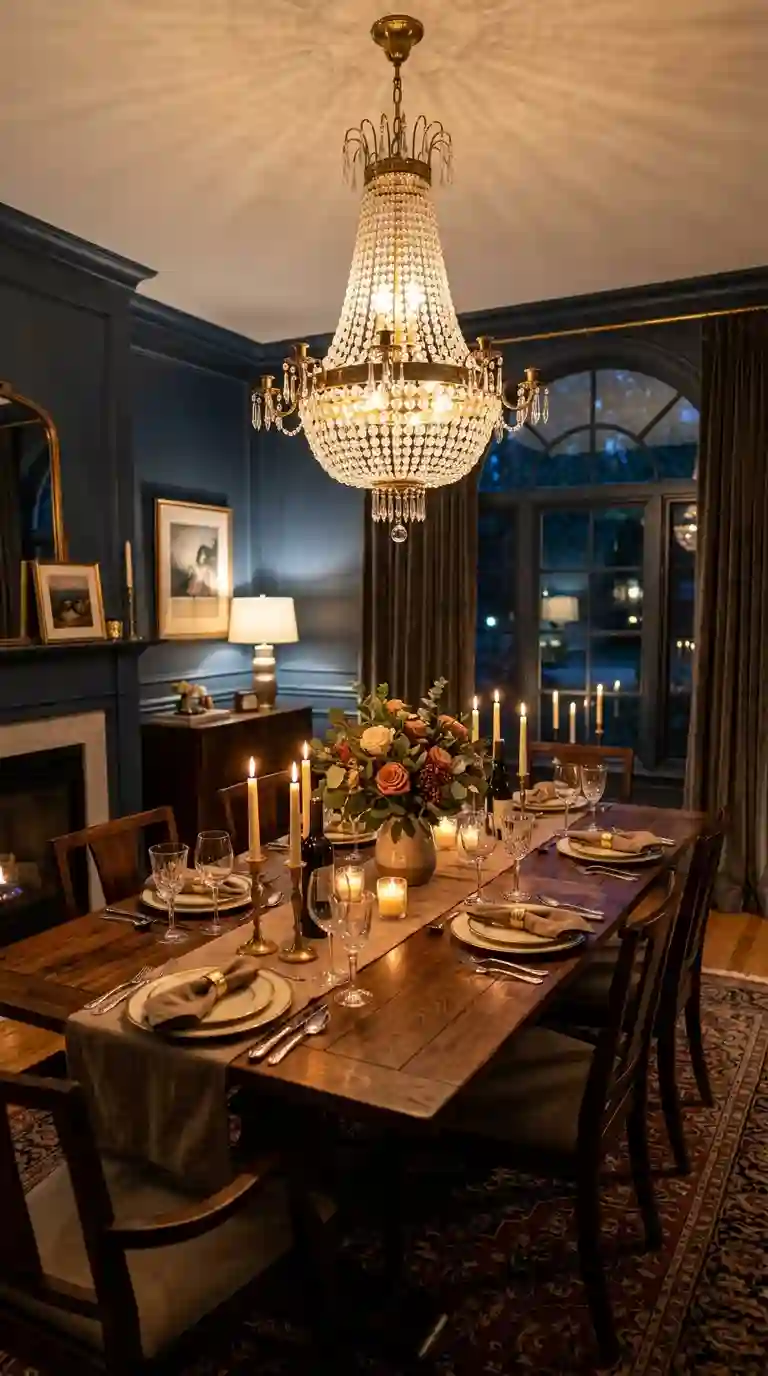
A dining room is one of the only rooms in a house built almost entirely around a single piece of furniture and the experience of gathering around it. Because of that, lighting carries an outsized responsibility here compared to almost any other room. Good dining room lighting ideas shape how food looks on the plate, how people look across the table from each other, and honestly, how long a meal naturally stretches into conversation rather than everyone rushing to leave the table.
I have seen dining rooms with genuinely beautiful furniture fall completely flat because the lighting above the table was either too harsh, too dim, or simply the wrong color temperature entirely. And I have seen fairly modest, budget conscious dining rooms feel genuinely luxurious purely because the lighting was planned with real intention from the very start.
There is a reason the way designers talk about this topic has shifted so clearly in recent seasons. The conversation around dining room lighting ideas has moved away from a single bright overhead fixture that floods the entire space with light, and toward something warmer, more layered, and genuinely more intentional. People want dining environments that feel intimate, flattering, and atmospheric, and the fixture above the table has become something closer to sculpture, setting the emotional tone for how the whole room gets used.
That shift genuinely matters for anyone planning their own dining room lighting ideas right now. This is no longer simply about making sure you can see your food. It is about building an experience around the table that people genuinely want to stay at a little longer.
Understanding the Three Layers Behind Great Dining Room Lighting Ideas
Before shopping for a single fixture, it helps enormously to understand the underlying structure that the best dining room lighting ideas are built on. Lighting designers consistently break this down into three distinct layers, and a dining room that only relies on one of them will always feel a bit flat compared to a space that thoughtfully combines all three.
Ambient lighting provides the overall base level of illumination in the room, typically coming from your main overhead fixture, whether that is a chandelier, a pendant, or a more subtle recessed option. This layer sets the foundational mood of the space before anything else gets added on top of it.
Task lighting addresses the practical need to actually see your food and your table setting clearly, and within dining room lighting ideas, this usually comes directly from the fixture positioned above the table itself, sized and placed specifically to illuminate the surface where people are eating.
Accent lighting adds depth, warmth, and visual interest beyond the table itself, often through wall sconces, picture lights, or small lamps placed on a sideboard or buffet. This layer is exactly what separates a flat, single source room from one that feels genuinely rich and dimensional once evening arrives.
The single biggest shift within current dining room lighting ideas involves moving away from relying on one overhead fixture alone and toward building out all three of these layers together. A room that stops being a single overhead light zone and becomes a genuinely layered space transforms completely, even if the actual furniture inside it never changes at all.
Choosing the Right Chandelier Among Dining Room Lighting Ideas

The chandelier remains the single most requested and most visually significant choice within dining room lighting ideas, and it has genuinely evolved into something closer to a piece of art than simply a functional light source.
Chandeliers in aged brass, linen, alabaster, or sculptural organic forms have become central to the modern dining experience, paired with additional layered lighting from sconces or picture lights to round out the overall atmosphere of the room. The chandelier functions almost like both sculpture and mood setter simultaneously, establishing the tone for how the entire room gets used.
Sculptural, artistic fixtures have genuinely taken over from the safer, more forgettable shapes that used to dominate this category. Curved arms, layered globes, and organic silhouettes that feel more like sculpture than hardware have become the clear direction within current dining room lighting ideas, contributing visual character to the room even when the fixture itself is switched off.
Alabaster and natural stone chandeliers deserve particular mention here, since this particular material has become a genuine favorite among designers working on dining room lighting ideas recently. These sculptural pieces glow with a soft, honeyed radiance that brings real artisanal character into the room, and they work especially well when given a bit of breathing room around them rather than being crowded by other competing light sources directly nearby.
Mixed metals and material combinations within a single fixture have become increasingly popular too, reflecting a broader move toward a more curated, collected aesthetic rather than a single uniform metal finish throughout the entire room.
Sizing Your Chandelier Correctly Within Dining Room Lighting Ideas
Getting the actual size of your main fixture right might be the single most commonly overlooked detail within dining room lighting ideas, and it is also one of the easiest mistakes to avoid once you understand the basic guidelines.
A properly sized fixture fills the space visually, provides genuinely adequate illumination across the table, and feels intentional rather than like an afterthought someone grabbed at the last minute. A chandelier that is too small for your table and room proportions will look lost and underwhelming, no matter how beautiful the individual design happens to be.
A commonly used guideline suggests your chandelier’s diameter should measure roughly half to two thirds the width of your dining table, giving the fixture enough visual presence without overwhelming the space above it.
For height, most dining room lighting ideas call for hanging the bottom of the fixture approximately thirty to thirty six inches above the table surface, assuming a standard eight foot ceiling. This range keeps the light low enough to feel intimate and flattering across the table while still leaving comfortable clearance for anyone standing up during a meal.
For longer or larger dining tables, linear pendant lighting has become one of the most functional and stylish choices within dining room lighting ideas, running the length of the table rather than relying on a single centered chandelier that might leave the ends of a longer table noticeably dimmer than the middle.
Must Read : 77 Gorgeous Moody Dining Room Ideas That Will Instantly Transform Your Home Into A Warm And Elegant Retreat
Pendant Lighting Ideas Within the Dining Room

Pendant lighting has become one of the most versatile and genuinely popular directions within dining room lighting ideas, offering a cleaner, more streamlined alternative to a traditional chandelier while still delivering genuine visual impact above the table.
A single oversized pendant has become an increasingly popular choice recently, since even one dramatic fixture can genuinely shift the mood of an entire room. Bigger has become better within this particular category, and a single striking pendant can carry the same visual weight that used to require a much more elaborate multi arm chandelier.
Multiple smaller pendants, arranged in a row down the length of a longer table, offer a genuinely clean, contemporary take on dining room lighting ideas, and this approach works particularly well for rectangular tables where a single centered fixture would leave the far ends of the table underlit.
Cluster pendant arrangements, grouping several fixtures of varying heights together above a round or square table, bring a more organic, sculptural quality into dining room lighting ideas, creating genuine visual interest even when the lights themselves are turned off during the day.
Mixing pendant materials, combining glass, woven natural fiber, and warm metal finishes within a single cluster arrangement, has become an increasingly popular way to add texture and depth to dining room lighting ideas without needing to rely on an elaborate, ornate chandelier design.
Warm Lighting as the Foundation of Good Dining Room Lighting Ideas
Color temperature might be the single most important technical detail within dining room lighting ideas, and it is also one of the most consistently agreed upon recommendations across nearly every designer working in this space right now.
Warm white light, generally falling somewhere between 2700K and 3000K, has become the universal standard recommendation for dining room lighting ideas. This particular range flatters both food and skin tones in a way that cooler, bluer light simply cannot replicate, which matters enormously in a room built specifically around gathering and eating together.
Cool white or daylight toned bulbs, anything above roughly 5000K, should generally stay out of the dining room entirely. This harsher, more clinical light reads as closer to a workspace or a retail environment than a space meant for relaxed, intimate gatherings, and it tends to make food look noticeably less appetizing under its glare.
Dimmer switches remain one of the single most valuable, and most frequently skipped, additions within dining room lighting ideas. The ability to shift your main fixture’s brightness between a bright, functional setting for a quick weekday meal and a much softer, moodier glow for a longer, more relaxed dinner genuinely transforms how versatile a single lighting setup can be.
Tunable lighting, capable of adjusting color temperature throughout the day to align more closely with natural daylight patterns, has emerged as a genuinely interesting newer direction within dining room lighting ideas, blending wellness focused technology with the warmer, softer aesthetic that has already become the clear standard for this particular room.
Layering Sconces and Accent Lighting Into Dining Room Lighting Ideas
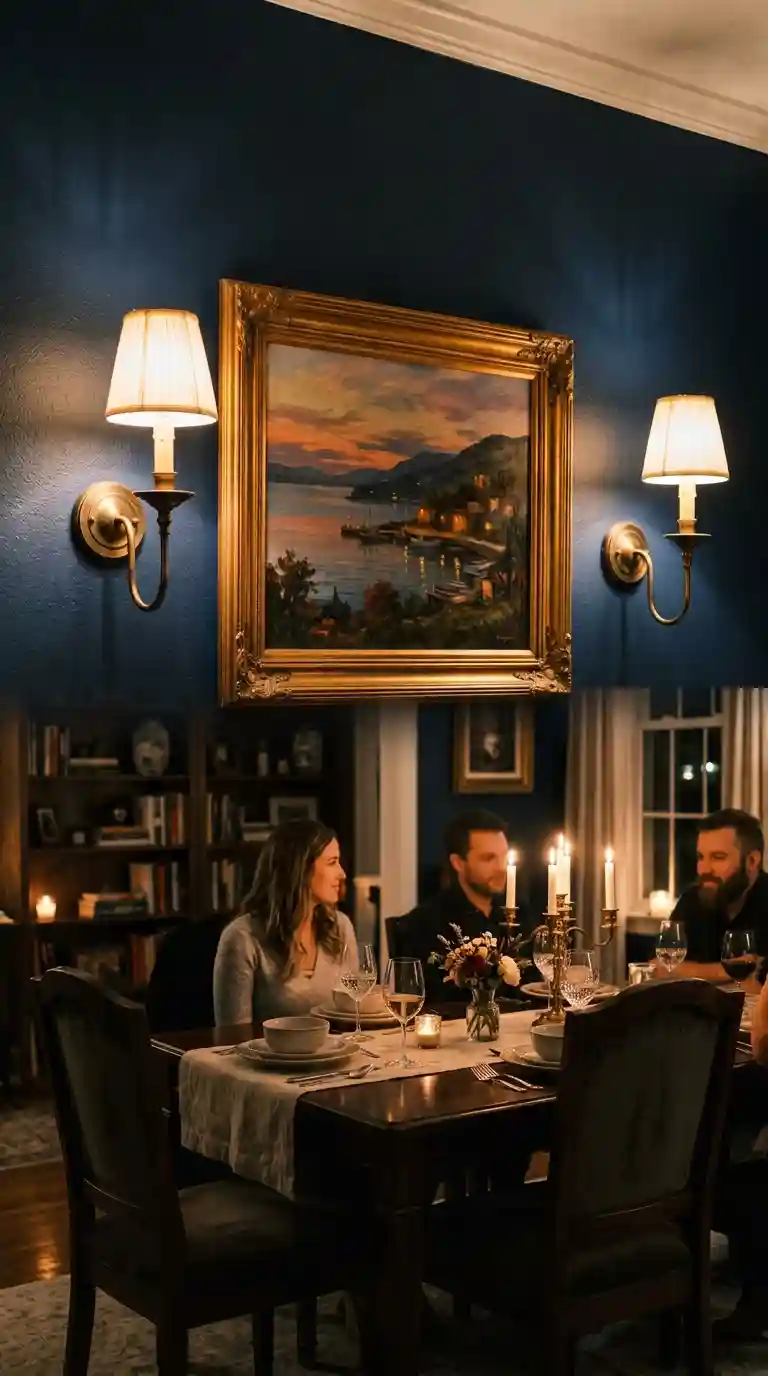
Wall sconces have genuinely become one of the most effective, and most underused, tools within thoughtful dining room lighting ideas, adding a layer of warmth and depth that a single overhead fixture alone can never fully achieve on its own.
Paired sconces, positioned symmetrically on either side of a buffet, mirror, or piece of art, bring genuine visual balance into a dining room while contributing a softer, more ambient glow than the main overhead fixture provides by itself.
Picture lights, mounted directly above a piece of art within the dining room, offer a genuinely elegant way to add both accent lighting and a bit of gallery style sophistication to the space, layering beautifully alongside a more traditional chandelier or pendant positioned over the table itself.
Candle style sconces bring a slightly more traditional, old world character into dining room lighting ideas, particularly well suited to a more formal or classically styled dining space where a bit of flickering, warm detail adds genuine atmosphere.
A small lamp placed on a sideboard or buffet rounds out the layered lighting approach that has become so central to current dining room lighting ideas, and cordless, rechargeable table lamps in particular have become a genuinely popular addition for exactly this purpose, since they do not require any nearby outlet or additional wiring to install.
Joinery or architectural lighting, built directly into a buffet, built in shelving, or cabinetry within the dining room, has become an increasingly expected detail within more elevated dining room lighting ideas, ensuring that every surface in the room contributes to the overall atmosphere rather than sitting in shadow while all the attention goes toward the table alone.
Dining Room Lighting Ideas for Open Concept and Combined Spaces
A growing number of homes feature dining rooms that blend directly into an adjacent kitchen or living area, and this particular layout calls for a slightly different approach within dining room lighting ideas compared to a fully enclosed, separate room.
Treating the dining area as its own distinct zone, even within a larger open floor plan, has become a genuinely important principle within current dining room lighting ideas. Rather than matching your dining fixture directly to your kitchen island pendants, designers increasingly recommend giving the dining room its own distinct personality and lighting character, even when the space technically flows into the kitchen without a physical wall separating the two.
A clearly defined fixture directly above the dining table, whether a chandelier or a pendant cluster, helps visually anchor and separate the dining zone from the rest of an open concept space, reinforcing the boundary between the two areas purely through lighting and fixture placement rather than architecture.
Dimmer controls become even more valuable within an open concept layout, allowing you to bring the dining area’s lighting down for an intimate dinner while the adjacent kitchen or living space remains brighter and more functional, or vice versa depending on how the room is actually being used at any given moment.
Coordinating your dining room lighting ideas loosely with the rest of the open space, through a shared material palette or finish family rather than an exact matched set, keeps the overall room feeling cohesive without sacrificing the dining area’s own distinct identity and mood.
Related Post : Small Dinner Room Ideas That Actually Transform a Tiny Space Into Something Stunning
Budget Friendly Dining Room Lighting Ideas
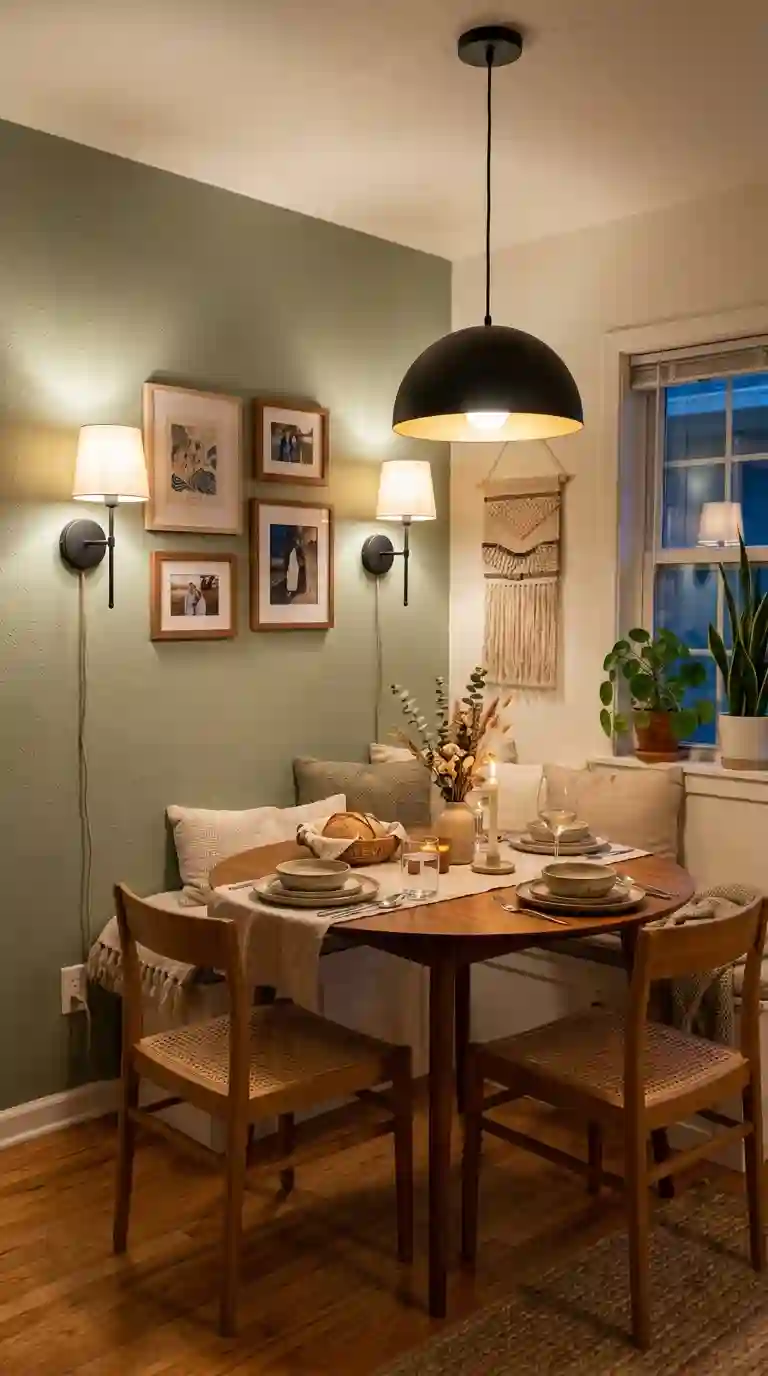
You genuinely do not need an enormous budget to transform your dining room lighting, and some of the most dramatic before and after results I have seen came from fairly modest, resourceful updates rather than an expensive full fixture replacement.
Swapping just your light bulbs to a warmer color temperature remains one of the single cheapest, highest impact updates available within dining room lighting ideas. This single change can genuinely shift the entire feeling of a room for just a few dollars, without touching the fixture itself at all.
Plug in wall sconces, which do not require any electrical wiring work to install, offer a genuinely affordable way to add that valuable accent lighting layer covered earlier, simply by running a discreet cord along the wall or behind furniture rather than hiring an electrician for a hardwired installation.
A smart bulb or a simple plug in dimmer adapter allows you to add dimming capability to an existing fixture without a full rewiring project, bringing one of the most valuable features within dining room lighting ideas into a budget friendly weekend project.
Secondhand and vintage fixtures, found through local marketplaces or secondhand shops, often deliver genuinely unique character and solid build quality for a fraction of what a comparable new designer fixture would cost, particularly for anyone drawn to the sculptural, artistic styles currently popular within dining room lighting ideas.
Rechargeable, cordless table lamps for your sideboard or dining table itself offer a genuinely clever, low cost way to add an extra layer of warm, flexible lighting without any installation at all, and these have become an increasingly popular, practical addition across every budget level within current dining room lighting ideas.
Dining Room Lighting Ideas for Different Design Styles
Not every dining room shares the same aesthetic, and matching your lighting choices to your overall design style makes a genuine difference in how cohesive the finished space ultimately feels.
For a modern minimalist dining room, a single oversized pendant or a clean linear fixture in a restrained material palette supports the overall streamlined aesthetic without introducing unnecessary visual clutter above the table.
For a traditional or classic dining room, a more elaborate chandelier, whether crystal, aged brass, or a richly detailed sculptural design, suits the existing formality of the space, particularly when paired with candle style sconces for additional layered warmth.
For a farmhouse or rustic dining room, fixtures incorporating natural materials like wood, woven fiber, or an aged metal finish reinforce the organic, lived in character central to this particular style, and farmhouse inspired lighting has genuinely remained popular even as broader design trends continue evolving around it.
For an industrial style dining room, bold metal fixtures with exposed bulbs or a slightly more utilitarian silhouette bring genuine character to the space, making a confident visual statement that suits exposed brick, concrete, or raw wood surfaces particularly well.
For a glam or elevated dining room, decorative accents like crystal detailing, mixed metallic finishes, and a slightly more ornate overall silhouette add genuine sparkle and sophistication, particularly effective when paired with dimmable lighting that allows the space to shift between daytime brightness and evening drama.
Common Dining Room Lighting Mistakes Worth Avoiding
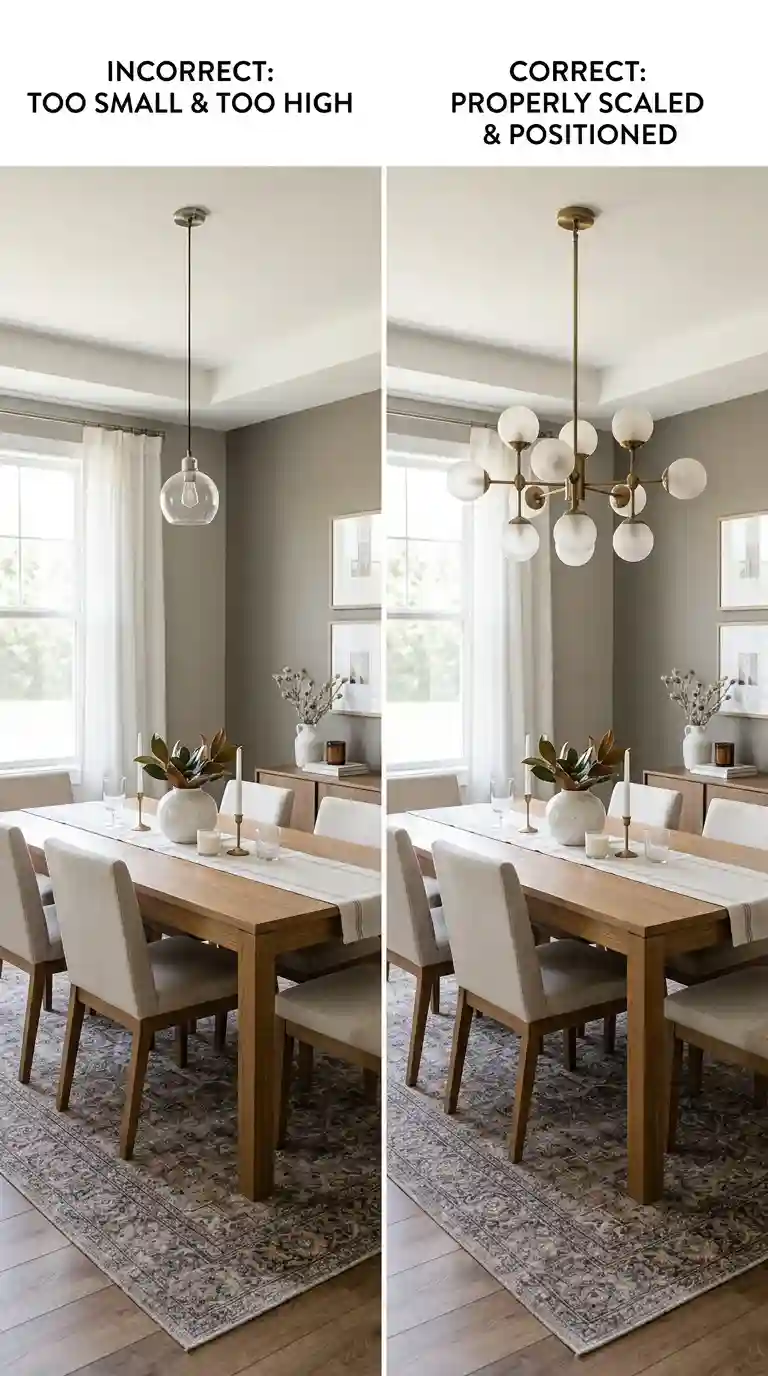
After working through many of these projects, certain mistakes come up repeatedly, quietly undermining otherwise promising dining room lighting ideas.
Choosing a fixture that is too small for the table remains one of the most common and most easily avoidable mistakes. A chandelier or pendant that looks proportionally lost above a larger table undercuts the room’s overall sense of intention, regardless of how beautiful the individual fixture happens to be on its own.
Hanging the fixture too high above the table is another frequent issue, since this reduces the warm, intimate pooling of light across the actual eating surface that makes a room feel genuinely cozy and inviting rather than distant and overly bright.
Relying on cool or overly blue toned lighting undermines much of the atmosphere that good dining room lighting ideas depend on, since this particular color temperature tends to flatten the visual appeal of both food and the people seated around the table.
Skipping a dimmer switch removes a huge amount of versatility from an otherwise well chosen fixture, since the ability to shift between bright, functional lighting and a softer, moodier glow genuinely transforms how a single light source can serve very different occasions throughout the week.
Ignoring the room’s actual proportions, including ceiling height and overall table size, when selecting a fixture leads to a mismatch that no amount of styling elsewhere in the room can fully compensate for, which is exactly why measuring carefully before shopping remains such a consistently repeated piece of advice within dining room lighting ideas.
Dining Room Lighting Ideas for Small Spaces and Apartments
Not every dining room has the luxury of generous proportions, and dining room lighting ideas translate genuinely well into smaller spaces and apartments when approached with a bit of thoughtful scaling.
A smaller scale pendant or a more compact chandelier, sized proportionally to a smaller table, can still deliver genuine visual impact without overwhelming a more limited space, following the same general sizing guidelines covered earlier but applied at a correspondingly smaller scale.
Plug in and cordless lighting options become particularly valuable within a rental or smaller apartment setting, since these choices allow genuinely meaningful dining room lighting ideas to be implemented without any permanent electrical modifications to the space.
Mirrors positioned near your dining area can help bounce and extend the warm light your chosen fixture provides, making a smaller dining nook feel more open and brighter overall without requiring any additional light sources at all.
A single well chosen statement fixture, rather than attempting a full three layer lighting scheme within a very compact space, often makes more practical sense for a smaller dining area, concentrating your investment and visual impact into one genuinely impressive centerpiece.
Also Read: Small Kitchen Organization: 27 Genius Ideas That Will Finally Fix Your Tiny Kitchen
Smart and Technology Driven Dining Room Lighting Ideas
Technology has genuinely found its way into dining room lighting ideas in some interesting and increasingly practical ways, moving well beyond a simple dimmer switch into something considerably more sophisticated.
App controlled and voice activated lighting allows you to adjust brightness, and in some cases color temperature, without ever touching a physical switch, which adds a genuinely convenient layer of flexibility to how your dining room functions throughout different times of day and different types of gatherings.
Tunable white LED fixtures, capable of shifting their color temperature automatically or on command, represent one of the more forward looking directions within current dining room lighting ideas, blending circadian rhythm supportive technology with the warm, flattering light this particular room has always benefited from.
Motion sensor lighting, while more commonly associated with hallways or entryways, has started appearing in some dining room lighting ideas as a subtle, practical touch for ambient accent lighting, like softly illuminating a buffet or sideboard the moment someone enters the room.
Rechargeable, cordless table lamps, as mentioned earlier, represent perhaps the most genuinely useful piece of lighting technology to enter this particular category recently, since they solve the practical challenge of adding warm, flexible light directly to a dining table or sideboard without requiring any nearby outlet or visible cord at all.
How I Approach a Real Dining Room Lighting Project From Start to Finish
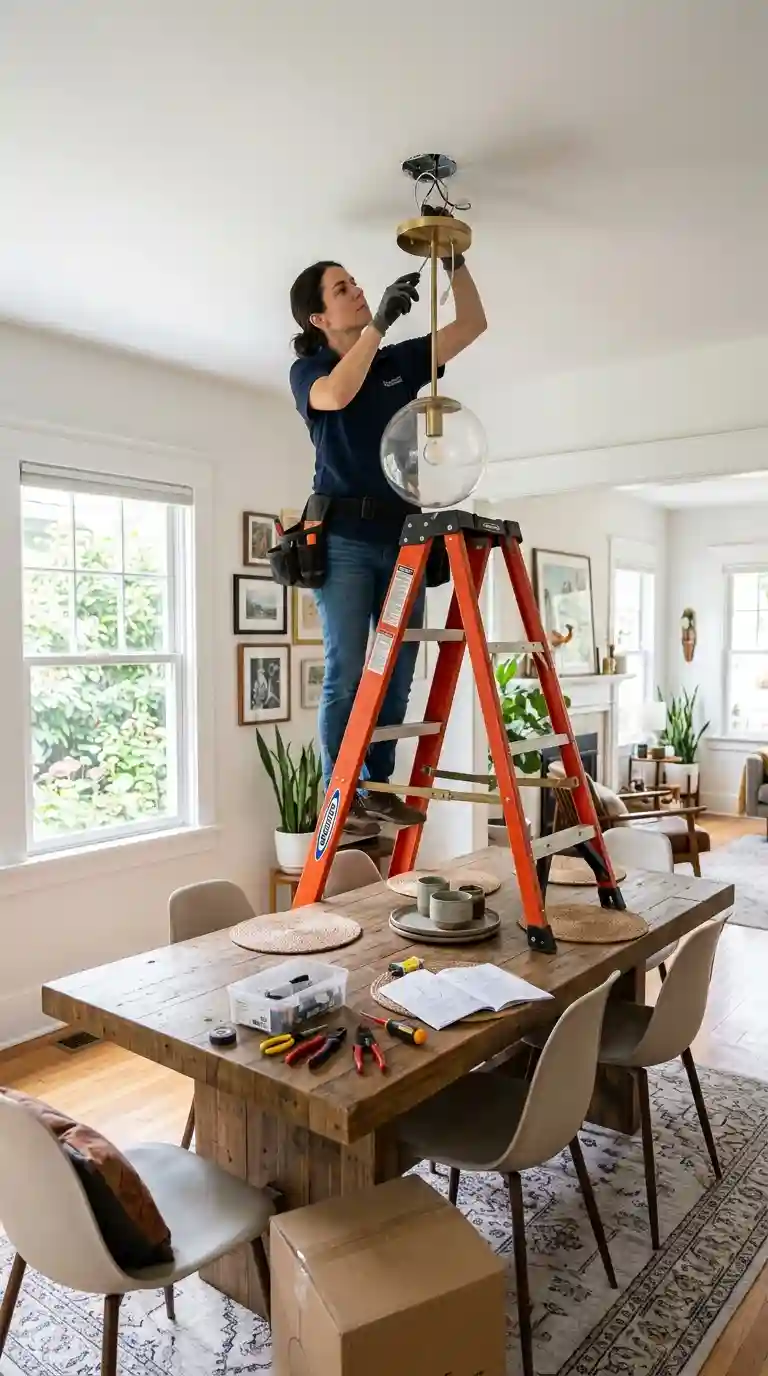
Every dining room lighting project I take on starts with a genuine conversation about how the family actually uses that specific room, since a household that hosts large formal dinners regularly needs a meaningfully different approach compared to one using the space mainly for quick weeknight meals.
I remember working with a client whose existing dining room had a single, fairly basic overhead fixture that left the entire room feeling flat and a bit sterile, despite genuinely beautiful furniture underneath it. We swapped in a sculptural alabaster pendant sized properly for her table, added a pair of simple plug in sconces flanking a piece of art on the main wall, and installed a basic dimmer on the main fixture. Nothing about her actual furniture changed, but the room transformed into somewhere she genuinely wanted to linger over dinner rather than just eat and leave quickly.
I have also worked with a client hosting large, frequent family gatherings who specifically wanted her dining room lighting to feel flexible enough to handle both a quick Tuesday dinner and a much longer, more elaborate holiday meal. In that project, we focused heavily on layering, a linear pendant arrangement above her long table, wall sconces on either side of the room, and a cordless lamp on her sideboard, all tied together with dimmer controls that let her shift the entire mood of the room depending on the occasion.
What I have learned across these very different projects is that the most successful dining room lighting ideas rarely come down to finding a single perfect fixture. They come from genuinely understanding how a specific family uses their table, then building a layered lighting plan that flexes to support everything from a rushed Tuesday dinner to a long, candlelit evening with guests.
Maintaining and Updating Your Dining Room Lighting Over Time
Once you have settled on dining room lighting ideas that genuinely work for your space, a bit of ongoing attention keeps everything looking and functioning at its best for years to come.
Clean your fixtures regularly, particularly chandeliers with multiple arms or crystal detailing, since dust accumulation genuinely dulls the warm glow and sparkle that makes these fixtures so visually effective in the first place.
Replace bulbs promptly when they burn out, and make a habit of replacing them with the same warm color temperature throughout a single fixture, since mismatched bulb temperatures within one chandelier or pendant cluster create an uneven, slightly jarring effect that undermines an otherwise well chosen fixture.
Revisit your dimmer settings periodically, since preferences around brightness can shift gradually over time, and a quick adjustment ensures your dining room lighting continues to feel genuinely comfortable rather than simply set once and forgotten.
Consider adding a layer gradually if your current setup only includes a single overhead fixture. A simple pair of plug in sconces or a cordless table lamp can be introduced at any point as a relatively low effort way to bring your existing dining room lighting ideas closer to the fuller, more layered approach that genuinely elevates the overall atmosphere of the room.
FAQ About Dining Room Lighting Ideas
What is the best height to hang a dining room light?
Most dining room lighting ideas recommend hanging the bottom of your fixture roughly thirty to thirty six inches above the table surface, assuming a standard eight foot ceiling, adjusting slightly higher for taller ceilings.
What size chandelier should I get for my dining table?
A commonly used guideline suggests choosing a chandelier with a diameter roughly half to two thirds the width of your dining table, ensuring the fixture feels proportionate rather than too small or overwhelming.
What color temperature is best for dining room lighting?
Warm white light, generally between 2700K and 3000K, is considered the standard for flattering, inviting dining room lighting ideas, while cooler or bluer light above 5000K is generally discouraged for this particular room.
Should I use a chandelier or pendant lights in my dining room?
Both work well depending on your table shape and style preference, with chandeliers suiting round or square tables and a more traditional aesthetic, while linear pendants or pendant clusters work particularly well for longer, rectangular tables.
Do I need a dimmer switch in my dining room?
Yes, a dimmer switch is one of the most consistently recommended additions within dining room lighting ideas, allowing a single fixture to shift between bright, functional lighting and a softer, more intimate glow depending on the occasion.
What are the current trends in dining room lighting?
Current dining room lighting ideas favor layered lighting over a single overhead source, sculptural and artistic fixture shapes, alabaster and natural stone materials, warm color temperatures, and cordless rechargeable table lamps.
How many light sources should a dining room have?
Most designers recommend at least three layers within dining room lighting ideas, combining a main overhead fixture with wall sconces or picture lights and a smaller accent lamp on a sideboard or buffet.
What is the biggest mistake people make with dining room lighting?
Choosing a fixture that is too small for the table, hanging it too high, or relying on cool toned bulbs are among the most common mistakes that undermine otherwise well planned dining room lighting ideas.
Can I use pendant lights instead of a chandelier?
Yes, pendant lights, whether a single oversized fixture or a cluster of smaller ones, have become an increasingly popular and stylish alternative to a traditional chandelier within current dining room lighting ideas
What is layered lighting in a dining room?
Layered lighting combines ambient lighting from a main fixture, task lighting focused directly on the table, and accent lighting from sconces or lamps, creating a richer, more dimensional atmosphere than a single light
Final Thoughts on Dining Room Lighting Ideas
Lighting genuinely holds more power over how a dining room feels than almost any other single design decision you will make for this particular space. The right combination of warmth, scale, and layering transforms a dining room from a place people simply pass through on their way to somewhere else into a room people genuinely want to linger in, long after the plates have been cleared.
Whether you invest in a genuinely sculptural statement chandelier or simply swap your bulbs for a warmer color temperature and add a plug in sconce, the underlying principle behind every good dining room lighting idea stays the same. Build warmth, build layers, and make sure the light flatters both the food on the table and the people gathered around it.
Start with whatever single change feels most achievable right now, whether that means a dimmer switch, a properly sized fixture, or simply a warmer bulb, and let the rest of your dining room lighting ideas evolve gradually from there. A little intention in this specific room goes a genuinely long way toward making every meal underneath it feel just a bit more special.