
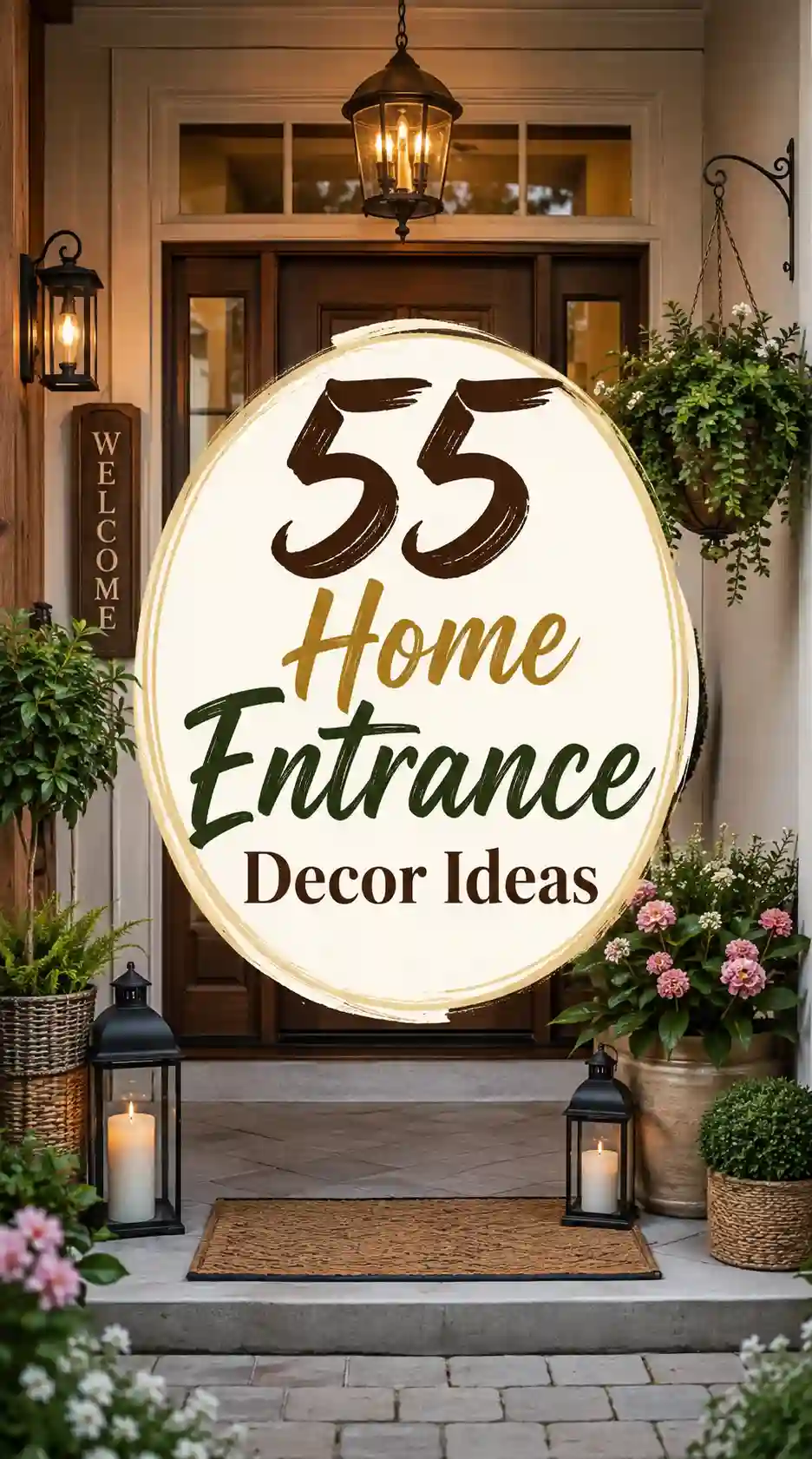
The entrance is the first room anyone sees, and the last one you pass every day — yet it is often given the least thought. A console 90–120 cm wide, a mirror at eye level and a rug that survives muddy shoes can change how the whole home feels.
Start with three numbers before spending anything: the width of the wall where furniture will go, the swing of the front door, and at least 90 cm of clear walking space. Most entrance mistakes come from guessing one of those three, so measure them first.
Also Read : Mid Century Decor: The Ultimate Guide to a Style That Refuses to Go Out of Fashion
Why does the entrance matter more than any other room?
Most entrances end up as overflow: the place for furniture that fits nowhere else. That matters because the space between the front door and the rest of the home sets expectations — a cluttered strip by the door makes the rooms beyond feel less cared for, even when they are not.
There is a practical side too. Keys, shoes, coats and bags all land here, so a good entrance keeps them contained instead of letting them spread. A tray for keys, hooks for coats and a bench or basket for shoes will do more for daily calm than any single decorative piece.
What should you measure before you buy anything?
Before buying anything, stand in the entrance and note three things: where daylight falls, where shoes naturally land, and which doors or cupboards open into the space. A bench that blocks a cupboard door is avoidable if you check first.
Measure width, depth and height, plus the front door’s swing, before ordering. A bench 100 cm wide sounds compact, but in a 110 cm hallway it leaves almost no passing room. Allow at least 90 cm of clear passage, and check that drawers and doors can open fully.
Light changes what works. A sunlit entrance can handle deeper colours and heavier wood, while a dark corner needs pale tones and reflective surfaces — a mirror, a light rug, a pale console.
Think about daily habits, not just looks. A household with dogs needs washable rugs and hooks at reachable height; a home with school bags and sports kit needs a basket per person rather than one shared pile. Count the items that arrive daily, then plan storage for that number.
Which style suits your home — farmhouse, minimal, traditional or boho?
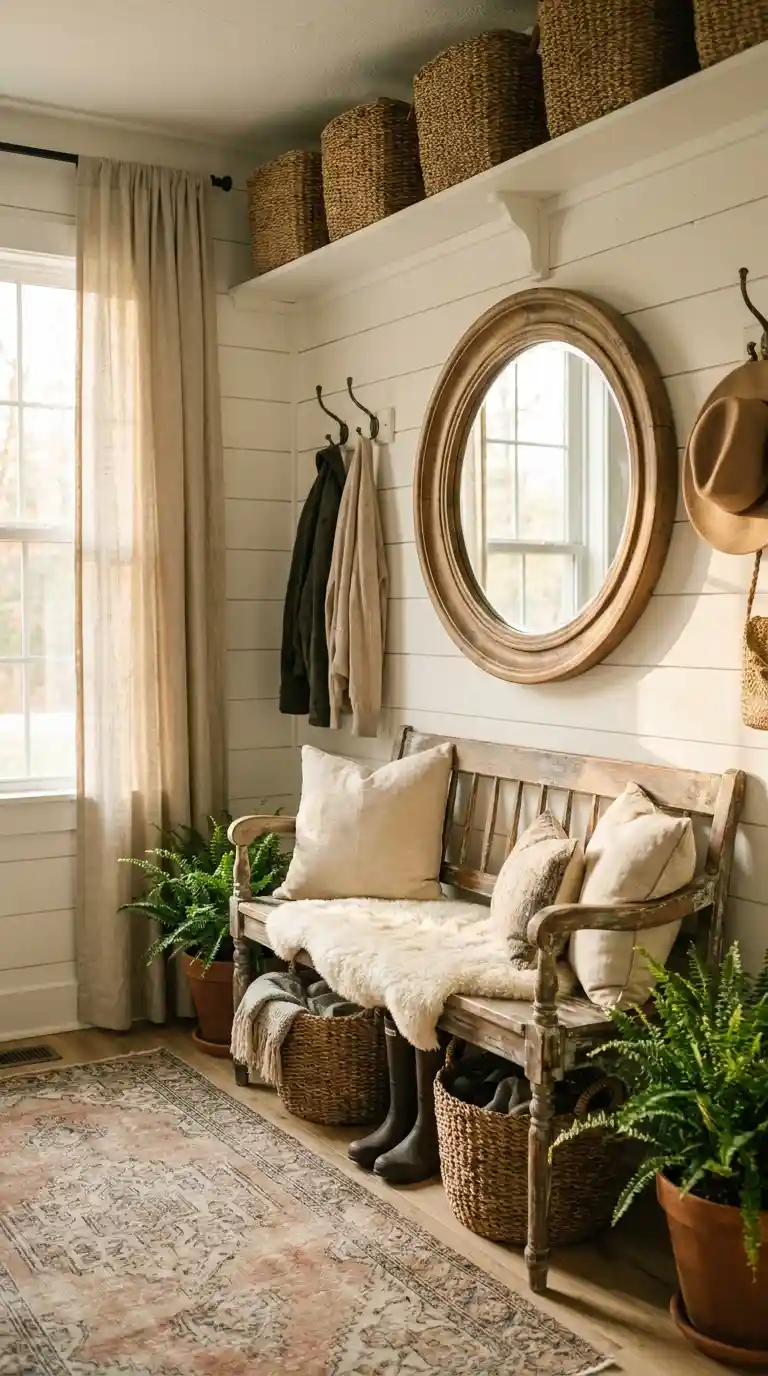
Not every home wants the same look, and the entrance should match the rooms beyond it. The classic photo shows the range: farmhouse warmth, minimal lines, traditional symmetry and boho texture. Pick one direction and repeat it in two or three pieces.
Read Must : 77 Gorgeous Moody Dining Room Ideas That Will Instantly Transform Your Home Into A Warm And Elegant Retreat
Farmhouse entrances use warm wood, woven baskets and a slightly worn finish. A cream or natural-wood bench, a basket for shoes and a simple wreath are enough; keep the palette to two warm neutrals so the space reads calm rather than themed.
Minimal entrances work when every visible item earns its place. One console, one mirror and one tray for keys, with everything else behind a door or in a basket. Limit colours to two — a neutral plus one accent — and leave at least a third of the wall empty.
Traditional style leans on symmetry: a pair of matching sconces, a centred mirror and a console in rich wood. Keep the mirror 60–70 cm wide over a 90–120 cm console so the proportions look deliberate rather than crowded.
Boho entrances layer texture: a woven rug, a macramé hanging, plants and mixed baskets. The trick is a shared warm palette — terracotta, cream and wood — so the layers feel collected, not chaotic. One large plant anchors a corner better than five small ones.
How do you make a narrow entrance actually work?
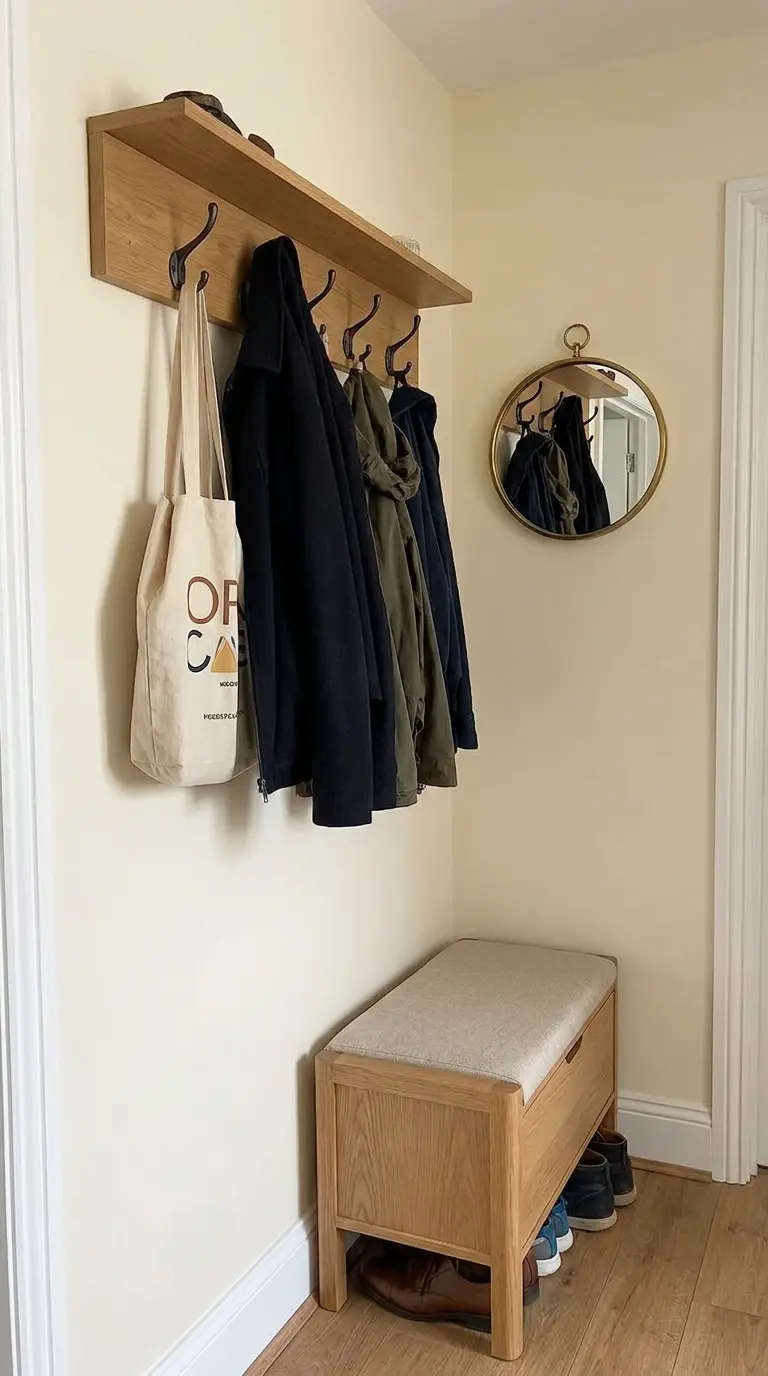
Not every home has a grand foyer. Many entrances are a narrow strip barely wider than the door, and the rules change there: use the walls, keep the floor clear and choose furniture no deeper than 30 cm so the passage stays usable.
When floor space is limited, walls do the work. Wall-mounted hooks at 150–170 cm, a floating shelf for keys and a tall, narrow cabinet use vertical space without eating walking room. A wall-mounted shoe rack can free roughly 30 cm of floor compared with a freestanding one.
A mirror opposite a window bounces daylight deeper into the space and makes a narrow hall feel wider. Hang its centre at about 150 cm from the floor — eye level for most adults — and choose a frame no wider than the console below it.
Keep the palette light in a small entrance: soft white, warm cream or pale grey on walls, with bold colour saved for one accent, such as a cushion or a single framed print. Dark walls can work in a large, bright hall, but in a narrow one they close the space in.
How do you get lighting and flooring right in a hard-working space?
Lighting is the detail most people notice last and regret first. A single harsh overhead bulb makes even good furniture look unwelcoming, while two or three warm sources — overhead plus a sconce or lamp — make the same space feel inviting at any hour.
A pendant or small chandelier suits most entrances, hung so its base clears the door swing and sits about 210 cm above the floor. Choose a shade 30–40 cm across for a standard hall; larger fittings overwhelm narrow spaces, smaller ones look lost.
Flooring takes more abuse here than anywhere else: wet shoes, grit and daily traffic. Tile, stone or sealed hardwood handle it best, while carpet stains quickly. If you keep existing floors, a washable runner is the cheapest protection.
Layer a sturdy outdoor doormat at the threshold with a softer indoor rug just inside. The outdoor mat should span the door width — about 90 cm — and the indoor rug should sit fully clear of the door swing so it does not bunch or trip.
Choose durable, low-pile materials: jute, sisal or low-pile wool cope with traffic far better than plush fibres, and a busy pattern hides scuffs and dirt between cleans. Save light, plain rugs for bedrooms.
What should go on the walls, and which furniture earns its place?
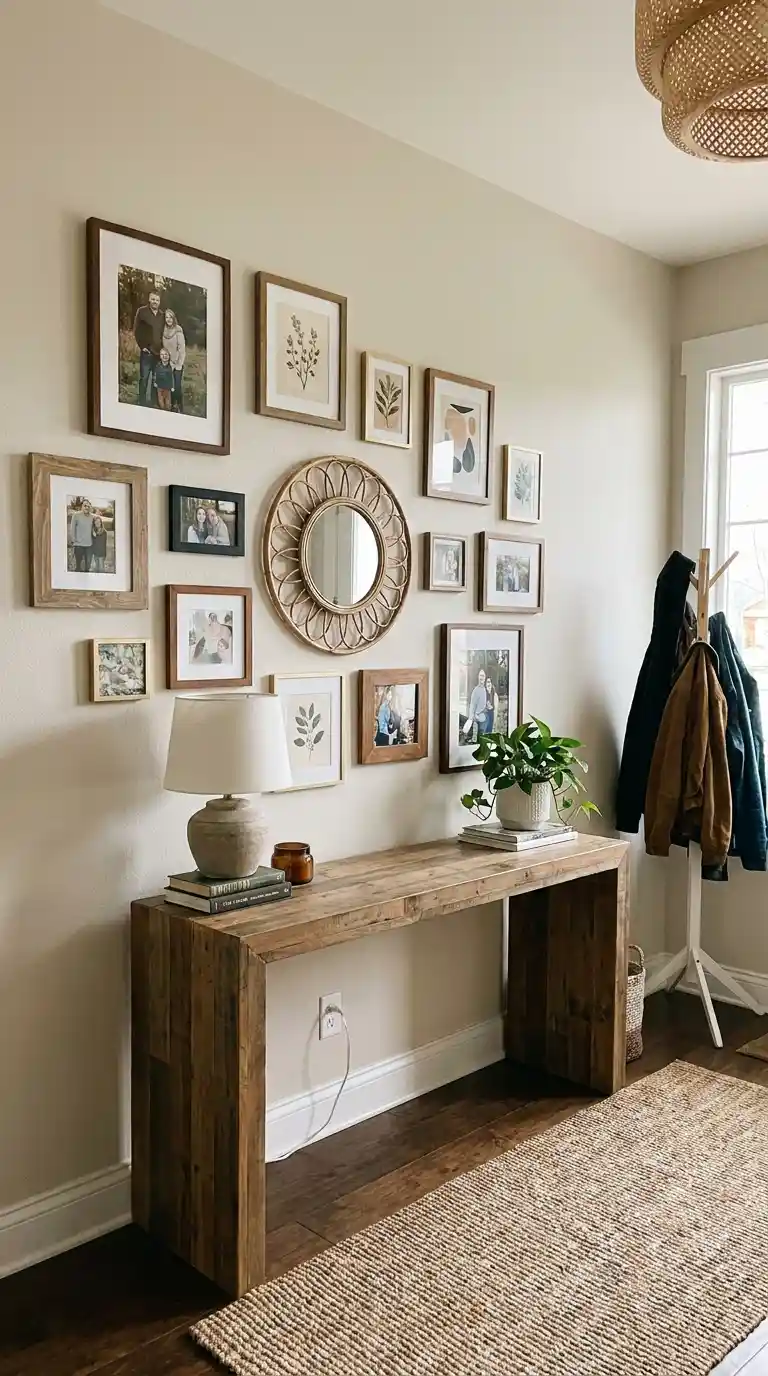
Bare walls make an entrance feel unfinished, but too much on them makes a small space feel cluttered. Aim for one focal wall — a mirror or a small gallery — and leave the wall opposite largely clear, so the eye has somewhere to rest.
One large mirror often does more than ten small frames. A 60 by 90 cm mirror above a console reflects light and gives a last check before leaving, and a frame in wood or brass ties it to the furniture below.
A console 90–120 cm wide and no deeper than 35 cm gives a spot for keys, mail and a tray without blocking passage. Choose one with a drawer or lower shelf for hidden storage, and keep its top to three items: tray, vase and one decorative piece.
A bench earns its place if it is used daily for shoes. A 90–110 cm bench with storage underneath — baskets or a shelf — keeps shoes out of sight, and a cushion in a washable fabric makes it comfortable enough to actually sit on.
Read Also : 45 Breathtaking Interior Decor Plants That Instantly Transform Any Room Into A Living Sanctuary
How do you refresh the entrance through the seasons — and what about the front door?
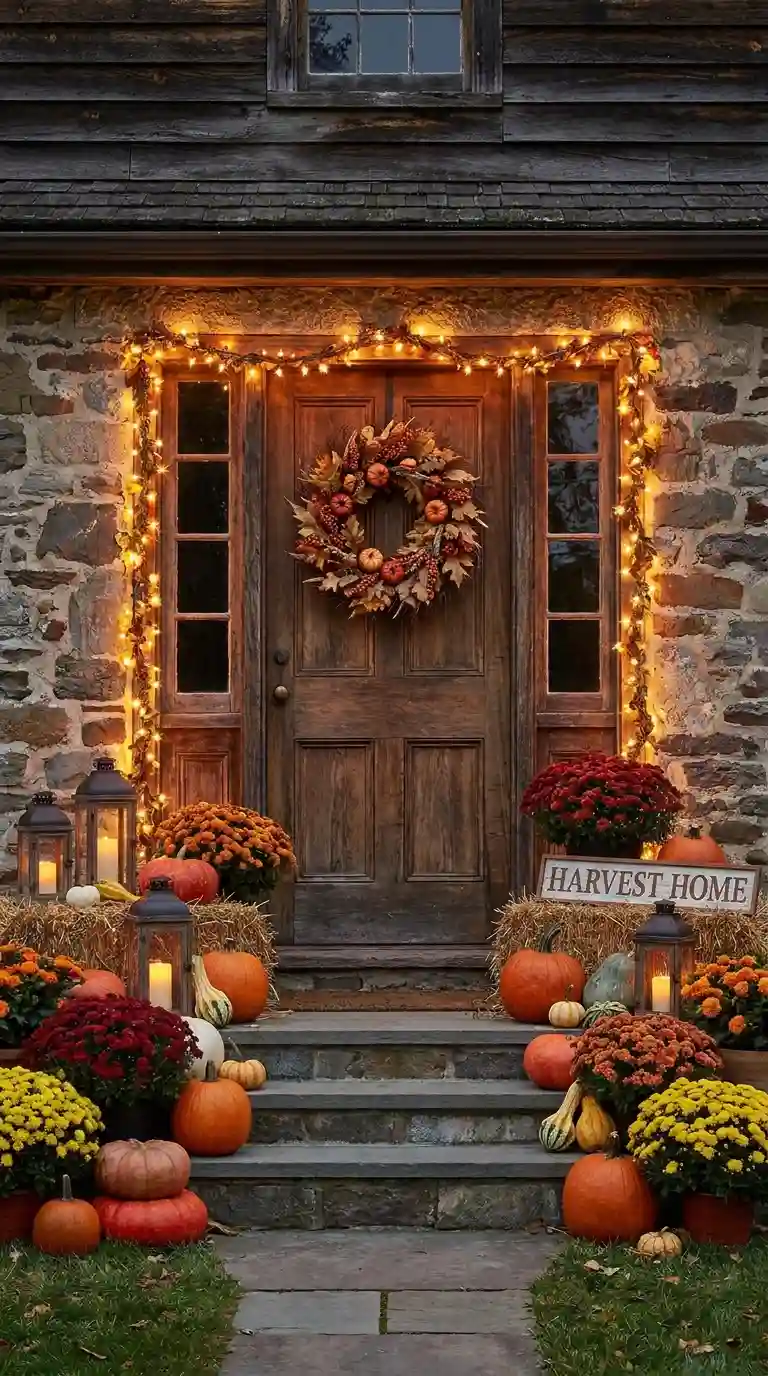
Seasonal refreshes cost little and keep the entrance feeling alive. Swap one or two accents — a cushion, a wreath, a vase of stems — rather than redecorating, and keep the larger pieces the same so the space still feels like home.
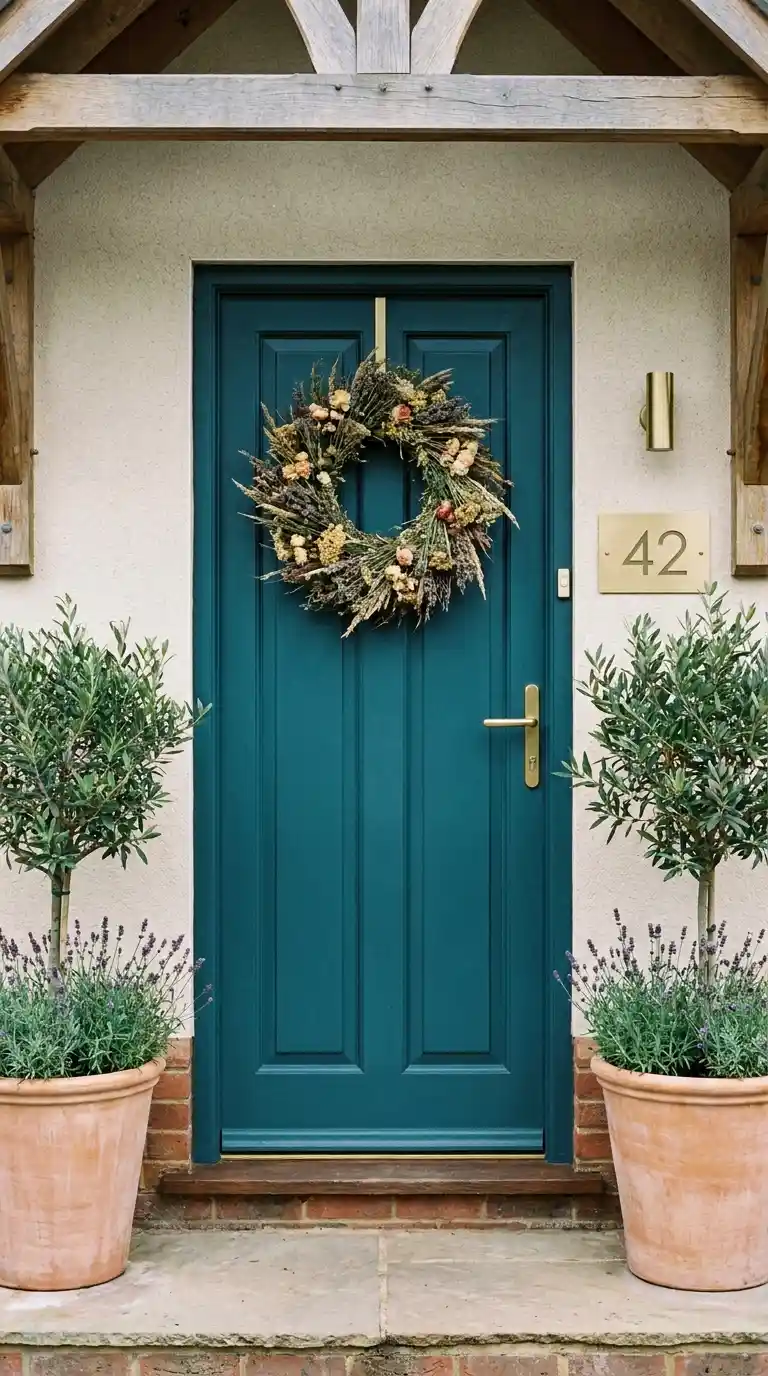
The front door deserves attention too, since it is seen before anything inside. A clean, well-painted door, working hardware and a clear step set the tone; the front-door photo shows a simple arrangement that works without clutter.
Paint is the highest-impact change: deep navy, forest green or warm terracotta suit most exteriors and cost one tin of exterior paint. Matching handles and house numbers make a modest hardware swap look deliberate.
What storage actually works, and which mistakes should you avoid?
No matter how good the decor, clutter ruins it quickly. Storage is the unglamorous part of entrance design, but it decides whether the space stays welcoming after the first week or slides back into a dumping ground.
Woven baskets on a shelf or under a bench hide shoes, scarves and leads while still looking intentional. Label-free is fine for a household of two; with more people, one basket each prevents the pile that forms when sharing.
A landing strip — a small dish or tray by the door for keys, plus a fixed spot for mail — prevents the daily search. Place it within arm’s reach of the door, at about 90 cm high, so dropping keys becomes automatic.
Overcrowding is the most common mistake: adding every attractive item until the entrance feels chaotic. Choose fewer pieces and let them breathe — at least 15 cm between objects on a console.
Check mirror height before fixing it: too high or too low defeats its purpose. Centre it at about 150 cm, step back and check that most household members can see their face comfortably, then fix it — moving a mirror later leaves holes to fill.
What would you buy first if you started again?
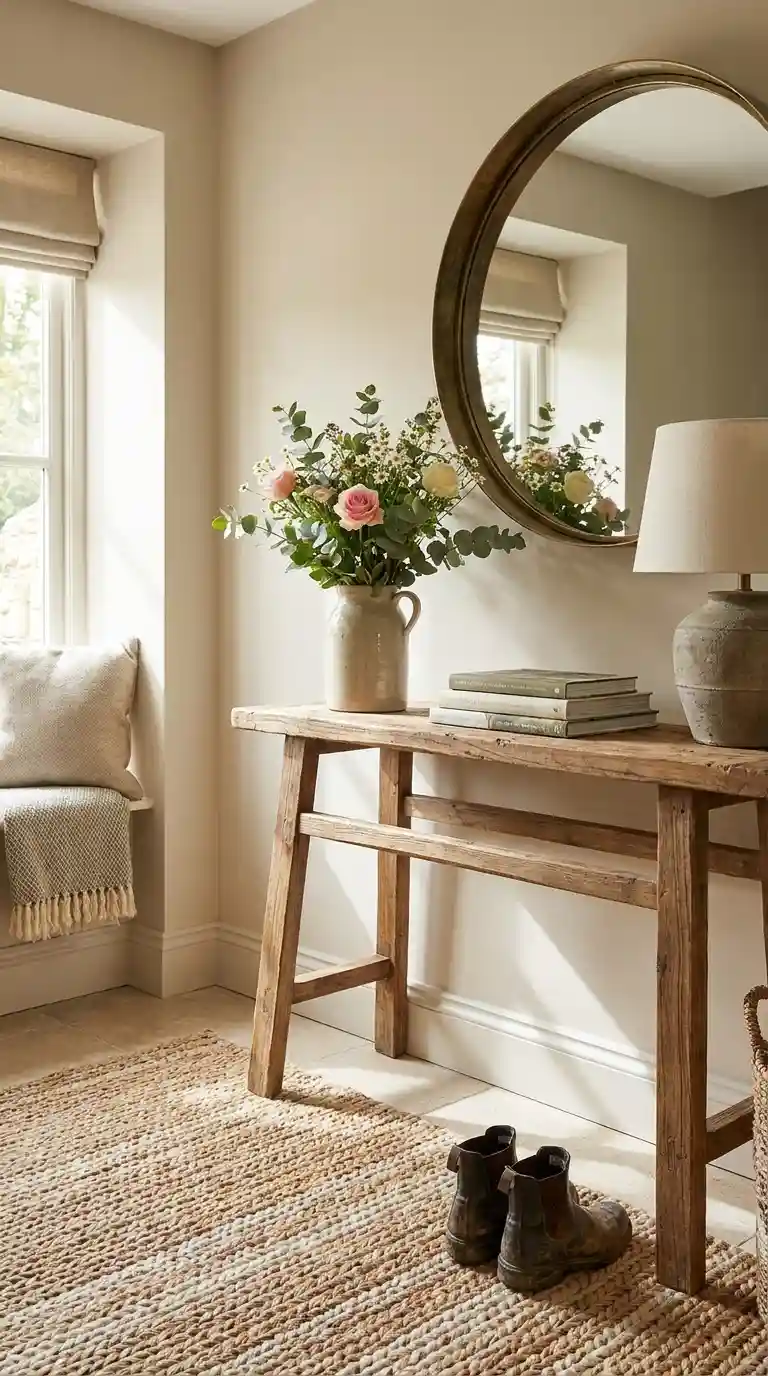
If starting again, begin with three pieces in this order: a console that fits the wall, a mirror at eye level and a durable rug. Those three cover storage, light and floor protection, and everything else can be added slowly.
A simple wooden console is the most repeated choice for good reason: it is sturdy, affordable and suits most styles. Keep it 90–120 cm wide, add a tray for keys, and resist filling its top — empty space is part of the look.
Never skip a durable rug. A low-pile, patterned runner in the entrance protects floors and defines the space, and a washable one can be cleaned after muddy weeks instead of being replaced.
Finally, lighting makes the biggest difference to how the entrance feels on arrival. Two warm sources — an overhead fitting plus a sconce — at around 2700K turn a plain hallway into a welcoming one, even before any other change.
Frequently Asked Questions
What are some simple home entrance decor ideas for beginners?
Start with three pieces: a mirror, a small console table and a durable rug. Together they cover style, storage and floor protection without a large budget or advanced design knowledge.
How can I decorate a small entryway with no closet?
Use wall-mounted hooks for coats, a slim shoe bench and floating shelves. Vertical storage solves most closet problems, and a narrow cabinet can hide bulkier items if the wall allows.
How high should a mirror be hung in an entryway?
Hang the centre of the mirror at roughly eye level — about 150 cm from the floor for most adults. Check that household members can see their faces comfortably before fixing it in place.
What is the best flooring for a home entrance?
Tile, stone and sealed hardwood handle moisture and dirt better than carpet, making them popular entrance choices. If you keep carpet elsewhere, a washable runner protects the entrance zone.
How do I organize shoes near the front door?
A shoe bench, a slim shoe cabinet or woven baskets keep shoes contained and out of sight while staying easy to grab on the way out. One basket per person works best in larger households.
What lighting works best for a dark entryway?
Pair a bright overhead fixture with a wall sconce. Together they bring enough light into a dark entrance without major electrical changes, especially with warm bulbs around 2700K.




3 Comments on “A Warmer Welcome Starts at the Front Door”