

A 55-inch television on a bare wall dominates a living room: the screen is roughly 123 cm wide, and from a sofa 2.5 to 3 metres away it fills a large part of your field of vision. That is why the wall behind it deserves a plan, not an afterthought.
The decisions that matter most are practical ones: the screen centre at seated eye level, around 105 cm from the floor; cables hidden before the bracket goes up; and a design that suits the room’s size and the budget available.
This guide works through those decisions in order: measuring and planning, room size, materials, colour, lighting, storage, fireplaces and budgets, and the mistakes that are cheapest to avoid.
Also Read : Terracotta And Green Living Room: The Warm Earthy Combo That Is Taking Over Home Design In 2026
Why does the TV wall matter more than the TV itself?
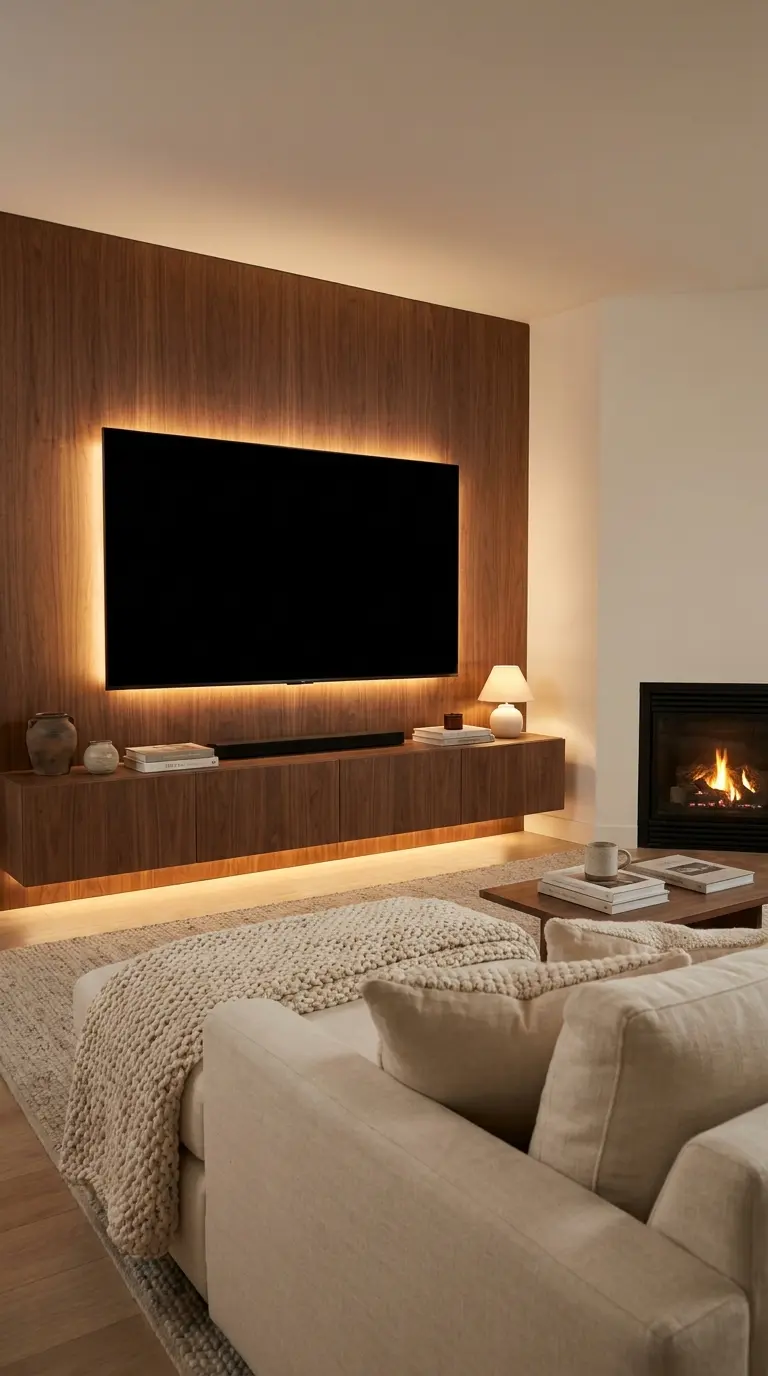
The television wall is usually the first thing you see when you walk into a living room, and it is where your eyes rest for hours every evening. The photo at the top of this section shows a plain wall given a single framed panel treatment — the screen itself has not changed, but the wall now looks intentional.
A planned wall also hides the practical problems: cables, a router, games consoles and the soundbar all need somewhere to go. Building those answers into the design, rather than improvising after the bracket is fixed, is what separates a finished-looking wall from a screen screwed to plaster.
What should you measure and plan before you buy anything?
Start with measurements, not materials. Measure the wall’s width and height, the television’s width including the bezel, and the distance from the main seat to the wall — a 55-inch screen generally suits 2 to 2.5 metres, while a 65-inch screen needs around 2.5 to 3 metres.
Set the height from the seat, not from the floor. Sit on the main sofa and measure your eye level — usually 100 to 110 cm — then aim to centre the screen there, rather than above a fireplace or at standing eye height.
Plan cable routes before fixing anything. An in-wall kit, a brush plate or a hollow floating console all work, but every option is far easier before the bracket is drilled in, and a surface trunking strip is the fallback when chasing the wall is not possible.
Which design suits a small, medium or large room?
Small rooms benefit from restraint. A full floor-to-ceiling panelled wall can dominate a compact space, while a single accent colour or a slim vertical slat section gives the wall definition without closing the room in.
A single accent colour behind the television, paired with a slim floating console rather than a bulky cabinet, keeps a small room feeling open. Light wood tones or soft neutral paint work well here, as very dark, heavy materials can visually shrink a small footprint.
Medium rooms offer the most flexibility, and built-in shelving flanking the television on both sides is the most useful option at this size. It gives storage and display space, and it visually widens the composition so the screen does not float alone in the middle of an empty wall.
Larger rooms and open-plan layouts need a stronger, more architectural treatment, because a small or timid design genuinely gets lost in a big space. The panel or feature needs enough width to hold its own against the rest of the room.
Full-height panelling that runs from floor to ceiling creates the architectural presence a large room calls for. The photo in the materials section below shows how continuous vertical lines anchor a wide wall; adding a fireplace into the same composition gives the wall a second focal point that works alongside the screen rather than competing with it.
Also Read : 45 Breathtaking Dark Blue Living Room Ideas That Turn Any Space Into A Cozy Retreat
Which materials are actually worth the money?
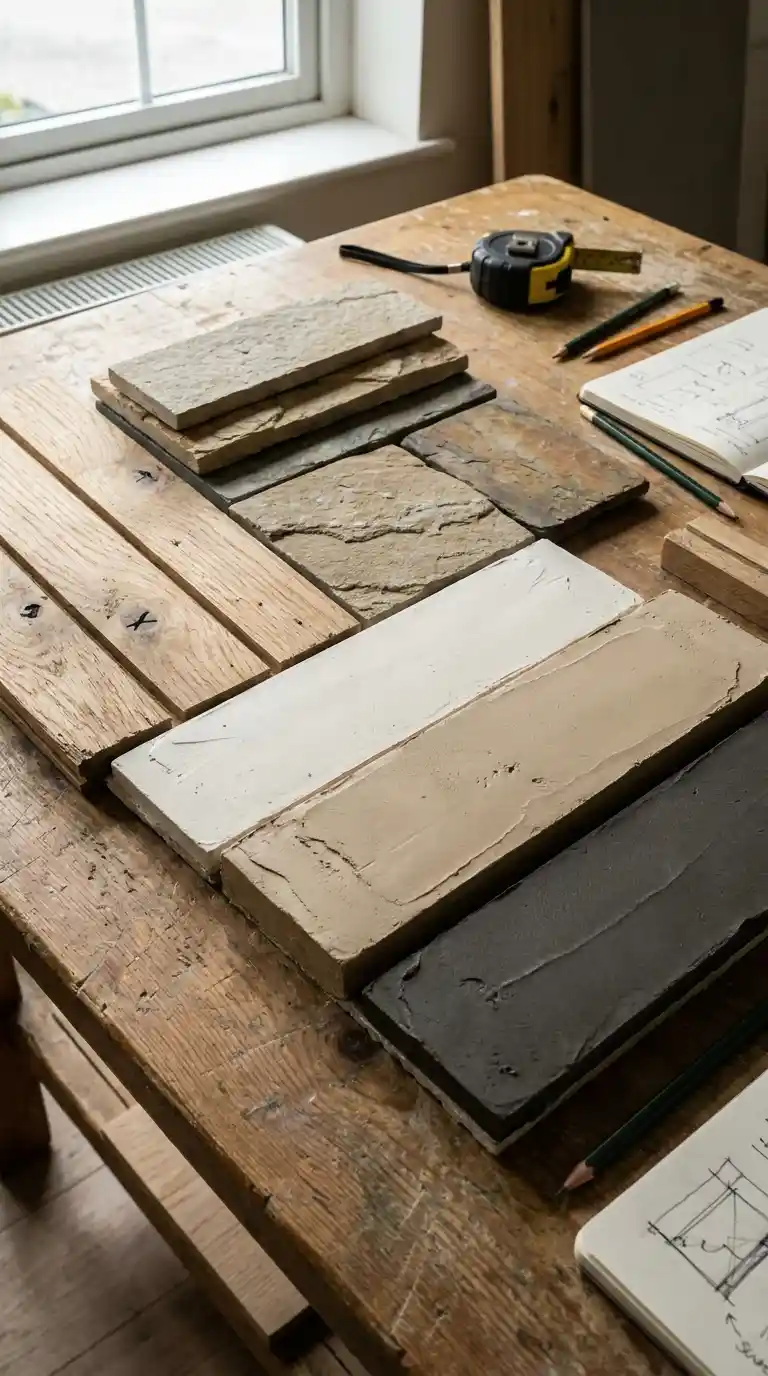
Material choice sets both the look and the budget, because it decides how much of the wall is built, how it is lit and how it ages. The photo in this section shows slatted timber warming a pale wall — texture alone does most of the work.
Wood slat panelling remains the most requested option, and for good reason: vertical slats add rhythm, hide minor wall imperfections and accept hidden LED strips in the gaps. Budget around £40 to £90 per square metre for timber slats, or half that for MDF lookalikes.
Natural stone and stone-look tiles suit fireplace walls and large rooms, where their weight feels proportionate. Real stone needs a solid fixing and a bigger budget; porcelain stone-look tiles give most of the effect at a lower weight and cost.
Fluted MDF panels, with their ribbed surface, are the most affordable panelled look. They paint well, fix with adhesive and pins, and suit renters’ budgets — but they dent more easily than timber, so avoid them at toddler height or behind doors.
What colours work behind a screen?
Warm terracotta and deep clay tones are the most forgiving choice for a first TV wall: they add warmth, sit well with timber, and do not fight with the screen. The terracotta-and-green living room post linked above shows this palette working across a whole room.
Deep forest green has become a signature colour for statement television walls, especially with brass or oak details. It reads as intentional rather than dark, provided the room has at least one decent source of daylight or a warm light source.
Charcoal and near-black tones remain popular for a practical reason: a black screen disappears against them when switched off. Use them on the TV wall only, not the whole room, and balance them with pale shelving or a light console so the wall does not feel like a void.
How do you light a TV wall without glare?
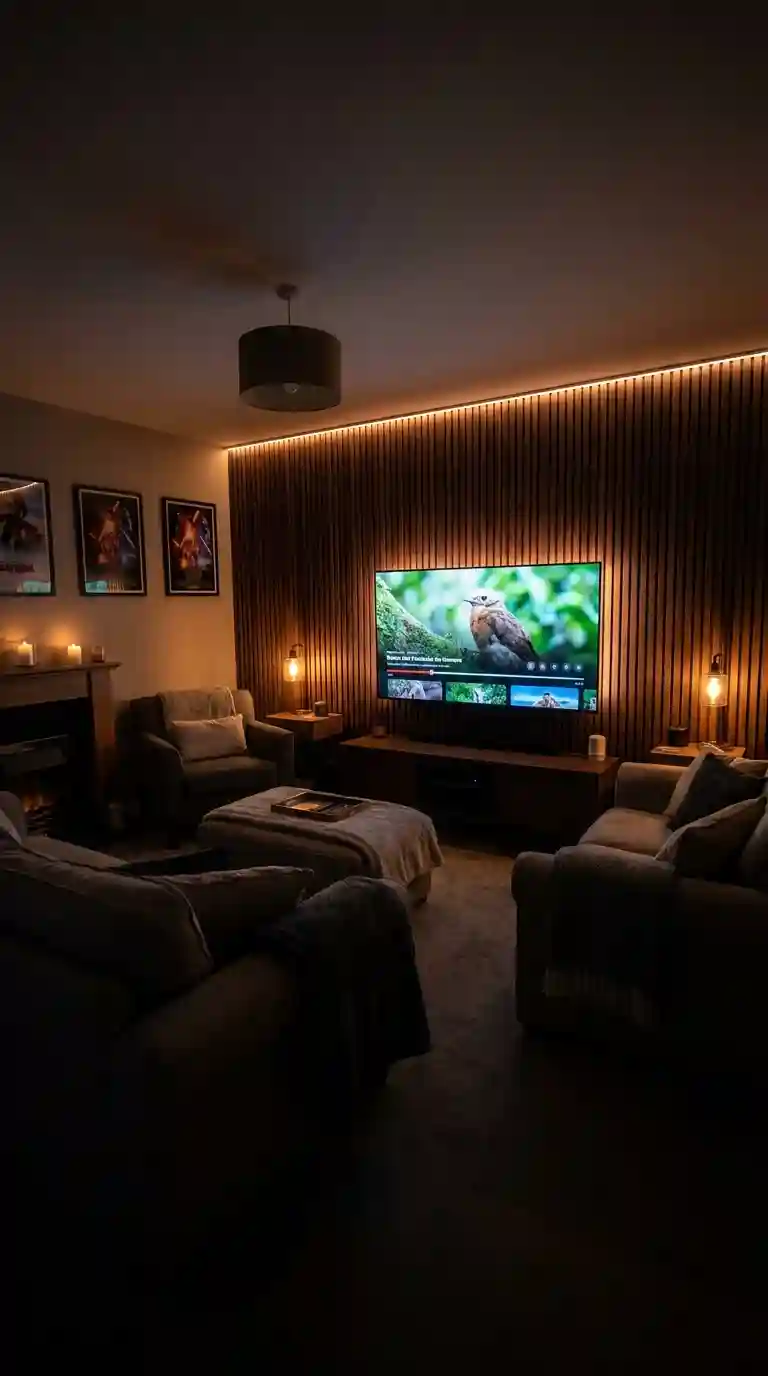
Lighting is the most underrated element of a TV wall, and it is the detail that separates a flat display from a finished room. The photo in this section shows backlighting softening the edge of a screen — the wall looks considered even before the television is on.
Bias lighting — a soft LED strip directly behind the television — reduces eye strain in a dark room and makes the screen’s contrast look better. Choose a 2700K to 3000K warm white strip, fixed to the back of the set, rather than a colour-changing strip used at full brightness.
Under-shelf lighting works well where the wall includes built-in shelving: a warm strip under each shelf lights books and objects without throwing light onto the screen itself. Keep the strips dimmable, so the wall can shift from bright daytime display to soft evening glow.
Must Read : 50 Brilliant Living Room Layout Ideas That Will Instantly Transform The Way You Live
What storage should sit around the TV?
Storage is where a TV wall either stays calm or slowly clutters up. Count what must live on the wall — consoles, discs, remotes, a router — before choosing cabinets, because the count decides how much closed storage you need.
Floating cabinets mounted below the television keep the floor visually clear and give the wall a finished base. Fix them 25 to 35 cm below the screen so the soundbar stays clear, and use proper anchors on plasterboard.
Built-in shelving units flanking the television on either side offer storage and display space, but they only work when the proportions are even: leave roughly equal space on both sides of the screen unless you are deliberately going asymmetrical.
What changes with a fireplace or a tight budget?
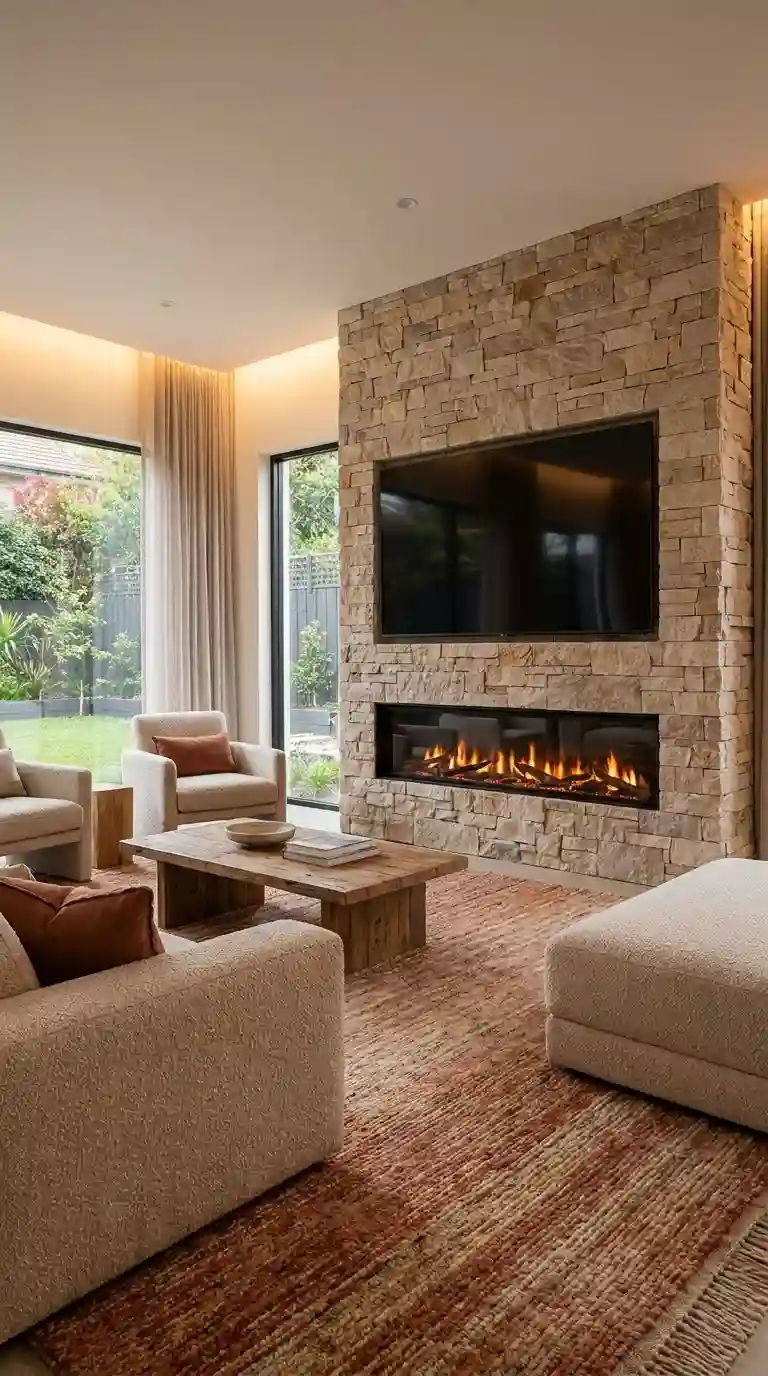
Combining a fireplace with a television wall is now common, largely thanks to ventless electric inserts that need no chimney. The photo in this section shows the pairing done well: one material runs across both features, so the wall reads as a single composition.
Placing the fireplace directly below the television creates a strong, symmetrical focal point. It works best in rooms with enough vertical space, because stacking two features raises the screen — check the seated eye-level rule first, or the television ends up too high to watch comfortably.
Always check the fireplace manufacturer’s heat-clearance requirements before fixing a television above it. Most electric models state a minimum gap — commonly 30 cm or more — and ignoring it risks heat damage to the screen and invalidates warranties.
A tight budget does not mean a plain wall. A simple accent colour, applied with quality paint and clean lines, remains the most affordable transformation, and a warm clay or deep green from the current palette gives an updated look with no structural work at all.
What mistakes should you avoid — and what works in a rented home?
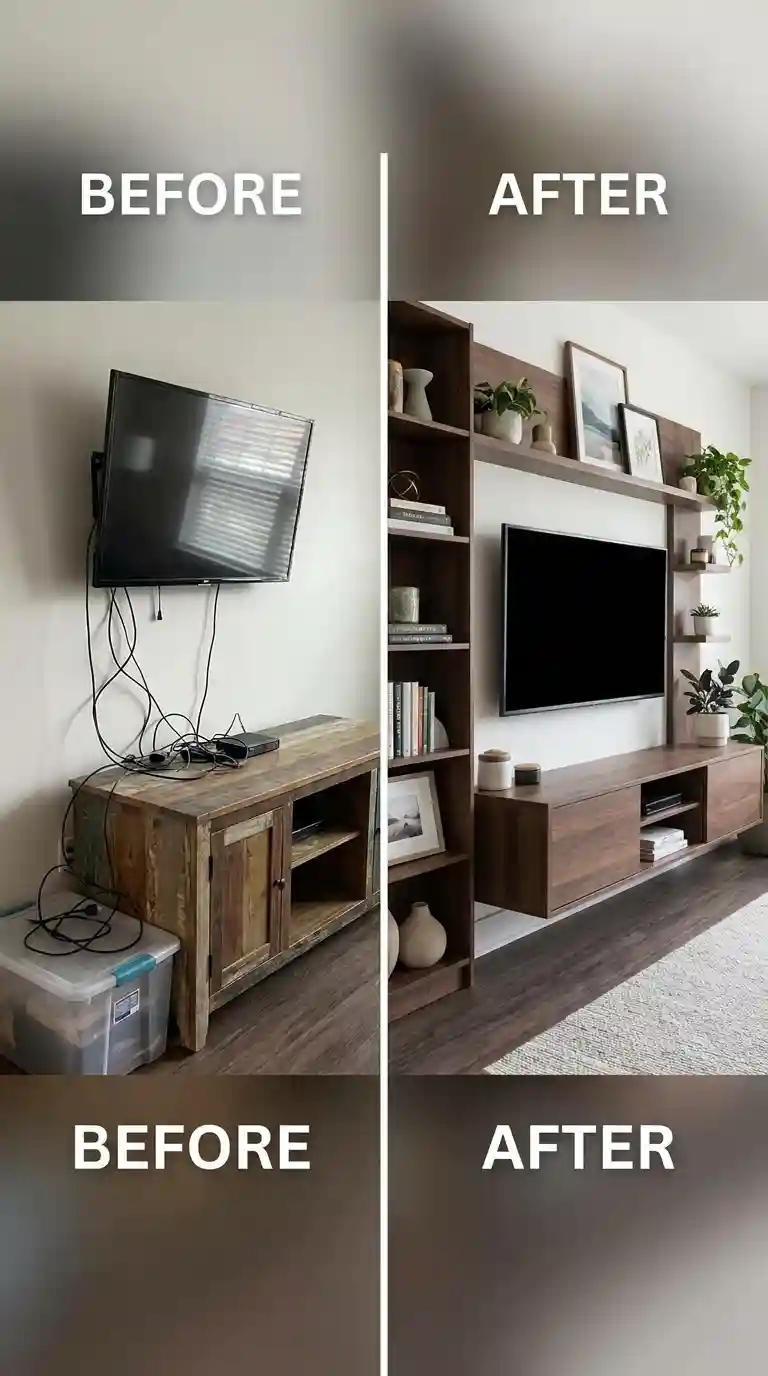
Mounting the television too high is the most common issue. It usually happens because the bracket goes above a fireplace or at standing eye level; sit on the sofa first and centre the screen at 100 to 110 cm instead.
Leaving cables completely visible is another frequent problem, and one of the easiest to fix: an in-wall kit, a brush plate or a simple cord cover that matches the wall colour all work, and all are far cheaper than re-plastering later.
Choosing a design that is too small in scale for the room is a quieter mistake. A tiny accent behind a large television in a big room looks unfinished, while a wider panel or taller shelving helps the whole composition feel intentional.
Also Read : 45 Gorgeous Pink Living Room Ideas That Will Completely Transform Your Space
Renters face a genuinely different set of constraints, since most leases forbid drilling into walls or making permanent changes. The rule of thumb is simple: if it cannot be removed without a repair, find another way to get the same effect.
Removable wallpaper and peel-and-stick panels remain the single most useful tool for renters who want a statement wall without violating a lease. Many now look convincingly close to real wood or stone from a normal viewing distance.
Battery-powered or plug-in LED strips, rather than hardwired lighting, let renters add the warm glow behind the television without any electrical work or wall modification. Fix them with removable clips, not adhesive that strips paint.
Frequently Asked Questions
What is the best height to mount a TV on a wall?
Centre the screen at seated eye level — for most people that means the middle of the screen sits 100 to 110 cm from the floor. Measure from your own sofa rather than copying a diagram, since seat heights vary.
What are the most popular TV wall design ideas for 2026?
Wood slat panelling with hidden lighting, deep green or charcoal walls, and floating consoles are the most popular choices this year. The common thread is texture plus concealed cables, not any single material.
How do I hide TV wires on a wall?
The cleanest route is an in-wall cable kit fitted before the bracket goes up, which hides power and HDMI leads inside the wall. If chasing the wall is not possible, a paintable cord cover or a hollow floating console is the next best option.
What color is best for a TV wall?
Warm neutrals, deep greens, charcoal and earthy terracotta all work well, because they let a black screen blend in. Avoid brilliant white, which makes the screen stand out harshly, especially in the evening.
How much does it cost to design a TV wall?
Costs range from almost nothing for a paint refresh to several thousand pounds for full panelling with joinery. A realistic mid-range refresh — paint, a floating console and bias lighting — usually lands between £300 and £800.
Is a floating TV console better than a media console on the floor?
A floating console usually looks lighter and makes cleaning easier, while a floor-standing console offers more storage for larger media collections. The deciding factor is what you need to store: if consoles and discs fit in a shallow floating unit, choose it.





8 Comments on “A TV Wall That Looks Planned, Not Just Hung”