

A ladder shelf suits a small room precisely because it leans rather than stands: it adds height and display space while taking up barely more floor than a bookcase half its height. Before buying one, measure three things: the wall width available (most ladder shelves are 45 to 60 centimetres wide), the height to the ceiling, and the depth of the bottom shelf, usually 25 to 30 centimetres, narrowing to about 15 centimetres at the top. A styling budget of £40 to £150 covers most of what follows, and the whole job fits into a single afternoon. The one decision that matters most is safety: a leaning shelf must be anchored to the wall, and the heaviest items must sit low, or the shelf will slide and tip as books come on and off.
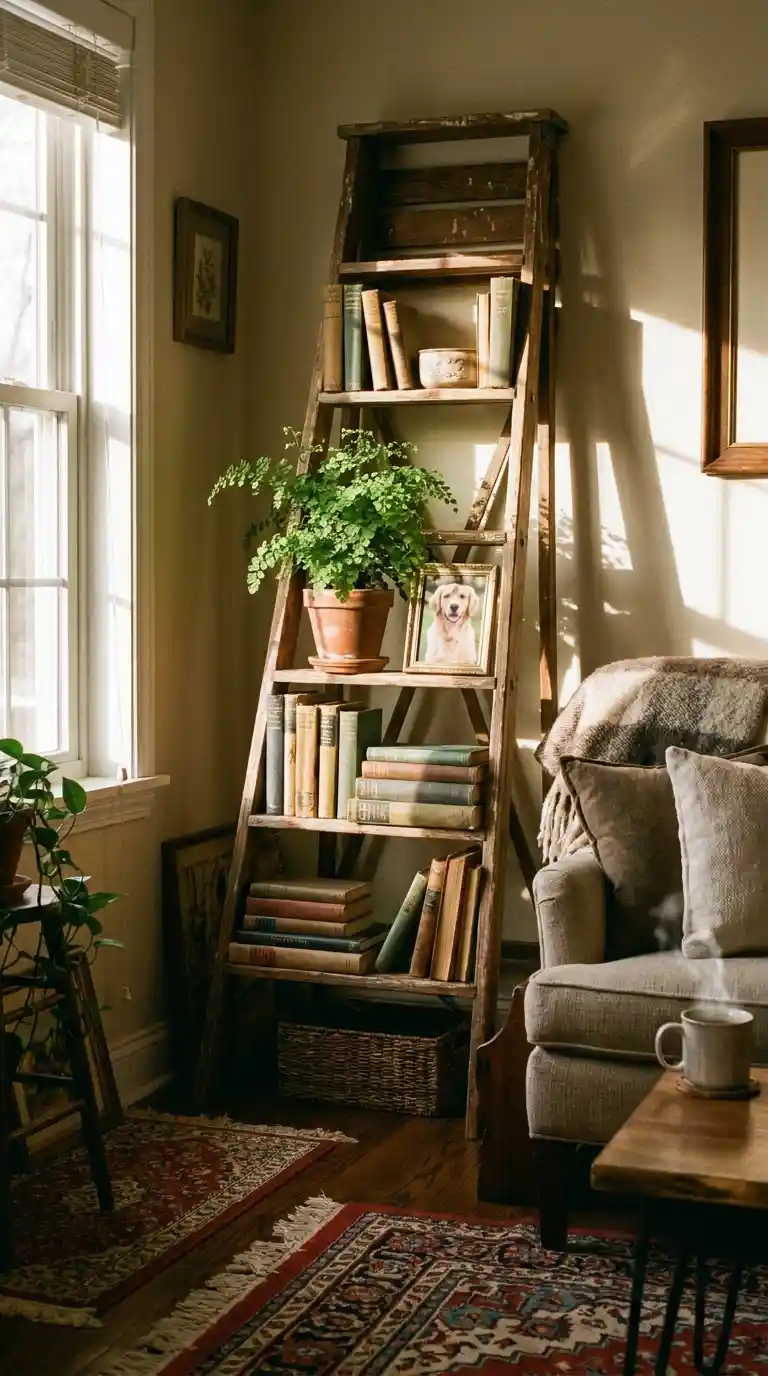
What should you measure before you buy one?
Measure the wall, not just the shelf. Note the width between any skirting boards, door frames or radiators, the ceiling height, and whether a plug socket or light switch will end up hidden behind the unit. Because a ladder shelf leans, its top sits much closer to the wall than its base, so allow roughly 10 centimetres of clearance at floor level for the feet and the lean. The photo above shows that profile clearly: a slim, leaning frame that reads as light because the upper shelves are narrower and hold less.
Weight matters as much as width. Check the manufacturer’s limit per shelf, often 5 to 10 kilograms, and plan the load from the bottom up: books and baskets low, plants and frames higher. Fix the anchor into a wall stud where possible, or use proper plasterboard fixings rather than a single screw, and test the shelf by pressing it gently from the side before loading it. A shelf that rocks empty will only get worse once it is full.
How do you choose between wood, white and black metal?
The frame sets the mood before a single object goes on it. Natural wood warms a room instantly and suits boho and Scandinavian looks, but it needs a sealed finish if the shelf will stand in a steamy bathroom. White or light-painted frames visually recede, which helps in a small room, while black metal reads more modern and dramatic but shows dust quickly, so it suits a shelf that is styled rather than stuffed.
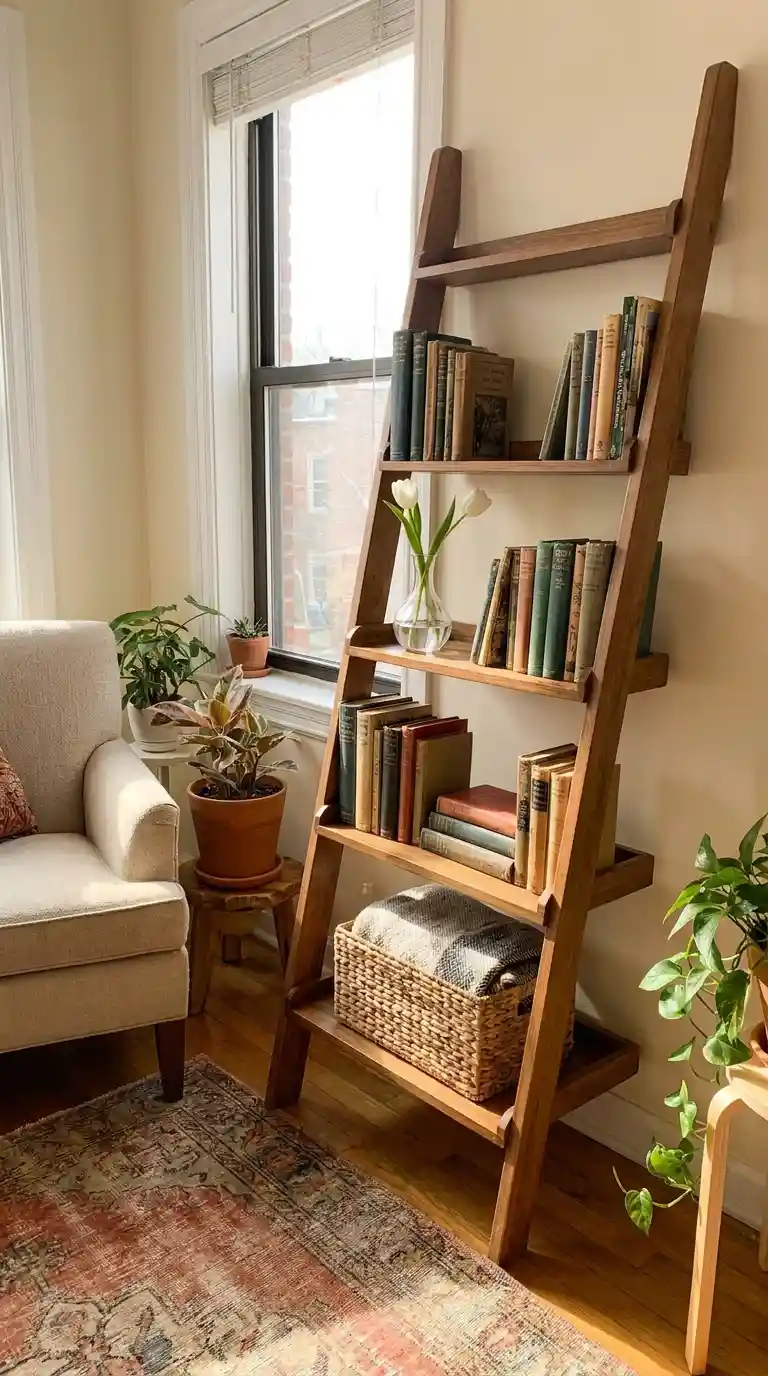
Shelf spacing matters as much as material. A gap of about 30 centimetres between shelves fits most hardbacks upright; narrower gaps suit paperbacks, small plants and framed prints. Adjustable shelves are worth paying a little extra for, because the top shelves of a leaning unit are the shallowest and least useful for tall items. The photo below shows a wooden frame working hard in a living room: warm timber, trailing greenery and books sharing the same shelves without competing. The same curated-shelf thinking applies to any bookcase, as these bookshelf styling ideas show.
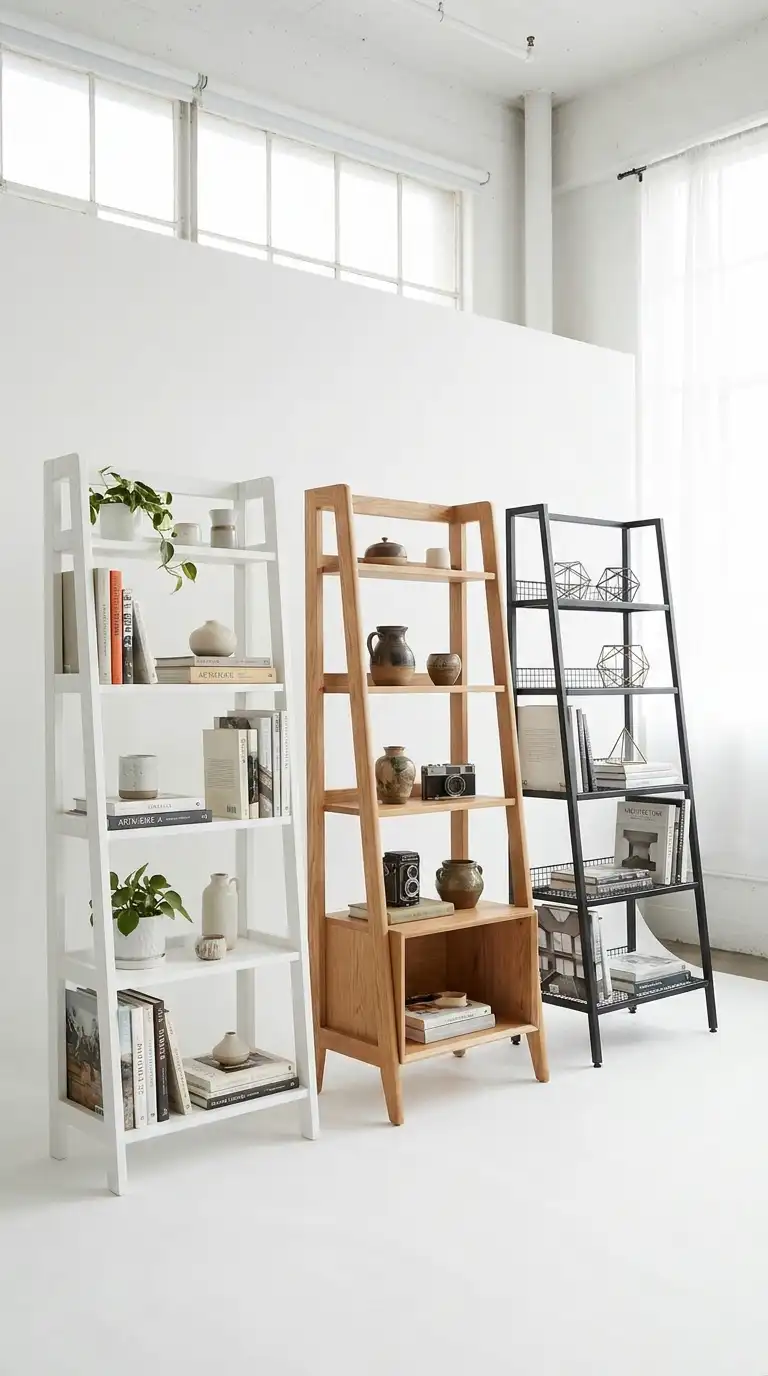
What makes a shelf look calm instead of crowded?
Give every shelf one anchor piece — a tall vase, a stack of three to five books, or a framed print — then add two to four smaller items and stop. Leave roughly a fifth to a third of each shelf empty; that empty space is what makes the objects read as chosen rather than stored. If a shelf looks busy, remove one item at a time until it calms down, rather than rearranging everything.
Height variation does most of the work. Combine a tall item of 30 to 40 centimetres, a medium one of 15 to 20 centimetres and something low, such as a small bowl or a horizontal book stack, and group items in threes or fives rather than pairs. Step back about 2 metres to judge the whole unit, and take a quick photograph: a photo exposes imbalance that the eye forgives in person. Mix materials too — ceramic, glass, wood and woven textures on the same unit — so the shelf does not read as one flat material.
Which look suits your room: minimal, boho or Scandinavian?
Minimal styling works on restraint: a palette of two or three tones repeated across the shelves, one sculptural object per shelf, and generous gaps. A single ceramic vase or one small sculpture often makes a stronger statement than five small objects competing for attention, and books stacked horizontally in small groups read as calmer than a full vertical row.
Boho styling, shown in the photo below, thrives on layers and a slightly imperfect, collected feel: a trailing plant such as pothos draped over one shelf edge, a woven basket on a lower shelf for small items, and warm tones like terracotta, cream and sage green. Scandinavian styling sits between the two, with a neutral base of white, soft grey and natural wood, simple ceramic shapes and candles for warmth. The same small-space discipline helps in a flat of any style, as these small-space decorating ideas show.
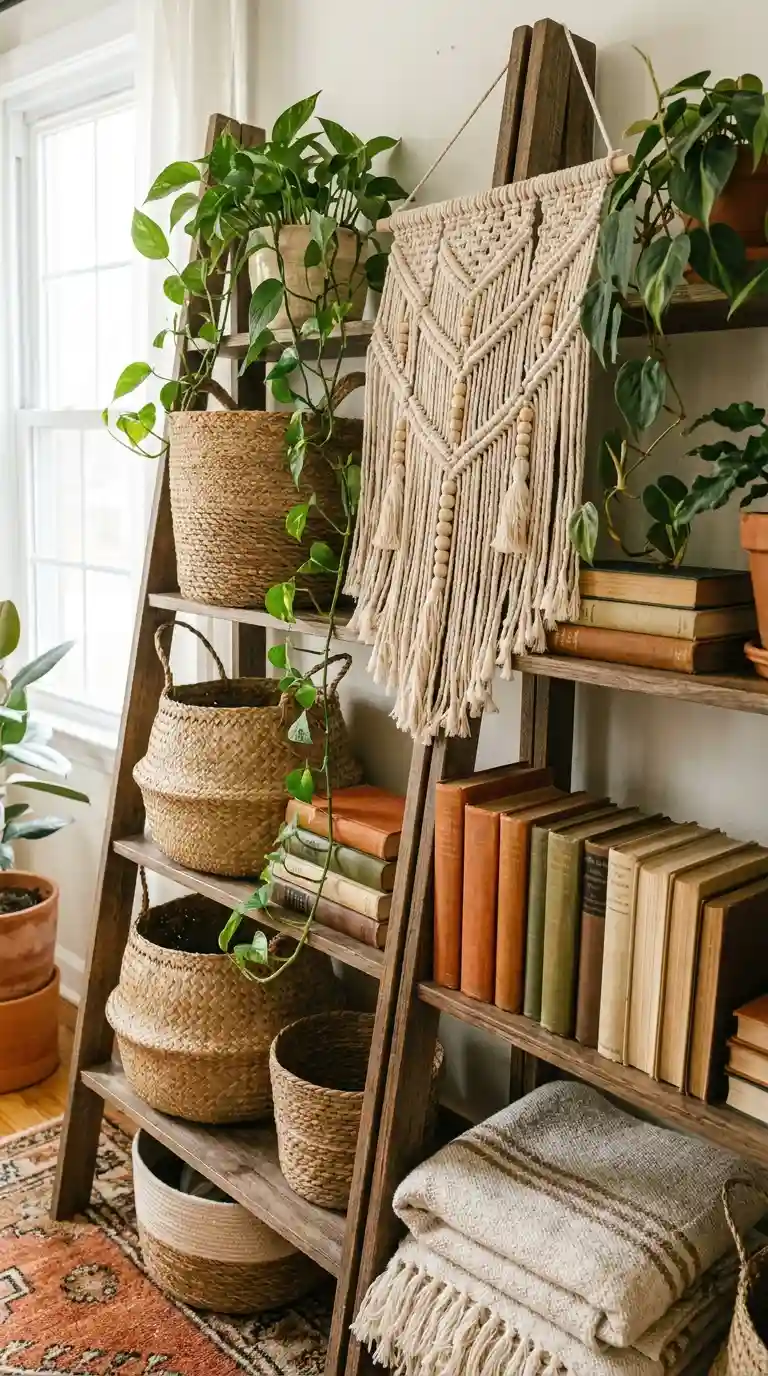
How do you fit a real book collection on a leaning shelf?
A ladder shelf can hold a working collection, not a library, so the heaviest books belong on the bottom two shelves and the lightest objects at the top. Alternate vertical rows with horizontal stacks of three to five books; a horizontal stack also doubles as a riser for a small plant or candle. Turning a few books spine-in is sometimes suggested, but it makes finding a title harder, so keep it to one shelf at most if the look appeals.
Leave at least one shelf less packed than the others, even in a book-heavy home, because that breathing room stops the whole unit reading as a wall of spines. Stone or geometric bookends keep leaning rows from toppling when a book is pulled out, and grouping books by colour is worth doing only if the collection is large enough that colour blocks actually form; otherwise, group by size and use. The photo below shows a book-led shelf that still leaves room for a plant and a frame.
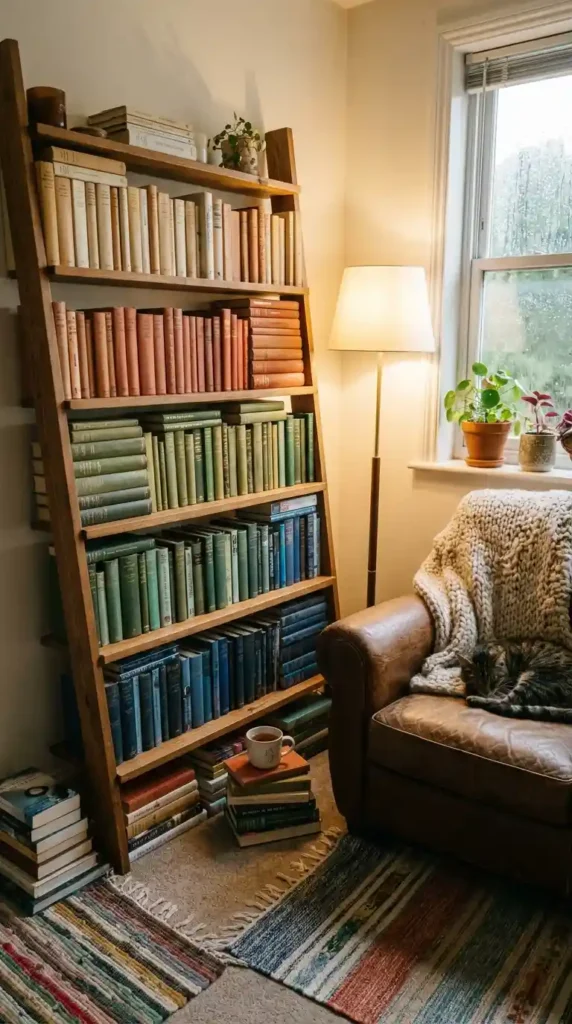
How does the same shelf work in different rooms?
In a living room, a ladder shelf often becomes a focal point, so slightly more layered styling suits it: books, a plant and one larger piece of art. In a bedroom, softer and more personal styling works better — framed photos, a small reading lamp and one candle — while a home office needs function first: reference books, a clock and one plant, with the rest of the desk kept clear. The same zone thinking helps a workspace generally, as these office desk decor ideas show.
Elsewhere, adapt rather than repeat. In a bathroom, rolled towels and a small plant suit a ladder shelf, but nothing that minds steam should live on it. In a kitchen, cookbooks and a small herb pot work, provided the shelf stands away from the hob. In a hallway, keep the unit to walls where at least 90 centimetres of walkway remains clear, and use the lowest shelf for a basket that catches keys and post. The photo below shows a shelf styled for a living room that could move to a bedroom with only a change of accessories.
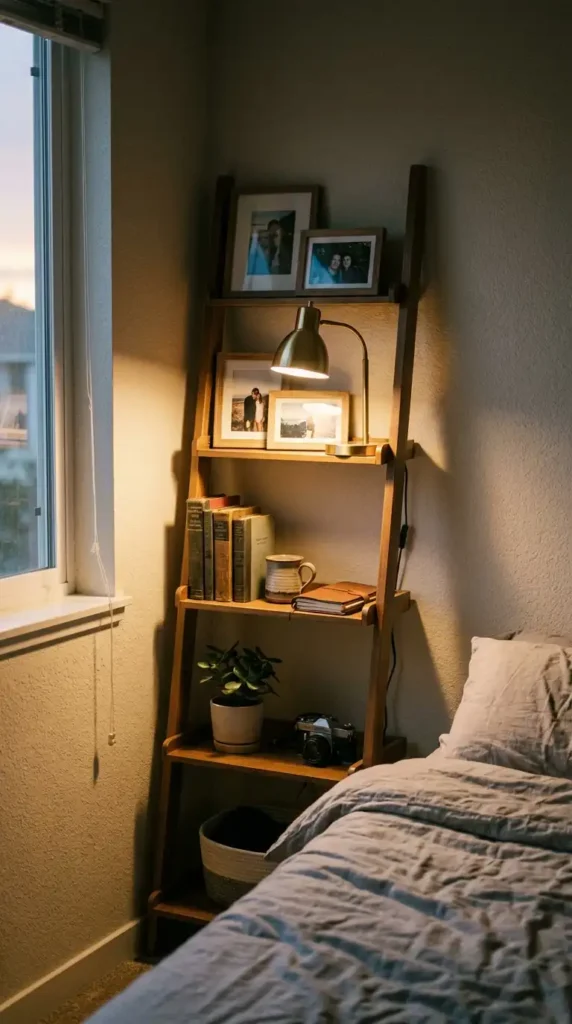
How do you style a ladder shelf for under £50?
Start with what is already owned, then buy only the gaps. A workable breakdown is: thrifted books £5 to £10, one trailing plant £8 to £12, two frames with printable art £10 to £15, a bud vase with a single stem about £5, and a woven basket £8 to £12 — roughly £40 to £50 in total. A single stem in a simple glass jar looks more considered than a large bunch in a cheap vase, and one good frame beats three thin ones.
Repurposing keeps the cost down further: a small dish from the kitchen becomes a trinket tray, a candle already owned adds warmth, and painting a plain terracotta pot costs less than buying a decorative one. The photo below shows budget styling done well: inexpensive pieces in one colour family, so the shelf reads as deliberate rather than improvised. If the total creeps above £50, remove one category rather than buying cheaper versions of everything.
What changes with the seasons, and what should you avoid?
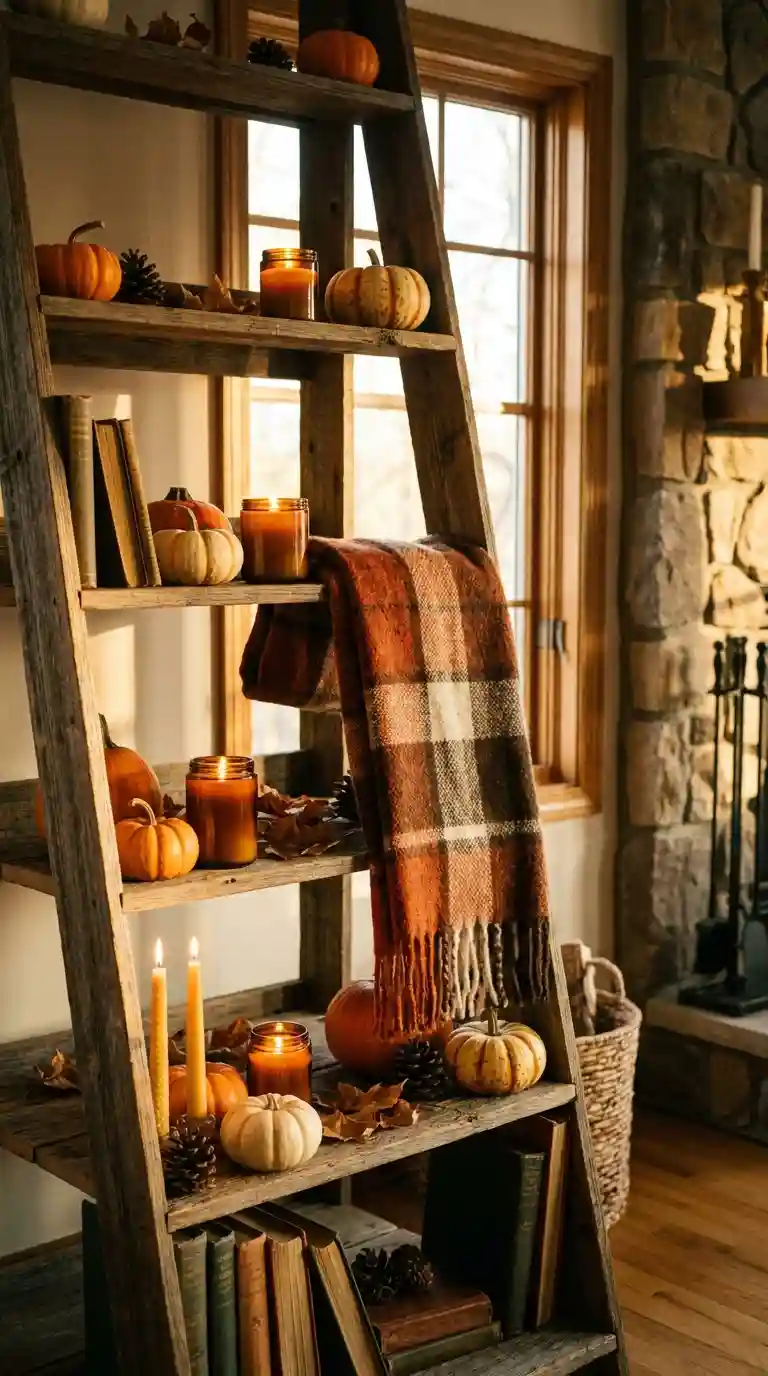
A ladder shelf adapts to the seasons with only a handful of swaps, which is part of its appeal. In autumn, warm tones like burnt orange, deep red and mustard yellow work well through a throw or a candle; in winter, softer whites, deep greens and a little metallic shimmer bring a festive touch; in spring, lighter colours and fresh greenery take over; and in summer, breezy woven textures and brighter accents keep the shelf feeling airy. Swap a few items, not the whole shelf, so the unit still looks like it belongs to the same home.
The mistakes to avoid stay the same all year: overcrowding every shelf, placing an oversized object on a narrow top shelf, arranging everything in perfect symmetry so the shelf reads as stiff, skipping the wall anchor, and styling once and never revisiting. Revisit the shelf once a quarter, when the seasons change, and remove anything that no longer earns its place. The photo below shows a seasonal shelf that keeps its structure while changing only its accents.
Start with one shelf this weekend — the middle shelf, at eye level — and judge the result after a week of normal use. Once that shelf holds, move to the next. A ladder shelf that looks collected rather than cluttered is rarely the one with the most objects; it is the one where every item has a reason to be there.
Frequently asked questions
How many items should go on each shelf?
Three to five items per shelf, grouped in odd numbers, with at least a fifth of the shelf left empty so the arrangement reads as chosen rather than stored.
Do ladder shelves need to be fixed to the wall?
Yes, use the anchor supplied, especially in homes with children or pets. A leaning shelf can slide or tip when books are added or removed.
What plants work best on a ladder shelf?
Trailing plants such as pothos or string of pearls soften the straight lines of the frame. Keep heavier pots on the lower shelves so the unit stays stable.
Can a ladder shelf hold a large book collection?
It can hold a working collection, not a library. Keep the heaviest books low, mix vertical rows with horizontal stacks, and leave one shelf less full.
How do you style a ladder shelf on a budget?
Start with books already owned, one plant and one framed print. Thrifted pieces and a single stem in a jar usually keep the total under £50.





2 Comments on “How to Style a Ladder Shelf So It Looks Collected, Not Cluttered”