

I’ll be honest: for years, my basement was where old furniture and half-empty paint tins went to die. Then working from home went from an occasional treat to everyday life, and the kitchen table started to feel less like an office and more like a slow slide into chaos.
Turning that forgotten lower level into a proper workspace turned out to be one of the best decisions I have made for my home. It is quiet, it is separate from the noise upstairs, and it finally gave my workday a door I can close. Here is everything I learned along the way, so you can skip the mistakes I made.
In this guide, I am going to walk you through real basement office ideas that actually work, not just pretty pictures that look nice on a design blog but fall apart the moment you try to recreate them. We will talk about lighting, layout, color, furniture, storage, and all the small details that make a basement office feel like a proper workspace instead of a converted storage room.
Also Read : Traditional Home Decor Ideas: The Ultimate Guide to Timeless, Character Filled Rooms
Why a Basement Makes a Brilliant Office
Before we get into specific basement office ideas, let’s talk about why this space makes so much sense for a home office in the first place.
Basements tend to be the quietest part of the house. They sit below the main living area, which means less noise from kids running around, televisions playing in the background, or doorbells interrupting your focus. If you have ever tried to take a work call while someone upstairs is vacuuming, you already understand the appeal.
There is also the matter of separation. A basement office creates a clear boundary between your work life and your home life. You walk downstairs to work, and you walk back upstairs when you are done. That small physical transition does more for your mental state than people expect.
And then there is the space itself. Most basements are underused, which means you are not fighting for square footage with a bedroom or a living room. You get to design the space from scratch, which is honestly one of the most exciting parts of exploring basement office ideas.
Plan First: Layout, Light and the Basics
A lot of people jump straight to furniture and paint colors, but the smartest basement office ideas start with planning the bones of the space first.
Dealing With Lighting In A Basement Office
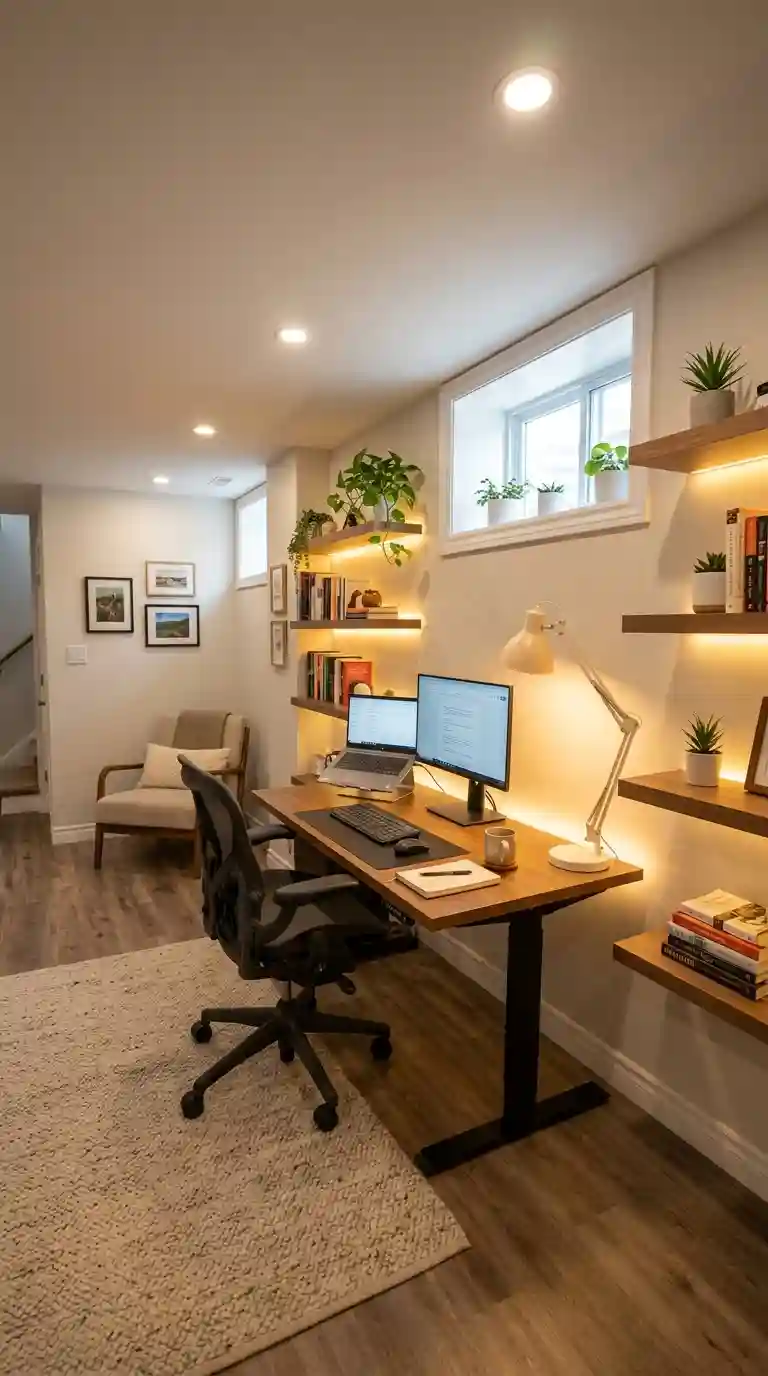
Lighting is probably the single biggest challenge with any basement space, and it deserves serious attention before anything else.
Natural light is often limited or nonexistent, so you need to build your lighting plan around layers instead of relying on one overhead fixture. Start with ambient lighting, which is your general room lighting, usually from ceiling fixtures or recessed lights. Then add task lighting directly over your desk, since this is where you need the brightest and clearest light for actual work. Finally, consider accent lighting, like a floor lamp in a reading corner or LED strips behind a shelf, which adds warmth and makes the room feel less clinical.
If your basement does have small windows, do not cover them with heavy curtains. Keep window treatments light and sheer so whatever natural light does enter the room gets to spread as far as possible.
Choosing The Right Flooring For A Basement Office
Basements are notorious for moisture issues, which makes flooring one of the most important decisions in any basement office project.
Carpet tiles designed for below grade spaces are a popular choice because they resist moisture better than standard carpet and they are easy to replace individually if one section gets damaged. Luxury vinyl plank flooring is another excellent option, since it looks like real wood but handles humidity far better than actual hardwood would.
Whatever you choose, make sure it is rated for basement use specifically. A beautiful floor that buckles or grows mold within a year is not a win for anyone.
Addressing Moisture And Air Quality
This part is not glamorous, but it matters more than any basement office idea involving paint colors or furniture.
A dehumidifier is almost non negotiable in most basements, especially if you are spending hours down there every day. Pair that with a small space heater or improved HVAC airflow for the colder months, and consider adding a simple air purifier if the space tends to feel stuffy. A basement office that smells musty or feels damp is going to be hard to enjoy no matter how nice it looks.
Must Read : Gallery Wall Layout Ideas: The Ultimate Guide to a Wall People Actually Stop and Look At
Making Small or Awkward Spaces Work
Not every basement comes with generous square footage, and a lot of the best basement office ideas actually come from working with tight, oddly shaped spaces.
Making The Most Of A Narrow Basement Office
If your basement is long and narrow, think galley style. Place your desk against the longer wall rather than trying to center it in the middle of the room. This keeps a clear walking path and makes the space feel more open than it actually is.
Floating shelves above the desk give you storage without eating into floor space, which is especially helpful in tight basement office setups where every square foot counts.
Working Around Support Columns And Low Ceilings

Almost every basement has at least one support column or a section with lower ceiling height, usually near ductwork or plumbing. Instead of fighting these features, build around them.
A support column can become a natural divider between a desk area and a small seating nook. Lower ceiling sections work well for storage cabinets or a cozy reading chair, since you are not standing in that exact spot for long periods anyway.
Basement Office Ideas For Under The Stairs
The area under a basement staircase is one of the most overlooked opportunities in home design. A small desk tucked into this nook, paired with built in shelving that follows the slope of the stairs, can create a surprisingly charming and efficient basement office corner.
This setup works especially well for people who do not need a full room dedicated to work and just want a defined, cozy spot to get things done.
Warm, Cosy Touches on a Budget
One of the biggest complaints about basements is that they feel cold and uninviting. The right basement office ideas can completely flip that impression.
Using Warm Colors To Soften A Basement Office
Basements naturally lack warmth from sunlight, so your color palette has to work harder to compensate. Warm neutrals like soft terracotta, warm beige, muted gold, or deep forest green tend to work beautifully in basement spaces, since they add visual warmth without feeling overwhelming in a room with limited daylight.
Avoid stark white or cool gray tones unless you are pairing them with strong warm lighting, because those colors can make an already dim basement feel even colder.
Layering Textures For A Cozy Basement Office

Texture does a lot of heavy lifting in basement office design. A soft area rug under your desk, a knitted throw on a reading chair, woven baskets for storage, and a few plants placed strategically around the room all add softness to a space that might otherwise feel like a concrete box.
Even small details, like a textured ceramic mug holder or a fabric covered bulletin board, contribute to that lived in, cozy feeling that makes people actually want to spend time in their basement office.
You do not need a massive renovation budget to create a functional, attractive basement office. Some of the best basement office ideas come from clever, low cost solutions.
Repurposing Furniture You Already Own
Before buying anything new, take inventory of furniture already sitting around your house. An old dining table can become a desk. A bookshelf from a bedroom can be repainted and repurposed for office storage. A dresser can be converted into a printer stand with drawers for supplies.
This approach not only saves money but also gives your basement office a more personal, collected feel instead of looking like it came straight from a single store display.
Paint As The Cheapest Transformation Tool
A gallon of paint is one of the most affordable ways to completely change the feel of a basement office. If your walls are currently an unfinished gray concrete or an outdated beige, a fresh coat of paint in a warm, intentional color does more to make the space feel finished than almost any other single change.
Painting trim, doors, or even an accent wall in a bold color can add personality to a basement office without requiring a big financial investment.
Affordable Lighting Upgrades
Instead of hiring an electrician to install new recessed lighting throughout the basement, start with plug in solutions. String lights, battery powered puck lights inside shelving, and affordable desk lamps can dramatically improve the lighting in a basement office without any major electrical work.
Smart Storage That Keeps Your Desk Clear
Storage tends to become a bigger issue in a basement office than people expect, especially since these spaces often double as storage rooms for the rest of the house.
Built In Shelving For A Basement Office
If your budget allows for it, built in shelving along one wall of your basement office can solve storage problems permanently. These shelves can hold books, file boxes, decor, and supplies while keeping the floor clear and the room feeling organized.
Built ins also tend to make a basement office feel more like a custom designed room rather than a converted afterthought, which adds real value if you ever decide to sell your home.
Using Vertical Space In A Basement Office

When floor space is limited, vertical storage becomes your best friend. Tall, narrow bookcases, wall mounted file organizers, and pegboards above the desk all keep supplies accessible without crowding the actual workspace.
Hidden Storage Solutions
Ottomans with hidden compartments, storage benches, and desks with built in drawers all help a basement office stay tidy without sacrificing style. These pieces are especially useful in smaller basement office layouts where every item needs to serve more than one purpose.
Related Post : 51 Genius Home Office Organization Ideas That Will Instantly Transform Your Workday
Shared and Dual Workspaces That Actually Work
Many households now need more than one workspace, and basements are a natural place to set up a shared office for two people.
Creating Separate Zones In A Shared Basement Office
Even in a shared space, it helps to create a visual sense of separation between two work areas. A bookshelf, a room divider, or even a strategically placed plant can mark the boundary between one desk and another, helping each person feel like they have their own territory within the same basement office.
Choosing Desks That Work For Two
An L shaped desk or two separate desks positioned back to back can work beautifully in a basement office designed for two people. Facing desks toward opposite walls rather than toward each other also tends to reduce distraction, since neither person is staring directly at the other while trying to focus.
Managing Noise In A Dual Basement Office
If two people are taking calls in the same basement office, noise becomes a real issue. A small area rug, fabric wall panels, or even a bookshelf filled with books can absorb sound and reduce echo, making it easier for both people to work without constantly talking over each other.
Making the Most of Natural Light
Even basements with minimal windows can be designed to maximize whatever natural light is available, and this remains one of the most requested basement office ideas among homeowners.
Positioning Your Desk Near Existing Windows
If your basement has even one small window, position your desk near it rather than against the farthest wall. Facing your desk toward the window, or at least placing it perpendicular to it, allows natural light to fall across your workspace throughout the day.
Using Mirrors To Bounce Light Around A Basement Office
Mirrors are an underrated tool in basement office design. Placing a large mirror across from a window reflects whatever natural light enters the room and spreads it further into the space, making the entire basement office feel brighter without adding a single new light fixture.
Light Reflecting Paint And Finishes
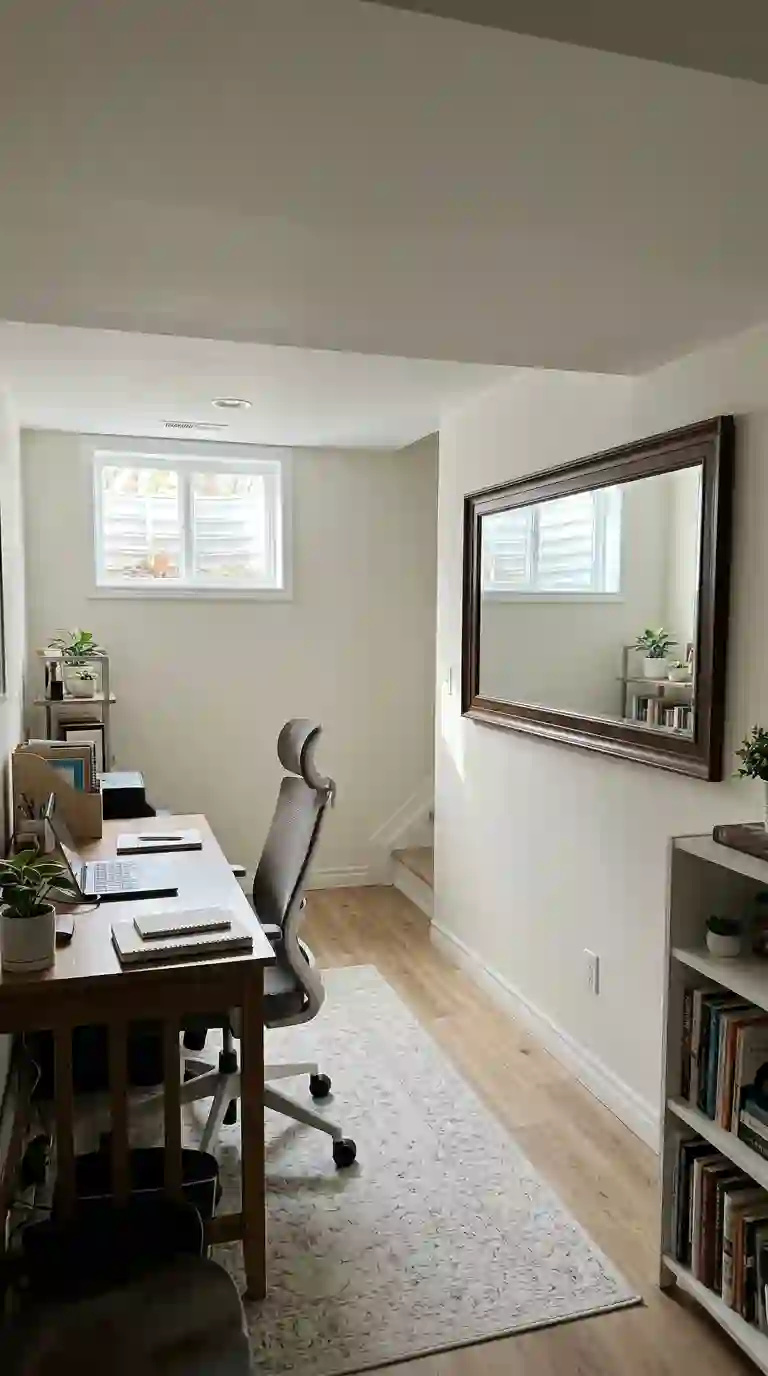
Glossy or semi gloss paint finishes reflect more light than flat paint, which can make a real difference in a basement office that struggles with natural light. Pairing lighter paint with glossy finishes on trim or furniture helps bounce available light around the room more effectively.
Furniture and Decor That Suit a Basement
Furniture selection can make or break a basement office, especially when humidity and moisture are ongoing concerns.
Choosing Moisture Resistant Materials
Solid wood furniture can warp over time in a basement environment, especially without proper humidity control. Metal framed desks, engineered wood with moisture resistant coatings, and furniture specifically designed for basements tend to hold up far better over the years.
Ergonomic Considerations For A Basement Office
Since basement offices often become full time workspaces, ergonomics matter just as much here as in any other office. An adjustable chair, a desk at the correct height, and a monitor positioned at eye level all contribute to a basement office that supports long term comfort instead of causing back and neck pain.
Multi Purpose Furniture For Flexible Basement Offices
Desks with pull out keyboard trays, storage ottomans that double as extra seating, and fold down wall desks all help a basement office remain flexible, especially if the space occasionally needs to serve other purposes like a guest room or a home gym corner.
A basement office should not feel purely functional. Some of the most memorable basement office ideas focus on making the space feel like a genuine extension of your personality.
Personal Touches That Make A Basement Office Feel Like Yours
Framed artwork, a gallery wall of personal photos, a vision board, or a favorite collection displayed on a shelf all add character to a basement office. These small details are often what separate a basement office that feels inspiring from one that feels sterile and forgettable.
Adding Plants To A Basement Office

Low light tolerant plants like pothos, snake plants, and ZZ plants thrive in basement conditions where sunlight is limited. Adding even two or three plants to a basement office brings life and color into a space that might otherwise feel flat and lifeless.
If space allows, a small reading chair or a comfortable corner with a blanket and a side table gives you somewhere to step away from the desk for a short mental break. This kind of zoning turns a basement office from a purely work focused room into a space that supports your entire workday, breaks included.
Must Read : Office Desk Decor Ideas That Actually Make You Want to Sit Down and Work
Mistakes That Can Ruin a Basement Office
After spending real time designing and living with my own basement office, I have made plenty of mistakes along the way, and I would rather you avoid them.
Ignoring Ventilation And Airflow
A basement office without proper airflow can feel stuffy within an hour of working there. Make sure there is some form of ventilation, whether through an HVAC vent, a small fan, or even cracking a window if one is available.
Overcrowding The Space With Storage Items
Since basements naturally attract clutter, it is tempting to let a basement office slowly fill up with boxes and items that do not belong there. Set a clear boundary for what stays in the office area and move everything else to a separate storage zone.
Skipping A Proper Internet Connection
Basements often have weaker WiFi signals since they sit below the main router location. Investing in a WiFi extender or running an ethernet cable directly to your basement office prevents frustrating connectivity issues during important calls or deadlines.
Forgetting About Emergency Exits And Safety
If your basement office becomes a space where you spend significant hours each day, make sure there is a clear, accessible exit path and that smoke detectors are installed nearby. Safety should never be an afterthought in any basement office design.
Turning an unused basement into a functional, comfortable office is one of the most rewarding home projects you can take on. It does not require a massive budget or a professional contractor to make a real difference, just thoughtful planning around lighting, moisture, storage, and comfort.
Whether you are working with a tiny nook under the stairs or an entire finished basement level, there are basement office ideas suited to almost every space and budget. Start small if you need to, focus on the fundamentals first, and let the personality of the room grow over time.
Your basement does not have to stay a forgotten storage space. With the right approach, it can become the most productive, peaceful room in your entire house.
Frequently Asked Questions
How do you make a basement office not feel like a basement?
Focus on layered lighting, warm paint colors, and textured decor like rugs and plants. These elements soften the cold, concrete feeling that basements naturally have and make the space feel like a proper room rather than an afterthought.
How do you add natural light to a basement office?
Position your desk near any existing windows, use mirrors to reflect available light around the room, and choose glossy or light colored wall finishes that bounce light further into the space.
What color should I paint my basement office?
Warm neutrals like terracotta, warm beige, and soft green tend to work beautifully in basement offices, since they add warmth to a space that often lacks natural sunlight.
How do I stop my basement office from feeling damp?
A dehumidifier is essential in most basement spaces, paired with proper ventilation and moisture resistant flooring and furniture materials.
Can you put a desk in an unfinished basement?
Yes, though addressing moisture control, basic insulation, and proper lighting first will make the space far more comfortable and usable for daily work.
What furniture works best in a basement office?
Metal framed desks and moisture resistant materials tend to hold up better than solid wood furniture, which can warp over time in a humid basement environment.
How much does it cost to turn a basement into an office?
Costs vary widely depending on finishes, but budget friendly basement office ideas like repainting, repurposing existing furniture, and adding affordable lighting can transform a space for a few hundred dollars, while full built in storage and flooring upgrades increase the budget significantly.
How do I improve WiFi in a basement office?
A WiFi extender placed closer to the basement, or running an ethernet cable directly to your desk, solves most basement internet connectivity issues.
Is a Basements a good place for home office ?
Yes, basements offer quiet, privacy, and separation from the rest of the household, making them an excellent location for a dedicated home office when properly designed.
What lighting is best for a basement office with no windows?
A combination of ambient ceiling lighting, focused task lighting over the desk, and warm accent lighting like LED strips creates a balanced, comfortable lighting setup for windowless basement offices.





One comment on “Basement Office Ideas for a Work-From-Home Space You Will Actually Love”