

A traditional living room measuring 3.6 by 4.2 metres can feel warm and settled with as little as £800 spent on three pieces: a second-hand wooden sideboard, a pair of lamps and a wool rug. The rest — the colour on the walls, the way the furniture is arranged, the fabric on the cushions — costs far less than most people expect, but it takes six to eight weeks to layer in properly, because the best pieces are usually found one at a time.
The one measurement to take before anything else is the doorway. A standard interior door is 76 cm wide, and a wingback chair or a solid oak sideboard that cannot get through it is a common and expensive mistake. Measure the door, the stair turn and the space the piece will sit in, and write the numbers down before shopping.
This guide works through the decisions in the order that matters: layout first, then the large furniture, then colour, pattern and the smaller layers. Each section gives a size, a price range or a specific choice to make, so the room feels collected rather than staged.
What actually makes a room feel traditional?
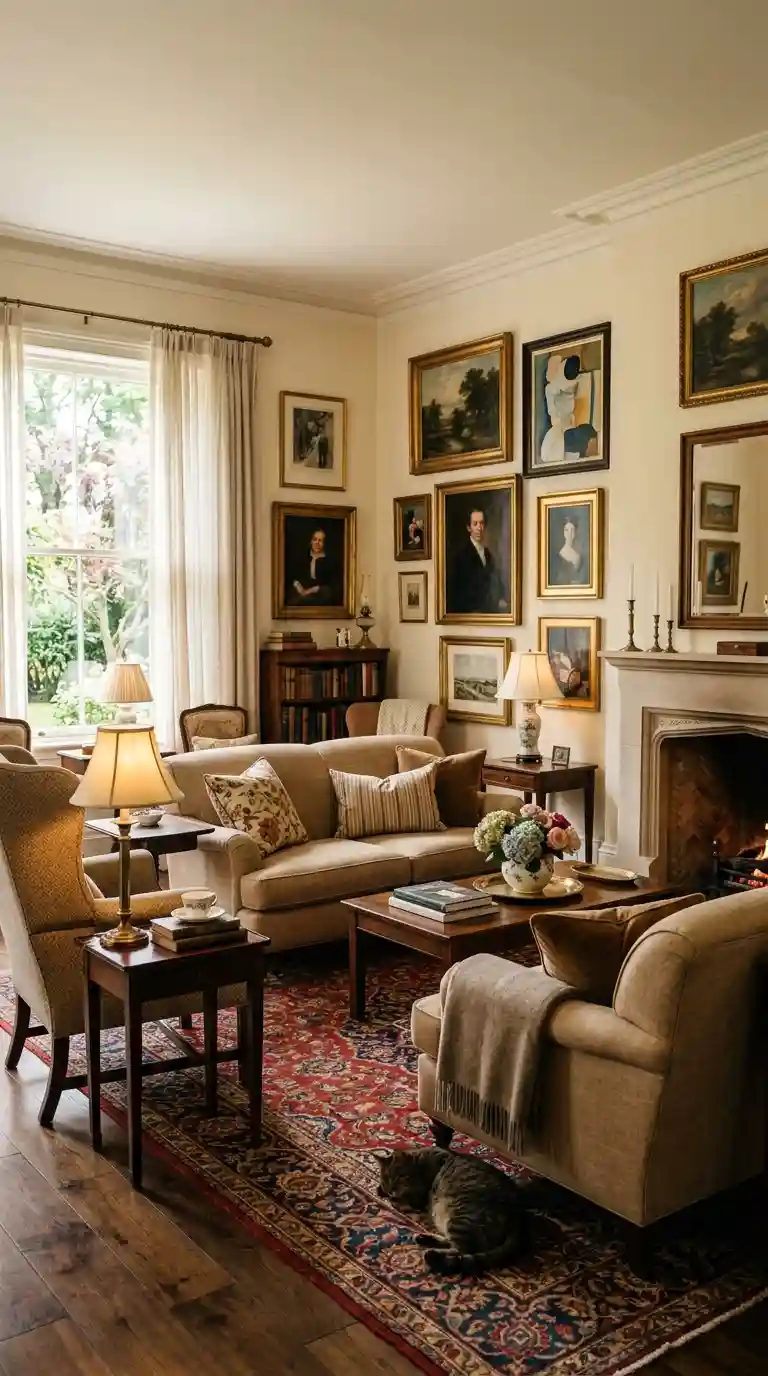
Three things do most of the work: symmetry, natural materials and a sense of age. A pair of matching lamps either side of a sofa, a solid wood table with visible grain and one piece that is genuinely old — a mirror, a chest, a framed print — will read as traditional even if everything else in the room is new.
Proportion matters more than period accuracy. In a room with a 2.4-metre ceiling, furniture with a seat-back height of 75 to 85 cm suits the wall; taller pieces crowd it and make the ceiling feel lower. Keep the largest piece — usually the sofa, at 2.1 to 2.4 metres long — against the longest wall, leave 75 to 90 cm of walking space around it, and the layout will feel settled before a single decoration goes up.
Where should you start — and what should you spend on first?
Start with the pieces you touch every day: the sofa, the rug and the lighting. A well-made sofa in a plain, hard-wearing fabric costs £600 to £1,200 second-hand or on sale, and it sets the scale for everything else. A wool rug 2.4 by 3 metres, large enough for the front legs of the sofa and chairs to sit on it, costs £150 to £400 and does more for the feel of a room than any wall decoration.
Spend less on the things that are easy to change. Cushions, throws, lampshades and picture frames can be swapped in an afternoon, so buy them last and buy them cheaply at first. The decision that deserves the most thought is the rug: a pattern that is too small for the room looks lost, and a rug that is too large swallows the floor. Measure the seating area, subtract 45 cm from each side for the border of floorboards, and buy the closest standard size.
How do you get the living room right?
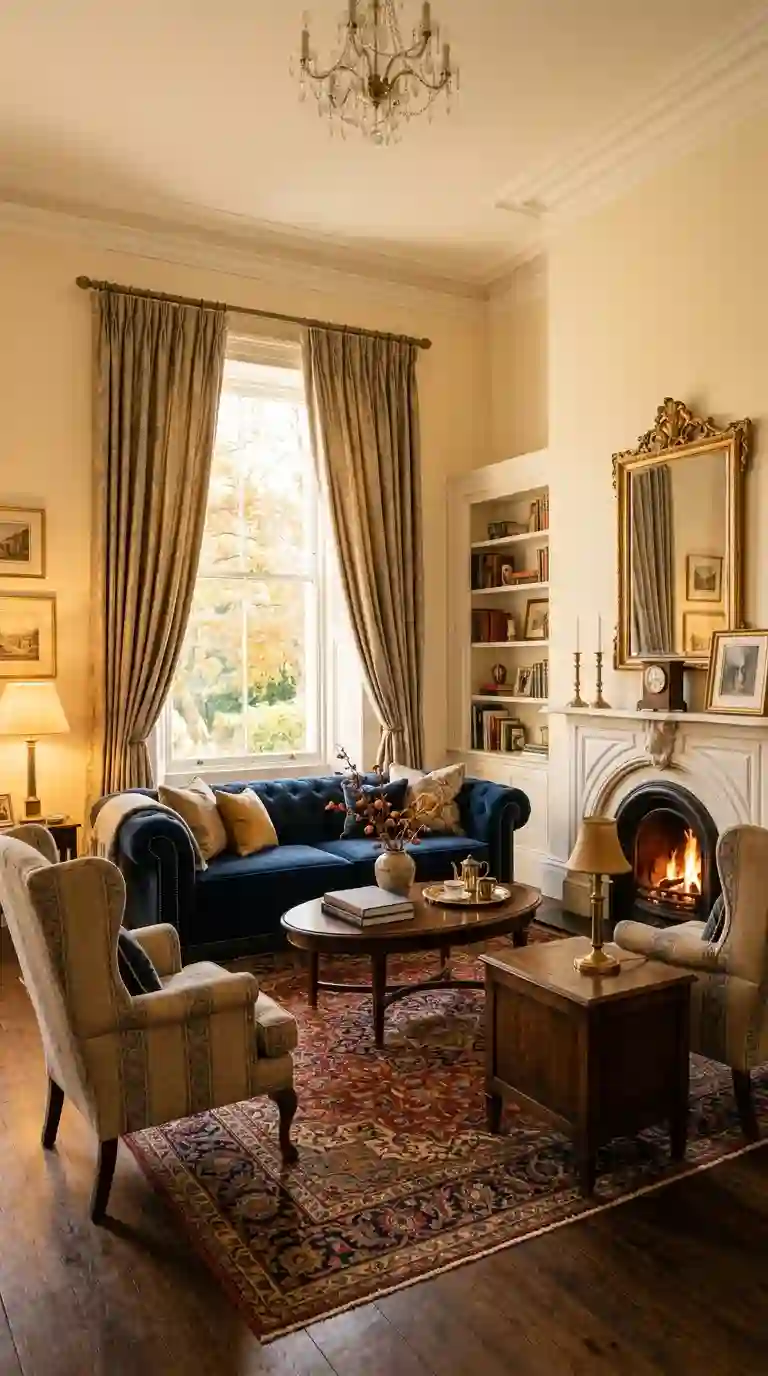
The living room in the photo below works because the furniture is arranged for conversation rather than for the television. Two chairs face the sofa across a coffee table 45 to 50 cm high, low enough to see over and high enough to set a cup down without reaching. If the television is in the room, put it on a wall the seating does not face directly, so watching it is a choice rather than the centre of the room.
Lighting needs three levels: a ceiling light on a dimmer, a pair of table lamps 55 to 65 cm tall for evening light, and one floor lamp beside the reading chair. Warm bulbs at 2700K keep wood tones and reds looking rich; cooler bulbs flatten them and make the room feel like an office. Curtains should hang from a rail 10 to 15 cm above the window frame and fall to the floor, which makes the window — and the room — look taller.
What works in a traditional bedroom?
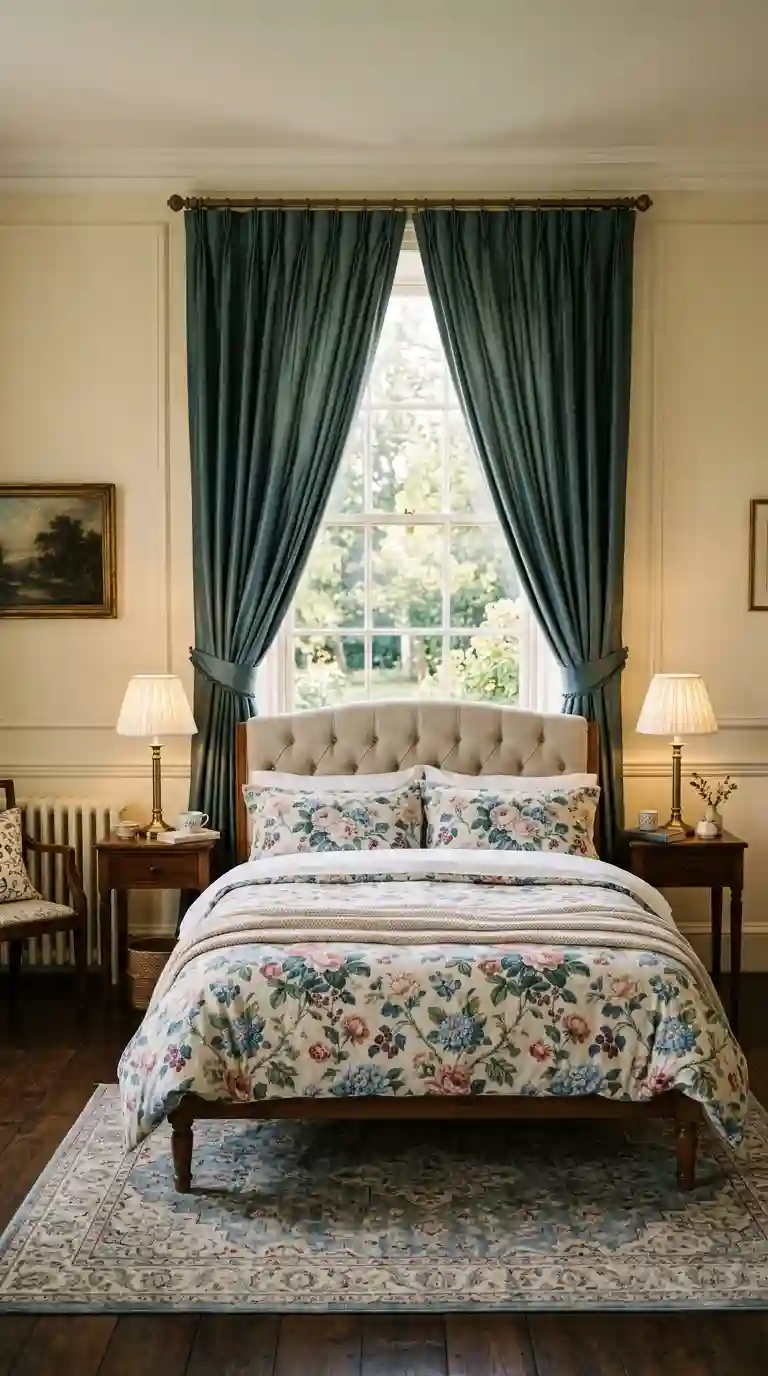
A bedroom needs less furniture than most people put in it. A bed, two bedside tables 45 to 55 cm wide with a lamp on each, and one chair are enough for a room 3 by 3.6 metres. A headboard 120 to 140 cm high in plain linen or a tufted fabric gives the bed presence without needing a patterned wall behind it.
Layer the bedding in three weights: a fitted sheet, a duvet in a plain or small-scale pattern, and a folded throw or quilt across the foot. Two sleeping pillows per person plus one or two decorative cushions is the practical limit; more than that and making the bed becomes a chore. Heavier, lined curtains in a colour taken from the bedding tie the room together.
Which colours age well — and which ones date fast?
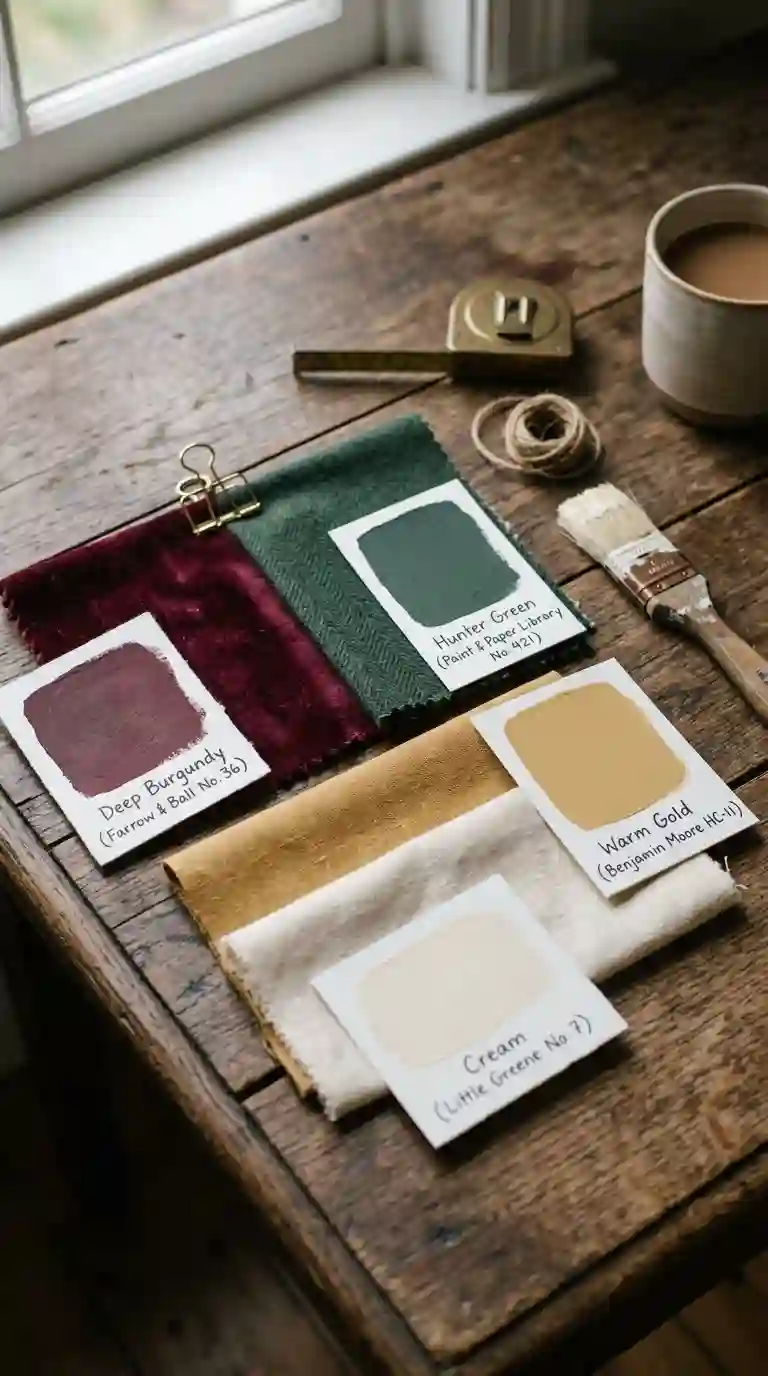
Warm neutrals age best: cream, warm beige, soft ivory and pale sage on walls, with deeper colour on upholstery or in a single piece of furniture. Deep green, burgundy and navy have been used in traditional rooms for decades because they sit well with wood, and they date far more slowly than a bright accent colour, which usually looks tired within two or three years. The paint swatches and fabric samples in the photo below show the point: hold the fabric next to the painted wall in daylight before buying either.
Use the 60-30-10 guide as a starting point: about 60 per cent of the room in the main neutral, 30 per cent in a second colour such as a mid-tone green or blue, and 10 per cent in a warm metal like brass for handles, frames and lamp bases. A single metallic finish used consistently looks collected; three different metals look accidental.
How much pattern is too much?
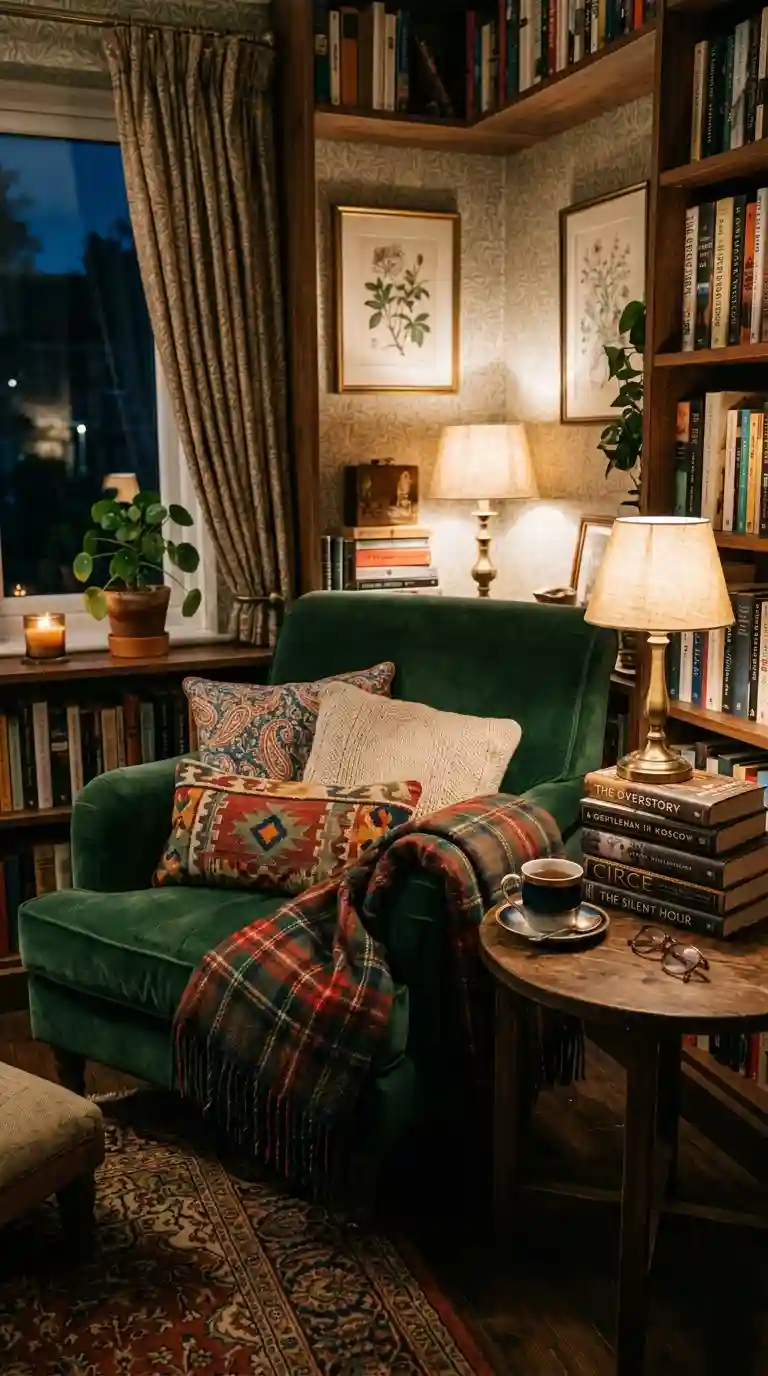
Two patterns are usually enough in one room, three at most, and they need to be different in scale: a large floral or stripe on the curtains, a medium pattern on a cushion, and a plain or near-plain fabric everywhere else. The armchair in the photo below shows the balance — a patterned throw over a plain chair, with a stack of books adding a quiet, lived-in layer rather than another competing print.
Toile, damask and a classic stripe are the safest traditional patterns because they read as background rather than statement. Velvet works best on a single piece, such as a chair or a pair of cushions, because a whole velvet sofa can overwhelm a small room. The same approach works on a dining table: a plain cloth, one patterned runner and a small vase, as in these spring table styling ideas, is enough.
Can traditional style work in a small flat?
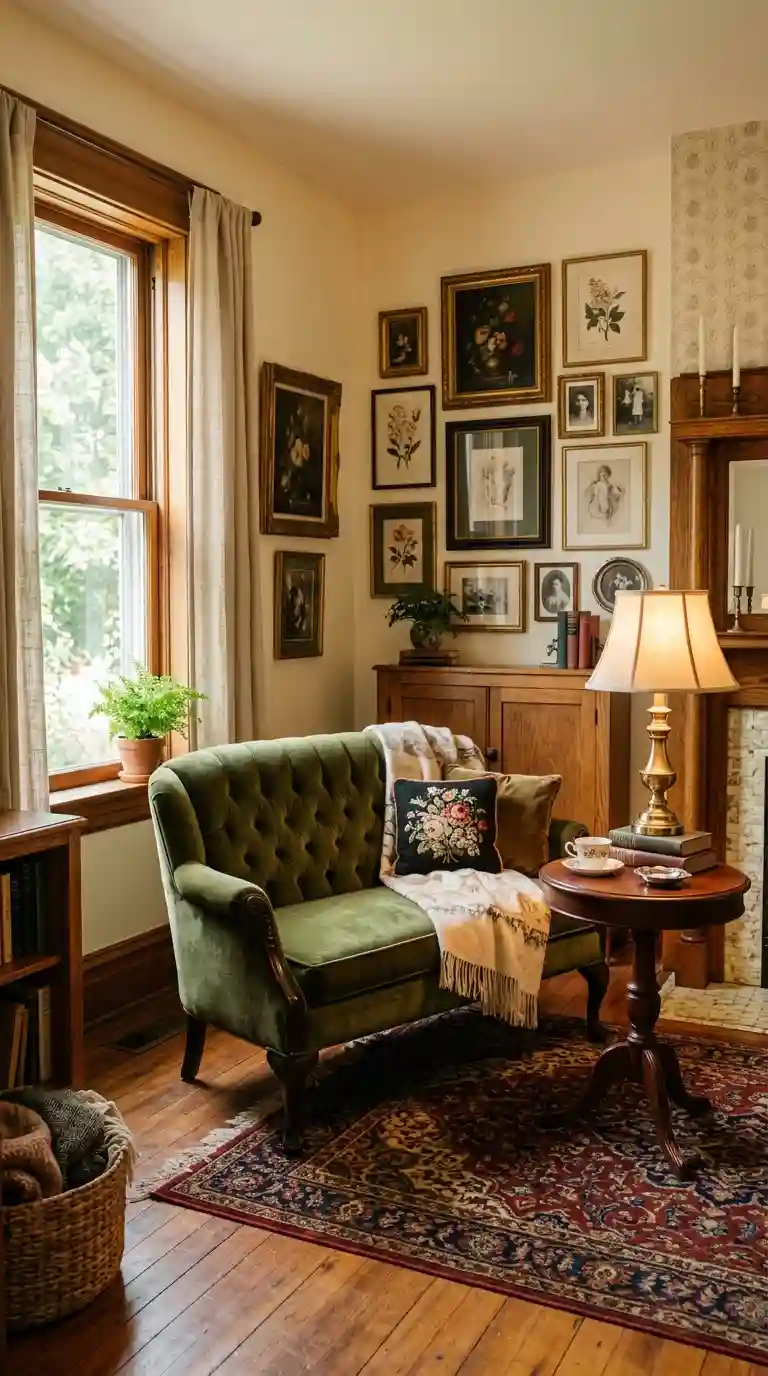
Yes, if the furniture is chosen to the room’s scale. A wingback chair 70 cm wide fits a corner that a 90 cm version would crowd, and a sideboard 120 cm long gives storage without blocking the walkway. A mirror 60 by 90 cm above a chest doubles the sense of space, and floor-to-ceiling curtains in a plain fabric draw the eye up without adding pattern. If the room also has to work as a study, these home office organisation ideas show how a desk can sit in a traditional scheme without turning the room into an office.
The rule for small rooms is one statement piece, not five. Choose the chandelier or the antique chest, and keep everything else quiet. A gallery wall layout of four to six small, classically framed prints gives a room character without the visual weight of one large canvas, and it can be rearranged in an afternoon if the balance feels wrong.
What are the easiest budget wins?
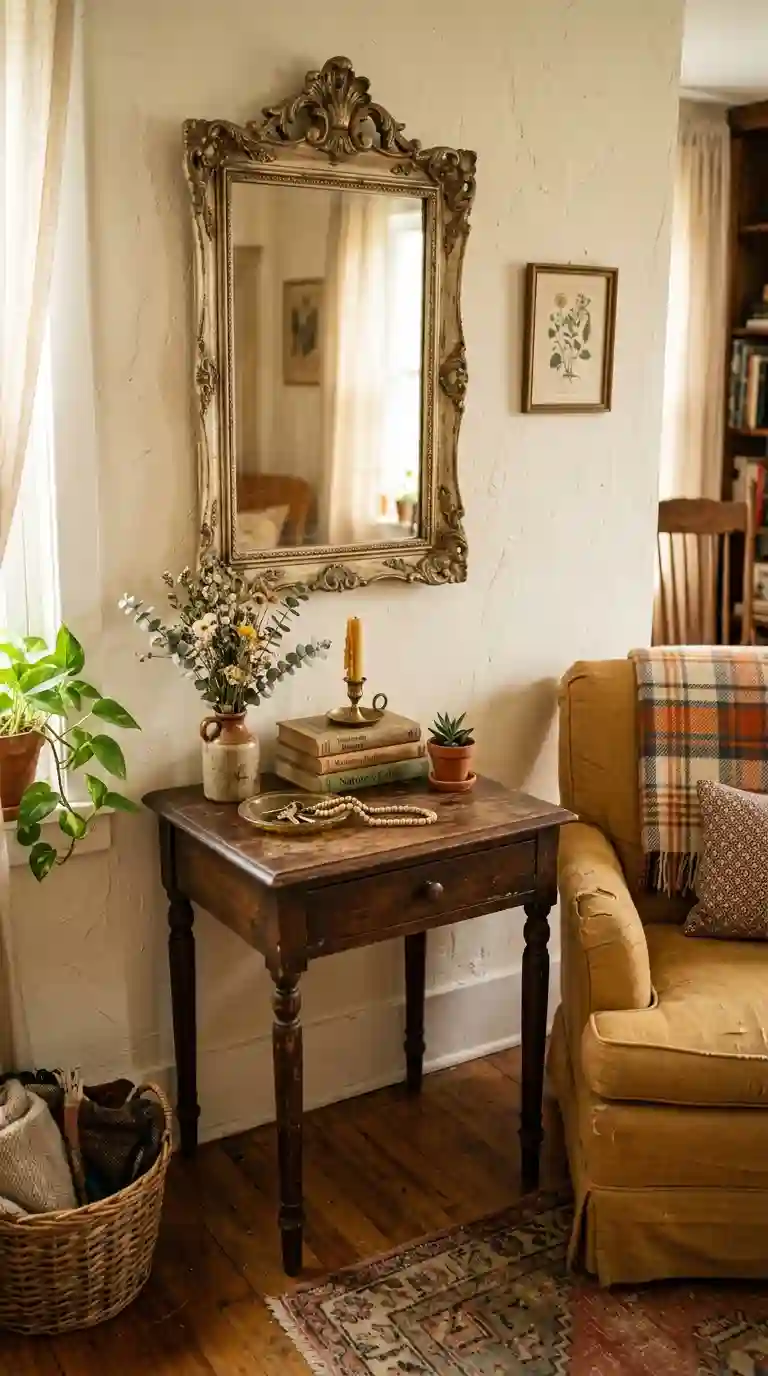
The cheapest high-impact change is paint: a tin of paint for one wall costs £25 to £40 and a weekend, and a single deep-coloured wall behind a bed or a sofa makes the furniture in front of it look more expensive. Next comes hardware — swapping cabinet pulls and door knobs for brass ones costs £3 to £8 each, and ten handles transform a kitchen for under £80.
Estate sales, charity shops and second-hand marketplaces are where traditional pieces cost a fraction of new: a solid oak side table for £30 to £60, a pair of brass lamps for £20, a wool rug for £50. Reupholstering a chair you already own costs £150 to £300 in a plain fabric and gives it a second life. Add textiles gradually — one cushion, one throw, one rug — rather than buying a matching set in a day, and the room will look collected instead of bought.
What mistakes make traditional rooms feel stiff?
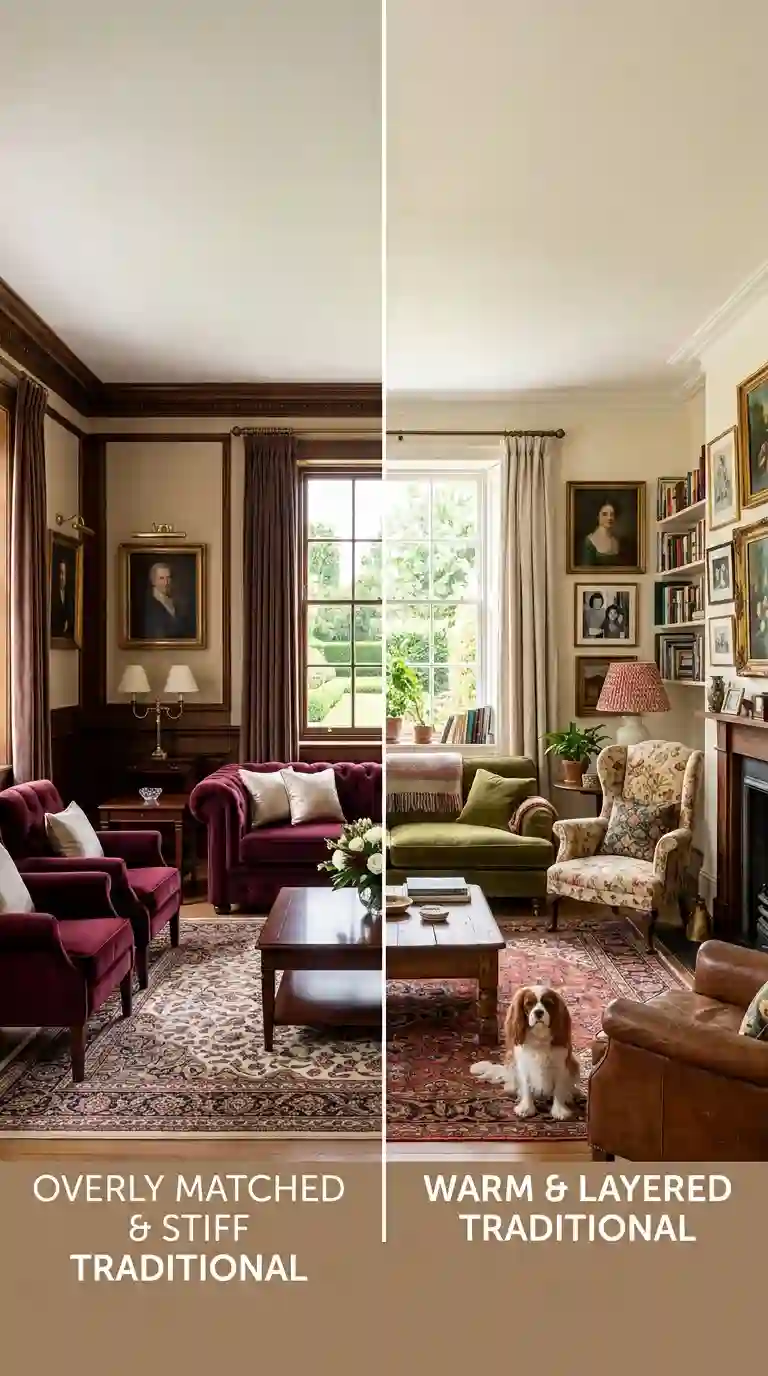
The most common mistake is buying a matching furniture set. A sofa, two chairs and a coffee table from the same collection look like a showroom, because nothing in the room has a different age or origin. Mix one inherited or second-hand piece with newer furniture and the set effect disappears. The comparison in the photo below makes the point: the room with one older piece and varied textures feels lived in, while the fully matched room feels staged.
The second mistake is choosing formality over comfort. A chair that nobody sits in is decoration, not furniture, and a room that is kept too tidy to use will feel like a museum. Leave a book on the table, a throw over the chair arm, and space on the shelves for things that are actually used. Traditional rooms were made to be lived in, and they look best when they are.
Questions about traditional home decor
Is traditional home decor still popular in 2026?
Yes. It never fully went away, and warmer colours and solid wood furniture have come back into fashion as faster trends fade. The style works because it is based on proportion and natural materials rather than a single fashionable colour or finish, so a room decorated this way does not need redoing every few years.
What colours work best in a traditional room?
Warm neutrals — cream, beige, soft ivory — with deep green, burgundy or navy as the second colour, and brass as the accent metal. Keep to the 60-30-10 guide: 60 per cent neutral, 30 per cent second colour and 10 per cent metal.
How do I stop a traditional room feeling formal?
Mix eras and soften the edges. Pair an older piece with newer furniture, use relaxed textiles such as linen and a wool throw, and choose seating people actually want to sit in. One modern lamp or a contemporary picture frame is enough to stop the room feeling like a period set.
Can traditional decor work in a small space?
Yes, if the furniture is scaled to the room. Choose a 70 cm chair instead of a 90 cm one, keep to one statement piece, and use a mirror and floor-to-ceiling curtains to add height. A small room suits traditional style well because the style favours fewer, better-chosen pieces.
How much does it cost to decorate a room in a traditional style?
A living room can be started for £800 to £1,500: a second-hand sofa for £600 to £1,200, a wool rug for £150 to £400, and paint at £25 to £40 a wall. Second-hand pieces and new hardware keep the cost down, and textiles can be added gradually over a few months.
Traditional decor rewards patience. Buy the large pieces first, live with them for a few weeks, and then choose the colour and the textiles around what is already in the room. A room built that way over six to eight weeks will look more settled than one bought in a weekend, and it will still feel right in ten years.





5 Comments on “Traditional Home Decor That Still Feels Like Home”