
For a dining table about 160 centimetres long, a first spring styling can cost £35 to £70, take about an hour from clearing the table to stepping back, and still leave room for plates, glasses and elbows. The one decision that matters most is height: keep the centrepiece below 30 centimetres, so guests can see each other across the table without leaning around flowers.
Why does a spring table so often end up looking busy?
Spring tempts people to add everything at once: fresh flowers, coloured eggs, patterned napkins, candles and a new runner, all in the same weekend. Each item is attractive on its own, but together they compete, and the table ends up looking like a display rather than a place to eat. The fix is to choose one lead item, usually the flowers or the linen, and let everything else stay quieter.
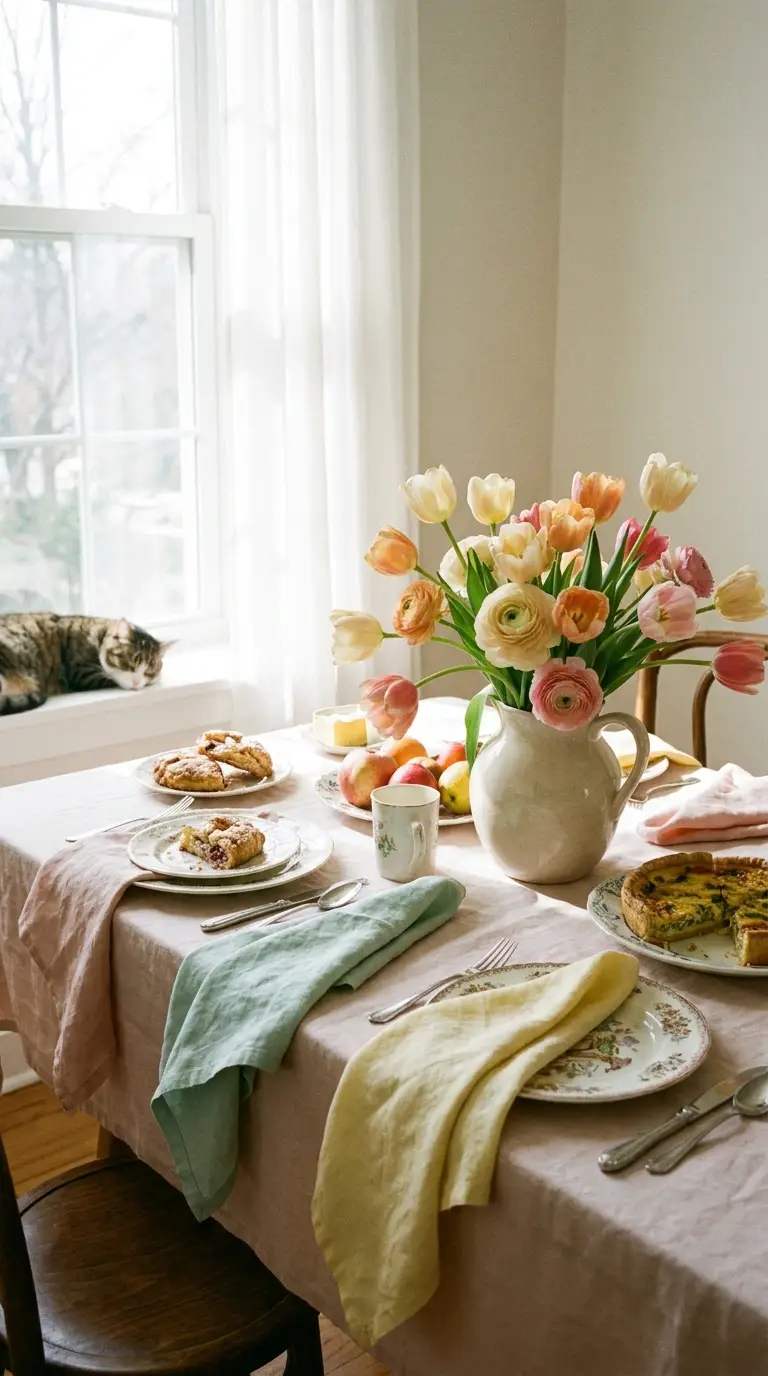
The photo above shows the difference a single focal point makes. Remove three small items before calling a table finished, and check the result from the doorway, not from directly above it. If the eye lands on one arrangement first and then moves calmly around the table, the balance is right; if it jumps between five bright spots, take one away.
What size should the centrepiece actually be?
Measure the table before buying anything. On a 160-centimetre table, a centrepiece of 40 to 60 centimetres long leaves about 50 centimetres at each end for serving dishes or place settings, and a width of no more than 25 centimetres keeps it clear of plates. For a round table of about 120 centimetres, a single arrangement 30 centimetres across is usually enough, with smaller bud vases only if the table is rarely used for full meals.
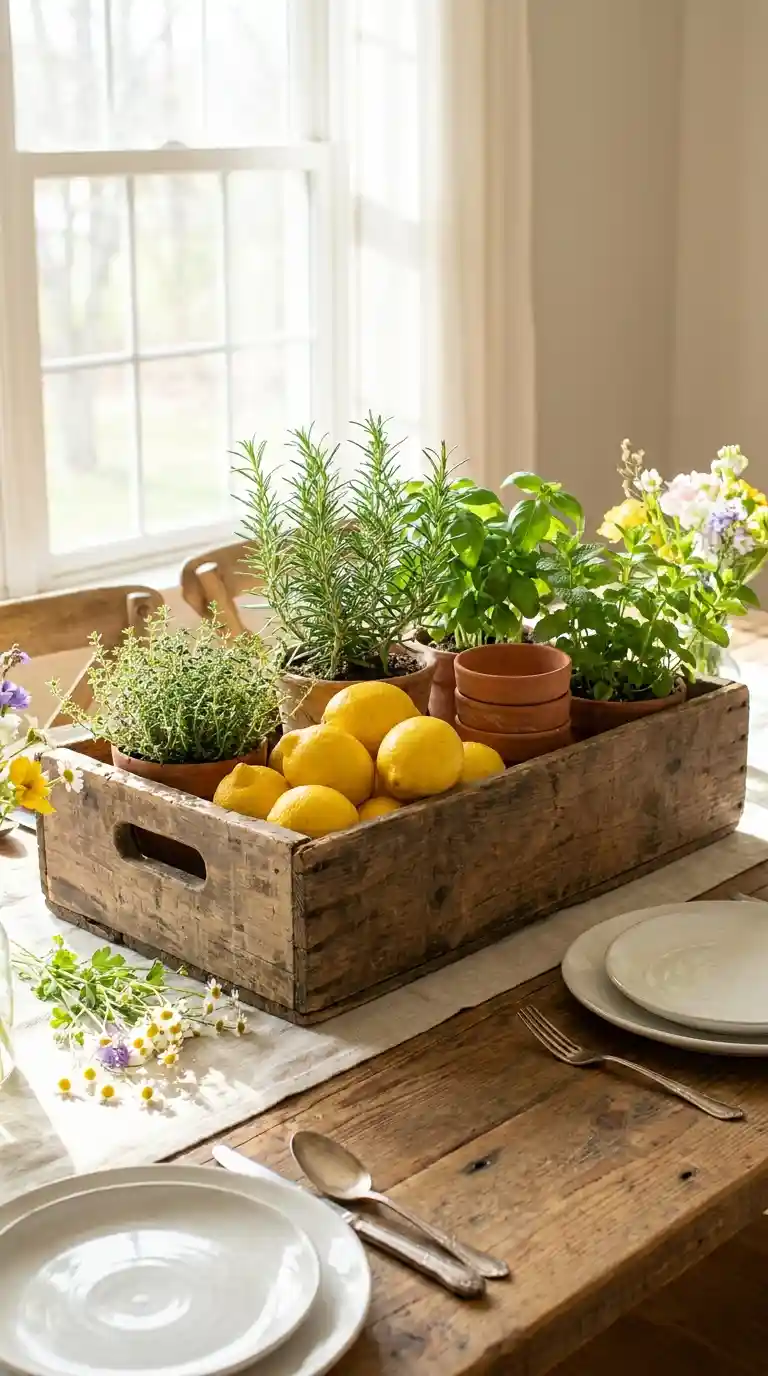
Height matters more than length. Anything above 30 centimetres blocks sightlines, so tall branches belong in a corner vase, not in the middle of the table. If a favourite arrangement is too tall, split it across two or three small jars instead: the same flowers, spread low along the table, read as generous rather than obstructive, and each guest can still see the person opposite.
How do you pick flowers that last the weekend?
Buy flowers two days before they are needed, not on the morning of the meal. Tulips, daffodils and ranunculus bought in tight bud will open over 48 hours, while fully open blooms bought the same day often drop petals by the evening. Cut 2 centimetres from each stem at an angle, change the water daily, and keep the vase away from radiators and fruit bowls, since warmth and ripening fruit both shorten vase life noticeably.
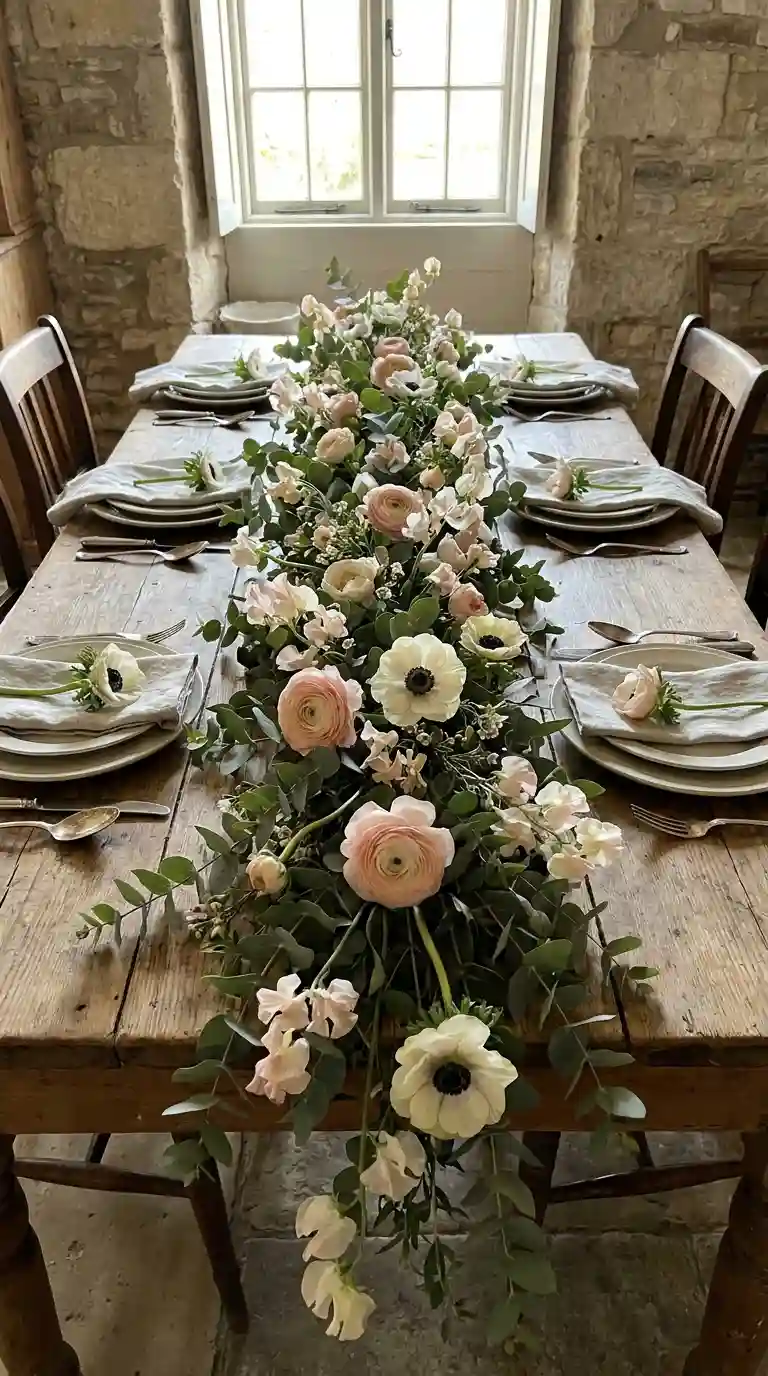
For a table that must last from Friday to Sunday, mix one short-lived flower with longer-lasting greenery and one hardy bloom, such as a chrysanthemum or carnation, so the arrangement still looks full if the tulips fade first. Potted herbs work the same way for a longer event: a pot of mint or basil in a plain ceramic pot lasts weeks, can be snipped for cooking, and costs less than a second bunch of cut flowers.
What linen and colour limits keep a table calm?
Limit the table to three colours, with one of them a neutral. A white or natural linen cloth, one pastel such as sage or blush, and the green of the foliage is enough; adding a fourth bright colour is usually what makes a spring table look restless. The same limit works for patterns: one patterned item, either the runner or the napkins, with everything else plain, so the pattern reads as a deliberate choice rather than a clash.
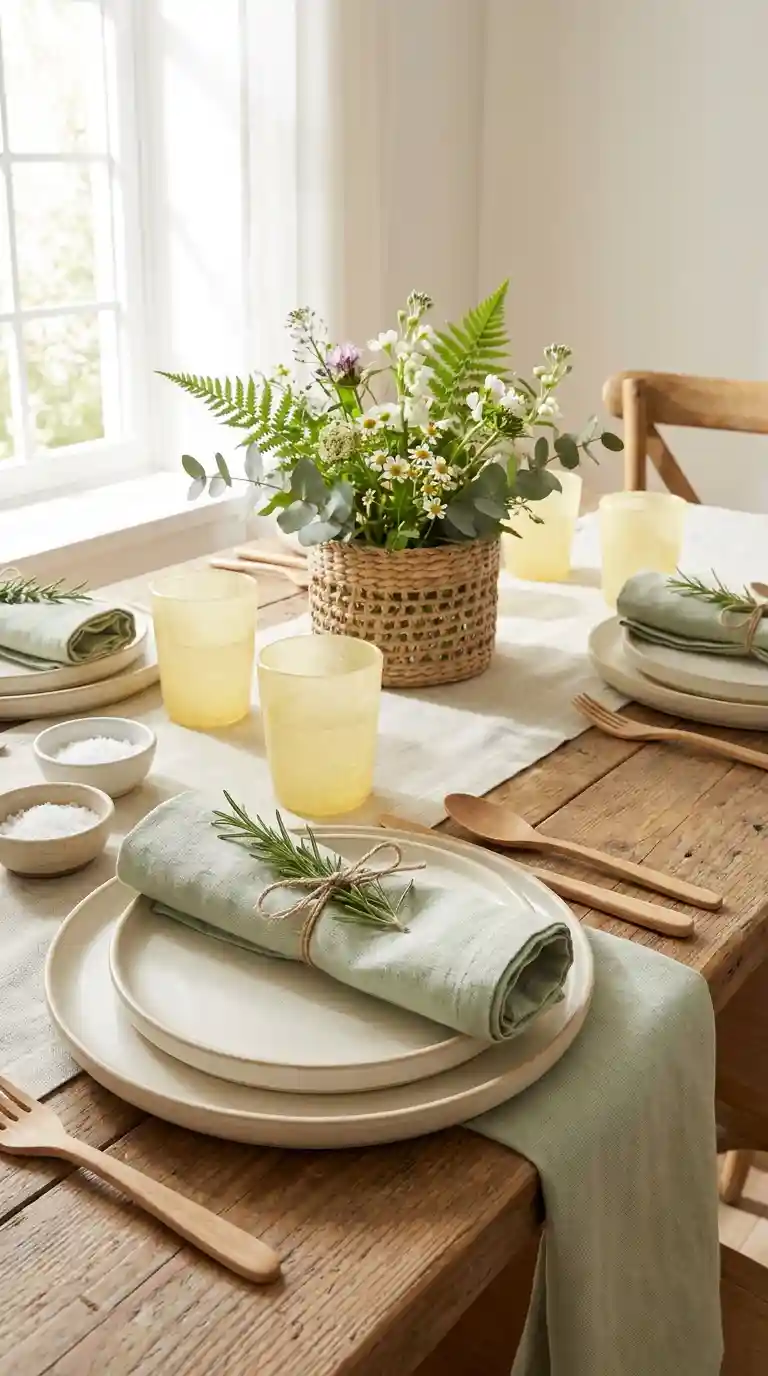
Choose cotton or linen over polyester for a spring table, because lighter natural fabrics drape better and can be washed and reused all season. A runner 30 centimetres wide on a 90-centimetre-wide table leaves room for plates without bunching, and napkins folded simply with a sprig of rosemary look more considered than an elaborate fold that collapses at the first touch. Store the spare napkins and runners flat in a drawer, using the same divider logic as kitchen drawer organisation, so the spring set is easy to find next year.
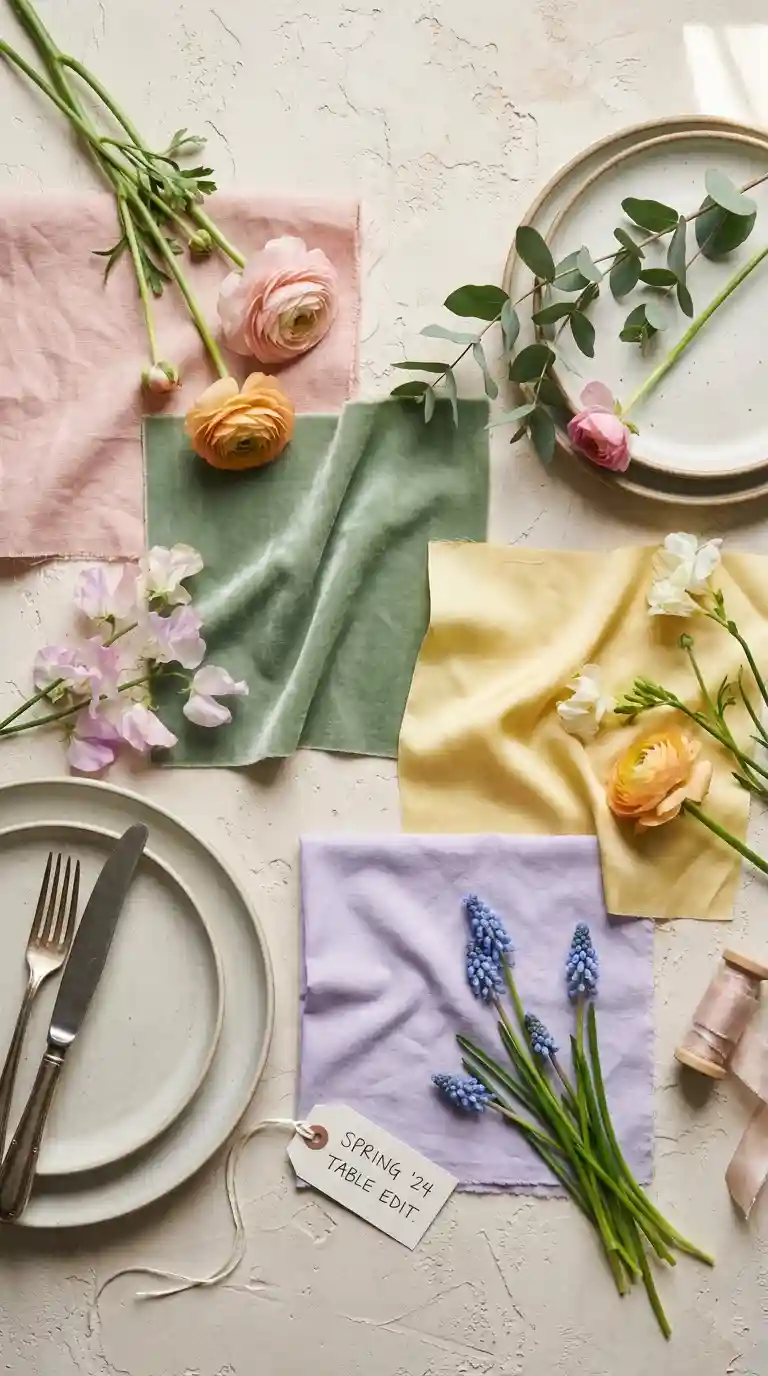
The photo above is a useful test for a palette: if removing one colour would make the table look unfinished, that colour is earning its place; if removing it changes nothing, it was decoration for its own sake. Pastel palettes suit rooms with warm wood, while citrus brights need a plain white cloth underneath, or the table can look loud in daylight.
How do you set a table that still works for eating?
Set the places first, then decorate around them. Each place needs about 60 centimetres of width and 40 centimetres of depth for a plate, cutlery and a glass; if the centrepiece or candles intrude on that rectangle, guests will move them aside during the meal, which defeats the purpose. The same low-arrangement rule used in coffee table styling applies here: keep the middle low, leave at least a third of the surface visibly empty, and let the food become part of the display.
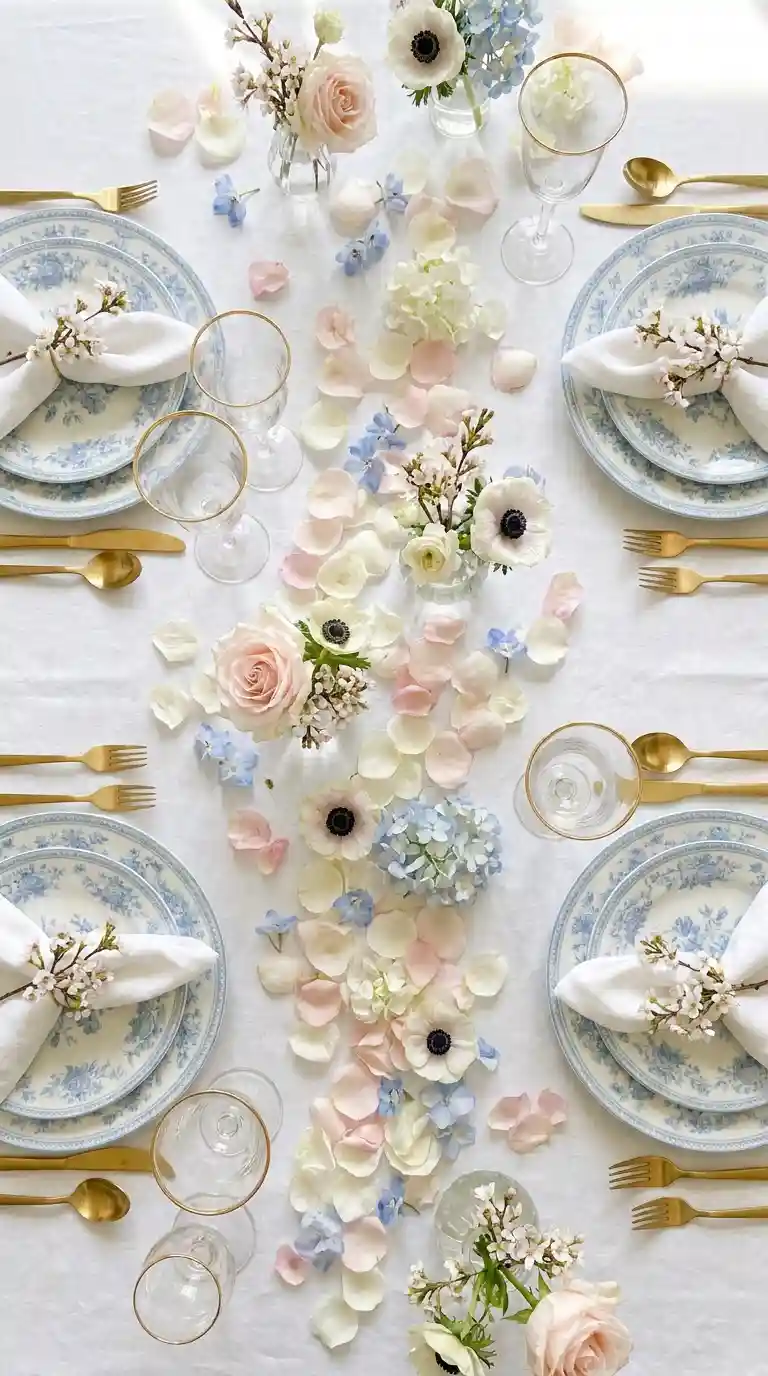
For everyday spring meals, skip the full place-setting ritual and keep one change only, such as fresh napkins or a single small vase. A table that takes 10 minutes to set will actually be used, while a 45-minute arrangement tends to be saved for guests and then resented. Keep serving dishes in mind too: a centrepiece that leaves no room for a salad bowl forces an awkward side table, so plan the serving space before the flowers.
What works outdoors, and what blows away?
Outdoors, weight decides everything. A low, wide bowl of water with floating blooms is far safer than a tall vase, and a stone or ceramic pot will stay put in a breeze that topples a light glass jar. Test the setup before guests arrive: if a centrepiece wobbles when the table is bumped, it will fall during the meal. Weighted candle holders, or candles in glass hurricanes, survive wind better than bare tapers, which also drip in a draught.
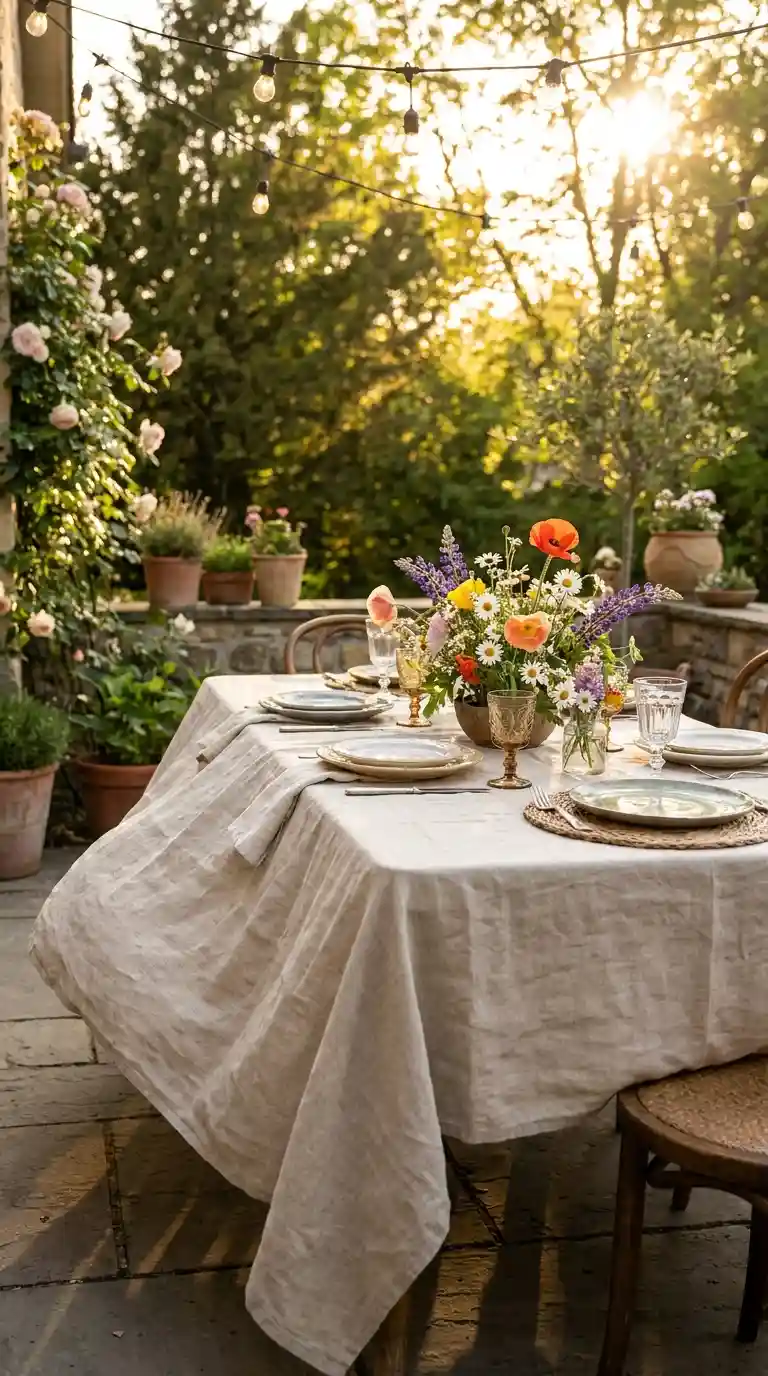
Choose outdoor linen that can be pegged or weighted: a cloth with clips, or a runner held by the dishes themselves, will not sail off at the first gust. Avoid paper napkins outdoors, since they scatter, and use cotton napkins that stay where they are put. If the forecast is uncertain, keep the good linen indoors and use a wipe-clean cloth outside, saving the spring styling for the flowers and the tableware.
How much should a first spring styling cost?
A first styling of £35 to £70 is realistic if the table, plates and glasses are already in place. Spend about half on flowers and greenery, about £15 on a plain linen runner or a set of cotton napkins that will last the season, and the rest on one reusable item, such as a ceramic vase or a set of candle holders. Buying a matching set of everything at once is the fastest way to overspend, and it usually produces a table that looks bought rather than put together.
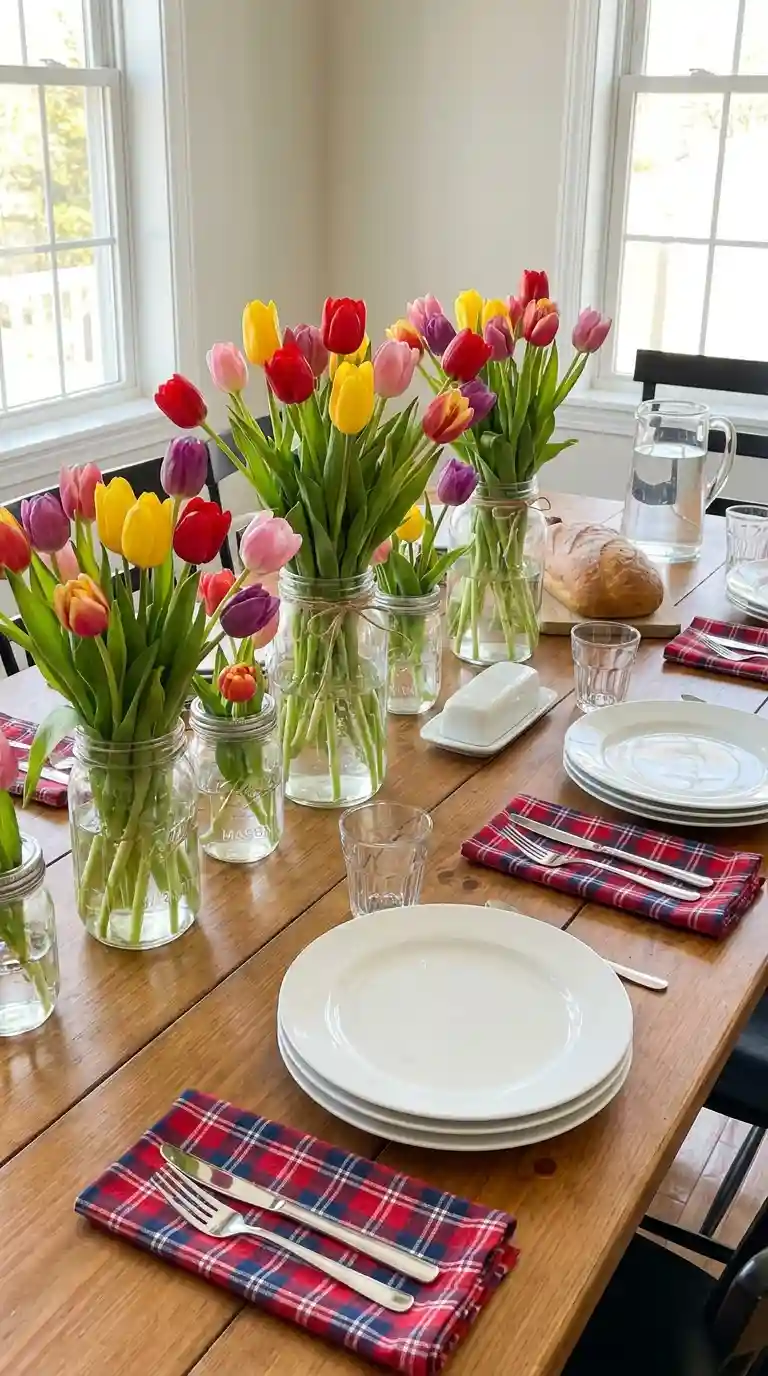
The same spending logic applies to other rooms: as with a first desk setup, putting half the budget into the one item that is used every day, and keeping the rest for small supporting pieces, gives a better result than spreading the money evenly across ten ornaments. Keep receipts for the reusable items, so next spring the cost is only the flowers, about £10 to £20 for a table of this size.
What mistakes make a good table look cluttered?
The photo below shows a table weighed down by too many objects, and the cause is usually the same three errors: a centrepiece that is too tall, a second decorative layer such as scattered petals on top of a patterned runner, and place settings that leave no empty space at all. Remove one layer at a time until the table looks calm from the doorway, and keep the removed items for a sideboard instead, where they can be admired without crowding the meal.
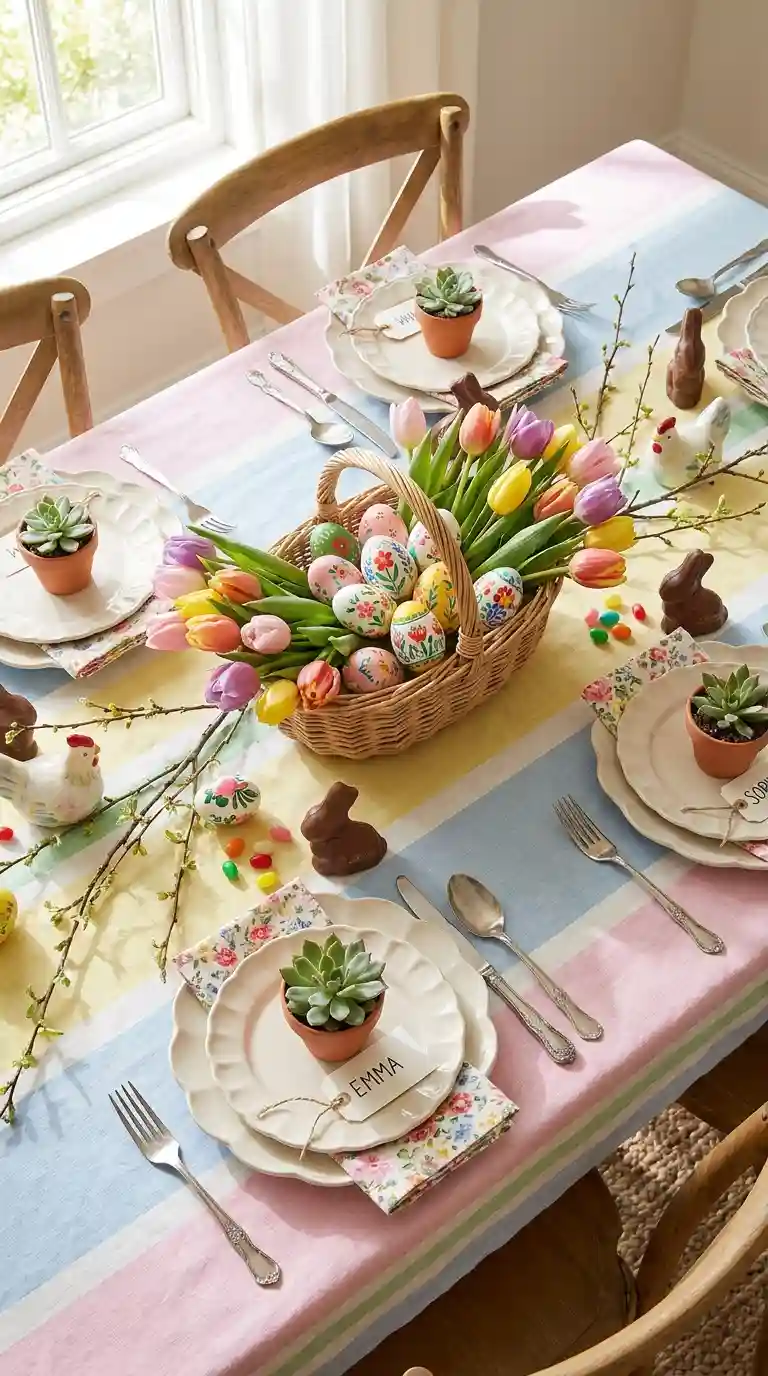
A second common mistake is mixing formality levels without a link between them: fine china with a paper tablecloth, or a rustic wooden board with gilt cutlery, can both look accidental unless one item bridges the gap, such as plain linen napkins. The simpler everyday setup in the photo below is the better test: if the table still looks intentional with just a vase, a runner and plain plates, the extra pieces are optional, not essential.
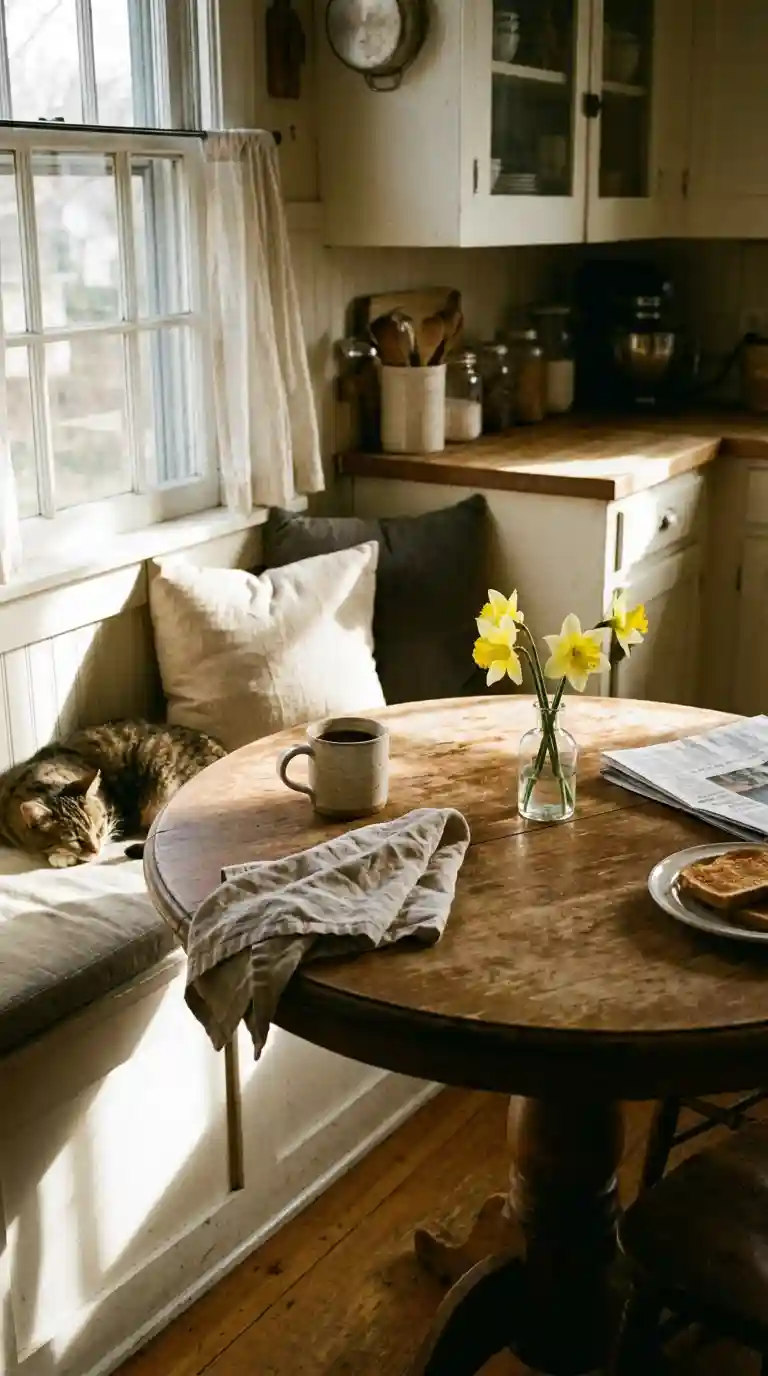
Finally, check the guest experience before finishing: sit in each chair, check that no one faces a tall arrangement, and make sure water glasses and serving dishes can be reached without moving decor. A table that photographs well but frustrates the people sitting at it has failed its main job.
Questions worth asking before you buy anything
How tall should a spring centrepiece be?
Keep it below 30 centimetres, so guests can see each other across the table. Taller branches belong in a corner vase, or split across low jars along the table.
Which spring flowers last longest in a vase?
Buy tulips, daffodils and ranunculus in tight bud two days ahead, cut 2 centimetres from the stems at an angle, and change the water daily. Mix in one hardy bloom, such as a carnation, so the arrangement still looks full if the tulips fade first.
How much should a spring table styling cost?
A first styling of £35 to £70 is realistic if the table and tableware are already in place, with about half spent on flowers, about £15 on a reusable runner or napkins, and the rest on one reusable vase or candle holder.
Can a spring table work outdoors in wind?
Yes, if the centrepiece is low and weighted, such as a wide ceramic bowl rather than a tall glass vase, and the linen is clipped or held by the dishes. Avoid paper napkins outdoors, since they scatter in a breeze.
How often should fresh flowers on a table be changed?
Change the water daily and replace the flowers every 4 to 7 days, depending on the variety. Tulips and daffodils are usually at their best for 4 to 5 days, while hardier blooms and greenery can last a full week.
Start with one low arrangement, one plain runner and one colour besides the neutral, and live with that setup for a week of ordinary meals. If an item is moved every time the table is set, it does not belong there.




5 Comments on “How to Dress a Table for Spring Without Overdoing It”