

A studio apartment is a funny kind of home. One room does everything: you sleep in it, cook in it, work in it, host friends in it, and on some Sundays, never leave it. When it’s planned well, that’s the most efficient and honestly most charming way to live. When it isn’t, it feels like your bed is in your kitchen and your laundry is in your face.
The good news is that the gap between those two outcomes is rarely about square footage. It’s about decisions: where the bed goes, how you divide the room, what you store vertically, and how light moves through the space. Get those right and a 350 sq ft studio can feel calmer than a lazily furnished one-bedroom.
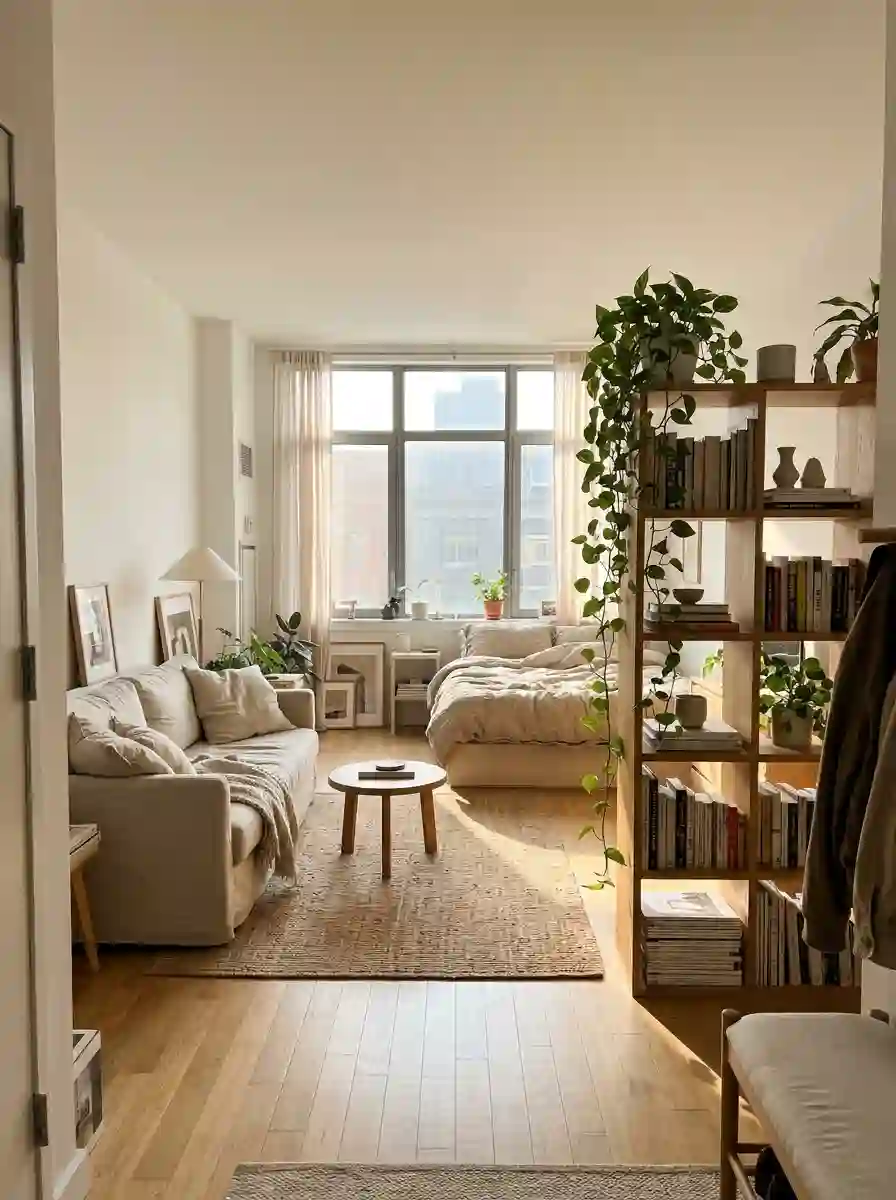
This guide pulls together 56 studio apartment ideas you can use whether you rent or own, whether you have $100 or $5,000, and whether your studio is a tidy square or a long, awkward rectangle. I’ve organized them by problem (zoning, furniture, storage, light, kitchen, sleep, work, style) so you can jump to what’s bugging you most. Use the ideas that fit, ignore the rest, and remember that a studio doesn’t need to look like a showroom. It needs to work for the way you actually live.
Also Read : Colorful Home Decor: 25 Ideas, Palettes and Room-by-Room Tips to Make Your Home Feel Alive
What Is a Studio Apartment (and Why Is It So Hard to Decorate)?
A studio, sometimes called an efficiency, is a single open room that combines the living, sleeping and cooking areas. The bathroom is usually the only fully separate space. Sizes vary a lot: micro studios in dense cities can be under 250 sq ft, while classic studios often land between 350 and 550 sq ft, and some converted lofts and older buildings run much larger.
The challenge is that every function competes for the same walls, the same floor and the same light. You can’t close a door on a messy desk or an unmade bed. Whatever you choose to put in the room is visible from everywhere. That’s why studio design is less about decorating and more about editing and planning.
5 Ground Rules Before You Buy or Move Anything
Before the ideas, a quick mindset reset. These five rules sit underneath almost everything that follows.
1. Plan zones, not furniture. Decide how many distinct activities your room needs to support (sleep, lounge, eat, work, store) and give each one a clear patch of floor.
2. Go up before you go out. Floor space is precious; wall and ceiling space usually isn’t used at all.
3. Every piece should earn its place twice. If an item only does one job, it needs to be something you genuinely love.
4. Keep sightlines open. The more floor, wall and window you can see, the bigger the room feels.
5. Edit first, decorate second. No layout trick beats owning less. If you haven’t decluttered, start there.
Part 1: Layout and Zoning Ideas (1–10)

Layout is the single biggest lever in a studio. Get it right and everything else gets easier. These ideas help you divide one room into several without building walls or losing light.
1. Name your zones on paper first
Sketch your floor plan (even roughly), then label the zones: sleep, lounge, dining, work, entry. Measure everything. Studios punish guesswork, and a tape measure and a free floor-planner app will save you from returning a sofa that blocks the only window. Most layouts fall into three types: a linear flow along a long wall, an L-shape that tucks the bed into a corner, or a split plan with the bed at the far end.
2. Use an open bookcase as a room divider
An open-backed shelving unit separates the bed from the sofa without blocking light. Keep the back clear or style it lightly so it reads as furniture, not a wall. Choose a unit that’s lower than ceiling height if your room is small, so the eye still travels over the top. You get storage and separation in one piece, which is exactly the kind of double duty a studio needs.
3. Hang a curtain on a ceiling track
A floor-to-ceiling curtain on a track is the cheapest and most renter-friendly divider there is. Pull it closed at night for a bedroom feel, then push it back during the day. Pick a light, slightly sheer linen to keep brightness flowing, or go heavier if you need blackout privacy. Mount the track as high as you can to make the ceiling look taller.
4. Anchor each zone with a rug
A rug is a visual wall you can lay on the floor. Put one under the sofa and coffee table to define the lounge, and let the bed area sit on bare floor or a different texture. Keep rug sizes generous, because tiny rugs look like postage stamps and chop the room into fragments. Layering a smaller rug over a larger neutral one is a nice way to add pattern without clutter.
5. Turn the sofa into a wall
Float a sofa so its back faces the sleeping area, then park a slim console table behind it. Suddenly you have a hallway, a drop zone for keys, and a clear boundary between living and sleeping, with no construction. This works best in rooms that are at least about 12 feet wide, and it’s one of the cleanest ways to give a studio a sense of arrival.
6. Try a glass or reeded-glass partition
If you own (or have a flexible landlord), a framed glass partition separates a sleeping nook while keeping daylight moving. Reeded or fluted glass gives you privacy and a soft, designer look. Even a freestanding steel-framed screen on a stand can work for renters. Glass is pricier than a curtain, but it’s the closest thing to a real wall that doesn’t make the room feel smaller.
7. Define zones with paint
Paint a bold block of color or a half-wall color behind the bed to create a sleeping “room.” You can do the same behind a desk or dining nook. Use a color slightly deeper than the main walls so it reads as a deliberate zone rather than a random patch. Renters can mimic this with removable peel-and-stick wallpaper or a large piece of art behind the bed.
8. Build or find a sleeping nook
If your studio has an alcove, a recess beside the kitchen, or a deep window bay, put the bed there. Curtains, a built-in headboard wall, or even a change in ceiling color can turn it into a mini bedroom. Nooks feel cozy rather than cramped because the walls wrap around you, and they free up the open floor for living.
9. Consider a loft bed if you have the height
With ceilings of about 9 feet or higher, a loft bed lets you reclaim the whole floor beneath it for a desk, a sofa or a dressing area. It’s a classic move in compact city apartments. Make sure you have at least a couple of feet of headroom above the mattress and a sturdy, well-anchored frame, and check your lease before drilling anything.
10. Keep one clear path from door to window
Walk from your front door to your biggest window. If you have to zigzag around furniture, the room will feel cramped even if it technically isn’t. Leave a straight, uninterrupted route (around 30 inches wide is a good minimum) and push furniture to the sides. A clear path to the light is the cheapest way to make a studio feel generous.
Also Read : Back Deck Decorating Ideas: 40+ Ways to Turn Your Deck Into Your Favorite Room
Part 2: Furniture Ideas That Work Harder (11–20)
In a studio, furniture isn’t just décor, it’s infrastructure. The right pieces do two or three jobs. The wrong pieces eat the room.
11. Choose a sofa bed or daybed
A good sofa bed turns the lounge into a guest room in minutes, and a daybed gives you a sofa by day and a bed by night. If you sleep on it nightly, invest in a quality mattress (a thin fold-out will wreck your back within weeks). Pick one with arms that are low and slim so it doesn’t visually dominate the room.
12. Install a Murphy bed
A wall bed folds up into a cabinet and gives you your whole floor back during the day. Modern versions come with built-in shelves, desks or sofas, so the “bedroom” becomes a living room or home office at the push of a hand. They cost more up front and usually need to be anchored to studs, so they’re best for owners or long-term renters, but for tiny studios it can be the single best investment you make.
13. Use nesting tables instead of one big coffee table
Nesting tables stack neatly when you need space and pull apart when you have friends over. They’re light, easy to move, and let you adjust the lounge on the fly. Pairs with different heights also feel more interesting than a single block of wood in the middle of the room.
14. Get a drop-leaf or extendable dining table
A drop-leaf table sits against the wall as a console or desk, then opens up to seat four when you cook for friends. Round tables are especially good in tight rooms because there are no corners to bump into. If you eat mostly alone, a wall-mounted fold-down table can disappear almost entirely.
15. Pick a lift-top coffee table
A coffee table that rises up to desk or dining height is one of the best studio apartment ideas for laptop days and takeout nights. Look for models with hidden storage underneath for remotes, blankets and chargers. It’s one footprint doing three jobs, and that’s the whole game.
16. Use storage ottomans and benches
An ottoman can be a footrest, a seat, a coffee table (with a tray on top) and a blanket stash all at once. Put a storage bench at the foot of the bed or by the entry for shoes, bags and bedding. Hidden storage keeps surfaces clear, which is the key to making a one-room home feel orderly.
17. Choose furniture with legs
Pieces raised on slim legs show the floor underneath, and that visible floor tricks the eye into reading the space as larger. Skip heavy, skirted, floor-hugging furniture where you can. Mid-century and Scandinavian shapes tend to work well, because they’re light, open and quietly sculptural.
18. Keep a couple of folding or stackable chairs
Studios don’t have room for six dining chairs that sit unused 90% of the time. Fold-flat or stacking chairs hang on a hook or slide into a closet until guests arrive. Choose ones that look good enough to leave out, so they double as extra seating or even a side table for a plant.
19. Mount a wall desk or fold-down workstation
A wall-mounted desk takes up almost no floor and disappears when you’re off the clock. Pair it with a slim, stackable stool or a compact ergonomic chair that tucks fully underneath. This is a great way to keep work and relaxation apart in the same room, which does wonders for your sanity.
20. Choose one hero piece and keep the rest quiet
Studios look best with one statement, whether that’s a bold velvet sofa, a sculptural lamp or a striking piece of art, surrounded by calm, simple supporting furniture. Too many “feature” items turn one room into visual noise. Let one piece lead and let everything else support it.
Part 3: Storage Ideas for Studio Apartments (21–30)
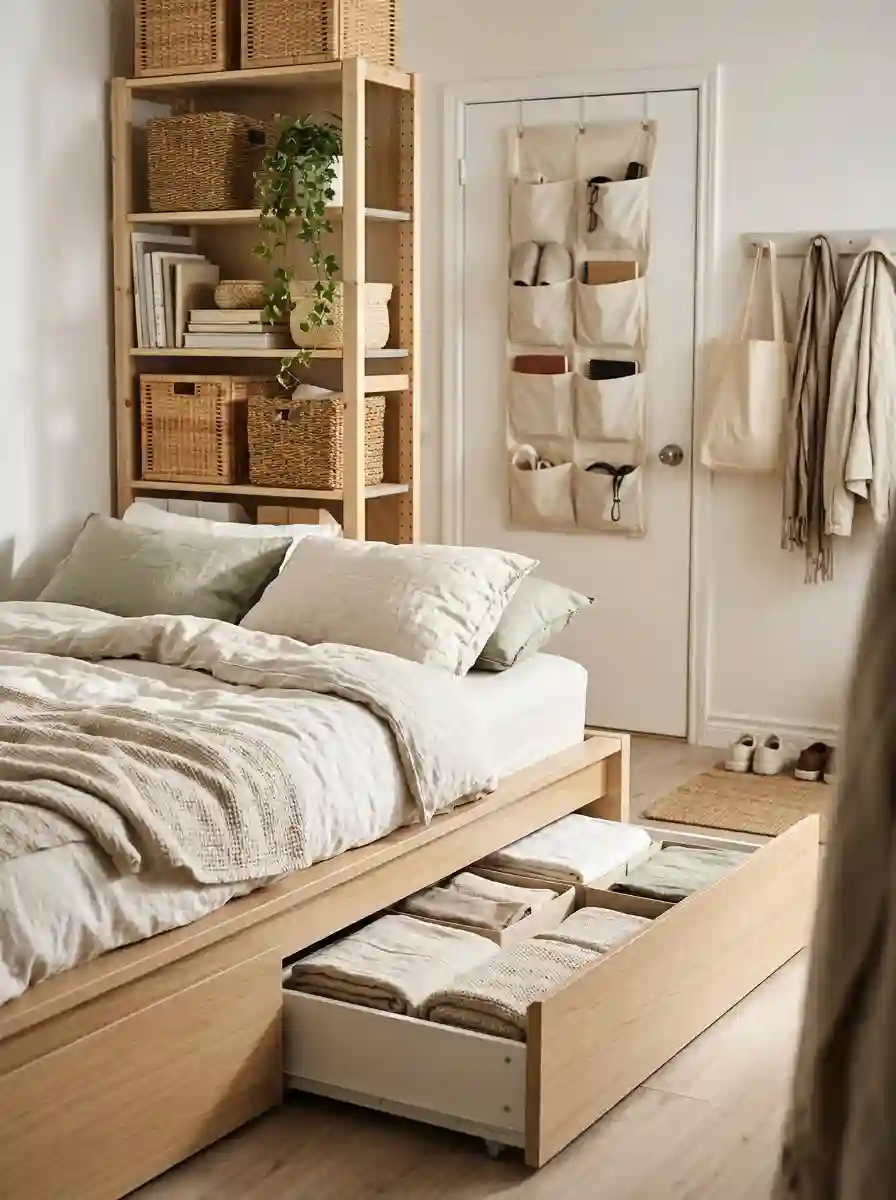
Storage is the real boss of studio living. You can have perfect furniture and still feel cramped if your stuff has nowhere to go. These ideas are about finding space that doesn’t exist yet.
21. Use the space under the bed
Shallow rolling bins, vacuum bags for off-season bedding, or a platform bed with built-in drawers can add the equivalent of a small dresser. Keep what lives here out of daily rotation (spare linens, winter coats, luggage) so you aren’t dragging boxes out every morning. If your bed is low, use bed risers to gain a few extra inches.
22. Go floor-to-ceiling with shelves
Tall, slim shelving takes advantage of the wall space most people ignore. Use the lower shelves for heavy items and baskets, the middle for daily items, and the top for off-season things. It also makes your ceiling look higher, since the eye is led up. Anchor any tall unit to the wall for safety.
23. Hang storage on the backs of doors
The back of your front door, bathroom door and closet door are three free storage zones. Over-the-door racks and hooks can hold shoes, bags, cleaning supplies, towels or even a slim ironing board. They’re renter-friendly, cheap and don’t require a single hole in your wall.
24. Hide the clutter behind curtains or doors
Open shelving is lovely but can look messy fast. In a studio, closed storage calms the visual noise. Cover a bulky shelving unit with a simple curtain, or choose cabinets with doors. Use baskets or lidded boxes inside open shelves to give everything a tidy, uniform look.
25. Use wall rails and hooks
A rail or a few strong hooks near the entry can hold coats, bags, hats and keys. In the kitchen, a rail can hold utensils, pots and mugs. It’s vertical storage that doubles as decoration, and it frees up drawers and counters for the stuff that really needs to be hidden.
26. Choose a platform bed with drawers
A platform bed with deep drawers can replace a dresser entirely. This is one of the most effective studio apartment ideas for clothes storage, and it also keeps the area under the bed looking tidy. If you can’t buy new, you can build a simple platform from a basic frame plus storage crates.
27. Use the space above doors and windows
A narrow shelf above the door or window is perfect for books, baskets and things you only need occasionally. Because it’s above eye level, it doesn’t crowd the room. Add a picture ledge there for art, and you’ve got both storage and decoration in dead space.
28. Upgrade your closet
A double-hanging rod instantly doubles the hanging space for shirts and trousers. Add shelf dividers, hanging organizers and slim, matching hangers to squeeze more in without chaos. If you have no closet at all, a freestanding wardrobe or a clothing rail with a curtain can become your “walk-in.”
29. Store bikes, ladders and bulky gear on the wall
If you have a bike, a wall-mounted rack turns it into art instead of an obstacle. The same goes for skateboards, ironing boards and folding ladders. Hang them where they’re easy to reach but out of the walking path. Bonus: a bike on the wall frees up the entire floor corner.
30. Edit ruthlessly and follow a one-in, one-out rule
The best storage solution is owning less. Go through each category (clothes, kitchen items, books, paperwork) and keep only what you use or love. Then adopt a simple rule: when something new comes in, something old goes out. It sounds strict, but it’s what keeps a studio from slowly filling up.
Must Read : Basement Office Ideas for a Work-From-Home Space You Will Actually Love
Part 4: Light, Color and Mirror Ideas (31–38)
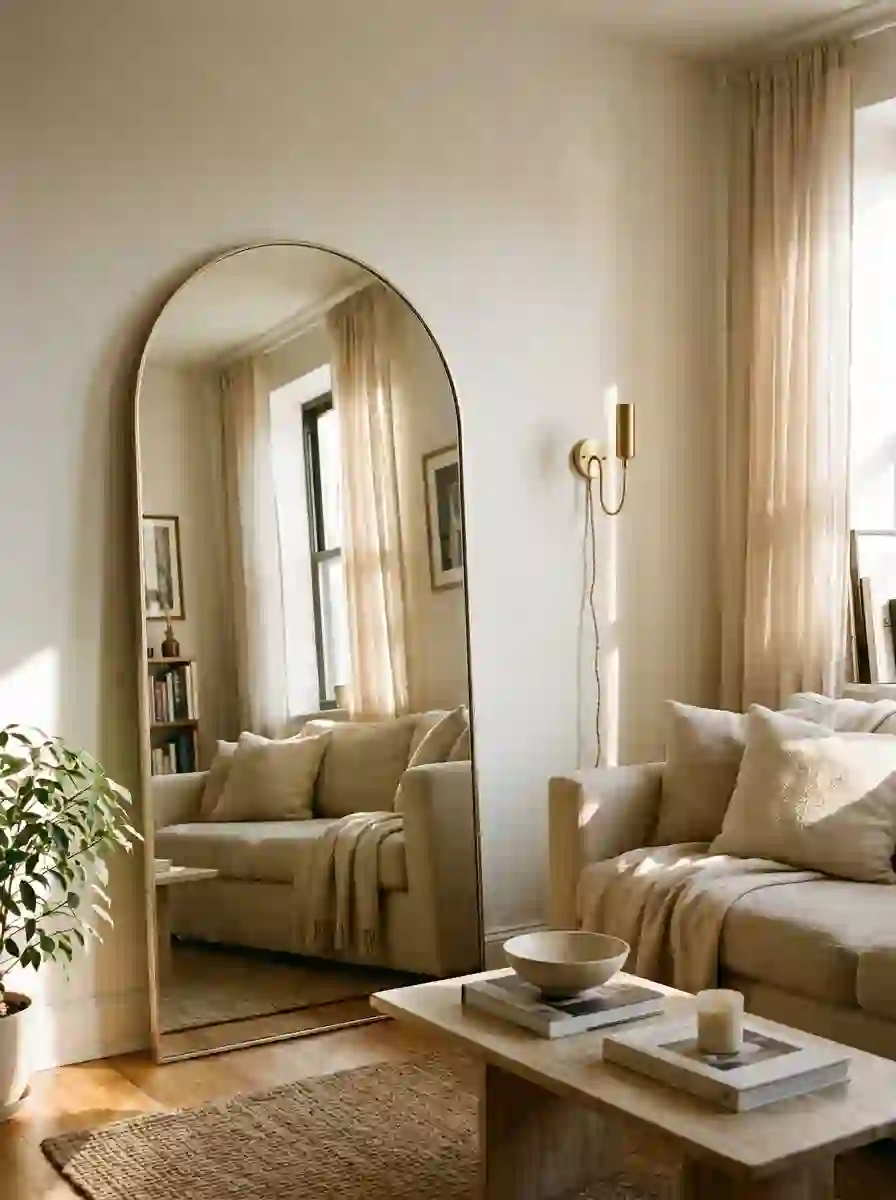
Light is the cheapest square footage you’ll ever add. These ideas make a studio feel open, warm and bigger than the tape measure says.
31. Protect every ray of natural light
Keep windowsills clear, skip heavy drapes, and use sheer or light-filtering curtains. Place tall furniture away from windows so daylight can travel deep into the room. If privacy is an issue, frosted window film or café curtains cover the bottom half while letting light pour in from the top.
32. Stick to a light, warm palette
Soft whites, warm creams, pale greige and gentle sage reflect light and calm the eye. Avoid stark, cold white, which can feel clinical in a single room. Add depth with texture (linen, wool, wood, ceramic) rather than lots of competing colors, so the space feels layered instead of busy.
33. Hang a big mirror opposite the window
A large mirror (floor-length or oversized leaning) bounces light around and visually doubles the room. Place it opposite or beside your main window, never facing clutter. An arched or round mirror also softens the hard lines of a boxy studio and works as art in its own right.
34. Layer your lighting
One harsh ceiling light makes a studio feel like an office. Combine ambient light (a ceiling fixture or pendant), task light (a desk lamp, a reading sconce) and accent light (a small table lamp or LED strip). Plug-in wall sconces are perfect for renters. Warm bulbs around 2700K make the whole room feel like a home, not a dorm.
35. Go tonal to make zones flow
Picking three or four related colors and repeating them across the room makes everything look cohesive, even if you have a lot going on. A tonal scheme (say, shades of oatmeal, tan and chocolate) is calming and makes the space feel bigger because there’s no jarring break between zones.
36. Paint trim and walls the same color
When baseboards, window frames and walls share one shade, edges blur and the room feels taller and more seamless. It’s a favorite designer trick for small spaces. For a bit of drama, take the color all the way up and paint the ceiling too, a technique often called color drenching.
37. Hang curtains high and wide
Mount the rod close to the ceiling and extend it beyond the window frame on each side. The curtains will make the windows look larger and the ceiling higher. Choose floor-length panels in a light fabric and let them just kiss the floor for a clean, tailored look.
38. Add a few reflective touches
A glass-topped side table, a metallic lamp base or a glossy ceramic vase bounces light and adds sparkle without taking up space. Don’t overdo it, though. A couple of well-placed reflective pieces are enough to lift the room, while too many make it feel cold.
Part 5: Kitchen and Dining Ideas (39–44)
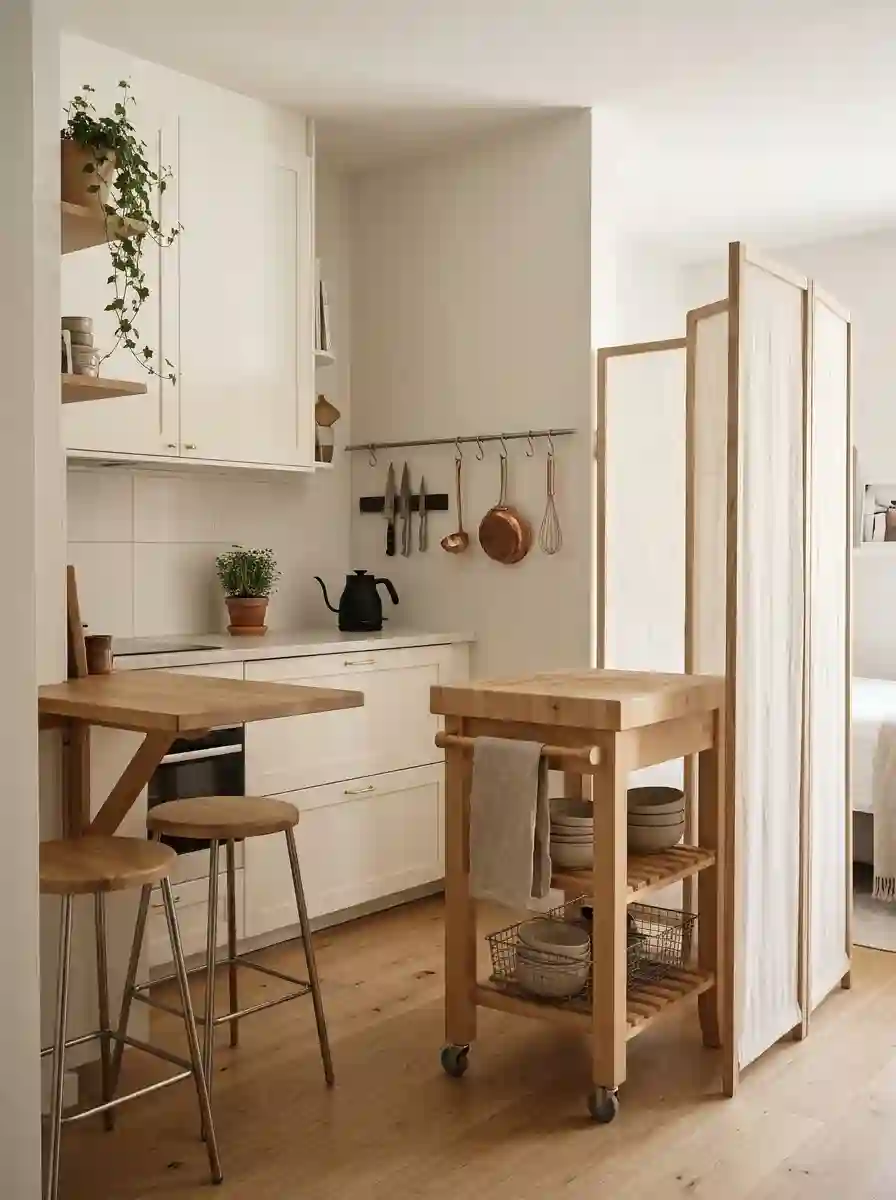
In a studio, the kitchen is in the same room as your sofa. That means it needs to look good, smell okay and stay tidy. These ideas help the kitchen feel like part of the room, not an intruder.
39. Keep countertops almost empty
When the kitchen is visible from your bed, cluttered counters scream chaos. Store small appliances in cabinets, keep only the daily essentials out (a kettle, a nice cutting board, a plant) and use trays to corral oils and spices. A clear counter makes the whole room feel calmer.
40. Add a rolling cart or slim kitchen island
A cart gives you extra prep space, storage and a spot to serve drinks, then rolls out of the way when you need floor. Look for one with a butcher-block top, shelves and hooks. It can also double as a bar cart or a laundry-basket holder in a pinch.
41. Use vertical kitchen storage
Magnetic strips for knives, wall rails for utensils, and a pegboard for pots free up drawers and cabinets. Stackable shelves inside cabinets and a slim rack over the sink make use of every inch. The goal is to get things off the counters and out of the way without losing quick access.
42. Create a breakfast bar or counter-height dining spot
A narrow counter along a wall (with two slim stools that tuck under) gives you a dining area that doubles as a desk or prep space. It’s much more space-efficient than a traditional table. Choose backless stools so they disappear visually when pushed in.
43. Screen off the kitchen when you want to
A folding screen, a sliding panel or even a pretty curtain on a track can hide dirty dishes when guests arrive. It’s a small thing, but being able to shut away the kitchen makes the whole room feel more like a living space and less like a kitchenette.
44. Plan for ventilation and smells
Cooking smells linger in a one-room home and cling to bedding and fabrics. Use the range hood every time, crack a window, and consider a small air purifier. Washable cotton and linen textiles recover better than heavy, absorbent fabrics near the cooking zone. It’s not glamorous, but it’s the difference between a studio that smells like dinner and one that smells like home.
Part 6: Sleeping Area Ideas (45–48)
Your bed is the biggest piece of furniture in a studio, and it’s visible all the time. How you treat it can make or break the room.
45. Make the bed the focal point on purpose
Instead of trying to hide it, style the bed so it looks intentional. A good headboard, crisp bedding and a couple of layered pillows turn it into the “art piece” of the sleeping zone. A neatly made bed is also the quickest way to make your whole studio look tidy.
46. Create a room-within-a-room feel
A tall headboard, a canopy frame, or a ceiling-mounted curtain around the bed creates a sense of enclosure and privacy. Even a rug beneath the bed and a pair of matching bedside lamps will make it feel like a separate bedroom. This psychological separation helps you wind down at night.
47. Push the bed along the long wall
Placing the bed lengthwise against a wall saves floor space and keeps the middle of the room open. In a very small studio, a bed in a corner leaves you with only one side to climb in, but it’s an effective trade-off. Wall-mounted lamps instead of nightstands save even more space.
Also Read : Cool Basement Ideas for Turning Your Lower Level Into the Best Room in the Hous
48. Invest in bedding, not accessories
If the bed is visible all day, quality bedding does the decorating for you. A good duvet cover, a textured throw and two or three well-chosen pillows are worth more than a dozen knick-knacks. Stick with your palette so it blends in with the rest of the room.
Part 7: Work-From-Home Ideas for a Studio (49–52)
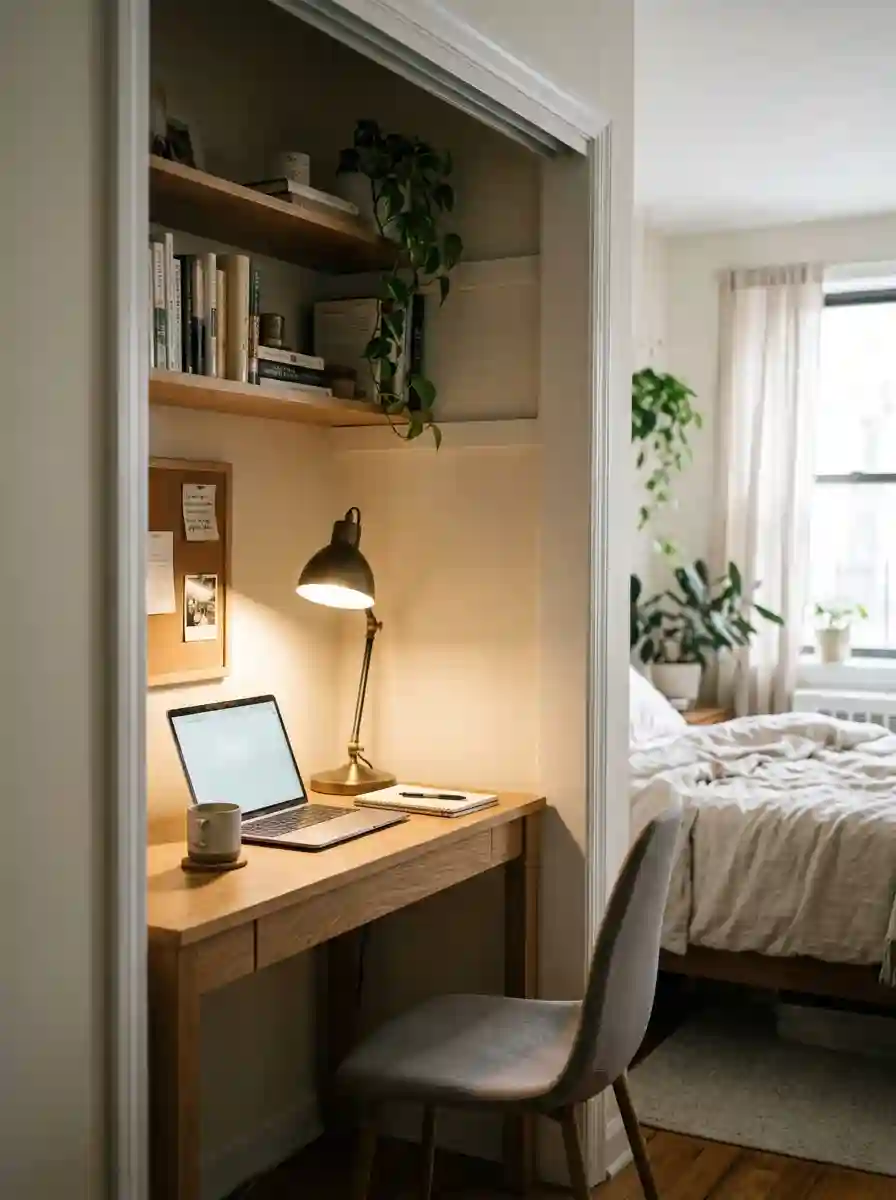
Working in the same room you sleep in is the modern studio dilemma. These ideas help you keep work from taking over your whole life.
49. Turn a closet or alcove into a mini office
Remove the closet doors (or keep them and fold them back), slide in a narrow desk, add a shelf above and a task lamp. When you’re done working, you can close the doors and the office vanishes. Even a shallow alcove or a window nook works for a compact workspace.
50. Use a console table as a desk
A slim console behind the sofa or against a wall can be both an entryway table and a laptop desk. Choose one that’s around 30 inches tall and pair it with a comfortable, compact chair. It’s a stylish alternative to a bulky office desk.
51. Pack away work at the end of the day
A lidded basket, a rolling cart or a drawer for your laptop, charger and notebook creates a physical “closing time.” Out of sight really does help you mentally disconnect. If you can, turn your chair to face away from the desk after work to signal that the day is over.
52. Set up a video-call corner
Pick one clean, tidy backdrop (a bookshelf, a plant, a plain wall) and keep it ready for calls. Position your desk so natural light falls on your face, not behind you. A small ring light or a lamp angled at the wall can fix gloomy winter afternoons. It means you never have to scramble to hide the laundry.
Part 8: Style, Decor and Renter-Friendly Ideas (53–56)

Once the layout, storage and light are sorted, this is where your studio gets its personality.
53. Bring in plants, and go vertical
Plants add life, color and a sense of calm, but floor pots eat space. Use hanging planters, wall-mounted shelves and trailing varieties like pothos or philodendron that spill from high shelves. If your light is limited, choose low-light-tolerant plants like snake plants or ZZ plants, and keep them in matching pots for a cohesive look.
54. Go big with art instead of many small pieces
One large piece of art or a carefully arranged gallery wall has more impact than ten scattered frames. Hang art at eye level and let it anchor a zone (above the sofa, behind the bed or over the desk). Leaning large art on a shelf or the floor is a renter-friendly alternative that avoids drilling.
55. Make renter-friendly upgrades
Peel-and-stick wallpaper, removable hooks, plug-in sconces, adhesive cord covers, peel-and-stick backsplash tile and removable cabinet-door pulls can transform a rental in a weekend. Keep original hardware in a labeled bag so you can swap it back when you move out. Always check your lease before making any changes.
56. Make it feel personal, not staged
The best studios feel like the person who lives there. Pick a few things that matter (a favorite print, a shelf of books you love, a blanket from your grandmother, a candle that smells like home) and display them with space around them. Textiles, scent and soft lighting do more for a room than any piece of expensive furniture.
Sample Studio Layouts by Size
Ideas are great, but it helps to see how they come together. Here are three starting points.
Micro studio (under 300 sq ft). Use a wall bed or loft bed to keep the floor open. Choose a small loveseat or a daybed, nesting tables and a wall-mounted desk. Keep the palette light, hang curtains high, and use a big mirror. Everything should fold, stack or hang.
Classic studio (350–450 sq ft). Place the bed in a corner or alcove and use an open bookcase or a curtain to separate it. Float a compact sofa with a console behind it, and tuck a drop-leaf table by the window. A rolling kitchen cart and a closet-office keep things flexible.
Large or loft studio (500+ sq ft). You can afford true zones: a sleeping area behind a glass partition or a tall shelving unit, a proper sofa and rug living area, a dining table for four, and a dedicated desk. Use area rugs, lighting and paint to anchor each zone, and keep pathways wide and clear.
A Realistic Budget Plan
You don’t have to do everything at once. A simple order of operations keeps costs down and results high.
Free: Declutter, rearrange, clear the window path and group your belongings into zones.
Under $100: Curtain track and light curtains, plug-in sconce, warm bulbs, over-door hooks, under-bed bins and a large rug.
Around $300–$600: A good sofa bed or daybed, a lift-top coffee table, an open bookcase divider and a large mirror.
Splurge when you can: A wall bed, custom built-ins or a quality mattress. These pay back every single day.
8 Common Studio Apartment Mistakes to Avoid
- Buying furniture before measuring. Always measure walls, doors, stairways and elevators.
- Pushing everything against the walls. It makes the room feel like a waiting room. Float a piece or two.
- Using tiny rugs. They chop the room into pieces. Go larger.
- Ignoring vertical space. Walls and ceilings are your biggest storage opportunity.
- Cramming too many styles. Stick to one palette and a few materials.
- Skipping lighting layers. One overhead light flattens everything.
- Keeping open storage messy. Use baskets and boxes, or close it up.
- Not editing. Every layout trick fails if you own too much.
Read Also : Modern Rugs for Living Room Spaces: The Ultimate Guide to Grounding Your Home in Style
Final Thoughts on Studio Apartment Ideas

A studio apartment isn’t a compromise, it’s a design puzzle, and the pieces are surprisingly simple: divide the space with intention, choose furniture that works twice, store things up and out of sight, protect your light, and keep the whole thing personal. You don’t need to copy all 56 ideas. Pick five that solve your biggest frustrations, try them this weekend, and build from there. The best studios aren’t the biggest or the most expensive. They’re the ones where every inch has been thought through by the person who lives in them.
Frequently Asked Questions
1. How do I make a studio apartment look bigger?
Use light, warm colors, hang a large mirror opposite a window, choose furniture with visible legs, keep sightlines open, and use curtains hung high. Clearing clutter and keeping a clear path from the door to the window makes the biggest difference of all.
2. How do I separate the bed from the living area in a studio?
Open bookcases, ceiling-track curtains, folding screens, glass partitions and a sofa with a console behind it are the most popular options. Rugs and paint can also define zones without any physical barrier. Choose whichever suits your budget and lease.
3. What is the best layout for a studio apartment?
There’s no single best layout, but the most successful ones place the bed in a corner or alcove, the lounge near the window, and the kitchen and dining in the zone closest to the plumbing. Always keep one clear route from door to window.
4. How can I add storage to a studio apartment without drilling?
Use over-the-door organizers, under-bed bins, freestanding tall shelves (anchored with removable straps if allowed), storage ottomans, rolling carts and adhesive hooks. A platform bed with drawers adds a lot of storage without touching the walls.
5. What colors work best in a small studio?
Soft whites, warm creams, light greige and pale sage reflect light and calm the eye. Use texture to add depth. Dark colors can also work if you use them deliberately, for example on a single wall or in a color-drenched sleeping nook.
6. Is a Murphy bed worth it in a studio?
For small studios, usually yes. A wall bed gives you back the whole floor during the day and can include shelves, a desk or even a sofa. It costs more than a standard bed, so it’s best for owners and long-term renters who can install it securely.
7. How do I create a home office in a studio apartment?
Turn a closet or alcove into a mini office, use a wall-mounted desk or console table, and pack your work away at the end of the day. Position your desk to get natural light and choose a tidy backdrop for video calls.
8. How much does it cost to furnish a studio apartment?
It depends on where you shop and what you already own. A thrifty setup can cost a few hundred dollars, a mid-range one a few thousand, and a custom build with a wall bed and built-ins considerably more. Start with the essentials (bed, seating, lighting) and add over time.
9. How do I decorate a studio apartment as a renter?
Focus on removable upgrades: peel-and-stick wallpaper, plug-in sconces, large leaning art, curtains, rugs, plants and adhesive hooks. Keep any original hardware you replace and always check your lease before making changes.
10. How do I keep a studio apartment from feeling cluttered?
Edit your belongings, give every item a home, use closed storage where you can, and follow a one-in, one-out rule. Make your bed daily and clear the counters each night. A few minutes of tidying keeps the whole room feeling calm.