

There is a particular kind of sadness in a bare back deck. You know the one. A grill pushed into the corner, two mismatched chairs that nobody sits in, a faded mat, and a general feeling that the space is waiting for something to happen. You walk past it every day on the way to the yard and never really stop.
Then you see a deck that someone has actually thought about. A soft rug under the table, string lights glowing overhead, a few big planters spilling greenery, a cushion-heavy sofa that begs you to sit down with a coffee. Suddenly the deck is not a platform attached to the back of the house. It is a room, and probably the best one.
The good news is that the gap between those two decks is smaller than it looks. It rarely takes a full rebuild. It takes a plan, a handful of smart choices, and the willingness to treat your deck the way you would treat a living room. This guide is built around exactly that idea.
Below you will find more than forty back deck decorating ideas, organized in the order you would actually tackle them: prepare the space, choose a style, plan your zones, pick furniture, layer in textiles, light it properly, bring in plants, add privacy and shade, and finish with the details that give a deck personality. There are sections for small decks, long narrow decks, raised decks, tight budgets, seasonal changes and common mistakes, plus a simple weekend plan if you want to get it all done fast.
Whether your deck is a compact eight-by-ten landing outside the kitchen door or a sprawling entertaining platform, you will find ideas here that fit. Grab a notepad, step outside, and let’s make that deck somewhere you actually want to be.
Also Read : Sloped Ceiling Bedroom Ideas: The Ultimate Guide to Turning Awkward Angles Into a Cozy Sanctuary
Before You Decorate: Get the Foundation Right
It is tempting to jump straight to the fun part. Pillows! Lanterns! A hanging chair! But the best deck makeovers start with ten unglamorous minutes of preparation, because everything you add will sit on top of whatever condition the deck is in.
Give the deck a proper clean
Sometimes a deck does not need decorating so much as it needs a good scrub. Years of pollen, leaf stains, mildew and grime can make even a well-built deck look tired. Sweep first, then wash with a deck cleaner suited to your surface. Wood, composite and PVC decking each have different cleaning recommendations, so check what your manufacturer suggests before you reach for a pressure washer. A pressure washer used too aggressively can roughen the surface of softwood and damage some composite boards.
Once the boards are clean you will often see the space differently. A clean deck makes everything you add look better, and it costs almost nothing.
Check for safety issues
Before you load the deck with furniture, planters and people, do a quick walk-around:
- Press on boards near the edges and around posts. Soft or spongy spots can mean rot.
- Look for loose or popped screws and nails and fix them.
- Wiggle the railings and stair handrails. They should feel solid.
- Check the ledger board and any visible framing for signs of moisture damage.
- Look underneath if you can, especially on a raised deck.
This matters more than it might seem. A fully loaded planter, a heavy fire pit table, a hot tub or a stone-topped dining table can add considerable weight. If your deck is older or you are planning anything heavy, it is worth asking a qualified deck builder or inspector to confirm it can handle the load. Think of it as the least exciting but most important item on your list.
Refresh the surface if it needs it
If the boards look worn, a fresh coat of stain or sealer can transform the whole space. Dark stains look modern and dramatic. Warm natural tones feel classic and welcoming. Painted decks, in soft gray, deep green or even a bold color, are a bigger commitment but make a strong statement. Several of the budget deck guides that rank for this topic put paint and stain at the top of their lists for good reason: it is among the highest-impact upgrades per dollar you can make.
If you would rather not refinish right now, a large outdoor rug can cover a multitude of sins while you decide.
Decide how you actually use the deck
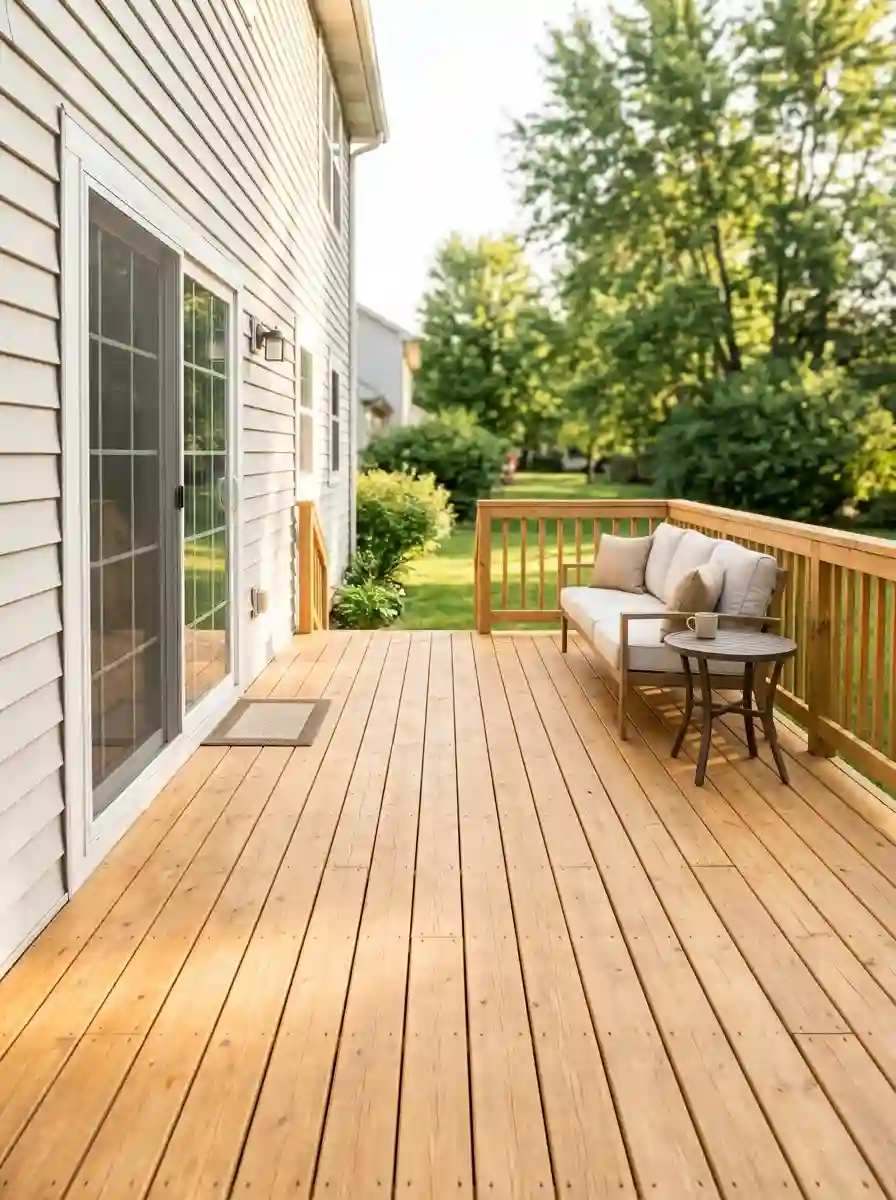
Here is the question most people skip. How do you want to use this space? Be honest and specific.
- Do you eat dinner out there, or mostly have morning coffee?
- Do you entertain groups, or is it mostly two people and a dog?
- Do you grill often?
- Do kids play on it?
- Do you want somewhere to read, nap or work from a laptop?
A deck that tries to be everything at once usually ends up being nothing in particular. Pick your top two or three uses and design for them. Everything else is a bonus.
Choose a Style Before You Buy Anything
The single most useful thing you can do for your deck is to pick a direction before you shop. Without one, you end up with a pile of nice things that do not quite belong together. With one, every purchase becomes easier.
Here is a helpful way to think about it. You do not need to choose a rigid theme. You just need a handful of repeating colors and materials so the space feels intentional.
Where to find your direction
- Look at your yard. Take cues from the flower beds, trees and landscape around you. Greens and warm woods can echo the garden. Soft blues and sandy neutrals suit a deck near water.
- Start with one thing you love. A patterned outdoor rug, a set of pillows, a lantern. Build outward from it, pulling two or three colors from the item.
- Continue your indoor style outside. If the inside of your home is calm and neutral, a deck in similar tones will feel like a natural extension of the living room. This works particularly well when the deck is visible through big windows or a sliding door.
- Borrow from a place you love. A beach town, a mountain cabin, a Mediterranean courtyard. Think about the colors and textures that place gives you.
Style ideas that work well on a back deck
Coastal and breezy. White, sand, soft blue and woven textures. Think rope accents, light wood, striped cushions and sheer curtains that move in the wind. It works equally well in a beach town and in a landlocked suburb that wants a little vacation energy.
Boho and layered. Rich color, mixed patterns, hanging chairs, macramé, poufs, lanterns and plenty of plants. This is one of the most searched deck styles, and for good reason: it is forgiving. Mixed items look intentional because mixing is the point. Just keep a consistent color family so it feels collected rather than chaotic.
Modern and minimal. Clean lines, a restrained palette of black, charcoal, white and natural wood, simple planters and sleek lighting. Fewer items, but each one chosen with care. This style loves a dark-stained deck and slatted privacy screens.
Rustic and cozy. Warm wood, wrought iron, plaid or chunky-knit textiles, a stone fire pit, lanterns and thrifted furniture with some history. This is the easiest style to build on a budget because worn and weathered pieces are the whole look.
Farmhouse and classic porch. Rocking chairs, a porch swing, galvanized planters, blue-and-white stripes, ferns in hanging baskets. Think sweet tea on a warm evening. Southern porch style leans this way, with patterned upholstery and outdoor lanterns, and it is endlessly comfortable.
Resort and global. Chaise lounges, wall baskets, patterned kilim-style rugs, lanterns and rich jewel tones. This one makes a deck feel like a getaway, which is a pretty good thing for a deck to feel like.
Also Read : Cool Basement Ideas for Turning Your Lower Level Into the Best Room in the House
Keep it simple with the three-color rule
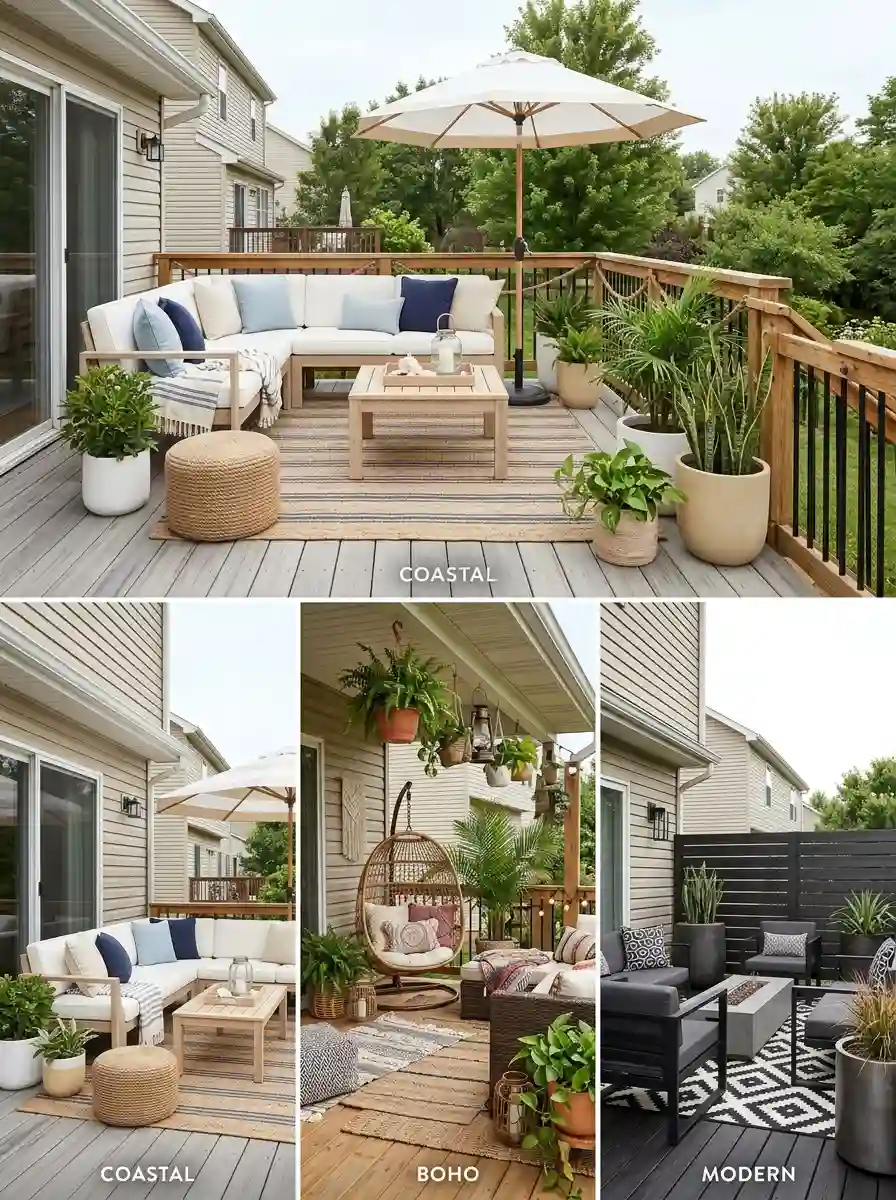
Whatever style you pick, try limiting yourself to three main colors: a dominant one, a secondary one and an accent. Your wood or composite decking counts as one of them, so choose the others to flatter it. Cool-toned boards pair well with whites, grays and blues. Warm boards come alive with cream, rust, olive and deep green.
If you are nervous about getting it wrong, repeat colors in at least three places. A blue pillow, a blue pot and a blue stripe in the rug will tie a space together faster than anything else.
Plan Your Layout: Create Zones Like You Would Indoors
Walk into a well-designed living room and you will notice that it has areas. There is a spot to sit, a spot to eat, a spot for the television. A good deck works the same way. When you define zones, even on a small deck, the space feels bigger, calmer and more useful.
The four zones most decks need
- Lounge zone. Sofa or chairs, a coffee table or side tables, and a rug. This is where you relax, so it deserves the most comfortable furniture.
- Dining zone. A table and chairs, ideally close to the kitchen door so carrying food does not turn into a marathon.
- Cooking zone. The grill, a side table or prep surface, and a place to hang tools. Keep it near the door but away from the seating so smoke does not drift into everyone’s lap.
- Quiet corner. A reading chair, a hammock, a daybed or a small bistro table. This is the zone that makes a deck feel special rather than merely useful.
You rarely need all four. A small deck might hold a bistro set and a grill. A large one might fit everything and a hot tub. The point is to decide on purpose.
Think about traffic first
Before you place a single piece of furniture, trace the paths people take. From the door to the stairs. From the door to the grill. From the stairs to the seating. Those paths need to stay clear, and they should be about the width of a comfortable walking lane, roughly three feet or a little more where possible. A deck that forces people to squeeze past chair backs never feels relaxing.
A helpful trick: lay painter’s tape on the boards in the footprint of each piece of furniture you are considering. Live with it for a day. You will immediately see what is too big.
Float furniture instead of pushing it against the rail

Many people line every chair along the railing, and the middle of the deck sits empty. Pulling a sofa or pair of chairs slightly inward and anchoring them with a rug creates a cozy conversation area. It also frees up the edges for planters, which soften the railing and make the whole deck feel more finished.
Use the sightlines
Where do you look when you sit down? If your best view is the garden, angle seating toward it. If the neighbor’s shed is the view, face the other direction or add a privacy screen. Orient the main seating toward whatever you most want to see, and place the less attractive items, like the trash bins and the hose reel, out of the line of sight.
Anchor each zone
Each zone should have a visual anchor. In the lounge, it is the rug or a fire pit. In the dining area, it is a pendant light, an umbrella or a pergola overhead. In the quiet corner, it is a hanging chair or a bold planter. Anchors tell the eye where to rest and make the deck feel designed rather than accumulated.
Back Deck Furniture That Is Actually Comfortable
Furniture is where most deck budgets go, so it pays to choose well. Comfort should be your first filter, because the prettiest sofa in the world will sit unused if it feels like a bench.
Choose materials that survive your climate
- Aluminum is lightweight, rustproof and easy to move. Powder-coated versions hold up well.
- Teak and other hardwoods age gracefully and last for years, though they cost more and may need occasional oiling if you want to keep the original color.
- Wicker and resin wicker deliver that classic cozy look. Choose all-weather resin over natural wicker unless the deck is fully covered.
- Wrought iron and steel are sturdy and classic, but can get hot in direct sun and need rust care over time.
- Recycled plastic and poly lumber are nearly maintenance free and handle damp climates well.
If your deck is uncovered and exposed, prioritize weatherproof frames and quick-dry cushions. If it is covered, you have more freedom, including upholstered pieces that look like they came from indoors.
Sofa, sectional or chairs?
A sectional is excellent for entertaining and for turning a corner of the deck into a proper lounge. It anchors the space and gives everyone a place to sit. The trade-off is size, so measure carefully. On smaller decks, a loveseat plus two chairs is often more flexible, because you can rearrange it for a party or a quiet evening.
If you only have room for one great piece, choose a deep, comfortable lounge chair or a love seat with generous cushions. One excellent seat beats four mediocre ones.
Buy a la carte, not in a set
Furniture sets are convenient but expensive, and they often leave you with pieces you do not need. A smarter approach is to buy matching items from the same collection one at a time. You get the coordinated look without paying for the extra side chair or the oversized table that does not suit your deck. Mixing is also fine. A wood dining table with metal chairs, or a wicker sofa with a teak coffee table, looks collected and interesting.
Do not forget multi-purpose pieces
On a deck, every item should work hard.
- A storage bench holds cushions, toys and blankets, and doubles as seating.
- A nesting set of side tables disappears when you do not need it.
- A bar cart on wheels serves drinks, then parks next to the wall.
- Stackable chairs seat guests on busy weekends and tuck away on quiet ones.
- Poufs and ottomans serve as footrests, extra seats and tables with a tray on top.
Dining on a deck
Round tables are friendlier on small decks because there are no corners to bump into, and they encourage conversation. Rectangular tables suit long, narrow spaces. Whichever you choose, leave enough room to pull chairs out and sit down comfortably without bumping the railing. A good rule of thumb is about three feet of clear space around the table.
If you have no space for a full dining set, a bistro table with two folding chairs gives you an outdoor café feel. A bar-height counter along the railing is another clever option, since it uses the rail as a surface and takes up almost no floor space.
Add something unexpected
Furniture does not have to be predictable. A porch swing, a daybed, a hammock on a stand or a wicker hanging chair suspended from a beam adds a playful, relaxed feel. Rope hammock chairs and swings turn a corner into a destination. Just make sure whatever you hang is rated for weight and attached to a structural beam, not just a decorative rail.
Also Read : Basement Office Ideas for a Work-From-Home Space You Will Actually Love
Rugs, Cushions and Textiles: The Secret to a Cozy Deck
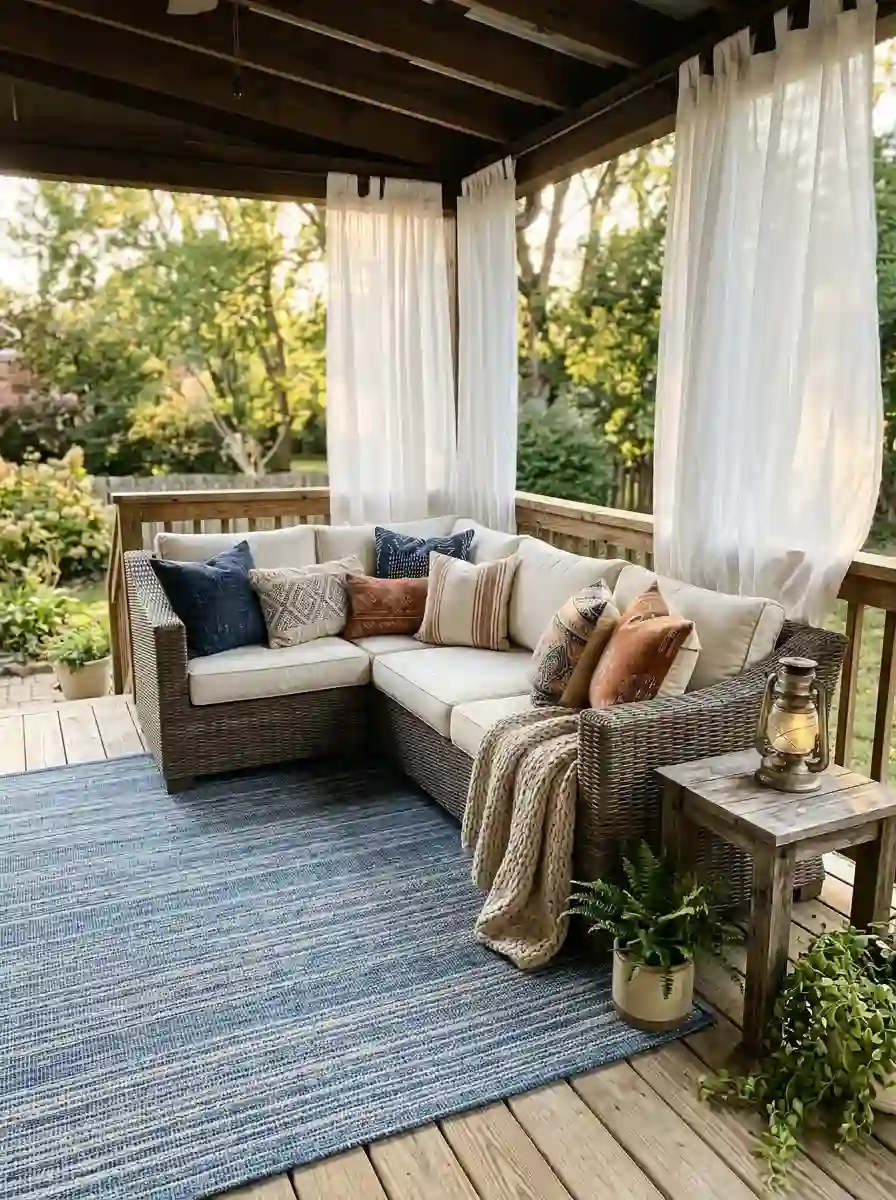
If one change could make a deck feel like a room, it would be an outdoor rug. A rug defines a zone, adds color and pattern, softens hard boards and gives your bare feet something kinder to stand on, especially on a hot day when the boards are baking. As one popular rule goes, a rug ties the whole space together.
How to choose and size an outdoor rug
- Choose the right material. Polypropylene and other synthetic outdoor rugs resist moisture, mildew and fading. Avoid indoor rugs, which will hold water and develop mold.
- Go big. Rugs that are too small make a space look disjointed. In a lounge, the front legs of every seat should sit on the rug at minimum. Ideally all legs do.
- Under a table, think ahead. In a dining zone, the rug should extend far enough that chairs stay on it even when pulled out.
- Watch the drainage. Choose a rug with an open weave or a breathable backing so water does not pool on the boards beneath.
- Think pattern. Stripes and geometrics hide dirt and feel classic. Solid neutrals feel calm and modern.
Lift and rinse the rug a few times a season, and let the boards underneath dry fully to avoid trapped moisture.
Layer your cushions like a pro
Throw pillows are the cheapest, fastest way to introduce color and personality. Treat them as a layered arrangement rather than a scatter.
- Start with a large back cushion in a solid color.
- Add a medium pillow in a pattern.
- Finish with a small accent pillow in a contrasting texture or color.
- Mix patterns of different scales, such as a large stripe with a small geometric.
- Repeat colors from your rug and plants.
Choose pillow covers made for outdoor use, ideally with a removable cover you can wash. Bring cushions inside, or store them in a deck box, before a storm or when you will not use them for a while. This simple habit can double their lifespan.
Add throws and blankets
A basket of lightweight throws makes an evening on the deck far more inviting, especially in spring and fall. Choose washable, quick-drying fabrics and keep them in a waterproof storage bench so they are always ready.
Curtains: the underrated deck upgrade
Outdoor curtains are one of the most romantic and practical additions you can make. Sheer white panels soften a pergola, block harsh afternoon sun and add an ethereal, resort-like feel. They can also help create a sense of privacy and, hung closely around a seating area, reduce the number of flying insects that wander in on summer evenings. Use outdoor-rated fabric and tie-backs, and hang them from a pergola, a ceiling track or a simple rod.
Umbrellas and shade sails
If your deck has no roof, shade is a deck-decorating decision as much as a comfort one. A large cantilever umbrella shades a dining or lounge area without a center pole in the way. A tilting market umbrella works well for a table. A shade sail adds a modern sculptural look and covers a bigger area. Choose a color that coordinates with your palette: crisp white, soft blush, navy stripes and warm terracotta all look wonderful against wood.
Lighting: How to Make a Deck Magical After Dark
Lighting is where a deck goes from nice to unforgettable. In daylight your deck is pretty. At dusk, with the right light, it becomes the place everyone drifts toward. Good lighting also extends the hours you use the space and makes steps and edges safer.
The best deck lighting works in layers, just like an indoor room.
Layer one: ambient light
This is the general glow that lets people see and feel comfortable. Options include:
- String lights. Affordable and charming, they are the best-known deck lighting for good reason. Drape them along railings, zig-zag them overhead from post to post, or hang them from a pergola. Commercial-grade strands with bulbs that can handle the weather last longer than cheap ones.
- Overhead fixtures. Outdoor pendants, ceiling fans with lights and wall sconces provide steady illumination. Anchor a dining table with a lightweight outdoor pendant for a restaurant-patio vibe.
- Wall sconces. Mounted next to the door or along the house wall, they signal the way back inside and add a polished, finished feel.
Layer two: task light
Anywhere you cook, read or play cards needs a little brighter, more focused light. A grill light, a clip-on reading lamp on the rail or a small lamp on the dining table is all it takes. Keep the brightness adjustable so you can dim it for atmosphere.
Layer three: accent light
This is where the magic lives. Accent lighting highlights the details you love.
- Lanterns on the floor, table or hanging from a hook give a warm, flickering look. Battery-powered LED versions with realistic flicker are safer than candles on a windy deck.
- Solar stake lights along the garden border or stairs add soft sparkle with zero wiring.
- Uplights aimed at a tree or a large plant create drama at night.
- Rope or strip lights tucked under the rail cap or along the stairs make steps safer and give the deck a floating, modern look.
- Candles in hurricane glass are a classic, as long as you watch them and never leave an open flame unattended.
Read Also : 50 Stunning Hallway Design Ideas That Will Instantly Transform Your Home’s First Impression
Choosing the right color temperature
Warm white light, around 2700K, flatters wood, skin and food. Cooler, bluish light can feel harsh and clinical outdoors. Stick with warm white for nearly everything on a deck. If you want a special effect for a party, dimmable or color-changing options exist, but make warm white your default.
Easy ways to add lighting without an electrician
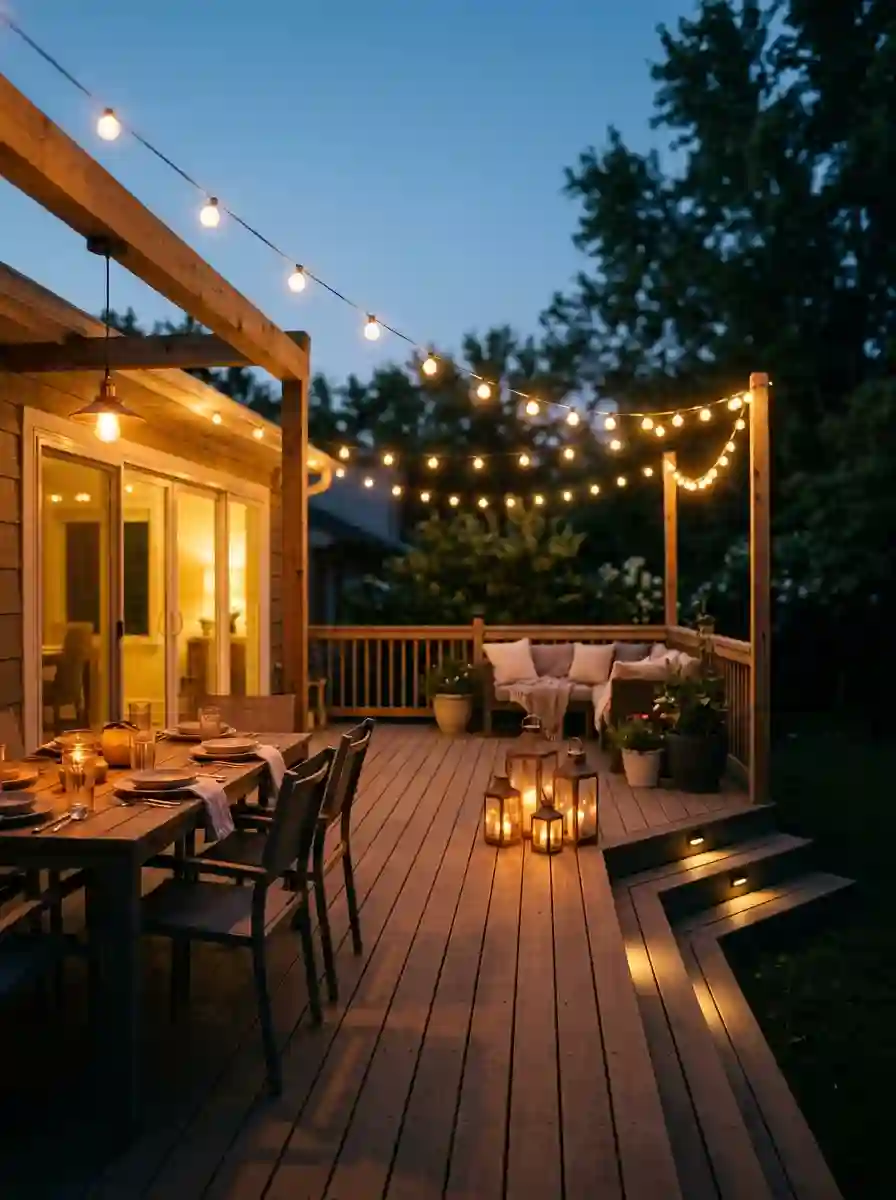
You do not need to call a professional to light your deck. Plug-in strands, battery lanterns, solar stakes and rechargeable table lamps all work without any new wiring. If you want permanent hardwired lighting, such as post-cap lights, step lights or under-rail strips, a licensed electrician can install it safely, and low-voltage systems are generally simpler and more forgiving than line-voltage ones.
Light the steps
Steps are the most common place for a deck mishap after dark. Small, low lights on stair risers or along the side of the staircase make a big difference. They also look lovely.
Take care with placement
- Keep string lights away from places where they can sag into the grill or fire pit.
- Use hooks or cable clips rather than nails and staples that can damage wiring.
- Check that outdoor-rated cords are used and plugged into protected outlets.
Bring in the Green: Plants and Planters for Back Decks
Plants do something furniture cannot. They soften hard lines, add color, create privacy, and link your deck visually with the yard. A deck with no plants can feel stark and temporary. A deck with a few well-chosen planters looks settled and alive.
Start with containers you love
Pots are decor in their own right. Choose containers in a limited range of materials and colors so the collection looks cohesive. Terracotta, glazed ceramic, black metal, concrete and weathered wood all work, depending on your style. A mix of sizes, with at least a couple of really large pots, keeps the arrangement interesting. A common mistake is using many tiny pots. A few big statement planters look better and require less watering.
Use the rule of thrill, fill and spill
For a pot that always looks good, combine three types of plants:
- Thriller: a tall, eye-catching center plant such as a grass, a canna or a small ornamental shrub.
- Filler: a mounded plant that fills the space, like geraniums, coleus or petunias.
- Spiller: a trailing plant that drapes over the edge, like sweet potato vine, trailing ivy or lobelia.
Plants that suit decks
Choose plants that match the sunlight your deck actually gets.
- Full sun: geraniums, lavender, rosemary, succulents, ornamental grasses, zinnias, marigolds.
- Part shade: hydrangeas, coleus, begonias, fuchsia, hostas, impatiens.
- Shade: ferns, hostas, caladiums, sweet woodruff.
- Low maintenance: succulents, snake plants on a covered deck, ornamental grasses, sedum.
Check what grows well in your region before you buy, since hardiness and humidity vary widely. Your local garden center can point you to dependable choices for your climate.
Grow something useful
An herb garden on the deck is both beautiful and practical. Basil, mint, thyme, rosemary and parsley thrive in pots, smell wonderful and sit right outside the kitchen. Several of the popular small-deck guides recommend a potted herb collection as a favorite feature, and it is easy to see why: a quick snip for dinner feels glamorous. Plant mint in its own pot, as it spreads aggressively.
Add height with railing planters and hangers
- Railing planters hook over the top rail and lift flowers to eye level, which saves floor space and brings color to the edges. Make sure they are secured properly and that you can water them without spilling onto the boards below.
- Hanging baskets from a pergola beam or shepherd’s hook add height and a cottage feel.
- Wall planters and vertical gardens are excellent for small decks, turning a blank wall or fence into a living feature.
- Plant stands and tiered shelves show off collections and keep pots off the deck so air can circulate.
Plants that earn their keep
Some plants do double duty.
- Climbing vines such as clematis, jasmine or climbing roses on a trellis or pergola create a romantic canopy and offer natural shade. Choose the vine carefully so it does not damage your structure.
- Tall grasses and bamboo in containers make a quick privacy screen. Choose clumping bamboo varieties for pots to avoid invasive spread.
- Citronella, lavender, marigolds and mint are often grown on decks because many people find their scents help keep bugs away, although results vary and they are not a guarantee.
Protect your deck from planter damage
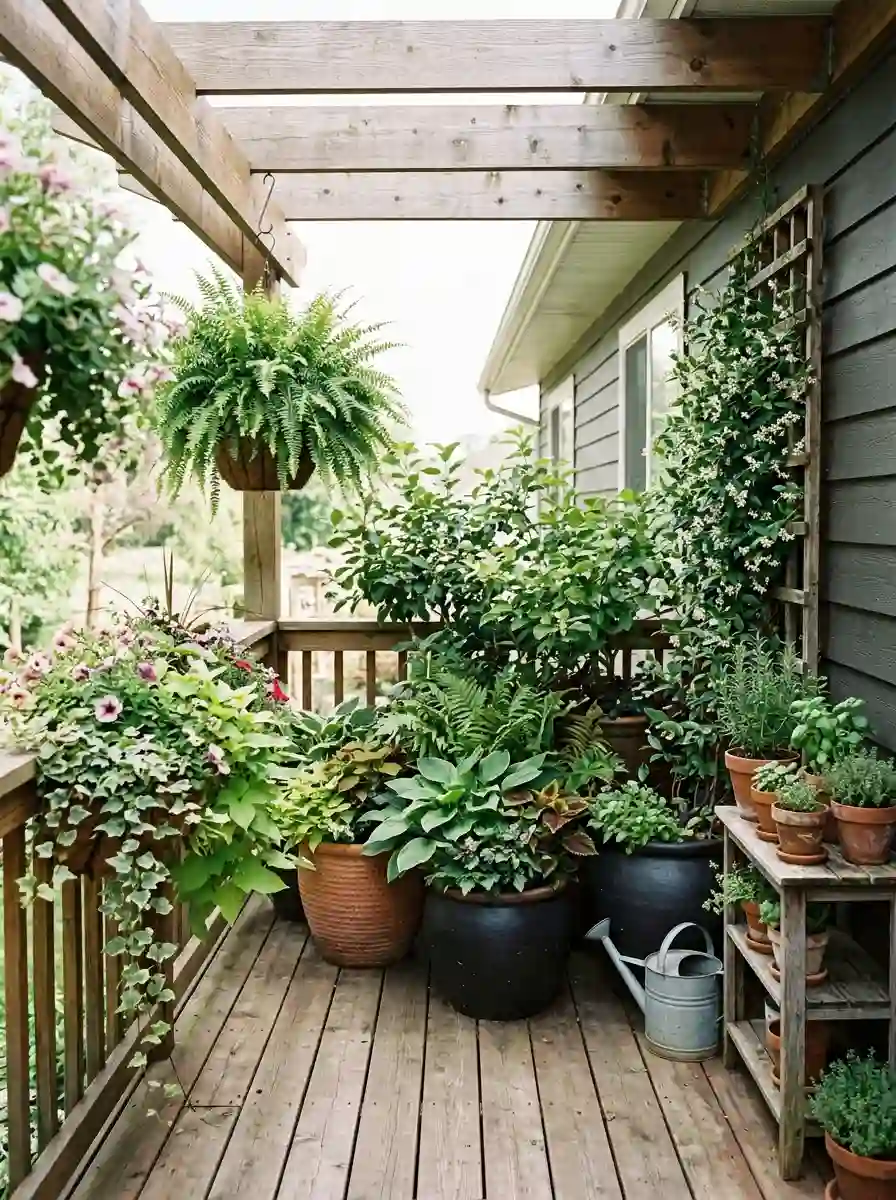
Moisture trapped under pots can stain boards and encourage rot. Put pots on feet, small risers or saucers with drainage. Empty saucers after rain and move pots occasionally to let the surface dry. Lightweight planters in fiberglass or resin are easier on a deck than heavy stone.
Do not overdo it
Aim for plants to fill roughly a third of your deck’s edge space, not all of it. You still need room to move, and plants need care. Start small and expand once you see how much watering and tending you enjoy.
Privacy, Shade and Architectural Details
Even the prettiest deck is hard to relax on if you feel watched or if the sun is cooking you. Privacy and shade are not extras. They are what make a deck usable for more hours of the day.
Privacy ideas that look good
- Wood slat screens. A horizontal or vertical slat panel is a modern favorite. It can be a DIY project and provides privacy while still letting air and light through. It also adds an architectural element that makes the deck feel designed.
- Lattice panels. An easy weekend project that gives seclusion at one or both ends of a deck and doubles as a backdrop for climbing plants and decor.
- Outdoor curtains. Soft and flexible, they can be opened or closed as you wish.
- Tall planters. A row of large pots with bamboo, ornamental grasses or arborvitae offers a living screen.
- Bamboo or reed fencing. Inexpensive and easy to attach to a railing, though it may need replacing every few years.
- Pergola with side panels. Adds both shade and privacy and feels like a real outdoor room.
- Outdoor shades. Roll-down shades can drop on the side facing the neighbor and be raised when you want the view.
Check local building codes and homeowner association rules before adding tall screens or permanent structures, since limits on height and placement vary.
Must Read : Hutch Decorating Ideas That Will Transform Your Dining Room Into A Showstopping Space
Shade ideas
- Pergola. A pergola gives structure and dappled shade. Add a canopy, climbing plants or curtains for fuller coverage. Several popular back-deck roundups describe white-painted pergola ceilings, which brighten the space and look wonderful against dark wood and greenery.
- Shade sail. A triangular or square sail pulled taut overhead is sleek and relatively inexpensive.
- Cantilever umbrella. Flexible and movable as the sun shifts.
- Retractable awning. Convenient and strong, though a bigger investment.
- Louvered roof. Adjustable slats let you control sun and rain. A higher-end option, but excellent for year-round use.
Little architectural details that make a big difference
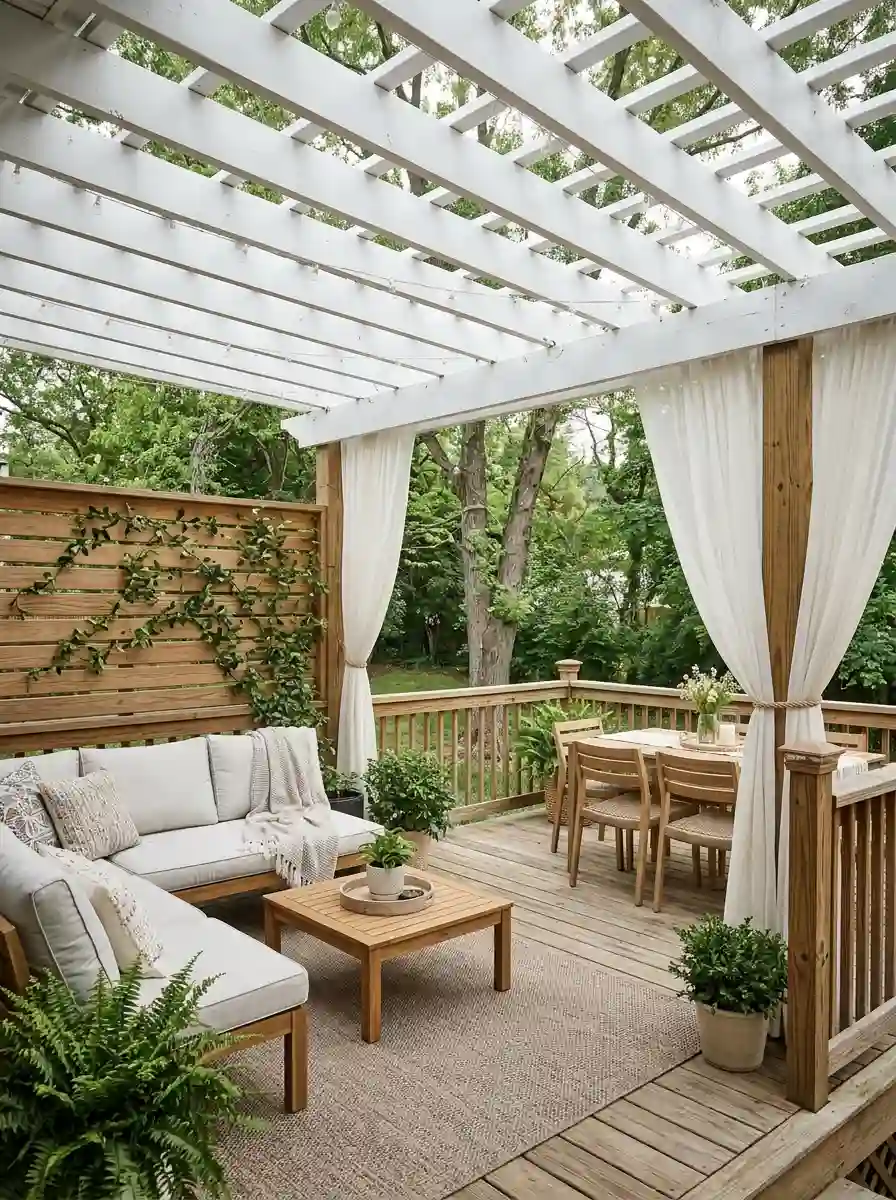
These small touches add character at low cost:
- Wrap the posts. Wrapping the top or bottom of plain posts with trim gives them a sturdier, more furnished look.
- Add decorative post caps. A small addition that finishes the railing and often holds a solar light.
- Paint or stain the railing. A contrasting railing color frames the deck like a picture frame.
- Install skirting or lattice around the base of a raised deck to hide the underside and give it a grounded look.
- Upgrade the stairs. Add planters on each step, lighting on the risers or a fresh coat of paint.
Treat your deck like a second living room and give it “walls” in the form of screens, curtains and plantings. The sense of enclosure is what makes a space feel like a room.
Focal Points and Finishing Touches That Give a Deck Personality
Once the big pieces are in place, a few well-chosen extras make the deck feel like yours.
Add a fire feature
A fire pit or fire table gives a deck a natural gathering point and extends the season into cooler evenings. On a wood or composite deck, use a model designed for decks, with proper heat shielding, a spark screen and a safe distance from the house, railings and overhead structures. Propane fire tables are generally the more deck-friendly choice, but always follow the manufacturer’s guidance and your local rules. If real fire is not suitable, a tabletop fire bowl or an electric outdoor heater still creates that cozy glow.
Hang a mirror
A weather-safe outdoor mirror reflects light and greenery and makes a small deck feel more spacious. Hang it on the house wall or fence, angled so it does not reflect harsh sunlight onto the boards or into neighbors’ windows.
Create a gallery wall
Weatherproof art, metal wall sculptures, a collection of woven baskets or a set of outdoor-rated frames on the house wall adds depth without taking floor space. Keep the arrangement tidy and repeat colors from your cushions.
Add a small water feature
The sound of trickling water is calming and covers neighborhood noise. A tabletop fountain or a small recirculating bowl needs very little room. Keep it away from the edge of the boards where splashing could cause staining.
Set a styled table
A tray with a candle, a small vase and a stack of coasters turns a coffee table into a vignette. Swap the flowers with the season. It takes two minutes and makes the space feel cared for.
Think about the floor of the deck itself
Besides rugs, consider painted patterns, stencils or a border painted around the edge of the deck for a custom look. Composite deck tiles can also cover a worn section quickly if you want to refresh part of the surface without replacing boards.
Include personal touches
A favorite piece of art, a family-heirloom chair, a collection of pottery or a hand-painted sign makes the deck feel like it belongs to you. The most memorable decks are never perfect. They are personal.
Small, Narrow and Raised Decks: Smart Ideas for Tricky Spaces
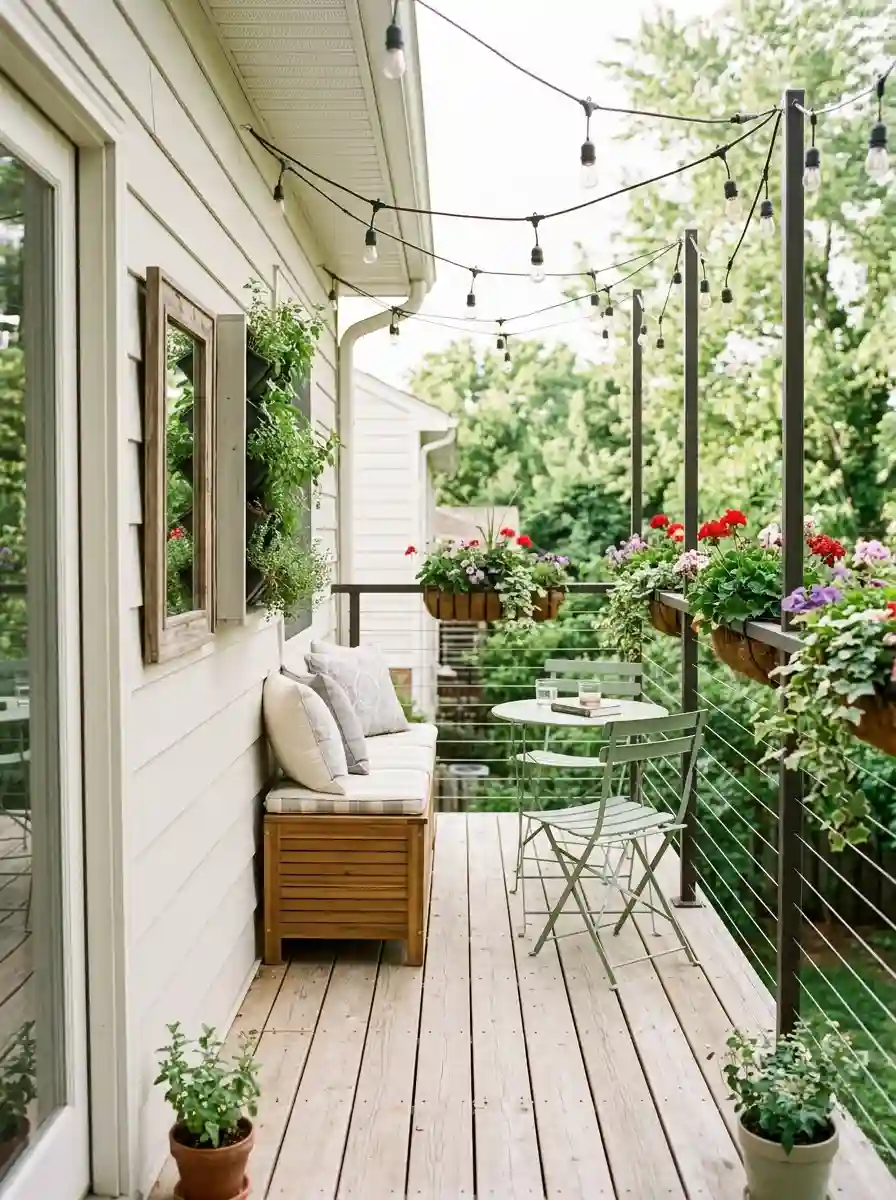
Not every deck is a generous rectangle. Some are tiny, some long and thin, some perched high off the ground. Each shape has its own tricks.
Small deck ideas
A small deck is easy to overfill. The key is to be choosy and think vertically.
- Choose scaled-down, multi-purpose furniture. A bistro set, a loveseat or a pair of lounge chairs, and perhaps a small storage bench.
- Go vertical. Railing planters, hanging baskets, wall shelves and trellises add greenery and decor without eating floor space.
- Pick a light color palette. Whites, creams and soft pastels visually expand the space.
- Use one rug. A single properly sized rug unifies a small deck better than several little ones.
- Hang a mirror. It adds depth and bounces light.
- Skip bulky railings if you can. Cable or glass railings keep sightlines open, so the deck feels bigger.
- Keep clutter off the floor. Hooks, shelves and storage benches keep the surface free.
- Fold it away. Folding chairs and drop-leaf tables appear when needed and vanish when they are not.
Long and narrow deck ideas
Long, narrow decks are really corridors, so the trick is to break them up.
- Divide the length into two or three zones, for example a dining area near the door and a lounge at the far end.
- Use rugs or planters as visual dividers between zones.
- Place furniture along the long side, keeping a clear walkway down the other.
- Choose slim-profile furniture, such as armless chairs or benches.
- Add visual interest at the far end, like a hanging chair, a bold planter or a statement light, so the eye has somewhere to travel.
Raised deck ideas
Raised decks feel exposed, so the focus is on privacy, grounding and connecting with the yard below.
- Add privacy screens or lattice to shield the deck from neighboring windows.
- Hang a pendant light from a tree or beam to anchor a dining space.
- Use plants to link the deck to the yard, including tall planters and trailing vines.
- Finish the underside with lattice skirting or plantings so the structure looks complete.
- Make the stairs a feature with planters, lights and a fresh finish.
Ground-level and floating decks
Low decks have a relaxed, patio-like feel. Mix in gravel borders, planting beds and stepping stones to blend them into the landscape. A floating deck set into the garden, away from the house, makes a charming secret retreat with a bench, a fire pit or a hammock.
Back Deck Decorating Ideas on a Budget
You do not need a big budget to make a deck look good. Many of the best results come from thoughtful, low-cost choices. These are the ideas that give the most impact per dollar.
Where to put your money first
If your budget is limited, spend in this order:
- A cleaned and refinished deck surface. Stain, sealer or paint.
- Lighting. String lights or solar lights are inexpensive and transformative.
- A rug and cushions. Big effect, modest cost.
- Plants and pots. Start with a few and add more over time.
- One good seating piece. Save up for comfort in the place you will use most.
Must Read : Modern Rugs for Living Room Spaces: The Ultimate Guide to Grounding Your Home in Style
Budget-friendly ideas that look expensive
- Paint or stain the deck and railings. A bucket of paint transforms a tired deck.
- Shop secondhand. Thrift stores, estate sales and online marketplaces are full of solid furniture. A coat of outdoor paint and new cushions can make it look brand new, and a thrifted piece gives a rustic, lived-in look that is difficult to buy new.
- Build a bench from pallet wood or repurpose chairs. DIY seating costs little and has charm.
- Use solar lights instead of hardwiring anything.
- Make your own planters from galvanized buckets, crates or old tins with drainage holes.
- Sew or buy simple outdoor curtains from inexpensive outdoor fabric.
- Try composite deck tiles to refresh a worn area without replacing boards.
- Grow from seed or cuttings. Annuals from seed cost far less than full-grown plants.
- Buy off-season. Patio furniture and decor go on sale at the end of summer.
- Group items in odd numbers. Three pots look better than two and cost little more.
Watch where costs creep
Furniture sets, large umbrellas and permanent structures such as pergolas are where budgets balloon. If you want a pergola, a DIY version or a kit can save significantly, but make sure your deck can hold the weight, and check local rules before building.
Make one splurge
Pick one item that you will use daily and invest in it, perhaps a comfortable lounge chair or a good outdoor rug. Fill in the rest with budget finds. One good piece lifts everything around it.
Seasonal Deck Decorating: Keep It Fresh All Year
A deck does not have to look the same in July as it does in October. Small seasonal swaps keep it feeling alive and give you an excuse to play.
Spring
- Clean, inspect and refinish the boards after winter.
- Plant containers with pansies, tulips and early herbs.
- Bring out lighter textiles in soft colors.
- Replace worn cushion covers.
Summer
- Focus on shade, breeze and cool colors: umbrellas, curtains, sheer fabrics.
- Add a drinks cart, citrus pitchers and bright flowers.
- Keep string lights on for long evenings.
- Use plants with bug-friendly reputations, such as lavender and mint, near seating.
Fall
- Switch to warm tones: rust, mustard, deep green and burgundy.
- Add pumpkins, gourds, mums and ornamental grasses.
- Layer in chunky throws, wool-look blankets and candlelit lanterns.
- Move the fire feature to the center of the action.
Winter
- Protect furniture with covers or store cushions indoors.
- Add evergreen planters and string lights for a quiet glow.
- Keep a clear path and sweep snow promptly. Use deck-safe de-icers, since some salts can damage boards.
- Add a heater and warm blankets if you like to sit out in the cold.
Check your furniture and decking manufacturer’s guidance for winter care, since recommendations differ by material.
Common Back Deck Decorating Mistakes to Avoid
Even well-meaning makeovers go sideways. Here are the pitfalls worth dodging.
Skipping the plan. Buying pieces one by one without thinking about layout leads to clutter and awkward traffic flow. Measure and tape it out first.
Overfilling the space. More furniture does not mean more comfort. Leave breathing room and clear walkways.
Ignoring weight and safety. Heavy planters, hot tubs and large structures need to be supported. If you are unsure, ask a professional.
Buying indoor items for outdoor use. Indoor rugs, cushions and decor often mold, fade or fall apart outdoors. Choose pieces rated for outside.
Neglecting lighting. A beautiful deck that is dark at night is only half a deck.
Forgetting shade. If it is too hot to sit there at 3 p.m., you will not use it. Plan for sun control.
Pushing everything against the railing. Float furniture and use the middle of the deck.
Mixing too many styles and colors. A cohesive palette makes a deck feel designed.
Forgetting storage. Without a place for cushions, tools and toys, clutter takes over quickly.
Placing planters directly on the boards. Trapped moisture can stain and rot the surface. Use feet or saucers.
Overlooking maintenance. Beautiful decor needs a little ongoing care: rinsing rugs, restaining boards, washing cushion covers.
A Simple Weekend Plan to Transform Your Back Deck
If you want to get this done fast, here is a realistic two-day plan.
Saturday morning: prepare. Clear the deck, sweep and wash it, check for loose boards and screws, and decide on your style and three-color palette. Measure your space and sketch the zones.
Saturday afternoon: surface and structure. Stain or seal the boards if the weather allows, and let them dry fully. Add any privacy screens, lattice or curtain rods.
Sunday morning: furniture and rug. Place your main seating, dining and storage pieces. Lay the rug and adjust until the traffic flow feels right.
Sunday afternoon: layers. Add cushions, throws, lighting, planters and finishing touches. Hang the string lights, set out the lanterns and style one table.
Sunday evening: enjoy it. Switch on the lights, pour something cold or hot and sit down. You earned it.
Do not worry if you cannot finish everything. A deck is never really done, and part of the fun is adding to it gradually.
Also Read : Walk-In Closet Organization Ideas for a Boutique-Style Dressing Room
Final Thoughts on Back Deck Decorating Ideas
A great back deck is not about spending a fortune or following a trend. It is about making a space that suits how you live. Clean it, choose a style, plan your zones, invest in comfort, light it well, add greenery and give yourself privacy and shade. Then sprinkle in the personal details that make the deck unmistakably yours.
Start with whichever idea excites you most. Maybe it is the string lights. Maybe it is the rug. Maybe it is that hanging chair you have been eyeing. One change often leads naturally to the next, and before long the deck you walked past for years becomes the one you cannot stay away from.
Frequently Asked Questions
How do I decorate a back deck on a budget?
Start with the cheapest high-impact changes: clean the deck, add a coat of stain or paint if needed, hang string or solar lights, add an outdoor rug and fill a few pots with plants. Shop secondhand for furniture, make your own planters and buy seasonal items at the end of summer. Spend a little more on one comfortable seating piece and keep the rest simple.
How do I add privacy to a back deck?
Options include wood slat screens, lattice panels, outdoor curtains, tall planters with bamboo or grasses, bamboo fencing and pergolas with side panels. Check local codes and homeowner association rules before building tall or permanent structures.
What kind of lighting works best on a deck?
Layer your lighting: string lights or sconces for ambient light, small lamps or grill lights for tasks, and lanterns, solar stakes or step lights for accents. Warm white light, around 2700K, usually feels most inviting. Light the stairs for safety.
What plants are best for a back deck?
It depends on your sun exposure and climate. Full-sun decks suit geraniums, lavender, rosemary and succulents. Shadier spots do well with ferns, hostas, begonias and coleus. Herbs such as basil, thyme and mint are practical and decorative. Use large containers and the thriller, filler and spiller approach.
How do I protect my deck from furniture and planter damage?
Put pots on feet or saucers so moisture does not sit on the boards, and move them occasionally. Use felt or rubber pads under furniture legs. Choose lightweight planters and rugs with breathable backs, and clean beneath them regularly. Confirm that the deck can support heavy items.
Can I put a fire pit on a wood or composite deck?
Many people do, but only with the right setup. Use a fire pit or table designed for decks with heat shielding and a spark screen, keep it clear of railings, the house and overhead structures, and follow the manufacturer’s instructions and local regulations. Propane tables are often a more deck-friendly choice than wood-burning pits.
How do I choose an outdoor rug for a deck?
Pick a synthetic outdoor rug, such as polypropylene, that resists moisture, mildew and fading. Size it so at least the front legs of your seating sit on it. Choose a breathable weave, and rinse and dry it periodically so water does not get trapped underneath.
How often should I refinish or refresh my deck?
It depends on the material and your climate. Many wood decks benefit from cleaning every year and a fresh stain or sealer every couple of years, while composite decks usually need regular cleaning but not staining. Follow your manufacturer’s guidance, and refresh the decor seasonally to keep the space feeling new.
1. How do I decorate a back deck on a budget?
Start with the cheapest high-impact changes: clean the deck, add a coat of stain or paint if needed, hang string or solar lights, add an outdoor rug and fill a few pots with plants. Shop secondhand for furniture, make your own planters and buy seasonal items at the end of summer. Spend a little more on one comfortable seating piece and keep the rest simple.
2. How can I make a small back deck look bigger?
Use scaled-down, multi-purpose furniture, a light color palette and one properly sized rug. Go vertical with railing planters, wall shelves and hanging baskets. A weather-safe mirror adds depth, and cable or glass railings keep sightlines open. Keep the floor free of clutter.
3. What is the best furniture for a back deck?
The best furniture is comfortable, weather-resistant and sized for your space. Aluminum, teak, resin wicker and recycled poly lumber are all durable options. A loveseat or sectional works well for lounging, while a round bistro set suits small decks. Storage benches and nesting tables add flexibility.
4. How do I add privacy to a back deck?
Options include wood slat screens, lattice panels, outdoor curtains, tall planters with bamboo or grasses, bamboo fencing and pergolas with side panels. Check local codes and homeowner association rules before building tall or permanent structures.
5. What kind of lighting works best on a deck?
Layer your lighting: string lights or sconces for ambient light, small lamps or grill lights for tasks, and lanterns, solar stakes or step lights for accents. Warm white light, around 2700K, usually feels most inviting. Light the stairs for safety.
6. What plants are best for a back deck?
It depends on your sun exposure and climate. Full-sun decks suit geraniums, lavender, rosemary and succulents. Shadier spots do well with ferns, hostas, begonias and coleus. Herbs such as basil, thyme and mint are practical and decorative. Use large containers and the thriller, filler and spiller approach.
7. How do I protect my deck from furniture and planter damage?
Put pots on feet or saucers so moisture does not sit on the boards, and move them occasionally. Use felt or rubber pads under furniture legs. Choose lightweight planters and rugs with breathable backs, and clean beneath them regularly. Confirm that the deck can support heavy items.
8. Can I put a fire pit on a wood or composite deck?
Many people do, but only with the right setup. Use a fire pit or table designed for decks with heat shielding and a spark screen, keep it clear of railings, the house and overhead structures, and follow the manufacturer’s instructions and local regulations. Propane tables are often a more deck-friendly choice than wood-burning pits.
9. How do I choose an outdoor rug for a deck?
Pick a synthetic outdoor rug, such as polypropylene, that resists moisture, mildew and fading. Size it so at least the front legs of your seating sit on it. Choose a breathable weave, and rinse and dry it periodically so water does not get trapped underneath.
10. How often should I refinish or refresh my deck?
It depends on the material and your climate. Many wood decks benefit from cleaning every year and a fresh stain or sealer every couple of years, while composite decks usually need regular cleaning but not staining. Follow your manufacturer’s guidance, and refresh the decor seasonally to keep the space feeling new.





One comment on “Back Deck Decorating Ideas: 40+ Ways to Turn Your Deck Into Your Favorite Room”