
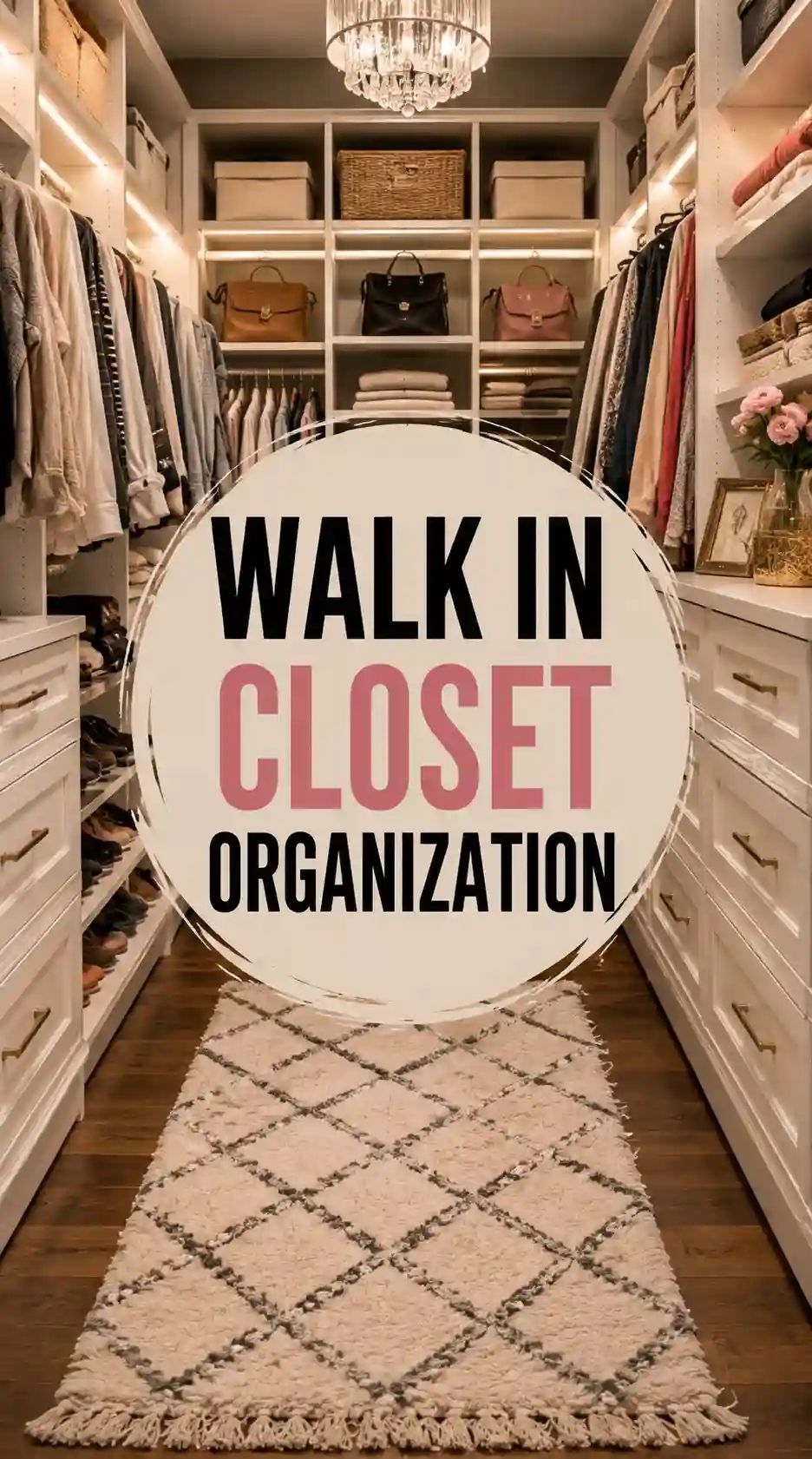
There is a certain kind of morning chaos that only happens in a closet that has gotten away from you. You are running late, you know the shirt you want is somewhere in there, and yet you end up pulling three hangers off the rod before you find it, half of them tangled together in a way that makes no sense at all. If you have ever stood in your own closet feeling more stressed than when you walked in, you already understand why walk in closet organization matters so much more than people give it credit for.
I have spent years working directly with homeowners on exactly this problem, standing in closets of every size, from tiny converted spare rooms barely big enough to turn around in, to sprawling walk in closets with more square footage than some studio apartments. And no matter the size, the same truth holds up every single time. A walk in closet only feels luxurious when it actually works for the person using it. All the beautiful shelving and soft lighting in the world cannot fix a system that does not match how someone actually lives.
This guide is everything I know about walk in closet organization, built from real projects, real conversations with clients standing in the middle of their own clutter, and a genuine love for turning a chaotic space into one that feels calm every single time you walk into it. We are going to cover layout, storage types, budget options, small space solutions, and the small daily habits that keep a well organized closet from slipping back into a mess three weeks later.
Let us get started.
Also Read : Office Desk Decor Ideas That Actually Make You Want to Sit Down and Work
Why Walk In Closet Organization Deserves More Attention Than It Gets
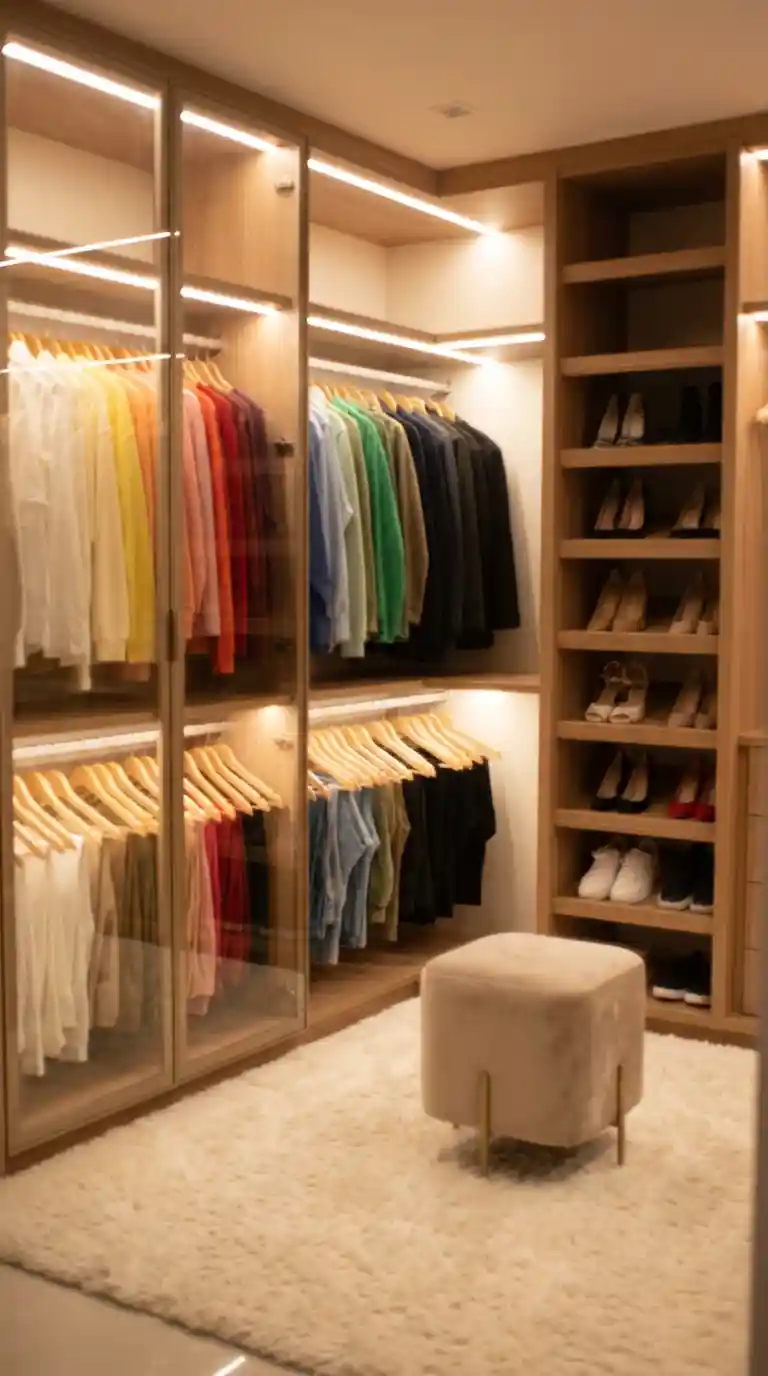
A lot of people treat their closet as an afterthought. It is the room nobody else sees, so it becomes the room where things get shoved out of sight and forgotten. I understand the instinct completely, but I have also watched what happens when someone finally takes the time to organize this space properly, and the shift is honestly bigger than most people expect.
Walk in closet organization affects your entire morning routine. When you know exactly where everything is, getting dressed stops being a small daily obstacle and starts being something you barely have to think about. That sounds like a small thing, but multiply it across every single morning for years, and it adds up to a genuinely different relationship with your own home.
There is also an emotional side to this that gets overlooked. A cluttered closet quietly contributes to a low level sense of overwhelm, even if you are not consciously aware of it. Clothes you feel guilty about, shoes you forgot you owned, items shoved onto a top shelf because there was nowhere else for them to go. Good walk in closet organization clears out more than just physical clutter. It clears out a bit of that background mental noise too.
From a purely practical standpoint, a well organized walk in closet also protects your wardrobe. Clothes stored properly last longer, wrinkle less, and stay in better condition than clothes crammed into an overstuffed rod or folded haphazardly into a pile that eventually topples over.
Where to Start Any Walk In Closet Organization Project
Before you buy a single shelf, bin, or hanger, there is a process that has to happen first, and skipping it is the number one reason walk in closet organization projects fail within a few months.
Start with a full cleanout. Every single item needs to come out of that closet, onto your bed, the floor, wherever you have space, so you can actually see the full scope of what you own. This step feels overwhelming in the moment, I will not pretend otherwise, but it is genuinely the only way to build a system that fits your real wardrobe instead of an imagined smaller one.
Sort everything into clear categories as you go. Keep, donate, and let go entirely. Be honest with yourself here. If something has not been worn in over a year and does not carry genuine sentimental value, this is the moment to release it. This single step routinely creates far more usable space than any storage product ever could.
Once the cleanout is done, take stock of what you actually kept. Count your hanging items roughly, note how many pairs of shoes you have, think through how much folded clothing versus hanging clothing dominates your wardrobe. This information becomes the foundation for every decision that follows in your walk in closet organization plan.
Only after this should you start measuring your space and thinking about layout. Buying storage before decluttering is one of the most common mistakes I see, and it leads to a closet that looks tidy for a few weeks before slowly sliding back into its old habits.
Must Read : 45 Beautiful DIY Small Baby Closet Ideas That Instantly Solve Your Nursery Storage Struggles
Measuring Your Space Before Planning Walk In Closet Organization

This step gets skipped far too often, and it is a genuine mistake. Before you invest in any shelving, rods, or storage systems, you need accurate measurements of your actual closet space.
Measure the full width and depth of the room, along with the ceiling height. Note the location of any doors, windows, or electrical outlets, since these will affect where shelving and hanging rods can realistically be installed.
Think about traffic flow. A walk in closet needs enough clear floor space for you to actually move around comfortably, open drawers fully, and reach items without constantly bumping into furniture or walls. Designers generally recommend keeping at least a couple of feet of clear walking space in the center of any layout, more if two people share the closet.
Consider the three most common walk in closet organization layouts when planning your space. A single wall layout places storage along one wall with a walkway in front, which works well for narrower rooms. An L shape layout uses two walls, opening up more floor space and allowing room for a bench or full length mirror. A U shape layout uses three walls and offers the most storage capacity, though it requires a larger footprint to avoid feeling cramped.
Write down every measurement before you shop for any organization products, whether you are buying a full custom system or simply adding a few shelves and rods yourself. This single habit prevents an enormous amount of wasted money and frustrating returns later.
Zoning Your Walk In Closet by Category
One of the most effective principles in modern walk in closet organization involves thinking about your space in zones rather than treating the entire room as one undifferentiated storage area.
A hanging zone holds your dresses, blazers, button up shirts, and anything that genuinely wrinkles if folded. Within this zone, further dividing by category, and even by color, makes a noticeable difference in how quickly you can find what you are looking for.
A folded zone, whether on shelves or in drawers, holds sweaters, t shirts, athletic wear, and anything that holds its shape better folded than hung. Vertical folding, where clothes stand upright rather than stacking flat, has become a favorite technique in walk in closet organization because it lets you see every single item at a glance instead of only the one on top of a pile.
A shoe zone deserves its own dedicated section, ideally with shoes displayed upright rather than piled in a box or tossed on the floor. Open shelving with slight angling keeps shoes visible and easy to grab, and it has become one of the most requested features in walk in closet organization over the last couple of years.
An accessories zone for belts, scarves, jewelry, and bags keeps smaller items from getting lost in the shuffle of bigger clothing pieces. Drawer dividers or small hooks work particularly well here, since these items tend to be the ones that end up in a messy junk pile if they do not have a clearly defined home.
A seasonal or occasional zone, often placed on a higher shelf or in a less accessible corner, holds items you use only during specific times of year, keeping prime, easy to reach space dedicated to what you actually wear on a regular basis.
Walk In Closet Organization Ideas for Small Spaces
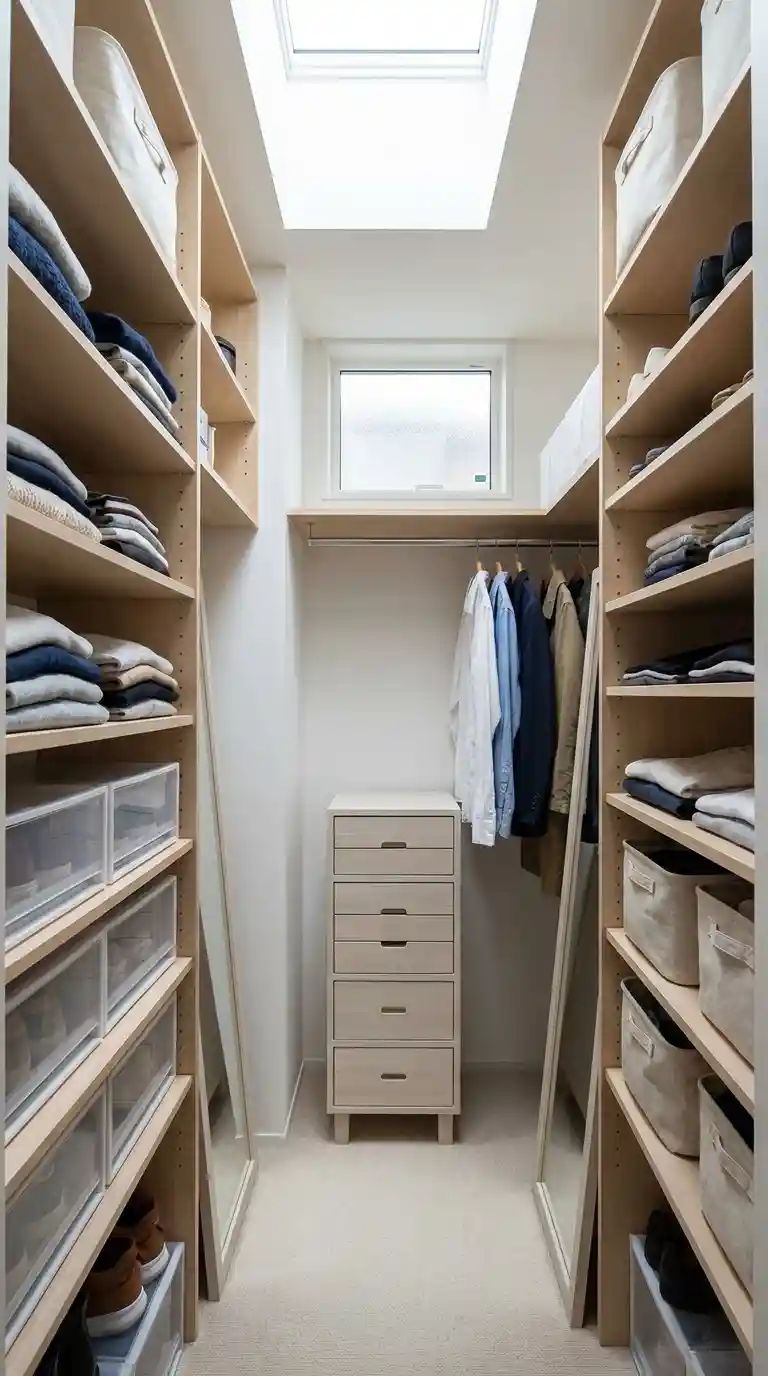
Not every walk in closet is spacious, and a lot of the walk in closet organization advice floating around assumes far more square footage than most people actually have. If your space is on the smaller side, the same principles apply, but the execution needs a bit more creativity.
Vertical space becomes your best friend in a small walk in closet. Shelving that reaches all the way to the ceiling, even if the top shelves hold only rarely used seasonal items, maximizes every inch of available storage without expanding the footprint of the room.
Double hanging rods, one positioned above the other, effectively double your hanging capacity for shorter items like shirts and folded pants, while longer items like dresses and coats can be given a single full length section elsewhere.
Slim, uniform hangers make a bigger difference than people expect in a compact walk in closet. Switching from bulky mismatched hangers to a consistent slim style can free up a surprising amount of rod space simply by reducing the width each garment takes up.
Over the door storage, whether hooks, hanging shoe organizers, or slim baskets, adds functional space without requiring any permanent installation, which makes it a great option for renters or anyone not ready to commit to a full custom system.
Multi use furniture, like a small bench with hidden storage underneath, lets a compact walk in closet serve more than one function without sacrificing precious floor space to a piece of furniture that only does one job.
Also Read : 45 Genius Bookshelf Styling Ideas That Will Instantly Elevate Any Room In Your Home
Custom Walk In Closet Organization Systems Versus Store Bought Solutions
This is one of the questions I get asked constantly, and the honest answer depends heavily on your specific space, budget, and how long you plan to stay in your current home.
Custom walk in closet organization systems are built to the exact dimensions of your room, which means no wasted gaps, no awkward unused corners, and a finished look that tends to hold up beautifully over time. The tradeoff is cost. A fully custom system represents a genuine investment, and it usually requires professional installation.
Store bought modular systems have improved enormously over the years and offer a solid middle ground. Many modern modular shelving and rod systems can be adjusted and reconfigured as your needs change, without the full price tag of a custom build. These work particularly well for renters or anyone who anticipates moving within the next several years.
Simple additions, like extra rods, over the door organizers, and quality bins, represent the most budget friendly path toward better walk in closet organization. You will not get the sleek, fully built in look of a custom system, but you can absolutely achieve genuine functional improvement without a large financial commitment.
My honest recommendation is to match your investment to your actual timeline. If this is your forever home and the closet gets daily use for years to come, a custom system tends to pay for itself in both function and satisfaction. If you are in a temporary living situation, modular and budget friendly options make far more practical sense.
Lighting Considerations for Walk In Closet Organization
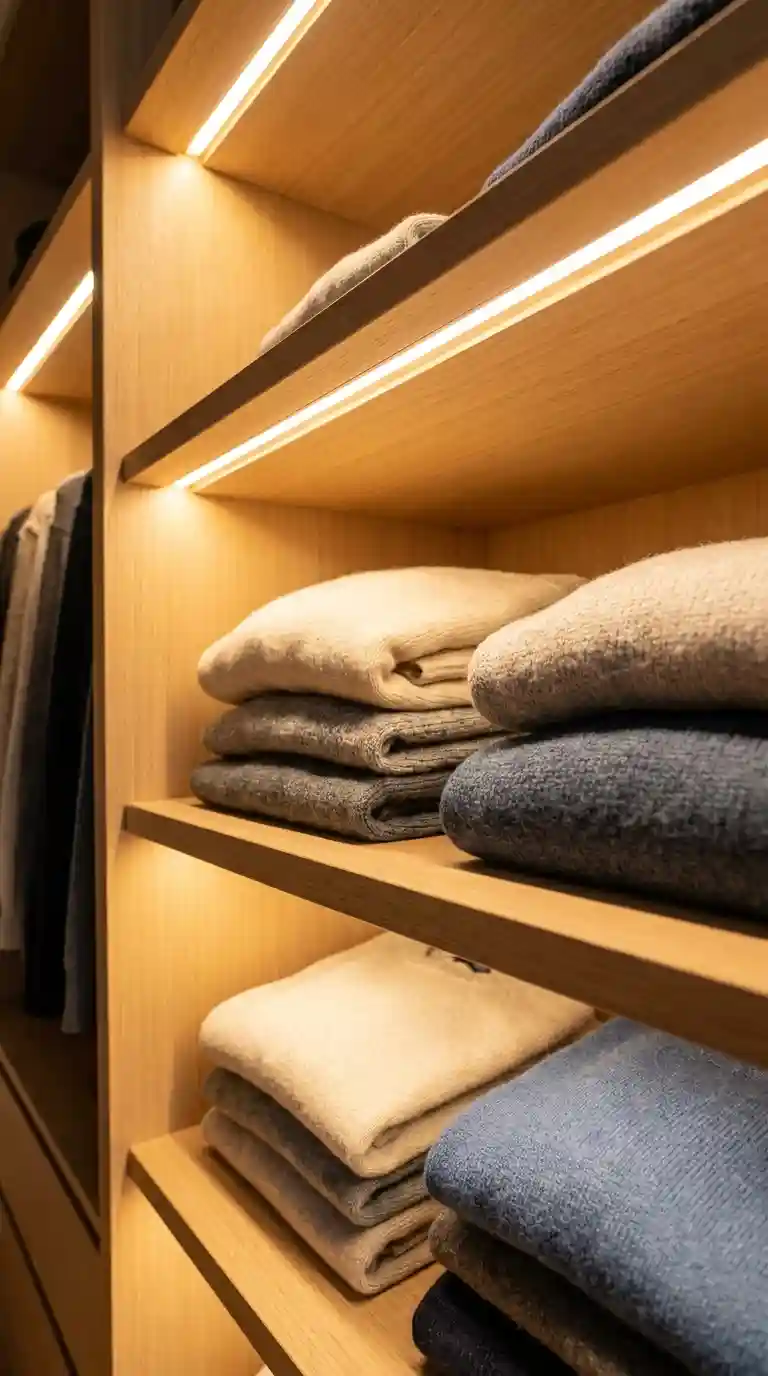
Lighting is one of the most underrated aspects of walk in closet organization, and it is also one of the easiest upgrades to overlook entirely. Poor lighting genuinely changes how you perceive color, which explains why so many people accidentally head out the door in navy convinced they were wearing black.
Bright, even overhead lighting spaced consistently across the ceiling eliminates shadows and gives you an accurate view of your actual wardrobe colors. Modern LED fixtures use minimal energy and last for years, making them a smart long term addition to any walk in closet organization plan.
Under shelf LED strip lighting has become a genuine favorite in recent years, illuminating the specific shelf below it so you can actually see what is stored there without needing to pull items down just to identify them. This detail also happens to look striking on a well organized shoe wall.
Motion sensor lighting is a small but genuinely useful upgrade, automatically turning on when you walk in and off when you leave, which is particularly handy if your hands are already full or if the closet does not have convenient access to a light switch near the entrance.
Good lighting does more than just help you see. It also makes an organized closet look and feel more intentional, turning what could be a purely functional space into something that feels closer to a small personal boutique.
Choosing the Right Hangers and Storage Materials
The small details in walk in closet organization matter more than people expect, and hangers are a perfect example of a detail that seems minor but affects the entire feel of a space.
Uniform, slim hangers create an immediate visual sense of order, even before you have organized a single item by category or color. Mismatched wire hangers, plastic hangers of different colors, and bulky wooden hangers all fighting for space create visual chaos regardless of how well categorized your clothes actually are.
Wooden hangers work particularly well for heavier items like coats and blazers, since they provide better structural support and help maintain the shape of the garment over time. Slim velvet or flocked hangers are ideal for lighter items and take up significantly less rod space, which matters enormously in a smaller walk in closet.
Drawer dividers, whether for a dresser inside the closet or a built in drawer system, keep folded items like t shirts and workout clothes from collapsing into a jumbled pile every time you pull one item out from the middle.
Clear storage bins for seasonal items or accessories let you see contents at a glance without needing to open and search through multiple opaque containers. Labeling these bins clearly adds another small layer of efficiency, especially for items that only come out a few times a year.
Also Read : Cute Apartment Decor Ideas That Will Actually Make Your Small Space Feel Like Home
Walk In Closet Organization for Couples Sharing One Space
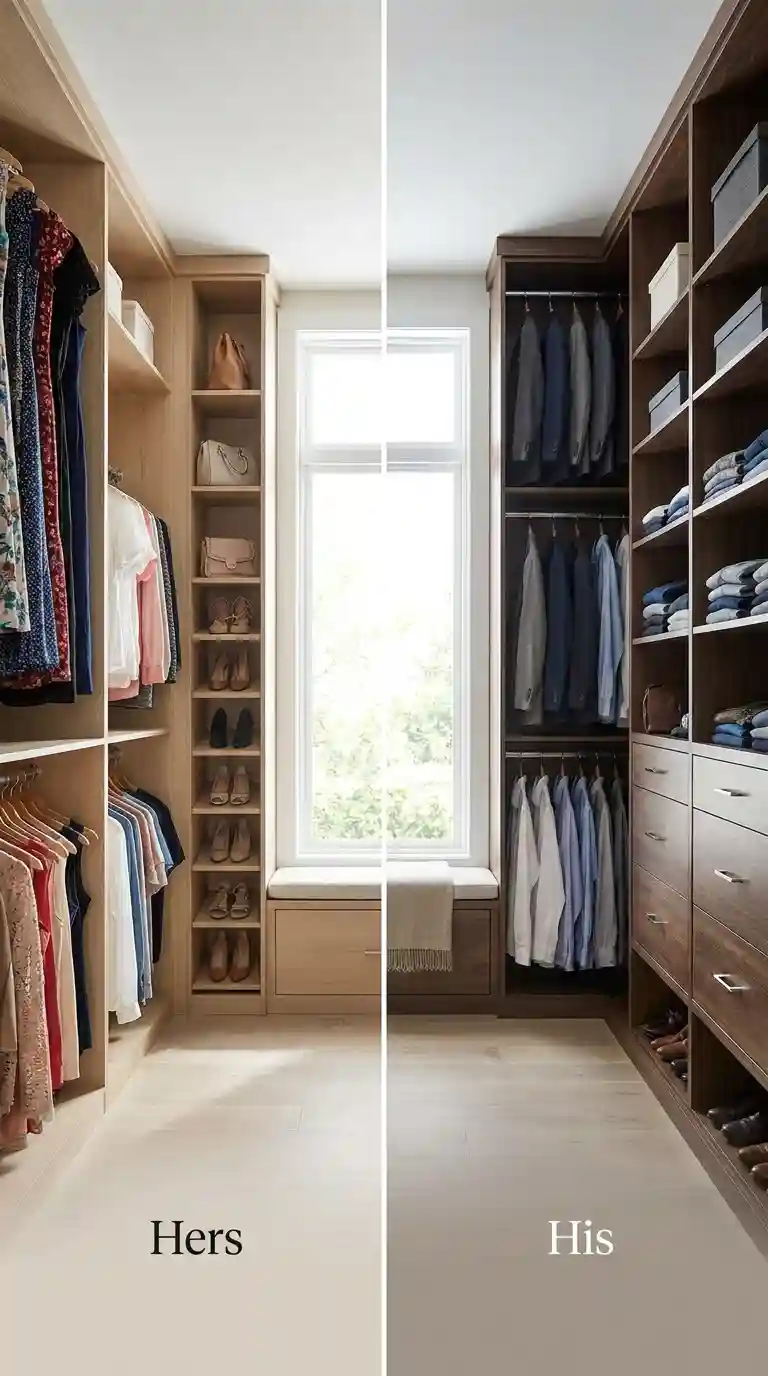
Sharing a walk in closet with a partner introduces a layer of complexity that solo closets simply do not have, and walk in closet organization for couples requires a bit more upfront planning to avoid daily friction.
Divide the space clearly, whether that means each person gets one full wall, or the room is split down the middle with a shared central section for items like shoes or accessories that do not belong exclusively to one person. Clear boundaries prevent the slow creep where one partner’s clothing gradually takes over shared shelving.
Account for genuinely different wardrobe needs. One partner might have significantly more hanging items while the other has more folded clothing, and a good walk in closet organization plan reflects that reality rather than splitting every shelf and rod exactly fifty fifty regardless of actual need.
A shared full length mirror and enough open floor space for two people to get dressed at the same time, even during a busy morning, makes a bigger difference to daily harmony than most couples expect until they actually have it.
Regular check ins about the system help keep shared walk in closet organization functional long term. What worked when you first set up the space might need small adjustments as wardrobes change with the seasons or with new jobs, new hobbies, or simply evolving personal style.
Walk In Closet Organization on a Budget
You do not need a large renovation budget to see real improvement in your walk in closet organization. Some of the most functional closets I have worked on used simple, inexpensive solutions rather than an expensive custom build.
Tension rods are a genuinely underrated tool for adding extra hanging space in an awkward corner or unused vertical gap without any permanent installation or major cost. They are particularly useful for renters who cannot drill into walls.
Repurposed furniture, like an old dresser or a set of stackable crates, can serve as functional folded storage inside a walk in closet without needing to buy a purpose built system. A fresh coat of paint or new hardware can make repurposed pieces feel intentional rather than mismatched.
Basic wire or wood shelving kits from any home improvement store offer a solid, budget conscious middle ground between a fully custom system and simply piling things on the floor. These kits are widely available and often simple enough to install as a weekend project.
Prioritize your spending toward the areas that will make the biggest daily difference. If budget is tight, invest first in quality hangers and a solid shelving unit for folded items, since these two changes alone tend to have the largest visible impact on a walk in closet’s overall organization.
The Closet Island Trend and Whether It Is Worth It
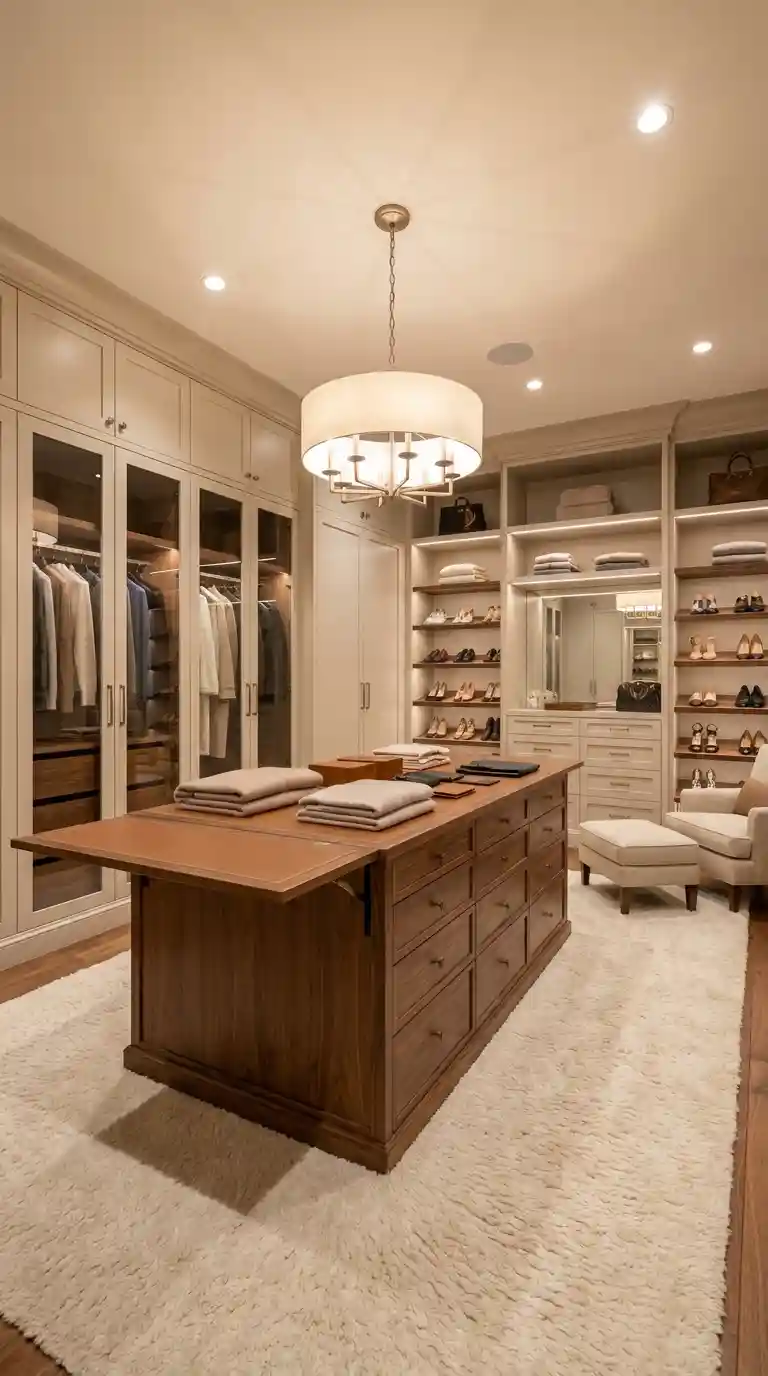
Closet islands have become one of the most talked about features in modern walk in closet organization, particularly in larger, more custom built spaces. A central island typically offers additional drawer storage along with a flat surface for folding laundry or laying out an outfit before getting dressed.
For larger walk in closets with enough floor space to spare, an island genuinely adds function beyond just aesthetics. It gives you a dedicated folding surface, extra storage for smaller items like jewelry or accessories, and a visual centerpiece that makes the room feel more like a finished dressing area than a simple storage closet.
For smaller walk in closets, an island can quickly become an obstacle rather than an asset, eating up floor space that is better used for actual movement and access to your hanging and folded storage. If your closet is on the tighter side, a slim console table or a small stool might achieve a similar folding surface function without sacrificing your walkway.
My honest advice here is to be realistic about your actual square footage before committing to an island. It looks wonderful in photos, but in a genuinely small space, it often ends up being more of a hindrance than a help to your overall walk in closet organization.
How I Approach a Real Walk In Closet Organization Project
Every project I take on starts the same way, with a conversation about frustration. I ask clients what specifically bothers them about their current closet, and the answer almost always points directly toward the first change that needs to happen.
I remember working with a couple who shared a walk in closet that had essentially become one person’s space with the other partner’s clothes crammed into whatever gaps were left. We started with a full cleanout, genuinely difficult conversations about what needed to go, and then rebuilt the layout with clearly divided sections for each of them. The biggest change was not the shelving or the hangers, it was the simple act of both people finally having a fair, defined space that matched their actual wardrobe.
I have also worked in closets so small that every single decision mattered. In one particularly tight space, we used vertical shelving all the way to the ceiling, slim uniform hangers, and a compact set of stackable drawers to fit a surprisingly large wardrobe into what was essentially the size of a large linen closet. The homeowner told me afterward that it felt bigger simply because she could finally see and reach everything without digging.
What strikes me every time is how emotional this process can be for people. A walk in closet holds a lot of personal history, old clothes tied to specific memories, gifts from people who mean a lot, items kept out of guilt rather than genuine use. Good walk in closet organization requires a bit of patience and gentleness alongside the practical planning, because for a lot of clients, this is not just a storage project, it is a small act of taking care of themselves.
Maintaining Your Walk In Closet Organization Long Term
Setting up a beautifully organized walk in closet is genuinely only half the work. Keeping it that way over the following months is where most walk in closet organization efforts actually succeed or fall apart.
A quick reset at the end of each week, putting away anything that has migrated out of place, makes an enormous difference in preventing small clutter from snowballing into a full mess again. This does not need to take more than a few minutes if you stay consistent with it.
Do a seasonal review every few months, especially at the changeover between warm and cold weather, when your wardrobe naturally shifts. This is a natural checkpoint to rotate seasonal items in and out of prime, easy to reach space, and to reassess whether anything needs to be donated before it takes up space for another full year.
Involve anyone sharing the space in maintaining the system, not just setting it up. A closet stays organized far longer when everyone using it understands the logic behind where things belong and why the layout works the way it does.
If a specific part of your walk in closet organization is not working after a genuine trial period, change it. The best system is the one that matches how you actually get dressed every morning, not necessarily the one that looked the most impressive on the day it was finished.
Common Mistakes That Undermine Good Walk In Closet Organization
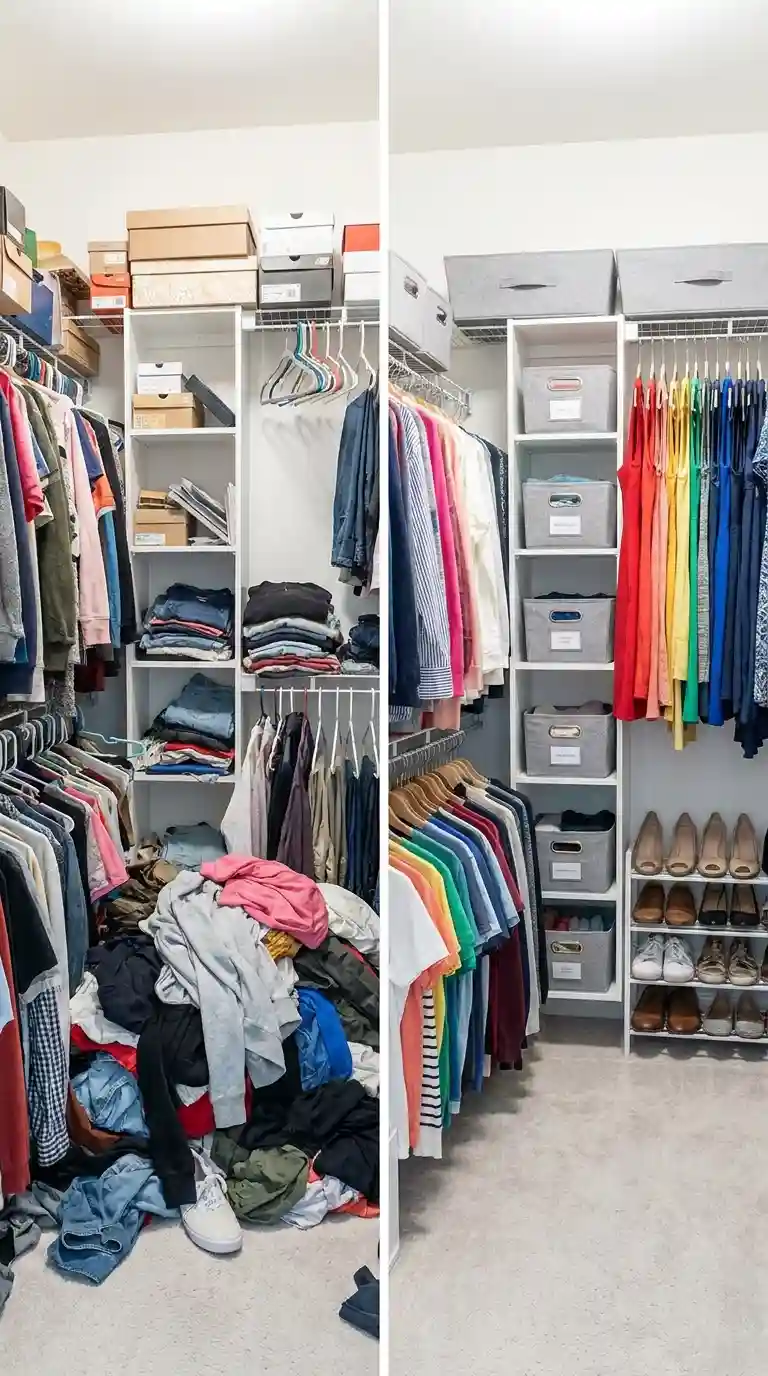
After working through so many of these projects, the same handful of mistakes tend to show up again and again, quietly undoing otherwise solid walk in closet organization plans.
Skipping the cleanout and going straight to buying storage products is probably the single most common issue. Without removing genuine excess first, even beautifully designed shelving ends up overstuffed within a matter of weeks.
Ignoring actual measurements before purchasing shelving, rods, or bins leads to wasted money and awkward gaps that never quite fit the space properly. Always measure first, without exception.
Overcrowding the closet with too much furniture, particularly in smaller spaces, sacrifices the clear walking area that makes a room actually feel functional rather than just visually impressive in a photo.
Forgetting about lighting entirely, treating it as an afterthought rather than a core part of the plan, results in a space that never quite looks or functions as well as it could, regardless of how well everything else is organized.
Failing to plan for maintenance. Even the most beautifully designed walk in closet organization system will slowly decline without a bit of regular upkeep, and skipping this step undoes a lot of the initial hard work within just a few months.
Read Also: 45 Bold Hallway Paint Ideas That Will Instantly Brighten And Transform Your Home
Walk In Closet Organization for Renters
Renting adds its own set of restrictions to walk in closet organization, since permanent installation is often not an option, but that does not mean your options are limited to a bare minimum.
Freestanding shelving units and modular rod systems offer nearly all the function of a built in system without requiring any drilling or permanent alteration to the space. Many of these systems can be disassembled and taken with you at the end of a lease.
Tension rods, adhesive hooks rated for the weight they need to hold, and stackable bins are all rental friendly tools that add genuine function to a walk in closet without violating a typical lease agreement.
Bring your own lighting solution if the existing fixture is inadequate. Battery operated or plug in LED strips can be installed and removed without any permanent changes, giving you the benefit of good lighting even in a temporary living situation.
Focus your investment on items that will move with you to your next home. Quality hangers, modular shelving, and storage bins are all things that transfer easily from one rental to the next, making them a smarter long term purchase than anything permanently fixed to the walls of a space you do not own.
Seasonal Walk In Closet Organization Adjustments
A walk in closet naturally needs to shift a bit with the seasons, and building this rotation into your ongoing walk in closet organization plan keeps the space functional year round rather than static.
Heavy winter coats and sweaters can move to prime, easy to reach space during colder months, while lighter summer clothing shifts toward a higher shelf or a less accessible section until the weather changes again.
Off season shoes, like winter boots during summer or sandals during winter, can be stored in labeled bins on a higher shelf, freeing up prime shoe display space for what you are actually wearing during the current season.
A seasonal changeover is also a natural moment to do a mini cleanout, since trying on last year’s clothing as you swap seasons quickly reveals what still fits your body, your style, and your actual life versus what has simply been taking up space out of habit.
People Also Ask
What is the best layout for walk in closet organization?
The best layout depends on your room’s shape and size. A single wall layout works well for narrow spaces, an L shape opens up floor room for a bench or mirror, and a U shape offers maximum storage for larger rooms with enough square footage to spare.
How do I organize a small walk in closet?
Focus on vertical space with shelving that reaches the ceiling, use slim uniform hangers to save rod width, and consider double hanging rods for shorter items to effectively double your hanging capacity.
How much does custom walk in closet organization cost?
Costs vary significantly based on materials, size, and whether you choose a fully custom system or a modular store bought option. Custom builds represent a larger investment but tend to maximize every inch of available space precisely.
What is the best way to organize clothes in a walk in closet?
Group clothing by category first, such as dresses, tops, and bottoms, then refine further by color within each category. This combination makes finding a specific item significantly faster than organizing by color alone.
Do I need professional help for walk in closet organization?
For larger renovations or fully custom builds, professional help offers precise measurements and expert layout planning. For smaller updates like better hangers, shelving, or a basic decluttering session, most people can handle walk in closet organization on their own.
How do I organize shoes in a walk in closet?
Open shelving with slight angling keeps shoes visible and easy to grab. Grouping by type, such as sneakers, heels, and boots, or by frequency of use, both work well depending on your personal preference.
What lighting is best for walk in closet organization?
Bright, even overhead LED lighting combined with under shelf strip lighting gives the clearest, most accurate view of your wardrobe colors while highlighting specific shelves without needing to pull items down to see them.
How often should I reorganize my walk in closet?
A quick weekly reset helps maintain daily order, while a deeper seasonal review every few months, especially at the change of seasons, keeps your walk in closet organization functioning well throughout the entire year.
What should I do with clothes I no longer wear?
Items unworn for over a year without genuine sentimental value are strong candidates for donation. Regularly releasing these items is one of the most effective habits in maintaining good walk in closet organization long term.
Can renters achieve good walk in closet organization?
Yes, freestanding shelving, tension rods, adhesive hooks, and modular systems all provide genuine function without requiring permanent installation, making solid walk in closet organization achievable even in a rental property.





One comment on “Walk In Closet Organization: The Ultimate Guide to a Calm, Functional Dream Space”