

A workable bedroom reading nook fits into a corner about 90 by 90 centimetres, costs £60 to £120 if the chair is bought second-hand or already owned, and takes about 90 minutes to set up properly, including testing the light. The one decision that matters most is distance from the bed: keep the chair at least one full step away from the mattress, so the nook feels like a separate place to sit, not an extension of the bed.
Why does a reading chair in a bedroom so often go unused?
Most unused reading chairs fail for one of three practical reasons, not for lack of taste. The light falls on the wrong side, so reading means squinting or holding the book at an angle; there is nowhere within arm’s reach to put a mug or glasses; or the chair is placed so close to the bed that it becomes a dumping ground for clothes. Fix those three things first, and the chair gets used; buy a prettier chair without fixing them, and it will stay empty.
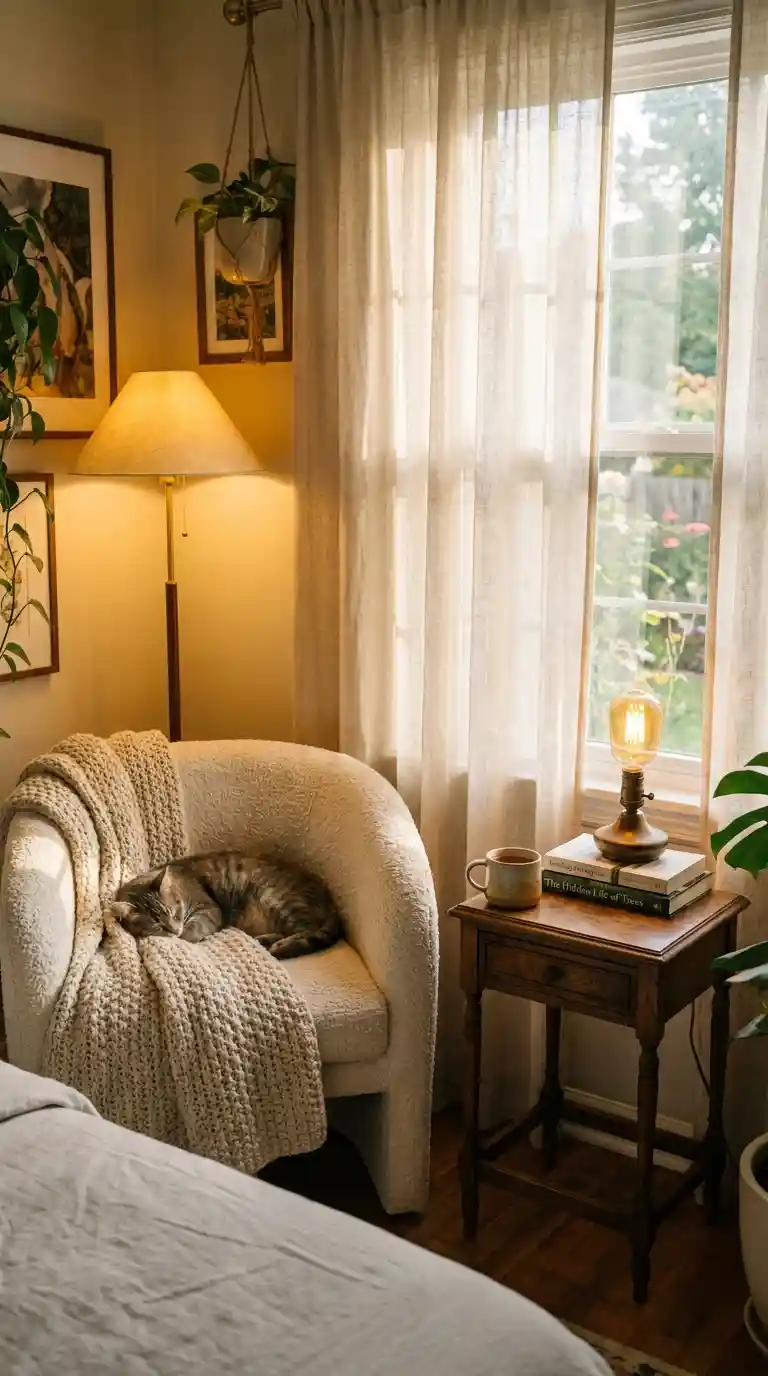
The photo above shows the basic test: sit in the chair with a book, a mug and a lamp switched on, and stay there for 20 minutes. If anything needs adjusting in that time, adjust it now, before calling the nook finished. A nook that passes a 20-minute sit will usually be used daily; one that only looks right in a photograph will not.
How much space does a nook really need?
A corner of 90 by 90 centimetres is enough for a slim armchair, a small side surface and a floor lamp, provided the chair is no wider than about 70 centimetres and the lamp stands behind or beside it, not in front. Measure the corner before buying: allow 60 centimetres of clear floor in front of the chair for legs and a footrest, and check that the door can still open fully and that the route to the bed is not blocked.
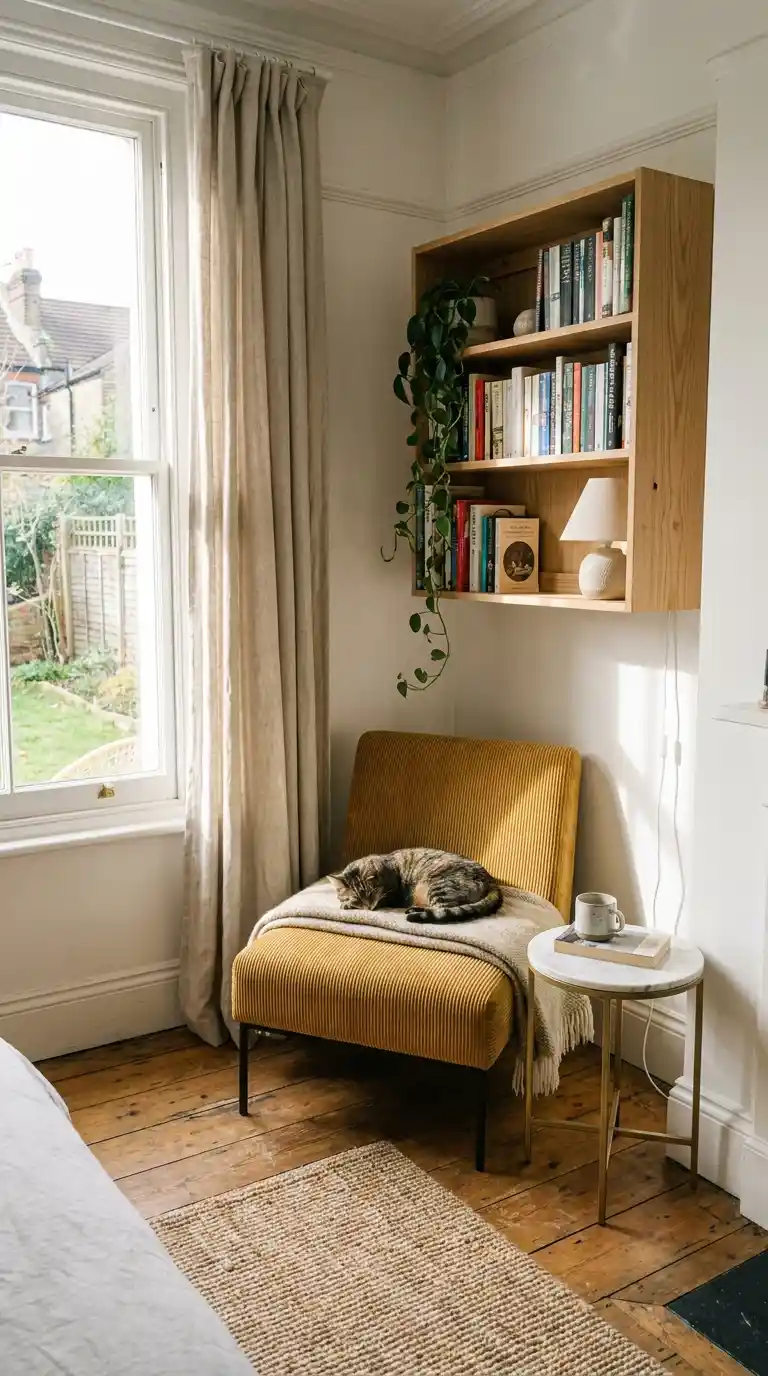
In a very small bedroom, use the wall instead of the floor: a floating shelf at arm height, about 65 centimetres from the floor when seated, replaces a side table, and a wall-mounted reading light replaces a floor lamp. Angling the chair at 45 degrees into the corner, rather than flat against a wall, also makes a tight space feel deliberate, because the chair faces into the room instead of into a wall.
How do you choose a chair you can sit in for an hour?
Choose the chair by sitting in it with a book, not by how it looks from the doorway. The seat should be deep enough that the lower back touches the backrest while the knees stay bent at roughly a right angle, and the arms should be low enough to rest a book on without hunching the shoulders. A chair that forces the reader to perch on the edge, or to pile cushions behind their back to reach the backrest, will be abandoned within a week, however attractive it is.
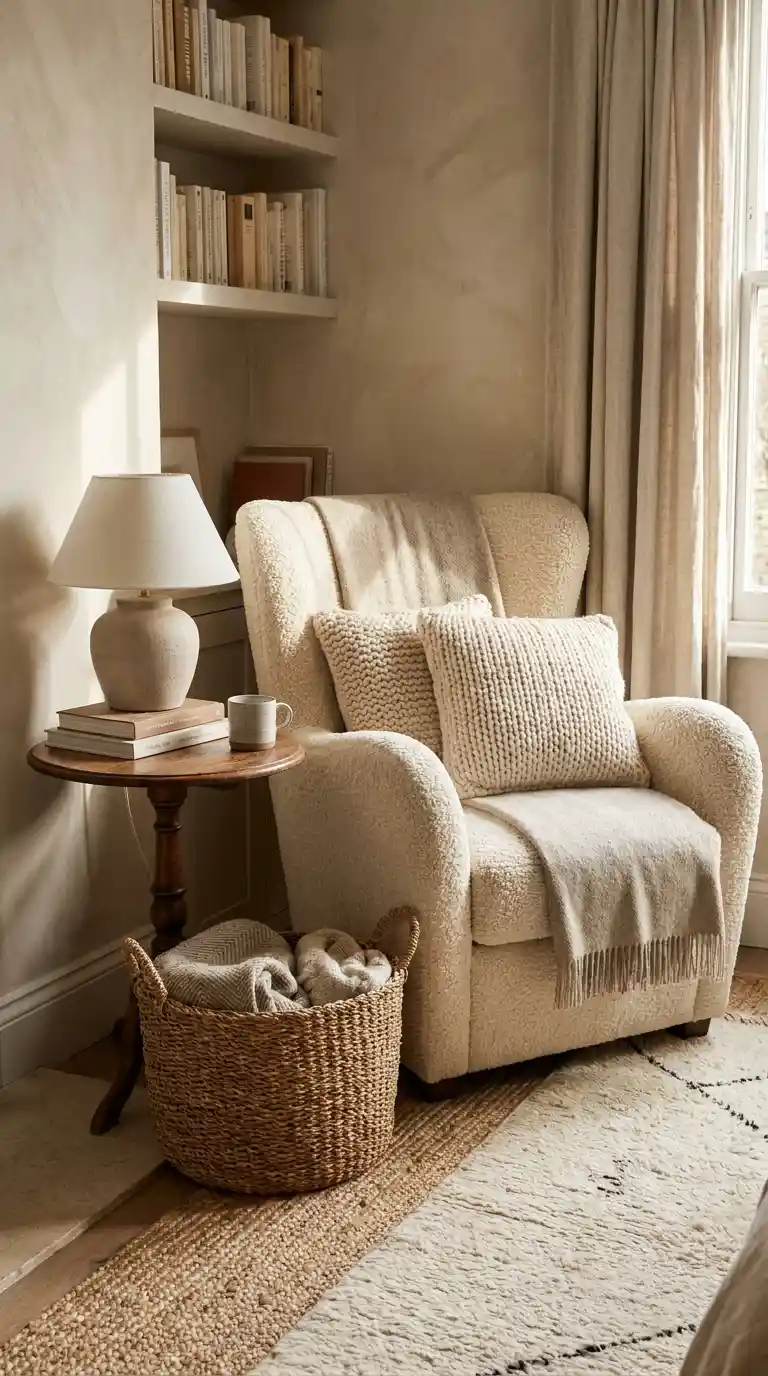
For most bedrooms, a slipper chair or a compact armchair without wide, rolled arms is the better choice, because it saves 15 to 20 centimetres of width compared with a full lounge chair, and that width is often the difference between a nook and a blocked walkway. A footrest matters almost as much as the chair: a small ottoman at the same seat height lets the reader shift position during a long chapter, which is what actually keeps someone sitting for an hour.
What lighting lets you read without straining your eyes?
Use a warm-white bulb of 2700 to 3000 kelvin, positioned so the light falls over the shoulder onto the page, not directly into the eyes and not from behind the reader’s head, which casts a shadow over the book. An adjustable-arm floor lamp is the most forgiving choice, because it can be aimed precisely and moved when the chair moves; a fixed ceiling light, however bright, rarely lands in the right place for reading. The same task-lighting logic used for a first desk setup applies here: light the work, not the whole room.
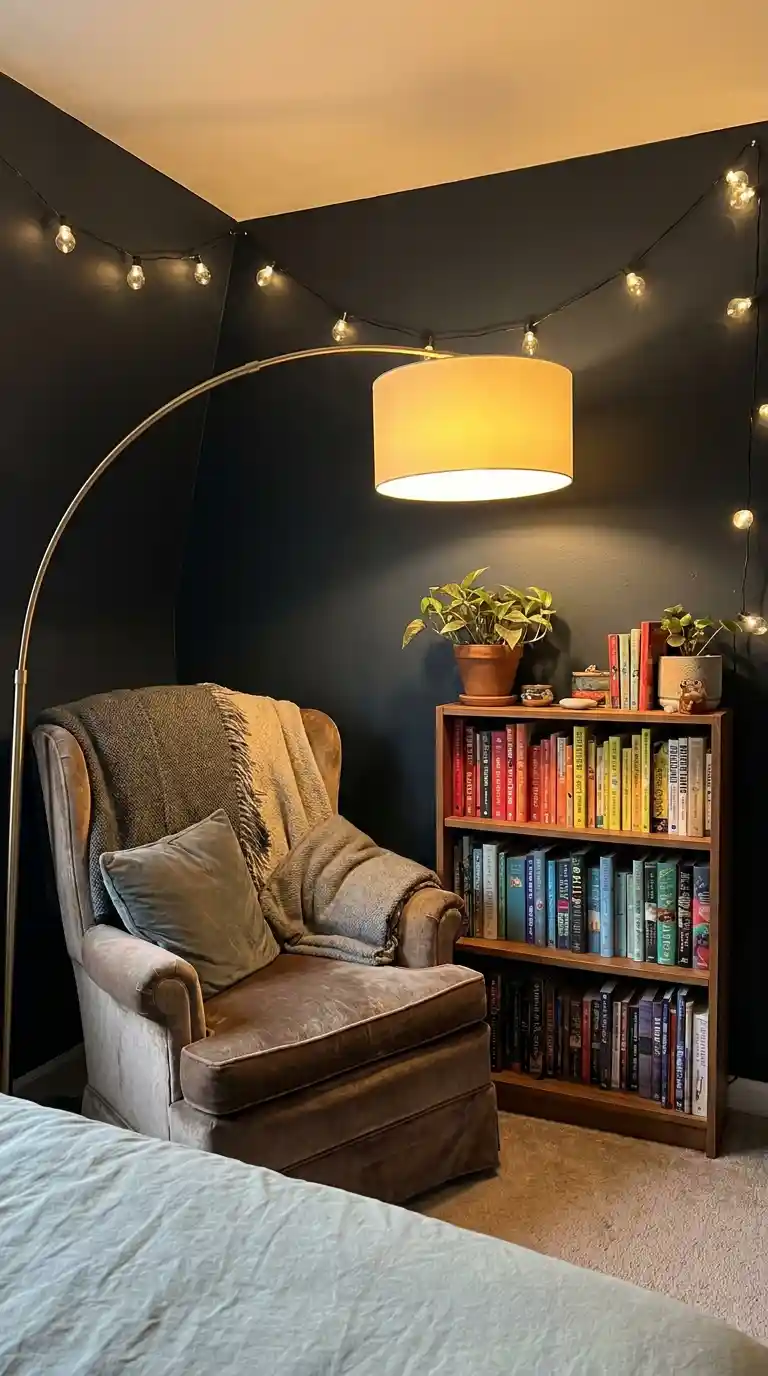
A nook without a window needs a second, softer light as well, such as a small table lamp or a dimmable bulb, so the corner does not feel like an interrogation spot at night. Set the reading lamp about 40 centimetres above the seated shoulder height, and test it after dark: if the page is evenly lit without glare on glasses or a screen, the position is right. A dimmer is worth the small extra cost, because evening reading and late-night reading rarely want the same brightness.
Where do the books, mug and glasses actually go?
Give every nook item one home within arm’s reach, or the chair arm and the floor become the storage. A small side surface of about 40 centimetres square holds a mug and a book; a basket or a low shelf beside the chair holds the next two books and a throw; and a hook or a tiny tray on the wall keeps glasses safe. If an item has no spot, it ends up balanced on the chair arm, which is how mugs get knocked over and glasses get lost.
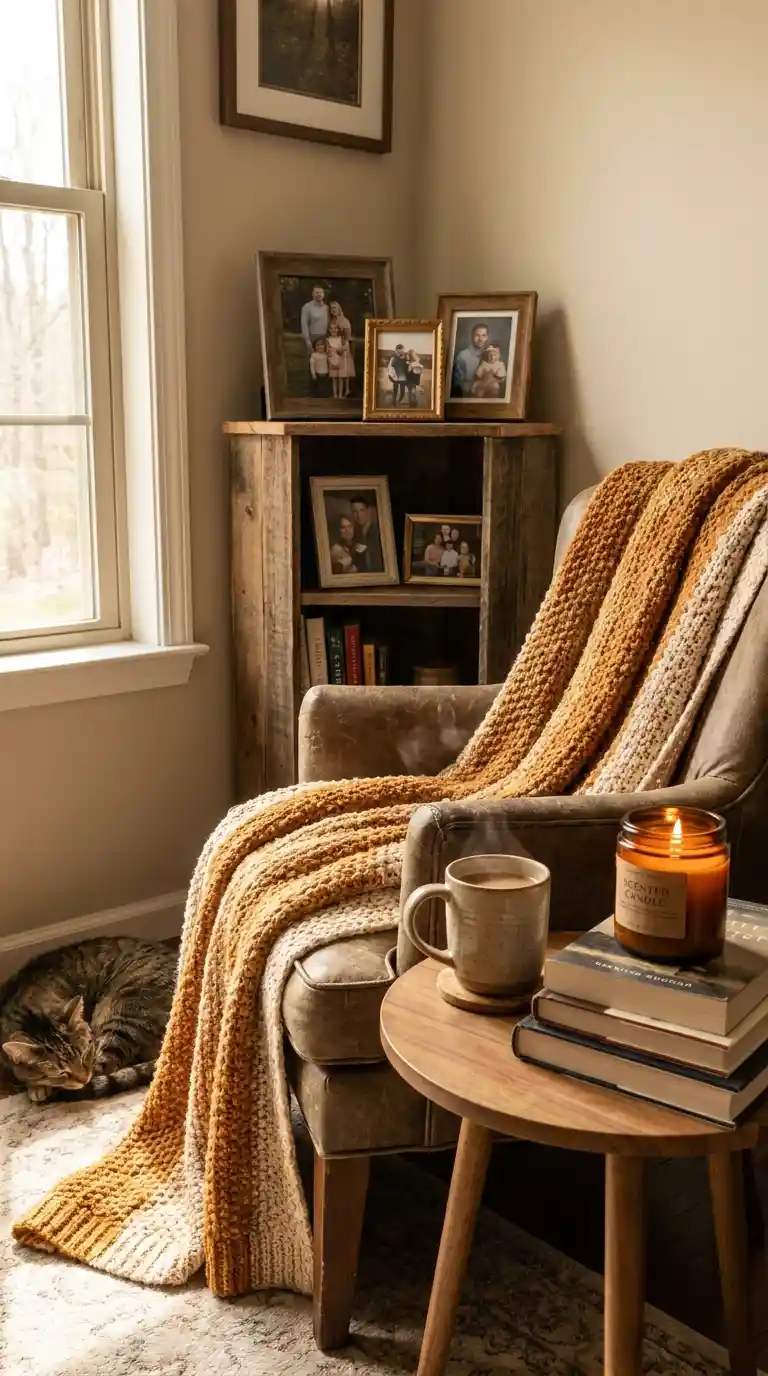
Keep the surface rule simple, as with coffee table styling: at least one third of the side surface stays empty at all times. That empty third is where the mug goes down without moving a stack of books first. Personal touches belong on the wall or the shelf, not on the working surface: one framed print, one small plant, and the throw on the chair are enough, and anything more competes with the book for space.
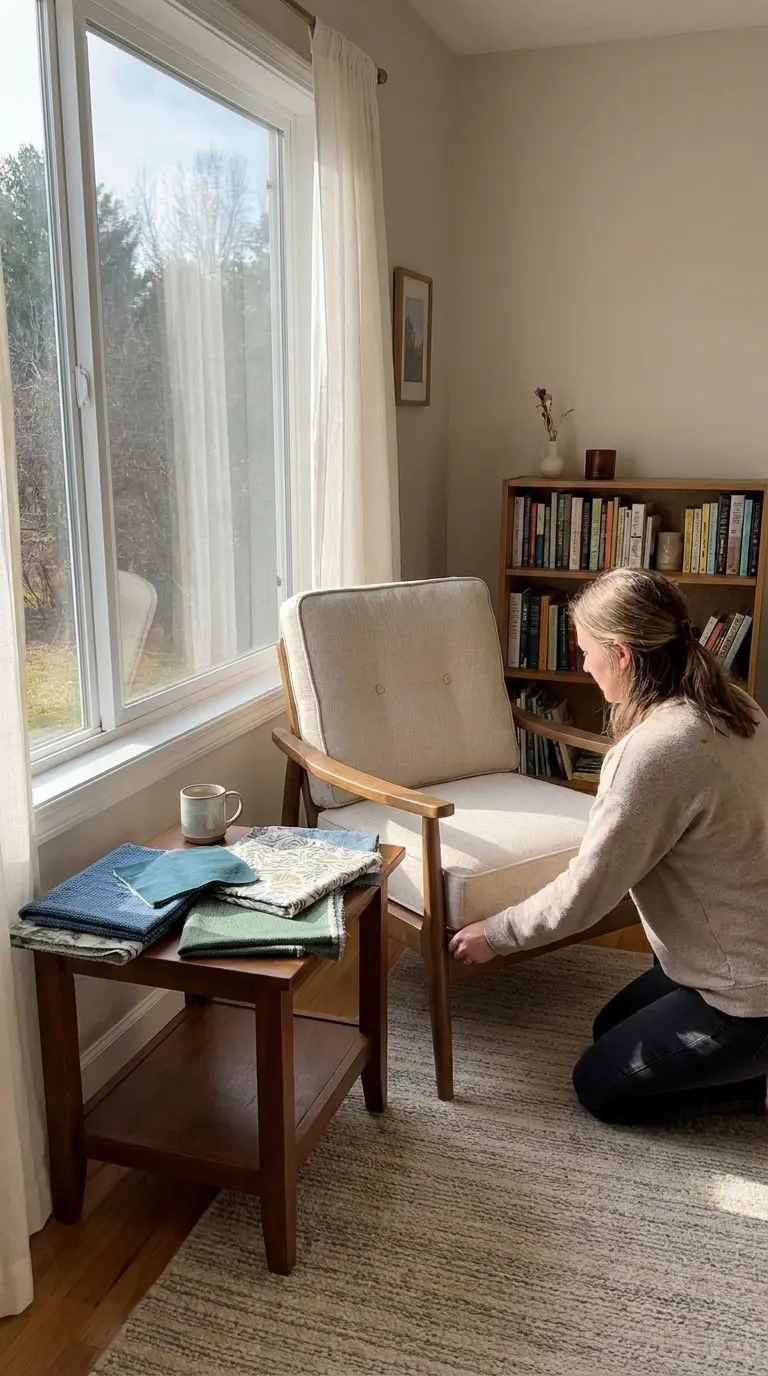
Before buying a new basket or shelf, sort what the nook already holds: books finished months ago go back to the main shelf, and only the current book and the next one stay beside the chair. A nook that holds two books reads as calm; a nook that holds twelve reads as a storage corner, and it stops inviting anyone to sit down.
How do you fit a nook into a small bedroom or studio?
In a studio, the nook has to do two jobs without looking like a compromise: a comfortable chair by day for reading, and part of the living area by night. Choose a chair that reads as a living-room chair rather than a bedroom chair, and place a small rug, about 120 by 90 centimetres, under it to mark the nook as its own zone. The rug is the cheapest way to separate reading space from sleeping space when there is no wall between them.
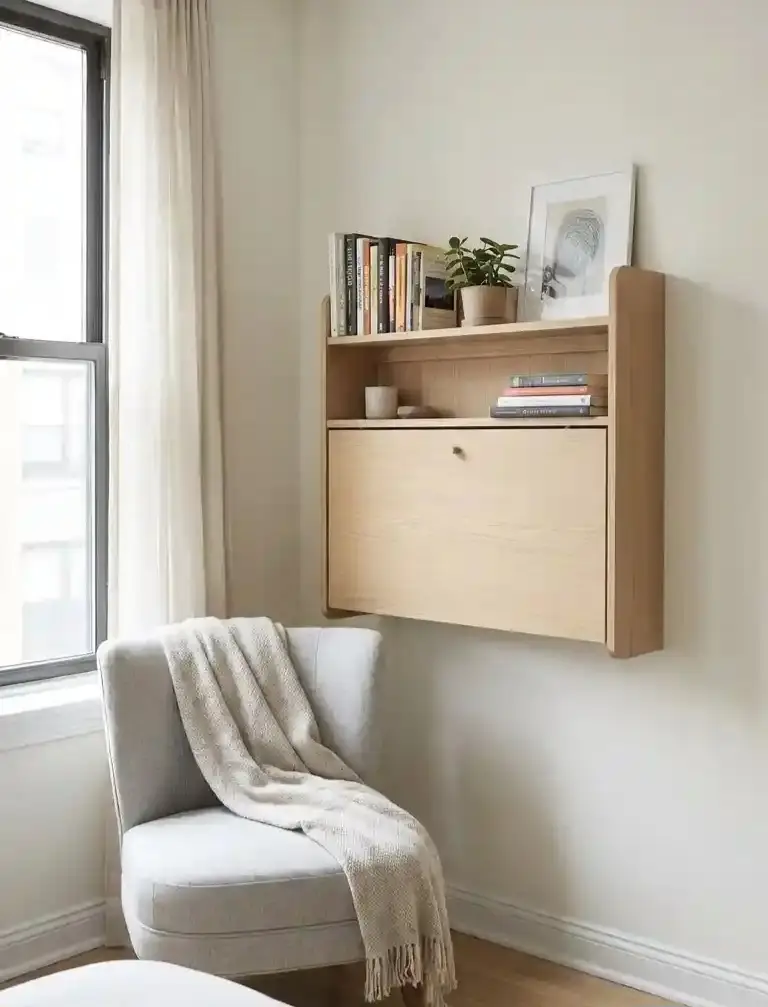
If the only free corner is beside a wardrobe or a door, check the swing and the walkway before committing: the chair must not block a drawer or a door, and at least 60 centimetres of clear passage must remain to the bed. When no corner works at all, a wide windowsill with a cushion and a clip-on reading light can serve as a nook for shorter sessions, provided the cushion is thick enough to sit on for 30 minutes without the sill edge digging into the legs.
How much should a first reading nook cost?
A first nook costs £60 to £120 when the chair is already owned or bought second-hand, the lamp is a basic adjustable model, and the side surface is a small stool or a floating shelf. Buying everything new, including a compact armchair, pushes the total to £200 to £350, and that is still a sensible ceiling: beyond it, the extra money usually buys styling, not comfort. Spend first on the lamp and the chair, because those two decide whether the nook gets used; spend last on the throw, the print and the basket.
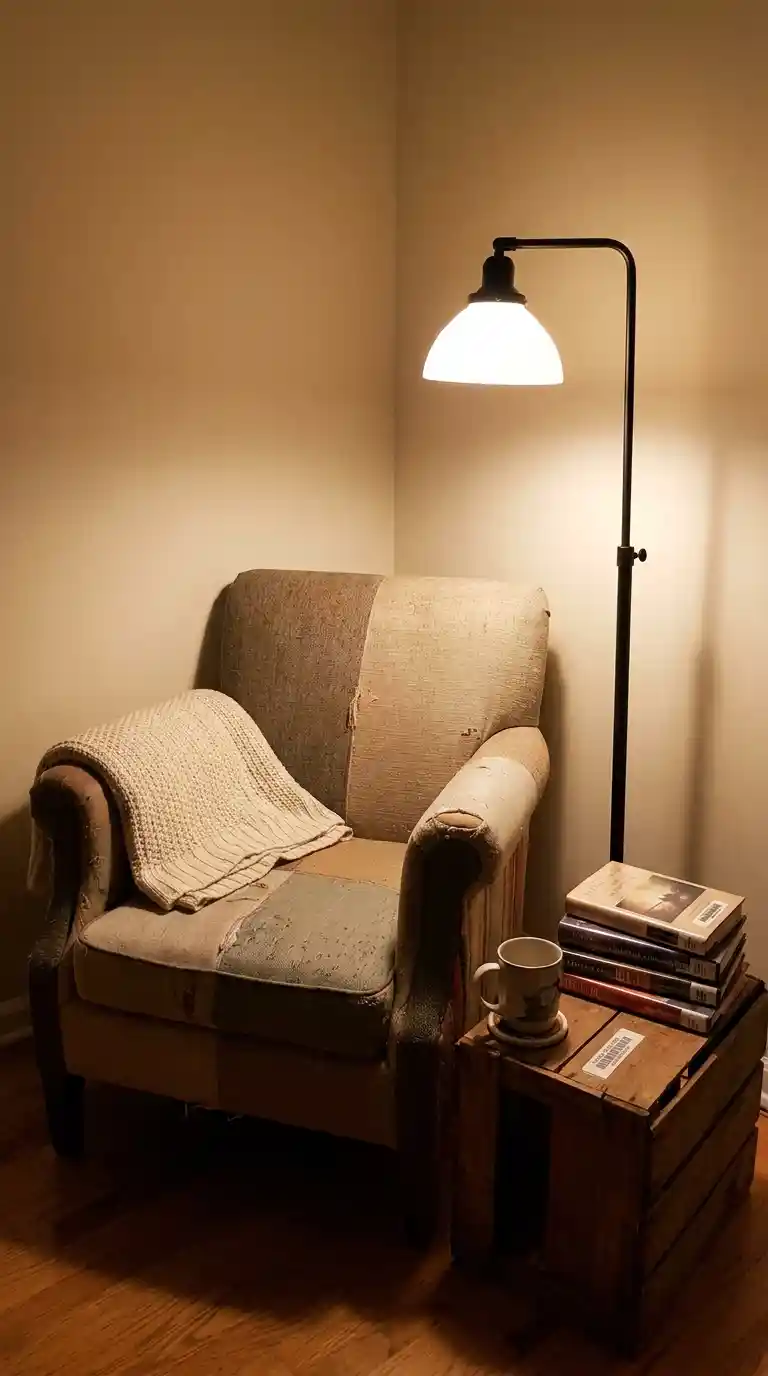
Before buying anything, do the same sort used in kitchen drawer organisation: check what the house already holds. A spare stool, a lamp from another room, a throw from the linen cupboard and a basket from the hallway often cover three of the four nook items, leaving only the chair to buy. Budget spent on duplicates is budget wasted, and a nook built from existing pieces settles in faster because every item already has a reason to be there.
What mistakes make a cosy corner uncomfortable?
The commonest mistake is choosing the chair for the room instead of for the reader: a deep, soft chair looks inviting but leaves shorter readers with dangling feet and no back support, while a stiff upright chair discourages long sessions. The second mistake is overfilling: three throws, four cushions and a pile of books turn the nook into a display, and clearing it before every sit becomes a chore. Keep one throw and at most two cushions, and remove anything that has to be moved before sitting down.
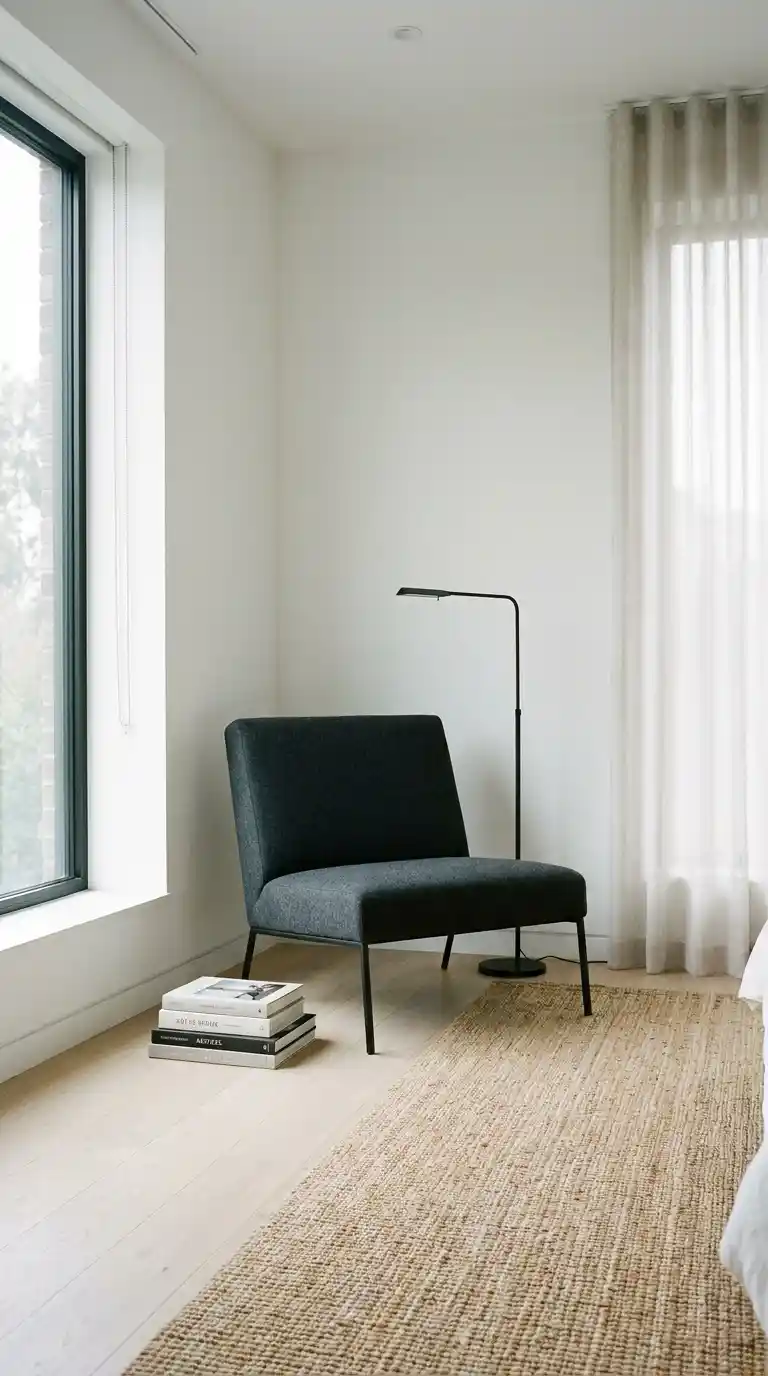
The photo above shows the pared-back test: chair, light, one surface and one throw, with nothing else competing for attention. The third mistake is light that is too dim or too harsh, which causes eye strain within 20 minutes; if reading ends because of tired eyes rather than a finished chapter, the lamp position or the bulb is wrong, not the reader. Finally, a nook placed where the morning sun hits the page directly will glare at the same hour every day, so test the light at the time of day the nook will actually be used.
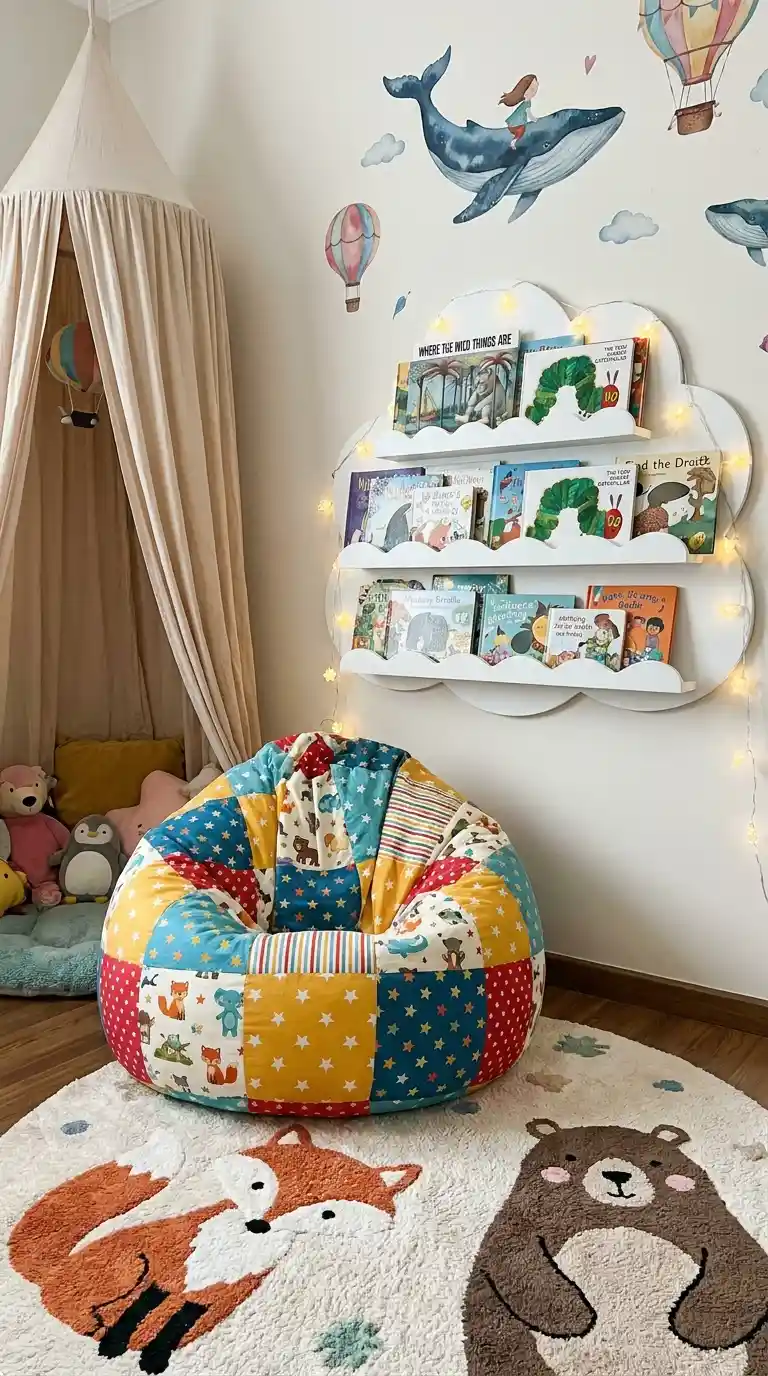
For children and teenagers, the same rules apply at their scale: a seat low enough that feet touch the floor, a light at their shoulder height rather than an adult’s, and a basket they can reach without standing. A nook that only works for an adult will be ignored by a child, however colourful it looks, because the physical fit is wrong.
Questions worth asking before you buy anything
How much space do you need for a bedroom reading nook?
A corner of about 90 by 90 centimetres is enough for a slim chair, a small side surface and a lamp, with 60 centimetres of clear floor in front of the chair for legs. Measure the corner and the chair width before buying, and check that doors and drawers can still open fully.
What is the best lighting for a reading nook?
A warm-white bulb of 2700 to 3000 kelvin in an adjustable-arm lamp, positioned so light falls over the shoulder onto the page. Avoid light from directly behind the reader, which casts a shadow over the book, and add a dimmer so evening and late-night reading can use different brightness.
What chair is best for reading for an hour?
A chair whose backrest supports the lower back while the knees stay bent at roughly a right angle, with arms low enough to rest a book on without hunching. Sit in it with a book for 20 minutes before deciding; a chair that forces perching on the edge will be abandoned quickly.
How much should a first reading nook cost?
Between £60 and £120 when the chair is already owned or bought second-hand, covering a basic adjustable lamp, a small surface and a throw. Buying everything new, including a compact armchair, brings the total to about £200 to £350, with the lamp and chair worth funding first.
Can a reading nook work without a window?
Yes, provided the lighting is right: one adjustable reading lamp plus a second, softer light so the corner does not feel harsh at night. A windowless corner also benefits from a lighter wall colour and one framed print, which stop it feeling like a dark alcove.
Start with the chair, the lamp and one surface, and read in the corner for two weeks before buying anything else. If an item is moved every time a book is opened, it does not belong in the nook.





2 Comments on “How to Make a Bedroom Corner You Actually Read In”