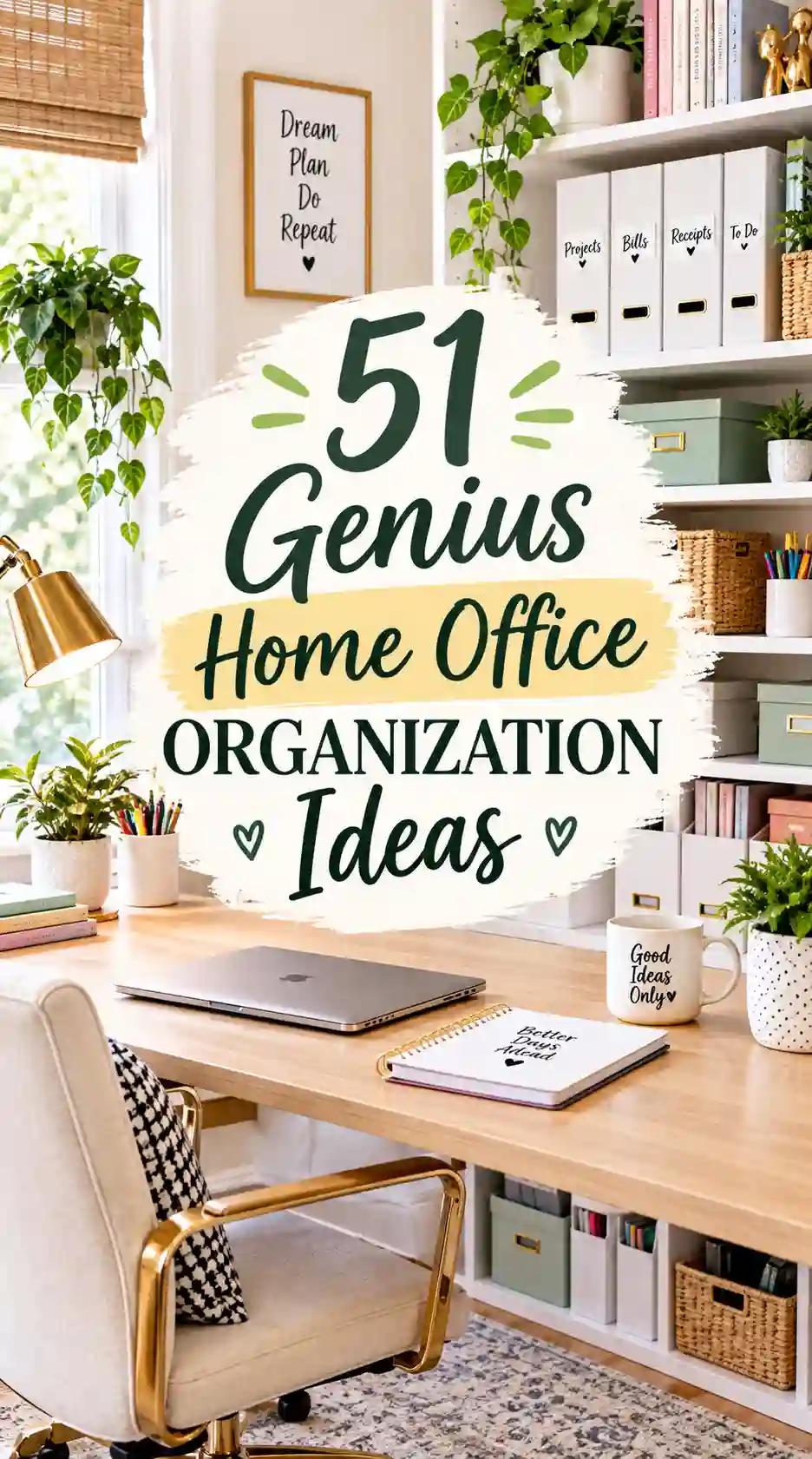
If you have ever sat down at your desk on a Monday morning and felt your shoulders tense up before you even opened your laptop, you already know what a messy workspace does to a person. I have been there more times than I would like to admit. Papers everywhere, three coffee mugs from three different days, a tangle of charging cables that looked like a bird’s nest, and a sticky note graveyard on my monitor that I never actually read. That was my home office about two years ago, and honestly, it was making my work life so much harder than it needed to be.
Since then I have spent a stupid amount of time testing, rearranging, failing, and slowly figuring out what actually works when it comes to home office organization ideas. Not the fancy Pinterest versions that look great in photos but fall apart after a week. I mean real, livable, working systems that hold up when you are juggling deadlines, video calls, and a dog that keeps scratching at your door.
This article is everything I have learned, organized in a way that I hope actually helps you, whether you work from a spare bedroom, a converted closet, or a corner of your living room. We are going to go deep into practical home office organization ideas that fit real budgets and real spaces, not showroom fantasies.
Grab a coffee. This is going to be a long, honest, thorough guide.
Related Post : Office Furniture Design Ideas: The Ultimate Guide to a Smarter, More Inspiring Workspace
Why Home Office Organization Ideas Matter More Than You Think
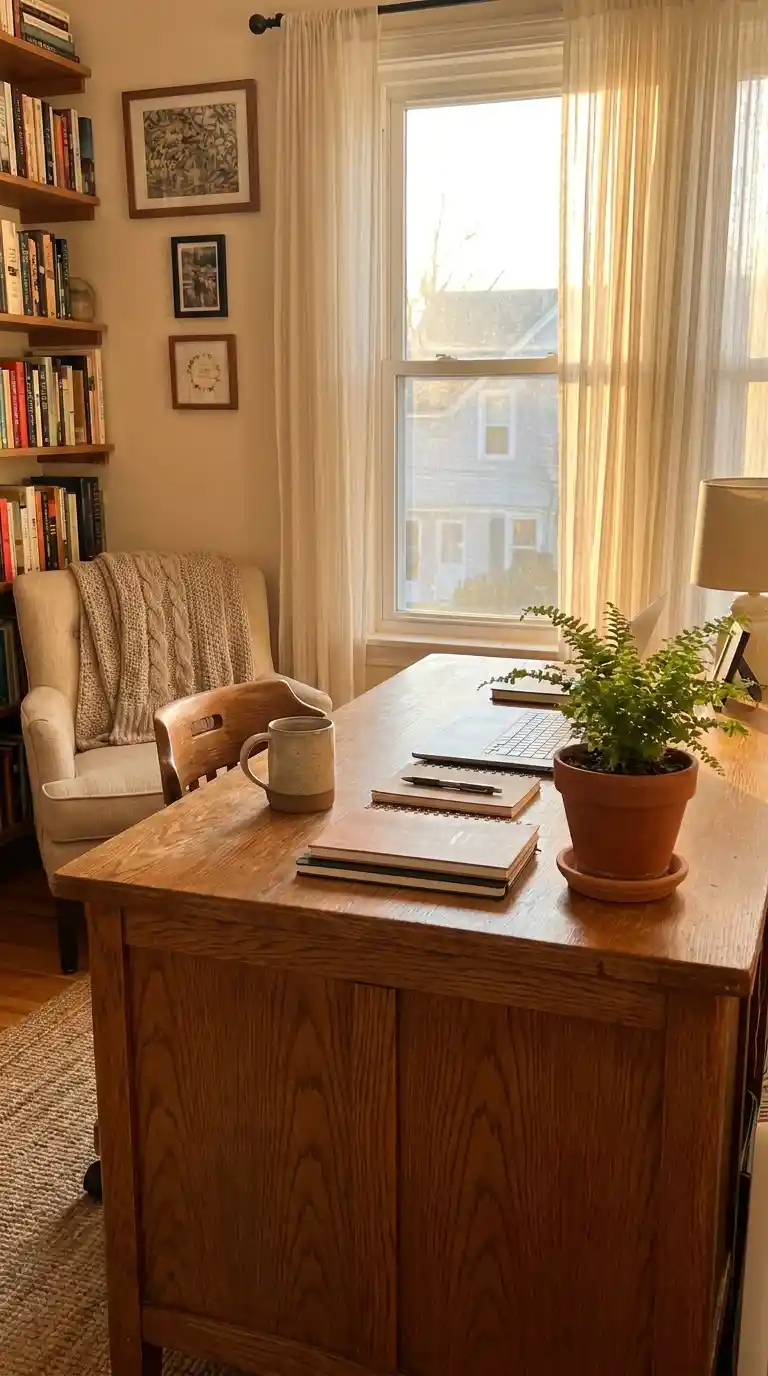
I used to think organization was just about looking tidy. Turns out that is only a small part of the picture. When your workspace is cluttered, your brain treats every object in your line of sight as an unfinished task. Researchers who study attention and workspace design have found that visual clutter competes for the same mental resources you need for focused work. In plain terms, that pile of unopened mail on the corner of your desk is quietly draining your concentration all day long, even if you are not consciously looking at it.
Good home office organization ideas are not about being a perfectionist or having a home that looks like a magazine spread. They are about removing friction. Every extra second you spend digging through a drawer for a pen, every minute you lose looking for a cable, every ounce of stress from seeing a messy corner out of the side of your eye, that all adds up across a workday, a workweek, a year.
I noticed the difference almost immediately after I started applying real home office organization ideas to my own setup. My start of day routine got shorter. My video calls looked more professional because my background was not a disaster zone. I stopped losing important documents. And honestly, I just felt calmer sitting down to work each morning.
There is also a financial side to this that people rarely talk about. When your home office is organized, you buy fewer duplicate supplies because you can actually see what you already own. You lose fewer physical documents, which matters a lot if you are self employed and dealing with receipts and invoices. You waste less time, which for freelancers and business owners is literally money.
So before you skip ahead thinking this is just about buying pretty bins, understand that home office organization ideas are really about protecting your time, your focus, and your sanity.
Assessing Your Space Before You Start
Every good project starts with an honest look at what you are actually working with. Before you buy a single storage bin or download another organization app, take fifteen minutes and really study your space.
Take Everything Off Your Desk
I know this sounds tedious, but clear your desk completely. Every pen, every paper, every cable. Put it all in a box or on the floor nearby. Now look at the empty surface. This is your blank canvas, and seeing it completely clear helps your brain reset its expectations for what “normal” should look like.
Sort Into Three Simple Piles
As you go through everything you removed, sort it into three categories. Keep, which means items you use weekly. Relocate, which means items you need but not on your desk. And release, which means items you can donate, recycle, or throw away. Most people are shocked at how much ends up in the release pile. My own first attempt at this had me tossing out eleven old notebooks I had not opened in over a year.
Measure Your Actual Space
Grab a tape measure and note the dimensions of your desk, your walls, and any nearby shelving. This matters because so many home office organization ideas fail simply because people buy storage solutions that do not fit their actual space. I made this mistake with a drawer organizer that looked perfect online and then did not fit inside my desk drawer at all.
Identify Your Biggest Pain Point
Ask yourself honestly what bothers you most about your current setup. Is it cables? Paper clutter? Not having a place for supplies? Knowing your single biggest frustration helps you prioritize which home office organization ideas to tackle first instead of trying to fix everything at once and burning out halfway through.
Also Read : 45 Cozy Bedroom Reading Nook Ideas That Will Instantly Upgrade Your Space
Home Office Organization Ideas for Small Spaces
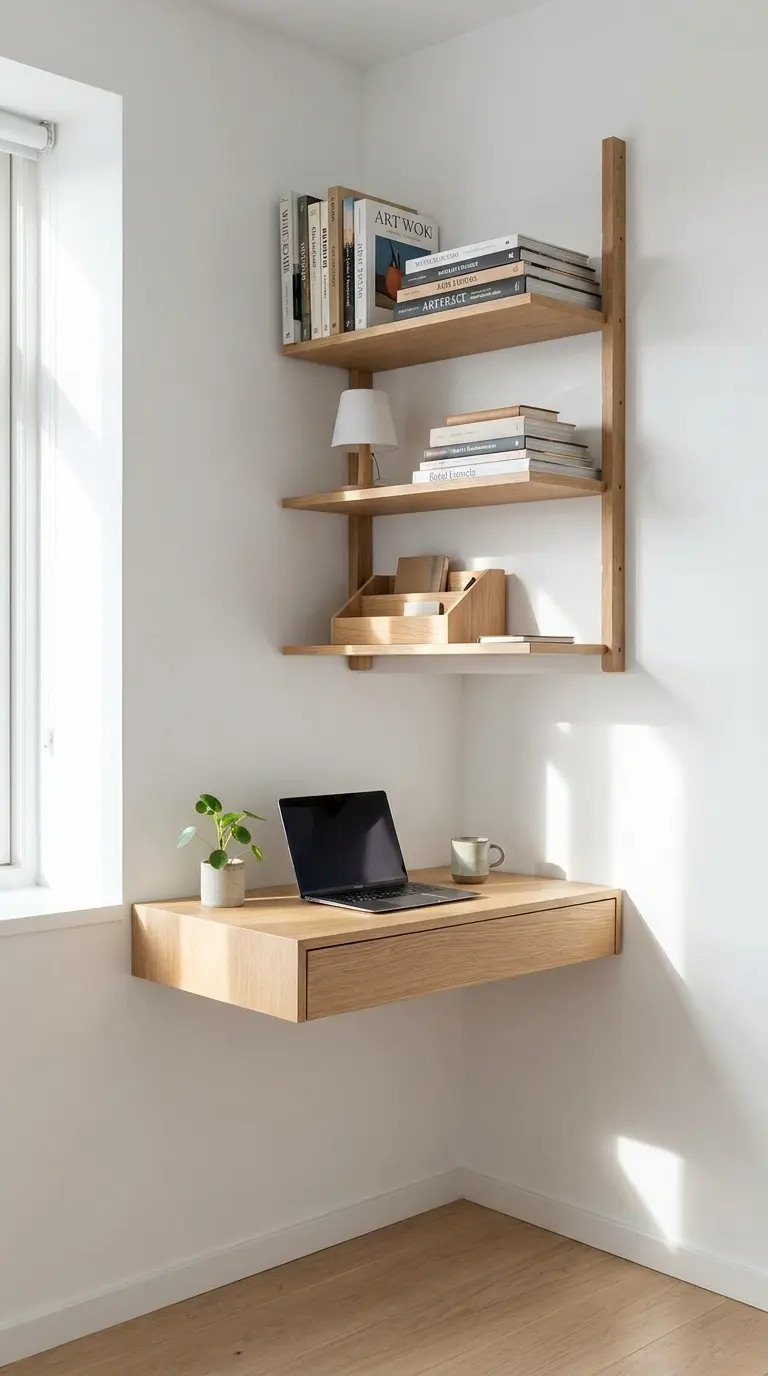
Not everyone has a dedicated room to work in, and that is completely fine. Some of the best home office organization ideas I have ever used came from working in tight, awkward spaces where every inch had to earn its keep.
Use a Floating Desk
If your space is truly tiny, a wall mounted floating desk can free up an incredible amount of floor space. You get a working surface without the bulk of legs and drawers taking up the room. Pair it with wall shelving above and you have a fully functional office in a space as small as three feet wide.
Think Vertically, Not Horizontally
When floor space is limited, your walls become your best friend. Pegboards, floating shelves, and wall mounted organizers let you store supplies without eating into your workspace. This single shift in thinking, going up instead of out, is one of the most powerful home office organization ideas for anyone working in a small apartment or shared room.
Choose Furniture That Multitasks
A desk with built in drawers saves you from needing a separate filing cabinet. An ottoman with hidden storage can double as extra seating and a place to stash office supplies. When space is tight, every piece of furniture should be doing at least two jobs.
Fold Away When Not in Use
If you are working from a shared space like a living room or bedroom, consider a fold down desk or a rolling cart system that tucks into a closet at the end of the day. This keeps your work life visually separate from your personal space, which actually helps a lot with mental boundaries too.
Desk Organization Ideas for a Clutter Free Home Office
Your desk is ground zero for productivity, so it deserves special attention. Once your desk is under control, everything else in your home office organization plan tends to fall into place much more easily.
The Rule of One
For every category of item, try to keep only one of what you need within arm’s reach. One pen holder, one notepad, one set of headphones. Duplicates are usually a sign that things are not being put back where they belong, which is often solved by giving each item a clear, obvious home.
Use Drawer Dividers
A single drawer without dividers becomes a junk drawer within about a week, no matter how disciplined you think you are. Cheap plastic or bamboo dividers turn that same drawer into distinct sections for pens, sticky notes, chargers, and paperclips. This one small change made a bigger difference in my daily workflow than almost anything else on this list.
Keep Only Daily Essentials on the Surface
Your desktop should hold only what you touch every single day. That usually means your laptop or monitor, a keyboard and mouse, maybe a small notebook, and a plant or photo if you like a bit of personality. Everything else belongs in a drawer, on a shelf, or somewhere out of your immediate line of sight.
Add a Monitor Stand With Storage Underneath
This is one of those home office organization ideas that feels almost too simple, but a monitor stand instantly raises your screen to a better eye level while giving you a hidden storage pocket underneath for notebooks, chargers, or your keyboard when not in use.
Corral Loose Items in Trays
Small trays or catch all dishes near your keyboard give loose items like your phone, a ring, or a pen a designated spot rather than letting them scatter across the desk throughout the day.
Cable and Cord Management Solutions
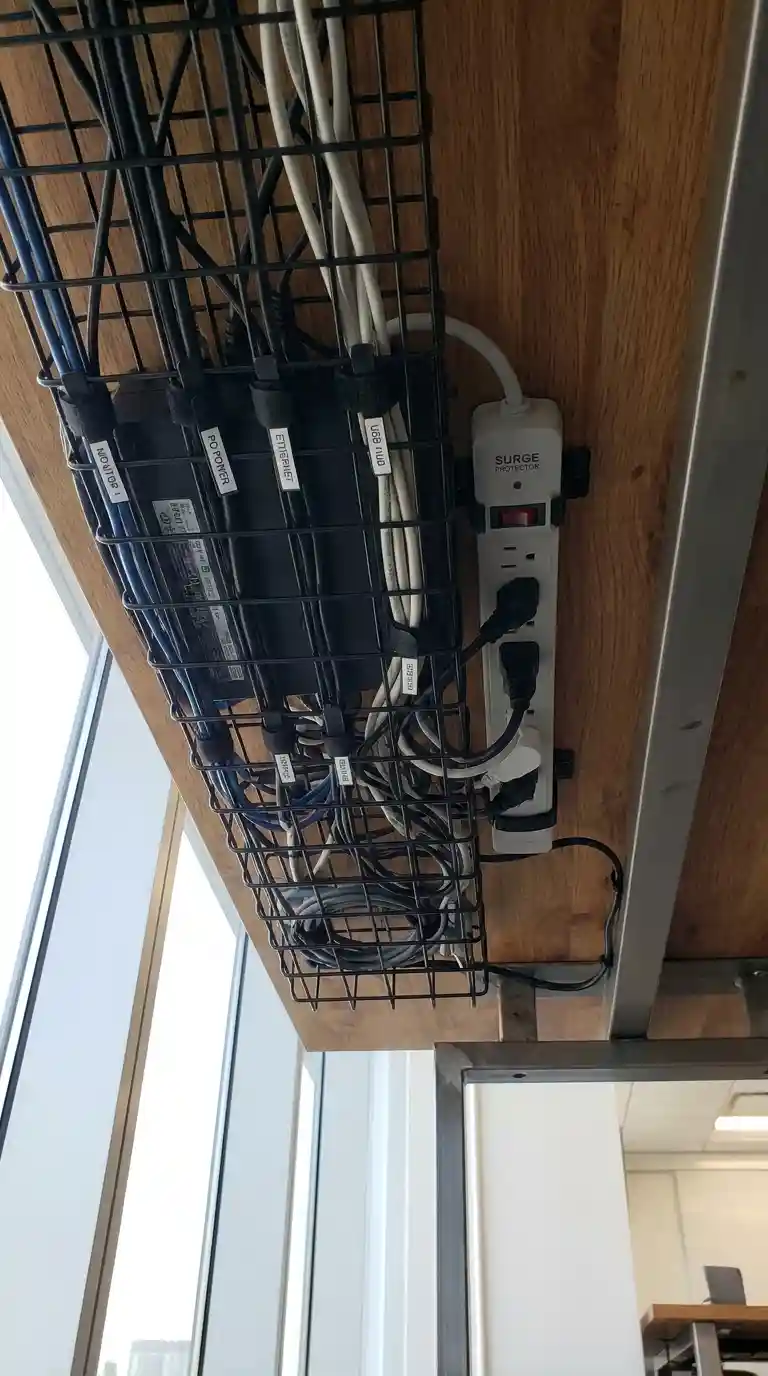
I genuinely believe cable clutter is the number one silent killer of a clean feeling workspace. You can organize everything else perfectly and still feel like your office is a mess if there is a nest of cords hanging off the back of your desk.
Related Post: Office Desk Decor Ideas That Actually Make You Want to Sit Down and Work
Label Every Cable
Small cable labels, even just pieces of masking tape with initials written on them, save you enormous frustration when you need to unplug one specific cord without disturbing everything else.
Use a Cable Tray Under the Desk
An under desk cable tray or basket lets you bundle your power strip and extra cord length completely out of sight. This one purchase transformed the entire look of my workspace within about ten minutes of installing it.
Velcro Ties Over Zip Ties
Reusable velcro cable ties are worth the tiny extra cost compared to zip ties because you will inevitably need to add or remove a device later, and reusable ties let you adjust without cutting anything.
Route Cables Along Desk Legs
Adhesive cable clips run along the inside of your desk legs to guide cords down to the floor in a straight, controlled path instead of letting them dangle and tangle in the open.
Vertical Storage Home Office Organization Ideas
I mentioned going vertical earlier for small spaces, but this deserves its own deeper section because it applies to offices of every size, not just tiny ones.
Install Floating Shelves Above Your Desk
Floating shelves give you visible, accessible storage without consuming any desk or floor space. Use them for books, decorative boxes, or bins that hold supplies you use a few times a week rather than daily.
Use a Pegboard System
Pegboards are incredibly flexible because you can rearrange the hooks and shelves as your needs change. I use mine for scissors, tape, headphones, and a small basket for loose cables. It also just looks satisfying, which is a nice bonus.
Try a Wall Mounted File Organizer
Instead of a bulky filing cabinet taking up floor space, a slim wall mounted file organizer holds folders vertically against the wall, right where you can grab them without bending down or opening a drawer.
Add a Bulletin or Cork Board
A bulletin board keeps important papers, reminders, and inspiration visible without them piling up loose on your desk. Just be disciplined about removing outdated items so it does not become another form of clutter.
Paper Management and Filing Systems
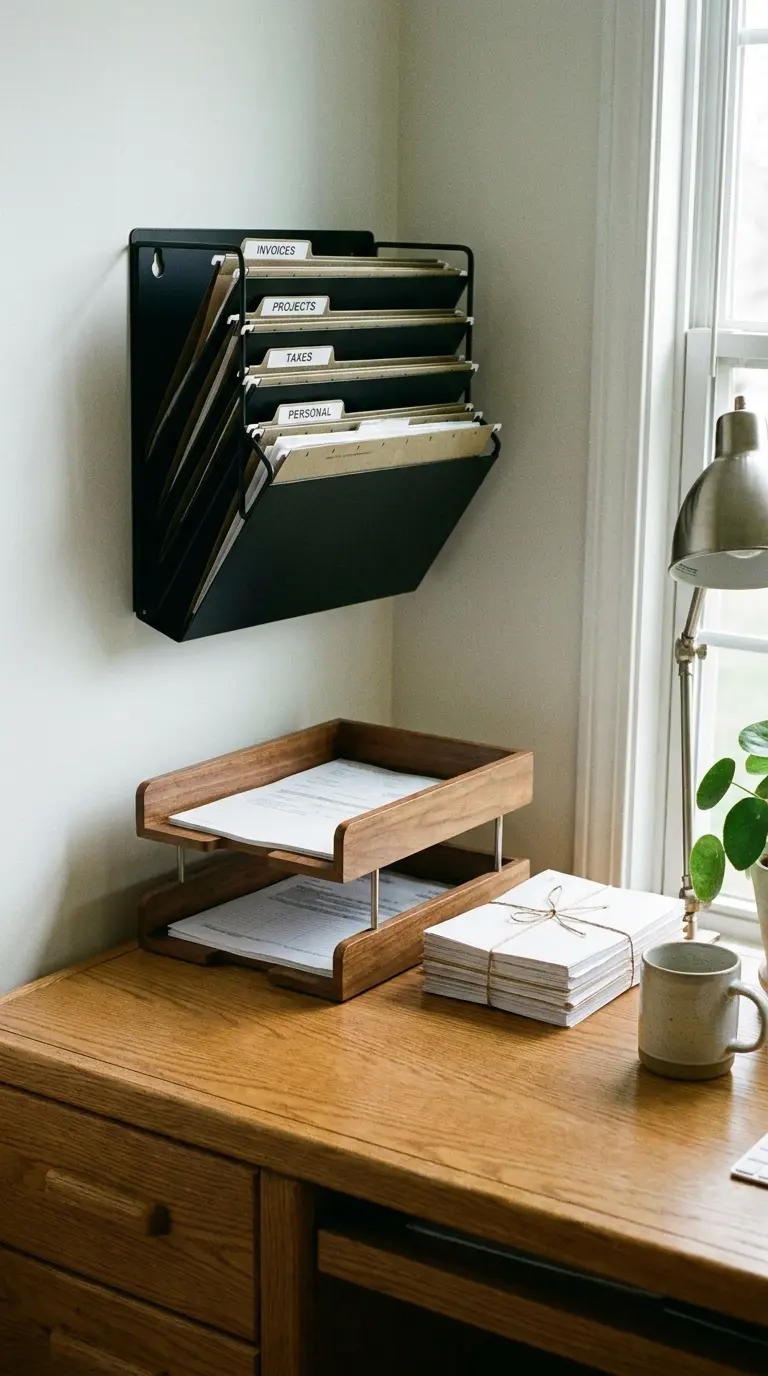
Even in our increasingly digital world, paper still finds its way into every home office. Receipts, contracts, mail, printed notes. Without a system, paper multiplies fast.
The Touch It Once Rule
Whenever possible, deal with a piece of paper the moment you pick it up. File it, act on it, or toss it. Do not set it back down “for later,” because later almost never comes and the pile grows.
Create a Simple Filing Category System
You do not need a complicated color coded system with fifteen categories. Most home offices function perfectly well with just a handful of folders such as active projects, taxes and receipts, reference documents, and to be filed later. Keep it simple enough that you will actually use it.
Use a Desktop Inbox Tray
A single small tray on your desk becomes the designated landing spot for incoming papers throughout the day. Set aside ten minutes each afternoon to process whatever has landed there instead of letting it accumulate for weeks.
Digitize What You Can
A lot of paper clutter can be eliminated entirely by scanning documents with your phone and storing them digitally. Apps that scan and convert to PDF make this fast, and it means one less physical folder to manage.
Home Office Organization Ideas on a Budget
You do not need to spend hundreds of dollars to get an organized workspace. Some of the best home office organization ideas I have used cost almost nothing.
Repurpose What You Already Own
Mason jars become pen holders. Shoe boxes become drawer dividers when covered in leftover wrapping paper or fabric. Old cereal boxes cut diagonally become magazine files. Before buying anything new, look around your house for items that could serve a storage purpose.
Shop Secondhand for Storage Furniture
Thrift stores and online marketplaces are goldmines for filing cabinets, bookshelves, and desk organizers at a fraction of retail price. A quick coat of spray paint can make an old piece look brand new.
Print Your Own Labels
Instead of buying a fancy labeling system, a simple printer and some cardstock let you create clean, consistent labels for free. Consistency in your labeling actually matters more for organization than how expensive the labels look.
Prioritize One Upgrade at a Time
If budget is tight, do not try to overhaul your entire office at once. Pick the single biggest pain point, solve that first, and move to the next project when you have saved up a little more. Slow and steady organization is still real organization.
Creating Zones in Your Home Office
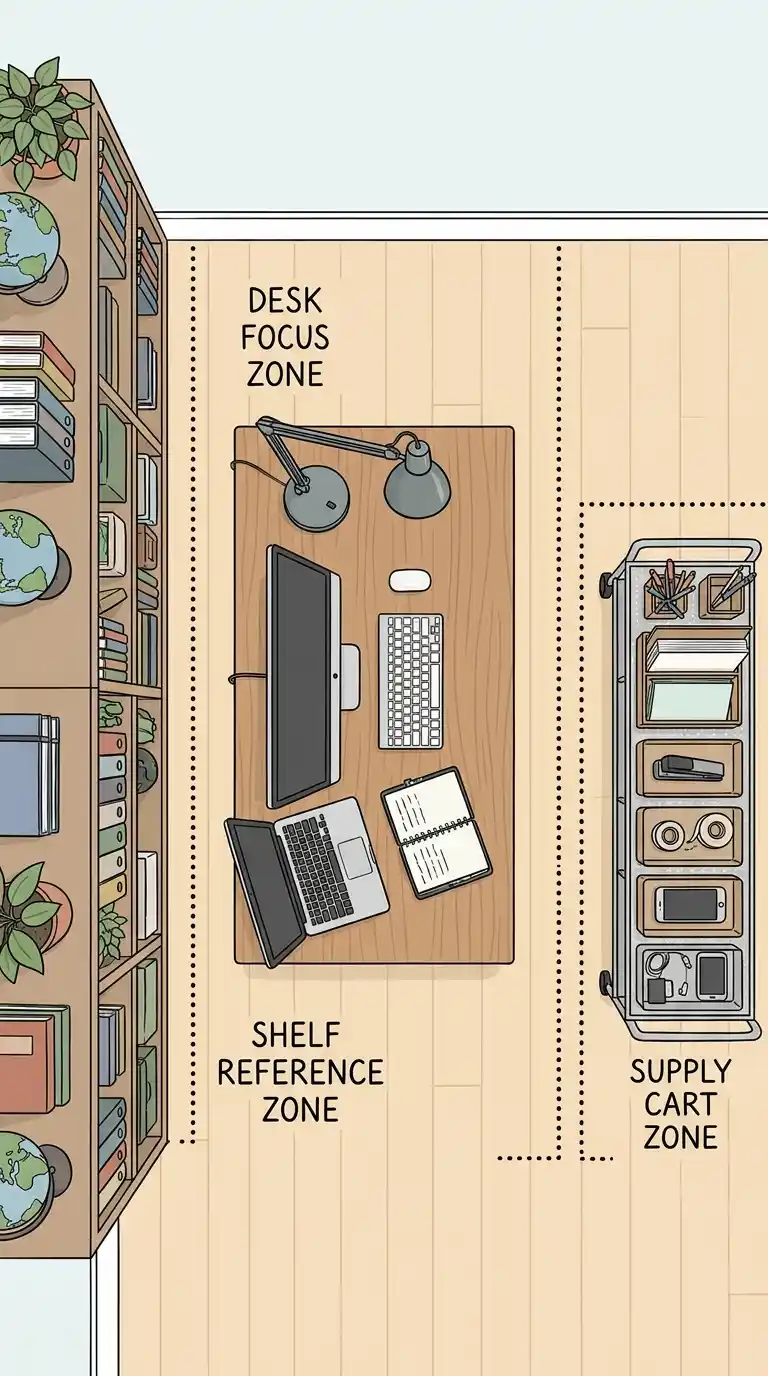
One of the more advanced home office organization ideas that made a huge difference for me was thinking about my office in terms of zones rather than one single space.
The Focus Zone
This is your main desk area where deep work happens. Keep it minimal, quiet, and free of distractions. Nothing in this zone should exist unless it directly supports the task in front of you.
The Reference Zone
This is where you keep books, files, and materials you consult occasionally but do not need within arm’s reach. A nearby shelf or cabinet works well for this.
The Supply Zone
Pens, paper, printer ink, staplers, and other physical supplies belong in their own contained area, whether that is a closet, a cart, or a set of drawers away from your primary desk.
The Creative or Break Zone
If your space allows, having a small separate spot, even just a comfortable chair in the corner, gives your brain a place to shift into a different mode when you need to step away from focused work for a moment.
Dividing your home office into zones, even informally, keeps each area purposeful and prevents everything from blending into one chaotic mass.
Closet and Corner Home Office Organization Ideas
Plenty of people do not have a spare room and instead carve out a workspace from a closet or an awkward corner. These spaces need their own specific approach.
The Cloffice Setup
A closet turned into an office, sometimes called a cloffice, works surprisingly well when you remove the hanging rod and add a small desk surface, either built in or a slim table that fits the width of the closet. Keep the doors so you can close everything away at the end of the day.
Corner Desks for Awkward Angles
An L shaped or corner specific desk makes use of space that would otherwise be wasted. Corners are often ignored in a room’s layout, which makes them perfect for tucking away a full workspace without disrupting the rest of the room.
Curtains as a Visual Divider
If your office corner sits inside a shared room, a simple curtain on a tension rod can visually separate your work zone from the rest of the space, helping your brain switch into work mode when you pull it open each morning.
Rolling Carts for Flexible Corners
A rolling cart with drawers can act as your entire supply station in a corner setup, and the fact that it rolls means you can tuck it against a wall or even into a closet when you are done working for the day.
Read Also : 45 Genius Bookshelf Styling Ideas That Will Instantly Elevate Any Room In Your Home
Digital Organization for Your Home Office
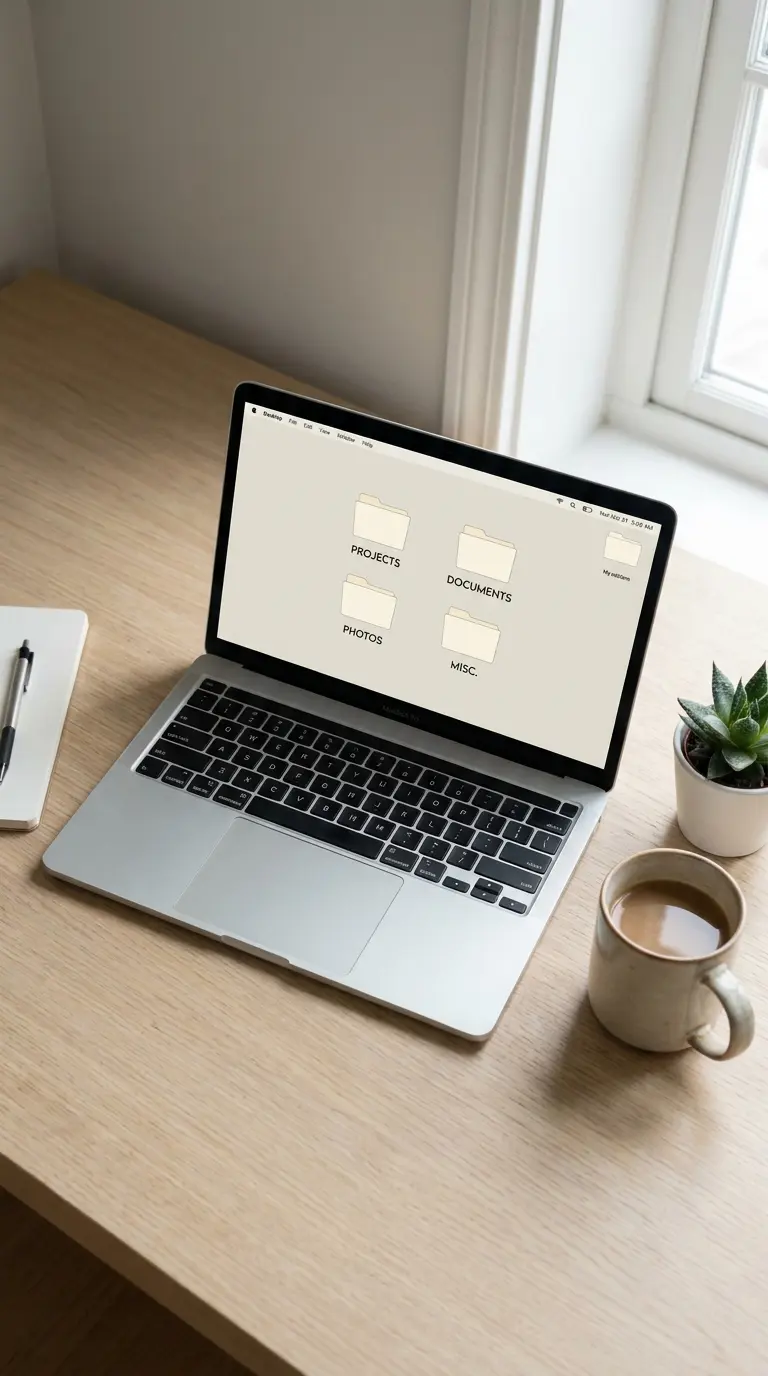
Physical clutter gets most of the attention, but digital clutter deserves just as much focus in a complete home office organization strategy.
Clean Desktop, Clear Mind
A computer desktop covered in random files and screenshots creates the same mental friction as a cluttered physical desk. Create a simple folder structure and make it a habit to file things away rather than letting them pile up on your screen.
Use a Consistent File Naming System
Something as simple as naming files with the date first, followed by a short description, makes searching for old documents dramatically faster than relying on memory or scrolling through endless folders.
Unsubscribe and Unclutter Your Inbox
An overflowing email inbox is a form of digital clutter that follows you everywhere. Set aside time each week to unsubscribe from newsletters you never read and archive completed threads.
Password Manager for Digital Security
Part of a truly organized digital workspace includes not having sticky notes with passwords stuck to your monitor. A password manager keeps everything secure and accessible in one place.
Decor That Supports Organization
Decor is not just about looking nice. The right decorative choices can actually reinforce your organizational systems rather than working against them.
Choose a Calming Color Palette
Soft, neutral tones tend to create a calmer visual environment than loud, busy colors. This is not a hard rule, but many people find that a simpler palette makes clutter more noticeable and therefore easier to avoid.
Add Greenery With Purpose
A plant or two brings life into a workspace, and low maintenance options like pothos or snake plants require very little upkeep while still improving the feel of the room.
Use Baskets and Boxes That Match
When storage containers are visually consistent, even a shelf full of miscellaneous items looks intentional rather than chaotic. This is a simple styling trick that instantly makes a space feel more organized, even before you have sorted everything perfectly inside.
Personal Touches in Moderation
A framed photo, a favorite mug, or a small piece of art can make your office feel like yours, but keep personal items to a curated few rather than letting the surfaces fill up with sentimental clutter.
Maintaining Your Organized Home Office Long Term
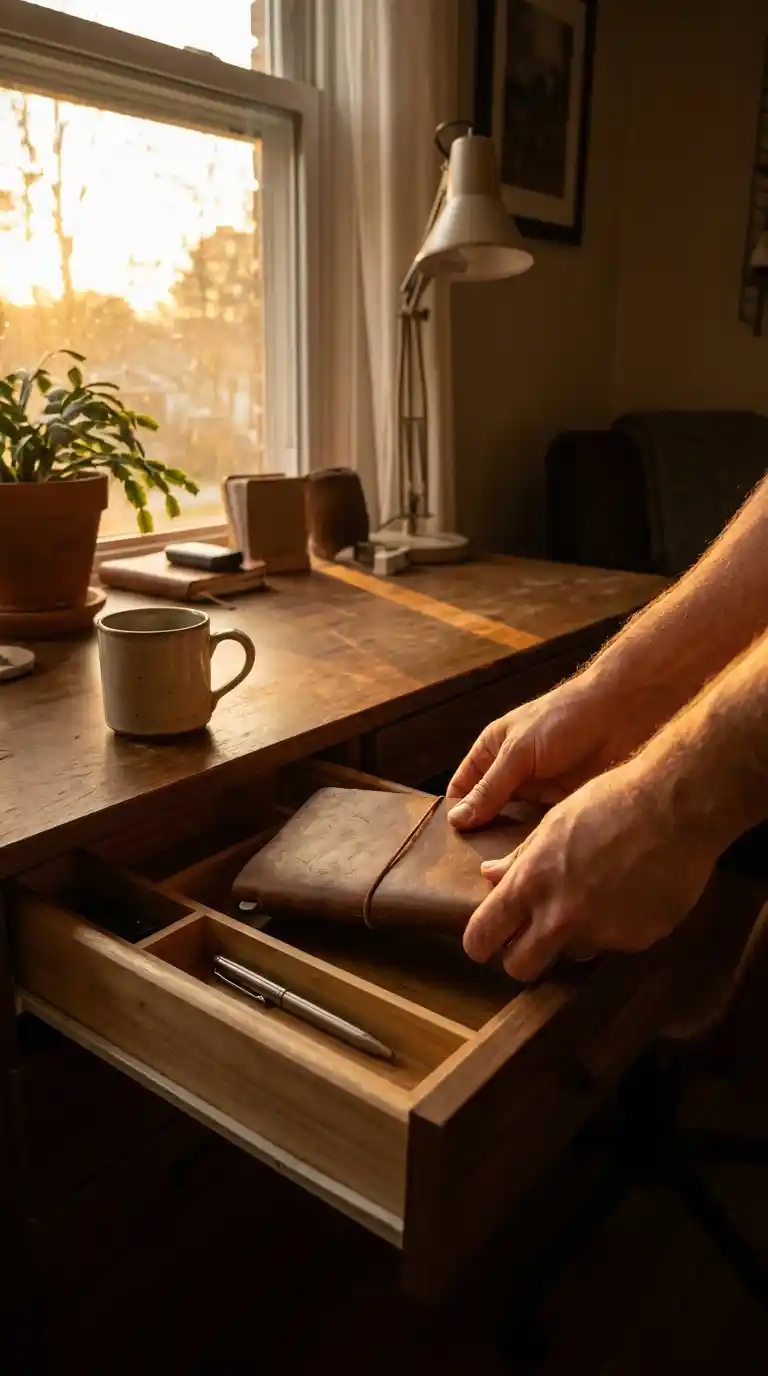
Setting up a beautifully organized home office is only half the battle. The real challenge, and the part most articles skip over, is keeping it that way.
The Five Minute End of Day Reset
Before you close your laptop each evening, spend five minutes putting things back where they belong. This tiny habit prevents the slow creep of clutter that eventually requires a full weekend to undo.
Weekly Ten Minute Deep Check
Once a week, look through your desktop inbox tray, your digital downloads folder, and any surfaces that tend to collect stray items. A short weekly check keeps small messes from becoming big ones.
Seasonal Full Reset
Every few months, do a more thorough pass through your entire office. Reassess what you are keeping, what has become unnecessary, and whether your systems still fit how you are actually working now.
Build in Accountability
If you struggle with consistency, try pairing your organization habit with something you already do daily, like your morning coffee or your end of workday shutdown routine. Habit stacking like this makes new habits stick much more reliably.
Home Office Organization Ideas for Different Personality Types
Not everyone organizes the same way, and pretending there is one universal system is part of why so many people fail at staying organized. Here is how to adjust based on how your brain actually works.
For the Visual Thinker
If you think in images and need to see things to remember them, open shelving, clear bins, and a visible calendar work far better than closed cabinets and hidden storage. Out of sight often means out of mind for this type of person.
For the Minimalist
If clutter of any kind stresses you out, lean hard into closed storage, hidden cable management, and keeping your desk surface almost entirely empty except for what you are actively using.
For the Creative Multitasker
If you tend to have several projects going at once, a system of labeled trays or baskets, one per active project, lets you keep everything contained without forcing yourself into a rigid single task workflow.
For the Person Who Struggles With Consistency
If maintaining systems has always been hard for you, choose the simplest possible setup. Fewer categories, fewer steps, fewer decisions. The best system is the one you will actually keep using, not the most elaborate one.
Seasonal Refresh Tips for Your Home Office
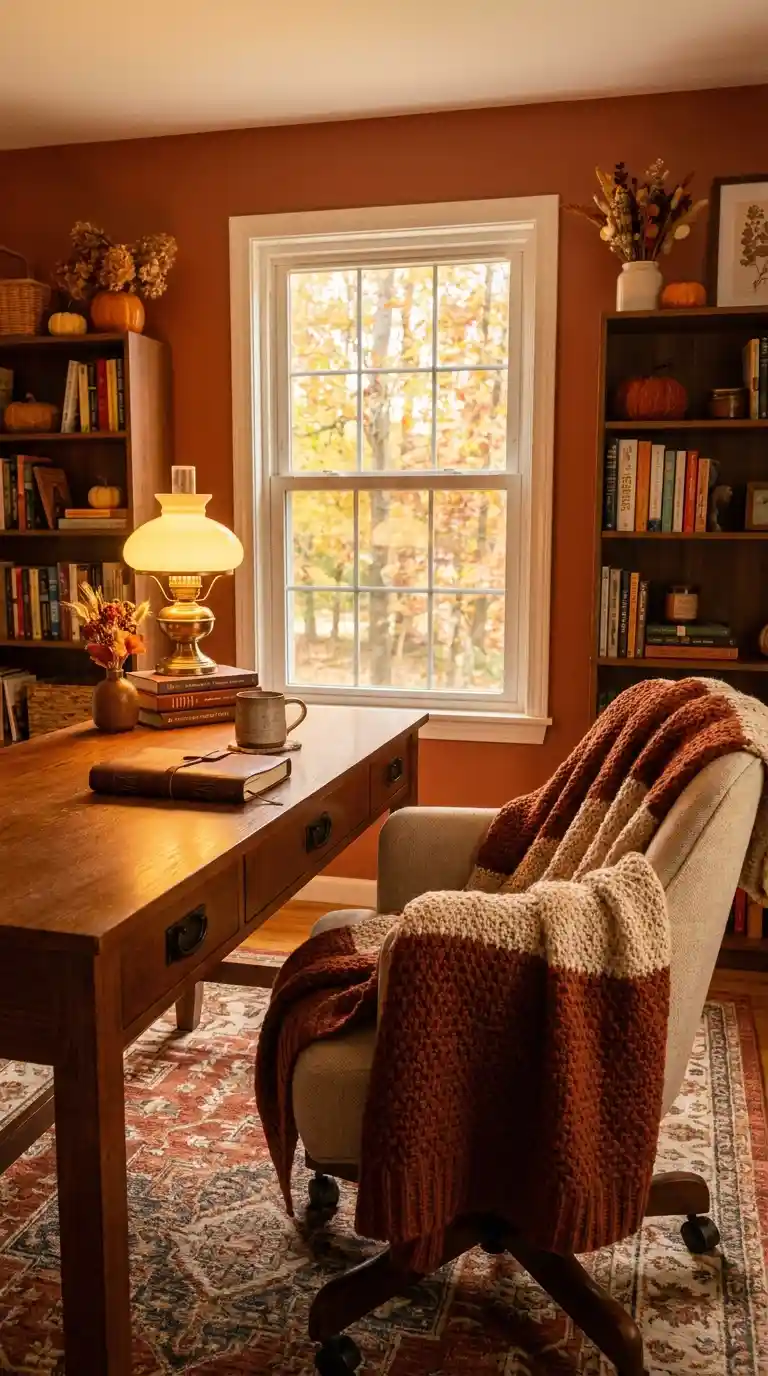
Your needs change throughout the year, and a good home office organization plan flexes with the seasons rather than staying frozen in place.
Must Read: Cute Apartment Decor Ideas That Will Actually Make Your Small Space Feel Like Home
Spring Cleaning Beyond the Kitchen
When spring cleaning season rolls around, do not skip your office. Clear out old files, donate books you no longer need, and reassess whether your current furniture layout still makes sense.
Summer Airflow and Light Adjustments
Longer daylight hours are a great time to reassess your desk placement relative to windows, since natural light placement can reduce eye strain and even change how motivated you feel throughout the day.
Fall Prep for Busy Season
Many people find autumn brings a busier work schedule. Use early fall to restock supplies and tighten up your filing system before things get hectic.
Winter Cozy Adjustments
Shorter days often mean more time spent indoors at your desk. Adding a warm lamp, a soft throw on your chair, or better task lighting can keep your organized space feeling comfortable rather than sterile during the darker months.
Common Mistakes People Make With Home Office Organization Ideas
I have made most of these mistakes myself, so consider this a shortcut past the trial and error I went through.
Buying Storage Before Decluttering
It is tempting to buy a bunch of pretty bins and organizers before you have actually sorted through your stuff. This almost always backfires because you end up organizing clutter you did not need in the first place, rather than removing it.
Overcomplicating the System
A filing system with twenty categories sounds thorough but rarely gets used consistently. Simple systems survive real life. Complicated ones collapse within a few weeks.
Ignoring Digital Clutter
Many people put all their effort into the physical space and completely ignore their digital desktop, downloads folder, and inbox, which ends up dragging down their overall sense of order anyway.
Not Accounting for Daily Habits
An organization system that does not match how you actually work will fail no matter how good it looks. If you always toss your bag by the door, build a spot there instead of forcing yourself to walk it to a closet every single day.
Forgetting Maintenance
The initial organizing session is the easy part. The daily and weekly maintenance is where most people give up. Build small habits from the very beginning so the system does not slowly unravel.
Home Office Organization Ideas for Shared Workspaces
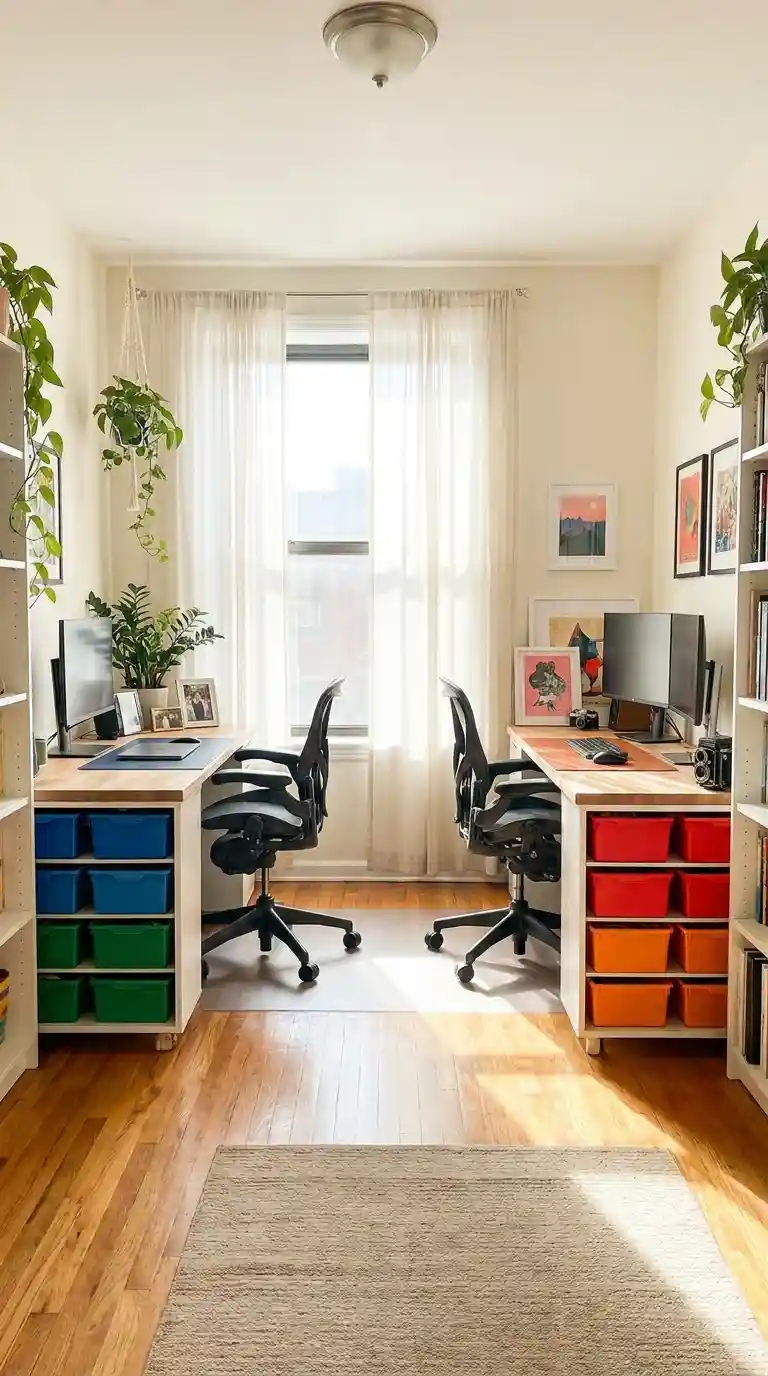
If you share your home office with a partner, roommate, or family member, a few extra considerations come into play.
Divide the Space Clearly
Even in a shared room, give each person a clearly defined area, whether that is with furniture placement, a rug, or simply an unspoken agreement about which side belongs to whom.
Color Code by Person
Using different colored folders, bins, or labels for each person sharing the space prevents mix ups and keeps each person’s supplies easy to identify at a glance.
Set Shared Supply Rules
Agree on where shared items like the printer, extra paper, or the stapler live, and make sure both people know to return items to that spot after use.
Schedule Quiet Hours if Needed
If you are sharing a workspace and both take calls, a simple shared calendar or a visual signal like a small flag on the desk can prevent interruptions during important meetings.
Tools and Products Worth Considering
While home office organization ideas do not require spending a fortune, a few well chosen tools genuinely make a difference.
Drawer Organizer Trays
Adjustable trays let you customize compartments to fit whatever supplies you actually own instead of forcing your items into fixed sized slots.
A Slim Filing Cabinet
Even a small two drawer filing cabinet gives you a dedicated home for important documents without needing to dedicate a whole shelf or closet to paperwork.
Cable Boxes
A cable management box hides your router, power strip, and excess cord length inside a single enclosed container, which instantly cleans up the visual chaos behind most desks.
A Label Maker
This might sound like overkill, but a label maker makes it so much easier to maintain consistency across bins, folders, and drawers, and consistent labeling is one of the biggest predictors of whether an organization system actually lasts.
Desk Risers or Standing Options
While not strictly an organization tool, a desk riser can free up under desk space for storage while also giving you the option to stand periodically throughout your workday.
How Home Office Organization Ideas Improve Mental Clarity
I want to circle back to something I touched on earlier because I think it deserves more attention. The connection between your physical space and your mental state is not just a wellness cliché. It is backed by real behavioral research, and I have felt it firsthand.
When my office was a mess, I noticed I procrastinated more. Not because I was lazy, but because sitting down at a chaotic desk created a small wave of dread before I even started working. Once I applied consistent home office organization ideas, that dread mostly disappeared. Sitting down to work started to feel almost calming instead of overwhelming.
There is also a confidence element here that people underestimate. An organized space signals to your own brain that you are in control, that things are handled, that you are ready to perform. That signal matters more than most people realize, especially on days when motivation is already low.
Final Thoughts on Home Office Organization Ideas
If there is one thing I want you to take away from everything above, it is this. Home office organization ideas are not about achieving some perfect, magazine ready aesthetic that you have to maintain flawlessly forever. They are about building a space that actually supports how you work, that reduces friction, and that makes your day just a little bit easier every single time you sit down.
Start small. Pick one section from this guide, whether it is tackling your cables, sorting your paper, or finally clearing off your desk surface, and just begin there. You do not need to overhaul your entire office in a weekend. In fact, trying to do everything at once is one of the fastest ways to burn out and give up.
Give yourself permission to experiment. Some of these home office organization ideas will work perfectly for your space and your habits, and others will not fit at all, and that is completely normal. The goal was never to copy someone else’s system exactly. The goal is to build something that works for the way you actually live and work.
I hope this guide gave you a genuine starting point, whether you are working with a whole spare room or a tiny corner of your bedroom. Your workspace deserves a little care, and honestly, so do you.
Frequently Asked Questions
What are the best home office organization ideas for a small space?
Focus on vertical storage such as floating shelves and wall mounted organizers, choose furniture that serves more than one purpose, and keep your desk surface limited to daily essentials only.
How do I organize a home office on a tight budget?
Repurpose containers you already own, shop secondhand for furniture, print your own labels instead of buying premade ones, and tackle one problem area at a time instead of trying to buy everything new at once.
What should I keep on my desk versus in storage?
Keep only items you use every single day within arm’s reach, such as your keyboard, mouse, and a notebook. Everything else, including supplies you use weekly or occasionally, belongs in a drawer, shelf, or nearby storage container.
How often should I reorganize my home office?
A quick five minute reset at the end of each day, a ten minute check each week, and a deeper seasonal reset every few months is generally enough to keep a home office running smoothly without letting clutter build up again.
What is the best way to manage cables in a home office?
Use an under desk cable tray to bundle excess cord length, label each cable for easy identification, and use reusable velcro ties instead of permanent zip ties so you can adjust your setup as your devices change.
How can I organize paperwork in my home office?
Create a simple filing system with just a few broad categories, use a desktop inbox tray to catch incoming papers, process that tray daily or every few days, and digitize documents whenever possible to reduce physical clutter.
What furniture is best for a small home office?
Wall mounted floating desks, corner desks, and furniture with built in storage such as drawers or hidden compartments tend to work best when space is limited, since they maximize function without taking up unnecessary floor area.
How do I stay organized when sharing a home office with someone else?
Divide the space clearly, use color coding for each person’s belongings, agree on where shared supplies live, and use a simple shared calendar to avoid scheduling conflicts during calls or focused work time.
What are some cheap home office organization ideas?
Mason jars for pens, repurposed shoe boxes for drawer dividers, thrifted furniture, and homemade printed labels are all inexpensive ways to bring order to a workspace without spending much money.
How do I stop my desk from getting cluttered again?
Build a short end of day reset habit where you spend a few minutes putting everything back in its designated spot, and make sure every item on your desk actually has a specific home it returns