
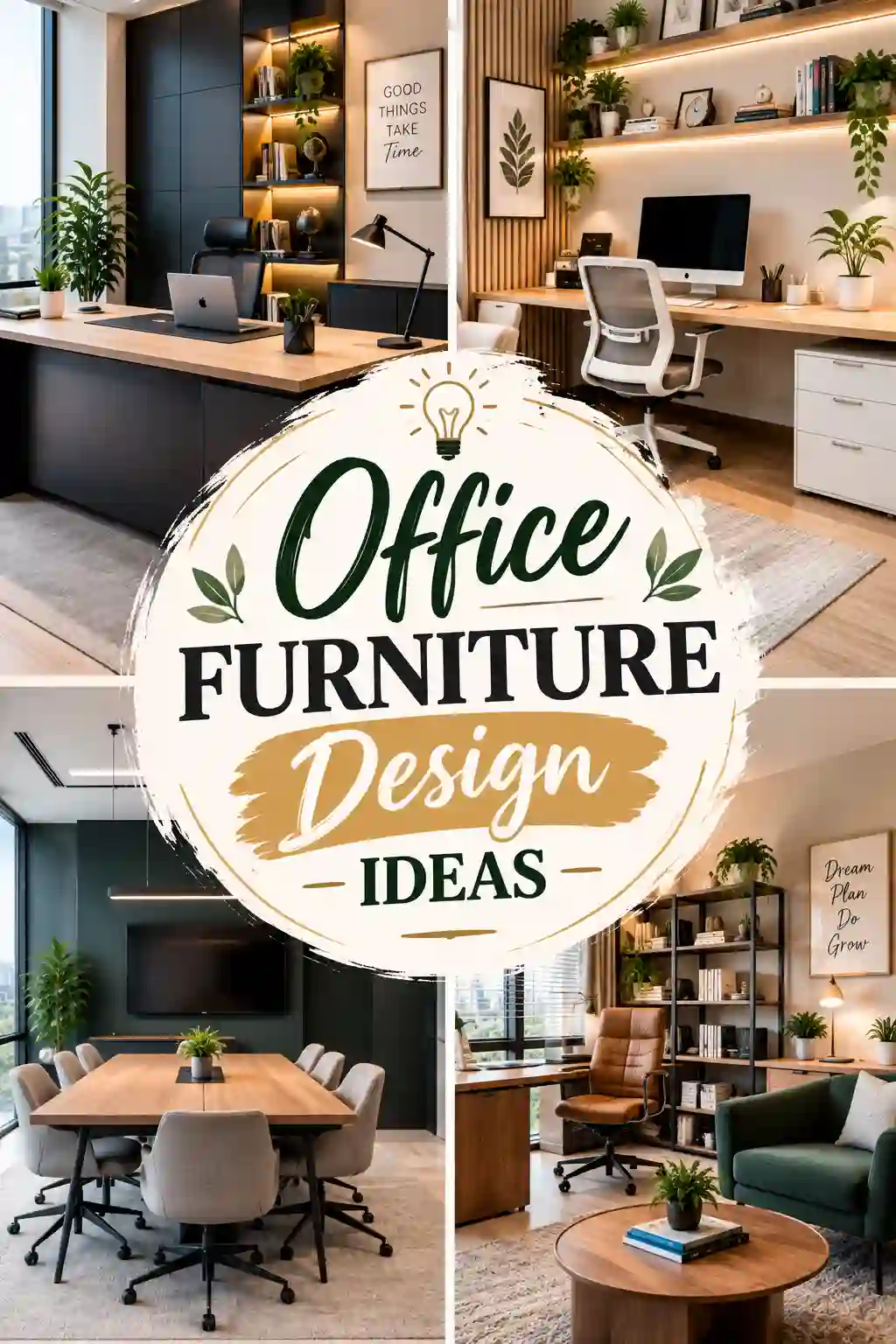
There is a moment that happens in almost every office redesign project I have worked on. Someone walks into the newly furnished space, stops for a second, and says something like, I did not realize how much the old furniture was dragging us down. It happens more often than you would expect, and it is exactly why office furniture design ideas deserve far more attention than most businesses actually give them.
For years, furniture got treated as the last checkbox on an office renovation list. Pick the paint, sort out the flooring, figure out the technology, and then, almost as an afterthought, order whatever desks and chairs happen to be in stock. I have watched that approach quietly sabotage otherwise well planned offices more times than I can count, because furniture is not decoration in a workspace. It is the thing people physically touch, sit in, and work at for eight or more hours a day.
This guide pulls together everything I have learned from designing and consulting on real office spaces, from tiny startup corners to full floor corporate redesigns. We are going to walk through office furniture design ideas for desks, seating, storage, collaboration zones, materials, color, and the practical details that separate a workspace people actually enjoy from one they simply tolerate.
Let us get into it properly.
Also Read : 40 Durable Mudroom Flooring Ideas That Survive Every Season Without Losing Their Charm
Why Office Furniture Design Ideas Actually Shape How People Work
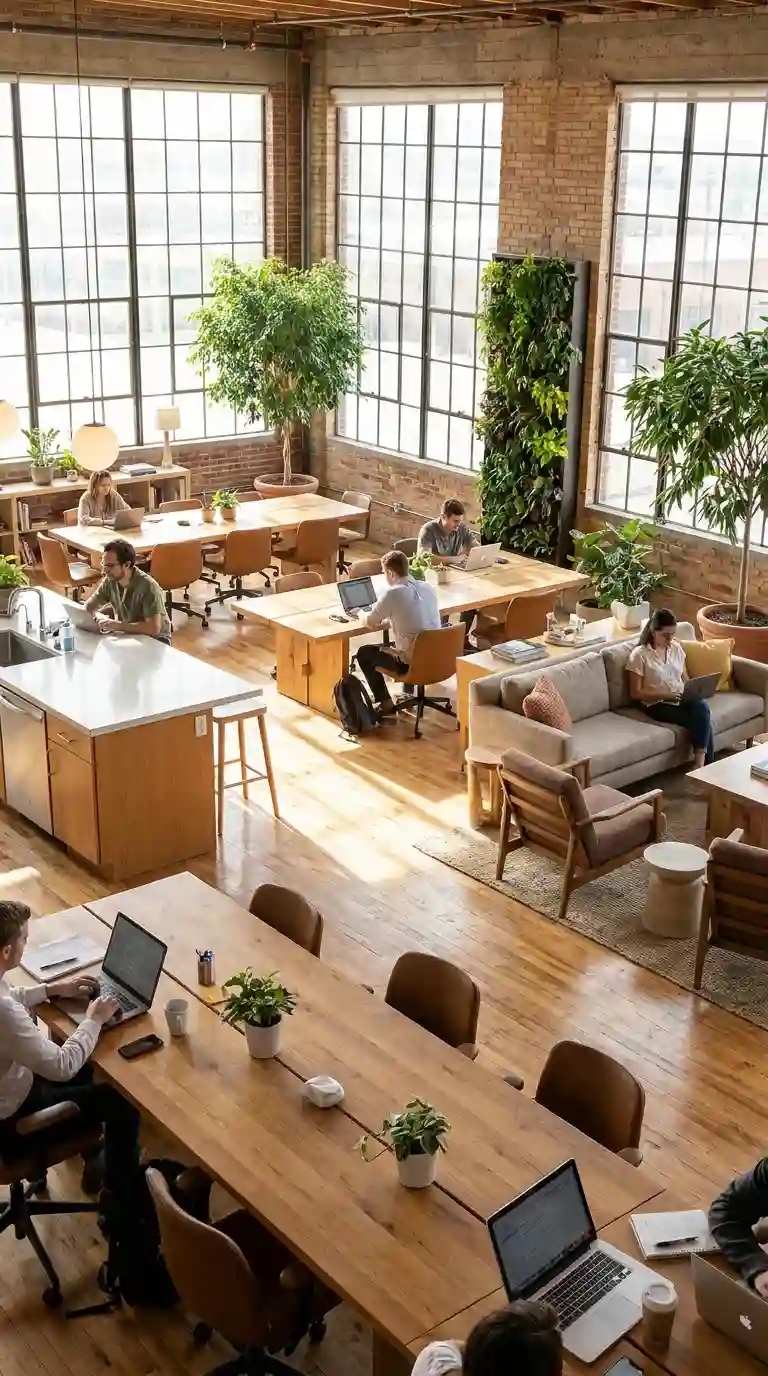
Furniture is not a neutral background element in an office. It actively shapes behavior, whether anyone in the room realizes it or not. A row of rigid, uncomfortable chairs quietly discourages people from staying focused for very long. A cramped desk layout subtly increases everyday friction and irritation without anyone being able to pinpoint exactly why the room feels stressful.
Good office furniture design ideas start from this understanding. The goal is not simply to fill a floor plan with functional pieces. It is to shape how people move, focus, collaborate, and recover throughout their workday, using the physical environment as a quiet but powerful tool.
I have seen this play out directly with clients. A software company I worked with had a genuinely talented team that kept complaining about feeling drained by early afternoon. Nothing about their workload had changed. What had changed, once we actually looked closely, was that their entire office ran on identical hard backed chairs and fixed height desks, with zero variation in how or where people could work throughout the day. After we introduced a mix of seating types and a few adjustable height desks as part of a broader office furniture design refresh, the complaints dropped noticeably within a month.
This is the real value behind thoughtful office furniture design ideas. They are not about chasing trends for the sake of looking current. They are about recognizing that furniture directly affects comfort, focus, energy levels, and ultimately, how people feel about coming into that space every single day.
Understanding the Shift Toward Human Centered Office Furniture Design
The entire philosophy behind modern office furniture design ideas has shifted noticeably over the past several years. The old model treated an office almost like a factory floor for knowledge work, rows of identical desks, uniform chairs, and a strict grid layout designed purely for efficiency of space.
That model has been steadily replaced by something far more human centered. Office furniture design ideas today start from a simple question. What does a person actually need to do their best work, and how does the furniture support that rather than just contain it.
This shift shows up in several tangible ways. Furniture is increasingly designed around behavior and outcomes rather than pure aesthetics, meaning a piece gets chosen because it genuinely supports focused work, easy collaboration, or a quick informal chat, not just because it photographs well in a brochure.
There is also a growing focus on accommodating different working styles and sensory needs within the same physical space. Not everyone concentrates best in the same environment, and forward thinking office furniture design ideas now account for that variety rather than forcing a single approach onto every single employee.
This human centered shift is honestly one of the most encouraging developments I have seen in this field. It moves office furniture design away from a purely cosmetic exercise and toward something that genuinely improves the daily experience of working in that space.
Desk Design Ideas That Go Beyond the Basic Workstation
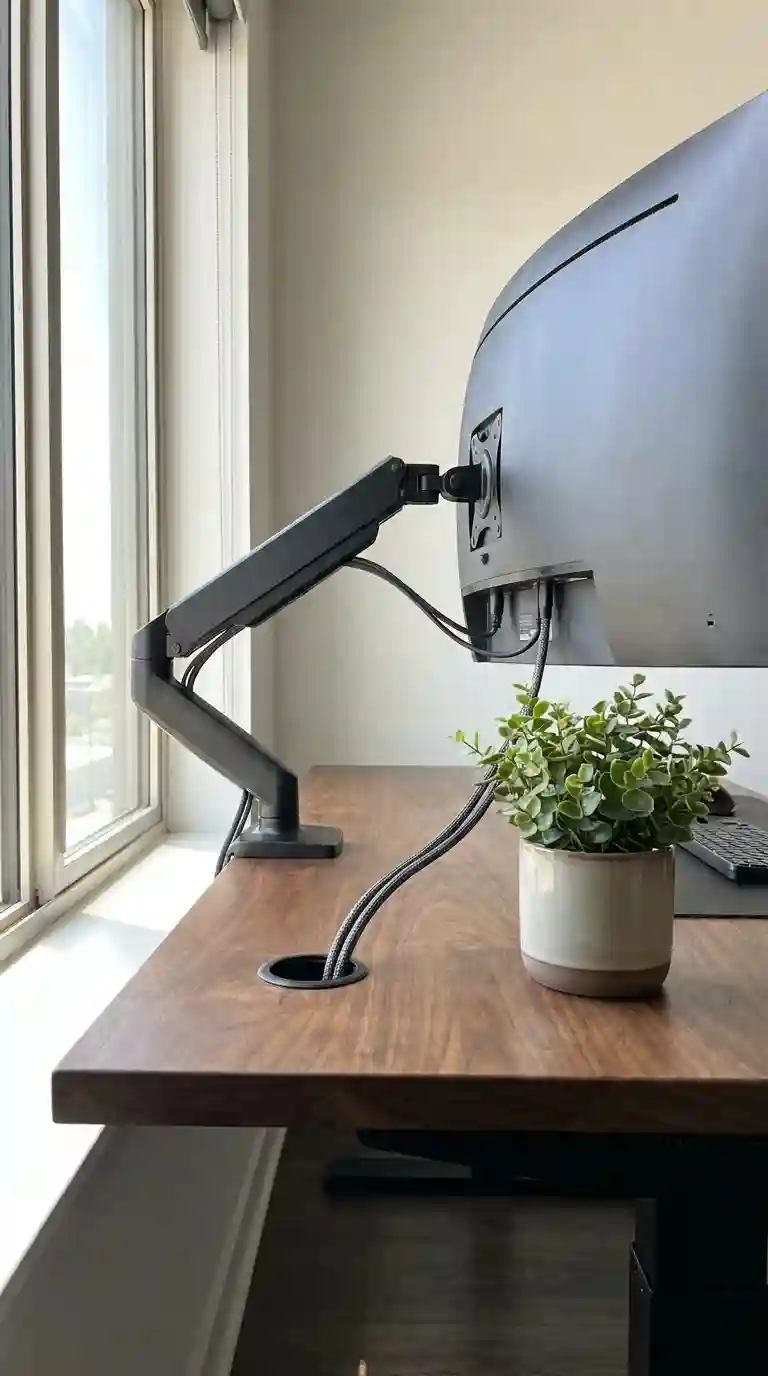
The desk remains the anchor point of most office furniture design ideas, and it has genuinely evolved far beyond the flat rectangular surface with a drawer underneath that defined offices for decades.
Height adjustable desks have moved from a niche wellness perk to something close to a baseline expectation in a lot of modern offices. Being able to shift between sitting and standing throughout the day genuinely reduces fatigue, and it gives employees a small but meaningful sense of control over their own physical comfort.
Desks with built in storage and integrated cable management solve two frustrations at once. Instead of treating storage as a separate filing cabinet purchase, combining it directly into the desk design keeps the workspace visually cleaner and reduces the number of separate furniture pieces needed in a given area.
Hexagon and non traditional desk shapes have become a genuinely popular office furniture design idea recently, moving away from the rigid rectangular grid that used to define open plan offices. These shapes naturally encourage a slightly more organic layout and can make even a dense open floor plan feel a little less regimented.
Shared bench style desking, where several people work along one continuous surface rather than individual separated units, works well for teams that collaborate constantly throughout the day, though it does require thoughtful acoustic planning to avoid becoming distracting.
Solid wood desks have seen a genuine resurgence, particularly in home office settings, as people move away from the cold white laminate and metal frame look that dominated for so long. A warmer, more natural material choice can make even a small home workspace feel significantly less clinical.
Read Must : 50 Stunning Entryway Wall Decor Ideas That Instantly Elevate Your Home
Office Furniture Design Ideas for Seating and Ergonomics
Seating might be the single most important category within office furniture design ideas, simply because of how many hours people spend sitting during a typical workday. Getting this wrong has real consequences for comfort, posture, and long term physical health.
A genuinely supportive ergonomic desk chair, with adjustable lumbar support, seat height, and armrest positioning, should be treated as a non negotiable baseline rather than a luxury upgrade. I have seen too many otherwise well designed offices undercut themselves by cutting corners here, since a beautiful desk means very little if the chair paired with it leaves people uncomfortable within an hour.
Beyond the standard desk chair, office furniture design ideas increasingly incorporate a wider variety of seating types throughout a single space. Soft lounge seating for informal conversations, stools at standing height counters for quick collaborative check ins, and even floor level seating in more relaxed breakout areas all give people options depending on the kind of work they are doing at any given moment.
Upholstered seating has largely replaced the cold, hard plastic chairs that used to dominate corporate waiting areas and break rooms. Softer materials, warmer tones, and more residential feeling fabrics genuinely change how welcoming a space feels, without sacrificing durability if the right materials are chosen.
Mobility matters too. Chairs on casters that move easily between different zones of an office support the kind of spontaneous rearranging that modern flexible workspaces increasingly rely on, letting furniture adapt to the moment rather than staying locked into one fixed configuration.
Storage Solutions Within Modern Office Furniture Design Ideas
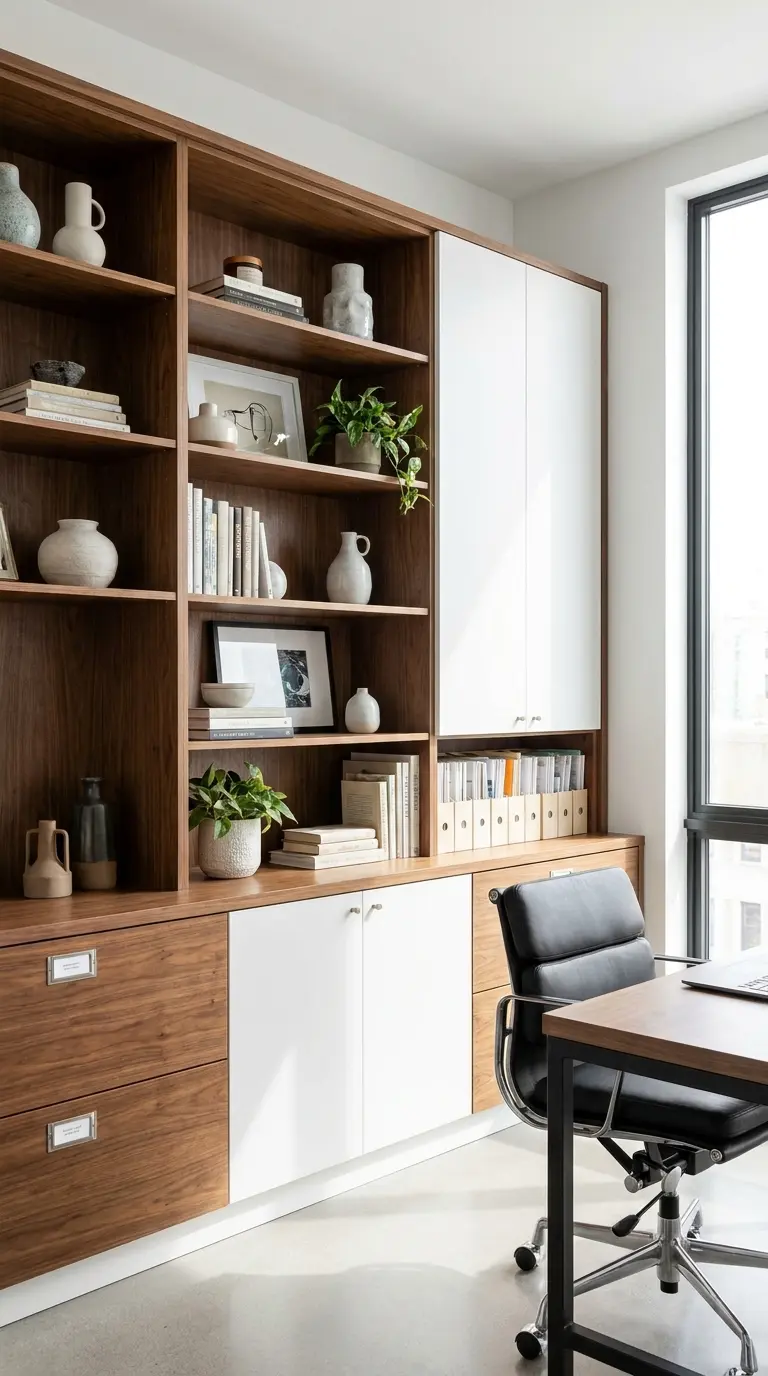
Storage rarely gets the same attention as desks and chairs within office furniture design ideas, and yet a poorly planned storage system quietly undermines an otherwise well designed workspace almost immediately.
Built in storage integrated directly into desks and workstations reduces visual clutter significantly compared to a separate filing cabinet parked awkwardly beside every desk. This approach also tends to make smaller offices feel less crowded, since the storage footprint is absorbed into furniture that already needed to be there.
Mixed open and closed storage has become a popular office furniture design idea for balancing accessibility with a tidy appearance. Open shelving works well for items used constantly throughout the day, while closed cabinets keep less attractive but necessary items, like extra cables or bulk supplies, out of sight.
Mobile storage units on wheels support the flexibility that a lot of modern offices are chasing right now. A storage unit that can roll between desks or get repositioned entirely when a team restructures gives an office far more long term adaptability than fixed, built in storage ever could.
Personal lockers have made a comeback in offices that operate on a hot desking or hybrid schedule model, giving employees a small, secure, consistent spot for personal items even when they do not have one assigned desk that belongs to them every single day.
Collaborative Spaces and Office Furniture Design for Teamwork
Modern offices increasingly recognize that collaboration does not only happen in a formal meeting room booked thirty minutes in advance. It happens spontaneously, in hallways, near the coffee machine, and in casual seating areas scattered throughout the floor, and office furniture design ideas have adapted accordingly.
Modular furniture systems that reconfigure quickly have become one of the defining office furniture design ideas of the past few years. Desks, tables, and dividers that can shift and combine easily allow a space to pivot between a large team meeting and several smaller focused groups without needing separate dedicated rooms for every possible scenario.
Social booths and informal seating clusters, tucked into corners of an open floor plan, give employees a lower pressure space for quick conversations compared to a fully enclosed conference room. These spaces work particularly well for the kind of quick, informal check ins that used to happen naturally in a hallway.
Mobile whiteboards and rolling tables support genuinely spontaneous collaboration, letting a small group pull together a workspace wherever they happen to be standing rather than needing to relocate to a fixed room every single time an idea needs to be worked through visually.
Lounge style furniture arranged around low tables, rather than a traditional boardroom table and chairs, has become a favored office furniture design idea for team huddles and informal brainstorming sessions, since the more relaxed posture genuinely seems to encourage looser, more creative conversation.
Acoustic Focused Office Furniture Design Ideas
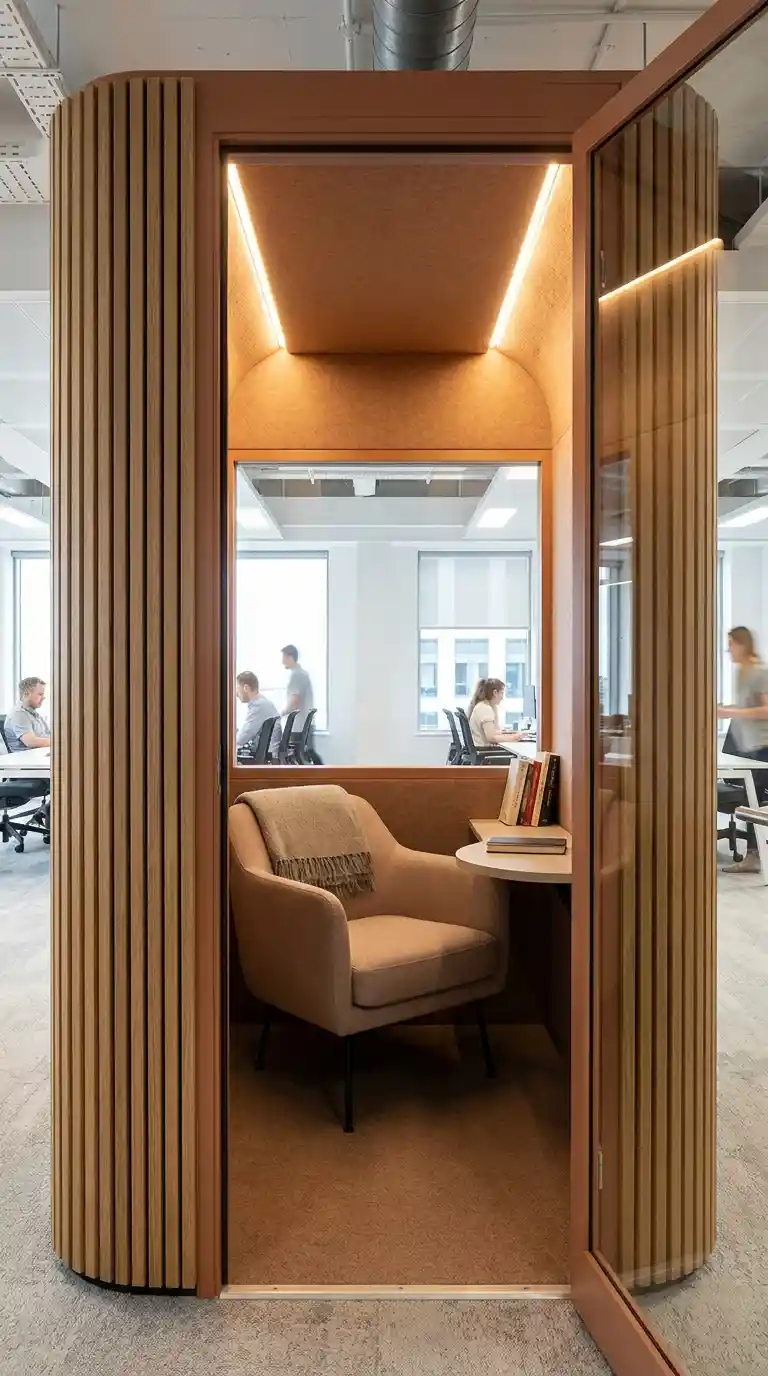
Noise has become one of the most persistent complaints in open plan offices, and a growing category of office furniture design ideas exists specifically to address this exact problem without requiring an expensive full renovation.
Acoustic panels integrated directly into furniture, like desk dividers or the backs of storage units, absorb sound at the source rather than relying purely on architectural changes to the room itself. This approach is often far more cost effective than adding walls or extensive soundproofing throughout an entire floor.
Privacy pods and enclosed booths give individuals or small groups a genuinely quiet space for focused work or private phone calls without needing to leave the main floor entirely. These have become an increasingly common office furniture design solution for open plan spaces that otherwise struggle with constant background noise.
High backed lounge chairs and sofas, designed specifically with sound dampening materials built into the structure, create a pocket of relative quiet within an otherwise open environment, offering a middle ground between a fully enclosed room and completely exposed open seating.
Felt and fabric wrapped furniture surfaces, beyond their visual warmth, genuinely absorb ambient sound better than hard, reflective materials like glass or bare metal, making material choice an underrated but genuinely effective piece of the acoustic puzzle within broader office furniture design ideas.
Related Post : Office Desk Decor Ideas That Actually Make You Want to Sit Down and Work
Sustainable Materials Shaping Office Furniture Design Ideas
Sustainability has moved from a nice sounding marketing point to a genuinely central consideration within office furniture design ideas, and this shift shows up in some interesting, practical ways.
Recycled and upcycled materials are appearing far more frequently in furniture manufacturing, driven by both environmental concern and genuine cost efficiency at scale. This includes everything from reclaimed wood surfaces to fabric upholstery made from recycled fibers.
Furniture designed for disassembly and repair, rather than disposal, is becoming a more prominent office furniture design idea among manufacturers thinking seriously about lifecycle impact. Exposed, reversible fasteners and simplified material combinations make it genuinely easier to repair a damaged piece rather than replacing the entire unit.
Visible natural grain and texture, once considered an imperfection to be sanded and finished away, is now embraced within a lot of contemporary office furniture design ideas as a sign of authentic, less processed material. This aligns with the broader move toward warmer, more natural looking finishes across modern workspace design.
Ethically sourced and secondhand furniture purchasing has become a genuinely mainstream consideration for businesses updating their office, not just a fringe choice for smaller budget conscious startups. A well chosen secondhand piece can bring genuine character to a space while supporting a more sustainable overall approach to office furniture design.
Color and Material Choices for Modern Office Furniture Design

Color plays a bigger role in office furniture design ideas than a lot of businesses initially give it credit for. The right palette can genuinely influence energy levels, focus, and the overall mood of a workspace throughout the day.
Bold, energizing colors like teal, mustard yellow, deep coral, and electric blue have become increasingly popular for seating and accent furniture, particularly in collaborative zones where a bit of visual stimulation supports creativity and social interaction rather than undermining focus.
Warm neutral tones remain the dominant choice for individual focused work areas, since a calmer, more subdued palette genuinely supports sustained concentration better than a highly stimulating environment would over several consecutive hours.
Mixed materials, particularly wood paired with cork, woven fabric, or matte metal, bring genuine texture and warmth to office furniture design without needing to rely on bold color alone to create visual interest throughout a space.
Nature inspired color palettes, drawing from earthy greens, warm terracottas, and soft browns, pair naturally with the growing trend toward incorporating plants and organic material throughout modern office furniture design, reinforcing a calmer, more biophilic feeling within the workspace overall.
Office Furniture Design Ideas for Hybrid and Remote Friendly Workspaces
The shift toward hybrid work has fundamentally changed what a lot of businesses need from their office furniture design ideas, since fewer employees occupy a fixed, permanently assigned desk on any given day.
Zoned layouts, rather than uniform rows of identical desks, have become the standard approach for offices supporting a hybrid schedule. Distinct areas for focused solo work, collaborative team sessions, informal lounging, and quiet private calls give employees the flexibility to choose the right environment for whatever task they are handling that particular day.
Hot desking friendly furniture, including easily adjustable desks that reset quickly between different users and personal lockers for secure storage, supports a workspace where people are not tied to a single assigned spot, while still giving them a consistent, comfortable experience each time they come in.
Technology integration has become inseparable from good office furniture design in a hybrid context. Desks and tables built with easy device connectivity, reliable power access, and clean cable management support the seamless transition between in person and virtual collaboration that hybrid teams rely on constantly throughout their week.
Comfortable, residential feeling furniture throughout the office has become a genuine strategy for encouraging employees to actually want to come in on their scheduled office days, since the physical space now needs to offer something meaningfully different and more appealing than a comfortable home office setup.
Small Office and Home Office Furniture Design Ideas
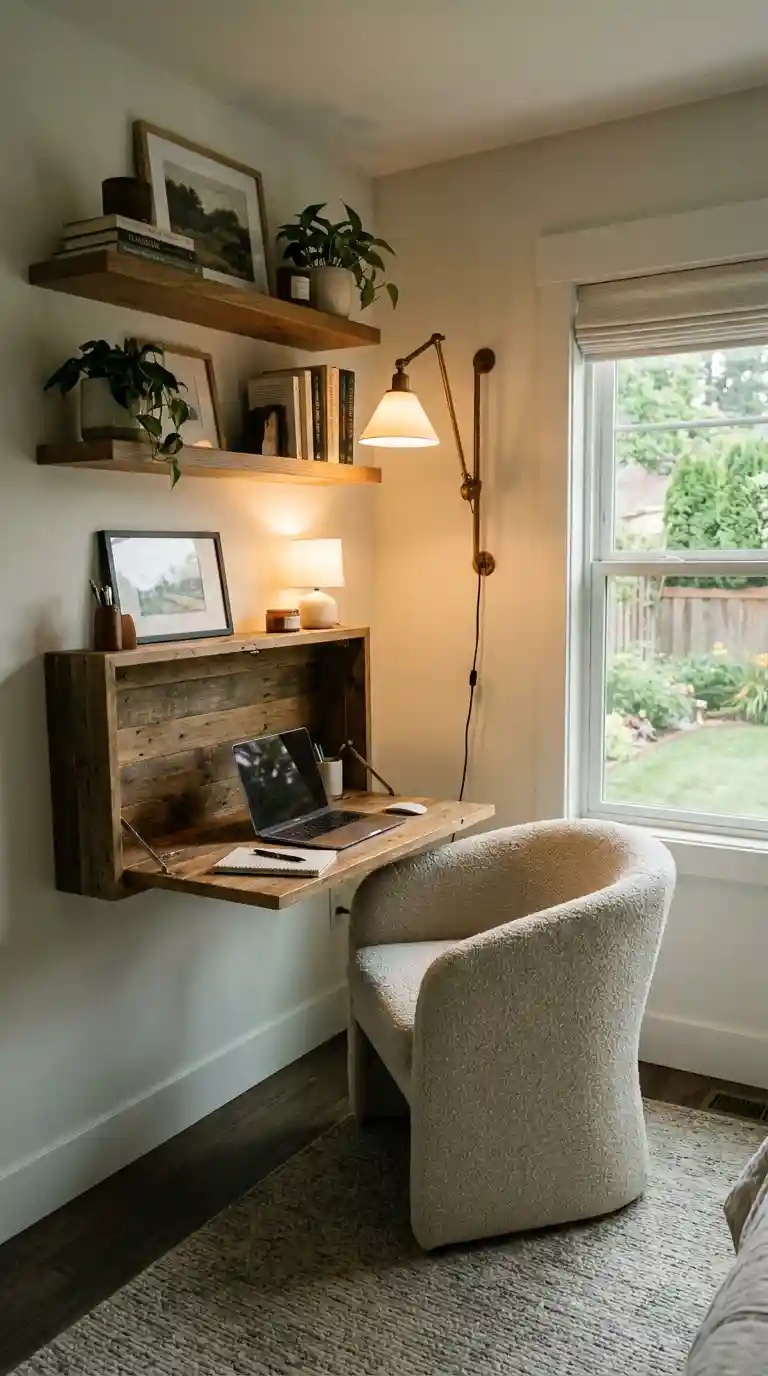
Not every workspace has the luxury of a large open floor plan, and office furniture design ideas for smaller spaces, whether that is a compact home office or a startup working out of a small rented suite, need a slightly different approach.
Multi functional furniture becomes especially valuable when space is limited. A well designed desk that combines a work surface with built in storage can effectively replace three or four separate pieces of furniture, keeping a small footprint from feeling cluttered or overcrowded.
Wall mounted and foldable desks offer a genuinely practical solution for very tight spaces, allowing the work surface to fold away entirely when not in use, which is particularly useful in a shared home space that needs to serve multiple purposes throughout the day.
Vertical storage, using tall narrow shelving units rather than wide low cabinets, makes far better use of limited square footage, and it is one of the most consistently underused office furniture design ideas I encounter in smaller workspace consultations.
Light, warm colored furniture tends to make a small office feel more open and less cramped compared to dark, heavy pieces, which is worth keeping in mind when selecting materials and finishes for a compact workspace.
Zoning even within a single small room, using a rug or a subtle furniture arrangement to visually separate a work area from the rest of the space, helps maintain a psychological boundary between work and everyday life, which genuinely matters for people working from home on a regular basis.
Read Also: Kitchen Drawer Organization Ideas: The Ultimate Guide to a Calmer, Clutter Free Kitchen
How Lighting Interacts With Office Furniture Design Ideas
Lighting rarely gets discussed as part of furniture planning, but the two are far more connected within good office furniture design ideas than most people initially assume.
Furniture placement should account for natural light sources whenever possible, positioning desks and focused work areas near windows while reserving darker interior zones for storage, informal lounging, or activities that rely less heavily on strong, consistent lighting throughout the day.
Task lighting integrated directly into desk design, through built in lamps or adjustable fixtures, has become an increasingly common office furniture design idea, particularly for home offices where overhead lighting alone often falls short of what focused work actually requires.
Furniture material and color also affect how light behaves within a space. Lighter, matte finished surfaces diffuse light more gently and reduce glare compared to glossy, reflective materials, which matters more than people expect for reducing eye strain during long stretches of screen based work.
Layered lighting throughout a workspace, combining ambient overhead light with task specific lamps and softer accent lighting in lounge areas, pairs naturally with varied office furniture design zones, reinforcing the different moods and functions of each specific area within the broader office.
Budget Friendly Office Furniture Design Ideas
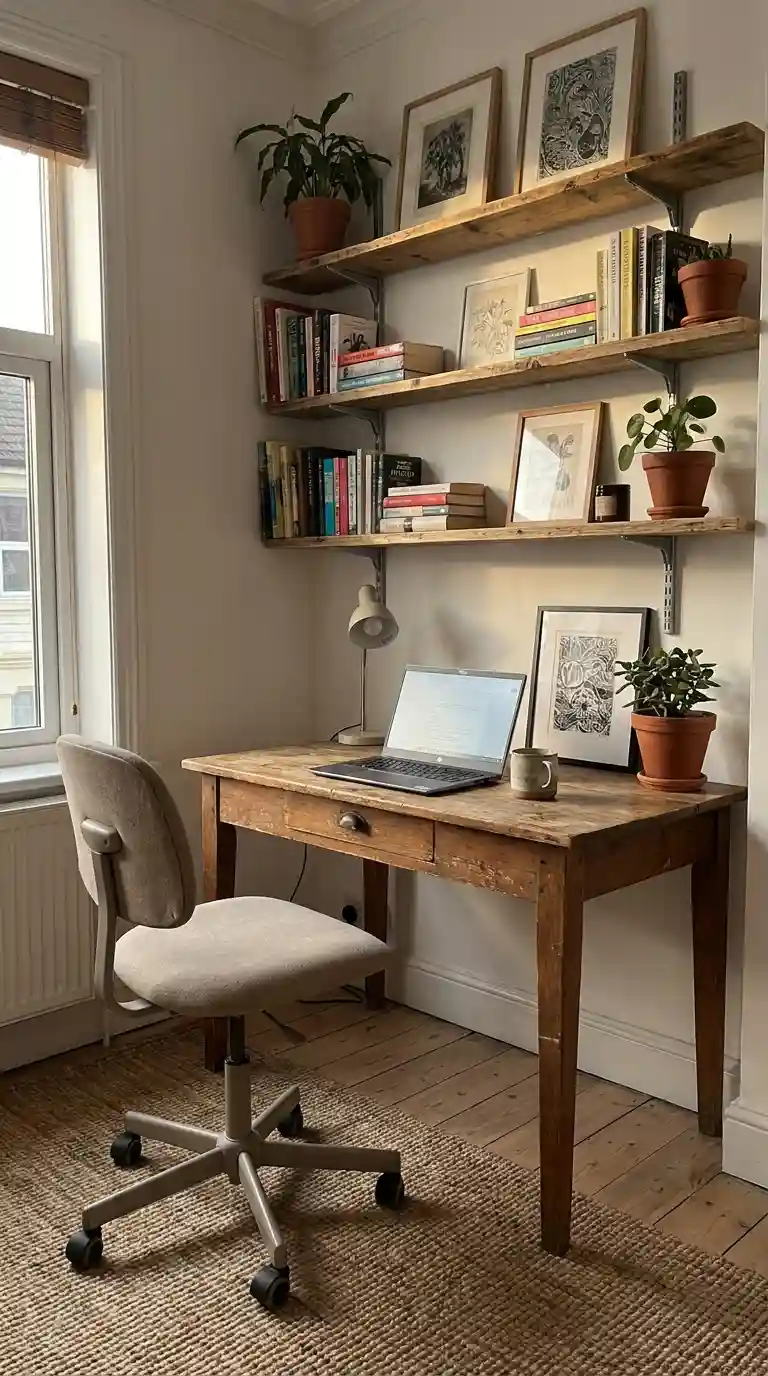
You do not need an enormous budget to implement genuinely effective office furniture design ideas, and some of the most functional workspaces I have consulted on relied more on smart choices than expensive purchases.
Secondhand and refurbished furniture has become a genuinely respectable choice rather than a last resort compromise. A well maintained secondhand ergonomic chair often performs just as well as a brand new budget model, and it typically costs a fraction of the price while supporting a more sustainable approach overall.
Prioritizing your budget toward the pieces used most heavily, particularly desk chairs and any furniture supporting focused solo work, makes far more sense than spreading a limited budget thin across every single piece equally. A genuinely good chair matters more day to day than an expensive decorative side table.
Modular pieces that can be reconfigured or expanded over time allow a smaller initial investment to grow alongside a business, rather than requiring a full furniture overhaul every time the team expands or the space changes.
DIY and small local maker pieces can bring genuine character to an office furniture design plan without the markup that comes with larger commercial furniture brands, particularly for accent pieces like shelving or simple side tables that do not need the same structural investment as a primary desk or chair.
How I Approach a Real Office Furniture Design Project From Start to Finish
Every project I take on starts with observation before a single furniture decision gets made. I want to watch how people actually move through their current space, where they naturally gather, where they avoid sitting, and what genuinely frustrates them about their day to day physical environment.
I remember working with a small marketing agency that had, on paper, a genuinely nice looking office. Sleek desks, matching chairs, a clean modern aesthetic. But the team kept retreating to a cramped kitchen counter for any kind of collaborative work, because the only alternative to their individual desks was a single, overly formal conference room that felt like overkill for a quick five minute discussion. We introduced a modest lounge area with soft seating and a low table, and within weeks, that corner became the genuine creative hub of the office. The rest of the furniture had not changed at all. One thoughtful addition, informed by watching actual behavior rather than guessing, made the entire space function better.
I have also worked with larger corporate clients navigating a full hybrid work transition, where the biggest challenge was not aesthetics at all, but genuinely rethinking what the office needed to offer that a comfortable home setup did not already provide. That project relied heavily on zoning, a genuinely thoughtful mix of collaborative and quiet furniture, and materials warm enough to compete with the comfort of working from home.
What I have learned across these projects is that the best office furniture design ideas rarely come from a catalog or a trend report alone. They come from paying close attention to how a specific group of people actually work, then choosing furniture that removes friction from that process rather than adding a new layer of friction disguised as good design.
Also Read : 45 Genius Bookshelf Styling Ideas That Will Instantly Elevate Any Room In Your Home
Common Mistakes That Undermine Good Office Furniture Design Ideas
After working through so many office redesign projects, certain mistakes show up again and again, quietly undoing otherwise reasonable office furniture design ideas.
Prioritizing appearance over ergonomics is probably the most common and most damaging mistake. A visually striking chair that leaves employees uncomfortable within an hour is not a success, regardless of how good it looks in photographs.
Ignoring acoustic planning entirely, especially in open plan layouts, leads to persistent noise complaints that no amount of otherwise beautiful furniture can fully compensate for. Sound genuinely needs to be considered as part of the furniture plan, not treated as a separate afterthought.
Applying a single rigid layout to every part of an office, rather than zoning the space for different types of work, tends to leave certain areas underused while others become overcrowded and frustrating for the people trying to actually get work done there.
Underestimating storage needs until after furniture has already been ordered leads to cluttered desks and awkward, mismatched additional storage crammed in as an afterthought, rather than genuinely integrated into the original office furniture design plan.
Choosing furniture purely based on current trends without considering how a specific team actually works results in a space that looks impressive during a walkthrough but quietly fails to support daily productivity once the novelty wears off.
Office Furniture Design Ideas for Different Company Cultures
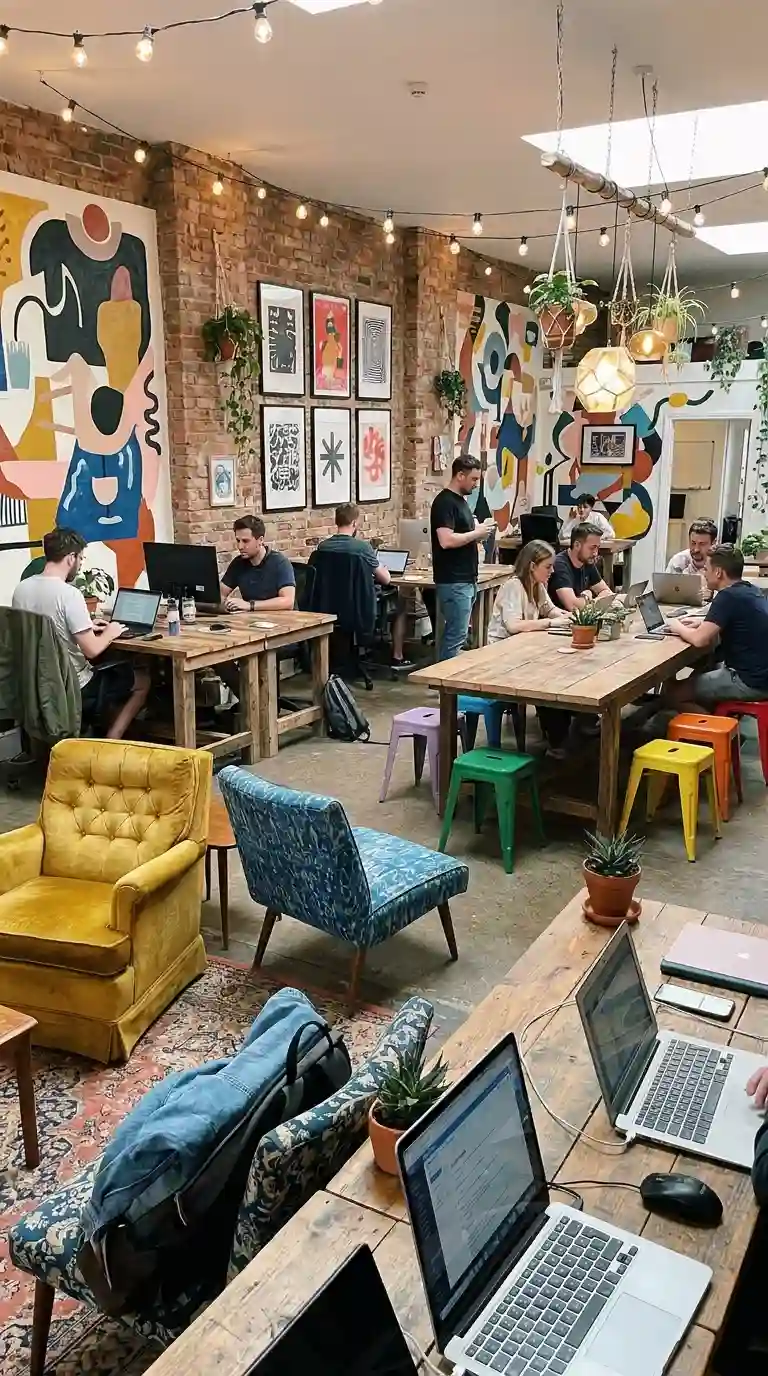
Not every business needs the same office furniture design approach, and matching your furniture choices to your actual company culture makes a genuine difference in how the space feels to the people working there every day.
A creative agency or design studio often benefits from a slightly more eclectic, personality driven approach to office furniture design, mixing bold colors, varied textures, and unexpected pieces that reflect the creative nature of the work happening within that space.
A law firm or financial services company typically leans toward a more formal, polished office furniture design approach, using higher quality materials, a more restrained color palette, and classic furniture silhouettes that project stability and professionalism to clients walking through the door.
A tech startup frequently favors a flexible, modular office furniture design strategy, prioritizing adaptability over permanence, since the team size and workspace needs of a growing startup can shift dramatically within a relatively short period of time.
A wellness or health focused company often incorporates biophilic elements directly into their office furniture design ideas, using natural materials, organic shapes, and plenty of greenery integrated throughout the furniture selection to reinforce the brand’s core values through the physical environment itself.
Whatever your company culture, the furniture throughout your office genuinely communicates something to both employees and visitors, whether that message is intentional or not, which is exactly why thoughtful office furniture design ideas matter as much as any other branding decision a business makes.
Also Read : Cute Apartment Decor Ideas That Will Actually Make Your Small Space Feel Like Home
Measuring the Success of Your Office Furniture Design Choices
It is worth thinking beyond the initial visual impact of a new office furniture design plan and considering how you will actually measure whether the changes worked over the following months.
Simple employee feedback, gathered informally or through a brief survey a few weeks after a furniture update, gives genuinely valuable insight into whether the new pieces are actually solving the problems they were meant to address, rather than just looking good on installation day.
Observing actual usage patterns matters more than initial impressions. A beautiful collaborative lounge area that sits empty every day is a sign that something about the office furniture design, whether placement, comfort, or accessibility, is not quite working as intended.
Tracking absenteeism or complaints related to physical discomfort, particularly after introducing more ergonomic seating or adjustable desks, can offer a genuinely concrete measure of whether an office furniture design investment is paying off in terms of employee wellbeing over time.
Revisiting your office furniture design plan periodically, rather than treating it as a one time decision, allows a workspace to keep evolving alongside the team using it, since the needs of a growing or changing company rarely stay perfectly static for years at a time.
People Also Ask
What are the best office furniture design ideas for a small space?
The best office furniture design ideas for small spaces include multi functional pieces that combine storage and work surfaces, wall mounted or foldable desks, vertical shelving, and lighter colored furniture that helps the room feel more open.
What office furniture design trends are popular in 2026?
Popular office furniture design trends for 2026 include modular and reconfigurable furniture, sustainable and recycled materials, acoustic focused seating and pods, warmer residential inspired finishes, and bold accent colors in collaborative areas.
How do I choose an ergonomic office chair?
Look for adjustable lumbar support, seat height, and armrest positioning as the baseline requirements, and prioritize genuine comfort and support over appearance alone, since a poorly designed chair undermines even the best overall office furniture design plan.
What is the best desk height for an office?
Standard desk height typically falls around 28 to 30 inches, though height adjustable desks have become one of the most popular office furniture design ideas because they let each individual customize the height to their own comfort throughout the day.
How much should I budget for office furniture?
Budgets vary widely depending on company size and furniture quality, but prioritizing spending toward heavily used pieces like ergonomic chairs, while considering secondhand or modular options for less critical furniture, is a smart approach to office furniture design on a limited budget.
What furniture works best for an open plan office?
Acoustic panels, privacy pods, and furniture with built in sound dampening are particularly important office furniture design ideas for open plan layouts, since noise is one of the most common complaints in this type of workspace.
What furniture works best for an open plan office?
Acoustic panels, privacy pods, and furniture with built in sound dampening are particularly important office furniture design ideas for open plan layouts, since noise is one of the most common complaints in this type of workspace.
How do I make my home office furniture design more comfortable?
Focus on a genuinely supportive ergonomic chair, an appropriately sized desk with good lighting nearby, and warm natural materials, since comfort and residential feeling design have become central to effective home office furniture design ideas.
What colors are best for office furniture?
Warm neutrals work well for individual focused work areas, while bolder colors like teal, mustard, and coral suit collaborative zones where a bit of visual energy supports creativity and interaction throughout the day.
Should office furniture be sustainable?
Sustainability has become an increasingly central part of modern office furniture design ideas, with recycled materials, furniture designed for repair rather than disposal, and secondhand purchasing all becoming genuinely mainstream considerations for businesses.
Final Thoughts on Office Furniture Design Ideas
A workspace is never just a collection of desks and chairs arranged in a room. It is a physical environment that shapes how people feel, focus, and connect with each other throughout every single workday. Good office furniture design ideas take that responsibility seriously, moving well beyond surface level aesthetics toward something that genuinely supports the people using the space.
Whether you are furnishing a small home office corner or leading a full corporate redesign, the same core principle holds true. Start with how people actually work, not with what looks impressive in a catalog photo, and let that understanding guide every furniture decision from there.
Thoughtful office furniture design does not need to be complicated or expensive to make a real difference. A few intentional choices, informed by genuine observation and a willingness to prioritize comfort and function alongside style, can transform how an entire team experiences their workday, one well chosen piece of furniture at a time.




2 Comments on “Office Furniture Design Ideas: The Ultimate Guide to a Smarter, More Inspiring Workspace”