
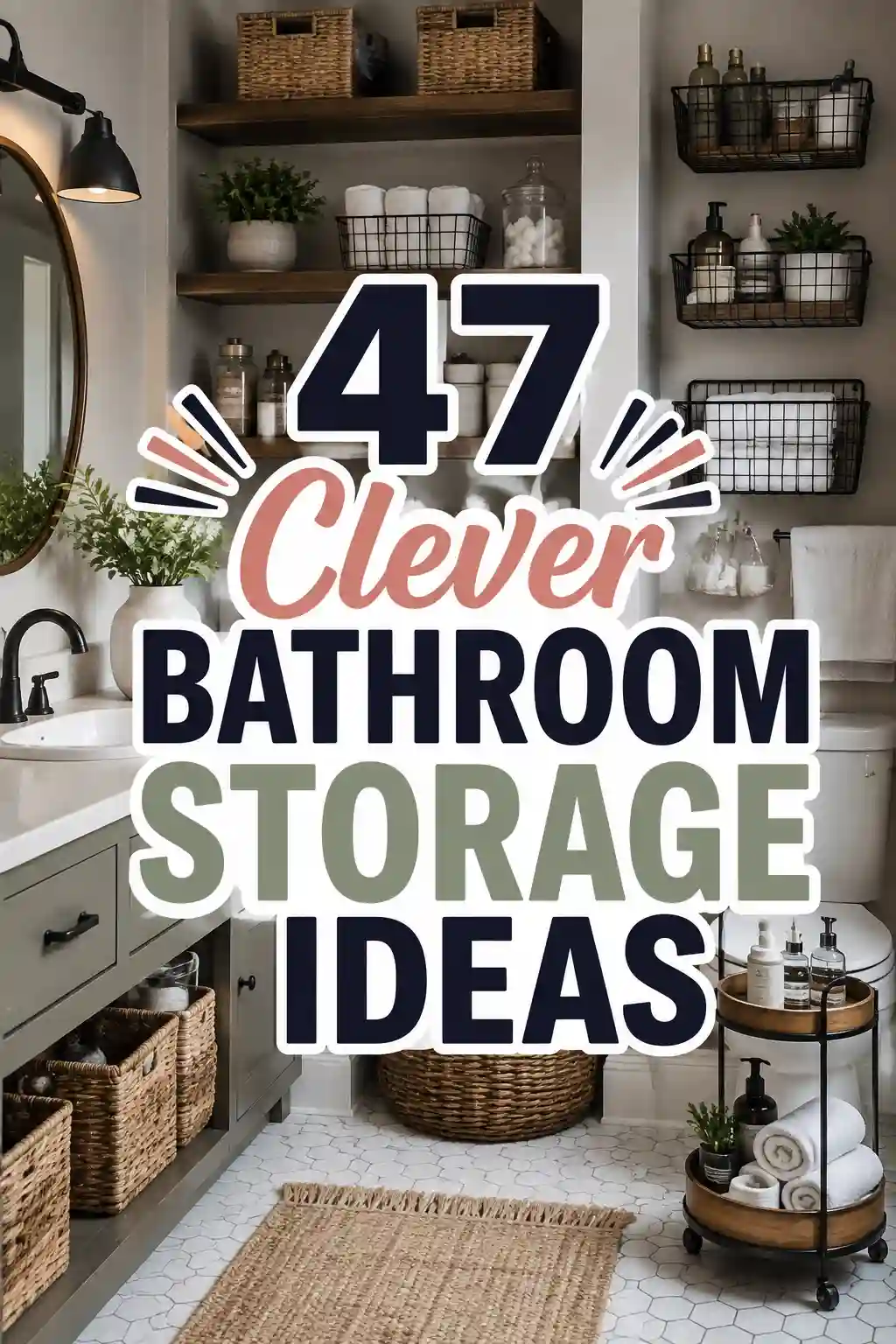
Start with three measurements, not a shopping list: the width of the vanity or basin unit, the clear depth under the sink once the pipes are accounted for, and the wall space beside the mirror that is not blocked by a door swing or a light switch. A working budget of £90 to £260 covers most of the changes below, and the whole job fits into a single weekend if the sorting is done first. The one consideration that shapes every choice is humidity: anything that cannot cope with steam will warp, rust or smell within months, so closed, ventilated storage beats pretty open baskets in a bathroom without a working extractor fan.
Why does the bathroom always look messy first?
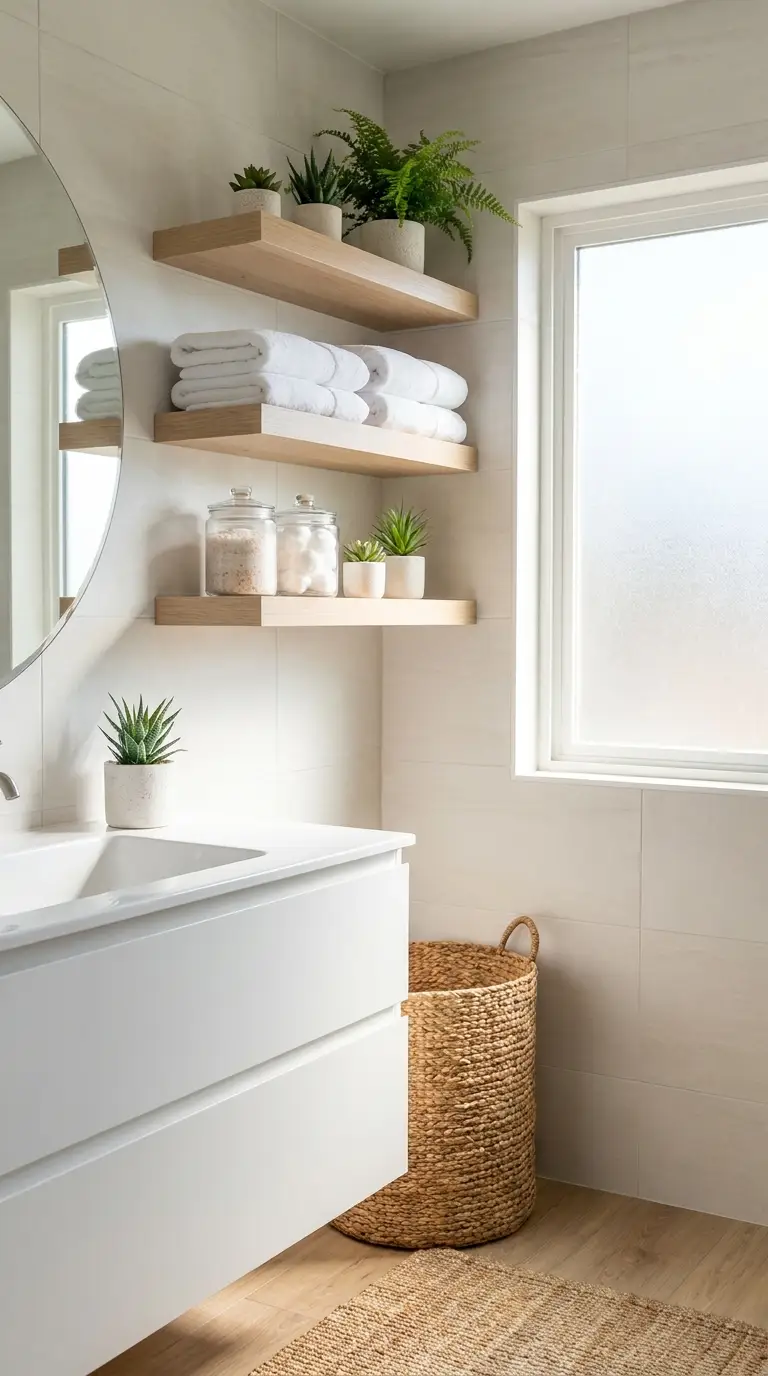
A bathroom is the smallest room carrying the most daily traffic. Two or three people, each with a different routine, use the same 2 to 3 square metres, and every bottle, towel and charger competes for the same strip of countertop. The photo of the open shelving above shows the principle at work: only a handful of items are on display, the rest are grouped in baskets, and nothing is stacked two deep where it cannot be reached.
The fix is therefore not more storage in general, but storage in the right place. Daily items need to sit within arm’s reach of where they are used, spares need a single home elsewhere, and anything not used in the last 90 days needs to leave the room. Apply that 90-day test honestly and most bathrooms lose a third of their clutter before a single container is bought.
What should you measure before buying anything?
Measure the inside of the cabinet, not just its outer width. Note the height from the cabinet floor to the underside of the basin, then subtract 10 centimetres for the trap and pipework; that remaining height decides whether a stackable bin or a single low caddy will actually fit. For shelves, allow 30 to 35 centimetres between them so tall bottles stand upright, and leave at least 5 centimetres of finger room above each shelf.
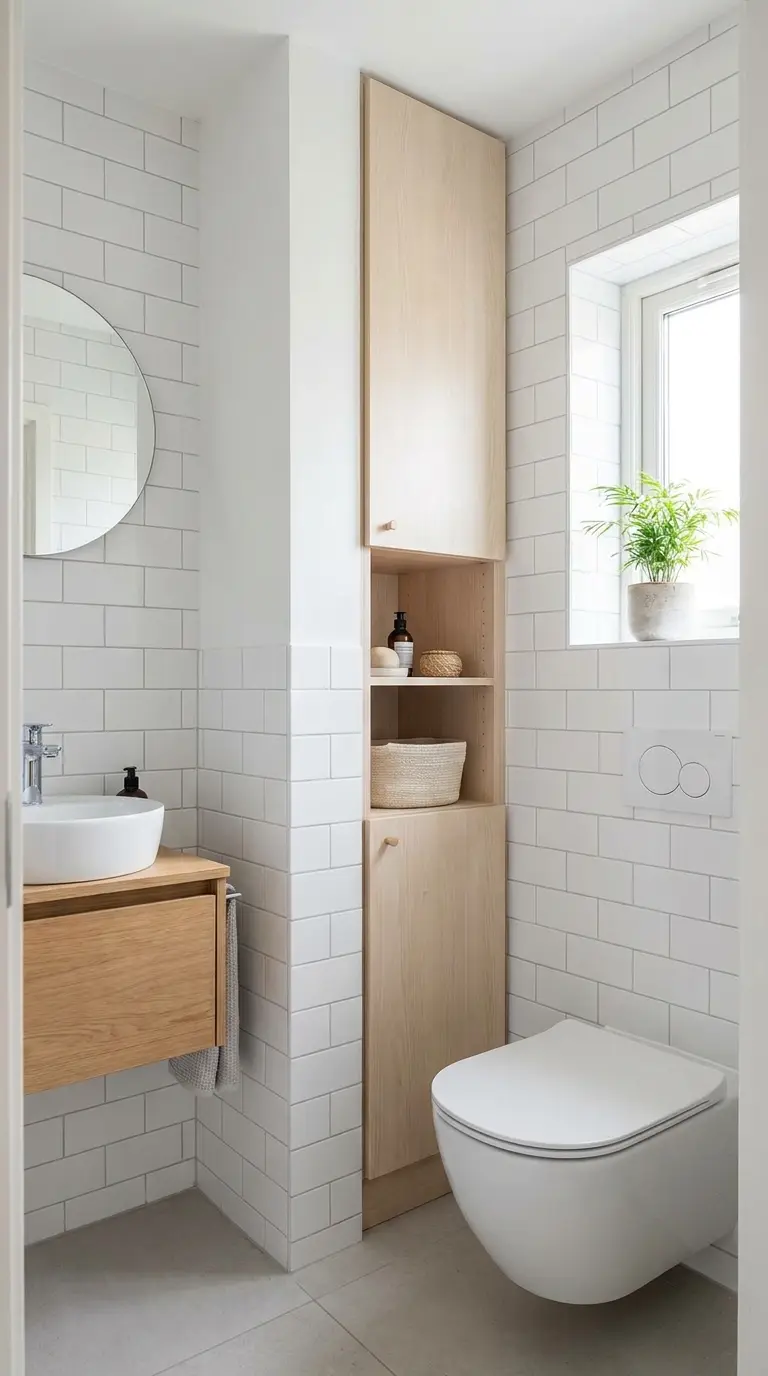
In a tight bathroom, the strip beside the toilet is often 15 to 20 centimetres wide, which suits a slim rolling unit, while the wall above the toilet usually holds two shelves without crowding the room. The photo of the small-bathroom shelving shows why scale matters: slim shelves, rolled towels and one basket read as calm, whereas a deep unit in the same spot would block movement. The same discipline helps in other tight rooms, as these small-space decorating ideas show.
How do you clear the countertop without losing daily essentials?
Limit the countertop to what is used every single morning: toothbrush, one cleanser, one moisturiser and a hand soap. Everything else moves to a tray, a drawer or the cabinet. A tray of about 30 by 20 centimetres is enough for most basins; anything larger simply becomes a new place to pile things. Group the tray contents by routine rather than by size, so the morning items sit together and the evening items sit behind them.
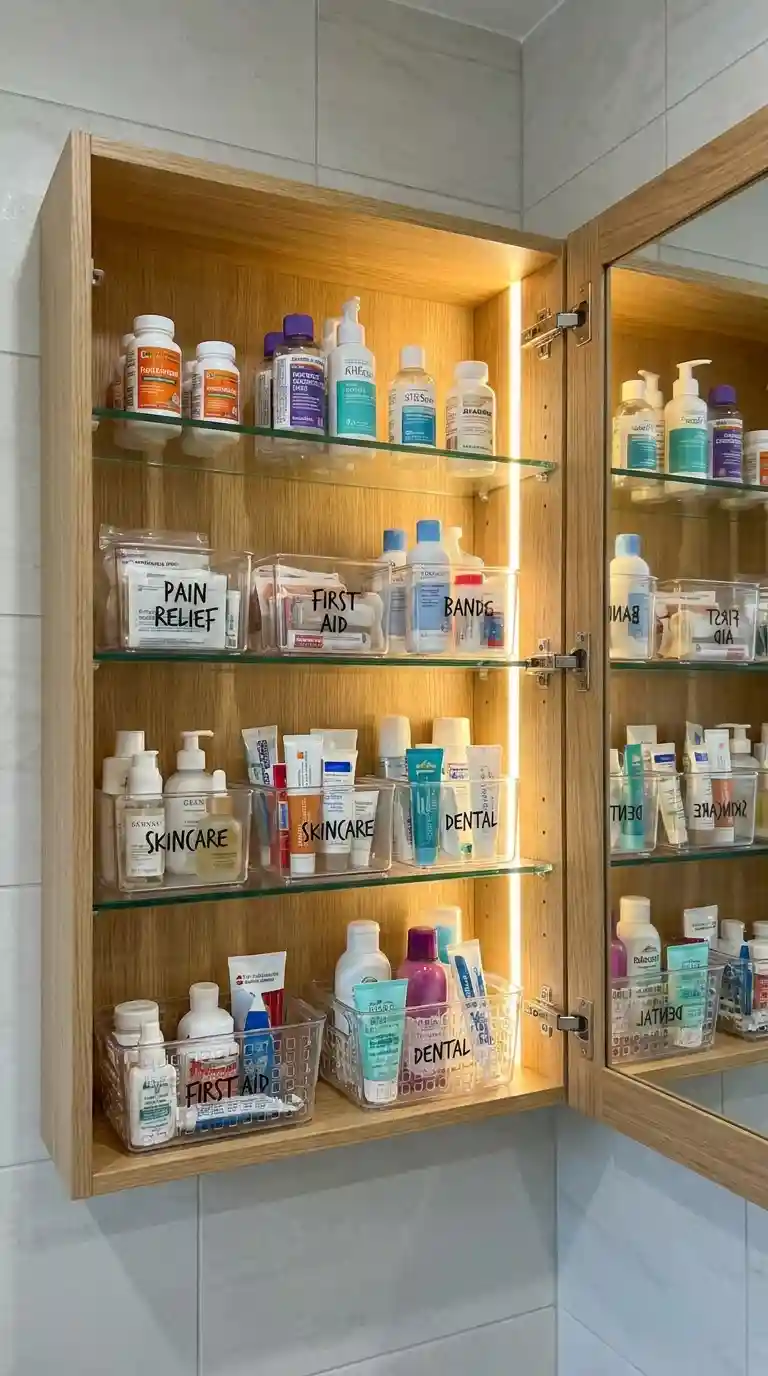
The medicine cabinet deserves the same treatment. Sort it by category — pain relief, first aid, skincare, dental — rather than by bottle height, and put small items in one lidded box so they cannot slide behind larger ones. Check expiry dates twice a year, when the clocks change, and remove anything expired rather than pushing it to the back. The photo of the medicine cabinet organisation shows the result: shallow shelves, visible labels and no bottle hidden behind another.
What actually works under the sink?
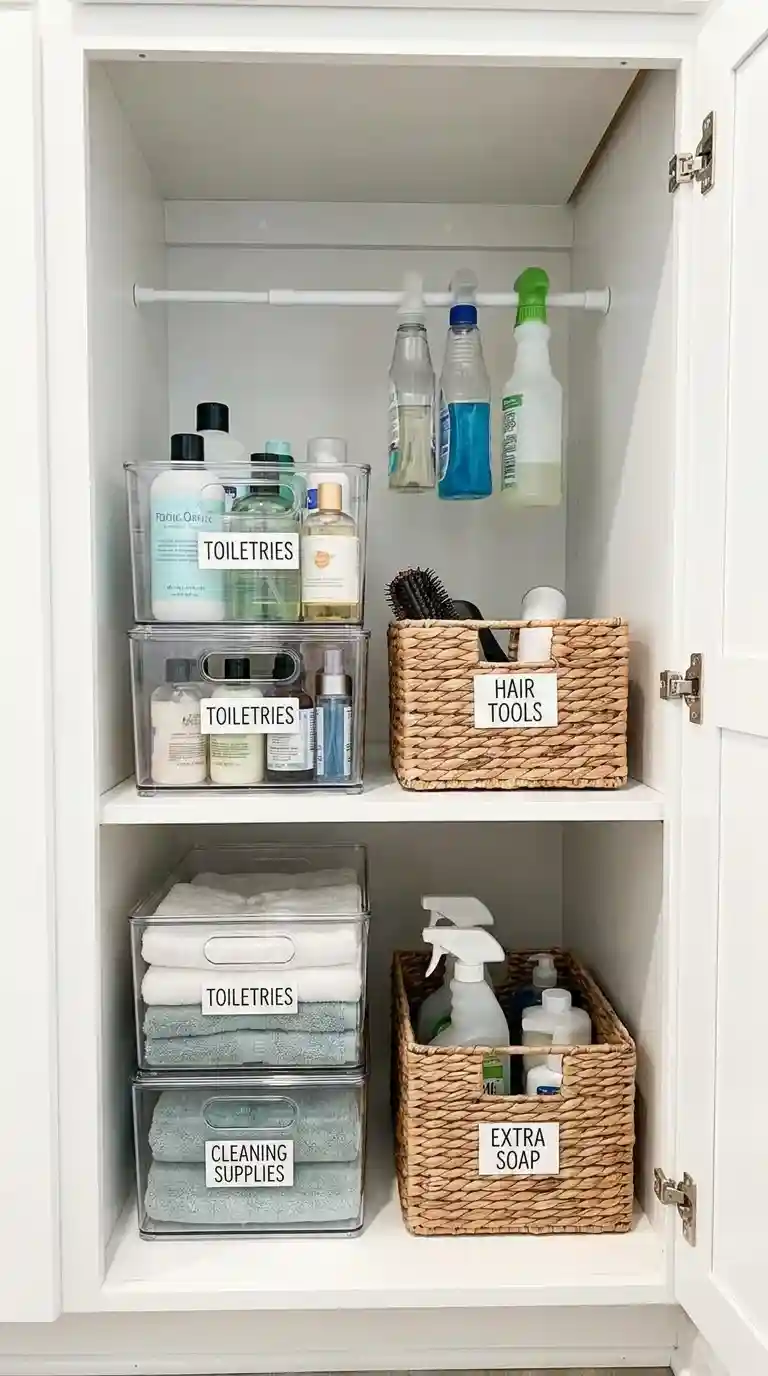
Under-sink space fails when one large box is expected to work around pipes. Instead, use two stackable bins that sit either side of the trap, leaving a clear channel for plumbing, and keep cleaning products in the bin furthest from the door so they are not knocked over daily. A tension rod fixed across the cabinet, about 15 centimetres below the top, holds spray bottles by their triggers and frees the floor of the cabinet entirely.
A turntable of about 25 centimetres diameter solves the back-of-cabinet problem: one spin brings the least-used bottles forward, which matters when the cabinet is deeper than 45 centimetres. Stick small hooks or a slim rack inside the cabinet door for brushes and cloths, but check first that the door still closes without crushing the contents. The photo of the under-sink set-up shows the same logic: bins fitted around pipes, nothing loose, and a clear route to every item.
Should you choose open shelves or closed storage?
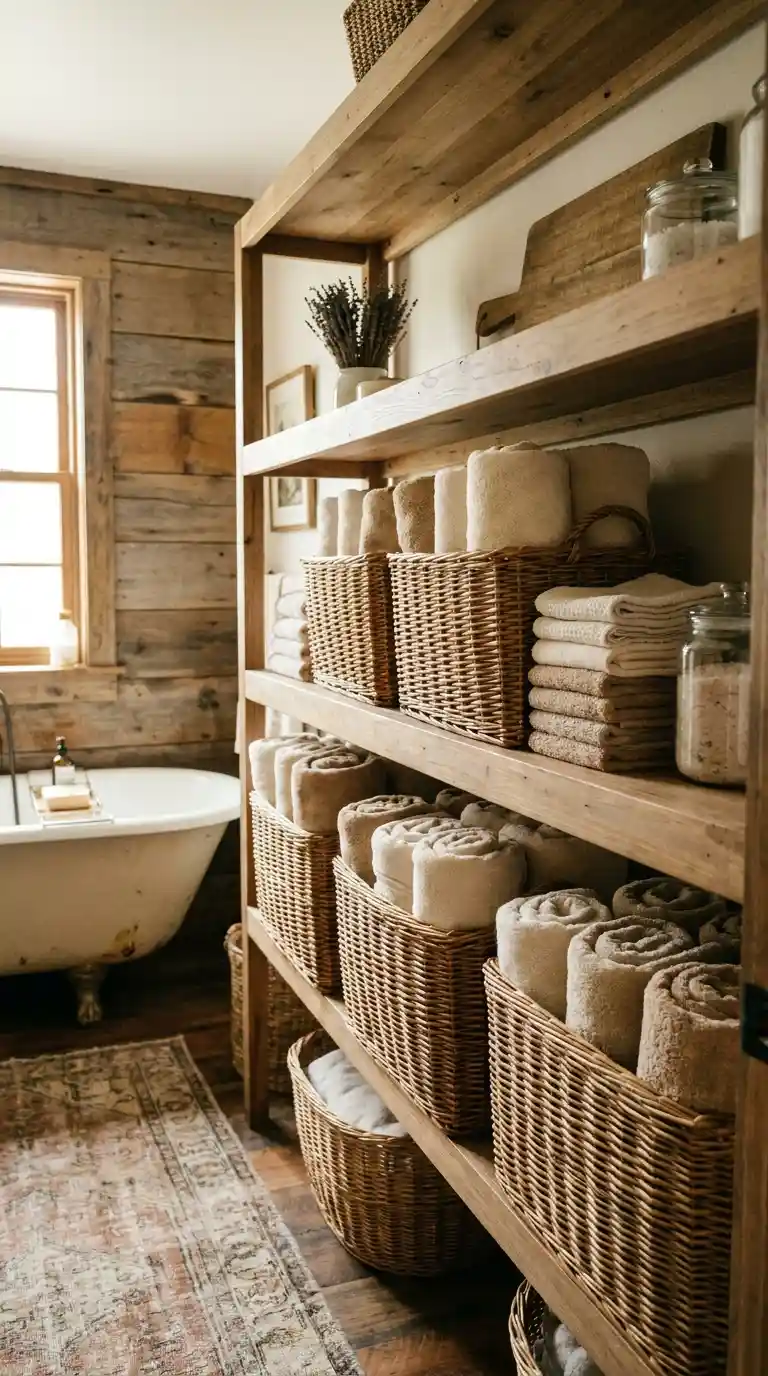
Use both, but for different jobs. Open shelving suits the three or four things that look good and are used daily — rolled towels, a plant, one or two attractive bottles — while closed storage suits medicines, cleaning products and anything in mismatched packaging. A workable split is roughly one open shelf to two closed fronts; any more open shelving and dusting becomes a weekly chore rather than a monthly one.
Baskets are the bridge between the two: a woven basket on an open shelf hides clutter while keeping the shelf looking soft, and a labelled bin inside a closed cabinet makes the contents findable without opening every door. The photo of the basket storage shows that balance, and the same curated-shelf thinking applies beyond the bathroom, as these bookshelf styling ideas demonstrate. Choose sealed wood, metal or lacquered finishes for shelves near the shower, since raw wood swells in steam.
How do towels, laundry and shared bathrooms fit in?
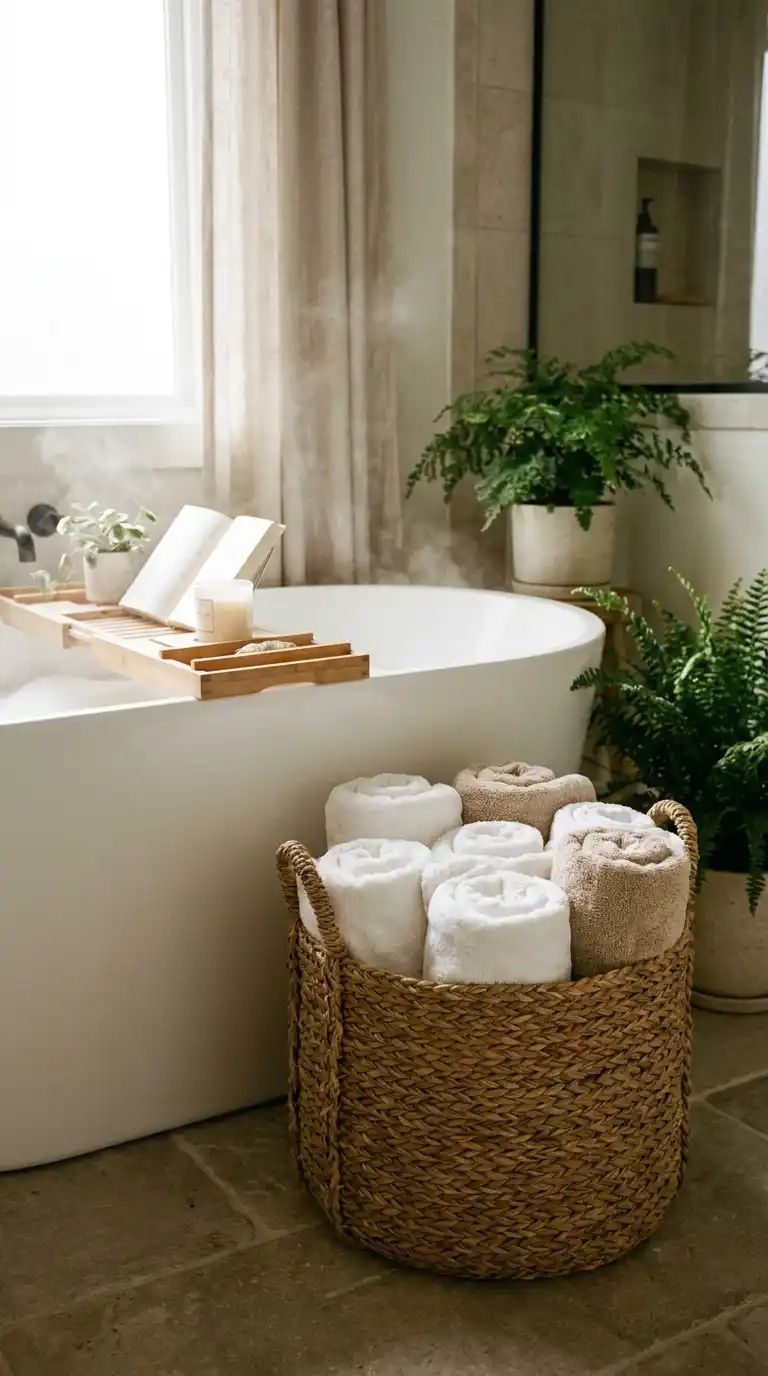
Towels are bulky, so decide how many are genuinely in use: two bath towels per person in rotation, plus one hand towel each, is enough for most households. Rolling instead of folding saves roughly a third of shelf space and makes it obvious when the stock is running low. Hooks suit daily towels because they dry faster than a folded towel on a bar, while a bar or ladder suits guest towels that need to look neat.
In a shared bathroom, give each person one zone — a basket, a shelf or a section of a drawer — and keep one shared zone for toilet paper, cleaning products and spares. Colour-coded baskets work well for children because the system does not depend on reading labels. Spare towels that do not fit in the bathroom belong in a linen cupboard or bedroom storage, not squeezed onto the bathroom floor; the same zone thinking used in walk-in closet organisation works for linen too.
What can renters do without drilling?
Renters can still change a bathroom substantially. Adhesive hooks and strips work well for light items, but always check the weight rating on the packet — a hook rated for 1 kilogram will not hold a full wash bag — and clean the tile with rubbing alcohol first so the strip bonds properly. Tension poles in the shower corner, over-door racks and freestanding units that fit a 30-centimetre gap all move out with you.
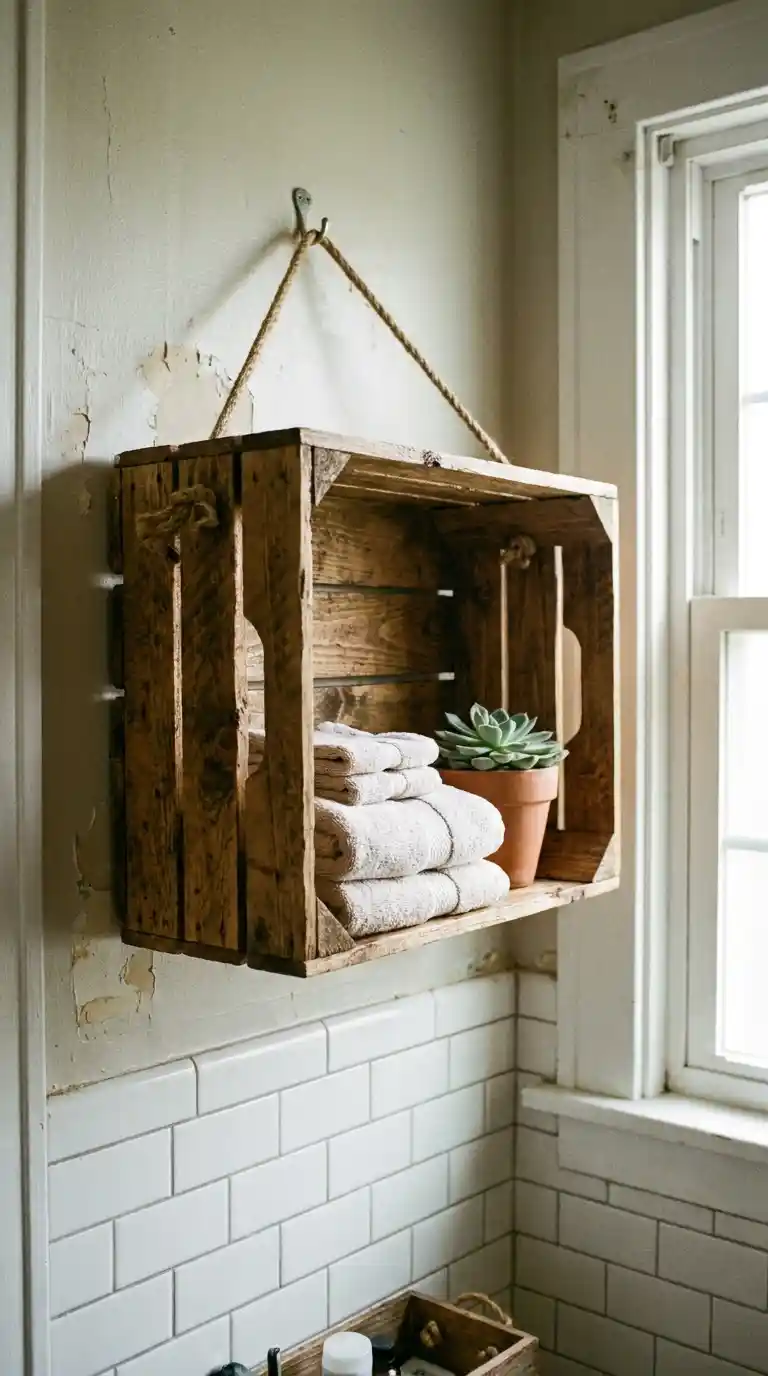
Low-cost changes punch above their weight: decanting into two matching jars, adding one tray and swapping a shower curtain for a caddy that hangs from the shower head can cost under £40 in total. The photo of the budget storage shows how a few inexpensive pieces, chosen in one colour family, look deliberate rather than improvised. If a bathroom has no cabinet at all, a tall, slim freestanding unit beside the basin is usually a better buy than a wide one, because it leaves the walkway clear.
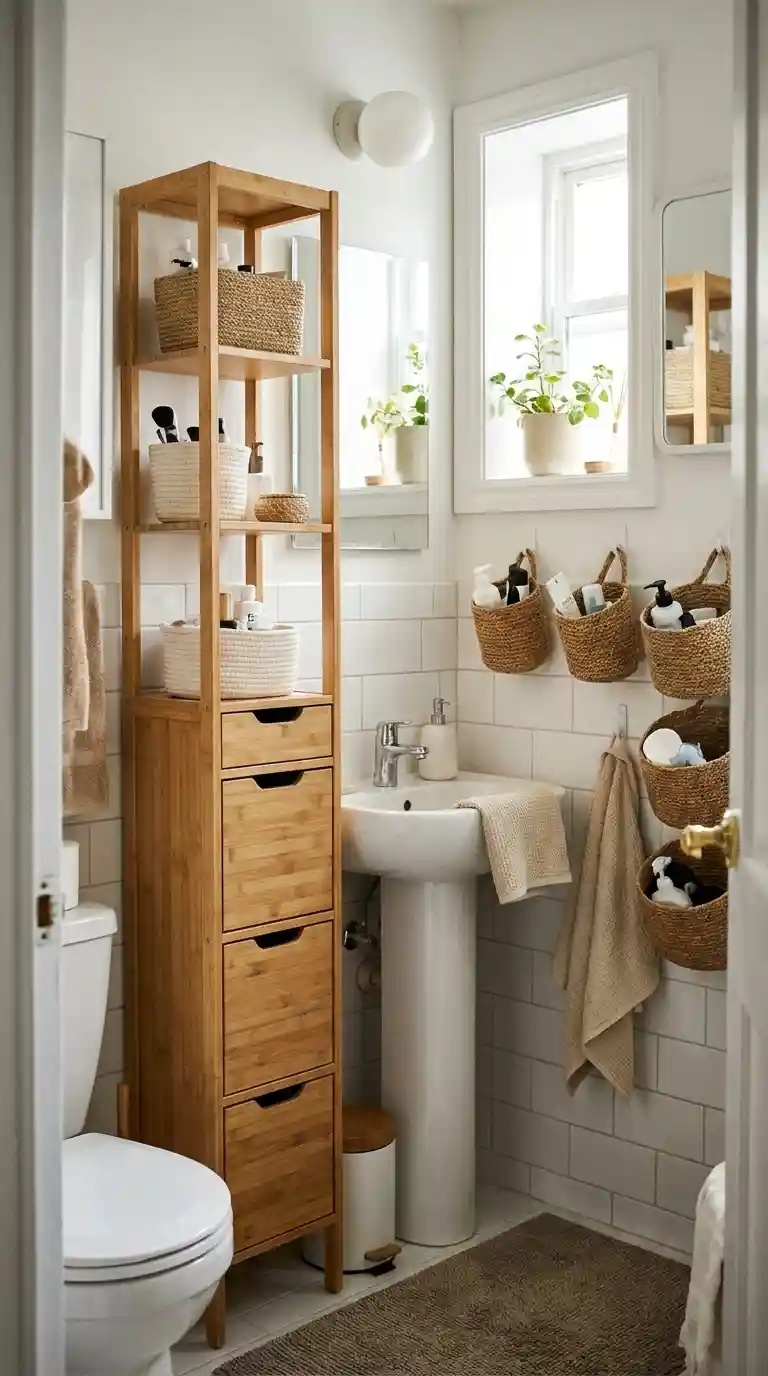
How do you keep it tidy after the first week?
Storage only stays tidy if the upkeep is smaller than the mess. Set a five-minute weekly reset: return stray bottles to their zones, wipe the tray and check that the towel stock is complete. Apply a one-in, one-out rule for new products, so a new shampoo means an old bottle leaves, and revisit the whole system every three months as routines change with the seasons.
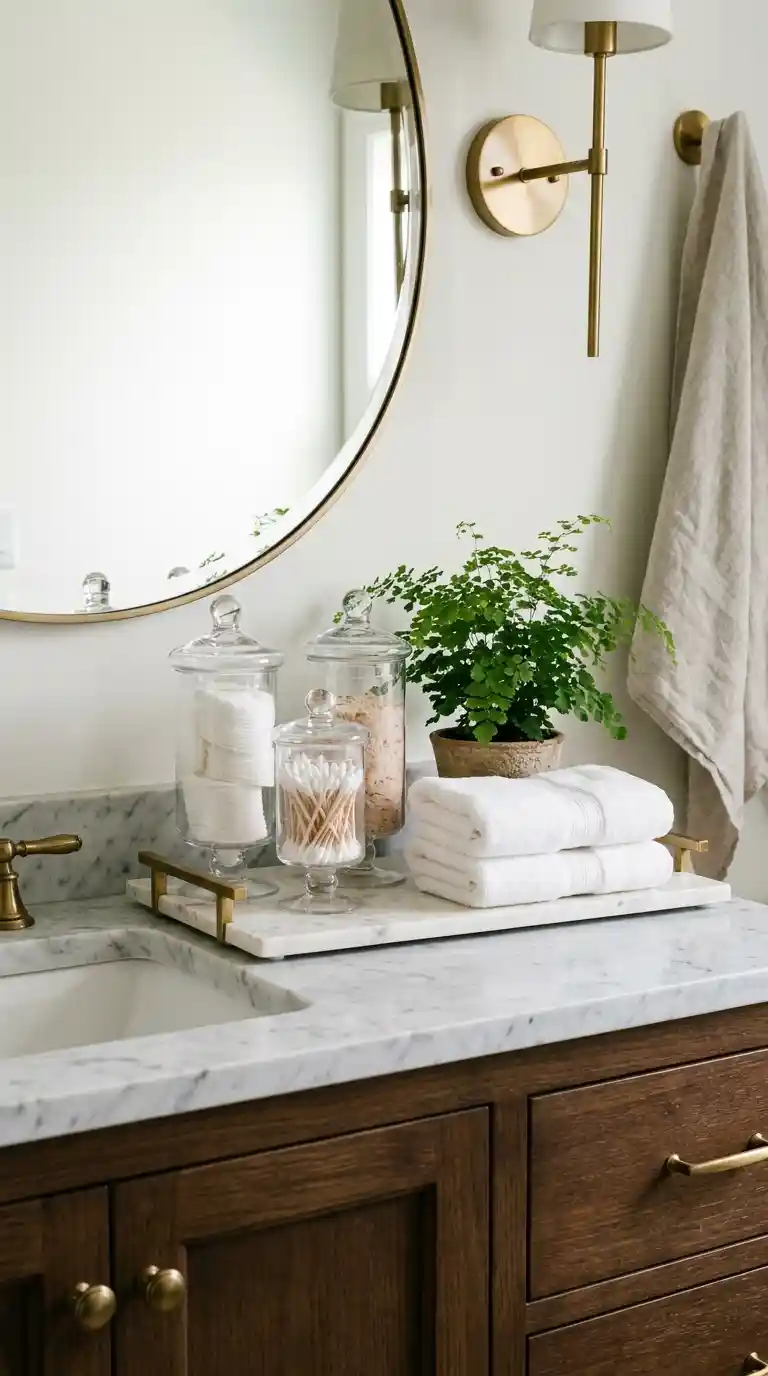
Matching containers help here, but only for the items that stay on display; decanting everything, including rarely used products, creates extra work and waste. The photo above shows the right balance: a limited colour palette, a few matching jars and plenty of closed storage behind them. If a system needs more than five minutes a week to maintain, it is too complicated — simplify it by removing a category rather than adding a container.
Start with one zone this weekend — the countertop, or the cabinet under the sink — and judge the result after a week of normal use. Once that zone holds, move to the next. A bathroom that stays tidy is rarely the one with the most storage; it is the one where every item has a single, obvious home.
Frequently asked questions
What is the cheapest way to start organising a bathroom?
Sort first and buy nothing until the sort is done. A tray for the countertop, two hooks and one basket usually cost £20 to £40 in total and solve most of the visible mess.
How do I organise under the sink when pipes get in the way?
Measure around the trap, then use two stackable bins that sit either side of it, a tension rod for spray bottles and a small turntable for items at the back.
Are floating shelves safe in a steamy bathroom?
Yes, if the finish is sealed and the room has a working extractor fan. Keep shelves away from direct shower spray and wipe them down weekly to prevent moisture damage.
How can renters add bathroom storage without drilling holes?
Use adhesive hooks rated for the weight, tension poles in the shower, over-door racks and freestanding units you can take with you when you move.
How often should I clear out bathroom products?
Twice a year, when the clocks change, check expiry dates and remove anything unused in the last 90 days. That single habit prevents most bathroom clutter from building up again.





6 Comments on “How to Stop a Bathroom Feeling Cluttered (Without a Renovation)”