

There is a moment in almost every bathroom renovation consultation where a client hesitates over color, worried they will pick something trendy today and regret it in five years. I have had this exact conversation more times than I can count, and there is one answer that almost always calms that nervous energy in the room. A black and white bathroom does not really go out of style, because it was never really in style in the first place. It has just been quietly, consistently beautiful for over a century.
A black and white bathroom carries a strange kind of confidence that a lot of trend driven color palettes simply cannot compete with. It looks equally at home in a hundred year old Victorian house and a brand new modern build. It photographs beautifully in every kind of light. And honestly, it is one of the most forgiving color combinations to actually live with day to day, since it pairs with nearly every towel, rug, or accessory you could ever want to bring in afterward.
This guide pulls together everything I have learned from designing real black and white bathroom projects over the years, from small powder rooms to full primary suite renovations. We will walk through tile choices, layout considerations, fixture selections, lighting, and the small details that separate a black and white bathroom that feels genuinely elegant from one that feels a little cold or clinical.
Let us get into it.
Also Read : Moody Bathroom Ideas That Turn An Ordinary Room Into A Personal Retreat
Why a Black and White Bathroom Never Really Goes Out of Style
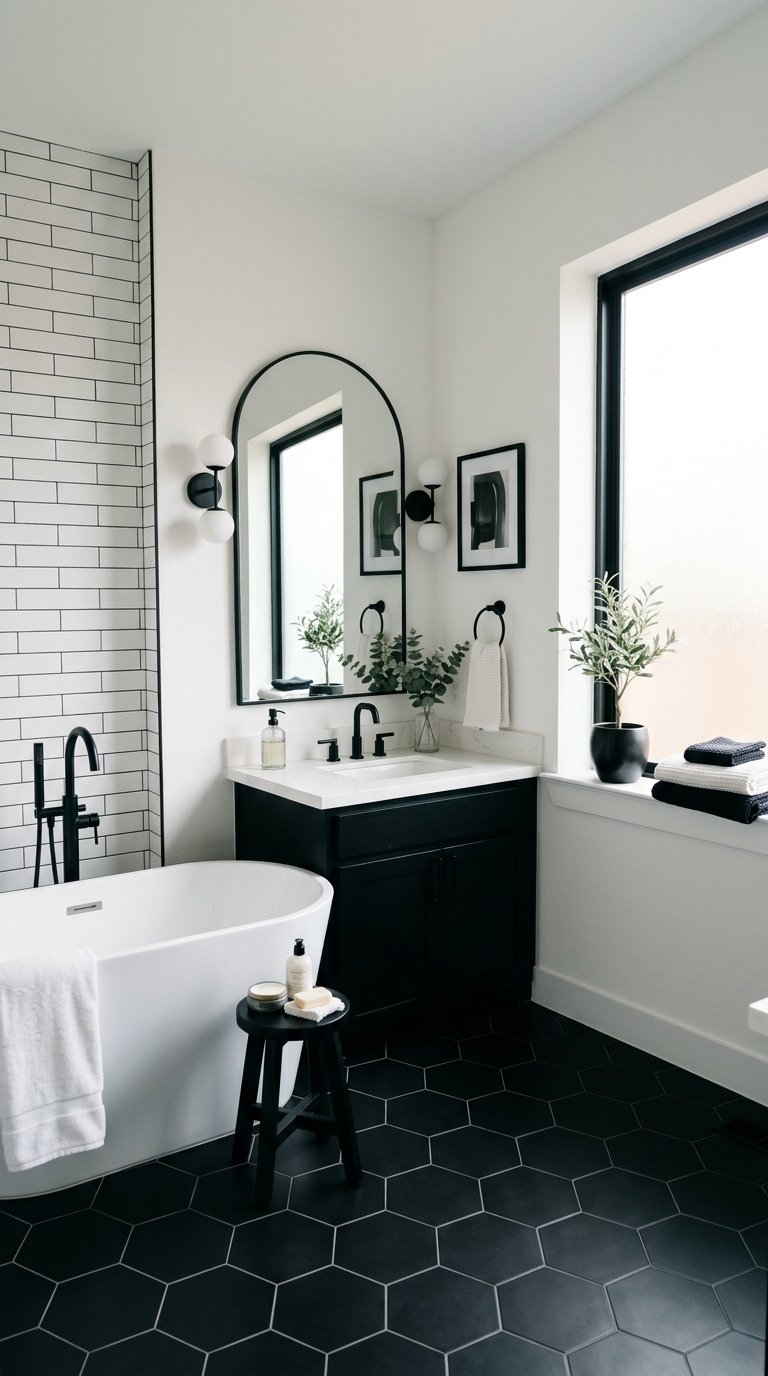
I get asked constantly whether a black and white bathroom is a passing trend, and I understand the concern, since bathroom design in general seems to shift every few years. The honest answer is that this particular combination has a proven track record stretching back well over a hundred years, through Art Deco glamour, mid century modern homes, and now a fresh wave of contemporary interpretations.
What makes a black and white bathroom genuinely timeless is that it relies on contrast rather than a specific trending shade. Trends tend to fade because a particular color, like a specific greige or a certain shade of blue, eventually starts to feel dated once the market moves on. Black and white does not carry that same risk, because true black and true white are not colors that shift in and out of fashion the way a mid tone hue does.
There is also a genuine practicality behind why designers keep returning to a black and white bathroom again and again. This palette pairs beautifully with literally any accent color you might want to bring in through towels, a bath mat, or a small piece of art, which means the room itself can evolve stylistically over the years without ever requiring a full renovation.
I have walked through client homes with a black and white bathroom that was originally installed decades ago, and beyond a fixture update here and there, the bones of the room still look completely current. That is honestly rare in bathroom design, and it is exactly why this combination remains one of the most requested looks I work with.
Understanding the Different Styles Within Black and White Bathroom Design
Before choosing tile or fixtures, it helps to understand that a black and white bathroom is not a single fixed look. There are genuinely distinct styles within this broader category, and picking the right one for your specific home makes a significant difference in the final result.
Modern minimalist black and white bathrooms lean into clean lines, large format tile, and a more restrained use of pattern, letting the sheer contrast between black and white carry the visual interest rather than relying on busy tile work or ornate fixtures.
Vintage and Art Deco inspired black and white bathrooms embrace checkerboard floors, ornate mirrors, and brass hardware, drawing directly on the Old Hollywood glamour that first made this palette so iconic in the early twentieth century.
Industrial style black and white bathrooms pair white subway tile with black steel fixtures and exposed piping, creating a raw, urban feeling that suits lofts and modern apartment renovations particularly well.
Farmhouse leaning black and white bathrooms soften the contrast with warm wood accents and a slightly more relaxed tile pattern, keeping the space from feeling too sharp or formal within a more traditionally styled home.
Bohemian black and white bathrooms introduce texture and pattern more liberally, mixing in patterned tile, layered rugs, and greenery to keep the high contrast palette from feeling stark or overly minimal.
Must Read : 45 Genius DIY Bathroom Makeover Ideas That Will Save You Thousands
Choosing the Right Tile for Your Black and White Bathroom
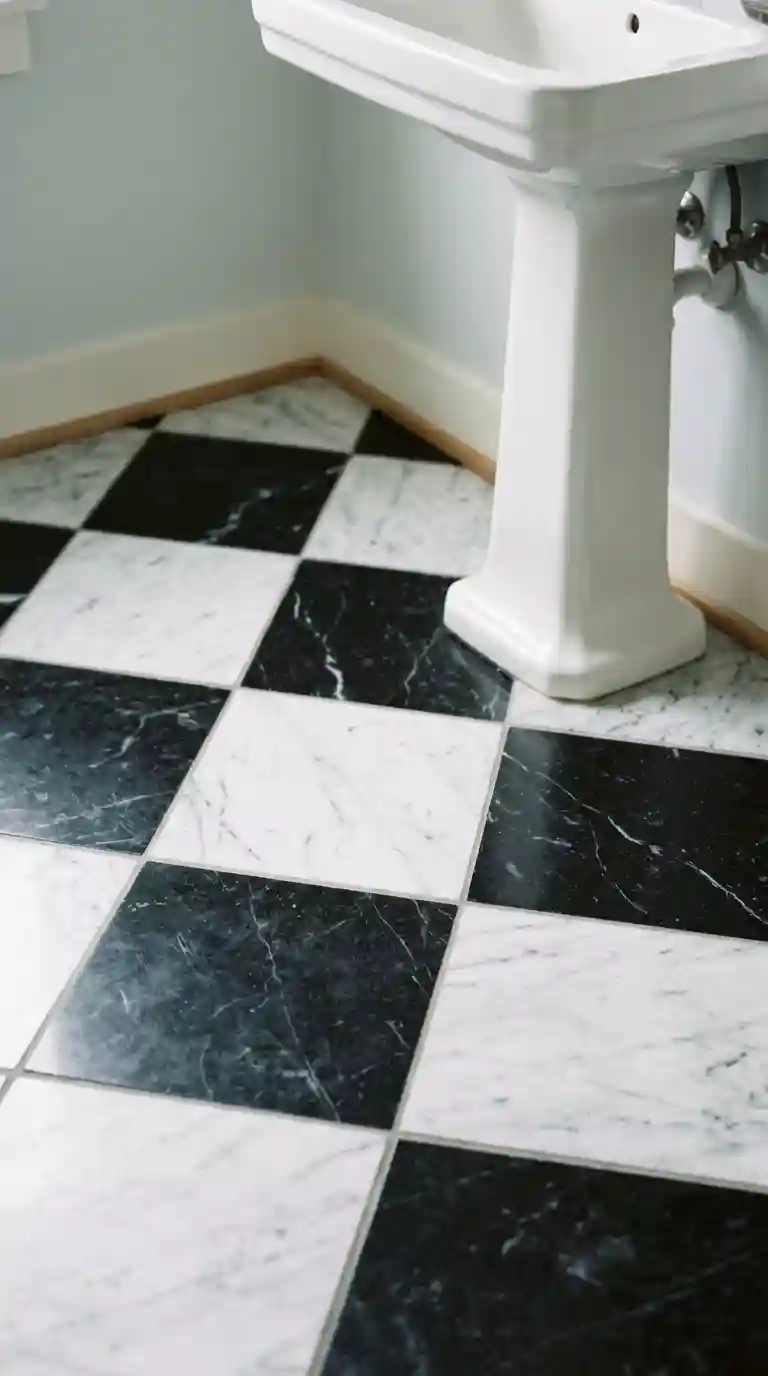
Tile is genuinely the backbone of most black and white bathroom projects, and the specific pattern and material you choose shapes the entire personality of the room more than almost any other single decision.
Checkerboard tile remains one of the most iconic and consistently requested patterns for a black and white bathroom, offering that classic, slightly glamorous look that instantly reads as intentional and well designed, whether executed in a small powder room or a full sized primary bathroom.
Herringbone tile has become an increasingly popular choice for a modern black and white bathroom, particularly in a shower area, adding movement and visual interest without needing to rely on color to do the work.
Hexagon tile, whether used across an entire floor or as an accent within a shower niche, brings a slightly softer, more organic geometry into a black and white bathroom, and it has remained consistently popular for the way it balances the sharpness of the black and white contrast with a gentler overall shape.
Large format marble look tile, in either black or white, offers a genuinely luxurious option for anyone wanting their black and white bathroom to feel more like a spa retreat than a graphic, pattern heavy space. The natural veining found in marble or a quality marble look porcelain adds subtle movement without introducing an entirely new color.
Picket tile and chevron patterns have gained real traction recently as a fresh alternative to the more traditional subway tile layout, giving a black and white bathroom a slightly more contemporary, dynamic feel while still staying firmly within the classic color palette.
Mixing multiple tile patterns within a single black and white bathroom, such as a checkerboard floor paired with a herringbone shower wall, has become a genuinely popular way to add depth and personality to the space without introducing additional colors.
Layout Considerations for a Black and White Bathroom
Getting the balance right between black and white matters just as much as the specific tile pattern you choose, since an uneven ratio can push a bathroom toward feeling either too stark and clinical or too dark and heavy.
A white dominant black and white bathroom, using white as the primary wall and floor color with black introduced through fixtures, hardware, and smaller accents, tends to feel bright, open, and particularly well suited to a smaller bathroom without much natural light.
A more even split between black and white, often achieved through a patterned floor paired with white walls, or the reverse, creates a genuinely striking, more graphic look that works particularly well in a larger bathroom with plenty of natural or artificial light to balance the deeper tones.
A black dominant bathroom, using black walls or a dramatic black tile shower paired with white fixtures and trim, has become an increasingly popular choice for a more moody, dramatic black and white bathroom, particularly in primary suites where a sense of intimacy and luxury is the goal.
Vertical elements, like a black framed shower door or black window trim, help draw the eye upward and can make a black and white bathroom with a lower ceiling feel taller and more spacious than it might otherwise appear.
Consider your room’s natural light levels honestly before committing to a heavily black dominant scheme. A windowless bathroom or one with very limited natural light generally benefits from leaning white dominant, saving the bolder black elements for a bathroom that receives more consistent daylight throughout the day.
Fixture and Fitting Choices for a Black and White Bathroom
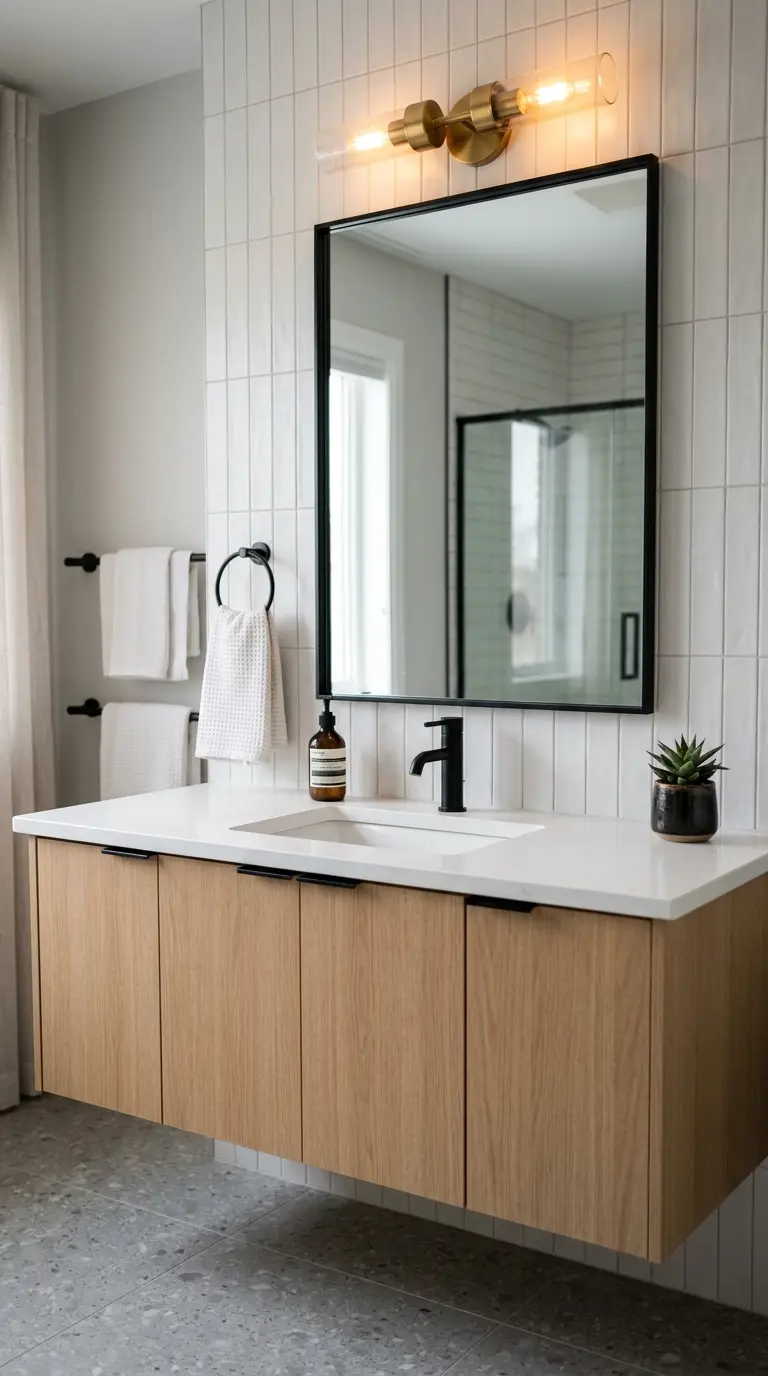
Fixtures and fittings genuinely make or break the finished feel of a black and white bathroom, and this is an area worth spending a bit more time and consideration on rather than defaulting to whatever comes standard with your chosen vanity.
Matte black faucets and fixtures have remained one of the most popular choices for a black and white bathroom for several years running, offering a bold, modern contrast against white countertops and sinks without the higher maintenance shine of polished chrome or nickel.
Brass and gold accents, whether through a mirror frame, light fixture, or cabinet hardware, add genuine warmth to a black and white bathroom that might otherwise feel a bit cool or sterile, and this pairing has become a particularly popular way to soften the high contrast palette.
A freestanding white bathtub remains one of the most striking focal points you can include in a black and white bathroom, especially when paired with black floor tile or a black accent wall behind it, creating an instantly elevated, almost editorial feeling within the room.
Black framed mirrors and shower enclosures introduce clean, graphic lines that reinforce the overall black and white bathroom theme, and this detail alone can meaningfully tie together a space where the walls and floor lean more heavily toward white.
Vessel sinks in either black or white offer a genuinely sculptural focal point for a vanity area, and pairing a black vessel sink against a white countertop, or the reverse, creates a small but impactful moment of contrast right at eye level.
Must Read : 45 Gorgeous Guest Bathroom Ideas That Will Instantly Wow Every Visitor
Lighting Ideas That Elevate a Black and White Bathroom
Lighting plays a bigger role in a black and white bathroom than in almost any other room in the house, since the strong contrast between the two colors can either feel warm and inviting or cold and clinical depending entirely on how the space is lit.
Warm toned lighting, generally sitting in the lower end of the color temperature spectrum, softens the sharper edges of a black and white bathroom and prevents the space from feeling overly stark, particularly important in a bathroom leaning heavily toward white surfaces.
Statement light fixtures, whether a sculptural pendant or a dramatic vanity light bar, offer a wonderful opportunity to introduce a bit of personality into a black and white bathroom without disrupting the overall color scheme, since even a bold fixture in black or brass still reads as cohesive within this palette.
Layered lighting, combining overhead fixtures with dedicated vanity lighting and perhaps a small accent light near a bathtub or shower, creates a more flattering, spa like atmosphere than relying on a single harsh overhead light source alone.
Natural light should be maximized wherever possible in a black and white bathroom, since daylight genuinely brings out the crispness of white surfaces and prevents black elements from reading as heavy or oppressive, particularly in a smaller room.
Dimmable lighting has become an increasingly popular addition to a black and white bathroom, allowing the space to shift from bright and energizing during a morning routine to soft and relaxing during an evening bath.
Small Black and White Bathroom Ideas That Actually Work
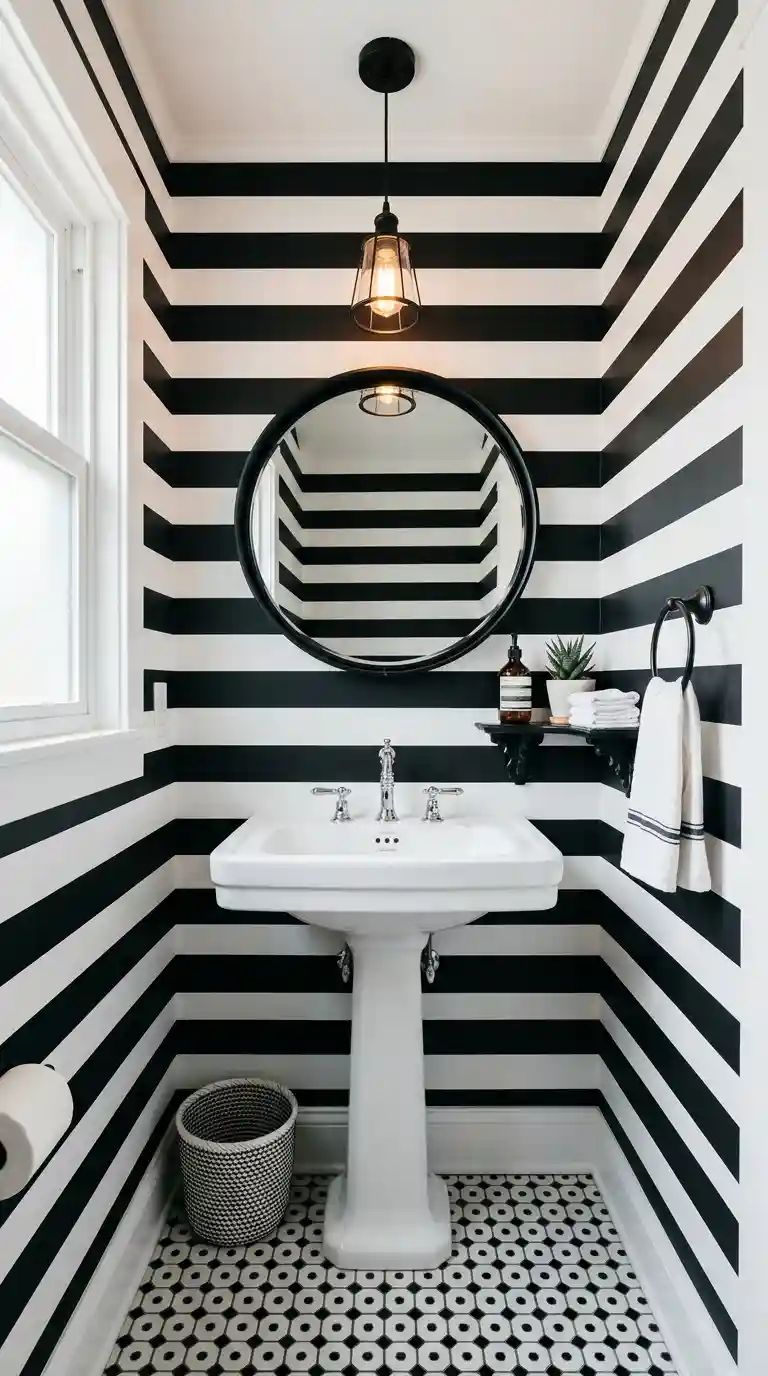
Smaller bathrooms and powder rooms offer a genuinely wonderful opportunity to lean into a black and white bathroom aesthetic, since a compact space allows you to be a bit bolder without the color scheme overwhelming an entire large room.
A white dominant approach, using black sparingly through hardware, a mirror frame, or a single accent wall, tends to work particularly well in a small black and white bathroom, keeping the space feeling open and airy rather than closed in.
Vertical stripe wallpaper or tile in black and white can genuinely help a small bathroom feel taller, drawing the eye upward and creating an illusion of additional height that a plain painted wall simply cannot achieve on its own.
A pedestal sink, rather than a full vanity with storage, often suits a smaller black and white bathroom better, keeping the floor space feeling open and allowing the black and white flooring or wall treatment to remain the visual star of the room.
Mirrors play an especially important role in a small black and white bathroom, both for their practical function and for the way they bounce light around a compact space, making the strong contrast of the palette feel bright rather than confined.
A single bold moment, whether a patterned tile floor, a striking wallpaper, or one dramatic black wall, tends to work better in a small space than trying to layer multiple black and white patterns together, which can quickly start to feel busy in a limited square footage.
Black and White Bathroom Ideas for Larger Primary Suites
Larger primary bathrooms offer significantly more room to explore a bolder, more layered black and white bathroom design, since the increased square footage can comfortably absorb more pattern and contrast without feeling overwhelming.
A statement black tile shower, paired with a white freestanding tub and lighter surrounding walls, creates a genuinely dramatic focal point within a larger black and white bathroom, giving the eye a clear place to land within an otherwise expansive room.
Double vanities offer an excellent opportunity to reinforce the black and white bathroom theme through symmetry, using matching black or white cabinetry paired with contrasting countertops or hardware for a polished, cohesive look.
Separate wet and dry zones within a larger primary bathroom allow you to vary the intensity of your black and white palette throughout the space, perhaps leaning more dramatic and black dominant within an enclosed shower area while keeping the surrounding vanity and dressing area lighter and more white dominant.
A soft area rug, despite feeling like an unconventional choice for a bathroom, has genuinely gained popularity in larger black and white bathroom designs, adding texture and warmth underfoot in a way that hard tile flooring alone cannot provide.
Incorporating a small seating area or bench, particularly within a larger black and white bathroom, adds a genuine sense of luxury and gives the space a slightly more residential, lived in feeling compared to a purely functional layout.
Also Read : 47 Clever Bathroom Storage Ideas That Will Finally End Your Clutter Chaos
Adding Warmth to a Black and White Bathroom
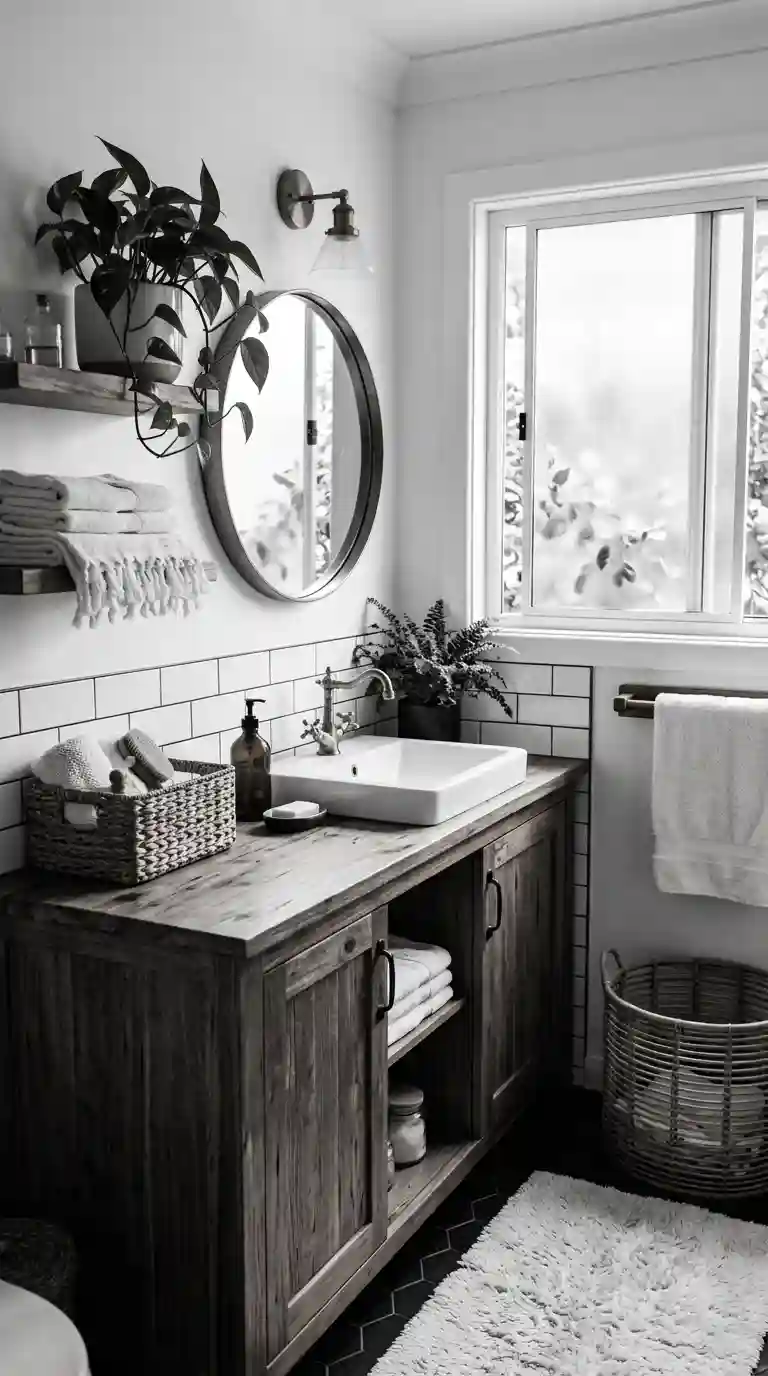
One of the most common concerns I hear from clients considering a black and white bathroom is the worry that it will feel cold or clinical, and this is genuinely a valid concern if the palette is executed without any thought toward warmth.
Warm wood tones, whether through a vanity, a wall mounted shelf, or simple wood accessories, soften the sharp contrast of black and white significantly, introducing an organic material that keeps the room from feeling purely graphic or sterile.
Greenery genuinely transforms a black and white bathroom, since live plants introduce color, texture, and a sense of life that no amount of clever tile work can replicate on its own. Even a single well placed plant on a windowsill or shelf makes a noticeable difference.
Textiles, including soft white towels, a patterned bath mat, or a woven basket for storage, add tactile warmth to a black and white bathroom, breaking up the hard surfaces of tile and countertop with something genuinely soft to the touch.
Warm metal accents, particularly brass or a warmer toned gold, counterbalance the coolness that pure black and white can sometimes carry, and this small detail alone has become one of the most consistently recommended additions among designers working within this palette.
Soft, warm lighting, as covered earlier, remains one of the single most effective tools for keeping a black and white bathroom feeling inviting rather than stark, and it is worth prioritizing this detail even if your budget for the rest of the room is more limited.
Adding a Pop of Color to a Black and White Bathroom
While a purely black and white bathroom has genuine appeal on its own, introducing a small, intentional accent color can add personality and warmth without compromising the overall timeless quality of the space.
Soft red or burgundy accents, through a piece of art, a small vase, or even a patterned tile detail, echo a classic vintage inspired black and white bathroom aesthetic, adding a touch of romance without overwhelming the core palette.
Deep green accents, whether through plants or a small textile detail, pair beautifully within a black and white bathroom, offering a natural, grounding counterpoint to the strong contrast of the primary color scheme.
Soft blush or dusty pink accessories have become an increasingly popular way to add a bit of gentle warmth and personality to a black and white bathroom, particularly within a more feminine leaning design direction.
A single piece of colorful art or a patterned shower curtain can introduce personality into a black and white bathroom without any permanent commitment, making this one of the easiest ways to experiment with color before deciding whether you want it to become a more lasting part of the room.
The key to successfully adding color to a black and white bathroom lies in restraint. A single accent color, used sparingly and consistently throughout a few key elements, tends to look far more intentional than scattering multiple different accent colors throughout the same space.
Black and White Bathroom Ideas Across Different Design Eras
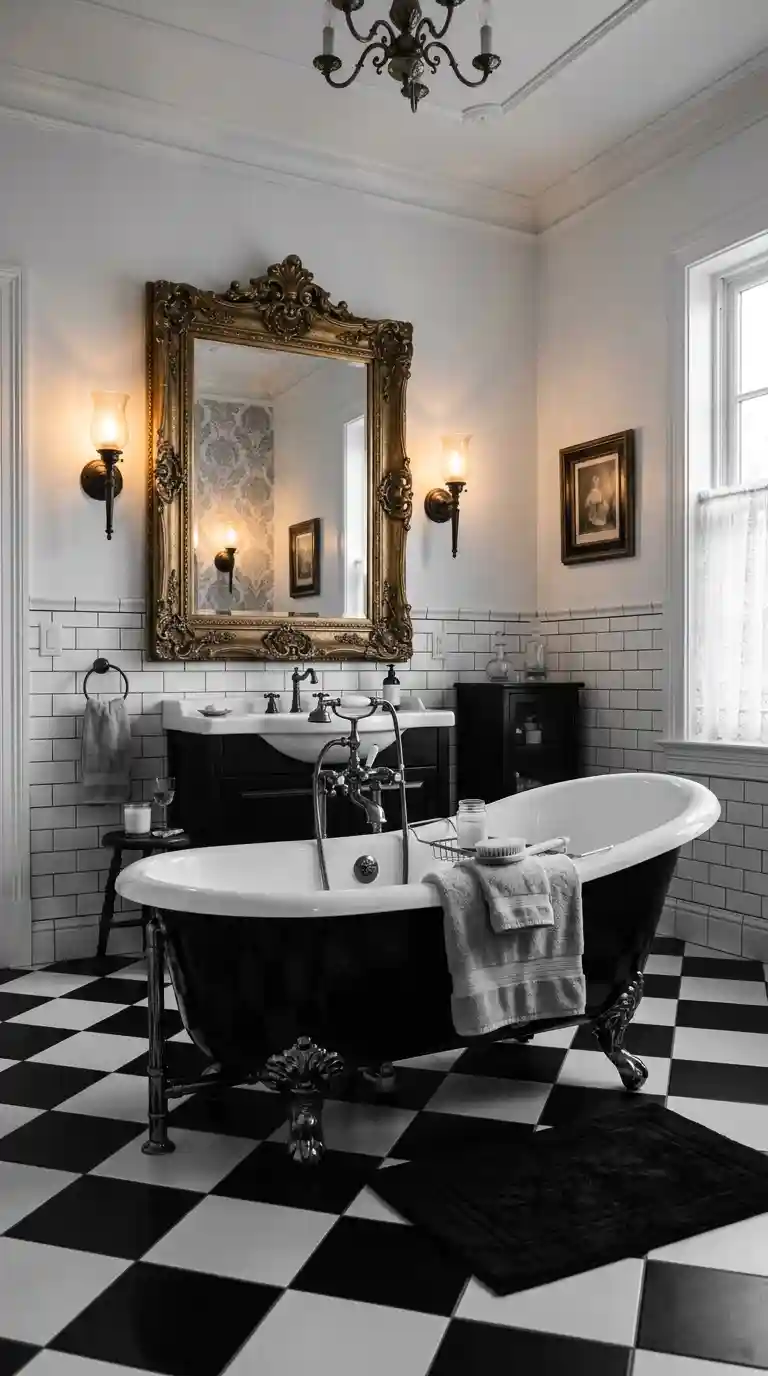
Understanding the different historical eras that have shaped black and white bathroom design helps clarify why this palette continues to feel so adaptable and enduring across genuinely different aesthetic directions.
The Art Deco era, roughly spanning the nineteen twenties and thirties, cemented black and white as a genuinely glamorous bathroom choice, often paired with bold geometric tile patterns, brass fixtures, and a certain theatrical sense of luxury that still influences vintage inspired black and white bathroom designs today.
Mid century modern black and white bathrooms leaned into cleaner lines and a slightly more restrained use of pattern compared to the earlier Art Deco period, often incorporating classic hexagon or subway tile in a more understated, everyday application.
The nineteen eighties and nineties saw a somewhat different, occasionally more austere interpretation of a black and white bathroom, often paired with chrome fixtures and a more minimal, business like feeling compared to the warmer historical versions of this palette.
Contemporary black and white bathroom design has genuinely absorbed elements from all of these earlier periods, blending the glamour of Art Deco, the clean lines of mid century design, and a distinctly modern emphasis on warmth through wood accents, brass fixtures, and softer overall lighting.
Common Mistakes That Undermine a Black and White Bathroom
After designing and consulting on a genuine variety of these projects, certain mistakes come up repeatedly, quietly pulling an otherwise promising black and white bathroom away from its full potential.
Relying entirely on cool toned lighting is probably the most common issue I encounter. Cool white bulbs paired with an already high contrast black and white bathroom can push the space toward feeling clinical and unwelcoming rather than elegant and calm.
Skipping any warm material or texture entirely, using only hard, glossy black and white surfaces throughout the room without a single wood accent, plant, or soft textile, tends to result in a space that photographs beautifully but does not feel particularly comfortable to actually spend time in.
Choosing an uneven or poorly considered ratio between black and white, particularly an overly dark, black dominant scheme in a small bathroom without much natural light, can make the space feel cramped and heavy rather than dramatic and intentional.
Overusing multiple competing patterns within a single small black and white bathroom, such as a busy checkerboard floor combined with a heavily patterned wallpaper and a bold tiled shower, can quickly overwhelm a limited square footage and make the room feel chaotic rather than curated.
Ignoring maintenance realities, particularly with very glossy black tile or fixtures that show water spots and fingerprints more visibly than a matte finish, can lead to genuine daily frustration in a black and white bathroom that otherwise looks stunning immediately after installation.
Budget Friendly Ways to Achieve a Black and White Bathroom
You do not need a full gut renovation to bring a genuine black and white bathroom feeling into your existing space. Several more affordable approaches can achieve much of the same visual impact.
Peel and stick tile in a classic black and white pattern offers a genuinely affordable, renter friendly way to update a bathroom floor or backsplash without the cost or permanence of full tile installation, making it a smart entry point for testing this palette.
Repainting existing tile, particularly older, dated tile in a neutral color, has become an increasingly popular budget friendly method for achieving a black and white bathroom look without the expense of a full tile replacement, using specialized tile paint designed to hold up in a wet environment.
Swapping hardware and fixtures alone, moving from a dated finish to modern matte black faucets and a black framed mirror, can meaningfully transform the feel of an existing white bathroom without requiring any structural changes at all.
A fresh coat of paint on the walls, paired with new black and white textiles like towels, a bath mat, and a shower curtain, remains one of the lowest cost ways to bring this palette into a bathroom that already has white fixtures and tile in place.
Secondhand and discount sourced accessories, including vintage mirrors, light fixtures, or decorative objects in black and white, can add genuine character to a budget conscious black and white bathroom project without paying full retail price for every element.
Read Also : Budget Bathroom Makeover Magic: 27 Genius Ways To Transform Your Space Without Draining Your Wallet
How I Approach a Real Black and White Bathroom Project
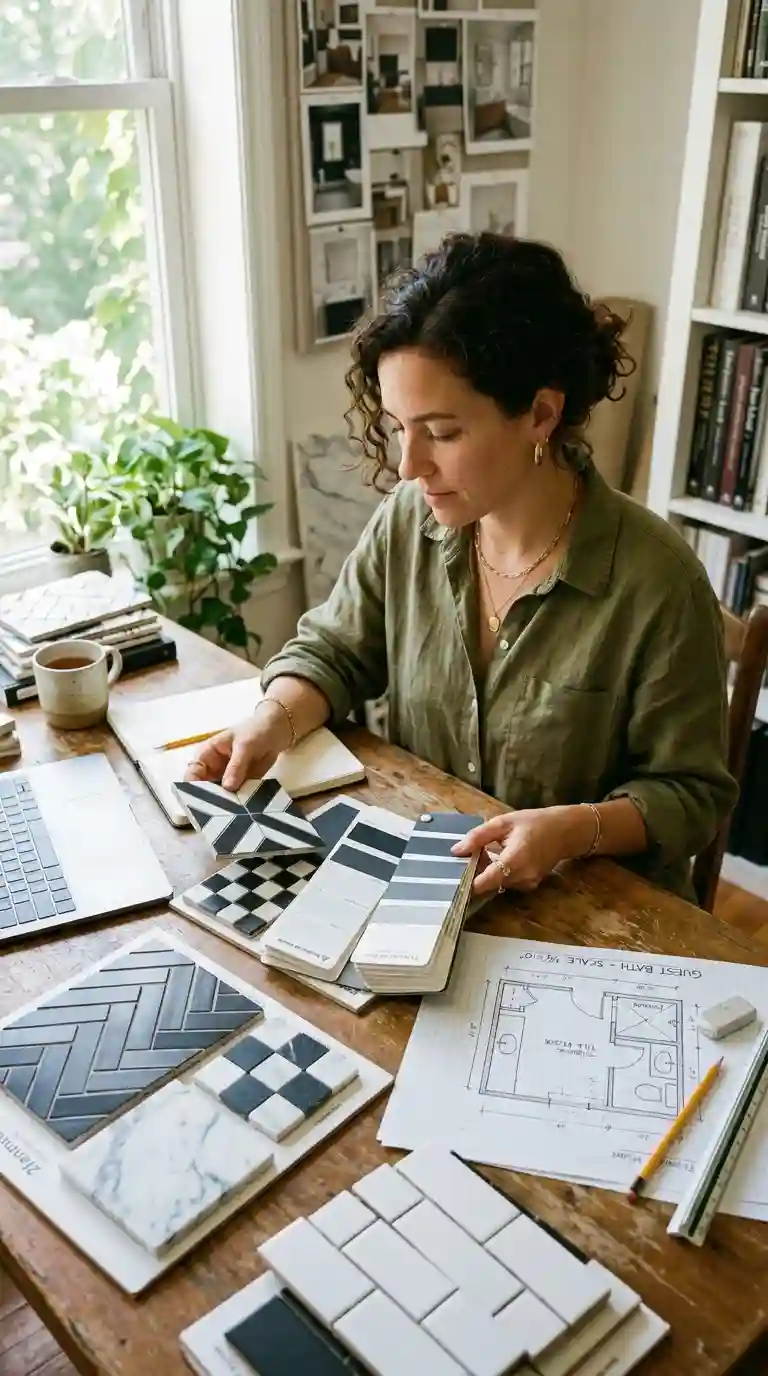
Every black and white bathroom project I take on starts with a conversation about how the client actually wants the room to feel, since this palette can swing genuinely dramatically between cold and clinical or warm and inviting depending entirely on the supporting details.
I remember working with a client who initially wanted an extremely stark, high gloss black and white bathroom after seeing a striking photo online. As we talked through her actual daily routine, getting ready in the morning, unwinding with a bath in the evening, it became clear she wanted the room to feel calming rather than dramatic. We kept the black and white palette but shifted toward a matte tile finish, added warm brass fixtures, brought in a wood vanity, and layered in soft, dimmable lighting. The finished bathroom still reads clearly as a black and white bathroom, but it feels genuinely warm and livable rather than like a photograph you are afraid to actually use.
I have also worked with clients on the opposite end of the spectrum, wanting their black and white bathroom to feel bold and unapologetically dramatic, particularly within a primary suite where the rest of the home leaned more neutral. In that case, we embraced a full black tiled shower, a striking checkerboard floor, and dramatic black framed glass, creating a genuine statement room that felt intentional precisely because every other space in the house was calmer by comparison.
What I have learned across these very different projects is that the most successful black and white bathroom designs are rarely about following a single formula. They come from understanding exactly what feeling a client wants from their specific bathroom, then adjusting the ratio of black to white, the finish of the materials, and the warmth of the lighting until the room genuinely matches that intention.
Maintaining a Black and White Bathroom Over Time
Once you have achieved your ideal black and white bathroom, a bit of regular care keeps both colors looking crisp and elegant rather than dull or dated over time.
Clean grout lines regularly, particularly in a black and white checkerboard or patterned floor, since white grout in particular can discolor over time without consistent maintenance, which quickly undermines the crisp contrast that makes this palette so striking.
Address water spots and fingerprints promptly on glossy black fixtures or tile, since these marks show up far more visibly on a dark, shiny surface than they would on a lighter or more matte finish elsewhere in the home.
Reseal natural stone surfaces, particularly genuine marble used within a black and white bathroom, on a regular schedule to prevent staining and maintain the material’s natural beauty over years of daily use.
Refresh caulking around tubs, showers, and sinks periodically, since discolored or peeling caulk is one of the fastest ways to make an otherwise beautifully maintained black and white bathroom start to look neglected.
Rotate soft textiles like towels and bath mats regularly, since white fabric in particular shows staining and general wear more quickly than a patterned or darker alternative, and keeping these elements fresh helps the entire room continue to feel polished.
FAQ About Black and White Bathrooms
Is a black and white bathroom timeless or trendy?
A black and white bathroom is widely considered one of the most timeless color combinations in interior design, having remained popular consistently since the Art Deco era, largely because it relies on true contrast rather than a specific trending shade.
What tile works best for a black and white bathroom?
Checkerboard, herringbone, and hexagon tile are among the most popular choices for a black and white bathroom, with large format marble look tile offering a more contemporary, spa like alternative to smaller patterned tile.
What color grout works best for black and white bathroom tile?
Dark or charcoal grout is often recommended for a black and white bathroom, since it hides discoloration better than white grout while still maintaining strong contrast against the tile itself.
What fixtures pair best with a black and white bathroom?
Matte black faucets, brass or gold accents, and black framed mirrors are among the most popular fixture choices for a black and white bathroom, offering strong contrast and a touch of warmth.
Should a black and white bathroom be more black or more white?
This depends on the room’s natural light and desired mood, though a white dominant approach generally works better for smaller or darker bathrooms, while a more even split or black dominant scheme suits larger, well lit spaces looking for drama.
How do I add color to a black and white bathroom?
A single accent color, such as soft red, deep green, or blush pink, introduced through art, textiles, or accessories, can add personality to a black and white bathroom without compromising its overall timeless quality.
What lighting works best in a black and white bathroom?
Warm toned, layered lighting with dimmable options generally works best in a black and white bathroom, helping soften the high contrast palette and prevent the space from feeling overly stark or clinical.
Is a black and white bathroom expensive to achieve?
Not necessarily. Budget friendly options like peel and stick tile, tile paint, updated hardware, and black and white textiles can bring much of the same visual effect without a full renovation budget.
What style of home suits a black and white bathroom?
A black and white bathroom suits nearly any home style, from vintage Victorian houses to modern new builds, since the palette adapts easily to minimalist, industrial, farmhouse, and vintage design directions alike.
How do I make a black and white bathroom feel luxurious?
Incorporating marble or marble look surfaces, a freestanding tub, brass fixtures, and layered warm lighting are all effective ways to elevate a black and white bathroom toward a more luxurious, spa like feeling.
How do I make a black and white bathroom feel luxurious? Incorporating marble or marble look surfaces, a freestanding tub, brass fi
Final Thoughts on Black and White Bathroom Design
A black and white bathroom carries a genuinely rare quality in the world of interior design, a look that has remained consistently beautiful for well over a century without ever truly falling out of favor. That kind of staying power is worth taking seriously if you are weighing your options for a renovation you plan to live with for years to come.
The key to getting this right lies in balance. Choose your ratio of black to white thoughtfully based on your room’s actual light and size, prioritize warmth through material and lighting choices, and do not be afraid to layer in a small, intentional pop of color if you want the space to feel a little more personal.
Whatever direction you take within this palette, a well designed black and white bathroom rewards you with a room that feels genuinely elegant today and, more importantly, will likely still feel just as elegant many years from now.