

A guest bathroom is usually the smallest room guests use — often about 1.5 by 2.4 metres, sometimes windowless — and the one they judge most, because it is the only private room they use alone. Spend on what guests touch and see at eye level: the mirror, towels, lighting and tap, not on what they never notice.
A paint-and-hardware refresh of a room that size usually takes a weekend and costs about £150 to £400; a fuller refresh with a new vanity, mirror and lighting runs to about £1,000 to £2,500 over two to three weeks. The first decision is the layout constraint — pedestal versus vanity — because it fixes storage and mirror size.
Why does a guest bathroom matter more than its size suggests?
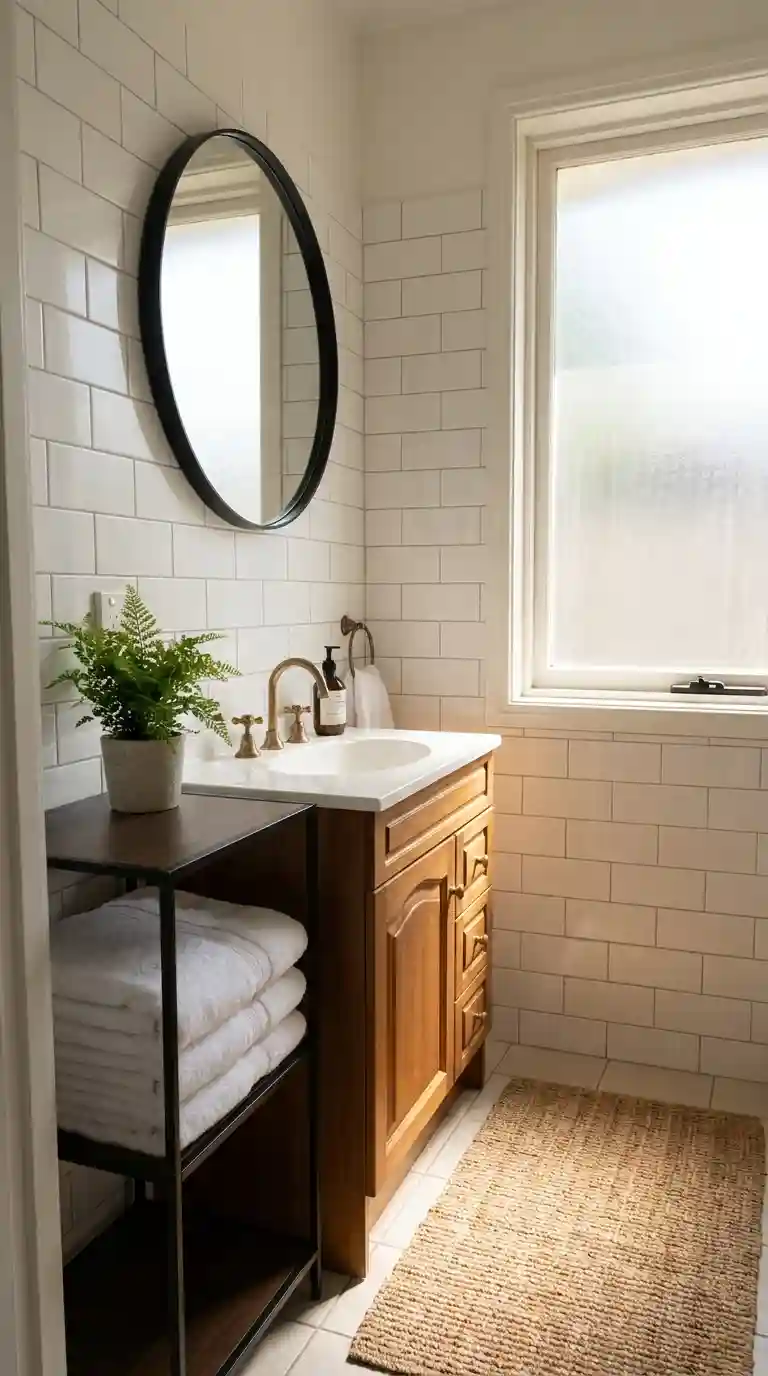
A guest bathroom carries a strange kind of weight for such a small room: it is often the only private room guests use alone, so every detail lands — whether the mirror is smudged, whether a spare roll of toilet paper is visible, and whether the hand towel actually looks fresh. Good guest bathrooms are not about luxury for its own sake; they are about anticipating what someone needs when they cannot ask, and about spending where it shows: at eye level, on the mirror, towels, lighting and tap. There is also a resale angle worth mentioning: a thoughtfully designed guest bathroom, even a tiny half bath, is one of the first rooms a buyer notices, so it repays attention well beyond its size.
How do you make a small guest bathroom feel bigger?
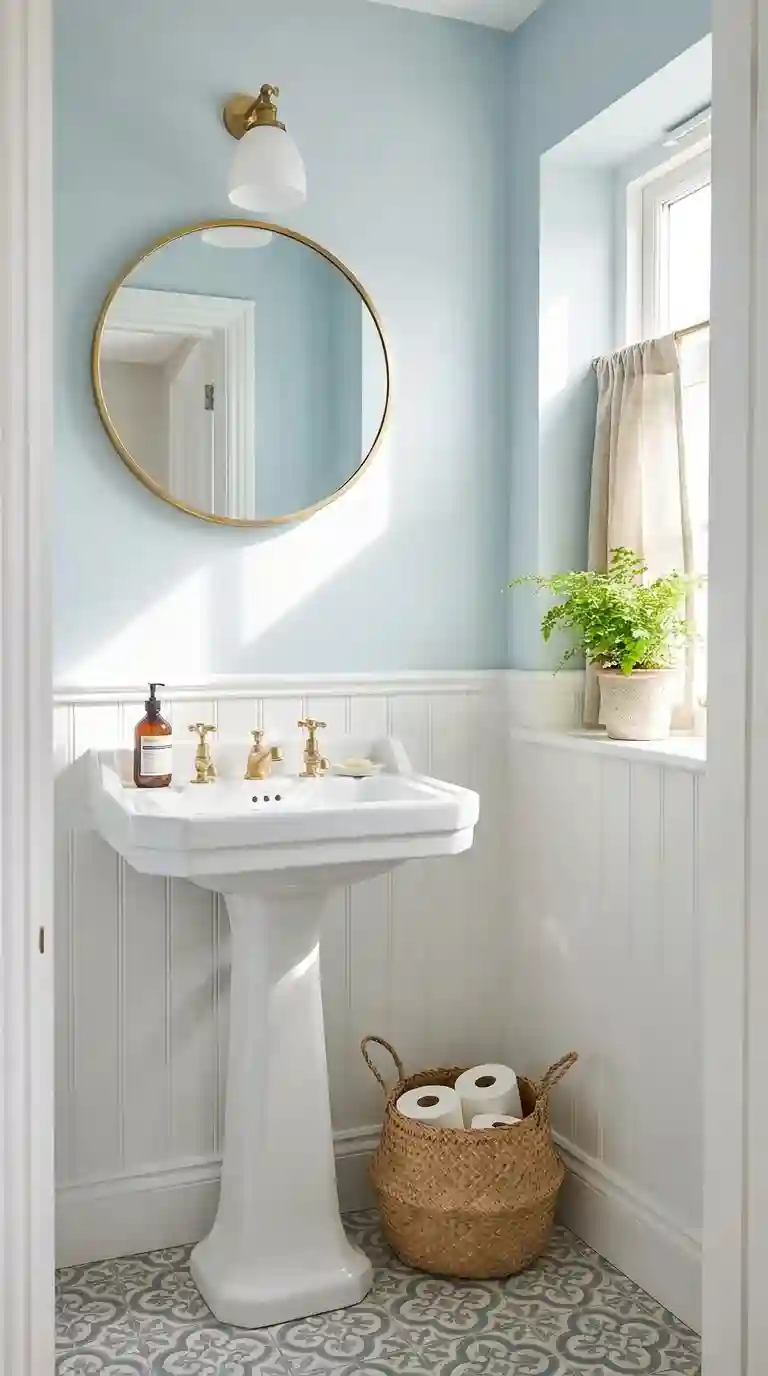
Most guest bathrooms are small, sometimes painfully so, and the first decision is the layout constraint: a pedestal sink or wall-mounted vanity opens up visible floor area and makes the room feel larger. A large mirror — at least 60 by 90 centimetres — expands the space rather than shrinking it, and open shelving or a single floating shelf beats a bulky cabinet for towels. Colour carries the rest: soft neutrals such as warm white, soft greige and gentle beige are timeless, a deep jewel tone works for drama in a room guests use only briefly, and two-tone walls — a bold colour below, white above, divided by simple trim — add structure. A small room is also the best place for one bold risk, such as wallpaper, since guests see it briefly and it never has to carry a whole day. Keep one connective thread to the rest of the home, whether a metal finish or a colour undertone, so the room feels intentional rather than random.
What lighting flatters everyone?
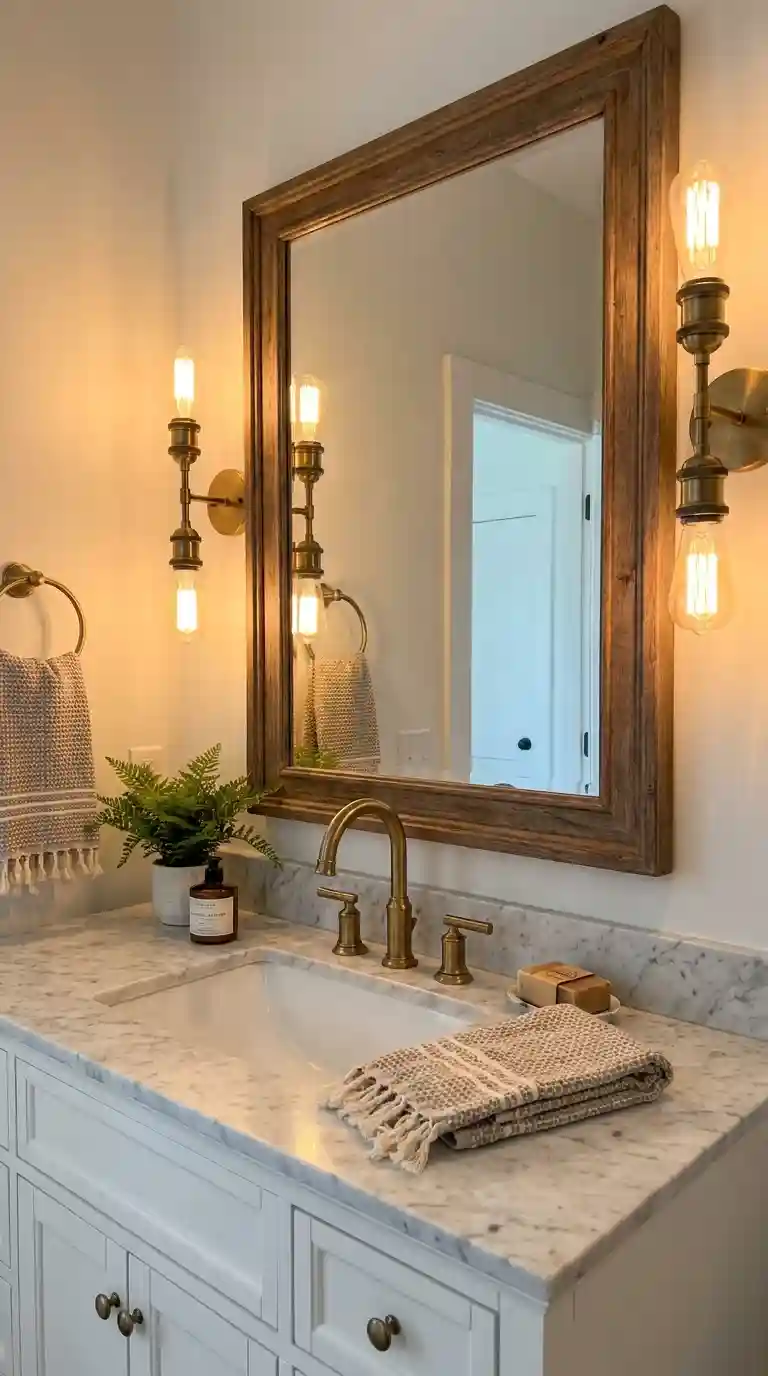
Lighting is the most overlooked element and the cheapest to fix: a single overhead light casts harsh shadows under the eyes and chin, so add sconces on either side of the mirror at roughly eye level for even, flattering light across the face. Choose warm white bulbs around 2700 to 3000 kelvin rather than cool white, which can feel clinical, and add a dimmer so the room is bright and functional by day and soft and calming for evening guests. Where there is a window, keep treatments simple and light-filtering rather than heavy and dark — frosted glass film gives privacy while still letting natural light through.
What tile and flooring actually work?
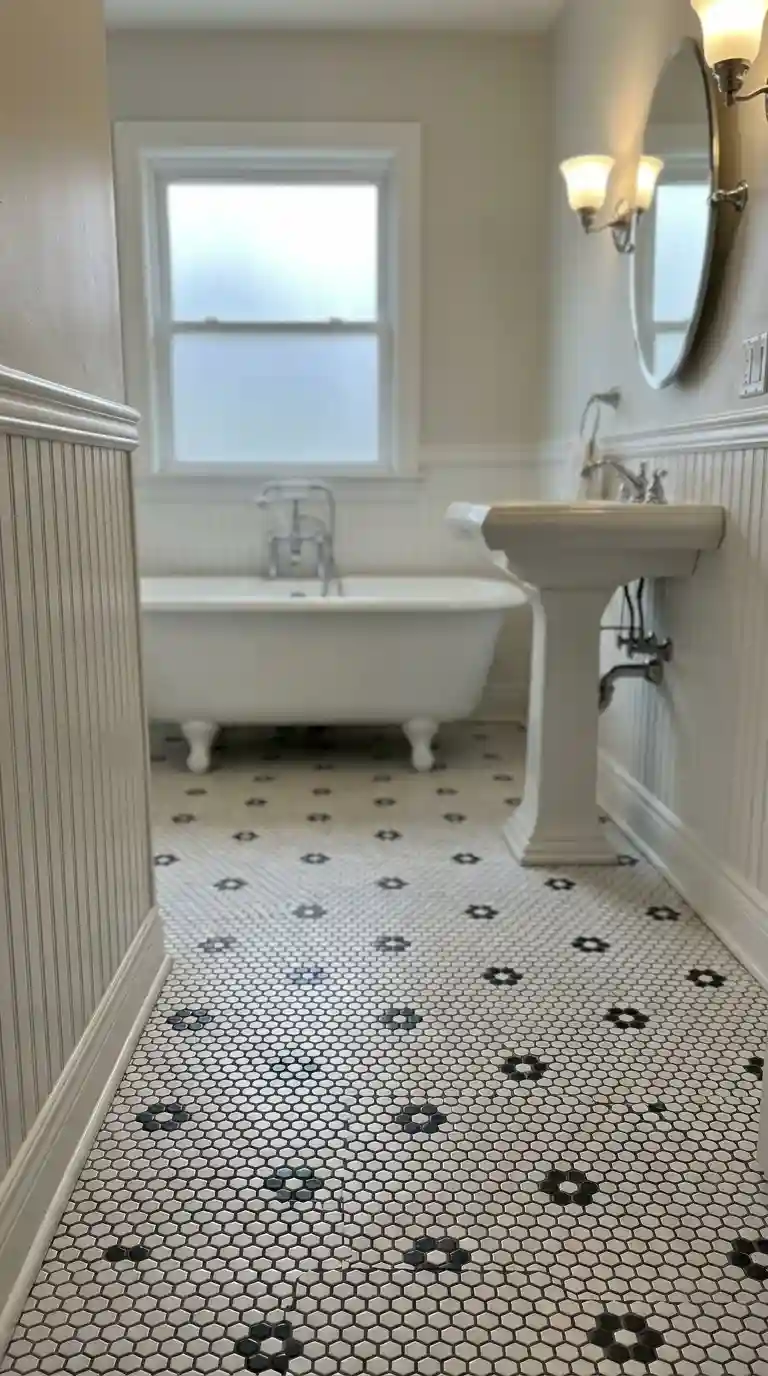
Tile has to balance durability with personality in a room guests use briefly but judge closely: classic patterns — black-and-white hexagon, herringbone and simple subway tile — stay popular because they photograph beautifully and age gracefully. If the walls stay neutral, the floor is the place for a patterned encaustic or Moroccan-style tile that adds personality without competing with anything else. Choose slip-resistant, easy-to-clean flooring, since guests will not know a slippery wet floor near the tub, and pick a mid-tone grout, which stays looking fresh far longer than light grout in a high-traffic room. If you like the darker end of the palette, see these moody bathroom ideas.
How do you choose a mirror, vanity and fixtures?
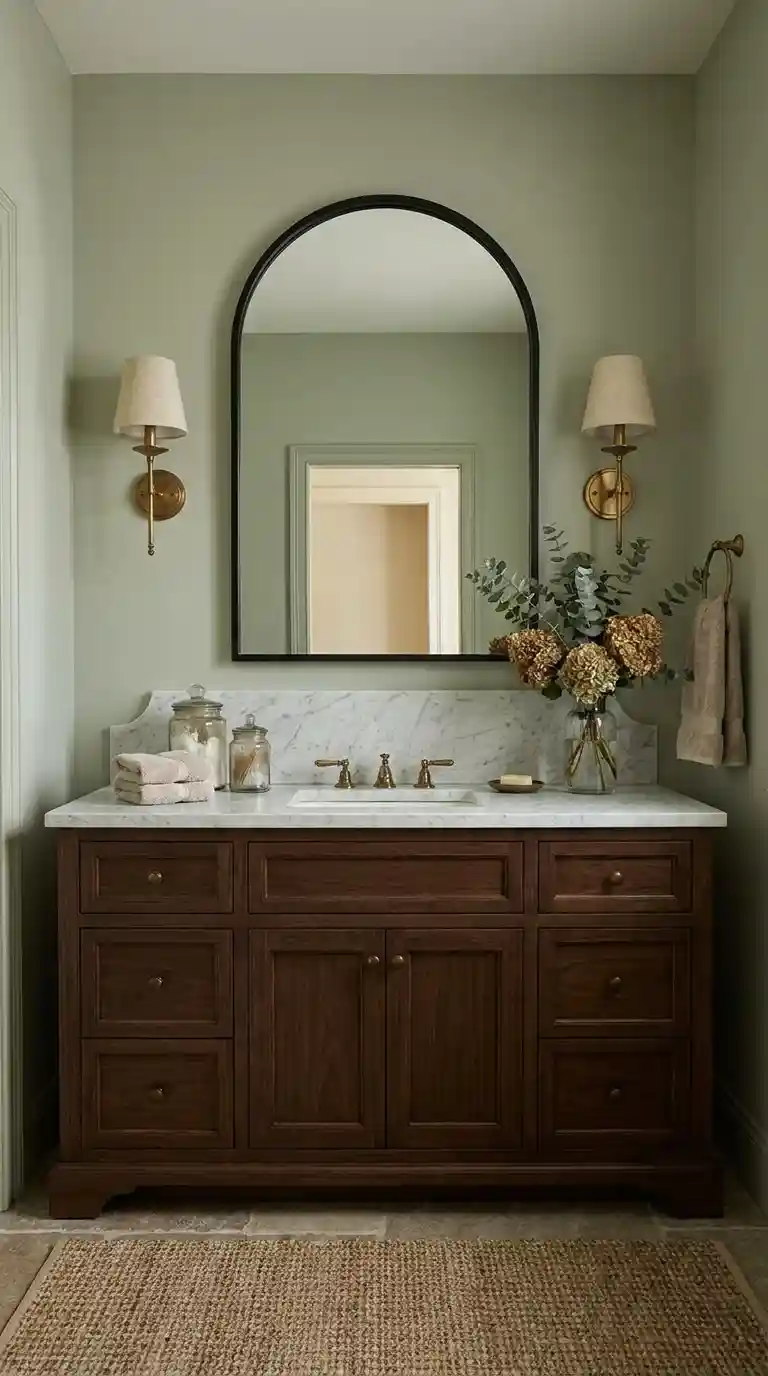
A mirror is often the single most noticed object in a bathroom, so size it at roughly two-thirds of the vanity width — arched, framed or round shapes add character that a plain builder-grade rectangle cannot, and a round mirror softens a tight room’s straight lines. Match it to one metal finish across the faucet, towel bar, toilet-paper holder and cabinet hardware; the faucet is the most touched object in the room, so it deserves the upgrade. For storage, insist on at least one drawer for small essentials, open shelving for towels where guests can see them, and a woven basket for spare toiletries, with stackable bins keeping anything under the sink organised. For more ideas on fitting everything in, see these bathroom storage ideas.
How do you get the look on a budget?
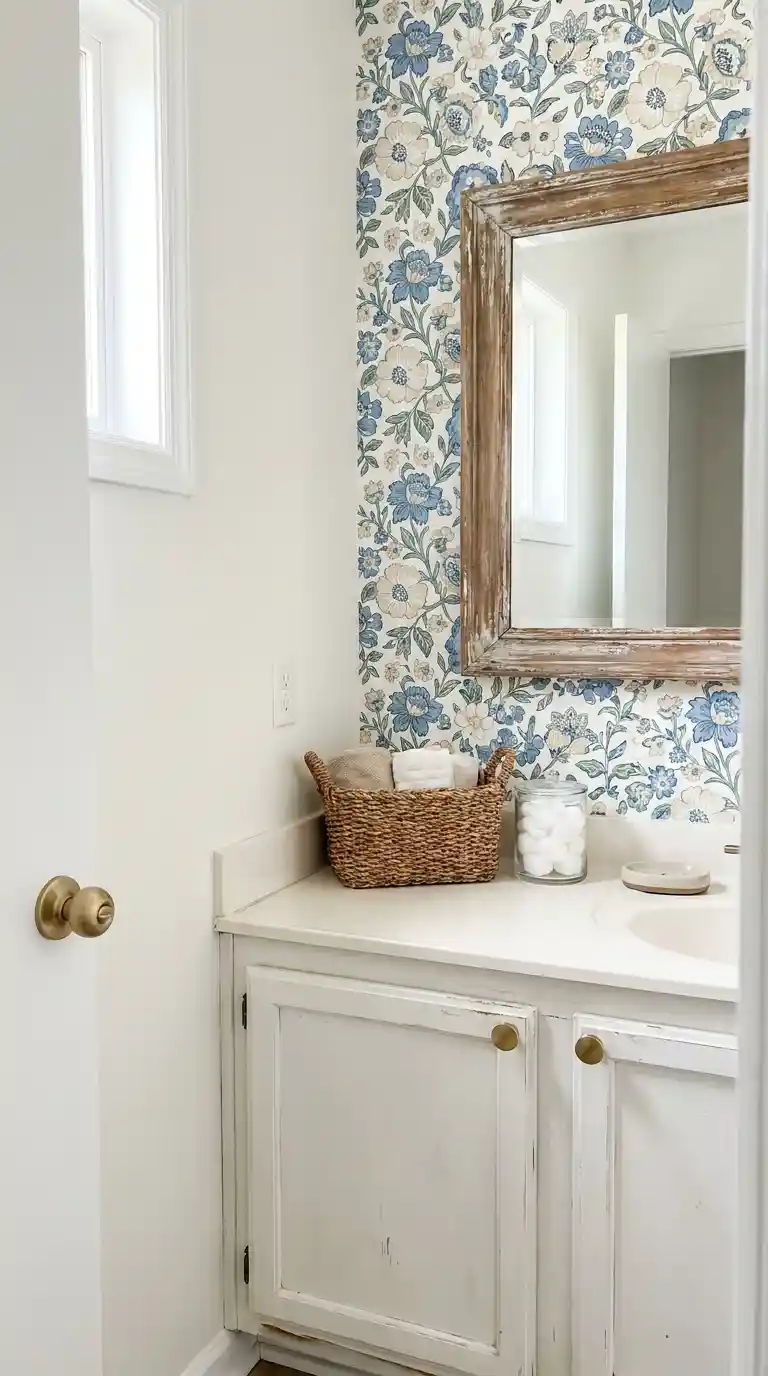
Paint is still the cheapest transformation: one gallon covers a small guest bathroom in a weekend, and peel-and-stick wallpaper gives renters the same effect without a permanent commitment. A hardware swap — new cabinet knobs, towel bar and toilet-paper holder in one matching finish — modernises the room for roughly £150 to £400 in total, and a thrifted mirror or small tray, given a fresh coat of paint, looks just as intentional as something bought new. Finish with fresh, plush, matching towels in a colour that complements the wall paint: the single biggest visual difference for the smallest spend. For a fuller breakdown of where the money goes, see this budget bathroom makeover.
How do you make guests feel genuinely welcome?
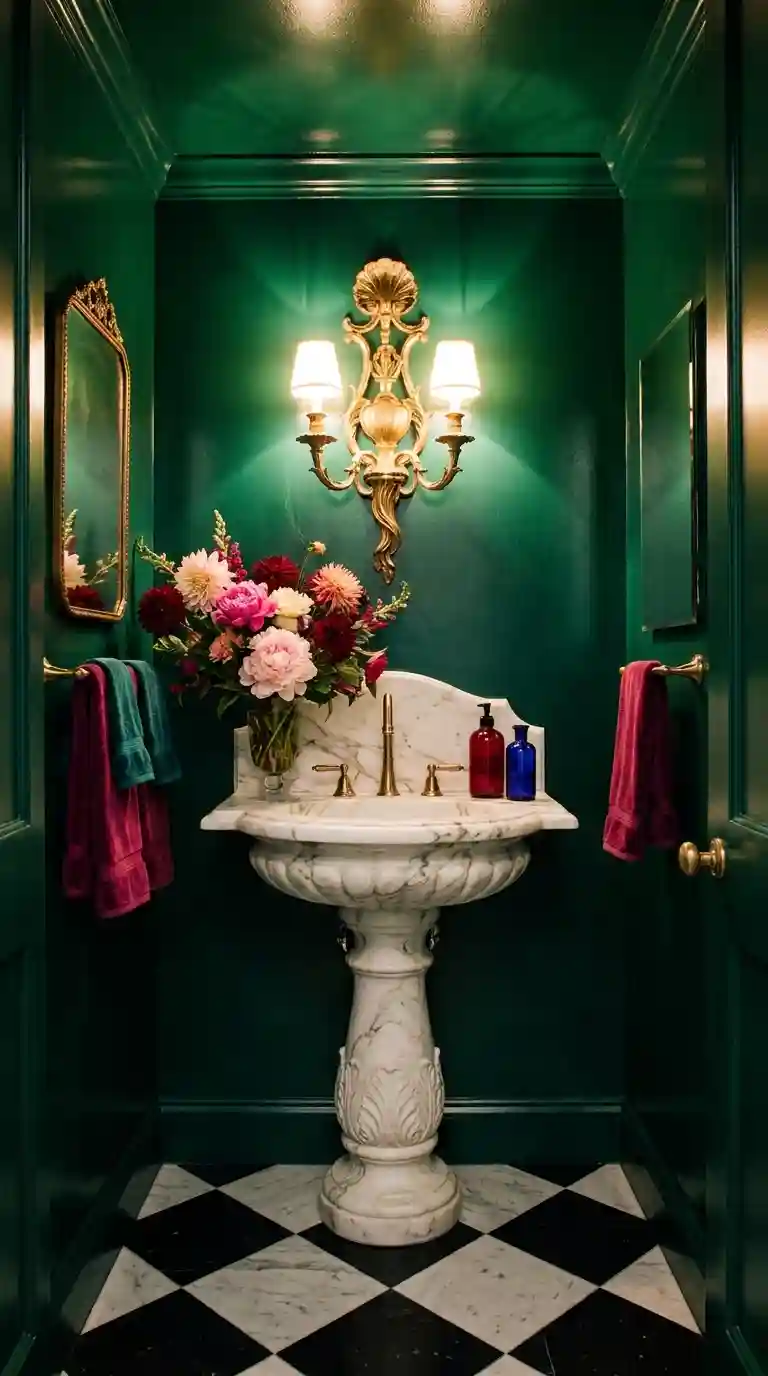
A half bath, or powder room, plays by different rules: with no shower to plan around, all the design energy goes to one beautiful sink, one striking mirror and one statement light — a dramatic pendant or an oversized sconce acts like jewellery for the room. Because visits are brief, this is the room where a bold wallpaper or a saturated paint colour works best, and it is also where a working exhaust fan matters most, since a small room with no window will hold humidity and damage paint and wallpaper over time.
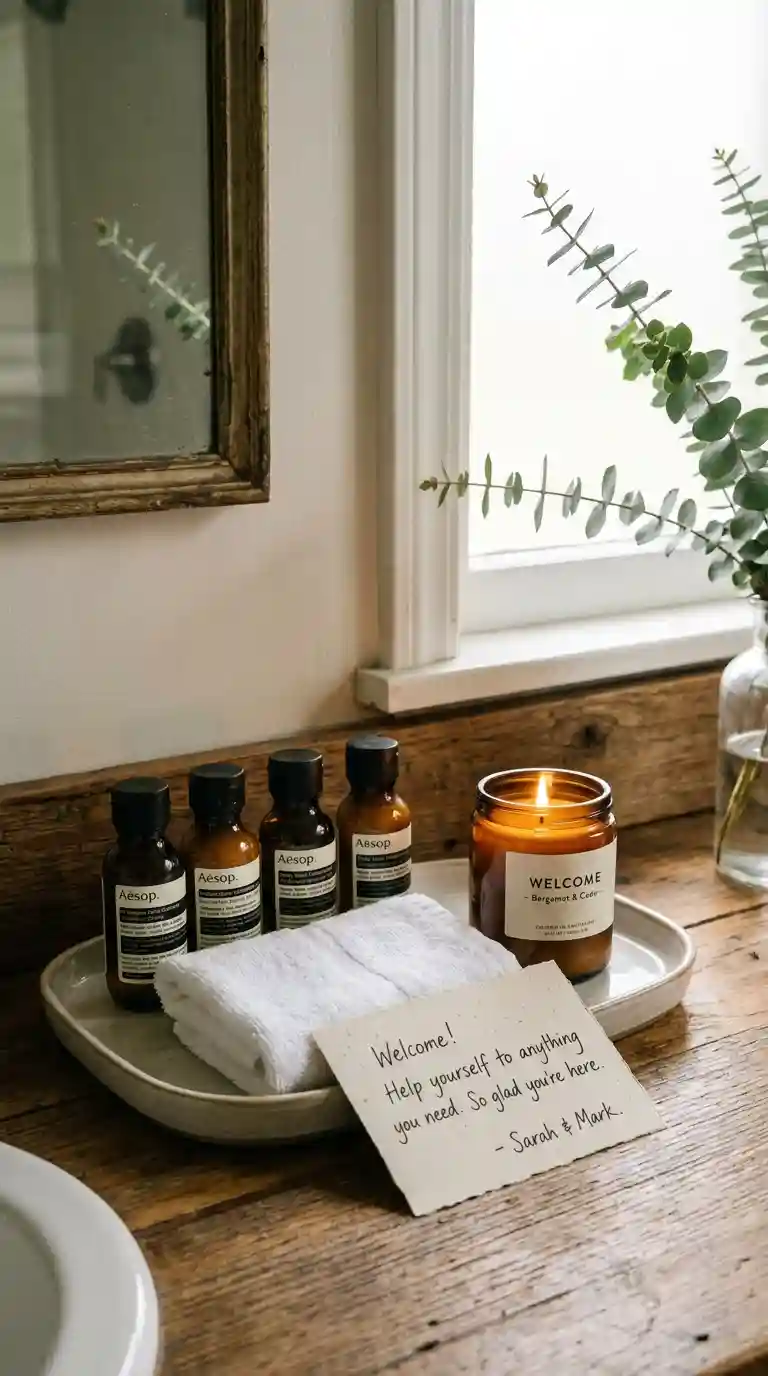
A welcome kit is what guests actually remember: spare toilet paper where it can be seen, not hidden in a cabinet; a spare toothbrush and basic toiletries in a small tray or basket; one fresh towel per guest; and a lidded bin, which matters more than most hosts expect. Label what is for guests so nobody has to guess, then add the spa touches that cost little — towels rolled rather than hung flat, a reed diffuser or a bar of good soap for scent, and a stem of eucalyptus in a bud vase. Quality beats quantity: a few well-chosen items look considered, while a crowded counter just looks cluttered.
What budget, timeline and practical checks should you plan for?
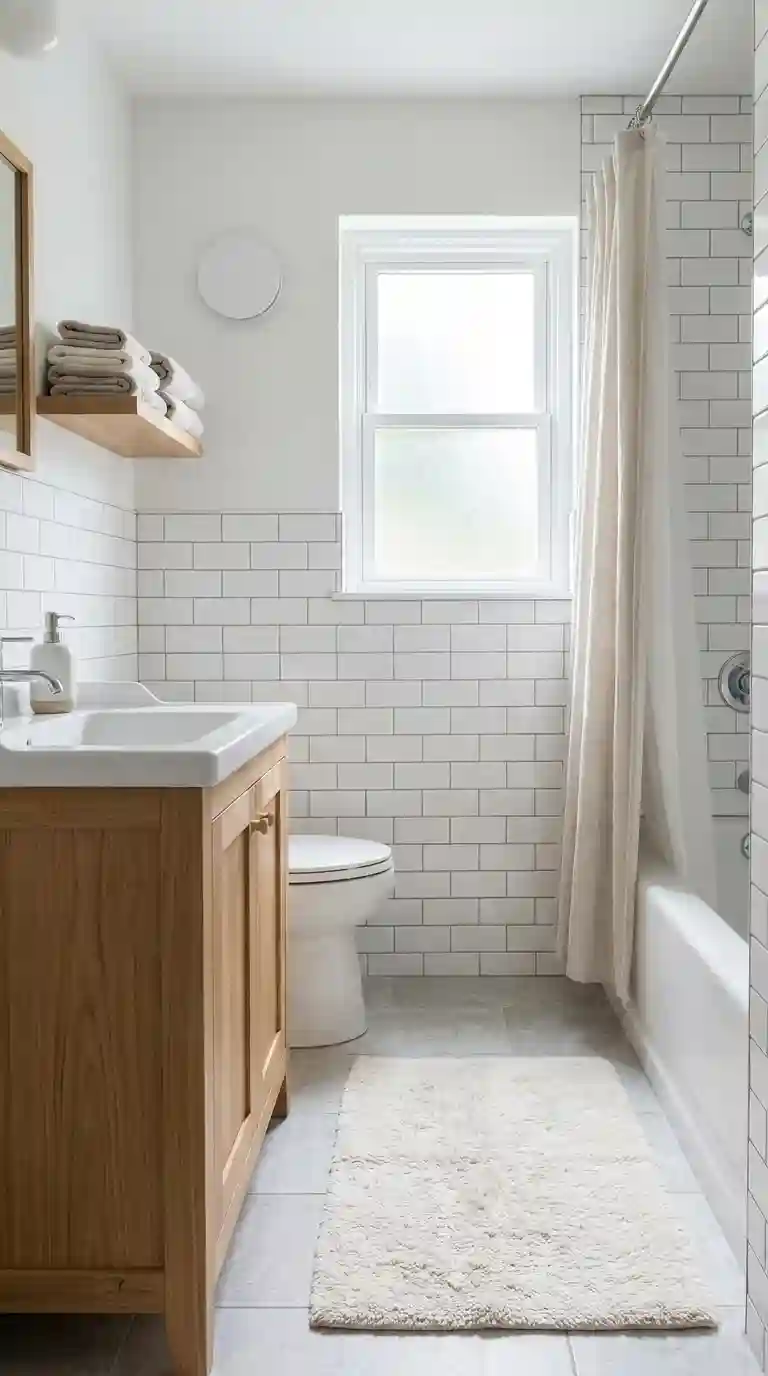
Start with the practical checks, because they decide whether the room stays pleasant: a working exhaust fan that actually vents outside, so humidity does not peel paint or grow mildew; water temperature that is easy to adjust and consistent, since guests will not know your plumbing’s quirks; a genuinely absorbent bath mat rather than a thin decorative one, to prevent slips; and a small discreet note for anything unusual, such as a tricky shower handle. Four mistakes undo otherwise good guest bathrooms: relying on one harsh overhead bulb, crowding the counter with decorative bottles, leaving nowhere to store spare toilet paper and towels, and skipping ventilation altogether.
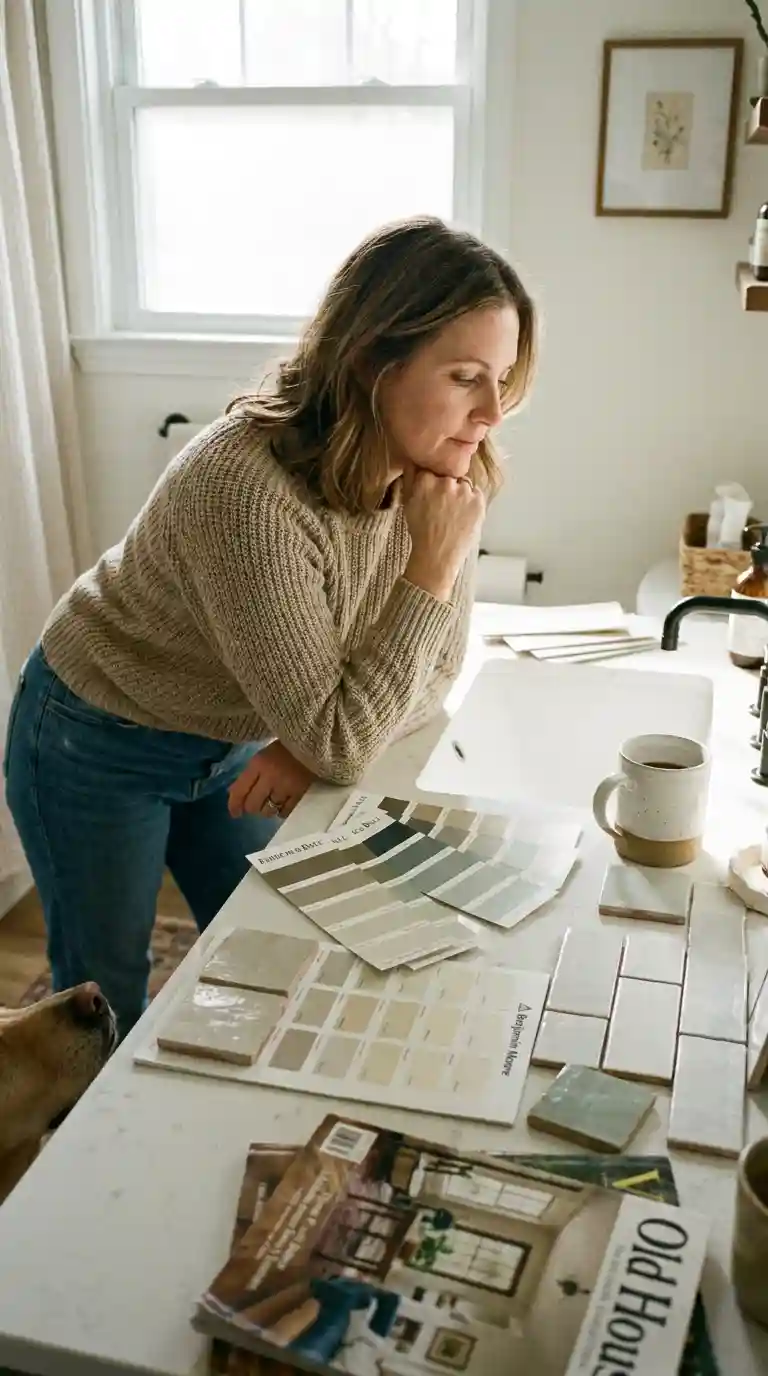
Budget in three tiers: a paint-and-hardware refresh costs about £150 to £400 and takes a weekend; a mid-range refresh with a new vanity, mirror and lighting runs to about £1,000 to £2,500 over two to three weeks; a full refit with new tile and fixtures can pass £4,000, so hold back about 10 percent as contingency. Choose by three questions: how often you host (frequent guests justify durable, easy-to-clean finishes), how much natural light the room gets (a windowless room needs lighter tones and layered lighting, while a bright room can carry a deep jewel tone), and whether the look extends your home’s style — a coastal room suits light wood, woven textures and soft blue and white, while a modern room suits a floating vanity, one colour family and minimal hardware. Wall art should stay small in scale: one botanical print or a single statement piece, or a framed mirror doubling as art. Before adding anything else, stand in the doorway: if the counter is crowded or the light is harsh, remove one item and soften the lighting first.
Frequently Asked Questions
What colors are best for a small guest bathroom?
Warm white, pale blue and gentle greige reflect the most light, so they suit small or windowless rooms best. A deep jewel tone can still work if you keep the mirror large and the lighting warm, since guests only use the room briefly.
What should I put in a guest bathroom for visitors?
Spare toilet paper where it can be seen, a spare toothbrush and basic toiletries in a small tray, one fresh towel per guest and a lidded bin. Label what is for guests so nobody has to guess or ask.
How much does it cost to update a guest bathroom?
A paint-and-hardware refresh costs about £150 to £400 and takes a weekend. A mid-range refresh with a new vanity, mirror and lighting runs to about £1,000 to £2,500 over two to three weeks, while a full refit with new tile can pass £4,000.
How do you make a guest bathroom feel like a hotel?
Roll towels rather than hanging them flat, add a reed diffuser or a bar of good soap for scent, and keep the lighting warm and dimmable. A few well-chosen items beat a crowded counter every time.
What lighting works best in a guest bathroom?
Sconces on either side of the mirror at eye level give the most flattering light, avoiding the harsh shadows of a single overhead bulb. Choose warm white bulbs around 2700 to 3000 kelvin and add a dimmer if you can.





4 Comments on “Guest Bathrooms That Make Visitors Feel Welcome”