

Beige and black work best as a ratio, not a rivalry. In a typical 3.6 by 4.2 metre bedroom, keeping beige on about 70 percent of surfaces and black on 20 to 30 percent gives enough contrast to feel deliberate without making the room feel heavy, and that balance is the decision that shapes everything else in this guide.
A paint-only refresh for a 3.6 by 4.2 metre bedroom can be finished in a weekend for about £180 to £350, while a fuller refresh with new bedding, lighting and a bed frame usually takes three to four weeks and £1,200 to £2,500. The decision that matters most is made before any of that: decide the ratio first, then buy to it, rather than adding black pieces one at a time until the room tips over.

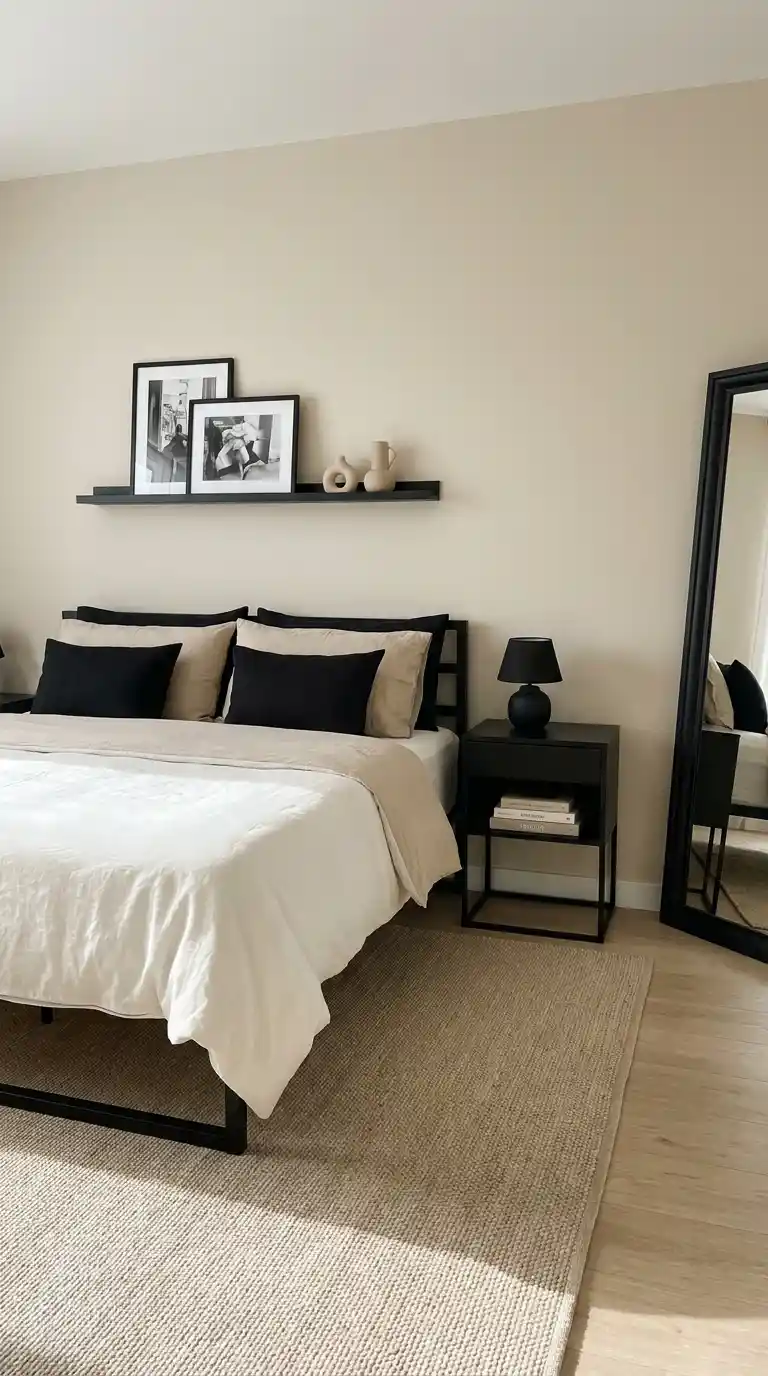
The photo above shows the balance in practice: beige bedding and walls carry the room, while black appears in the frame, the lamp and one or two smaller pieces, rather than on every surface at once.
How much black is too much?
A useful limit for a standard bedroom is four large black pieces: for example, a bed frame, one accent wall, a pair of lamps and a dresser, or a similar combination. Once a fifth large black item is added, the room usually starts to feel smaller, so it is better to add black in small pieces, such as a frame, a throw or a vase, after the large pieces are decided.
Check the ratio from the doorway, not from close up. Stand back, count the black surfaces you can see at once, and if more than a third of your view is black, swap one item for beige. This simple check works better than any colour chart, because it tests the room as it will actually be seen every day.
Which shade of beige should you start with?
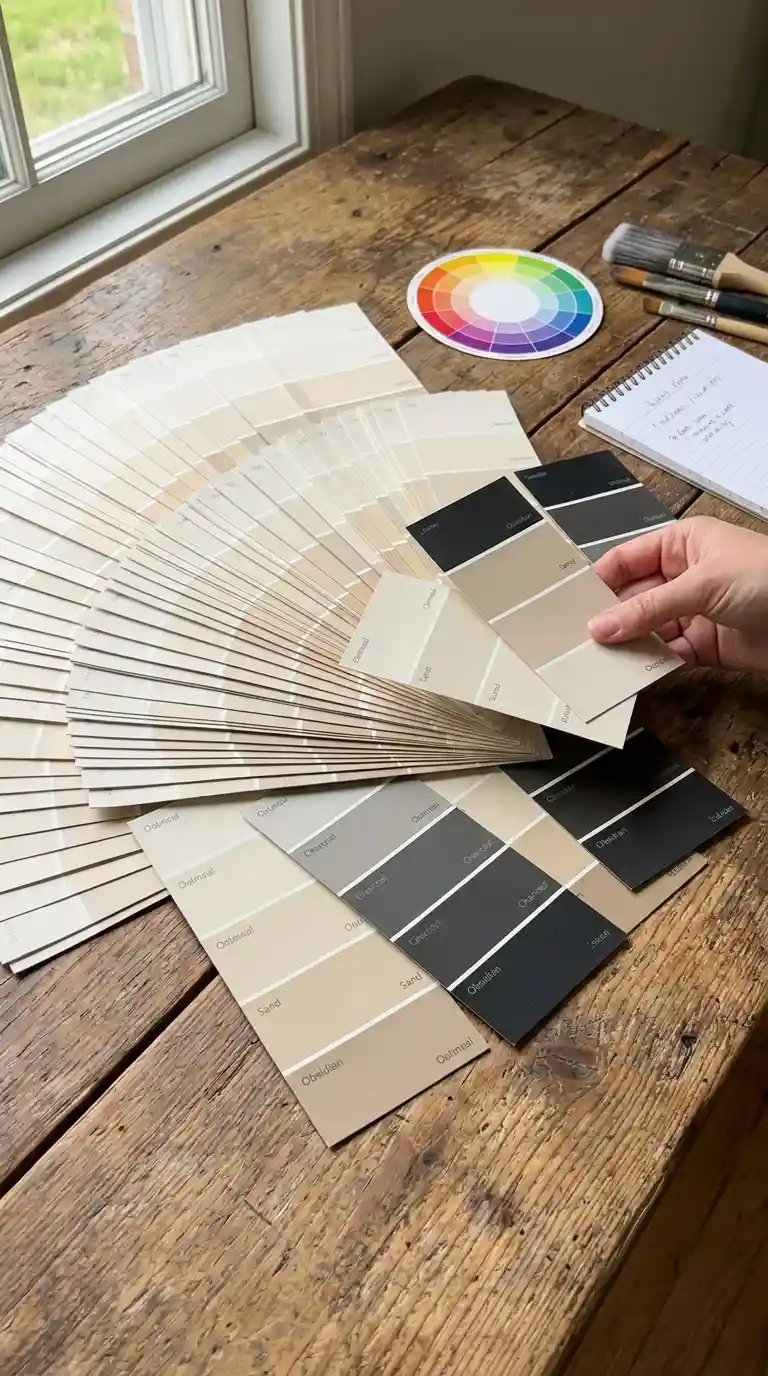
The photo above is a reminder to test before committing: buy three sample pots, paint a 60 by 60 centimetre square of each on the wall behind the bed, and check them in morning light and again in the evening. A warm beige with yellow undertones suits a north-facing room, while a cooler, greyer beige works better in a bright south-facing room, and two coats are usually needed for an even finish.
For the black itself, a matte finish is the safer choice for large areas because it shows fewer fingerprints and scuffs than gloss, and it keeps the room looking calm rather than shiny. Reserve gloss for small, hard-wearing pieces such as a lamp base or a picture frame, and keep one finish across the room so the black reads as a single decision.
What should the walls do?
Give the walls one clear job: one black accent wall behind the bed, with the other three walls in beige. For a 4.2 metre bed wall, allow one 5-litre tin for two coats, and paint the black wall first so any splashes can be covered when the beige walls are rolled afterwards. If a full black wall still feels like too much, use black panelling or wood slats on the lower half of the bed wall only, with beige paint above: it gives the same focal point for roughly half the painted area, adds texture, and is easier to repaint later than a whole wall in black.
Choosing furniture that anchors the room

Choose the bed first, because every other piece is sized against it. The photo below shows the approach: a beige upholstered headboard around 90 to 110 centimetres high softens a black frame, while a black frame on its own suits a room that already has plenty of beige bedding and walls. Keep nightstands and the dresser to one shared finish, and use a single metal for handles throughout, such as brass, so the room reads as one set of decisions rather than a collection of separate buys.
How do you layer bedding without making it busy?
Keep bedding to three layers and no more than four or five cushions: a beige duvet, one black or charcoal throw folded at the foot of the bed, and a single patterned cushion that combines both colours. Mix textures rather than adding colours, for example linen, cotton and one velvet cushion, so the bed looks layered without looking cluttered. On the floor, a rug around 160 by 230 centimetres under a double bed, extending about 60 centimetres on each side, grounds the bed without swallowing the room.
What lighting keeps both colours warm?
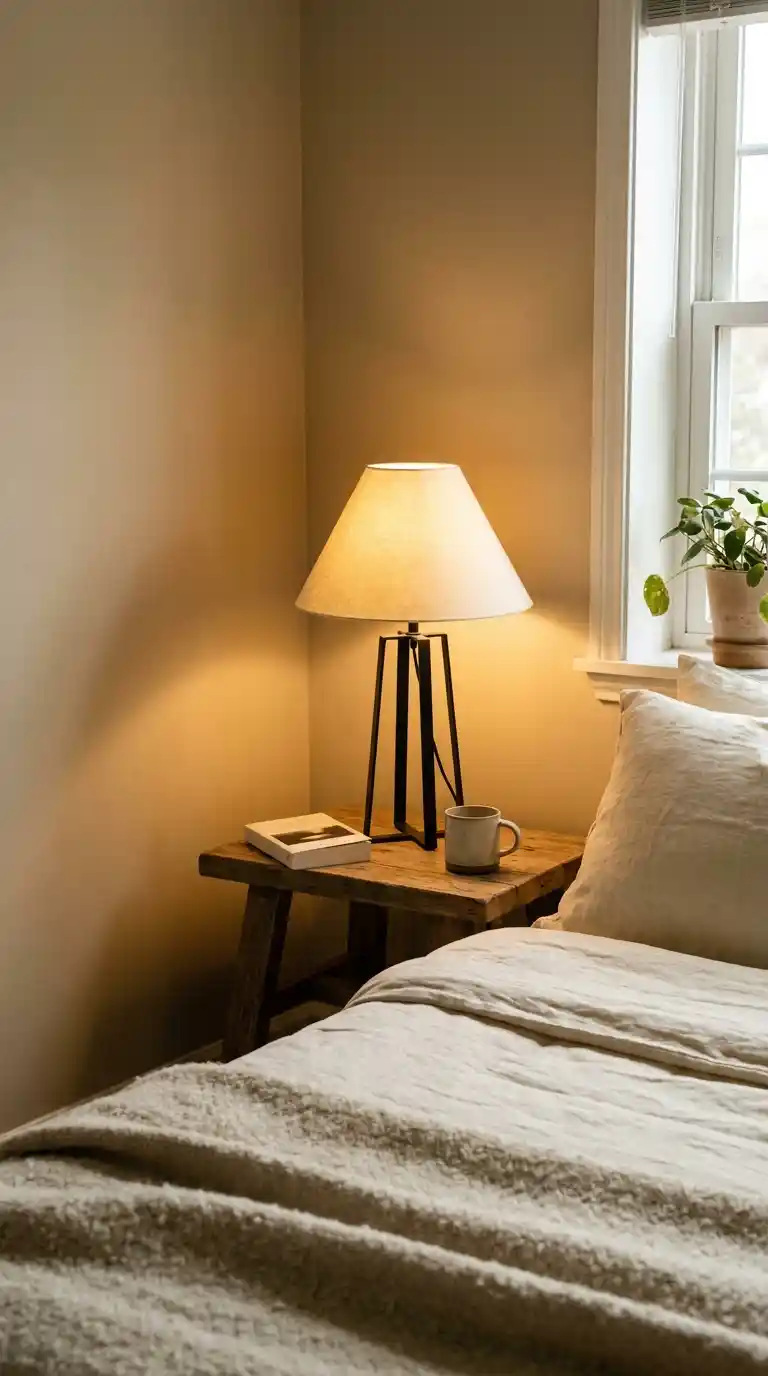
Use warm white bulbs at around 2700K throughout, because cooler daylight bulbs make beige look grey and black look harsh. The photo below shows the balance: two bedside lamps with black bases give even light on both sides of the bed, and a dimmer on the main light lets the room shift from bright in the morning to soft in the evening. Choose pendants or lamps, not both, above the nightstands, and finish the window with a double rod carrying sheer beige curtains in front and black blackout curtains behind, so daylight is filtered and sleep is properly dark.
How do you make it work in a small room?

In a small room, push beige to about 80 percent and use black mainly in vertical elements, such as a tall headboard, a narrow wardrobe door or long curtains, which draw the eye upward instead of closing the room in. The photo above shows the effect: beige walls and bedding carry the space, with black used sparingly. Add one mirror at least 60 by 90 centimetres opposite the window to double the daylight, and choose a storage ottoman at the foot of the bed instead of a separate chair, so seating and storage share the same floor space. For a bolder accent colour, the same restraint applies in teal bedroom ideas.

What does a realistic budget and timeline look like?
Work in three tiers so the budget stays a decision, not a surprise. A paint-only refresh for the 3.6 by 4.2 metre room costs about £180 to £350, a mid-range refresh with new bedding, lighting and a bed frame runs about £1,200 to £2,500, and a full refit with furniture and window treatments can pass £4,000. Whichever tier you choose, hold back about 10 percent as a contingency for a second tin of paint or a replacement lamp, rather than spending every pound on the first shopping trip.
Phase the work in this order: paint in the first weekend, bedding and lighting in week two, and furniture in weeks three and four, so the room stays usable throughout. The photo above shows a larger room, but the same phasing works at any size, because paint and light change the feel fastest while furniture can wait for the right piece. If money is tight, keep the existing bed and change only the headboard cover, bedding and lamps first, then replace the frame later.
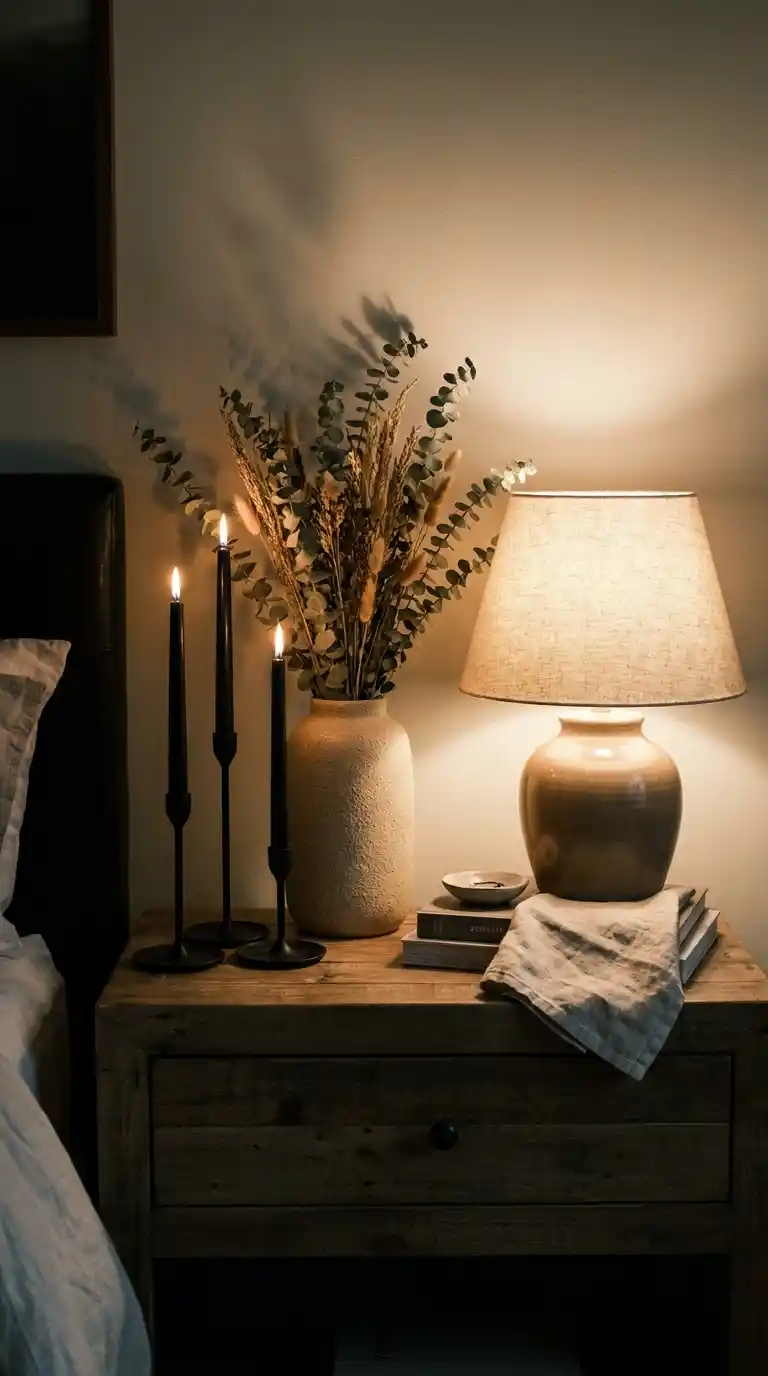
Finish with decor that repeats the palette rather than adding new colours. The photo above shows the idea: one metal finish only, such as brass, across frames and handles, one large piece of art with a beige background and black lines, and a single plant to soften the contrast. Limit ornaments to three or four per surface, so the room still reads as calm rather than collected. The same one-metal rule keeps a green and gold bedroom calm.
The photo above makes the case for phasing the work: start with paint and bedding, live with that for a month, and only then add larger black pieces. Adding one element at a time, with at least a week between purchases, makes it easy to spot the moment the ratio tips past about a third black, and to return or swap a piece before the room is finished. A room built in three or four stages over two months usually looks more settled than one bought in a single weekend.

Upkeep is straightforward once the palette is fixed: choose washable covers for beige bedding and upholstery, wipe black surfaces with a dry microfibre cloth once a week, and rotate cushions monthly so wear is spread evenly. Beige shows marks more readily than black, so removable, machine-washable covers are worth more than a second set of cushions.
Before calling the room finished, stand in the doorway and take one last look: if black fills more than about a third of the view, remove one black item, such as a cushion, a frame or a small accessory, and live with the lighter version for a few days. The test is simple — the room should feel grounded by the black, not weighed down by it. Carry the same discipline into an ensuite with these guest bathroom ideas.
Frequently Asked Questions
Is beige and black a good color combination for a bedroom?
Yes. Beige softens the room and keeps it restful, while black adds definition. The combination works best when beige carries about 70 percent of the room, so the black reads as an accent rather than the main colour.
How do I make a beige and black bedroom feel warm instead of cold?
Start with a beige that has warm, yellow undertones rather than a grey one, and use warm white bulbs at around 2700K. Add textured textiles, such as linen or boucle, and a warm metal like brass to stop the black feeling cold.
Should I paint my whole bedroom black or just an accent wall?
Paint one accent wall black, usually the wall behind the bed, and keep the other three beige. A whole black room is much harder to light well and can feel smaller, whereas one wall gives the same contrast with far less risk.
Does black furniture make a small bedroom look smaller?
Not if black is used sparingly. In a small room, keep black to vertical elements such as a tall headboard, long curtains or a narrow wardrobe door, and push beige to about 80 percent so the room still feels open.
Can I use a beige and black color scheme in a rental apartment?
Yes, because most of the look comes from removable pieces: bedding, curtains, rugs and accessories. Keep the walls as they are, add black through a bed frame or lamps, and the scheme can move with you when the tenancy ends.





4 Comments on “Beige and Black Bedrooms: How to Get the Contrast Right”