

Start with three fixed points before you buy a tin of paint: the size of the room, how much daylight it gets, and what you can spend in one go. A typical main bedroom of about 12 to 15 square metres can carry one deep green wall comfortably; a box room under 9 square metres usually cannot. A first phase of £350 to £600, spread over about three weekends, covers paint for one feature wall, new bedding, two lampshades or lamp bases, and a framed print. The real consideration is light: a north-facing room will make the same green look two shades darker than the paint chart suggests, so test on the wall, not on a card.
What should you decide before painting anything green?
Decide the job of the colour first. Is green the background, on the walls, or the accent, in bedding and curtains against cream walls? Background green needs a calmer shade and a bigger budget, because you will live with it every morning. Accent green is cheaper to change: one duvet set, two cushion covers and a throw can be swapped for under £120. Also decide how much gold you actually want to see. A useful rule is three to five gold pieces in view from the bed — a mirror frame, two lamp bases and a picture frame, for example — rather than gold on every surface. Count what you already own before buying more; brass door handles and a gilt frame you forgot about may already be doing the job.
Which green actually suits your room’s light?
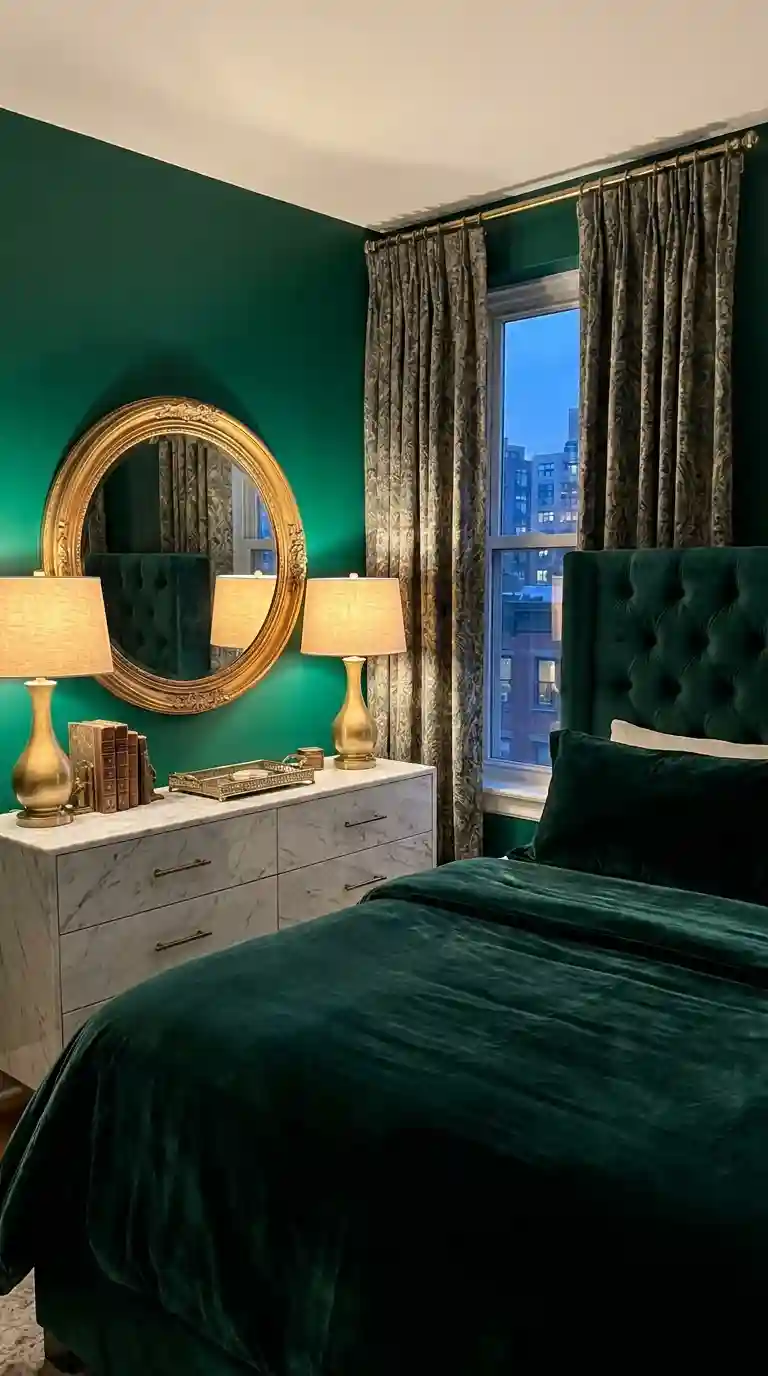
Paint three test patches, each about 30 centimetres square, on the wall the bed will stand against, and look at them in morning light, evening light and lamplight for two days. In a bright south-facing room, a deep emerald or forest green stays rich without closing the room in. In a dim or north-facing room, sage or a soft olive is safer, because deep green can read almost black by 4 pm in winter. Undertone matters more than the name on the tin: a green with a yellow undertone warms gold, while a blue-undertone green can make brass look harsh. If the sample looks grey at night, it will look grey for the next five years. The photo below shows a deep green working because the room has pale bedding, a light dresser and two warm lamps to lift it.
Which gold finish should you stick to?
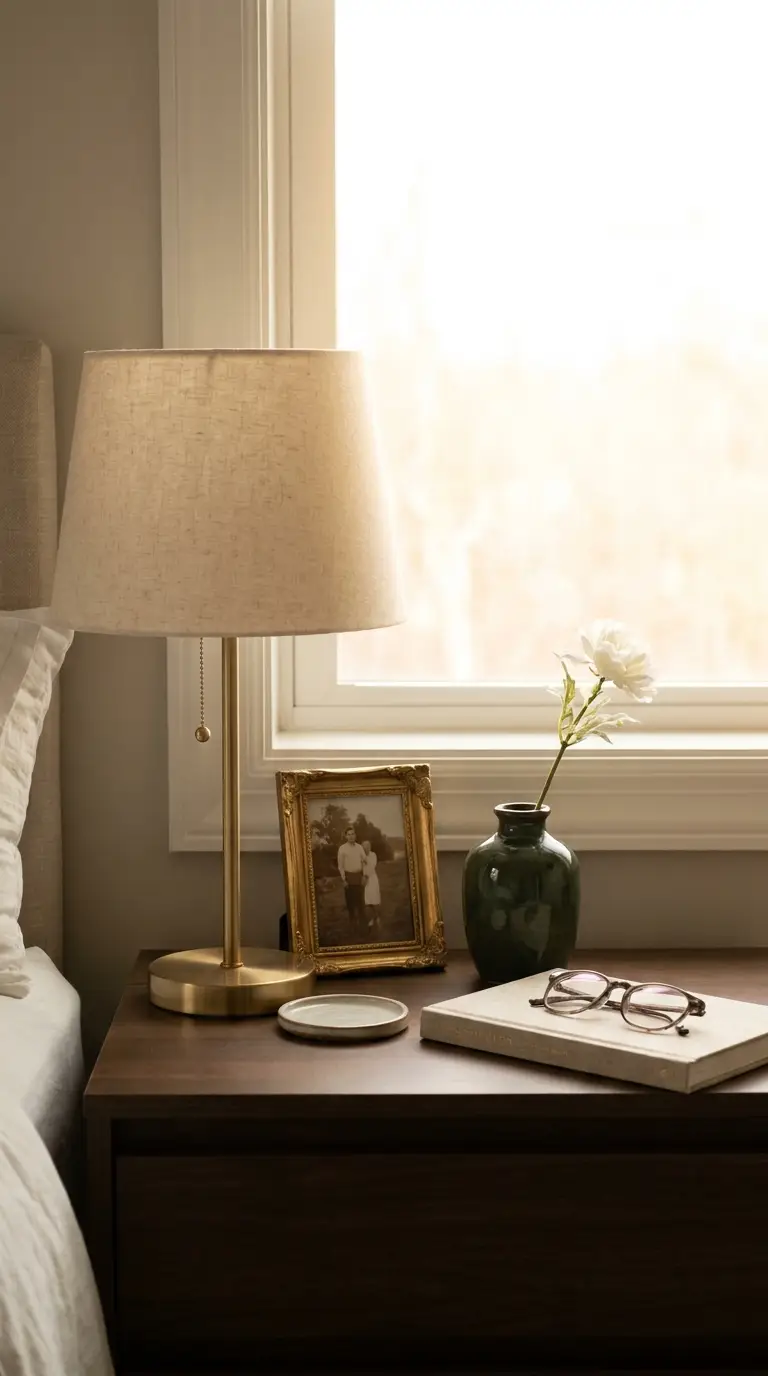
Pick one gold finish and use it for everything you buy new: polished, brushed or antique brass. Mixing them is the fastest way to make a room look like a clearance display. Polished gold suits mirrors and light fittings, where shine is the point. Brushed gold is kinder on bedside lamps and drawer pulls, because fingerprints show less. Antique brass suits darker wood and traditional furniture, where a bright finish would look new and out of place. Before ordering, hold the sample against your green in lamplight, not shop light. The bedside photo below shows brushed gold working quietly — a lamp base, a frame and a vase — rather than shouting from every surface.
How do walls, bedding and furniture work together?
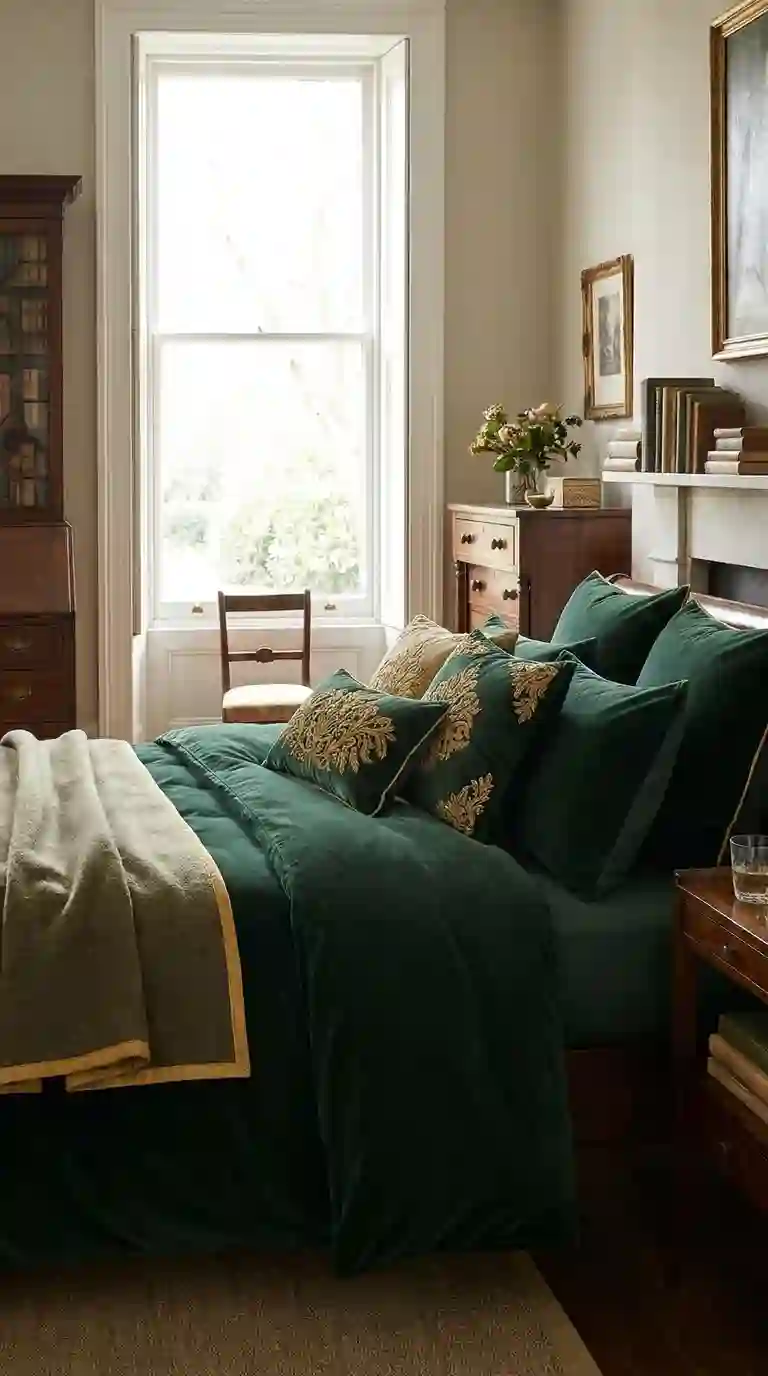
Give each element one job. If the wall is deep green, keep bedding mostly cream or pale sage, with green in just the throw and two cushions, so the bed does not disappear into the wall. If the walls stay cream, the bed can carry the green: a green velvet headboard, or a green duvet with gold-stitched cushions, as in the photo below. Furniture should then stay quiet — plain wood, or wood with brass handles, rather than another patterned piece. Curtains matter more than people expect: floor-length curtains hung 10 to 15 centimetres above the frame make the window, and therefore the green, look intentional. The same layering idea works at the table too, as these placemat ideas for dressing a table show — one strong layer, then restrained detail.
How do you light green and gold so it stays warm?
Use warm-white bulbs, around 2700K, in every fitting. Cool white flattens gold until it looks silver, and it turns sage green grey. You need three layers: a ceiling light on a dimmer for getting dressed, a bedside lamp on each side for reading, and one low light, such as a small lamp on a dresser, for evenings. Two matching bedside lamps, rather than one, stop the room looking lopsided, and they are the easiest place to introduce gold. Avoid a single bright overhead bulb as the only source; it is the main reason deep green rooms feel gloomy at night. If the room has no dimmer, a £15 plug-in dimmer for a bedside lamp is a cheaper fix than repainting.
How does it work in a small bedroom?
In a room under 9 square metres, use green on one wall only — the wall behind the bed — and keep the other three cream or pale sage. That gives the drama without shrinking the room. Choose gold in small doses: a mirror, a lamp and one frame, not a gold bed frame as well. Hang curtains from ceiling height and keep the floor visible: a bed with 15 centimetres of clearance underneath reads lighter than a bed skirted to the floor. A single large mirror, at least 60 by 90 centimetres, above the dresser doubles the sense of space and repeats the gold. These are the same principles behind ideas for making a small space feel like home: fewer, larger pieces beat lots of small ones.
Which style suits you: modern, traditional or relaxed?
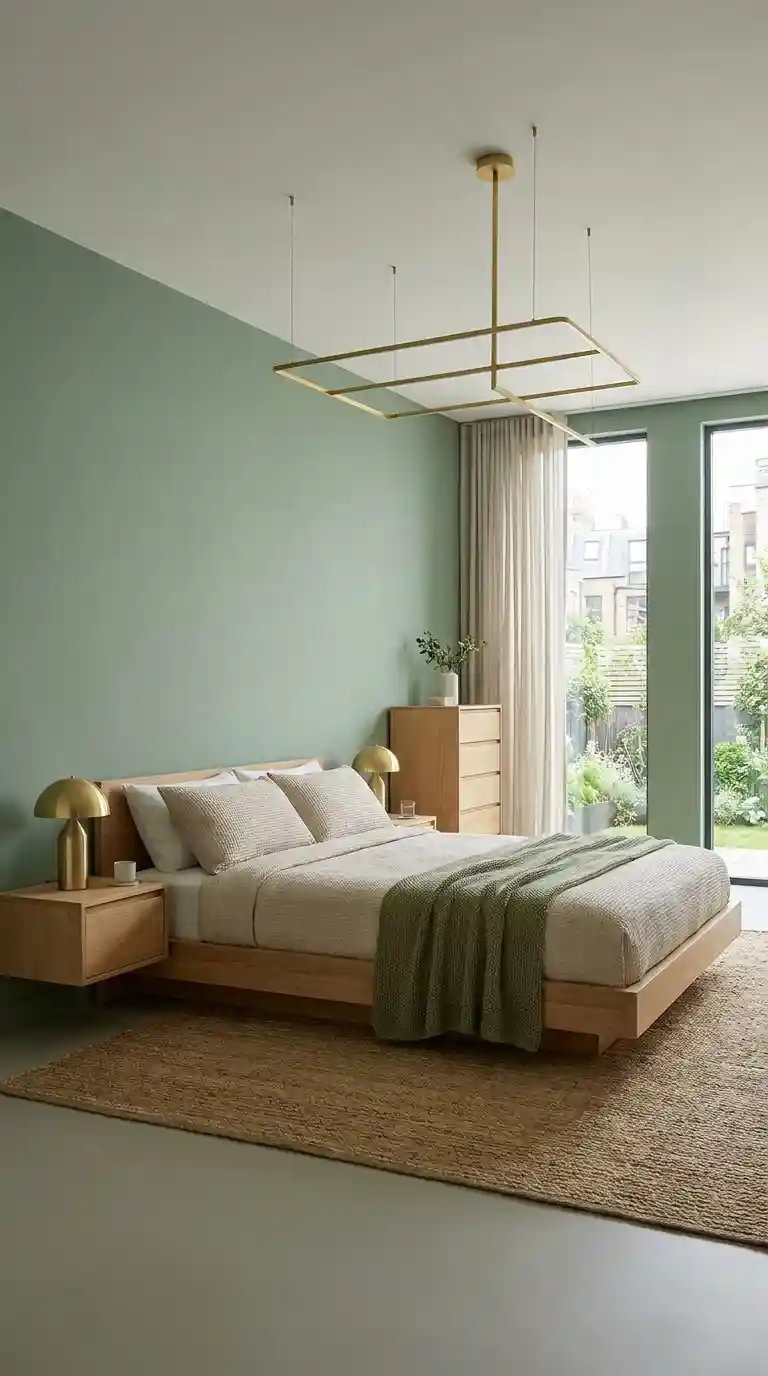
Modern means clean lines, sage rather than emerald, and geometric gold — a straight-edged mirror, a simple pendant — with plenty of plain wall left showing. Traditional means deeper green, velvet, a tufted headboard and antique brass, and it suits rooms with coving, a fireplace or panelled doors. Relaxed, or boho, means olive or sage, rattan and linen, plants on the windowsill, and gold kept to small pieces such as frames and a tray. The photo below is a modern version: muted green, simple shapes and gold used sparingly. Pick the style that matches the furniture you already own; buying a whole new bedroom set to match a paint colour is the most expensive way to do this.
What mistakes make it look flat or fussy?
Four mistakes come up again and again. First, mixing warm and cool golds, which makes the room look assembled from different sets. Second, painting all four walls deep green in a room with one small window — the result is a cave, not a retreat. Third, using green in too many shades at once: stick to two greens at most, a wall green and a textile green. Fourth, covering every surface with gold accessories, which leaves the eye nowhere to rest. The fix for all four is the same: remove one thing, live with the room for a week, and only then decide what it still needs. A similar restraint keeps a dark, dramatic dining room from turning into a costume set, and it works just as well here.
Questions worth asking before you start
Before you commit, work through these in order: which wall, if any, gets the deep green; which single gold finish you will repeat; and what you can change cheaply if you hate it in a month. Textiles are the reversible test — if the room works in green bedding, the wall probably will too. Keep the receipt for the paint and note the exact shade name, because touch-ups in two years depend on it.
What colours go best with green and gold in a bedroom? Cream, warm white and soft beige are the safest partners, because they give the eye a rest between two strong colours. Charcoal or black works only in small doses, such as a frame or a lamp base, and only in a room with good daylight.
Is green and gold too bold for a small room? Not if the deep green is kept to one wall and the rest stays pale. Sage on all four walls with gold accessories is a gentler option, and it suits rooms under 9 square metres better than a full emerald scheme.
What shade of green is best for a bedroom? It depends on light. Bright rooms can take emerald or forest green; dim rooms suit sage or soft olive. Always test a 30-centimetre patch on the actual wall in both daylight and lamplight before deciding.
Should I use brass or polished gold hardware? Choose one and repeat it. Brushed brass is the most forgiving choice for everyday use, because it shows fewer fingerprints than polished gold, and it sits well with both sage and deep green.
How much gold is too much? If you can count more than five gold pieces from the doorway, or if gold appears on the bed, the walls, the furniture and the lighting all at once, take one category out. Gold should read as an accent, roughly 10 per cent of what you see, not as a second main colour.





10 Comments on “Green and Gold, Done Properly: A Bedroom That Stays Calm, Not Costume-y”