
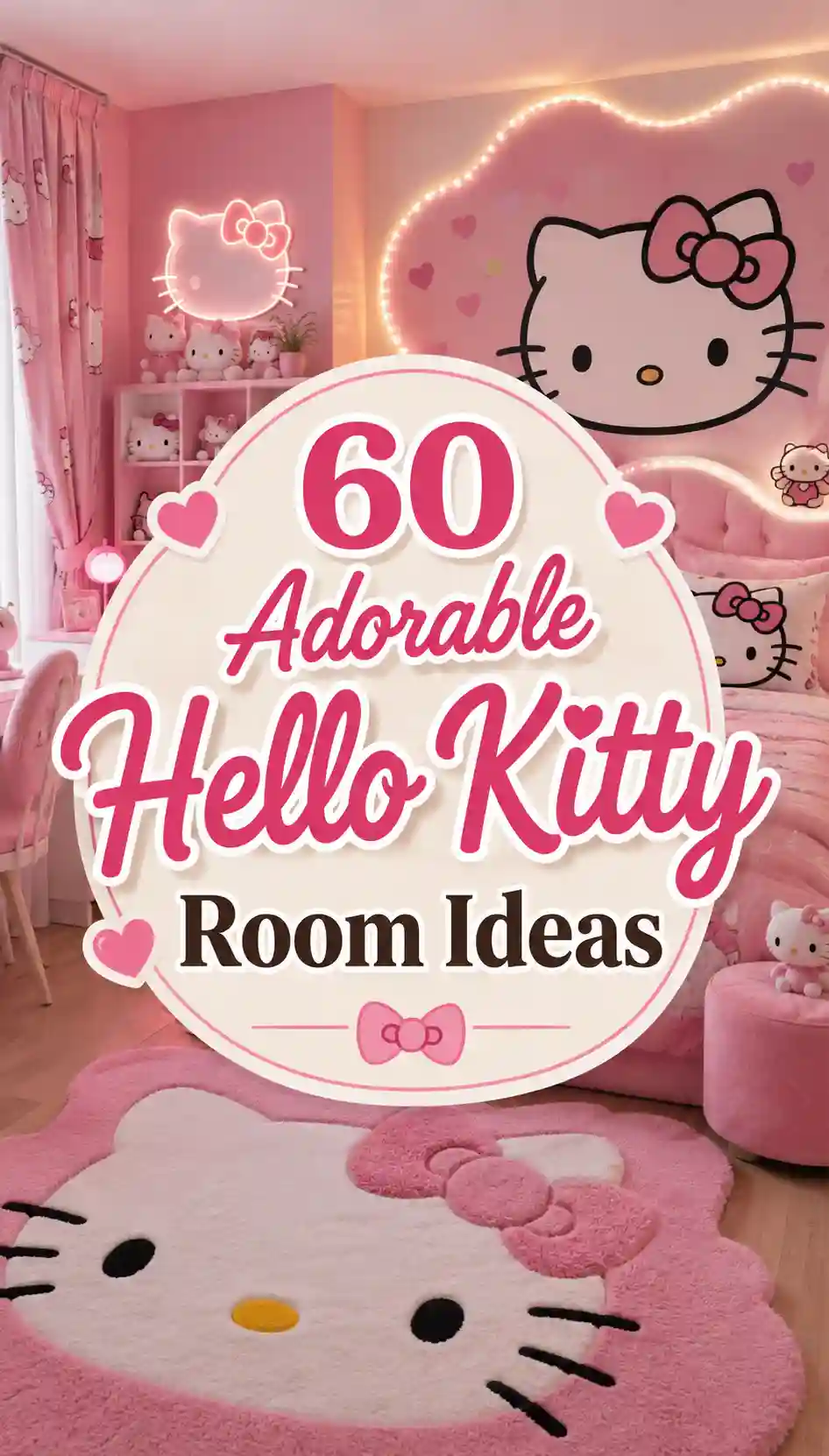
A Hello Kitty room usually goes wrong for one reason: too many character items competing at once. A workable plan starts with a single feature wall, one themed bedding set and a budget of £80 to £250 for paint, bedding, a lamp and storage — not a room full of licensed products bought in one shopping trip. That restraint is what separates a room that feels cheerful from one that feels like a shop display.
The second decision is age. A nursery needs soft, washable surfaces and nothing within cot reach; a teenager’s room needs a desk, storage and a theme that can be removed in a weekend; an adult’s room needs the character reduced to two or three deliberate nods. Choose the age first, and the palette and furniture choices become much easier.
How do you choose a palette that does not overwhelm the room?
Use white as the base for walls and large furniture, soft pink for bedding and one accent wall, and red only for the bow motif — a cushion, a print or a lamp. A ratio of roughly 60 per cent white, 30 per cent pink and 10 per cent red or black keeps the room bright, even in a north-facing bedroom where pink can otherwise look grey.
Paint one wall, not four. A 3-metre feature wall painted in a pale pink, with the other walls in white, gives the theme a clear home without making the room darker. In a rented room, removable decals or a large framed print on that same wall achieve the same effect and can be taken down without repainting.
What is the fastest way to change a bedroom without redecorating?
Bedding is the fastest change. A single duvet set, two pillowcases and a throw in the chosen palette transform the room in about 20 minutes, and cost far less than paint or furniture. Choose a duvet cover that can be washed at 40 degrees, because themed bedding in a child’s room will be washed weekly, and a cover that needs dry cleaning will quickly become a problem.
Curtains are the second-fastest change. Sheer white curtains with a pink tie-back let in more light than heavy themed curtains, and they work in both a child’s room and an adult’s room. Keep the curtain rod 10 to 15 centimetres above the window frame so the room looks taller, even if the window itself is small.
How do you make the walls look intentional?
Limit wall decor to three elements: one large print or decal, one shelf for display, and one string of warm-white fairy lights. A large print 60 by 80 centimetres above the bed anchors the theme; smaller prints scattered across every wall fragment it. Fairy lights should be battery-operated or plugged in behind furniture, with no trailing cables across a walkway.
For a child’s room, place decals at the child’s eye level, about 90 to 120 centimetres from the floor, so the character is visible from the bed. For an adult’s room, use line art or a minimalist print in a plain frame instead — the bow shape is recognisable even without a full-colour character image.
What furniture works for a themed room at any age?
White furniture works best, because it can outlast the theme. A white wardrobe, chest of drawers and bed frame will still look right when the bedding changes, whereas a pink bed frame locks the room into one look. Rounded edges and soft-close drawers matter more in a child’s room than the colour of the furniture.
Choose one themed piece, such as a bow-shaped cushion, a pink chair or a small vanity stool, rather than a full themed set. That single piece can be replaced or re-covered later for £20 to £40, while a full set would need to be sold or stored. The same editing principle applies to shelving: this guide to making a bookshelf look intentional shows why one curated shelf beats a wall of small items.
How do you light a pink room without making it look garish?
Use warm-white bulbs at 2700K, not cool white, because cool light makes pink look harsh and clinical. A bedside lamp with a white or pale pink shade, plus a dimmable overhead light, gives two levels of light: bright enough for homework or reading, soft enough for evening. A single statement pendant, such as a bow-shaped shade, should be the only decorative light; more than one competes with it.
For younger children, a nightlight with a soft glow is more useful than a themed lamp that is too bright to sleep by. Keep any nightlight at least 30 centimetres from the cot or bed, and avoid lights that flash or change colour through the night, which can disturb sleep.
What about storage for toys, books and collections?
Give collections one shelf, not the whole room. A single shelf 80 centimetres wide holds about 8 to 12 plush toys or figurines without looking crowded, provided larger items are at the back and smaller ones at the front. The rest of the collection should be stored in closed bins, rotated monthly if the child wants variety.
For clothes and accessories, the zone system in this guide to a small baby closet that actually works scales up well: current clothes front and centre, next size or out-of-season items higher up, and accessories in one labelled bin rather than scattered across drawers.
How does the approach change for a nursery, a teen room and an adult room?
In a nursery, safety comes first: no loose cords, no small detachable parts within reach of the cot, and wall decor above cot height only. A soft rug 120 by 170 centimetres gives a safe play surface, and a glider chair in blush pink ties the room together without adding clutter.
For a teenager, keep the walls neutral and let the theme live in bedding, a desk chair and one print, so the room can be changed by swapping those three items. For an adult, use velvet, linen or brushed gold alongside pink, and limit the character to a cushion, a print and a single accessory — the room should read as pink and soft, not as a child’s bedroom.
How do you keep a themed room from looking cluttered?
Apply a simple limit: no more than three themed items visible from the door. Stand at the doorway and count — bedding counts as one, a wall print as one, and a shelf display as one. If the count is higher, move the excess into closed storage. That doorway test is more reliable than counting items one by one, because it matches how a visitor actually sees the room.
Rotate, do not accumulate. When a new themed item arrives, one old item should leave the display, either to storage or to donation. Without that rule, a themed room grows by one item a month and, within a year, the theme is buried under its own accessories. A plant on the windowsill can also break up the pink: this guide to interior decor plants explains which varieties tolerate low light in a bedroom.
Questions readers ask
Can a Hello Kitty room work for an adult without looking childish? Yes, if the character is limited to two or three items and the rest of the room uses adult materials such as linen, velvet and plain white furniture. The bow motif, rather than a full-colour character print, is the easiest adult-friendly nod.
What colours go with pink in a Hello Kitty room? White is essential, red works in small amounts for the bow, and black or gold can be used sparingly for frames and hardware. Avoid adding a third bright colour, such as purple or turquoise, or the palette quickly becomes busy.
Is it expensive to create a Hello Kitty room? A basic version — bedding, a print and a lamp — costs about £80 to £150. A fuller version with paint, curtains and furniture changes costs £250 to £500, but most of that spending is on items that will outlast the theme.
How do you make a themed room renter-friendly? Use removable decals, a framed print, bedding and curtains, and avoid painting or drilling. Those four changes can be reversed in under an hour when moving out.
How do you update the room as a child grows? Keep the furniture white and neutral, and change only bedding, wall decor and one accessory. That way a nursery can become a teen room without replacing the bed, wardrobe or desk.
A Hello Kitty room works when pink is a palette, not a pile of products. One feature wall, one bedding set and one bow motif, kept within a white base, will look cheerful at any age — and will still be easy to change when tastes move on.
Finally, photograph the finished room from the doorway before adding any extra items. That single photo shows whether the palette reads as calm or crowded, and it is far easier to judge on a screen than while standing in the middle of the room.





4 Comments on “Hello Kitty, Grown Up: Pink, White and One Bow at a Time”