
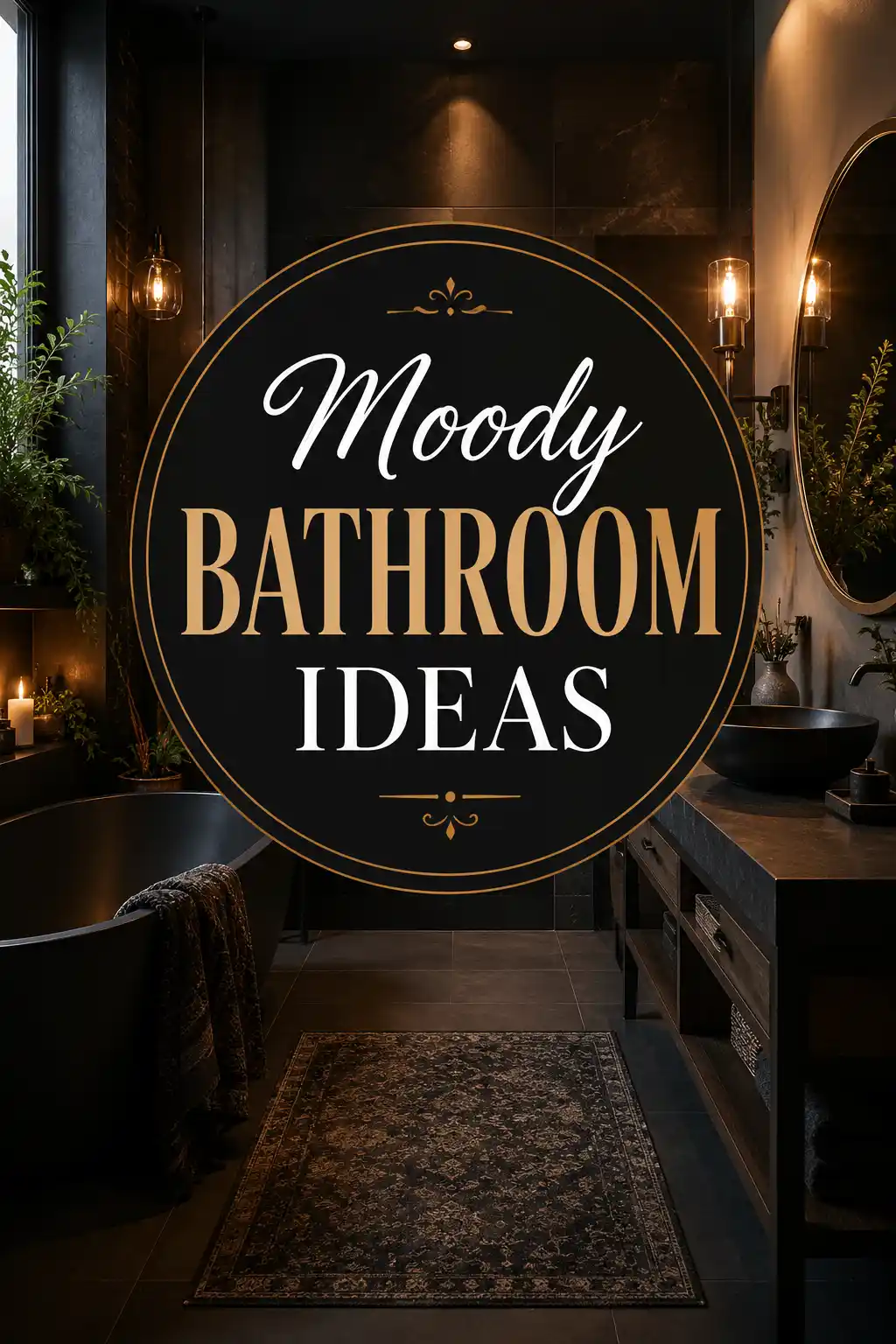
A dark bathroom is the fastest way to make an ordinary house feel like a boutique hotel. It is also the easiest look to get wrong: one wrong paint choice and a bathroom that was supposed to feel dramatic ends up feeling like a cupboard. The difference between the two comes down to lighting planned before paint, dark colours with warm undertones, and roughly a third of the room kept light for contrast. In a typical UK bathroom of about 2 by 2.5 metres, a paint-led transformation takes a weekend and costs £150 to £400, which makes this one of the cheapest high-impact projects in the house.
The consideration that matters most is this: dark walls absorb light instead of reflecting it, so a bathroom that relied on white walls bouncing daylight around will feel twice as dark as expected once painted. Plan the lighting first — three light sources minimum — and the colour choice becomes much safer. Everything below follows from that order of operations.
What actually makes a bathroom feel “moody”?
Moody is not just dark paint. A truly moody bathroom combines deep colour with warm, layered light and at least two natural textures — wood, stone, linen or rattan. The colour creates the drama; the light and texture stop it feeling flat. A bathroom painted black with one harsh ceiling light feels like a garage. The same black walls with a warm sconce beside the mirror, a wooden stool and a linen hand towel feel like a spa.
Scale helps too. Small rooms take to dark colours better than large ones because the eye cannot find the corners, which makes the space feel enveloping rather than small. A 2 by 2.5 metre bathroom is genuinely one of the best rooms in the house for this look — the smallness becomes the point.
Which dark colours work best — and which ones go wrong?
Choose dark colours with warm undertones. Charcoal with a hint of brown, forest green, deep navy and aubergine all glow under warm bathroom lighting. The colours that fail are flat, blue-based blacks and greys with no warmth in them — under a 2700K bulb they turn muddy and the room feels dirty rather than dramatic. When testing, paint an A3-sized board and look at it at night under your actual bathroom light, not in the shop.
Forest green is the most forgiving choice for a first dark bathroom: it flatters skin tones in the mirror, pairs with both brass and black fixtures, and reads as intentional even in daylight. Near-black charcoal is the most dramatic but demands the best lighting. Burgundy and plum are the boldest — beautiful with brass, risky with poor light. If plum appeals, the deeper end of the spectrum is explored properly in this burgundy bathroom guide, which shows how the colour behaves across different light levels.
Whichever colour you choose, use a paint formulated for bathrooms — mould-resistant and washable. Standard emulsion in a steamy room will spot within months; bathroom-specific paint costs about £8 to £12 more per 2.5-litre tin and is the difference between a finish that lasts five years and one that lasts eighteen months.
How dark can you go in a small bathroom?
Fully dark, ceiling included. The instinct is to keep the ceiling white to “lift” the room, but a white ceiling against dark walls chops the room in two and makes the ceiling feel lower. Painting walls, ceiling and even the trim in the same dark colour blurs the boundaries so the eye cannot tell where the wall ends — the room feels like a single enveloping space rather than a small box. This colour-drenching approach is the single most effective trick for bathrooms under 6 square metres.
Keep the floor and the sanitaryware light to balance it: a white suite and a pale floor against dark walls give the eye somewhere to rest. A large mirror — at least 60 cm wide, ideally arched or round with a brass or black frame — doubles whatever light exists. And keep storage closed and minimal; clutter reads twice as loudly against dark walls. These bathroom storage ideas are designed around keeping small dark bathrooms calm rather than crowded.
Where should the light come from?
Three sources, minimum, all warm. First, the existing ceiling light — replace any cool-white bulb with a 2700K warm white; cool bulbs turn dark walls grey and make the room feel like an office car park. Second, task lighting at the mirror: a pair of sconces mounted at eye level, roughly 150 to 160 cm from the floor and 60 to 75 cm apart, flanking the mirror. This is the light you actually use, and it is what makes dark walls look rich instead of black.
Third, one low accent: a small warm lamp on a shelf, candles, or LED strip lighting behind the mirror or under a floating vanity. Then put the lot on a dimmer switch. A dimmer costs around £15 and twenty minutes to fit, and it is what turns the same bathroom from “getting ready for work” bright to “long bath” low. Dark bathrooms without dimmers almost always feel like caves, because one fixed brightness cannot serve both moods.
Matte black, brass, or both: which fixtures suit a dark bathroom?
Pick one dominant metal and let the other appear once or twice. Matte black taps, shower fittings and towel rails against dark walls read as one continuous sculptural line — modern, calm, and very forgiving of water spots. Brass or unlacquered bronze does the opposite: it catches the warm light and glows, which is exactly what a dark room needs as jewellery. A black tap with a brass-framed mirror and brass light fittings is the combination that appears in most of the dark bathrooms people save photos of, and it works because the brass is the accent, not the theme.
One practical note: unlacquered brass develops a patina and shows water marks, which suits the moody aesthetic but annoys anyone who likes things pristine. Lacquered brass stays shiny with zero maintenance. Decide which camp you are in before buying, because the two look identical in the shop and very different after six months of daily use.
What about tile — where does texture come in?
Paint gives you the colour; tile gives you the texture that stops dark from feeling flat. You do not need to retile the whole room — one tiled feature wall behind the basin or in the shower enclosure is enough. Dark zellige tiles, roughly 10 by 10 cm with their handmade uneven glaze, are the classic moody-bathroom choice because each tile catches the light slightly differently and the wall shimmers instead of sitting dead.
If retiling is out of budget, grout is the cheap texture trick: regrouting existing light tiles with dark charcoal grout (around £15 for a bathroom) adds graphic definition for almost nothing. On the floor, large-format dark porcelain — 60 by 60 cm — keeps grout lines minimal and makes a small bathroom feel larger, while small patterned tiles in herringbone do the opposite and add busy-ness. For a small dark bathroom, calm floors and dramatic walls is the right division of labour.
How do you keep a dark bathroom from feeling like a cave?
The rule of thumb: keep roughly one third of what the eye sees light. White sanitaryware, a pale floor, a large mirror and one piece of light art or a light blind are usually enough. Metallics count as light too — brass and glass bounce warm light around the room, which is why they matter more here than in a white bathroom.
Contrast also comes from shape, not just colour. A round mirror against square tiles, a curved tap against a rectangular basin, a soft linen towel against hard tile — these small oppositions keep the eye moving so the darkness feels layered rather than heavy. If you want to see how far contrast can be pushed, this black and white bathroom guide is essentially the same principle turned up to maximum.
What do you do about moisture and ventilation?
This is the unglamorous part that decides whether the room still looks good in two years. Dark grout and dark paint show mould less than white does, which is a genuine advantage — but they do not prevent it. An extractor fan rated at least 15 litres per second, run for 20 minutes after every shower, matters more in a dark bathroom than a light one because problems hide longer and get worse before you notice them.
Use mould-resistant bathroom paint on walls and ceilings, epoxy or mould-resistant grout if retiling, and leave a 5 mm gap of ventilation wherever boxing or panelling meets the floor. A small heated towel rail, left on low, also keeps background humidity down and dries towels faster than a radiator — worth considering if the bathroom has no window.
How do you get the look for under £400?
Paint does almost all of the work, which is why this is a budget-friendly transformation. A realistic breakdown for a 2 by 2.5 metre bathroom: 2.5 litres of mould-resistant dark paint (£35–£45), a dimmer switch (£15), three 2700K bulbs (£12), a large round mirror (£70–£100), dark grout for regrouting (£15), new cabinet handles or a tap in matte black (£40–£80), dark towels and a bath mat (£40), and candles or a small lamp (£20). Total: roughly £250 to £400, with no tiling and no plumber required.
Renters can get 80 per cent of the effect without paint: peel-and-stick dark wallpaper on one wall, dark textiles, a big mirror, warm bulbs and brass accessories are all removable. For more ways to stretch a small budget across the whole room, this budget bathroom makeover guide breaks down where the money actually makes a difference.
What usually goes wrong?
Four mistakes ruin most dark bathrooms. First, painting before fixing the lighting — one cool ceiling bulb against fresh charcoal walls is the classic disappointment, and it is fixed by a £4 warm bulb. Second, choosing a flat blue-black with no warmth, which reads as dirty under warm light; always test at night. Third, going dark on every surface including floor, suite surround and ceiling trim with no pale contrast anywhere — that is what produces the cave. Fourth, ignoring ventilation, because mould on a dark wall goes unnoticed until it is a real job.
Avoid those four and the look is remarkably forgiving. Dark colours hide limescale, water spots and the general wear that makes white bathrooms look tired — one of the quiet practical reasons this trend has lasted.
Questions people ask before going dark
Will a dark bathroom feel smaller?
It feels more enveloping rather than smaller, especially if the ceiling is painted the same colour as the walls. What makes bathrooms feel cramped is clutter and harsh lighting, not dark paint — fix those two and most people find the dark version feels larger.
Do dark bathrooms show dirt more than white ones?
Generally less. Dark surfaces hide water spots, soap scum and limescale better than white, which is one of the practical advantages of the look. Dust shows more on very dark glossy surfaces, so choose satin or matte finishes rather than high gloss.
Can renters try a moody bathroom?
Yes. Peel-and-stick wallpaper in a dark botanical or textured print, dark towels and textiles, a large leaning mirror, warm bulbs and brass accessories transform the feel with nothing permanent. Removable hooks hold most of it, and the wallpaper comes off cleanly when the tenancy ends.
What paint finish should a bathroom have?
A satin or soft-sheen bathroom-specific paint: washable, mould-resistant, and with enough sheen to bounce a little light without looking glossy. Flat matt emulsion marks too easily in a steamy room and is hard to wipe clean.
Do I need natural light for a dark bathroom to work?
It helps, but it is not required. Windowless bathrooms are actually good candidates because you control all the light with warm bulbs and dimmers. What matters is the number of light sources — three minimum — not where the daylight comes from.




7 Comments on “Dark Bathrooms Done Right: Drama Without the Cave”