

Blank walls are the first thing you notice in a rented flat, and the last thing most tenants tackle. A good starting point is height: hang the centre of a picture at about 145cm from the floor, which suits most sofas and eye levels, rather than lining it up with the top of a door frame.
Budget and time help to decide the rest. A single feature wall can usually be finished for £80–£250, and a whole flat for £300–£800, depending on frames and textiles. One wall takes an afternoon; a whole flat usually takes a weekend to a fortnight, once adhesive strips have cured and deliveries have arrived.
Start with the lease, then with one wall. Check what is allowed on fixings and paint, photograph any existing marks, and choose the wall you face most often. The sections below keep everything removable, so the flat can be returned in the same condition it was let in.
Where Should You Start With a Blank Rented Wall?
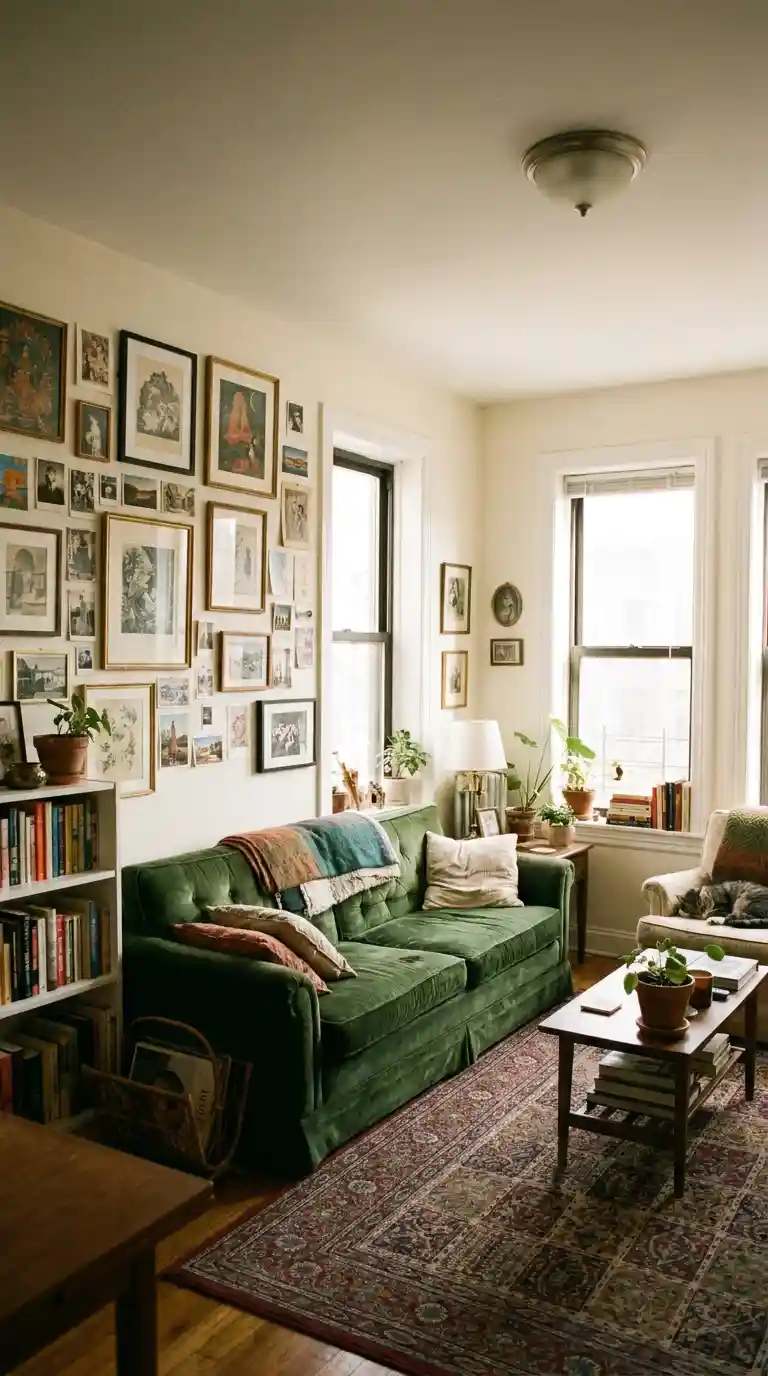
Measure first, in centimetres, and write the numbers down. Note the wall width, the height to any picture rail or cornice, and the distance from the sofa back to the ceiling, because a frame that is 20cm too wide is the mistake that only shows up after it is hung. The green sofa wall in the photo above works because the gallery fills the width of the seating, rather than floating as a small island in the middle of a large wall.
Then choose the focal wall, not every wall. The wall behind a sofa, behind a bed, or at the end of a hallway gives the most return for the least money, since it is seen from the doorway and from the seat opposite. Leave the other walls for later, and judge the first wall for a week before buying more, because a single finished wall often makes the rest of the room feel calmer.

How Do You Hang Things Without Losing the Deposit?
Adhesive strips are the safest first choice, provided the weight rating is checked on the pack. Use two pairs for a medium frame, press each strip firmly for 30 seconds, and wait at least 1 hour before hanging, because strips that are loaded straight away are the ones that fail. The photo above shows the method: a light frame, a level, and strips rather than nails.
For anything heavier, change the method rather than forcing it. Lean a large piece against the wall, hang a tapestry from a tension rod, or use washi tape for paper prints and postcards, which weigh almost nothing. When moving out, pull each strip tab slowly straight down, never outwards, and photograph the wall afterwards, so any pre-existing marks are not blamed on the hanging.
What Makes a Gallery Wall Look Curated, Not Cluttered?
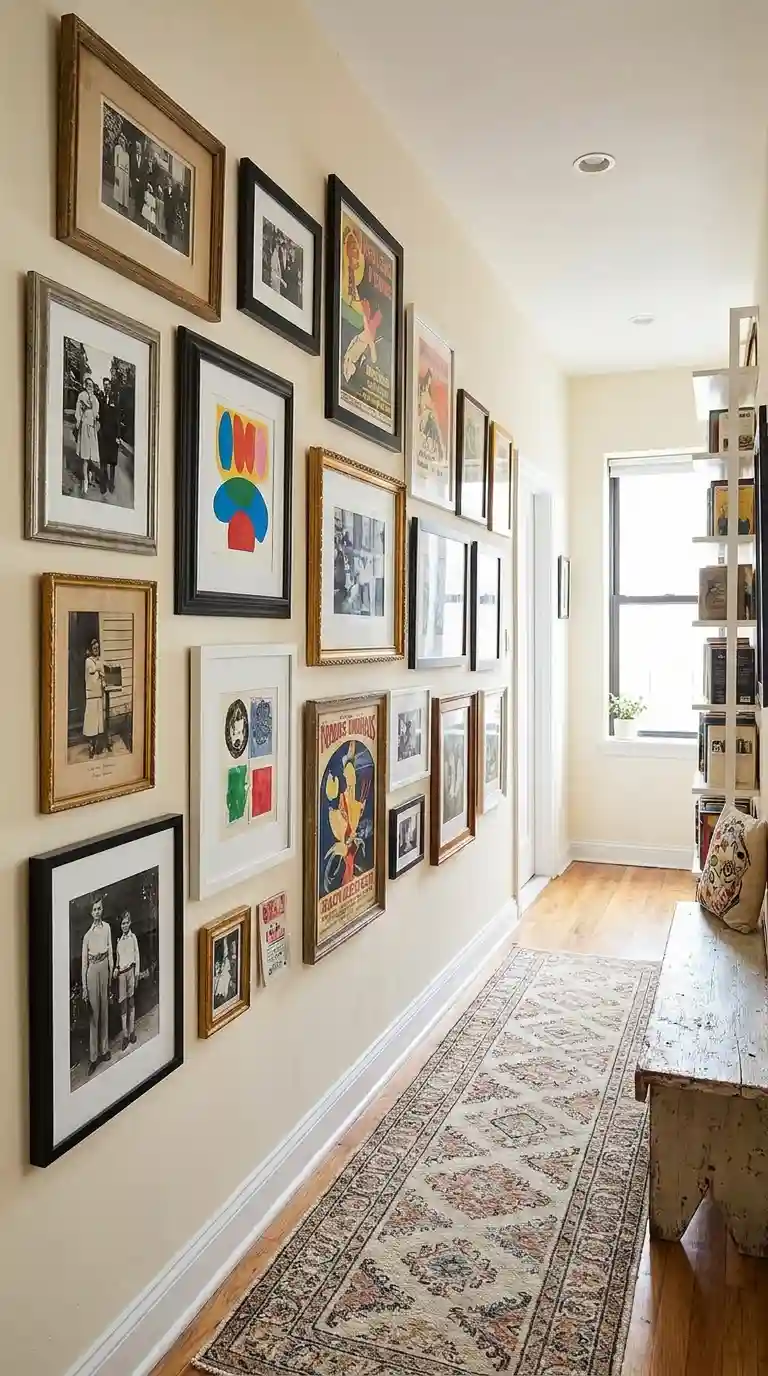
Start on the floor, not on the wall. Lay the frames out, leave 5–8cm between each one, and put the largest piece slightly off centre, so the eye has somewhere to land. A single repeated element, such as black frames, white mats, or one wood tone, holds a mixed collection together, as the hallway gallery in the photo above shows.
Then hang from the centre outwards, keeping the middle of the whole arrangement at about 145cm from the floor. Add one non-print piece, such as a small mirror or a woven hanging, for depth, and stop before the wall feels full. A gallery that covers about two-thirds of the wall width above a sofa or console usually reads as intentional, while one that fills every centimetre reads as storage. More detail on planning the layout can be found in how gallery wall layouts are planned.
How Much Should a First Wall Cost, and Where Does It Go?
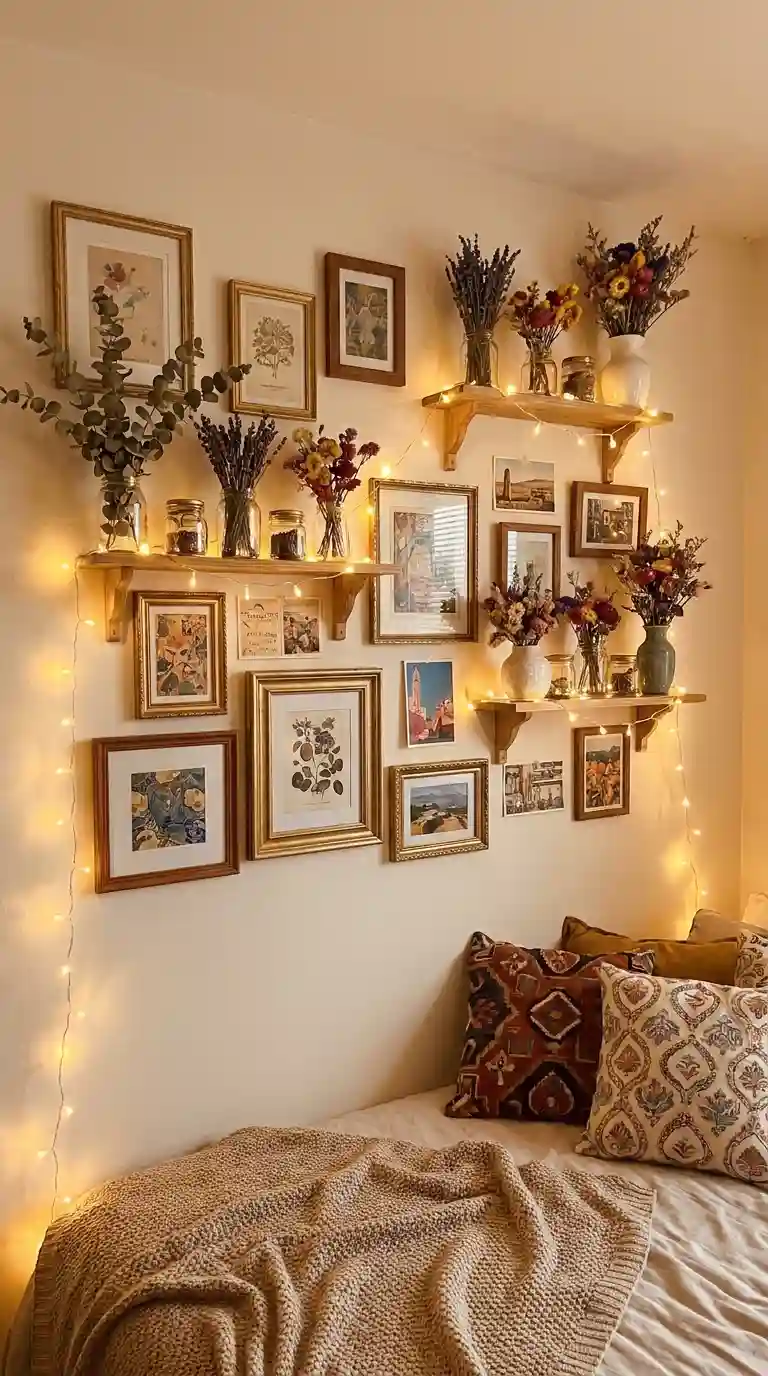
A useful split for a £150 first wall is about £60 on frames, £40 on prints, £25 on strips and hooks, and £25 on a textile or small shelf. That leaves room for one statement piece without blowing the budget on the first attempt, and the bedroom nook in the photo above shows why framing matters more than price: matching frames and warm light make inexpensive prints look considered.
Buy the frames first, then the art to fit them, because odd sizes cost more to print and frame. Thrifted frames, sprayed one colour, and A3 prints made at home or in a copy shop keep the cost down, while a large tapestry covers a whole wall for less than a set of framed prints. Spend on the pieces at eye level, and save on the ones hung high or in a hallway.
What Works Best in a Small Room?
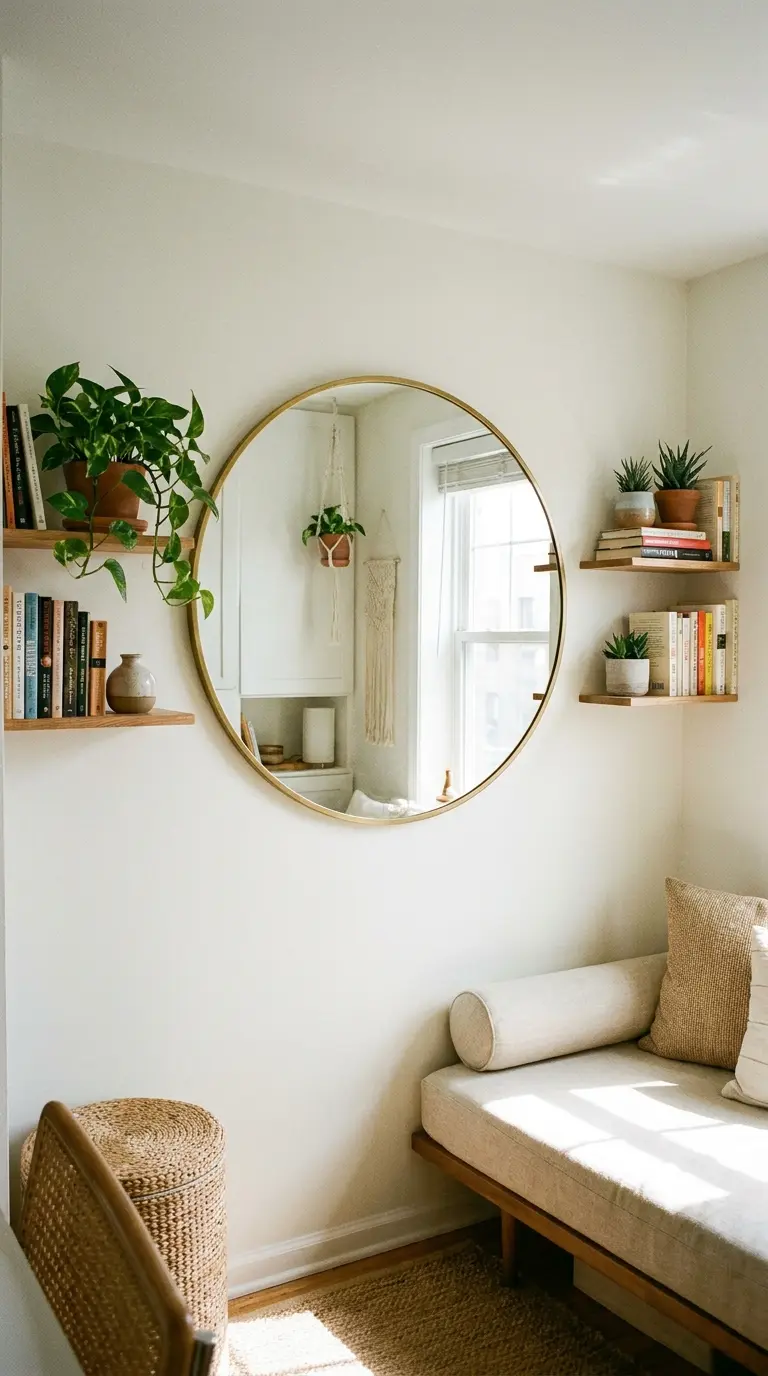
In a small room, one large piece usually beats six small ones. A mirror about 60–80cm wide, or a single print spanning roughly two-thirds of the wall above a daybed, gives the eye a resting point, while a scatter of tiny frames makes the wall feel busy. The small nook in the photo above works for the same reason: a round mirror, two shelves, and clear space around them.
Use height to your advantage, and keep the floor clear. Tall, narrow pieces draw the eye upwards, and shelves about 15–20cm deep hold books and plants without jutting into the walkway. Avoid hanging anything over a door swing or above a radiator, where heat and knocks will damage it, and keep at least one stretch of wall empty, so the room does not feel like a shop display.
How Do You Dress the Living Room Wall?
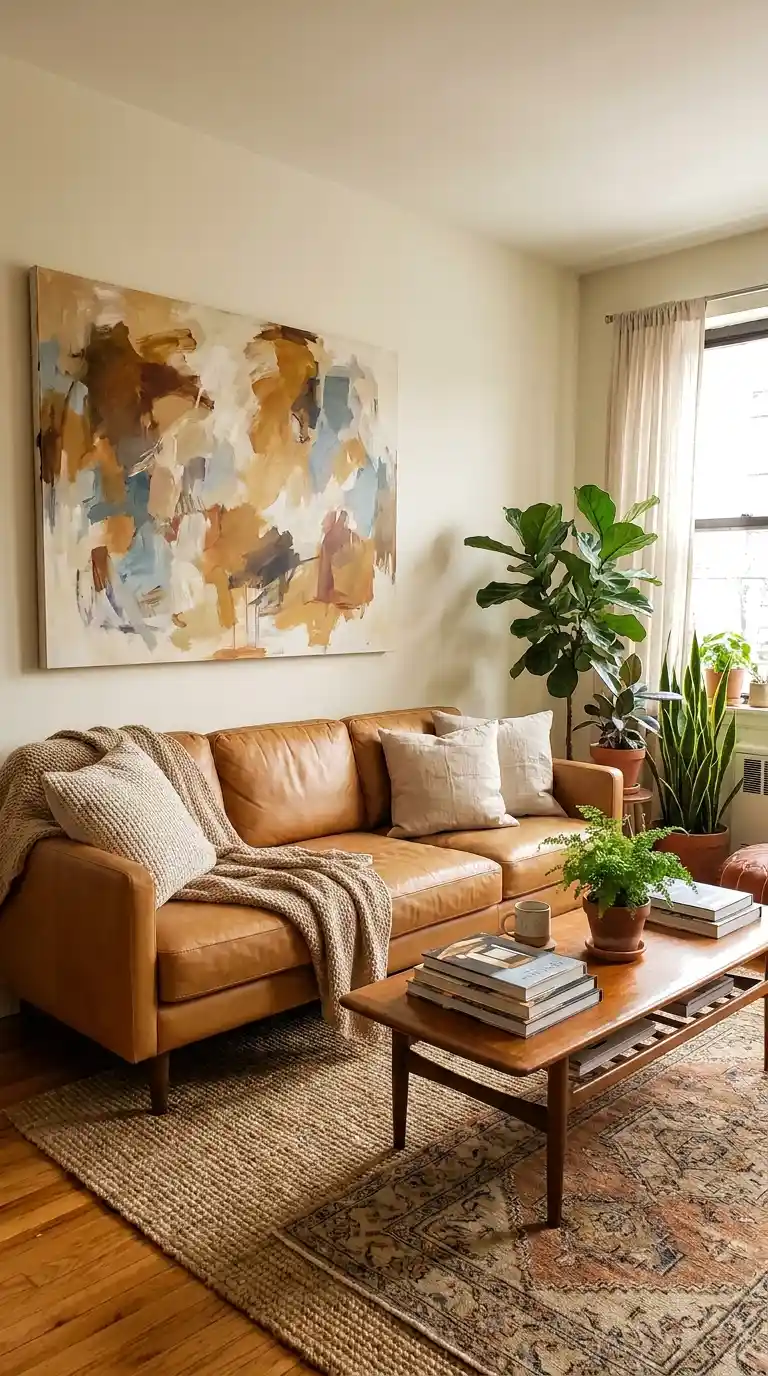
Anchor the wall to the seating, not to the ceiling. A picture or gallery spanning about two-thirds of the sofa width, with its lower edge 15–20cm above the sofa back, looks settled, while a small print centred high on a large wall looks lost. The living room in the photo above follows that rule: one large abstract piece, at sofa width, with plants softening the edges.
Layer texture beside the art, rather than adding more art. A woven hanging, a mirror above a console, or a shelf with books and one plant gives depth without competing for attention. Keep the palette to two neutrals plus one accent colour, and repeat that accent in a cushion or throw, so the wall feels connected to the rest of the room.
Which Rooms Need a Different Approach?
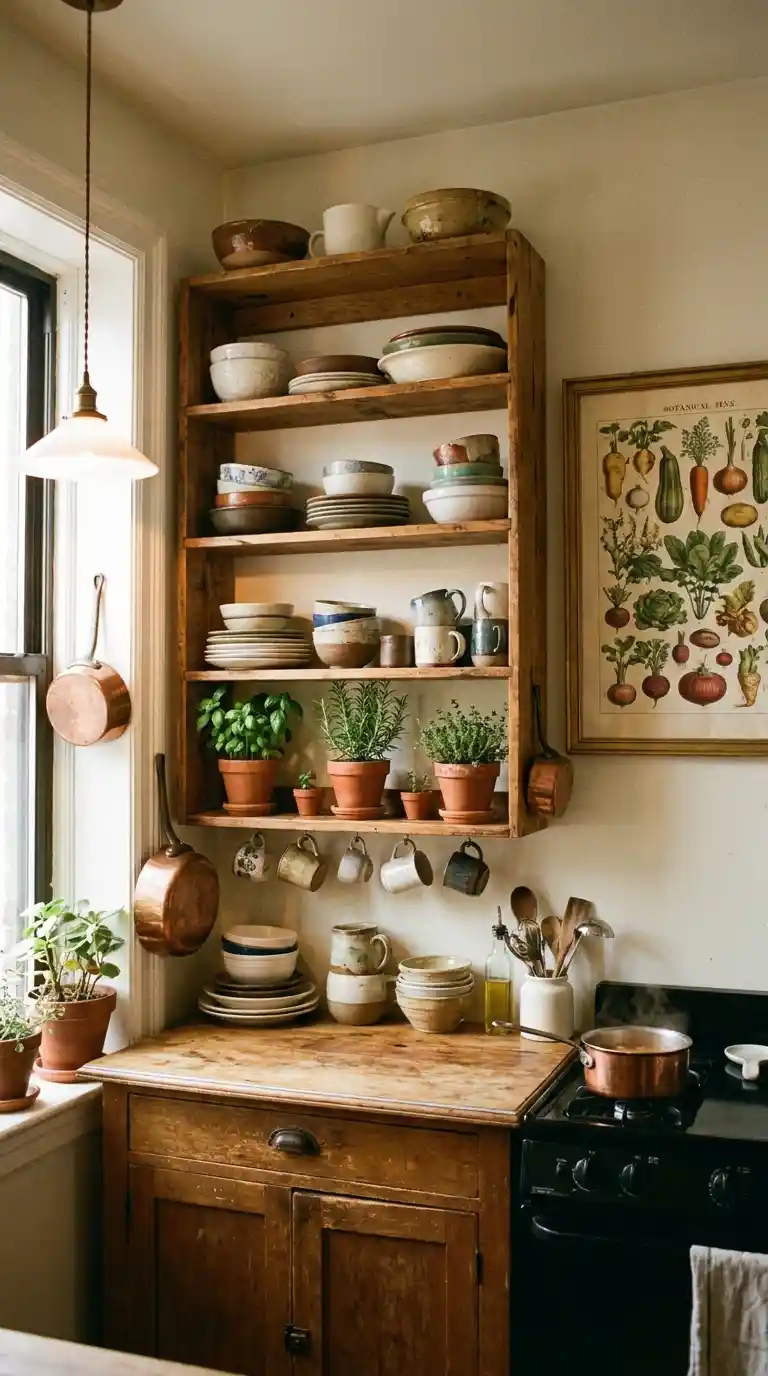
Kitchens and dining nooks suit useful decoration. Open shelves with dishes, herbs and one framed print, as in the photo above, work harder than art alone, but keep paper and textiles away from the hob and sink, where steam and splashes will ruin them. In a kitchen, choose one warm metal for hooks and frames, for the same reason how finishes are balanced in a black and copper kitchen works: consistency calms a busy wall.
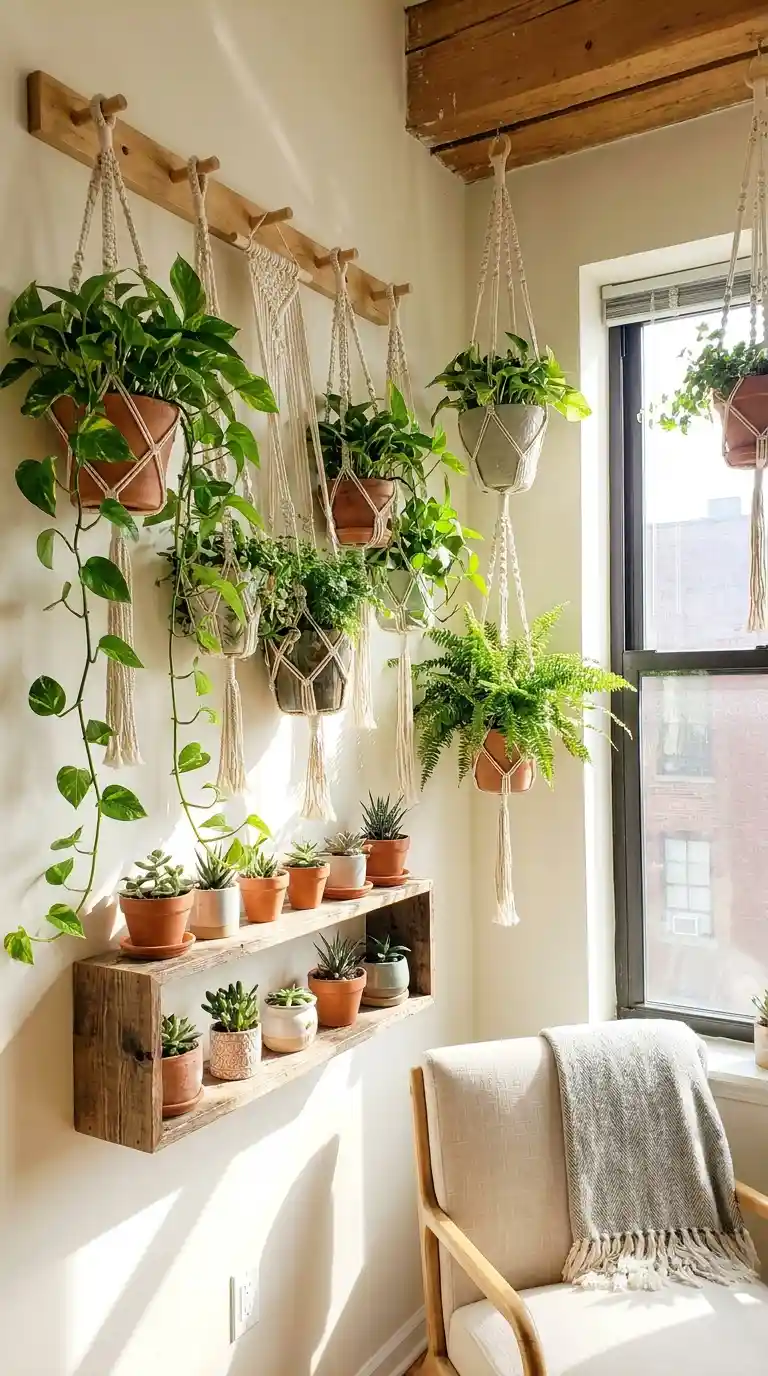
Bedrooms and bathrooms need softer, tougher choices. In a bedroom, a tapestry or a large print behind the bed, hung with its centre at about 145cm from the floor, is calmer than a cluster of small frames. In a bathroom, use glass-framed prints and woven baskets, never unframed paper near a shower, and keep trailing plants, like the macrame planters in the photo above, where they can be watered without dripping on to the wall. The same logic applies to colour: how dark rooms can still feel inviting shows that warm light matters more than dark paint.
How Do You Choose a Style You Won’t Tire Of?
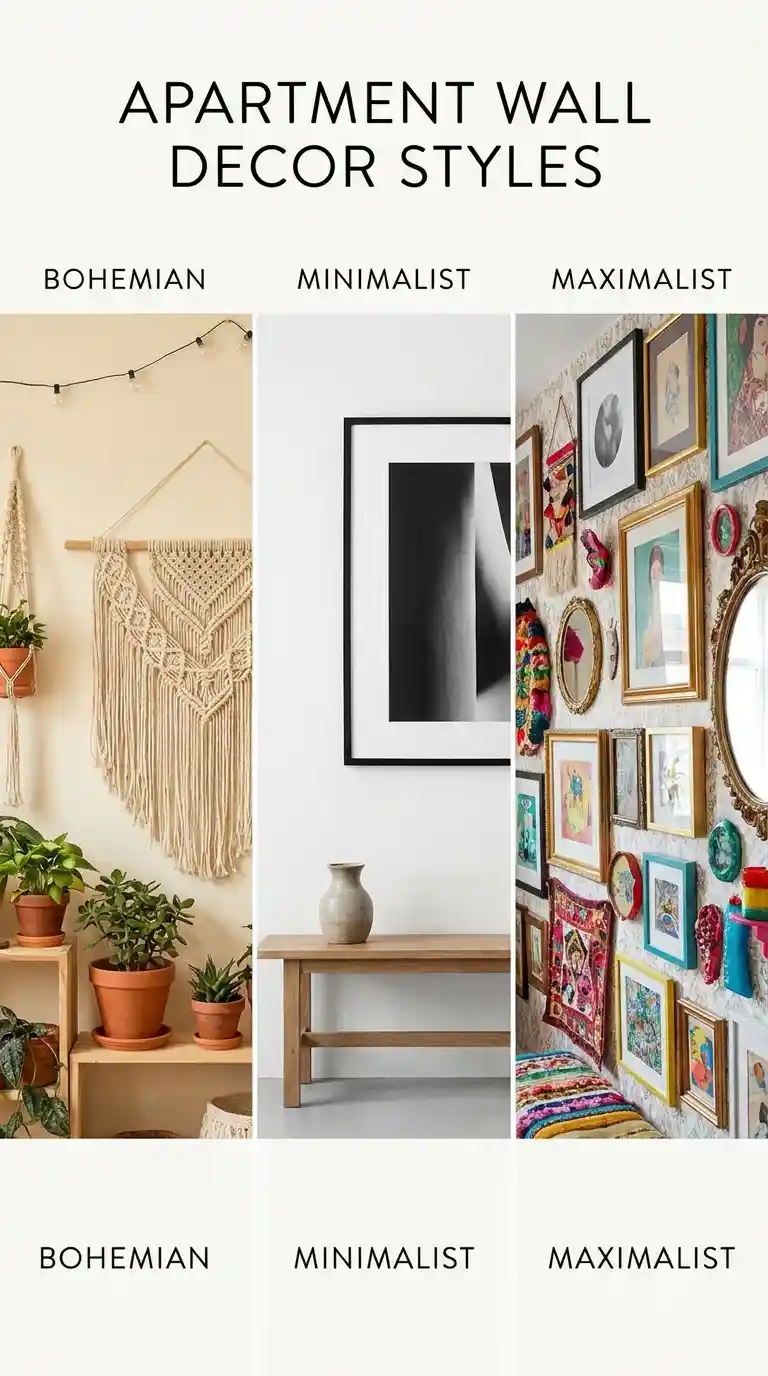
Pick a direction, then test it in one place before committing the whole flat. Bohemian walls layer textiles and plants, minimalist walls leave space around a single print, maximalist walls fill the frame with colour, and Scandinavian walls keep wood tones pale and prints simple. The comparison in the photo above makes the choice clearer: the calmest option is usually the one with the fewest competing colours.
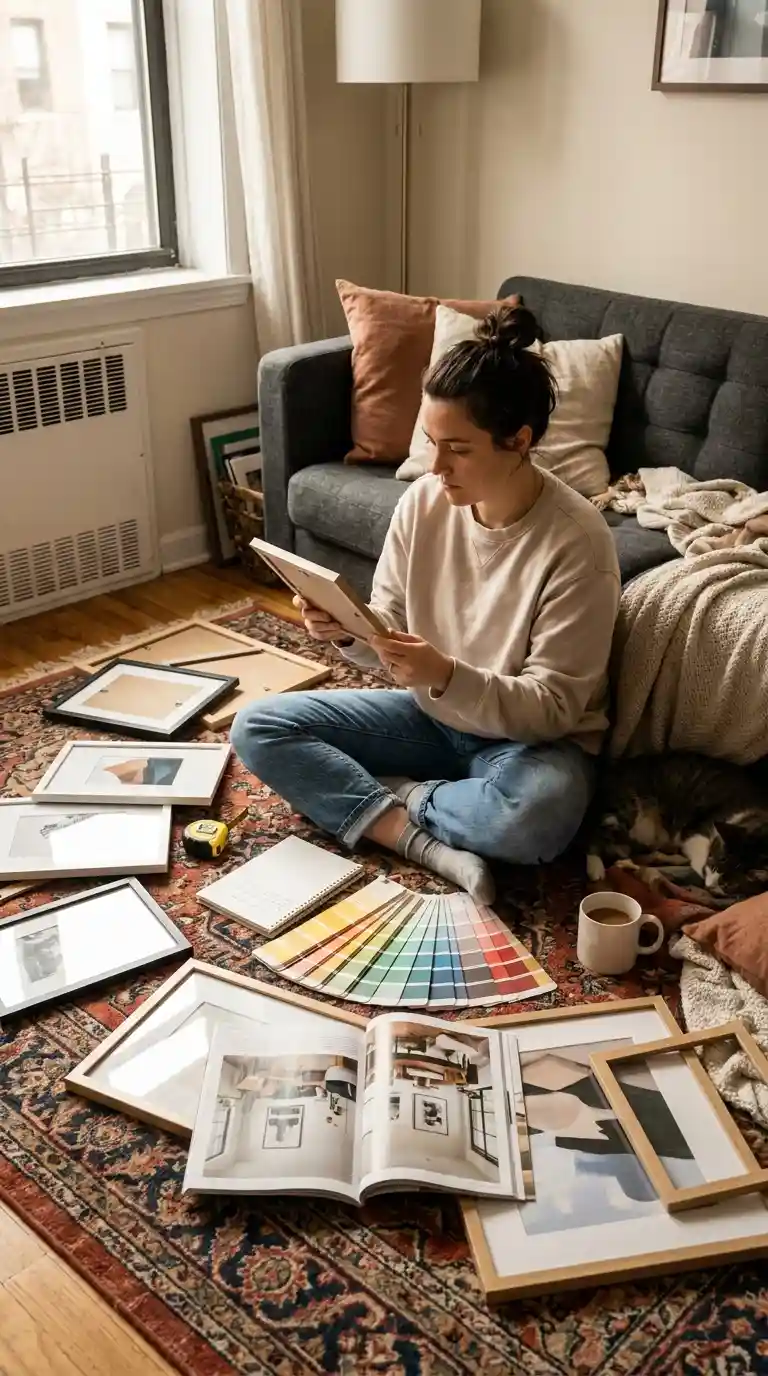
Plan the wall on paper first, as in the photo above. Cut paper templates to the size of each frame, tape them up, and live with them for a day, checking the height from the doorway and from the sofa. The three mistakes that cost the most time are hanging too high, choosing a piece that is too small for the wall, and buying everything in one trip. Fix those three, check the lease once more, and a first wall can be finished in a weekend.
Frequently Asked Questions
Can you hang art in a rental without nails?
Yes, for most light and medium frames. Adhesive strips, tension rods, washi tape and leaning large pieces against the wall all avoid holes, provided the weight rating is checked and strips are given at least 1 hour to cure before hanging.
How high should wall art hang?
As a rule, the centre of the piece should sit at about 145cm from the floor. Above a sofa or console, leave 15–20cm between the furniture and the bottom of the frame, so the art reads as part of the seating area rather than floating above it.
How much should a first gallery wall cost?
A single wall can usually be finished for £80–£250, using thrifted or matching frames and printed art. Spending most of the budget on frames, rather than on expensive prints, usually gives the most polished result.
What should you do with a very large blank wall?
Cover about two-thirds of its width with one large piece or a gallery, and leave the rest empty. A tapestry, a large mirror, or a set of shelves with plants fills the scale better than a single small frame in the middle of the wall.
What wall decor works in a bathroom?
Glass-framed prints, small mirrors and woven baskets cope best with humidity. Avoid unframed paper near a shower, and keep plants where they can be watered without dripping on to the wall or the frame.





4 Comments on “Rented Walls, Made to Feel Like Home”