
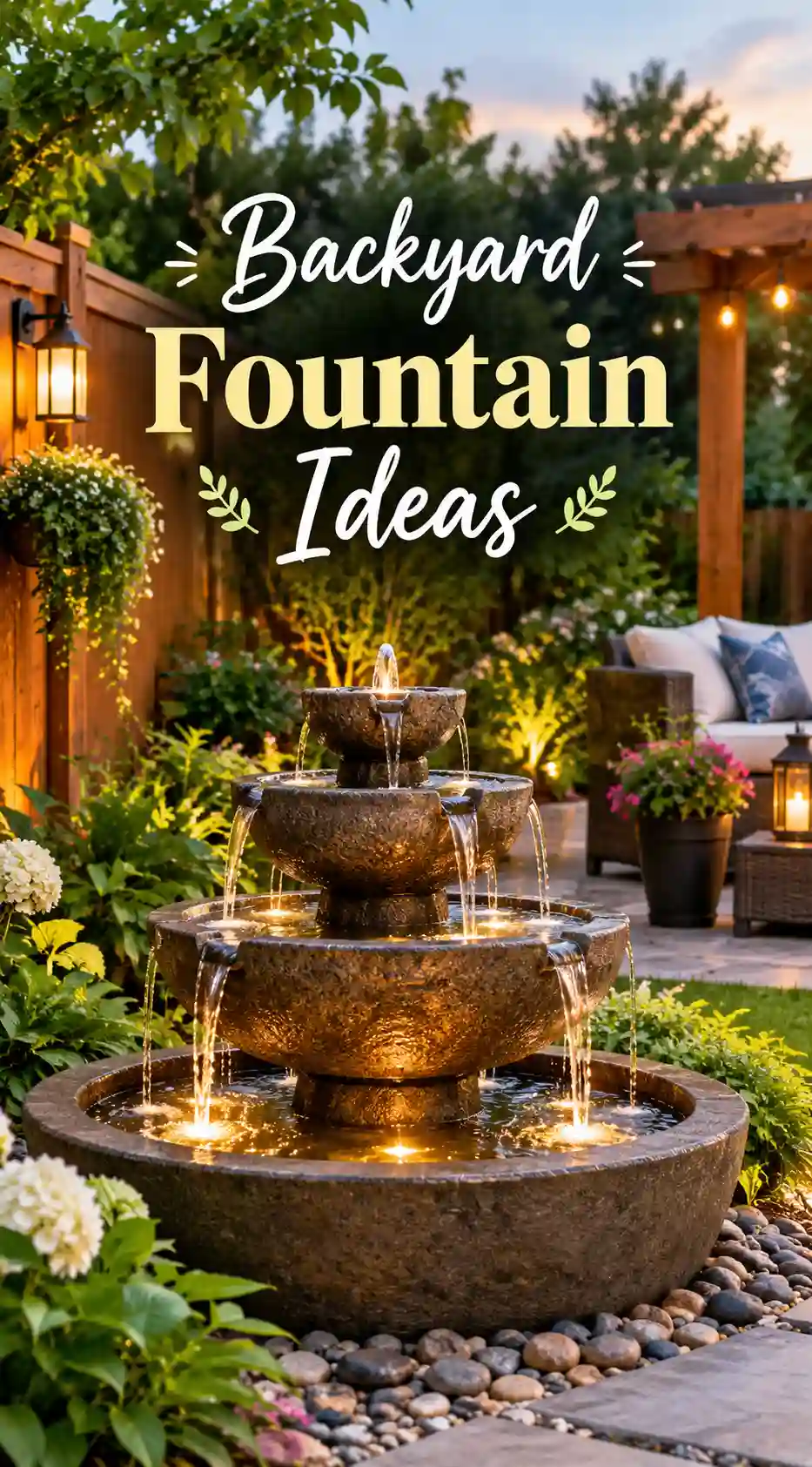
There’s a moment that happens in almost every garden with a fountain. You step outside, maybe with a coffee, maybe with a head full of noise from the day, and you hear it before you see it: the soft trickle of water. Your shoulders drop a little. The traffic, the notifications, and the to-do list all fade somewhere behind it.
That’s the real reason people go looking for backyard fountain ideas. A fountain is more than a decoration. It changes how a space feels. A plain patch of lawn becomes a place you actually want to sit in.
The good news is that you don’t need a huge yard or a landscaper’s budget. A small bubbling urn on a balcony can do the same job as a grand tiered fountain on an estate. What matters is choosing the right style for your space and your life.

This guide walks through everything: the types of fountains, how to choose one, more than 25 design ideas (DIY and store-bought, tiny and grand), placement, lighting, planting, costs, maintenance, winter care, and the mistakes people regret later. By the end you should know exactly what you want and how to get it.
Also Read : 50 Small Patio Decor Ideas That Will Transform Your Tiny Outdoor Space Into A Cozy Retreat
Why Add a Fountain to Your Backyard?
Before getting into designs, let’s talk about why this is worth doing. If you’re still deciding, these reasons might tip the scale.
It Gives You Natural White Noise
Moving water is one of the most reliable ways to mask unwanted sound. If your backyard backs onto a busy road, a noisy neighbor, or just the general hum of a city, a fountain’s steady splash blends it into the background. Many people find it easier to relax, read, or even nap outdoors because of it.
It Makes a Strong Focal Point
Every good garden design has a focal point, something the eye lands on first. A fountain does this effortlessly. Place one at the end of a path, in the middle of a seating area, or in a corner, and the whole yard suddenly feels planned and intentional.
It Invites Wildlife
Birds, butterflies, bees, and dragonflies are drawn to moving water. A shallow fountain basin or a bubbling rock becomes a drinking and bathing spot. If you enjoy watching wildlife, a fountain can turn your backyard into a small nature show.
It Cools the Air
Evaporating water cools the air slightly. It won’t replace shade or a fan, but in hot, dry climates the difference is noticeable. Sitting near a fountain on a hot evening feels better than sitting beside a patch of bare pavement.
It Can Add Appeal and Value
A well-designed water feature can add curb appeal and make a property more memorable. It isn’t a guaranteed return on investment, but buyers tend to remember a backyard that feels like a retreat.
It’s Good for Your Mood
Many people find that the sight and sound of water reduces stress. Whether you believe the science or simply know how you feel sitting by a stream, it’s hard to argue with the effect.
Understanding the Main Types of Backyard Fountains
Knowing the basic categories makes the rest of this article easier to follow. Most backyard fountains fall into one of these groups.
Freestanding Fountains
These are self-contained units that sit on the ground, usually with a basin at the bottom and a recirculating pump hidden inside. Tiered, urn, and sculptural fountains are typically freestanding. They’re the easiest to install: set it down, fill it with water, plug it in.
Wall Fountains
Mounted on a fence, wall, or freestanding panel, these let water spill from a spout or sheet down into a basin. They’re perfect for small yards because they use vertical space rather than floor space.
Pondless Fountains and Water Features
Here the water runs over rocks or an urn and disappears into a hidden underground reservoir. There’s no open pool, so they’re safer for families with small children and pets, and they require less maintenance than a pond.
Pond Fountains
If you already have a pond, a fountain head or spray kit can be added to it. This also helps aerate the water, which benefits fish and plants.
Bubbling and Spillway Features
A bubbling rock or boulder sends water up through a drilled hole, gently flowing over the surface. Spillway bowls and basins let water overflow in a smooth curve. Both feel natural and modern at the same time.
Solar Fountains
These run on a small solar panel with no wiring. They’re easy to place anywhere sunny, but output varies with sunlight, so they suit small birdbath-style features better than big dramatic ones.
Read Also : Exterior Wall Design Ideas: The Ultimate Guide to a Facade That Stops People Mid Walk
How to Choose the Right Fountain for Your Yard
Choosing the fountain is easier once you answer a few honest questions.
1. How Much Space Do You Really Have?
Measure first. A fountain that looks elegant in a showroom can overwhelm a small patio, and a tiny one can disappear in a big lawn. A useful rule of thumb is that the fountain should feel proportionate to the space it sits in, with comfortable room to walk around it.
2. What Style Is Your Home and Garden?
A fountain should look like it belongs. Traditional homes and formal gardens suit tiered stone fountains and classic urns. Modern homes pair well with clean-lined steel, concrete, or glass features. Cottage gardens love weathered, antique-looking pieces. Natural or woodland gardens suit rock and stream designs.
3. What Sound Do You Want?
This is the factor most people overlook. A tall jet splashing into a basin makes a lively, noticeable sound. A thin sheet of water gliding down a wall is quieter and softer. A bubbling rock is a gentle burble. Think about whether you want background music or a gentle whisper, and if possible, listen to a fountain in person before buying.
4. How Will It Be Powered?
Plug-in fountains need an outdoor-rated, GFCI-protected outlet. Solar fountains need good sunlight. If your yard has no nearby power, a solar or battery option may save you the cost of an electrician.
5. What’s Your Budget?
Fountains range from a few dozen dollars for a small solar birdbath to many thousands for a custom stone installation. Set a realistic number that includes the pump, installation, lighting, and long-term upkeep, not just the fountain itself.
6. How Much Maintenance Are You Willing to Do?
Every fountain needs some cleaning. Pondless and wall features are generally easier. Open basins collect leaves and algae faster. Be honest about your time before you fall in love with a design.
7. Do You Have Kids or Pets?
Shallow basins and pondless setups are safer choices if small children or curious dogs will be around. Always supervise, and consider covering any open water with a grate.
25+ Backyard Fountain Ideas to Inspire Your Space
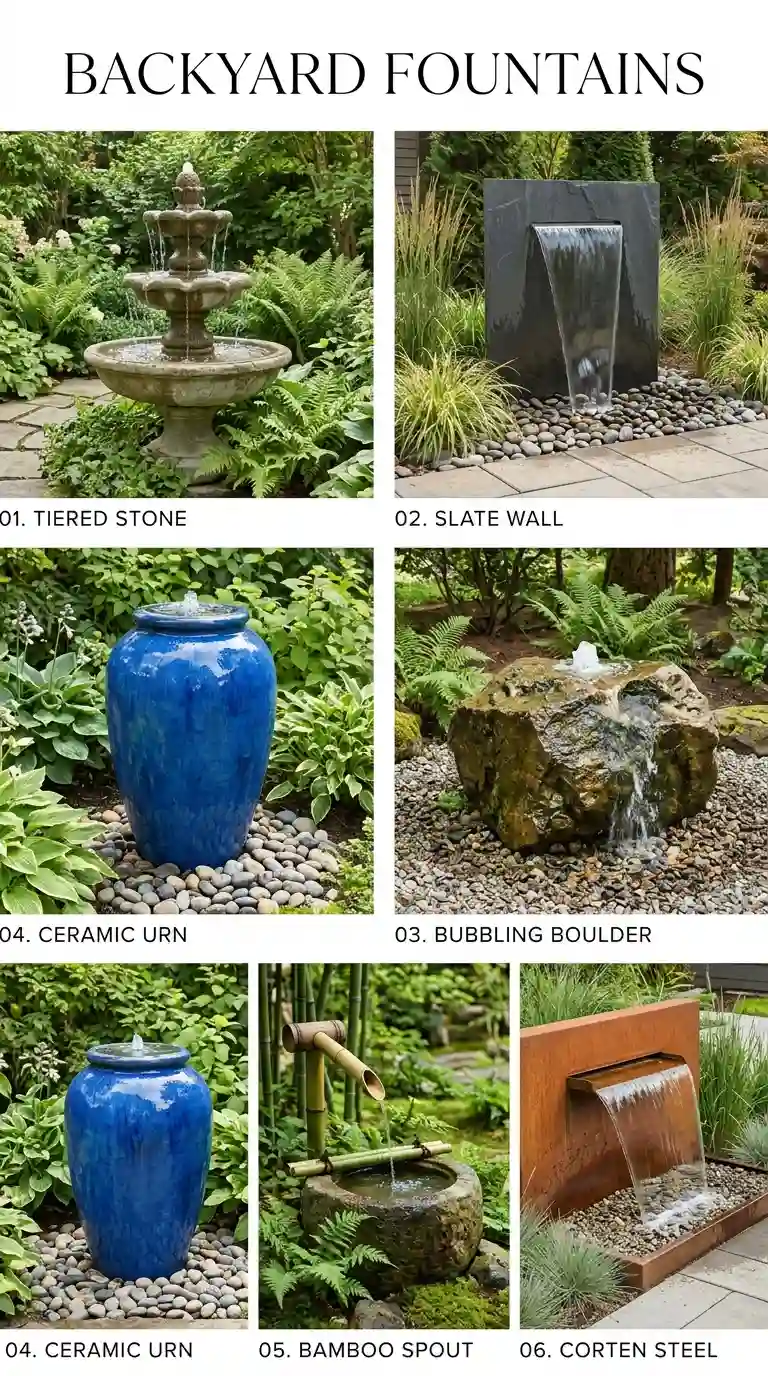
Here’s the part you came for. I’ve grouped these loosely so you can jump to what suits you, but feel free to mix and match.
Classic and Timeless Ideas
1. The Tiered Stone Fountain
This is the one most people picture first, and there’s a reason it never goes out of style. Water flows from the top bowl to progressively larger bowls below, creating a layered curtain and a rhythmic sound. A tiered fountain feels elegant, almost ceremonial, and works beautifully as the centerpiece of a lawn, a courtyard, or the end of a garden path.
Soften the edges with flowers around the base. Hostas, lavender, or low box hedging all frame it well. Because tiered fountains are usually tall, make sure you have enough height and open space around them, or they can feel crowded.
2. The Classic Urn Fountain
An urn fountain bubbles water up from the top of a decorative vessel, letting it spill down the sides into a hidden basin. It’s gracious, compact, and surprisingly versatile. Place one among container plants for a relaxed look, or use a matching pair on either side of a path for a formal entrance.
If you already own an interesting ceramic pot or antique urn, this is one of the easiest ways to reuse it. A pondless kit with a hidden reservoir does most of the work.
3. The Statue or Sculptural Fountain
A cherub, a water nymph, a heron, or an abstract sculpture can bring personality to a backyard. Water might pour from a jug, spout from a mouth, or simply wash over the figure. This idea suits gardens with a story to tell, such as old-world, romantic, or whimsical themes.
A word of advice: choose a sculpture that matches the character of your home. A cheerful cherub may look charming in a cottage garden and slightly out of place beside a minimalist house.
4. The Antique or Salvaged Fountain
Reclaimed fountains, stone basins, and weathered troughs carry an instant sense of history. Check salvage yards, estate sales, and antique markets. Even with chips and moss, they often look better than shiny new pieces. Have a professional check for cracks or leaks, then fit a small pump inside. The patina is something money can’t easily buy.
Modern and Minimalist Ideas
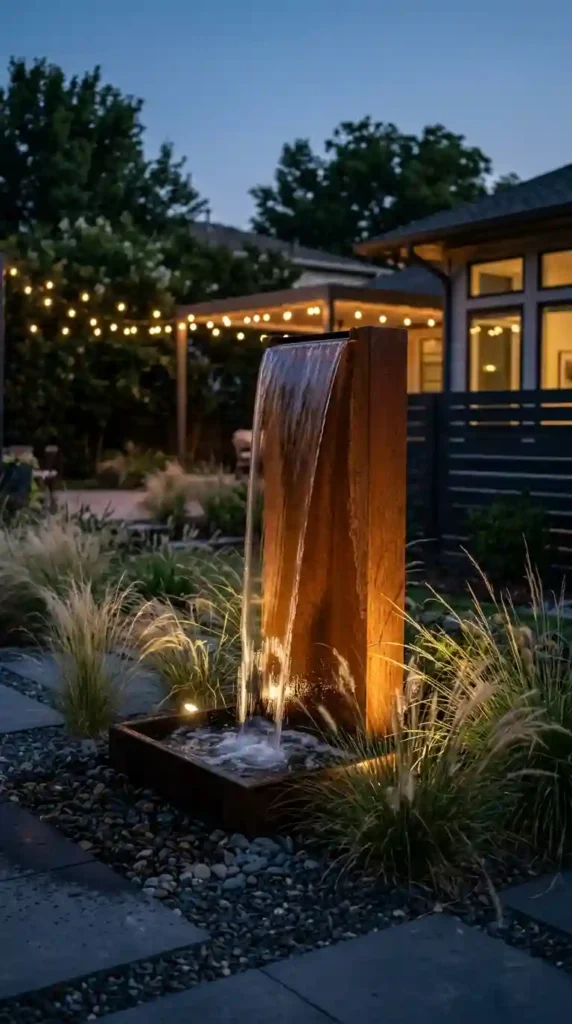
5. The Blade or Sheet-Fall Fountain
A narrow steel or stone blade lets water pour in a smooth, glass-like sheet into a basin below. It’s sleek and quiet, with a modern, almost architectural feel. These work well against clean walls or in gravel courtyards.
Corten steel, with its rust-orange finish, is especially popular because it ages gracefully and contrasts beautifully with green plants.
6. The Reflecting Basin with a Spill Edge
Imagine a low square or rectangular basin filled to the brim, with water spilling gently over one edge. The surface acts like a mirror, reflecting sky and plants, while a very soft sound comes from the overflow. It’s a calm, contemporary feature that suits small patios.
7. The Rill
A rill is a long, narrow channel of water, often set into paving or running alongside a seating area. It can divide a patio into zones, lead the eye through the garden, or link two spaces. A small fountain at one end adds movement. Rills look sophisticated, though they usually need professional installation to get the levels right.
8. The Sphere Fountain
A polished stone or metal sphere sits in a basin or a bed of pebbles while water slides smoothly over its surface. It’s calm, simple, and photogenic. Large spheres make a bold statement, while small ones suit compact patios.
9. The Floating Tap or Spout Fountain
Here a copper or steel tap appears to hover in the air, pouring water into a basin below. It’s a playful, slightly surreal detail that suits modern and eclectic gardens. The trick is a hidden support post or wall mount that keeps the illusion clean.
Must Read : Fireplace Decor Ideas: The Ultimate Guide to Styling a Warm, Unforgettable Focal Point
Natural and Rustic Ideas
10. The Bubbling Boulder
A large rock drilled with a channel allows water to rise from the top and run down its surface. It looks as though a natural spring has appeared in your yard. Set it in a bed of river stones, surrounded by ferns and grasses, and it blends in beautifully.
Because water disappears into a hidden reservoir, it’s tidy, safe, and low maintenance.
11. The Cascading Stone Waterfall
A series of stacked stones or ledges creates a small waterfall flowing into a basin or pond. The sound is richer and more dynamic than a simple fountain. This idea works especially well on a slope or beside a retaining wall. Plan the sizes of the rocks carefully, since flatter ledges create softer sounds while sharper drops make more splash.
12. The Backyard Stream
A winding stream with pebbles, boulders, and plants can connect different corners of your garden. It’s more of a project and more expensive, but the payoff is huge. A short, gentle stream can make a whole yard feel like a hidden woodland.
13. The Stacked Stone Fountain
Flat stones piled in a column, with water running through or over them, create a sculptural, zen-like feature. It’s one of the more approachable DIY projects, and it looks great in both modern and natural gardens.
14. The Japanese Bamboo Fountain
Often called a shishi-odoshi or simply a bamboo spout, this design uses hollow bamboo to channel water into a basin. The gentle tapping and trickling sound is deeply calming. Use it in a corner with moss, ferns, and smooth stones. Bamboo does weather over time, so plan on replacing sections every few years or choosing a bamboo-style metal version.
Budget-Friendly and DIY Ideas
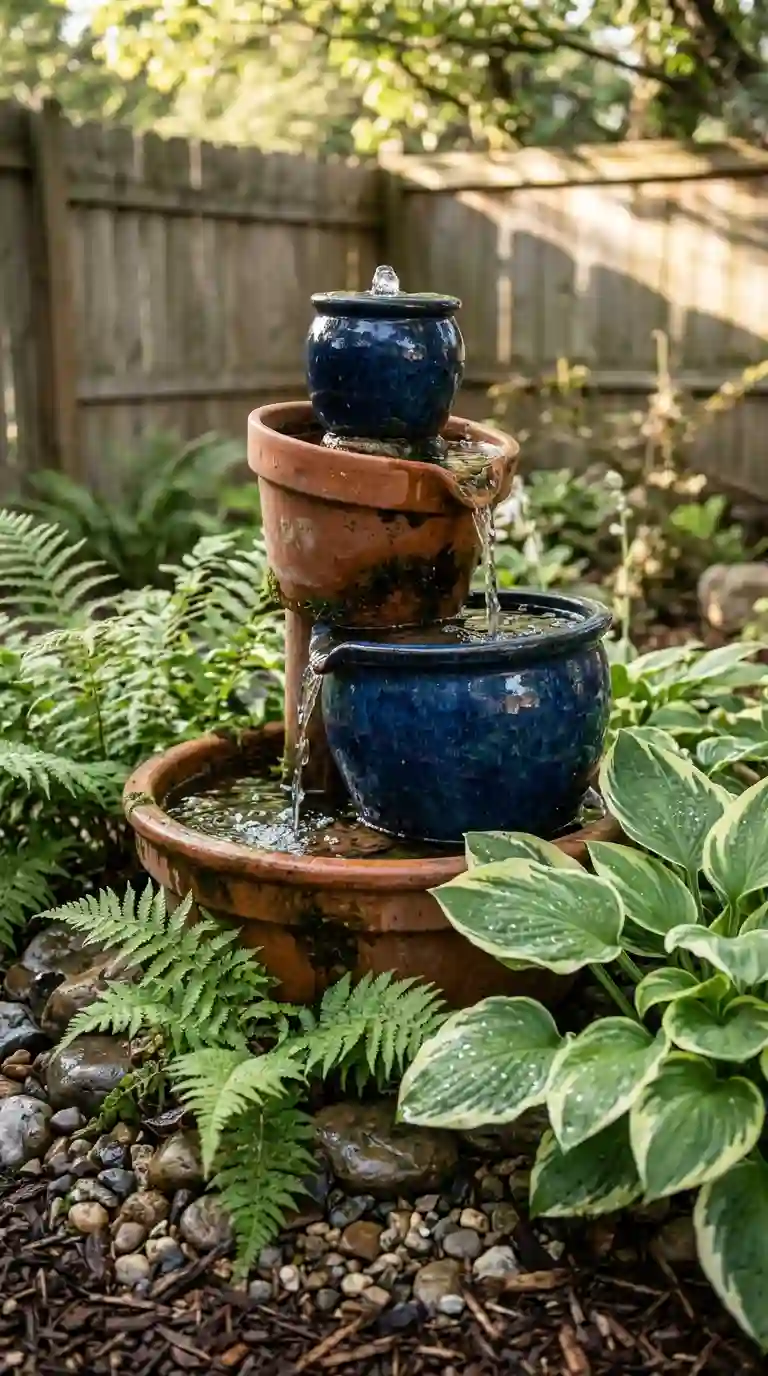
15. The Stacked Pot Fountain
Three or four ceramic pots of different sizes stacked on a central pipe or rod, with water flowing from the top pot into the ones below, create a layered cascade. It’s inexpensive, forgiving, and easy to customize. You can paint the pots in matching tones or pick contrasting colors for a bolder look.
This is probably the single most popular DIY fountain around, and for good reason: all you need is a submersible pump, a bucket or basin, tubing, and a few pots.
16. The Wine Barrel Fountain
A half wine barrel makes a charming rustic basin. Line it with a pond liner, add a small pump, and decorate with aquatic plants and a few smooth stones. Add a small LED light and it glows beautifully at night. It’s perfect for patios, decks, and cottage-style yards.
17. The Galvanized Tub or Trough Fountain
An old metal tub, bucket, or livestock trough turns into a stylish farmhouse fountain with minimal effort. Add a small spout or bubbler and a few floating plants. It’s a great fit for a rustic or industrial look.
18. The Watering Can Fountain
Mount a vintage watering can on a post or wall and let it pour into a basin below. It’s cheerful, a little humorous, and a perfect match for a vegetable garden or a cottage flower border. A hidden tube and pump make it work.
19. The Bowling Ball or Stone Sphere Fountain
Believe it or not, an old bowling ball can make a quirky and surprisingly attractive fountain when set on a pump with a bed of stones. If a bowling ball isn’t your style, use a decorative glass or stone sphere for the same effect.
20. The Bottle Fountain
A few recycled glass bottles, arranged so water trickles over or through them, can make a colorful and eco-friendly feature. Blue and green glass catches sunlight beautifully. It’s an inventive way to give old bottles a second life.
21. The Birdbath Fountain
Fit a solar bubbler or small pump into a birdbath and you’ve made something both pretty and useful. Moving water attracts more birds, and it also stays fresher, because stagnant water can attract mosquitoes. Place it where you can watch it from a window or seat.
Small Space Ideas
22. The Tabletop or Mini Fountain
Not every yard is big, and not every outdoor space is a yard. A small ceramic or stone fountain on a balcony table, a patio corner, or a porch step can do wonders. Many are solar-powered, so you don’t even need an outlet.
23. The Wall-Mounted Fountain
Attach a decorative fountain to a fence or wall and the floor stays free. Options include copper spouts, slate panels, lion-head masks, and framed sheets of water. Wall fountains work well against privacy fences, and they double as art.
24. The Container Water Garden with a Bubbler
A large glazed container, a small pump, and a few aquatic plants such as water lilies or water hyacinth give you a mini water garden. Add a bubbler for soft sound and movement. It’s about the smallest living water feature you can build.
Statement-Making and Luxury Ideas
25. The Pool Fountain or Deck Jet
If you have a swimming pool, adding fountain jets or a spillway from a raised spa can create a resort feel. Laminar jets, which shoot a perfectly smooth arc of water, are especially striking, particularly when lit at night.
26. The Fire and Water Feature
Combining a fire bowl with a water element creates dramatic contrast, with flames flickering beside a gently flowing basin. These feel modern and cinematic, and they’re popular for entertaining. They do require careful design and professional installation for safety.
27. The Grand Formal Fountain
For larger properties, a big circular basin with a central jet, surrounding hedges, and symmetrical planting recalls classic European gardens. It takes space and budget, but it delivers a real “wow” at the center of a lawn or driveway circle.
28. The Fish Pond with a Fountain
A pond with koi or goldfish and a fountain head is a living feature. The fountain aerates the water, which fish appreciate. It needs more care, including filtration, regular testing, and protection from predators, but many owners say it becomes the highlight of the garden.
Mixing Fountain Styles with Garden Themes
A fountain looks best when it feels like part of a larger picture. Here are some ways to match yours to a garden style.
Cottage Garden
Think soft, abundant, slightly wild. Antique stone, weathered terracotta, and small tiered or birdbath fountains fit perfectly. Surround with foxgloves, roses, daisies, and catmint. Let plants spill over the edges.
Mediterranean Garden
Warm tones, terracotta, gravel, and olive trees set the scene. Urn fountains, wall fountains with tile details, and rustic stone basins suit this look. Add rosemary, lavender, and potted citrus.
Zen or Japanese Garden
Keep things simple and calm. Bamboo spouts, stacked stones, bubbling basalt columns, and smooth river rocks work best. Use moss, ferns, and Japanese maples, and avoid cluttered decoration.
Modern Garden
Clean lines, limited materials, and bold shapes. Blade fountains, reflecting basins, and rills in concrete, steel, or stone are ideal. Plant ornamental grasses and architectural plants with clear structure.
Tropical Garden
Lush leaves and big shapes. Spillway bowls, bubbling rocks, and cascading pools suit these gardens. Surround them with banana plants, ferns, and palms, and add warm uplighting.
Wildlife Garden
Prioritize shallow edges, gentle movement, and natural materials. Bubbling rocks, shallow birdbath fountains, and small ponds with fountain bubblers work well. Add native plants around the base for shelter.
Where to Place Your Backyard Fountain
Location can make or break a fountain. A beautiful one in the wrong place looks awkward or becomes a chore.
Think About Sight Lines
Where will you see it from most? Windows, the patio, the kitchen sink? Placing a fountain where it’s visible from indoors lets you enjoy it every day, even in winter.
Consider Sound Distance
Water sounds travel, but not as far as you’d think. If you want to hear it from your seating area, place it within a few meters. If you want it to mask road noise, put it between you and the source.
Watch Out for Trees
Falling leaves, petals, and seeds will clog pumps and foul water. A spot beneath a tree is rarely ideal. Partial shade is fine, and it helps reduce algae, but avoid places where debris falls heavily.
Mind the Sun
Full sun speeds up evaporation and algae growth. Solar fountains need it, but most plug-in fountains do better with some afternoon shade.
Keep It Level
A fountain on uneven ground can tip, leak, or spill water from one side. Prepare a firm, level base with compacted gravel or a paved pad.
Plan the Power Source Early
Think about where cables will run, and use outdoor-rated, buried-conduit wiring where needed. If you aren’t confident, hire a qualified electrician. Water and electricity are not a place to experiment.
Respect the Neighbours
If a fountain will sit near a boundary, consider how its sound might carry. What’s soothing to you may be less so at 2 a.m. to the person next door.
Lighting Your Fountain for Evening Magic
A fountain by day is lovely. A fountain at night can be unforgettable.
Submersible LED Lights
Small waterproof lights placed in the basin illuminate the water from below, turning splashes into sparkles. Warm white gives a cozy feel, while cool white feels modern. Colored lights can be fun for parties but can look gimmicky if overused.
Uplighting for Sculptures
Spotlights angled up at a statue or tall fountain highlight texture and form, creating dramatic shadows.
Soft Ambient Lighting
Path lights, lanterns, and string lights near the fountain create a gentle glow. The key is subtlety. Too many lights can overwhelm the quiet mood you’re creating.
Solar Options
Solar spotlights are easy to install and cost nothing to run, though they can be weaker than wired alternatives.
Also Read : Garden Bench Ideas: The Ultimate Guide to Creating Your Perfect Outdoor Retreat
Plants That Look Great Around Fountains
Plants soften the hard edges of a fountain and make it look like it’s always been there.
Moisture-loving plants: Ferns, hostas, astilbe, and Japanese iris thrive near the damp edges of a fountain.
Aromatic plants: Lavender, rosemary, and mint release scent when brushed past, and the fragrance pairs well with the sound of water.
Ornamental grasses: Their movement echoes the movement of the water. Try fountain grass, feather reed grass, or blue fescue.
Aquatic plants for basins: Water lilies, water lettuce, and water hyacinth shade the water and reduce algae. Check local regulations, since some aquatic plants are invasive in certain regions.
Seasonal color: Container plants like petunias, geraniums, or begonias add instant colour around the base and can be swapped out through the year.
A useful design trick is to plant in layers: tall plants at the back, medium ones in the middle, and low or trailing plants at the front, so the fountain emerges naturally from the greenery.
How to Build a Simple DIY Backyard Fountain
If you like the idea of making your own, here’s a straightforward approach using a stacked pot or basin design. You can adapt it to almost any DIY idea above.
What You’ll Need
- A large waterproof basin or bucket (this will be your hidden reservoir)
- A submersible pump with adjustable flow
- Clear vinyl tubing that fits the pump
- A sturdy grate or heavy-duty mesh to support the decoration
- Decorative elements: ceramic pots, stones, a barrel, or whatever you like
- Gravel or river rocks
- A level, a shovel, and a drill (for drilling the pot holes)
- An outdoor GFCI outlet
Step-by-Step Process
Step 1: Choose and prepare the site. Pick a level spot near power, away from falling leaves. Dig a hole just large enough for the bucket so the rim sits flush with the ground. Check that it’s level.
Step 2: Place the reservoir. Set the basin in the hole and pack soil around it so it doesn’t shift. This hidden reservoir holds the water that the pump recirculates.
Step 3: Install the pump. Place the pump at the bottom. Attach the tubing, leaving enough length to reach the top of your fountain feature. Route the cord out through a notch in the rim.
Step 4: Build the support. Lay a grate or sturdy mesh across the top of the basin. This supports the weight of your decorative elements while still letting water fall back through.
Step 5: Assemble the feature. For a pot fountain, thread tubing through the pots (drill holes where needed) and stack them securely, with the biggest at the bottom. For a rock fountain, stack stones around the tube. Test that everything feels stable before adding water.
Step 6: Fill and test. Fill the reservoir with clean water, plug in the pump, and watch the flow. Adjust the speed until the water falls where you want it. Too strong, and water splashes outside the basin and drains your reservoir fast. Too weak, and the effect disappears.
Step 7: Finish the surface. Cover the grate with river stones or pebbles to hide the mechanics. Add plants, lights, and final touches.
Step 8: Check the water level often in the first week. New fountains lose more water than you’d expect while the materials settle and you learn the right flow.
Tips for Better Results
- Always buy a pump slightly stronger than you think you need. You can usually turn it down, but you can’t turn it up.
- Use a pump with a filter or foam pre-filter to reduce clogging.
- Use distilled or rainwater if your tap water is very hard. It reduces mineral build-up.
- Keep the cord out of walkways and protected from lawnmowers.
Solar Fountains: Are They Worth It?
Solar fountains are tempting because they remove the need for cables and don’t add to your electricity bill. They do have limits.
Pros: Easy to install anywhere sunny, no wiring, low running cost, good for small features like birdbaths.
Cons: They only run when the sun is out, performance drops on cloudy days, and they usually produce modest water flow, so they aren’t ideal for large tiered fountains.
Better options: Some models include a battery backup so they continue running after sunset. If you want a big or dramatic fountain, a plug-in pump with a solar panel option, or a hybrid system, may serve you better.
For small, gentle, wildlife-friendly features, solar is a good choice. For something with presence, plan on mains power.
What Does a Backyard Fountain Cost?
Prices vary widely depending on size, materials, and who does the work. Treat the following as rough guidance, since costs differ by country and supplier.
| Type | Approximate Range |
|---|---|
| Small tabletop or solar fountain | Low: roughly $30–$150 |
| DIY pot or barrel fountain | Roughly $50–$300 |
| Ready-made freestanding fountain | Roughly $150–$1,500 |
| Wall fountain | Roughly $200–$1,500 |
| Pondless waterfall kit | Roughly $500–$3,000 |
| Professionally installed custom feature | Roughly $3,000 and up, often much more |
Hidden Costs to Remember
- Pump replacement: Pumps wear out. Budget for a new one every few years.
- Electrical work: Installing an outdoor outlet or buried cable can add a significant amount.
- Water and electricity bills: Usually modest, but they add up for large features.
- Plants and lighting: Small touches that can raise the total.
- Maintenance supplies: Cleaners, water treatments, and filters.
How to Save Money
Start with a DIY or kit approach, reuse containers you already own, shop for secondhand stone or salvaged pieces, and install it yourself if you’re comfortable with the basics (leaving electrical work to a professional).
Keeping Your Fountain Clean and Healthy
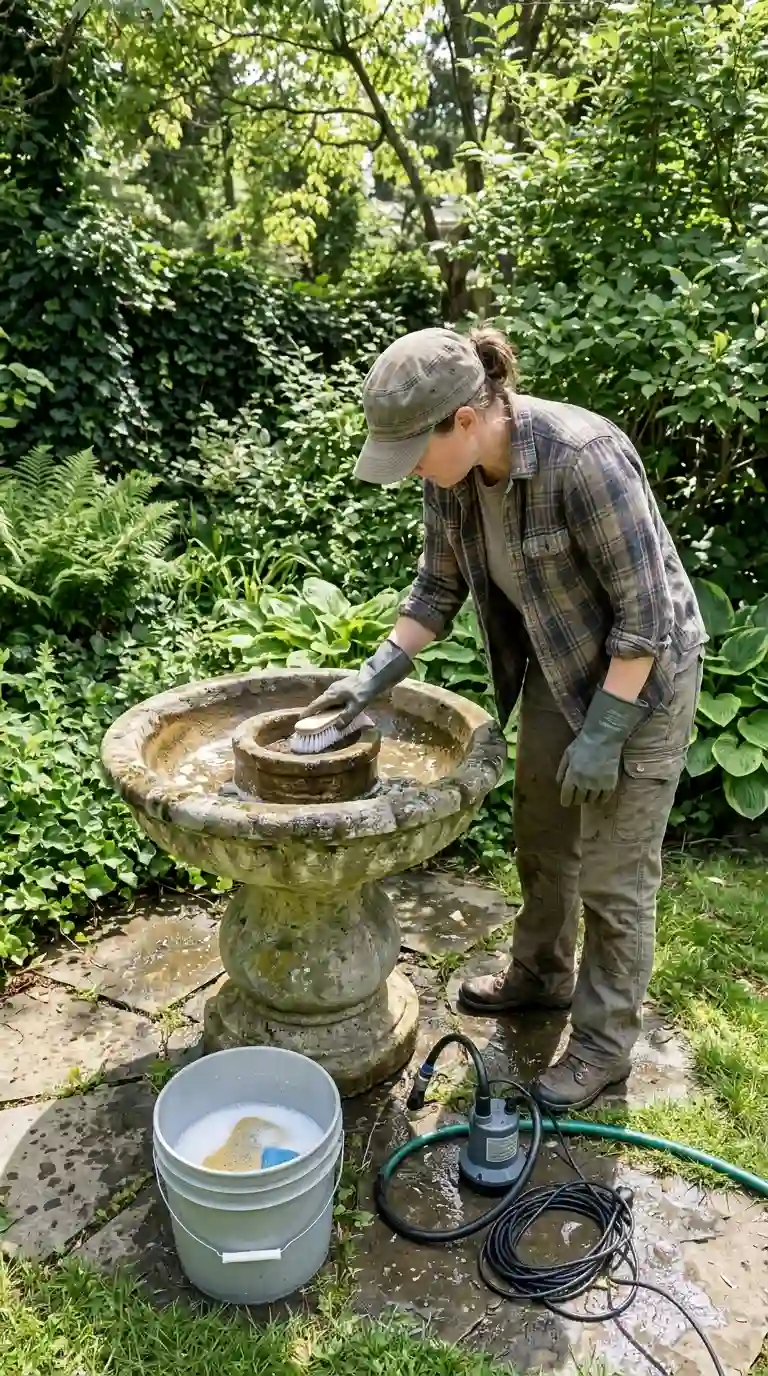
A neglected fountain turns green and smelly quickly. A little regular care prevents that.
Weekly Habits
- Skim off leaves, petals, and debris.
- Top up the water. Fountains lose water daily through evaporation and splash.
- Check that the water flow looks normal.
Monthly Habits
- Wipe down surfaces to prevent algae from taking hold.
- Check the pump intake for clogs.
- Look at cords and connections for wear.
Deep Cleaning (Every Few Months)
Drain the fountain, scrub the basin, and rinse everything. Remove the pump and soak it in equal parts water and white vinegar to dissolve mineral deposits, then rinse before reinstalling. Refill with fresh water.
Must Read : Fairy Garden Ideas: The Ultimate Guide to Building a Tiny, Magical World in Your Own Backyard
Controlling Algae
Algae thrives in warm, sunny, stagnant water. Reduce it by keeping the fountain partly shaded, adding aquatic plants, running the pump consistently, and using fountain-safe treatments. Avoid harsh chemicals if birds or pets drink from it.
Preventing Mosquitoes
Moving water is naturally less appealing to mosquitoes, but still keep an eye on it. Don’t let water sit unused for days. If needed, use a safe mosquito dunk that is labeled as non-toxic to wildlife.
Should You Leave Your Fountain On All the Time?
Many people do, and pumps are designed for continuous running as long as they stay submerged. That said, consider using a timer so the fountain runs only when you’re around. It saves electricity, reduces pump wear, and keeps your evenings quiet when you want them to be. Never let a pump run dry, since it can burn out in minutes.
Protecting Your Fountain in Winter
If you live somewhere with freezing temperatures, winter care protects your investment.
- Turn off and drain the fountain before the first hard freeze. Water expands when it freezes and can crack basins, pipes, and pumps.
- Remove and clean the pump. Store it in a bucket of water in a frost-free place so the seals don’t dry out.
- Clean the basin and let it dry thoroughly.
- Cover the fountain with a breathable waterproof cover, or move small ones to a garage or shed.
- Lift and store ornaments like glass spheres or delicate statues if they’re vulnerable.
In mild climates you can keep running your fountain all winter, but check regularly for ice and leaf build-up.
Fountain Safety Tips
- Always use a GFCI-protected outlet for any outdoor electrical equipment.
- Keep cords tidy and out of the water’s reach where possible.
- If you have small children, choose pondless designs or cover open basins with a grate.
- Make sure the fountain is stable and can’t tip over.
- Place it away from slippery paths, since splashes can make nearby surfaces slick.
- Never use chemicals that could harm birds, pets, or kids.
Common Backyard Fountain Mistakes to Avoid
I’ve seen the same few errors again and again, so let me save you the trouble.
Buying too small or too large. Always measure and picture the final scale. A fountain that looks perfect online can be lost in a big yard or crowd a small one.
Ignoring the sound. A splashy fountain right outside a bedroom window can quickly go from soothing to annoying. Test the sound before committing.
Placing it under a messy tree. You’ll spend more time cleaning than enjoying.
Skimping on the pump. A weak pump gives a disappointing flow, and a cheap one fails early.
Forgetting about power. Retrofitting electricity after the fountain is built is expensive and messy.
Letting it run dry. It can ruin a pump overnight. Check the water level, especially in hot weather.
Overdecorating. More isn’t always better. A fountain often looks best with a few well-chosen plants and materials, not every garden ornament you own.
Choosing a style that clashes. A heavy ornate fountain beside a minimal modern house is likely to feel off.
Backyard Fountain Ideas for Different Yard Sizes
Tiny Yards, Patios, and Balconies
Go vertical or go small. A wall fountain, a compact urn, a container water garden, or a solar bubbler will give you the sound and movement without consuming floor space. Keep the surrounding plants simple.
Medium Yards
You have room for a freestanding fountain, a small pondless waterfall, or a bubbling boulder. Consider creating a seating nook around it, so the fountain becomes the heart of a small retreat.
Large Yards
Think in zones. You might have a formal fountain near the house, a naturalistic stream further out, and a small pond or birdbath in a wildlife corner. A winding stream connecting these features can pull the whole garden together.
Fountains for Families, Pets, and Wildlife

With Children
Pondless fountains, wall features, and bubbling rocks are safest because they have no standing water. They’re also lovely for children to watch and to learn about water and nature.
With Pets
Dogs often love splashing in fountains, which can damage plants and pumps. Choose sturdy features and use pet-safe materials. Some pets will drink from the basin, so avoid harsh chemicals.
For Wildlife
Add shallow edges or rocks so birds can perch and bathe safely. Place the fountain where cats can’t easily ambush visitors, and keep it clean to avoid spreading disease among birds.
Read Also : 50 Brilliant Small Garden Ideas That Will Transform Your Tiny Outdoor Space
Design Tips from Landscapers
A few small principles can raise the quality of any fountain project.
Repeat materials. If your fountain is made of slate, echo that slate somewhere else, such as a path edge, planter, or patio border. This gives a sense of cohesion.
Use odd numbers. Groups of three or five stones, pots, or plants feel more natural than even numbers.
Create a backdrop. A hedge, fence, or wall behind the fountain makes it stand out and gives it a sense of enclosure.
Layer your lighting. Combine soft ambient lights with a subtle spotlight on the fountain for depth.
Frame the view. Position seating, a pergola, or an archway so that the fountain is revealed gradually as you move through the garden.
Think in seasons. Choose plants that offer something in every season, so the fountain looks good all year.
Don’t forget the ground. Gravel, pavers, or stepping stones around the base feel more finished than bare soil and help control splash and mud.
Pros and Cons of Backyard Fountains
The upsides: Beautiful sound, a strong focal point, wildlife benefits, possible value gain, a calming atmosphere, and plenty of options for every budget.
The downsides: Regular cleaning, ongoing electricity use, water loss through evaporation, possible winter care, and the potential for mosquitoes or noise if poorly managed.
For most people, the benefits clearly outweigh the drawbacks, particularly if you choose a design that matches your lifestyle.
Frequently Asked Questions About Backyard Fountain Ideas
What is the easiest backyard fountain to build?
A stacked pot fountain or a simple bubbling urn is usually the easiest. Both use a hidden reservoir, a submersible pump, and basic tubing, and you can complete either in an afternoon.
How much does it cost to put a fountain in a backyard?
It depends on the type. Small solar and tabletop options are inexpensive, while DIY projects typically cost a modest amount, and professionally installed custom features can run into the thousands. Include the pump, power, lighting, and maintenance in your budget.
Do backyard fountains use a lot of electricity?
Most residential pumps are quite efficient and cost relatively little to run. Using a timer or a solar option can reduce the cost further.
Where is the best place to put a fountain in a backyard?
Choose a level spot that’s visible from your seating area or windows, close to a power source, and away from heavy leaf fall. Partial shade is ideal because it reduces algae.
Can I have a fountain without a pond?
Absolutely. Pondless fountains and wall fountains use a hidden reservoir and don’t have open water, making them safer and simpler to maintain.
How do I keep my fountain water clean?
Skim debris weekly, top up the water regularly, clean the pump and basin every few months, add aquatic plants if suitable, and use fountain-safe algae treatments when needed.
Do fountains attract mosquitoes?
Moving water is generally less attractive to mosquitoes than still water, but a neglected fountain can still become a breeding site. Keep the water circulating and clean, and don’t let it sit stagnant.
Is a solar fountain good enough for a backyard?
For small features like birdbaths and mini fountains, yes. For larger fountains with strong flow, a plug-in pump is usually more reliable.
How long do fountain pumps last?
With regular cleaning, many last several years. Hard water, debris, and running dry will shorten their life.
Can I use a fountain in winter?
In mild climates, yes. In freezing areas, drain the fountain, clean it, and store the pump to prevent cracking.
Final Thoughts: Let the Water Do the Work
A backyard fountain doesn’t have to be elaborate to be meaningful. Sometimes the best ones are the simplest: a few mismatched pots, a small pump, and a corner of the garden that suddenly sounds like a different place.
Start with what you have. Measure your space, think about the sound you want, choose a style that fits your home, and be honest about the time you’ll spend on upkeep. If you’re unsure, begin small. You can always expand later, adding lights, plants, or a second feature once you’ve learned what you love.
And then, on some quiet evening, step outside with that cup of coffee and listen. That gentle trickle of water is what you were building toward all along.


