
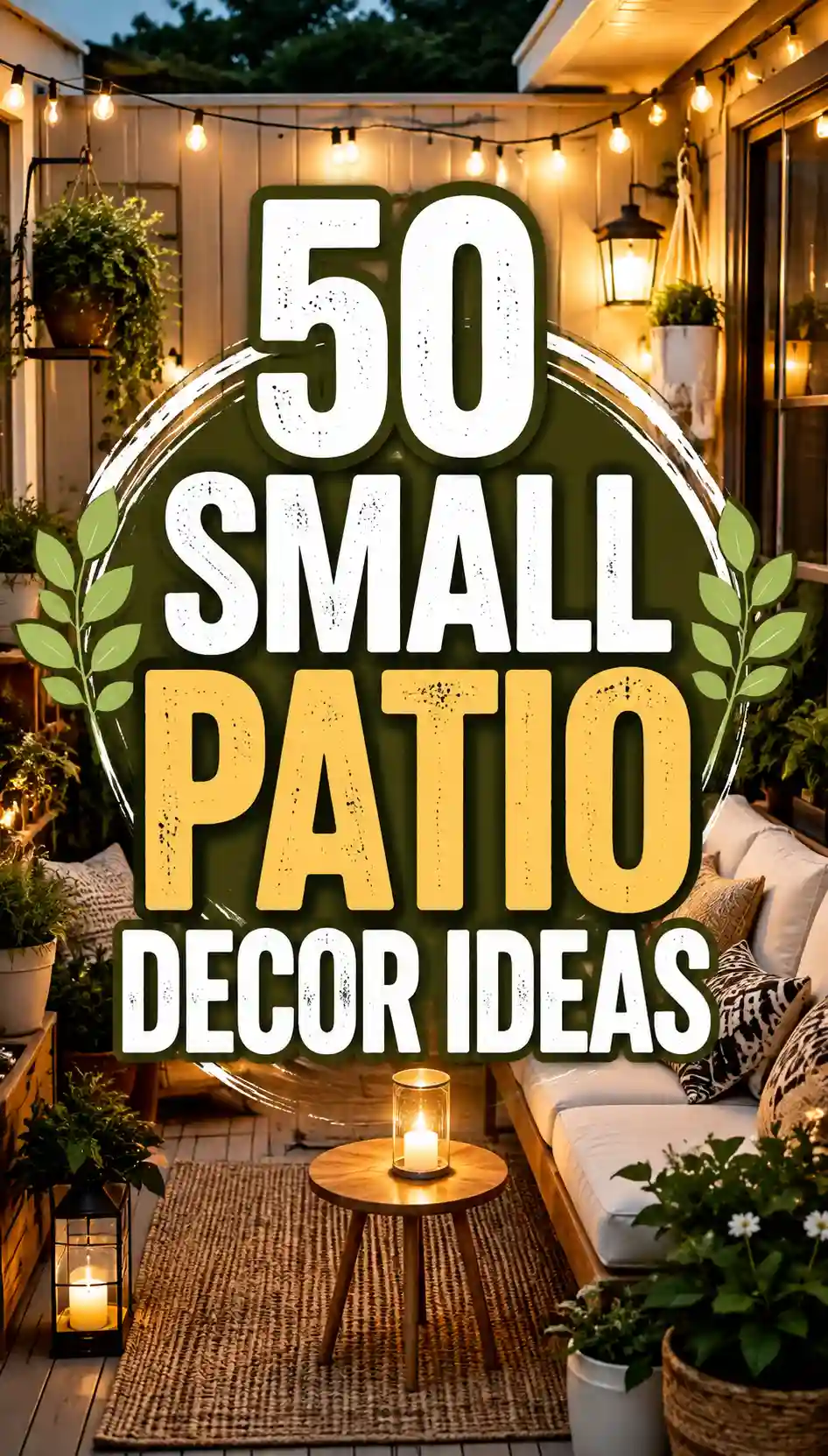
A small patio becomes unusable for a simple reason: furniture sized for a garden is put into a space that is really a passage. A patio of 2.4 by 3 metres — about 7 square metres — leaves roughly 60 centimetres for walking once a table and two chairs are in place. Before buying anything, measure the length and width, note where the door swings, and allow one weekend and a working budget of £150 to £400 for seating, a rug, lighting and two or three planters.
The first decision is how the patio will actually be used. Morning coffee for two needs a very different layout from evening meals for four, and a space used mainly for reading needs shade and a comfortable chair more than a dining table. Choose one main use, plan for that, and treat extra guests as a temporary arrangement with folding stools, not a permanent layout.
Why does a small patio feel unusable?
Most small patios fail because everything is pushed to the edges in an attempt to keep the middle clear, which leaves no comfortable place to sit and no reason to linger. A better approach is to define one seating zone, even if it occupies half the patio, and leave the remaining area deliberately empty. A clear zone of 90 by 90 centimetres in front of the door is enough for safe access; the rest can be furnished properly.
Scale is the second problem. A standard dining chair is about 45 centimetres wide and needs 60 centimetres to pull out, so four chairs around a 90-centimetre table need far more room than a small patio offers. Two chairs, or a bench fixed to a wall, will almost always work better than a set bought for a larger space.
What should you measure before you buy anything?
Measure the patio, the door opening, and the route furniture must travel through the house. A bistro table 60 centimetres across fits two people comfortably; a table 75 centimetres across seats two with elbow room but needs a patio at least 2 metres wide to leave a walking path. Check the height of any step down from the house, too: a 15-centimetre step changes how a rug sits and whether a chair rocks.
Note the sun at three times of day — morning, midday and late afternoon — for one weekend. A patio that is in full sun at noon may be shaded by 5 pm, which determines whether you need a parasol, a sail, or nothing at all. That single observation prevents the most common waste: buying shade for a space that is already shaded when it is used.
Which seating actually fits a tiny patio?
Choose seating that does more than one job. A storage bench 120 centimetres long provides seating for two and holds cushions, while folding bistro chairs can be hung on a wall hook when not in use. Avoid a sofa-style set unless the patio is at least 3 by 3 metres; deep seats of 70 centimetres or more eat into the walking space and make the patio feel like a corridor.
For renters, the safest choice is freestanding and foldable: a bistro set, two stackable stools, and a side table no larger than 40 centimetres across. All three can be moved indoors in winter, which also protects cushions from rain. If a bench is fixed to a wall, leave 45 centimetres of seat depth and a backrest or wall cushion, or people will slide forward and not use it.
How do you get shade without building a pergola?
A cantilever parasol with a 2-metre span shades a bistro table without a centre pole blocking the table, but its base needs about 50 by 50 centimetres of floor space and a weight of at least 15 kilograms to stay stable in wind. A shade sail is cheaper and uses no floor space, but it needs two or three fixing points at least 2.2 metres high and a fall of 20 to 30 centimetres across its span so rain runs off rather than pooling.
For a patio under a balcony or overhang, a simple outdoor curtain on a tension rod can block low evening sun while still allowing air through. Whichever option you choose, test it for one week before buying matching cushions or rugs: shade changes how colours look outdoors, and a fabric that looks pale indoors may look washed out in strong sun.
How do plants help without eating floor space?
Use height, not floor area. Wall-mounted planters, a trellis panel 180 centimetres tall, and one tall pot in a corner add greenery without blocking the walking path. Limit floor planters to three: one tall, one medium and one trailing, placed in different corners so the eye moves around the space rather than stopping at a row of pots by the door.
Choose plants by sun and watering, not by photograph. Herbs such as rosemary and thyme cope with sun and infrequent watering, while ferns need shade and regular water. For ideas on what survives indoors when pots are brought inside in winter, the plant choices in this guide to interior decor plants are a useful starting point, because a plant that thrives outside in summer may still need a bright indoor spot in winter.
What about flooring, colour and privacy?
An outdoor rug 120 by 180 centimetres is enough to define a seating zone on most small patios, and it is far easier to clean or replace than repainting concrete. Interlocking deck tiles, laid over existing concrete, can be installed in about two hours for a 7-square-metre patio and removed by a renter without damage. Choose a light, warm tone for the rug and two accent colours at most; more colours make a small space look busy.
Privacy needs only one screened side, not a full enclosure. A bamboo screen 180 centimetres high, a trellis with climbing plants, or a row of tall planters along the most overlooked edge will block the direct view from neighbours while keeping air and light. Screening all four sides makes a small patio feel like a box and traps heat in summer.
Where do cushions and clutter go?
Storage is what keeps a small patio usable after the first month. A bench with internal storage, a weatherproof box 60 by 40 centimetres, or a wall-mounted cabinet near the door will hold two seat cushions and a throw. Without that storage, cushions end up indoors, the patio looks bare, and the space stops being used — which is why storage should be bought before extra decor.
The same editing rule applies indoors: keep only what earns its place. The approach used for a small shelf, set out in this guide to making a bookshelf look intentional, works outdoors too — one object per zone, a clear walking path, and nothing kept simply because it was on offer.
How do you keep a small patio usable through the year?
Plan two small changes, not a full restyle. In spring, wash the rug, check that drainage holes in pots are clear, and replace any cushion that has faded. In autumn, store fabric items, empty saucers so pots do not crack in frost, and leave one hardy plant and a lantern out so the patio still looks cared for from indoors.
Lighting is what extends use into the evening. One string of solar lights, hung at 2.2 metres and spaced 20 centimetres apart, plus a single battery lantern on the table, gives enough light to eat by without glare. Avoid bright floodlights: they make a small patio feel exposed and wash out the warm light that makes the space inviting.
Questions readers ask
What size table fits a small patio? A 60-centimetre round table seats two comfortably and leaves a walking path on a patio 2 metres wide. A 75-centimetre table is better for meals, but only if at least 60 centimetres of clear space remains around it.
How can a small patio be made private without a fence? Screen the single most overlooked side with a 180-centimetre bamboo screen, trellis or tall planters. Full enclosure traps heat and makes the space feel smaller.
Are solar lights bright enough? For atmosphere, yes; for reading, no. Use solar strings for general light and add a battery lantern or rechargeable lamp on the table for tasks.
What is the best flooring for a rented patio? Interlocking deck tiles or a large outdoor rug, because both can be removed without damage. Avoid paint or adhesive tiles unless the landlord has agreed in writing.
How many plants are too many on a small patio? As a guide, three floor planters plus wall or hanging plants. If you must step around a pot to reach a chair, that pot is in the wrong place.
A small patio works when one use is chosen, seating fits the measurements, and storage is planned first. Get those three decisions right, and the decor — rug, plants, lights — has a space it can actually improve.



2 Comments on “A Small Patio That Works: Seating, Shade and Storage in a Few Square Metres”