
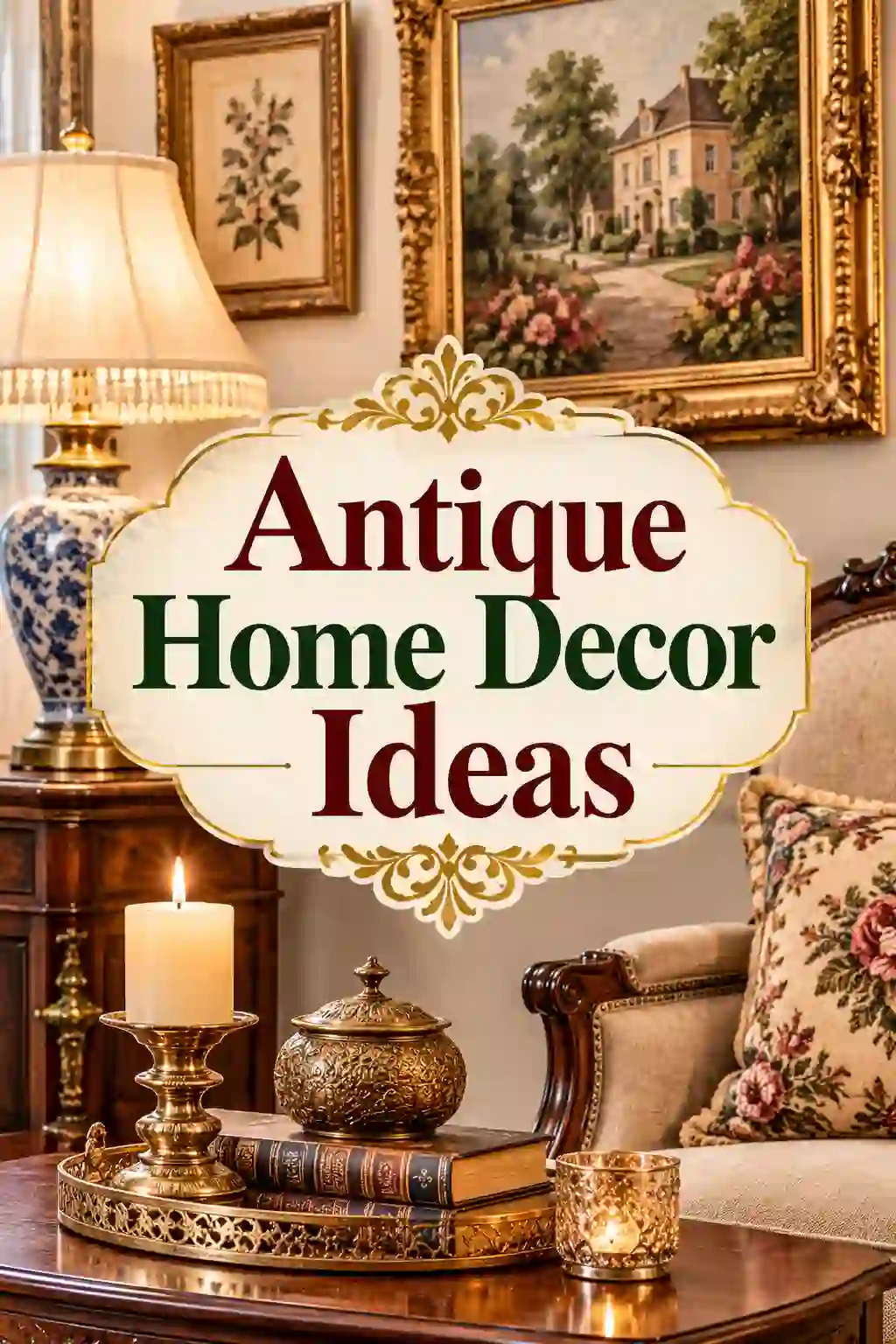
Walk into any home that feels truly lived in and you will usually find one thing in common: something old. It might be a scratched oak sideboard, a tarnished brass lamp or a gilded mirror with a slightly foxed edge. These pieces give a room the kind of character that a showroom set cannot fake.
That is why antique home decor ideas keep coming back into fashion. People are tired of identical flat-pack interiors. They want homes with depth, texture and a story, and they want furniture and objects that were built to last. Antiques are also a sustainable choice, because you are giving something that already exists another life.
The good news is that decorating with antiques is far less intimidating than it looks. You do not need a mansion, a huge budget or a degree in art history. You need a clear direction, a few smart rules and the confidence to mix old with new.
In this guide you will learn:
- What actually counts as antique (and how it differs from vintage and retro)
- The main antique decor styles, from Victorian to Art Deco
- Room-by-room ideas for living rooms, bedrooms, kitchens, bathrooms and more
- How to mix antiques with modern furniture without it looking cluttered
- How to spot genuine pieces, care for them and shop on a budget
Let’s start with the basics.
Read Also : How to Make a Colourful Home That Actually Feels Like You
What Counts as Antique Home Decor? Antique vs Vintage vs Retro
Before you buy anything, it helps to know the vocabulary. Dealers, auction houses and customs authorities use these terms differently, and understanding them protects you from overpaying.
- Antique: Generally, an item that is at least 100 years old. This is the common benchmark used by dealers and by customs rules in several countries, though some collectors apply it loosely.
- Vintage: Typically 20 to 99 years old, and usually representative of a recognisable era, such as a 1950s teak sideboard.
- Retro: Newer items styled to look like an older era. A reproduction diner clock is retro, not vintage.
- Reproduction: A modern copy of a historical design. Many are handsome and affordable, but they carry no antique value.
- Heirloom: A piece passed down through a family. It may or may not be antique, but it often carries the most emotional value.
Why does this matter for decorating? Because you can create a beautiful antique-style home using all of these categories. A genuine Georgian chest of drawers can sit comfortably beside a vintage 1960s lamp and a well-made reproduction mirror. The key is knowing what you are paying for.
Start Here: Decide Your Antique Direction Before You Shop
The biggest mistake beginners make is buying whatever looks charming at a market and hoping it works together. Spend ten minutes on these three decisions first.
1. Choose a Mood, Not Just a Period
Do you want your home to feel formal and layered, or relaxed and collected? A Victorian drawing room and a French farmhouse kitchen are both “antique”, but they feel completely different. Pick two or three mood words, such as warm, softly worn, romantic, and test every purchase against them.
2. Pick a Colour Anchor
Antiques come in browns, golds, creams, greens and deep reds. Choose a palette that ties them together: for example, walnut wood, brass metal, ivory fabric and one accent colour such as sage or oxblood.
3. Set a Budget and a “Hero Piece”
Decide how much you will spend overall, then choose one hero item, such as a statement armoire, a large mirror or a dining table. Build supporting pieces around it. This stops you from buying ten medium-quality things and having no focal point.
8 Antique Decor Styles to Draw Inspiration From
You do not have to follow a single style strictly. But knowing the main design languages helps you mix intentionally rather than randomly.
1. Victorian Elegance
Victorian interiors (named after Queen Victoria’s reign, 1837–1901) are rich and layered: carved mahogany, tufted upholstery, heavy drapery, ornate frames and decorative porcelain. To use this style today, choose one Victorian piece, such as a button-back chair or a parlour table, and keep surrounding walls and fabrics calmer.
2. Georgian Symmetry
Georgian style (roughly 1714–1830 in Britain) values proportion, balance and restraint. Think elegant chests of drawers, tall sash-window proportions, wall-mounted mirrors and symmetrical arrangements. It suits people who like order and understated polish.
3. Art Deco Glamour
Emerging in the 1920s and 1930s, Art Deco uses geometric patterns, mirrored surfaces, chrome, lacquer and bold shapes. Genuine pieces from this era can be considered vintage or approaching antique, and they bring instant drama to cocktail corners and dining rooms.
4. French Provincial and Country French
Soft curves, painted finishes, cane backs, rustic stone and linen. French provincial pieces feel relaxed rather than grand, which makes them excellent for bedrooms and kitchens.
5. Colonial and Early American
Simple lines, honest joinery, spindle-back chairs, pewter, quilts and braided rugs. This style is warm and practical, ideal for family homes.
6. Rustic Farmhouse
Reclaimed timber, enamelware, wooden crates, iron hardware and stoneware crocks. This style is forgiving, because wear and imperfection are part of the charm.
7. Old-World European
Think Italian carved wood, Spanish wrought iron, Flemish tapestries and gilded frames. It leans toward richness, with deep reds, antique gold and heavy textiles.
8. South Asian and Mughal-Inspired Antiques
Carved sheesham and teak cabinets, brass trays and hookah bases, inlay work, jharokha-style windows, hand-knotted rugs and miniature paintings. These pieces bring intricate craftsmanship and warm jewel tones, and they pair beautifully with plain, modern walls.
Antique Living Room Ideas
The living room is where most people start, because it has the most surface area for character.
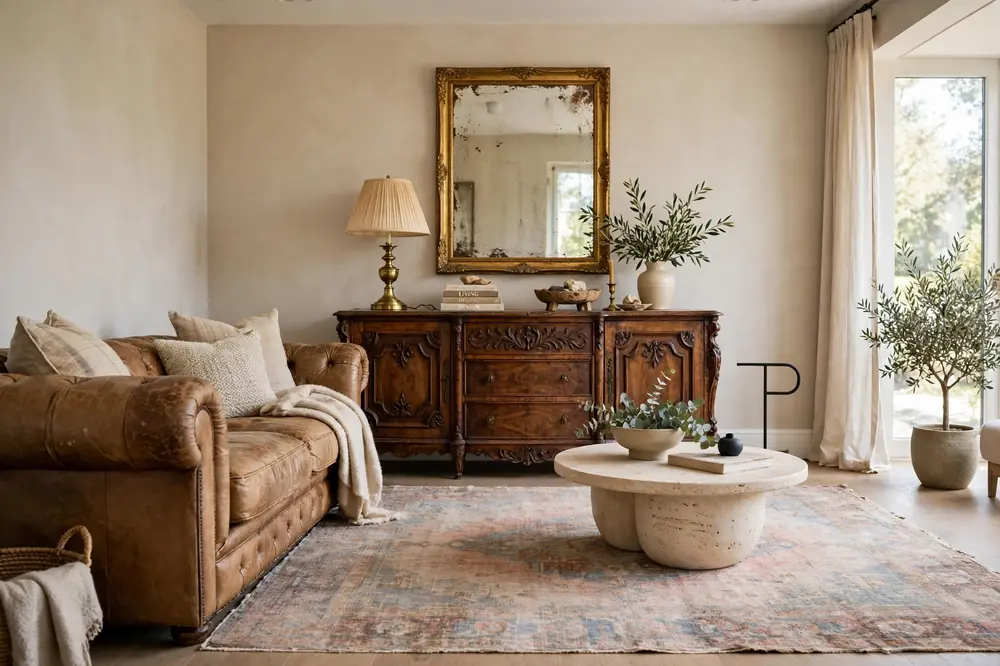
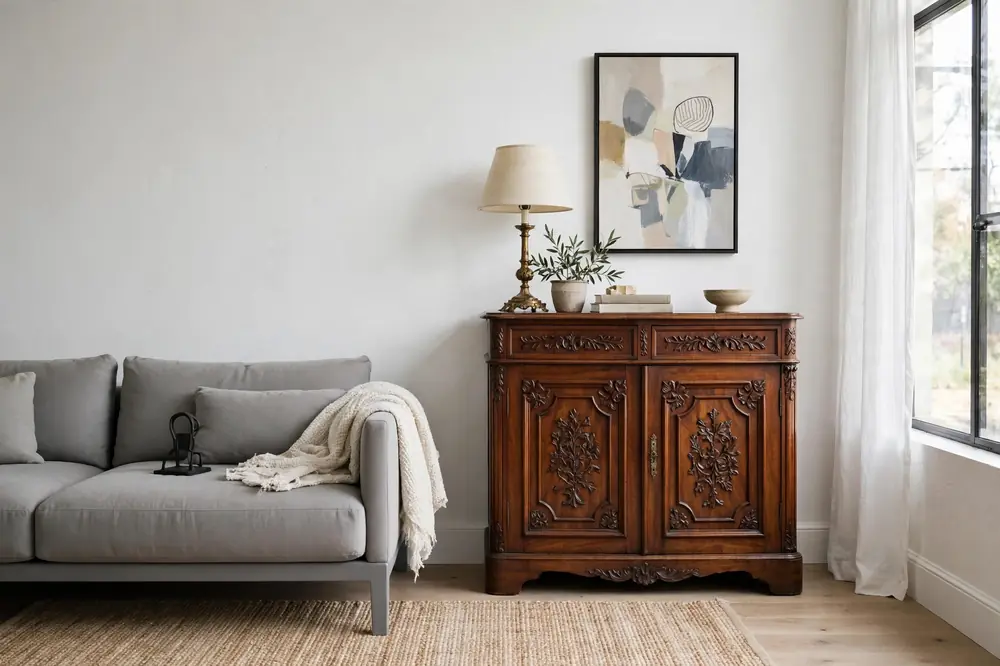
Anchor the Room with an Antique Sideboard or Console
A sideboard behind a sofa or along a wall gives you a ready-made display surface. Style it with a lamp, a stack of books and one sculptural object. Resist the urge to fill every inch.
Pair a Leather Chesterfield with Light Walls
A well-worn Chesterfield sofa or an antique leather club chair looks magnificent against pale plaster or soft white paint. The contrast keeps the room from feeling heavy.
Use an Antique Trunk as a Coffee Table
A travel trunk or steamer chest gives you a coffee table with built-in storage. Add a tray on top to keep drinks stable and protect the surface.
Hang a Gilt Mirror Above the Fireplace or Sofa
Antique mirrors with foxing (the cloudy spots in the silvering) reflect light more softly than new glass. Hang one at eye level or lean a large floor mirror against the wall for an effortless look.
Layer in an Antique Rug
A worn Persian, Turkish or Oushak rug adds colour and pattern while hiding everyday wear. Use a non-slip pad underneath to protect both the rug and your floor.
Mix in One Bold Modern Piece
A contemporary sofa or a sculptural floor lamp keeps the room from feeling like a museum. This is the “old plus new” rule in action, and we will cover it in more detail below.
Also Read: Warm Clay, Leafy Green: Making an Earthy Living Room Work
Antique Dining Room Ideas
Start with a Solid Wood Table
Antique dining tables, such as refectory tables, drop-leaf tables and pedestal tables, are often made from solid oak, walnut or mahogany. They survive decades of family dinners and look better with age.
Mismatch Your Chairs on Purpose
Surround one antique table with chairs that differ slightly in design but share a colour or wood tone. This approach looks collected and intentional, and it is also cheaper than buying a matched set.
Display Porcelain and Glassware
An antique china cabinet or open dresser can hold blue-and-white porcelain, cut glass or silver serving pieces. Use them, too. Antiques are not meant to be locked away.
Light with a Chandelier
Crystal, brass or wrought-iron chandeliers add instant presence. If you are worried about weight and wiring, have an electrician check any antique fixture before you hang it. Rewiring is common and sensible.
Also Read: Dark Dining Rooms That Still Feel Warm and Welcoming
Antique Bedroom Ideas
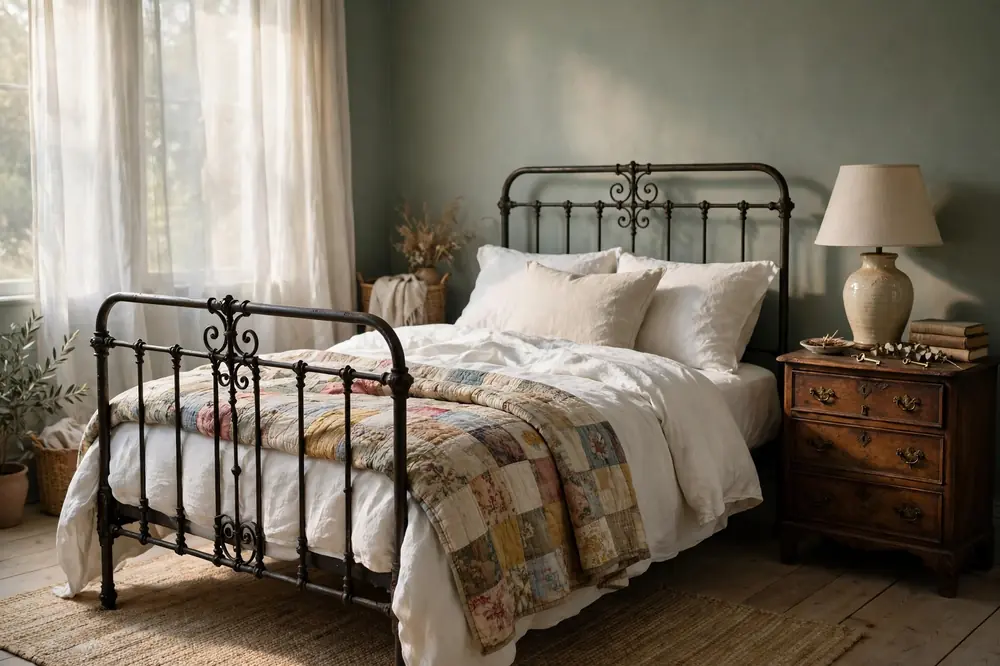
Choose a Carved or Painted Bed Frame
A wrought-iron, brass or carved wooden bed frame becomes the star of the bedroom. Keep bedding simple, such as white linen, to let the frame shine.
Use Antique Dressers as Nightstands
A small chest of drawers or a bedside cabinet gives you more storage than a standard bedside table. Add a lamp with a fabric shade for a softer glow.
Add a Vanity or Dressing Table
A vintage dressing table with a swing mirror makes a lovely dressing corner. Use small antique dishes for jewellery and trinkets.
Layer Heirloom Textiles
Hand-embroidered linens, quilts, crochet throws and old lace add softness. If they are fragile, use them as wall hangings or on the bed’s foot only.
Also Read: Beige and White Bedroom Ideas for a Soft, Airy Calm
Antique Kitchen Ideas
Kitchens welcome antiques because many old objects were originally designed for cooking and storage.
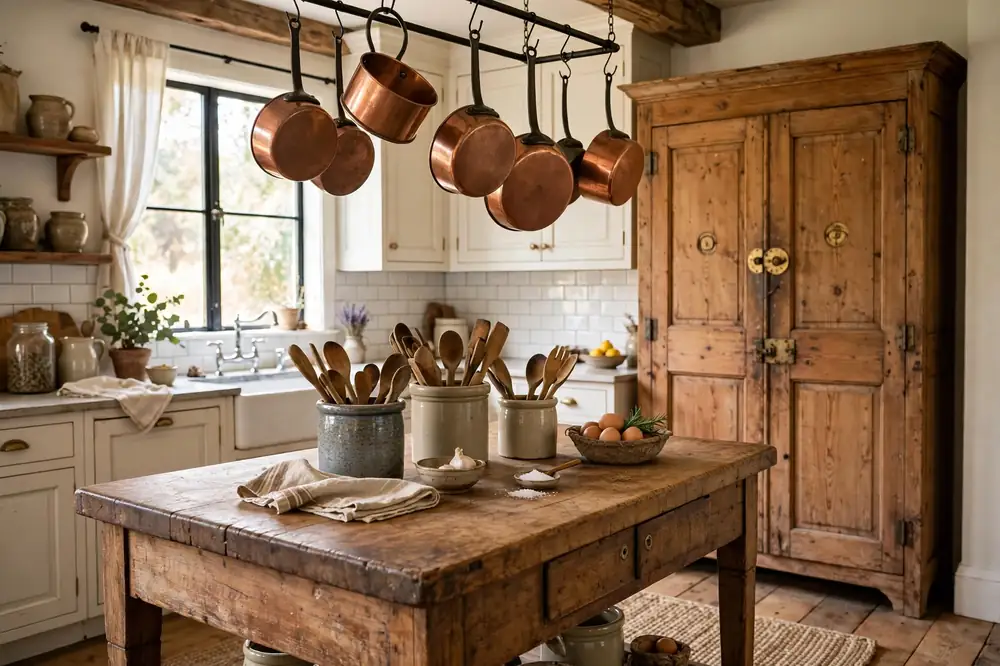
- Butcher blocks and bakers’ tables make excellent islands or workstations.
- Copper pots and pans hung from a rail add warmth. Many are decorative today, so check whether a piece is food-safe before cooking in it.
- Enamelware, stoneware crocks and old glass jars hold utensils, flour or wooden spoons.
- Antique pantry cupboards can replace or complement modern units.
- Vintage scales and tins are small, affordable decorative details for open shelves.
If your kitchen is modern and sleek, a single wooden pantry cabinet or a worn bread board can soften the look without a full redesign.
Antique Bathroom Ideas
Bathrooms may not seem like an obvious home for antiques, but they work well when moisture is managed.
- Freestanding clawfoot tub: An iconic piece that instantly signals old-world luxury. Check that the enamel is intact.
- Antique mirror and sconces: Put a framed mirror above a pedestal sink and flank it with brass sconces.
- Repurposed dresser vanity: Convert a chest of drawers into a vanity by cutting for the sink. Seal the wood properly against water.
- Brass or nickel taps in vintage styles: Reproduction fittings are often safer and more reliable than original plumbing.
- Old ladders and stools: A wooden ladder holds towels, and a small stool can hold a plant or soap tray.
Tip: keep truly valuable, unsealed wood or paper pieces out of steamy rooms.
Antique Entryway and Hallway Ideas
First impressions matter, and an entryway is a great place to show some personality without committing a large budget.
- A narrow console table with a mirror above it.
- An antique bench or settle for putting on shoes.
- A hall stand or coat rack in carved wood or wrought iron.
- A ceramic umbrella stand or a vintage milk churn.
- Framed botanical prints or old maps in a gallery arrangement.
An entry with even two or three antique pieces tells guests what kind of home they are walking into.
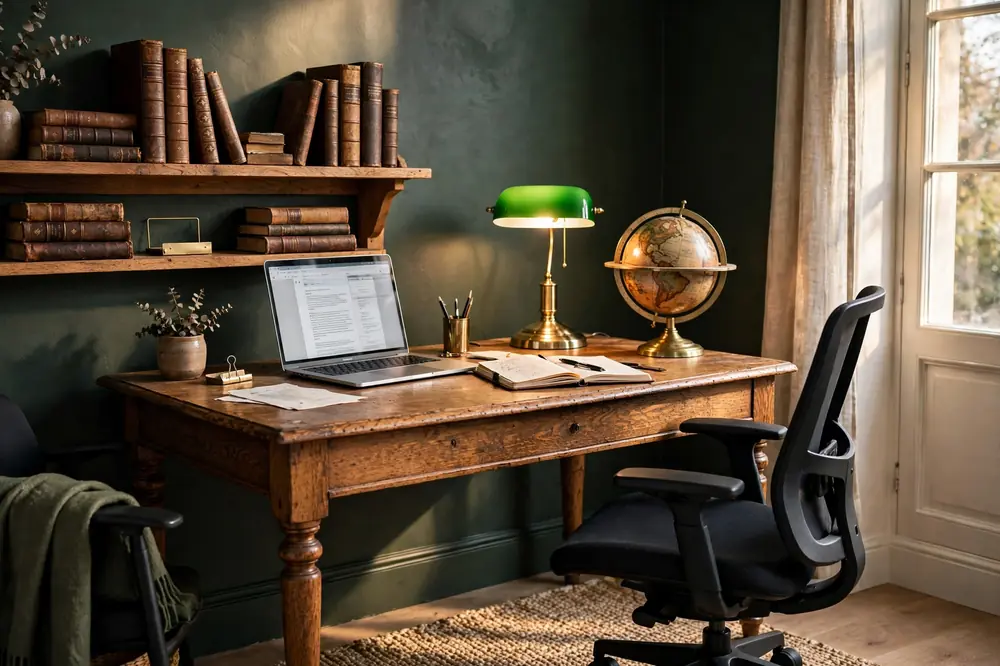
Antique Home Office Ideas
Working from home does not have to mean grey laminate.
- Use a partner’s desk or writing bureau as your main workspace.
- Pair it with a modern ergonomic chair. Comfort comes first.
- Add a green banker’s lamp or an antique brass desk lamp.
- Display old books, globes and leather folios for texture.
- Use antique inkwells, letter holders or trays to organise small items.
This room is where the antique-meets-modern idea shines, because you get historic beauty alongside the technology you actually need.
Antique Decor Ideas by Category
If you prefer to think in terms of objects rather than rooms, use this section as a shopping and styling checklist for antique home decor ideas.
Antique Furniture Ideas
Furniture is the “bones” of a room. Because older pieces were often built with solid wood and traditional joinery, they can outlast modern equivalents. Good options include:
- Chests of drawers and dressers
- Armoires and wardrobes
- Dining tables and chairs
- Writing desks and bureaus
- Bookcases and display cabinets
Look for dovetail joints, solid timber and sturdy construction. Even if the finish is worn, you can often restore it.
Antique Lighting Ideas
Lighting changes the mood of a room faster than almost anything else.
- Brass or bronze table lamps
- Crystal and glass chandeliers
- Wall sconces
- Oil lamps (as display) and converted oil lamps (as working lights)
- Pendant lights made from salvaged industrial fittings
Always have older electrical items inspected or rewired for safety.
Antique Mirrors and Frames
Mirrors add light and depth. Choose gilt, carved wood or painted frames. A gallery wall of mismatched antique frames, filled with prints or even mirrors, feels curated and inexpensive.
Antique Rugs and Textiles
Hand-knotted rugs, kilims, tapestries, samplers and linens bring colour and softness. Faded dyes often look more refined than bright, new ones.
Antique Ceramics, Porcelain and Glass
Blue-and-white porcelain, Staffordshire figures, stoneware jugs and cut glass vases are easy to collect and display. Group them by colour or material rather than scattering them.
Antique Metalwork
Brass candlesticks, copper kettles, silver trays and pewter tankards add warmth. Decide whether you prefer a polished shine or a natural patina, then stay consistent.
Antique Clocks and Barometers
A mantel clock or a wall barometer gives a room a quiet, traditional focal point. Check that the clock actually works if you intend to use it.
Antique Art, Maps and Books
Oil paintings, engravings, botanical prints and old atlases bring narrative. Books arranged by colour or size make a lovely backdrop for decorative objects.
Antique Garden and Outdoor Pieces
Stone urns, wrought-iron benches and weathered terracotta pots look wonderful on a patio or in a porch.
How to Mix Antiques with Modern Decor (Without It Feeling Cluttered)
This is the question most people really want answered. These antique home decor ideas work in nearly every home.
Follow the 70/30 Guideline
A simple rule of thumb: roughly 70% contemporary and 30% antique in a modern home, or reverse it in a traditional one. It is not scientific, but it helps you keep a visual balance.
Repeat Colours and Materials
If you have a brass lamp in one corner, echo that brass in a picture frame or cabinet handle elsewhere. Repetition creates harmony.
Mind Scale and Proportion
An oversized antique cabinet can overwhelm a small room, and a delicate side table can disappear in a large one. Measure first, and consider ceiling height, doorway width and sight lines.
Let Each Piece Breathe
Give your best antiques space. Surround a statement armoire with calm surfaces so it does not compete with other loud objects.
Use Neutral Walls as a Backdrop
White, cream, greige and soft sage let wooden tones and patinas stand out. Deep colours such as forest green or navy can also make antique wood glow, if you want drama.
Reupholster Where Needed
An antique chair with a frame you love but fabric that is stained can be reupholstered in a modern textile. Linen, velvet or a bold stripe can make an old shape feel fresh. Just be careful with truly valuable pieces. Reupholstering can reduce value for collectors, so get advice first.
Must Read : A Valentine Entryway That Feels Romantic, Not Overdone
Combine Wood and Metal
Pair dark wood with brass, or painted pieces with iron. Mixing materials adds interest.
Do Not Recreate a Museum
Antiques should enhance your life, not fill the home like a period exhibit. Choose what you love and use it.
Best Colours and Materials for an Antique Look
Colour Palettes That Work
- Warm neutrals: Cream, oatmeal, taupe and soft white
- Heritage greens: Sage, bottle green, olive
- Rich jewel tones: Burgundy, deep teal, sapphire
- Muted pastels: Dusty rose, duck-egg blue, pale grey
- Metallic accents: Antique gold, aged brass, pewter
Materials to Look For
- Woods: Oak, walnut, mahogany, teak, pine, sheesham
- Metals: Brass, copper, wrought iron, pewter, silver plate
- Textiles: Linen, wool, velvet, silk, cotton lace
- Surfaces: Marble, slate, terracotta, encaustic tile
- Finishes: Gilding, crackle glaze, milk paint, patinated metal
A tip: patina, the soft surface change that comes with age, is a feature. Do not scrub or polish it away without knowing the effects.
How to Display Antiques Beautifully
Group in Odd Numbers
Groups of three or five objects tend to look more natural than pairs. Vary height, shape and texture.
Create Vignettes
A vignette is a small, composed scene: a lamp, a stack of books, a bowl and a plant on a side table. Build one in each room.
Use Shelving Wisely
Open shelves can display ceramics and books. Leave breathing space, and rotate items seasonally.
Light Your Favourites
A small picture light or a lamp placed nearby makes a painting or cabinet glow. Avoid direct sunlight, which can fade textiles and wood.
Mix Heights
Put taller pieces at the back and smaller ones in front, or hang art at different levels for a gallery look.
Antique Decor Ideas on a Budget
You do not need an auction-house budget to enjoy antique home decor ideas.
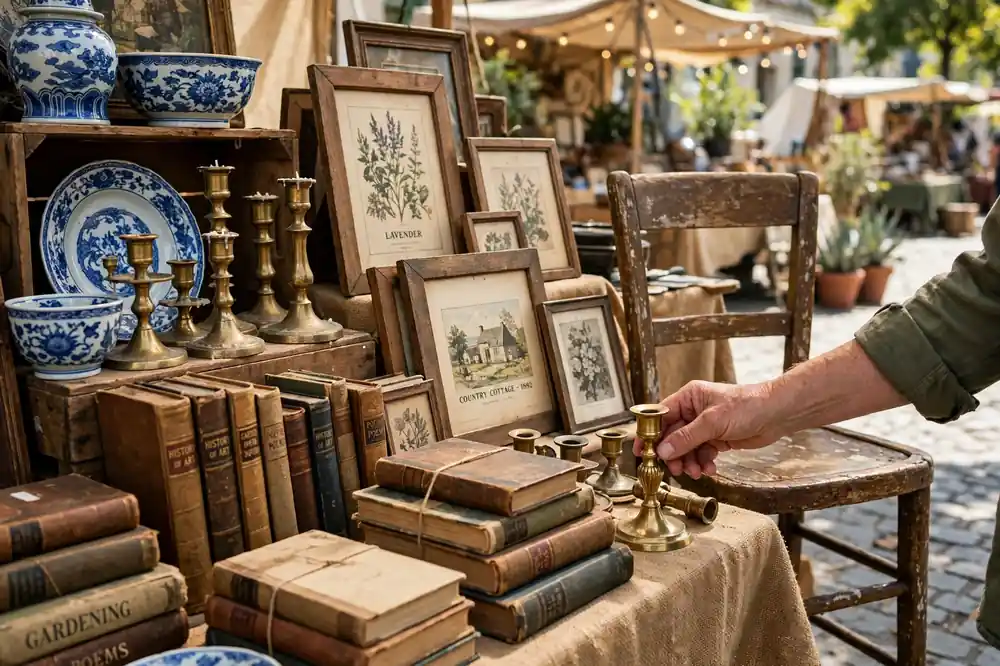
- Visit charity shops, flea markets and car boot sales. These are classic sources for affordable finds.
- Check estate sales and local auctions. Prices can be lower than in antique shops, especially for “brown furniture”, which has been out of fashion and is often underpriced.
- Browse online marketplaces carefully. Ask for measurements, close-up photos and condition reports.
- Buy one good piece at a time. Quality beats quantity.
- Refresh rather than replace. New knobs, wax or a light clean can transform an old piece.
- Repurpose. Turn a ladder into a shelf, a trunk into a coffee table or a vintage drawer into a wall display.
- Add reproductions as supporting actors. A new frame can sit beside a real antique, as long as you are honest about what each is.
How to Tell If an Antique Is Genuine
You do not need to be an expert, but a few checks help.
- Look for age-appropriate wear. Genuine wear appears where hands, feet and use would naturally touch the piece, not in random, uniform distress marks.
- Check the construction. Hand-cut dovetails are usually uneven, while machine-cut ones are perfectly regular. Hand-planed surfaces show subtle tool marks.
- Examine the back and underside. Original wood is darker and oxidised. Raw, bright wood in a “100-year-old” piece is a red flag.
- Inspect hardware. Screws with perfectly uniform threads and Phillips heads suggest later manufacture or replacement.
- Look for maker’s marks, stamps or labels. For silver and porcelain, hallmarks and backstamps can help identify origin and age.
- Ask for provenance. Receipts, auction records or family history add credibility.
- Consult an expert for expensive items. A professional appraiser or reputable dealer is worth the fee before a large purchase.
Remember: a piece can be old and still not valuable, and a reproduction can still be beautiful. Buy because you love it and the price is fair.
How to Care for and Preserve Antique Pieces
Looking after your antiques protects both their beauty and their value.
- Avoid direct sunlight and heat. Strong light fades wood, textiles and paper. Keep furniture away from radiators and vents.
- Control humidity. Aim for stable, moderate humidity. Rapid swings can crack veneer and warp timber.
- Dust gently. Use a soft, dry cloth. Avoid spray polishes with silicone, which can build up.
- Wax, do not over-polish. A little good-quality paste wax once or twice a year is usually enough for wood.
- Use coasters and trays. Water rings and heat marks are among the most common damage.
- Handle with care. Lift furniture rather than dragging it, and support porcelain with two hands.
- Do not strip valuable finishes. Original finishes often matter to collectors. If in doubt, consult a conservator.
- Pest check. Small round holes and fine dust can indicate woodworm. Treat early.
Common Mistakes to Avoid When Decorating with Antiques
- Buying without measuring. A beautiful wardrobe that will not fit through your door is a heartbreak.
- Over-polishing or over-restoring. You can erase character and value.
- Filling every surface. Clutter hides the beauty of individual pieces.
- Ignoring comfort. Some antique chairs look wonderful but are painful to sit in for long. Test before you buy.
- Forgetting function. Decor should still work with how you live.
- Choosing everything from the same period. It can look like a stage set.
- Neglecting lighting. Dark rooms make antiques look dull.
- Paying for “antique” without verification. Always check authenticity and condition.
Final Thoughts: Make Antiques Feel Like Home
The best antique home decor ideas are not about perfection. They are about creating rooms that feel rich in memory, craftsmanship and personality. Start with one piece you truly love, build a simple colour palette around it and let your home grow slowly. Mix old with new, use what you own and leave space for each object to be seen.
Whether you add a single brass lamp or furnish an entire house with period pieces, you are choosing something that has already stood the test of time. That is a very good place to begin.
People Also Ask
1. What is considered antique home decor?
Antique home decor includes furniture, art, lighting, textiles and objects that are generally at least 100 years old. Pieces from 20 to 99 years old are usually called vintage, and modern items made to imitate older styles are reproductions or retro.
2. How do I decorate my home with antiques without it looking old-fashioned?
Mix them with modern items. Pair an antique cabinet with a contemporary sofa, use neutral walls, keep surfaces uncluttered and repeat colours or materials across the room. Choose one or two statement antiques rather than filling the whole space.
3. What are the best antique pieces to start with?
Good first pieces include a mirror, a wooden side table, a brass lamp, a rug or a small chest of drawers. They are versatile, relatively easy to find and fit many styles.
4. Is antique furniture better than modern furniture?
Not always, but antique furniture is often made from solid wood with traditional joinery, which can make it very durable. Condition matters, though. Some antiques need repair, and some modern pieces are also well built.
5. Where can I buy affordable antique decor?
Try flea markets, estate sales, charity shops, local auctions, antique fairs and reputable online marketplaces. Compare prices, ask for detailed photos and check return policies where possible.
6. How can I tell whether an antique is real?
Check for age-appropriate wear, hand-cut joinery, old hardware, original finishes and maker’s marks. Ask about provenance, and have expensive items appraised by a qualified expert.
7. Can antiques be used in a small apartment?
Yes. Choose smaller, multi-purpose items such as a trunk coffee table, a slim console, a framed print or a mirror. Avoid oversized cabinets, and keep the rest of the room simple.
8. How do I clean and care for antique furniture?
Dust with a soft cloth, avoid harsh chemicals, wax wood occasionally, keep it away from direct sun and heat, and use coasters. For valuable or fragile pieces, consult a professional conservator.
9. What colours go well with antique decor?
Warm neutrals, sage and olive greens, deep reds, navy, dusty pinks and muted blues work well. Metallic finishes such as aged brass or antique gold also complement older woods.
10. Should I restore antiques or leave them as they are?
It depends on the piece. Valuable or collectible items are often best left with their original finish, with only minimal conservation. For everyday furniture you plan to use heavily, careful restoration can be perfectly fine. When unsure, get a professional opinion first.




One comment on “Antique Home Decor Ideas: 22 Ways to Style Timeless Pieces in a Modern Home”