

Halloween is the one season when a house can look completely different for a few weeks and nobody minds. The work that pays off most is deciding the tone before buying anything: a restrained, candlelit house reads as elegant, while a house covered in every prop from the shop reads as clutter. Plan on one weekend for the porch and the main living space, and start outdoor displays in early to mid September, when the better pieces are still in stock.
A first season can come in for roughly $75 to $150 if you lean on foraged branches, pumpkins and a few good candles, and the pieces worth spending on are the ones you will reuse: a wreath, LED candles and solid pumpkins. The decision that matters most is the palette — two or three colours, repeated through every room — because a consistent palette is what separates a styled house from a costume shop.
This guide works through the decisions in order — palette, porch, living room, dining room and kitchen, outdoors, small spaces, parties and budget — so each room feels like part of one house, not a separate display.
How do you choose a colour palette that looks grown-up?
Start with the classic pairing — muted orange with black — and soften it with a third colour, such as cream, charcoal or warm wood, so the orange does not dominate. A more restrained scheme uses burgundy, deep plum and gold, or black, ivory and sage green, and reads as autumnal even after Halloween is over. The swatches below show how a muted palette looks warmer and more deliberate than a bright one.
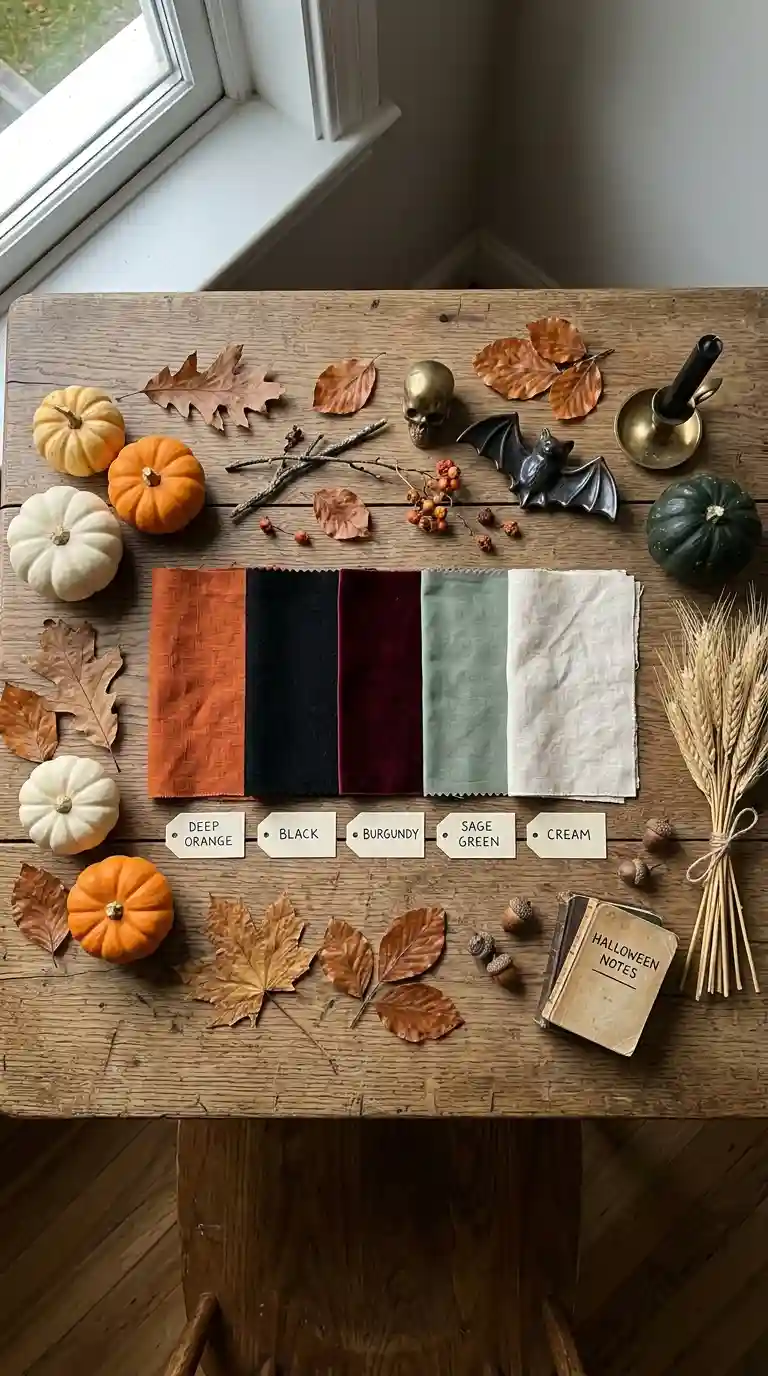
Keep the palette to two or three colours and repeat it in every room: the same black candles on the mantel, the same burgundy throws on the sofa, the same cream pumpkins on the porch. Vintage pieces — old candlesticks, brass, tarnished silver — sit happily inside a muted palette and cost far less than buying new decor in a single colour.
What makes a front porch feel welcoming, not cluttered?
Group pumpkins in threes or fives, mixing sizes and heights rather than lining up identical ones, and leave at least 90 cm of clear path so trick-or-treaters can reach the door safely. A wreath on the door, a lantern or two at different heights, and a layer of warm amber light do more for the porch than a dozen small props scattered across the steps.
Corn stalks, hay bales and dried foliage add height and texture without the plastic look, and they can stay up through November as autumn decor. Keep the display at the edges of the porch — the steps and the corners — so the door and the path stay clear, and put the brightest light near the door rather than out by the street.
How do you style a living room that stays cosy?
Work from the mantel outward: a garland or a row of candleholders along the mantel, a throw in your palette colour draped over the sofa arm, and two or three pumpkins — one large, a couple of small ones — grouped on a side table or the hearth. The living room below stays cosy because the decor is concentrated in a few places rather than spread across every surface.
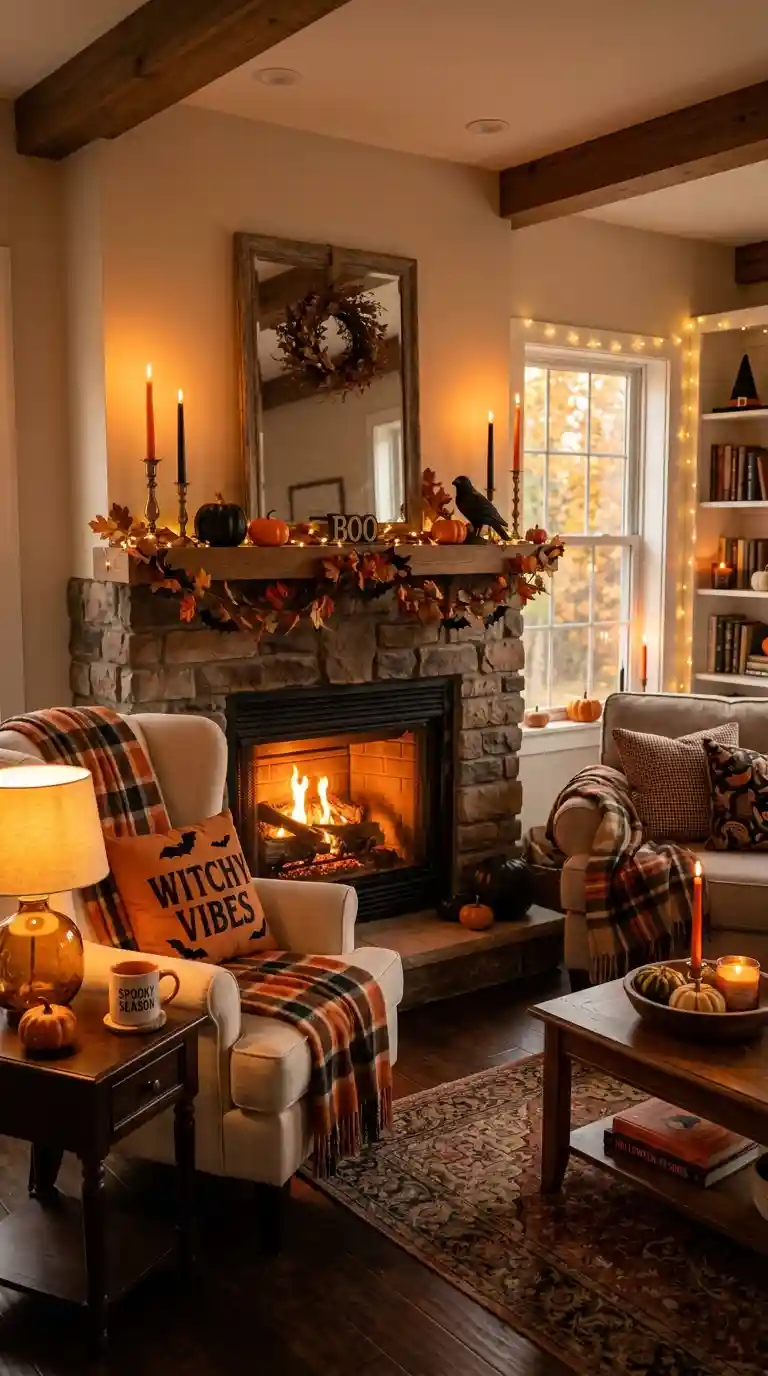
Keep each surface to three to five pieces: a tray of candles and a small pumpkin on the coffee table, a garland on the mantel, a cushion or two in a seasonal fabric. These coffee table decor ideas show how a single tray can hold the whole theme for a room. Use LED candles inside lanterns and on shelves where real flames would be risky, and save real candles for the dining table, where you can watch them.
What works in the dining room and kitchen?
A dining table needs less than you think: a runner in your palette, a low centrepiece of small pumpkins and greenery, and candles at two heights. Keep the centrepiece under 30 cm tall so guests can see each other across the table, and use a dark tablecloth or placemats to make the pumpkins and candles stand out. The kitchen counter below shows the same idea at a smaller scale — a few seasonal pieces, grouped, with the worktop still usable.
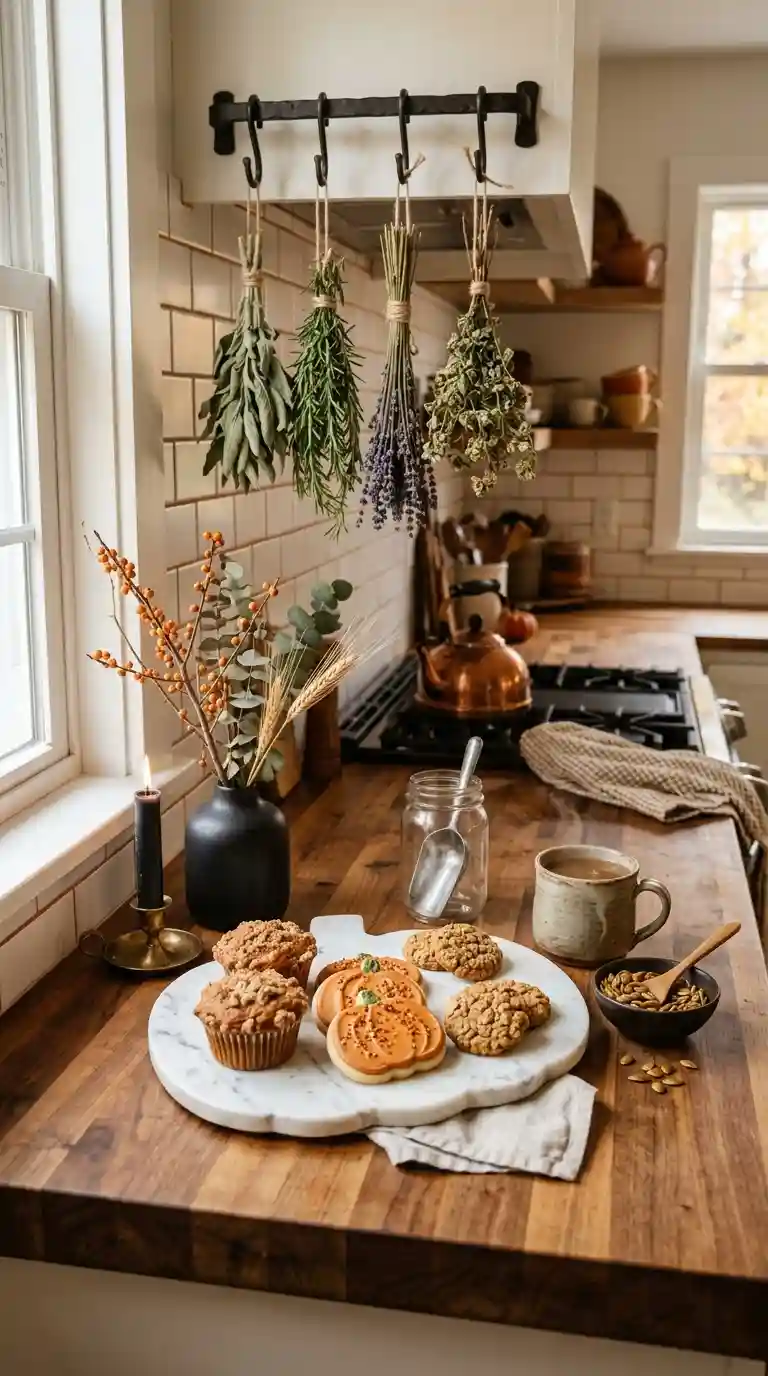
In the kitchen, one shelf or one stretch of counter is enough: a bowl of mini pumpkins, a jar of dried leaves, a candle. A treat station — a tray with wrapped sweets, a small sign and a few paper bats — gives children a place to go without the whole kitchen becoming a display. Keep food and candles apart, and keep anything edible away from painted or glittered pumpkins.
How do you decorate outside without annoying the neighbours?
Start with the path: warm pathway lights every metre or so, so trick-or-treaters can see where to walk, then add one or two larger pieces — a faux graveyard, a group of lanterns, a single striking figure — rather than filling the whole garden. The garden display below works because the light is concentrated in one area and the rest of the garden is left dark, which makes the lit part read as a scene.

Use animatronics and fog machines sparingly — one well-timed scare beats a garden full of noise — and check your local noise and curfew rules before running anything loud after dark. Battery and solar lights are worth the small extra cost: no cables across the path, no tripping hazard, and a timer switches them on at dusk without you having to remember.
What if you only have a flat or a small space?
Choose one strong focal point — a wreath on the door, a window display, a single styled shelf — and let the rest of the room stay normal. Miniature pumpkins, paper bats on the wall and battery string lights give a flat the full feeling of the season without taking up floor space, and the entryway below shows how much a door and a small console can carry on their own.
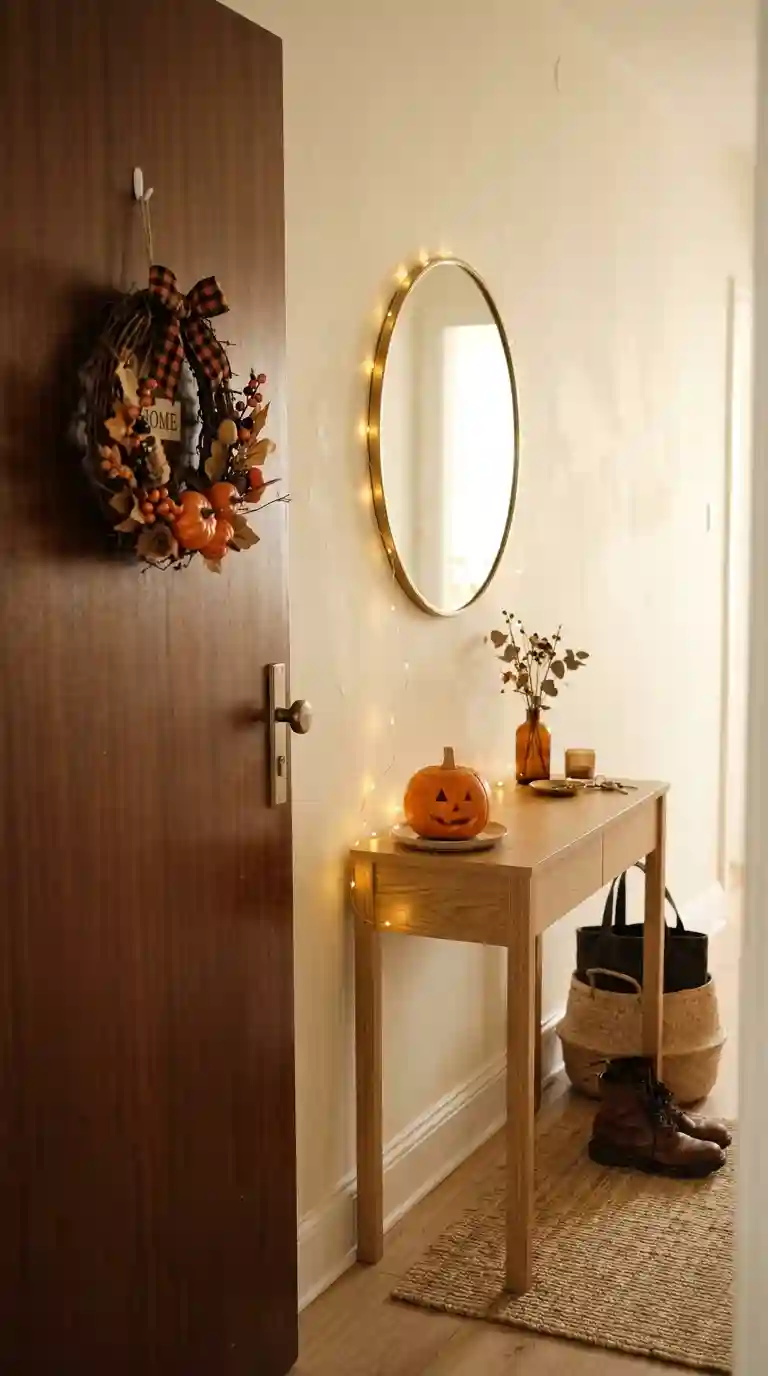
Use the walls and the doors: removable window clings, a garland over a doorway and a few pieces hung at eye level save every centimetre of floor. If the flat doubles as a workspace, these office desk decor ideas show how to keep a desk festive without cluttering it, and these apartment wall decor ideas suit a small room that needs decor to work vertically.
How do you keep it fun for kids and elegant for adults?
Give children their own corner: friendly pumpkins with painted faces, a pumpkin decorating station, and bright colours in one place, so the rest of the house can stay moody. For an adult gathering, lean on the elegant end of the palette — black, gold and deep burgundy — with candlelight, vintage glassware and a single striking centrepiece rather than a table full of props. The dinner table below shows the balance: dark linen, warm candlelight and one arrangement, with nothing blocking the view across the table.
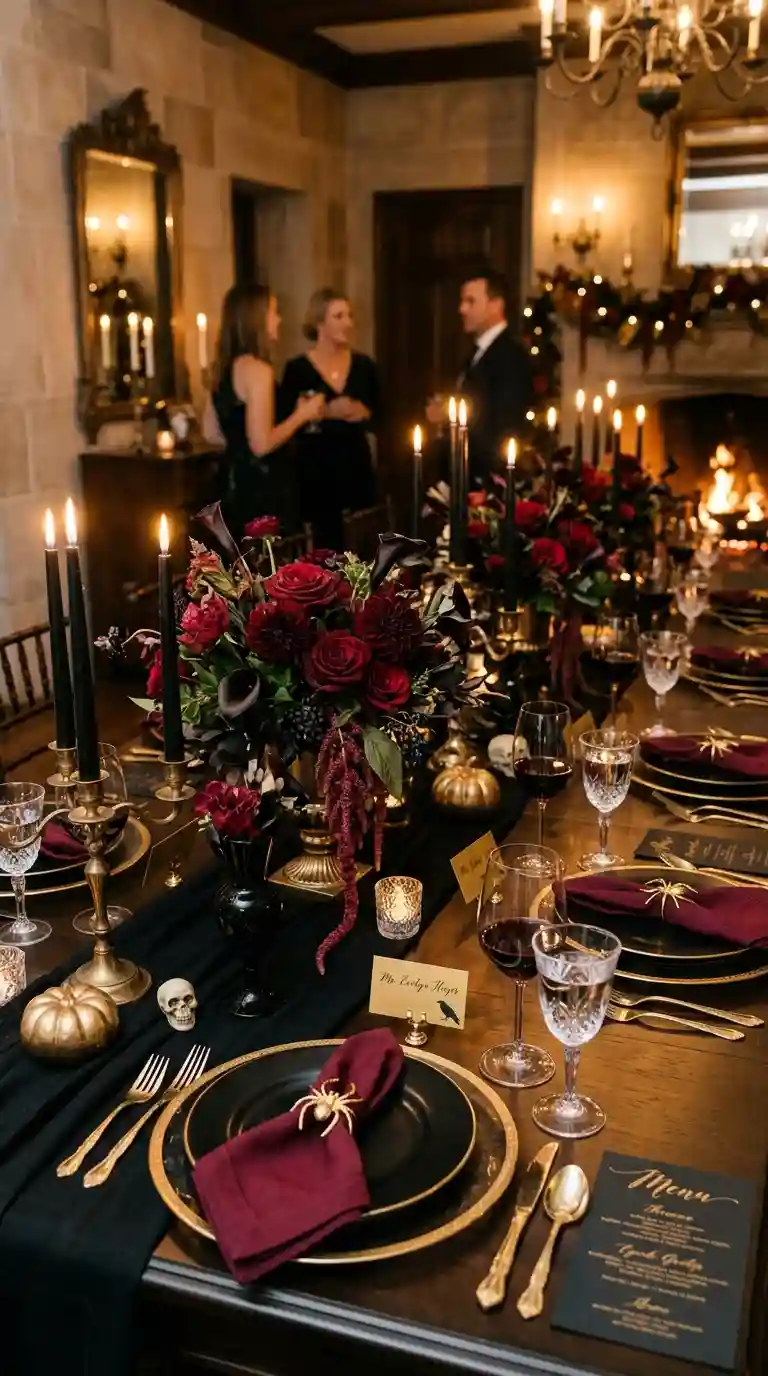
If you are hosting a party, plan the lighting first and the props second: dim the overhead lights, put candles and lanterns at three different heights, and let the room go a little darker than usual. Planning a party in general — not just a Halloween one — these birthday room decoration ideas cover the same basics of layout, light and a single focal point.
How much should you spend, and what is worth buying?
A first season costs roughly $75 to $150 if you forage leaves, branches and pinecones, paint your own pumpkins and buy a few good candles. The pieces worth spending on are the ones you will reuse for years: a wreath, LED candles, solid pumpkins and a set of lanterns. Buy them early in the season, when the choice is widest, or after Halloween, when last year’s stock goes on sale.
Skip the cheap plastic props that crack after one season, and skip buying a whole new set every year: rotate what you own, swap the palette with a new throw or runner, and let the house look a little different each October without starting from scratch. When November arrives, the same pumpkins, branches and warm lights carry straight into autumn decor — just remove the bats and the ghosts.
Start with the palette, then the porch, then one room at a time. Get the light warm, the colours consistent and the surfaces uncluttered, and the house will feel like Halloween without feeling like a shop display — and most of what you buy will still be working for you next October.
When should I start putting up Halloween home decor?
Start outdoor and porch displays in early to mid September, when popular items are still in stock. Indoor decorating can wait until two to three weeks before Halloween, which keeps the house feeling fresh rather than tired by the time the night arrives.
How do I make my Halloween home decor look elegant instead of tacky?
Stick to a palette of two or three colours, choose quality over quantity, and layer candlelight with natural materials such as dried foliage. Avoid mixing several mismatched styles or cartoonish plastic props in the same display.
What are good budget friendly Halloween home decor ideas?
Foraged leaves, branches and pinecones cost nothing and add real texture. Paint your own pumpkins, cut paper bat silhouettes, buy secondhand vintage pieces, and reuse decor you already own instead of buying a whole new set each year.
How do I decorate a small apartment for Halloween?
Choose one strong focal point, such as a wreath or a window display, and use vertical and door-based decor to save floor space. Miniature pumpkins and removable, renter-friendly pieces — window clings and battery string lights — suit a compact rented space.
How do I light my house for Halloween?
Layer warm string lights, flickering LED candles and lanterns at different heights, and add pathway lighting to guide trick-or-treaters safely. Keep the light warm and low rather than bright and overhead, and use timers so the display switches itself on at dusk.





6 Comments on “How to Decorate for Halloween Without It Looking Tacky”