
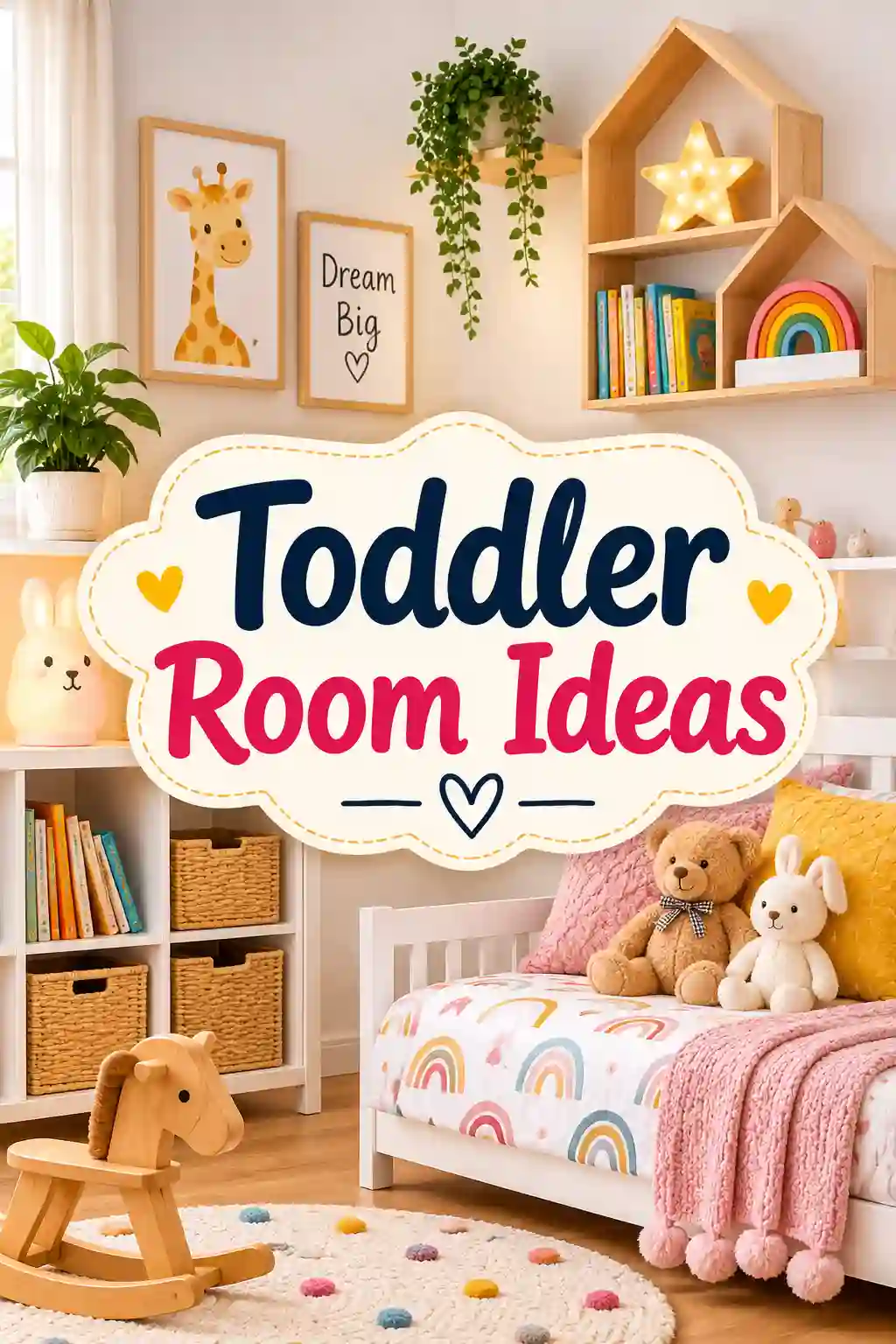
One day your baby is sleeping peacefully in a crib, and the next they are standing on the mattress rail, announcing that they would like to be somewhere else. That is usually the moment you start searching for toddler room ideas, usually at an hour when you really should be sleeping.
Here is the honest truth about designing a room for a one-, two- or three-year-old: it is not like decorating any other room in your house. Toddlers climb, throw, taste, tip, draw on and unpack everything within reach. They also have strong opinions about the colour yellow and the exact position of a particular stuffed rabbit. A good toddler room has to survive all of that while still helping your child sleep, play and feel like the room belongs to them.
The good news is that you do not need a big budget or a designer to get it right. You need a clear plan, a few safe foundations and a handful of ideas that match your child’s personality. That is exactly what this guide gives you.
In the sections below you will find practical advice on safety, bed choices, colour palettes, themes for boys, girls and everyone in between, small-room solutions, storage systems, reading nooks, lighting, budget and DIY ideas, shared rooms, and the mistakes most parents only notice after the paint has dried. Whether you are converting a nursery or starting from a blank room, you will leave with a plan you can actually carry out.
What Makes a Great Toddler Room?
Before we get into colours and furniture, it helps to know what you are aiming for. Every strong toddler room, whether it is Scandinavian-minimal or a full-blown dinosaur jungle, gets five things right.
1. It is safe by design. Safety is not a finishing touch. It shapes where the bed goes, what furniture you buy and how you hang the curtains.
2. It supports sleep. The room’s main job at night is to make bedtime easy. That means calm colours, dimmable light and a clear sleep zone.
3. It invites play. Toddlers learn by moving, building and pretending. They need open floor space and toys they can reach without asking you.
4. It encourages independence. Low shelves, a child-height hook for the jacket and a little stool by the wardrobe all tell your toddler, “You can do this yourself.”
5. It can change. A toddler grows quickly. A room built around a single cartoon character is outdated within a year. A room built around a flexible base can grow with them for years.
Keep those five points in mind and every decision in this article becomes easier.
When Is It Time to Move From a Nursery to a Toddler Room?
There is no magic birthday. Most families move their child out of the crib somewhere between 18 months and 3 years, though some children are ready earlier and some later. Paediatric guidance usually points to one clear trigger: once your child starts climbing out of the crib, the crib has become more dangerous than a bed.
Other signs it may be time:
- Your child is climbing or has already tumbled over the rail.
- They look cramped or are bumping against the sides.
- They are potty training and need to get to the bathroom at night.
- They keep asking for a “big kid bed”.
- A new baby is arriving and the crib is needed.
One gentle tip: do not rush the move just because a milestone chart says so. If your child is happily sleeping in the crib and showing no signs of climbing, there is no prize for switching early. A new bed often means more night-time wandering, so make sure the room is ready first.
And if you are making the move because a sibling is arriving, try to change the bedroom a few months ahead of the due date. That way your toddler sees the new bed as an upgrade, not as something taken away to make room for the baby.
Toddler Room Safety: Get This Right Before Anything Else
We are starting with safety because it affects every other choice. Many toddler room ideas you will see online look beautiful and say almost nothing about hazards. That is a gap worth closing, because a toddler who can leave their bed can reach things a baby never could.
Anchor every piece of tall furniture
Dressers, bookcases and wardrobes should be fixed to the wall, no exceptions. The US Consumer Product Safety Commission runs an “Anchor It!” campaign, and its data shows that the large majority of furniture, TV and appliance tip-over deaths involve children aged five and under. A toddler will treat a chest of drawers like a climbing frame, and drawers pulled out as steps make tipping much more likely.
Use anti-tip straps or brackets screwed into a wall stud. Heavy furniture should be fixed even if it “feels sturdy”. Put the heaviest items in the lowest drawers, and keep TVs off dressers altogether.
Deal with window cords and window position
Corded blinds are one of the most serious bedroom hazards. The CPSC reports that on average about nine children under five die each year from strangulation on window blind, shade and curtain cords. Its advice is simple: choose cordless window coverings. If you cannot replace existing ones, shorten the cords as much as possible, keep them out of reach, anchor looped cords to the wall or floor, and move beds and furniture away from windows, ideally to another wall.
As a rule of thumb, keep the bed and any climbable furniture at least a metre (about three feet) away from the window. Fit window locks or stops so the window cannot open wide, and make sure at least one window in the house can still be opened quickly in a fire.
Choose a safe bed
A low bed with a firm, well-fitted mattress is the safest place to start. There should be no gap between the mattress and the frame or wall where a small body could become wedged. Avoid bunk beds and high-sleepers for toddlers; the fall risk is simply too high at this age. If you use rails, make sure they are designed for toddlers and fitted properly.
Cover outlets and tame cables
Use tamper-resistant covers or sliding plate covers on unused sockets. Keep lamps, night-light cables and baby monitor wires out of reach, or run them along the skirting board with cable clips. Anything with a cord is a pulling or chewing invitation.
Check the small stuff
Toys with small parts, button batteries, loose beads from decorations and unsecured wall decals can all be choking hazards. Crawl around the room on your hands and knees once. You will see things you never noticed standing up.
Think about sleep items
Guidance for infants says to keep soft items out of the crib. Toddlers over a certain age can safely have a small, firm pillow and a light blanket, but check with your paediatrician about when to introduce them. Keep the bed uncluttered anyway; a few favourite soft toys are plenty.
Use a quick safety audit
Before you decorate, walk through this checklist:
- Tall furniture anchored to the wall
- Cordless blinds or secured cords
- Window locks or stops fitted
- Bed positioned away from windows, radiators and lamps
- Outlets covered, cables out of reach
- Smoke alarm tested
- Door safe to open and close (consider a soft-close or finger-pinch guard)
- No small objects on the floor or low shelves
- Night-light cool to the touch
A room that passes this audit lets you relax, and that is the real luxury.
Start With a Plan: Layout and Zones
The most common mistake in toddler rooms is buying lovely things before deciding where they go. A simple zoning plan fixes that.
Imagine the room divided into four zones:
The sleep zone. The bed and a bedside table or shelf. Place it away from the window and the door swing, ideally against a wall so one side is protected.
The play zone. A clear patch of floor, ideally with a rug, near the middle or next to a window for daylight. Toddlers need room to spread out. If you can only manage one good area, make it this one.
The quiet zone. A reading nook with cushions, a small bookshelf and soft light. This is where you will wind down at bedtime.
The storage zone. A wardrobe or dresser for clothes and low open storage for toys, placed along the walls so the centre stays free.
A few layout rules help every room:
- Keep the middle open. Push furniture to the edges so there is a play space and a clear path to the door.
- Think in heights. Toddler-height items (hooks, shelves, a table) at the bottom; adult-only items (spare bedding, craft supplies, medicines) high up and out of reach.
- Leave room for you. You will be kneeling, reading, rocking and sometimes sleeping in that room. A comfortable chair or large floor cushion for an adult makes bedtime much easier.
- Sketch before you shop. Measure the room and draw a rough plan on paper. Mark windows, the door, radiators and plug sockets. It takes ten minutes and prevents expensive mistakes.
Toddler Bed Ideas: Find the Right Fit
The bed is the biggest decision you will make, so it deserves its own section.
Floor bed
A floor bed is simply a mattress on the floor or on a very low frame, often with a small safety rail. It is popular because there is almost no fall risk, your toddler can climb in and out by themselves, and it suits a play-based, independence-focused approach. Many parents like to pair it with a “safe room”, which means a fully childproofed space so your toddler can roam if they wake early.
Pros: very low fall risk, encourages independence, simple and affordable, easy to move. Cons: your toddler can leave the bed freely, so the whole room must be toddler-proofed; floor draughts and dust need extra attention.
Toddler bed (crib-sized)
These use the same mattress as your crib and sit low to the ground, often with built-in side rails. They are a lovely first step if you want the transition to feel familiar.
Pros: familiar size, secure sides, many fun designs including car and house shapes. Cons: your child will outgrow it in a couple of years.
Convertible crib
Some cribs convert into toddler beds and later into full-size beds. They can be a smart long-term purchase if you bought one for the nursery already.
Pros: saves money, familiar look. Cons: conversion rails are not always ideal for climbing toddlers; the bed may look heavy in a small room.
Single bed with guard rail
If you want to skip the toddler stage, a standard single bed with a proper toddler guard rail works well, especially in a room you are planning to keep for years. Keep the frame low and the mattress firm.
Pros: lasts for many years, easy to find bedding. Cons: higher off the ground, takes more space, rails must fit snugly.
House bed
A bed shaped like a little house is one of the most-pinned toddler room ideas on the internet, and for good reason. The frame creates a sense of a secret hideout and the roof can be draped with fairy lights (placed safely out of reach) or lightweight fabric.
Pros: magical, makes bedtime exciting, doubles as a play den. Cons: needs more floor space and headroom; avoid heavy canopies or anything that could fall on your child.
Tips for any bed
- Choose a firm mattress that fits the frame with no gaps.
- Pick bedding in easy-wash fabrics; accidents happen.
- Keep the bed low, uncluttered and away from windows.
- Let your toddler choose the pillowcase or blanket. A small choice makes them proud of the bed.
Colour Palettes for Toddler Rooms
Colour is the fastest way to change a room’s feeling and, luckily, paint is cheap. Here is how to think about it.
The 60-30-10 rule, toddler edition
Designers often use a simple split: 60 per cent main colour (walls and large items), 30 per cent secondary colour (bedding, rug, curtains) and 10 per cent accent (small accessories, art and toys). It keeps a room from feeling chaotic, even when there are toys everywhere.
Calm and soothing palettes
These work well if sleep is the priority.
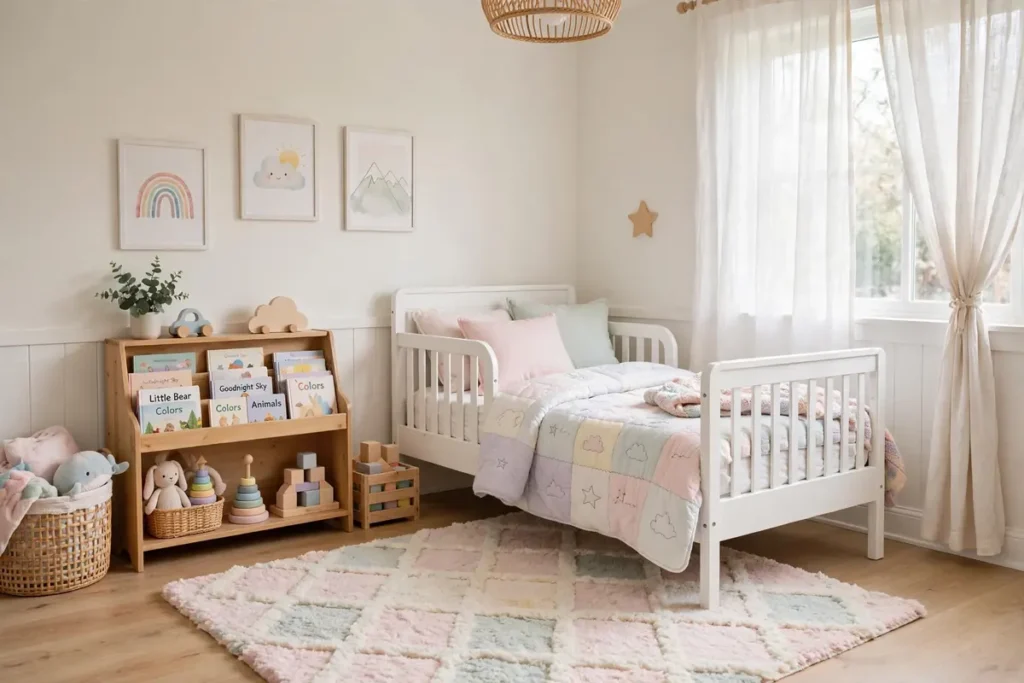
- Soft sage and warm white: natural, restful and suitable for all children.
- Dusty blue and cream: peaceful without feeling cold.
- Warm beige and oatmeal: a gentle, earthy base for natural wood furniture.
- Misty grey and blush: modern, soft and surprisingly flexible.
Bright and playful palettes
If your child loves colour, give them some, just in measured doses.
- Mustard, teal and white: retro and cheerful.
- Coral, mint and sunshine yellow: bright and lively.
- Primary colours in small doses: red, blue and yellow on a white background feel fresh when used on accessories rather than everything at once.
Bold choices that still work
Some of the best toddler room ideas use a single strong colour on one wall, perhaps behind the bed, and keep everything else quiet. A deep forest green or navy accent wall can look stunning against white furniture and wooden toys.
Gender-neutral palettes
You do not need pink or blue. Greens, yellows, terracotta, oatmeal and warm greys all suit any child. Colour-coded storage, striped textiles and graphic patterns also work for everyone.
Paint practicalities
- Use low-VOC or zero-VOC paint, and ventilate well.
- Choose a scrubbable finish such as satin or washable matt for the lower half of the walls.
- Test samples on the wall and look at them in morning and evening light.
- Paint a few weeks before your toddler moves in so fumes have time to clear.
Also Read: What Colour Should I Paint My Bedroom?
Toddler Boy Room Ideas
A lot of the advice around toddler boy room ideas leans heavily on blue and trucks. Those can be great, but there is more to choose from.
Adventure and explorer. Think maps, a tent corner, a wooden globe lamp and earthy greens and browns. A low shelf of nature books and magnifying glasses keeps curious hands busy.
Vehicles and construction. Many toddlers go through a diggers-and-trains phase. Give it a home with a road-play rug, a bookshelf of vehicle books and a few wall prints, but keep the big furniture neutral so the room does not look dated once the phase passes.
Space and stars. Deep navy walls or a wallpapered accent with a soft glowing star night-light makes bedtime feel like a mission launch. Keep lighting soft so it does not overstimulate.
Dinosaur den. A friendly dinosaur print on bedding or a removable wall decal can turn the room into a prehistoric hideout. Add a green rug for “grass”.
Woodland and camping. Pine green walls, a play tent and plaid blankets create a cosy camp feeling indoors.
Modern monochrome. Black-and-white stripes, grey bedding and a pop of mustard give a grown-up look that lasts.
A word on blue: it is not wrong, it is just not the only option. Pair it with sunny yellow, soft orange or warm wood for a fresher look.
Also Read: A Boy’s Bedroom That Can Grow Up With Him
Toddler Girl Room Ideas
Same story here: pink is lovely, but toddler girl room ideas stretch much further.
Soft blush with earthy partners. Blush and warm terracotta, sage or mustard look sophisticated and are not syrupy.
Garden and floral. Botanical wallpaper, a floral quilt and a rug that looks like a meadow bring the outdoors in.
Fairy-tale cottage. A canopy over the bed (high and secure), a small play kitchen or dollhouse and soft fairy lights placed safely out of reach create a gentle storybook mood.
Rainbow room. Colourful pastels on a white background feel hopeful and joyful, and they work well on rugs and cushions.
Ballet or dress-up corner. A low rail with a few costumes, a child-safe mirror and a dress-up trunk invite imaginative play.
Bohemian. Macramé wall hangings, rattan baskets and natural linen give a warm, relaxed vibe. Keep any hanging pieces high and secure.
Try not to let the theme be decided only by what is sold in the “girls” aisle. Many girls adore dinosaurs, trucks and space, and many boys love fairy gardens and dolls. Follow your child’s interests, not the marketing.
Gender-Neutral Toddler Room Ideas
A gender-neutral room is not a beige room. It is a room that does not depend on pink or blue to feel personal. Some approaches that work well:
- Natural wood and plants (safe, non-toxic ones, out of reach). Wood furniture, cotton textiles and a basket of wooden blocks create warmth and texture.
- Graphic patterns. Stripes, checks, dots and arches look contemporary on bedding and rugs.
- Animal themes. Safari, woodland and farm animals appeal to most toddlers.
- A bold colour. Think mustard, forest green or terracotta rather than the usual suspects.
- Art made together. Frame your toddler’s scribbles and hang them low. They add colour and personality no shop-bought print can match.
Gender-neutral rooms have another advantage: they are easy to pass down to a sibling or adapt as your child’s tastes change.
Toddler Room Themes That Work (and How to Keep Them Flexible)
A theme gives a room a story. The trick is to use it lightly so it does not box you in.
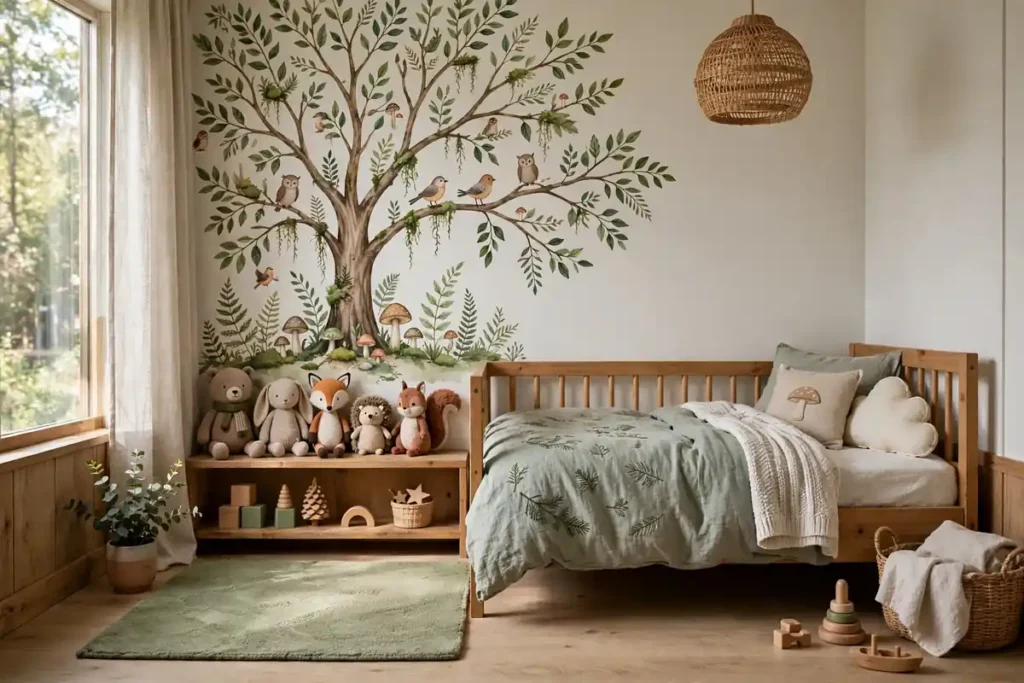
Woodland
Soft greens, browns and cream with fox, bear and owl accents. Use wooden furniture and a leaf-patterned rug. It is calm and works for any gender.
Safari
Elephants, giraffes and lions are perennially popular, as are warm sandy tones. A simple animal print and a few wooden animal toys are enough; you do not need a full jungle mural.
Ocean
Blues, aqua and sandy neutrals, with a whale or sea-turtle print. A soft wave-patterned rug and a lamp shaped like a shell make it feel like a seaside holiday.
Space
Navy or charcoal walls, a moon night-light and star accents. Keep the bedding calm; the walls are doing the talking.
Farmyard
Barn red, cream and buttery yellows. Gingham fabrics, a wooden toy barn and animal-print cushions give it a nostalgic feel.
Rainbow
A rainbow wall mural, arches on the bedding or a rainbow-stripe rug. It is joyful and easy to simplify later.
Dinosaur
Greens and earthy colours, with dinosaur prints and friendly creatures. A “fossil dig” corner with a sand-coloured rug keeps it playful.
Transport
Cars, trains, planes and boats: always popular. Keep it modern with a road rug, vintage-style prints and a few ride-on toys.
Books and storytelling
A reading-themed room with illustrated wall shelves, quote prints and a cosy nook is a gift that keeps on giving.
How to keep a theme flexible
- Keep the big, expensive items neutral (bed, wardrobe, dresser).
- Put the theme in the cheap, changeable items: bedding, curtains, rug, wall prints and a lamp.
- Use removable options such as peel-and-stick wallpaper or decals.
- Let your toddler choose one or two items. It gives them ownership without handing over the whole room.
Small Toddler Room Ideas: Make Every Inch Work
Most of us do not have a huge spare room. Many toddler rooms are small boxes, sometimes shared with a wardrobe or a sloping ceiling. The good news is that a small room can feel snug and magical if you plan it well.
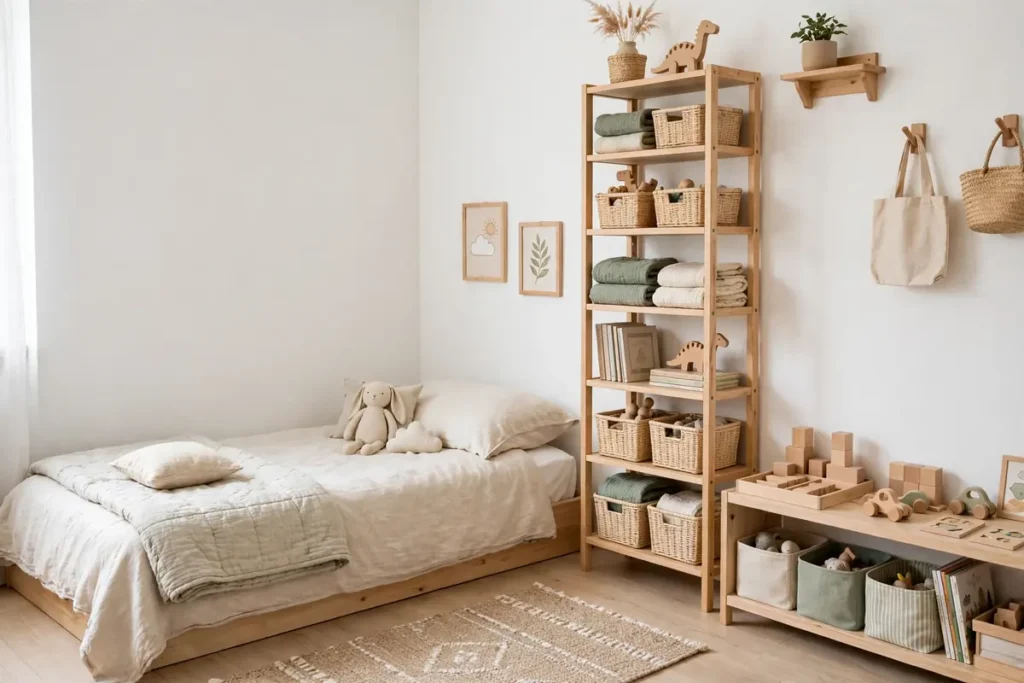
Go vertical
When the floor is limited, use the walls. Wall-mounted shelves (high enough for adults to reach and anchored securely) hold books, baskets and ornaments. Low wall pockets or a hanging organiser keep soft toys off the floor. Keep anything heavy or breakable out of toddler reach and anchored properly.
Pick low, slim furniture
A low bed and a slim dresser make a ceiling look higher. Open shelves keep a room airy, while chunky wardrobes can swallow it. If the room is tiny, a wardrobe built into an alcove is worth considering.
Use under-bed space
Shallow, wheeled storage drawers under a bed hold seasonal clothes, spare bedding and bigger toys. Make sure the bed stays low and stable; under-bed boxes should never compromise the safety of the mattress base.
Choose multi-purpose pieces
- A storage bench at the foot of the bed doubles as a seat and toy chest. Choose a lid with a soft-close or slow-hinge mechanism so little fingers do not get trapped.
- A small table and chair set serves for snacks, drawing and puzzles, then folds away or slides against a wall.
- A bookshelf that is also a room divider helps if the toddler shares a bedroom.
Light colours and mirrors
Pale walls reflect light and make a room look larger. A shatterproof, wall-mounted mirror set low gives toddlers a fun way to explore expressions and also bounces light around. Make sure it is safety-rated and firmly fixed.
Keep the floor clear
In a small room, the floor is your most valuable asset. Aim to keep at least half of it free for play. If you are tempted to buy one more piece of furniture, ask whether it earns its footprint.
Rotate toys
You do not need every toy out at once. Keep a handful accessible and store the rest in a box on a high shelf or in a cupboard. Swap them every couple of weeks. Your toddler will think the old toys are new, and your room will stay tidier.
Declutter regularly
All the clever storage in the world fails if the room fills with stuff. Set a simple rule: when something new comes in, something outgrown goes out. Try a quick monthly sweep for clothes, toys and craft supplies your child has moved on from.
Also Read: Why a Bed in the Corner Can Make a Small Bedroom Feel Bigger
Storage Ideas That Toddlers Can Actually Use
Good toddler storage is not about hiding everything away. It is about making tidying up possible for a very small person. A good rule is that if your toddler cannot reach it, they cannot put it away.
Open, low shelving
Shallow, low shelves let toddlers see and choose what they want. Display toys in baskets or trays rather than dumping everything in a deep box where the favourite toy is always at the bottom.
Baskets and bins
Cloth or woven baskets are soft, light and safe. Label them with pictures instead of words so your toddler knows what goes where (a photograph of building blocks on the building-block basket works wonders).
Colour coding
Assign each category a colour: blue bin for cars, yellow for animals, green for books. It helps a toddler sort and it looks organised even when it is not.
Forward-facing bookshelves
A ledge or rain-gutter-style bookshelf that shows book covers rather than spines makes books irresistible. Toddlers choose by pictures, not titles.
Hooks at toddler height
A row of sturdy hooks at your child’s level invites them to hang up a coat, a bag or a dressing-up cape. Round or rounded-edge hooks are safest.
A toy chest done right
If you want a toy chest, pick one with a lightweight lid, slow-close hinges or no lid at all. A lid that slams or that a child can climb in and get stuck behind is a safety concern.
Wardrobe tricks
- Lower the hanging rail or add a second low rail for your toddler’s clothes.
- Use drawer dividers so socks, vests and pyjamas stay sorted.
- Pre-select a few outfits and keep them in a small basket to cut down on morning arguments.
Hidden storage for adults
Keep things such as medicines, craft glue, scissors, nappy cream and cleaning products in a high cupboard, locked if possible. A toddler room has more storage needs than it looks, and some of them are purely for adults.
A simple tidy-up routine
Make tidy-up time part of the evening: five minutes, a song, and everyone helps. Toddlers love routines, and a visible home for each toy makes the routine easy to follow.
Also Read: Small Laundry Closet Ideas: 25 Smart Ways to Fit Storage, Style and Function Into a Tiny Space
Create a Play Zone That Encourages Learning
Toddlers learn through movement, repetition and pretending. A good play zone lets them do all three.
Floor space and a good rug
A soft, washable rug cushions tumbles and defines the play area. Choose a low-pile rug with a non-slip backing so it stays put. A rug with roads, numbers or a map lets play and learning happen together.
A play table
A small table at your child’s height supports drawing, puzzles, play dough and snacks. Pick one with rounded corners and a washable surface.
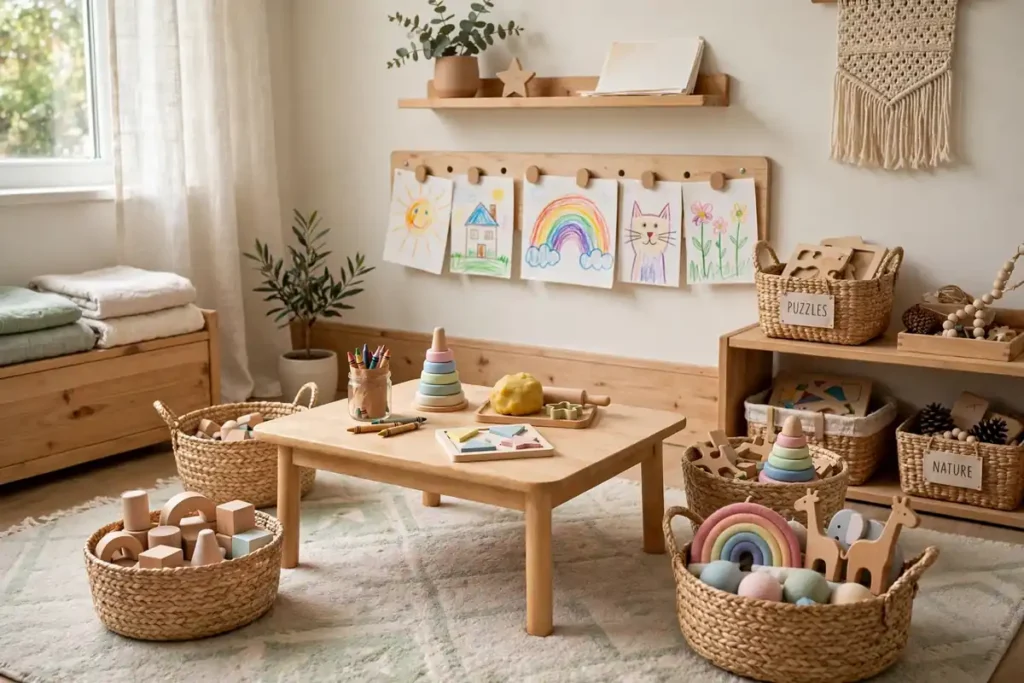
Open-ended toys
Wooden blocks, stacking cups, simple vehicles and dolls encourage imagination far better than toys that do everything for the child. You do not need many; a good selection of open-ended toys keeps a toddler busy and makes the room look calmer.
A pretend-play corner
A play kitchen, a shop counter or a doctor’s kit helps your toddler practise social skills and language. Keep the pieces in a basket so the corner can be tidied quickly.
An art wall
A corkboard, a chalkboard or a magnetic board lets your toddler show and change their work. A freestanding easel is a nice option if you have space. Washable crayons and chunky chalk keep mess manageable.
Gross-motor play
Toddlers need to move. A small foam climbing set, a low balance beam or a soft play mat gives energy somewhere safe to go. If the room is tiny, keep this kind of play for the living room and give the bedroom a calmer purpose.
Sensory touches
Textured rugs, a sensory bin (supervised, of course) and a few different fabrics let children explore with touch. Keep small, swallowable pieces out of reach.
Reading Nook Ideas for Toddlers
If your toddler has one favourite spot in their room, it should be the reading nook. A nook says, “This is where we slow down.” It also builds a lifelong habit of loving books.
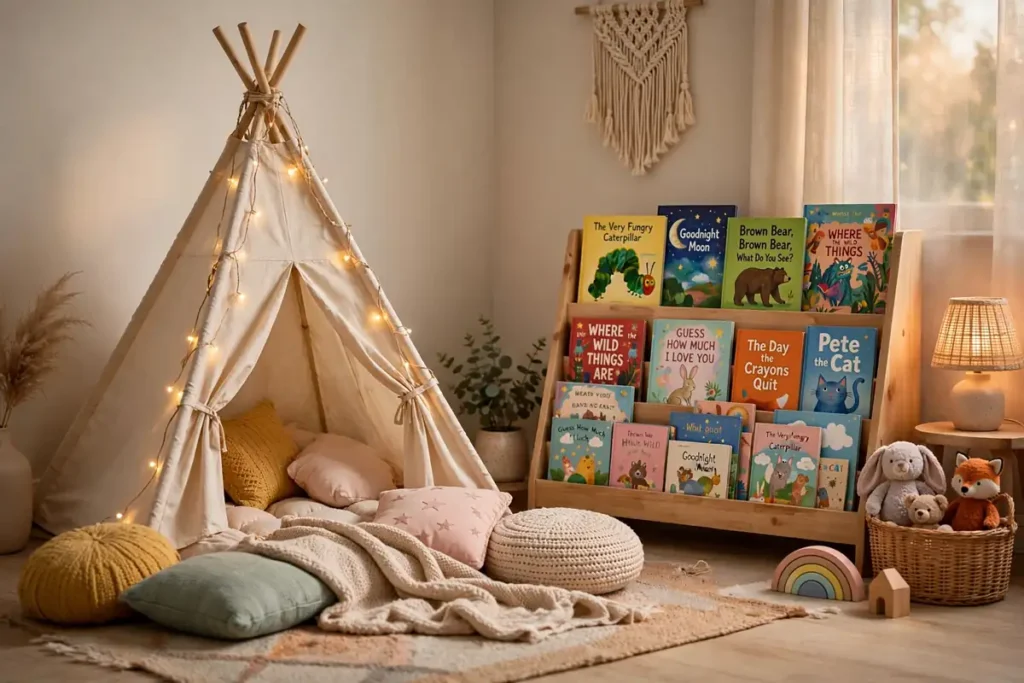
- A teepee or tent. A play tent with a cushion and a battery-powered fairy light feels like a secret hideaway.
- A bean bag or floor cushions. Soft seating invites snuggling. Choose a washable cover and a bean bag with a sealed, child-safe zip.
- A window seat or low bench. If the window is safe (cordless blinds, locks fitted), a low seat with cushions is a lovely spot for a story.
- A canopy or fabric corner. A lightweight canopy fixed to the wall or ceiling creates a cosy cocoon. Keep fabrics lightweight, secure and well away from lamps.
- A corner bookshelf. Forward-facing books, a basket of favourites and a soft lamp on a high shelf complete the scene.
- A comfy adult seat. An armchair or large floor cushion for you helps keep story time relaxed. This is where many parents find they spend some of their best moments.
Lighting and Sleep-Friendly Design
Bedtime goes better when the room is set up for it. Lighting is the biggest factor.
Layer your lighting
One harsh ceiling light does not suit a toddler room. Use three layers instead:
- Ambient light: a ceiling light on a dimmer switch for general brightness.
- Task light: a safe lamp on a high shelf for reading, with a warm bulb and no cord within reach.
- Night-light: a soft, low-glow lamp that stays cool to the touch.
Choose warm, dim light for evenings
Bright, cool-white light is stimulating. In the hour before bed, use warm, low light to help your child wind down. Many parents like a red or amber night-light because it is less likely to disturb sleep than bright white or blue light.
Block morning light
Early sunrises can wake toddlers far too soon. Blackout blinds or curtains help, but remember the safety rule: go cordless, and avoid long curtains that touch the floor if your child tends to pull on them. A well-fitted blackout lining on a cordless roller blind is often the safest option.
Keep the temperature comfortable
A cool, comfortable room, around 18 to 20 degrees Celsius (65 to 68 degrees Fahrenheit), is the range many sleep experts suggest. Dress your toddler in suitable pyjamas rather than overheating the room, and keep the bed away from radiators and heaters.
Use sound gently
A white-noise machine can mask household sounds. Keep the volume low and place it well away from the bed. Many families find it helps if the sound is part of a consistent bedtime routine.
Make the room calm at night
Remove screens from the bedroom if you can. Choose gentle, calm decor around the bed and keep bright toys out of sight at sleep time. Cover shelves with a throw or use baskets with lids so the room looks quieter and less tempting at night.
Walls, Wallpaper and Decor Ideas
Walls give you the most visual impact for the least floor space, which makes them the perfect canvas.
Accent wall
Paint one wall in a stronger colour behind the bed. It frames the sleep area and gives the room a focal point without overwhelming it.
Peel-and-stick wallpaper
Removable wallpaper is great for renters and for parents who like to update the look. Choose a design that suits both now and later: clouds, stars, stripes or tiny botanicals.
Murals and hand-painted details
A simple painted rainbow, a few hills or a gentle mountain range can make a big impact. You do not need to be an artist; a stencil or masking tape does the job.
Wall decals
Decals are an easy way to add a theme. Place them at a height your toddler can see, and avoid very small pieces they could peel off and put in their mouth. Choose high-quality, non-toxic options.
A gallery wall at child height
Frame a few prints, family photos and your toddler’s drawings at their eye level. Use plastic or shatterproof frames and secure them firmly to the wall.
Height chart
A wooden or fabric growth chart is a keepsake and a daily reminder that they are growing. It is also a nice way to personalise a room with very little effort.
Name sign or letters
A wooden name sign above the bed helps the room feel personal. Fix it securely and out of reach if it is heavy.
Safe wall decor reminders
Avoid heavy mirrors, large framed glass and anything that could fall. Do not hang decorations with long cords or ribbons near the bed. If in doubt, use lightweight options and fix them properly.
Also Read: Bedroom Wallpaper: Patterns, Placement and the Mistakes That Cost You a Redo
Flooring and Rug Ideas
Toddlers spend a huge amount of time on the floor, so it deserves some thought.
Hardwood or laminate with a rug
Hard flooring is easy to clean, which matters when juice is involved. Add a large, soft rug in the play area for comfort and warmth.
Carpet
Carpet is warm and cushions falls, but it needs regular cleaning and can trap dust. If you choose carpet, pick a low pile and a stain-resistant finish.
Foam play tiles
Interlocking foam tiles work well in a play zone. They are soft and washable. Choose non-toxic tiles and keep them away from the bed area if they are not part of your decor plan.
Washable rugs
Machine-washable rugs have become hugely popular with parents. They save you the stress of scrubbing, and they come in countless colours and patterns.
Safety tips for floors
- Use a non-slip underlay so rugs do not slide.
- Avoid rugs with curled edges that could trip a toddler.
- Check that flooring is not too slippery in socks.
Budget-Friendly and DIY Toddler Room Ideas
A beautiful toddler room does not have to cost a fortune. In fact, many of the best rooms are put together slowly, with a mix of secondhand finds and simple projects.
Where to save
- Paint instead of wallpaper. A couple of litres of paint make a bigger impact than almost anything else.
- Secondhand furniture. Dressers, bookcases and tables are often available at low prices. Sand, repaint with non-toxic paint and anchor them to the wall. Always check secondhand beds and cots against current safety standards, and never use old cots with missing parts or peeling paint.
- Open storage instead of built-ins. Cube shelving and simple baskets are cheaper and more flexible.
- Fabric instead of furniture. A cushion, a throw and a rug change the feel of a room quickly.
Where to spend
- The mattress and the bed. A well-fitted, firm mattress and a safe bed are worth the investment.
- Safety equipment. Anchors, cordless blinds, outlet covers and window locks are inexpensive compared with the risk they remove.
- Blackout window coverings. Good sleep is priceless.
Easy DIY projects
- A felt or fabric tent. A few wooden dowels and a sheet make a reading tent. Make sure the dowels are smooth and the structure is stable.
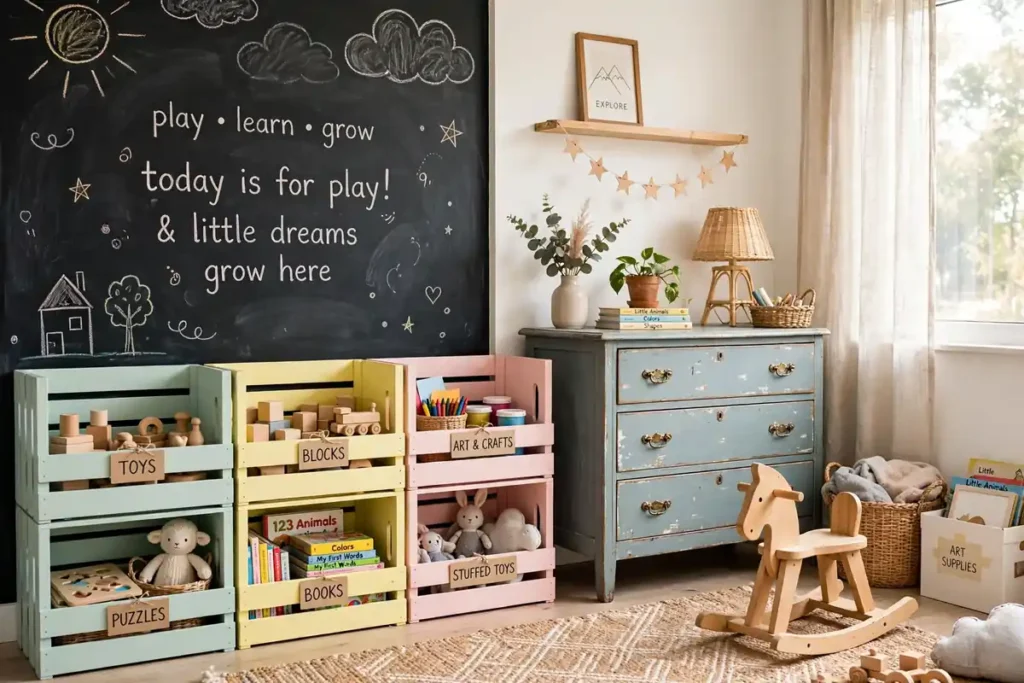
- A DIY chalkboard wall. Chalkboard paint turns a section of wall into an art space.
- Painted wooden crates as shelving. Stack and secure sturdy crates to make a bookshelf or cubby storage.
- A sensory board. Fix textures, latches and soft items to a board for a hands-on activity (supervised, and check that nothing small can come loose).
- A pom-pom or paper garland. Cheerful, lightweight and easy to replace. Hang it well out of reach.
- An upcycled dresser. A sanded and repainted dresser with new knobs gives a fresh look. Use safe, non-toxic paint and secure it to the wall.
- A hand-painted height chart. Cut a plank of wood, paint it and add measurements.
- A pillow fort kit. Collect a few large cushions and blankets in a basket so your toddler can build their own den.
Shop smart
Compare prices, watch for seasonal sales and check second-hand marketplaces. Take a tape measure so you do not buy something that will not fit, and always check safety labels.
Shared Toddler Room Ideas
Sharing a room is common, whether it is two toddlers or a toddler and a baby. With careful planning it works well.
Give each child their own space
Even in a shared room, each child needs a corner that is theirs. Different bedding colours, a personal shelf or a name sign above each bed helps.
Use a divider
A low bookshelf, a curtain on a ceiling track or a folding screen separates sleep zones. Check that anything used as a divider is stable and tall furniture is anchored.
Plan for different sleep schedules
If the two children sleep at different times, a baby monitor, a white-noise machine and blackout window coverings reduce disturbances. Some families put the older child to bed first and the younger child later.
Share toys, separate treasures
Sharing is a tough concept for toddlers. Provide a shared toy area, plus a special box or shelf where each child keeps their own favourites.
Keep the layout simple
Two low beds on opposite walls with a play space between works in many rooms. If space is tight, consider a trundle bed instead of bunk beds, which are not suitable for toddlers.
Safety with a baby in the room
If there is a baby in a crib, make sure the toddler cannot reach into the crib, that toddler toys with small parts stay out of the baby’s space, and that all safe-sleep guidance for the baby is followed.
Rooms That Grow With Your Child
The best toddler room ideas are the ones that last. A few smart decisions now save you money and effort later.
Invest in neutral basics
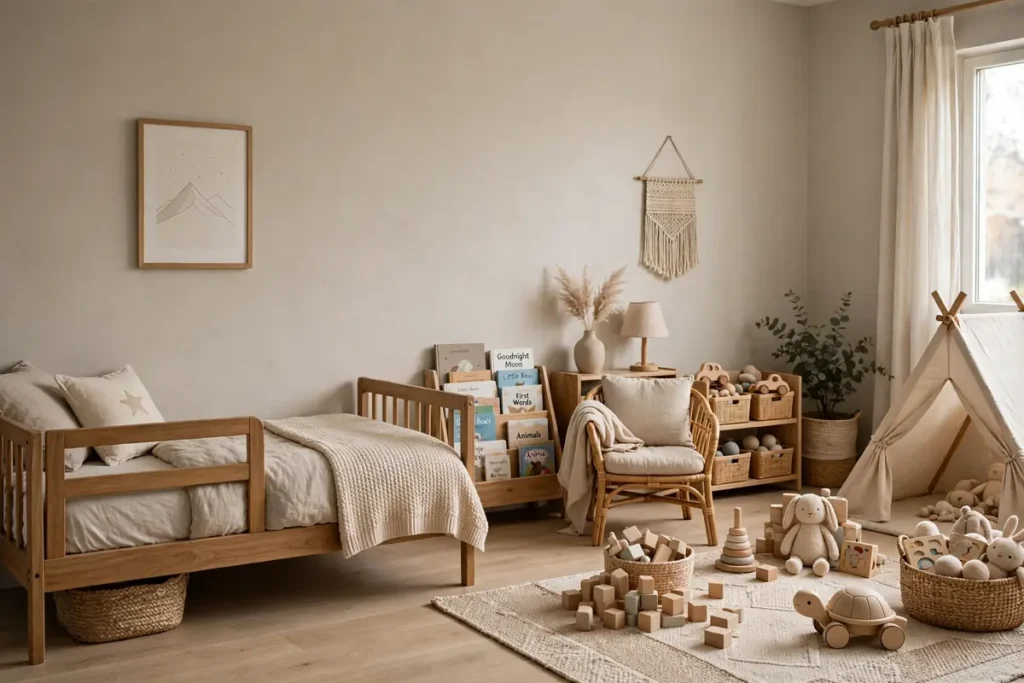
A plain bed, a good dresser and a simple bookshelf will work for years. Choose timeless wood or soft white and let accessories carry the personality.
Pick a bed that can last
If budget is tight, skip the toddler bed and go straight to a standard single bed with a rail. Add a guard rail for the toddler years and remove it later.
Keep the theme in textiles
Bedding, cushions and rugs are easy to swap. When your child outgrows dinosaurs, you replace a few items rather than redecorating.
Choose adjustable furniture
A desk with adjustable height, a shelf with moveable brackets or a changing table that turns into a dresser all stretch a purchase over several years.
Involve your child
Ask your toddler to pick between two options for a cushion cover, a night-light or a bedspread. As they get older, let them take on more decisions. A room they helped shape is a room they want to be in.
Plan for the next stage
Think about where a desk could go one day, how much shelf space your child will need for books, and whether the closet can hold bigger clothes. You do not need to buy anything yet; you just need to leave room for it.
Also Read: A Teenage Boy’s Bedroom That Actually Works: Layout, Colour and Storage
Common Toddler Room Mistakes to Avoid
Parents repeat the same mistakes again and again. Spotting them early makes your room better and your life easier.
1. Skipping the safety audit. Furniture anchors, cordless blinds and outlet covers should be done before the room is styled.
2. Placing the bed under or near the window. It looks pretty in photographs but increases cord and climbing risks.
3. Overloading the room with toys. More toys do not mean more play. They often lead to chaos and a toddler who cannot choose.
4. Buying everything in one theme. A full themed room can look dated quickly. Keep big items neutral.
5. Ignoring light. A room that is too bright at bedtime or too dark for play leads to difficulties. Use layered lighting and good blackout options.
6. Forgetting storage at toddler height. If your child cannot reach it, you will be tidying all day.
7. Choosing beautiful but fragile items. Glass lamps, delicate ornaments and sharp-edged furniture do not survive toddlers. Choose sturdy and soft.
8. Using strong paint fumes. A freshly painted room needs time to air. Pick low-VOC paint and give it a few weeks.
9. Forgetting about you. You will spend a lot of time here. A comfortable adult seat and good bedside lighting make a big difference.
10. Rushing the move. If your toddler is not ready for a bed, do not push it. A calm, well-prepared transition beats an early one.
Quick Toddler Room Checklist
Use this as a final run-through before your child moves in.
Safety
- Furniture anchored to the wall
- Cordless blinds or secured cords
- Window locks or stops fitted
- Outlets covered and cables tidied
- Bed away from windows and heaters
- Smoke alarm working
Sleep
- Firm, well-fitted mattress
- Blackout window coverings
- Warm night-light on a dimmer or low setting
- Comfortable temperature
Play and learning
- Clear floor space with a washable rug
- Open, low shelves with labelled baskets
- Small table and chair
- Reading nook with forward-facing books
Personal touches
- One or two items chosen by your toddler
- Photos and artwork at their eye level
- A growth chart or name sign
- A comfortable seat for you
Final Thoughts on Toddler Room Ideas
A great toddler room is not a showroom. It is a place where a very small person feels safe, curious and at home. That means a solid safety foundation, a calm place to sleep, a corner for books, a clear spot for play, and storage that a toddler can actually use. Add a few colours or themes that match your child’s personality, and you have a room that works.
Start small. Anchor the furniture, sort the windows, choose a bed that suits your child, then add the details one at a time. Trust your instincts and watch your toddler: they will show you what they love. The best toddler room ideas are the ones that make your child say, “This is my room.”
Safety note: This article offers general information and is not a substitute for medical or safety advice. Always follow manufacturer instructions and current guidance from your paediatrician and local safety authorities.
Frequently Asked Questions About Toddler Room Ideas
At what age should a toddler move into their own room?
Most toddlers move into their own room between 18 months and 3 years. The right time depends on your child, your space, and your family. Some families keep a toddler in their parents’ room longer with a floor bed or small bed. Others move a child as soon as they can sleep safely in a toddler bed. If you are moving from a nursery, start early, keep the bedtime routine the same, and let your child help choose a few items for the new room.
When should I switch from a crib to a toddler bed?
Switch to a toddler bed when your child can climb out of the crib, is at least 18 months old, or is ready for more independence. Most children move between 18 months and 3 years. A floor bed is a good option for younger toddlers because it is low and easy to get in and out of safely. If your child is happy in the crib and is not climbing out, there is no rush to change. Wait until they are ready.
What is the safest type of toddler bed?
A floor bed or a low toddler bed with a guard rail is the safest choice. Choose a bed with a low frame so your child can get in and out easily, and make sure there are no gaps where little arms or legs can get stuck. Avoid heavy headboards or sharp edges. A house bed or a toddler bed with rails is also a good option, as long as the bed is stable and the mattress fits tightly. Always check the bed regularly for loose screws or broken parts.
How do I toddler-proof a bedroom?
To toddler-proof a bedroom, anchor all tall furniture to the wall, cover outlets, remove or hide cords and strings, and keep small items out of reach. Use a low bed with guard rails and choose a mattress that fits tightly. Check that the room is free from choking hazards, such as small toys or loose parts. Make sure the windows are locked and the door cannot be opened by your child. Do a monthly check to make sure everything is still safe.
What colours are best for a toddler’s room?
Soft, calm colours like pale blue, sage green, warm white, and gentle peach are best for a toddler’s room because they help your child relax and sleep. You can add bright colours as accents, such as a bold rug or colourful cushions, but keep the main walls soft and neutral. Avoid too many bright colours at once, as this can be overstimulating. A simple colour palette will also make the room easier to change as your child grows.
How can I decorate a small toddler room?
To decorate a small toddler room, use vertical storage, low furniture, and multi-purpose pieces that save space. Choose light colours and mirrors to make the room feel bigger, and keep the floor clear for play. Use under-bed storage, and rotate toys so the room stays tidy. Keep the furniture simple and avoid clutter. A small room can still be cosy and functional with the right layout.
How do I make a toddler room that grows with my child?
To make a toddler room that grows with your child, start with neutral walls and furniture that will last. Choose a bed that can convert to a bigger bed, and keep the theme in textiles that can be changed easily. Use adjustable furniture, such as a desk or a bookshelf, and let your child help choose new items as they grow. Avoid too many themed items that will need to be replaced soon.
How much does it cost to set up a toddler room?
The cost of setting up a toddler room depends on your budget and the items you choose. You can set up a simple room for £100-£300 if you use second-hand furniture or DIY projects. A more complete room with a new bed, storage, and decor can cost £500-£1,500 or more. Start with the essentials, like a bed, storage, and lighting, and add decor and toys over time as your budget allows.
Should a toddler have a night-light?
A night-light is not essential for most toddlers, but it can help if your child is afraid of the dark or needs to see when they wake up at night. Choose a warm, dim light that is not too bright, and place it away from the bed. Avoid blue or white lights, as these can make it harder for your child to fall asleep. If your child sleeps well without a night-light, there is no need to use one.
Is it safe to use second-hand furniture in a toddler room?
Yes, second-hand furniture is safe for a toddler room as long as you check it carefully. Look for furniture that is sturdy, free from lead paint, and has no loose parts or sharp edges. Wash or sand the furniture before use, and make sure it meets safety standards. Avoid old cribs or beds that may not meet current safety rules. Always anchor tall furniture to the wall.