

A front yard 9 metres deep can be turned into a display trick-or-treaters remember for £150 to £400, with most of that going on lighting and one large piece, such as a 3.6-metre skeleton or a fog machine. The work itself takes a weekend to build and about two hours on 31 October to finish, when the fresh pumpkins go out. The one thing to check before buying anything is the weather where you live: in a wet, windy October, paper decorations and unweighted props will not survive the week, however good they look in the shop.
Start by measuring the path from the gate to the door and the width of the porch. A clear walking strip 90 cm wide is the minimum for a child in a costume, and every decoration, cable and stake needs to sit outside it. Write the measurements down, then choose the theme — the rest of the decisions follow from those two numbers.
This guide works through the display in the order to build it: the plan and the theme first, then lighting, the porch, the lawn, the budget, safety and the timetable. Each section gives a size, a price or a specific decision, so the display looks planned rather than piled up.
Where do you start with a front yard display?
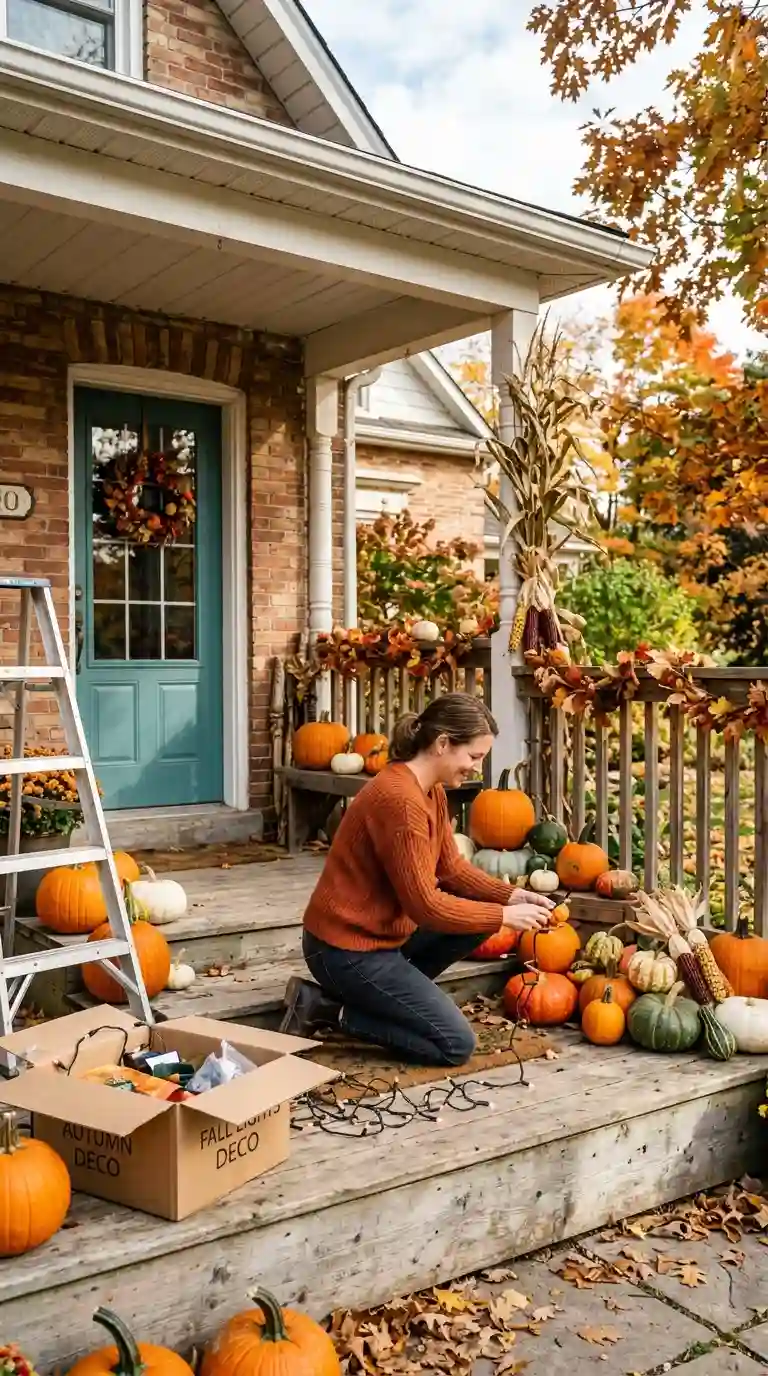
Walk the front yard at night before buying anything. The dark shows where the path disappears, which windows reflect light and where a tall prop would block the view from the street. Note the outdoor sockets, the distance to the nearest one, and whether an extension lead would have to cross the path — if it does, plan the display around the sockets you have, not the ones you wish you had.
Pick one theme and one main colour, then buy to that plan. A haunted graveyard needs grey, black and a little orange; a friendly ghost parade needs white and warm light; a black-and-gold display needs restraint everywhere else. One theme with three or four repeated elements looks designed. Five themes in one yard looks like a shop clearance.
Which theme actually works on a real street?
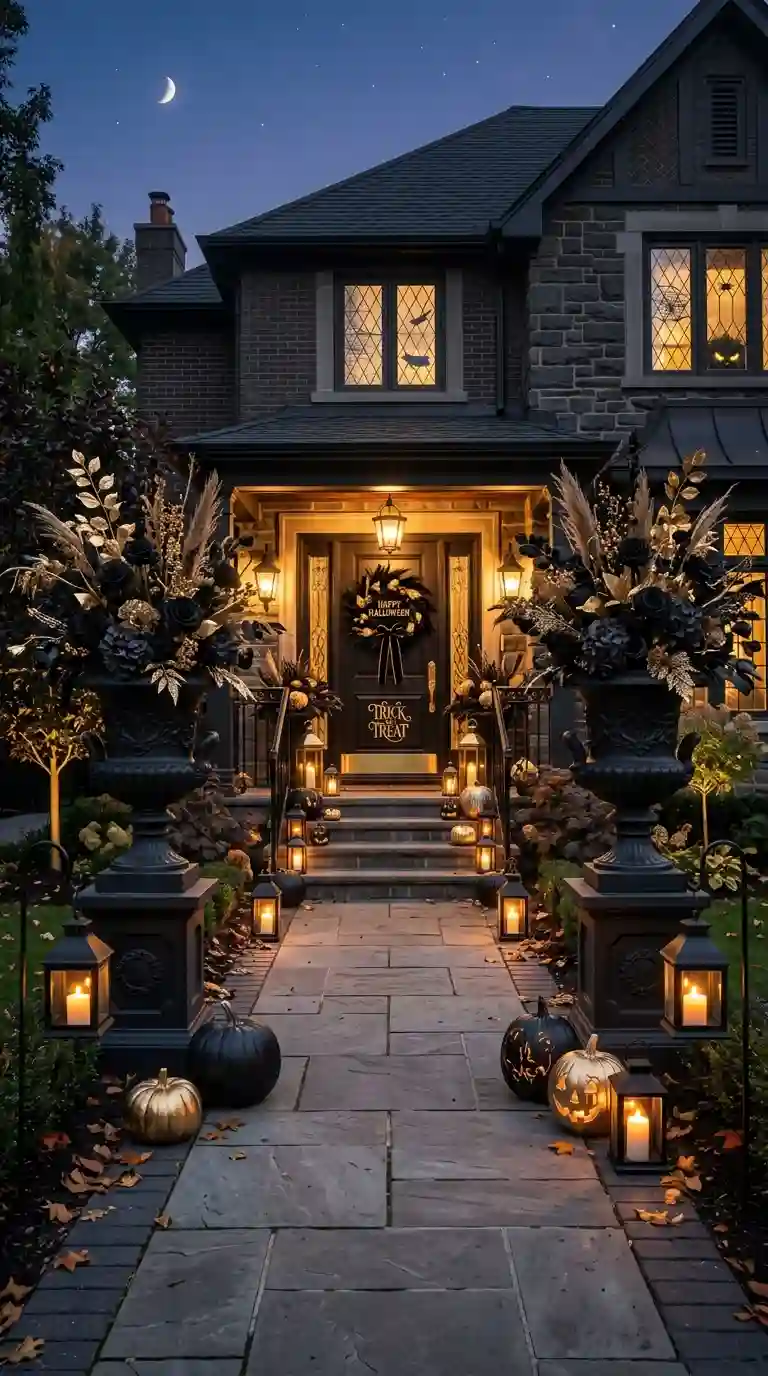
The themes that hold up are the ones that suit the house. A cottage with a small porch suits a pumpkin-and-lantern display; a tall, plain-fronted house suits a graveyard with a few large pieces; a flat or a house with a tiny front garden suits a single strong idea, such as a lit entrance, rather than a crowded lawn. The entrance in the photo below shows the point: dark foliage, warm lanterns and one wreath do the work, and nothing fights for attention.
Think about who walks past. On a street full of small children, friendly ghosts and painted pumpkins get a better reaction than jump scares, and a display that is too frightening will keep families away from the door. If the street is mostly older children and adults, a scarier scene with fog and sound works well — as long as the path stays lit and the way out from the porch is obvious.
How do you light it so it looks good after dark?
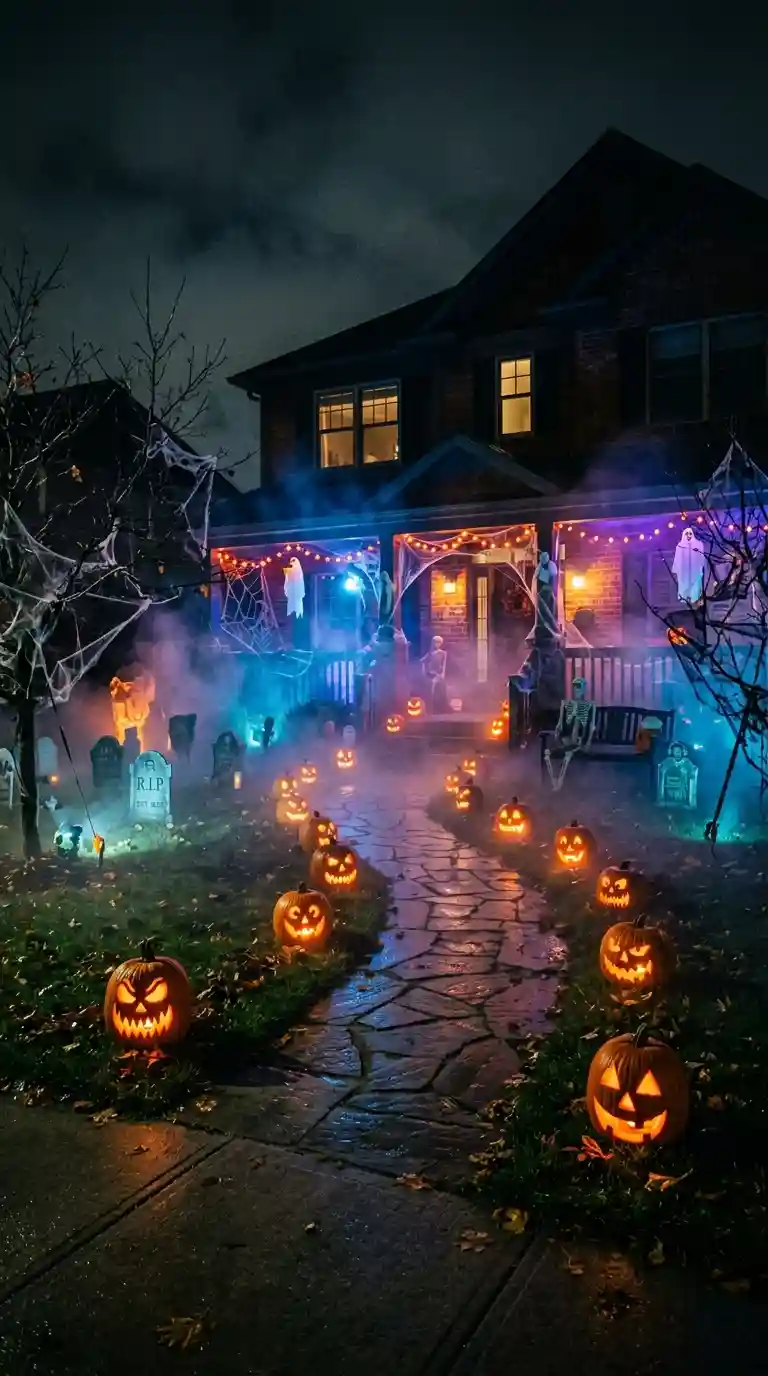
Lighting does more than any single prop, and it needs three layers. First, the path itself: steady, warm-white lights along both edges, bright enough to show every step and change in level. Second, accent light: one or two coloured spotlights aimed up at the house or a tree, in purple, green or orange. Third, movement: a flickering lantern, a fog machine with a light behind it, or a projector casting shadows. The jack-o’-lanterns in the photo below show how little light is needed when it is placed low and close to the ground.
Use warm white (2700K) for the path and save colour for the accents, so visitors can still see where they are walking. Battery tea lights and LED candles are safer than real flames around costumes and dried leaves, and they last the whole evening. Solar lights work if the path gets sun during the day, but test them the night before — a cloudy week can leave them dim by 7 pm.
What should go on the porch?
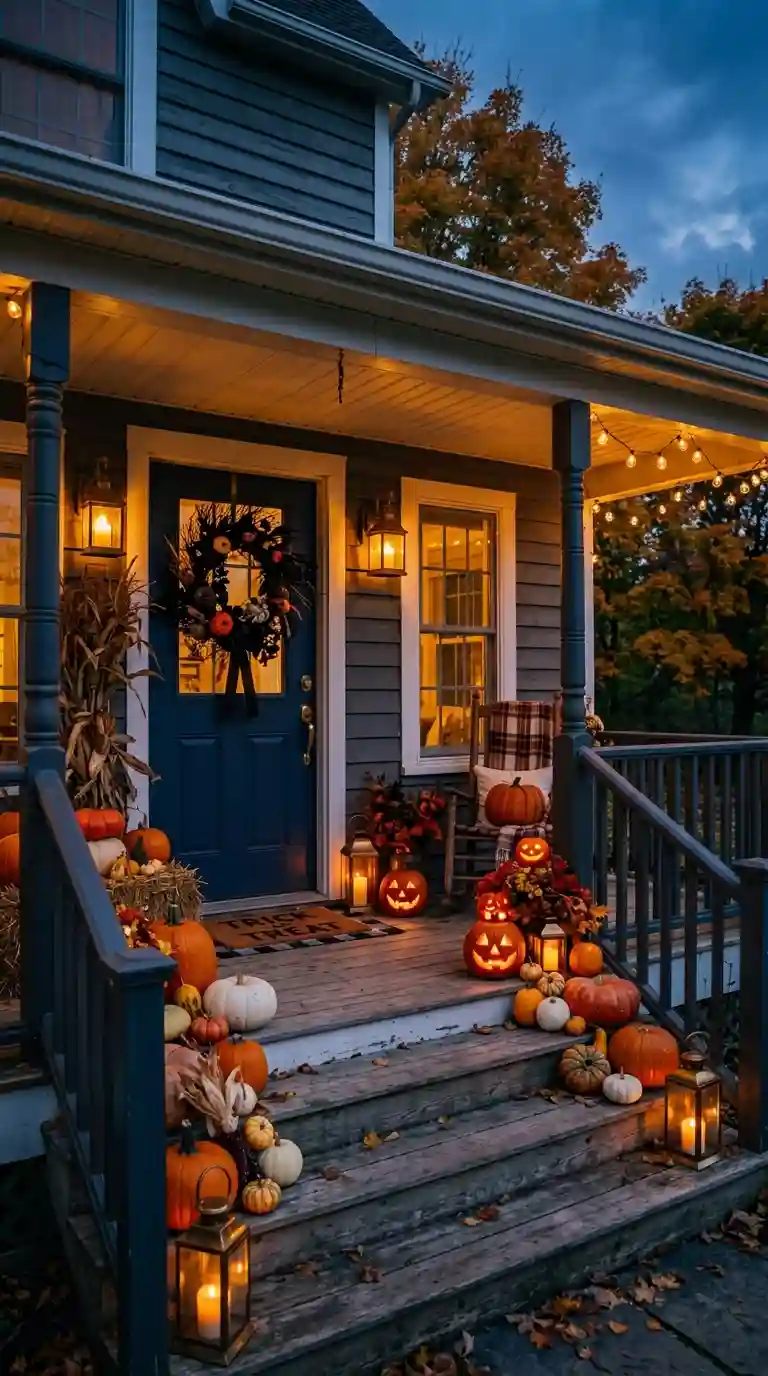
The porch is the focal point, so give it the best pieces and leave the lawn quieter. Layer pumpkins at three heights using crates, plant stands or upturned pots, with the largest at the back and the smallest at the front. A wreath in black foliage or dried leaves, a doormat that can take muddy feet, and a pair of lanterns either side of the door finish the frame. The porch in the photo below shows the balance: pumpkins at different heights, warm light, and nothing blocking the door.
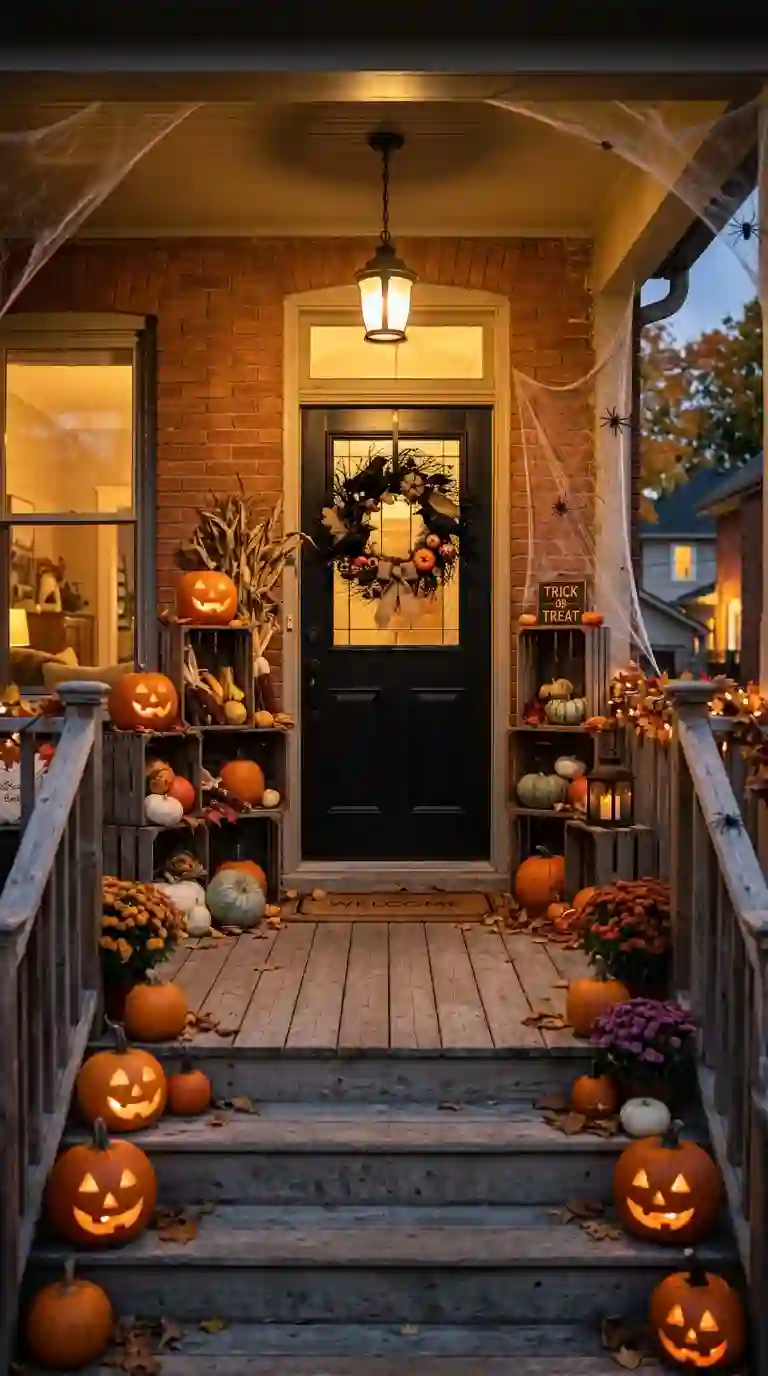
Keep the door itself clear. A wreath is fine, but a hanging figure or a web across the doorway slows people down and can catch a costume. If the porch is small, choose one strong idea — a row of lit pumpkins, or a single large spider over the door — and repeat it rather than adding more. For the path leading up to the porch, these Halloween walkway ideas show how to light the route without crowding it.
What works out on the lawn?
The lawn is for scale, not for detail. One oversized piece — a 3.6-metre skeleton, a large inflatable or a cluster of tombstones — reads from the street, while a dozen small figures disappear into the grass. Place large pieces at the back of the lawn or against a fence, where they frame the house instead of blocking the path. Pumpkins grouped at different heights, as in the porch display above, work just as well at the edge of a lawn.
Inflatables are the easiest way to add height: one large inflatable, staked down with the pegs supplied and tied to a fence or a heavy pot, will survive a windy night. Tombstones look better in small groups of three, pushed into the ground at slightly different angles, with a little fake cobweb between them. Keep every prop at least 60 cm back from the path edge, so a costume or a pushchair cannot catch it.
How much should you spend — and where does it go?
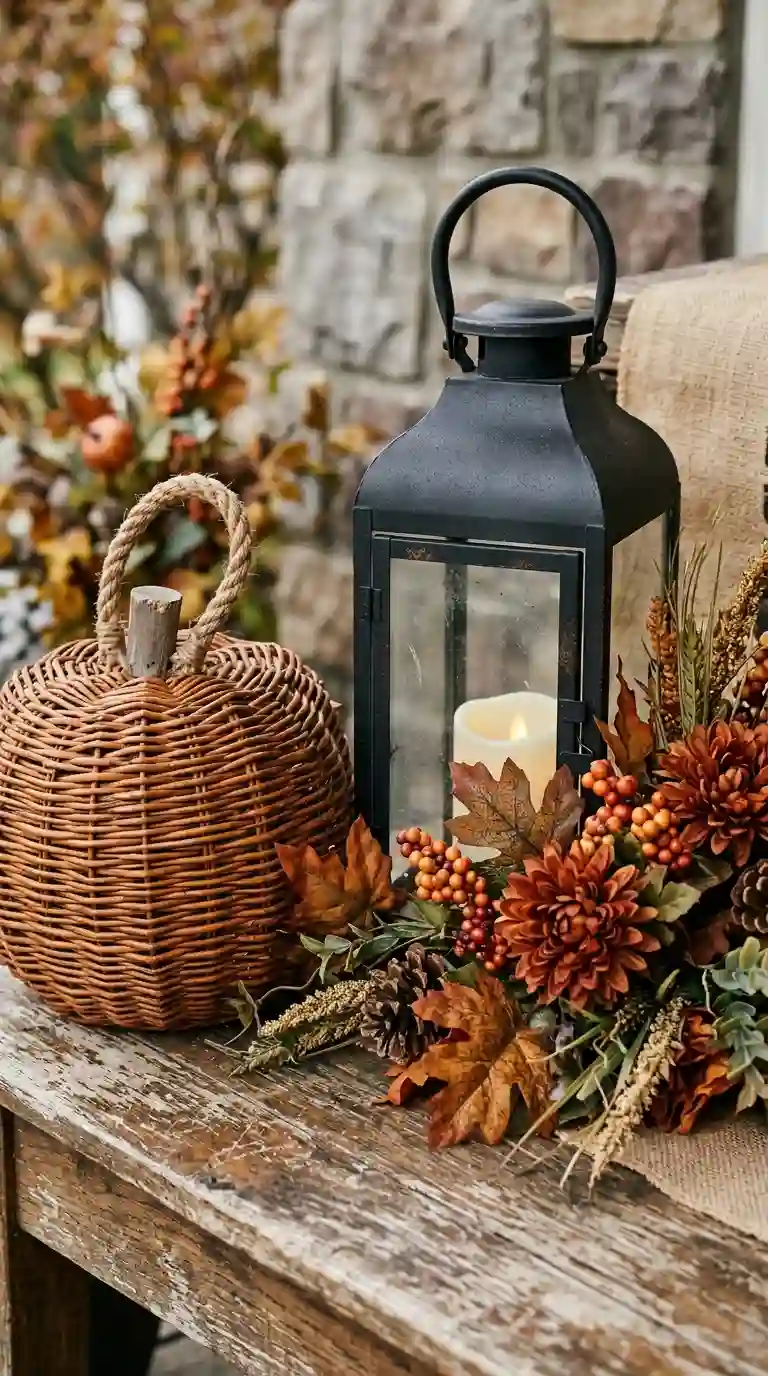
A good display costs £150 to £400 for a typical front yard. Spend about half on lighting — string lights, two spotlights and a set of LED candles — because light makes cheap props look expensive and expensive props look flat without it. Spend the rest on one large piece and the pumpkins. The materials in the photo below show what to look for: powder-coated metal, weather-resistant plastic and woven wicker hold up in rain, while thin painted cardboard and paper will not last a wet week.
Save money by reusing last year’s pieces with a fresh coat of paint, by making tombstones from foam board (£5 to £10 each in materials), and by buying pumpkins late in the day on 30 October, when they are often reduced. A fog machine costs £25 to £40 and a litre of fog fluid about £8, which is enough for several evenings. For the rest of the house, these Halloween home decor ideas carry the same theme indoors without another big spend.
How do you keep trick-or-treaters safe?
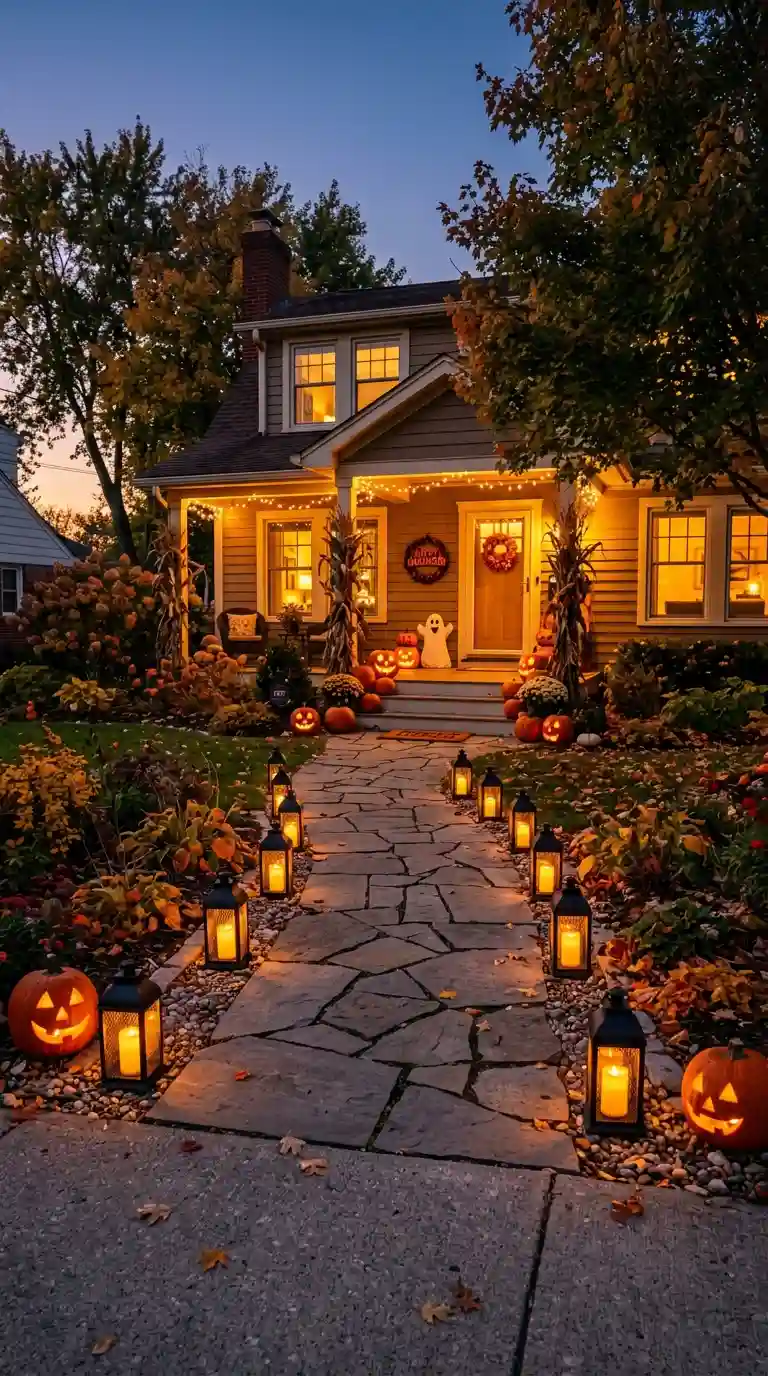
Safety is part of the design, not an afterthought. Keep the path clear and lit, with no cables, stakes or props on the walking surface. Use outdoor-rated extension leads, keep connections off the ground and out of puddles, and tape down any lead that has to cross a step. The walkway in the photo below shows the standard to aim for: lights along both edges, decorations set back from the path, and the door clearly visible from the gate.
Hang nothing lower than 2 metres over the path, so a tall adult or a child in a tall hat cannot walk into it. Use flameless candles near anything dry, such as leaves, hay or fabric. If the display includes fog, use it sparingly — thick fog can hide a step — and keep the machine away from anything flammable. Do a full walk-through after dark the night before, in the shoes visitors will be wearing.
When should you put it up — and take it down?
Two weeks before Halloween is early enough for the structure: lights, stakes, tombstones and the large pieces. Put the display up in stages — the heavy, weatherproof items first, the delicate items last. Fresh pumpkins should be carved on 30 or 31 October; a pumpkin carved a week early will be soft and collapsed by the night itself.
Take the display down within two or three days of Halloween. Paper, fabric and carved pumpkins deteriorate fast in November rain, and a display left up for weeks looks neglected rather than festive. Store props in labelled boxes, coil lights loosely so the wires do not kink, and keep the fog machine fluid sealed. The indoor Halloween decor can stay up a little longer while the outside is cleared away.
Questions about outdoor Halloween decor
How much should I spend on outdoor Halloween decor?
A typical front yard display costs £150 to £400. Spend about half on lighting, the rest on one large piece and pumpkins. A display can be built for under £50 with paper luminaries, painted pumpkins and DIY foam tombstones, and it will still look planned if the theme and the lighting are right.
What is the easiest outdoor Halloween decor idea for beginners?
A layered pumpkin display on the porch. Put pumpkins at three heights on crates or upturned pots, add a string of warm-white lights and a pair of lanterns by the door. It takes an afternoon, needs no power tools, and it is easy to build on in later years.
How do I make outdoor Halloween decor look less cluttered?
Choose one theme and one main colour, limit the display to three or four repeated elements, and leave empty space between groups of props. If two pieces compete for attention, move one of them. A clear path and a clear focal point do more than any extra decoration.
What lighting works best for outdoor Halloween decor?
Warm-white light for the path, coloured spotlights for accents, and flameless candles or LED tea lights for lanterns and pumpkins. Keep the path bright enough to walk safely, save colour for the house or a tree, and test everything the night before Halloween.
When should I put outdoor Halloween decorations up?
Put weatherproof items up two weeks before Halloween, add the delicate pieces in the last few days, and carve fresh pumpkins on 30 or 31 October. Take the display down within two or three days afterwards, before rain and wind damage the props.
A front yard display works when it is planned like a small stage set: one theme, three layers of light, a clear path and one piece big enough to see from the street. Build it in that order, test it after dark, and it will be the house children remember on the way home.





4 Comments on “A Front Yard That Stops Trick-or-Treaters in Their Tracks”