

A coffee table usually has to do two jobs at once: hold a cup, a book and a remote, and still look calm from the sofa. That is a narrow brief, and it is why so many tables end up either bare or crowded. This guide uses a practical starting point: a rectangular table 110 to 120 centimetres long, a budget of £40 to £80 for a first styling pass, and about 45 minutes to clear, test and settle an arrangement. The rule that governs every section below is simple: leave at least 30 per cent of the surface empty, so the table can still be used.
Why does the middle of the room feel unfinished?
The centre of a living room is where the eye rests between the sofa, the television and the windows, so an unconsidered table can make the whole room feel unresolved even when the furniture is right. The photo below shows a wooden table with books and a small plant: the arrangement works because the objects are grouped to one side, leaving a clear area for everyday use. A useful test is to sit in the usual seat and look at the table for ten seconds; if three separate piles compete for attention, the grouping needs simplifying, not more decoration.
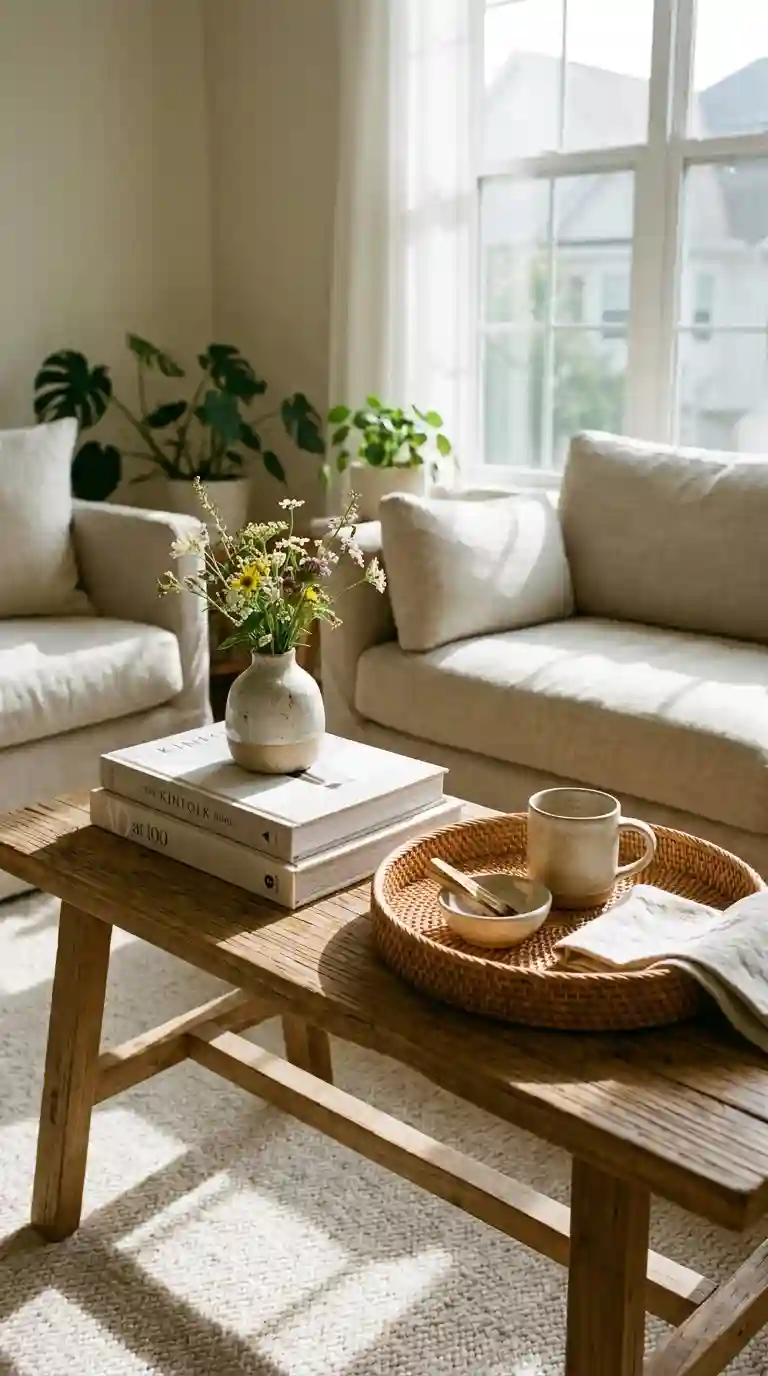
Start by removing everything, then decide what must return for daily life: usually two or three items, such as a coaster set, a book currently being read and a remote holder. Everything else is decoration and should earn its place by size, colour or height, not by habit. If an object has not been noticed or used in a month, move it to another room for two weeks before deciding whether it belongs on the table at all.
What size should the arrangement actually be?
Measure the table before buying anything. For a table 110 centimetres long, the styled area should cover no more than 70 centimetres of its length, with at least 20 centimetres clear at each end for cups and hands. On a round table 90 centimetres across, one central group about 45 centimetres wide is usually enough; a second group makes the surface feel divided. Height matters too: keep the tallest object below 30 centimetres, so conversation across the table stays comfortable and the television is not blocked from a low sofa.
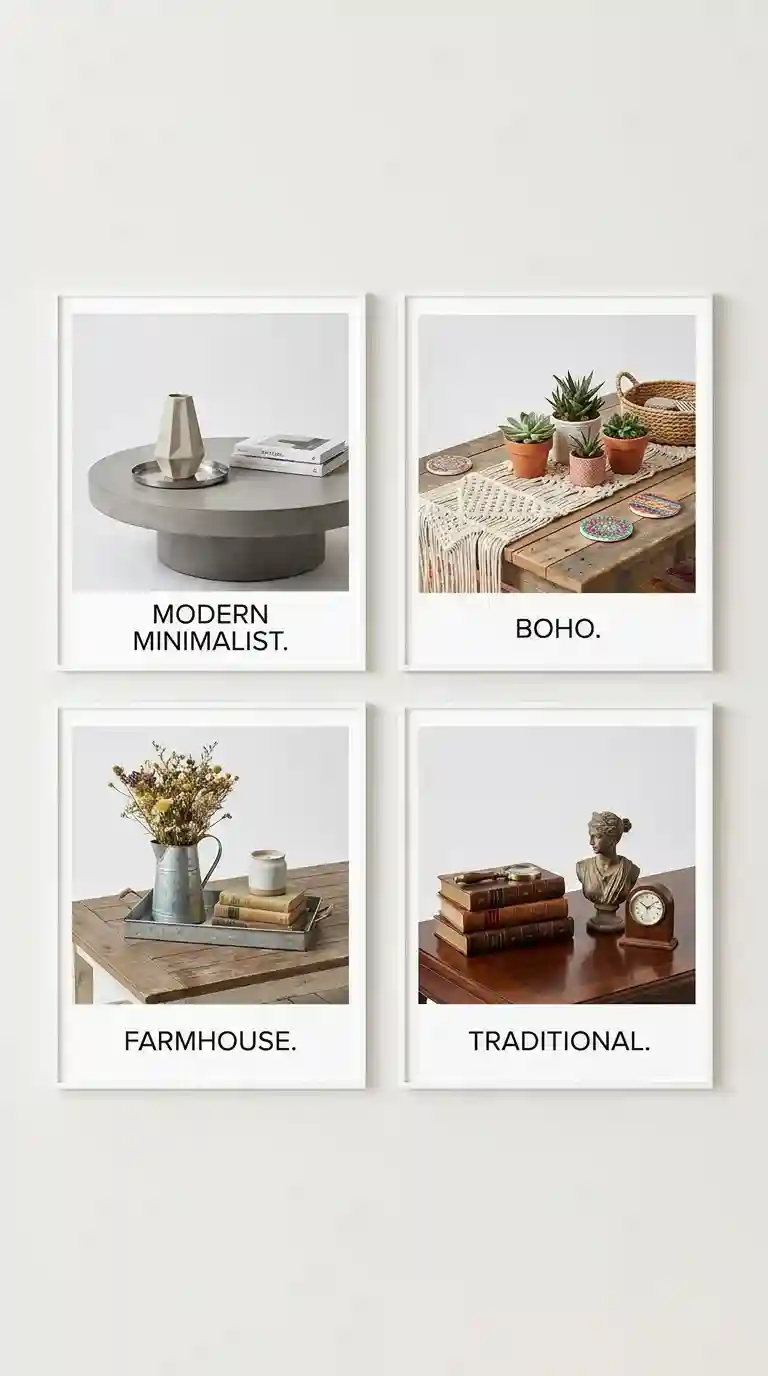
The photo above shows several arrangements side by side, which is a useful way to compare scale: the successful groups use three heights, such as a low tray, a medium stack of two books and one taller vase, rather than five objects of the same height. A practical check is to place a mug beside the group; if the mug has nowhere to sit without moving something, the group is too wide. Leave that mug space in the plan, not as an afterthought.
How do you choose one anchor without overbuying?
An anchor is the one object the eye meets first, and it should be chosen before anything else. A tray about 40 by 30 centimetres works for most rectangular tables because it creates a boundary for smaller items and can be lifted away when the table needs clearing. On a round table, a single bowl or a low, wide vase can do the same job. The decision to make first is material contrast: a wooden tray on a glass table, or a stone bowl on a wooden table, reads more clearly than a tray that matches the table exactly.
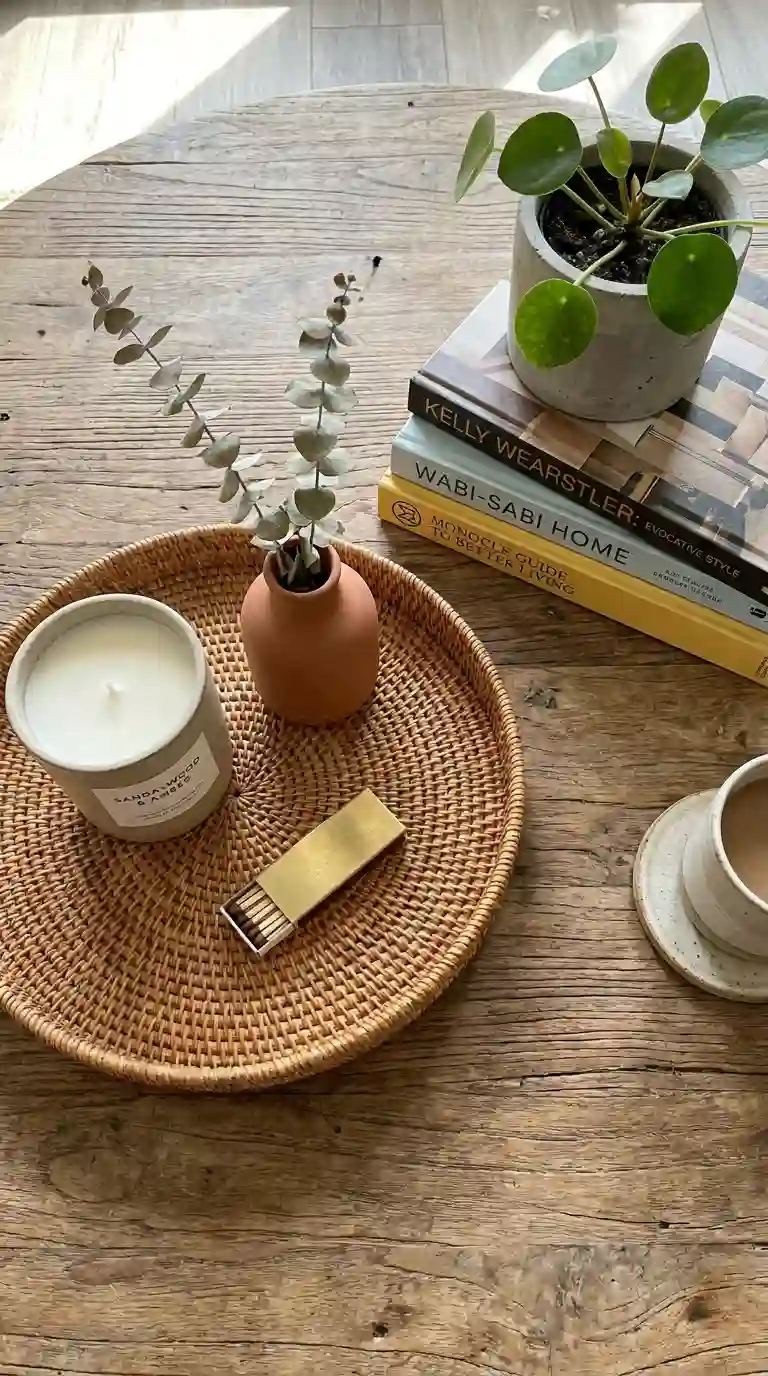
Once the anchor is in place, add only two supporting items: something flat, such as two books, and something with height, such as a candle or a small plant. That three-part structure is enough for most rooms, and it avoids the common error of buying a set of five matching ornaments that fill the tray before daily items are considered. For a bolder table surface, epoxy table designs show how a strong surface pattern can itself act as the anchor, in which case the decor should be quieter still.
What works on wood, glass and marble?
Wood tables tolerate warmth and texture: linen, woven trays, ceramic and paper all sit comfortably, but a dark wood table needs one lighter object, such as a pale book stack, to stop the group disappearing into the surface. Glass tables need the opposite treatment, because everything underneath is visible; use a solid tray to hide clutter and choose objects with a clear silhouette, such as a single vase, rather than many small items that look scattered through the glass. Marble already has pattern, so keep colours restrained: two tones plus the marble itself is a safer limit than four or five competing colours.
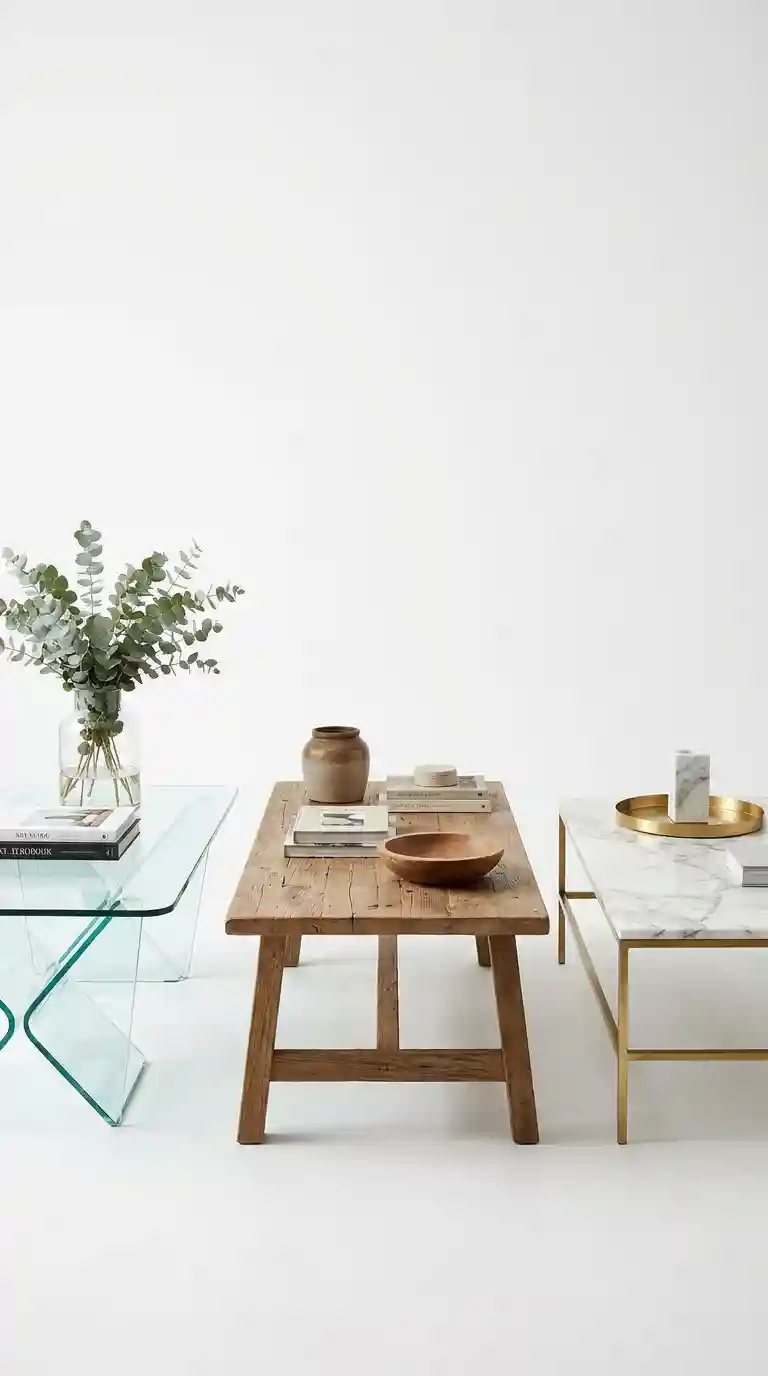
The photo above compares three table types, and the lesson is consistent: the table material should decide the tray, not the other way round. A rattan or wicker table, for example, already provides texture, so a smooth ceramic bowl or a plain wooden tray balances it better than another woven basket. Before buying, hold the proposed item against the table in daylight; artificial shop lighting flattens both wood grain and marble veining, and colours that match in a shop can clash at home.
How do you keep a small table usable?
On a table under 90 centimetres long, the priority changes from display to function. Limit the arrangement to one group of three items, keep the total footprint under 40 per cent of the surface, and choose a tray with handles so the whole group can be moved in one motion when guests arrive. Nesting tables are a practical alternative: the smaller table can hold drinks while the main table keeps its arrangement, which avoids the daily cycle of clearing and restyling.
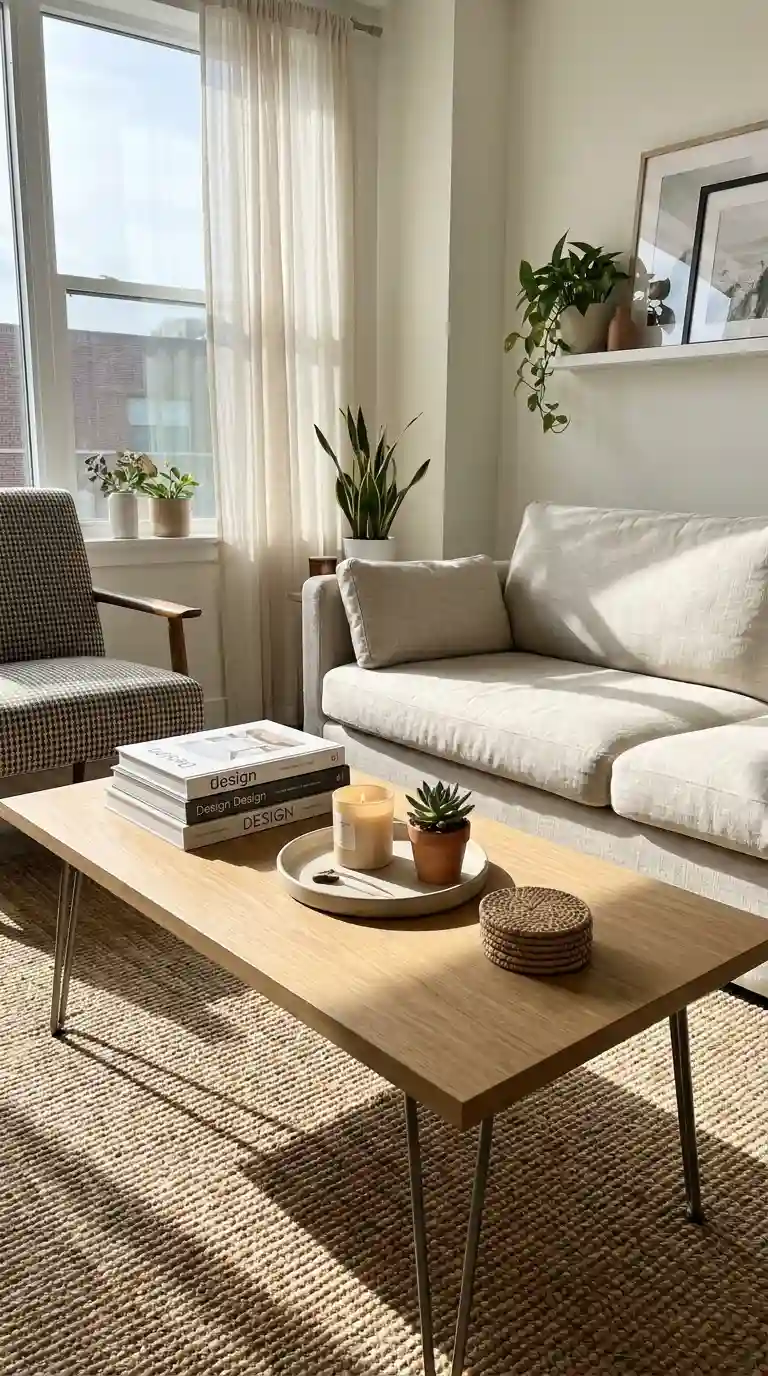
The photo above shows a compact living room where the table stays usable because the decor is low and to one side, leaving the front edge clear. The same clear-surface logic helps elsewhere in the home: kitchen drawer organisation works on the same principle, with everyday items grouped and everything else given a separate home. In a small room, avoid candles with an open flame near a walkway, and choose a plant in a pot no wider than 15 centimetres so it does not dominate the table.
What changes with the seasons, and what stays?
Seasonal changes should be swaps, not rebuilds. Keep the tray and the book stack in place all year, and change only one or two elements: a vase of fresh stems in spring, a woven runner or lighter candle in summer, and warmer tones such as terracotta or deep green in autumn. The photo below shows an autumn arrangement that works because the base group is unchanged; only colour and texture have shifted. A full seasonal set, bought new each quarter, usually costs more and creates storage problems, whereas a box of four or five swap items fits on one shelf.

Winter is the exception where height and light matter more: a slightly taller candle group or a small lamp near the table can compensate for shorter days, provided the total height still stays below 30 centimetres. For spring, the wider room often changes too, and spring table styling gives a useful comparison for how much lighter a seasonal table should feel. In every season, test the arrangement in the evening as well as in daylight, because lamp light changes how warm tones read.
How much should a first styling cost?
A first styling pass of £40 to £80 is realistic if one item is already owned. Allocate about half the budget to the anchor, such as a tray or bowl, and the rest to two supporting items, such as a candle and a small plant. Shopping the home first is the most effective saving: books, a bowl from a cupboard and a plant from another room can form the whole group, with only the tray bought new. Second-hand shops are particularly useful for trays and bowls, because shape and weight matter more than a perfect finish.
Avoid spending the budget evenly across five small ornaments, which is the most common way to end up with a crowded table and nothing that reads as a focal point. If a single anchor costs more than £40, delay the supporting items for a month and live with the anchor plus existing books; the arrangement will look calmer than a complete set bought in one trip. Keep receipts for two weeks, and return any item that has not found a clear place after that trial period.
What mistakes make a good table look cluttered?
The photo below compares a cluttered table with a styled one, and the difference is rarely the quality of the objects: it is the number of groups and the lack of empty space. Three mistakes account for most problems. First, covering more than 70 per cent of the surface, which leaves no place for a mug. Second, mixing four or more colours or materials, which makes the eye jump between items instead of resting on one group. Third, ignoring the sofa distance: a table 40 to 45 centimetres from the sofa is comfortable to reach, while a table pushed closer feels crowded however well it is styled.
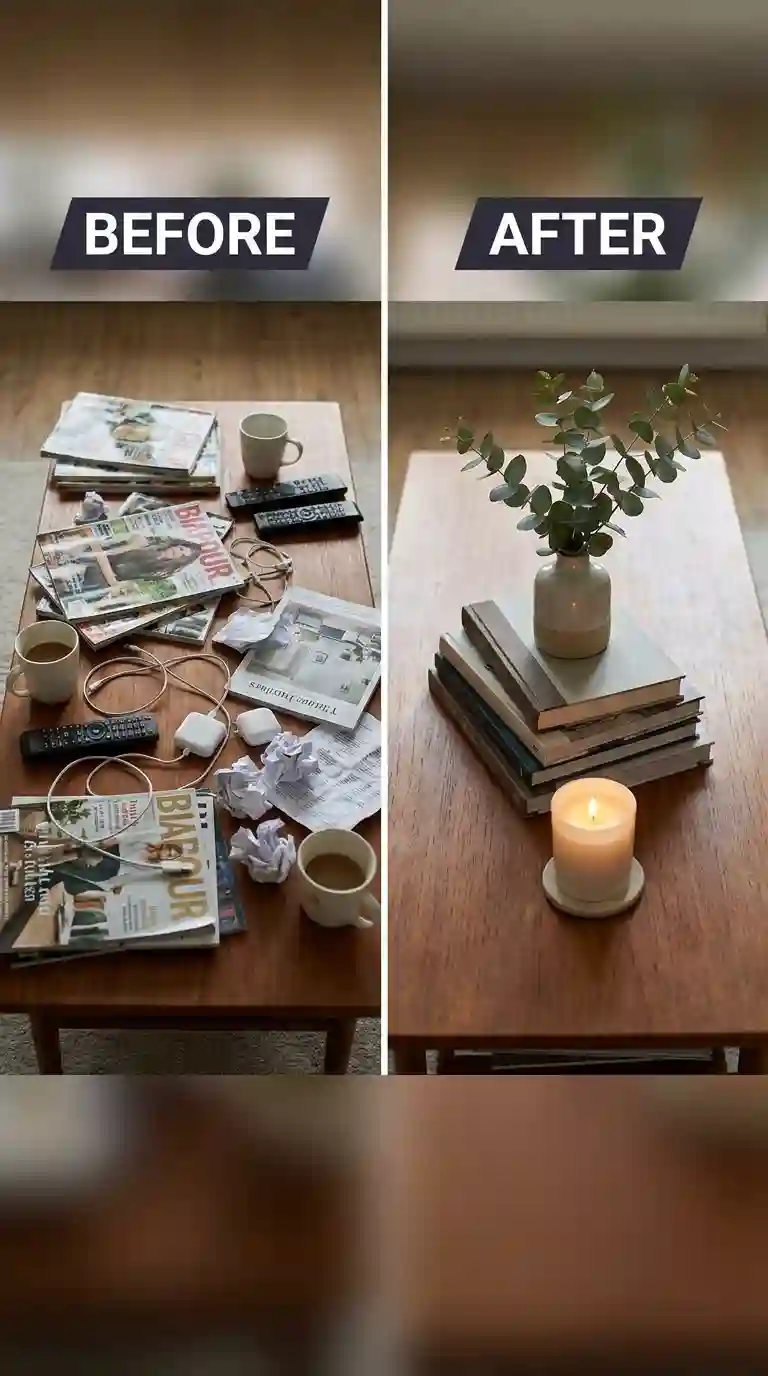
Two further checks help before calling an arrangement finished. Step back to the doorway and check whether the table reads as one group or three separate piles; if it reads as three, move the groups closer or remove one. Then sit down and place a book and a mug on the table as usual; if either requires moving decor, the arrangement is display only, not a working table. A working table that looks slightly simple is better than a styled table that cannot be used.
Questions worth asking before you rearrange
How much of a coffee table should stay empty?
At least 30 per cent of the surface should stay clear, with space for a mug and a book without moving decor. On a table 110 centimetres long, that means the styled group should cover no more than about 70 centimetres of its length.
What is the best anchor for a coffee table?
A tray about 40 by 30 centimetres works for most rectangular tables, because it creates a boundary for smaller items and can be lifted away when the table needs clearing. On a round table, a single low bowl or wide vase can do the same job.
How tall should coffee table decor be?
Keep the tallest object below 30 centimetres, so conversation across the table stays comfortable and the television is not blocked from a low sofa. Three heights within that limit, such as a low tray, a medium book stack and one taller vase, read better than five objects of the same height.
Can a small coffee table still be styled?
Yes, but limit it to one group of three items covering under 40 per cent of the surface, and choose a tray with handles so the whole group can be moved in one motion. Nesting tables are a practical alternative, with drinks on the smaller table and decor on the main one.
How often should coffee table decor change?
A full restyle is rarely needed more than once or twice a year. Seasonal changes should be swaps of one or two items, such as fresh stems in spring or warmer tones in autumn, while the tray and book stack stay in place.
Start with the tray, add two supporting items, and leave the rest of the surface empty for a week. If the table still works for everyday use after that week, the arrangement is finished; if not, remove one item before buying another.





10 Comments on “How to Style a Coffee Table Without Filling It Up”