
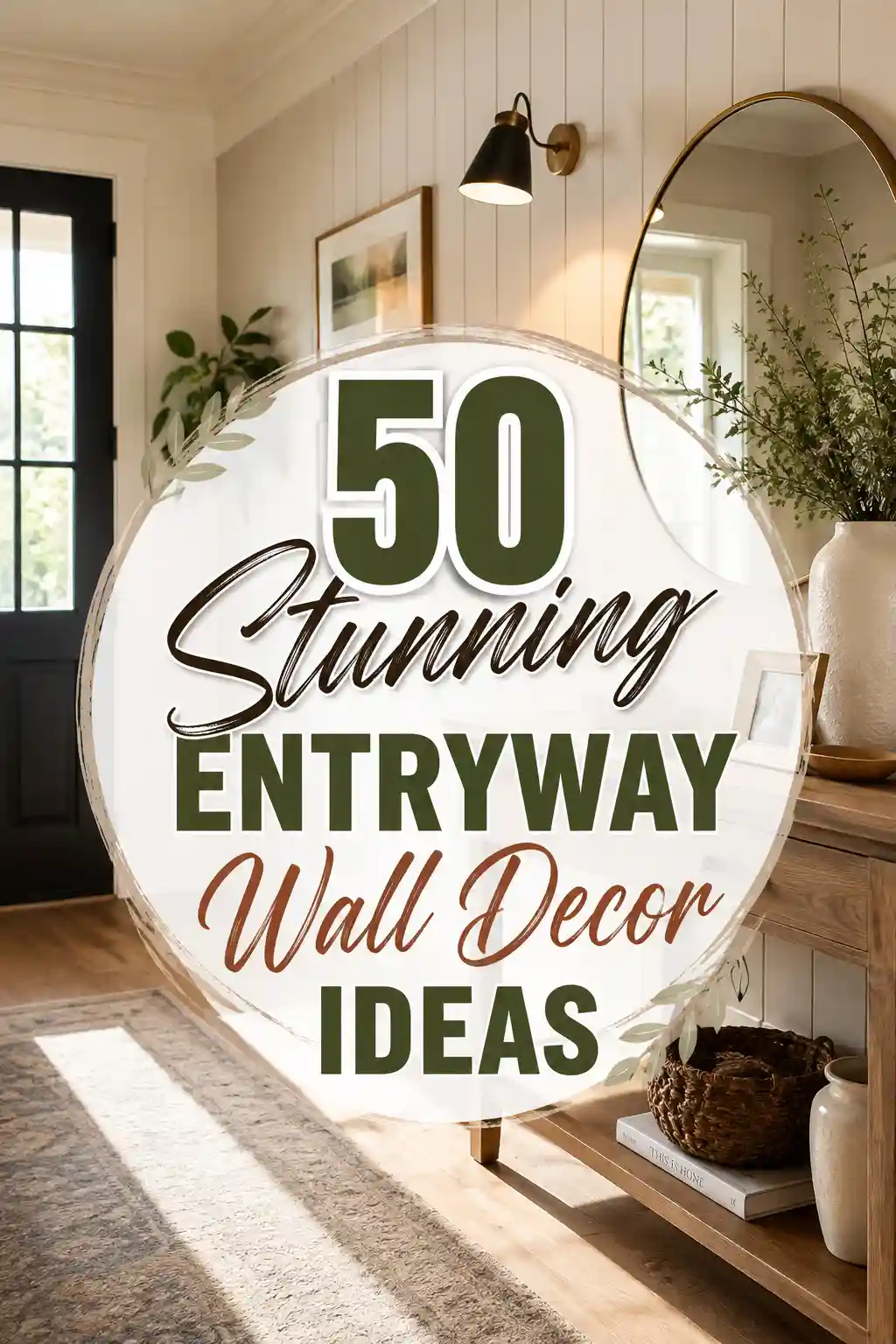
Start with three measurements and one honest constraint: the width of the wall, the height from the floor to the ceiling, and the depth of any furniture standing against it. In a typical hall, a useful working budget is £120 to £350 for a mirror, one or two framed pieces and fixings, and a realistic timeline is a single weekend, including a trip to buy fixings. The constraint that matters most is usually the door swing, a radiator, or a light switch that cannot be covered. Decide those first, and the wall stops being a blank space and becomes a set of fixed limits to design inside.
Why does this one wall matter so much?
An entryway wall is seen twice a day, every day, and it is the first surface a visitor registers. That does not mean it needs to be dramatic. It means it needs to be legible: one clear focal point, a place for keys or a coat, and nothing that forces people to step around furniture to open the front door. A wall that does those three jobs well will feel finished even if it holds only two or three objects.
The photograph below is a good test case. It shows a plain wall treated as a background, not as a display in itself. Notice how much of the effect comes from restraint: a single colour, even spacing, and no object competing with the door. If a proposed piece cannot earn its place against that standard, it belongs in another room.
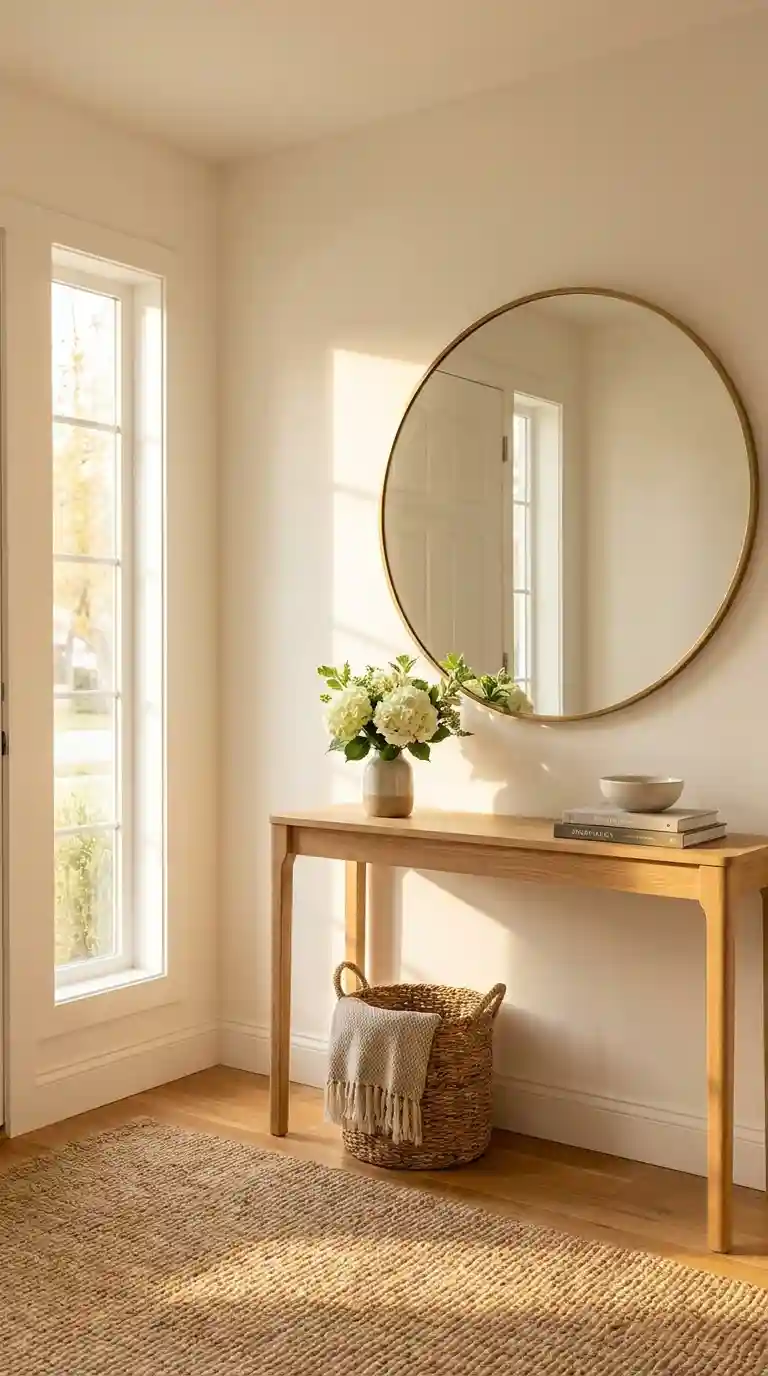
A practical rule follows from this. Choose the function of the wall before choosing its decoration. If the hall needs storage, hooks and a shelf come first and art fills the gaps. If the hall already has a console table and a cupboard, the wall can be purely visual. Mixing those two briefs is how halls end up with a beautiful mirror above a pile of coats.
How do you measure before you buy anything?
Measure the wall in three places: at the skirting, at eye level, and near the ceiling, because older walls are rarely straight. Record the clear width between the door frame and the nearest corner, and the height from the top of any console table to the ceiling. A mirror or frame that is about two-thirds the width of the furniture beneath it usually looks intentional; a piece that is wider than the furniture tends to look top-heavy.
Then mark the centre line. For most homes, the centre of a mirror or picture should sit at about 145 centimetres from the floor, which is close to average eye level. If the piece hangs above a console table, leave 15 to 20 centimetres between the top of the table and the bottom of the frame. That gap is small enough to read as a group and large enough to dust and to place a vase without knocking the frame.
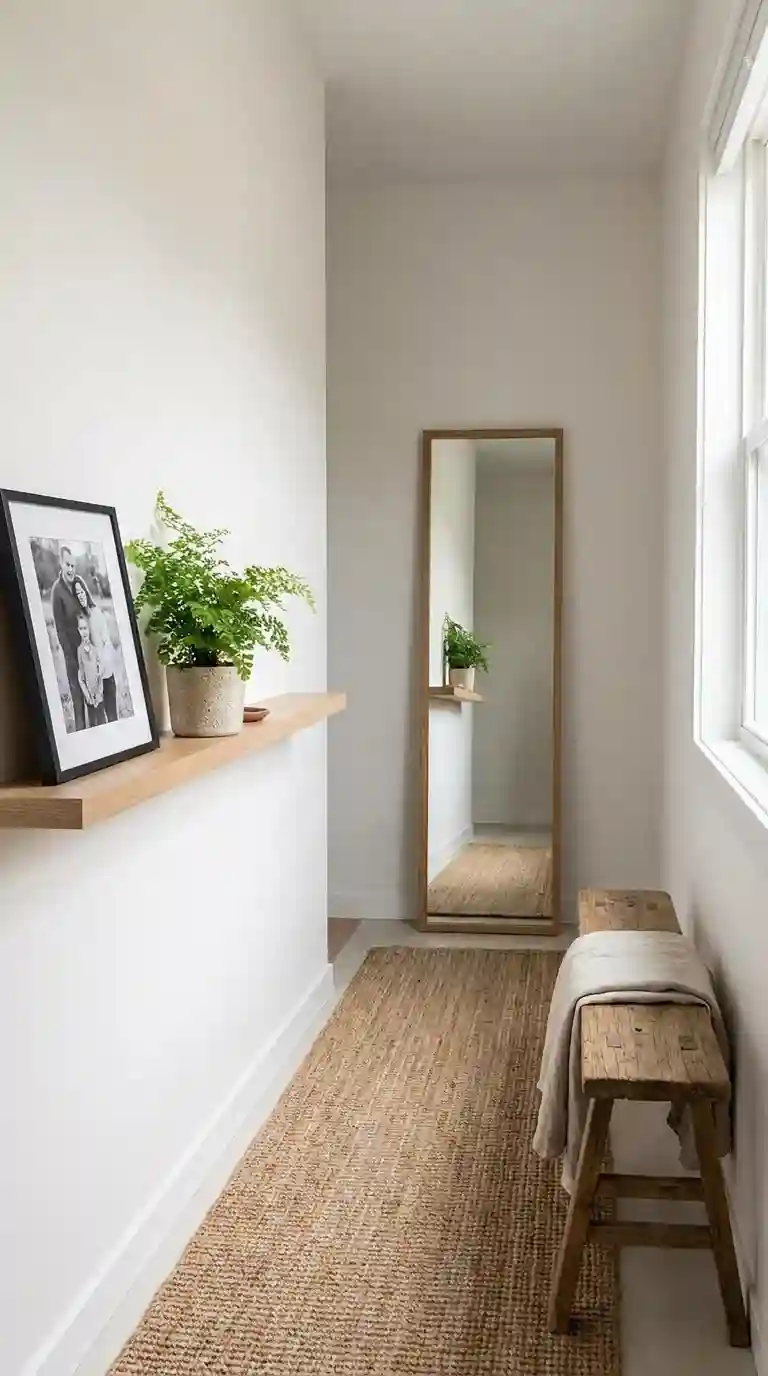
Cut paper templates to the size of anything you are considering and tape them up for a day. This costs nothing and prevents the most common error, which is buying a frame that looked right in a shop and lost on a 3-metre wall. The photograph above shows why scale matters in a narrow space: slim, vertical pieces keep the floor clear, while a wide arrangement would have closed the passage in.
Should a mirror be the first thing you hang?
In a dark or narrow hall, yes, a mirror is usually the best first purchase, because it does two jobs at once: it reflects light and it gives a last check before leaving. The decision is not whether to buy one, but which size and where to put it. A round mirror of 60 to 80 centimetres suits a console table of 90 to 120 centimetres. A tall rectangular mirror suits a wall with no furniture beneath it, provided it does not reflect a cluttered corner.
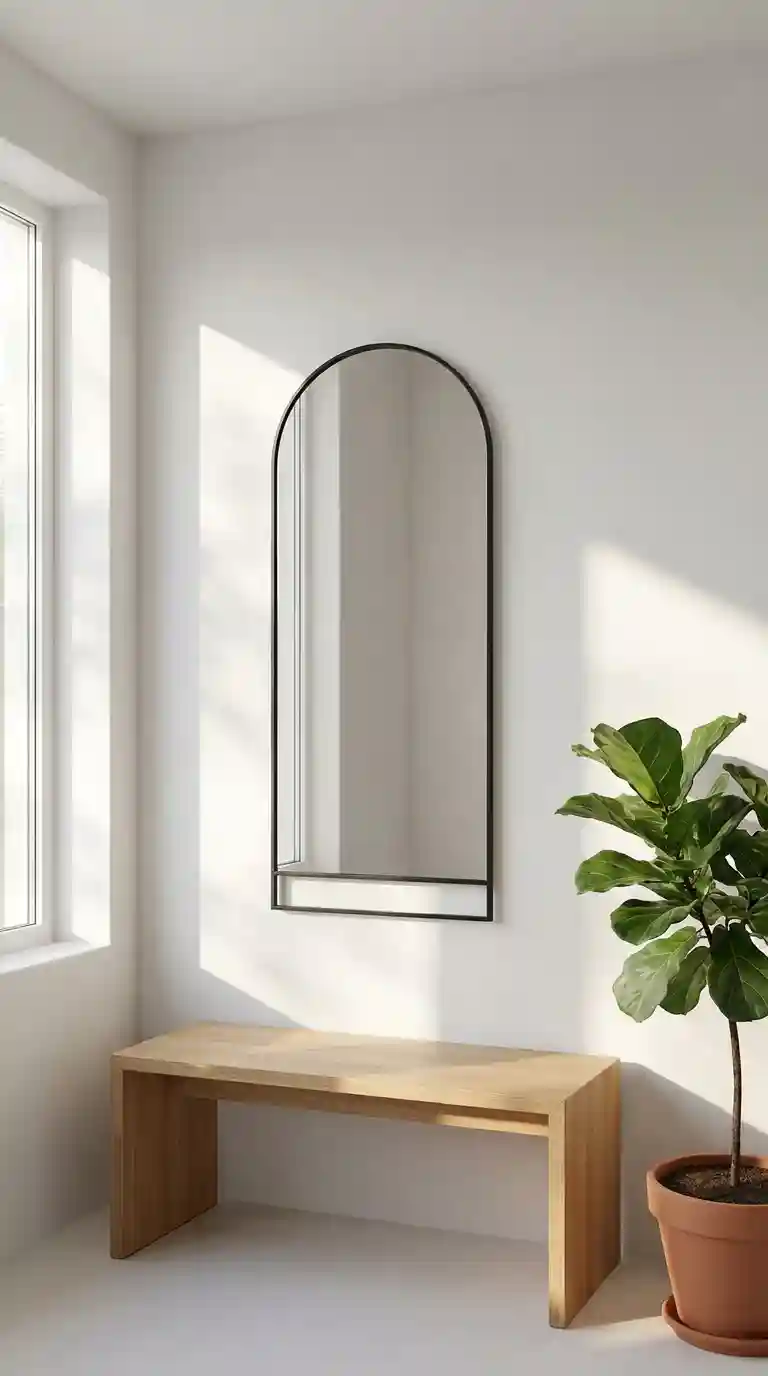
Position matters more than frame style. A mirror opposite a window or a glazed door doubles the daylight in the hall; a mirror facing a blank wall merely doubles the blank wall. Check what it reflects from the front door, not just from directly in front of it, because that is the view visitors actually get. If the reflection is a staircase, a plant or a window, the mirror is working. If it is a bin or a pile of shoes, move it or move the clutter first.
Weight is the other practical limit. A mirror over 10 kilograms needs a proper wall fixing, not an adhesive strip, and plasterboard walls need a hollow-wall anchor. Check the wall type before buying, especially in flats, where a heavy mirror on a stud wall can pull fixings out over time. A lighter mirror, securely fixed, is a better choice than a statement piece that cannot be hung safely.
What makes a gallery wall look calm, not cluttered?
A calm gallery wall has one consistent element and one deliberate break. The consistent element is usually the frame colour, the mount size, or the spacing between frames. The break is a single larger piece, a different orientation, or one object such as a small shelf. Without the consistent element, the wall reads as a collection of unrelated pictures. Without the break, it reads as a catalogue page.
Spacing is the easiest variable to control. A gap of 5 to 8 centimetres between frames keeps the group reading as one arrangement, while gaps above 12 centimetres make each frame feel isolated. Lay the arrangement on the floor first, photograph it, and live with the photograph for a day. That step catches a crooked row or a frame that is too small for its position far more cheaply than filling holes in plaster.
For a curated feel, the same logic used in bookshelf styling for a curated look applies here: repeat one material, leave breathing room, and let one or two pieces carry the colour. Three frames in matching oak, for example, will calm a wall that five mixed frames would make busy, even if the pictures themselves are identical.
Is one big piece of art better than lots of small ones?
On a wall wider than 1.5 metres with no furniture beneath it, one large piece is usually the better decision, because it gives the eye a single place to land. Aim for art that covers about 60 to 75 per cent of the wall width. A piece that covers less than half the width tends to look like an afterthought, however good the art itself is. If the budget does not stretch to a large original, a large framed print with a wide mount gives a similar sense of scale for a fraction of the cost.
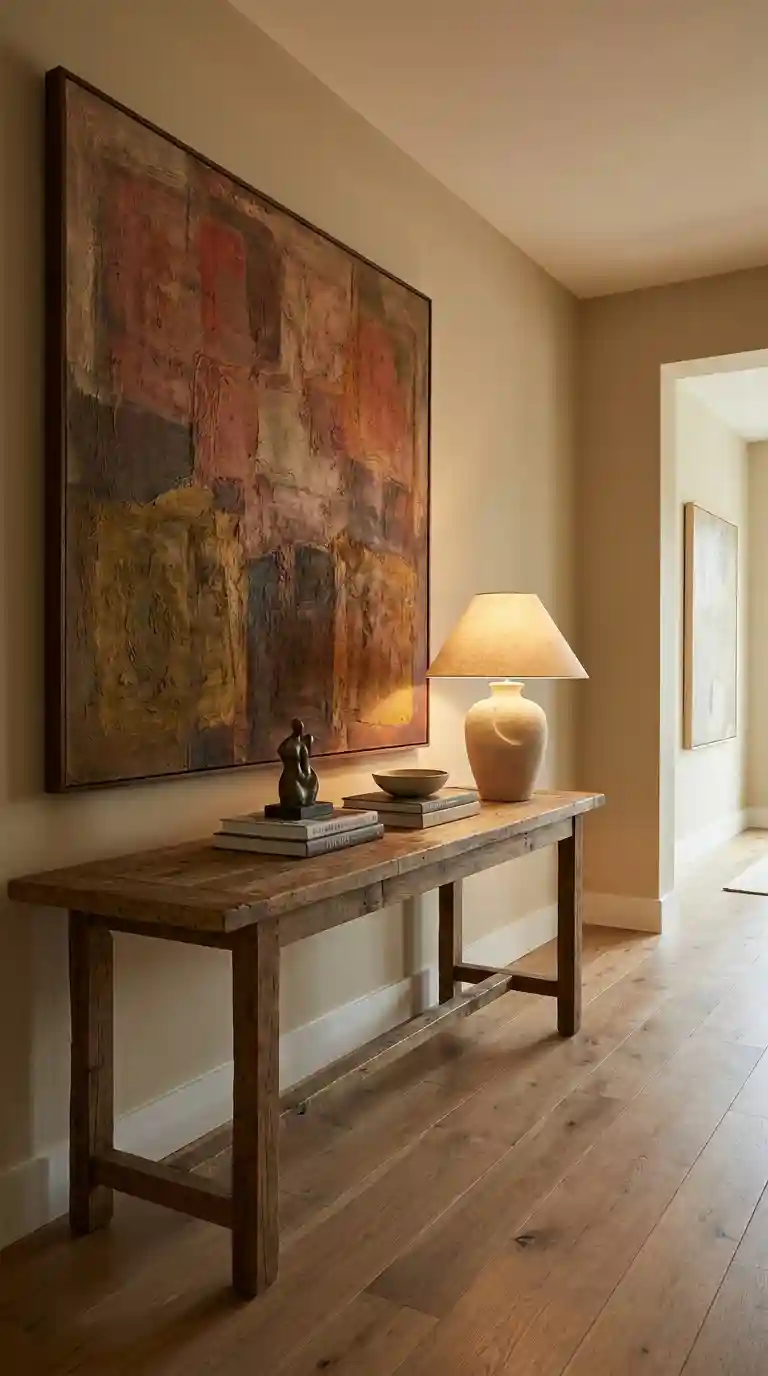
The photograph above shows the trade-off clearly. A single statement piece needs a plain wall around it to work, which means the rest of the hall must stay quiet. If the wall also has to hold hooks, a shelf and a noticeboard, a gallery of smaller pieces will cope better, because it can be arranged around those fixed points. Choose the approach that fits the wall’s other jobs, not the one that looks best in isolation.
Framing is part of the decision, not an afterthought. A thin black frame suits most prints and keeps the focus on the image, while a wide, ornate frame becomes part of the decoration and needs a simpler picture to balance it. A picture light, mounted 15 to 20 centimetres above the frame and angled down, is worth adding only if the art is the focal point; otherwise it draws attention to a wall that should stay in the background.
How do shelves, hooks and wallpaper actually work together?
Shelves and hooks work when they are treated as part of the wall composition, not as hardware added afterwards. A single floating shelf, 60 to 90 centimetres long and fixed at about 150 centimetres from the floor, gives a place for a small plant, a bowl for keys and one framed photograph. Two shelves stacked closely together tend to collect clutter, because the lower shelf ends up holding whatever does not fit on the upper one.
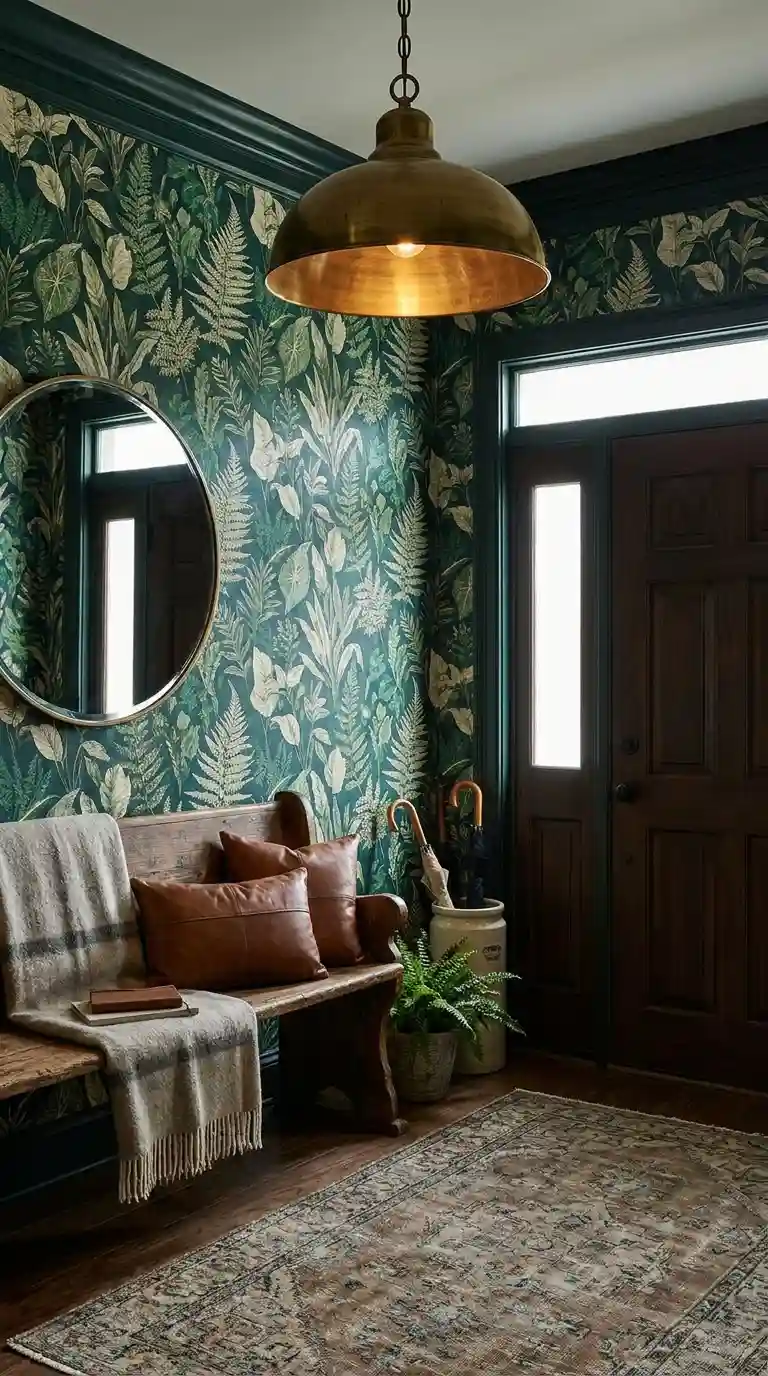
Colour and wallpaper should be decided before the art, because they set the background that everything else sits against. Entryways are a good place for a bolder choice than a living room, simply because nobody sits in them for hours. A single wallpapered wall, or a two-tone paint treatment with the darker colour below a dado rail, gives the hall character without requiring expensive art. Keep the colour connected to the next room, though: the hallway paint ideas that work best usually borrow one tone from the adjoining room, so the transition does not jar.
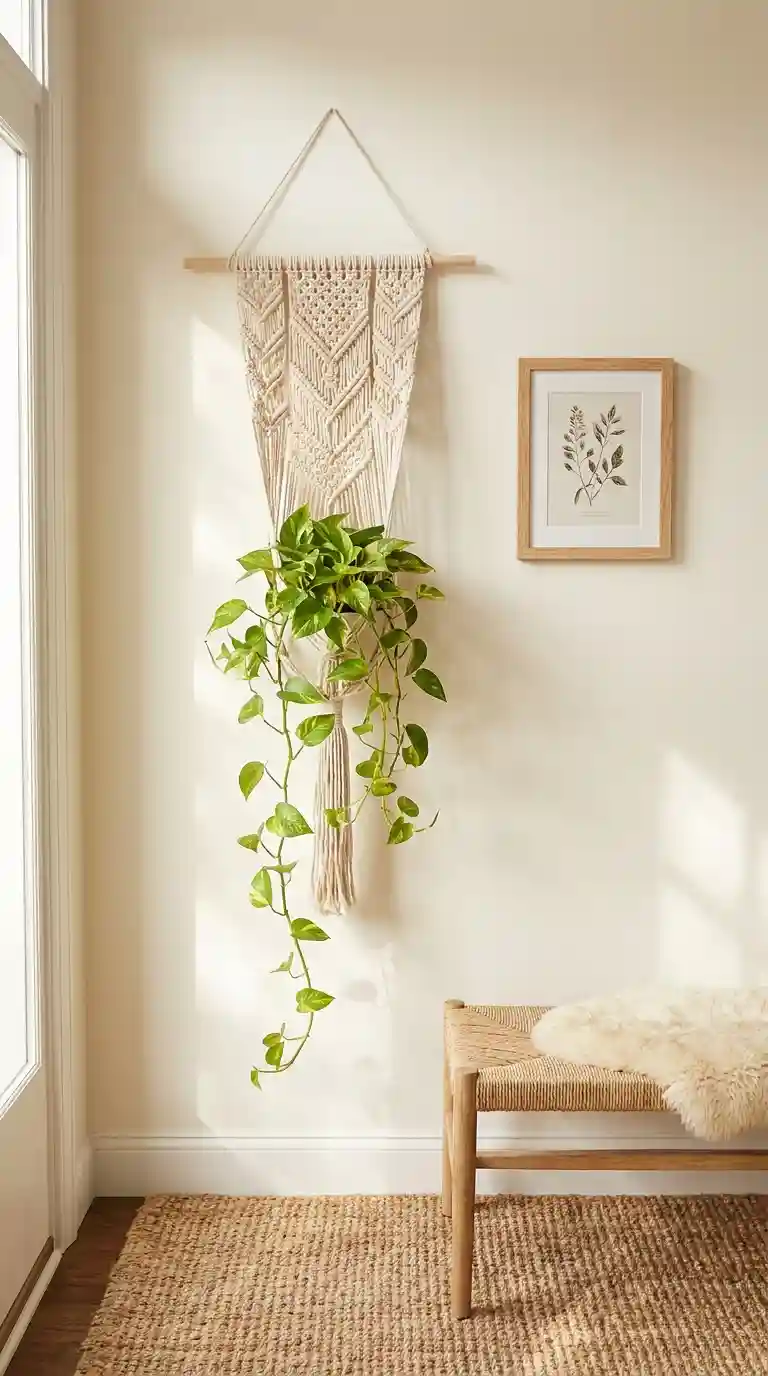
Greenery softens a hard wall, but only if the plant can survive there. Halls are often dim, draughty and dry, so choose plants that tolerate low light, such as pothos or a snake plant, and place them where they will not be knocked by a door. A wall-mounted planter works when it is the only plant on the wall; three planters, a mirror and a gallery together turn the hall into a greenhouse. One trailing plant beside a framed piece, as in the photograph above, is usually enough.
What changes for a narrow hall or a rented home?
A narrow hall changes the priority from display to clearance. Keep at least 90 centimetres of clear passage, and choose pieces that sit flat against the wall: a slim mirror, a flat frame, or a shelf no deeper than 15 centimetres. A leaning mirror is a poor choice where children or dogs pass through, because it can be knocked over.
For rented homes, adhesive strips rated for the actual frame weight, removable wallpaper on a single wall, and a leaning frame on a console table all avoid damage, provided weight limits and tenancy terms are respected. The small-space decorating ideas for flats follow the same principle: choose pieces that can move to the next home.
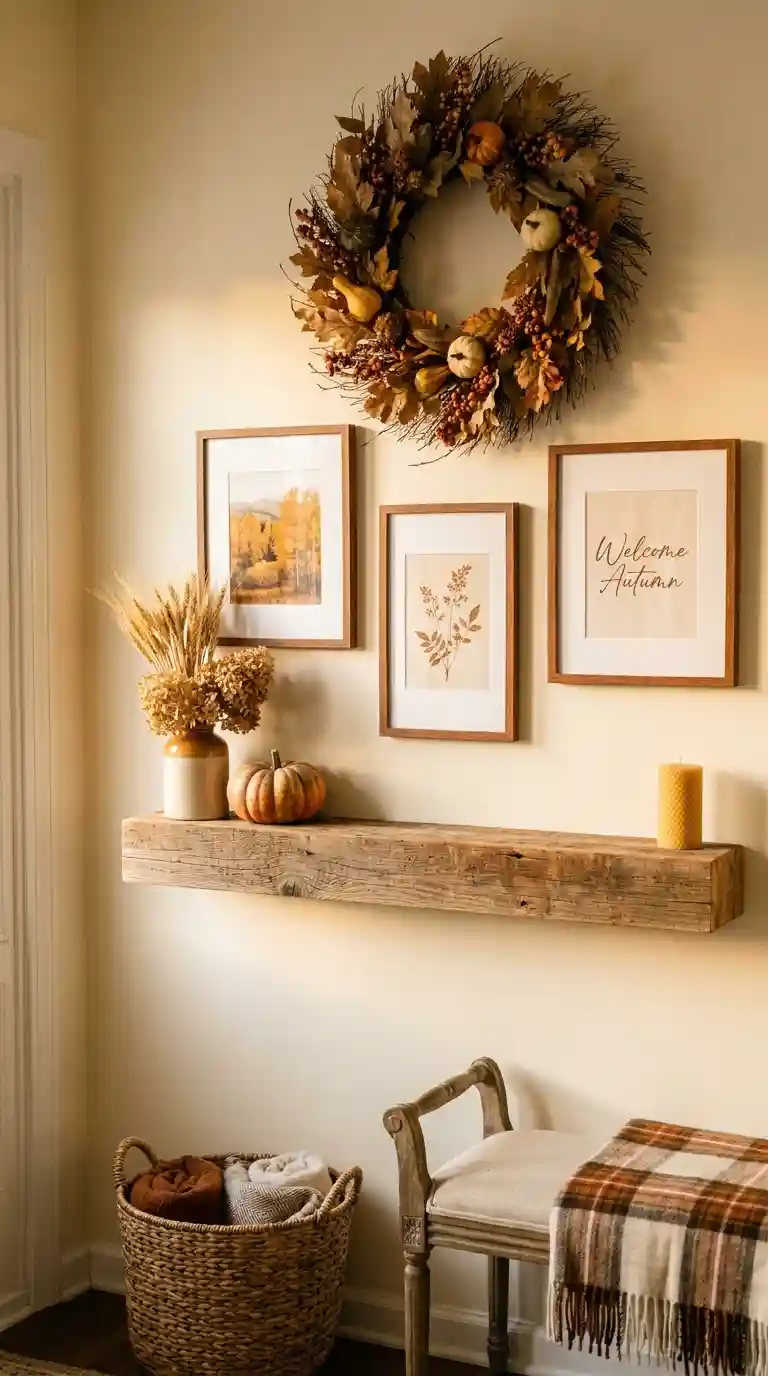
Seasonal changes are the easiest refresh here, because they need no new fixings. Keep the mirror or main art in place all year and swap only one element, such as a wreath or a print in a clip frame, as in the photograph above. That change takes ten minutes and the spare piece stores flat.
Which mistakes are worth avoiding?
The first mistake is height: art with its centre above 160 centimetres reads as floating. The second is scale: a 30-centimetre frame on a 3-metre wall looks lost. The third is crowding: a wall holding a mirror, a gallery, hooks, a shelf and a noticeboard is a storage wall that happens to have pictures on it.
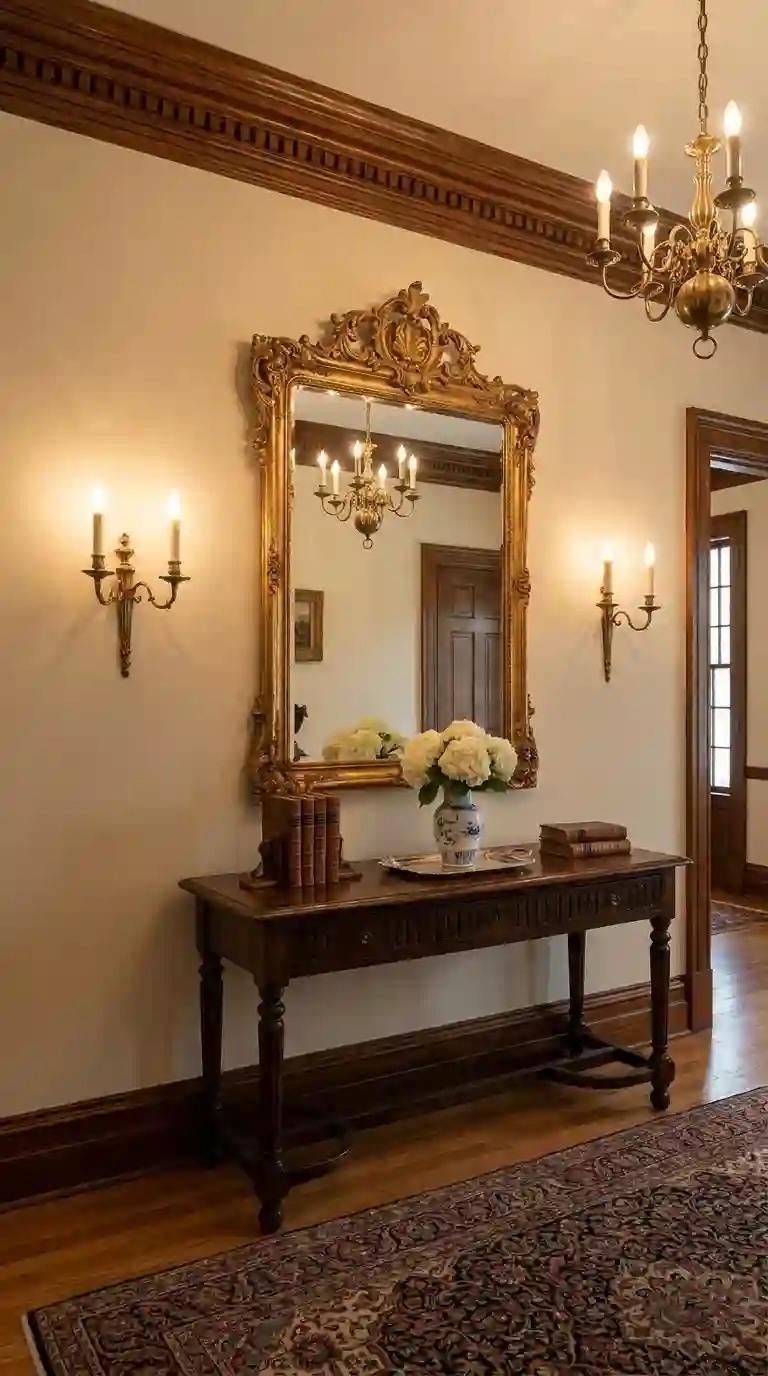
The fourth mistake is style drift. A traditional hall, as in the photograph above, works because frame, colour and symmetry point the same way. Mixing gilt, geometric and rustic pieces on one wall leaves the eye with nowhere to settle. Pick one direction for the hall and let other rooms carry the rest.
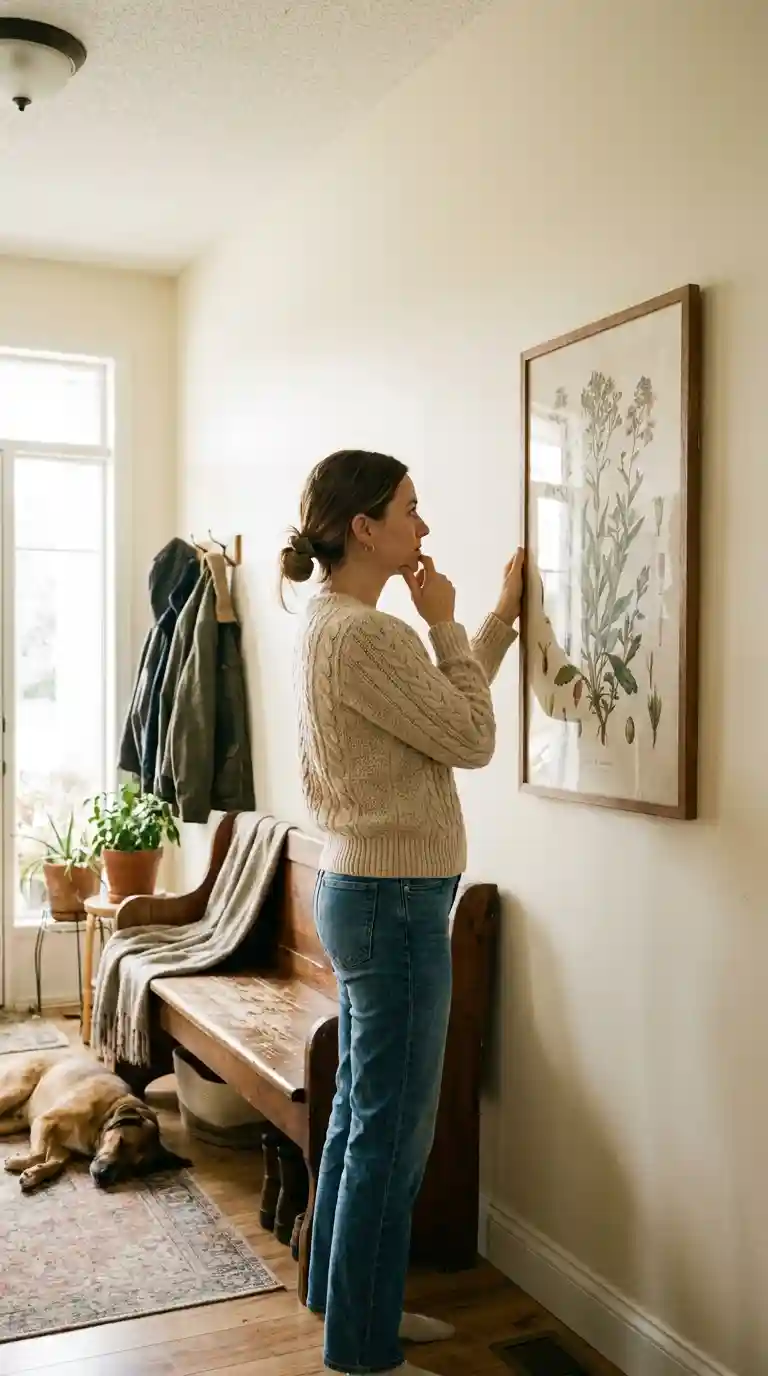
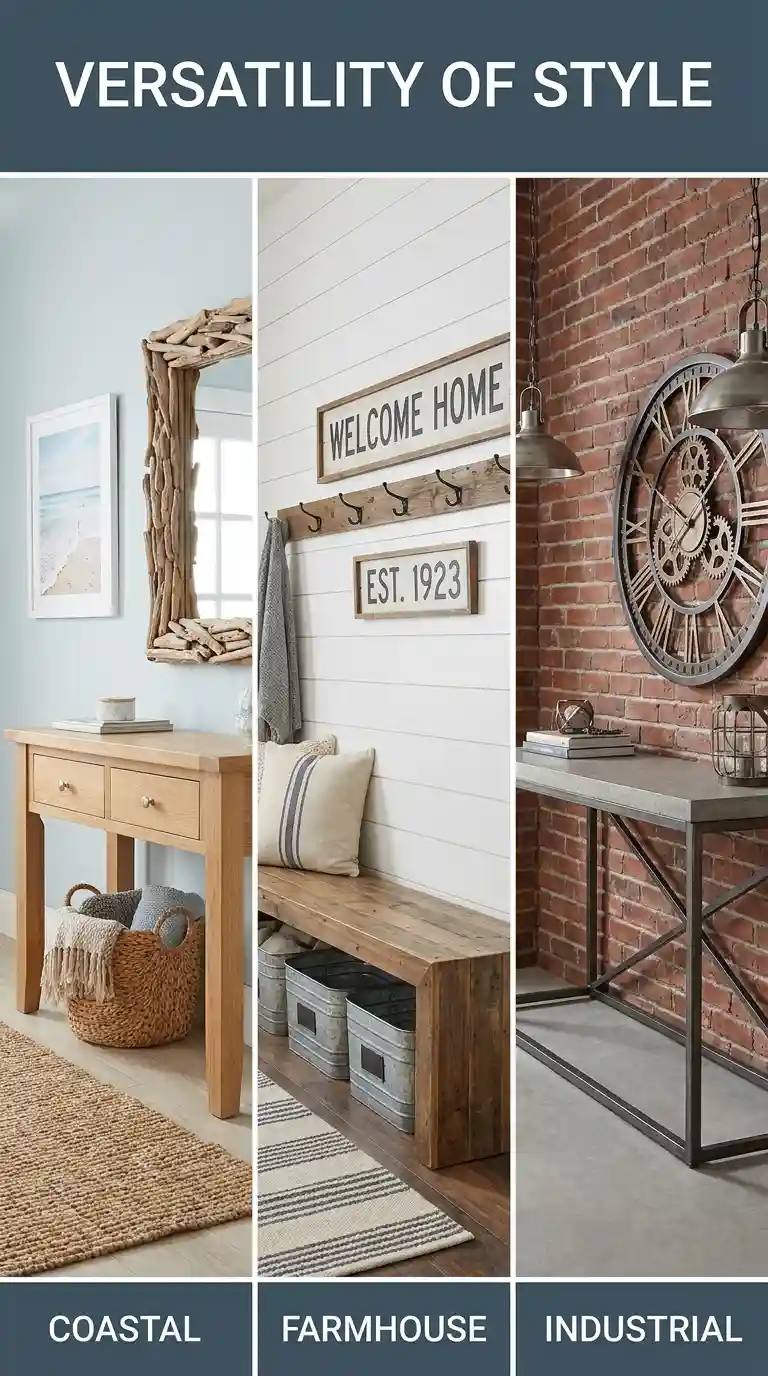
Before buying, check four things: does it fit the measured wall, does it leave 90 centimetres of passage, does it reflect something worth seeing, and can it be fixed safely to this wall? If any answer is no, the piece is wrong for this wall, not wrong in itself. The same fixed numbers adapt to every style in the photograph above; only the materials change.
Frequently asked questions
What works best in a small entryway?
A mirror, a slim shelf and one framed piece, all sitting flat against the wall.
How high should I hang a mirror or picture?
Centre it at about 145 centimetres from the floor, or 15 to 20 centimetres above a console table.
What size mirror suits a console table?
About two-thirds the table width, such as a 60 to 80 centimetre mirror over a 90 to 120 centimetre table.
Can I decorate without drilling?
Yes, with adhesive strips rated for the frame weight, removable wallpaper, or a leaning frame.




4 Comments on “What to Hang in an Entryway (and What to Leave Off the Wall)”