

Wallpapering a single bedroom wall is a weekend job that typically costs between £80 and £300 in materials, and it changes a room more than almost any other update at that price. The catch is that most wallpaper redos happen because the pattern scale was wrong for the room, not because the colour was. This guide covers where to put wallpaper, how to choose a pattern for your room’s size and light, how much to order, and the preparation that decides whether your paper lasts twelve years or starts peeling in twelve months.
Every photo in this guide shows a real bedroom, so you can judge each idea as it looks on an actual wall rather than in a catalogue.
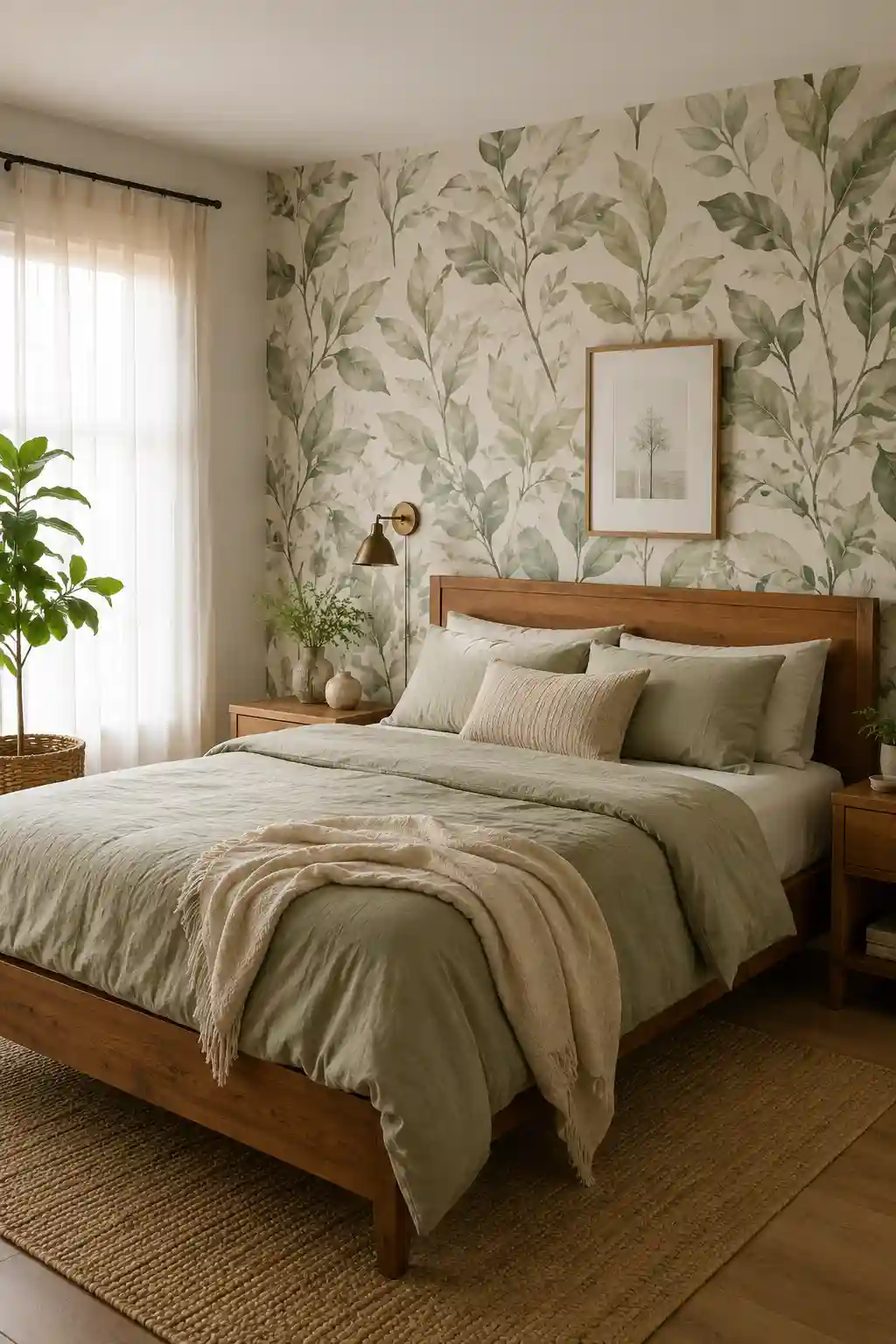
Where should the wallpaper actually go?
The wall behind the bed is the default for a reason: it is the first thing you see when you walk in, and the one wall you never stare at while trying to fall asleep. A common approach is to paper that single wall and paint the other three in a colour pulled from the paper. The botanical print pictured above, with its soft sage tones, is exactly the kind of pattern that makes this easy — lift the background white or the leaf green for the remaining walls. If you need help choosing the paint, our bedroom paint colour guide is a useful starting point.
Wrapping all four walls suits rooms of around 12 square metres or more with ceilings at least 2.4 metres high; in a smaller room, full coverage feels enclosing rather than cosy. Then there is the ceiling — the so-called fifth wall. Papering it adds drama without taking a centimetre of floor space, and it works best above the bed, where you see it last thing at night and first thing in the morning.
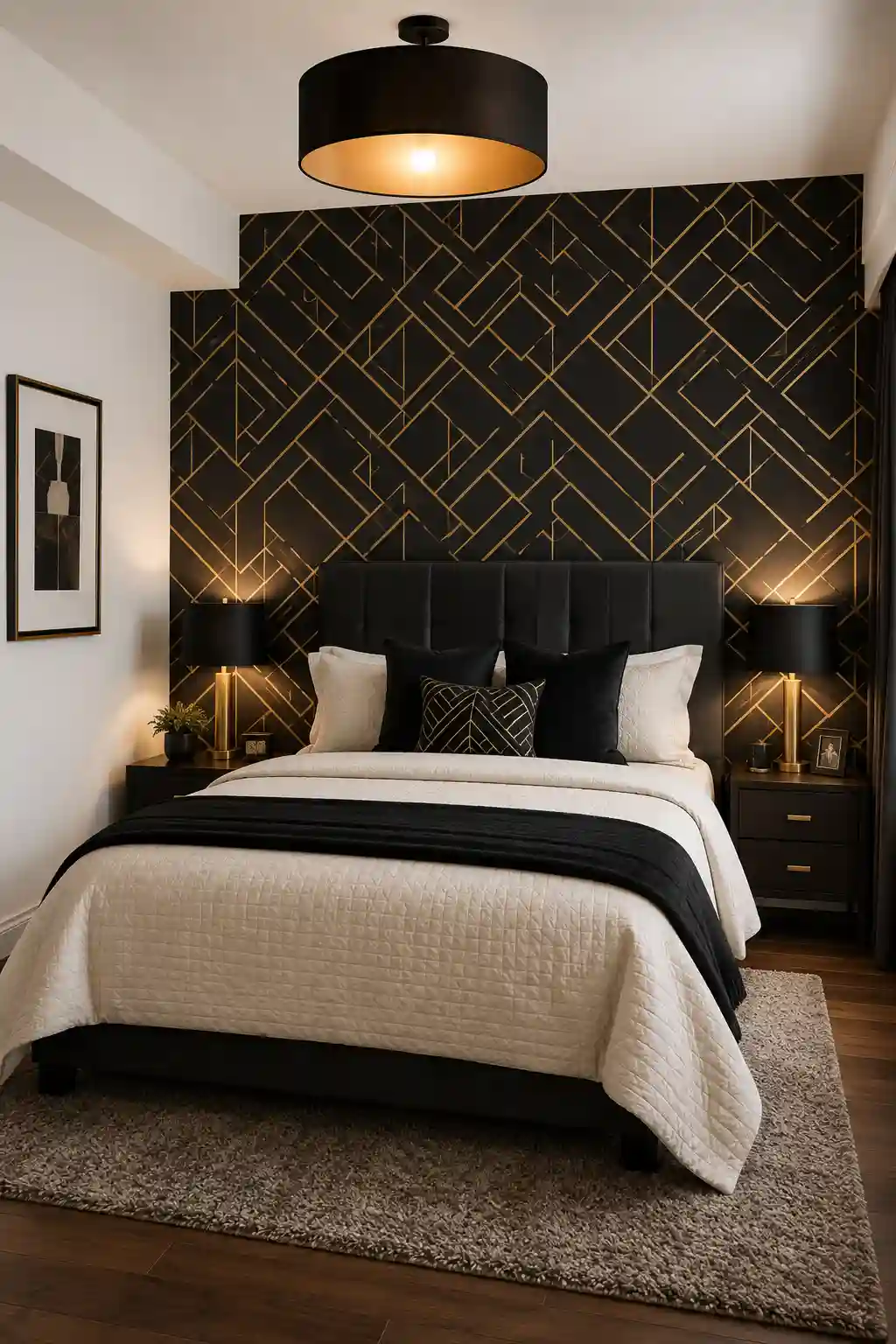
The black and gold geometric accent wall above shows the bolder end of the spectrum: a high-contrast print confined to one wall. Keep bedding and curtains quiet when the wall does the talking; white and black bedding, as here, lets the print carry the room.
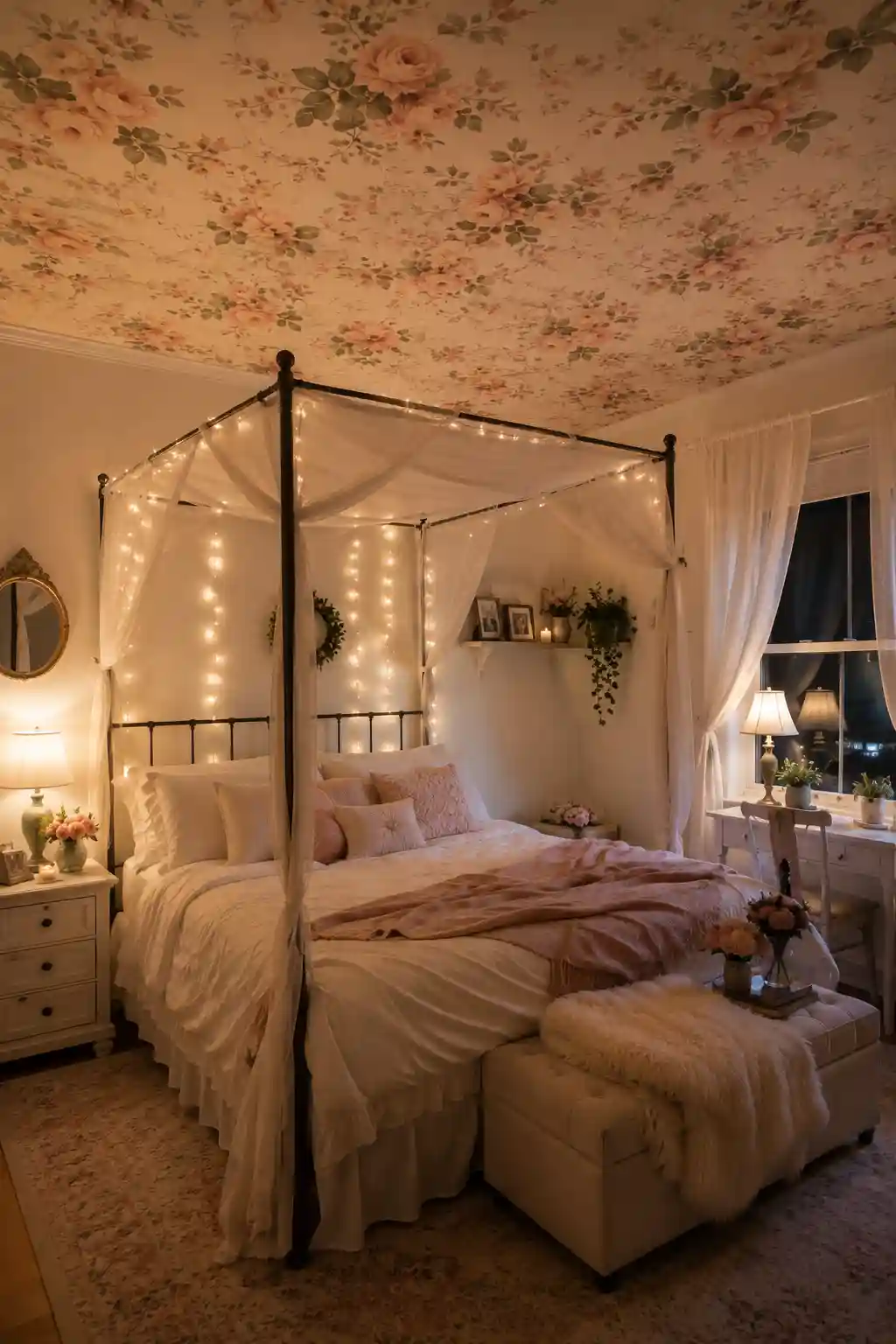
For the brave, the ceiling: the bedroom above pairs a soft floral paper overhead with plain warm-white walls. It is a two-person job — allow a full day and a proper platform rather than a ladder. If your bedroom has angled walls too, our sloped ceiling bedroom ideas cover the trickiest surfaces.
What I wish more people knew about pattern scale
Pattern scale — the size of the motif and how often it repeats — matters more than colour. A large-scale print with a 60cm repeat needs viewing distance; in a box room you never stand far enough back, so it reads as visual noise. A practical rule: in rooms under about 10 square metres, look for repeats under 30cm. The repeat is printed on every roll — check it before you fall in love with the sample.
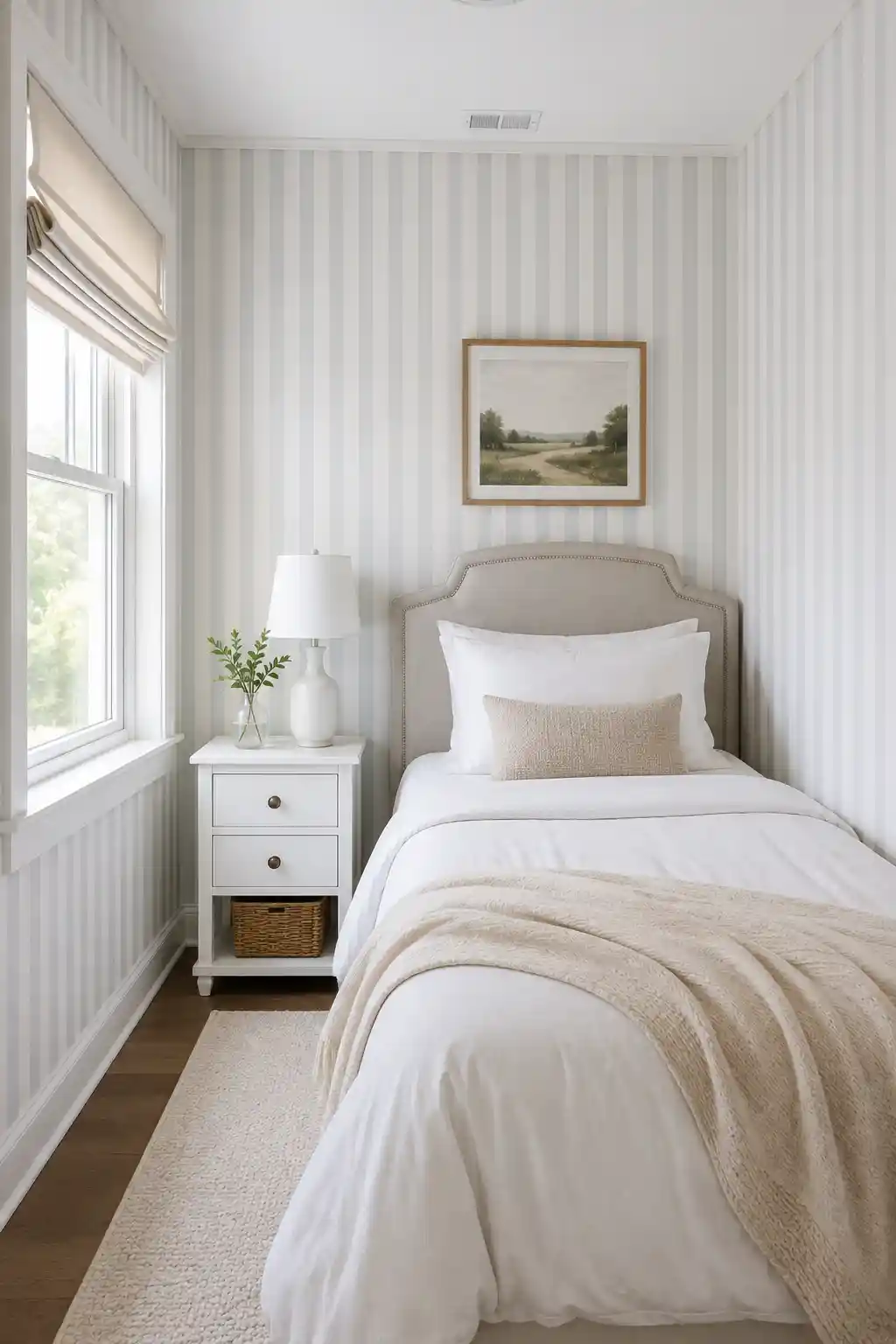
The small bedroom above gets this right: a narrow stripe that adds height without shouting, reading almost as texture from more than a metre away. Vertical lines draw the eye up, and a tone-on-tone stripe — white on pale grey, as here — gives pattern without contrast. Most renters find a subtle stripe the easiest print to live with long-term.
Tape your sample to the wall and view it from the doorway, not from 30cm away. If you cannot make out the motif from where you will actually see it, the scale is wrong for the room, however pretty it looked in the shop.
Peel-and-stick or traditional paste — which is worth your money?
Peel-and-stick costs roughly £20 to £50 per roll, goes up without paste, and comes down cleanly — which is why it dominates rental bedrooms. The trade-off: most lasts three to five years before edges lift, and it shows every bump on an imperfect wall. Traditional paste-the-wall paper costs £30 to £100+ per roll and needs a weekend, but lasts ten to fifteen years and forgives imperfect walls far better.
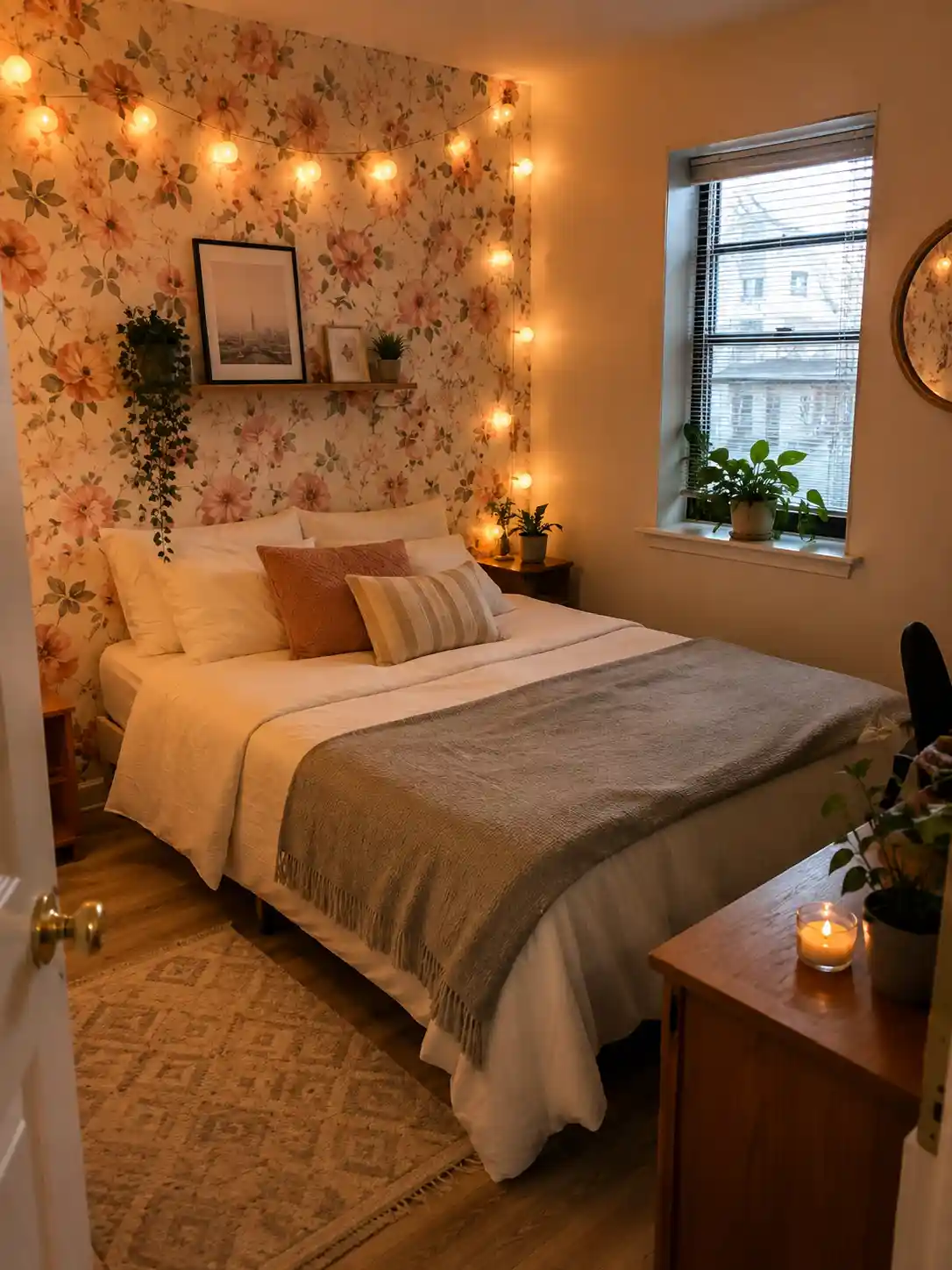
The bedroom above plays to the format’s strengths: a single feature wall, a forgiving floral that hides seams, and string lights that flatter the print. An accent wall like this is the ideal first peel-and-stick project — two to three rolls, one afternoon, and if you hate it, it peels off.
Renting, or likely to redecorate within five years? Peel-and-stick. Own the home and want it to last? Traditional. If you are paying a professional — typically £200 to £350 per day — the labour dwarfs the material cost, so buy the better paper; hanging costs the same either way.
How much wallpaper do I actually need to order?
Under-ordering is the most expensive mistake, because a second batch can differ slightly in colour. Always buy from the same batch number, printed on the roll label. The maths: wall width ÷ roll width (usually 0.53m), rounded up, gives the number of drops. Multiply by wall height plus 10cm for trimming, divide by roll length (usually 10.05m), round up — then add one spare roll.

A typical master bedroom wall of 3.6m × 2.4m needs seven drops of 2.5m — 17.5 metres, or two rolls plus one spare. In a room the size of the navy and gold bedroom above, the spare roll earns its keep: large patterns mean more waste at the seams. Order everything at once, check batch numbers match, and store the spare rolled in a dry cupboard.
Why the sample never looks the same on your wall
Two things change a paper between shop and bedroom: light and scale. Showroom fluorescents flatter everything, and north-facing rooms drain warmth — a grey that looked elegant in the shop can turn cold by a north window. Order A4 samples (£2 to £5, often redeemable), tape them to the actual wall, and live with them for 48 hours, checking morning, afternoon and lamplight.
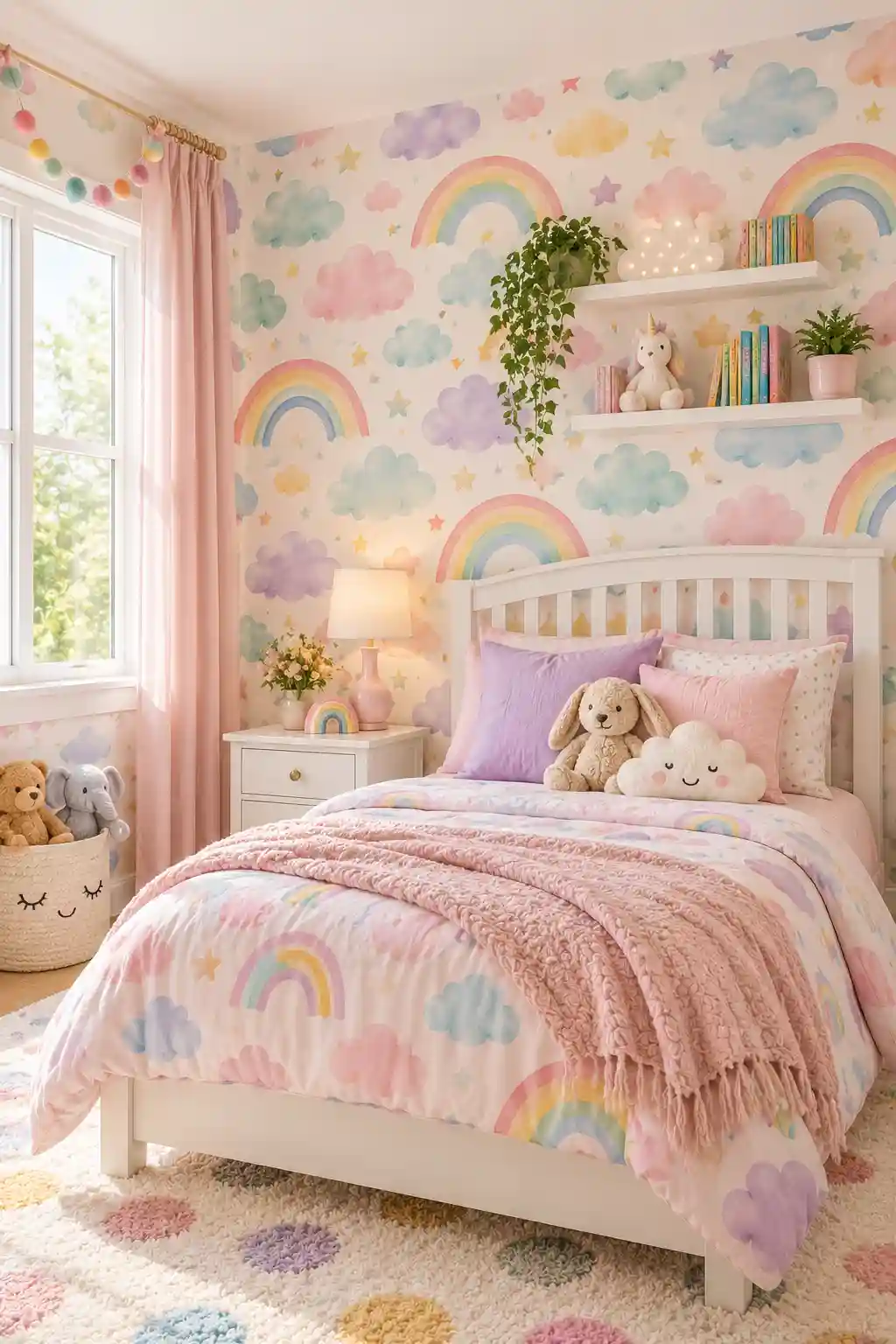
This matters doubly where colours compete. The rainbow bedroom above works because the palette was chosen against the bedding — the pinks and yellows echo rather than fight. Prop your duvet cover beside the sample; if the paper argues with textiles you love, believe the argument.
The wall prep step everyone skips (and regrets skipping)
Wallpaper only looks as good as the surface beneath it. Fill every hole, sand with 120-grit paper, wash with sugar soap and let it dry fully. Fresh plaster must cure four to six weeks — paste on uncured plaster can fail within months. On imperfect walls, lining paper (1000 to 1200 grade) is the professional’s secret: a smooth, uniform surface that also makes future removal easier.
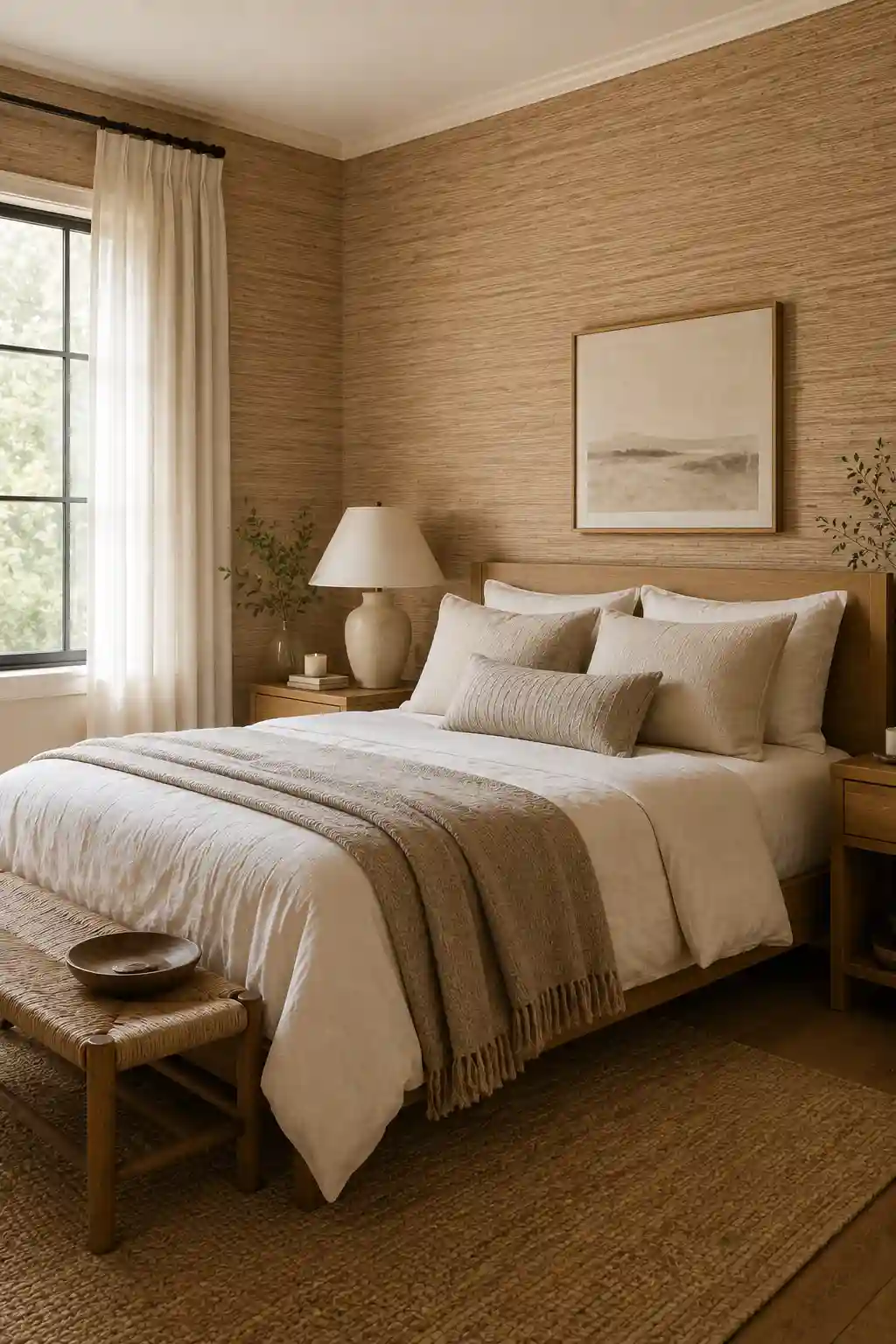
Texture is the forgiving choice for less-than-perfect walls. The warm beige grasscloth-style paper above hides undulations a flat, dark print would spotlight — textured neutrals are the most fault-tolerant option available. For a moodier take on the same idea, see our dark feminine bedroom ideas.
The three mistakes that end in a redo
First, buying for the sample not the room — a print chosen at arm’s length, never tested in your light. Second, papering over problems — skipping the prep because the wall “looks fine”, then watching seams lift within a year. Third, the half-measure: papering the wall you stare at from the pillow, or stopping one drop short. All three share one cause: rushing decisions that cost nothing to get right.
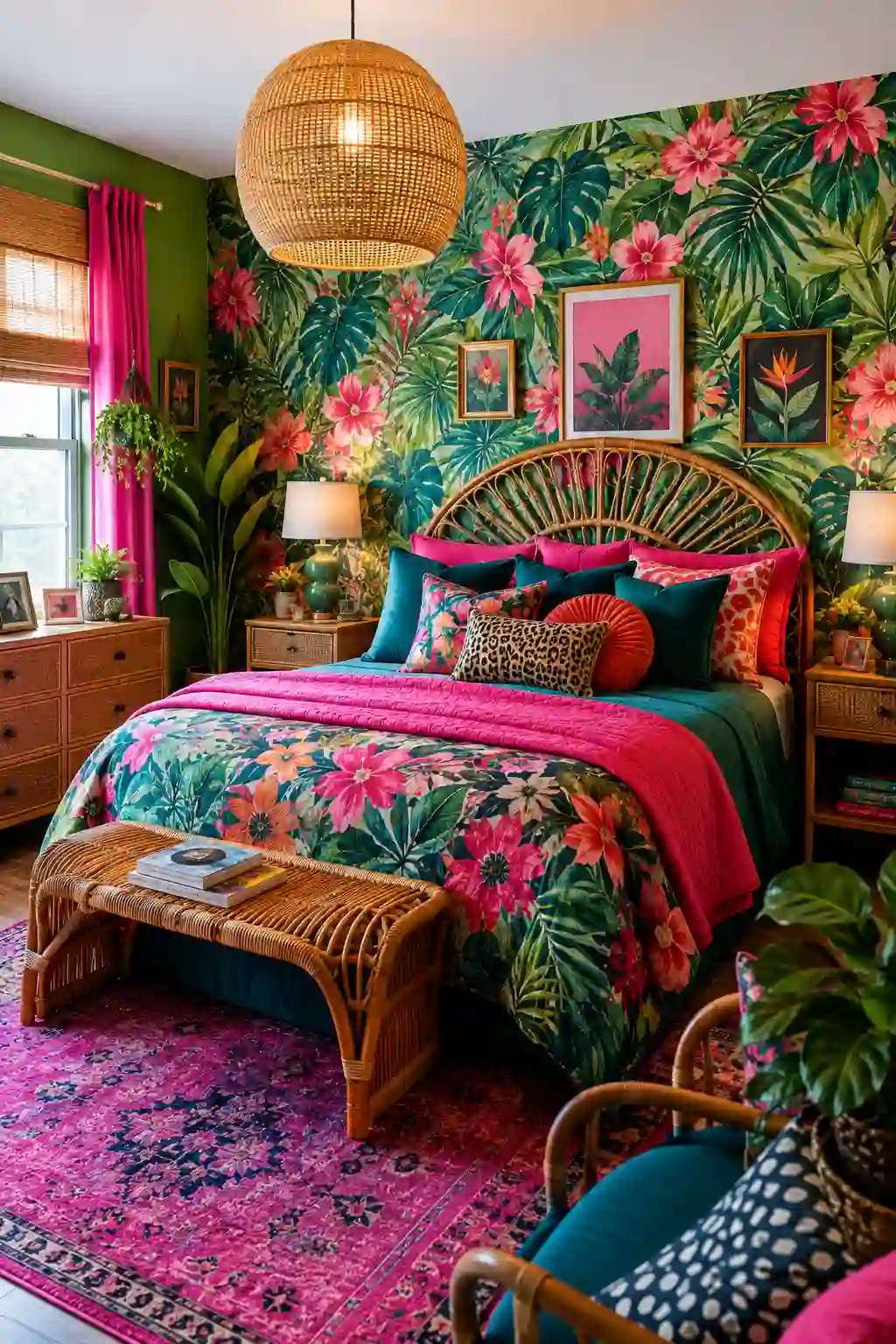
Bold prints punish mistakes most visibly. The tropical bedroom above works because the scale suits the room, the wall is the headboard wall, and everything else defers to it. Going bold? Commit to one wall and keep the rest quiet — half-bold across four walls is how rooms get repapered within two years.
Can wallpaper work in a box room or a north-facing bedroom?
In a box room, paper one wall only, choose a small repeat or vertical stripe, and stay light — pale backgrounds recede, dark ones advance. In a north-facing bedroom, avoid blue-greys, which turn icy without direct sun; lean warm with creams, botanical greens and muted terracotta. Small and dark? Paper the wall opposite the window to catch what light there is.
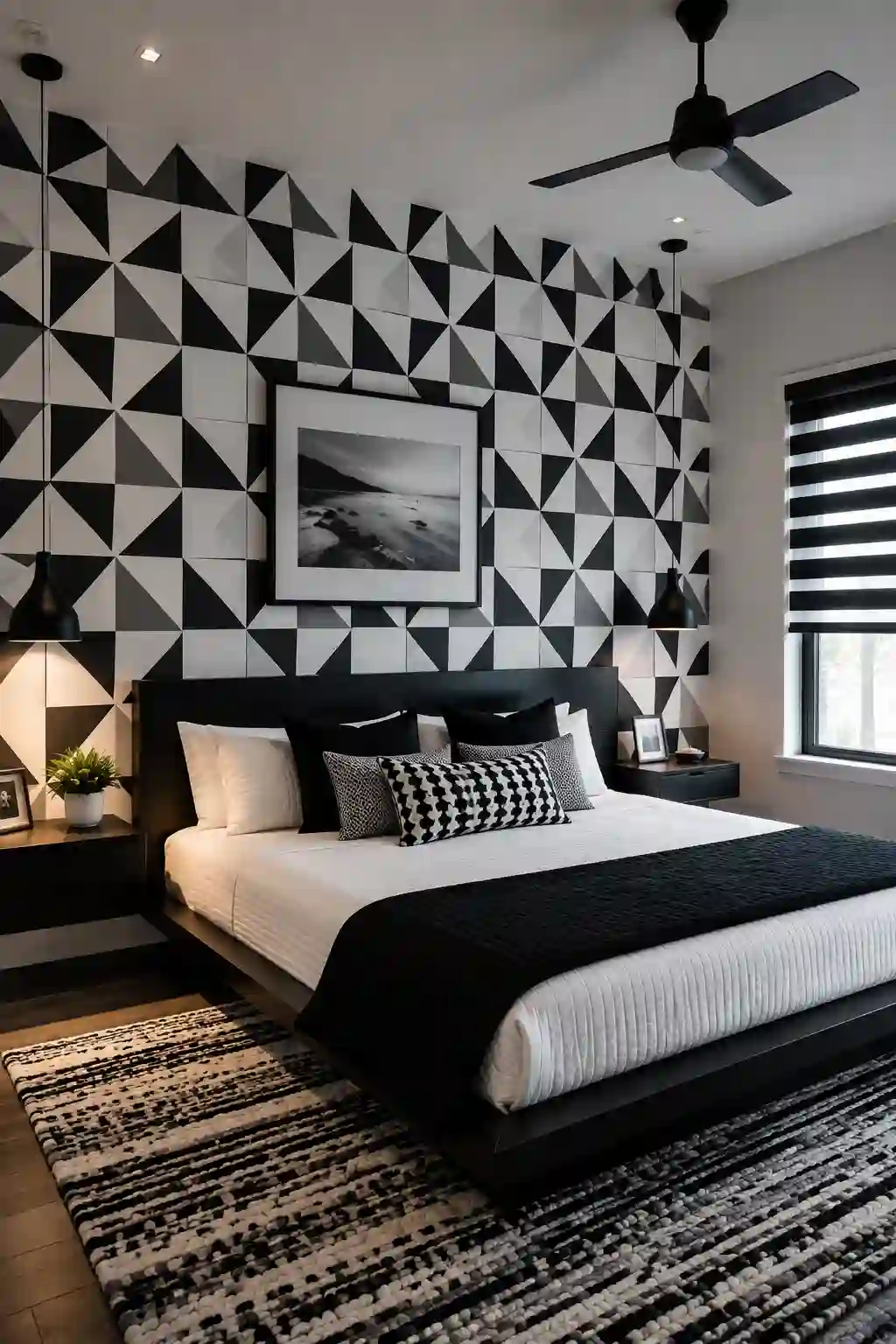
High-contrast geometrics like the black-and-white triangles above are the exception: on a single wall, a graphic print makes a compact bedroom feel deliberate rather than poky. The trick is containment — one wall of drama, three of calm.
Your wallpaper questions, answered
How much does it cost to wallpaper a bedroom?
For a DIY accent wall, £80 to £300 in materials. A professional adds £200 to £350 per day, and most bedrooms take one to two days. Full-room traditional papering in a master bedroom can reach £800 to £1,200 all in.
Can I use wallpaper in a rental?
Yes — peel-and-stick removes cleanly from sound painted walls, and an accent wall is a one-afternoon project. Check your tenancy agreement, and never paper over flaking paint.
Which wall should I paper?
The headboard wall — the one you see on entering and never stare at while falling asleep. In dark rooms, the wall opposite the window is second best.
How long does wallpaper last?
Traditional paper: ten to fifteen years with proper prep. Peel-and-stick: three to five years. Ventilate the room and either will go the distance.
Can I paper over painted walls?
Yes, if the paint is clean, sound and matt — sand gloss lightly and prime first. Never paper over flaking paint or plaster cured less than four to six weeks.
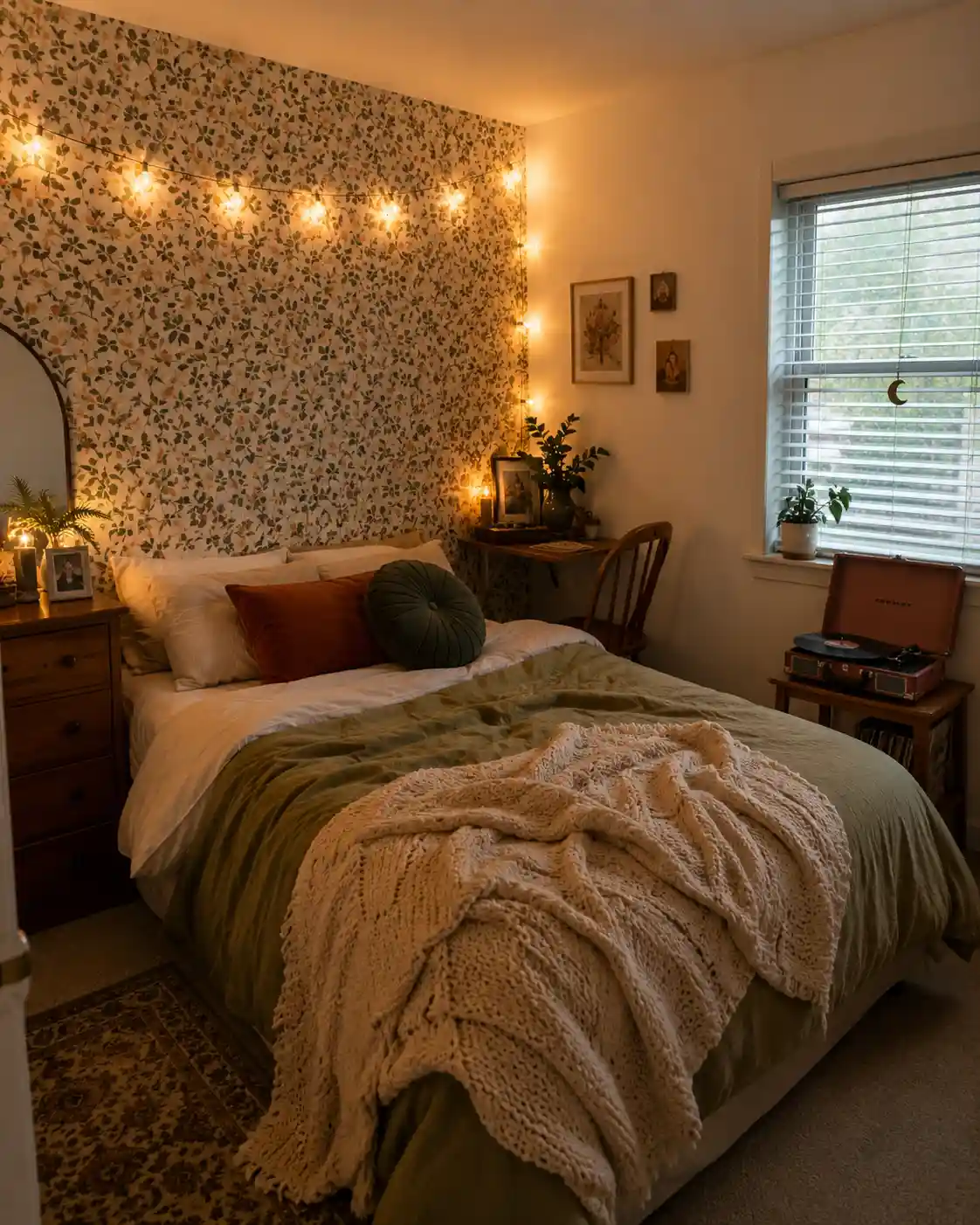
If budget decides it, take heart from the bedroom above: one wall of floral paper, a string of fairy lights and a free weekend. You need the right wall, the right scale and a spare roll — not a professional crew. For more ways to make a restrained palette feel luxurious, our white and gold bedroom ideas show how far warm metallics can go.





5 Comments on “Bedroom Wallpaper: Patterns, Placement and the Mistakes That Cost You a Redo”