
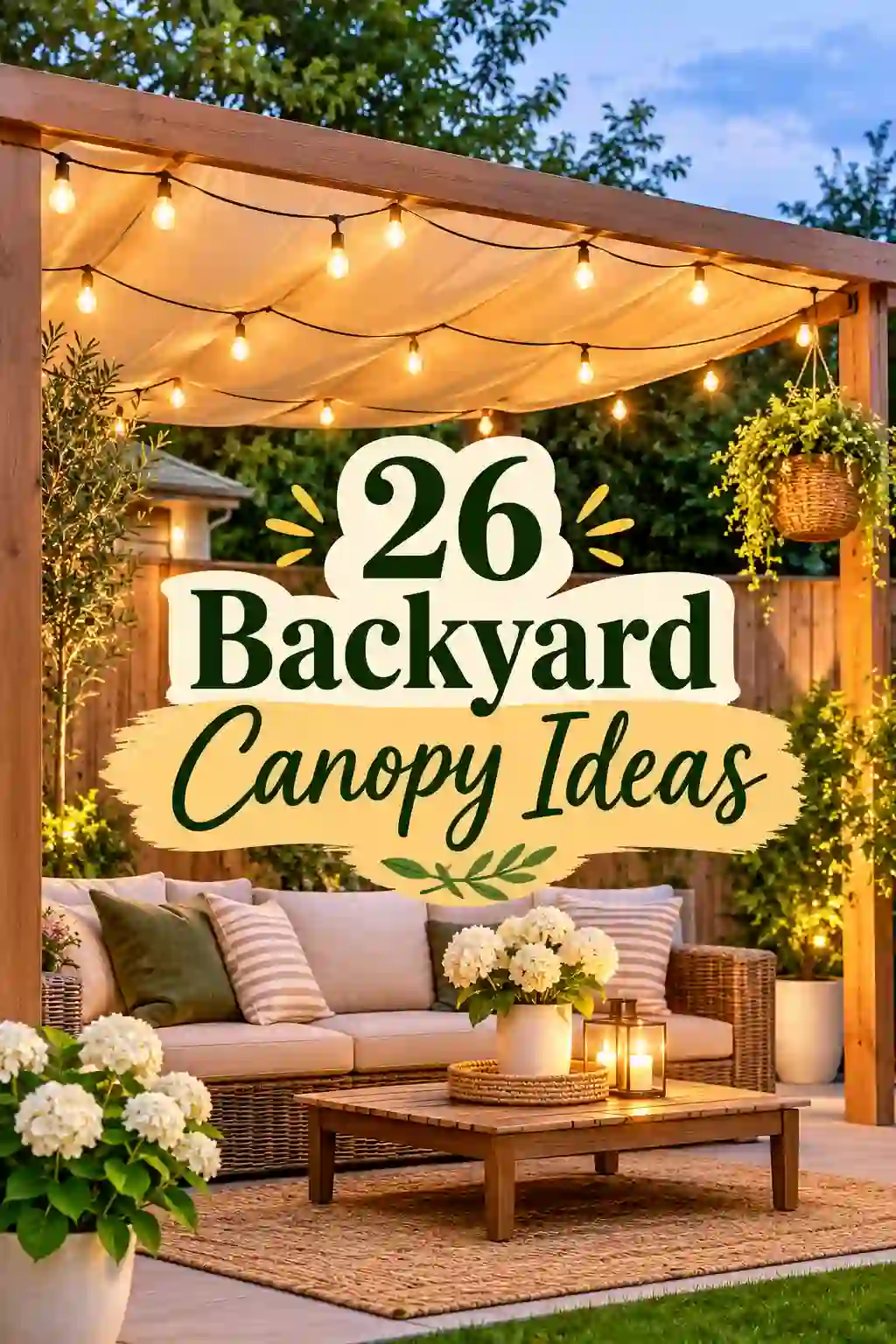
Most backyards have the same problem. They look great in photos and feel terrible at 2 p.m. in July. The grass is bright, the patio chairs are hot enough to fry an egg, and everyone ends up crowded inside near the air conditioning.
A canopy fixes that. It gives you shade and a little shelter, and it turns a flat patch of lawn into a place with a “ceiling,” which is what makes a space feel like a room. That is why backyard canopy ideas keep getting more popular. You don’t need to rebuild your yard to get the benefit.
The catch is that “canopy” covers a lot of ground. It can mean a $60 pop-up tent, a flowing fabric drape over a daybed, a tensioned shade sail, or a fixed pergola with a retractable top. Each one suits a different yard, budget and climate.
Also Read : French Balconies: How to Make Three Feet of Rail Feel Like a Parisian Getaway
In this guide I’ll walk through 26 backyard canopy ideas I’d actually consider for a real yard, from quick weekend projects to permanent structures. I’ll also cover how to choose, how to anchor against wind, how to style the space so it feels intentional, and what mistakes to avoid. Grab a coffee and a notepad.
Canopy, Gazebo, Pergola or Shade Sail: What’s the Difference?
Before the ideas, let’s clear up the vocabulary. People use these words interchangeably, and that leads to buying the wrong thing.
Canopy. A canopy is a fabric or lightweight roof, usually supported by poles or a frame. It can be temporary (pop-up) or semi-permanent. It gives shade and limited rain protection, and it’s the cheapest and most flexible option.
Gazebo. A gazebo is a freestanding structure with a solid or hardtop roof and usually open sides. It handles weather better than a fabric canopy and often lasts for years. It also costs more and takes more effort to install.
Pergola. A pergola has an open-slat roof that gives partial shade. Add a fabric canopy, a retractable cover or climbing plants and it becomes much more useful. It’s a favorite for people who want something permanent that still feels airy.
Shade sail. A shade sail is a tensioned piece of fabric, often triangular or rectangular, stretched between anchor points. It looks modern, handles sun well and can be surprisingly affordable. It needs strong anchor points.
Awning. An awning attaches to your house and extends outward. It’s ideal when you want shade right at the back door.
A rule of thumb: if you want flexibility and low cost, go with a canopy. If you want something that survives storms and looks permanent, look at a gazebo or pergola. If you want style and don’t mind some installation, a shade sail is hard to beat.
How to Choose the Right Backyard Canopy
A pretty canopy that doesn’t fit your yard becomes an expensive lawn ornament. Work through these questions first.
1. Where does the sun actually hit?
Spend one sunny day watching your yard. Note where the sun lands in the morning, at midday and in the late afternoon. A canopy that shades your seating at noon but leaves it blazing at 4 p.m. isn’t solving much. West-facing yards in particular often need a lower-angle solution, such as a side panel, a sail set at a slant or a vertical screen.
2. How windy is your area?
Wind is the number one canopy killer. A large flat fabric roof acts like a sail, and a poorly anchored one can lift, twist or fly into a neighbor’s yard. If you live somewhere gusty, favor sturdier frames, tensioned sails with proper hardware, or open-slat pergolas that let wind pass through.
3. What do you need it to do?
Be honest about the job:
- Shade only → shade cloth, sails or a lightweight canopy
- Shade plus light rain → waterproof fabric or a hardtop gazebo
- Entertaining → a larger footprint and space for furniture and lighting
- Privacy → add side curtains, lattice or tall planters
- Year-round use → a permanent structure with a real roof
4. How much can you spend?
Rough ballparks, which vary a lot by region and materials:
- Pop-up canopy: low double digits to a few hundred dollars
- DIY fabric canopy: often under $150
- Shade sail with hardware: roughly $100 to $400, plus posts if needed
- Pergola kit: several hundred to a few thousand dollars
- Custom or hardtop gazebo: often well into the thousands
5. Do you want temporary or permanent?
If you rent, or you’re not sure how you’ll use the space, start temporary. Many people discover they love an outdoor corner, and only then invest in something fixed.
6. Check local rules
Some areas require permits for permanent structures, and HOAs often have opinions on size, color and placement. A quick call can save a lot of grief.
Easy Fabric Canopy Ideas (The Soft, Dreamy Look)
Fabric is the fastest way to add romance to a yard. It’s also forgiving, since you can change the look in an afternoon.
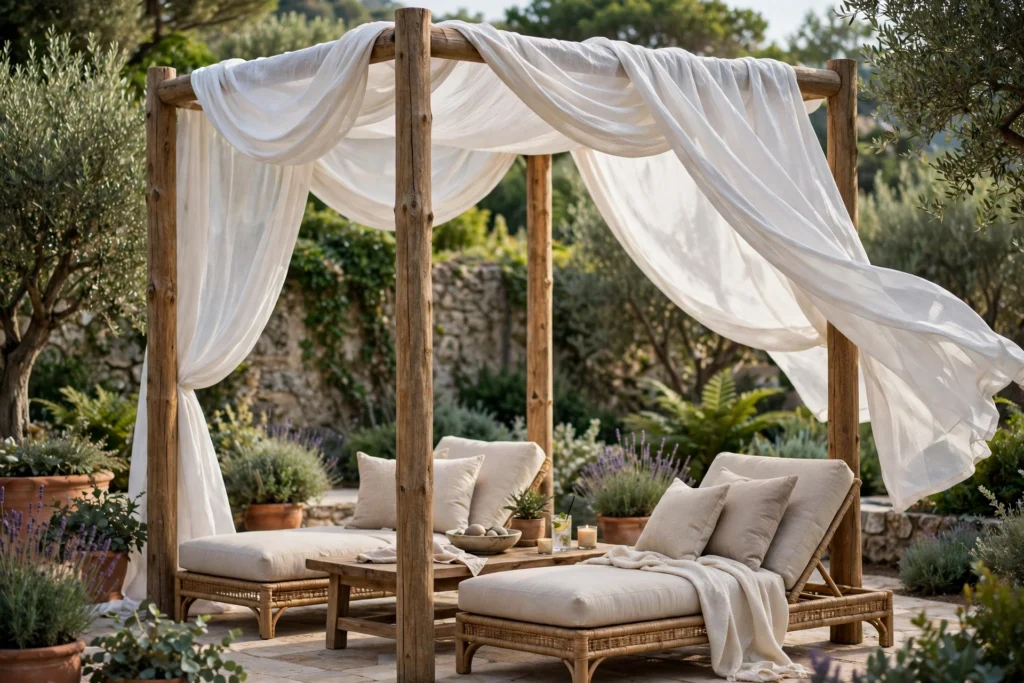
1. Draped Cabana Canopy
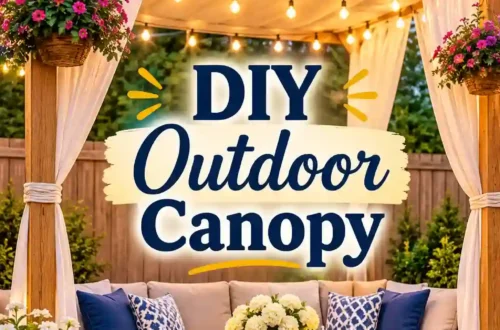
Four posts, a simple frame, and long panels of outdoor fabric draped over the top and down the sides. This is the classic boutique-hotel look. Tie the curtains back with rope or fabric loops so you can open or close the space as you like. Choose light, breathable fabric for hot climates and slightly heavier weave if you want more privacy.
Best for: daybeds, reading corners and romantic lounge zones.
2. Canvas Cloth Canopy
A simple canvas sheet stretched or draped over a wooden or pipe frame has an earthy, relaxed look that suits almost any yard. Canvas is sturdy and takes color well. It looks even better with a little age. Look for outdoor-rated, water-resistant canvas if you want some rain tolerance, and expect to re-treat it occasionally.
Best for: rustic, farmhouse and cottage-style yards.
3. Sheer Curtain Pergola Canopy
If you already have a pergola, sheer curtains instantly add softness. They filter harsh light instead of blocking it, which keeps the space bright without the glare. Use curtain rods or a taut wire across the top beams so panels can slide open when you want a view.
Best for: existing pergolas that feel too bare or too harsh.
4. Bohemian Layered Canopy
Mix colors, patterns and textures. Think macramé, woven textiles, tassels, lanterns and floor cushions. The trick to making boho look intentional rather than messy is to limit your palette to three or four related colors and repeat them.
Best for: relaxed hangout areas, tea corners and kids’ reading nooks.
5. Tent-Style Fabric Canopy With Peaked Roof
A center-pole or ridge-pole design creates a gentle peak, like a small garden tent. The shape sheds light rain better than a flat roof and looks more architectural. This works nicely for a dining table because the peak gives you extra headroom.
Best for: dining areas and small gatherings.
Must Read : Patio Plants That Actually Survive: A Practical Guide to Sun, Pots and Watering
6. Hanging Hammock Canopy
Many people forget the hammock. Stretch a small shade cloth or a waterproof panel above a hammock stand, or hang a canopy from the same trees that hold the hammock. You get a private nap zone that feels like a retreat.
Best for: quiet corners and sunny weekends.
Pop-Up and Portable Canopy Ideas (Fast and Budget-Friendly)
Not everyone wants a build project. Sometimes you just want shade by Saturday.
7. Classic Pop-Up Canopy, Upgraded
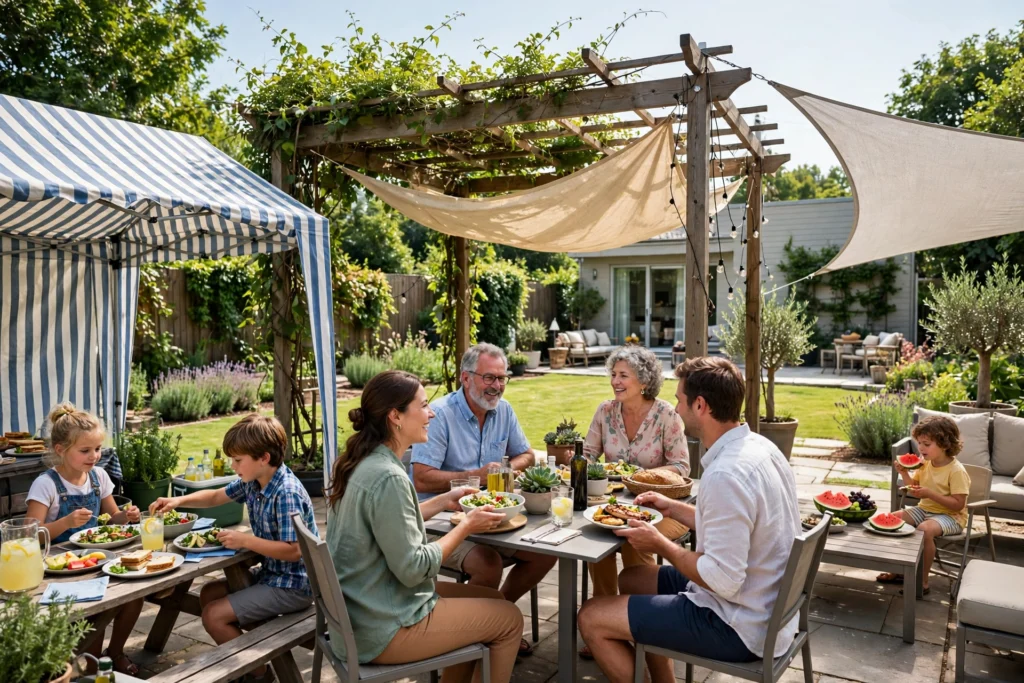
A standard 10×10 pop-up gets a bad reputation because people leave it plain and wobbly. Treat it like a base layer. Add side walls or sheer panels, a rug underneath, a couple of outdoor chairs and string lights, and it feels like a proper outdoor room. Weight the legs properly. Sandbags or water weights work well.
Best for: renters, families and seasonal use.
8. Pop-Up With a Decorative Cover
Hide the utilitarian frame by wrapping the legs in fabric, rope or faux greenery. You can also attach a lightweight canopy skin over the top in a color that suits your yard. A few inexpensive changes make a big difference to how it looks from the house.
Best for: parties where the look matters but the budget is tight.
9. Party Canopy With Side Walls
For birthdays and gatherings, a larger canopy with removable walls gives you flexibility. Open it up on mild days and close it on windy or drizzly ones. Add a long table, bunting and a few potted plants to anchor the setup.
Best for: celebrations, graduations and family cookouts.
10. Instant Shelter Canopy for the Play Area
Place a small canopy over a sandbox, playset or kids’ table. It keeps little ones out of intense sun and gives them a “home base.” Choose a brightly colored fabric so it feels like part of the playground rather than a leftover tent.
Best for: families with young children.
Shade Sail Ideas (Modern, Clean and Surprisingly Affordable)
Shade sails have a sleek, architectural look. They’re also one of the best shade-per-dollar options if you can install them correctly.
11. Triangular Sail Over a Patio
A single triangle stretched between three anchor points looks sharp and modern. Angle it so one corner sits noticeably lower than the others. This helps water run off and adds visual interest. Keep the fabric taut. A saggy sail looks sloppy and collects water.
Best for: patios and compact seating areas.
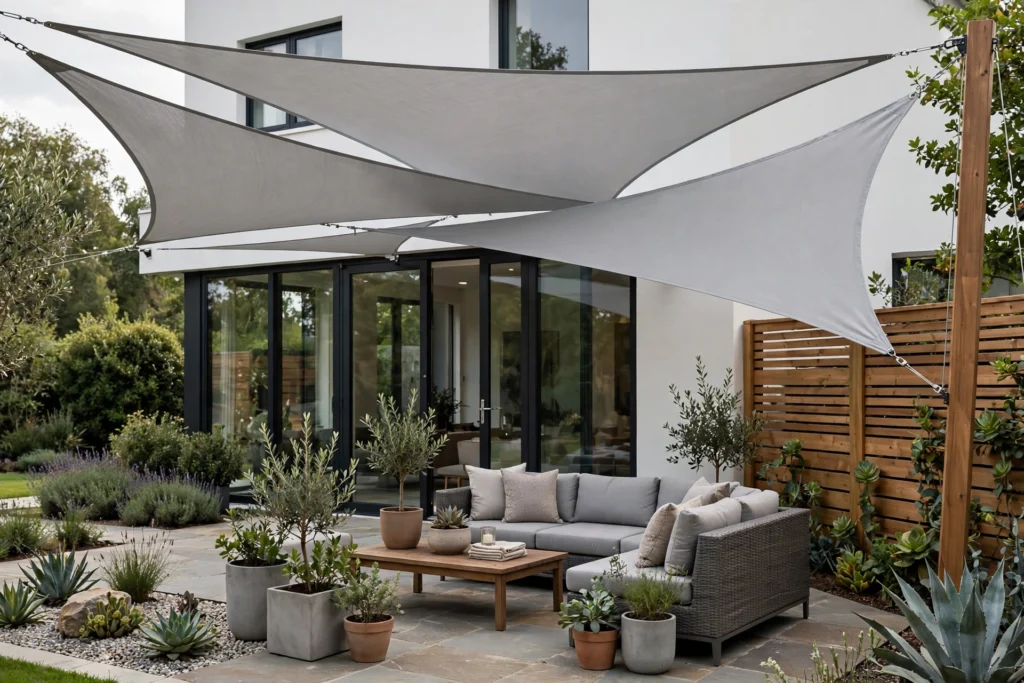
12. Overlapping Sails
Two or three sails at different heights create layers and cover more of the sun’s path across the day. It’s a favorite among designers because it looks custom while using off-the-shelf parts. Overlap them slightly so no gap lets sunlight through.
Best for: larger patios and dining spaces.
13. Rectangle Sail Over the Dining Area
A rectangular sail suits a long table beautifully. Mount it to the house wall on one side and to posts on the other for a clean, covered-dining feel. Pick a light neutral if you want a calm look, or a deeper tone like charcoal for more drama.
Best for: outdoor dining.
14. Sail Over the Pool or Hot Tub Edge
Shade near water is a luxury. A sail over the lounging side of a pool, or partly over a hot tub, keeps you comfortable and cuts glare. Position it for the sun’s afternoon path and make sure the posts are set well away from the splash zone.
Best for: pool decks and hot tub corners.
Structural and Semi-Permanent Canopy Ideas
If you want something that lasts for years and looks like part of the house, these are the ones to explore.
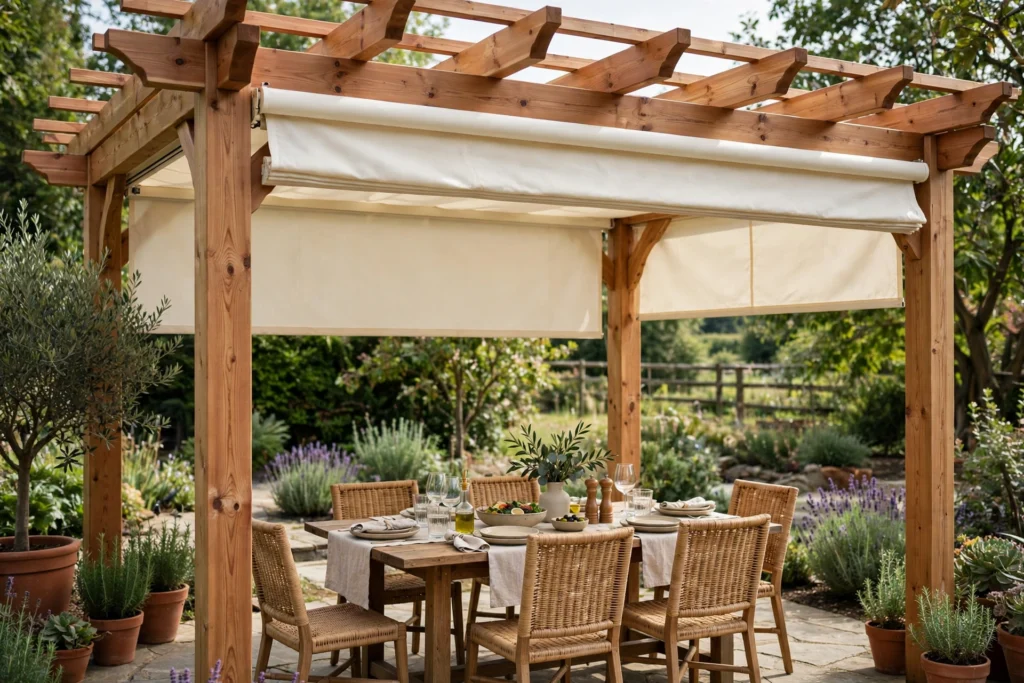
15. Pergola With Retractable Canopy
This is the best of both worlds. A pergola gives you the permanent frame, and a retractable fabric roof lets you choose shade or open sky. Close it at noon, roll it back at sunset. It’s an investment, but it’s also the option people most often tell me they wish they’d chosen sooner.
Best for: people who want long-term flexibility.
16. Pergola With Climbing Plants
Let wisteria, grapevines, jasmine or climbing roses do the shading. It takes a season or two for coverage to fill in, and the payoff is a living canopy that smells wonderful and cools the air around it. Choose a plant that suits your climate, and expect to prune.
Best for: gardeners and anyone who prefers natural shade.
17. Hardtop Gazebo
A hardtop gazebo has a rigid roof, often steel or aluminum, and handles rain and sun better than any fabric canopy. Many include mosquito netting and curtains. Look for strong anchoring, because a lightweight gazebo can still catch wind. Manufacturers typically offer these as kits, which makes installation more manageable.
Best for: year-round use and rainy climates.
18. Wooden Pavilion
A cedar or pine pavilion feels grounded and substantial. It works as an outdoor kitchen cover, a dining room or a hot tub shelter. Because it’s a bigger project, check for permits and plan your foundations carefully.
Best for: larger yards and entertaining.
19. Retractable Awning Off the House
An awning attached to the back wall gives shade right where you step outside. Retractable models are especially handy because you control how much sun to let in. They suit narrow patios where freestanding structures wouldn’t fit.
Best for: small patios and door-adjacent seating.
20. Covered Deck Extension
If your deck gets blasted by the afternoon sun, consider a roofed section or a partial cover. A mix of covered and open areas gives you choice: dine under the roof, sunbathe on the open side. It’s one of the best-value upgrades for homes with decks.
Best for: homeowners with existing decks.
21. Cabana or Poolside Structure
A small cabana with a fabric or solid roof, built-in seating and curtains makes a resort-style hideaway. Even a compact version feels special. Add a ceiling fan if you have power, and your summer afternoons just got better.
Best for: pool owners and anyone dreaming of a retreat.
22. Louvered Pergola
Adjustable louvers let you tilt the slats to control light and airflow, and close them fully for rain. It’s pricier, but it blends a canopy’s shade with real weather protection and a very polished look.
Best for: modern homes and premium builds.
Natural and Creative Canopy Ideas (Budget-Savvy Picks)
Not every canopy needs a store-bought frame. Some of the most charming ones are the simplest.
Also Read : Walls That Grow: Planting Upwards Without the Mess
23. Tree-Hung Canopy
If you have a sturdy tree, you can suspend fabric or shade cloth from a high branch and stake the corners out. It creates a soft, tent-like canopy that blends with nature. Never wrap rope tightly around a living branch for long periods, and use tree-friendly straps instead.
Best for: wooded or mature-tree yards.
24. DIY PVC or Conduit Frame With Shade Cloth
A lightweight frame made from PVC pipe or electrical conduit, topped with shade cloth, is one of the cheapest permanent-ish options. It’s easy to cut, assemble and adjust. Paint the frame to match your fence or house so it looks planned.
Best for: DIYers on a tight budget.
25. Bamboo and Reed Canopy
Natural materials like bamboo poles and reed or thatch panels create a tropical, tiki-bar look. They breathe well and age gracefully. Seal the wood to extend its life, and keep in mind that thatch is better in dry climates.
Best for: tropical-themed yards and fire-pit areas.
26. Tarp Canopy, Made Pretty
A tarp is the most practical rain cover you can buy, but it can look like a campsite. Use a neutral color, tidy the edges and hang it at an angle so water runs off. Pair it with plants and warm lighting so it looks like a relaxed camp-style retreat rather than a construction site.
Best for: rainy regions and casual hangouts.
Backyard Canopy Ideas for Specific Spaces
Sometimes the right question isn’t “which canopy?” but “which canopy for this spot?”
Over the dining table. Choose a canopy that extends a foot or two past the table edges so chairs stay shaded when pulled out. A peaked tent or rectangular sail works well here.
Around a fire pit. Never place fabric directly above an open flame. If you want a canopy near a fire pit, keep it well clear and use flame-retardant fabric, or choose a separate lounge zone beside the fire area. Safety comes first.
Over a hot tub. A pergola or hardtop structure gives privacy and weather protection. Make sure it allows ventilation so moisture doesn’t build up.
In a small backyard. Go vertical and light. A corner shade sail, a slim awning or a compact pop-up keeps the space open. Avoid heavy structures that swallow the whole yard.
For kids. Bright colors, a low profile and washable fabric make a canopy kid-friendly. Add a small rug and storage bin for toys.
For parties and weddings. Rent or buy a larger frame tent with side walls, then style it with lanterns, greenery and fabric swags.
How to Style Your Backyard Canopy So It Looks Designed
A canopy gives you the structure. Styling makes it feel like somewhere people want to be.
Layer your lighting
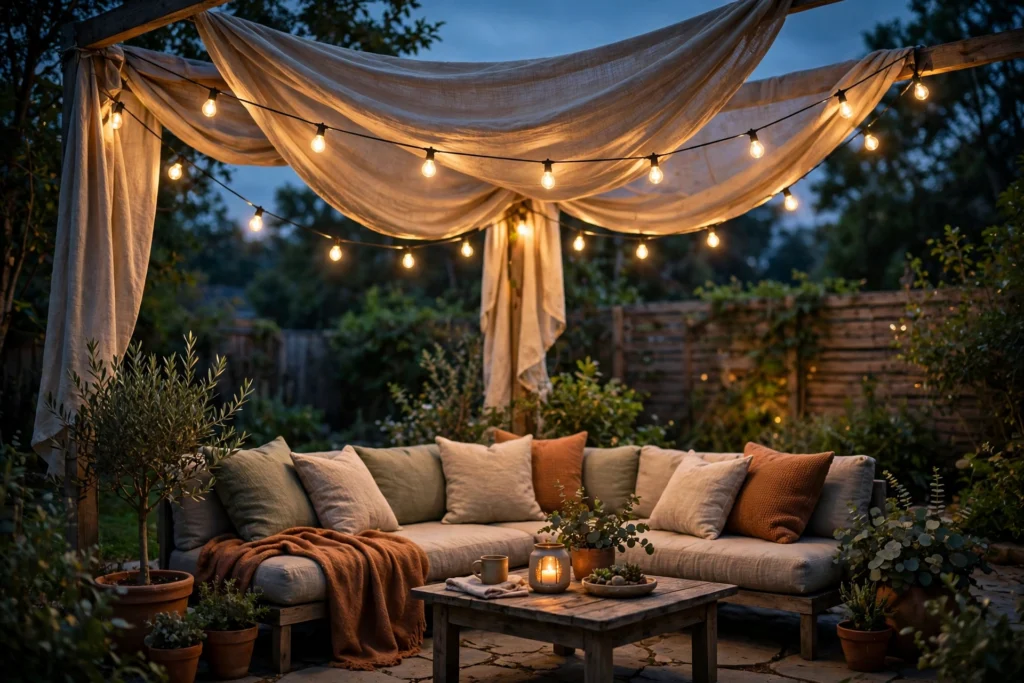
Light is what turns a daytime shade spot into an evening hangout. String lights draped along the frame give a warm glow. Add a few lanterns on the ground, and consider solar stakes along the path. Warm white bulbs flatter fabric and skin far more than cool white ones.
Define the floor
Put down an outdoor rug under the canopy. It marks the “room,” softens the ground and instantly makes the space feel furnished. Choose a rug made for outdoor use so it handles damp and sun.
Choose a calm color palette
Neutral canopies in white, cream, sand and gray go with everything and make your yard look larger. If you love color, repeat it across the cushions, rug and planters rather than using five different shades.
Bring in plants
Pots of herbs, tall grasses and trailing vines soften hard frame lines. Hanging planters add height without using floor space. Plants also help cool the area.
Mix textures
Combine woven chairs, linen cushions, a wood side table and a metal lantern. Varied textures keep a neutral space from feeling flat.
Add comfort
A throw blanket, extra pillows and a small side table for drinks make people stay longer. A ceiling fan or a small outdoor fan can be a
lifesaver in humid places.
Choosing the Right Fabric
Fabric choice affects looks, comfort and lifespan.
- Polyester with UV coating: affordable and widely used. Good UV resistance and decent water resistance.
- Acrylic (solution-dyed): premium, fade-resistant and breathable. Costs more but lasts longer.
- HDPE shade cloth: breathable and great for blocking a large share of UV. Lets heat escape instead of trapping it.
- Canvas: natural look, sturdy, but needs care to avoid mildew.
- Sheer outdoor polyester: soft and pretty, mostly for decoration and filtered light rather than serious shade.
A tip many guides skip: breathable fabric often feels cooler than a fully waterproof one, because hot air can escape. If you want both rain protection and comfort, use a waterproof canopy with a vented top or open sides.
Anchoring and Wind Safety (Don’t Skip This)
A canopy is only as good as its anchoring. Treat this section as non-negotiable.
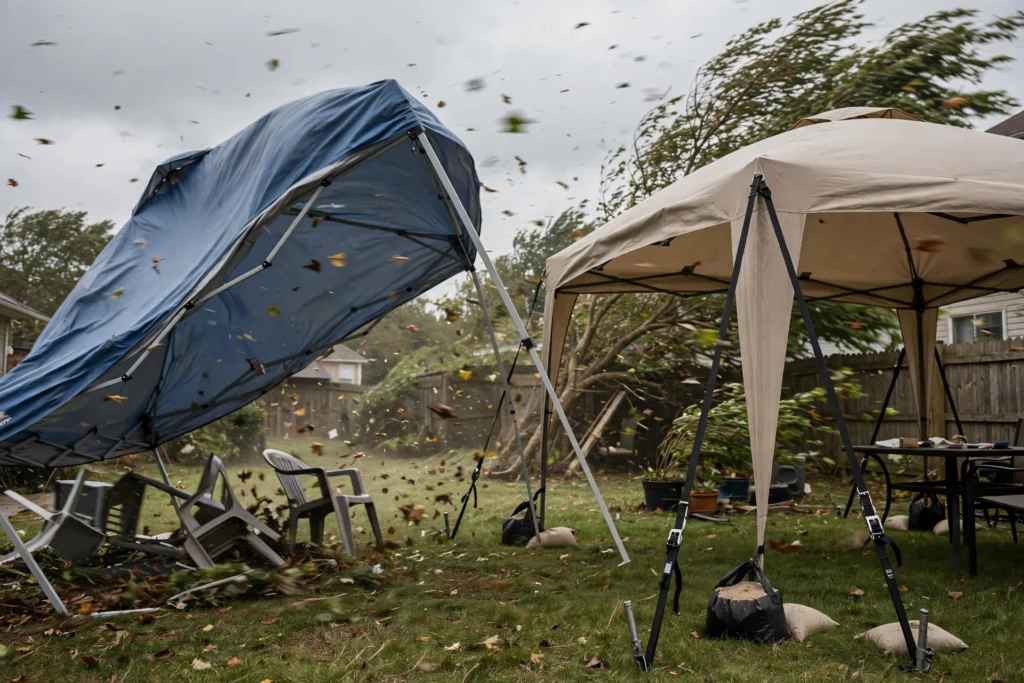
- Use the right weight. For pop-ups, add proper weights on every leg. Water-filled or sand-filled weights are generally better than a single cinder block.
- Stake into soil where possible. On grass or dirt, long stakes or ground anchors hold much better than weights alone.
- Concrete for permanent posts. Shade sails and large structures need properly set posts, with depth matched to local guidance.
- Tension the lines. A loose canopy flaps, wears out faster and catches more wind.
- Take it down in storms. Even good canopies can fail in severe weather. If strong winds are forecast, lower or remove the fabric.
- Check local codes. Larger or permanent structures may need approval.
Maintenance Tips to Make Your Canopy Last
- Clean regularly. A soft brush and mild soap handle most dirt. Rinse well and let it dry fully.
- Prevent mildew. Never store a damp canopy. Fold it only when completely dry.
- Remove pooled water. Water collects in saggy spots and stretches fabric. Re-tension or adjust the slope.
- Inspect hardware. Check rope, clips and brackets every season.
- Store off-season. Taking down fabric canopies in winter extends their life, especially in snowy climates.
- Re-treat water-resistant fabrics. Sprays can restore repellency when water stops beading.
Budget Planner: What Will It Cost?
Prices vary widely by region and brand, but this gives you a rough idea of where each option sits.
| Canopy Type | Typical Budget | Difficulty | Lifespan |
|---|---|---|---|
| Pop-up canopy | Low | Very easy | 1–5 seasons |
| DIY fabric canopy | Low | Easy–medium | 2–5 years |
| PVC frame with shade cloth | Low | Medium | 2–5 years |
| Shade sail (with posts) | Low–mid | Medium–hard | 5–10 years |
| Awning | Mid–high | Professional install | 10+ years |
| Pergola kit | Mid–high | Medium–hard | 10+ years |
| Hardtop gazebo | Mid–high | Medium | 10+ years |
| Louvered pergola | High | Professional install | 15+ years |
Money-saving tip: buy a decent frame and upgrade the soft furnishings over time. A strong structure is the hardest part to replace, while cushions and curtains are easy to swap.
Read also : Small Gardens, Thought Through: How to Make a Tiny Plot Work Harder
Common Mistakes to Avoid
- Ignoring wind. The most common and most costly mistake.
- Going too small. A canopy that only covers the table leaves chairs in the sun. Allow extra space.
- Forgetting the sun’s angle. Shade at noon doesn’t help at 5 p.m.
- Skipping the floor. Grass under a canopy gets muddy and trampled. Add pavers, gravel or a rug.
- Buying the cheapest frame. Flimsy frames bend and break.
- Putting fabric near flames. Keep canopies away from grills and fire pits.
- No lighting plan. A beautiful space you can’t use after dark is half a space.
- Overdecorating. Too many patterns make it feel cluttered. Edit before you add.
Quick Picks: Which Idea Is Right for You?
- Renting or on a tight budget? Upgraded pop-up (#7) or DIY PVC frame (#24).
- Want a dreamy lounge? Draped cabana (#1) or sheer pergola curtains (#3).
- Want modern and minimal? Shade sails (#11–#13).
- Want to invest for the long term? Retractable pergola (#15) or hardtop gazebo (#17).
- Love gardening? Pergola with climbing plants (#16).
- Have kids? Play-area canopy (#10).
- Need rain cover? Hardtop gazebo (#17) or a neat tarp setup (#26).
- Small patio? Retractable awning (#19) or a corner sail.
Seasonal Tips: Using Your Canopy Year-Round
Spring: Set up before the summer rush. Check fabric, tighten hardware and refresh your plants.
Summer: This is peak canopy season. Use light colors, add a fan and keep drinks cold.
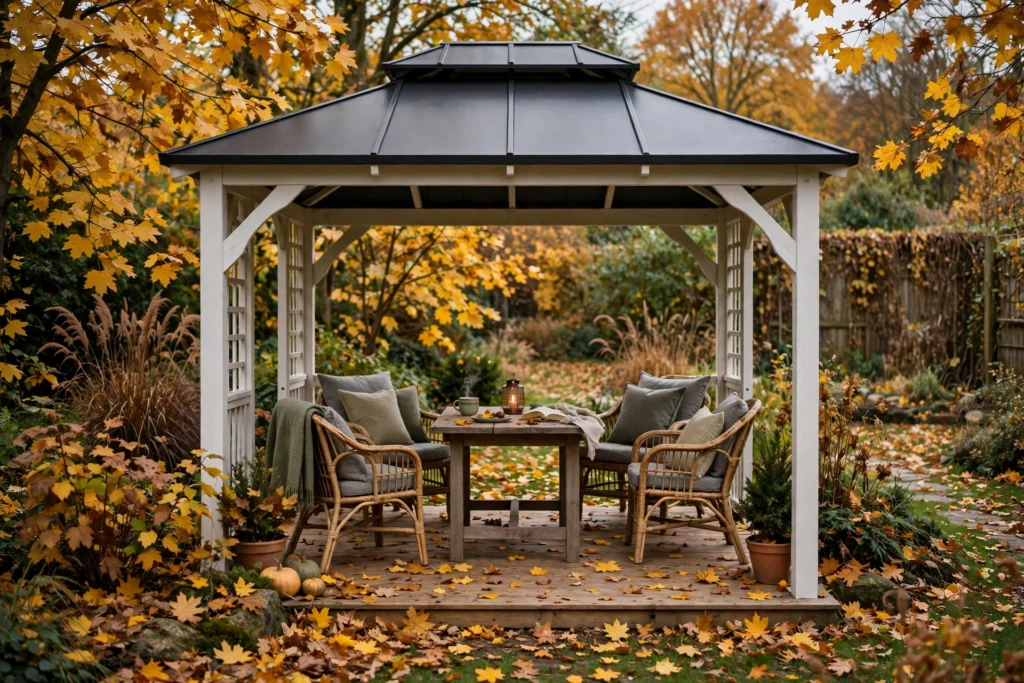
Fall: Swap cushions for warmer tones, add a throw blanket and string lights, and enjoy cooler evenings outside.
Winter: In mild climates, a covered area with a fire table (placed safely away from fabric) extends your season. In harsh winters, take down fabric canopies and store them dry.
Final Thoughts
The best backyard canopy ideas change how you use your outdoor space. It stops the yard from being something you look at through a window and turns it into somewhere you actually spend time. You don’t need a huge budget or a design degree to get there. Start with the problem you want to solve, whether that is shade, rain cover, privacy or atmosphere. Pick the option that fits your wind, sun and budget. Then style it with light, texture and a few plants.
If you’re not sure where to begin, try a simple upgraded pop-up or a single shade sail this summer. Live with it for a season, notice how you use the space, and then decide whether to invest in something more permanent. Your backyard has more potential than a patch of hot grass, and the right canopy shows it.
Frequently Asked Questions
What is the best canopy for a backyard?
It depends on your goals. A pop-up canopy is best for budget and flexibility, a shade sail for a modern look, and a pergola or hardtop gazebo for long-term durability and weather protection.
How do I make a cheap backyard canopy?
Build a simple frame from PVC pipe or wooden posts and cover it with shade cloth or outdoor fabric. Add string lights and a rug to make it feel styled. Many DIY versions can be done in a weekend.
What is the difference between a canopy and a gazebo?
A canopy is usually a fabric roof on a lightweight frame, while a gazebo is a more permanent structure, often with a solid or hardtop roof. Gazebos offer better weather protection but cost more.
How do I keep a canopy from blowing away?
Weight every leg with sandbags or water weights, stake into the ground where possible, keep fabric taut and take the canopy down when strong winds are forecast. Permanent posts should be set in concrete.
Can a backyard canopy protect against rain?
Waterproof fabrics and hardtop gazebos protect well against rain. Many shade cloths and sheer fabrics only filter sun and offer little rain protection, so check the product’s specifications.
What fabric is best for an outdoor canopy?
Solution-dyed acrylic is premium and fade-resistant, UV-coated polyester is affordable and common, and HDPE shade cloth is breathable and excellent for blocking sun. Canvas has a natural look but needs mildew care.
Do I need a permit for a backyard canopy?
Temporary pop-ups usually don’t, but permanent structures like pergolas, gazebos and large pavilions often do. Rules vary by location and HOA, so check with your local authority before building.
How big should a backyard canopy be?
Make it larger than your furniture footprint. For a dining table, allow at least a foot or two beyond the table edge so chairs stay shaded when pulled out. A 10×10 suits a small group, while larger gatherings need more.
Can I put a canopy over a fire pit or grill?
Not directly. Fabric and open flames don’t mix. Keep canopies well clear of fire pits and grills, use flame-retardant materials where appropriate and follow the manufacturer’s safety guidance.
How can I make my backyard canopy look more stylish?
Add warm string lights, an outdoor rug, a calm color palette, potted plants and mixed textures like linen, rattan and wood. Curtains or sheer panels add softness, and a few cushions make it inviting.



One comment on “26 Backyard Canopy Ideas That Make Your Yard Feel Like a Real Outdoor Room”