
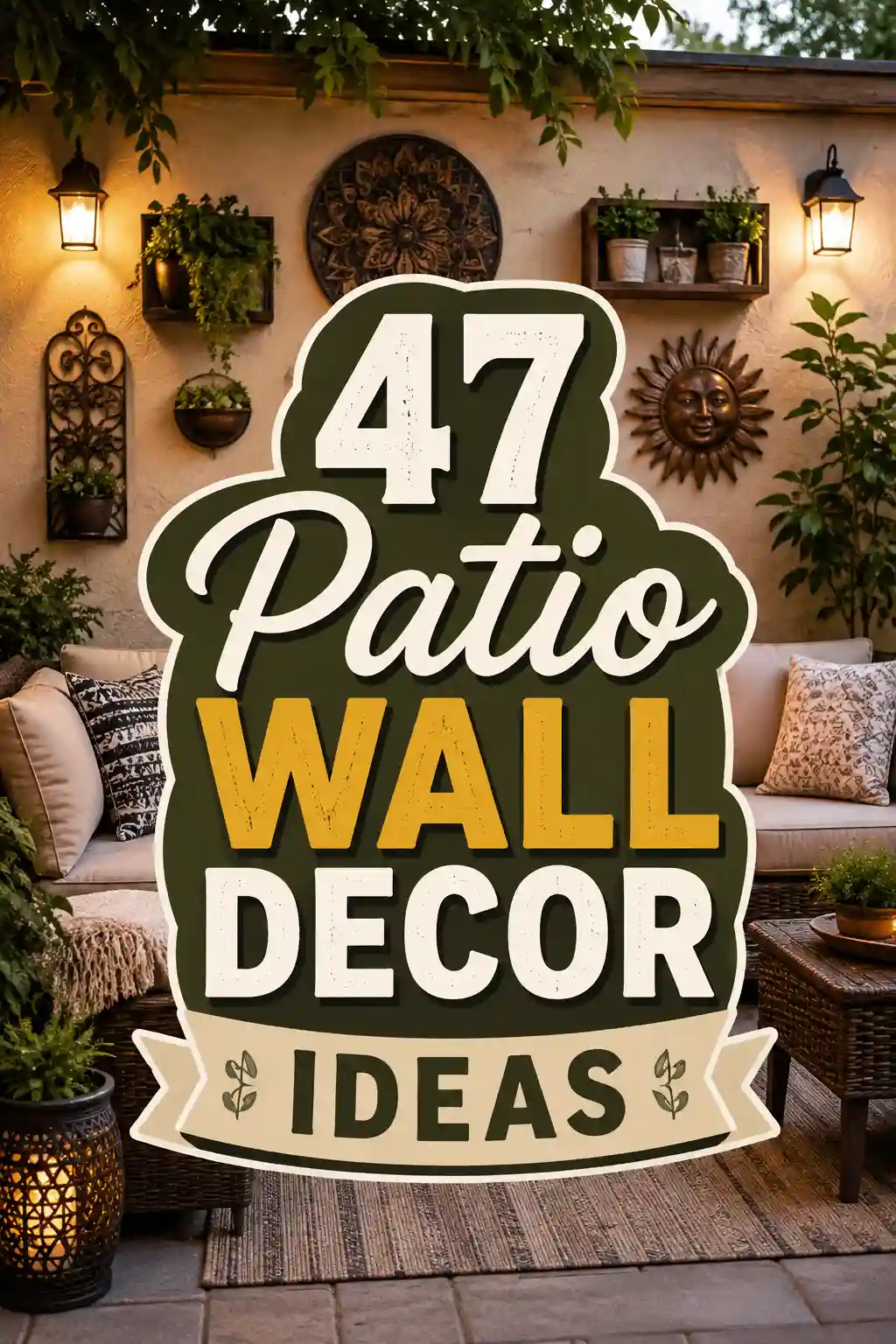
A bare patio wall is not a design failure; it is usually a mounting problem. Before buying anything, check three things: what the wall is made of, how much weight it can hold, and whether you are allowed to drill into it. A brick wall, a concrete block wall, vinyl siding and a wooden fence each need different fixings, and a renter’s wall needs a different plan again. Getting that decision right first saves the cost of a collapsed planter and a damaged wall.
For a typical patio wall of about 3 by 2.4 metres, allow a weekend for the work, £150 to £350 for the main display — plants, lighting, mirrors or art — and £30 to £60 for fixings, hooks and exterior sealant. The plan in this guide is deliberately restrained: one focal piece, one supporting layer, and a lighting layer, rather than a wall covered in unrelated items.
The order matters. Start with the wall material, then choose a focal point, then add plants or art, then lighting, then weatherproofing. This guide works through each step, with the weights, measurements and fixings that actually decide whether a piece stays up.
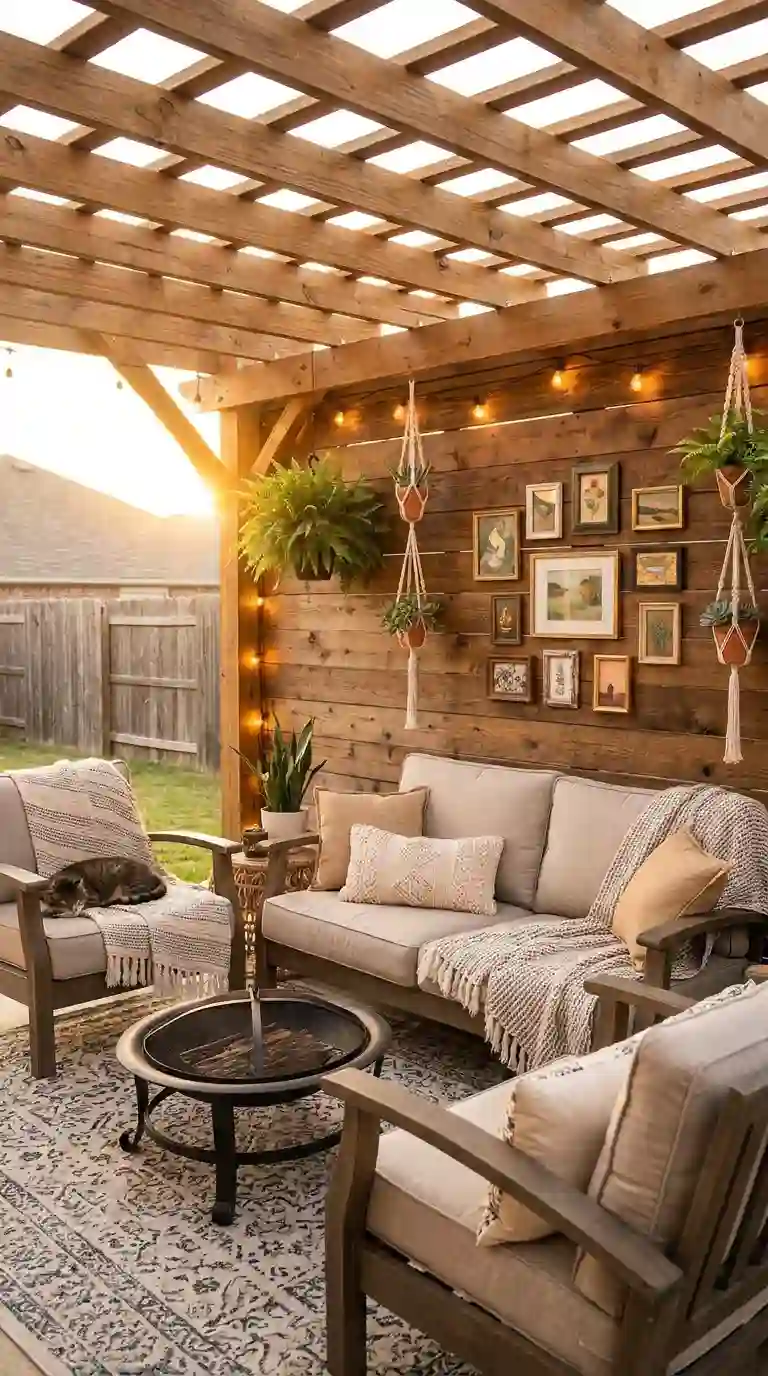
What does your wall actually allow you to hang?
Brick and concrete block walls are the most forgiving, provided the fixings are right. Use masonry screws or wall plugs rated for the weight, with a 6-millimetre masonry drill bit for light items and an 8-millimetre bit for heavier planters, and drill into the mortar joint rather than the brick where possible, so the repair is easier if the piece is removed later. A single masonry plug typically holds 10 to 20 kilograms, depending on the product and the wall condition, so check the rating rather than guessing.
Vinyl siding needs a different approach, because screws through the siding can crack it and let water in. Use siding hooks that clip over the siding, or a freestanding trellis placed 10 to 15 centimetres in front of the wall, so nothing is fixed to the siding at all. A wooden fence is the easiest surface to fix to, but use exterior-grade screws and seal the hole afterwards, because an unsealed screw hole in a fence will let water in and rot the wood around it. For any wall, weigh the piece with its plants and wet soil before choosing a fixing; a planter that weighs 3 kilograms dry can weigh 8 kilograms after watering.
How do you choose one focal point?
Choose one item that is at least 60 centimetres wide or tall, and place it at eye level, about 150 centimetres from the ground to its centre, so it is visible from the main seating position. That item could be a large metal sun, a framed outdoor print, a mirror, or a wooden panel. Everything else on the wall should be smaller and quieter, so the eye has a clear place to land.
Test the position before drilling. Cut a paper template the same size as the piece, tape it to the wall, and sit in the usual seating spot. If the template is hidden by a plant pot or a chair back from that position, move it. Leave at least 30 centimetres of empty wall around the focal piece, because crowding it with smaller items will make it disappear. The same principle applies to a hallway, where one bold wall works better than several competing features; see this guide to painting a hallway for how a single focal wall is balanced by light trim and a light ceiling.
Which plants actually survive on a wall?
Wall planters dry out faster than pots on the ground, because they hold less soil and are exposed to wind on all sides. Choose trailing plants that tolerate drying out, such as pothos, ivy or string of pearls for a sheltered wall, and sedums or herbs for a sunny wall. For a sunny, south-facing wall, allow at least 15 centimetres of soil depth per planter, and water at least twice a week in summer, because a shallow wall pocket can dry out in a single hot day.
Keep the number of planters manageable. Three to five planters, each no more than 30 centimetres wide, will look fuller than ten small pots scattered across a wall, and they are easier to water and maintain. Use a drip tray or a liner with drainage holes, so water does not run down the wall and stain it, and check the total weight after watering before adding a second row. For a fuller guide to choosing plants for the patio itself, see this guide to patio plants, which covers sun, pot size and watering in more detail.
When does a mirror help, and when does it look odd?
A mirror works best on a narrow patio or a wall opposite a window or a planting bed, because it reflects light and greenery, not another wall. Choose a mirror labelled as weather-resistant or outdoor-rated, at least 60 by 90 centimetres for a main wall, and fix it with a frame rated for outdoor use, because an indoor mirror will fog, rust at the edges and eventually lose its backing in damp conditions.
Avoid placing a mirror where it will reflect a neighbour’s window, a bin area or a blank fence, because it will double the least attractive view in the garden. Angle it slightly, so it reflects the sky or a planting bed, and clean it at least once a month in summer, because outdoor mirrors show dust and water spots more clearly than indoor ones. A group of three small mirrors, each about 30 centimetres across, can work on a narrow wall, but a single large mirror usually looks more intentional than a collection of unrelated small ones.
What lighting makes a patio wall usable at night?
Plan for two layers: a soft, decorative layer and a practical layer. String lights, hung in a gentle swag with a drop of about 30 centimetres between fixings, give a warm glow and cost about £15 to £30 for a 10-metre length. Sconces or lanterns, fixed at about 180 centimetres from the ground, give a more focused light for eating and conversation, and should be rated IP44 or higher for outdoor use.
Use warm white bulbs at about 2700K, not cool white, because cool light makes a patio feel like a car park. Solar lights are useful for a wall without a power supply, but they need at least 6 hours of direct sunlight to charge fully, and they will be dimmer in winter. For a wired sconce, use a qualified electrician if the work involves a new outdoor socket or a cable through a wall, rather than running an indoor extension lead outside, which is a safety risk in rain.
How do you decorate a rented patio wall?
Start with items that do not touch the wall at all: a freestanding trellis, a ladder shelf leaned against the wall at a safe angle, or a large planter placed in front of the wall. Those items give the same vertical interest as a fixed display, without any damage. For items that do need to hang, use outdoor-rated adhesive hooks, each rated for at least 2 kilograms more than the item weighs, and test one hook for 48 hours before hanging a full display.
Avoid adhesive hooks on rough brick, flaking paint or a wall that is already damp, because they will not hold and may pull paint off when removed. On a smooth, painted wall, remove the hook by pulling the tab slowly downwards, as the instructions state, rather than pulling it outwards. Take a photograph of the wall before starting and after finishing, so there is a clear record of its condition if the tenancy is checked later.
What materials actually survive outdoors?
Powder-coated metal, cedar, teak and outdoor-rated resin survive outdoors best, because they resist rust, rot and UV fading. Untreated pine, indoor MDF and ordinary canvas will not, even under a covered patio, because humidity alone will warp and stain them over a season. Check the label for outdoor use, not just for water resistance, because a product that is splash-proof is not necessarily UV-stable.
For a wooden panel or trellis, apply an exterior wood oil or stain before hanging it, and reapply it once a year in spring, because a single coat will wear off over winter. For metal art, check the fixings as well as the art itself, because a rusted screw will stain the wall even if the art is powder-coated. Store cushions and fabric wall hangings indoors in winter, because even outdoor-rated fabric will fade and mildew if left out through a wet season.
How do you keep a decorated wall from looking cluttered?
Limit the wall to three colours, including the wall colour itself. For a brick wall, for example, terracotta, sage green and warm white will look coherent, while adding bright blue, orange and purple in the same display will make the wall feel busy. Keep the materials to two or three as well: wood and metal, or metal and plants, rather than wood, metal, glass, fabric and plastic all at once.
Leave empty space. A wall that is 70 percent covered will look cluttered, even if each item is attractive on its own, while a wall that is 40 percent covered, with a clear focal piece and two supporting items, will look intentional. Step back to the seating area after hanging each item, rather than hanging everything at once, because the view from the seat is the view that matters, not the close-up view from the ladder.
Frequently asked questions
What is the cheapest way to decorate a patio wall? A freestanding trellis, a group of outdoor-rated adhesive hooks with light art, or a painted accent panel using leftover exterior paint are all low-cost options, usually under £50.
How do I hang decor on a concrete block wall? Use masonry plugs and screws rated for the weight, drill into the mortar joint where possible, and weigh the piece with wet soil before choosing a fixing.
Can I decorate a patio wall without drilling? Yes. Freestanding trellises, ladder shelves, large planters and outdoor adhesive hooks all avoid drilling, provided the hook rating exceeds the item’s weight.
What plants work best on a patio wall? Trailing plants such as pothos and ivy for a sheltered wall, and sedums and herbs for a sunny wall, in planters at least 15 centimetres deep, watered at least twice a week in summer.
How do I stop outdoor wall decor from rusting or fading? Choose powder-coated metal, cedar or teak, check that fixings are exterior-grade, and reapply exterior wood oil once a year in spring.
Start with the wall, not the shopping list. Check the material, choose one focal piece at eye level, add plants or lighting as support, and leave empty space around it. A weekend, a clear weight rating for every fixing, and a weather-resistant material choice will do more for a patio wall than a dozen unrelated items hung at random.




2 Comments on “How to Decorate a Patio Wall Without Drilling Into Trouble”