
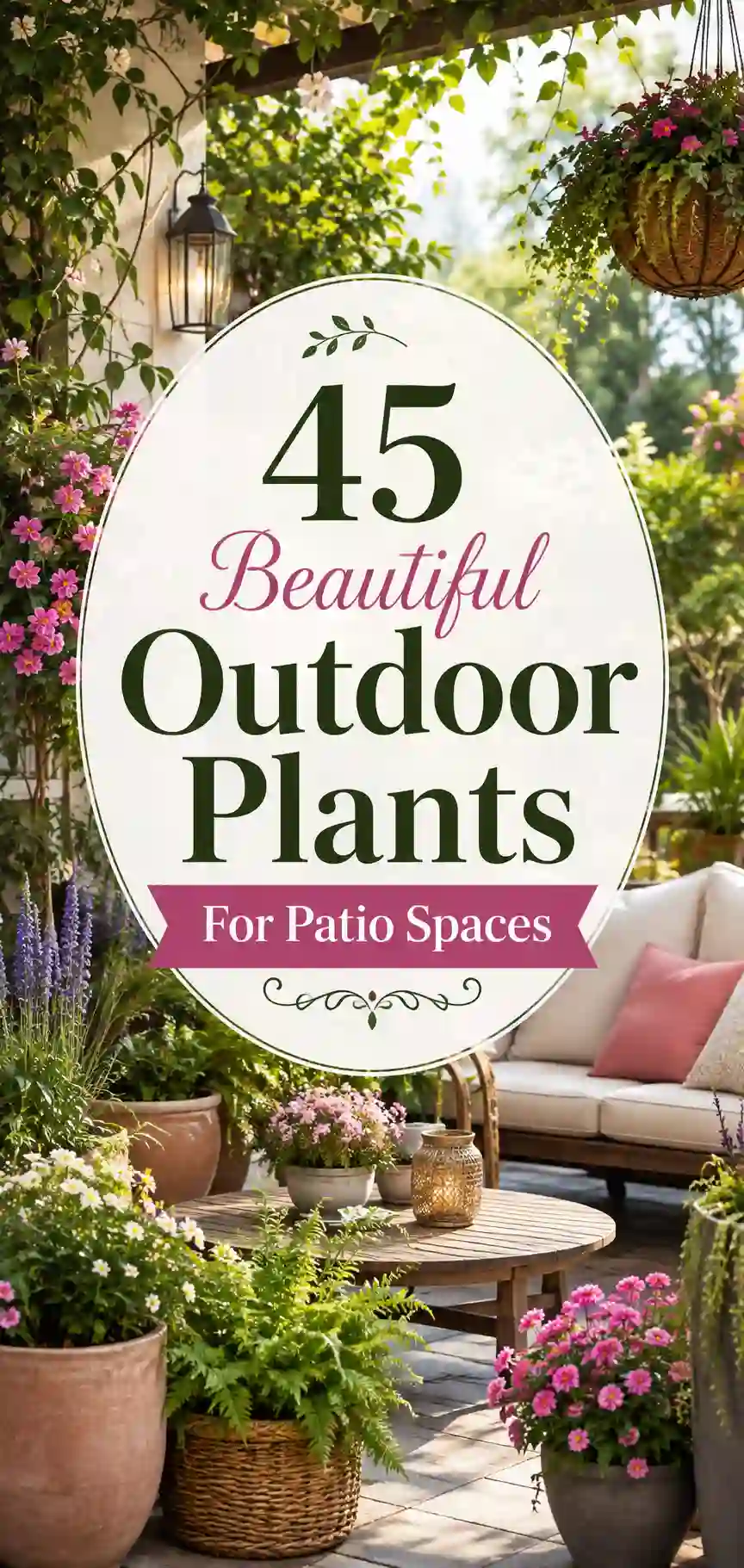
A patio fails for plants in predictable ways: too much reflected heat, too little soil, or a pot that dries out in a day. Before buying anything, measure the space and watch the light for one full day. Note which areas get direct sun from 10 a.m. to 4 p.m., which stay shaded by a wall, and where rain actually reaches the ground rather than being blocked by an overhang.
For a first planting, allow about £60 to £120 for three to five containers, compost, and plants, and about two hours to plant them. A single large pot is usually a better starting point than ten small ones, because a larger volume of soil holds moisture longer and gives roots room to establish. Plant after the last expected frost in your area, and allow two to three weeks for new plants to settle before judging whether they are thriving.
The decision that matters most is matching the plant to the light and the pot, not choosing the prettiest plant in the garden centre. This guide works through sun, shade, pots, watering, privacy, scent and seasonal care, with the numbers you need to make those choices.
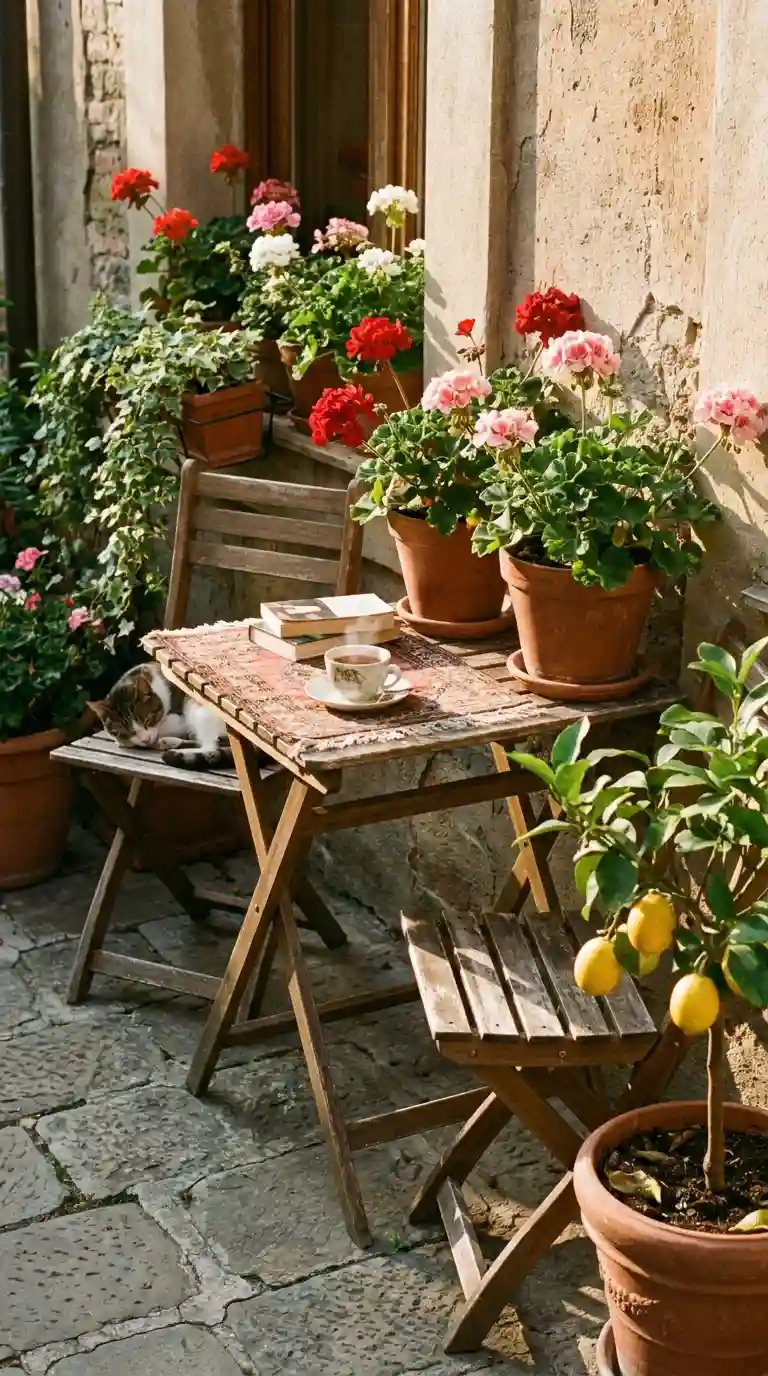
How much sun does your patio really get?
Full sun means six or more hours of direct sun a day. Partial shade means three to six hours, often morning sun and afternoon shade. Full shade means less than three hours of direct sun, although the area may still be bright. Many people overestimate sun on a patio, because a wall that looks sunny at noon may shade the same spot by 3 p.m. in summer.
Record the light at 9 a.m., noon and 4 p.m. on a sunny day, and repeat the check in a different season if you can, because the sun angle changes. A south-facing patio in the northern hemisphere gets the most heat and needs drought-tolerant plants and larger pots. A north-facing patio stays cooler and suits ferns, hostas and begonias, which scorch in strong afternoon sun. Reflected heat from pale paving can add the equivalent of an extra hour of sun, so plants near a light-coloured wall need more water than the same plant in open ground.
Which plants cope with six hours of direct sun?
For a sunny patio, choose plants with small, thick or silver-grey leaves, which lose less water. Lavender, rosemary, sedum, geraniums and ornamental grasses such as blue fescue all suit this position. Lavender needs free-draining soil and should be watered only when the top 3 centimetres of compost feel dry, because wet roots in winter are a common cause of failure. Geraniums flower from late spring to autumn if dead flower heads are removed regularly, and they tolerate a missed watering better than most bedding plants.
Use a pot at least 30 centimetres wide for a single sun-loving shrub, and 40 centimetres or more for a small tree or a mixed planting. A dark pot absorbs more heat than a light one, so on a very hot patio choose terracotta or a pale glazed pot and move it 10 to 15 centimetres away from a south-facing wall on the hottest days. Mulch the surface with 3 to 5 centimetres of bark or gravel to slow evaporation, keeping the mulch away from the plant stem.
What grows well in shade and partial shade?
Shade is not a problem to solve; it is a different planting palette. Hostas give large, textured leaves in green, blue-green or variegated forms, and they grow well in a 35-centimetre pot with regular watering in dry spells. Ferns, especially Boston fern in a hanging basket, add softness and suit a sheltered, humid corner. Begonias and coleus add colour without needing flowers to be the main feature, and both flower or colour reliably in partial shade.
The key decision in shade is drainage rather than light. Shaded compost stays wet longer, so use a free-draining potting mix and raise pots on feet or bricks so excess water can escape. Water only when the top 2 centimetres feel dry, and empty saucers after watering, because roots standing in water for days will rot even in a plant that likes shade. If slugs are a problem, copper tape around a pot and a gravel mulch are more reliable than hoping a single treatment will work.
How do you choose a pot that will not kill the plant?
Start with drainage. Every pot needs at least one drainage hole, and a layer of crocks or gravel over the hole helps water escape without blocking it. Terracotta is breathable and suits drought-tolerant plants, but it dries out faster and can crack in a hard frost if left full of wet compost. Glazed ceramic holds moisture longer and suits ferns and begonias. Lightweight plastic or fibreglass is practical for a large screening plant that may need moving, and it does not crack in frost in the same way.
For a mixed container, use the thriller, filler and spiller method as a guide: one upright plant in the centre, such as a grass or a small shrub; two or three mounding plants around it, such as geraniums; and one trailing plant at the edge, such as trailing lobelia or ivy. Do not overcrowd the pot on day one. Leave about 5 centimetres between young plants so air can circulate, and allow the compost to settle 2 centimetres below the rim so watering does not wash soil over the edge. A 40-centimetre pot typically needs about 25 to 30 litres of compost.
How much water do patio pots really need?
There is no single watering schedule that works for every patio, because pot size, sun and wind change the answer daily. The reliable test is to push a finger 2 to 3 centimetres into the compost. If it feels dry at that depth, water thoroughly until water runs from the drainage holes, then stop. If it feels damp, wait a day and test again. In hot, windy weather, a small 25-centimetre pot may need water every day, while a 50-centimetre pot in shade may need water only twice a week.
Water in the morning where possible, so leaves dry before evening and the plant has moisture for the hottest part of the day. Feed container plants every two weeks in the growing season with a balanced liquid feed, following the dilution on the label, because nutrients wash out of pots faster than from garden soil. If you travel for a week in summer, move pots into shade, group them together, and use a simple drip or capillary system, rather than relying on a single heavy watering before you leave.
How do you build privacy without blocking light?
Privacy on a patio usually works best as a screen, not a solid wall. Clumping bamboo in a 50-centimetre container, tall ornamental grasses, or a trellis with star jasmine or clematis can block a direct view while still letting light and air through. Place screening plants along the boundary you actually need to screen, not all the way around the patio, so the seating area still feels open.
Check the mature height and spread on the plant label before buying. A bamboo that reaches 3 metres in a pot is useful for screening a first-floor window, but it will shade a small patio if it is placed on the south side. For a wall behind the plants, consider how the surface itself is treated, because a plain wall makes planting look better and a decorated wall can compete with it; see these patio wall decor ideas for surfaces that work with, rather than against, greenery. Keep screening plants at least 30 centimetres from a wall so air can circulate and the wall can dry.
What should you plant if you want herbs, scent or pollinators?
Herbs are a practical first patio planting because they are useful, fragrant and tolerant of sun. Rosemary, thyme and oregano need sun and free-draining soil. Basil needs warmth, regular water and a sheltered spot, and it should be pinched regularly to delay flowering. Mint must be grown in its own pot, because it spreads through shared compost and will take over a mixed container within a season.
For scent in the evening, jasmine and lavender are reliable choices, with jasmine needing a trellis or support and a sheltered position in colder areas. For pollinators, coneflower, salvia, zinnias and lantana flower over a long period and are regularly visited by bees and butterflies. Plant at least three different flowering species if pollinators are a goal, so there is nectar from spring to autumn rather than a single flush. If you have pets, check the plant label and local guidance before buying, because some popular plants, including lilies, are harmful to cats and dogs, and it is safer to place any plant you are unsure about out of reach.
How do you keep a patio looking good through winter?
Winter interest comes from structure, not flowers. Evergreen shrubs such as boxwood, winter heathers and small conifers keep their shape, while ornamental grasses left standing add movement until they are cut back in late winter. Move tender plants, such as citrus and bougainvillea, to a frost-free place before the first frost, and wrap terracotta pots with hessian or bubble wrap if a hard frost is forecast, because wet compost expands and can crack the pot.
Reduce watering sharply in winter, because most plants need water only every two to three weeks when they are not growing, and only if the compost is dry. Remove fallen leaves from pots so air can reach the compost, and check drainage holes, which can block with debris over winter. In spring, cut back dead growth, top-dress the compost with 3 centimetres of fresh mix, and start feeding again once new growth appears. A small outdoor space can follow the same seasonal logic; for a compact version, see this guide to French balcony planting and adapt the pot sizes to the space you have.
Frequently asked questions
What are the easiest patio plants for a beginner? Lavender, geraniums, sedum, ornamental grasses and rosemary are forgiving choices, because they tolerate sun, missed watering and a range of pot sizes better than most bedding plants.
How often should I water patio containers? Test the top 2 to 3 centimetres of compost. Water thoroughly when it feels dry, which may be daily in hot weather for a small pot and twice a week for a large pot in shade.
What soil should I use in patio pots? Use a peat-free, free-draining potting mix made for containers, not garden soil, which compacts in a pot and restricts drainage. Add grit or perlite for plants that prefer dry conditions, such as lavender.
Can patio plants survive winter outdoors? Many evergreen shrubs and hardy perennials can, provided the pot drains well and is protected from hard frost. Tender plants should be moved to a frost-free place before the first frost.
How do I stop pots drying out in summer? Use a larger pot, mulch the surface, group pots together, water in the morning, and choose a light-coloured or terracotta pot rather than a dark pot on a hot, south-facing patio.
Start with light, then pot size, then plant. A sunny patio needs drought-tolerant plants in large, well-drained pots. A shady patio needs plants that tolerate shade and compost that does not stay wet. Get those two decisions right, and most patio plants will look after themselves with a regular finger test for water and a feed every two weeks in summer.


4 Comments on “Patio Plants That Actually Survive: A Practical Guide to Sun, Pots and Watering”