
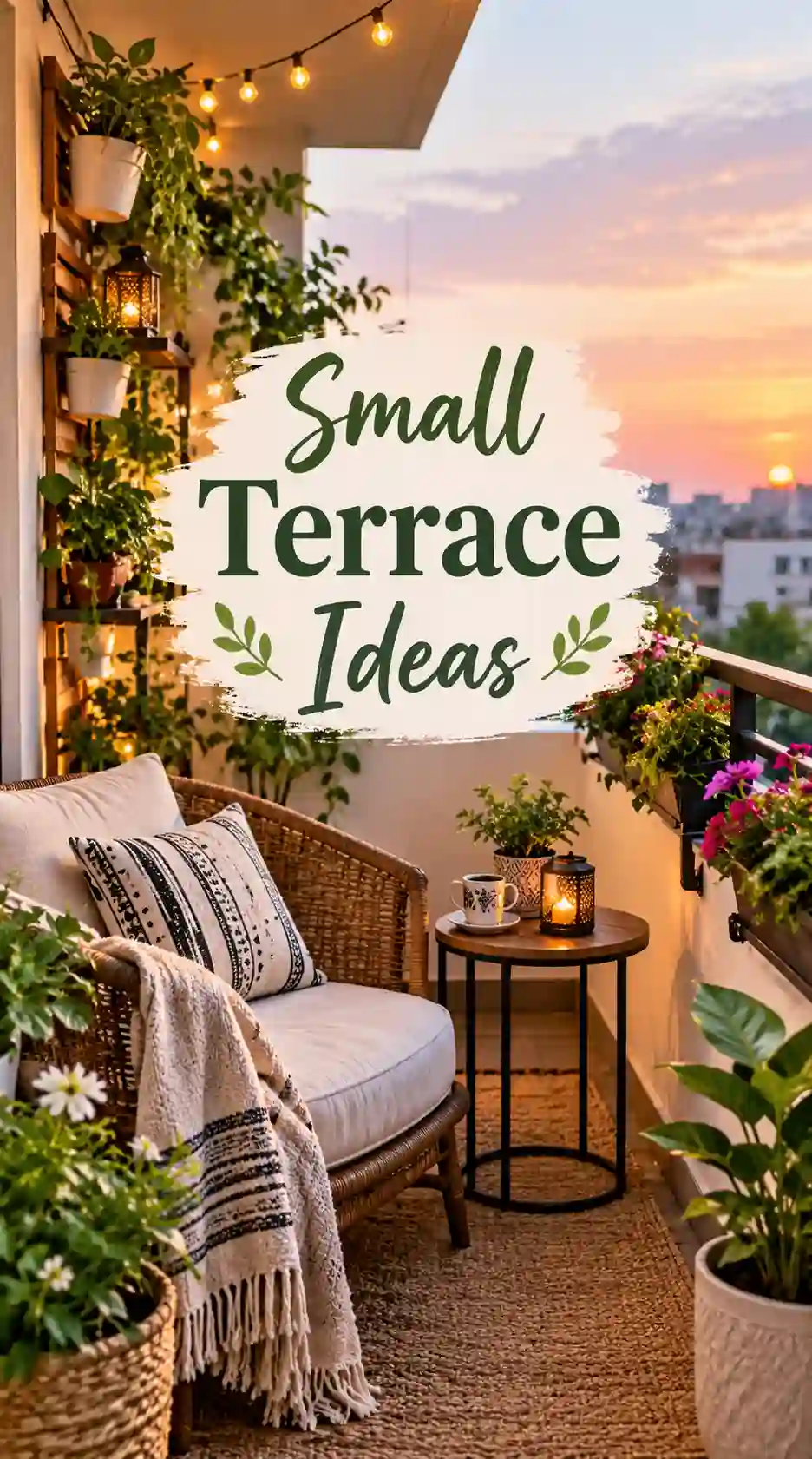
A small terrace is a strange kind of luxury. It’s not big enough to host a garden party, yet it’s the one spot in your home where you can step outside in your slippers, hold a cup of tea and look at something other than a wall. The trouble is that most people treat it like leftover space. A couple of mismatched chairs, a dusty plant or two, maybe a bicycle leaning in the corner, and that’s about it.
It doesn’t have to stay that way. The best small terrace ideas are not about squeezing in more stuff. They’re about deciding what your terrace is for, choosing a few pieces that earn their place, and using height, light and greenery to trick the eye into seeing more room than there really is.
Also Read: Walls That Grow: Planting Upwards Without the Mess
In this guide you’ll find 30 practical ideas we’ve grouped by what actually matters: how to read your space, how to lay it out, which furniture works, what to put on the floor, how to get privacy, how to grow things and how to light it all so you’ll use the terrace after sunset too. You’ll also find budget guidance, style directions, common mistakes and ten answers to the questions people ask most.
Table of Contents
Quick Summary: The Small Terrace Rules That Matter Most
If you only have two minutes, here is the short version.
- Give your terrace one clear job instead of five half jobs.
- Measure first, then buy furniture that is smaller than you think you need.
- Choose foldable, stackable or storage-friendly pieces.
- Cover the floor. A rug, deck tiles or a fresh surface makes the space look intentional.
- Grow upward with wall planters, trellises and railing boxes.
- Add privacy with plants, screens or curtains rather than solid walls.
- Layer your lighting: string lights, lanterns and one warm focal glow.
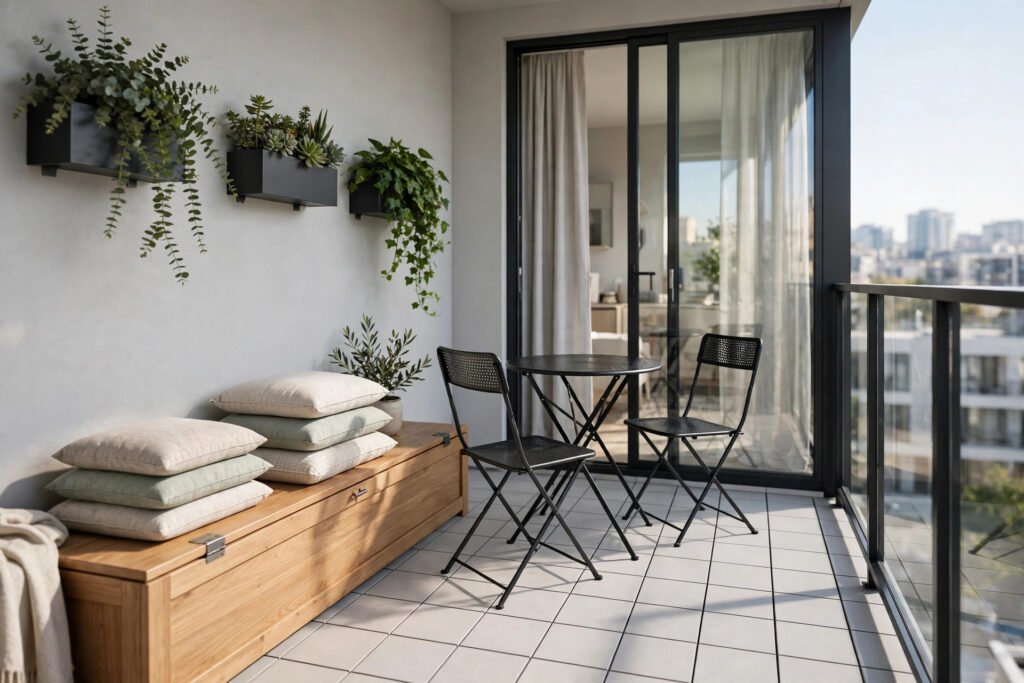
- Keep a clear path. If you can’t walk through it comfortably, it’s too full.
Now let’s get into the detail.
Step One: Read Your Terrace Before You Shop
Most articles on this topic jump straight into pretty photos. That’s fun, but it’s also how people end up with a lovely sofa that doesn’t fit through the door. Spend twenty minutes on these checks first and every later decision gets easier.
Measure everything, including the awkward bits
Grab a tape measure and note the length, width and height of the terrace. Then write down the things that cut into that space: the door swing, a drainpipe, a meter box, the railing height, a low window sill. A terrace that looks like three metres by two might only have two usable metres in the middle once you account for door clearance and a drainage grate.
Sketch it on paper, even roughly. Mark where the door opens and where you walk. That walking line is sacred. Keep around 60 to 70 cm clear for a path, and you’ll avoid the cramped, clumsy feeling that ruins so many tiny terraces.
Watch the sun for a full day
Note when the terrace gets direct sun, when it’s in shade and when it’s baking hot. A west-facing terrace that cooks at 4 p.m. needs shade and tough plants. A north-facing one that stays cool needs warm colours, good lighting and shade-loving greenery. This single observation decides your plant list, your seating position and whether you need an umbrella or a shade sail.
Think about wind, weight and rules
Wind is the thing people forget on upper floors. Lightweight chairs, parasols and tall planters can tip or fly. Choose heavier bases and secure anything tall. Also think about weight: wet soil, large ceramic pots and stone tiles are heavy. If you live in an apartment or on a rooftop, check with your building manager about load limits, drainage rules and what you’re allowed to attach to walls or railings. Renters should also check what can be changed without permission.
Decide how you actually want to use it
Be honest here. Do you want a quiet morning coffee corner? A place to eat dinner for two? A tiny herb garden? Somewhere to read, stretch or let the cat sit in the sun? You’ll find some people end up with a combination, and that’s fine, but one use should lead.
Give Your Small Terrace One Clear Job
A small terrace tries to do too much by default. The fix is to give it a main purpose and let everything else support that purpose. Here are six jobs that work well in small spaces.
1. The morning coffee nook
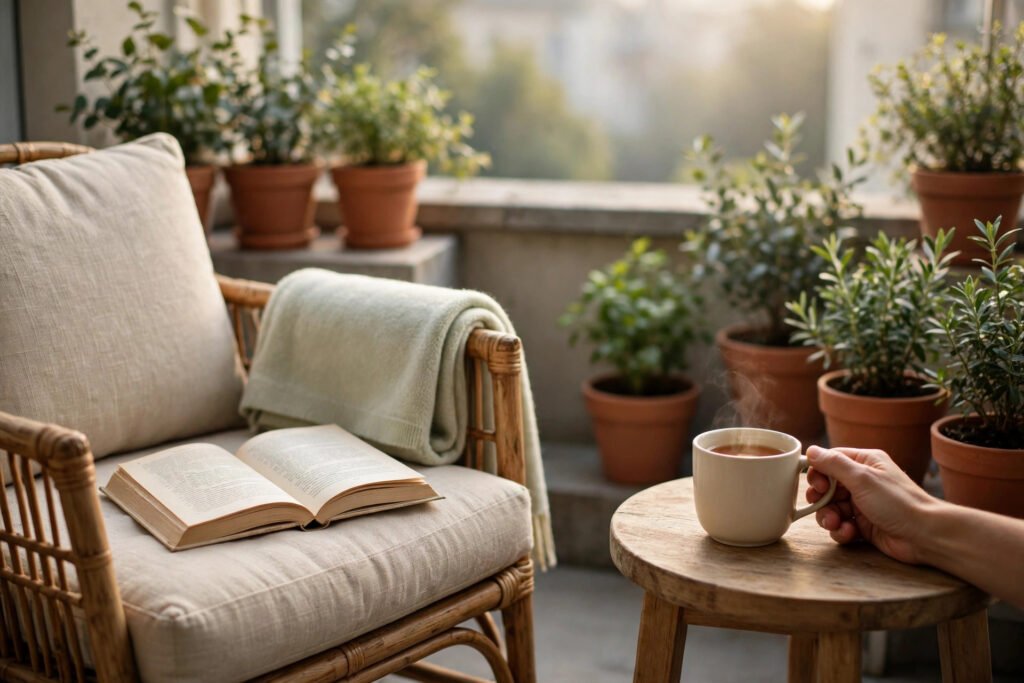
One comfortable chair, a small side table and a rug. That’s all. Add a planter within arm’s reach and a hook for a blanket. It’s the simplest layout in the world, and it makes a tiny terrace feel like a private retreat.
2. The dinner-for-two spot
A foldable bistro table and two chairs are perfect. Choose a round table if you can, as it’s easier to move around and has no sharp corners. If the terrace is very narrow, fit a wall-mounted drop-leaf table that folds flat when you’re done.
3. The mini garden
If plants are your priority, build vertically. Use a tiered shelf or ladder unit for pots, hang planters from the railing and keep one small stool for sitting. You can store your watering can, gloves and shears on the lower shelf so nothing clutters the floor.
4. The relaxation and stretch corner
A thick outdoor mat, a few cushions and a low stool give you space to stretch, meditate or read. Keep furniture minimal and let the floor be the main feature.
5. The hosting corner
If you like having friends over, dedicate most of the space to comfortable seating, such as a small L-shaped bench with storage, floor cushions and a couple of ottomans that double as side tables. Lanterns along the railing set the mood without taking up floor space.
6. The overflow room
Sometimes a terrace needs to be practical. It can hold a compact drying rack, a bike, a storage bench or a tiny laundry corner behind a curtain. If that’s your reality, hide the practical stuff and make the rest feel calm. A simple screen, a closed storage bench and a neat rug make a world of difference.
Must Read : Boho Garden Ideas: 25 Ways to Create a Relaxed, Layered, Beautifully Messy Outdoor Space
Small Terrace Layout Ideas That Create More Space
Layout is where small terraces are won or lost. A good arrangement can make a three-square-metre terrace feel generous. A poor one makes a ten-square-metre terrace feel like a storage cupboard.
7. Push furniture to the edges
Placing seating along one wall or in a corner opens up the centre and keeps a clear route from the door to the railing. It’s the simplest layout trick there is and it works almost everywhere.
8. Use a corner bench
A built-in or L-shaped corner bench uses space that would otherwise be wasted. Add a small round table in front and you have seating for three or four people. If you pick a bench with a lift-up lid, you also gain hidden storage for cushions, tools and the pots you’re not using this season.
9. Try a diagonal arrangement
In a square terrace, setting a chair and table on a slight diagonal draws the eye along the longest line and makes the space feel bigger. It’s a trick designers borrow from small living rooms, and it works outdoors too.
10. Zone with a rug
Even in a tiny space, a rug defines a seating zone and makes it feel like an outdoor room. Choose one that’s large enough for the front legs of your chairs to sit on it. A rug that’s too small makes everything look choppy and cramped.
11. Think vertically
When floor space runs out, use the walls and railings. Wall-mounted planters, hanging baskets, a ladder shelf, hooks for lanterns and a fold-down table all free up floor area. Vertical thinking is the single biggest habit that separates a clever small terrace from a cluttered one.
12. Leave breathing room
It’s tempting to fill every corner. Resist. Empty floor is visual calm, and a calm terrace feels larger. Aim to leave at least a third of the floor clear.
The Best Furniture for a Small Terrace
Furniture is the biggest spend and the biggest source of regret. The golden rule is to buy for the terrace you have, not the terrace you wish you had.
13. Choose foldable and stackable pieces
Folding bistro sets, stacking stools and fold-flat tables let you open up the space when you need it and tuck things away when you don’t. If you entertain only occasionally, this is the smartest approach. Keep two chairs out and store extra seating indoors for guests.
14. Pick furniture with hidden storage
Storage benches, ottomans with lift-off tops and deck boxes that double as seats keep clutter out of sight. A storage box with a cushion on top is one of the most useful pieces you can own in a small outdoor space, because it holds blankets, cushions, small tools and games and still works as extra seating.
15. Go for light visual weight
Furniture with slim legs, open frames or woven textures looks lighter than solid, chunky pieces. Rattan, wire and slim metal frames let the eye see through them, which makes the terrace feel more open. Glass-topped tables work the same way, though you should think about glare and cleaning.
16. Use nesting tables and stools
Two or three nesting tables give you surfaces when you need them and vanish when you don’t. A compact stool can be a seat, a footrest or a drinks table, which makes it worth far more than its size suggests.
17. Mix pieces instead of buying a matching set
A big matching set is rarely the right size for a small terrace. Buy individual pieces that fit your measurements, then tie them together with colour, such as cushions, a rug and planters in a shared palette. This approach feels more personal and gives you more freedom to adapt later.
18. Think about materials and weather
Wood looks warm but needs regular care. Powder-coated aluminium is light and rust resistant. Resin wicker handles sun and rain well. Teak and acacia last but cost more. If your terrace is exposed to heavy sun or sea air, choose finishes rated for outdoor use and store cushions when the weather turns.
Flooring Ideas That Instantly Upgrade a Small Terrace
The floor is the largest surface on your terrace and often the most neglected. Because the area is small, a floor upgrade costs less than you’d think and changes the whole feel.
19. Interlocking deck tiles
Clip-together deck tiles are the favourite for renters and anyone who wants a quick makeover. They sit on top of the existing surface, they’re easy to lift and they come in wood, stone and neutral finishes. Make sure water can drain underneath, and lift them occasionally to clean.
20. An outdoor rug
A weather-resistant rug in polypropylene or a similar material adds colour, softness and a defined seating zone. Pick a pattern that hides dirt and a size that lets chair legs sit on it. If you want the terrace to look bigger, choose a rug with a subtle pattern or stripes running along the longest side.
21. Outdoor tiles or pavers
If you own the space and plan to stay, porcelain outdoor tiles or small pavers are a long-lasting upgrade. Light colours reflect more light and make the terrace feel larger. Choose a non-slip finish, especially if the area gets wet.
22. Artificial turf
A patch of turf gives you a surprising amount of softness in a concrete space and works well for pets and children. Cut it to fit, secure it properly and make sure it drains. Used in a corner or as a small lawn rectangle, it brings instant freshness.
23. Mix and match
You don’t have to commit to a single material. A square of deck tiles under the seating area, a strip of pebbles by the planters and a rug on top can look layered and deliberate. Keep the palette narrow, two or three tones at most, so it doesn’t look busy.
Privacy Ideas for a Small Terrace
Privacy is the top complaint about small terraces, especially in cities where neighbours look straight in. The trick is to gain privacy without making the space feel boxed in.
24. Use plants as a living screen
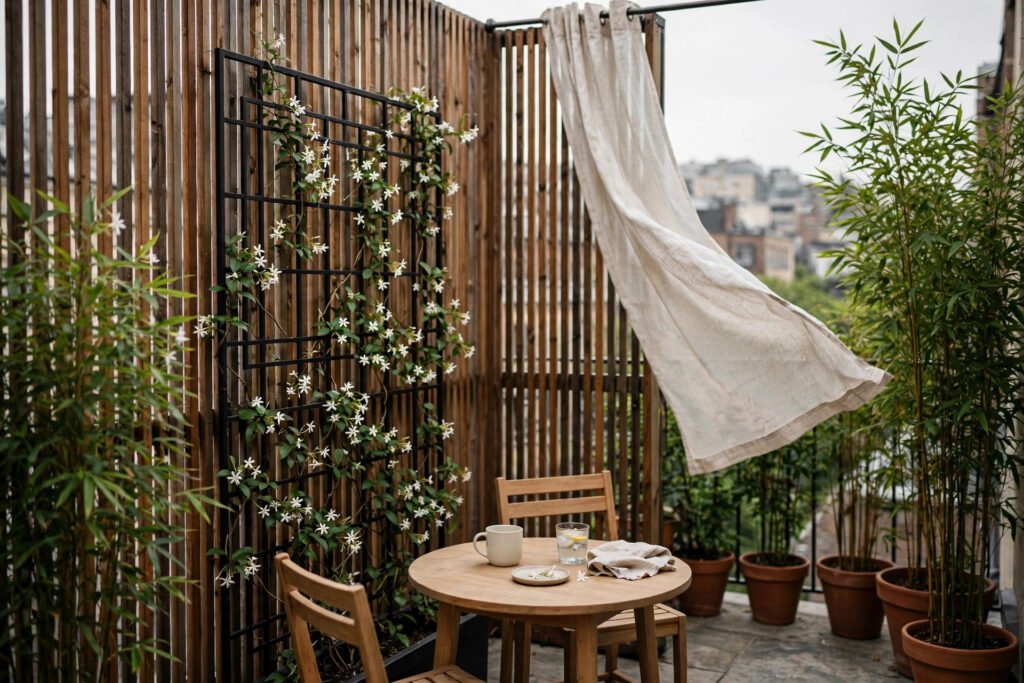
Tall planters with bamboo, evergreen shrubs or ornamental grasses create a soft, natural screen. Climbers such as star jasmine, ivy or clematis trained along a trellis fill gaps over time. Plants also soften noise and make the terrace feel calmer, though they need watering and a little patience.
Also Read : How To Grow Indoor Plants: The Ultimate Guide To A Thriving Green Home
25. Hang outdoor curtains
Weather-resistant curtains along one side or across a pergola frame add privacy and a relaxed, boho feel. Light-filtering fabrics keep sunlight coming through while blocking direct views. They’re also easy to open when you want a view and easy to wash.
26. Add bamboo, reed or slatted screens
Roll-up bamboo blinds, reed fencing and slatted panels attach to railings quickly and cost little. Slatted designs give you privacy while still letting air through, which matters on windy terraces. Pick a height that blocks sightlines when you’re seated rather than when you’re standing, since that’s when you most want privacy.
27. Try a faux hedge
Artificial hedge panels give you instant green privacy with no growing time, trimming or watering. They’re a great fit for rented terraces and for spots with little light where real plants struggle. Choose a good-quality, UV-resistant product so it doesn’t fade.
28. Add overhead cover for shade and privacy
A small pergola, a shade sail, an awning or a parasol protects you from the sun and from neighbours above. A light-coloured awning gives you shade and a sense of enclosure at the same time. On a very small terrace, a wall-mounted or clamp-on parasol saves floor space.
Plants and Vertical Garden Ideas for Small Terraces
Greenery is what turns a small terrace from a paved corner into a place you want to be. You don’t need a big garden. You need smart containers, the right plants for your light and a willingness to build upwards.
Match the plant to the light
Before you buy anything, go back to the sun notes you made earlier. Full-sun terraces suit lavender, rosemary, geraniums, succulents and olive trees in pots. Part-shade terraces suit hostas, ferns, hydrangeas and heuchera. Deep shade is tougher, but ivy, ferns and some foliage plants cope well. Choosing plants that suit your conditions saves money and heartbreak.
29. Build a vertical garden
Wall-mounted pockets, ladder shelves, tiered stands and railing planters multiply your growing space without touching the floor. Herbs such as basil, mint, thyme and chives grow happily in small containers close to the door, so you can pick them as you cook. Trailing plants like petunias, ivy and string of pearls soften the edges of shelves and walls.
Keep containers consistent
A small terrace looks tidier when planters share a colour or material. Three or four pots in the same tone, in different sizes, look far more intentional than ten random containers. Group them in odd numbers and vary heights, with tall plants at the back or corners and trailing plants at the front.
Grow something edible
If you like cooking, dedicate a corner to herbs, cherry tomatoes, chillies or salad leaves. Edibles in pots are rewarding, they smell wonderful and they give the terrace a purpose. A tiered stand or a railing trough holds a surprising amount.
Don’t forget watering
Containers dry out quickly, especially in summer and on windy upper floors. Choose pots with drainage holes, use quality potting mix and consider a simple drip system or self-watering planters if you travel. Place a tray under pots on upper floors so water doesn’t drip onto neighbours.
Lighting Ideas for Small Terraces
Good lighting doubles the usable hours of a terrace and gives a small space atmosphere. The aim is warm, layered and low, rather than one harsh bulb.
30. Layer your lighting
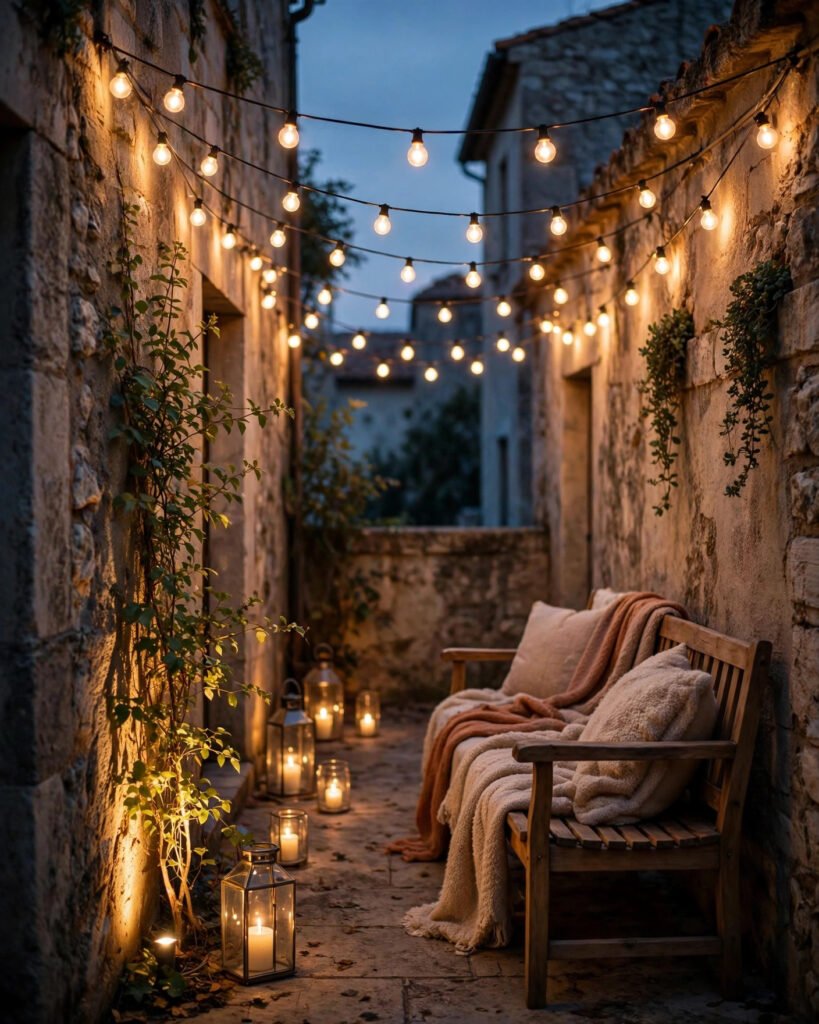
Start with string lights draped overhead or along the railing. They draw the eye upward and make the ceiling of your terrace feel higher. Add lanterns or candle holders on the floor and table for a soft glow, and a small solar or plug-in lamp for task light when you want to read. Warm white bulbs flatter plants and skin tones, while cool white can feel clinical outdoors.
Choose safe, practical options
Solar lights are easy for renters because they need no wiring. Battery-powered LED candles are safe near fabrics and plants. If you use real candles, keep them in sturdy lanterns away from curtains and dry plants, and never leave them unattended in wind. Always use outdoor-rated plugs and cables.
Light the plants
A small uplighter pointed at a tall plant or a trellis creates a dramatic shadow on the wall, which adds depth at night. It’s a designer trick that costs very little and makes a small terrace feel layered rather than flat.
Small Terrace Style Ideas to Borrow
Once the practical decisions are made, style is the fun part. You don’t need to follow a rulebook, but picking a direction keeps your choices consistent so the terrace feels pulled together rather than random.
Boho and relaxed
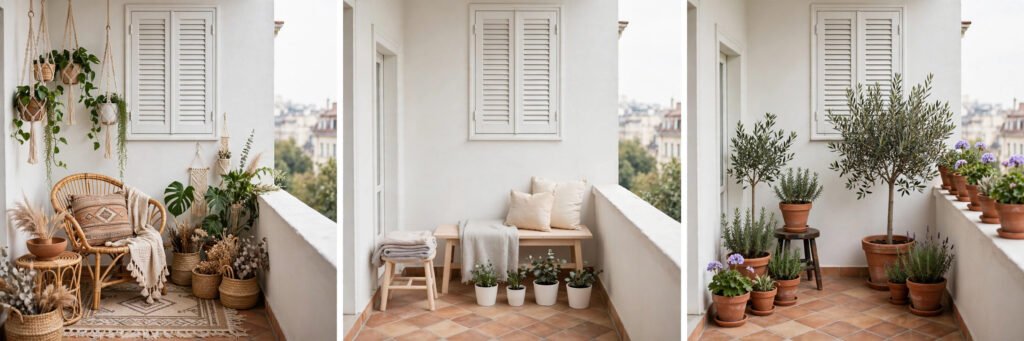
Think layered rugs, rattan or wicker chairs, floor cushions, macramé hangers, mixed patterns and lots of trailing plants. Warm string lights finish the look. Boho works well on small terraces because it welcomes softness and a little informality, and it forgives mismatched pieces.
Scandinavian and minimal
Pale wood, white or soft grey, simple lines and a few carefully chosen plants. Keep accessories to a minimum and let natural textures do the work. A single wooden bench, a small round table and a couple of green plants in matching pots can feel calm and complete.
Mediterranean
Terracotta pots, whitewashed walls, blue or sage accents, olive trees, lavender and rosemary. A small mosaic table and a woven rug add character. This style suits sunny terraces and brings a holiday feeling to everyday life.
Modern and sleek
Charcoal, black and white, clean-lined furniture, geometric planters and architectural plants like grasses, agave or clipped box. Add one warm element, such as a timber slat screen or amber lighting, so it doesn’t feel cold.
Must Read : Fairy Garden Ideas: The Ultimate Guide to Building a Tiny, Magical World in Your Own Backyard
Rustic and cottage
Weathered wood, painted metal, lanterns, wildflower-style planting, vintage crates as shelves and a mix of old and new. It feels lived in and welcoming, and it’s easy to build on a budget with second-hand finds.
Moody and dark
Dark painted walls or screens, black furniture, deep green foliage and plenty of candlelight can make a small terrace feel intimate and dramatic. It’s a bold choice, but it works beautifully in the evening, and dark backdrops make plants glow.
Best Colour Ideas for a Small Terrace
Colour has a huge effect on how big a space feels. A few simple principles help.
Light, soft shades such as white, cream, pale grey and sage reflect light and make walls feel further away. They suit shady terraces especially well. Warm earth tones like terracotta, sand and clay create a grounded, welcoming feel, and they pair beautifully with greenery. Deep tones such as navy, forest green or charcoal can work on a feature wall or screen, but use them with care and balance them with light flooring and bright cushions.
A good formula is three colours: one main neutral, one supporting tone and one accent. Repeat them across cushions, pots, rugs and accessories. Because the space is small, repetition feels calm. Too many colours feels busy very quickly.
Shade, Sun and Weather Solutions
A terrace you can’t sit in is a wasted terrace. Heat, glare, wind and rain are the main reasons people stop using theirs, so a little planning here pays off.
For sun, a parasol, shade sail, retractable awning or a simple pergola with climbers keeps temperatures comfortable. Clamp-on or wall-mounted parasols save floor space. Light fabrics like cream or white reflect heat better than dark ones.
For wind, filter it rather than blocking it entirely. A slatted screen or a row of tall planters breaks the force of the wind and still lets air through. Solid glass or panels can create swirling gusts on high floors.
For rain, use quick-drying materials, store cushions in a deck box and consider a small overhang or awning if you want to sit outside in light showers. In winter, move delicate plants to a sheltered corner, wrap pots with hessian or bubble wrap, and add a blanket and a small outdoor heater if your building rules allow one.
Small Terrace Ideas on a Budget
You don’t need a big budget to make a big change. Because the area is small, even modest spending shows. The rough tiers below are a guide only, since prices vary a lot by country, material and brand.
Tier 1: Light refresh (low spend). Deep clean the floor and railings, add an outdoor rug, a few cushions, string lights and a handful of potted plants. Use second-hand or hand-me-down furniture and repaint it with outdoor paint. Make planters from tins, crates or old buckets.
Tier 2: Smart makeover (moderate spend). Add deck tiles or turf, a folding bistro set, a storage box that doubles as a seat, a bamboo or slatted privacy screen and a few good planters. Layer in solar lanterns and a clamp-on parasol.
Tier 3: Full transformation (higher spend). Choose built-in bench seating with storage, quality outdoor tiles, a custom trellis or pergola, an automatic drip watering system and proper outdoor lighting with a dimmer. Spend where the effect lasts, which usually means flooring, seating and shade.
A useful rule is to spend first on the floor and the lighting, because they change the mood of the whole space, then add plants for softness and privacy, and finally add the decorative extras. Buying in that order stops you from overcrowding the terrace with small bits.

Ideas for Different Types of Small Terraces
Narrow terraces
Long, thin terraces call for linear thinking. Run a bench along one wall, add a slim bar table on the railing and keep the other side clear for walking. Use runner-style rugs and place plants in a line to draw the eye to the end.
Rooftop terraces
Wind and exposure are the main challenges. Choose heavy pots, secure tall items and create a sheltered corner with slatted screens. A small pergola or sail gives much-needed shade, and lightweight soil mixes reduce load. Check load limits and drainage rules first.
Apartment terraces
With neighbours close by, privacy and noise matter. Use hanging planters, curtains and layered greenery. Keep fixtures removable if you rent, and use tray-lined pots so water doesn’t drip below.
Terrace houses and courtyards
Back terraces in terraced homes often have walls on every side. Use mirrors (weatherproof ones) to bounce light, paint walls a soft light colour and train climbers upward. A small water feature adds sound that masks street noise.
Tiny balcony-style terraces
If you have barely one square metre, think one chair, one tray table, one planter and one string of lights. Fold-down furniture and railing planters are your best friends.
Finishing Touches That Make It Feel Complete
Once the main pieces are in, a few details lift the whole space. Weatherproof cushions and a throw add comfort. A small water feature, such as a tabletop fountain or a ceramic bowl with a floating candle, brings sound and movement. A tabletop fire bowl adds warmth where rules allow. A mirror on a wall reflects greenery and light. A few pieces of art made for outdoor use, a lantern cluster, or a bird feeder give personality. Add scent through lavender, jasmine, mint or rosemary, because smell is the part of a terrace people remember.

Common Small Terrace Mistakes to Avoid
Most small terrace problems come from the same few habits.
Buying before measuring. Always measure and mark the furniture footprint on the floor with tape first.
Choosing oversized furniture. A big sofa will swallow the space. Go smaller than you think.
Ignoring storage. Without a place to put cushions, tools and pots, clutter builds quickly.
Skipping the floor. A tired floor makes everything above it look tired.
Using only one light source. A single bright bulb makes a terrace feel harsh. Layer it.
Overcrowding with plants. More plants is not always better. Choose fewer, healthier ones.
Forgetting weather and weight. Lightweight pieces blow away, and heavy ones may exceed load limits.
Blocking the walkway. If you have to squeeze past furniture, you’ll stop using the space.
Read Also : 50 Brilliant Small Garden Ideas That Will Transform Your Tiny Outdoor Space
Simple Maintenance Habits
A small terrace stays beautiful with a little regular care. Sweep weekly, wash cushions and rugs seasonally, check drainage holes before heavy rain, oil wood each year, and wipe metal to prevent rust. Rotate plants so they grow evenly, deadhead flowers and feed pots through the growing season. Ten minutes a week keeps it looking cared for.
Final Thoughts on Small Terrace Ideas
A small terrace doesn’t need to be big to be brilliant. It needs a clear purpose, furniture that fits, a floor you’re proud of, a bit of privacy, plenty of greenery and lighting that makes you want to stay out late. Start with one or two ideas from this guide, such as a rug and string lights, then build slowly. Tiny spaces reward patience and thoughtful choices more than big budgets.
People Also Ask
How do I make a small terrace look bigger?
Keep the floor clear, use light colours, choose slim furniture, add a large rug, build upward with vertical planters and use mirrors or layered lighting to add depth. Avoid overcrowding.
What is the best furniture for a small terrace?
Foldable bistro sets, storage benches, stackable stools, nesting tables and wall-mounted drop-leaf tables work best. Choose pieces with slim legs and light visual weight.
How can I add privacy to a small terrace?
Use tall planters, climbers on a trellis, bamboo or slatted screens, outdoor curtains, a faux hedge or an awning. Combining plants with a screen usually looks best.
What is the cheapest way to decorate a small terrace?
Start with a cleaned floor, an outdoor rug, solar string lights, second-hand furniture repainted with outdoor paint and plants in recycled containers.
What flooring is best for a small terrace?
Interlocking deck tiles are the easiest and most renter-friendly. Outdoor rugs, porcelain tiles and artificial turf are good alternatives. Always choose non-slip, quick-draining options.
Which plants suit a small terrace?
It depends on light. Lavender, rosemary and succulents suit sun, while ferns, hostas and ivy handle shade. Herbs, grasses and compact shrubs in containers work in most places.
How do I light a small terrace?
Layer string lights, lanterns and a small task or uplighter. Warm white bulbs are best. Solar and battery options are ideal if there’s no outdoor socket.
Can I use a small terrace in winter?
Yes. Add a weatherproof blanket, a safe heater if permitted, evergreen plants and warm lighting. Store cushions in a deck box and protect pots from frost.
How do I protect a rooftop or high-floor terrace from wind?
Use heavy planters, secure tall items and choose slatted screens that filter wind instead of solid barriers. Avoid lightweight furniture and unsecured parasols.
What is the difference between a terrace and a balcony?
A balcony projects from an upper floor of a building and is usually enclosed by a railing. A terrace is typically a larger, flatter outdoor area, often at ground level, on a roof or on a setback. In everyday use the words overlap, and the ideas in this guide work for both.

