
Terracotta and green work best when they are treated as a balance, not a theme. Terracotta adds warmth, like baked clay and sun-warmed brick, while green adds the calm of leaves and moss. When one colour is allowed to lead and the other supports it, the room feels grounded rather than decorated to within an inch of its life.
Budget and time help to set the scale. A soft refresh, with new cushion covers, a throw, two or three plants and one tin of paint, usually costs £150–£450. A fuller room, with painted walls, a rug, better lighting and one larger piece of furniture, usually costs £800–£2,500. One wall can be painted in a weekend; a whole room usually takes two to four weeks, once paint has dried and deliveries have arrived.
Start with measurements, not shopping. Leave about 45cm between the front of the sofa and the coffee table, so the room can be walked through without shuffling sideways, and check how much daylight the main wall actually gets. Those two facts decide whether a deep rust wall will glow or simply darken the room, and they stop the most expensive mistake: buying a sofa in a colour that fights the walls.
Where Should You Start With This Colour Pairing?
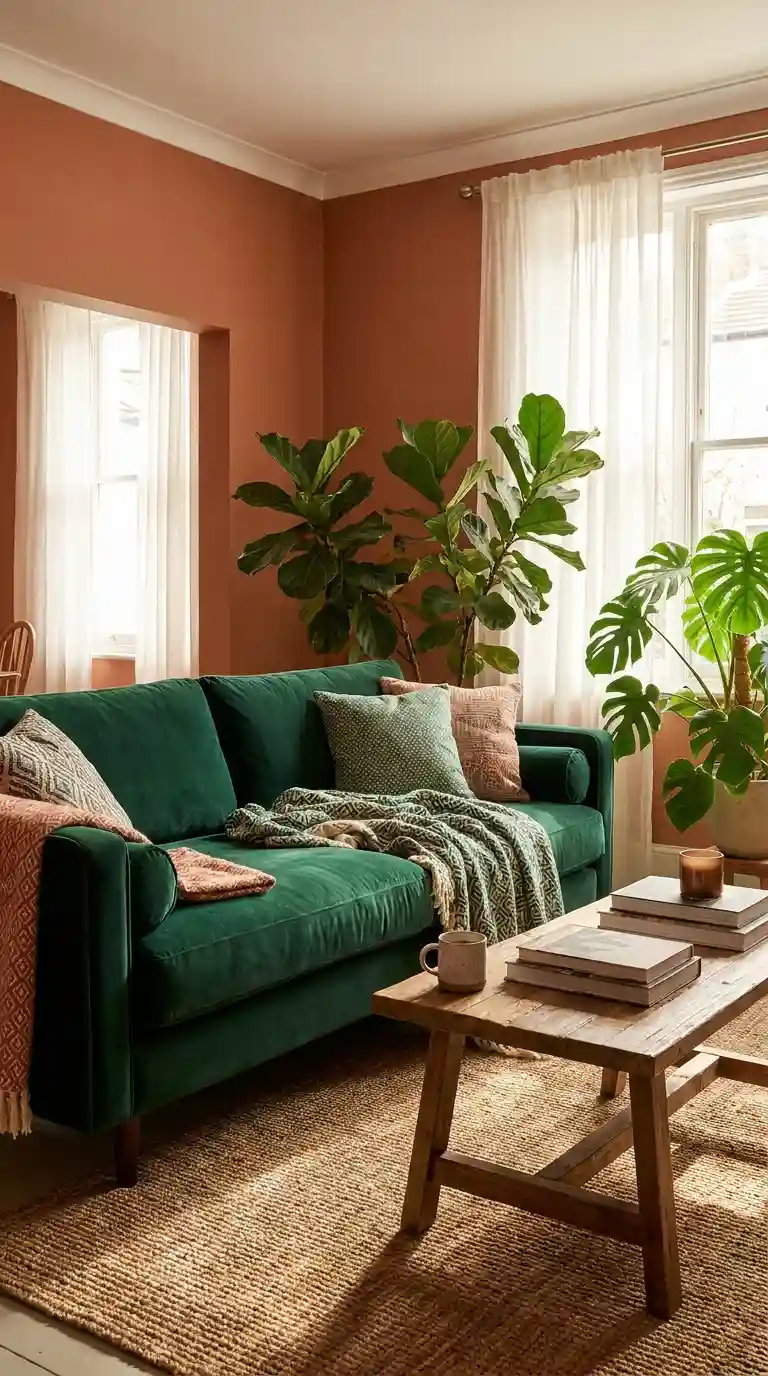
Use a simple split to keep the room calm: about 60% for the lead colour and its neutrals, 30% for the supporting colour, and 10% for a warm accent such as brass, wood or cream. The photo above shows why that restraint matters: terracotta walls and green plants carry the room, while pale curtains and wood keep it from feeling heavy. Without a neutral break, two strong earthy colours quickly compete.
Choose the lead colour by light, not by preference alone. In a bright, south-facing room, terracotta walls can work, because sunlight softens the clay tone. In a dimmer room, green walls with terracotta cushions, a throw and pots are usually easier to live with, because the room keeps its brightness and the warm colour can be changed cheaply later.
Which Shade Should Lead: Clay or Green?
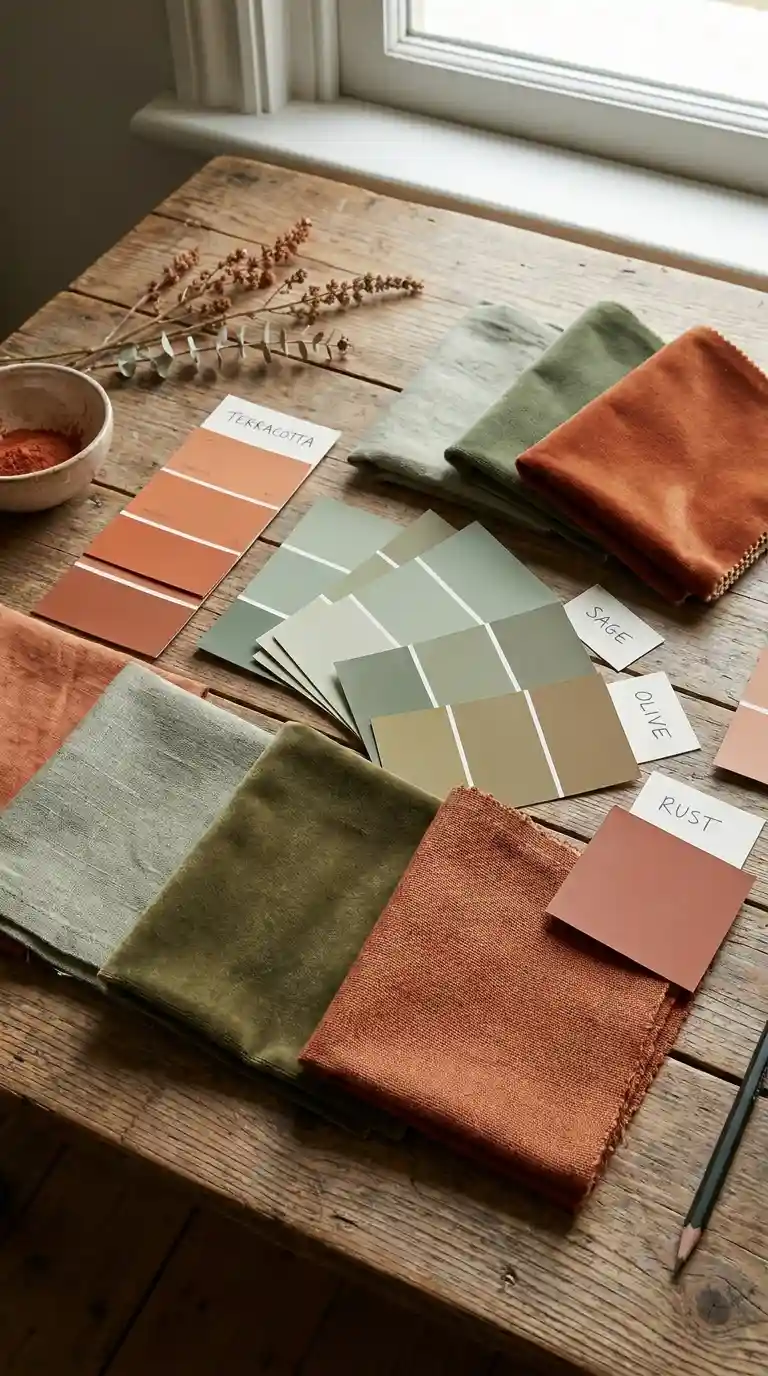
Terracotta is not one colour. It runs from soft, dusty clay pink through burnt orange to deep rust, and each step changes the mood. Green is just as wide: sage is soft and forgiving, olive feels vintage, forest and emerald feel richer and more formal, and moss sits somewhere in between. The swatches in the photo above are worth studying before buying, because a clay tone that looks warm in the shop can turn orange under cool home lighting.
The rule that prevents most clashes is undertone. Terracotta is warm, so pair it with greens that also lean warm, such as olive or moss, rather than cool, blue-based greens such as mint or teal. Test three samples on the actual wall, look at them in morning light and again in the evening, and live with them for at least two days. That small delay is cheaper than repainting a whole room, and it is the same careful approach that helps how a dark blue room stays cosy rather than gloomy: depth works only when the light and the undertone agree.
How Do You Paint the Walls Without Overwhelming the Room?
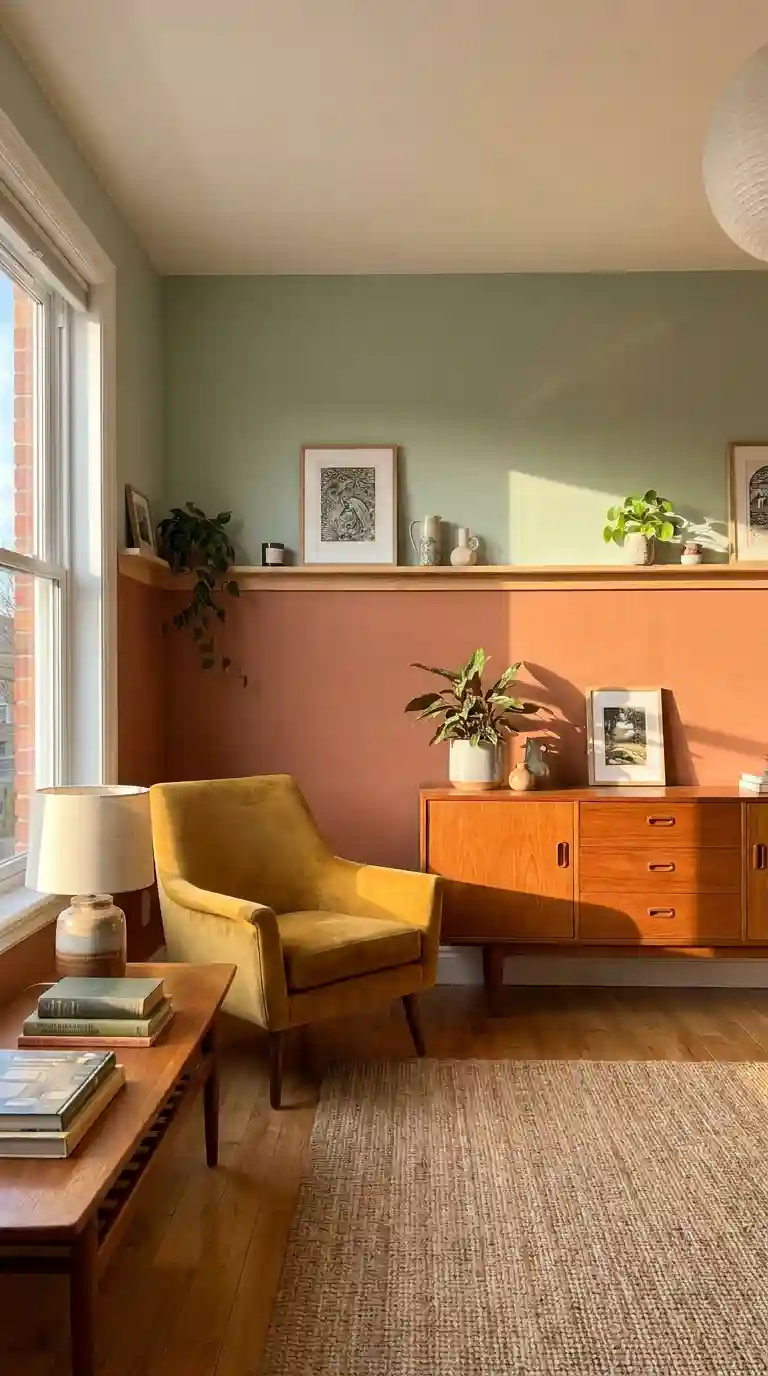
The safest wall plan is three walls in a soft green and one feature wall in terracotta, usually the wall behind the sofa or the television, because that gives the eye a clear focal point. The furnished room in the photo above follows that logic: the colour is confident, but the ceiling, curtains and wood stop it from closing in. Painting all four walls in terracotta can work, but only in a bright room with pale flooring and plenty of green to balance it.
For a two-tone wall, split the colour at picture-rail height, about 90cm from the floor, with terracotta below and green above, separated by a simple wooden trim. That division suits older rooms with high ceilings and stops a bold colour from running floor to ceiling. If flat paint feels too plain, a limewash or plaster finish in terracotta adds depth without another colour, because the texture catches light differently across the day.

What Should the Sofa and Wood Do?
Put the sofa in the colour that is not dominating the walls. A terracotta or rust sofa stands out against green walls, while a deep green velvet sofa gives a rich contrast against terracotta walls. A standard three-seater is about 210cm wide, so measure the wall first and leave at least 75cm of walkway beside it where a door or passage needs to stay clear. Velvet and boucle catch light well, but they also show wear, so choose a fabric that can be cleaned easily if the sofa is used every day.
Wood is the bridge between the two colours. Walnut, teak and rattan all carry warm undertones that echo terracotta, while their natural texture keeps green from looking flat. The armchair and wooden table in the photo above show that balance: one solid wood piece is enough to ground the room, and a second, such as open shelving or a media console, stops the colour from feeling too saturated. If the sofa is already neutral, start with one rattan chair and a green or terracotta cushion instead of replacing everything at once.

How Do Soft Furnishings Pull It Together?
Soft furnishings are the cheapest way to test the palette, and they are also where most rooms go wrong by adding too many competing patterns. Limit the room to three patterns: a large one, such as a rug, a medium one, such as curtains, and a small one, such as cushions. The cushions in the photo above follow that rule, with solid clay, solid green and one patterned cushion that includes both colours plus cream. Linen curtains in sage or olive soften the light, while a chunky knit throw in the opposite colour makes a sofa look finished without another purchase.
For the floor, a rug that includes both terracotta and green threads ties the scheme together without exact matching, and it should extend about 15cm beyond each end of the sofa so the seating area reads as one zone. On the walls, botanical prints and woven hangings suit the palette better than bright or neon art, and a brass-framed mirror adds warmth while bouncing light around. When planning a group of prints, how gallery wall layouts are planned helps to avoid the common mistake of hanging frames too high or too far apart.
Where Do Plants Fit, and How Many Are Too Many?
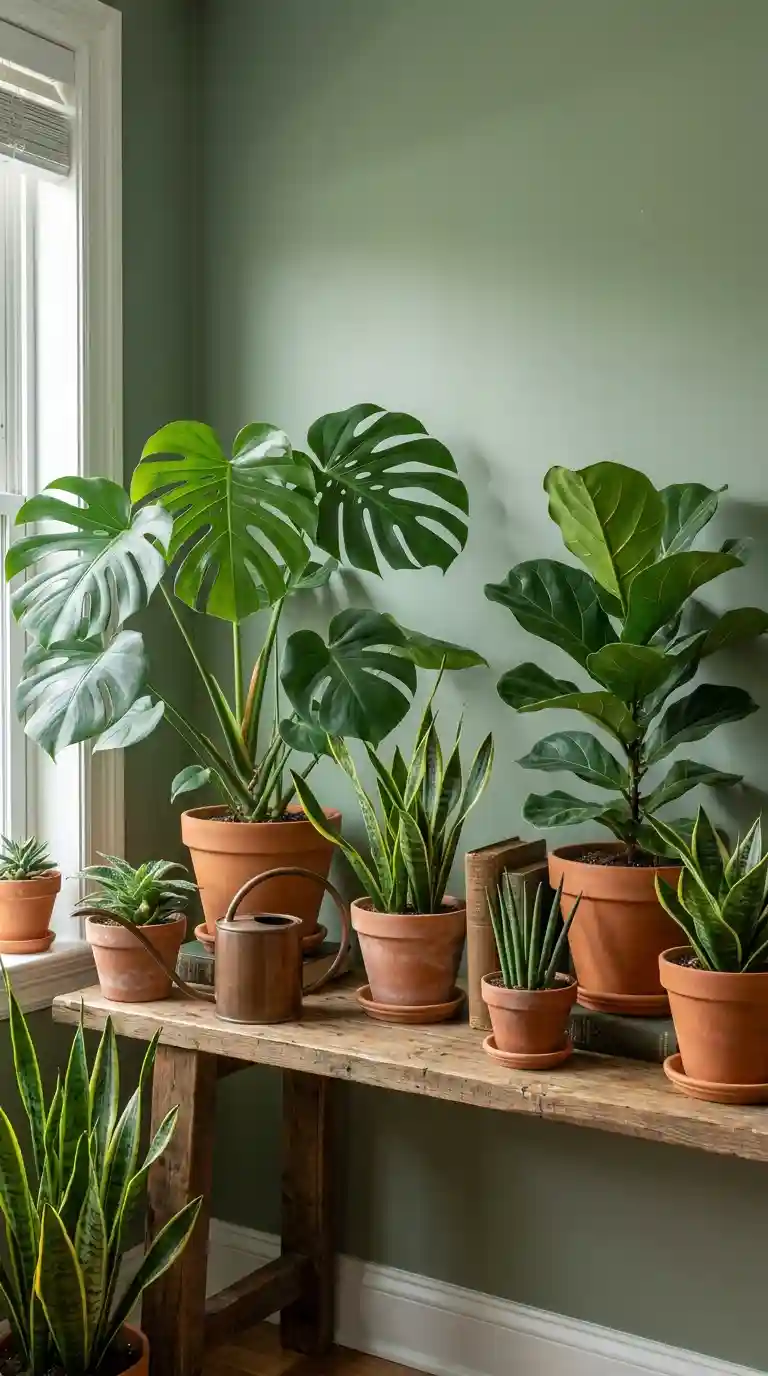
Plants do work that paint cannot, because they add dozens of greens at once, from glossy rubber-plant leaves to feathery fern fronds. Three to five plants, at different heights, are usually enough for an average living room: one tall floor plant, one or two on shelves, and one trailing plant. The shelf in the photo above shows that mix well, with terracotta pots tying the greenery back to the clay colour, rather than leaving the plants as a separate idea.
Choose plants by light and by how often watering is realistic. A monstera or fiddle-leaf fig suits a bright corner, while snake plants and pothos cope with lower light and occasional neglect. Put plants in real terracotta pots with a drainage hole and a saucer, and rotate them a quarter turn every two weeks so growth stays even. If a plant keeps dropping leaves, move it closer to the window before buying a replacement, because most failures are light, not care.
How Do You Light It So the Colours Stay Warm?
Light changes both colours more than most people expect. Use warm white bulbs, about 2700K, rather than cool white or daylight bulbs, because cool light can make terracotta look muddy and green look flat. Aim for three light sources: one central fixture, one floor lamp and one table lamp, with brass or wooden bases that echo the earthy palette. In a room with little natural light, choose lighter clay and sage tones, because deep rust and forest green need sunlight to stay rich.
Test the room at night before settling it. Paint samples, cushion colours and wood tones all shift under artificial light, so check them after dark as well as in daylight, and keep at least one cream or pale wood surface in view, such as a rug, a ceiling or a shelf, to give the eye a rest. For seasonal changes, swap only the small things: a darker green cushion and an amber glass candle in winter, lighter linen and more plants in summer, rather than repainting for each season.
How Do You Make It Work in Small and Large Rooms?
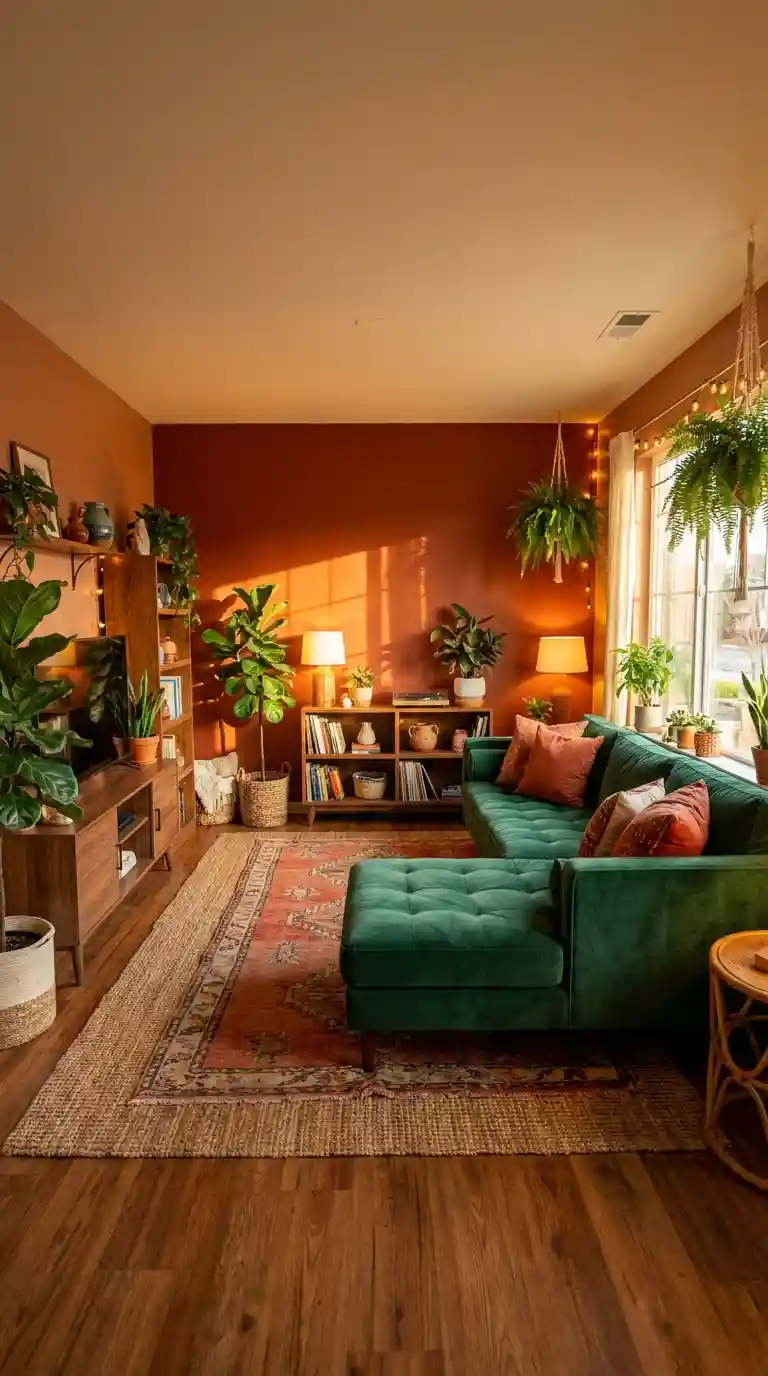
In a small room, keep the base lighter and limit bold colour to one wall or a few pieces, as in the finished room in the photo above. Use soft clay rather than deep rust, gentle sage rather than forest green, and let a large mirror or tall, narrow shelving draw the eye upwards. Renters can get the same effect without paint, by using cushions, throws, plants and removable art; how rented walls are dressed without losing a deposit covers the fixing choices that keep a landlord happy.
In a large room, divide the space into zones, such as seating and reading, and shift the balance slightly in each zone, so one area leans greener and another leans more terracotta. A large room can carry a bold sectional or an oversized green velvet chair, but even then, keep at least 20% of the room in a calm neutral, such as cream, pale wood or white, so the colour has somewhere to rest. Without that breathing space, even a well-chosen palette feels heavy.
Frequently Asked Questions
Does terracotta and green go well together in a living room?
Yes, when both colours share a warm, earthy undertone. Terracotta adds warmth and green adds calm, so the room feels grounded rather than loud, provided one colour leads and the other supports it.
Which green works best with terracotta?
Sage, olive, forest and moss usually work best, because they lean warm like terracotta. Cool, blue-based greens such as mint or teal can clash, even when each colour looks good on its own.
How much does a terracotta and green refresh cost?
A soft refresh usually costs £150–£450, covering cushion covers, a throw, plants and one tin of paint. A fuller room, with painted walls, a rug, lighting and one larger piece, usually costs £800–£2,500.
Can this palette work in a small living room?
Yes, if the shades are lighter and bold colour is limited to one wall or a few pieces. A large mirror, tall shelving and a pale rug help a small room feel taller and less crowded.
What wood and flooring suit terracotta and green?
Walnut, teak and rattan work well for furniture, because their warm tones bridge clay and green. For flooring, warm oak or walnut is the most forgiving base, with a rug that includes both colours to tie the room together.





4 Comments on “Warm Clay, Leafy Green: Making an Earthy Living Room Work”