
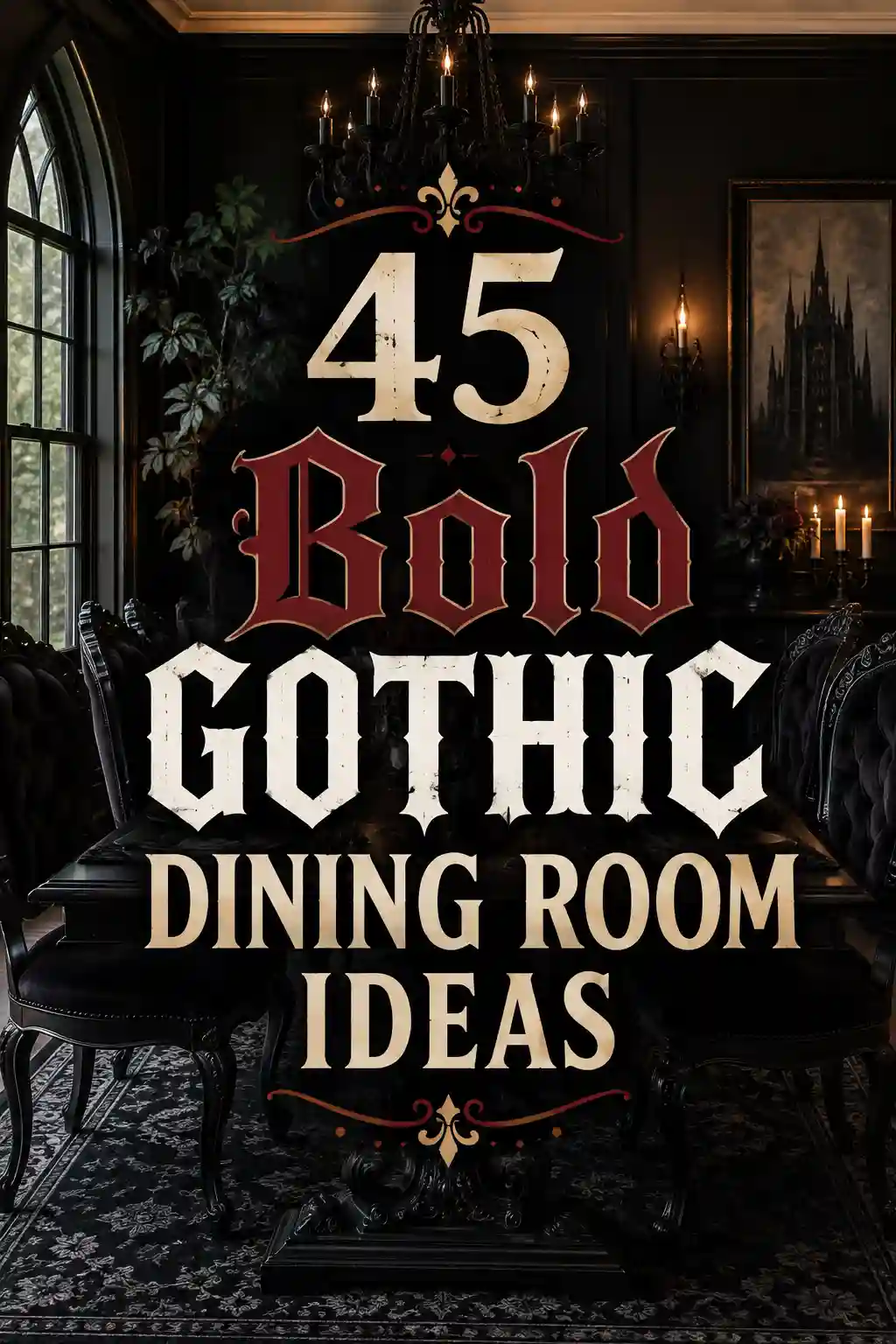
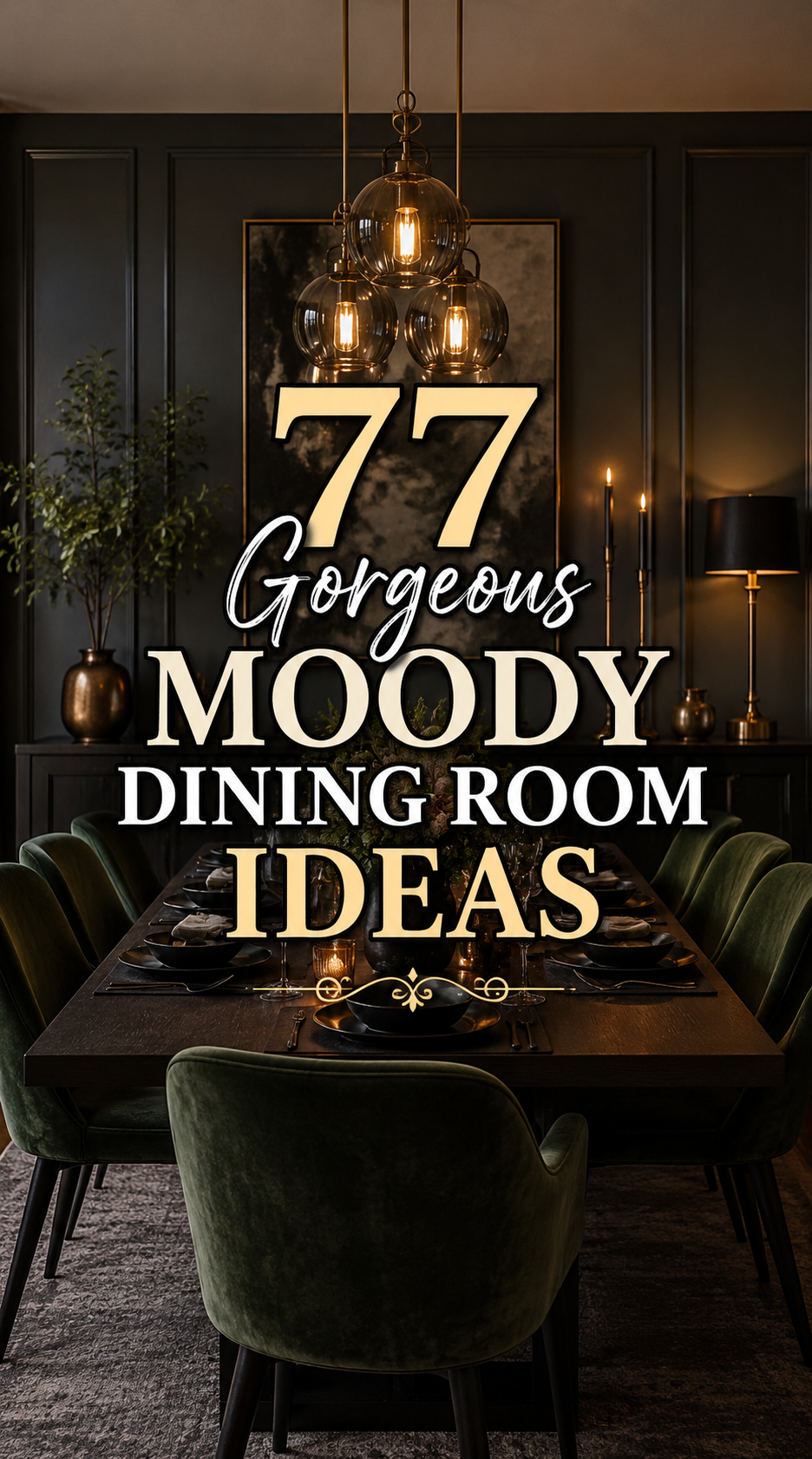
Gothic dining room ideas throw all of that out the window. This is a style built for candlelight, deep color, carved wood, and the kind of room that makes people slow down when they walk into it. It is not about being spooky for the sake of spooky. It is about drama, history, and a table you actually want to sit at for hours.
I have worked on a handful of these rooms over the years, some full gut renovations and some that were nothing more than a paint color and a new chandelier, and I can tell you the transformation is almost always dramatic. A dining room is one of the few rooms in the house where you are allowed to go big, because you do not live in it all day the way you do a bedroom or a living room. You occupy it for meals, for holidays, for long conversations over wine, and then you leave. That makes it the perfect canvas for something bold.
This guide walks through every angle of gothic dining room ideas I can think of, from color and furniture to lighting, textiles, and the small details that separate a genuinely gothic dining room from a Halloween costume version of one. Let us get into it properly.
Read Also : 45 Bold Black And Copper Kitchen Ideas That Turn Heads And Feel Like Home
What Actually Defines Gothic Dining Room Ideas
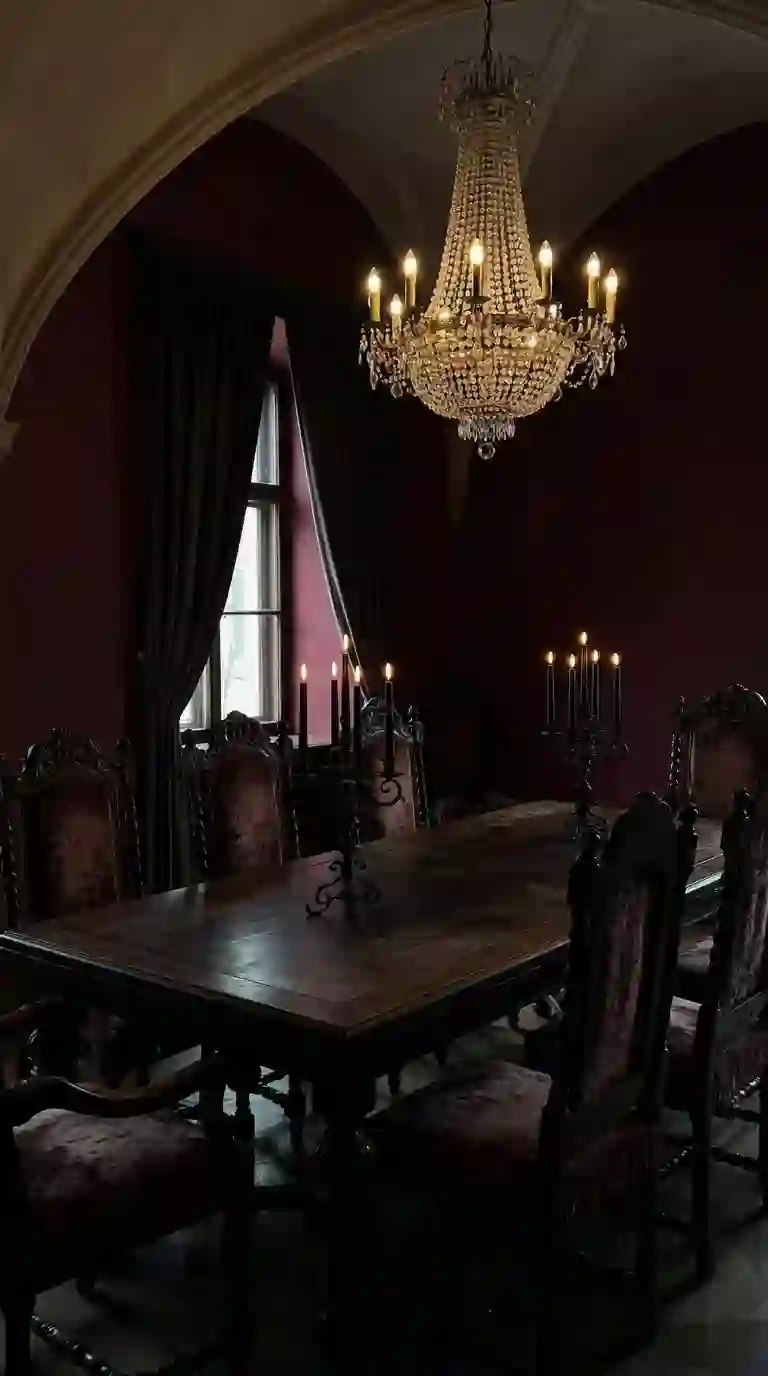
Before diving into specific gothic dining room ideas, it helps to understand where this style actually comes from, because that context changes how you approach the room.
Gothic design traces back to medieval European architecture, the kind you see in old cathedrals with their pointed arches, ribbed vaults, and dramatic vertical lines. Later, the Gothic Revival movement of the Victorian era took those architectural bones and translated them into furniture, using dark carved wood, heraldic motifs, and rich upholstery.
When people talk about gothic dining room ideas today, they are usually blending both of those eras together. You get the deep, moody color palette and candlelit atmosphere of medieval interiors mixed with the ornate, carved furniture of Victorian Gothic Revival pieces.
The result is a dining room that feels historical, dramatic, and a little theatrical, but in a controlled and elegant way rather than a costume shop way. That distinction matters a lot, and I will come back to it throughout this guide.
Key Elements That Show Up In Every Gothic Dining Room
A few things tend to repeat across almost every successful gothic dining room I have seen. Dark, saturated wall colors. Carved or turned wood furniture. Metal accents in iron, brass, or pewter. Rich fabrics like velvet, brocade, and damask. Candlelight or candle style lighting fixtures. Pointed arch shapes, whether in mirrors, windows, or furniture silhouettes.
You do not need every single one of these to create a convincing gothic dining room. In fact, restraint is often what separates an elegant space from an overdone one. But these elements are the vocabulary you will be drawing from as we go through the rest of this guide.
Choosing The Right Color Palette For Gothic Dining Room Ideas
Color is where most gothic dining room ideas begin, and honestly, where they should begin. The wall color sets the entire mood of the room before a single piece of furniture even enters the picture.
Deep, Saturated Wall Colors
Think burgundy, oxblood, forest green, charcoal, plum, and midnight blue. These are not timid colors. They are meant to wrap around the room and create an enveloping, cocooning feeling, especially once the lights are dimmed and the candles are lit.
I always tell people considering gothic dining room ideas for the first time to test a color in low light before committing. A deep plum that looks almost black in daylight might come alive with warmth once evening lighting hits it, and that transformation is exactly the point.
Black As A Foundation, Not Just An Accent
Full black walls are not for everyone, but in a dining room used mostly in the evenings, they can work beautifully. Black walls paired with warm brass or gold lighting create a jewelry box effect, where the darkness makes every metallic detail and candle flame glow that much brighter.
Adding Contrast With Lighter Accents
The most successful gothic dining room ideas rarely rely on dark color alone. A touch of cream, ivory, or aged gold breaks up the heaviness and prevents the room from feeling like a cave. This could be in the form of trim, curtain lining, or a pale tablecloth against dark walls.
Wallpaper As A Statement Choice
If a solid dark color feels like too big a leap, wallpaper offers a gentler entry point into gothic dining room ideas. Damask patterns, botanical prints in deep tones, or even a subtle text based design reminiscent of old manuscripts can deliver the gothic feeling without committing to a fully saturated paint job.
Also Read : 50 Gorgeous Table Placemat Ideas That Will Instantly Upgrade Your Dining Table
Gothic Dining Room Ideas For Furniture Selection
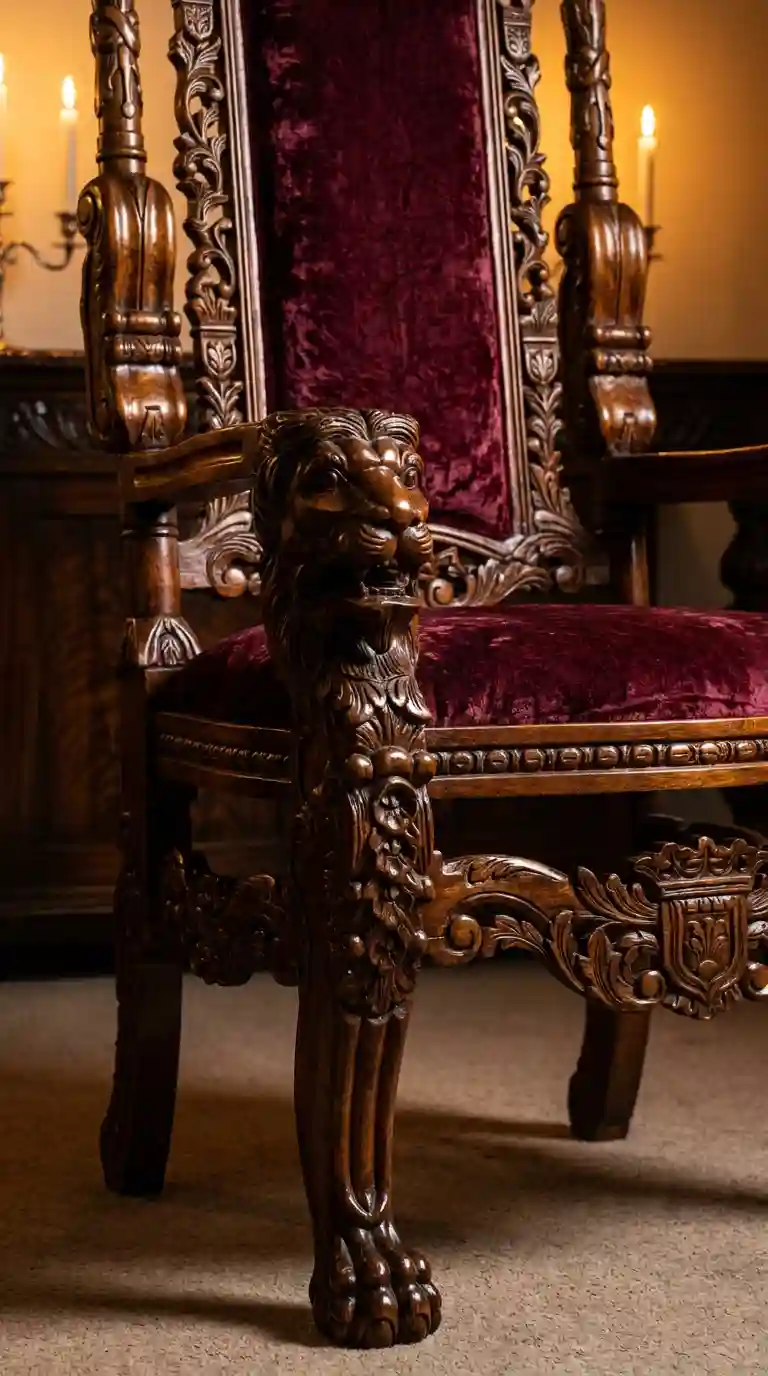
Furniture is where gothic dining room ideas either come together beautifully or start to feel like a theme park. Getting this part right matters more than almost anything else on this list.
The Dining Table Itself
A solid wood table, ideally in a dark finish like mahogany, walnut, or ebonized oak, forms the anchor of the entire room. Look for tables with turned legs, trestle bases, or subtle carved detailing along the apron. Pedestal tables with substantial, sculptural bases also fit beautifully within gothic dining room ideas, especially in smaller rooms where a round shape helps with traffic flow.
Avoid anything too sleek or minimal here. The table needs enough visual weight to hold its own against the drama happening on the walls and in the lighting.
Chairs That Make A Statement
High backed chairs are almost a signature of gothic dining room ideas. Carved wood frames paired with velvet upholstery in burgundy, emerald, or deep charcoal create that immediate sense of grandeur. If you want a slightly softer approach, wingback style dining chairs deliver a similar drama without feeling quite as formal.
Mixing chair styles at the head of the table, using a more ornate throne like chair for one or two seats, is a classic gothic dining room idea that adds hierarchy and visual interest without requiring you to buy an entirely matched set.
Sideboards And Buffets
A carved wood sideboard or buffet gives you both storage and another opportunity to layer in gothic detailing. Look for pieces with linenfold carving, pointed arch panel doors, or wrought iron hardware. This piece also becomes a natural home for candelabras, decanters, and other accessories that reinforce the theme.
Mixing Old And New
Not every piece needs to be a genuine antique. Some of the most compelling gothic dining room ideas I have seen blend one or two true vintage or antique pieces with newer furniture that echoes the same silhouettes. This keeps the room from feeling like a museum exhibit while still delivering an authentic sense of history.
Lighting Ideas That Bring Gothic Dining Rooms To Life
Lighting might be the single most important element among all gothic dining room ideas, because this is a style that depends heavily on shadow, glow, and atmosphere rather than flat, even brightness.
Chandeliers As The Centerpiece
A dramatic chandelier hung above the table is almost non negotiable in a proper gothic dining room. Wrought iron chandeliers with candle style bulbs deliver the most authentic medieval feeling, while crystal chandeliers in darker metal finishes lean slightly more Victorian and glamorous.
The scale matters enormously here. A chandelier that feels a touch oversized for the room actually works in favor of gothic dining room ideas, since drama and slight excess are part of the appeal.
Layering With Wall Sconces
Wall mounted candle style sconces along the perimeter of the room add depth and warmth that a single overhead fixture simply cannot achieve alone. This layered approach also lets you dim the overhead chandelier during dinner while keeping enough ambient light from the sconces to see comfortably.
Real Or Faux Candlelight
Nothing sells gothic dining room ideas quite like actual candlelight. Tall taper candles in wrought iron or pewter candelabras placed directly on the table create movement and warmth that no bulb can fully replicate. For safety and convenience, flameless LED taper candles have improved enormously and can deliver a similar flicker effect without the fire risk during long dinner parties.
Dimmers Are Essential
Whatever fixtures you choose, put them on a dimmer. A gothic dining room needs the flexibility to go from softly lit and moody during dinner to slightly brighter when you are clearing the table or hosting a livelier gathering
Also Read : 55 Inspiring Farmhouse Kitchen Design Ideas That Will Instantly Warm Up Your Home
Gothic Dining Room Ideas For Textiles And Fabrics
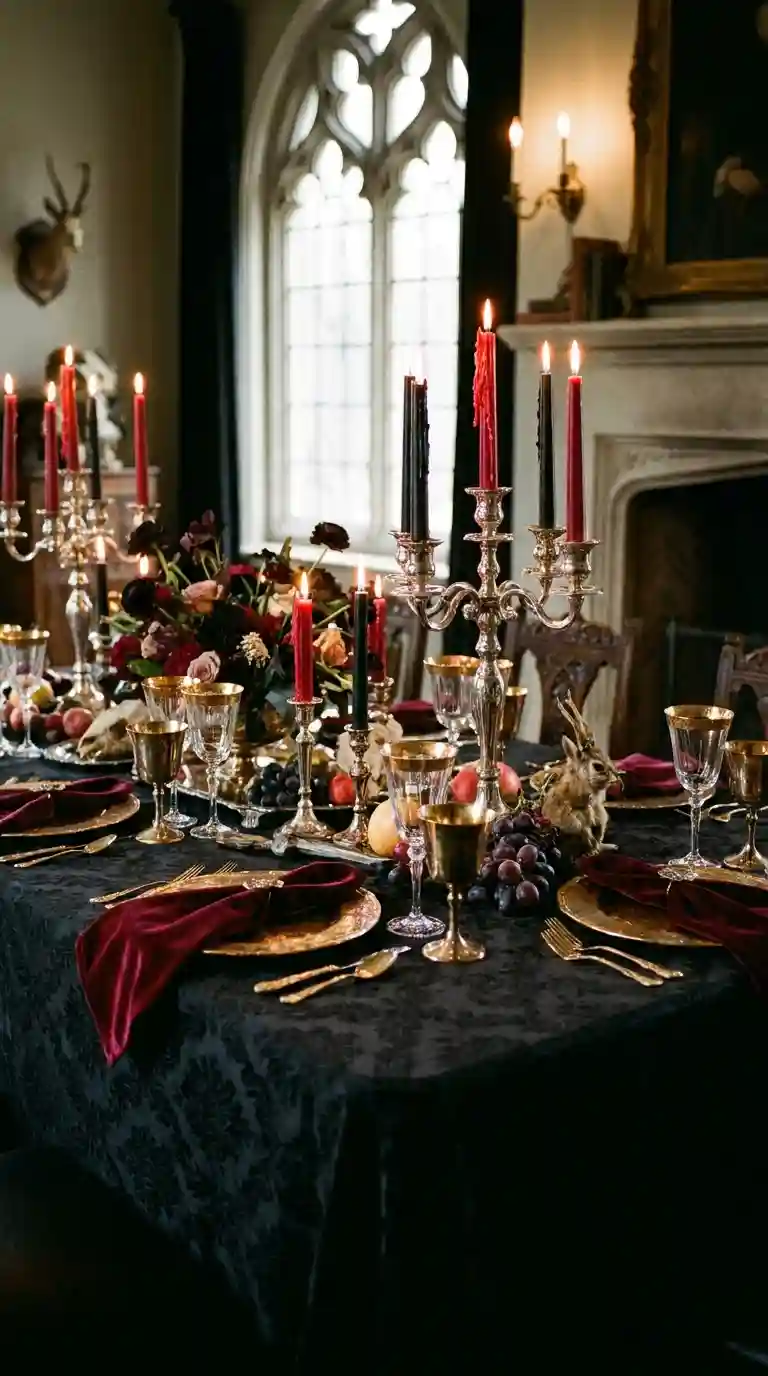
Fabric adds softness and depth to what could otherwise be a very hard, cold room full of wood and metal. This is an area where gothic dining room ideas really get to shine through texture.
Tablecloths And Table Runners
Heavy fabrics like velvet, brocade, and damask in dark jewel tones make an immediate statement on the table itself. A black or deep burgundy tablecloth paired with a metallic runner in gold or pewter creates the kind of contrast that photographs beautifully and feels luxurious in person.
Curtains And Drapery
Heavy floor length curtains, ideally in velvet or a similarly substantial fabric, help control light and add another layer of richness to the room. Curtains in gothic dining room ideas tend to be full and generously pooled at the floor rather than short and tailored, since the goal is opulence rather than minimalism.
Chair Upholstery
We touched on this in the furniture section, but it deserves repeating. Velvet upholstery in deep colors is probably the single fastest way to make dining chairs feel gothic. Even a set of plain modern chairs can be reupholstered in the right fabric to fit seamlessly into this style.
Napkins And Small Textile Details
Do not overlook the smaller textile touches. Cloth napkins in rich colors, tied with a ribbon or a simple cord, or laid with a vintage napkin ring, add a finished, considered feeling to the table that paper napkins simply cannot deliver.
Wall Decor And Art For Gothic Dining Room Ideas
Blank walls are a missed opportunity in any room, but especially in a gothic dining room, where the walls do a huge amount of the atmospheric heavy lifting.
Ornate Mirrors
A large mirror with an ornate, arched, or gilded frame reflects candlelight beautifully and adds a sense of depth to the room. This is one of the most practical gothic dining room ideas because it serves a real function, brightening a dark room, while also delivering serious visual impact.
Dark, Moody Artwork
Oil paintings with rich, dark backgrounds, portraits in the style of old European masters, or dramatic landscape paintings all fit naturally within a gothic dining room. Look for pieces with heavy shadow and a limited, moody color palette rather than bright or contemporary art.
Architectural Details
If your budget and lease situation allow for it, architectural elements like pointed arch wall niches, wainscoting, or applied trim in an arched pattern echo the pointed arch motifs central to authentic gothic architecture.
Tapestries And Textile Wall Art
A woven tapestry, whether antique or a modern reproduction, adds texture and softens the acoustics of a room full of hard surfaces, all while reinforcing the medieval roots of the gothic aesthetic.
Flooring Choices That Complement Gothic Dining Room Ideas
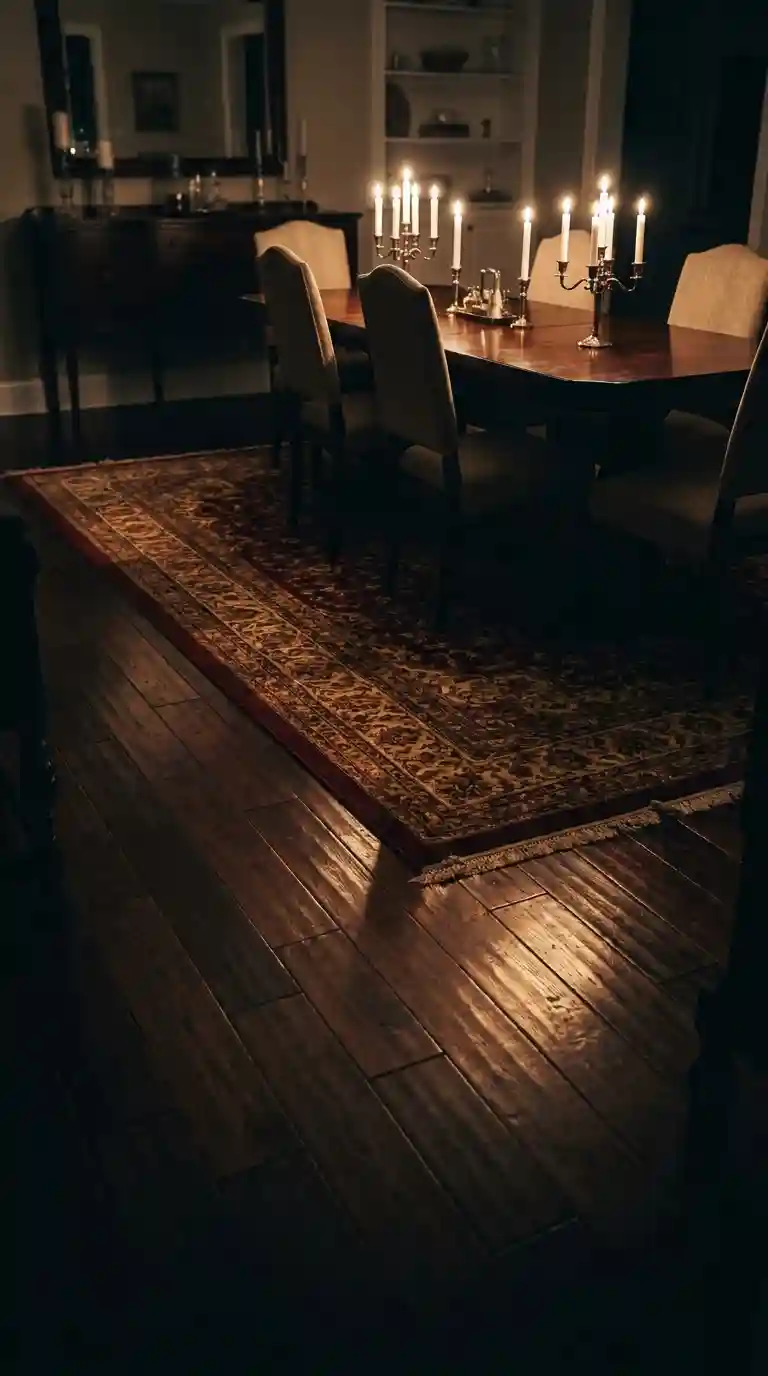
The floor grounds the entire room, quite literally, so it deserves its own place among your gothic dining room ideas.
Dark Hardwood As The Foundation
Dark stained hardwood, whether original or refinished, provides the richest and most authentic base for a gothic dining room. The depth of a dark walnut or ebony stained floor absorbs light in a way that makes candlelight and lamp light feel even warmer by comparison.
Stone And Tile For A Medieval Feel
For anyone drawing more heavily on the medieval side of gothic dining room ideas rather than the Victorian side, stone tile or a stone look porcelain tile delivers that castle like, ancient feeling underfoot.
Patterned Rugs To Add Warmth
A large area rug beneath the dining table softens the room acoustically and adds another layer of pattern and color. Persian style rugs, with their intricate medallion patterns and deep jewel tones, pair beautifully with gothic furniture and lighting.
Avoiding Anything Too Light Or Modern
Pale flooring, high gloss modern tile, or anything that reads as bright and contemporary tends to fight against the mood that gothic dining room ideas are trying to create. If you are working with existing light colored flooring you cannot change, a large dark rug can help bridge that gap.
Ceiling Details Worth Considering For Gothic Dining Room Ideas
The ceiling is another frequently overlooked surface, but in a style this dramatic, it deserves attention too.
Painted Or Papered Ceilings
Extending your wall color or wallpaper up onto the ceiling creates that fully enveloping, cocoon like atmosphere that defines the best gothic dining room ideas. This technique, sometimes called color drenching, makes a room feel intentional rather than accidental.
Exposed Beams
If your home has them, exposed wood beams add an immediate medieval quality to the ceiling. Even faux beams, which are more accessible for most homeowners, can deliver a similar architectural effect.
Decorative Ceiling Medallions
A carved or plaster ceiling medallion surrounding your chandelier adds another layer of ornate detail overhead, echoing the carved detailing found throughout the rest of the room.
Small Space Gothic Dining Room Ideas
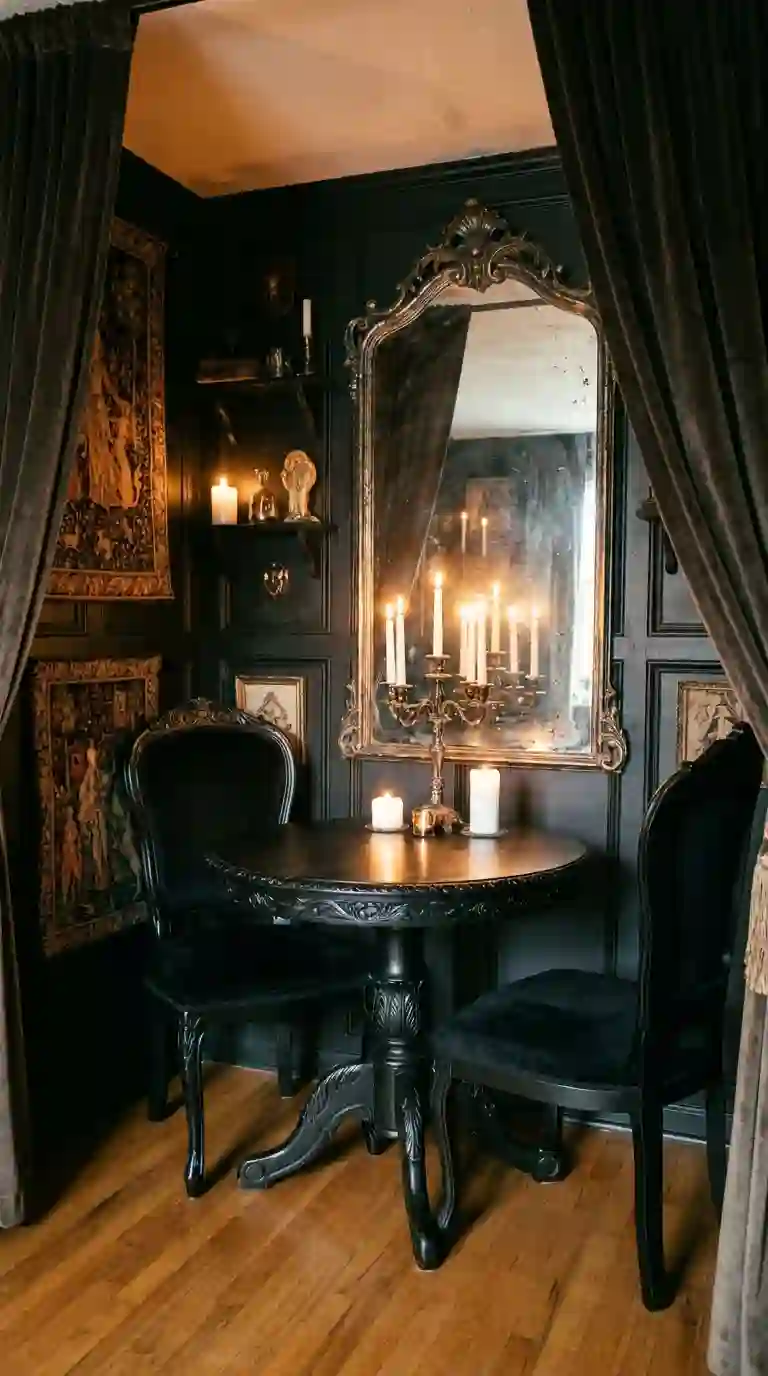
A common concern I hear is that gothic dining room ideas only work in large, grand spaces. That is simply not true.
Choose One Or Two Dramatic Gestures
In a small dining room, trying to cram in every single gothic element at once will feel cluttered rather than luxurious. Pick one dominant move, whether that is a dark wall color, a single statement chandelier, or one ornate mirror, and let the rest of the room stay relatively controlled.
Round Tables Work Beautifully In Tight Spaces
A round pedestal table takes up less visual and physical space than a rectangular one while still allowing for that intimate, gathered around the fire feeling that gothic dining rooms aim for.
Let The Mirror Do The Work
We already covered mirrors in the wall decor section, but in a small gothic dining room, a well placed ornate mirror becomes even more important, since it is doing double duty by expanding the room visually while reflecting your candlelight.
Vertical Elements Draw The Eye Up
Tall, narrow furniture and floor to ceiling curtains help a small gothic dining room feel taller and grander than its actual square footage would suggest.
Modern Gothic Dining Room Ideas For A Contemporary Twist
Not everyone wants a full Victorian recreation. Modern gothic dining room ideas take the same core elements and simplify them for a cleaner, more current look.
Simplified Silhouettes
Instead of heavily carved furniture, modern gothic dining room ideas favor cleaner lines with just a hint of gothic influence, like a subtly arched chair back or a table base with a sculptural, architectural shape.
A More Restrained Color Palette
Rather than deeply saturated jewel tones on every wall, a modern approach might use charcoal or black paired with plenty of negative space, letting one or two dark elements carry the mood instead of surrounding you with color on all sides.
Mixing Metals And Materials
Matte black metal, smoked glass, and unlacquered brass all show up frequently in modern gothic dining room ideas, offering that same dramatic, moody feeling through material choice rather than heavy ornamentation.
Statement Lighting Over Statement Furniture
In a more modern interpretation, the chandelier or pendant light often becomes the single loudest gothic element in the room, while the furniture itself stays relatively simple and lets that one fixture do the storytelling.
Also Read : 50 Fresh Spring Decor Ideas That Will Instantly Wake Up Every Room In Your Home
Victorian Gothic Dining Room Ideas For A Traditional Approach
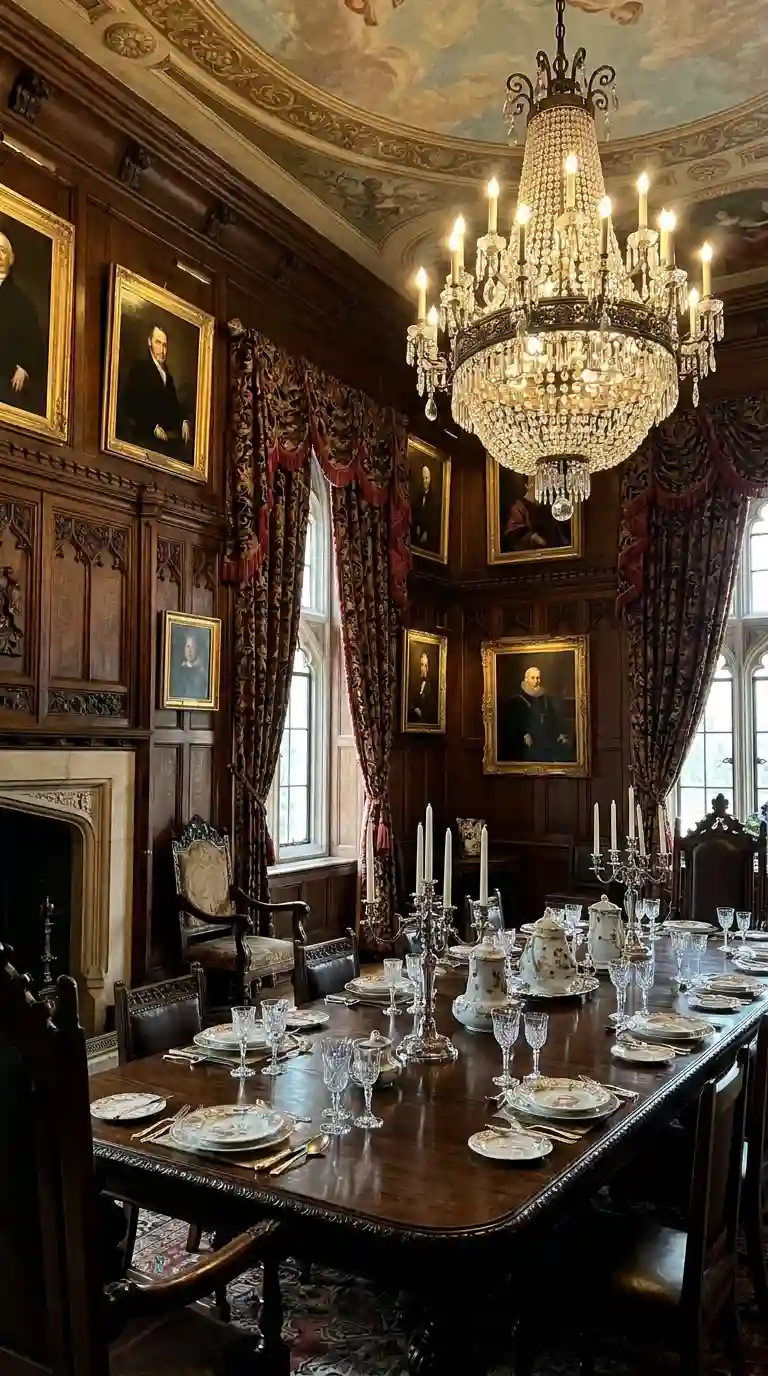
If you are drawn to the more historical, ornate end of the spectrum, Victorian gothic dining room ideas lean heavily into detail, symmetry, and formality.
Wood Paneling And Wainscoting
Dark wood paneling covering the lower half or even the full height of the walls delivers an immediate sense of old world grandeur that defines authentic Victorian interiors.
Formal Table Settings
Full formal place settings, with multiple courses of dinnerware, ornate flatware, and crystal glassware, suit the Victorian gothic dining room aesthetic far more than a casual, mismatched approach would.
Portraits And Gilded Frames
A collection of portraits, whether they depict actual ancestors or are simply in the style of old European painting, hung in ornate gilded frames along the walls, reinforces that sense of inherited history central to Victorian gothic design.
Symmetry Throughout The Room
Victorian interiors favored balance and symmetry. Matching sconces on either side of a fireplace or doorway, an evenly centered chandelier, and chairs arranged in perfect pairs all contribute to that formal, considered feeling.
Rustic And Medieval Gothic Dining Room Ideas
For a slightly earthier, less polished take, rustic and medieval inspired gothic dining room ideas draw more directly from castle and monastery interiors than from Victorian parlors.
Heavy Trestle Tables
A long trestle table with a thick, substantial top and simple but sturdy legs feels closer to something you might find in a medieval great hall than a refined Victorian dining room.
Wrought Iron Everywhere
Iron light fixtures, iron drawer pulls, iron candle stands, and even iron accents on chairs all reinforce that rugged, handcrafted quality central to medieval inspired gothic dining room ideas.
Stone And Exposed Brick
If your home has exposed brick or stone, a rustic gothic dining room is the perfect place to let it show rather than cover it up. These raw, textured surfaces pair beautifully with dark wood and iron accents.
Simple, Bold Textiles
Rather than delicate brocade, rustic gothic dining room ideas often favor heavier, more rugged fabrics like wool or thick linen in deep, earthy tones.
Accessories And Decor That Complete Gothic Dining Room Ideas
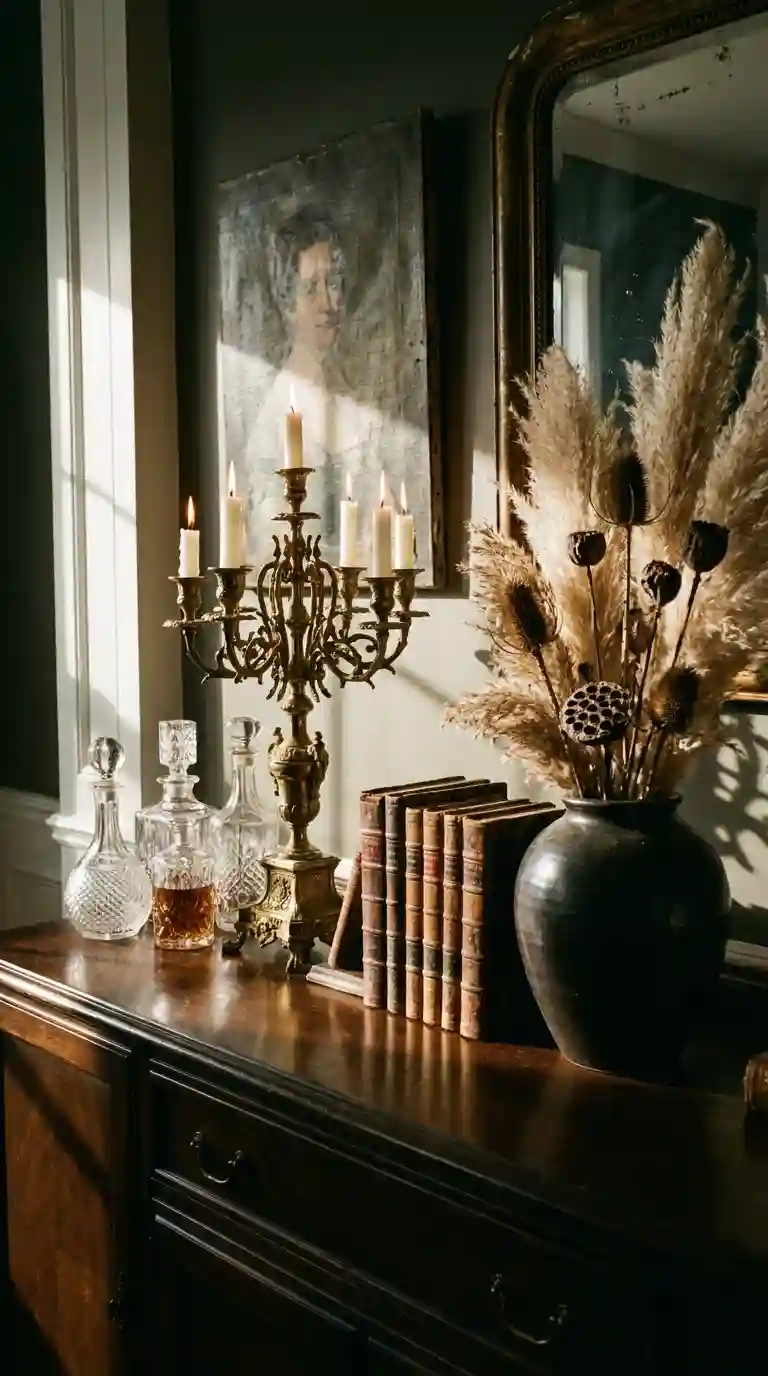
The furniture and paint get you most of the way there, but the small accessories are often what make a gothic dining room feel fully realized rather than half finished.
Candelabras And Candle Holders
Multiple candle holders of varying heights, clustered on the table or sideboard, create movement and visual interest while reinforcing the candlelit atmosphere central to gothic dining room ideas.
Vintage Decanters And Glassware
A collection of vintage or vintage style glass decanters on a sideboard, whether they hold wine, spirits, or simply act as decor, adds another layer of old world charm and gives guests something interesting to look at during a long dinner.
Dried Botanicals
Fresh flowers can feel a bit too soft and cheerful for this aesthetic. Dried botanicals, dark toned florals, or even simple bare branches in a dramatic vase fit the mood far more naturally.
Books And Personal Objects
A stack of old, leather bound books on a sideboard or table adds warmth and personality, hinting at a well lived, well read household rather than a showroom.
How To Balance Gothic Dining Room Ideas So They Do Not Feel Like A Costume
This is genuinely one of the most important sections in this entire guide, because it is where a lot of people go wrong.
Avoid Literal Halloween Decor
Skulls, cobwebs, and plastic bats belong in seasonal Halloween decorating, not in a year round gothic dining room. The goal with genuine gothic dining room ideas is timeless drama, not a costume party.
Prioritize Quality Materials Over Quantity Of Decor
One genuinely well made carved chair says more than five cheap, mass produced gothic themed accessories. Invest in fewer, better pieces rather than filling every surface with themed decor.
Let The Room Breathe
Even the moodiest, most dramatic gothic dining rooms need some negative space. A wall left bare, a surface left uncluttered, gives the eye somewhere to rest and makes the styled elements feel more intentional by comparison.
Blend In Some Softness
A touch of warmth, whether that is a cream colored element, a soft textured rug, or simply warm lighting, keeps the room from tipping into something cold or unwelcoming.
Gothic Dining Room Ideas For Renters And Smaller Budgets
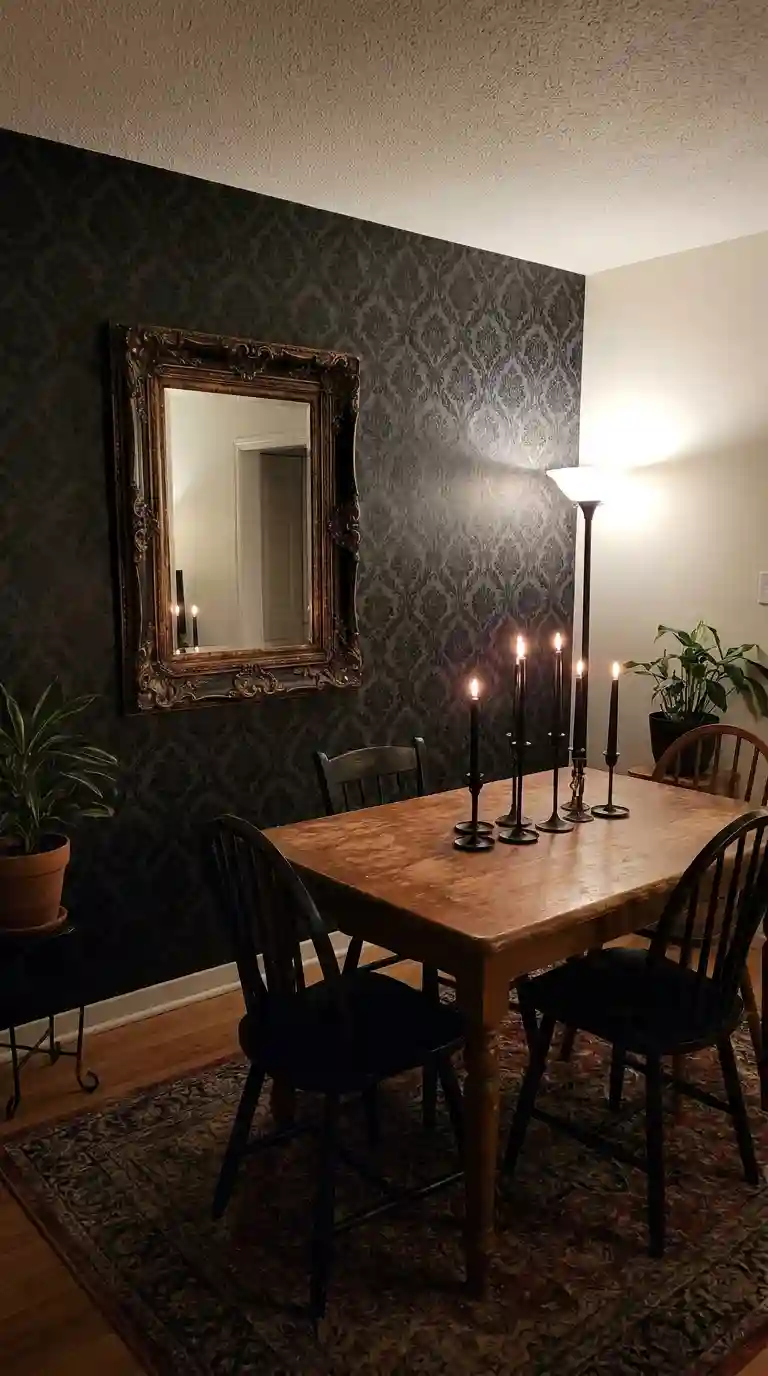
You do not need to own your home or spend thousands of dollars to bring gothic dining room ideas to life.
Peel And Stick Wallpaper
Removable wallpaper in dark damask or botanical patterns delivers a huge visual impact without violating a lease, and it can be swapped out later if your taste changes.
Secondhand And Thrifted Furniture
Antique stores, estate sales, and online marketplaces are full of dark wood furniture that fits perfectly into gothic dining room ideas, often at a fraction of the cost of buying new reproduction pieces.
Paint Over Permanent Renovation
A dark accent wall, achieved with a coat of paint you can prime over later, delivers most of the mood of a fully gothic dining room without any permanent structural changes.
Layer In Accessories Gradually
You do not need to buy everything at once. Start with lighting and a few key accessories like candle holders and a dark tablecloth, then build toward furniture and larger investments over time.
Combining Gothic Dining Room Ideas With An Open Concept Layout
Many modern homes have open concept kitchens and dining areas, which presents a unique challenge for anyone drawn to gothic dining room ideas.
Define The Space With Color
Even without walls separating the dining area from the rest of the open floor plan, a distinct wall color or a strategically placed area rug can visually carve out the gothic dining zone from the more neutral kitchen or living space beside it.
Use Lighting To Create Separation
A dramatic chandelier hung specifically over the dining table creates a visual anchor that signals where the dining zone begins, even without physical walls.
Keep A Thread Of Consistency
To avoid the gothic dining area feeling completely disconnected from the rest of an open concept home, repeat a material or metal finish, such as black hardware or brass accents, throughout the adjoining kitchen or living space.
Read Also : 75 Gorgeous Orange Decor Ideas That Will Instantly Warm Up Every Room In Your Home
Seasonal Touches For Gothic Dining Room Ideas
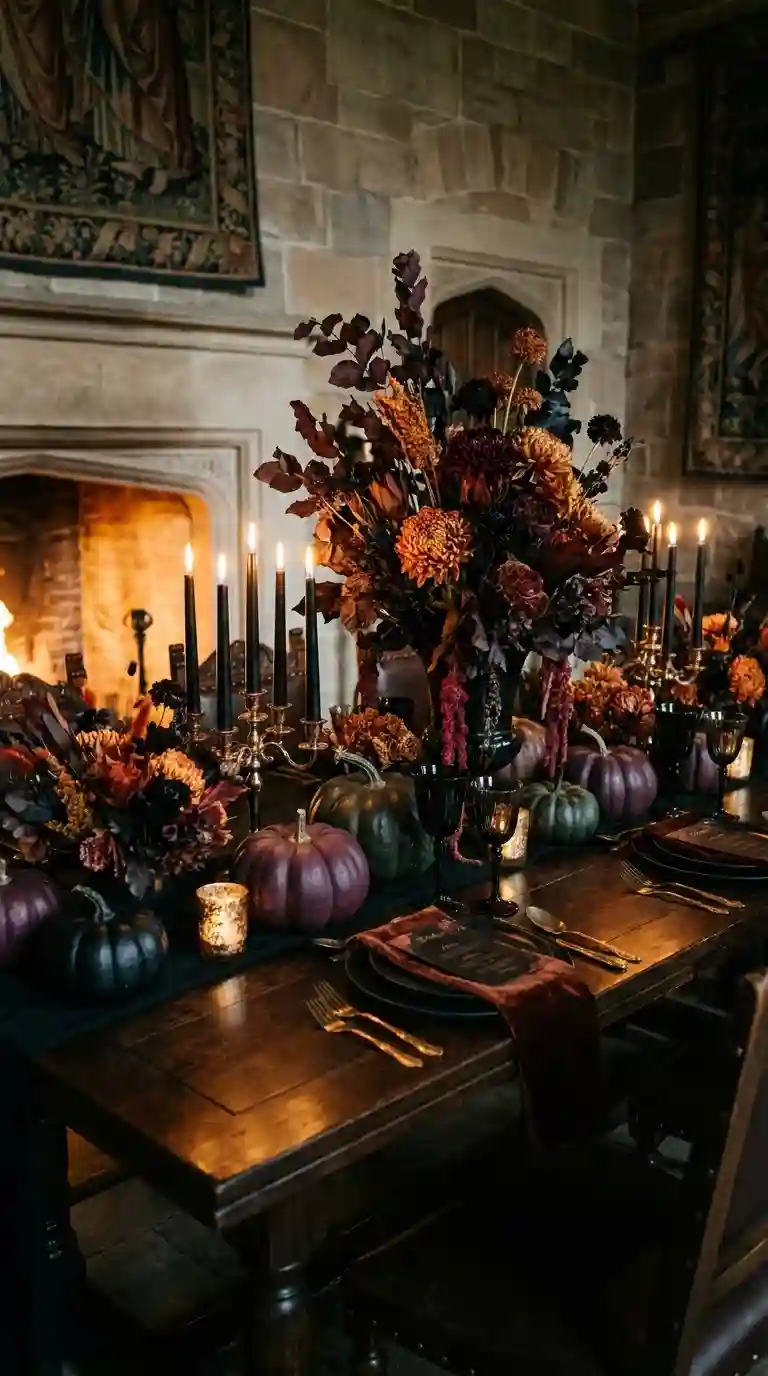
While gothic dining room ideas work beautifully as a year round style, there is room to layer in subtle seasonal touches without losing the core aesthetic.
Autumn And Halloween
This is the season gothic style naturally shines in. Deep orange and burgundy dried florals, muted toned pumpkins, and slightly more dramatic candle arrangements all fit naturally without tipping into costume territory.
Winter And The Holidays
Deep green garlands, gold accents, and warm candlelight extend beautifully into winter, especially around the holidays, when a moody, candlelit dining room feels particularly fitting.
Spring And Summer
During warmer months, a gothic dining room can be softened slightly with deep toned fresh florals like burgundy dahlias or dark red roses, keeping the drama intact while acknowledging the change of season.
Common Mistakes To Avoid With Gothic Dining Room Ideas
Even with the best intentions, there are recurring mistakes that pull a gothic dining room away from elegant and toward overdone or uncomfortable.
Too Little Lighting
A gothic dining room needs to be moody, not literally too dark to see your food. Always layer multiple light sources so you can adjust the brightness depending on the occasion.
Ignoring Comfort
Chairs that look dramatic but are genuinely uncomfortable will undermine even the most beautifully designed gothic dining room. Test seating comfort before committing to a full set.
Overcommitting To A Trend Version Of The Style
Chasing whatever gothic themed decor is trending at the moment, rather than choosing pieces you genuinely love, tends to produce a room that feels dated within a year or two rather than timeless.
Forgetting The Room Still Needs To Function
At the end of the day, this is still a room where people need to eat comfortably, pull out chairs easily, and see their food clearly. Never let the drama override the basic functionality of the space.
How To Start Planning Your Own Gothic Dining Room Ideas
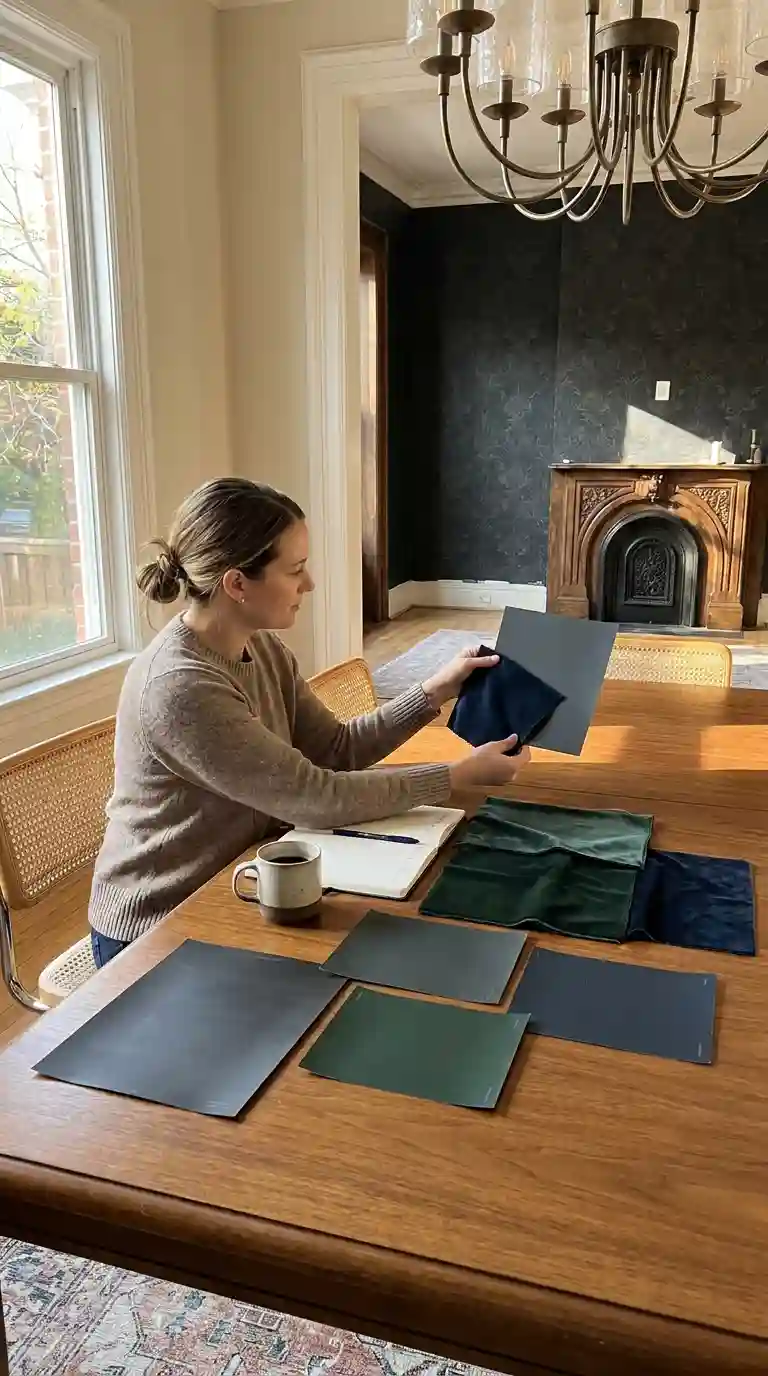
If all of this feels exciting but a little overwhelming, here is how I generally recommend approaching a gothic dining room from scratch.
Start With The Wall Color
Choose your dominant wall color first, since everything else in the room will be selected to complement it. This single decision does more to establish the mood than any other choice you will make.
Invest In One Statement Piece
Whether that is the chandelier, the dining table, or a single ornate mirror, choose one piece you are willing to spend real money on and build the rest of the room around it.
Layer In Lighting Second
Once your statement piece and wall color are settled, focus on lighting, since this is what will make or break the atmosphere once the sun goes down and you are actually using the room.
Add Textiles And Accessories Last
Save the smaller, more flexible elements like tablecloths, candle holders, and decor for last. These are the easiest and least expensive pieces to swap out later if your taste evolves.
Final Thoughts On Gothic Dining Room Ideas
A dining room built around gothic dining room ideas is not for everyone, and that is exactly what makes it special for the people it does resonate with. It is a style that rewards patience, sourcing, and a genuine willingness to commit to something dramatic rather than playing it safe with beige walls and a plain table.
Start with color. Invest in a few genuinely beautiful pieces rather than a room full of cheap themed decor. Light the room with intention, using candlelight and layered fixtures rather than one flat overhead bulb. And remember that comfort and functionality still matter, no matter how moody and atmospheric the room becomes.
Done well, a gothic dining room becomes the kind of space people remember. Not because it looks like a costume or a stage set, but because it feels genuinely intentional, rich, and a little bit magical every single time you sit down to eat in it.
Frequently Asked Questions
What colors work best for a gothic dining room?
Deep, saturated colors like burgundy, oxblood, forest green, charcoal, plum, and midnight blue work best, often paired with black or dark wood for a rich, moody atmosphere.
How do you make a gothic dining room without it looking like Halloween decor?
Focus on quality materials, rich fabrics, and genuinely elegant furniture rather than literal skulls or cobwebs, and let the room’s color, lighting, and craftsmanship do the storytelling instead of costume style props.
What furniture is best for a gothic dining room?
Dark wood furniture with carved detailing, high backed chairs upholstered in velvet, trestle or pedestal tables, and sideboards with ornate hardware all fit naturally within a gothic dining room design.
Can a small dining room still be styled in a gothic theme?
Yes, small dining rooms can absolutely work with gothic style by focusing on one or two dramatic gestures, such as a dark wall color or a single statement mirror, rather than layering in every element at once.
What kind of lighting works best in a gothic dining room?
Layered lighting works best, combining a dramatic chandelier or pendant with wall sconces and candlelight, ideally all connected to dimmers so the mood can shift throughout the evening.
Is black paint too dark for a dining room?
Not necessarily, especially in a room primarily used in the evenings with warm, layered lighting, since black walls can create a rich, jewel box atmosphere rather than feeling flat or oppressive.
What fabrics are associated with gothic interior design?
Velvet, brocade, damask, and heavy linen are the most common fabrics used in gothic interiors, chosen for their texture, weight, and rich, saturated coloring.
How can I add gothic style on a budget?
Peel and stick wallpaper, secondhand furniture from thrift stores or estate sales, a fresh coat of dark paint, and layered candle lighting can all deliver a strong gothic effect without a large financial investment.
What is the difference between gothic and Victorian gothic design?
Gothic design generally draws from medieval architecture and interiors, while Victorian gothic, also called Gothic Revival, applies those same motifs to the more formal, ornate furniture and decor of the Victorian era.
What kind of table shape works best in a gothic dining room?
Rectangular tables suit larger, more formal rooms, while round pedestal tables work particularly well in smaller spaces since they take up less visual bulk while still feeling substantial


3 Comments on “45 Bold Gothic Dining Room Ideas That Turn Every Meal Into An Occasion”