
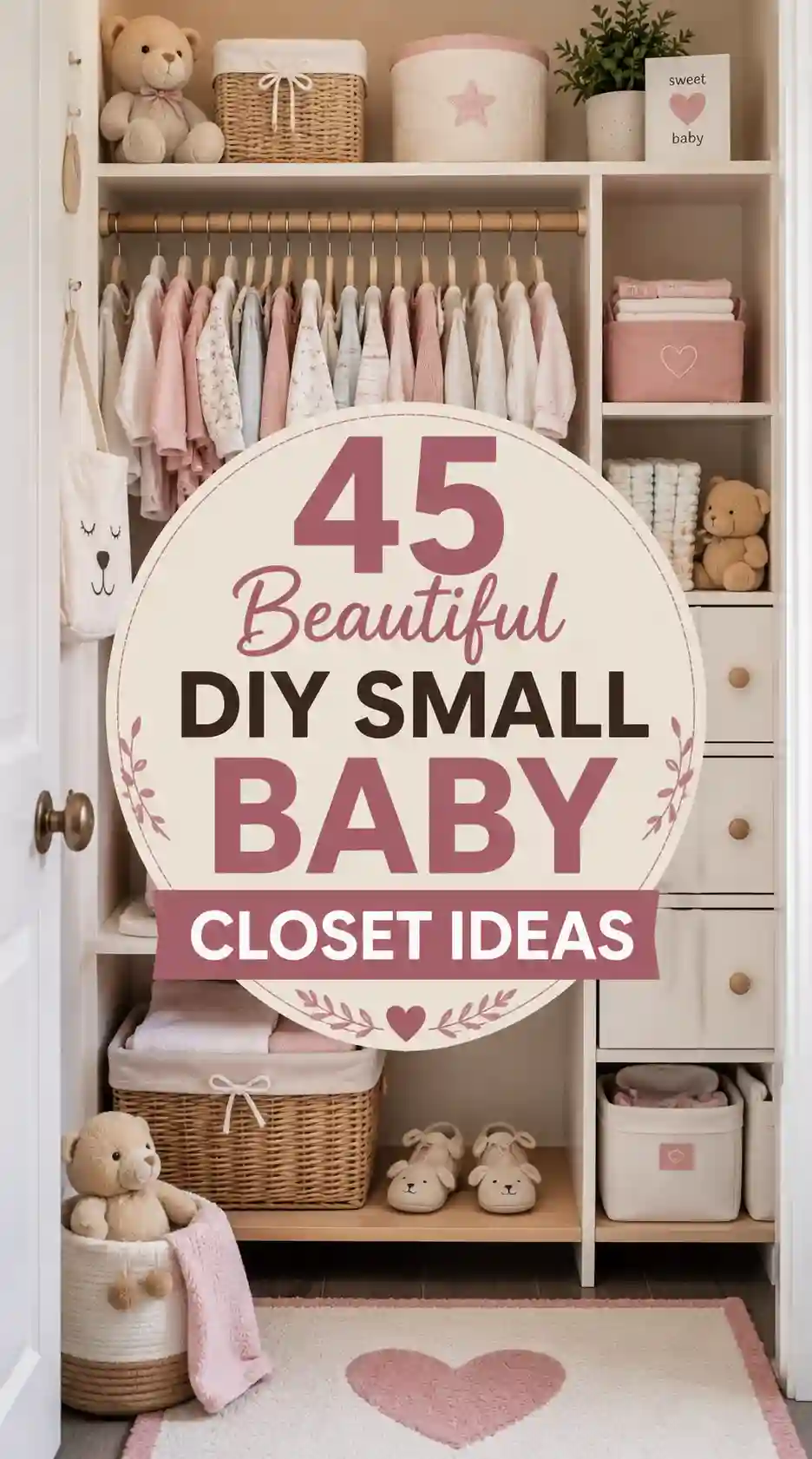
A typical small nursery closet is about 90 centimetres wide, 60 centimetres deep and 210 centimetres high, with a single rod and one shelf. That sounds generous until nappies, blankets, sleep suits and clothes in three sizes compete for it. A workable plan takes one weekend and a budget of £60 to £180 for a second rod, bins, dividers and slim hangers — far less than a fitted system, and enough to change how the closet functions daily.
The key decision is not which bins to buy, but which items must be reachable with one hand while holding a baby. Those items — five to seven sleep suits, nappies, wipes and two blankets — belong in the front, between 60 and 120 centimetres from the floor. Everything else, including the next size up and out-of-season clothes, belongs higher or in a separate storage box outside the closet.
Why does a small nursery closet overflow so quickly?
Baby clothes are small, but they arrive in large numbers and in overlapping sizes. A newborn outfit is typically 50 to 56 centimetres long, while a 0–3 month outfit is 56 to 62 centimetres, so two sizes can be in use within a few weeks. If both sizes are hung together, the closet looks full even when only half the clothes are currently wearable.
The second cause is mixing categories: hanging clothes, folded items, nappies and keepsakes all stored in the same zone. Separating the closet into three zones — hanging on the left, folded and binned items on the right, and bulk storage on the top shelf — prevents that mixing, even in a closet only 90 centimetres wide.
What should you measure before buying anything?
Measure width, depth and clear height, and note the door type: a sliding door reduces access to about half the width at a time, while a hinged door needs 60 centimetres of clearance to open fully. Baby hangers are about 28 to 30 centimetres wide, so a 90-centimetre rod holds roughly 25 to 30 hangers if they are slim — far fewer if bulky wooden hangers are used.
Check the rod height, too. A single rod at 150 centimetres wastes the space below it, because baby clothes hang only 40 to 50 centimetres long. Adding a second rod 75 centimetres below the first roughly doubles hanging capacity without any building work, provided the lower rod is fixed into studs or suitable wall plugs, not just plasterboard.
How do you divide a tiny closet into zones?
Use four zones. Zone 1, at eye level and front, holds current-size clothes and daily items. Zone 2, below the second rod or on a low shelf, holds folded items in bins. Zone 3, on the top shelf above 150 centimetres, holds the next size up and seasonal items. Zone 4, on the door or the side wall, holds small items such as hats and socks in a hanging organiser with pockets 15 centimetres wide.
Label each bin with size and category, for example “0–3 months — sleep suits” rather than just “baby clothes”. Labels matter because, in the first months, more than one adult may dress the baby, and a system that only one person understands will break down within a week.
What is the simplest DIY system that actually lasts?
Start with a second rod, three fabric bins 30 by 25 centimetres, and two drawer dividers. That combination costs far less than a fitted unit and can be installed in about two hours with a drill, a level and a tape measure. Avoid building fixed shelving first: adjustable rods and bins can be moved when sizes change, whereas fixed shelves sized for newborn clothes become awkward within six months.
If the closet has no door, a tension rod and a curtain can hide the lower bins and protect clothes from dust, but the curtain must be kept clear of any cot or changing area and must not have long cords within a baby’s reach. Safety comes before appearance: any tall freestanding unit should be fixed to the wall, and small items such as buttons and hair clips should not be stored in open baskets at cot height.
How do you sort clothes by size without losing track?
Sort by size first, then by type. Keep only the current size and the next size in the closet; store larger sizes in labelled boxes elsewhere, one box per size. A useful rule is to keep seven to ten outfits in the current size in the closet, plus three sleep suits for night changes, and to move anything outgrown to the “next size” box on the same day it is noticed, rather than letting it pile up.
For twins or two children sharing a closet, divide the rod in half and use a different bin colour for each child. That simple visual split prevents the most common mix-up — dressing one child in the other’s size — and it is easier to maintain than separate systems in the same small space.
What if there is no closet at all?
A freestanding wardrobe 100 centimetres wide and 50 centimetres deep can replace a closet, provided it is fixed to the wall and its doors can open fully in the room. A chest of drawers 80 centimetres wide with six drawers can also work for the first year, because most baby items fold rather than hang; hanging clothes can be limited to 10 to 15 special outfits on a small rail.
An open shelving unit with baskets is the cheapest option, but it needs a discipline the other options do not: baskets must be labelled, and outgrown clothes must leave the shelf weekly, or the unit quickly becomes a display of clutter. The small-space editing approach in this guide to making a bookshelf look intentional applies here too — fewer, larger containers beat many small ones.
How do you make the system grow with the child?
Plan for hanging length to increase from about 45 centimetres for newborn clothes to about 65 centimetres for toddler clothes within two years. That means the second rod should be removable, or at least adjustable, so one longer hanging section can replace two short ones when the child outgrows baby sizes. Adjustable shelving, moved up by 15 to 20 centimetres at a time, is more useful than fixed shelves built for one stage.
Review the closet every time a size changes, which may be every two to three months in the first year. That review takes about 30 minutes: remove outgrown items, move the next size into Zone 1, and check that labels still match the contents. A system reviewed regularly stays small; a system left alone grows back into chaos.
How do you keep the nursery looking calm, not just organised?
Limit the visible palette to two or three colours for bins and hangers, and keep patterned items inside bins rather than on display. If the closet has no door, a single framed print or a soft toy on the top shelf is enough decoration; more items on open shelves compete with the clothes and make the room feel busy.
For a themed nursery, the closet should follow the room, not lead it. The cheerful pink-and-character approach in this guide to Hello Kitty room ideas works best when the closet uses the same two colours as the bedding, rather than introducing a new theme of its own.
Questions readers ask
How many clothes does a baby actually need in a small closet? About seven to ten outfits in the current size, plus three sleep suits for night changes. More than that usually means the next size is mixed in, not that the baby needs more clothes.
Is a second hanging rod safe in a rented home? In most cases, yes, if it is a tension rod or a rod fixed with removable brackets and the landlord has agreed. Check the tenancy terms before drilling, and use a tension rod if drilling is not allowed.
Should baby clothes be sorted by size or by type? By size first, then by type within that size. That way, when a size is outgrown, the whole group can move to storage in one step.
What should go on the top shelf? Only the next size up, seasonal items and keepsakes in a closed box. Daily items on a high shelf are quickly forgotten and the shelf becomes a dumping ground.
How often should a baby closet be reorganised? A 30-minute review at each size change, plus a quick weekly check for outgrown items. A full rebuild is rarely needed if those reviews happen.
A small baby closet works when the current size is front and centre, the next size is stored but accessible, and everything else is out of the way. Measure first, add one rod and a few labelled bins, and review at each size change — that is the whole system.
Finally, keep a small laundry basket beside the closet for items waiting to be washed, rather than letting them drift back onto shelves. That one habit, repeated daily, protects the zones above far more effectively than any extra bin or organiser bought later.





One comment on “A Small Baby Closet That Actually Works: Zones, Sizes and a Weekend Plan”