
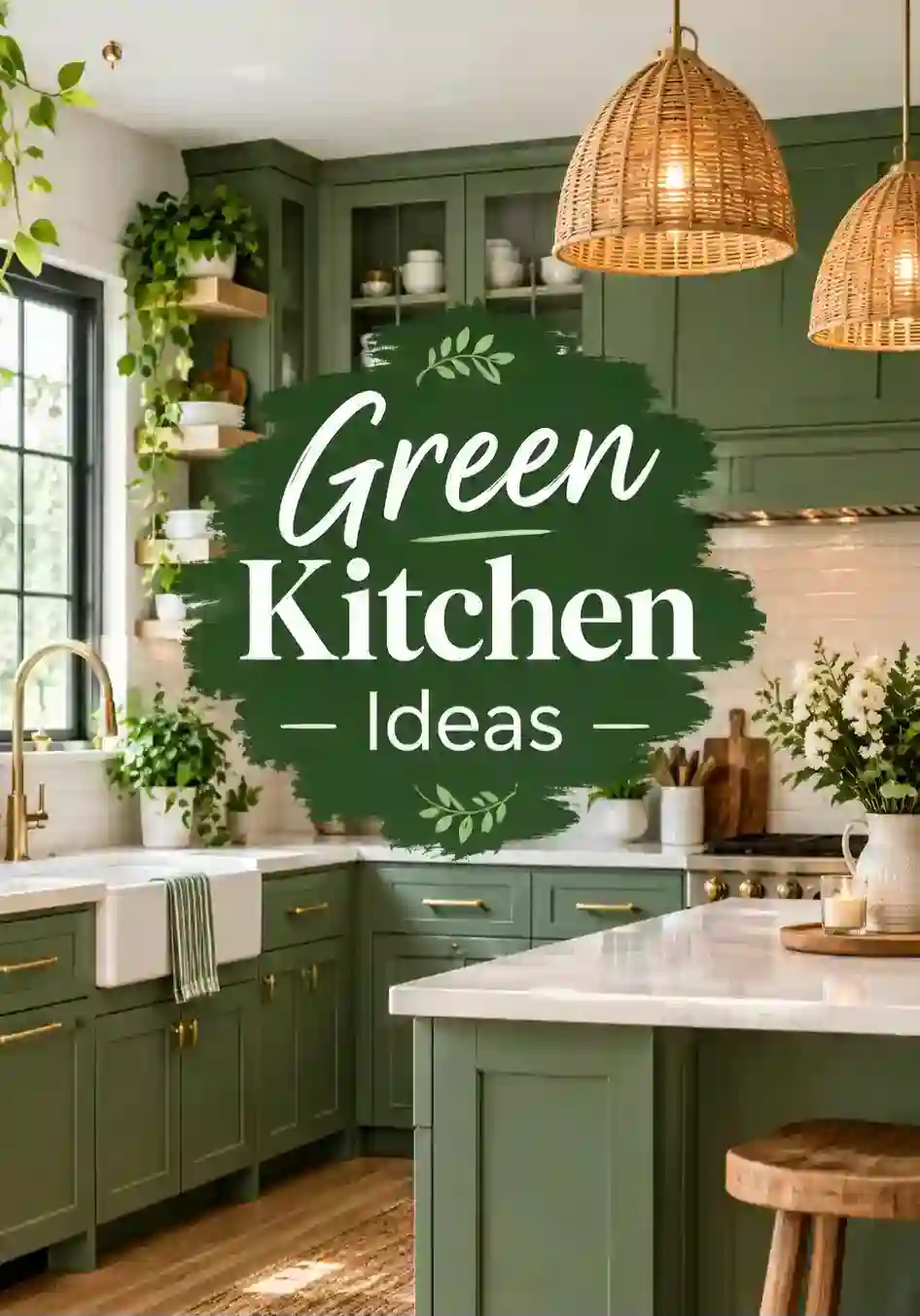
A green kitchen is a commitment in a way that a green cushion is not. Cabinets cost thousands of pounds, repainting them takes at least a weekend of sanding and priming, and once the colour is on the doors you will see it every morning while you make coffee. That is exactly why it is worth slowing down before you choose. The difference between a green kitchen that still feels fresh in five years and one that dates within eighteen months usually comes down to three decisions: the shade, the surface, and how much green you use.
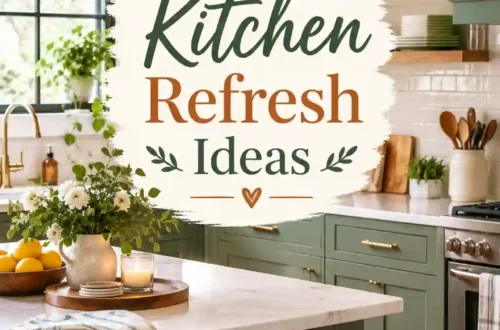
This guide works through those decisions in order, with the numbers that matter: how much paint a standard 3.6 by 3 metre kitchen needs, what a cabinet repaint typically costs, and how to test a shade in your own light before committing. The photos throughout show real green kitchens, from a sunlit family kitchen to a narrow galley, so you can see how each shade behaves in a different kind of room.
Why is green suddenly everywhere in kitchens?
For a decade, kitchens were white, grey, or white with grey. Green broke that run because it does two jobs at once: it reads as a colour, so a kitchen finally has a personality, and it reads as a neutral, so it still sits comfortably next to oak floors, white walls and stainless steel. That combination is rare, and it explains why sage and olive have moved from bold choice to safe default in the space of about five years.
There is also a practical reason. Kitchens are the hardest-working rooms in a home, and green hides the small marks of daily life better than white does. A fingerprint on a sage door is invisible from two steps away; on a white gloss door, it is not. Estate agents make a similar point about resale: a soft green is one of the few colours buyers describe as a feature rather than something they would need to repaint.
Which shade of green suits your kitchen?
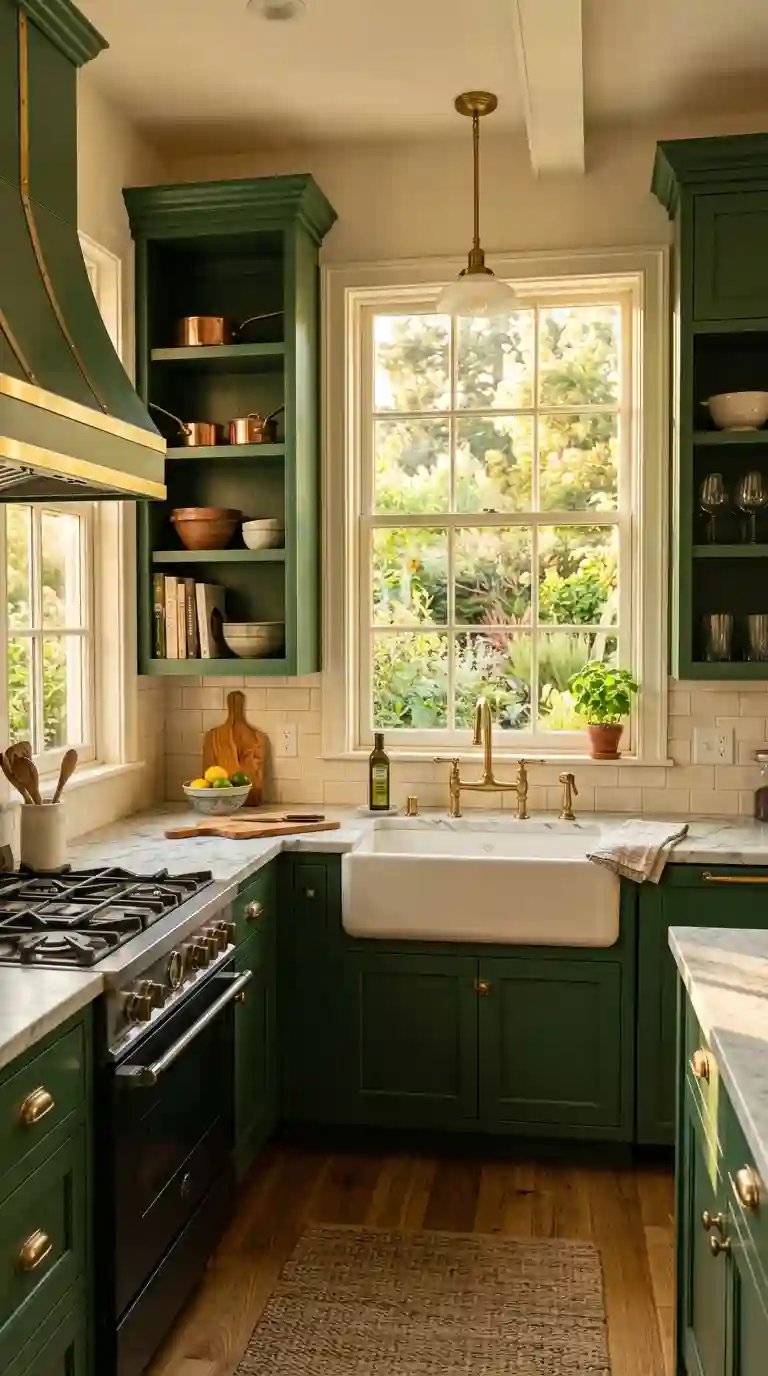
Start with your light, not with a paint chart. A north-facing kitchen gets cool, blue-toned daylight all day, which makes blue-leaning greens look colder and sage look grey. In that room, a warmer olive or a green with a yellow undertone holds its colour. A south-facing kitchen does the opposite: strong warm sun can make an olive look yellow, so a cooler sage or a muted forest green usually behaves better.
The four shades worth shortlisting are sage, olive, forest and emerald. Sage is the softest and the easiest to live with, and it is the one most buyers accept without thinking. Olive is warmer and earthier, and it suits wood particularly well. Forest is dramatic and works best in larger rooms or on lower cabinets only. Emerald is the boldest of the four and is usually better as an island or a single run than across a whole kitchen.
Pink is the pairing most people overlook, and it works surprisingly well with sage: a blush stool, a pale pink tile, or even pink-toned wood softens the green without competing with it. If that combination appeals to you, our guide to sage green and pink kitchens shows it done in several different rooms, including one where the pink is limited to a single splashback.
Should the cabinets be green, or just the island?
This is the decision that controls both the cost and the risk. Painting every cabinet in a standard kitchen, roughly 12 to 15 doors and drawer fronts, takes a professional two to three days and typically costs between 1,800 and 3,500 pounds, depending on the finish. Painting just the island takes a day and usually lands between 400 and 800 pounds. The island route gives you about 80 per cent of the look for roughly a quarter of the price.
The safer choice depends on how long you plan to stay. If this is your home for the next decade, full green cabinetry in a muted shade is a reasonable commitment, and the colour will read as a deliberate design choice rather than a trend. If you might sell within three years, or you simply are not sure, put the green on the island and keep the perimeter cabinets in a warm white or pale wood.
Two-tone kitchens sit between those two options, and they are worth considering if you like the idea of green but find a full run too much. Our guide to two-tone kitchen cabinet designs covers the pairings that hold up, including green below and white above, which is the combination most designers reach for first.
What do you pair with green cabinets?
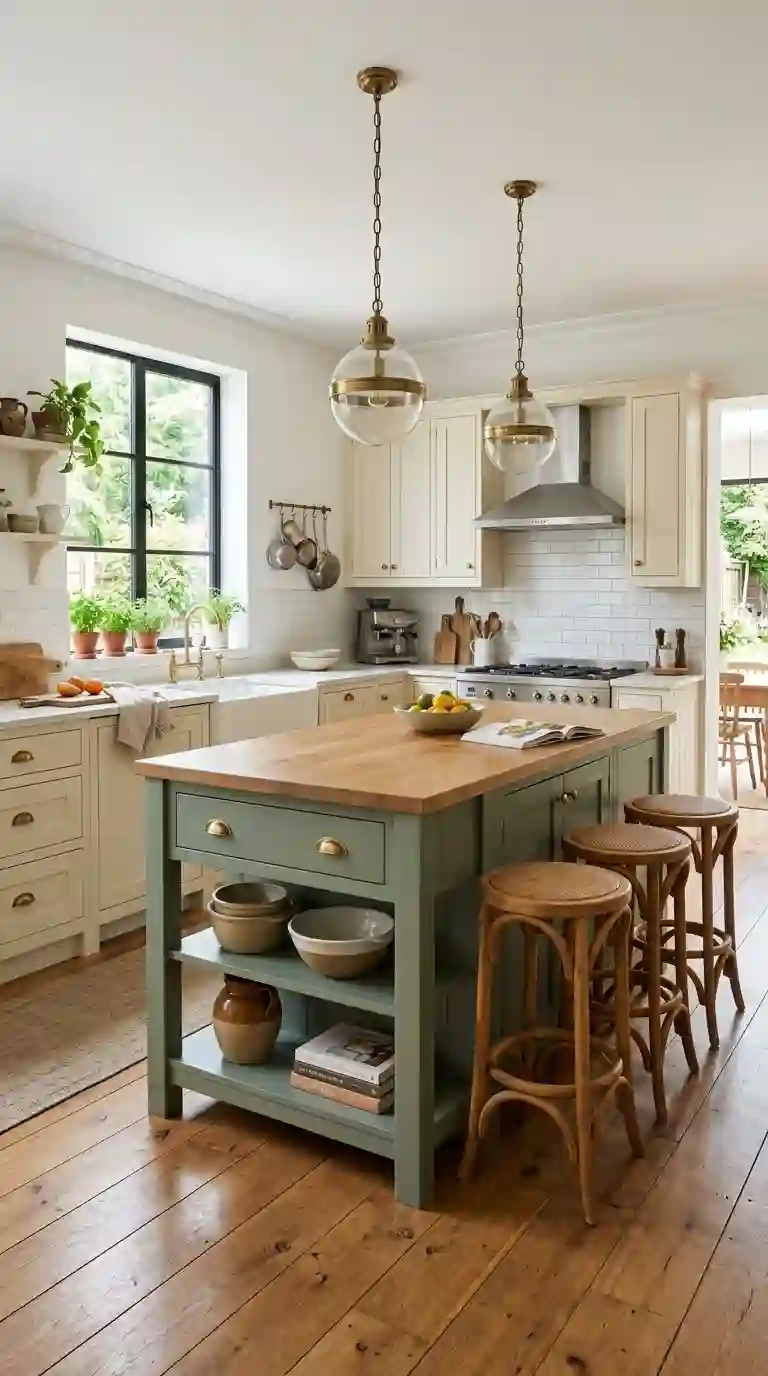
Worktops do most of the supporting work. Warm white quartz or marble keeps a green kitchen feeling light, and the veining picks up the green without matching it exactly, which is the point: a worktop that tries to match the cabinets usually looks like a mistake. Butcher block is the warmer alternative, and it suits olive and forest greens in particular, though it needs oiling every three to six months to stay watertight.
Splashbacks are where people most often overdo it. A white subway tile is the reliable choice, and it works with every green on this page. A green marble splashback is the dramatic choice, and it works only when the cabinets are a quieter shade, because two strong greens in one eyeline fight each other. If you want pattern, keep it to the splashback and keep the worktop plain.
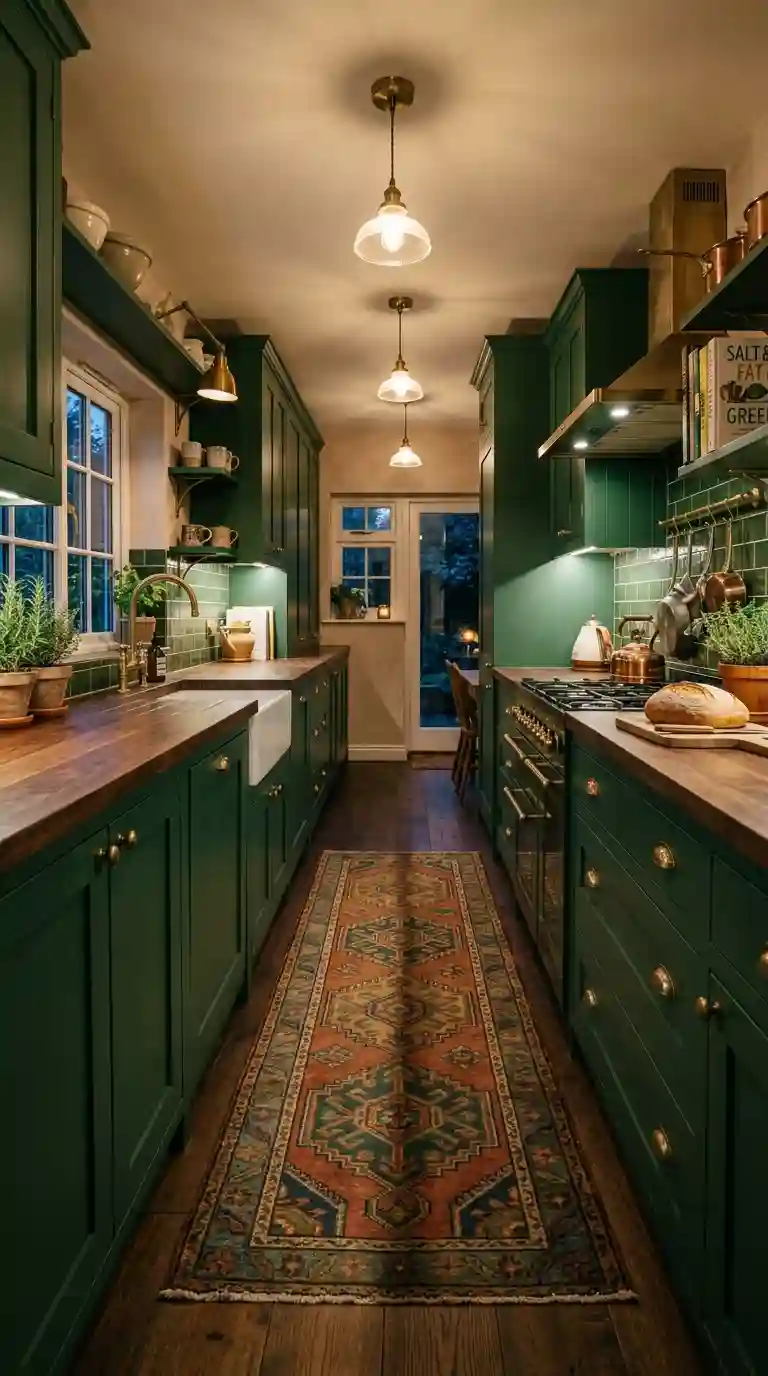
Also Read: 45 Bold Black And Copper Kitchen Ideas That Will Turn Your Kitchen Into A Timeless Masterpiece
Does brass hardware really work with green?
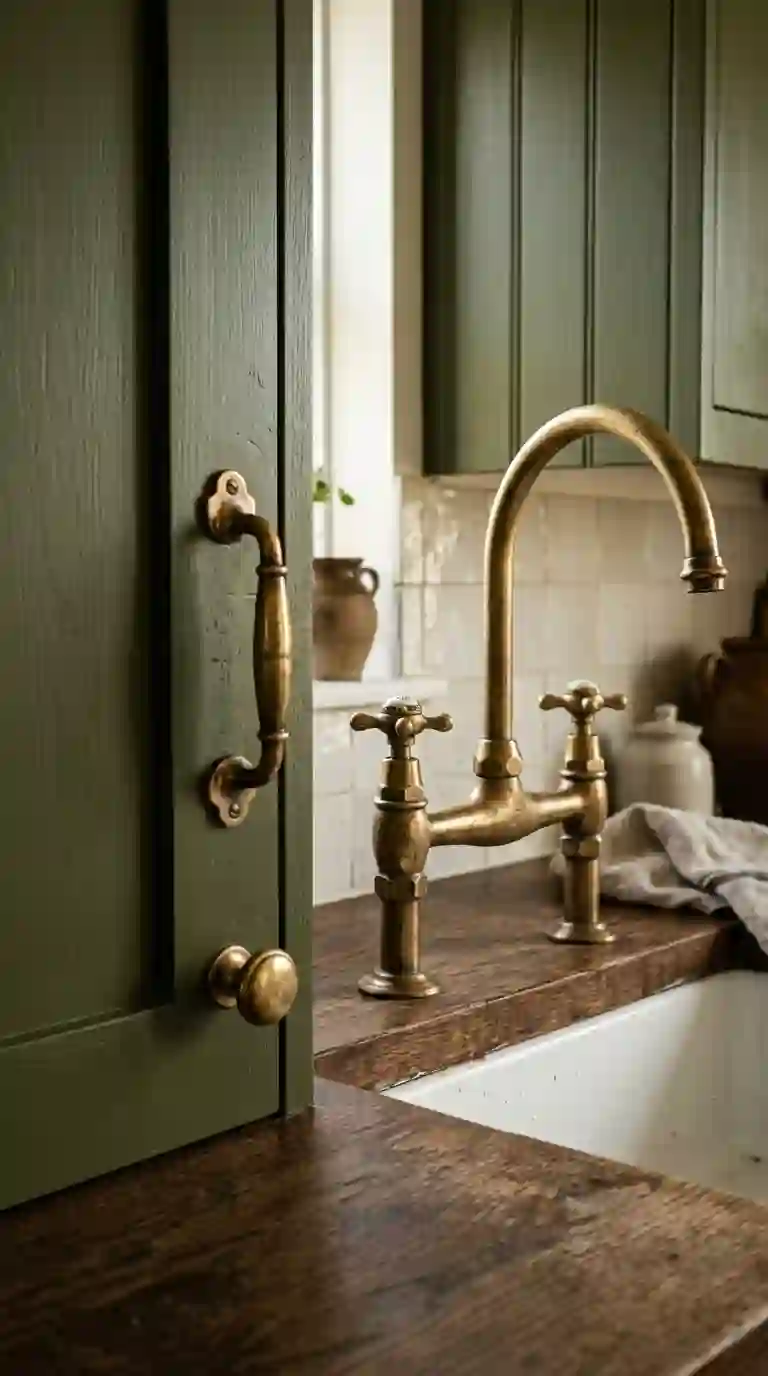
Yes, and the reason is simple: brass is warm, green is cool, and the contrast makes both look better. Unlacquered brass will darken and develop a patina over a year or two, which suits a traditional kitchen, while lacquered brass stays bright and suits a cleaner, more modern room. Either way, buy one handle first and live with it on a door for a week before ordering twenty.
Budget for it properly, because handles are the detail that quietly doubles in price. A decent brass pull costs between 6 and 15 pounds, and a kitchen with 15 doors and drawers needs 15 to 20 of them, so the total lands between 120 and 300 pounds before fitting. Black hardware is the cheaper alternative at 3 to 8 pounds a pull, and it works best with forest and emerald greens, where the contrast is part of the look.
Can a small kitchen carry green?
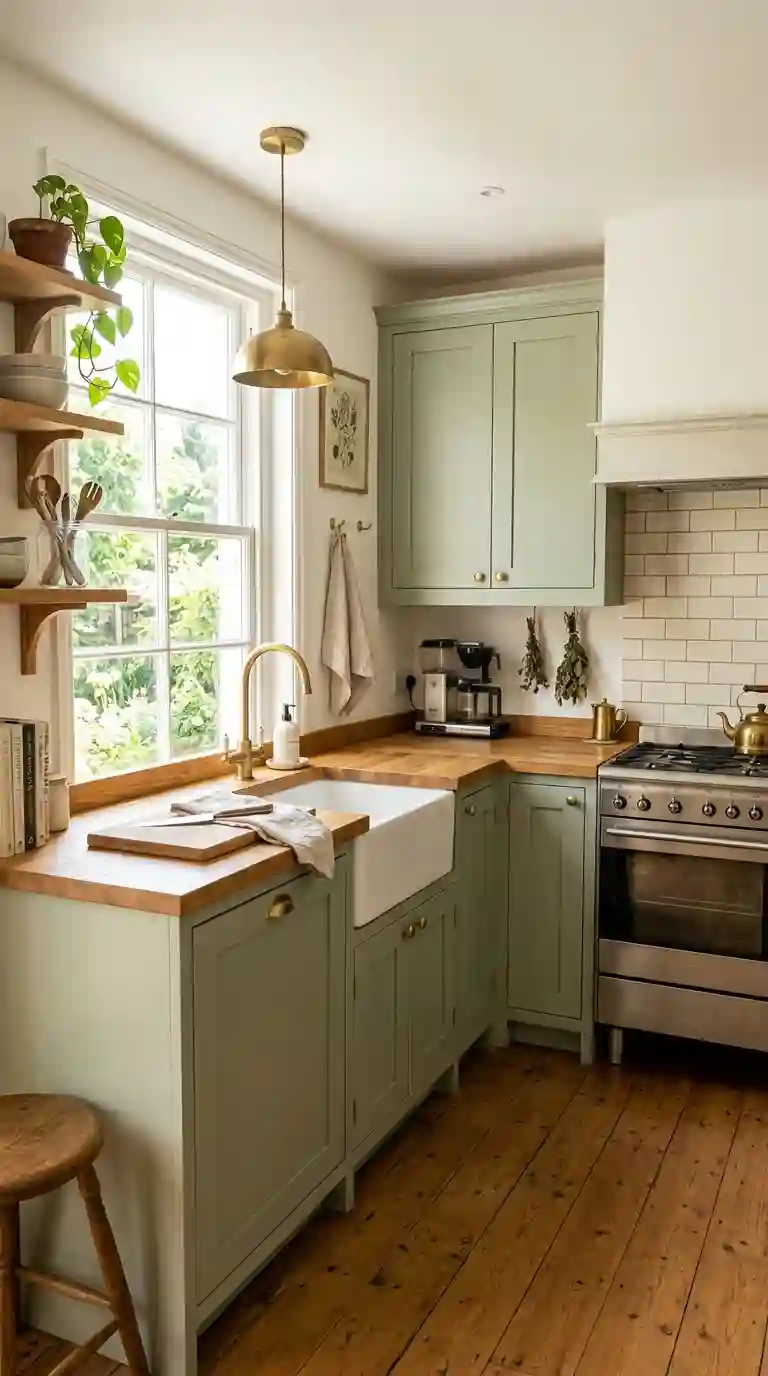
It can, but the rules change. In a kitchen under about 8 square metres, a dark green on every surface will close the room in, which is why the successful small green kitchens all follow the same pattern: a lighter green, such as sage or a pale olive, on the cabinets, a pale worktop, and at least one reflective surface, such as a gloss tile or a mirror splashback, to bounce the light around.
The photo below is a good example: a small kitchen with green cabinets that still feels open, because the upper cabinets are minimal, the worktop is pale, and the window is left unobstructed. The green is doing the decorating, so everything else is deliberately quiet. If your kitchen has only one small window, that rule matters even more: keep the uppers light or open, and put the green on the base units.
One practical number helps here. In a small kitchen, painting the cabinets yourself takes two full weekends including drying time, and you will need roughly 2.5 litres of cabinet paint for a 10-door kitchen, plus a litre of primer. That is a 60 to 90 pound materials job, which makes it one of the cheapest ways to test whether green suits your room.
Also Read: Kitchen Drawer Organization Ideas: The Ultimate Guide to Stylish Storage Solutions
How do you test a green before you commit?
Never choose from a paint chart or a phone screen. Buy sample pots, which cost about 5 to 8 pounds each, and paint large swatches, at least A3 size, on lining paper or spare boards. Tape them to the cabinet doors you plan to paint, not to the wall, and leave them up for a full 48 hours so you see the colour in morning light, evening light, and under your kitchen bulbs.
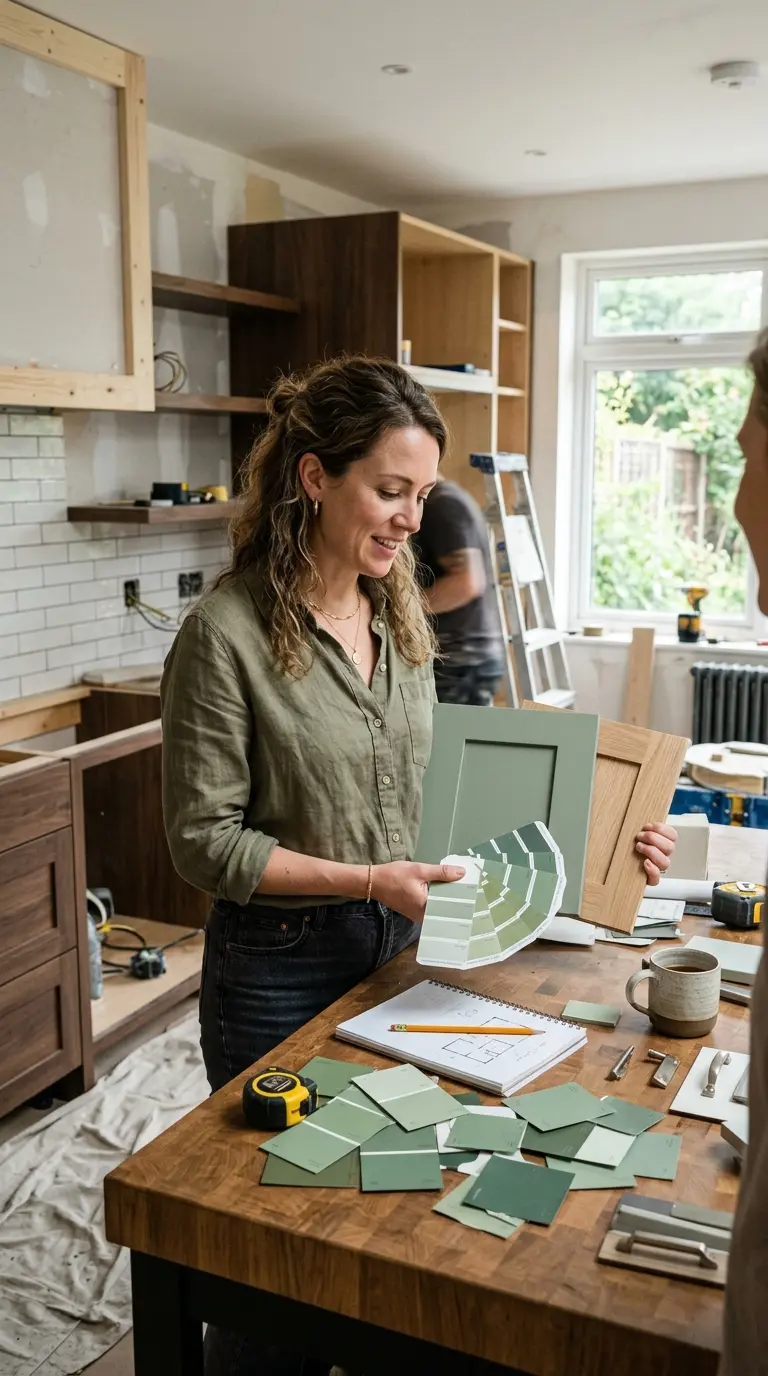
Judge each swatch against three checks:
- It still looks green, not grey, in the evening under artificial light.
- It works with your worktop and floor, not just with the white of the paint chart.
- You still like it on the second morning, when the excitement has worn off.
How do you keep a green kitchen feeling fresh?
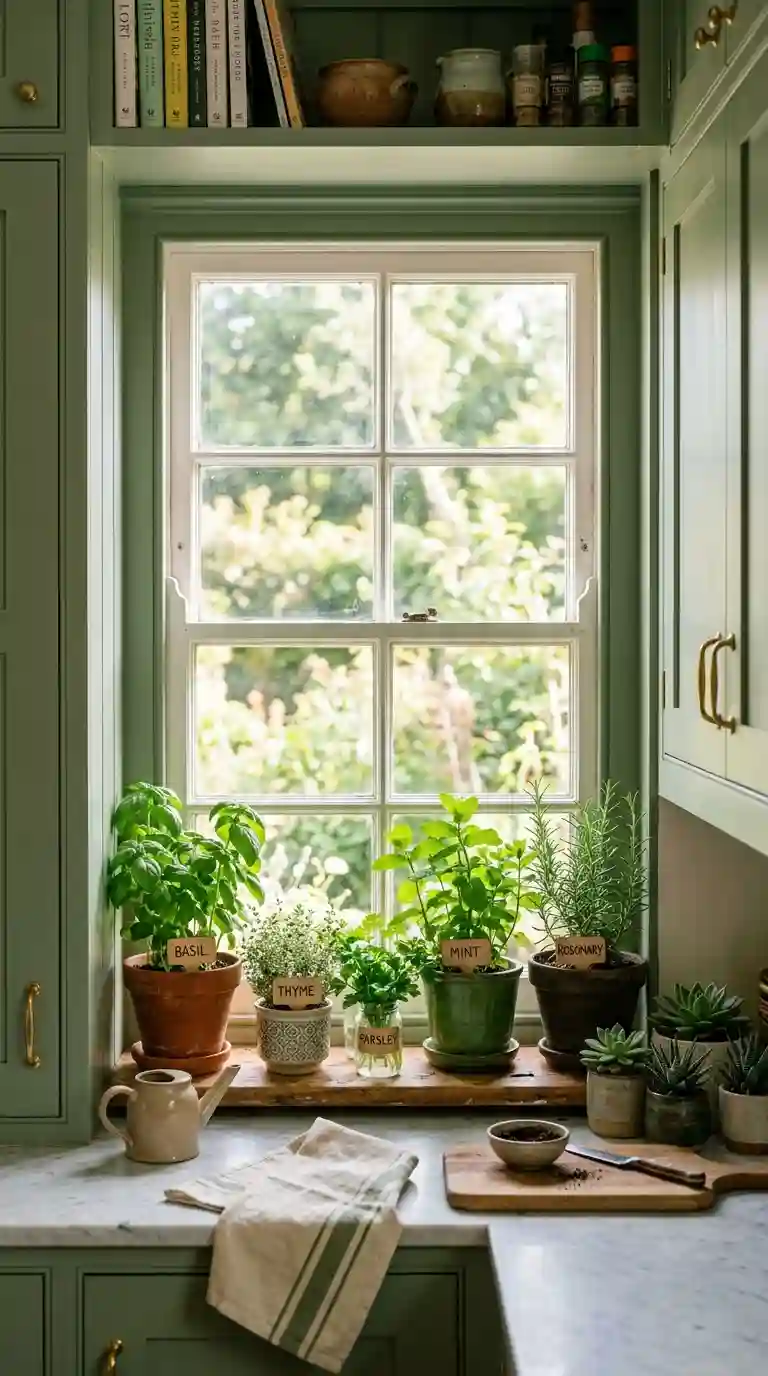
Green is a living colour, and a kitchen that never changes will eventually feel flat, however good the shade is. The cheapest refresh is also the most effective: real plants. The windowsill in the photo below shows the idea, with potted herbs doing double duty as decoration and as something you actually cook with. Basil, mint and rosemary all cope with a bright kitchen windowsill, and they cost a few pounds each.
Beyond plants, the maintenance is simple and specific. Wipe painted cabinets with a damp microfibre cloth and a drop of washing-up liquid, never an abrasive cleaner, which dulls the finish within a year. Keep a small pot of the original paint for touch-ups around handles, where wear shows first, and re-oil butcher block every three to six months. A green kitchen that is looked after keeps its colour; one that is not goes patchy at the edges first.
Frequently Asked Questions
What is the most popular green for kitchen cabinets?
Sage. It is the shade most buyers and designers reach for first, because it is soft enough to behave almost like a neutral in both traditional and modern kitchens.
Does green go with white in a kitchen?
Yes. White worktops, splashbacks and ceilings keep a green kitchen bright, and the contrast makes the green look intentional. Warm whites work better than brilliant white.
What countertop color works best with a green kitchen?
Warm white or cream marble and quartz are the most popular choices, with butcher block as the warmer alternative. Pick a worktop that complements the green rather than trying to match it.
Is olive green or sage green better for a kitchen?
It depends on your light. Olive is warmer and earthier, so it suits north-facing rooms and wood. Sage is softer and more versatile, and it suits bright rooms and modern kitchens.
What hardware works best with a green kitchen?
Brass is the most recommended choice, because its warmth contrasts with the green. Bronze suits traditional kitchens and nickel suits modern ones. Use the same metal for the tap.
Is a green kitchen a good choice for resale value?
A soft green such as sage is generally well received, because buyers see it as a design choice rather than a colour to repaint. Very bold greens are more personal, so keep it muted if you may sell soon.
So, is a green kitchen right for you?
If you want a kitchen with a personality and you are willing to test the shade properly, green is one of the most forgiving colours you can choose. Paint a large swatch, live with it for 48 hours, and if you still like it on the second morning, you have your answer.



2 Comments on “Green Kitchens: How to Choose a Shade You’ll Still Love in Five Years”