
A balcony railing is the one part of your outdoor space you touch every single day — and the part most people choose in five minutes at the tail end of a renovation. A standard 3-metre run costs £400 to £2,000 installed depending on material, and it will be there for 15 to 25 years, so this decision deserves an hour of thought. This guide covers the materials that last, the safety rules that actually matter, the styles that suit different homes, and the mistakes that end in rust, wobble or regret.
What should I decide first — material or style?
Material, always. Style is the visible 10%; material decides the other 90% — cost, lifespan, maintenance and whether the railing survives your climate. A beautiful wrought-iron design that rusts through in six years by the sea was the wrong choice, however pretty the scrollwork. Decide what the railing must do — last 20 years, need no painting, survive salt air — then choose the prettiest option within that material.
Budget follows material too. As a rough guide for a 3-metre run, installed: powder-coated aluminium £400–£800, timber £500–£900, steel £800–£1,500, glass £1,200–£2,000+, bespoke wrought iron £1,500 and up. Knowing your material narrows the field from hundreds of designs to a manageable dozen.
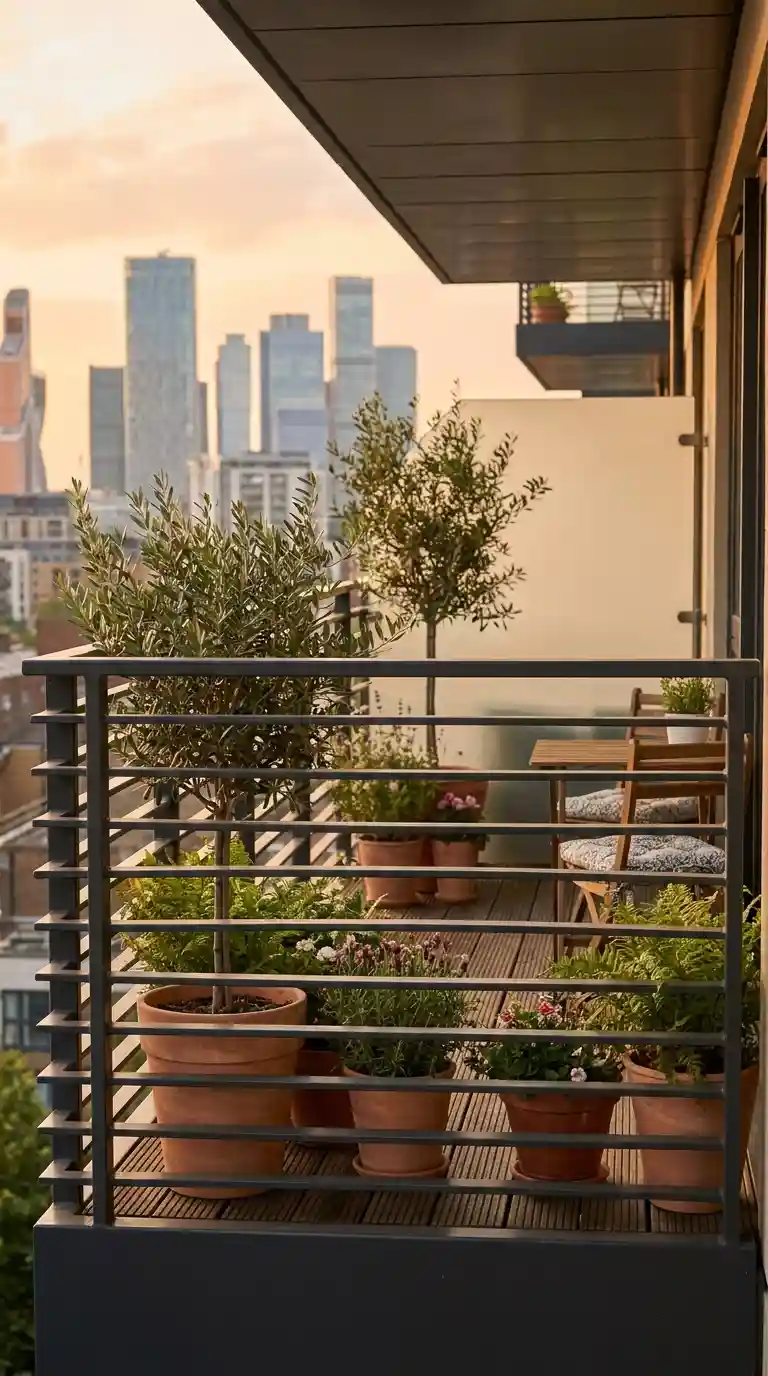
The balcony above shows the modern default done well: dark horizontal bars, terracotta pots, timber decking. Horizontal rails suit contemporary homes and preserve the view — but note they are climbable, which matters if you have small children. More on safety below.
Which material actually lasts?
Five materials cover nearly every balcony, and their lifespans differ dramatically. Powder-coated aluminium is the longevity champion for most people: 20–25 years, no rust, no painting, and it now comes in convincing heritage designs. Galvanised steel is stronger and cheaper but needs its coating intact — once scratched to bare metal, rust starts. Wrought iron is the most beautiful and the most demanding: repaint every 3–5 years or it deteriorates. Timber is warm and affordable but needs oiling or staining every 1–2 years. Glass (always tempered, usually 10–12mm) lasts indefinitely, but the fixings and seals need checking, and it shows every watermark.
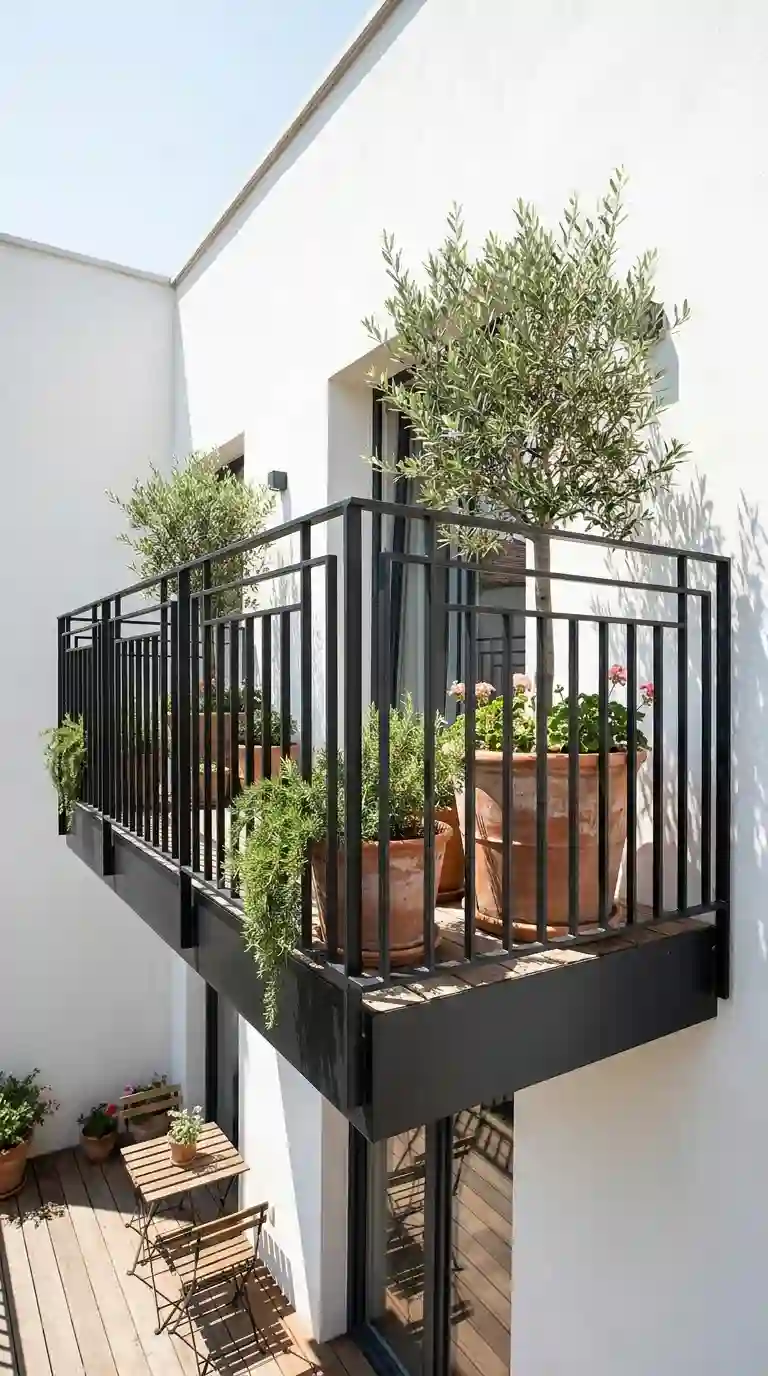
Climate decides more than taste. Within a few miles of the coast, salt air eats untreated steel and iron — aluminium or stainless fixings become non-negotiable. On the black-metal balcony above, the powder coating is doing all the protective work; one deep scratch left untreated becomes a rust spot within a season. If you live by the sea and love the look of iron, marine-grade powder-coated aluminium gives you most of the aesthetic with none of the corrosion.
How much should I budget?
For a typical 3-metre balcony front, installed: aluminium kit £400–£800, timber £500–£900, steel £800–£1,500, frameless glass £1,200–£2,000+, bespoke iron £1,500+. Labour is usually 30–50% of the total — a straightforward replacement on an existing balcony takes a day; a new installation with structural posts takes two to three. The single biggest cost driver is not material but complexity: curves, corners and custom colours each add 20–30%.
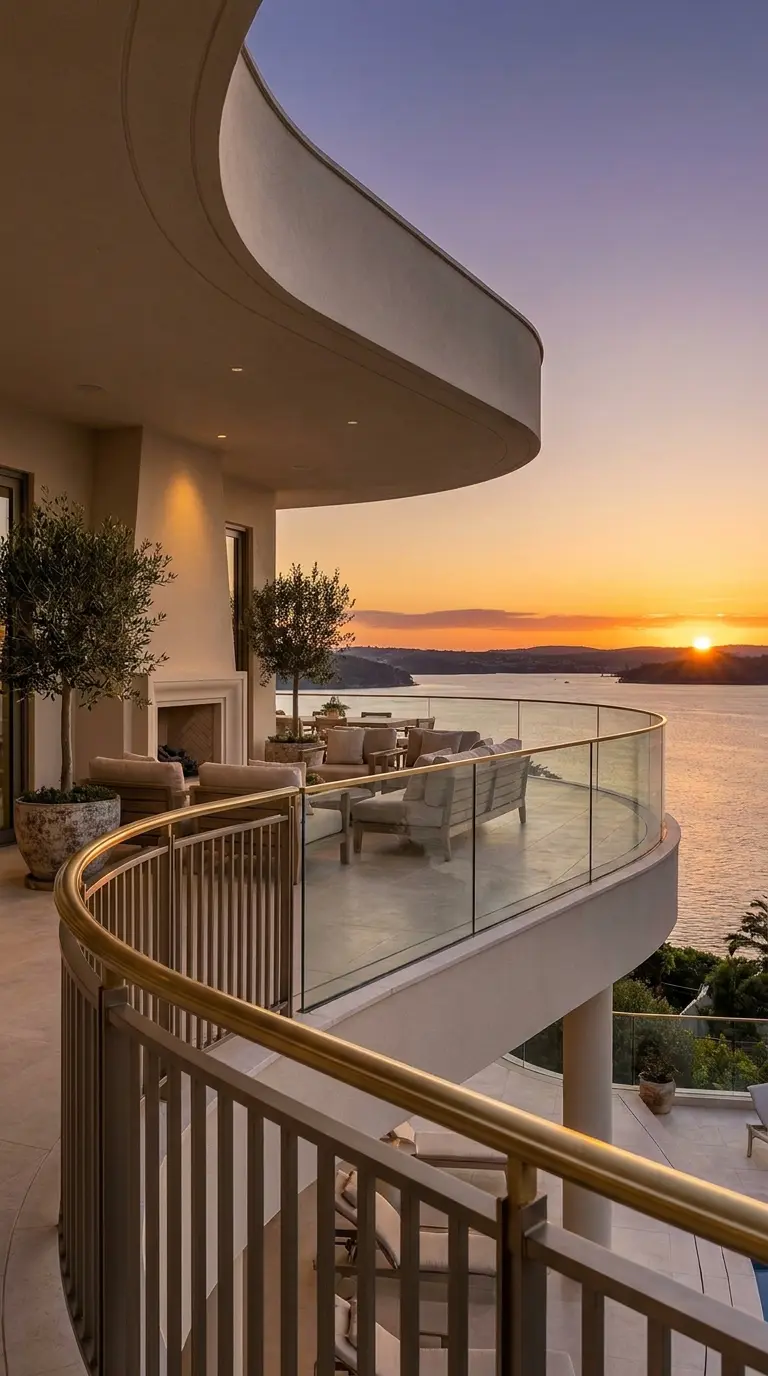
At the top end, the curved bronze-and-glass balcony above shows where the money goes: custom fabrication, mixed materials, a flawless finish. It is beautiful — and it likely cost five times the aluminium equivalent. The honest question is whether you will notice the difference daily. Most people get most of the pleasure from a well-chosen mid-range railing and spend the saving on the balcony itself: flooring, lighting, plants.
What do the safety rules require?
This is the non-negotiable section. In the UK, guarding must be at least 1100mm high on balconies above ground floor, and gaps must not allow a 100mm sphere to pass — the toddler-head test. In the US, most codes require 36 inches (915mm) minimum. Horizontal rails are legal in most places but discouraged where small children climb; many parents choose vertical bars for this reason alone.
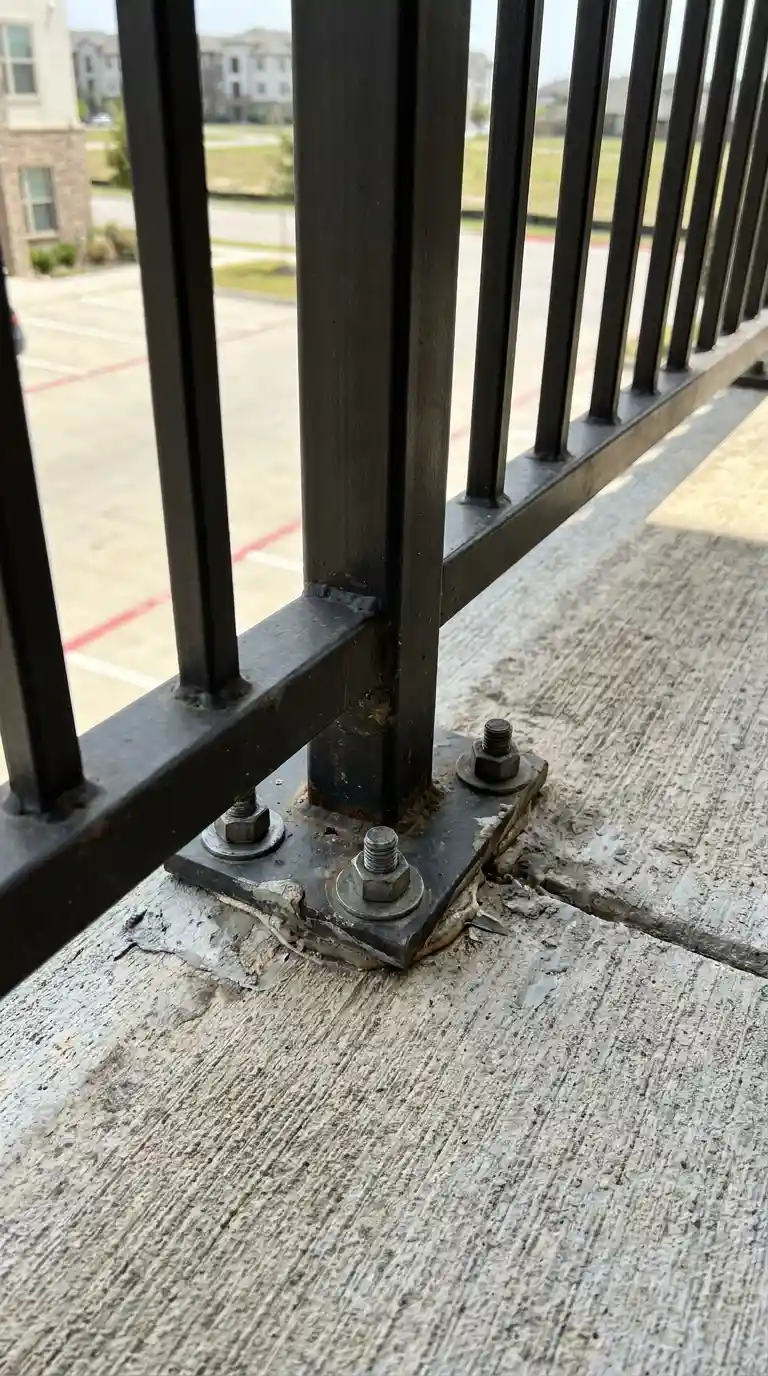
The close-up above shows what safety actually looks like: a base plate bolted through to the structural slab with proper anchors — not screwed into render, not glued, not held by the tiles. Pull-out strength matters more than appearance. Ask your installer for the fixing specification in writing, and never mount a railing to cladding, render or a timber fascia alone.
Two more rules that catch people out: the railing must withstand the required horizontal load (0.74 kN per metre for domestic UK balustrades), and glass must be tempered or laminated safety glass, never standard float. If your installer cannot quote these numbers, find another installer.
Which style suits my home?
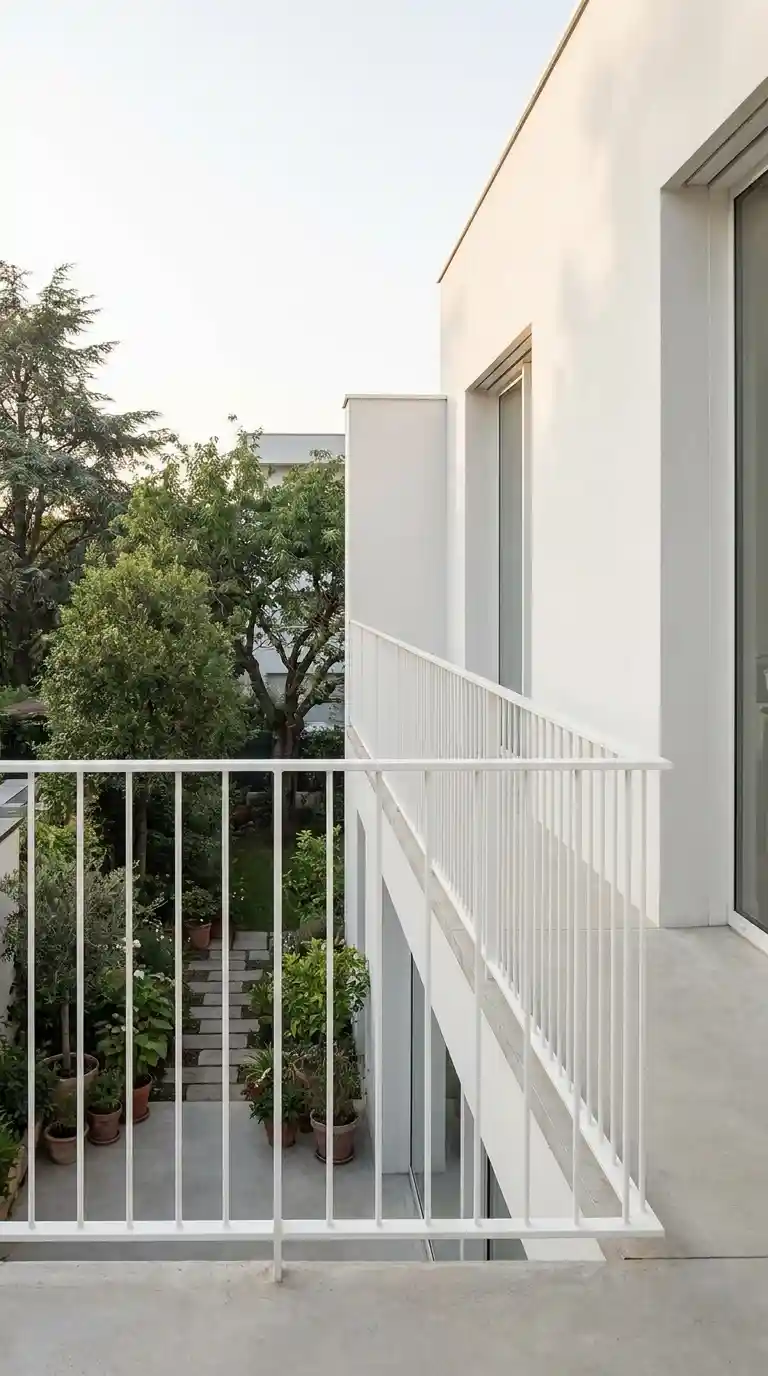
Match the railing to the building, not to a magazine. White vertical bars suit modern and coastal homes; black metal suits almost everything; wrought-iron scrollwork belongs on period properties; frameless glass belongs on contemporary ones. The test: stand across the street and look at the whole facade. The railing should look inevitable, not applied.
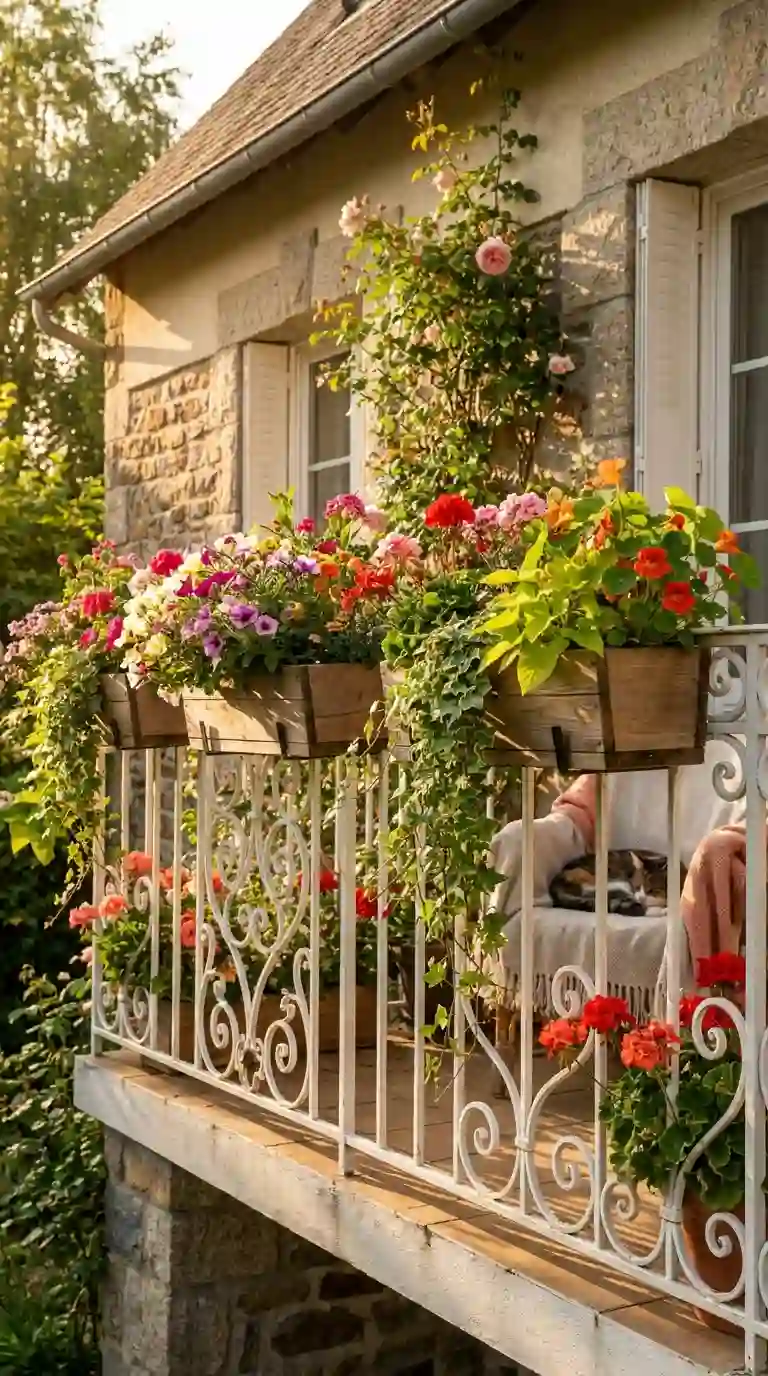
The stone cottage above gets it exactly right: white wrought iron, wooden planter boxes, climbing roses. An aluminium rail would look cheap here; glass would look absurd. Conversely, that same wrought iron would look like costume on a new-build. When in doubt, copy what the best-kept houses on your street have done — they have already solved this problem. If your opening is a tall window rather than a walk-out balcony, the rules change entirely — see our French balconies guide for railings across Juliet openings.
What about a small balcony?
Small balconies need railings that disappear. Glass and cable preserve the view and the light; thin vertical bars in a light colour are the next best thing. Avoid anything solid or heavy — a chunky timber rail on a 2m × 1m balcony eats a third of the perceived space. A slim top rail that doubles as a shelf for drinks is the classic small-balcony trick, and it costs nothing extra.
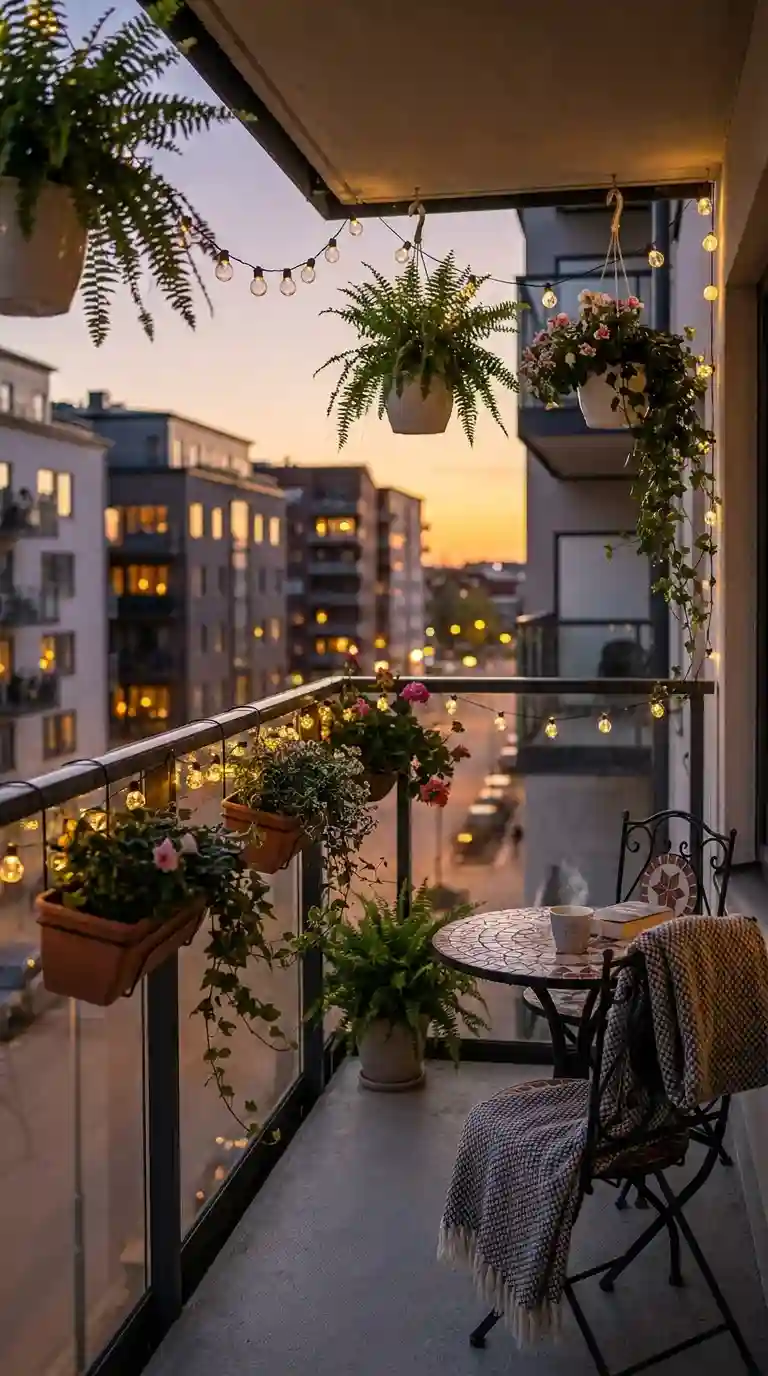
The compact balcony above is a masterclass: a simple metal railing, hanging planters using vertical space, a bistro set, string lights. Nothing about the railing competes for attention, which is precisely the point. For more on making small outdoor spaces work, our small patio decor ideas apply the same principles at ground level.
Should I install it myself or hire someone?
Ground-floor kit railings — aluminium or timber, bolted to an existing sound structure — are a realistic DIY job for a competent homeowner: a day’s work, basic tools, £200–£400 saved. Anything above ground floor, anything involving glass, cable tensioning or welding, and anything structural should be professional. Proper anchoring, correct torque and an installer who carries insurance are worth paying for.
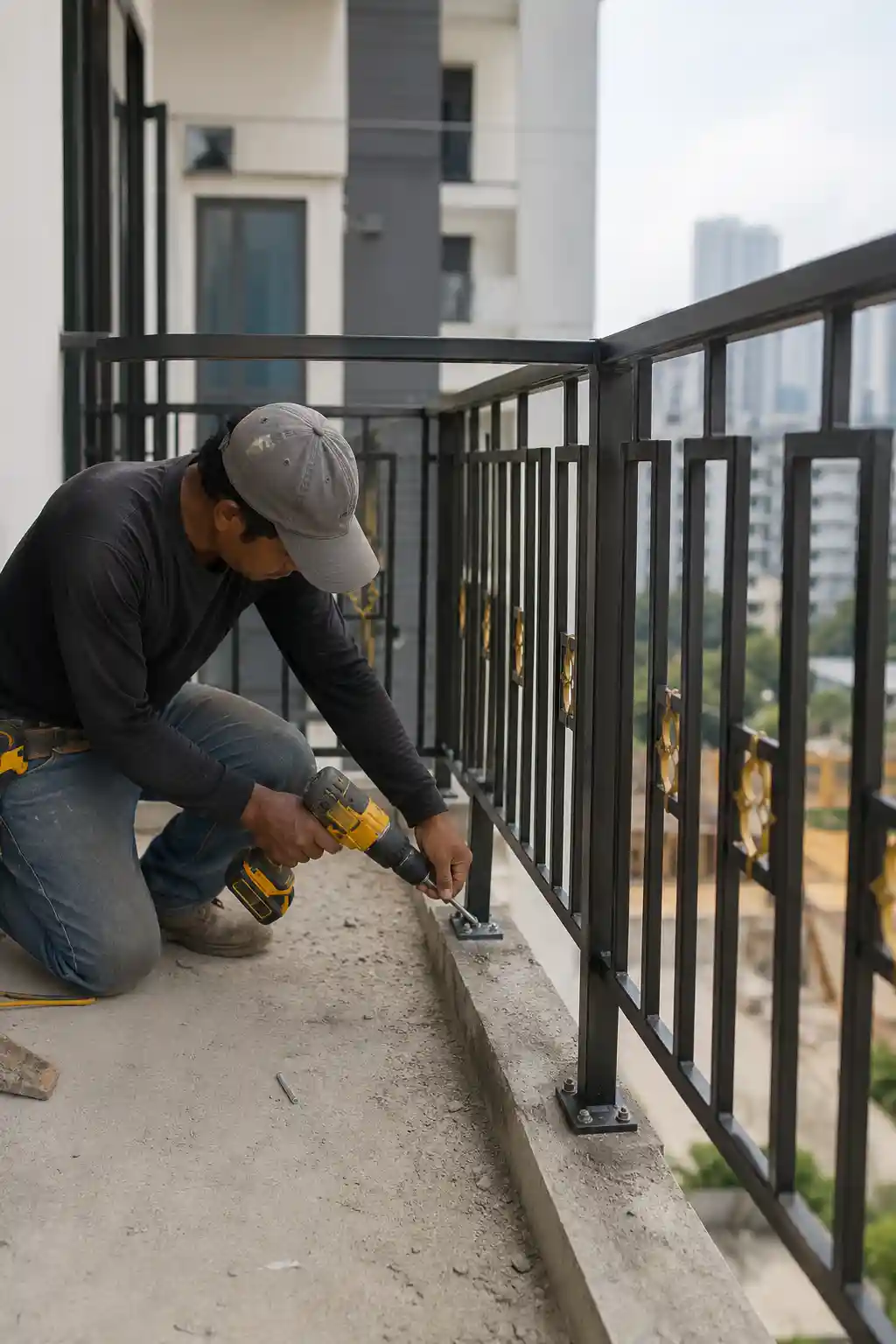
Get three written quotes, and make sure each separates materials, labour and fixings. Ask to see previous balcony work (not just fences), confirm they will handle any building-control notification, and get the fixing specification in writing. A railing is only as safe as its anchors — the cheapest quote that skimps on fixings is the most expensive mistake.
How do I keep it looking good?
Maintenance is material-specific and non-optional. Powder-coated aluminium and glass: wash twice a year with soapy water and check fixings annually. Wrought iron and steel: inspect every spring for chips and rust spots and touch up immediately — a £10 touch-up pen now prevents a £500 respray later. Timber: oil or stain every 12–24 months depending on exposure. In all cases, keep post bases clear of soil and debris, where moisture collects and corrosion starts.
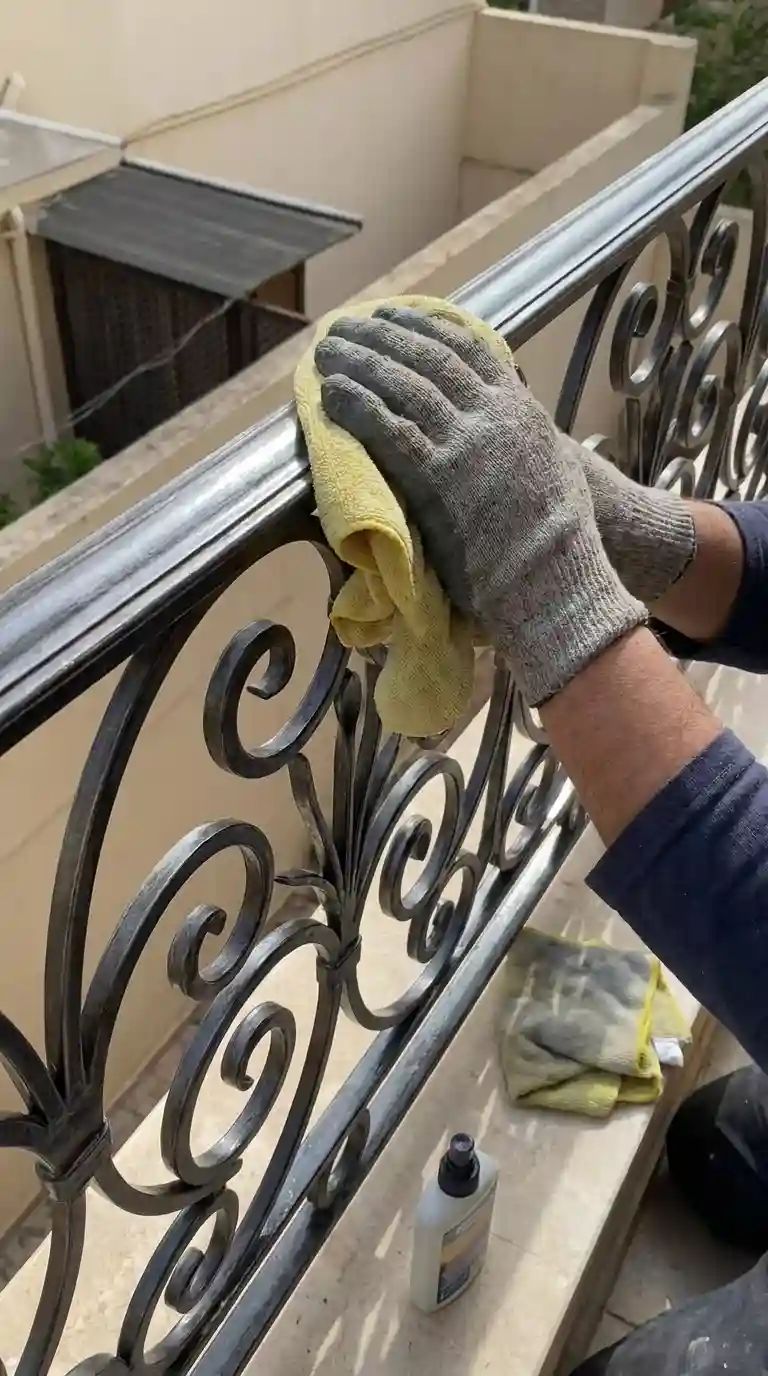
Ten minutes with a cloth, once a season, is most of what a metal railing asks — as the hands above demonstrate. The expensive maintenance is the kind you defer: the rust spot ignored for three years becomes a structural repair. Put a recurring reminder in your calendar for the first weekend of spring. Planters soften any railing beautifully, but hang them on the inside or use freestanding pots; boxes bolted to the outside face load the rail in ways it was not designed for. Our outdoor plants for patios list works for balcony containers too.
Your balcony railing questions, answered
How tall should a balcony railing be?
At least 1100mm in the UK for upper floors; 36 inches (915mm) minimum in most US residential codes. Taller is fine; shorter is not.
What is the cheapest railing that still looks good?
Powder-coated aluminium kits (£400–£800 for 3 metres installed) or pressure-treated timber. Both look smart when the design is kept simple.
Are glass railings safe?
Yes, when properly installed with tempered or laminated safety glass at the correct thickness. They are not fragile — but the installation must be professional.
Can I put planters on my railing?
On the inside, yes, with rail-hung or clamp-on planters. Avoid heavy boxes on the outside face, and never drill into a structural rail without checking first.
How do I stop it rusting?
Annual inspection, immediate touch-up of chips, and keeping post bases clear of soil and standing water. By the sea, choose aluminium or stainless from the start.
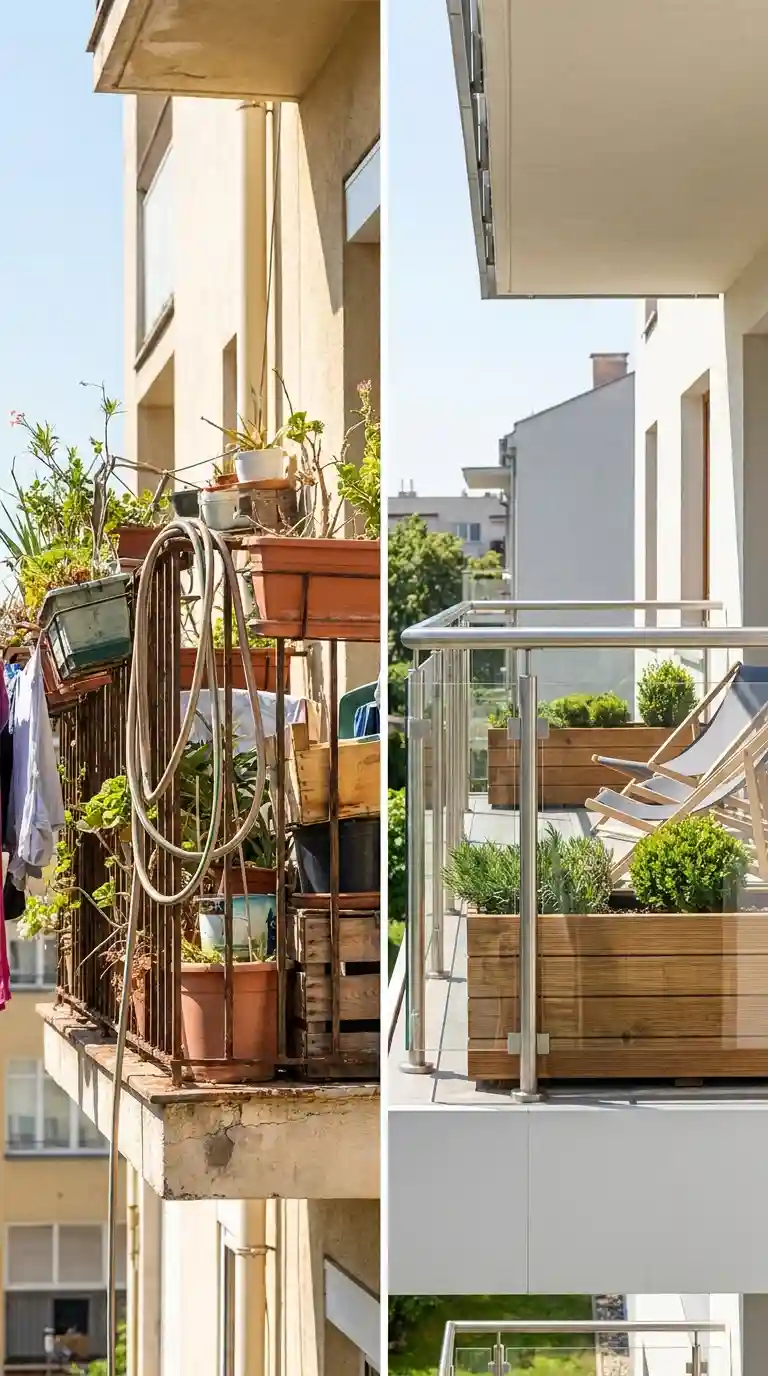
The split image above tells the whole story: the neglected, rusted railing versus the well-kept modern one. The difference is not money — it is material choice, proper installation and an hour of maintenance a year. Get those three right and your railing will outlast your sofa, your flooring and probably your boiler. And when the festive season arrives, a well-kept rail is the perfect frame for lights — see our balcony Christmas decor ideas for inspiration.



5 Comments on “Balcony Railings: The Style, Material and Safety Choices That Actually Matter”