
I still remember the first time I tried to grow anything on a wall. I had a tiny rented balcony, barely enough room to stand and stretch my arms, and every single pot I bought seemed to eat up floor space I simply did not have. One evening, half frustrated and half curious, I nailed an old wooden pallet to the wall and stuck a few succulents into the gaps. That clumsy little project changed the way I thought about gardening forever. It taught me that a garden does not need land. It needs a little imagination and, honestly, a wall.
That is exactly what vertical garden ideas are all about. Instead of spreading plants across the ground, you send them upward, using walls, fences, railings, shelves, and even old furniture to create something green, alive, and genuinely beautiful. Whether you live in a cramped city apartment or a spacious house with a boring blank wall, vertical garden ideas can turn any dull corner into a lush little escape.
In this guide, I am going to walk you through everything I have learned over the years about vertical gardening, from the easiest beginner projects to more ambitious living wall setups. I will cover the best plants, the smartest materials, the mistakes you should avoid, and dozens of vertical garden ideas you can actually pull off without a huge budget or a green thumb passed down from your grandmother. Let us get into it.
Also Read : 45 Beautiful Outdoor Plants For Patio Spaces That Instantly Feel Like A Garden Escape
What Is A Vertical Garden And Why Everyone Is Talking About It
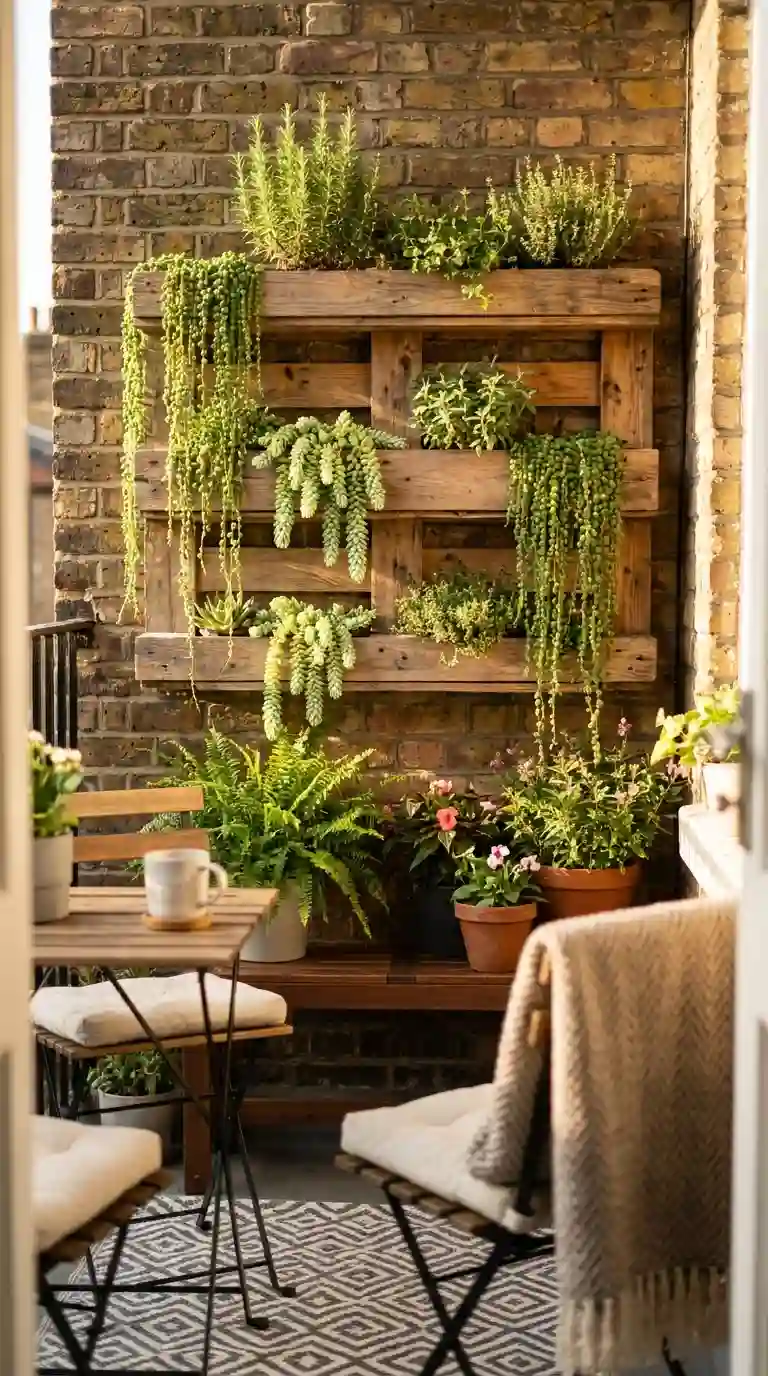
A vertical garden is simply a way of growing plants upward on a vertical surface rather than spreading them across the ground. Think of it as gardening that climbs instead of sprawls. It can be as simple as a few hanging pots on a fence or as elaborate as a full living wall covered in ferns and moss.
The idea itself is not new. People have been growing climbing vines and espaliered fruit trees against walls for centuries. What has changed is how creative and accessible vertical garden ideas have become. With social media flooded with pictures of green walls in cafes, offices, and homes, more people are realizing that they do not need a backyard to enjoy fresh herbs, colorful flowers, or a calming patch of greenery.
What makes vertical garden ideas so appealing is the sheer flexibility. You can build one indoors or outdoors, in full sun or deep shade, using expensive modular panels or things you already have lying around your house. There is no single right way to do it, which is honestly what makes this hobby so much fun to experiment with.
Why Vertical Garden Ideas Are Taking Over Modern Homes
I think the popularity of vertical garden ideas comes down to a simple truth. People want more greenery in their lives, but they do not have more space to give it. Cities keep getting denser, apartments keep getting smaller, and yet the craving for something living and natural has not gone away at all.
They Solve The Space Problem
This is the most obvious reason. A traditional garden bed can eat up an entire yard, but a vertical setup uses the space that most people completely ignore, the walls. Suddenly a narrow side alley, a blank fence, or an empty stretch above your kitchen counter becomes usable growing space.
They Look Genuinely Impressive
There is something about a wall covered in plants that just stops people in their tracks. I have had friends walk into my apartment and immediately ask about the green wall behind my dining table before they even say hello. Vertical garden ideas have a visual impact that a few scattered pots on the floor simply cannot match.
They Improve The Air Around You
Plants naturally filter the air, and having a dense cluster of them close to where you sit or sleep can genuinely make a room feel fresher. I am not going to pretend a small indoor vertical garden replaces an air purifier, but the difference in how a room feels is noticeable, especially with plants like pothos, ferns, and peace lilies packed close together.
They Are Oddly Good For Your Mood
I did not expect this part when I started, but tending to a vertical garden became a strange little form of therapy for me. Watering the plants in the morning, checking which leaves need trimming, noticing new growth, it all became a quiet ritual that helped me slow down before a busy day.
Things To Consider Before You Start Your Vertical Garden
Before you run out and start drilling holes into your wall, it helps to think through a few practical details. I learned most of these the hard way, so hopefully you can skip a few of my mistakes.
How Much Sunlight Does The Spot Actually Get
Walk past your intended spot at different times of day and actually watch how the light moves. A wall that looks bright at noon might be in total shade by three in the afternoon. Most flowering plants and vegetables want at least four to six hours of direct sun, while ferns, pothos, and other shade lovers are happy with much less.
What Is The Wall Or Structure Made Of
Brick, wood, and concrete can all handle a mounted planter, but you need different fixings for each one. If you are renting, avoid drilling altogether and lean toward freestanding shelving units, tension rod systems, or leaning ladder planters that do not damage the wall.
How Will Water Drain Away
This is the one people forget the most. Water always finds its way down, and if your vertical garden is mounted against a wall without proper drainage, you will end up with stains, mold, or a soggy mess on the floor. Always plan for a drip tray, a gap for airflow, or a drainage channel before you start planting.
How Much Weight Can The Surface Hold
Wet soil is heavy, heavier than most people expect. A single medium sized pallet garden fully soaked can weigh well over one hundred pounds. Make sure whatever you are mounting your vertical garden on can actually support that weight over time, not just on the day you install it.
Also Read : 47 Patio Wall Decor Ideas That Will Instantly Transform Your Boring Backyard Into a Stunning Outdoor Retreat
Best Vertical Garden Ideas For Small Balconies
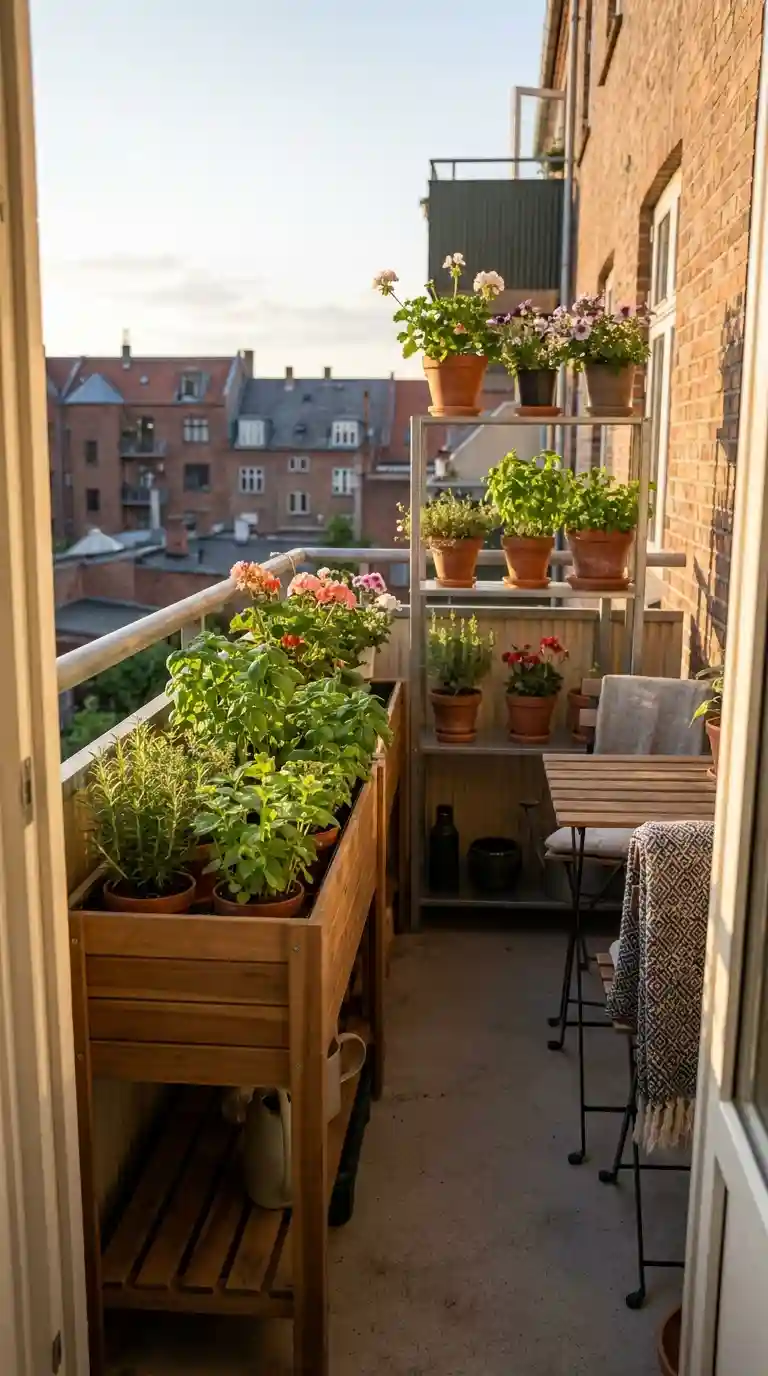
Balconies are where vertical garden ideas truly shine. I have lived in three different apartments now, and every single one had a balcony too small to fit a table and two chairs comfortably, let alone a garden. Vertical growing changed all of that.
Railing Planters
Hanging planters that clip directly onto a balcony railing are one of the easiest entry points into vertical gardening. They take up zero floor space and can hold everything from petunias to cherry tomatoes. Just make sure they are rated for outdoor use and secured tightly, especially if you live somewhere windy.
Ladder Shelves
An old wooden ladder leaned against the wall instantly becomes a multi tier plant stand. Each rung holds a pot, and the whole thing looks intentional and rustic without costing much at all. This is one of my favorite vertical garden ideas because it requires zero tools and can be moved around whenever you want to rearrange.
Trellis Panels
A simple trellis attached to the balcony wall gives climbing plants like jasmine, morning glory, or even cucumbers something to grow up instead of out. Within a season, a bare trellis can turn into a full curtain of green that also adds privacy from neighbors.
Stacked Crates
Wooden crates stacked in a pyramid shape, each one holding a different plant, create a rustic tiered look that costs almost nothing if you already have crates lying around. Secure them together so they do not shift, and you have got yourself a charming little vertical garden corner.
Creative Vertical Garden Ideas Using Recycled Materials
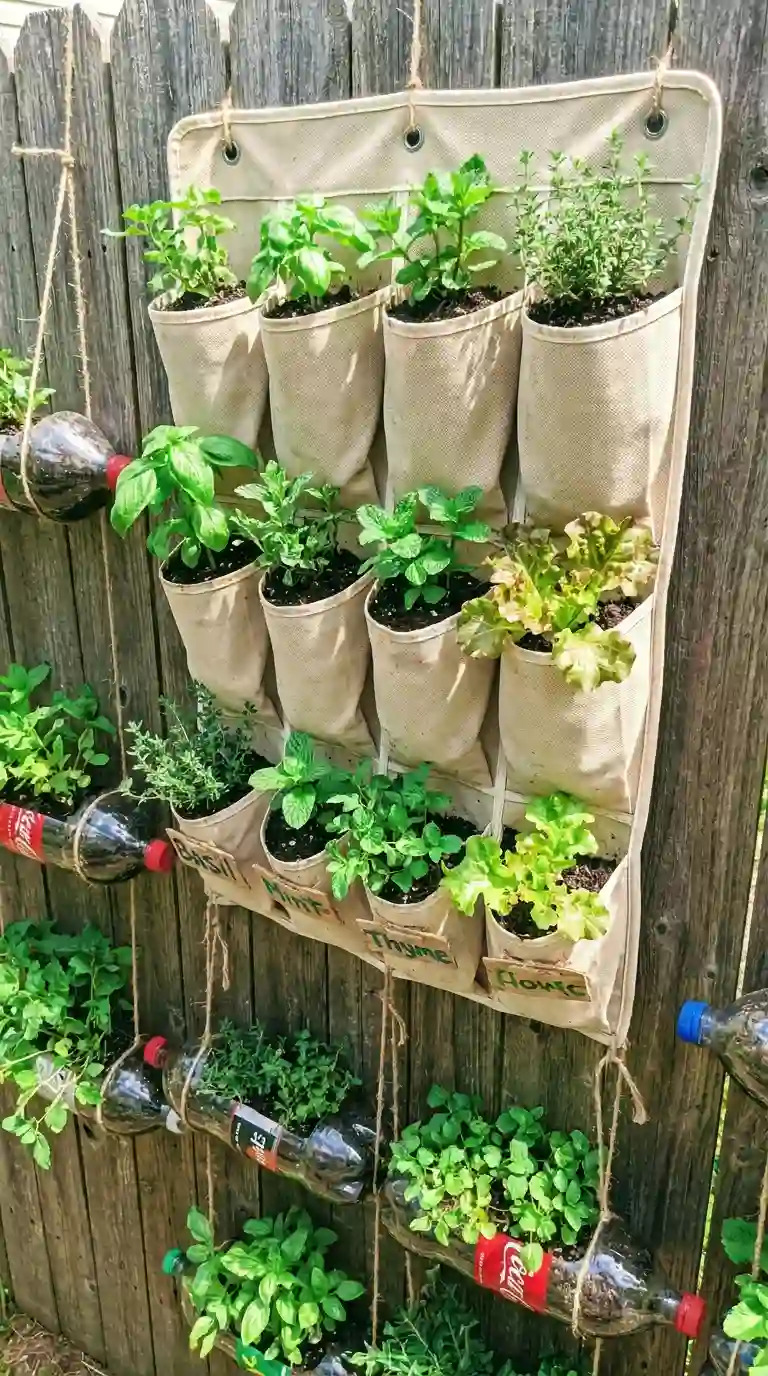
Some of the best vertical garden ideas I have ever seen did not come from a garden store at all. They came from someone looking at trash and seeing potential instead.
Pallet Vertical Garden
Wooden pallets are probably the single most popular material for DIY vertical gardens, and for good reason. The wooden slats already create natural pockets that soil and small plants fit into perfectly. Line the back and bottom with landscape fabric to hold the soil in, let it sit flat for a week or two so roots establish, then stand it upright against a wall.
Plastic Bottle Vertical Garden
Cut the sides off plastic bottles, drill a few drainage holes in the bottom, and string them together with rope or wire to hang from a fence or balcony rail. This idea costs almost nothing and is a fantastic way to grow small herbs like mint, basil, or thyme while keeping plastic out of the landfill for a little longer.
Old Shoe Organizer Vertical Garden
A hanging fabric shoe organizer with individual pockets makes one of the fastest vertical garden ideas to set up. Fill each pocket with soil, tuck in a small plant or seedling, and hang the entire thing on a fence, door, or wall hook. This works particularly well for lettuce, spinach, and strawberries.
Gutter Garden
Old rain gutters, cut into sections and mounted horizontally along a wall in a staggered pattern, make surprisingly effective planters. They are narrow, lightweight, and drain naturally through their existing shape, which makes them ideal for shallow rooted plants like lettuce and herbs.
Tin Can Wall Garden
Save your empty tin cans, remove the labels, punch a couple of drainage holes, and mount them in a grid pattern on a piece of wood using wire or small brackets. Paint them in different colors for a playful, cheerful look that costs almost nothing beyond a bit of time.
Indoor Vertical Garden Ideas For Apartments
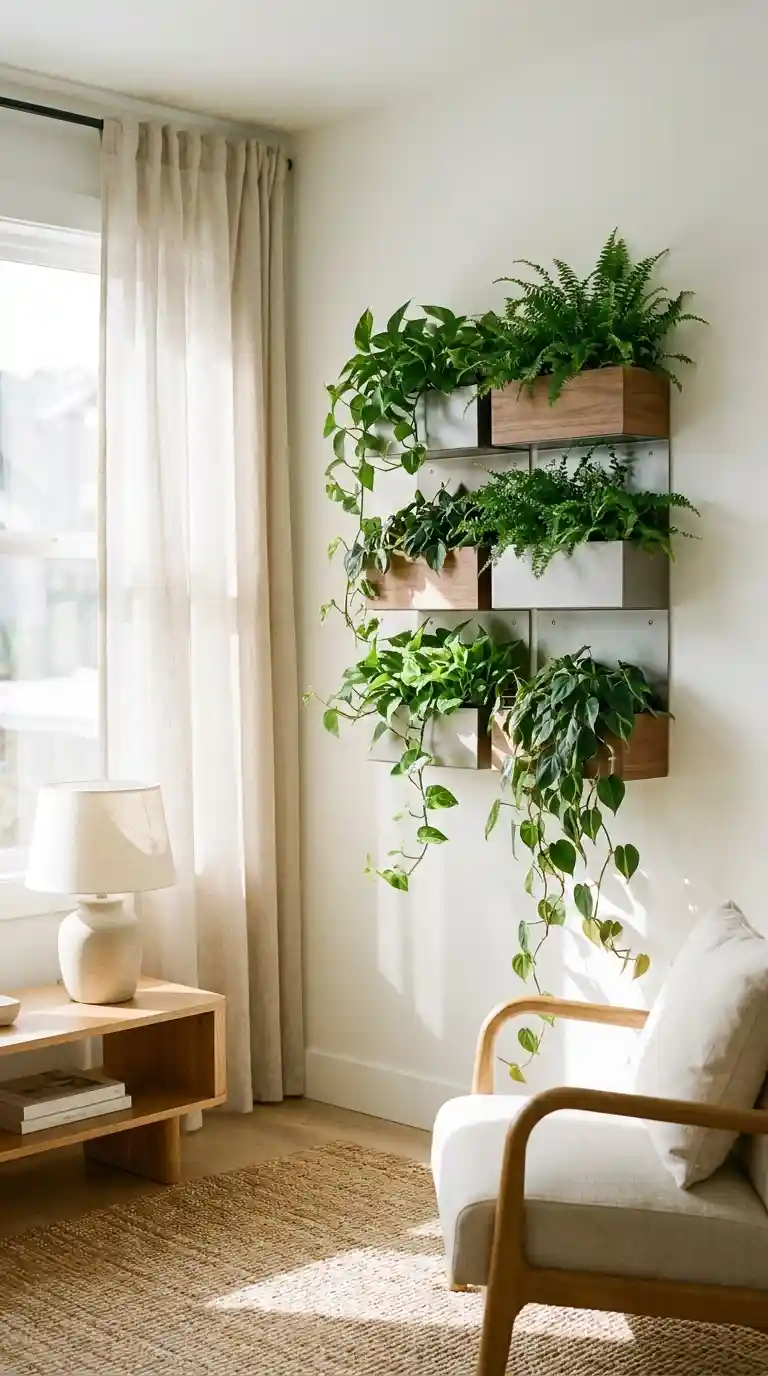
Not everyone has a balcony or yard, and that is perfectly fine. Some of the coziest vertical garden ideas I have come across were built entirely indoors, tucked into corners that would otherwise sit empty.
Wall Mounted Planter Boxes
Simple wooden or metal boxes mounted directly onto an interior wall can hold a surprising number of plants. Group them in a grid for a structured look, or stagger them at different heights for something more relaxed and organic. Pothos, philodendron, and spider plants are forgiving choices that thrive indoors with minimal fuss.
Floating Shelves With Trailing Plants
A row of floating shelves at different heights, each holding a trailing plant like string of pearls or heartleaf philodendron, creates a cascading green effect down a wall. This is one of the simplest vertical garden ideas to execute because it uses furniture most people already own or can buy cheaply.
Macrame Hanging Gardens
Macrame plant hangers have made a huge comeback, and they are perfect for vertical growing in tight indoor spaces. Hang several at staggered heights near a bright window, and you instantly get depth and texture without using an inch of floor space.
Room Divider Vertical Garden
A tall, freestanding shelving unit packed with potted plants can double as a room divider in an open plan apartment. It adds privacy, softens the look of a room, and gives you a dense, jungle like vertical garden without ever touching a wall or a drill.
Also Read : Balcony Railing Design Ideas That Will Completely Transform Your Outdoor Space
Vertical Vegetable Garden Ideas For Fresh Homegrown Food
I was genuinely surprised the first time I realized how many vegetables can be grown vertically. If you have ever wanted fresh produce but assumed you needed a big backyard plot, vertical vegetable gardening might completely change your mind.
Tower Gardening
Vertical tower planters, whether store bought or homemade from stacked buckets with holes cut into the sides, allow you to grow a surprising number of plants in a tiny footprint. Strawberries, lettuce, and herbs do particularly well in these towers because their roots are shallow.
Trellis Grown Vegetables
Cucumbers, pole beans, peas, and even small melon varieties can all be trained to climb a trellis instead of sprawling across the ground. Not only does this save space, it also improves airflow around the leaves, which usually means fewer fungal problems and healthier plants overall.
Tomato Cages And Stakes
Tomatoes practically beg to be grown vertically. A simple cage or stake keeps the vines upright, off the soil, and easier to harvest. Indeterminate varieties in particular can grow surprisingly tall when given the right support.
Hanging Upside Down Planters
Hanging planters designed for growing tomatoes or peppers upside down are a fun, space saving option for a sunny balcony. The fruit hangs below the container while the foliage grows upward toward the light, and watering from the top naturally drains through the roots.
Vertical Herb Garden Ideas For Your Kitchen
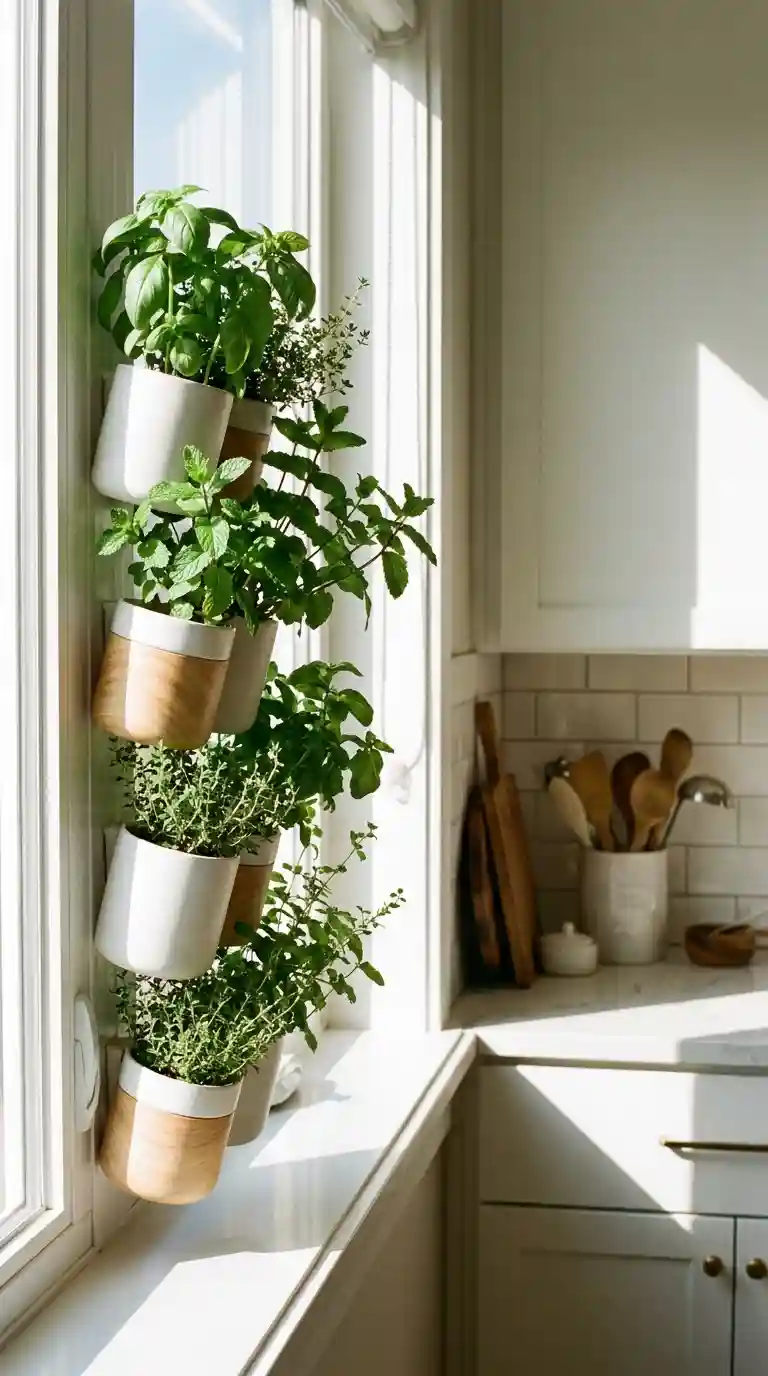
If you cook often, a vertical herb garden near your kitchen window might be the single most useful vertical garden idea on this entire list. Fresh basil, cilantro, and rosemary within arm’s reach genuinely changes how you cook.
Wall Mounted Herb Pots
Small terracotta or metal pots mounted in a row along a kitchen wall or window frame keep herbs organized and easy to snip whenever you are cooking. Group herbs with similar water needs together so you do not accidentally drown your rosemary while trying to keep your basil happy.
Magnetic Herb Planters
Small magnetic planters that stick directly to a refrigerator or metal backsplash are a clever way to grow herbs without drilling a single hole. They are compact, easy to move, and surprisingly effective for shallow rooted herbs like chives and parsley.
Test Tube Herb Wall
Glass test tubes mounted on a wooden board in a diagonal pattern, each holding a cutting rooted in water, create a strikingly modern look. It works especially well for mint and basil cuttings, which root easily in plain water without needing soil at all.
Repurposed Spice Rack Herb Garden
An old wooden spice rack mounted on the wall, with each shelf holding a small potted herb, is an easy weekend project. It keeps everything tidy, uses vertical space efficiently, and gives your kitchen a charming farmhouse feel.
Vertical Flower Garden Ideas For Colorful Walls
Not every vertical garden needs to be practical. Sometimes you just want color, and flowers are the fastest way to get it.
Cascading Petunia Walls
Petunias planted in tiered wall pockets spill downward in thick, colorful waterfalls by midsummer. They are inexpensive, bloom for months, and come in nearly every color imaginable, which makes them a favorite for anyone chasing a bold, eye catching vertical garden.
Climbing Rose Trellis
A trellis covered in climbing roses takes patience, but the payoff is a wall that looks like something out of a storybook by the second or third season. Choose a disease resistant variety suited to your climate to keep maintenance manageable.
Sweet Pea Fence Curtain
Sweet peas are fast growing, fragrant, and perfect for covering a plain fence in just a few months. String some garden twine vertically for them to grip, and by early summer you will have a wall of pastel blooms and a scent that drifts through the whole yard.
Vertical Succulent Flower Frame
A wooden picture frame filled with soil and packed tightly with flowering succulents, mounted flat on a wall like art, is one of the more unusual vertical garden ideas out there. It requires very little water and looks striking hung indoors or on a covered porch.
Living Wall Vertical Garden Ideas
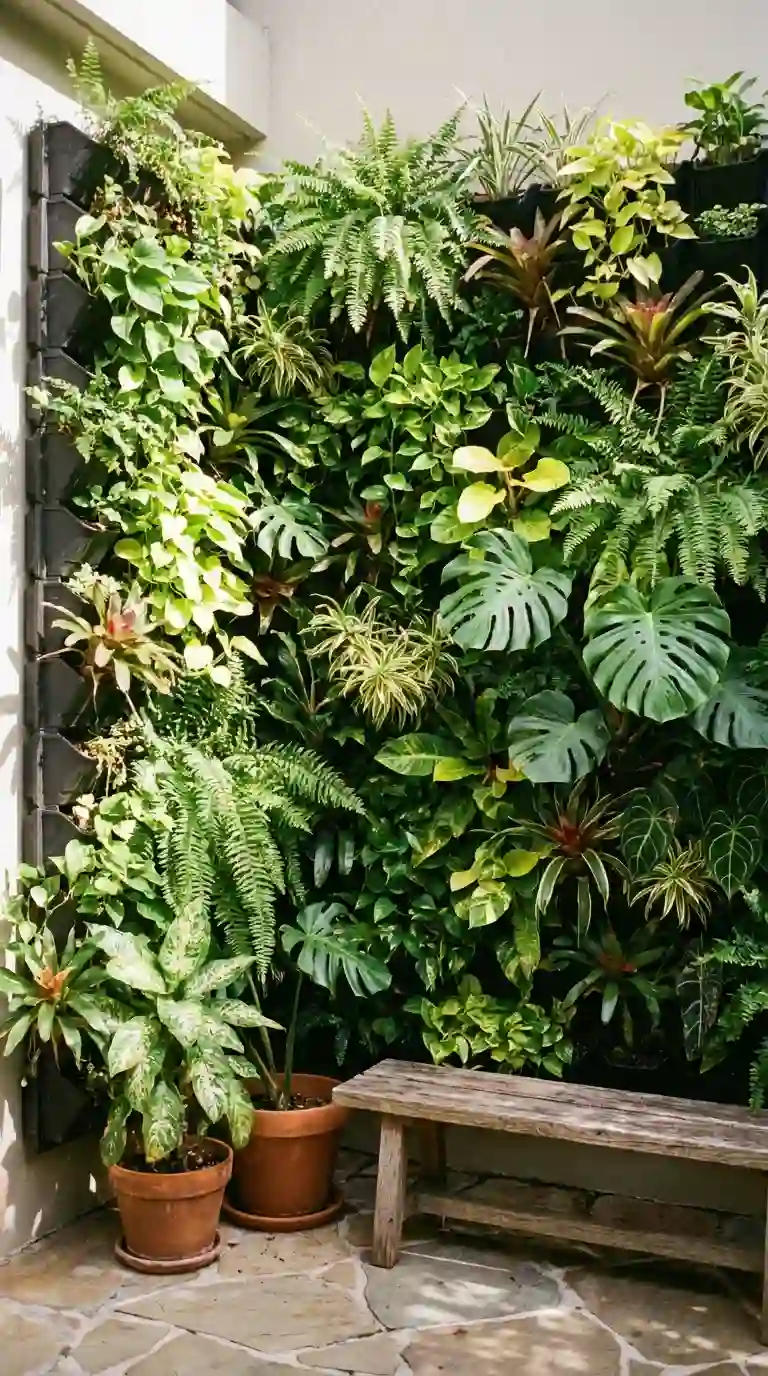
Living walls are the most ambitious form of vertical gardening, but they do not have to be as complicated or expensive as they look in magazines.
Modular Panel Systems
Pre made modular panels with individual planting pockets can be mounted side by side to cover an entire wall. They usually come with a built in irrigation option, which makes maintaining a large living wall far easier than watering each pocket by hand.
Felt Pocket Living Walls
Felt fabric panels with sewn in pockets are a more budget friendly alternative to rigid modular systems. They hold soil surprisingly well, drain naturally, and can be trimmed to fit almost any wall size.
Moss Wall Art
For low light indoor spaces, a preserved moss wall requires no watering at all once installed, since the moss is treated to stay soft and green without needing sunlight or maintenance. It is not technically a living garden since the moss is preserved, but it gives the same lush visual effect with zero upkeep.
Mixed Foliage Feature Wall
Combining different leaf shapes, textures, and shades of green, from the delicate fronds of a fern to the broad leaves of a philodendron, creates a living wall that looks intentional and layered rather than random. This is where vertical garden ideas start to feel more like art installations than simple planting projects.
Also Read : French Balcony Magic: The Ultimate Guide To Elegant, Space Saving Charm For Every Home
DIY Vertical Garden Ideas You Can Build This Weekend
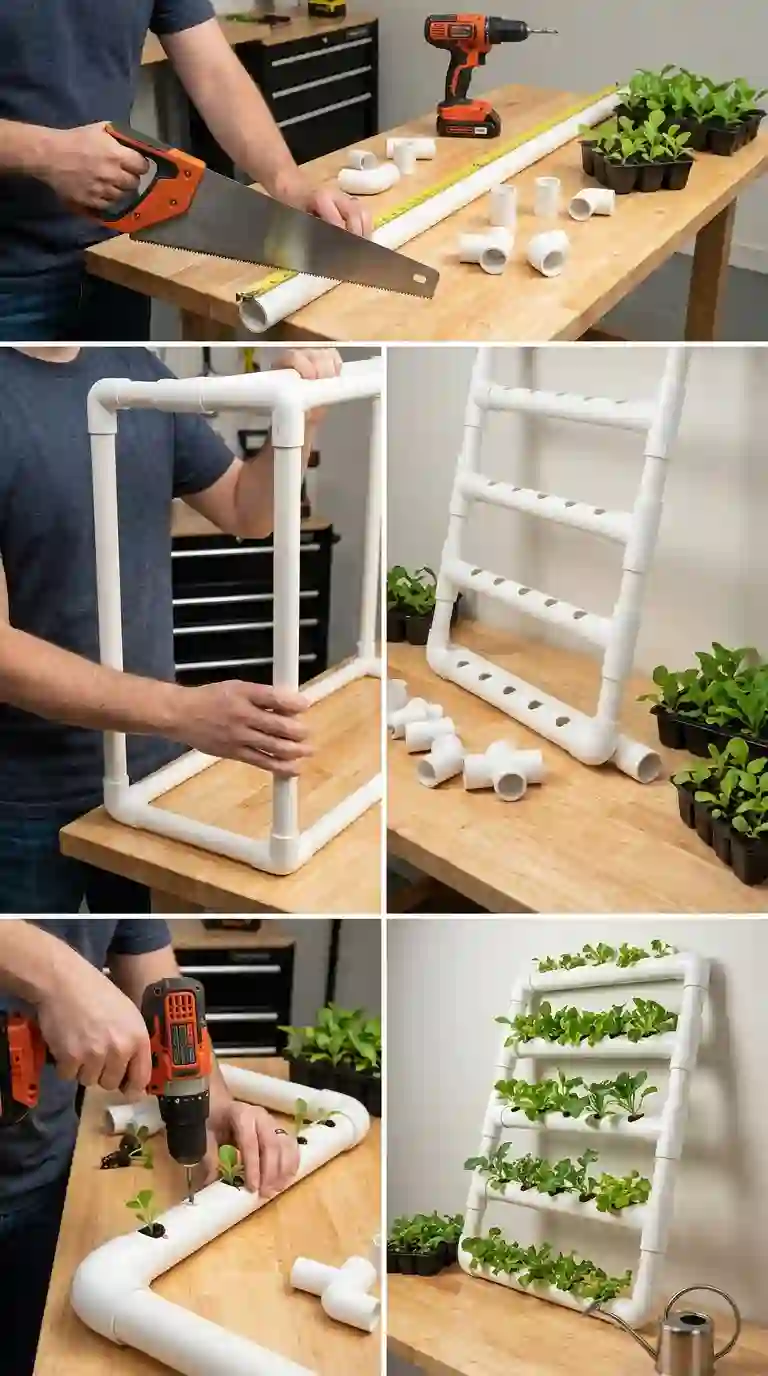
If you are ready to actually build something, here are a few projects I have personally put together that do not require advanced tools or a big weekend budget.
PVC Pipe Planter
Cut sections of wide PVC pipe, seal one end, drill drainage holes, and mount several pieces at staggered angles on a wooden backing board. Fill with soil and plant small herbs or succulents. It is inexpensive, weatherproof, and surprisingly modern looking once painted.
Wooden Crate Wall Garden
Attach a few wooden crates to a wall in a staggered brick pattern, line the inside with landscape fabric, and fill with soil. This gives you individual planting compartments with a rustic, farmhouse style look that fits almost any outdoor patio.
Hanging Pocket Planter
Canvas or felt hanging planters with multiple built in pockets can be bought cheaply or sewn at home. Hang one on a fence or balcony wall and fill each pocket with a different small plant for an instant, textured vertical garden.
Repurposed Bookshelf Planter
An old wooden bookshelf laid on its back, with each shelf lined and filled with soil, becomes a tiered planting structure when leaned against a sunny wall. It is one of the more unusual vertical garden ideas, but it works beautifully for shallow rooted plants like lettuce or strawberries.
Vertical Garden Ideas For Fences And Outdoor Walls
An outdoor fence is often the most underused space in an entire yard. Turning it into a green, living feature is one of the most rewarding vertical garden ideas you can try.
Espaliered Fruit Trees
Espalier is the technique of training a fruit tree to grow flat against a fence or wall in a specific pattern. Apple and pear trees respond especially well to this method, and over a few years you end up with a productive, space efficient living wall of fruit.
Vine Covered Privacy Screens
Fast growing vines like ivy, clematis, or trumpet vine can transform a plain fence into a dense green privacy screen within one or two growing seasons. Just be mindful of aggressive growers that might need regular trimming to stay under control.
Mounted Planter Grids
A simple grid of matching planters mounted directly onto a fence, evenly spaced and filled with the same type of flower or herb, creates a clean, organized look that works especially well in modern or minimalist outdoor spaces.
Pallet And Trellis Combination
Combine a horizontal pallet planter at the base with a trellis rising above it, and you get two layers of vertical growing in one structure. Lower pockets can hold herbs or flowers while climbing vines take over the trellis section above.
Best Plants For Vertical Gardens In Sun And Shade
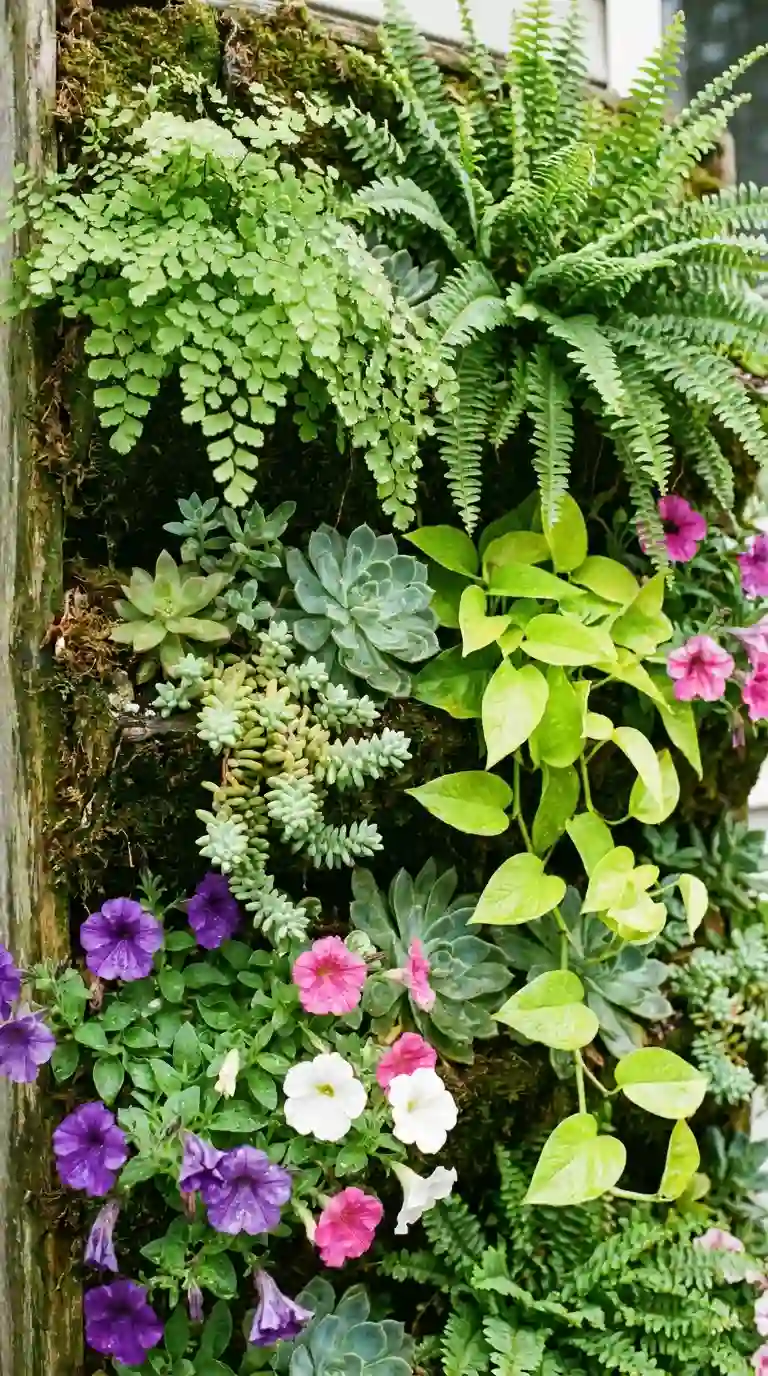
Choosing the right plants makes or breaks any vertical garden. I have killed my fair share of plants by putting sun lovers in shady corners, so let me save you that trouble.
Best Plants For Full Sun Vertical Gardens
Succulents, petunias, marigolds, and most herbs like basil, thyme, and rosemary thrive in vertical setups that get plenty of direct sunlight. Vegetables like cherry tomatoes, peppers, and cucumbers also do well when given a sunny, vertical structure to climb.
Best Plants For Shady Vertical Gardens
Ferns, pothos, philodendron, and English ivy handle low light beautifully, which makes them perfect for vertical gardens tucked into shaded corners, covered patios, or indoor spaces away from direct windows. Hostas and impatiens are excellent shade loving choices for outdoor vertical walls.
Best Low Maintenance Plants
If you travel often or simply forget to water things, lean toward succulents, snake plants, and pothos. These plants tolerate irregular watering far better than most flowering varieties and still look full and healthy with minimal attention.
Best Plants For Beginners
Spider plants, pothos, and marigolds are nearly impossible to kill and forgive a lot of beginner mistakes. Starting your first vertical garden with a few of these builds confidence before you move on to trickier plants.
Watering And Irrigation Tips For Vertical Gardens
Watering a vertical garden is different from watering a regular flower bed, mostly because gravity works against you. Water poured at the top does not always reach the bottom evenly, which is something I learned the hard way after losing an entire row of lower plants in one of my early pallet gardens.
Drip Irrigation Systems
A simple drip irrigation line run along the top of your vertical garden, with small emitters dripping steadily down to each section, solves the uneven watering problem almost completely. Many are available on timers, which makes daily watering effortless once it is set up.
Watering By Hand
If your vertical garden is small, a watering can with a narrow spout lets you target each pocket individually. Just remember to check the lower sections separately, since they often stay drier than the top rows in a gravity fed system.
Self Watering Containers
Self watering planters with a built in water reservoir are especially useful for vertical gardens, since they reduce how often you need to climb up or reach awkward pockets to check moisture levels.
Signs Of Overwatering And Underwatering
Yellow, mushy leaves usually mean too much water, while dry, crispy edges point to too little. Checking the soil with your finger before watering, rather than sticking to a strict schedule, is the most reliable habit I have picked up over the years.
Soil, Drainage, And Fertilizing Tips For Vertical Gardens
Good soil matters even more in a vertical garden than in a regular one, mostly because the planting pockets are usually smaller and dry out faster.
Choosing The Right Soil Mix
A lightweight potting mix with added perlite or coco coir drains well and does not compact the way regular garden soil does. Heavy garden soil holds too much water in small vertical pockets and can quickly suffocate roots.
Drainage Layers
Adding a thin layer of gravel or broken pottery at the base of each planting pocket helps excess water escape rather than pooling around the roots. This one small step prevents a huge number of root rot problems down the line.
Fertilizing Schedule
Because vertical garden containers are usually smaller, nutrients get used up and washed out faster than in ground level beds. A diluted liquid fertilizer every two to three weeks during the growing season keeps plants looking full and vibrant.
Refreshing Soil Over Time
Soil in small vertical pockets compacts and loses nutrients faster than you might expect. Refreshing the top layer with fresh compost every few months keeps your vertical garden looking as good in its second year as it did on day one.
Vertical Garden Ideas For Office And Workspace
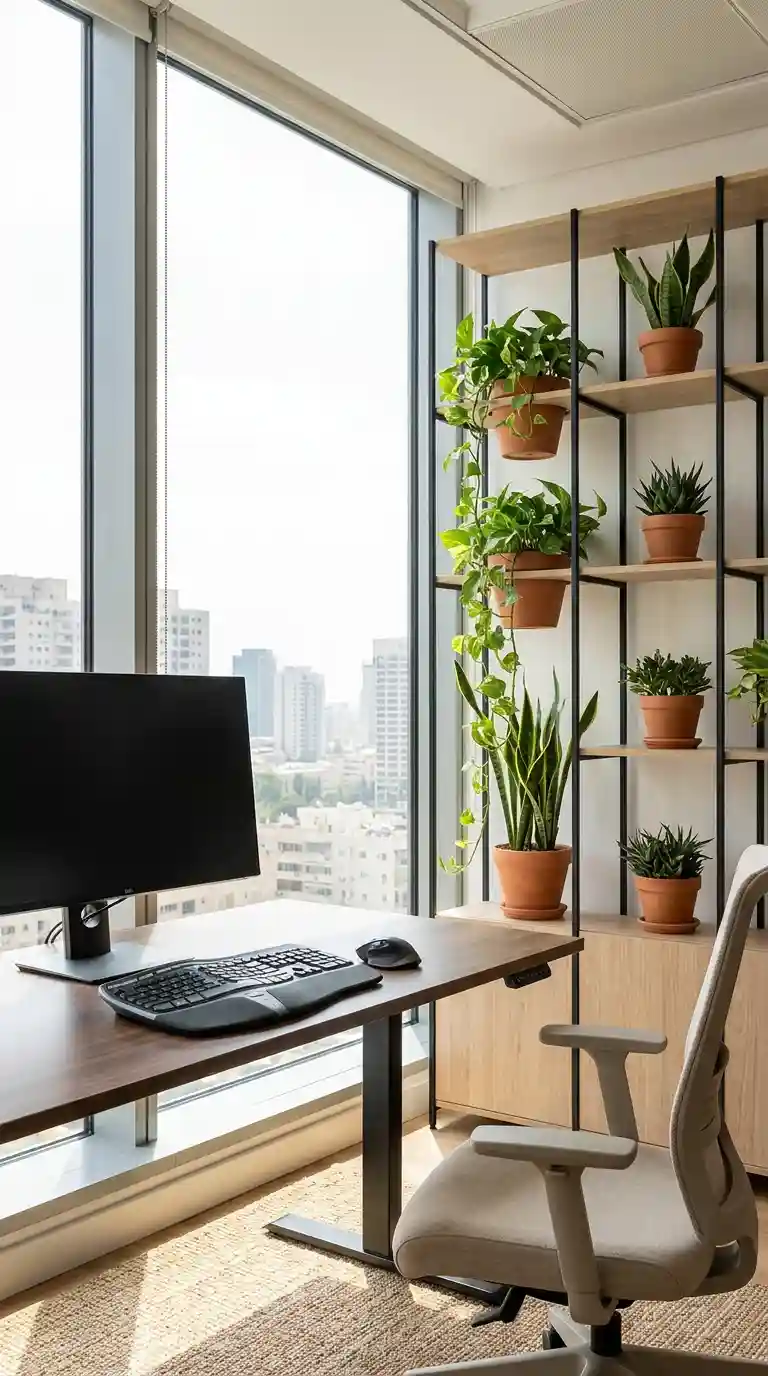
A vertical garden is not just for homes. Bringing a bit of green into a workspace has a noticeable effect on how a room feels, and it does not require much space at all.
Desk Shelf Planters
A small tiered shelf unit placed against an office wall, filled with compact low light plants, adds greenery without eating into desk space. Pothos and snake plants are ideal here since they tolerate the inconsistent light common in most offices.
Cubicle Wall Planters
Small hanging pots that clip directly onto the fabric walls of an office cubicle bring a personal touch of green to an otherwise sterile space. Choose lightweight plants so the clips do not sag or pull away over time.
Meeting Room Living Wall
A modest living wall panel behind a reception desk or in a meeting room makes a strong first impression and genuinely improves how a space feels to sit in for long stretches. Many companies now invest in these simply for the mood boost they bring to employees and visitors alike.
Budget Friendly Vertical Garden Ideas
You genuinely do not need a big budget to build something beautiful. Some of my favorite vertical garden ideas cost less than a takeout dinner.
Repurposed Containers
Old tin cans, plastic bottles, broken drawers, and even worn out rain boots can all become planters with a bit of creativity and a few drainage holes. This is where vertical garden ideas become an act of creativity rather than just a shopping trip.
Thrifted Ladders And Shelves
Secondhand stores are full of old ladders, shelving units, and wooden crates that make perfect vertical planting structures for a fraction of retail price. A quick coat of paint and they look brand new.
Seed Starting Instead Of Buying Plants
Growing plants from seed is dramatically cheaper than buying mature plants from a nursery, and it lets you fill an entire vertical garden for the price of a single potted plant elsewhere.
Cuttings And Propagation
Many popular vertical garden plants, especially pothos, philodendron, and succulents, propagate easily from cuttings. Ask a friend or neighbor for a few clippings, root them in water, and you can fill out an entire wall over time without spending anything at all.
Common Mistakes To Avoid In Vertical Gardening
I have made most of these mistakes myself, so consider this section a shortcut past my own trial and error.
Ignoring Weight Limits
Wet soil is heavy, and a poorly secured vertical garden can genuinely collapse or pull away from a wall. Always use fixings rated for more weight than you think you need.
Choosing The Wrong Plants For The Light
A shade loving fern in direct afternoon sun will scorch within days. Match your plant choices to the actual light conditions of your space rather than what looks good in a store display.
Overcrowding The Structure
It is tempting to cram as many plants as possible into a vertical garden, but overcrowded roots compete for water and nutrients, which usually leads to stunted, unhealthy growth across the board.
Forgetting About Drainage
Without proper drainage, water pools at the bottom of pockets or containers, leading to root rot and mold. Always plan your drainage system before you plant a single seed.
Neglecting Regular Maintenance
A vertical garden left completely unattended for weeks will show it faster than a regular garden bed, simply because the smaller soil volume dries out and depletes nutrients quicker. A quick check every couple of days makes a huge difference.
Seasonal Maintenance For Vertical Gardens
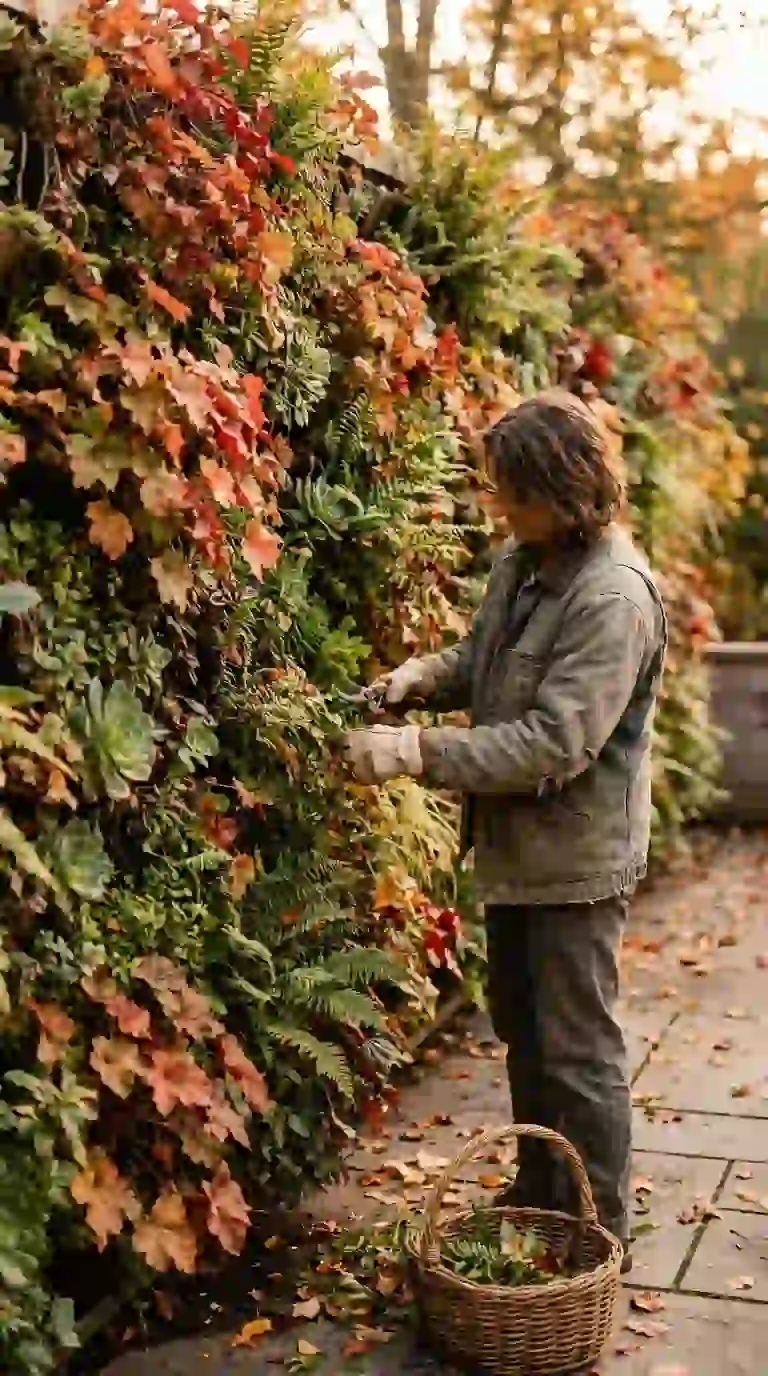
Keeping a vertical garden healthy year round means adjusting your care routine as the seasons change.
Spring Care
Spring is the best time to refresh soil, add compost, and start new seedlings in your vertical garden. Check all fixings and structures after winter weather to make sure nothing has loosened or warped.
Summer Care
Vertical gardens dry out faster in summer heat, especially ones mounted against sun facing walls that radiate extra warmth. Increase watering frequency and consider some afternoon shade for more delicate plants.
Autumn Care
As growth slows down, trim back leggy plants, remove anything that has finished blooming, and begin preparing more sensitive plants for cooler weather by moving them indoors if needed.
Winter Care
In colder climates, bring tender vertical garden plants indoors or protect them with frost cloth. Hardy evergreens and succulents can often stay outdoors, but reduce watering significantly since growth slows during colder months.
Final Thoughts On Vertical Garden Ideas
Looking back at that clumsy pallet garden I nailed to my first balcony wall, I never expected it to turn into something I think about almost every single day now. Vertical garden ideas taught me that space is rarely the actual limitation people think it is. Creativity is usually the missing piece.
Whether you start small with a single hanging pocket planter or work your way up to a full living wall, the important thing is just starting. Pick one idea from this list that genuinely excites you, gather a few basic materials, and give it a try this weekend. You might be surprised at how quickly a bare wall turns into the most talked about corner of your home.
Frequently Asked Questions
What is the easiest vertical garden idea for beginners?
A hanging pocket planter or a simple ladder shelf with a few potted plants is one of the easiest vertical garden ideas to start with, since it requires no drilling and very little setup time.
How do I make a vertical garden at home cheaply?
Reuse materials you already have, like wooden pallets, plastic bottles, or old shelving units, and start plants from seeds or cuttings instead of buying mature plants from a nursery.
What plants grow best in a vertical garden?
Pothos, ferns, succulents, herbs, and strawberries are among the best plants for vertical gardens because they have shallow roots and adapt well to smaller planting spaces.
Can I build a vertical garden without drilling into my wall?
Yes, freestanding shelving units, leaning ladders, and tension rod systems let you build a vertical garden without making any permanent changes to your wall, which is ideal for renters.
How often should I water a vertical garden?
Most vertical gardens need watering every two to three days, though this depends heavily on the plant type, sun exposure, and container size. Always check the soil moisture before watering rather than following a fixed schedule.
Do vertical gardens need special soil?
A lightweight potting mix with good drainage works best for vertical gardens, since regular garden soil tends to compact and hold too much water in smaller vertical containers.
Are vertical gardens good for small apartments?
Absolutely, vertical gardens are one of the best solutions for small apartments because they use wall space instead of floor space, which is exactly what most apartments lack.
How do I stop a vertical garden from damaging my wall?
Use a drip tray or drainage channel beneath your planters, leave a small gap between the structure and the wall for airflow, and choose water resistant backing materials to protect the surface underneath.
What is the best vertical garden system for vegetables?
Tower planters and trellis systems work particularly well for vegetables, since they support climbing plants like cucumbers and beans while giving root vegetables and leafy greens enough soil depth to thrive.
Can succulents grow in a vertical garden?
Yes, succulents are one of the most popular choices for vertical gardens because of their shallow roots, low water needs, and tolerance for a wide range of light conditions.