
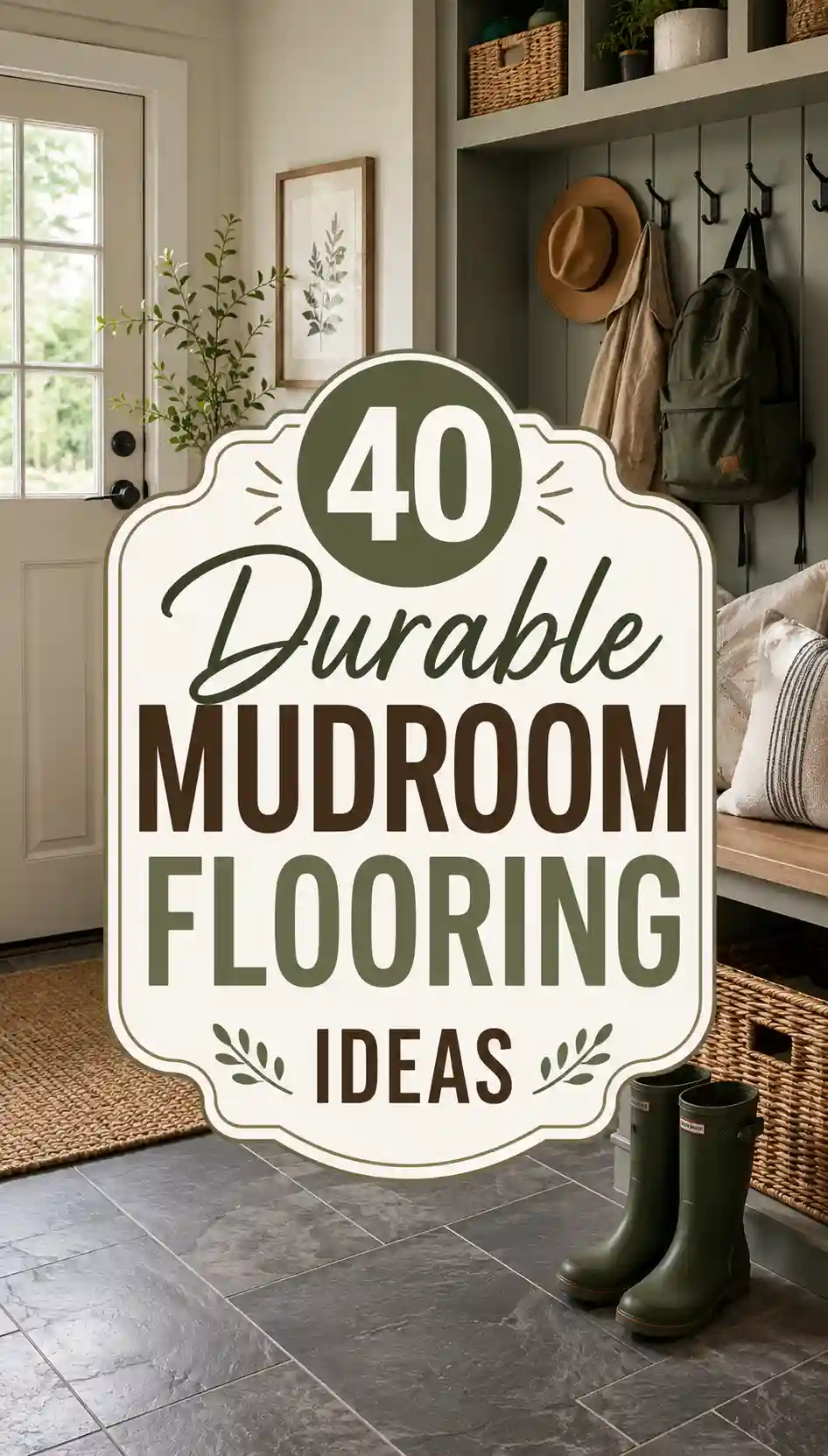
A mudroom floor has one job that no other floor in the house has: it must cope with wet boots, grit, road salt and muddy paws several times a day, every day, without looking tired after a single winter. That is why this guide starts with measurements and a budget rather than a list of pretty materials. A typical mudroom measures around 1.5 by 2.4 metres, and for a room that size a realistic materials budget runs from about £400 for click-lock vinyl to £900 for porcelain tile, with fitting on top if the work is not done as a do-it-yourself job. Most vinyl floors in a room this size can be laid in a single weekend; a tiled floor usually takes three to five days once adhesive and grout curing time are counted.
The single consideration that shapes every choice below is water: not just spills, but the slow, repeated wetting at the door threshold, where melting snow and rain pool before anyone thinks to mop. A floor that cannot handle standing water at the threshold will fail there first, however good it looks in the middle of the room.
Why is a mudroom floor harder on materials than any other floor?
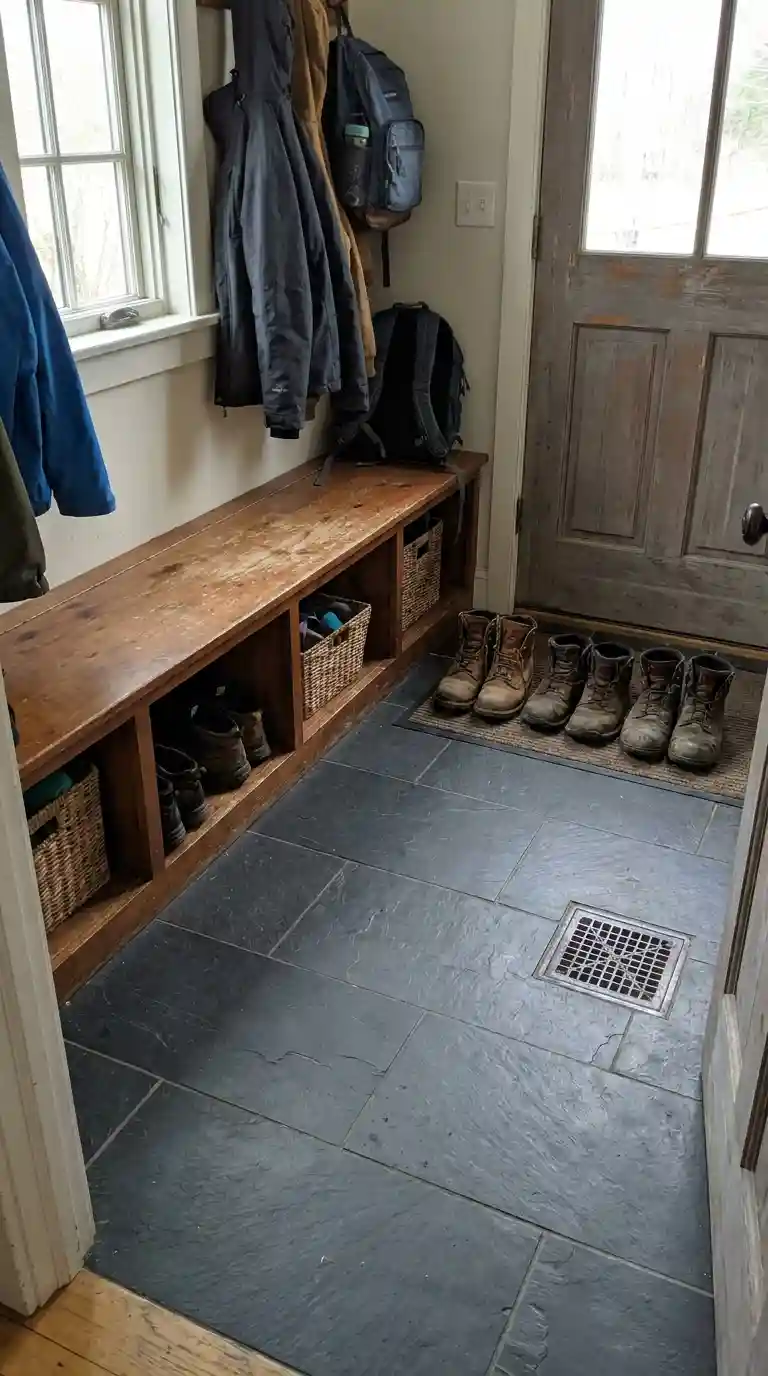
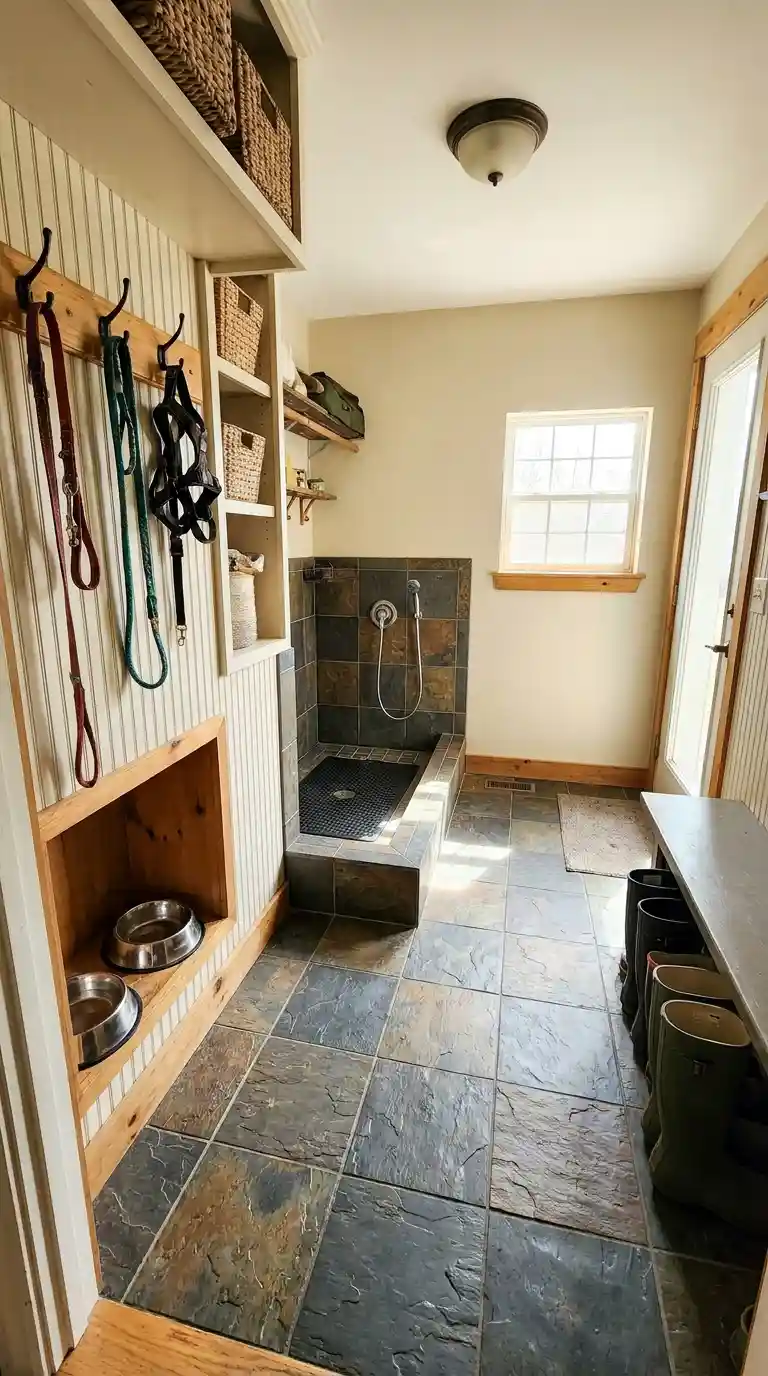
Three things wear a mudroom floor down at once. First, abrasion: grit carried in on soles acts like sandpaper, which is why soft finishes dull quickly. Second, moisture: water sits in grout lines, seeps under loose edges and, in winter, brings dissolved salt with it. Third, impact: boots are dropped, dog claws scratch and heavy bags land in the same few square metres. The photo below shows a mudroom built around that reality, with a hard, washable surface under the bench and hooks rather than a delicate finish.
What should you measure before you fall for a sample?
Measure three things before ordering anything. First, the clear floor area once benches, cubbies and the door swing are accounted for; in many mudrooms the usable floor is 20 to 30 per cent smaller than the room dimensions suggest. Second, the height difference at the threshold, because a new floor plus underlay can raise the level by 10 to 15 millimetres and catch a door. Third, the distance from the door to the first drain or mat, since that strip takes most of the water and deserves the toughest material in the room. Ordering 10 per cent extra material covers cuts around benches and door frames without a second delivery.
It is also worth checking the subfloor. A floor that flexes underfoot will crack grout and loosen click joints, so any soft or uneven patch should be levelled before the new surface goes down. This step is unglamorous, but it decides whether a £900 tile floor lasts fifteen years or starts cracking in its second winter.
Is tile still the safest default?
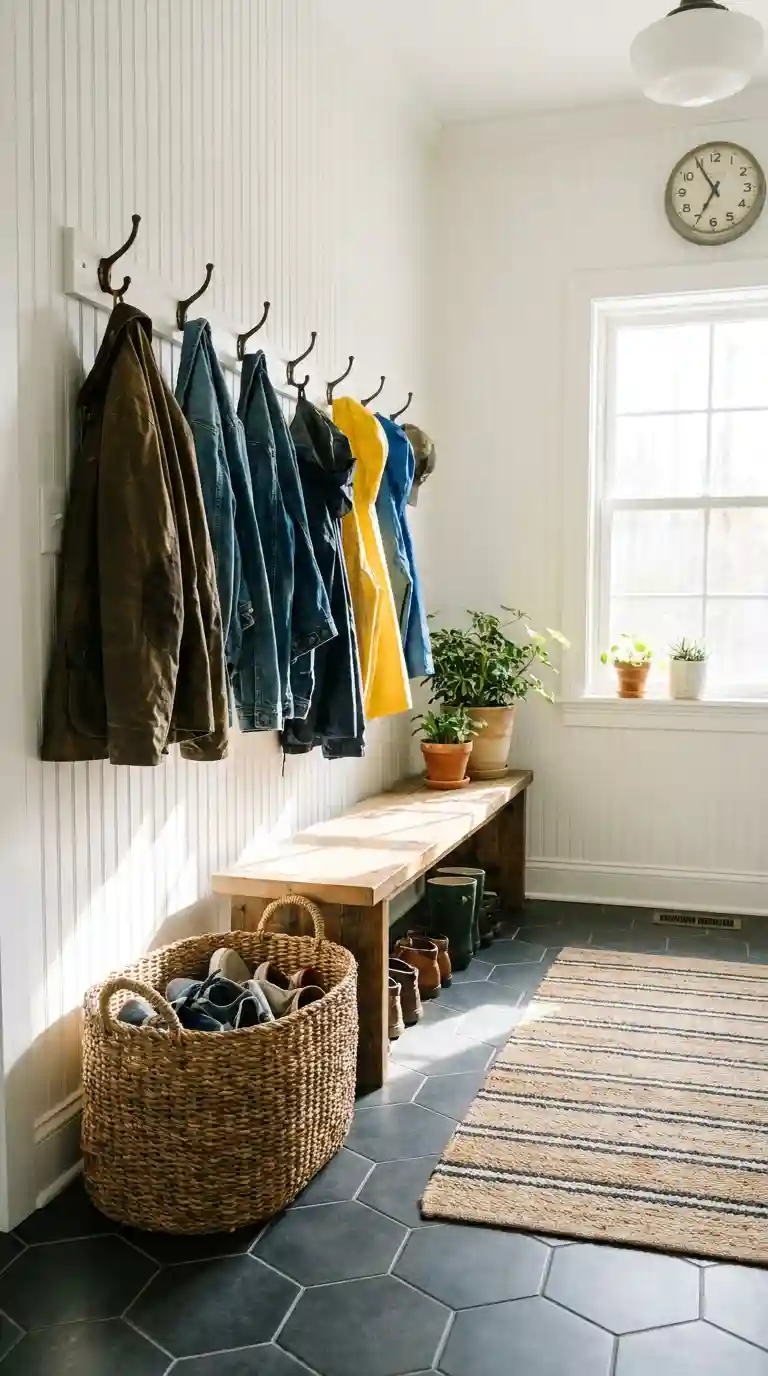
For most households, yes. Porcelain tile is the benchmark because it absorbs almost no water, resists salt staining and shrugs off grit. A matt or textured finish is the important detail: a polished tile can be dangerously slippery when wet, while a textured tile with a slip rating of R10 or above stays grippy under wet boots. The photo below shows a tiled mudroom where the grout lines are narrow and sealed, which keeps dirt and salt from settling in.
Ceramic tile costs less but is slightly softer, so it suits a lightly used mudroom better than a main family entrance. Natural stone tile, such as slate, looks superb but needs sealing every one to two years; skip it if resealing is the kind of job that never gets done. Budget around £25 to £45 per square metre for porcelain tile itself, plus adhesive, grout and sealer.
When does luxury vinyl plank make more sense than tile?
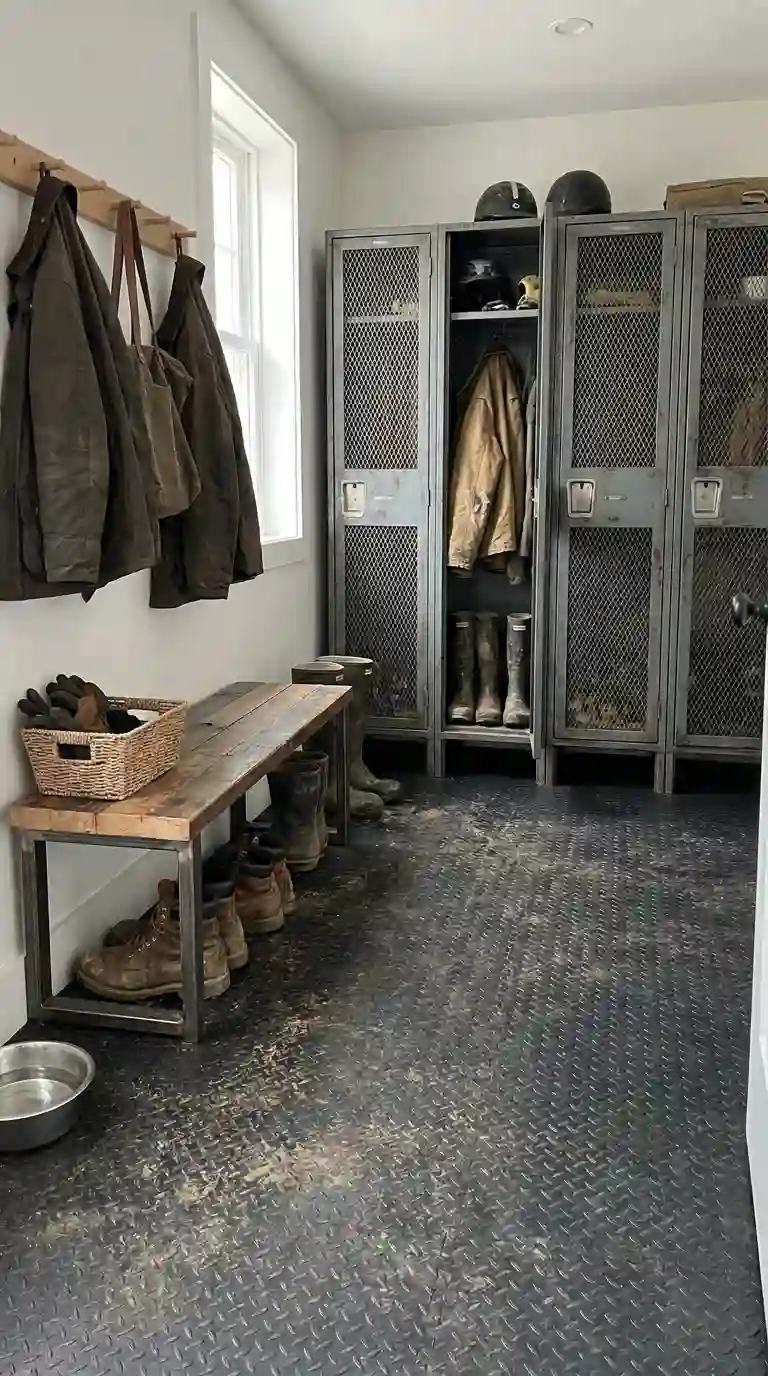
Vinyl plank wins when comfort, cost and speed matter more than ultimate hardness. A fully waterproof rigid-core plank costs roughly £20 to £35 per square metre, feels warmer under bare feet than tile, and can be laid over an existing flat floor in a weekend. The wood-look planks in the photo below show how convincing the finish can be, which matters when the mudroom opens directly into a hallway and the two floors need to look coherent.
The trade-off is scratch resistance: large dogs and dragged furniture will mark vinyl sooner than porcelain. Choose a wear layer of at least 0.5 millimetres for a mudroom, and keep felt pads on anything that gets dragged. For rented homes, click-lock vinyl is also the easiest floor to lift and take away later, a point worth considering alongside entryway wall decor ideas that avoid drilling.
What about concrete, stone and brick for a tougher look?
Sealed concrete is the hardest-wearing option of all and suits a modern or industrial mudroom, especially where underfloor heating is planned, since concrete spreads heat evenly. It must be sealed, though: unsealed concrete stains from salt and oil within a season. Rubber flooring, shown below, is the other heavy-duty choice; it is quiet, grippy and almost indestructible, but its utilitarian look suits a utility entrance better than a front hall.
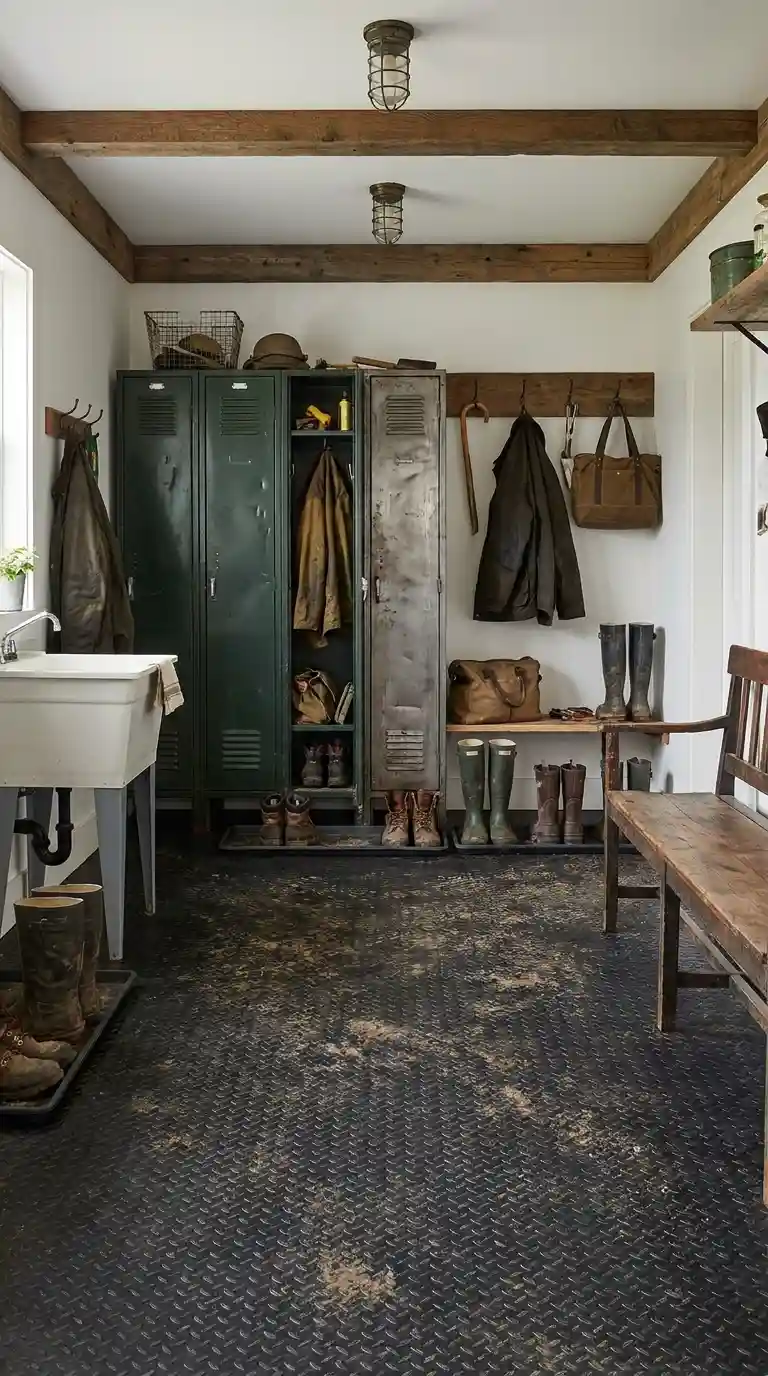
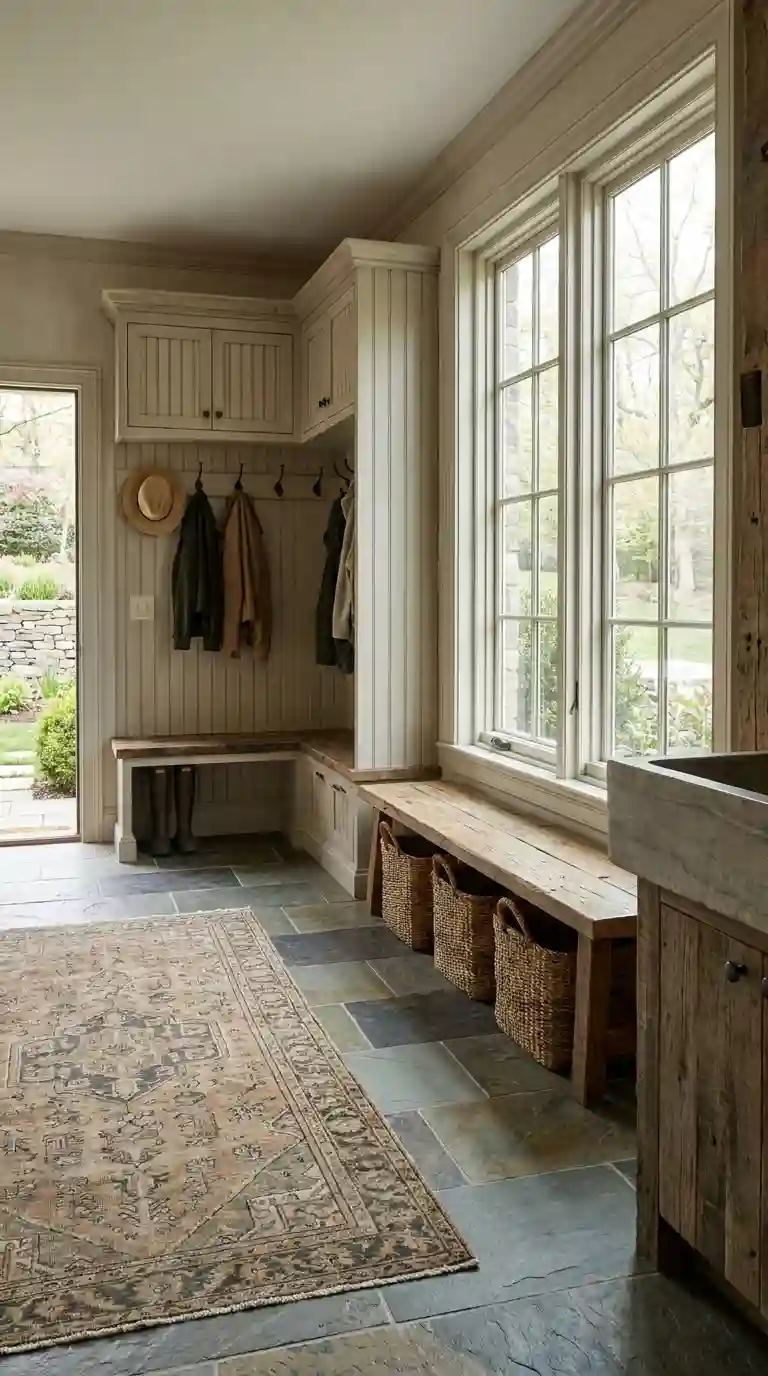
Natural stone brings warmth and texture that concrete cannot match, as the photo below shows, but it asks for regular sealing and prompt cleaning of spills. Brick is a charming middle ground for a farmhouse-style mudroom, laid in herringbone or basket weave, and it also needs sealing to resist moisture. The decision here is really about maintenance appetite: stone and brick reward regular care, while concrete and rubber mostly look after themselves.
How do pets, children and cold winters change the choice?
Dogs change the maths. Claws scratch soft surfaces, older dogs need grip, and accidents demand a fully waterproof floor with sealed grout. Porcelain tile and rigid vinyl both cope, but tile has the edge for scratch resistance. The photo below shows a pet-friendly mudroom where the floor runs straight into a washable area, so muddy paws never reach carpet or wood.
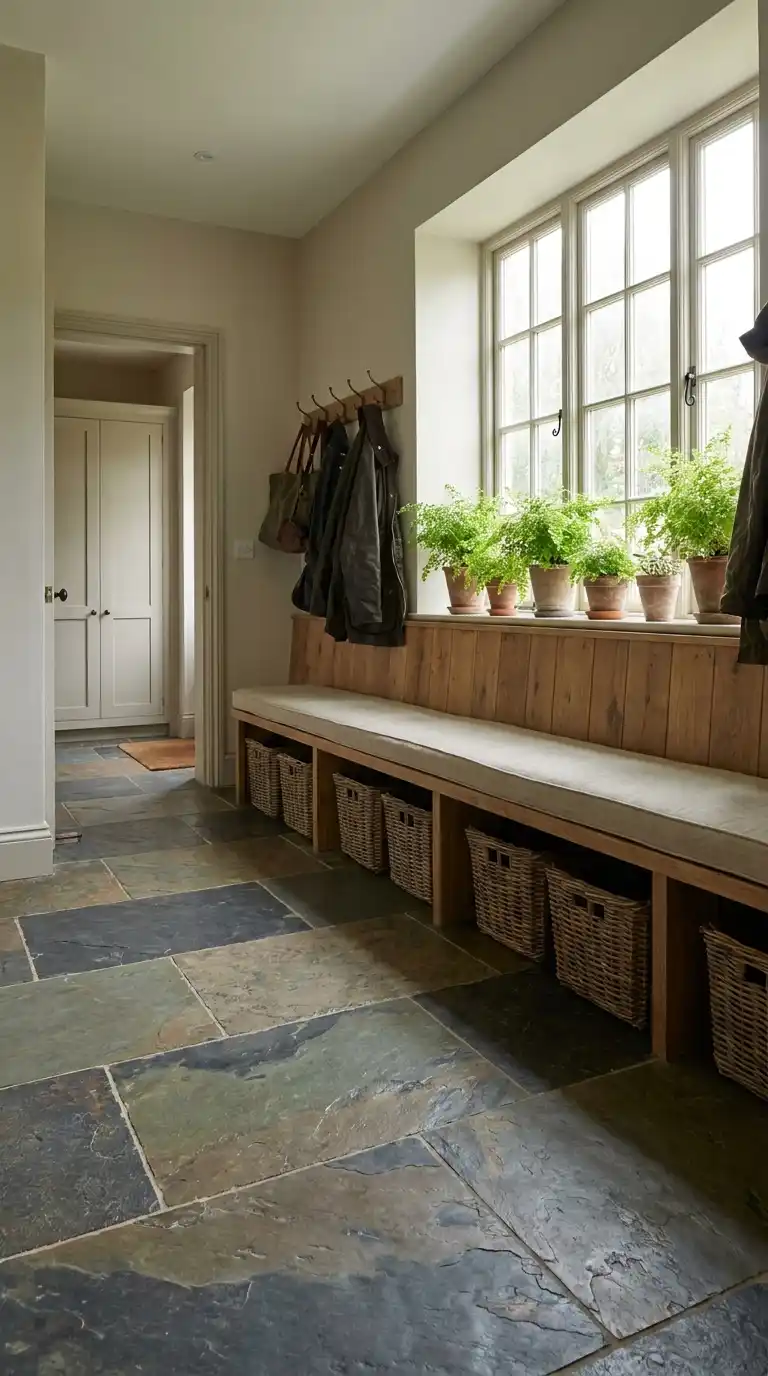
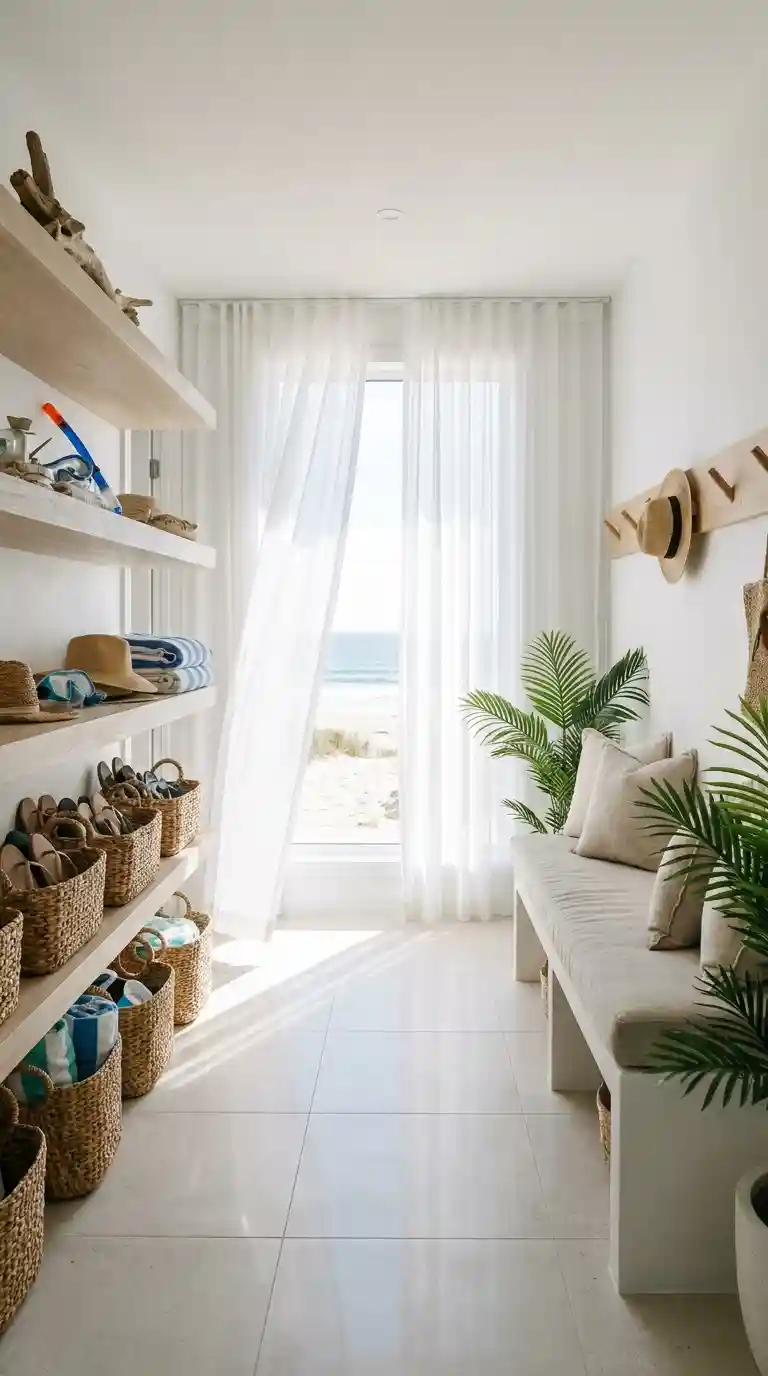
Climate matters just as much. In cold regions, rock salt is the enemy: porcelain, sealed concrete and vinyl all resist it, while unsealed grout and natural stone stain. A textured matt finish matters most in winter, when melting snow makes every smooth floor a hazard. In warm, humid climates, shown below, the priorities shift to mould resistance and a surface that does not trap sand in deep grout lines, which is why large-format tile and sheet vinyl work well there.
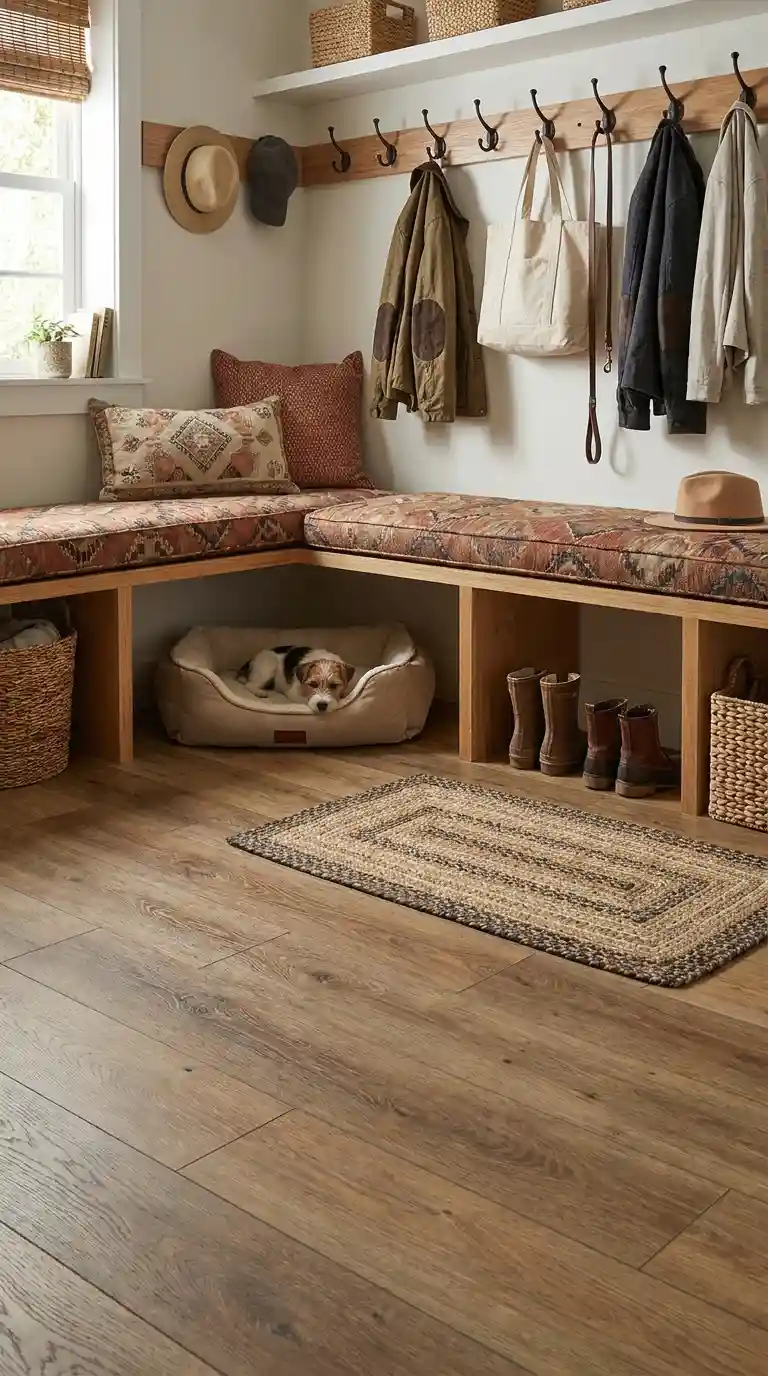
How do you keep the cost down without regretting it?
Start by spending on the wet zone and saving elsewhere. Put the best material in the first metre inside the door, where water lands, and use a cheaper matching product further into the room if the budget is tight. Discontinued or overstock tile from a local supplier can cut material costs by 30 to 50 per cent, and peel-and-stick vinyl tiles offer a genuinely usable stopgap for under £15 per square metre. The photo below shows how flooring and built-in storage should be planned together, so benches sit on the durable surface rather than on a rug that traps moisture underneath.
Do not save money by skipping underlay, adhesive or sealer: those are the layers that decide whether a budget floor lasts. A washable rug or mat at the door, changed with the seasons, protects any floor for very little money, and it is worth planning the same practical approach for the walls with hallway paint ideas that can be wiped clean. For the wider entrance, bathroom storage ideas are a useful source of sealed, ventilated storage thinking that transfers well to a damp mudroom.
Which mistakes are worth avoiding?
Four mistakes account for most mudroom floor failures. Glossy finishes look beautiful in photographs and become slippery the first wet day. Wide, unsealed grout lines trap salt and dirt and discolour within months. Skipping subfloor preparation cracks grout and loosens planks. And choosing a floor purely because it is fashionable, without checking its water and slip ratings, is how a showroom favourite becomes a regret by the second winter. The final photo below is a reminder of the goal: a floor that looks intentional, copes sensibly at the threshold and can be mopped clean in five minutes.
Decide in this order: measure the room and the threshold, choose the wet-zone material first, check its slip rating, then match the rest of the room to it. That sequence, rather than any single material, is what makes a mudroom floor survive every season.
Frequently asked questions
What is the best flooring for a mudroom?
Porcelain tile and waterproof luxury vinyl plank are the safest defaults. Tile wins for scratch resistance and longevity, while vinyl wins for warmth, cost and speed of fitting.
Can you use real hardwood in a mudroom?
Solid hardwood is not recommended, because repeated wetting causes warping and staining. Sealed engineered wood can work in a lightly used mudroom, but tile or vinyl is a safer choice for a main entrance.
What flooring suits a mudroom with dogs?
Fully waterproof, scratch-resistant surfaces such as porcelain tile or rigid vinyl plank, with sealed grout and a textured finish so older dogs keep their footing.
How do you stop a mudroom floor being slippery?
Choose a matt or textured finish with a slip rating of R10 or above, avoid polished tile, and keep a washable mat at the door to catch the worst of the water.
How much should a small mudroom floor cost?
For a room of around 1.5 by 2.4 metres, expect roughly £400 for click-lock vinyl or £900 for porcelain tile in materials alone, before fitting if the work is not done as a do-it-yourself job.





3 Comments on “How to Choose a Mudroom Floor That Survives Wet Boots and Muddy Paws”