

Most rented one-bedroom flats are around 45 to 55 square metres, which sounds workable until the sofa, the table and the bed all have to share it. The best place to start is not a shopping list but a set of constraints: what the lease forbids, what must stay undamaged for the deposit, how much can be spent in the first month, and how much light each room actually gets. A first phase of £300 to £500, spread over about four weeks, usually does more than one expensive purchase, because it covers the surfaces and light levels that shape the whole room.
Before buying anything, measure the longest wall, the width of door swings and the route through each room, and leave at least 75 centimetres as a clear walkway. Photograph each wall in daylight and again in the evening, note which windows face north, and check the lease for rules on hooks, paint and adhesive strips. Those notes prevent the two most common mistakes in small flats: a rug that is too small and a picture hung at a height that makes the wall look lower than it is.
Where should you start when the flat feels bare?
Start with the room that is seen first and used most, usually the living room, and name three gaps before spending anything: one bare wall, one hard light source and one surface that collects clutter. Fixing those three things first makes the flat feel finished faster than scattering small ornaments across every shelf. A useful rule is to buy only for a named problem, for example a rug to define the seating area, a lamp to soften an overhead light, or a basket to hide chargers.
Work in one room at a time and live with each change for a few days before adding the next layer. If a purchase does not change how the room is used or how it feels at 7pm, when most people are actually home, return it or move it to another room. That pause matters in a small space, where every object is visible and there is little room to absorb a wrong choice.
What does a sensible first-room budget look like?
For a £400 first phase, a workable split is about £160 on the largest surface, usually a rug and curtains, £120 on lighting, £80 on wall decor and £40 on small accessories. That order matters: a rug anchors the room, lighting changes the mood, and wall decor adds personality only once those two are settled. Spending the same £400 on cushions, candles and prints first leaves the room looking dressed but still feeling cold and unfinished.
Set the timeline in weeks, not weekends. Week one is measuring and photographing, week two is the rug and lighting, week three is wall decor, and week four is a review of what is still missing. Buying second-hand for the largest items, such as a solid wood side table or a framed print, stretches the same budget further, provided the measurements are checked first and the item can actually fit through the front door and the hallway.
How do you choose colours that will not fight the flat?
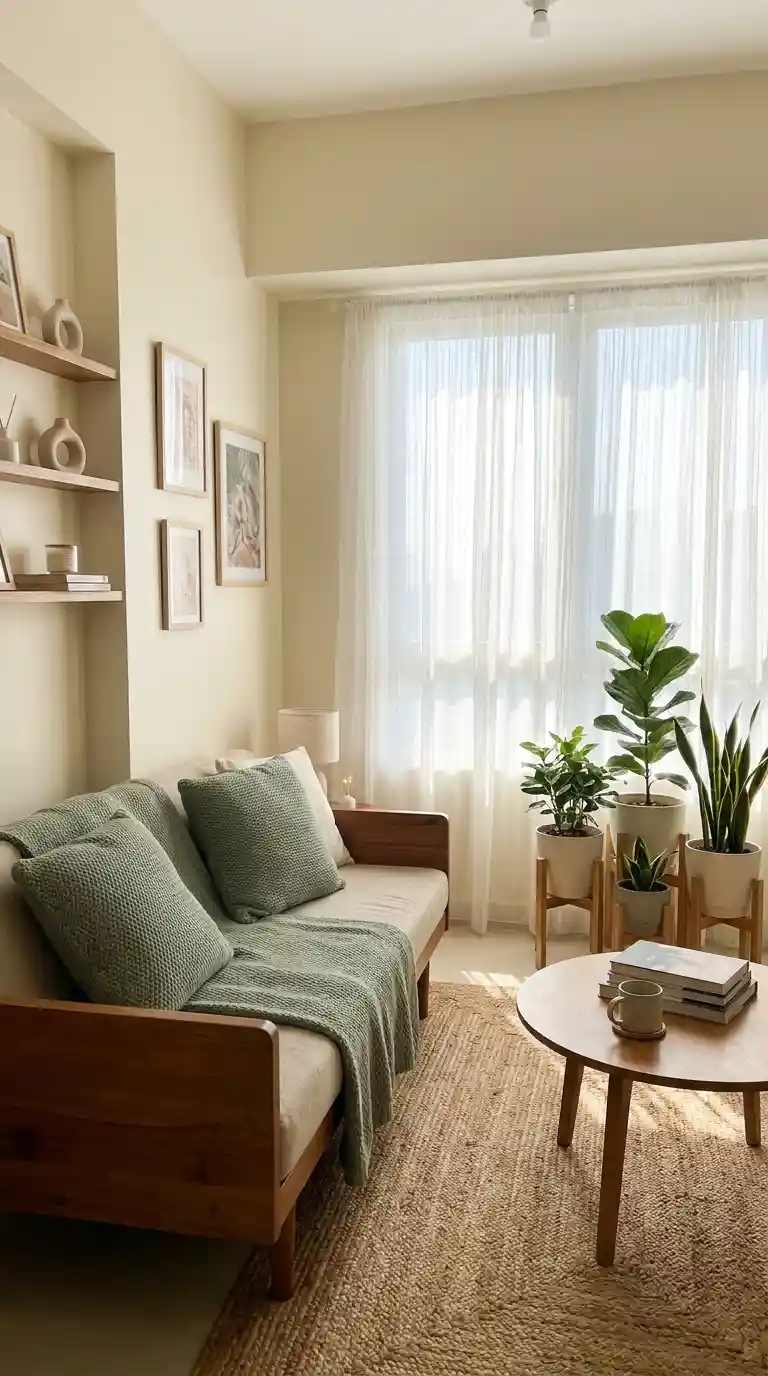
Use a simple 60-30-10 split: about 60 per cent neutral base, such as cream or warm white, 30 per cent main colour, such as sage green, and 10 per cent accent, such as warm wood or brass. The photo above shows that balance in practice, with a pale base carrying the room and a single green accent doing the work. Keeping the base neutral also helps at the end of a tenancy, because the larger pieces can move to a different flat without clashing.
Test any colour at three times of day before committing, especially in a north-facing room where daylight is cooler. A paint swatch or fabric sample that looks soft at noon can look grey by evening under a cool bulb. The decision to make is not which colour is trendiest, but which one still looks calm under the flat’s actual evening lighting, and that test takes one day and costs almost nothing.
What actually makes a living room feel finished?
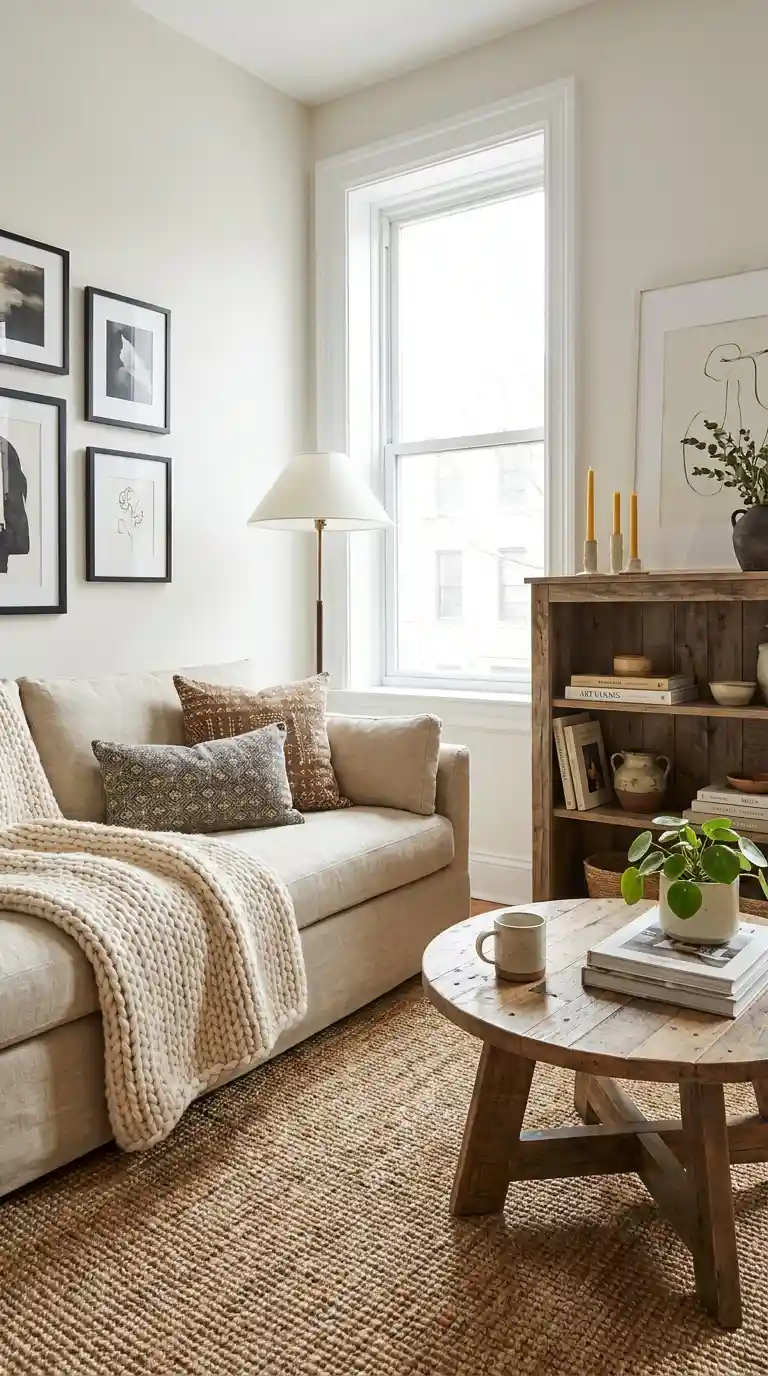
A living room usually feels finished when three decisions are made: the rug size, the coffee table grouping and the wall arrangement. For a two-seater sofa, a rug of about 160 by 230 centimetres works well, with at least the front legs of the sofa and chairs on it; a smaller rug floats in the middle of the floor and makes the seating area look smaller. On the coffee table, three items in different heights, such as a stack of books, a small plant and a candle, read as intentional rather than cluttered.
For wall art, hang the centre of a single picture or a gallery group at about 145 centimetres from the floor, with 5 to 8 centimetres between frames, and check the weight rating of any adhesive strip before hanging. Rented walls benefit from that care: a strip rated for 2 kilograms should not carry a 4-kilogram frame, and a photograph of the wall before hanging gives a clear record for the deposit. Small tables also benefit from the same thinking, and placemat ideas that make an ordinary table feel dressed show how a simple layer can finish a dining corner without new furniture.
How can a small bedroom feel calm rather than cramped?
Bedding is the largest surface in a bedroom, so it sets the tone more than any ornament. A plain duvet cover in the room’s base colour, layered with one throw and no more than four pillows on a double bed, two for sleeping and two decorative, keeps the bed looking made rather than piled. A bedside lamp with a shade about 30 centimetres wide, placed on a table roughly level with the mattress, gives reading light without a harsh overhead glare.
Keep the floor clear by storing out-of-season bedding in flat boxes under the bed, ideally no higher than 20 centimetres so they slide out easily, and keep only the current week’s clothes on an open rail or chair. If the bedroom needs a stronger colour direction, a green and gold bedroom scheme is a useful reference for how a deep colour can work in a small room when the bedding and curtains stay pale. The reasoning is the same: one strong colour, kept to a few surfaces, rather than colour on every wall.
Which plants are worth the effort in low light?
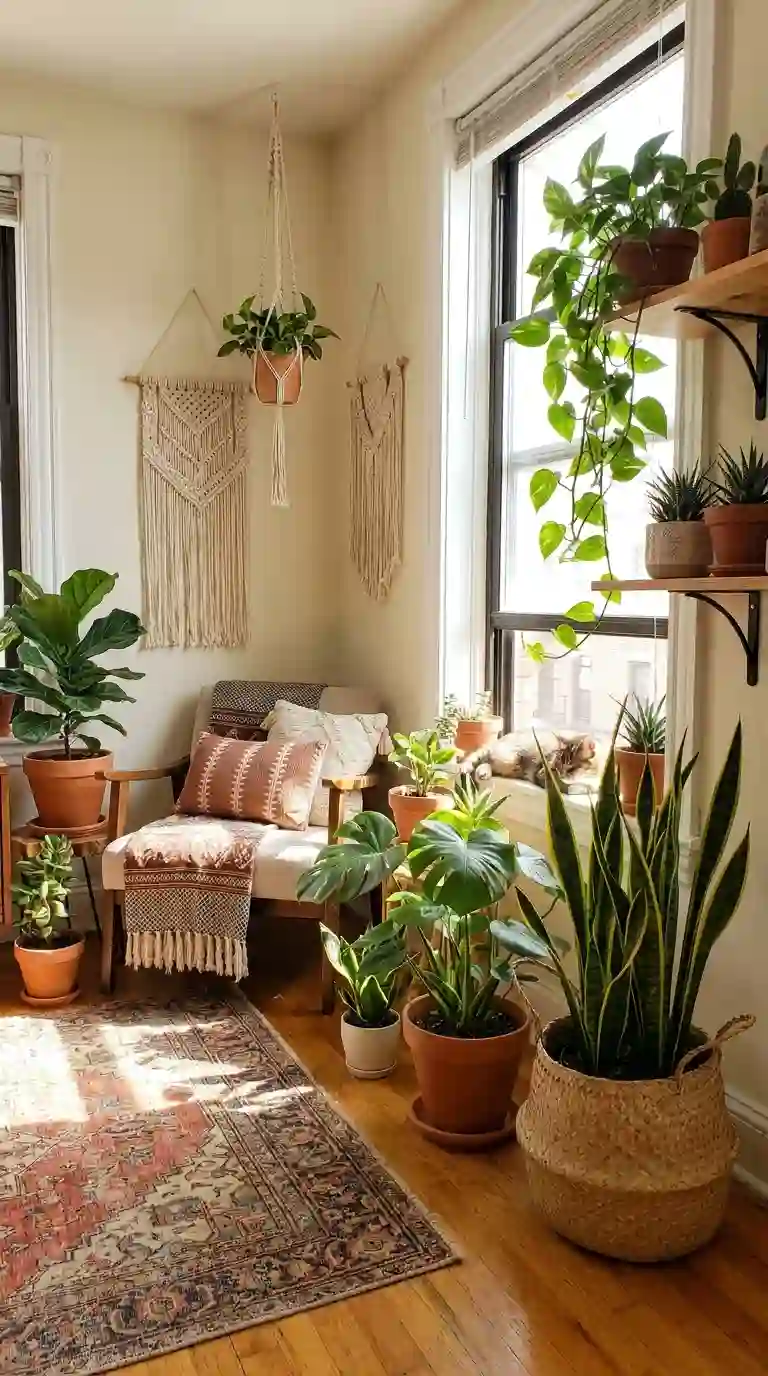
Snake plants, ZZ plants and pothos are the safest starting trio for a flat with limited daylight, because all three tolerate low light and irregular watering better than most houseplants. The photo above shows how a few plants at different heights, on the floor, on a shelf and on a table, add life without filling the floor. Start with three plants, one per room, rather than ten at once, and learn their watering rhythm before adding more.
Water only when the top 3 centimetres of soil feel dry, and always use a pot with a drainage hole and a saucer, because standing water is the most common cause of plant failure indoors. If a room gets almost no daylight, a high-quality faux plant is a reasonable alternative for a dark hallway or bathroom, and it avoids the cycle of buying, losing and replacing real plants. The decision is practical, not moral: choose real plants where light and watering are reliable, and faux plants where they are not.
How do you light a flat so it does not feel like an office?
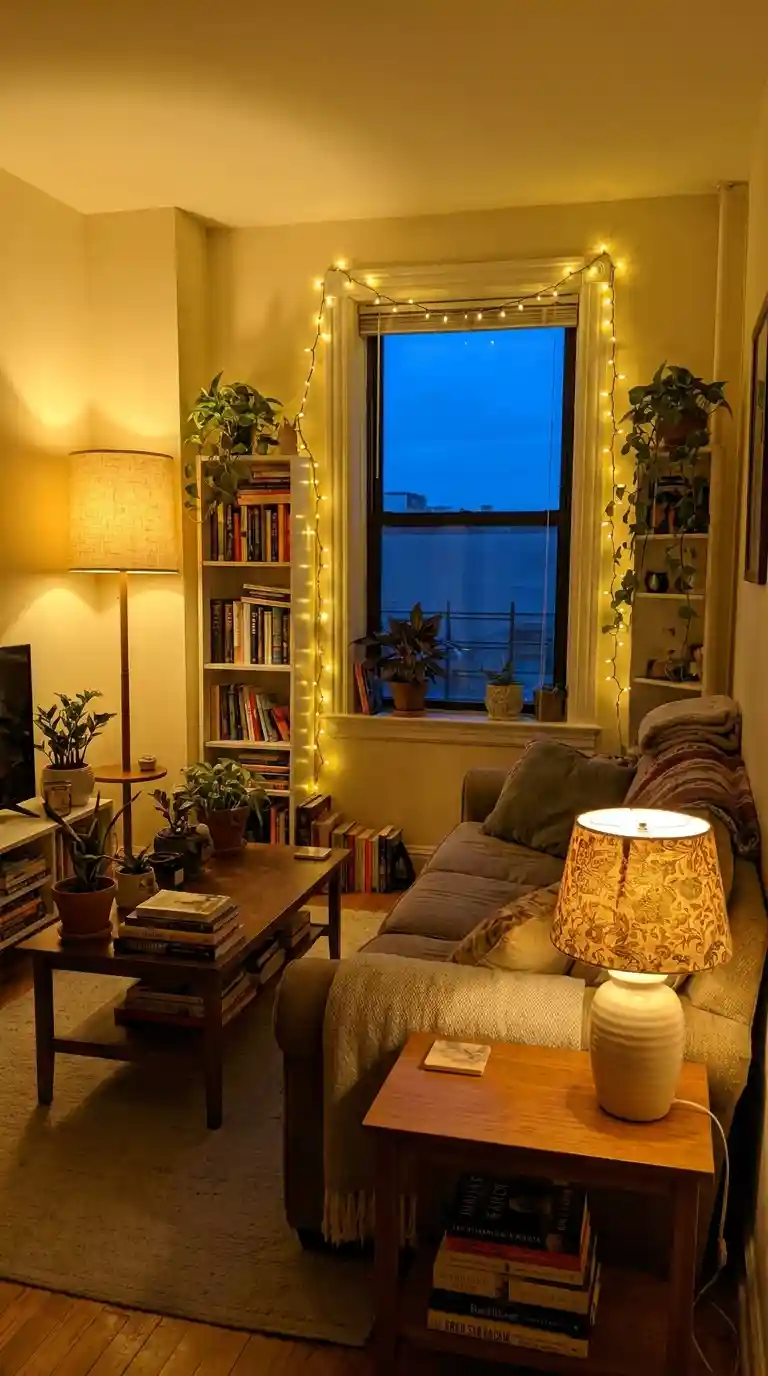
Aim for three light sources per main room: one general light, one task light for reading or cooking, and one low lamp for the evening. Warm white bulbs at about 2700K suit living rooms and bedrooms, while a cooler 3000K to 4000K bulb works better in a kitchen or bathroom where detail matters. The photo above shows the difference layered light makes: no single bright ceiling light is doing all the work, so shadows are softer and the room feels lower and calmer.
Replace a single harsh overhead bulb with a dimmer plug or a floor lamp before buying decorative lighting, because that one change affects every evening in the flat. Keep cords tidy with a single cable clip per lamp and place the low lamp at sofa height, about 60 centimetres from the floor, so it lights faces and books rather than the ceiling. If the ceiling light cannot be changed under the lease, simply leaving it off and using the three lower sources is often the better choice.
What storage doubles as decor, and what does not?
Closed storage doubles as decor; open storage only works for items that are used at least weekly and look good on display. Two woven baskets, one for throws and one for chargers and remotes, clear a living room faster than a new shelf, and a storage ottoman gives both a footrest and a place to hide board games or extra bedding. Measure any storage piece before buying, leaving at least 5 centimetres of clearance around it, because a basket that blocks a door swing or a drawer front will be moved and then ignored.
Avoid buying open shelving to display items that are rarely used, because in a small flat those shelves collect dust and visual noise. A better test is to remove one item from a shelf each week for a month: if nothing is missed, the shelf was storage, not decor, and the space is better left empty. For a dining area, the same measurement-first approach applies, and building a kitchen table yourself can be worth considering when standard tables are either too wide for the walkway or too small for four chairs.
Questions worth asking before you buy anything
How much should a first phase of decorating cost? A budget of £300 to £500 is a realistic starting point for one room, spent in the order rug and curtains, lighting, wall decor, then accessories, and spread over about four weeks so each change can be judged before the next purchase.
How do I hang art without risking my deposit? Photograph the wall first, use adhesive strips rated above the frame’s weight, and keep the receipt and packaging until the end of the tenancy, so any mark can be explained and, if needed, repaired with the same product.
What rug size suits a small living room? For a two-seater sofa, about 160 by 230 centimetres, with the front legs of the main furniture on the rug; for a studio, measure the seating area first and choose the next size up rather than the next size down.
Which plants survive in low light? Snake plants, ZZ plants and pothos are the most forgiving choices, watered only when the top 3 centimetres of soil are dry, and a faux plant is a sensible alternative in a room with almost no daylight.
How do I stop a small flat looking cluttered? Give every new item a closed home before it enters the flat, keep open shelves to items used weekly, and remove one unused item for every new one bought, so the total number of visible objects stays roughly the same.




8 Comments on “Small Flat, Big Feeling: How to Decorate a Rented Apartment Without Wasting Money”